Historic Chains and Sling Artifacts

A collection of ancient woven slings, chains, and necklaces with intricate designs, showcasing craftsmanship from various cultures across different periods.
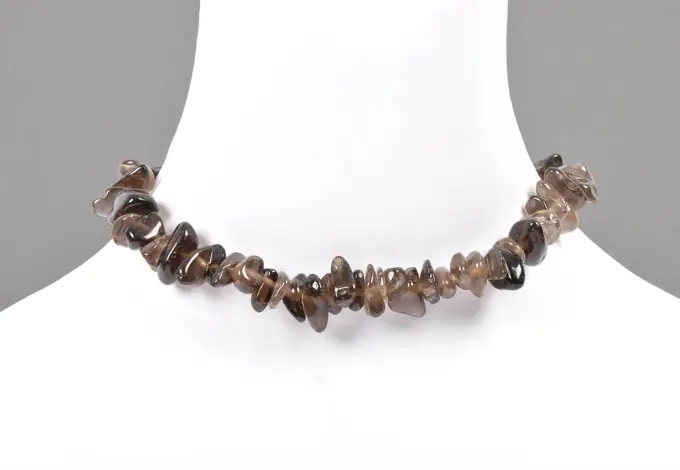
Rauchquarz Splitterkette auf Schmuckbueste - Splintered smoky quartz chain on bust Rauchquarz Splitterkette auf Schmuckbueste - Splintered smoky quartz chain on bust Copyright: xZoonar.com/lantapixx 9474173
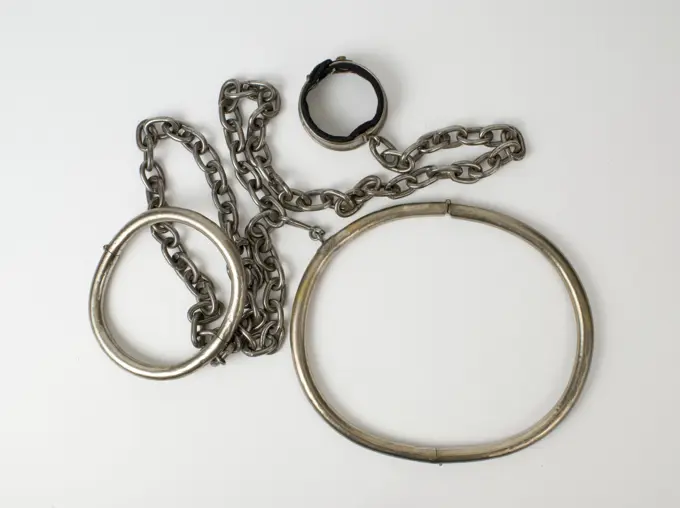
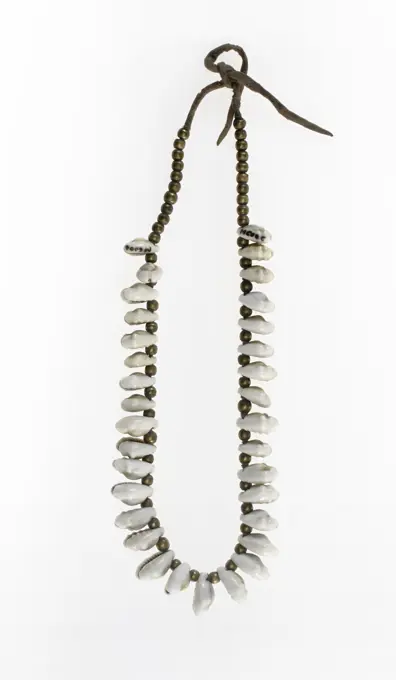
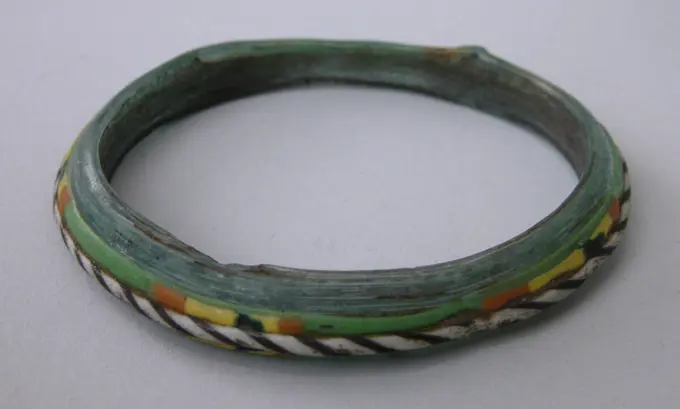
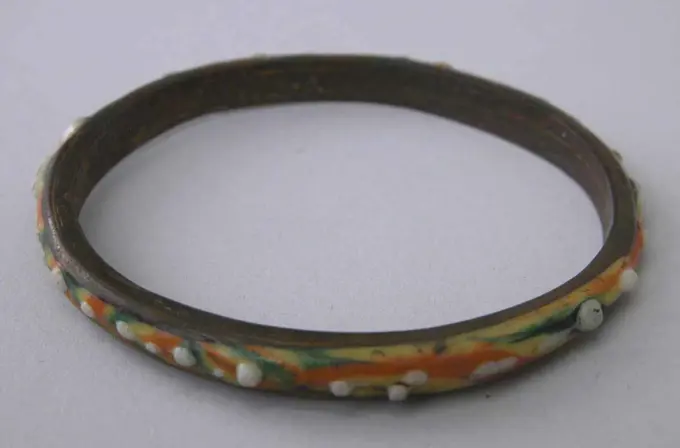
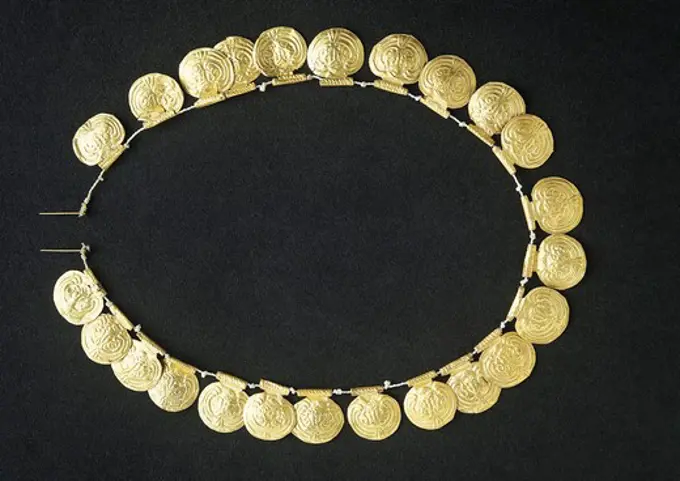
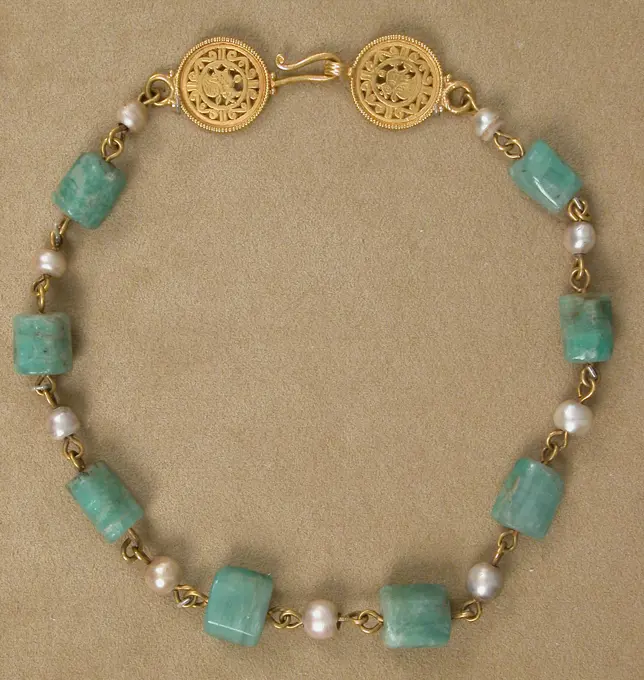
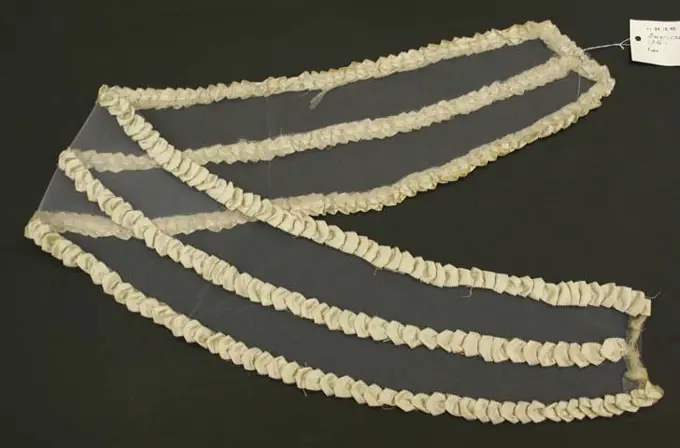
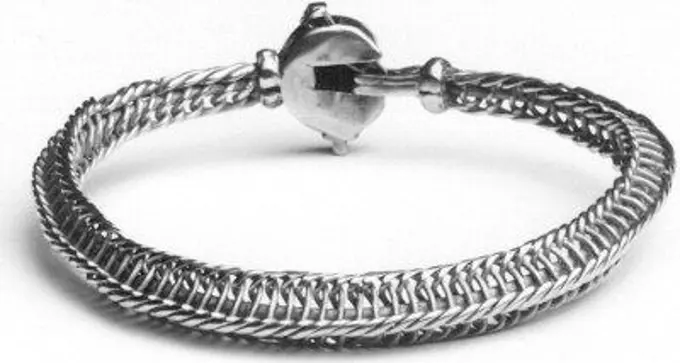
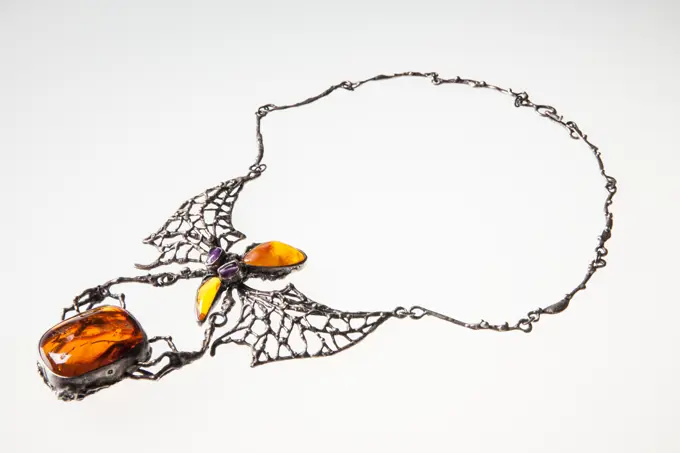
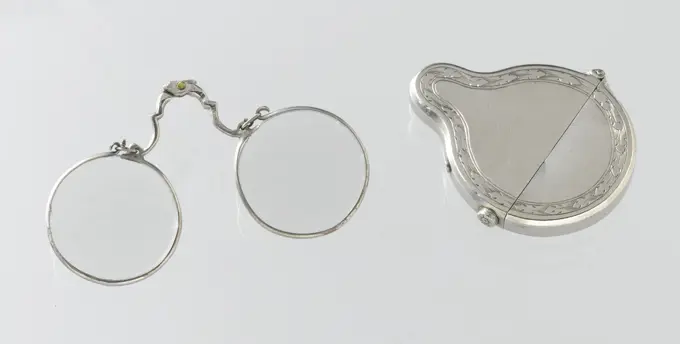
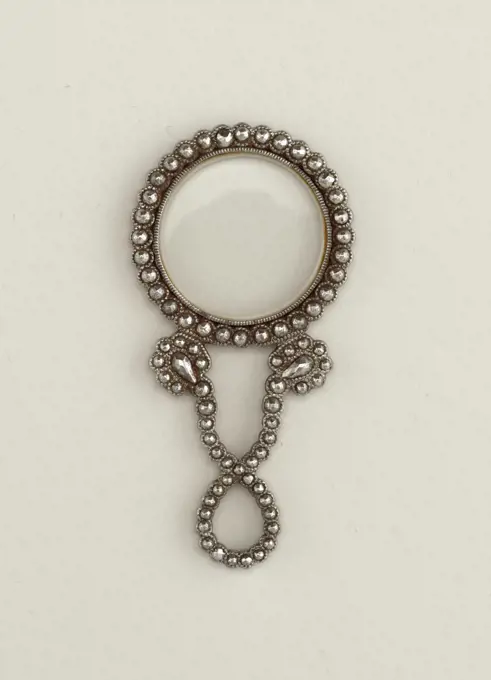
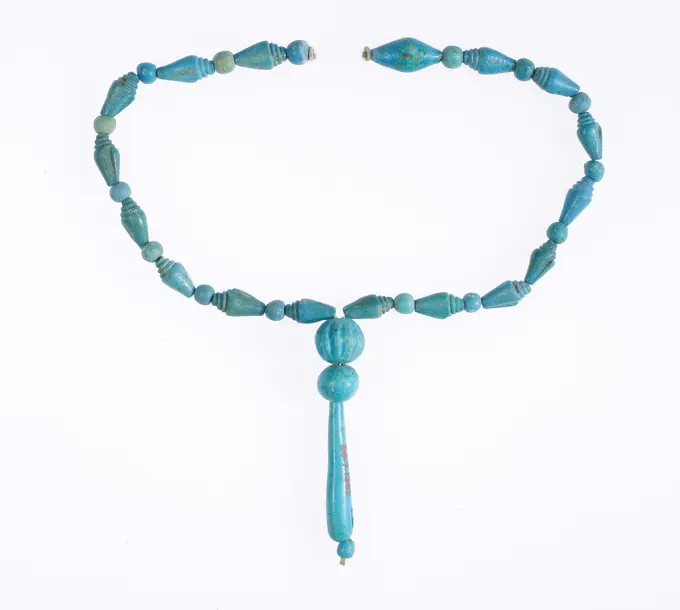
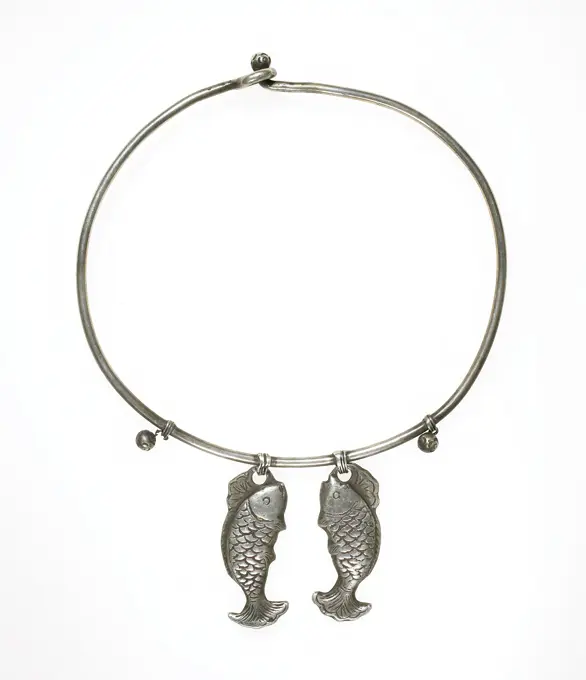
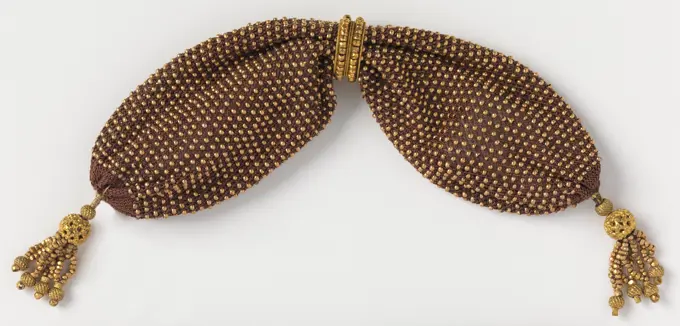
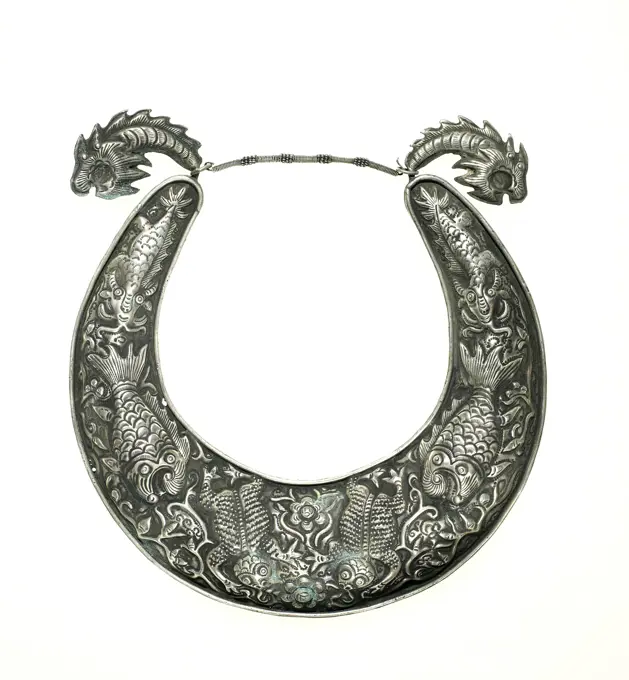
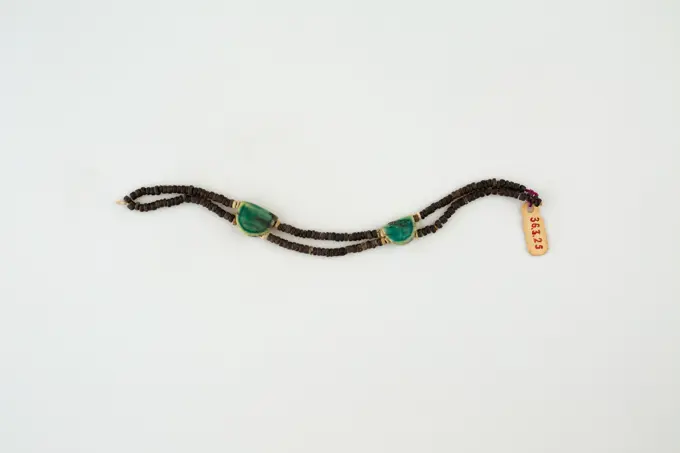
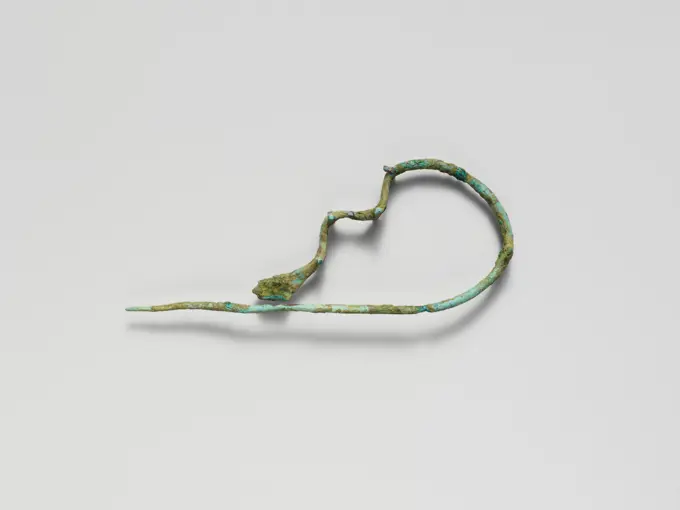
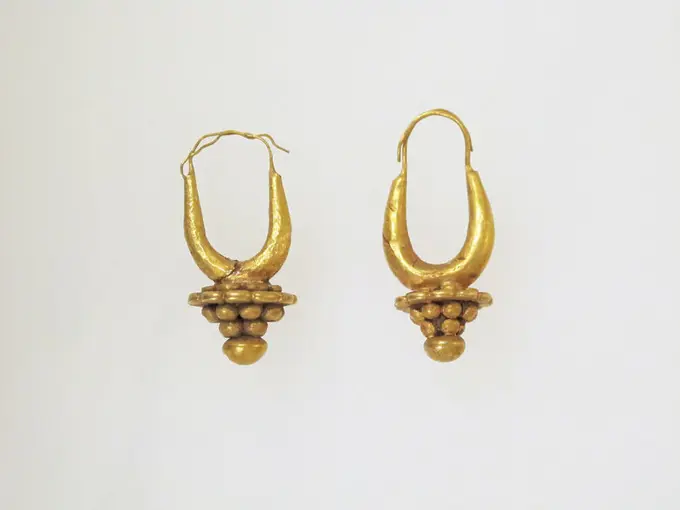
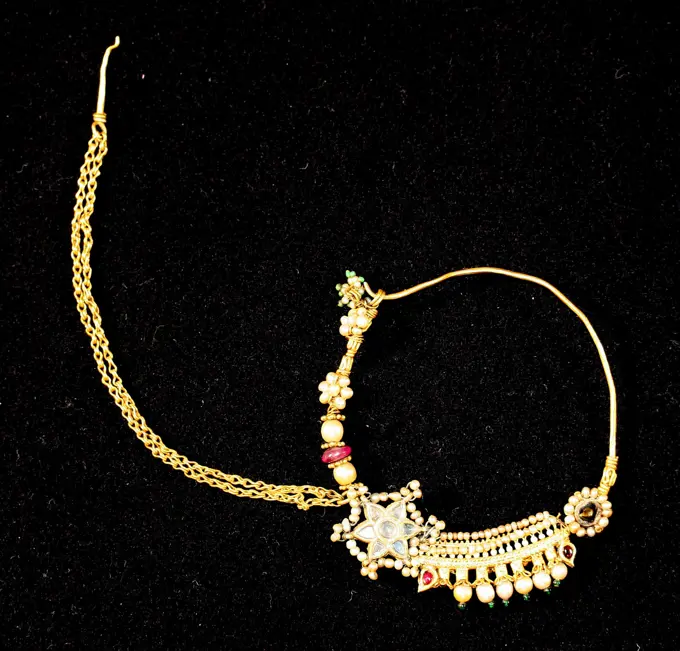
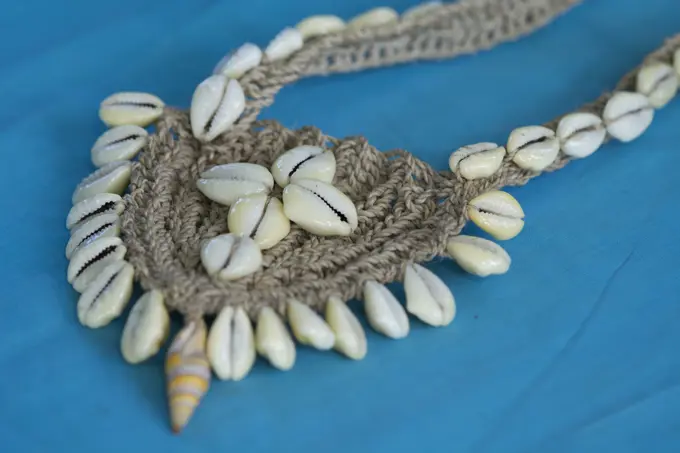
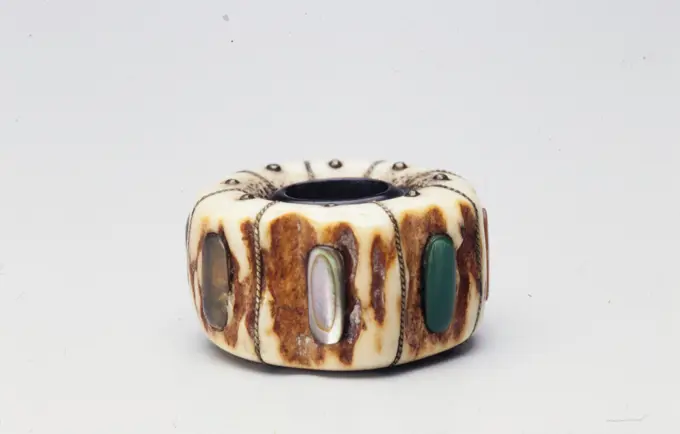
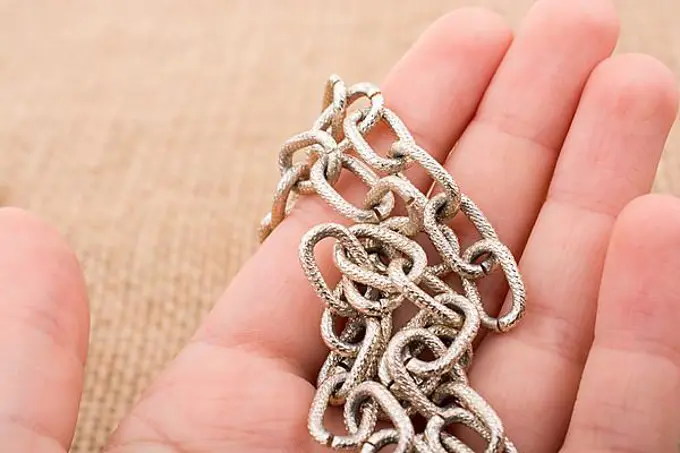
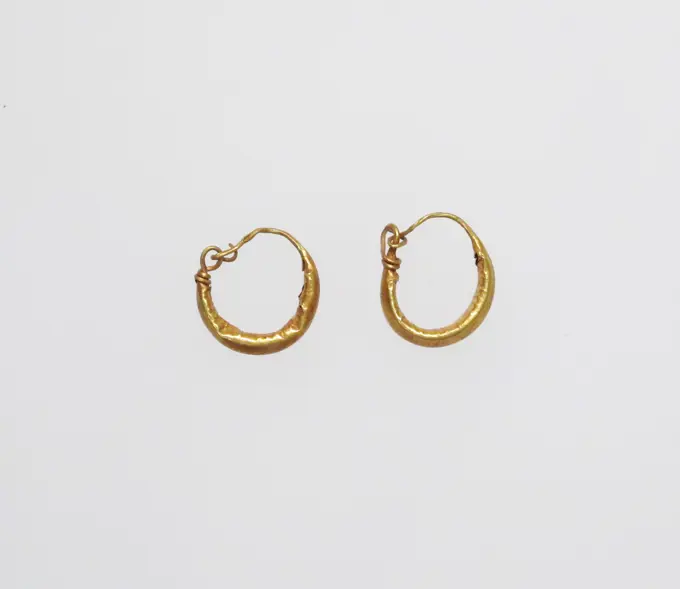
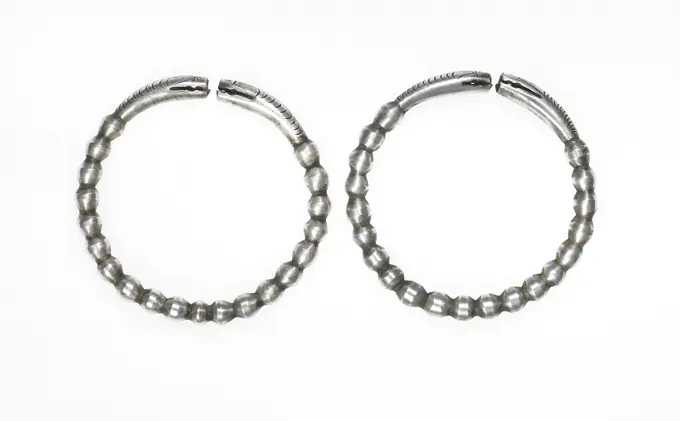
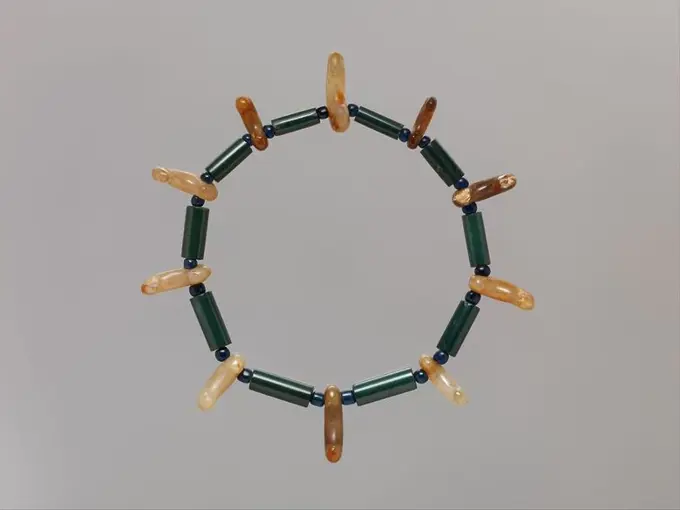
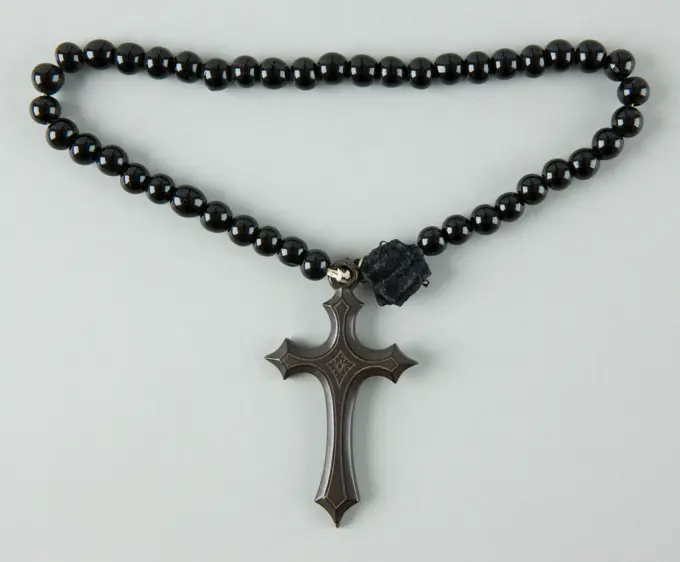
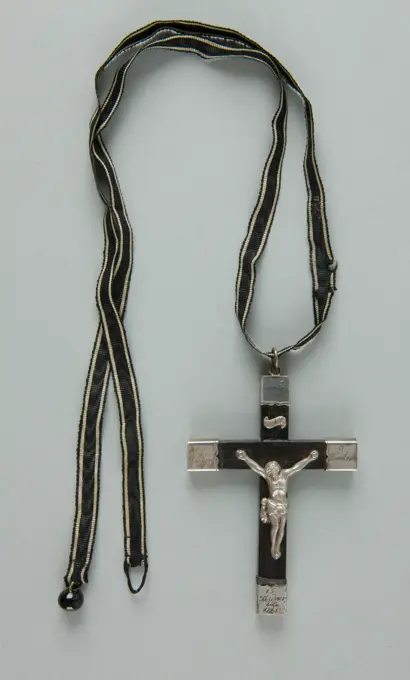
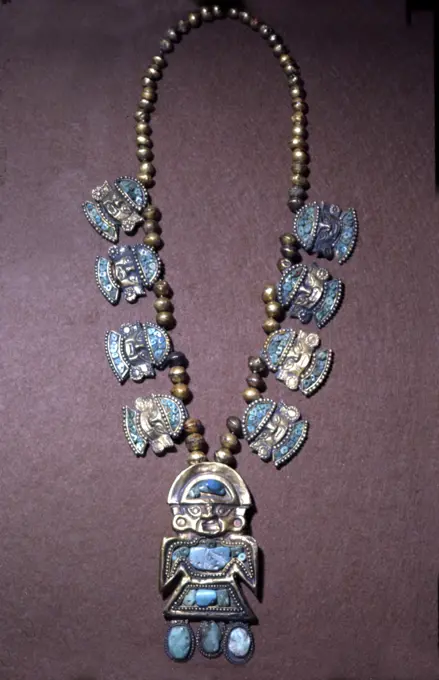
Gold & turquoise necklace, 11-15th cent. AD. Chimu. Pre-Inca civilisation. PERU.Anonymous. Guanhumara channels (Les Burgraves). Iron. 1902. Paris, house of Victor Hugo. Theater accessory, chain, imprison, the burgraves, bind, theater partNecklace with four strings of beads. Rokop holder of white metal with round clamp on which two herons on the waterfront. A hook clamped over the waistband to which a chain with a round clamp with two round rubber sticks on the inside with two round rubber. The clamp is decorated with a floral motif.Circular frame in the form of an oriental ornamentNecklace -Bracelet probably 14th-15th century The earliest known examples of this type of seamless mosaic glass bracelet are from the late thirteenth century; it continued to be produced well into the nineteenth century at Hebron, in Palestine. This bracelet, together with thirty-three others in the collection, comes from UpperEgypt and was probably made during the Mamluk period.. Bracelet 446012Head Ornament (Jhela) 18th-19th century This head ornament would attach at the top of the head, and the flower and bell shaped ornaments known as karnaphul jhumka would hang along the side of the ear. The karnaphul, or floral stud, is a typical shape for an ear ornament, referencing the natural world so favored in Indian jeweled arts. The hanging jhumka pendants would move gracefully as the wearer walked, moved and danced.. Head Ornament (Jhela). 18th-19th century. Gold, glass, turquoise. Attributed to India, Kashmir, Punjab or Rajasthan. Jewelryheart jewelry from silver wire on a white backgroundBracelet, 1800s. Siam. Gold; diameter: 6.1 cm (2 3/8 in.).Bracelet probably 14th-15th century The earliest known examples of this type of seamless mosaic glass bracelet are from the late thirteenth century; it continued to be produced well into the nineteenth century at Hebron, in Palestine. This bracelet, together with thirty-three others in the collection, comes from UpperEgypt and was probably made during the Mamluk period.. Bracelet 446028Etruscan gold necklace, 6th Century B.C.stone bead necklace, Los Gabrieles dolmen complex, III BC, Valverde del Camino, Huelva Museum, Huelva, Andalusia, Spain.Anonymous. "Necklace made up of fifty-three amber pearls". Amber. -600/500 BC .. Museum of Fine Arts in the city of Paris, Petit Palais. 99939-11 Amber, antiquity, VIEM LIFE VI 6th 6th 6 CENTURY BEFORE AV. JC, ancientGold Necklace with Pearls and Stones of Emerald Plasma 6th-7th century Byzantine This elegantly simple necklace alternates luminous white pearls with soft green gems worked from a type of quartz, one of several stones that were called emeralds in Byzantium.. Gold Necklace with Pearls and Stones of Emerald Plasma. Byzantine. 6th-7th century. Gold, pearls, emerald plasma. Metalwork-GoldEarring, chain type. Earring, chain type 243100Oval frame of eucalyptus leaves and branches isolated on transparent background. Natural green foliage border, aromatic herb, evergreen plant, condiment or spice, Realistic 3d vector illustration. Oval frame eucalyptus leaves and branches, borderFichu 1799-1821 European. Fichu 119119Alphabet made from hammered nails, letter U Alphabet made from hammered nails isolated on white background Copyright: xZoonar.com/AndriixMykhailovx 2271650Beads, 38. Beads, 38. Glass. GlassCollar of needle side with roseschulpen edge, anonymous, c. 1850 - c. 1875 Collar of natural needle side: Brussels mesh side. Half -shaped model. The repeating pattern consists of a succession of lying rose branches with two roses on a stalk with a leaf on either side. The florets that lie along the lower edge are larger. At the ends of the collar, an extra leaf with a rose has been added to the pattern. The motifs are made up of feston stitches and equipped with relief contours. The motifs are connected by a fine Maas soil, a mesh side, strewn with mosies. Decorative stitches have been used in the flowers. The scrap edge is formed by the larger florets that are always alternated by a leaf and continues in the short sides. The top is straight. Brussels linen (material) Brussels Gaze Point Collar of natural needle side: Brussels mesh side. Half -shaped model. The repeating pattern consists of a succession of lying rose branches with two roses on a stalk with a leaf on either side. The fBracelet. UnknownBracelet 11th-12th century. Bracelet 453006Barbed wire alphabet, V Letter V made from barbed wire Copyright: xZoonar.com/AndriixMykhailovx 2181885Necklace Pyra, StanisBrill box of Willem Credo, Before 1733 Silver spectacle decorated with a stylized leaf edge in relief. The box consists of two parts, which can be opened on the side by means of a button. The glasses fits double folded in the box. Netherlands (possibly) whole: Silver (Metal) forging Silver spectacle decorated with a stylized leaf edge in relief. The box consists of two parts, which can be opened on the side by means of a button. The glasses fits double folded in the box. Netherlands (possibly) whole: Silver (Metal) forgingMonocle, Steel, cut-steel beads, glass, France, England, 19th century, jewelry, Decorative Arts, MonocleString of Beads ca. 1550-1425 B.C. Second Intermediate Period-Early New Kingdom. String of Beads. ca. 1550-1425 B.C.. Faience. Second Intermediate Period-Early New Kingdom. From Egypt, Upper Egypt, Thebes, Asasif, Birabi, Tomb CC 24, Carnarvon excavations, 1911. Dynasty 17-Early Dynasty 18Necklace, 1800s. Siam. Coins, bone, silver and gold beads; overall: 43.2 cm (17 in.).Necklace, 10 1/2 x 8 x 3/4 in. (26.67 x 20.32 x 1.91 cm), Silver, ChinaCreative concept photo of christmas wreath made of rope with snowflakes on brown background.Miser's Purse; silk, metal beadsTorque, 11 1/2 x 10 5/8 x 15/16 in. (29.21 x 26.99 x 2.38 cm), Silver, ChinaDocument Case With Lid (Kenya), early 20th century; brass, copper; Document case: 8.6 x 4.8 x 1.1 (3 3/8 x 1 7/8 x 7/16) Length: 39 cm (15 3/8 in.)Typical Oriental neckless, necklace with semi-precious stones. 1898, Middle EastMetal Chromium- Plated Water Mixer Metal chromium-plated water mixer on an isolated background Copyright: xZoonar.com/AndreyxSKatx 9669075Watch early 17th century German. Watch 195136Bracelet ca. 1492-1473 B.C. New Kingdom The beads strung together here were found scattered in the area of the right wrist of one of the children buried in the tomb of Hatnefer (see 36.3.1). They were restrung based on the numbers of the various types and colors of beads. Because the beads were found near the child's wrist, they have been interpreted as part of a bracelet, though the use of wallet beads is more common on girdles (see 26.8.60).. Bracelet 548971Silversmith's art, Italy, 20th century. Oval torchon silver brooch set with pearls, 1960s.Elements from a Necklace, c. 1400-1300 BC. Possibly Hungary, Bronze Age, c. 2500-800 BC. Bronze, cast; overall: 4.2 x 4.8 x 0.8 cm (1 5/8 x 1 7/8 x 5/16 in.).Two-strand Necklace of the Child Myt ca. 2051-2030 B.C. Middle Kingdom. Two-strand Necklace of the Child Myt 544146Pine cones and a notebook on a brown backgroundNecklace, 18 x 3 3/4 x 1 in. (45.72 x 9.53 x 2.54 cm), Silver, ChinaWedding Rings On A White Background Three-dimensional render of wedding rings isolated on white background. Copyright: xZoonar.com/VictorxGladkiyx 7169248Bronze dragon-type fibula 8th century B.C. Villanovan Dragon-type fibulae are a later variant of the serpentine type.. Bronze dragon-type fibula. Villanovan. 8th century B.C.. Bronze. Geometric. BronzesNecklace pendants and beads ca. 17th-16th century B.C. Babylonian. Necklace pendants and beads 329036Earring with pendants. Culture: Roman. Dimensions: Other (.17): 5/8 × 11/16 × 1 9/16 in. (1.5 × 1.8 × 4 cm)Other (.18): 11/16 × 5/8 × 1 1/2 in. (1.7 × 1.7 × 3.8 cm). Date: 3rd century A.D. or later. Museum: Metropolitan Museum of Art, New York, USA.Plastic scrunchie on a white backgroundNose Ring (Nath) 1801-1900 India. Gold, pearls, diamonds, and rubies .Six designs for jewelry, including large necklace with gold pendant with blue stones.. Gerlach, Martin. Prints, Design drawings. 1872 - 1873. The Miriam and Ira D. Wallach Division of Art, Prints and Photographs: Art & Architecture Collection. Jewelry , Design, Earrings, Necklaces, Pendants (Jewelry)Wedding Rings On A White Background Three-dimensional render of wedding rings isolated on white background. Copyright: xZoonar.com/VictorxGladkiyx 7169221Headstall with Reins 19th century Historically, horses have been critical to life in Central Asia. Equine ornaments like this headstall were considered an extension of the dress of the rider. This exquisite example has a vibrant, polychrome appearance that would have richly adorned a horse for a ceremonial occasion.Necklace (South Africa); glass beads, metal fastenersMelanesia, New Guinea. Small island of Ali off the coast of mainland Papua New Guinea. Traditional woven shell necklace.Earring with pendants 3rd century A.D. or later Roman. Earring with pendants. Roman. 3rd century A.D. or later. Gold. Late Imperial. Gold and SilverNetsuke tree section, late 19th century, Unknown Japanese, 3/4 x 1 5/16 x 1 1/8in. (1.9 x 3.3 x 2.9cm), Ivory, brass, mother-of-pearl, horn, Japan, 19th centuryConcept, janjer chain in round shape on white background India Copyright: xNirmalaxMishra/DinodiaxPhotoxChain made of gold color in handConcept, janjer chain in round shape on white background India Copyright: xNirmalaxMishra/DinodiaxPhotoxJewelry on a mannequin.Earrings 2nd-3rd century A.D. Roman Small, with plain tubular hoop.. Earrings. Roman. 2nd-3rd century A.D.. Gold. Gold and SilverBracelet, one of a pair, 3 1/8 x 3 1/4 x 3/8 in. (7.94 x 8.26 x 0.95 cm), Silver, ChinaBeads, 30. Beads, 30. Glass. GlassScandinavia. Low Roman Iron Age. 1st-4th century. Gold jewel. Sweden. Historical Museum. Stockholm. Sweden.Woman figurine on steel chains on a textured surface on displayNecklace with Claw-Shaped Beads (Magatama). Culture: Japan. Dimensions: L. 11 1/2 in. (29.2 cm). Date: ca. 7th century. Museum: Metropolitan Museum of Art, New York, USA.White toy car in a round chain circle on a canvas backgroundWoman figurine on steel chains on a textured surface on displayFake gold coins around arrow shape made of paperNecklance Formed of Eight Dress Ornaments with Eight Links. Artist: Probably Transylvania , or possibly South German or Vienna. Culture: probably Transylvanian, possibly South German or Vienna. Dimensions: L. 42 cm. Date: ca. 1600 (with 19th century additions).This necklace was assembled, probably in the nineteenth century, from eight clothing ornaments dating to the early seventeenth century. The prevalence of these ornaments, called boglar, in sixteenth and seventeenth-century inventories of Hungarian women, suggests that they were relatively inexpensive, a theory supported by the minimal use of precious metal. The jewels were frequently marked on the back, presumably by the maker, with initials; in the case of the present example, "AVB.". Museum: Metropolitan Museum of Art, New York, USA.Silver split twig figurine made by Hopi artist Ramson Lomatewama. Thousands of years ago, tiny animals made of willow twigs were left in caves high in the walls of the Grand Canyon.Close Up Of Two Forks On A White BackgroundRetro cartoon with texture. Isolated on White.A cross suspended on a cord of beads12/31/1905. Cross and diamond necklace.Retro style gold color key on green sandA commemorative cross suspended on the ribbon