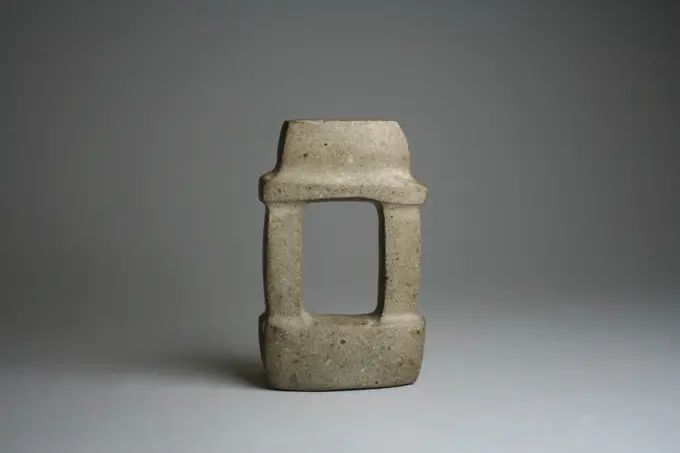
Historic Cosmetic and Utility Vessels

A collection of ancient and vintage vessels and buttons, showcasing craftsmanship from various eras, including anhydrite cosmetic jars and unique decorative buttons.
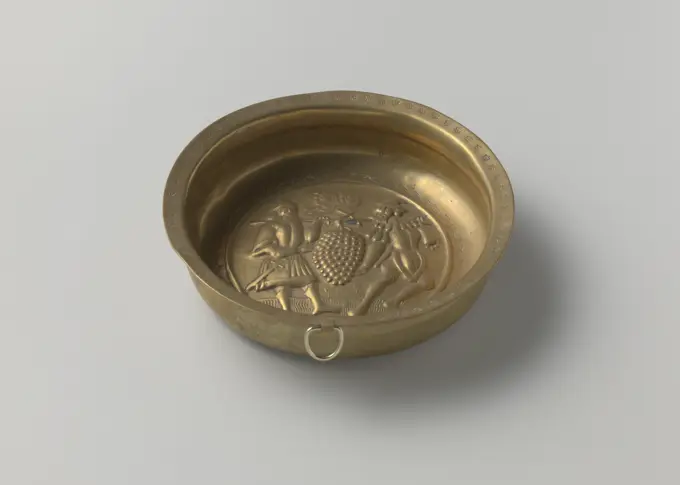
Pelvis with the spies of the Land Canaan, Anonymous, 1450 - 1500 In the flat of the pelvis, which has the center point in the middle, a representation of the spies of the Land Canaan (Joshua 2, 1-22) is punched with the help of a stamp shape. This is surrounded by a border of stylized leaves struck with punch stamps. Rosettes were applied to the border and a hanging ring is attached at the bottom later. Neurenberg (possibly) brass (alloy) casting In the flat of the pelvis, which has the center point in the middle, a representation of the spies of the Land Canaan (Joshua 2, 1-22) is punched with the help of a stamp shape. This is surrounded by a border of stylized leaves struck with punch stamps. Rosettes were applied to the border and a hanging ring is attached at the bottom later. Neurenberg (possibly) brass (alloy) casting
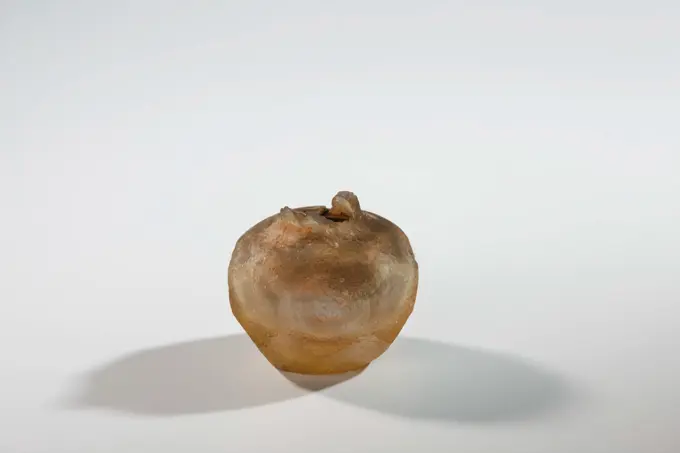
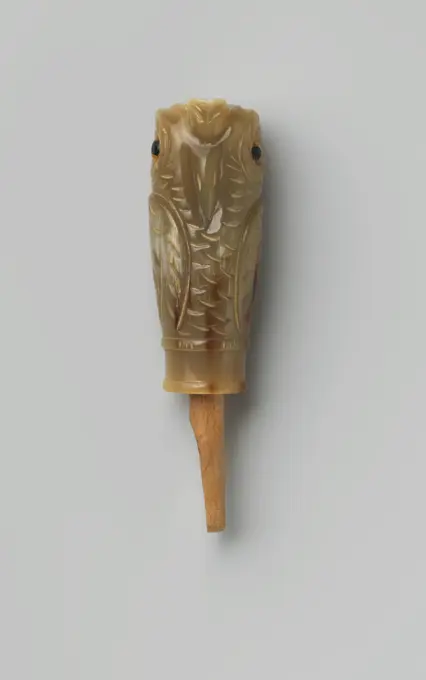
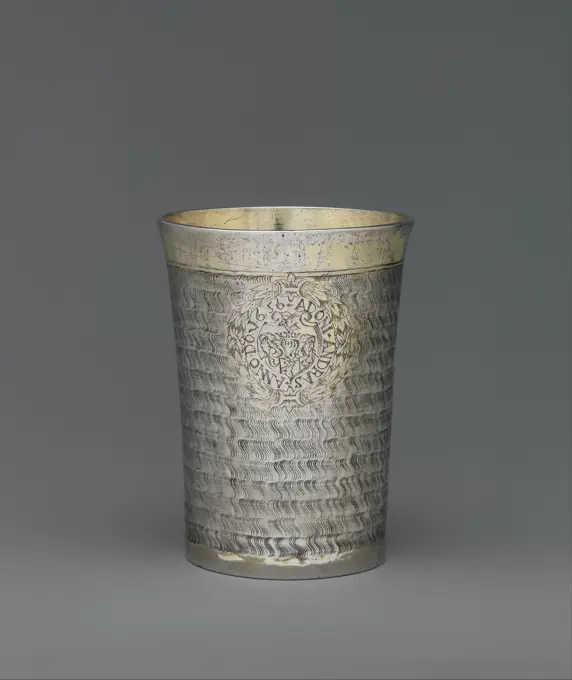
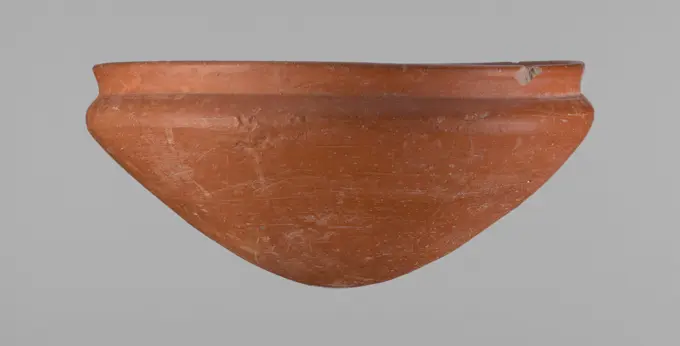
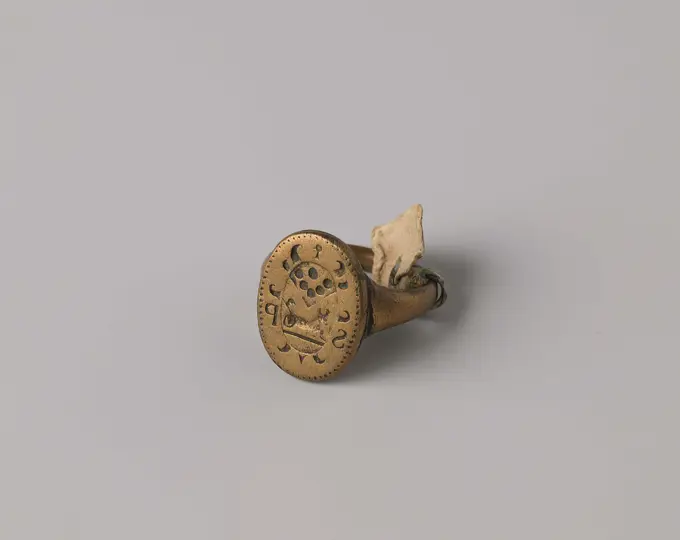
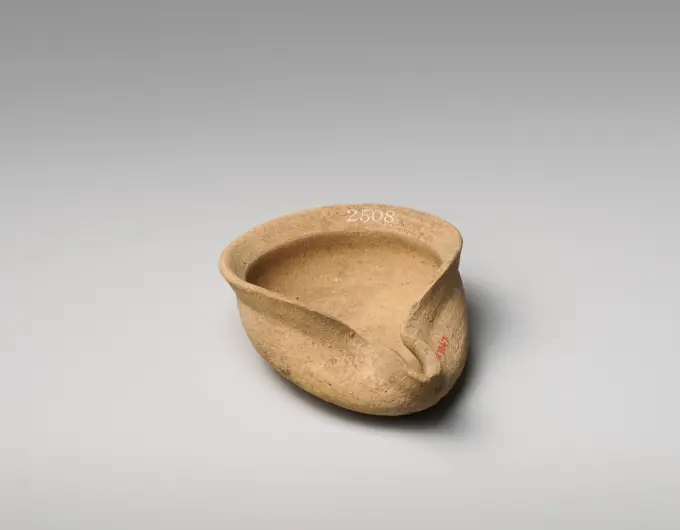
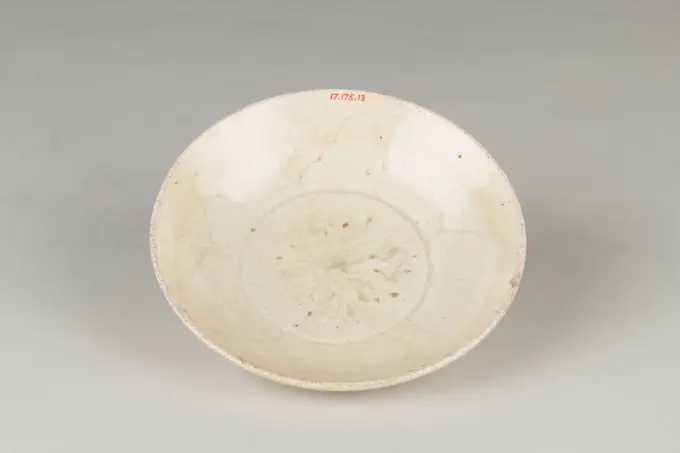
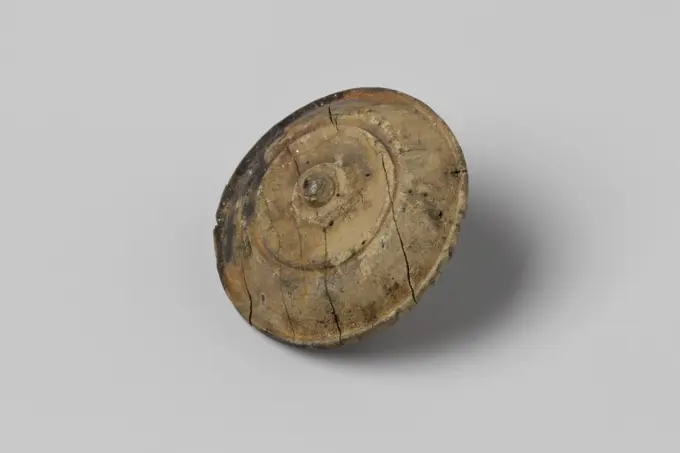
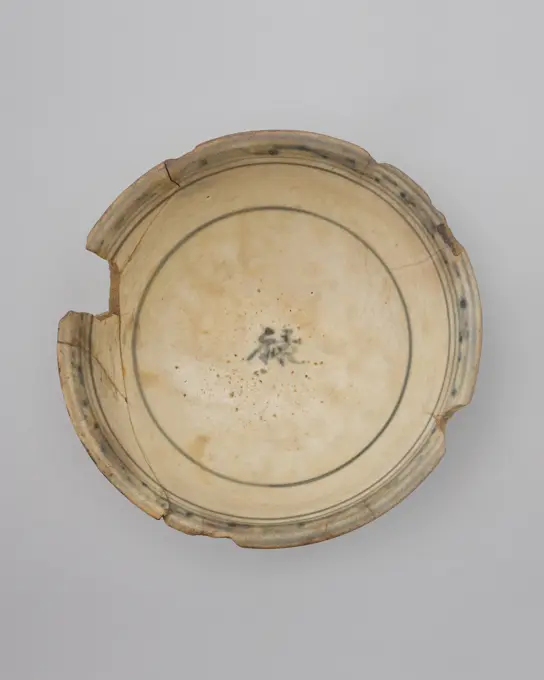
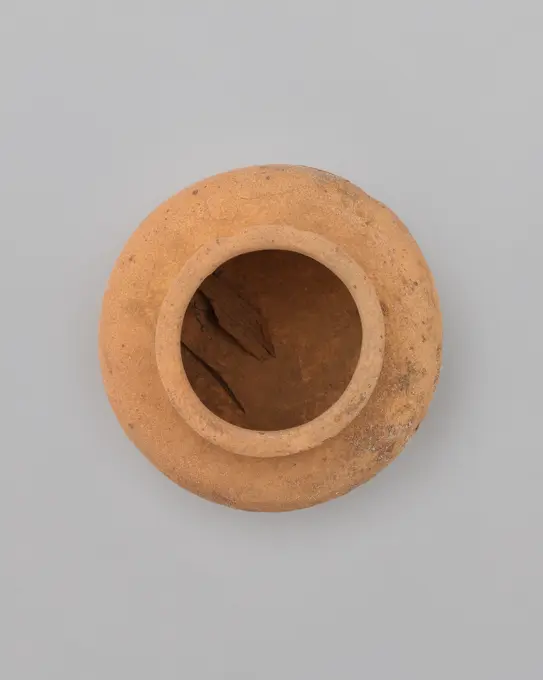
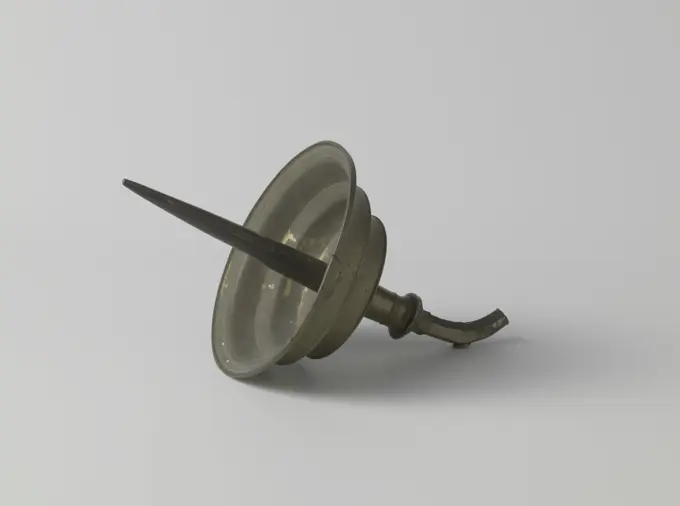
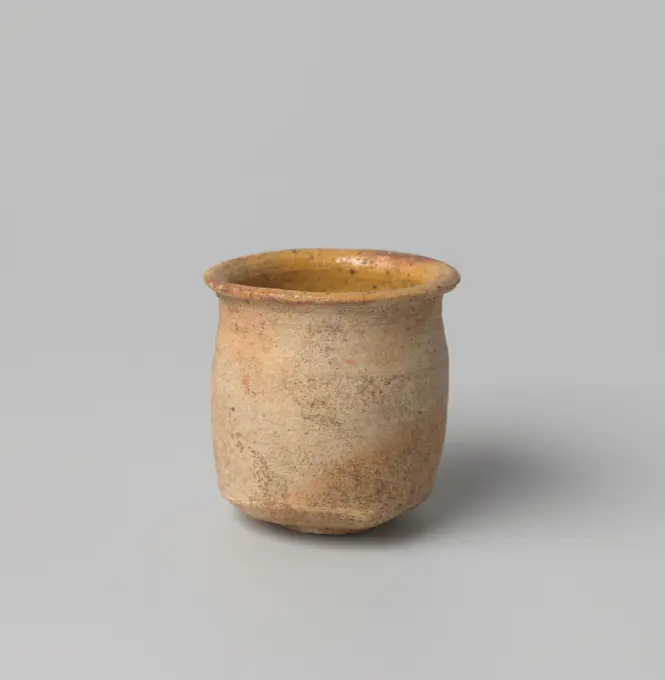
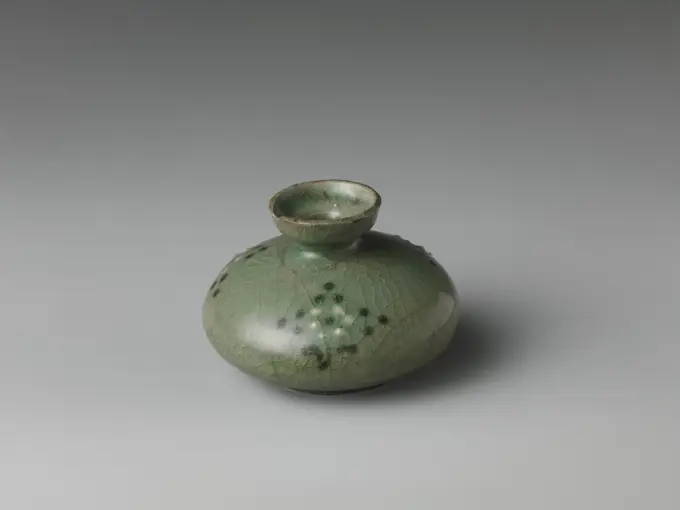
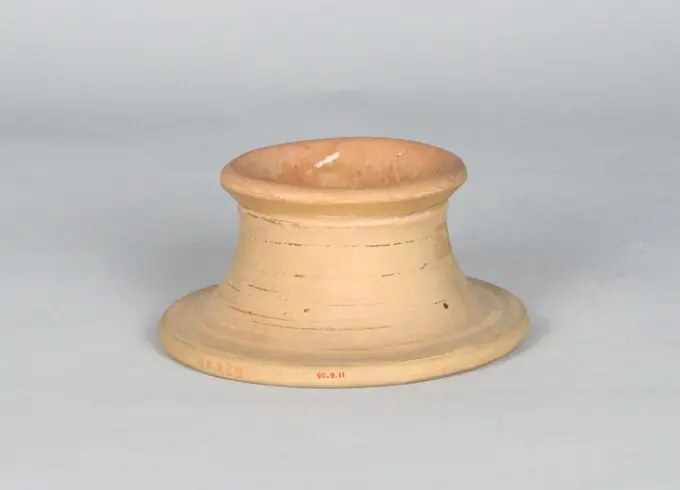
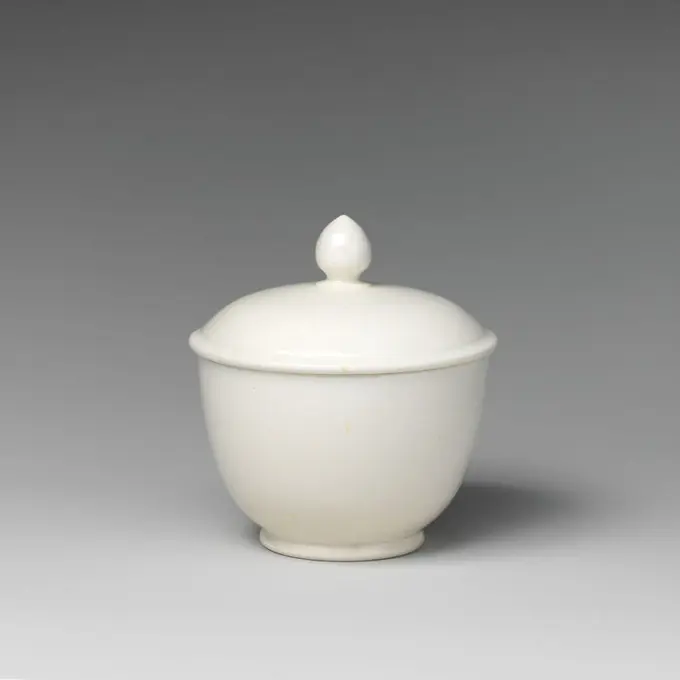
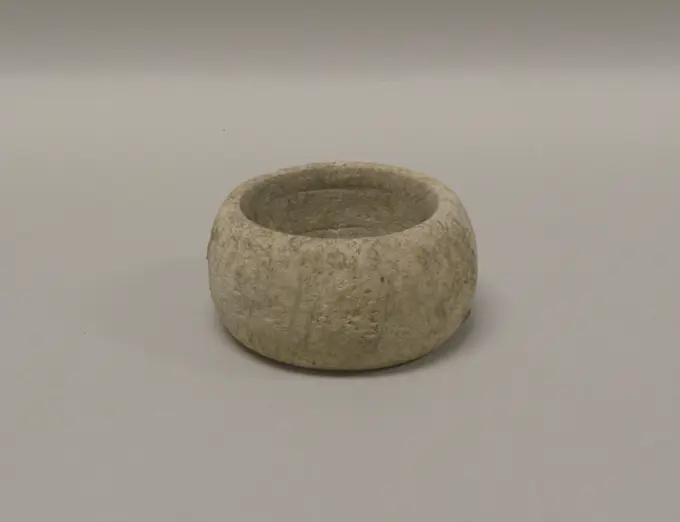
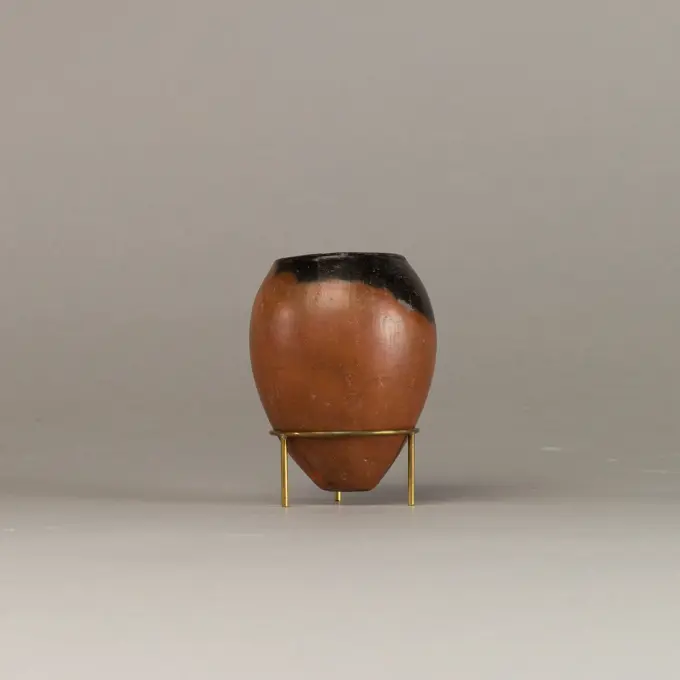
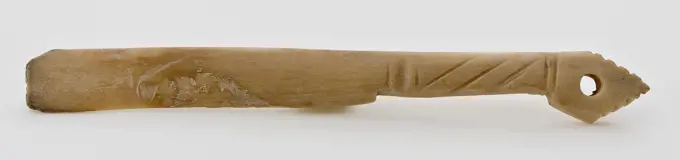
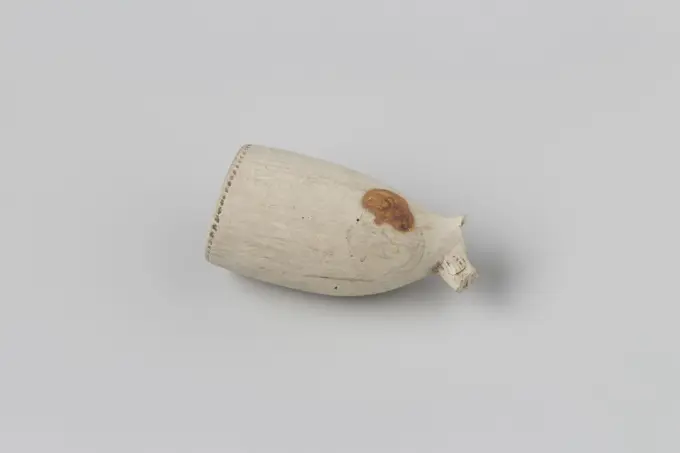
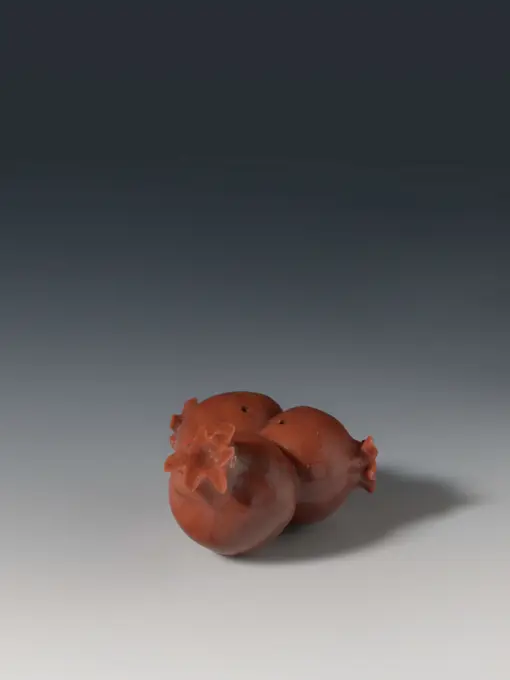
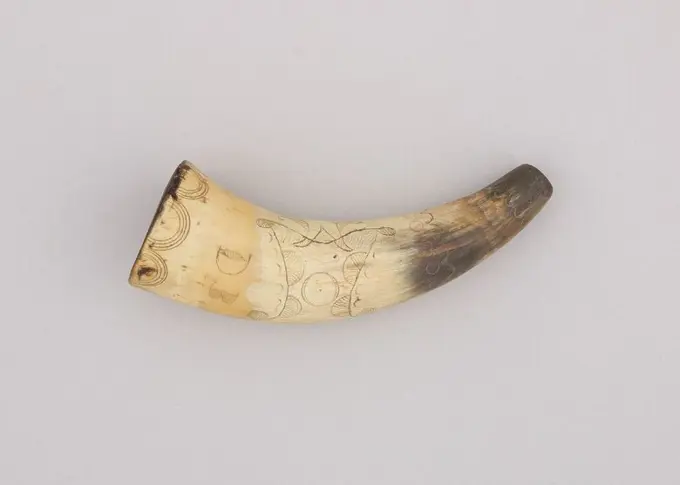
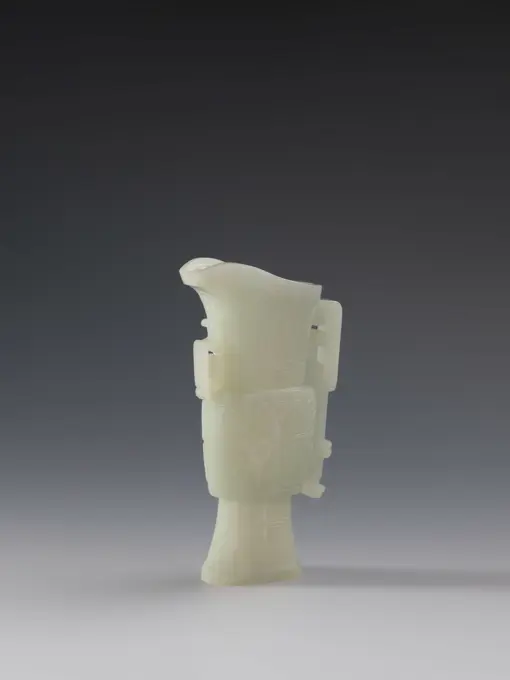
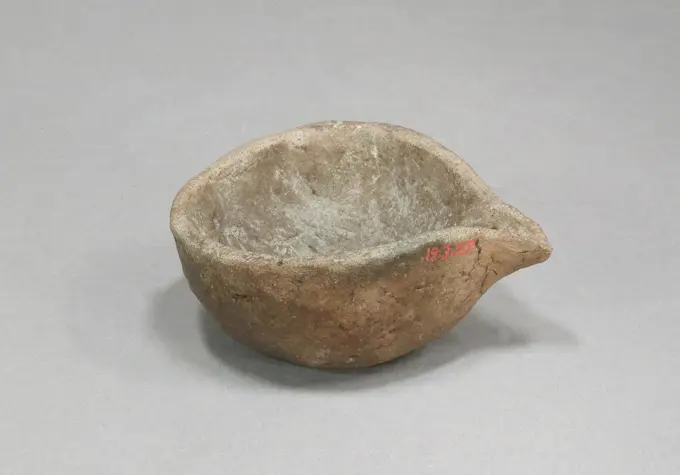
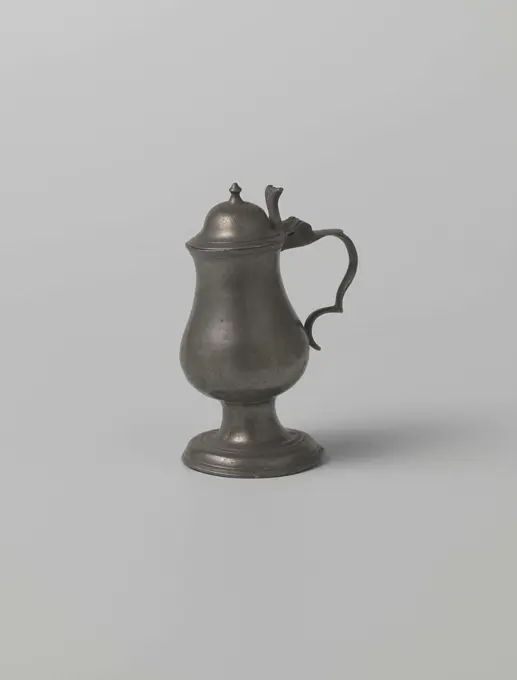
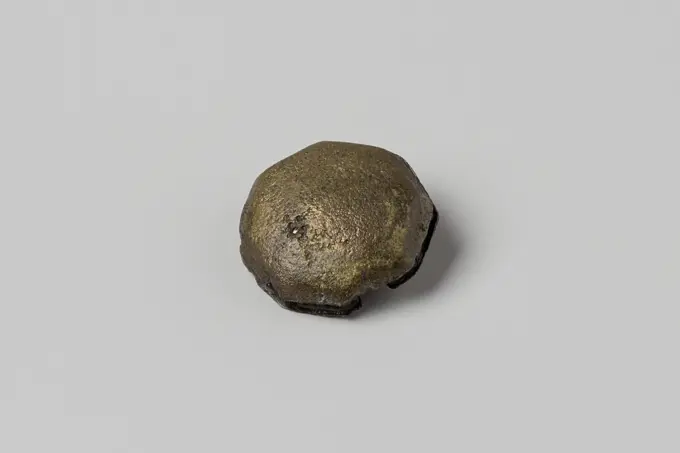
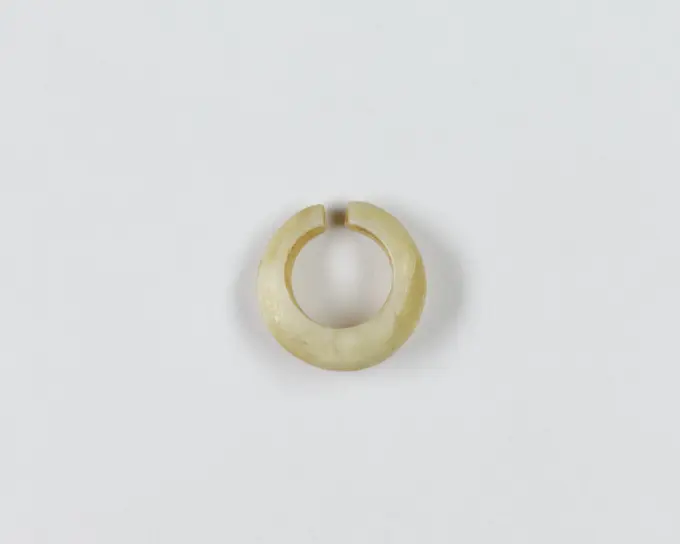
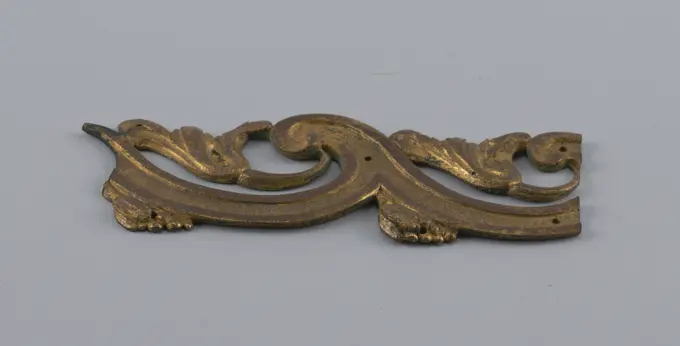
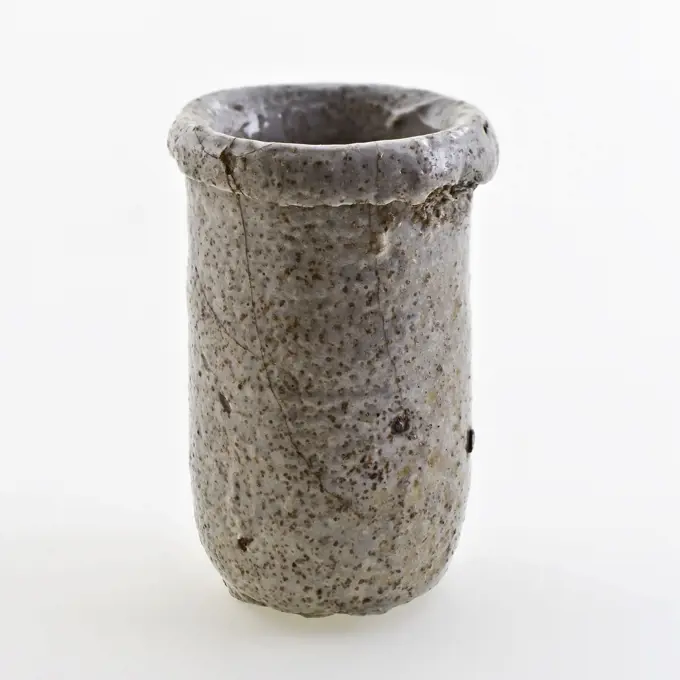
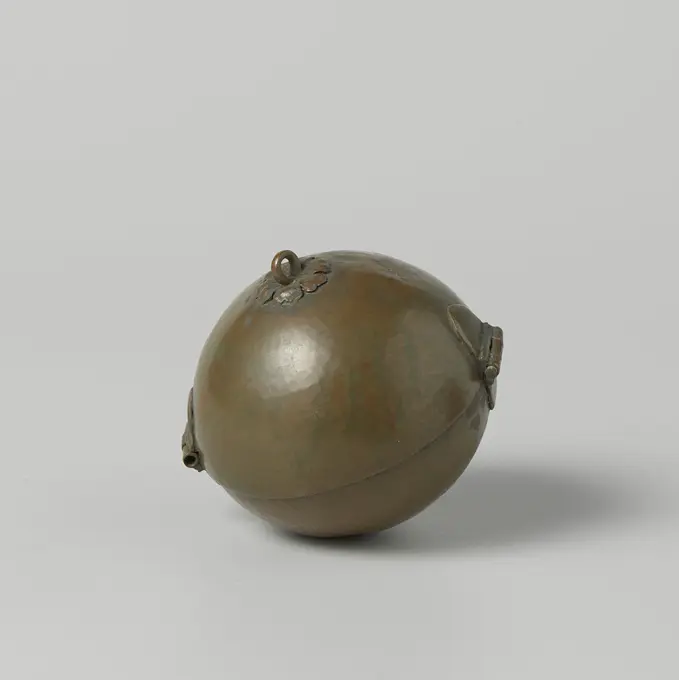
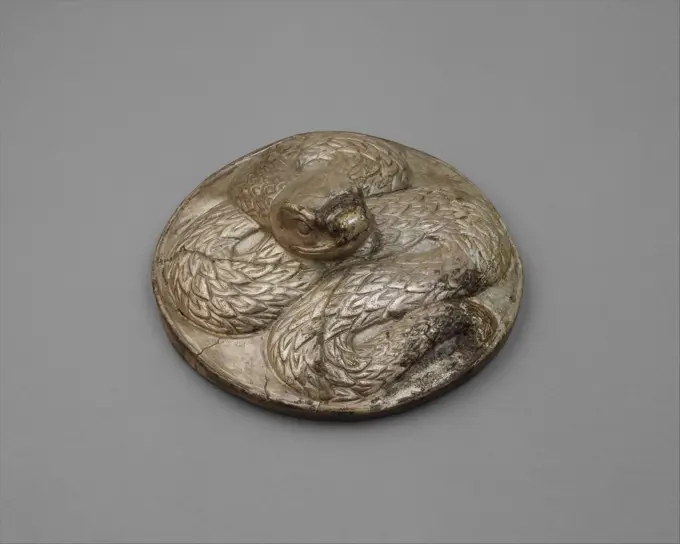
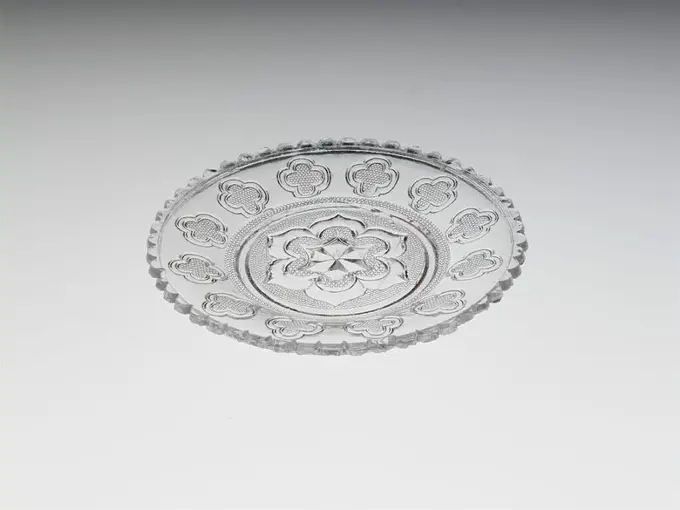
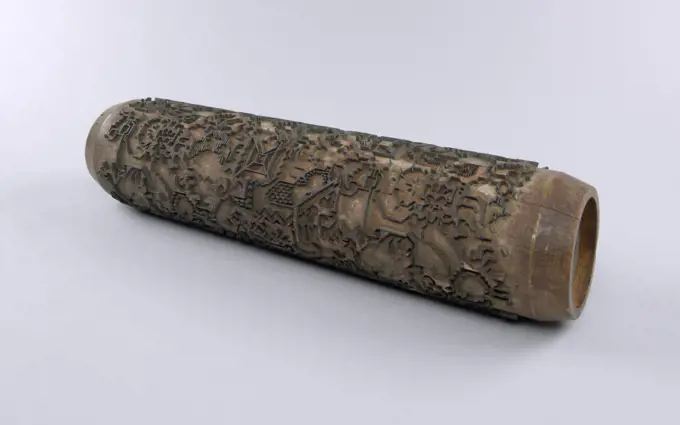
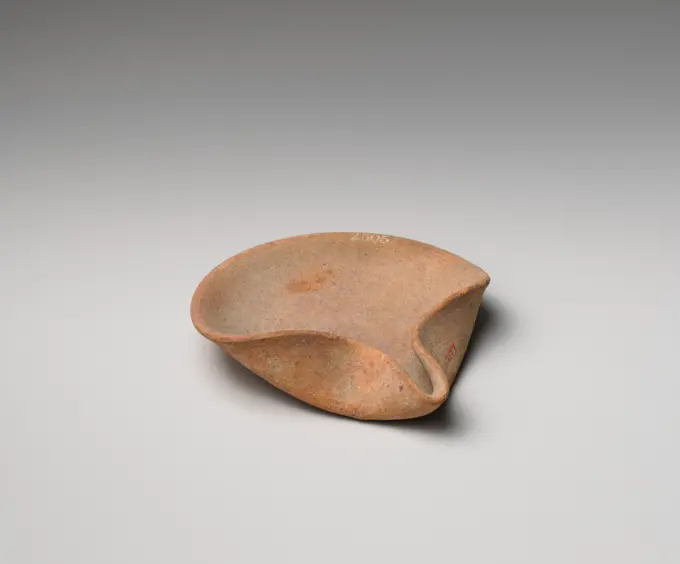
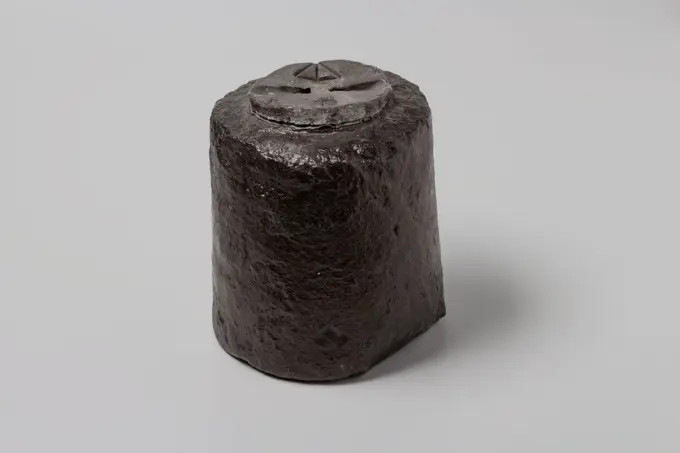
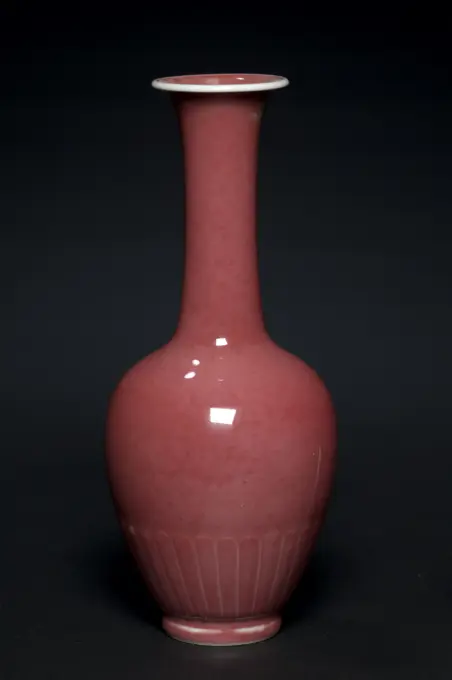
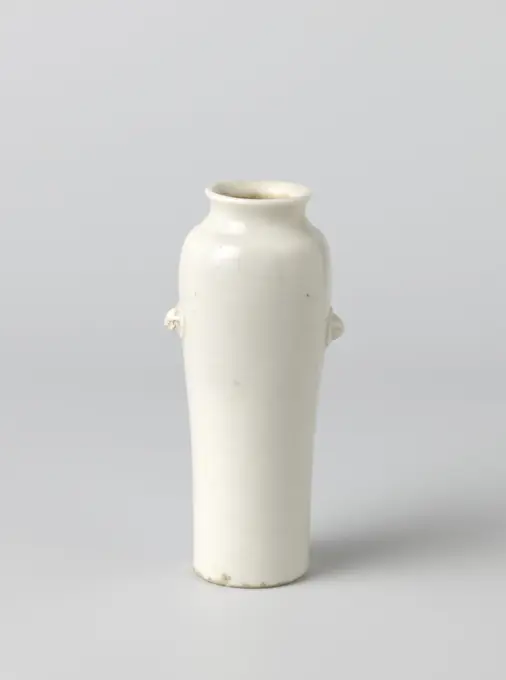
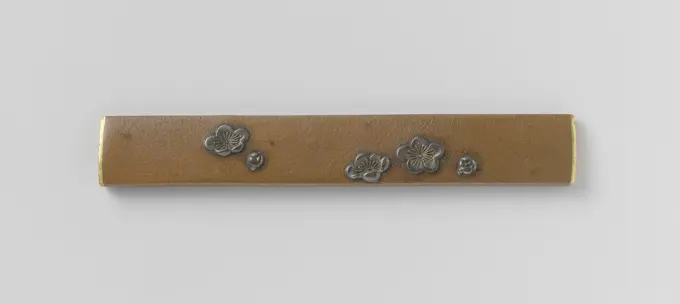
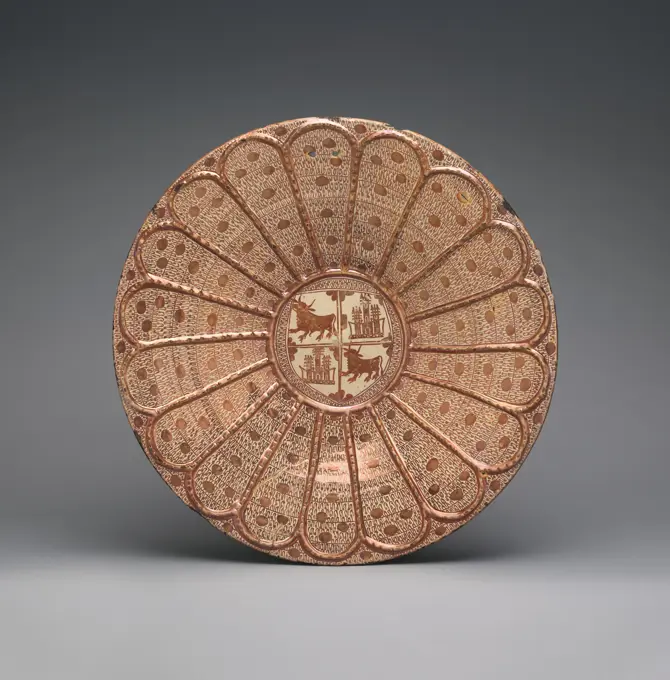
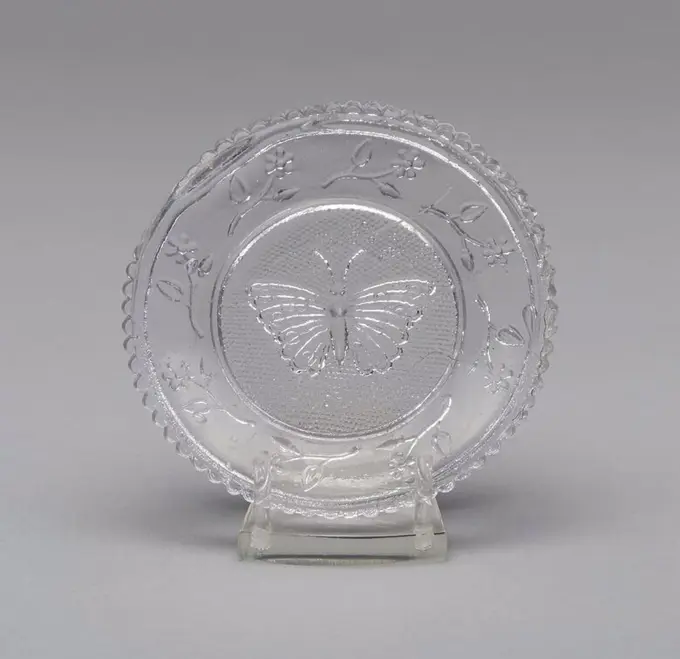
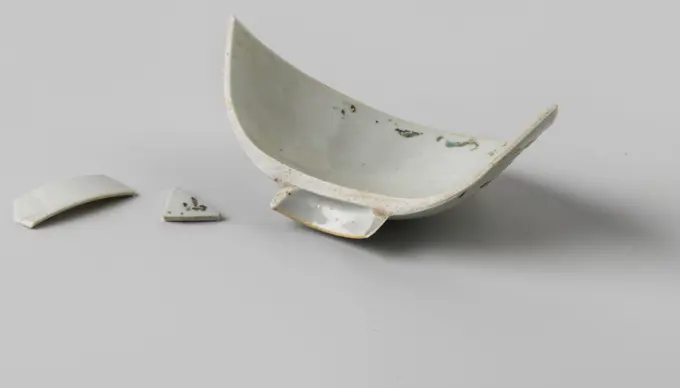
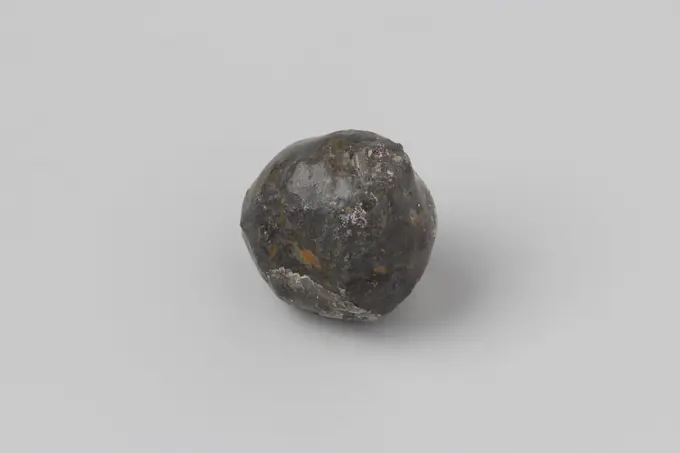
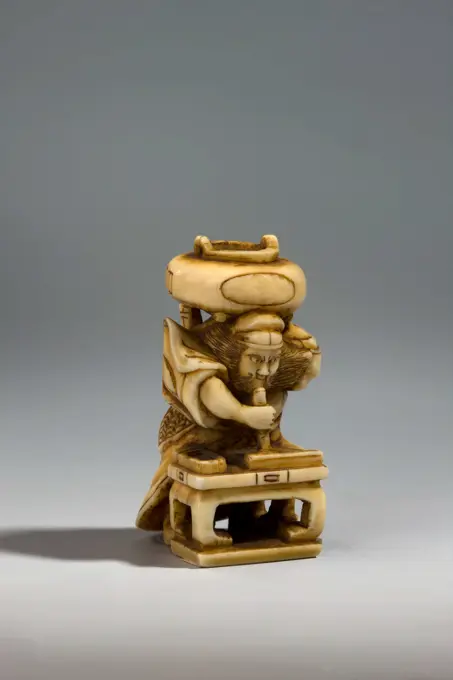
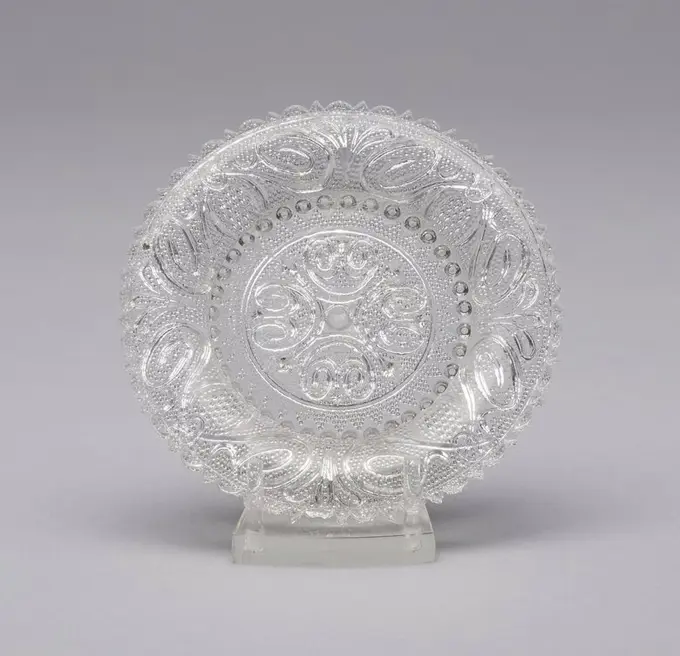
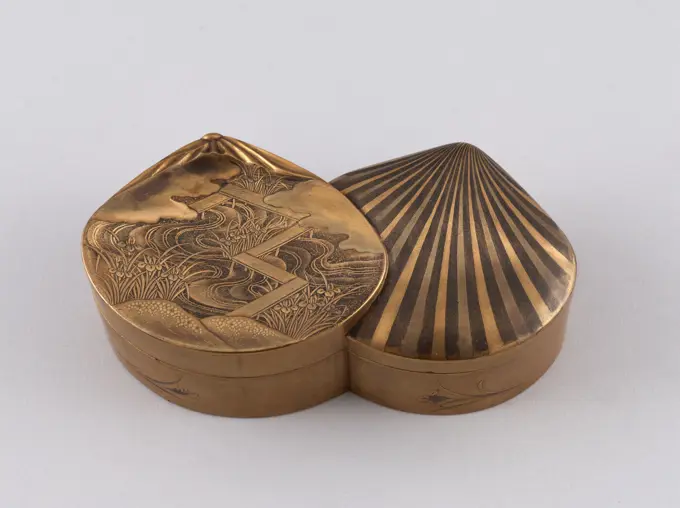
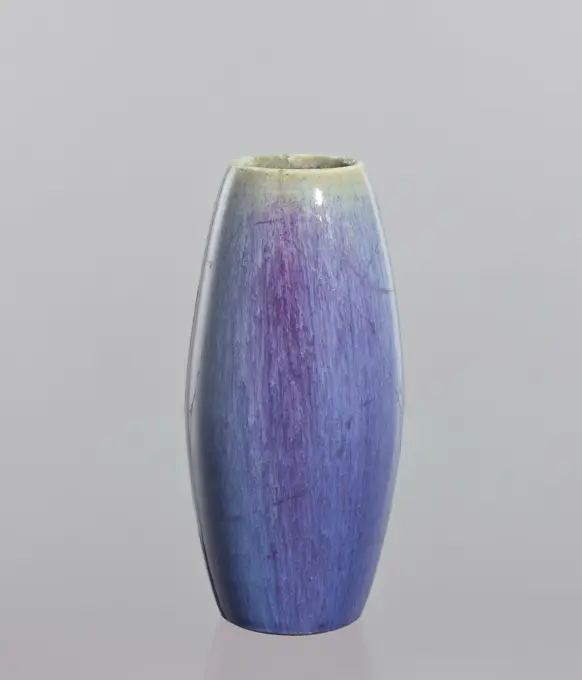
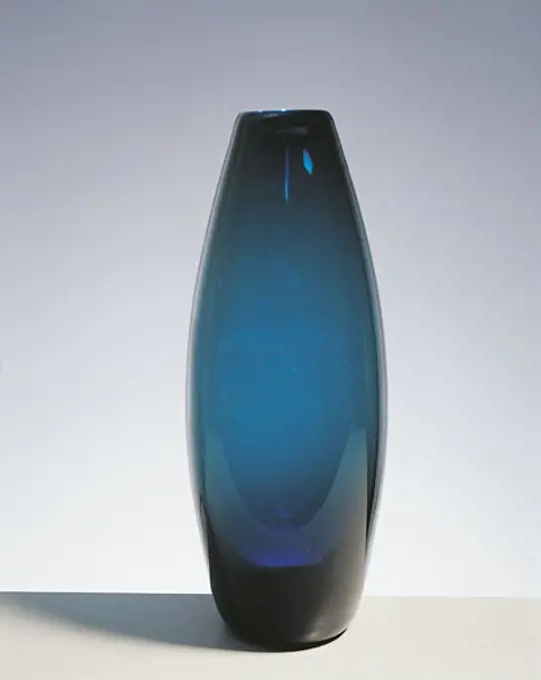
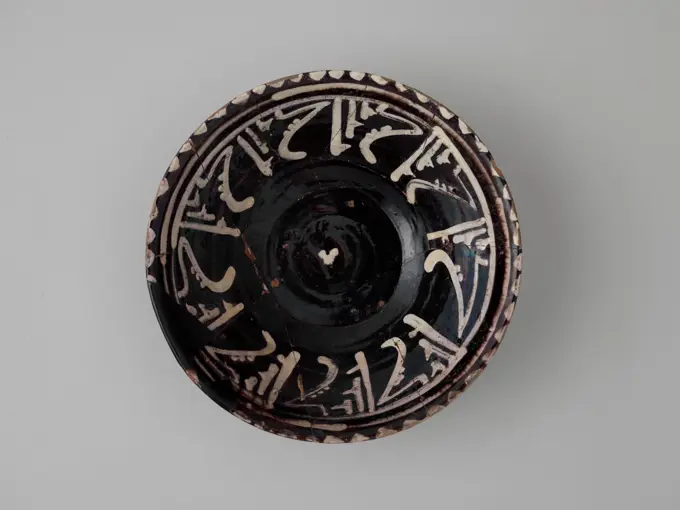
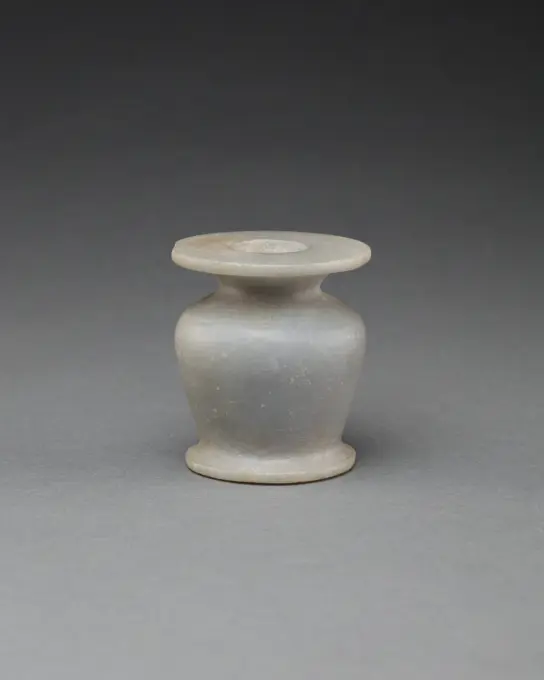
Cosmetic Vessel ca. 1980-1550 B.C. Middle Kingdom-Second Intermediate Period Small jars in anhydrite, a pale blue stone, were used during the Middle Kingdom and the Second Intermediate Period to store cosmetics, ointments and perfumed oils. Like many possessions used in everyday life, they became part of the burial equipment in order to provide for the needs of the deceased in the afterlife.. Cosmetic Vessel. ca. 1980-1550 B.C.. Anhydrite. Middle Kingdom-Second Intermediate Period. From Egypt. Dynasty 12-Dynasty 17Utensil for water to dilute ink. unknown, craftsmanSmall bottle. unknown, craftsmanBiege Hoorn button in the form of an owl, anonymous, c. 1900 - c. 1930 Biege Hoorn button in the shape of an owl, cut into relief, with yellow eyes of glass. With wooden pin.  Button: Horn (Animal Material). Pin: Wood (Plant Material). Eyes: Glass cutting / cutting / blow molding Biege Hoorn button in the shape of an owl, cut into relief, with yellow eyes of glass. With wooden pin.  Button: Horn (Animal Material). Pin: Wood (Plant Material). Eyes: Glass cutting / cutting / blow moldingButton from the wreck of the East Indians Hollandia, Anonymous, 1700 - in or before 1743 button Knoop. (1) flat, plain (1.5d, 0.2t) Netherlands bone (material)   SecondPelvis with the spies of the Land Canaan, Anonymous, 1450 - 1500 In the flat of the pelvis, which has the center point in the middle, a representation of the spies of the Land Canaan (Joshua 2, 1-22) is punched with the help of a stamp shape. This is surrounded by a border of stylized leaves struck with punch stamps. Rosettes were applied to the border and a hanging ring is attached at the bottom later. Neurenberg (possibly) brass (alloy) casting In the flat of the pelvis, which has the center point in the middle, a representation of the spies of the Land Canaan (Joshua 2, 1-22) is punched with the help of a stamp shape. This is surrounded by a border of stylized leaves struck with punch stamps. Rosettes were applied to the border and a hanging ring is attached at the bottom later. Neurenberg (possibly) brass (alloy) castingBowl ca. 1479-1458 B.C. New Kingdom This small red ware dish was used as a lid for a pitcher that was found in the tomb of an unnamed woman. The dish was placed up-side-down over the mouth of the jar and its edges were trimmed to correspond to the lip of the jar.. Bowl. ca. 1479-1458 B.C.. Pottery (Nile B), paint. New Kingdom. From Egypt, Upper Egypt, Thebes, Sheikh Abd el-Qurna, below the Tomb of Senenmut (TT 71), burial 2, MMA excavations, 1935-36. Dynasty 18Glass jug with spout Roman 1st-2nd century CE Colorless; spout and handle in same glass.Everted rim, folded over and in, with beveled outer edge; cylindrical neck with tooling marks around base; globular body; slightly concave bottom; tubular spout dropped onto side of body, then drawn out and inflated, and cracked off; three-ribbed strap handle applied to upper body, drawn up and slightly outwards, then turned in and trailed onto edge of rim and top of neck with an upward-projecting fold.Intact; some pinprick bubbles; pitting, dulling, limy encrustation, and iridescent weathering. View more. Glass jug with spout. Roman. 1st-2nd century CE. Glass; blown. Early to Mid Imperial. GlassCopper bowl, anonymous, c. 1650 - c. 1700 The object is two -part: the yellow -lying holder, consisting of two rings and the three sounds sounded to it and the container of red copper, to which three hooks are sounded. The connecting parts have claw legs, a widened slightly forward in the middle part and stylized heads. Netherlands copper (metal) casting The object is two -part: the yellow -lying holder, consisting of two rings and the three sounds sounded to it and the container of red copper, to which three hooks are sounded. The connecting parts have claw legs, a widened slightly forward in the middle part and stylized heads. Netherlands copper (metal) castingBeaker ca. 1656 Hungarian A wave pattern, suggestive of rippling water in a slight breeze or a lambs fleecy coat, covers the body of this beaker. This type of decoration is unique to sixteenth- and seventeenth-century Hungarian and Transylvanian silver. It is a variation of the snakeskin pattern: both are designed to provide better grip. A closely-related beaker formerly in the collection of Yves Saint Laurent is numbered, as are other examples, which indicates it was part of a larger set. The present example was once in the Andrássy collection.LiteratureJudit H. Kolba. Hungarian Silver: The Nicolas M. Salgo Collection. London, 1996, p. 64, no. 42 (illustrates unidentified makers mark SB).ReferencesEva Toranová. Goldschmiedekunst in der Slowakei. Translated by Helene Katrinaková. Hanau, 1982, p. 88, no. 216.Collection Yves Saint Laurent et Pierre Bergé, Orfèvrerie, Miniatures et Objets de vertu. Sale cat., Christies, Paris, February 24, 2009, p. 124, no. 161.[Wolfram Koeppe 2015. BMiniature box with cover. Culture: British, London. Dimensions: Overall: 1 7/16 × 2 in. (3.7 × 5.1 cm). Maker: T.K., London. Date: ca. 1702-14. Museum: Metropolitan Museum of Art, New York, USA.Medum bowl;  around 2686- 2181 BC ; Old PAShabti of Siptah ca. 1194-1188 B.C. New Kingdom, Ramesside. Shabti of Siptah 555479Punch-Marked Coin, 400-300 BC. India, Rajasthan, Maurya Period (322-185 BC). Silver; overall: 1.4 x 1.2 cm (9/16 x 1/2 in.).Signet ring on which weapon and sp. Ring with oval stamp. Within a pearl edge, an oval weapon is shown behind which various daises protruded, above four and under three. On the left is a turned p and on the right a turned s, above a miniscule triangle above which a scoop. Upstairs in the shield is a triangle cut into which six balls, under the triangle a horned snake with curled tail and a horn for him. Underneath a line.Terracotta saucer-shaped lamp 4th century B.C. Cypriot Wheel-made with edge pinched in to form a narrow wick rest; flaring rim, with rounded lip; deep, open body; irregular, oval base ring, and flat base.Intact, but small crack and tiny hole in center of base.. Terracotta saucer-shaped lamp. Cypriot. 4th century B.C.. Terracotta. Late Classical. TerracottasSaucer 13th century Korea. Saucer 48157Button from the wreck of the East Indians Hollandia, Anonymous, 1700 - in or before 1743 button Knoop. Button; concentric moulding with central boss. Netherlands bone (material)   SecondBowl (common name). Blue decor sandstone under cover. Cernuschi Museum, Asia Museum of Asia in the city of Paris.Jar. Terracotta orange dough, gilding. Cernuschi Museum, Asia Museum of Asia in the city of Paris.Candle holder and fat catcher of brass, anonymous, c. 1475 - c. 1500 Broken candle holder of the wall arm. Southern Netherlands brass (alloy) casting Broken candle holder of the wall arm. Southern Netherlands brass (alloy) castingGarnet. Garnet with later wooden stop.Ointment pot of yellow -baking earthenware, with glaze on the inside, anonymous, 1500 - 1799   earthenware. glaze   earthenware. glazeOil Bottle 13th century Korea. Oil Bottle. Korea. 13th century. Stoneware with iron-brown and white-slip-painted decoration of dots under celadon glaze. Goryeo dynasty (918-1392). CeramicsTerracotta foot of Hadra hydria (water jar) Greek, Egypt, Alexandria-Hadra No decoration.. Terracotta foot of Hadra hydria (water jar). Greek, Egypt, Alexandria-Hadra. Terracotta. Hellenistic. VasesMiniature sugar bowl with cover (part of a set). Culture: British. Dimensions: Height (with cover): 3 in. (7.6 cm). Date: ca. 1800. Museum: Metropolitan Museum of Art, New York, USA.Bracelet 1000-300 B.C. Thailand. Bracelet. Thailand. 1000-300 B.C.. Stone. Middle period. JewelryBox in the Form of a Clamshell. China. Date: 701 AD-750 AD. Dimensions: . Silver with parcel gilding. Origin: China. Museum: The Chicago Art Institute, Chicago, USA.Fragment of a Bowl 9th-10th century. Fragment of a Bowl. 9th-10th century. Glass, transparent green; applied decoration. Excavated in Iran, Nishapur. GlassBlack-topped Red Ware Jar ca. 3850-2960 B.C. Predynastic Period. Black-topped Red Ware Jar. ca. 3850-2960 B.C.. Pottery. Predynastic Period. From EgyptLegs or ivory knife or spatula, round hole in end, decorated with kerf cut, knife spatula cutlery soil find leg ivory, sawn cut drilled Knife or letter opener spatula. Leg or ivory. Oblong object with slanted cutting edge Narrowed handle with grooves decorated in carving technique. Cascading decorated end with round hole drilled in it Ivory-colored archeology Rotterdam IJsselmonde knife cutting play opening Soil discovery: Castle IJsselmonde pit 2 Rotterdam 1972.Fragment Pijpenkop, Jan Houtam, 1750 - 1780 Fragment Pijpenkop. Of the excavations on the Hofstede Arentsburg 1827-1831 under the supervision of Professor Reuvens. Gouda pipe clay Fragment Pijpenkop. Of the excavations on the Hofstede Arentsburg 1827-1831 under the supervision of Professor Reuvens. Gouda pipe clayPołączone trzy owoce granatu (fragment całości). unknown, craftsmanPowder Horn. Culture: American. Dimensions: L. 5 1/4 in. (13.3 cm); Diam. 1 5/8 in. (4.1 cm); Wt. 1.4 oz. (39.7 g). Date: early 19th century. Museum: Metropolitan Museum of Art, New York, USA.Bronze head of a goddess ca. 100 B.C.-A.D. 100 Greek or Roman Head of a woman wearing a diadem with short straight hair, parted in the middle, and slightly wavy around the forehead.. Bronze head of a goddess 246278Wazonik z dwoma maskami taotie. unknown, craftsmanStatue base Greek, South Italian For a statuette.. Statue base. Greek, South Italian. Terracotta. TerracottasCup with a spout ca. 2030-1640 B.C. Middle Kingdom. Cup with a spout. ca. 2030-1640 B.C.. Pottery. Middle Kingdom. From Egypt, Upper Egypt, Thebes, Asasif, East of Pabasa, Radim, Burial 6A.X.B15, MMA excavations, 1918-19Mustard pot of tin, smooth model. Mustard pot of tin, smooth model. The foot slopes up narrow up to a baluster-shaped pot. The switched handle walk from the widest point of the belly to the opening at the top of the pot. On top is a lid with a fluted thumb trust.Needle Cypriot. Needle 244375Button from the wreck of the East India hollandia.knoop. (1) Fragm, domed, octagonal faceted commanded Rim, (1.6d, 0.6t), Applied Base, Slightly Convex, Hollow, Shank MissingPenannular Earring ca. 1550-1295 B.C. New Kingdom. Penannular Earring. ca. 1550-1295 B.C.. Shell. New Kingdom. From Egypt; Probably from Northern Upper Egypt, Deir el-Ballas. Dynasty 18Fragment copper fittings, anonymous, 1600 - 1800 fragment Copper ornament, partly disappeared and partly affected (by the seawater), originally consisting of four points with a hexagonal heart; One of the points is no longer present. A confirmation spider at the back.  copper (metal)   Spain. NetherlandsFragment of a ball tang consisting of the mouthpiece, anonymous, c. 1590 - c. 1596 bullet mould Fragment of a ball tang consisting of the mouthpiece. The legs are rusted away. A ball tang is a forged iron mold for the manufacture of gun balls, one at the same time.  iron (metal) forging  Nova Zembla. Saving HuysGuilloche; gilt bronze; L x W (e,f): 35.5 x 5 cm (14 in. x 1 15/16 in.) L x W (g): 45.5 x 5 cm (17 15/16 x 1 15/16 in.)Bottom of a vase. Artist: Chinese , Qing Dynasty, probably Kangxi period. Culture: Chinese. Dimensions: Height: 9 in. (22.8 cm.). Date: 1662-1722. Museum: Metropolitan Museum of Art, New York, USA.KnobsStoneware ointment jar, cylindrical model, entirely glazed in gray, ointment jar holder soil find ceramic stoneware glaze salt glaze, hand turned glazed Stoneware ointment jar cylindrical model entirely gray glazed Thick outstanding top edge Stand surface coarse finished archeology health care indigenous pottery import pharmacy package store medicine drug sell craftFedral of prayer snoot Eewert Jansz van Bleiswick, c. 1500 - c. 1530 Copper, spherical with hinged lid. Belongs to prayer snoot Eewert Jansz van Bleiswick. Low Countries copper (metal) Copper, spherical with hinged lid. Belongs to prayer snoot Eewert Jansz van Bleiswick. Low Countries copper (metal)Bowl China. Bowl 52632Anklet with Large Spiral Attachment 300 B.C.-A.D. 400 Thailand. Anklet with Large Spiral Attachment. Thailand. 300 B.C.-A.D. 400. Bronze. Late period. JewelryFossil fishand, not applicable, -5000 --2300 tooth (material) Fossil fishand with fossilized leg, most likely a side tooth of an Isurus retroflexus, an extinct shark species that appeared very generally in the Miocene. (Determined by Lex Kattenwinkel based on photo, October 2010). Netherlands (possibly) bone (material)Rattle, 1700s. Italy, Sicily, 18th century. Silver; overall: 23.5 cm (9 1/4 in.); average: 7.7 x 7 cm (3 1/16 x 2 3/4 in.).Vase (USA); Made by George E. Ohr (American, 1857-1918); earthenwareBowl ca. 2960-2770 B.C. Early Dynastic Period. Bowl. ca. 2960-2770 B.C.. Pottery. Early Dynastic Period. From Egypt, Northern Upper Egypt, Abydos, Osiris Temple precinct, Tomb M12, Egypt Exploration Fund excavations, 1902. Dynasty 1Doorknob ca. 1850 American. Doorknob 3371The barrel of a portable cannonLid () with a serpent ca. late 3rd-early 2nd millennium B.C. Bactria-Margiana Archaeological Complex. Lid () with a serpent 327429Bowl, 12th-13th century, Unknown Korean, 2 1/2 x 7 in. (6.35 x 17.78 cm), Porcelaneous ware with incised floral decor, Korea, 12th-13th centurySaucer-dish with a red glaze. Scale of porcelain, covered with a monochrome red glaze. The edge is white. Inside the foot ring white glazed; With the six character seal brand from Emperor Qianlong. Monochromes.Fragment Pijpenkop with piece of stem from the wreck of the East Indians Hollandia, Anonymous, 1700 - in Or Before 1743  Pipe, bowl, heelmark: tobacco's brazier; fragm, 2hsm1,3. Netherlands pipe clay   SecondSpear tip made from antler. Dated 10th Century BCGuz do półoficjalnej czapki urzędnika siódmej rangi (lub niższej). unknown, craftsmanContainerCup Plate. Dimensions: Dimensions unavailable. Date: 1825-60. Museum: Metropolitan Museum of Art, New York, USA.Wooden Spoon Rack. Dated: c. 1941. Dimensions: overall: 55.9 x 40.7 cm (22 x 16 in.) Original IAD Object: 7 3/4" long; 3 1/2" wide. Medium: watercolor and graphite on paperboard. Museum: National Gallery of Art, Washington DC. Author: Sarkis Erganian.Sealing piston;  XVIII-XIX century (1701-00-00-1900-00-00);Printing roller, F. E. James Co., New York, New York, Wood, metal, felt, Irregular, close-set geometrical design. The complete design was originally drawn on the flat portions of the cylinder but only traces of this remain. Traces of red paint., USA, 1850-55, Wallcoverings, Printing rollerSpain water bottle with flattened, spherical body. Spherical flat body, passing in a high slim neck.Staff finial, c. 1915, 8 3/4 × 2 × 2 in. (22.23 × 5.08 × 5.08 cm), Wood, Democratic Republic of Congo, 20th centuryKalebas with children's murder Bethlehem, Anonymous, c. 1640 - c. 1660 Kalebas with in relief children's murder in Bethlehem  wood (plant material) engraving Kalebas with in relief children's murder in Bethlehem  wood (plant material) engravingTerracotta saucer-shaped lamp 4th century B.C. Cypriot Wheel-made with edge folded in to form a wick rest; rim with rounded lip; shallow, broad, open body; undefined, slightly rough base.Complete, except for one chip in rim at back.. Terracotta saucer-shaped lamp. Cypriot. 4th century B.C.. Terracotta. Terracottas50 lb stool weight from the wreck of the East Indies' t Vliegend Hart ,, 1725 - 1735  Cast iron and lead stool weight: Cylindrical block of metal with a collar of lead in which Ikk signs are applied on one side. The cast iron handles are missing. Netherlands lead (metal). cast ironLotus Petal Vase, 1662-1722. China, Jiangxi province, Jingdezhen, Qing dynasty (1644-1911), Kangxi period (1662-1722). Porcelain with "peach bloom" glaze; overall: 21.2 cm (8 3/8 in.).Fragment base of vascular work from the wreck of the East Indians Hollandia, Anonymous, 1700 - in or Before 1743  Vessel part, basal feet; fragm, circular, flat, foot extending beyond outline of base. Netherlands glass   SecondElongated baluster vase with two lion masks, anonymous, c. 1700 - c. 1799 High, baluster-shaped vase of porcelain, covered with a translucent cream-colored glaze. The vase has a short neck with spreading wall and a lion mask on either side of the body. Unglazed underside. Blanc the Chine. China porcelain. glaze vitrification High, baluster-shaped vase of porcelain, covered with a translucent cream-colored glaze. The vase has a short neck with spreading wall and a lion mask on either side of the body. Unglazed underside. Blanc the Chine. China porcelain. glaze vitrificationBronze plate. Culture: Greek. Dimensions: H. 11 1/4 in. (28.6 cm)diameter 14 3/4 in. (37.5 cm). Date: 2nd half of the 6th century B.C..Greek craftsmen were expert at incorporating animal forms into the design of showy bronze vessels. Here, the foreparts of winged horses seem to emerge from the rim of the plate. Museum: Metropolitan Museum of Art, New York, USA.Sword knife hilt, anonymous, 1500 - 1900 Decoration with five cherry blossoms, three of which are open and two still in button; The decoration is in silver against a brown background. Japan gold (metal). silver (metal). copper (metal) Decoration with five cherry blossoms, three of which are open and two still in button; The decoration is in silver against a brown background. Japan gold (metal). silver (metal). copper (metal)Carnavalet Museum, Medals CollectionBowl ca. 2960-2770 B.C. Early Dynastic Period. Bowl. ca. 2960-2770 B.C.. Pottery. Early Dynastic Period. From Egypt, Northern Upper Egypt, Abydos, Egypt Exploration Fund excavations. Dynasty 1Plate 1470-1490 Spanish. Plate 468513Stylus or pin head  7th-5th Century B.C. Etruscan. Stylus or pin head . Etruscan. 7th-5th Century B.C.. Gold. Gold and SilverCup plate. American; Sandwich, Massachusetts. Date: 1835-1845. Dimensions: diam. 8.3 cm (3 1/4 in.). Pressed glass. Origin: Sandwich. Museum: The Chicago Art Institute, Chicago, USA.Globen box made of wood with lid, belonging to pinches from DS. A. Geesteranus (1593-1658). Global box of wood with lid. Model: flat with rounded corners. The box is cut to the inside in the shape of the pinch glasses and equipped with a red fabric lining. The lid is attached to the bottom by means of two copper eyes that are open on top of the lid and under the box as split pins. Originally a copper () A eye came from the bottom that was closed with a copper hook. The eye is missing. Decoration: The lid is decorated with incised oak leaves that form three four passes.Pot Stand. Dimensions: diam. 13 cm (5 1/8 in). Dynasty: Dynasty 18. Reign: Joint reign of Hatshepsut and Thutmose III. Date: ca. 1479-1458 B.C.. Museum: Metropolitan Museum of Art, New York, USA.Shards of one or different bowls, found at V.O.C. -Schip Witte Leeuw, possibly from Zeelelie, 1775 - 1800 bowl Shards of one or different bowls, one of which has been glued out of two fragments, found at V.O.C. ship De 'Witte Leeuw'. This object is 18th century and cannot therefore be from the freight of the Witte Leeuw. It is unclear whether the object will come from the site or whether it was mixed later, possibly with material from the Zeelelie. China porcelain   Sint-HelenaMusketball from the wreck of the East India. The flying heart. Lead spherical bullet that could be fired from a musket. The bullet is dark gray in color, damaged and somewhat distorted. In order to conservation in beeswax immersed. Note: smaller than NG-1984-41-1 and 2. Musket Calibre.Chinese general Wu Zixu (Japanese: Goshisho) ; netsuke. unknown, sculptorCup plate. American; Pennsylvania. Date: 1830-1835. Dimensions: diam. 8.9 cm (3 1/2 in.). Pressed glass. Origin: Pennsylvania. Museum: The Chicago Art Institute, Chicago, USA.Anonymous. Gold lacquer perfume box appearing 2 shells. Lacquer. Museum of Fine Arts of the City of Paris, Petit Palais. Perfume box, shell, lacquer object, goldanillo de bronce, siglo IX, necrópolis de Momoitio, Garai, Arkeologi Museoa, museo aqueologico, Bilbao, Bizkaia, Pais Vasco, Spain.Vase. unknown, craftsmanSnuffbox. unknown, authorClose-up of a glass vase, Denmark"Louis XVI" tableware Fork; Designed by Joseph E. Birmingham; Manufactured by Shreve & Co.; USA; silver; cm: L: 19.5 x W: 2.6Bowls with Repeating Inscription, "Blessing" late 9th-early 10th century In contrast to the many examples that feature black writing on a white ground, this calligraphic bowl is one of a smaller group made with white slip decoration on a black slip ground. In this case, the flourishes at the tops of the letters make them almost look like the birds found on numerous Nishapur ceramics.. Bowls with Repeating Inscription, "Blessing" 449133Scarab. UnknownStone Temple Model 1st-8th century Mezcala. Stone Temple Model 317521Charcoal burner with geometrical pattern, anonymous, c. 1800 - c. 1899 Charcoal burner (Hiire) of stoneware on three feet, painted on the glaze in blue. The wall is covered with a geometric pattern with circles and stylized flowers. Marked on the bottom with 'Satsuma Yaki Maruyama'. Burner has been broken. Satsuma. Japan Stoneware. Glaze. lid: Metal painting / vitrification Charcoal burner (Hiire) of stoneware on three feet, painted on the glaze in blue. The wall is covered with a geometric pattern with circles and stylized flowers. Marked on the bottom with 'Satsuma Yaki Maruyama'. Burner has been broken. Satsuma. Japan Stoneware. Glaze. lid: Metal painting / vitrificationSzkandel;  IIPO .Xixw. (1865-00-00-1880-00-00);