Historic Cutlery and Blades

Artifacts of historic cutlery and tools, including fragments of forks and decorative knives from different centuries, showcasing craftsmanship.

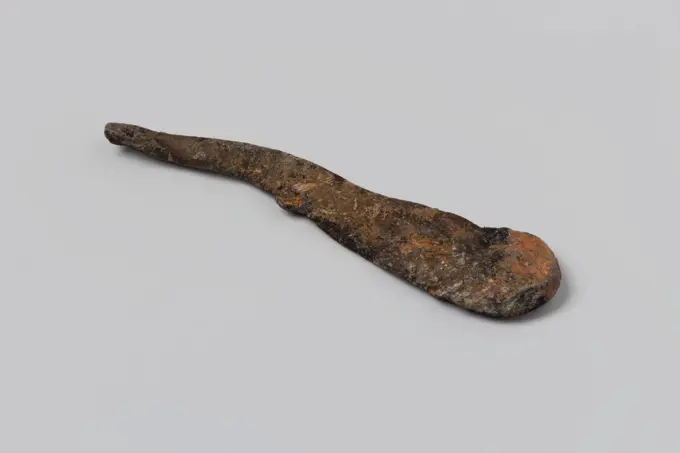
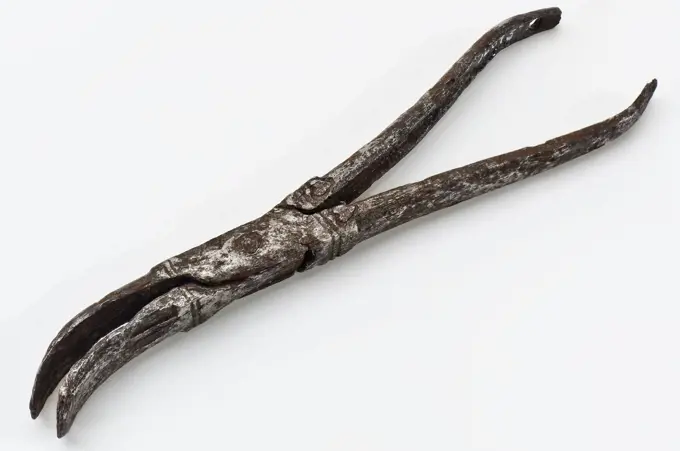
Half of squeeze shear, pinch scissors cutting tool soil find iron metal, archeology Rotterdam City triangle Schielandshuis clipping Soil discovery: Schielandshuis during restoration 1981 - 1985.
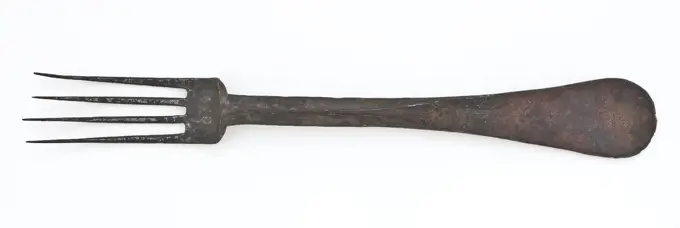
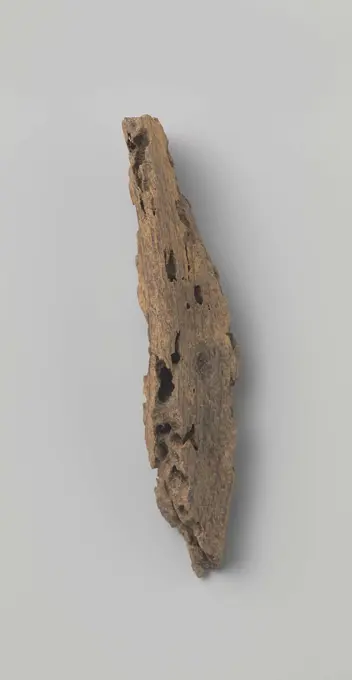
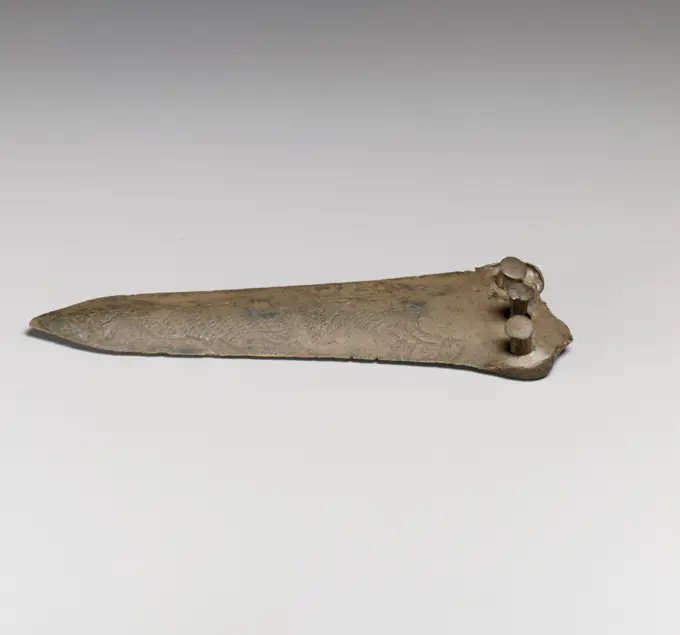
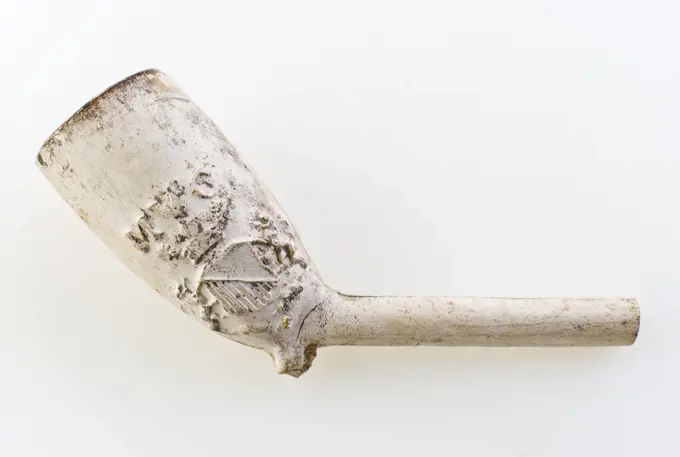
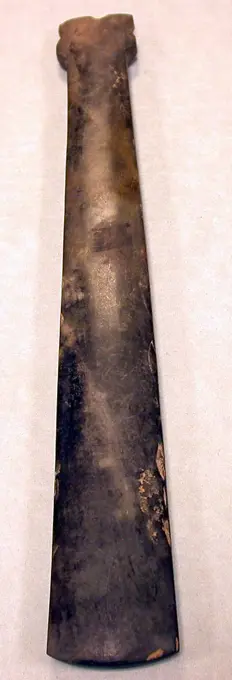
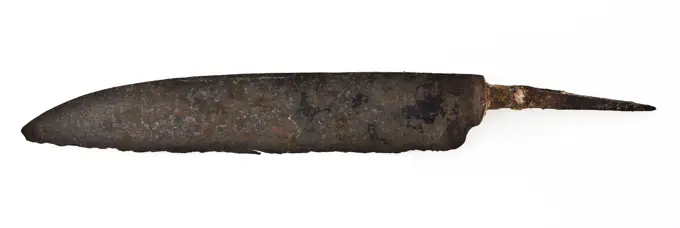
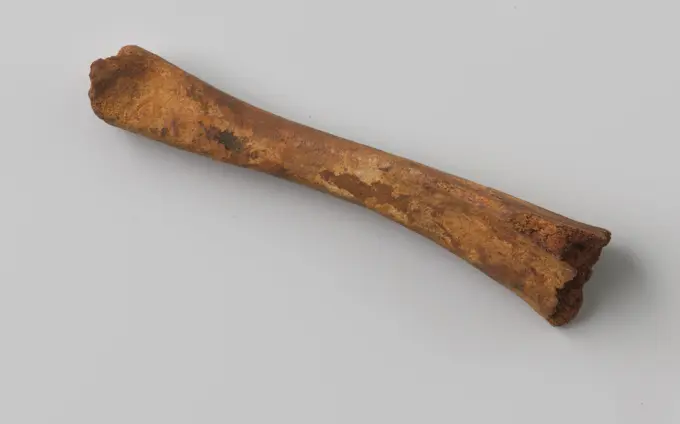
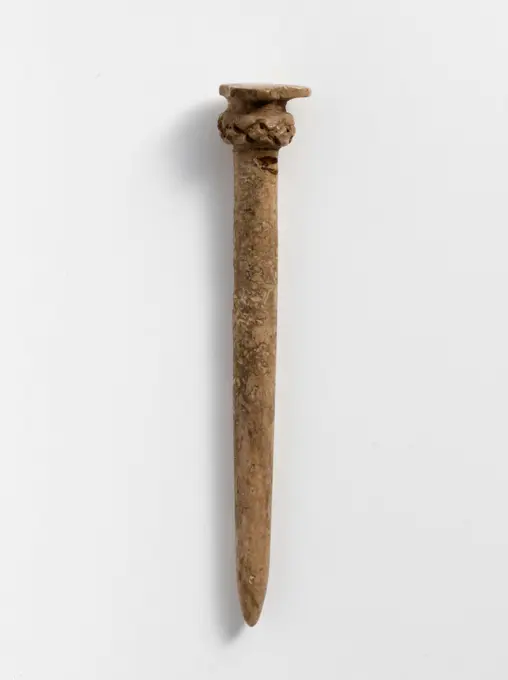
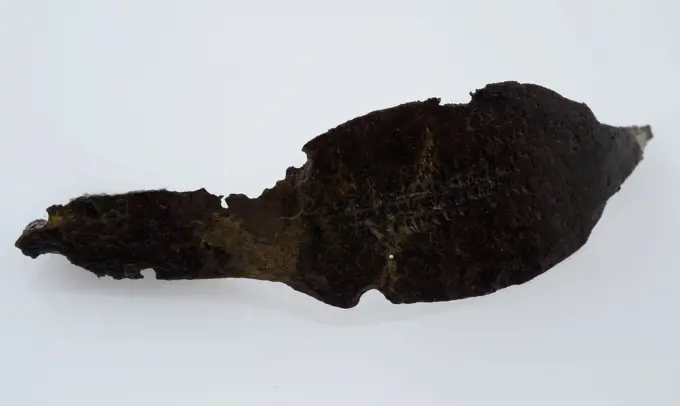
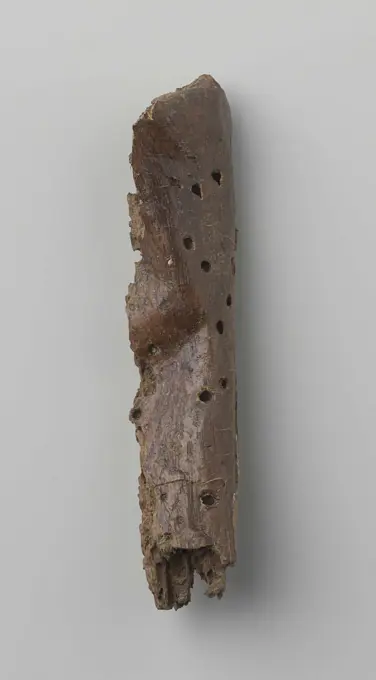
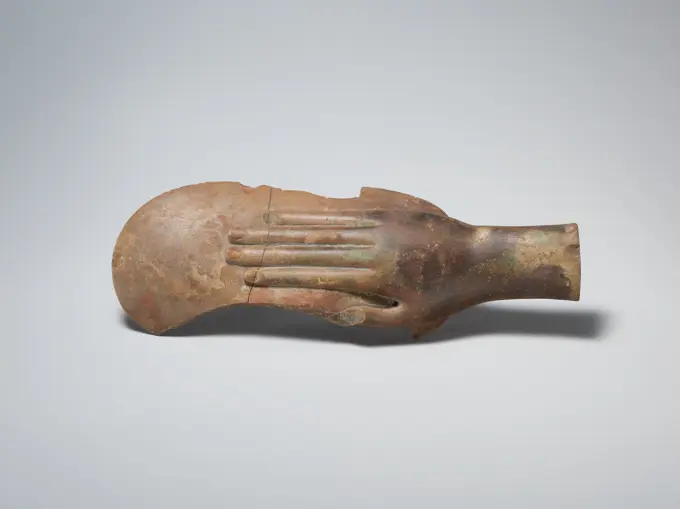
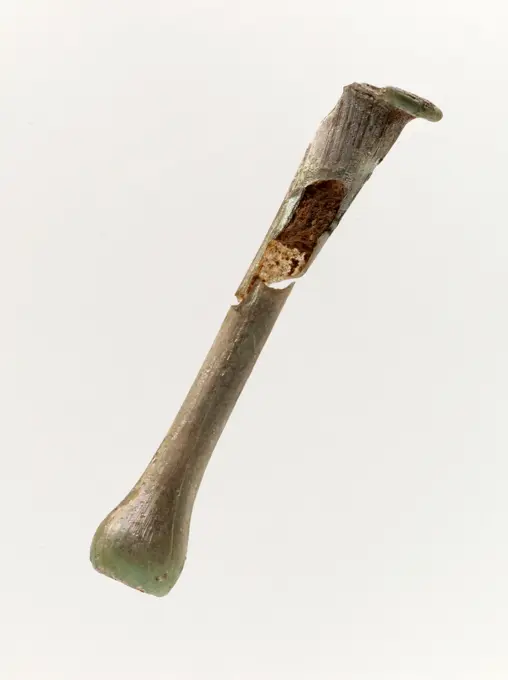
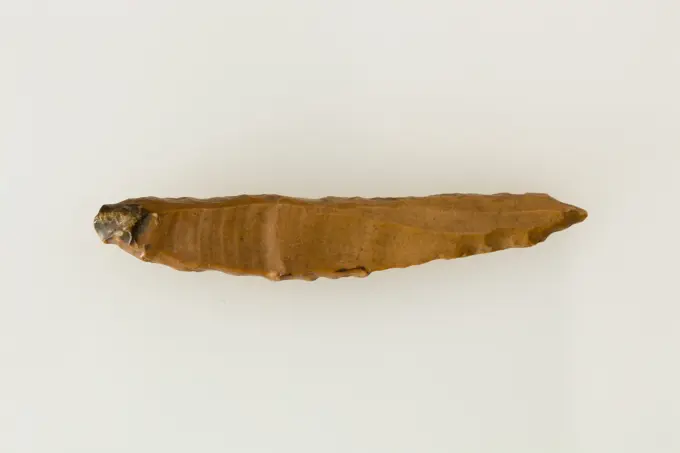
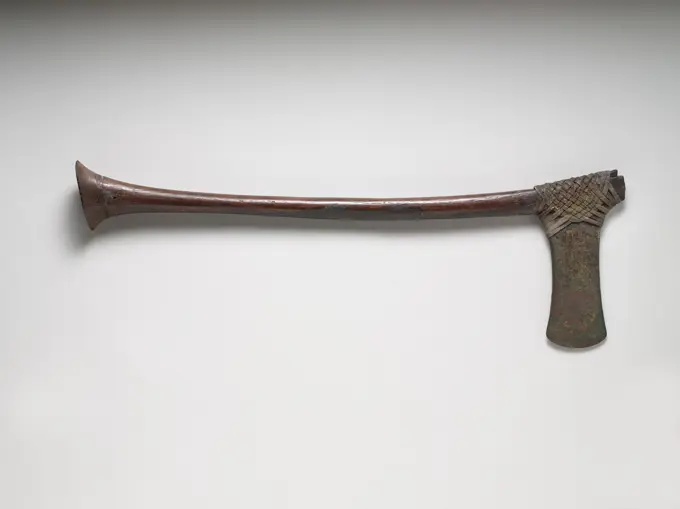
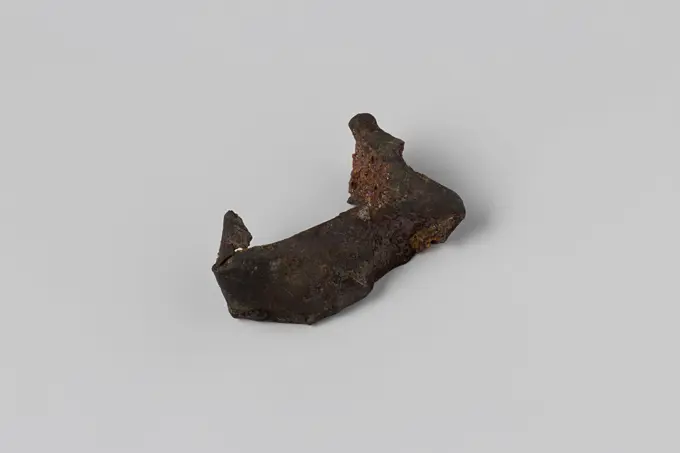
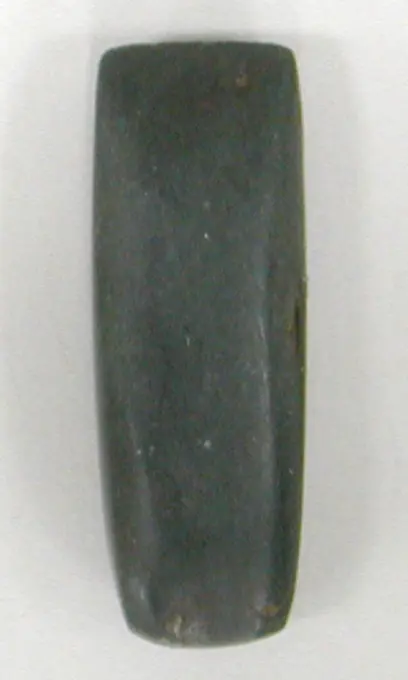
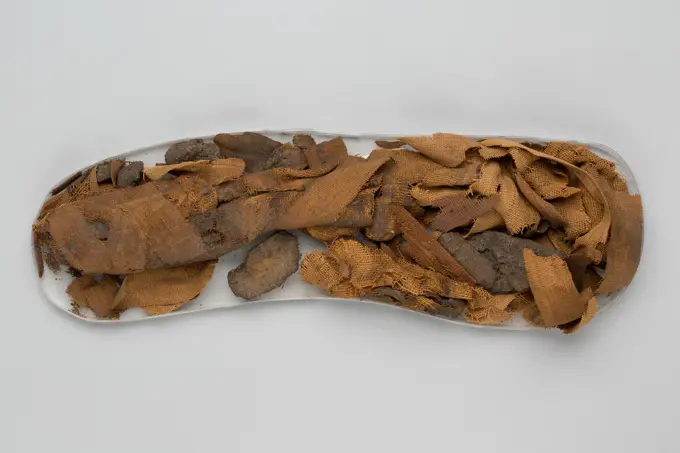
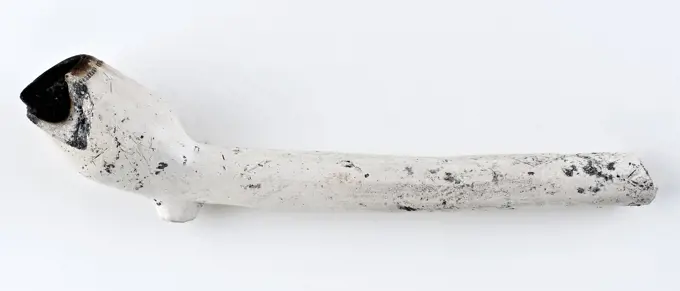
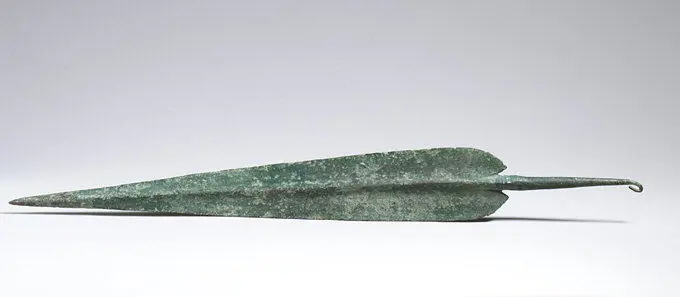
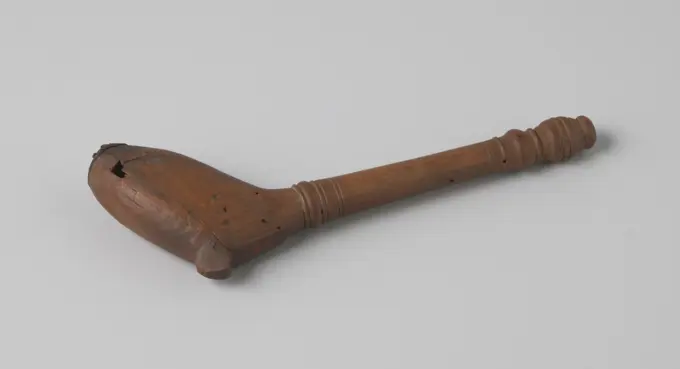
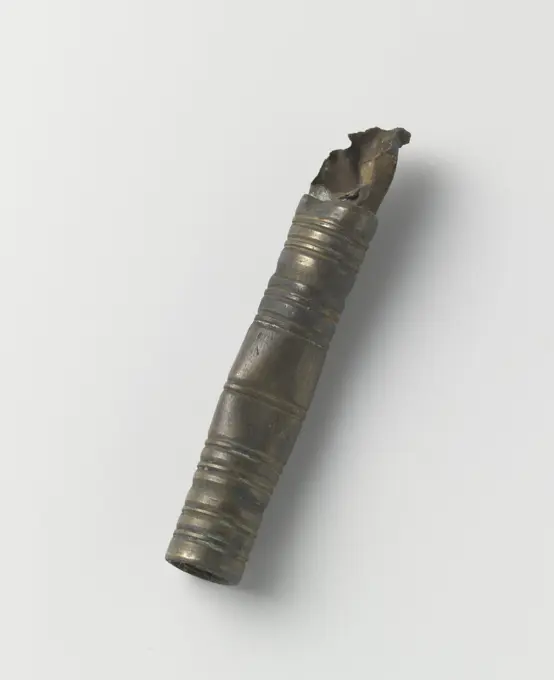
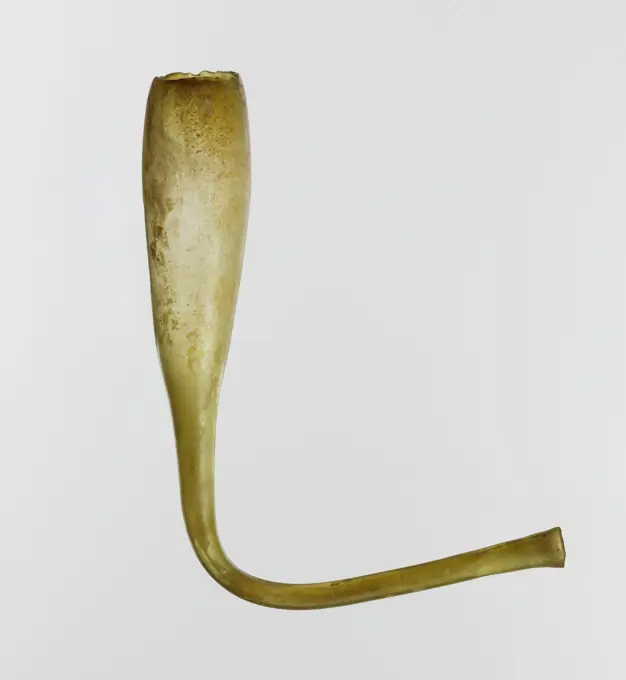
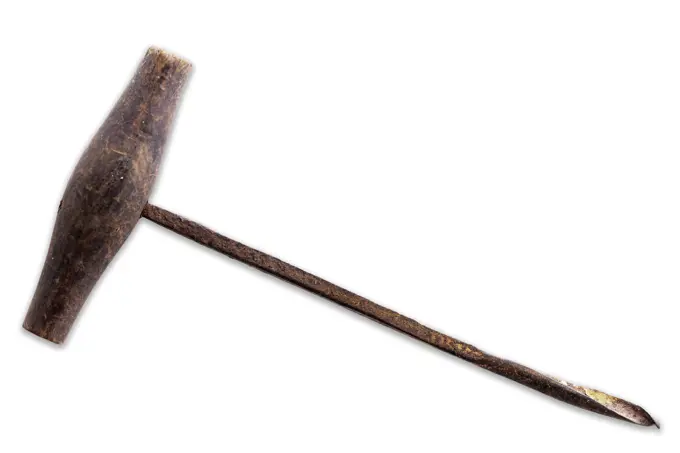
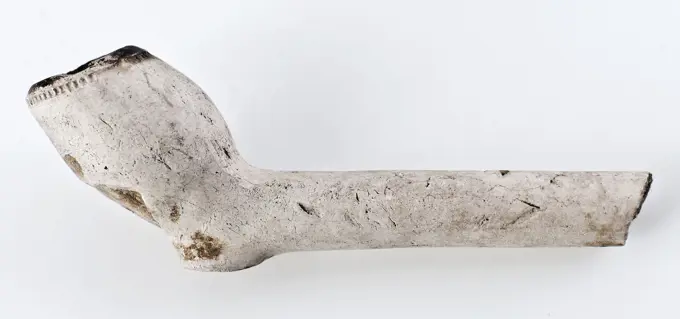
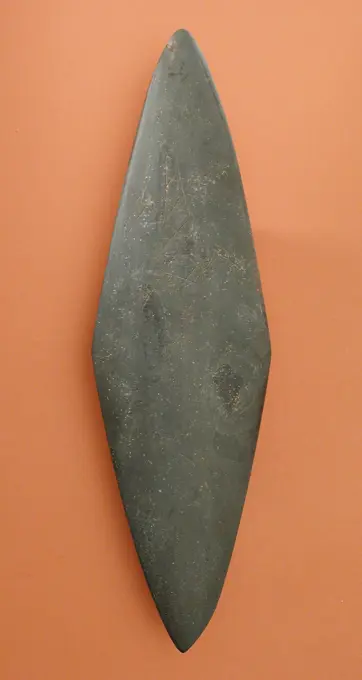
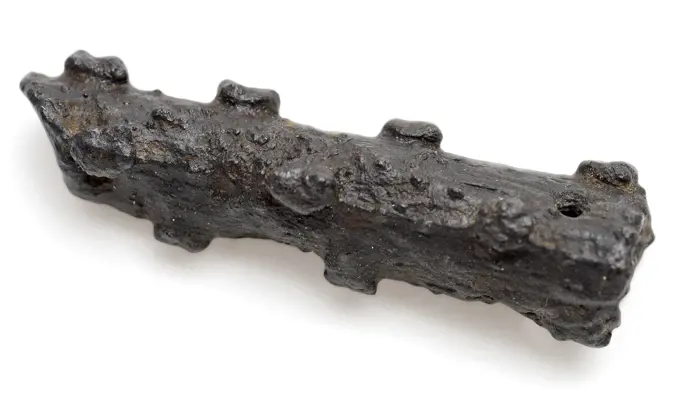
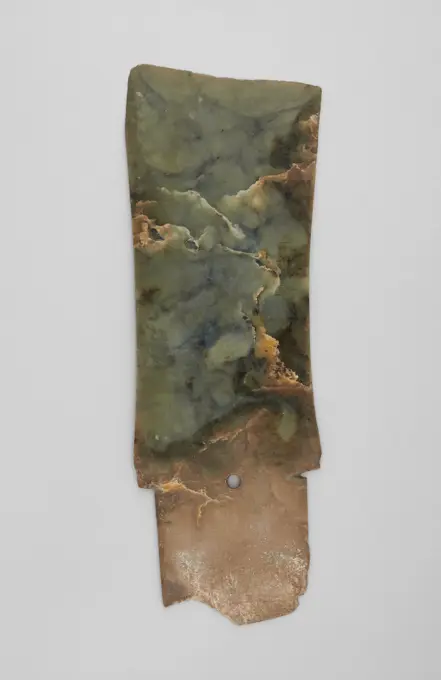
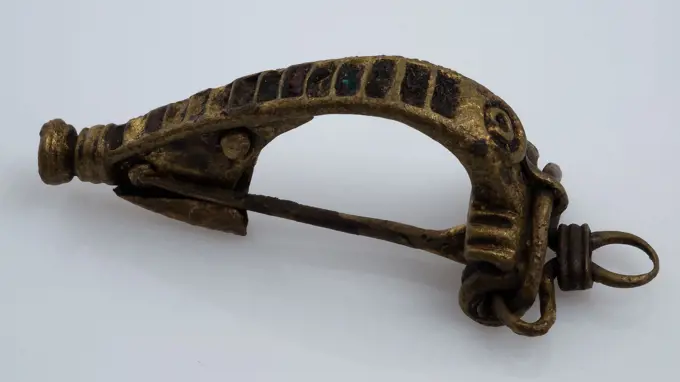
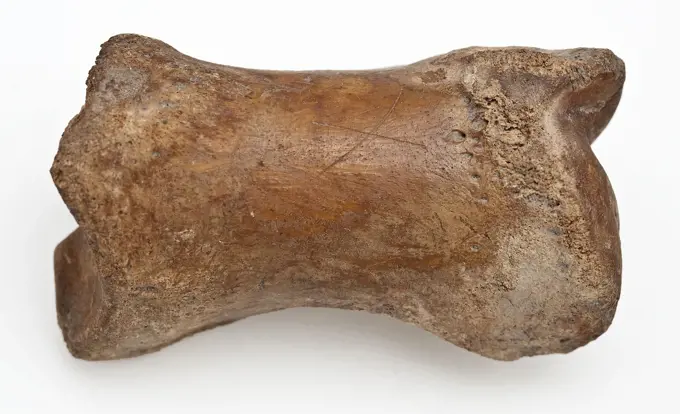
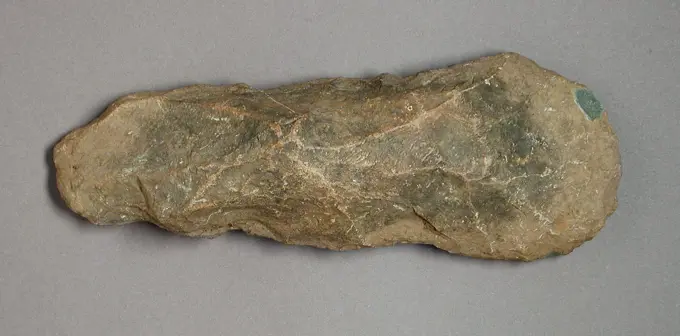
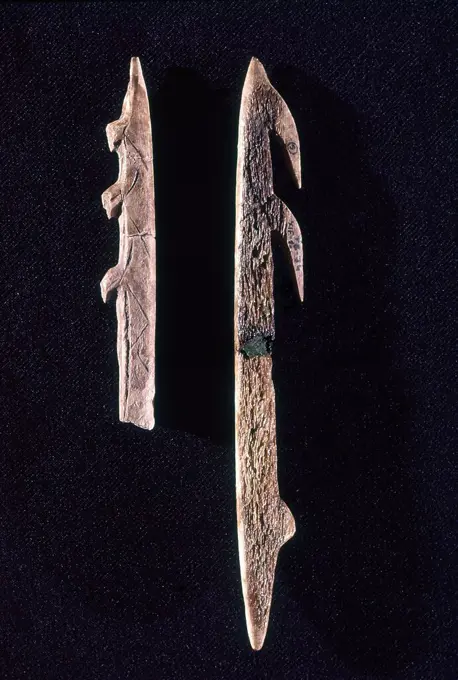
Steel van Fork or Spoon from the wreck of the East Indians Hollandia, Anonymous, 1700 - in or before 1743 spoon Cutlery, fragment: stem of fork or spoon; fragm, id. NG 1980-27H67. Netherlands tin (metal)   SecondKnife 18th-19th century Syrian. Knife 31774Sabre gifted to Jan Sobieski by Pope Innocent XI unknownBallastlood from the wreck of the East Indians Hollandia, Anonymous, 1700 - in or Before 1743  Ingot. Netherlands lead (metal)   SecondWrought-iron fork, cutlery fork soil find wrought iron, hand-forged sawn Wrought iron iron fork with four tines triangular centerpiece spatula-shaped end. Two letters are stamped in the middle of the handle: master mark or initials of the owner text on the handle: WM or VW archeology Rotterdam Stadscentrum Stadsdriehoek Oudehaven Newport eating cutlery table room Soil discovery: Oude or Nieuwe Haven Rotterdam.Broken flat handle of spoon, with two notches at the end, spoon cutlery soil find tin metal, cast Flat handle with round tip Wrapped crowned rose with in the crown: S archeology Rotterdam rail tunnel food Soil discovery: rail tunnel Rotterdam.Half of squeeze shear, pinch scissors cutting tool soil find iron metal, archeology Rotterdam City triangle Schielandshuis clipping Soil discovery: Schielandshuis during restoration 1981 - 1985.Fragment; (possibly) belonging to the retable of Soest ..Mouthpiece of a trumpet from v.O.c.-ship the 'white lion'. Mouthpiece of a trumpet from v.O.c.-ship the 'white lion'.The Pierced Foot of Christ on the Cross, from a Calvary, from the Soest Altarpiece, c. 1475 - c. 1499   wood (plant material)   wood (plant material)Raadstok of a musket from the wreck of the East Indians Hollandia, Anonymous, 1700 - in or Before 1743 framework Musket, stock with fitting; (2)fragm(2) butts, id. NG 1979-232H2623 with butt-plates id. NG 1980-27H3071 ( -1.2.). Netherlands wood (plant material). copper (metal)   SecondFish Pendant 1300 BCE-900 BCE China. Jade .Sztylet. nieznany warsztat luristański (ca 1300-ca 600 a.C.), workshopPolished Stone Axe (Masei sekifu). Culture: Japan. Dimensions: H. 6 1/4 in. (15.9 cm); W. 2 7/8 in. (7.3 cm); D. 1 3/8 in. (3.5 cm).The polished axe (masei sekifu) or celt is the most common type of stone implement used during the Neolithic age in East Asia. Such examples have been excavated with Jomon pottery, as well as with Yayoi pottery and bronze artifacts. The earliest Japanese examples are said to date to 30,0000 years B.C., and are among the oldest stone implements in the world. Museum: Metropolitan Museum of Art, New York, USA.Pijpenkop with piece of stem and fragment steel from the wreck of the East Indians Hollandia, Anonymous, 1700 - in or Before 1743  Pipe, bowl, heelmark: crowned 57; fragment, no hsm. Netherlands pipe clay   SecondBronze dagger ca. 1600-1450 B.C. Minoan Engraved scenes (possibly added ca. 1000 B.C.) of a man spearing a bull and, on the other side, bulls fighting.. Bronze dagger. Minoan. ca. 1600-1450 B.C.. Bronze, copper, silver. Late Minoan I. BronzesMachiel van Genderen, Clay pipe with city coat of arms of Utrecht, clay pipe smoking equipment smoking ground find ceramics pottery, pressed finished baked Clay pipe with mark in relief on kettle crowned city coat of arms Utrecht under three letters. Small heel without stamping mark: MVG archeology heraldry Utrecht indigenous pottery smoking tobaccoIron spit ca. 550 B.C. Etruscan Iron utensils found with the Chariot.. Iron spit 247069Pliers with curved flat jaws, pliers tools equipment foundations iron metal, forged On the legs decorated with two embossed hearts simple linear decoration Pliers for working leather archeology Rotterdam Delfshaven Lage Erf Soil found on the Lage Erf Delfshaven.Ibex Head and Broken Antler. Iran, Modern and 1350-800 B.C.. Sculpture. CeramicScepter before 16th century Tairona. Scepter 317464Woodcarving knife -Hauswehr also called peasant knife or sax from the sixteenth century, dagger knife stab weapon weapon tool kit ground find iron wood metal, forged Hauswehr or peasant blade Kling is one massive wide plate with one cutting blade and stern in the form of plate on which both sides of at least six pins of wooden grip plates were attached. The Lifting Knob is formed by curved rectangular plate. The baffle plate is designed only on one side of the blade. Simple and solid multifunction knife archeology house weather knife sword decoration status symbol personal equipment defense clothing accessory militariaWide, pointed blade of knife, with narrowed sting, blade knife cutlery soil find iron metal, archeologyPijpenkop with piece of stem and fragment stem from the wreck of the East Indiesman Hollandia. Pipe, Bowl, Healmar: Crowned 57; Fragment, no HSM.Bronze knife 2nd millennium B.C. Minoan Knife blade.. Bronze knife. Minoan. 2nd millennium B.C.. Bronze. Middle or Late Bronze Age. BronzesShin of a pig from the wreck of the East Indians Hollandia, 1700 - in or before 1743  Faunal remains: bones; pig bones (Sus); tibia (part of hind leg), distal end unfused, proximal end eroded.  bone (material)   SecondPointe de Flche ". OS. Dynasty of Shang (1765 - 1122 BC), China. Paris, Muse Cernuschi. Pointe Asian art, Chinese art, extreme-East art, Shang dynasty, prehistoric time, Shang time, bone, prehistory, prehistoryNail 15th-16th century European. Nail. European. 15th-16th century. Iron. Metalwork-IronMiniature knife -Each ship was fitted with carpentry tools for making repairs. On Nova Zembla, these tools came in handy for building the Safe House’. It is striking how little the tools have changed over the centuries; many of them can still be found in modern toolboxes.Fragment Pijpenkop from the wreck of the East Indians Hollandia, 1700 - in Or Before 1743  Pipe, bowl, whole market illegible; Fragment, probably whole market crowned 91, 2hsm1. Netherlands pipe clay   SecondModel of a Windsail, anonymous, c. 1830 - c. 1880 scale model Model of a cooling sail. The upper part consists of a hoop with cloth covered and an opening for the air input. This object was found without number and the identification remains uncertain. In the transfer papers of 1889 there is only a "cooling sail". It corresponds to the other two models of cooling sails in the collection, but it seems very incomplete. Netherlands (possibly) metal. textile materialsNeedle ca. 4400-3800 B.C. Predynastic, Badarian. Needle 557590Woodcarving knife -Dienblad, anonymous, c. 1880 - c. 1910 Oval tray, the long sides of which are bent. The leaf has a narrow, raised edge. The tray is marked, but the brands are false. Netherlands silver (metal) Oval tray, the long sides of which are bent. The leaf has a narrow, raised edge. The tray is marked, but the brands are false. Netherlands silver (metal)Bronze fibula or mantle pin, curved model with flat back, without pin, fibula fastener soil find bronze metal, poured beaten towed bronze fibula or mantelplate Curved model with broad back of thinly beaten bronze archeology Geervliet Bernisse roman time early Middle Ages dress fastening pins Soil discovery Geervliet location New Markenburg 1965.Miniature knife -Copper Axe 14th-early 16th century Mexican. Copper Axe. Mexican. 14th-early 16th century. Copper. Mexico, Mesoamerica. Metal-ImplementsGreece, Sarmacja, Olmia, V The beginning of the 4th century BC, Dolphin money, AE MintFragment; (possibly) belonging to the retable of Soest ..Dagger-Blade (ge). China. Date: 1300 BC-1000 BC. Dimensions: 19.6 × 4.1 × 0.3 cm (7.7 × 1.6 × 0.1 in.). Jade. Origin: China. Museum: The Chicago Art Institute, USA.Amulet of the God Ptah. Egyptian. Date: 664 BC-332 BC. Dimensions: 4 × 1.25 × 1 cm (1 9/16 × 1/2 × 3/8 in.). Faience. Origin: Egypt. Museum: The Chicago Art Institute, Chicago, USA. Author: Ancient Egyptian.Decorated spoon ca. 1295-1070 B.C. or later New Kingdom, Ramesside or Third Intermediate Period Decorated spoons in the form of an arm and hand holding a shell have a long history in Egyptian Art. The Late New Kingdom and Third Intermediate Period through Saite Period has produced a number of spoons consisting of a large shell-shaped bowl gripped by a long-fingered hand provided with only a wrist and lower forearm. Faience and fine grained stones are generally used. A number of examples of this kind are inscribed with names of gods and donors.This example and one other are the only examples of the numerous preserved examples of decorated spoons of any type that retain any signs of contents. This one has traces of a red pigment, which has suggested to some it may have been reused.. Decorated spoon. ca. 1295-1070 B.C. or later. Faience. New Kingdom, Ramesside or Third Intermediate Period. From Egypt. Dynasty 19-20 or laterFlask. Glass. Gallo-Roman. Paris, Carnavalet museum. 51538-5 Gallo-Roman time, vial, Gallo-Roman, glassTool ca. 3850-2960 B.C. Predynastic Period. Tool. ca. 3850-2960 B.C.. Flint. Predynastic Period. From Egypt, Fayum, camp II (CII), BSAE/Caton-Thompson excavations, 1924-26Bird Pendant. China. Date: 1100 BC-900 BC. Dimensions: 8.1 × 3 × 0.3 cm (3 3/16 × 1 3/16 × 1/8 in.). Jade. Origin: China. Museum: The Chicago Art Institute, Chicago, USA.Fragment Steel van Fork or Spoon from the wreck of the East Indians Hollandia, Anonymous, 1700 - in Or Before 1743 spoon Cutlery, fragment: stem of fork or spoon; fragm, flat, widening. Netherlands copper (metal)   SecondWooden tap without stop, tapered with pointed button, marked, spigot part soil found wood, w 2.5 sawn twisted drilled sanded Hollow tapered rod with knob that is bevelled on three surfaces. In the knob and in the widest part of the rod hole across. Mark on sloping side button on button: PCH Archeology crane holder component barrel Schielandshuis Rotterdam City Triangle Soil discovery: Schielandshuis 1981.Pilgrim's Badge 14th-16th century French. Pilgrim's Badge. French. 14th-16th century. Lead. Metalwork-LeadFragment Pijpenkop from the wreck of the East Indians Hollandia, Anonymous, 1700 - in Or Before 1743  Pipe, bowl, heelmark: fish, flounder; fragm, 2hsm1,4. Netherlands pipe clay   SecondExcerpt copper from the wreck of the East Indians Hollandia, Anonymous, 1700 - in or Before 1743 fragment Varied parts or fragments, sheet metal fragments: worked, with folded rims; fragm, eroded, squashed; straight fold-over rim. Netherlands copper (metal)   SecondMountAx ca. 1635-1458 B.C. Second Intermediate Period-Early New Kingdom The blade of this battle ax is among the earliest examples of its kind. It was found in the coffin of the overseer Khay,” presumably a military official. The handle was made from a branch or tree trunk chosen for its curvature. The flared end is a separate piece of wood, mounted with its grain direction perpendicular to that of the shaft. This method of construction would have preserved precious raw materials and cut down on labor. It is unclear how the two surviving pieces were originally joined and whether the modern, intermediate element was added to replace a component that did not survive or to compensate for disproportionate shrinkage of the wood shaft and terminal during burial. The leather lashing attaching the blade to the handle had disintegrated and was restored based on other, better preserved examples.. Ax. ca. 1635-1458 B.C.. Copper alloy, Wood, leather (modern). Second Intermediate Period-Early New KingdFragment of buyer from the wreck of the East India Hollandia.parts or artifacts; eroded fragments: Materials; Copper.Celt before 16th century Maya () Greenstone axe heads, commonly known as “celts,” were some of the most important works of art across ancient Mesoamerica and Central America. Created from jadeite mined from the Motagua River Valley of southern Guatemala, or using local green stones from highland Mexico, celts were first created by the Olmec peoples of the Gulf Coast after 1000 B.C. The Olmec conceived of green celts as sprouts of maize and thus “planted” celts in dedicatory offerings, activating ceremonial spaces and perpetuating agricultural fertility. For the later Maya peoples, celts also served as dedicatory materials, but more so as adornments for the royal bodies of kings and queens. Often the celts would be thinned into celt-shaped plaques, strung together in pairs and triads in order to create belt assemblages that would have clinked with the sound of jades striking one another. Tombs from the Classic Period (ca. AD 250-900) contain celts of jadeite and various greenstones froBlade with short blade and wooden handle with round cross section around which decorated metal sleeve, knife cutlery soil find iron wood copper metal w 17.0, archeologyLinen and mud from interior of Ptah-Sokar-Osiris figure 306-30 B.C. Ptolemaic Period. Linen and mud from interior of Ptah-Sokar-Osiris figure. 306-30 B.C.. Linen, mud. Ptolemaic Period. From EgyptPunch on whiteThai SticksAlabastron (Container for Scented Oil). Ancient Mediterranean. Date: 600 BC-301 BC. Dimensions: 11.4 × 3.2 × 3.2 cm (4 1/2 × 1 1/4 × 1 1/4 in.). Glass, core-formed technique. Origin: Mediterranean Region. Museum: The Chicago Art Institute, FLORENCIA, USA.Fragment stemplowanego imadła amfory. unknown, authorClay pipe, marked with stalk decorated with fleur de lis stamps, clay pipe smoking equipment smoke floor earthenware ceramics pottery h 2,9, pressed finished baked Clay pipe marked with fleur de lis stamps decorated handle Rad decoration under lip top edge along entire circumference. Decoration consists of separate stamps next to each other or behind each other on the axis of the stem Hielmerk. heel mark: II in decorated edge archeology Rotterdam City center Cool Schiedamse Vest Mainland City Triangle Runway indigenous earthenware smoking tobacco craft Soil discovery: Vasteland-Baan Schiedamse Vest Rotterdam Complex of discovery with material from pottery and pipe making and house waste from the 17th century.Stożek mozaikowy. unknown, authorDagger-Blade (Ge) Made 1600 BCE-1050 BCE China. Jade .Copper alloy spearhead ca. 2500-2000 B.C. Cypriot Leaf-shaped blade with a hooked tang.. Copper alloy spearhead 244151Pipe fountry of wood with brass hinges, with pipe. Pipe Foundry or Wood With Brass Hinges. In a Pottery PipeNail 15th-16th century European. Nail. European. 15th-16th century. Iron. Metalwork-IronBrass instrument fragment from the wreck of the East Indiaman Hollandiaship, anonymous, 1700 - in or before 1743 wind instrument Wind instrument; fragment of trumpet mouthpiece; tube with concentric circle moulding, one end broken. Netherlands copper (metal)   SecondVolute-krater fragment 4th century B.C. Greek, South Italian, Apulian. Volute-krater fragment. Greek, South Italian, Apulian. 4th century B.C.. Terracotta; red-figure. Late Classical. VasesUninscribed Funerary Cone ca. 2124-1981 B.C. Middle Kingdom. Uninscribed Funerary Cone. ca. 2124-1981 B.C.. Pottery, paint. Middle Kingdom. From Egypt, Upper Egypt, Thebes, Asasif, cemetery on north side, Carnarvon/Carter excavations, before 1911. Dynasty 11Quiver -Glass horn-shaped vessel 4th-early 5th century A.D. Roman Translucent light yellow green. Slightly inverted, uneven, and thickened rim, rounded in the flame; elongated tubular body with slightly convex side, turned at base to one side and continuing as a long, slender tube; hollow spout with flaring mouth and rounded, uneven rim at end.Intact; a few elongated bubbles; patches of dulling and iridescent weathering.. Glass horn-shaped vessel. Roman. 4th-early 5th century A.D.. Glass; blown. Late Imperial or Early Byzantine. GlassOracle bone fragment. Culture: China. Dimensions: 3 3/8 × 6 1/2 in. (8.6 × 16.5 cm). Museum: Metropolitan Museum of Art, New York, USA.historisch,rostig,handbohrer,rost,rosten,verrostet ** ancient,rusty,handbohrer,ancients,rusted 647-ffyFragment pipe head and fragments Pipe stones from the wreck of the East India Hollandia.Pipe, voice; fragment.White clay pipe, marked, smooth handle, clay pipe smoking equipment smoke floor pottery ceramic pottery, hand-formed baked White clay pipe marked smooth handle. Heel mark Damage to the boiler was probably caused by throwing away the hot pipe in cold water canal heel mark: wheel with spokes and round shaft in the middle archeology smoking tobaccoPalette. Egypt, Pre-Dynastic Period (circa 5500 - 3050 BCE). Tools and Equipment; palettes. SlateBronzespeer lanza de bronce, cueva de Arenaza, Galdames, Arkeologi Museoa, museo aqueologico, Bilbao, Bizkaia, Pais Vasco, Spain Copyright: xZoonar.com/Tolox 22845414Talon ax (title awarded). Bronze. Carnavalet museum, history of Paris.Ferret Middle of 6th century Frankish. Ferret. Frankish. Middle of 6th century. Copper alloy. Made in Niederbreisig, Germany. Metalwork-Copper alloyAxe head ca. 2300-2000 B.C. Hattian. Axe head 324473Molding; wood, carvedDagger 500-700 Frankish. Dagger 465508 Frankish, Dagger, 500700, Iron with traces of wood hilt or sheath, Overall: 6 x 1 1/8 x 1/4 in. (15.2 x 2.9 x 0.6 cm). The Metropolitan Museum of Art, New York. Gift of J. Pierpont Morgan, 1917 (17.193.191)Metal fittings from the wreck of the East Indies' t Vliegend Hart ,, 1729 - 1735  Two fragments, a copper strip and a ring. Metal strip. Middelburg copper (metal)Tin bar or club with excellent lumps, spring holder, artifact holder soil find tin metal, w 0.9 cast Small pewter object in the shape of club or rod Light conical shape Hollow trunk Two mounting holes in the base. Slanted top series of excellent buds along the shaft archeology Rotterdam City Triangle Botersloot Binnenrotte goose pen Soil discovery Rotterdam Binnenrotte crashes behind the Botersloot.Ferret 7th century Frankish. Ferret 465444 Frankish, Ferret, 7th century, Copper alloy, Overall: 1 5/8 x 7/16 x 3/16 in. (4.1 x 1.1 x 0.4 cm). The Metropolitan Museum of Art, New York. Gift of J. Pierpont Morgan, 1917 (17.193.136a)Bottle; glassPeg from Wah's Coffin ca. 1981-1975 B.C. Middle Kingdom. Peg from Wah's Coffin. ca. 1981-1975 B.C.. Wood. Middle Kingdom. From Egypt, Upper Egypt, Thebes, Southern Asasif, Tomb of Wah (MMA 1102), MMA excavations, 1920. Dynasty 12Fragment of a shoe from the wreck of the I 1735 Far -fisted East Indies' t Vliegend Hart, 1700 - 1735  The brown piece of leather is elongated and curls up at an end. It was probably part of a shoe. In some places the orange or green is discolored.  leatherFragment tobacco pipe. Fragment tobacco pipe with a fish, a crown and the letters C H L shown. Of the excavations at the Hofstede Arentsburg 1827-1831 under the supervision of professor Reuvens.Figure 8th-9th century. Figure 450961Anonymous, ceremonial blade (common name), 3000. CERUNUSCHI museum, Museum of Arts in Asia in the city of Paris.Fibula or mantelpiece, completely complete, back with inlaid enamel, fibula fastener soil find bronze enamel metal, cast struck drawn bronze fibula Curved model with over the back with enamel inlaid compartments. Entire frame and needle present. Yellow metal in which small wells of oxidation archeology Rotterdam City Triangle Soil discovery site Jacobsplaats Rotterdam.Pijpenkop with piece of stem from the wreck of the East Indieschief Hollandia. Pipe, Bowl, Healmar: Tobacco's Brazier; Fragm, 2HSM1.3.Glass Fragment 14th century European. Glass Fragment. European. 14th century. Pot metal glass. Glass-StainedDigit from cow's leg, part of throwing game: flocks, koot game piece relaxant soil find leg, Bone on long side marked p. Cross shallow ingrained archeology Rotterdam railroads play koot kootspel fikkelen Soil discovery: trajectory rail tunnel Rotterdam.Axe. Thailand, Nan Province, Haobinian culture, 9,000-6,000 B.C.. Arms and Armor; axes. StoneShoes 17th century probably British. Shoes 101808ARPONES DE HUESO PROCEDENTES DE LA CUEVA DE TITO BUSTILLO - MAGDALENIENSE - PALEOLITICO SUPERIOR - 15000-10000 AC. Location: MUSEO ARQUEOLOGICO-COLECCION. Oviedo. ASTURIAS. SPAIN.