Historic Decorative Jars

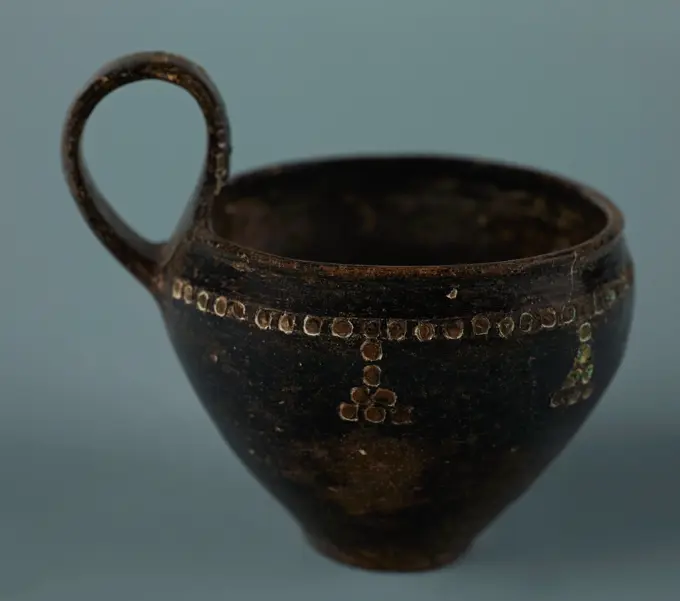
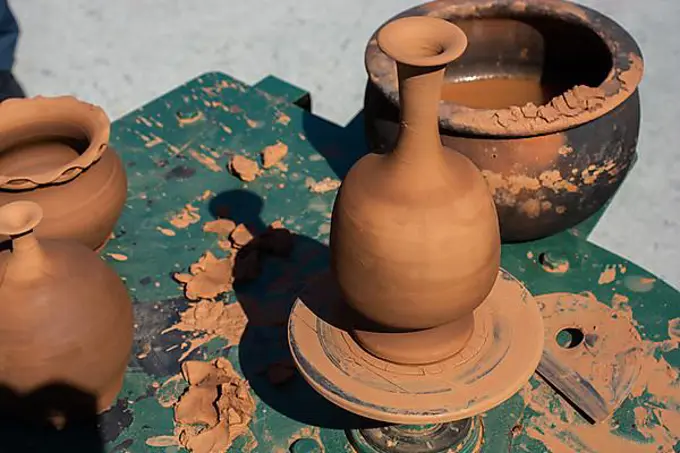
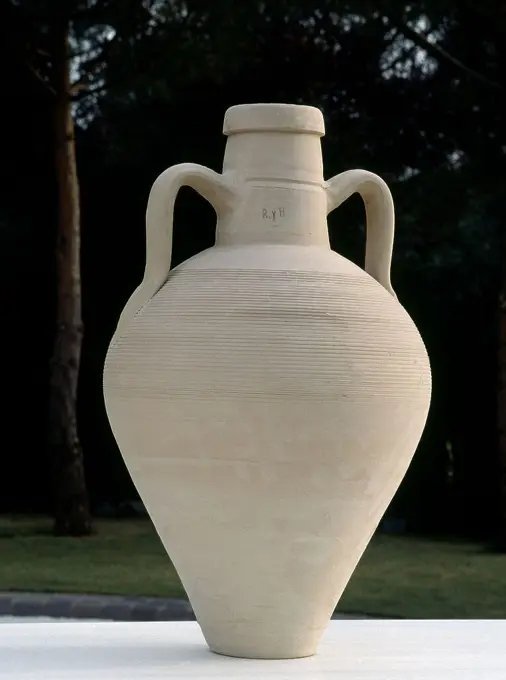
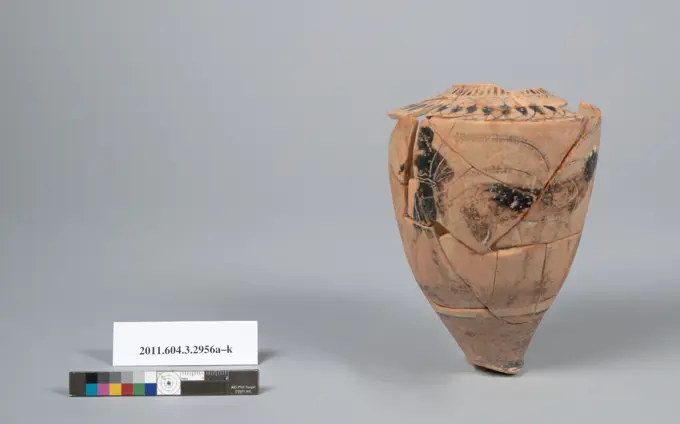
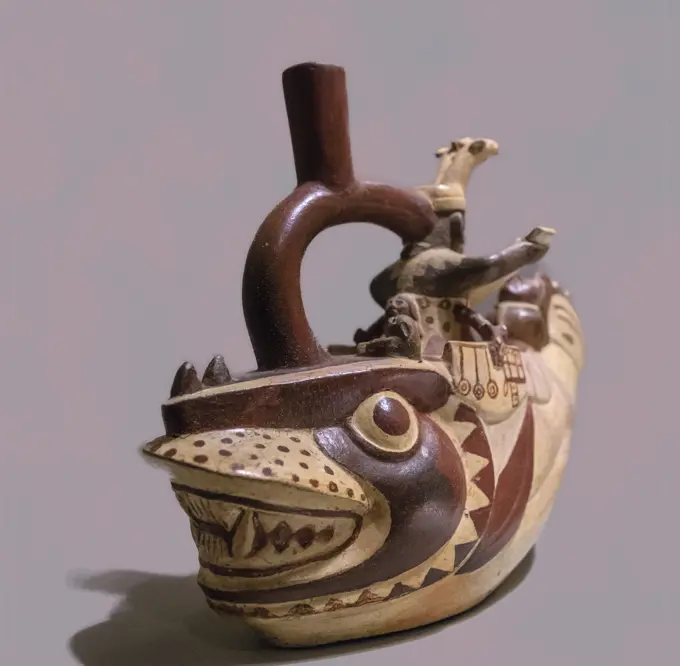
An assortment of antique jars and flasks made of glass and ceramic, highlighting their unique shapes and historical significance.

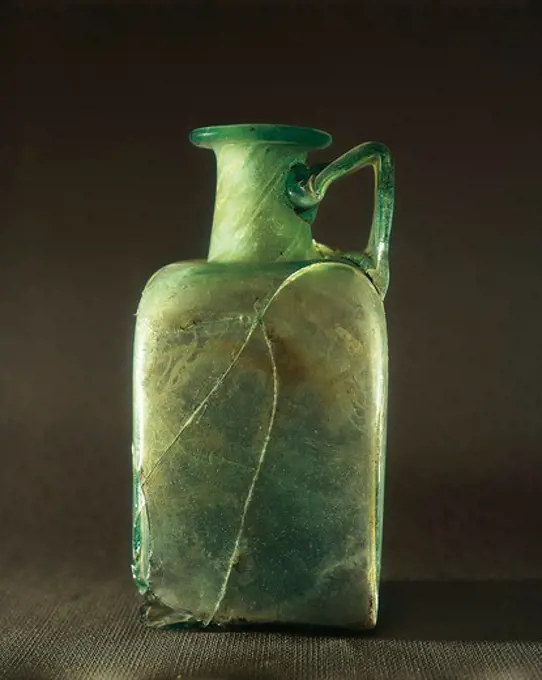
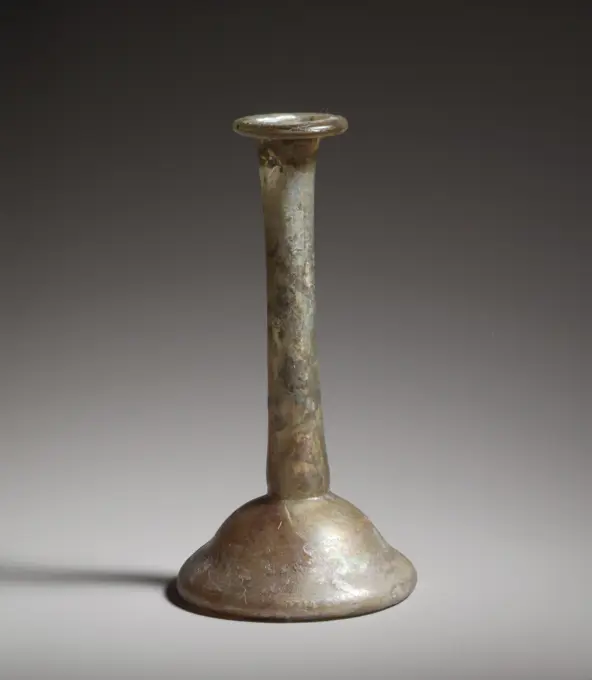
Flask; Eastern Mediterranean; perhaps 4th - 5th century; Glass; 11 cm (4 5,16 in.)
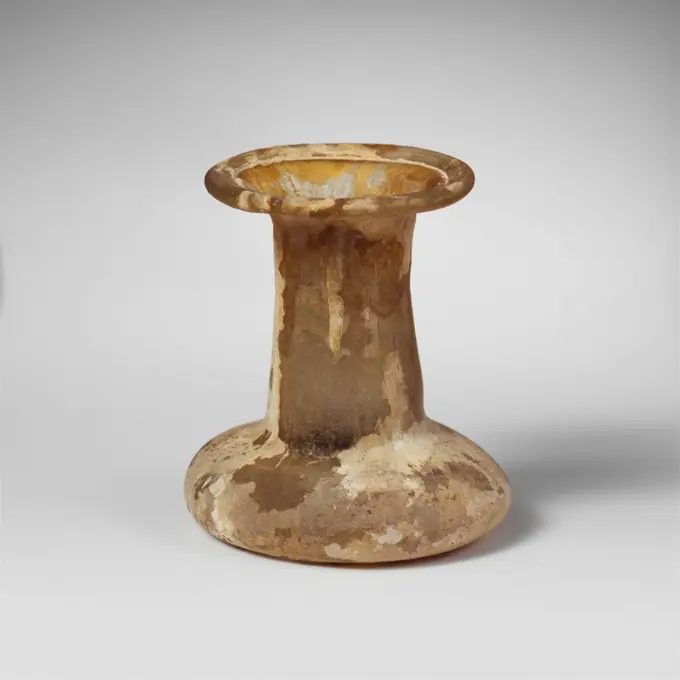
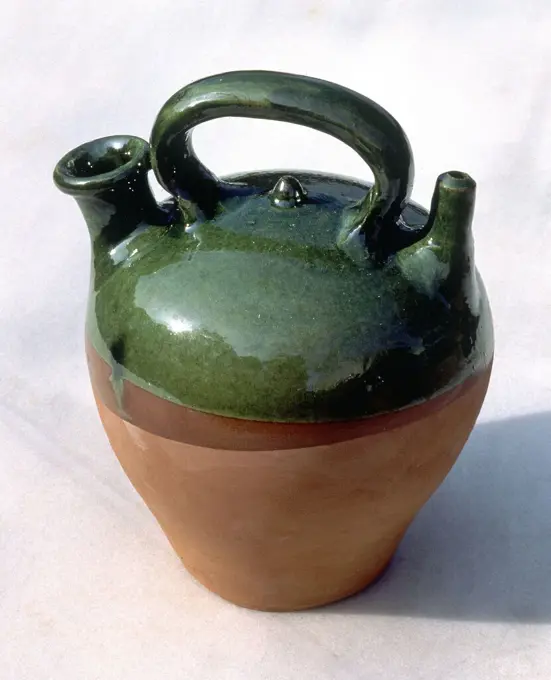
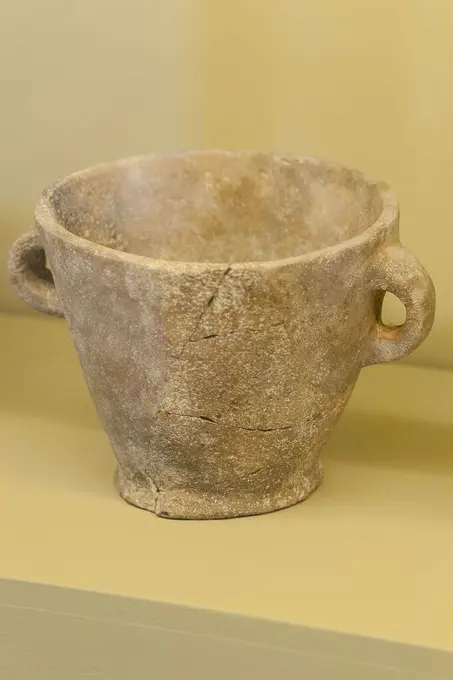
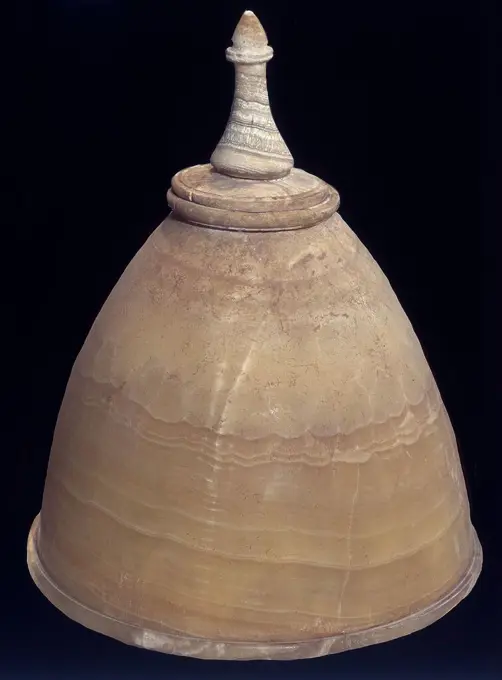
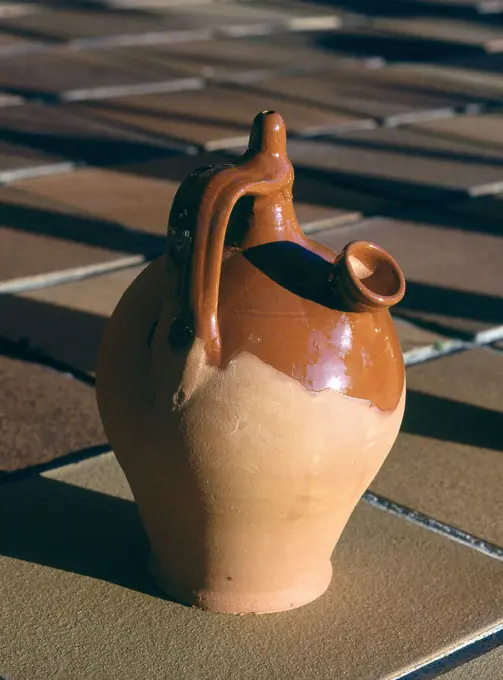
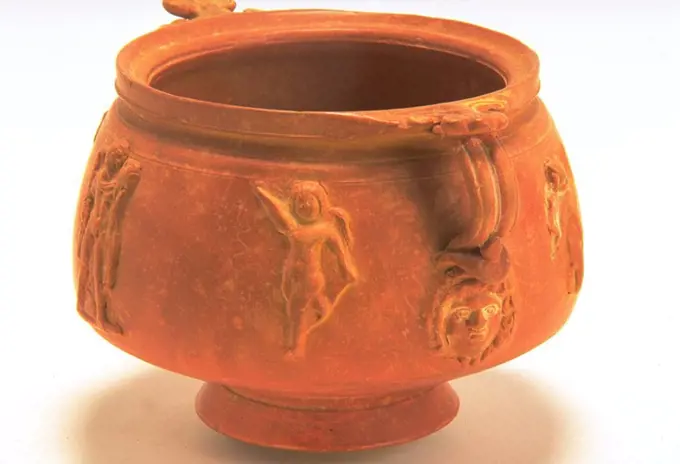
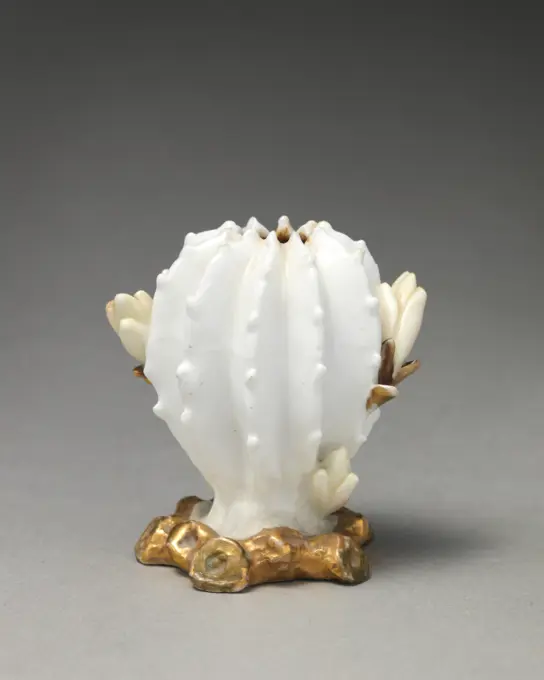
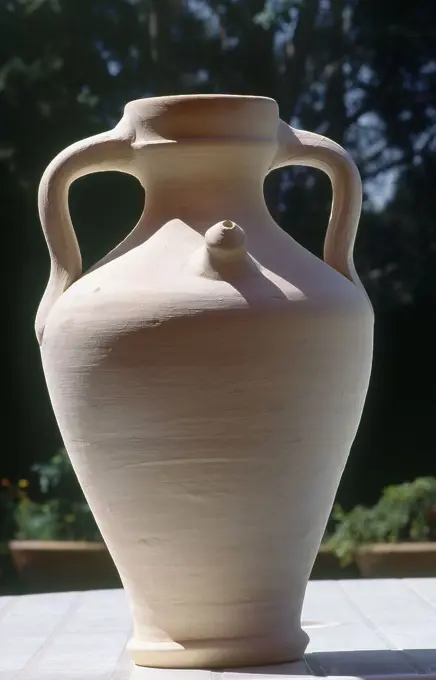
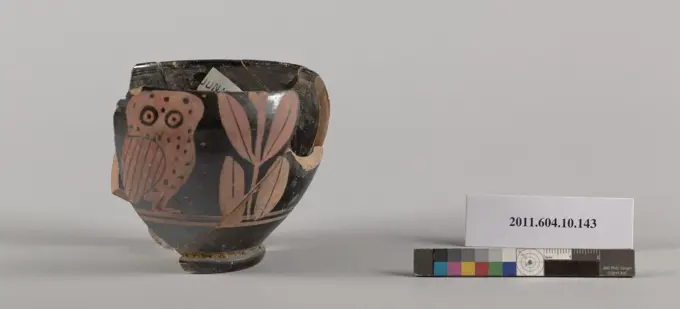
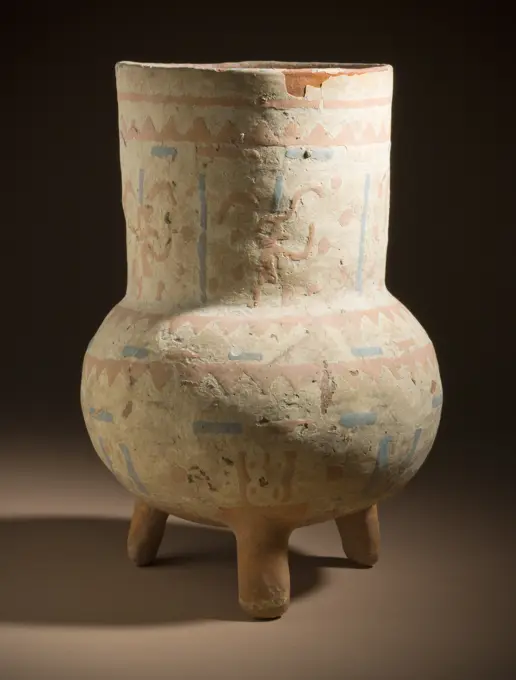
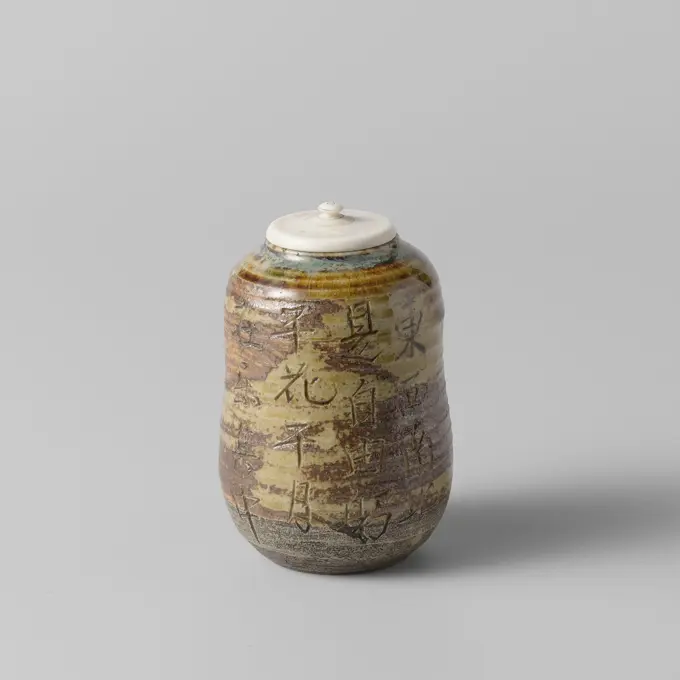
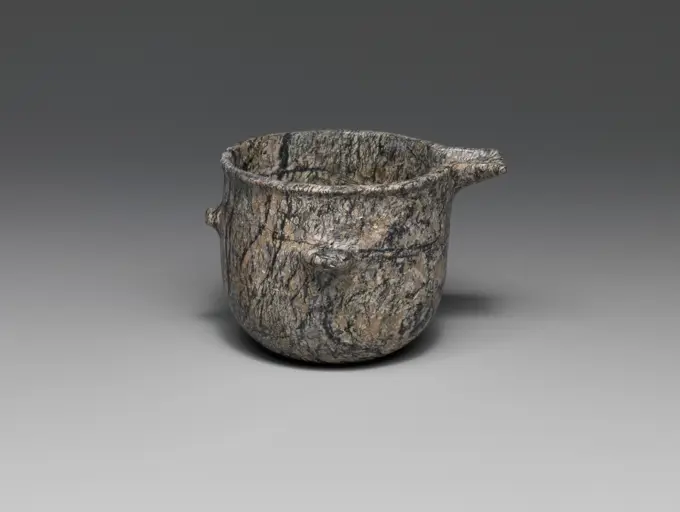
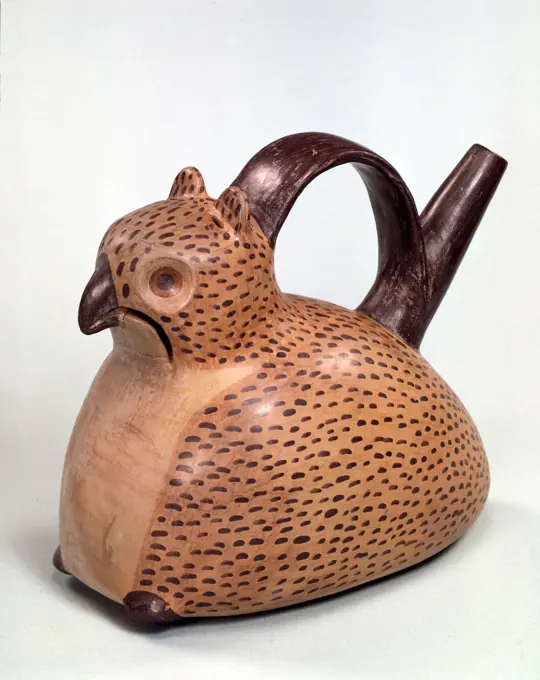
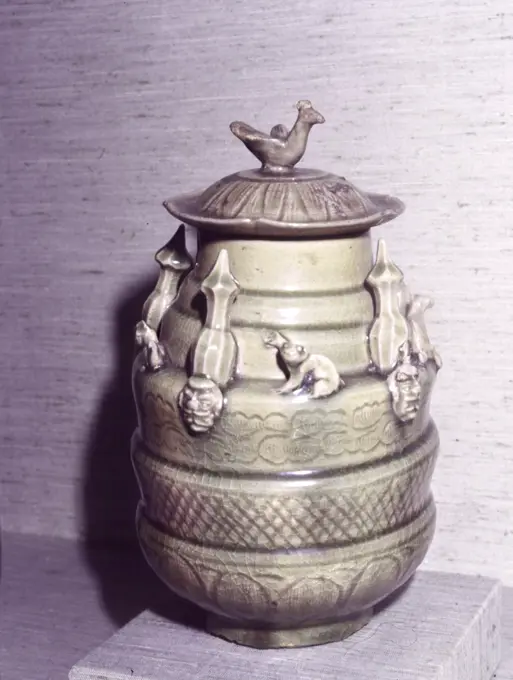
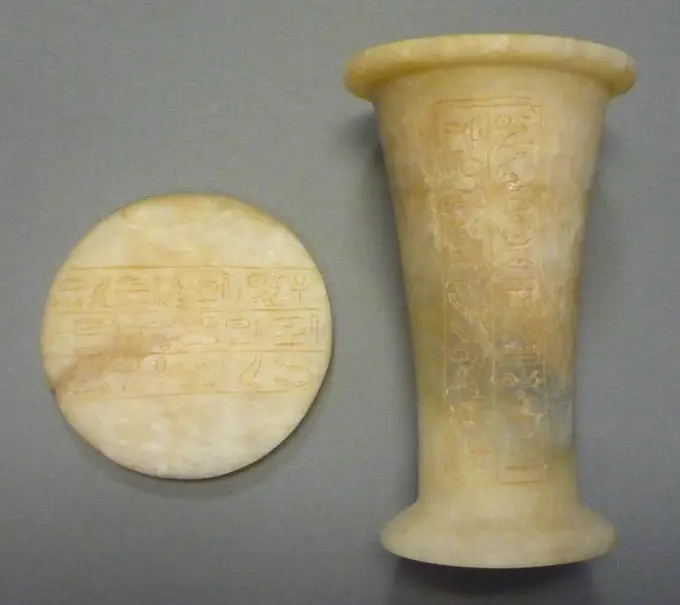
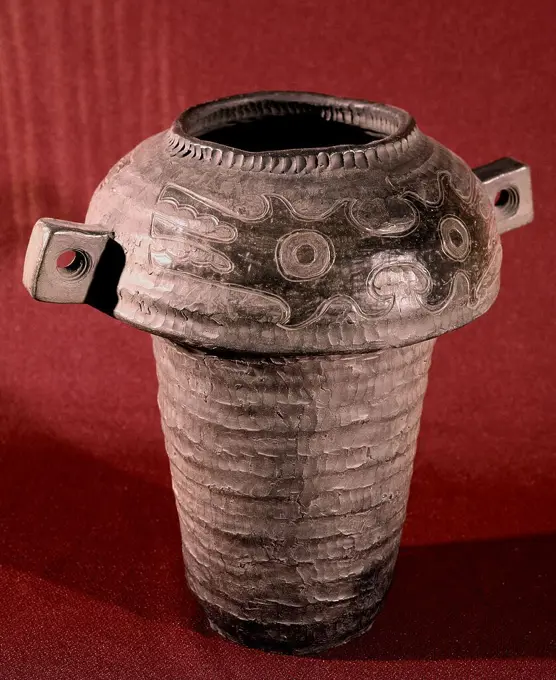
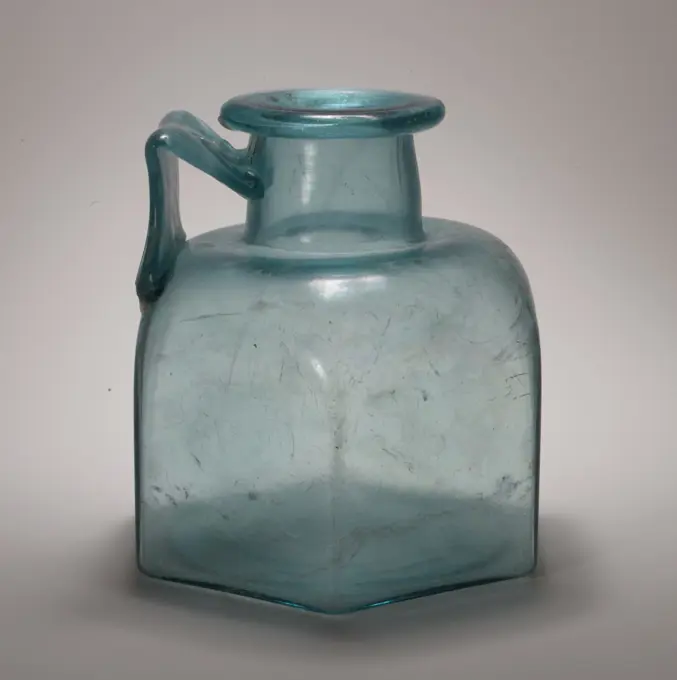
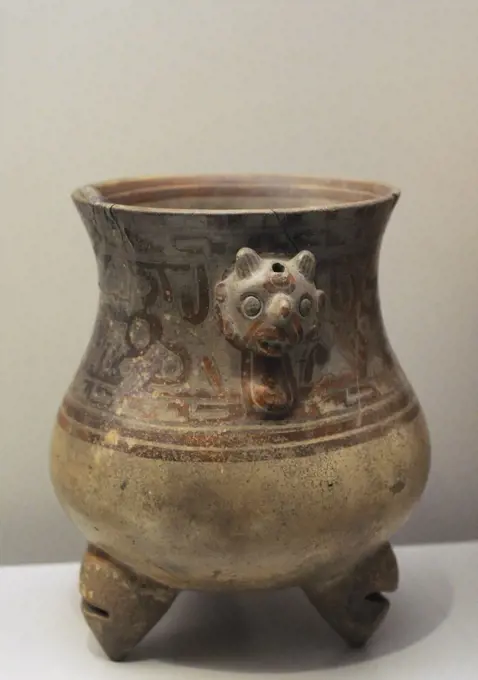
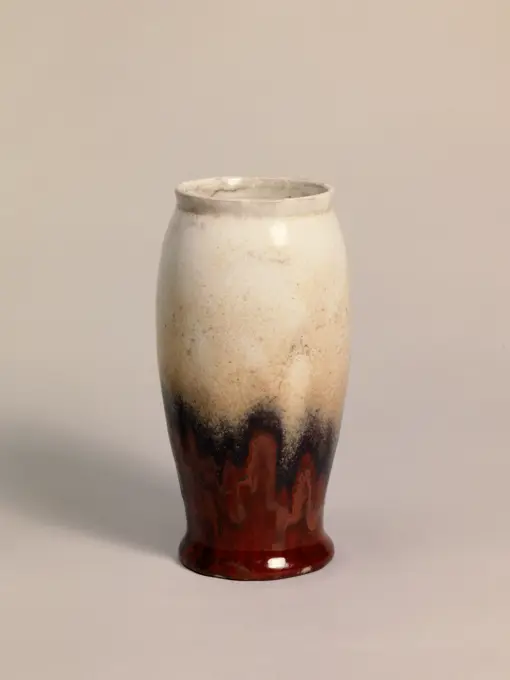
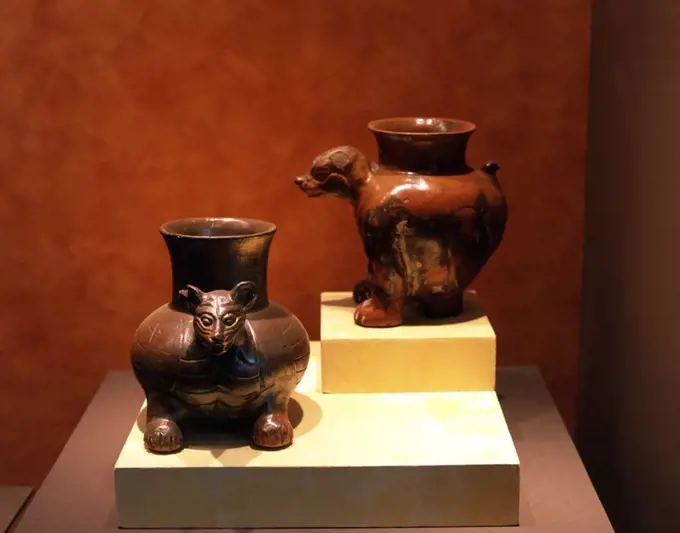
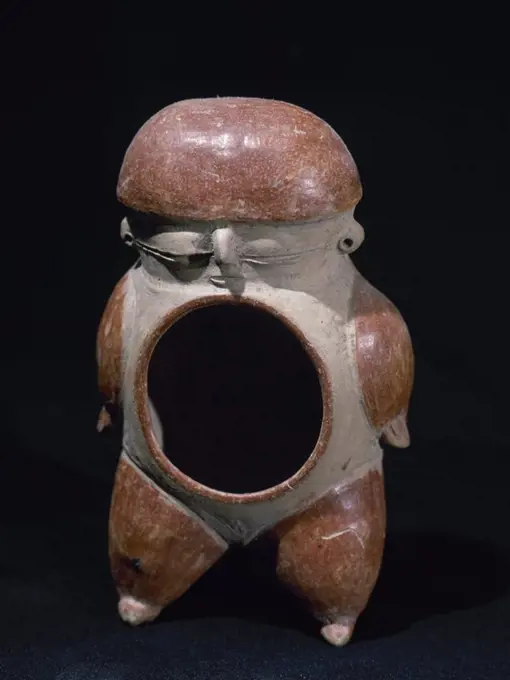
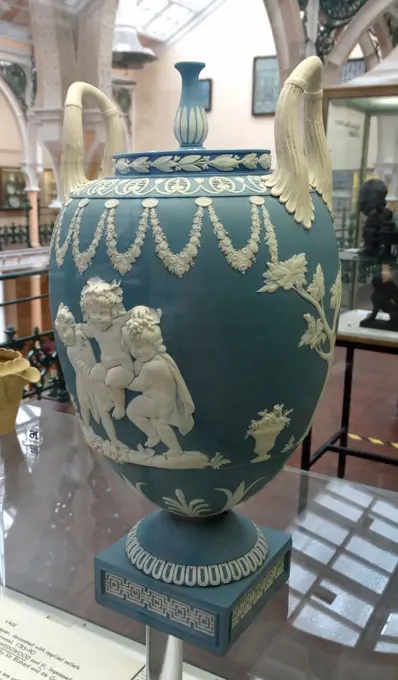
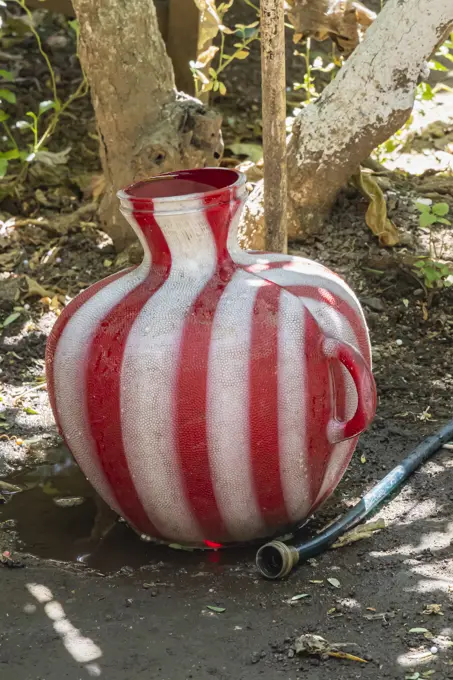
Jug -Imported Cobalt-on-White Bowl 9th-10th century Cobalt blue was popular on certain types of ninth-century Iraqi pottery, but never on early Nishapur ceramics, and so this bowl has been attributed to Iraq or perhaps western Iran. Interestingly, the cobalt wares of Iraq, with their stark white, tin-opacified grounds, were made in imitation of Chinese porcelains with blue designs.. Imported Cobalt-on-White Bowl 449543KyathosGlass perfume bottle ca. 2nd century A.D. Roman Spindle-type unguentarium.Colorless with yellow tinge.Tubular rim folded out, over and in, and pressed into broad, flaring mouth; cylindrical neck, expanding slightly downwards; very squat body with rounded sloping sides; uneven bottom with concave center.Intact; pinprick and elongated bubbles; dulling, pitting, faint iridescence, and creamy weathering.. Glass perfume bottle 244649NIDO DE PAJAROS-BARRO BLANCO LLAMADO GREDA-ARTE POPULAR S XX. Location: ALFARERIA. LA RAMBLA. CORDOBA. SPAIN.CERAMICA POPULAR. Location: EXTERIOR. PROVINCIA. Coruña. SPAIN.BOTIJO CON VIDRIADO PARCIAL - S XX ARTE POPULAR. Location: ALFARERIA. Esparraguera. Barcelona. SPAIN.Italy, Province of Bolzano-Bozen, Vadena, Green glass bottleMace head ca. 9th century B.C. Iran. Mace head 325778Scroll flask 1840-50 American. Scroll flask 610ceramics containers, Son Fornes Archaeological Museum, post-alayotic period room, Montuiri, Es Pla region, Mallorca, Spain.JARRA DE CUELLO ALTO CON TAPA Y VIDRIADO. Location: ALFARERIA. FREGENAL DE LA SIERRA. Badajoz. SPAIN.CAMPANA DE ALABASTRO. Location: MUSEO DE CADIZ-ARQUEOLOGIA. Cadiz. SPAIN.BOTIJO O RAYA VIDRIADO PARCIALMENTE Y CON PITORRO EN LA PARTE SUPERIO DEL ASA. Location: ALFARERIA. TAJUECO. Soria. SPAIN.SIGILLATA ARETINA. ROMANO. (DEPOSITO: MUSEO ARQUEOLOGICO NACIONAL).Miniature Vase in the form of cactus or succulent 1880s Moore Brothers Listen to experts illuminate this artwork's story Listen Play or pause #418. Christopher Dresser and the Birth of Industrial Design Supported by Bloomberg Philanthropies We're sorry, the transcript for this audio track is not available at this time. We are working to make it available as soon as possible.. Miniature Vase in the form of cactus or succulent. British, Longton. 1880s. Porcelain. Ceramics-PorcelainGlass perfume bottle 2nd-3rd century A.D. Roman, Cypriot Candlestick unguentarium.Translucent pale green, with large purplish streak in body and lower part of neck.Thick rim folded out, over, and in; slightly concave, cylindrical neck, tooled in around base; convex sides to body, curving out and downward; slightly concave bottom with off-center pontil scar. Spiral tooling grooves on body. Thick-walled and heavy.Intact; many bubbles; dulling, deep waethering, and faint iridescence.. Glass perfume bottle. Roman, Cypriot. 2nd-3rd century A.D.. Glass; blown. Mid Imperial. GlassBOTIJA O CANTARA CON DOS ASAS CUELLO CORTO Y BOCA MUY ANCHA - ARTE POPULAR - SIGLO XX. Location: ALFARERIA. FUENTES DE EBRO. Saragossa Zaragoza. SPAIN.Terracotta rim fragment of a skyphos (deep drinking cup) late 5th century B.C. Etruscan On both the obverse and reverse, a spotted owl framed by olive sprigs. Terracotta rim fragment of a skyphos (deep drinking cup). Etruscan. late 5th century B.C.. Terracotta; Praxian technique. Classical. VasesJar. United States, Arizona, Hohokam, Casa Grande, 600-900 CE. Ceramics. Stuccoed ceramic with postfire-applied pigmentsTea caddy (chaire), anonymous, c. 1750 - c. 1850 Dust bar or Chare of stoneware with an ivory lid, partially covered with a light brown glaze. The lower part of the bus is unglazed. On the wall an unidentified four -line inscription with a signature. Old label on the inside with 'Oribe'. Japan stoneware. glaze. deksel: ivory vitrification Dust bar or Chare of stoneware with an ivory lid, partially covered with a light brown glaze. The lower part of the bus is unglazed. On the wall an unidentified four -line inscription with a signature. Old label on the inside with 'Oribe'. Japan stoneware. glaze. deksel: ivory vitrificationtable strainer, handmade ceramic, first millennium BC, Huesca museum, Aragon community, Spain.Jug. Dated: c. 1936. Dimensions: overall: 29.9 x 22.3 cm (11 3/4 x 8 3/4 in.) Original IAD Object: 15 1/4" High 5 3/4" Dia.(base). Medium: watercolor, colored pencil, heightening, and graphite on paperboard. Museum: National Gallery of Art, Washington DC. Author: Charles Caseau.CANTARO VIDRIADO CON INTERIOR VIDRIADO-CERAMICA POPULAR S XX. Location: ALFARERIA. JIMENEZ DE JAMUZ. LEON. SPAIN.Female head, probably Aphrodite, between androgynous winged erotes. Kantharos made in Puglia. From Canosa, Hypogeum Lagrasta I. White Sakkos Painter, Kantharos Group. Last quarter 4th century BC. National Archaeological Museum. Naples. Italy."MARIDET" O BRASERO - S XX ARTE POPULAR. Location: ALFARERIA. LA BISBAL. GERONA. SPAIN.Steatite vase with spout and lugs ca. 2600-1900 B.C. Minoan Cup with spout and lugs.. Steatite vase with spout and lugs 252351 Minoan, Steatite vase with spout and lugs, ca. 26001900 B.C., Steatite, H. 2 5/8 in. (6.6 cm). The Metropolitan Museum of Art, New York. Bequest of Richard B. Seager, 1926 (26.31.429)Lluís Ventos / 'Ham', 2007, Black marble, 24,2 x 25 x 8,5 cm.Head, 10th-16th century, 6-1/4 x 3-1/8 x 2-13/16 in. (15.9 x 7.9 x 7.1 cm), Terra cotta, Nigeria, 10th-16th centuryTripod Vessel Depicting a Temple Atop a Shield and Crossed Darts. Mexico, Basin of Mexico, Teotihuacan, Teotihuacan, 400-650 CE. Ceramics. Stuccoed ceramic with postfire applied pigmentSnuff Bottle 19th century China. Snuff Bottle 41556Stand 700-650 B.C. Etruscan Cauldron stand of red ware with open-work base.. Stand. Etruscan. 700-650 B.C.. Terracotta. Orientalizing. VasesCERAMICA POPULAR ARGENTINA - 1970 - 15,60x13 cm - COMUNIDAD INDIGENA TOBA - PROVINCIA DE CHACO (ARGENTINA). Location: MUSEO DE AMERICA-COLECCION. MADRID. SPAIN.Sugar Bowl ca. 1886 Hobbs, Brockunier and Company. Sugar Bowl 7960Whistling Vessel, 200-100 BC. This is a fairly realistic representation of a tropical screech owl. Owls had many associations in ancient Peru especially with warriors, sacrifice and shamanistic ceremonies. These dark associations perhaps arose because of their nocturnal habits.Sung period urn, 11th cent. Zhejiang Celadon. CHINA.JARRON DE CERAMICA - SIGLO XX. Author: LLORENS ARTIGAS. Location: BANCO URQUIJO. Barcelona. SPAIN.Ointment Jar ca. 1479-1458 B.C. New Kingdom. Ointment Jar. ca. 1479-1458 B.C.. Travertine (Egyptian alabaster). New Kingdom. From Egypt, Upper Egypt, Thebes, Deir el-Bahri, Temple of Hatshepsut, Foundation Deposit 8 (H), MMA excavations, 1926-27. Dynasty 18Snuff Bottle, 19th century, H.2-1/8 x W.1-1/2 in., agate, crystal, China, 19th centurySnuff Bottle China. Snuff Bottle 41401VASIJA. Location: MUSEO DE AMERICA-COLECCION. MADRID. SPAIN.Glass one-handled hexagonal bottle Roman late 1st-early 3rd century CE Translucent light blue with greenish tinge; handle in same color.Thick rim, partially tubular, folded out, down, round, and in; cylindrical neck, flaring downwards, with slightly convex profile; horizontal shoulder, slightly pushed in towards center, and sloping rounded shoulders; hexagonal body, with flat, vertical sides; slightly concave bottom; broad strap hand, reeded on exterior surface, attached to edge of shoulder above one side, drawn up vertically, then turned in at an acute handle, and trailed on to neck, with trail in folds extending upwards to underside of rim.On base, four concentric circles in relief.Intact, but one short internal crack in rim; bubbles, including many large and elongated bubbles in handle, and blowing striations, some horizontal scratches around neck; slight dulling and patches of faint iridescent weathering.This large handled bottle has been preserved because it was buried in a Roman Making anshaping up the clay of the potCANTARO CON DOS ASAS - DECORACION INCISA LINEAL - BARRO BLANCO. Location: ALFARERIA. Totana. MURCIA. SPAIN.mateBottle, probably Liverpool, c1760. This is an unusual example, painted in black instead of blue.Terracotta fragments of a lekythos (oil flask) late 6th/early 5th century B.C. Greek, Attic On the shoulder, a band of tongues and pendant lotus buds; on the body of the lekythos, a youth to right, looking back over his right shoulder, with his chlamys draped over his left shoulder and around his bent left arm; a ram to right; in front of the ram, a draped figure to left, sitting on a stool; behind the ram, a tree; fragment from the mouth and neck, with part of the handle; four fragments from the shoulder, with parts of pendant lotus buds; five reserved fragments from the body of the lekythos. Terracotta fragments of a lekythos (oil flask). Greek, Attic. late 6th/early 5th century B.C.. Terracotta; black-figure. Archaic. VasesModels of shot bundles (grapeshot). A cannon could be loaded with a single cannonball or bundles of smaller projectiles, such as this grapeshot’. Grapeshot consisted of a canvas bag filled with iron balls or metal slugs, tied together so that it resembled a bunch of grapes. It was used to hit living targets - horses and soldiers - at close range. The Dutch word for machine gun (mitrailleur) comes from the French term for grapeshot (boîte à mitraille).Pre-Colombian ceramic art in Larco Museum, Lima, Peru.Abstract of cared earthen pots, Pune, Maharashtra, India Copyright: xSunilxKapadia/DinodiaxPhotoxTripod bowl with rattle-legs. Painted ceramic. Period VI (1000-1500 AD). Nicoya Region, Costa Rica. Central America. Museum of the Americas. Madrid, Spain. OLLA-PUCHERO VIDRIADA Y CON DECORACION DE CORDON. Location: ALFARERIA. NAVAL. HUESCA. SPAIN.Glassware, Ruba Rombic” pattern. Designer Reuben Haley, American, 1872-1933 Manufacturer: Consolidated Lamp and Glass Company, Coraopolis, Pa., 1893-1932 and 1936-64Fragment of a Situla. UnknownPierre-Adrien Dalpayrat (1844-1910). Vase. Flammé gès. Museum of Fine Arts of the City of Paris, Petit Palais. GRES, GRES FLAME, object of decoration, vase, 19th 19th 19th 19 19th 19th centuryMexico.Mexico D.F.Museo Nacional de Antropologia.Ceramica de Cholula(perritos).Cultura Cholula.Snuff Bottle, 17th-19th century, 2 3/4in. (7cm), Amethyst, glass, China, 17th-19th centuryanthropomorphic globular vase, Virú culture, third century, Sa Bassa Blanca Museum (msbb). Yannick Vu and Ben Jakober , Alcudia, Majorca, Spain.South America. Chorrera culture. Late Formtive indigenous culture (1300 BC-300 BC in Ecuador). Ceramic vessel. 15 x 10 cm. From Ecuador. Private collection.Flower Urn. Dated: 1935/1942. Dimensions: overall: 31 x 43.1 cm (12 3/16 x 16 15/16 in.) Original IAD Object: 21 High 15 Dia. Medium: watercolor and colored pencil on paperboard. Museum: National Gallery of Art, Washington DC. Author: Clarence W. Dawson.CANTARO CON VIDRIADO PARCIAL Y DECORACION FLORAL-S XX CERAMICA POPULAR. Location: ALFARERIA. TORO. Zamora. SPAIN.Blue Faience 18th Dynasty vessel found in the Tomb of Tutankhamen. Egyptian, circa 1323 BC. found in Tutankhamen's tomb by English archaeologist and Egyptologist, Howard Carter in 1922. Close-up of jade sculptureVase; Jasper stoneware; decorated with applied reliefs. By Mark Wedgewood; 1785-90. The groups of boys are said to have been modelled from a design by Lady Diana Beauclerk.Calcite vase shaped as a lotus blossom with two buds. From the tomb of King Tutankhamen. 1323 BC. 18th dynasty, New KingdomSan Juan La Laguna, Solola, Guatemala. Red and white striped plastic water jug.