Historic Fabrics with Floral Patterns

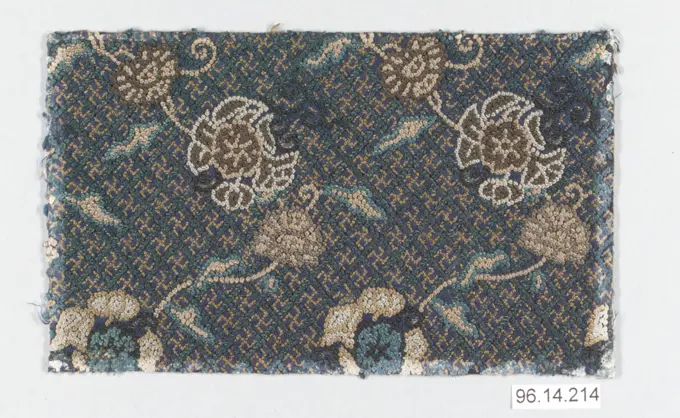
Collection of 18th-century fabric fragments showcasing intricate floral brocade and embroidery designs in rich colors and textures.

Fragment zijdeweefsel, c. 1690 - c. 1710 Fragment silver -gray silk with pattern in green, pink and light brown of vase with leaf work and flower -filled basket.  Ketting an element: Silk. lampas (textile material) Fragment silver -gray silk with pattern in green, pink and light brown of vase with leaf work and flower -filled basket.  Ketting an element: Silk. lampas (textile material)
Fragment zijdeweefsel, c. 1690 - c. 1710 Fragment silver -gray silk with pattern in green, pink and light brown of vase with leaf work and flower -filled basket. Ketting an element: Silk. lampas (textile material) Fragment silver -gray silk with pattern in green, pink and light brown of vase with leaf work and flower -filled basket. Ketting an element: Silk. lampas (textile material)
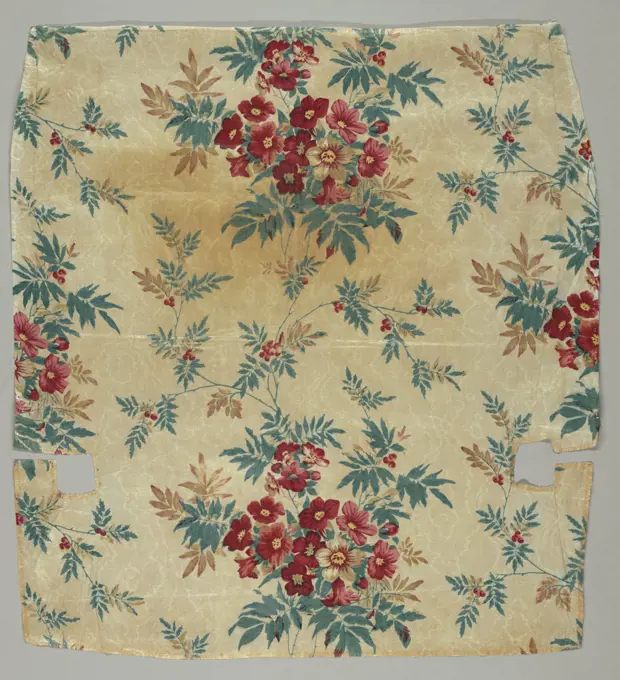
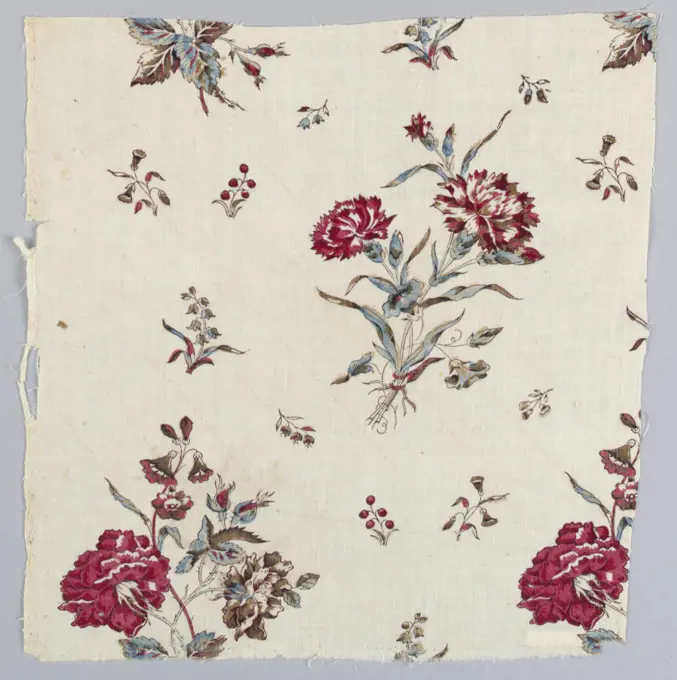
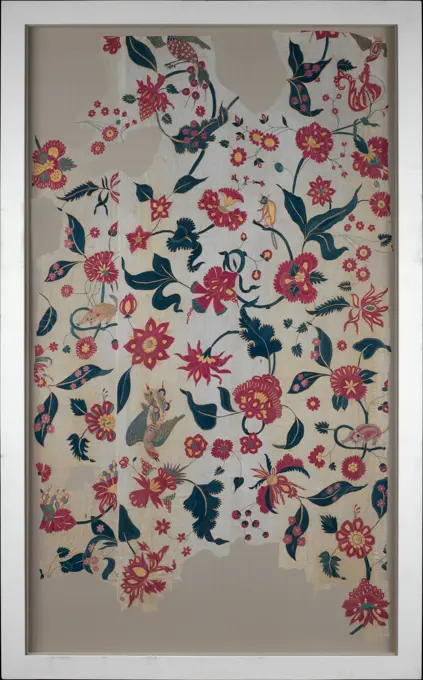
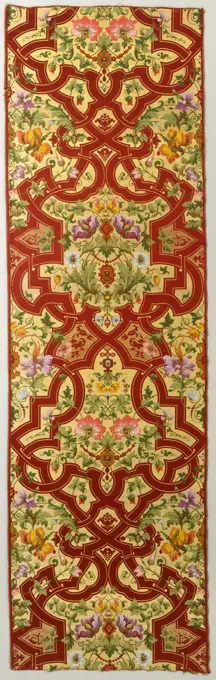
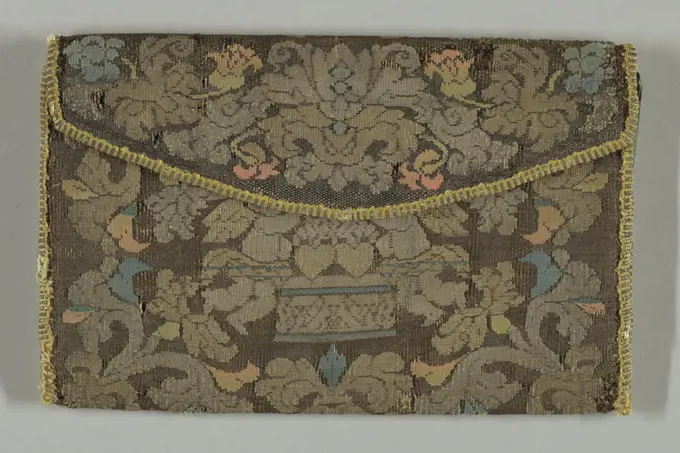
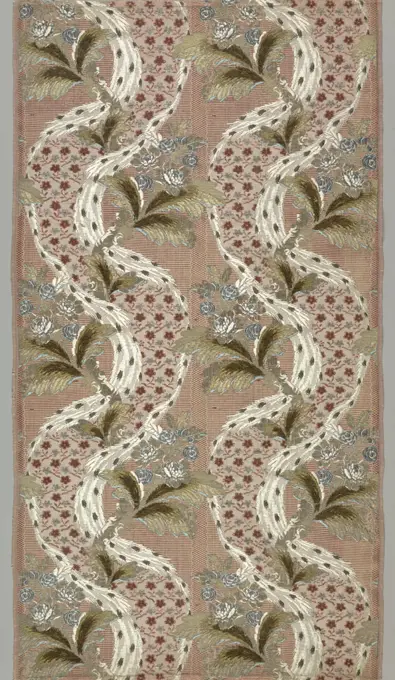
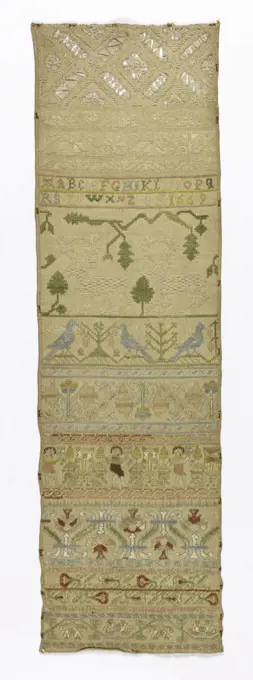
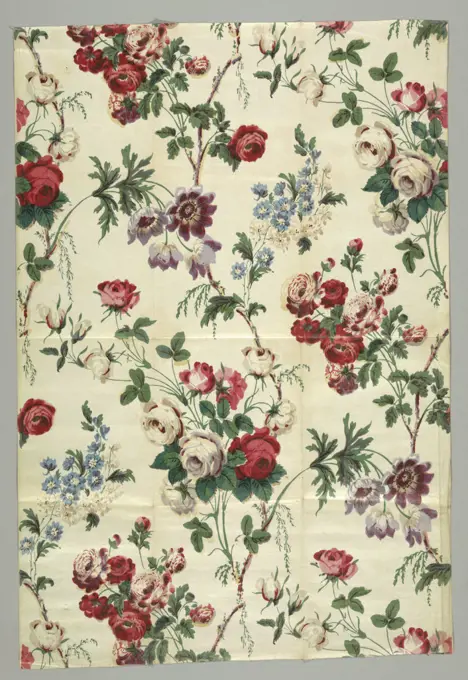
Fragment of Brocaded Silk, 18th century. Spain, 18th century. Plain cloth, brocaded; silk and metal; average: 109.3 x 54.3 cm (43 1/16 x 21 3/8 in.).Embroidered Cover, 1700s. France, 18th century. Embroidery, silk; overall: 119.4 x 133.4 cm (47 x 52 1/2 in.).Fragment (France); silkPiece 18th-19th century Japan. Piece 67103Fragment zijdeweefsel, c. 1690 - c. 1710 Fragment silver -gray silk with pattern in green, pink and light brown of vase with leaf work and flower -filled basket.  Ketting an element: Silk. lampas (textile material) Fragment silver -gray silk with pattern in green, pink and light brown of vase with leaf work and flower -filled basket.  Ketting an element: Silk. lampas (textile material)Border, Uncut (USA); Manufactured by J. & Comp'y.; machine-printed; 63 x 33 cm (24 13/16 x 13 in.)Textile; cottonPiece 18th century Japan. Piece 67557Piece 18th century Japan. Piece. Japan. 18th century. Silk / Compound weave. Edo period (1615-1868). Textiles-WovenFragment, Medium: silk, cotton, and metal Technique: plain compound cloth, Yellow horizontally ribbed ground. Ground divided into roughly oval areas by lacy bands in extra white silk weft. In center of each oval a small spray of flowers in extra wefts of red, pink, green and blue silk. Flat gold strips originally over yellow ground., Turkey, 19th century, woven textiles, FragmentFragment of three fragments of silk dam mast with, among other things, horizontal rows with large flowers, anonymous, c. 1880 - c. 1920 Fragment of three parts of silk tissues. This is a launched Zijddamast with a design of horizontal rows of large -scale flowers with upright branch on which flowers and leaves, located on a table top, trimmed with a spent border in brown on a creme -colored stock. Following French tissues from around 1730. France (possibly) silk lampas (textile material) Fragment of three parts of silk tissues. This is a launched Zijddamast with a design of horizontal rows of large -scale flowers with upright branch on which flowers and leaves, located on a table top, trimmed with a spent border in brown on a creme -colored stock. Following French tissues from around 1730. France (possibly) silk lampas (textile material)Coverlet (India); tussah silk embroidery on cotton foundationFragment, 1800s. China, Qing dynasty (1644-1911). Silk; damask; overall: 72.5 x 23.5 cm (28 9/16 x 9 1/4 in.).Textile (France); linen, cottonFragment multicolored brochure silk, anonymous, c. 1740 - c. 1760 A fragment. Ground of white silk tissue with colored flowers and fruits. NOTE: MEERSHIP; 0.5 cm Effenbinding, (impact 4 colors). Lyon silk A fragment. Ground of white silk tissue with colored flowers and fruits. NOTE: MEERSHIP; 0.5 cm Effenbinding, (impact 4 colors). Lyon silkTextile, Medum: cotton Technique: block printed (two reds, black) with yellow and blue applied by brush on plain weave, Allover pattern of small flowers surrounded by fine leafy sprigs., France, ca. 1800, printed, dyed & painted textiles, TextileTextile, Medium: cotton Technique: block printed on plain weave with blue applied by brush, Printed length of light brown fabric with offset clusters of flowers enclosed by swags and tassels. Same design as 1981-10-3., France, 1810-20, printed, dyed & painted textiles, TextileCravat end, Medium: linen Technique: bobbin lace, Brussels style, Belgium, early 18th century, lace, Cravat endFragment, silk woven, verical stripe of blue on a white ground. Scattered bouquets of flowers., 1750-1800, woven textiles, FragmentDamask, fragment, of red satin with flowers of green, blue, purple and white silk, anonymous, 1725 - 1750 Damask, fragment, of red satin with flowers of green, yellow, blue, purple and white silk, further figures of gold and silver thread. Germany (according to inventory book). NOTE: MEERSHIP; 0.7 cm (2 lace threads), twill (different color). France (possibly) silk. silver thread damask Damask, fragment, of red satin with flowers of green, yellow, blue, purple and white silk, further figures of gold and silver thread. Germany (according to inventory book). NOTE: MEERSHIP; 0.7 cm (2 lace threads), twill (different color). France (possibly) silk. silver thread damaskTextile Swatches Onondaga Silk Company, Inc. (1925-1981). , 1948-1959. Silk and metal yarns, a: 47 x 17 1/2 in. (119.4 x 44.5 cm).    1948-1959Textile; cottonKosode (Kimono) Fragment with Blossoming Cherry Branches. Japan, Edo period, 18th century. Textiles. Silk figured satin (rinzu) with silk and gilt paper wrapped silk embroideryTextile; silkPiece 18th-19th century Japan. Piece 66241Fragment Made 1773-1783 France. Cotton, plain weave; engraved roller printed .Fragment of a curtain of printed cretonne with swans and lissen, Michiel Duco Crop, c. 1900 Fragment of a curtain of printed cretonne with swans and llissen. Helmond linen (material) printing Fragment of a curtain of printed cretonne with swans and llissen. Helmond linen (material) printingTextile, Medium:cotton Technique: block printed on plain weave Mordant painted and dyed and resist dyed (chintz) on plain weave glazed, Glazed chintz with large bunches of naturalistic flowers and berries, block-printed on roller-printed moire ground in two shades of pale tan; once white. Flowers in shades of rose, blue, green drab. Lined with plain cotton and bound with green ribbon - part of chair upholstery. Glazed., England, 1850-99, printed, dyed & painted textiles, TextileTextile, Medium: cotton Technique: block printed on plain weave, Straight repeat of widely-spaced blue flowers on an undyed ground. Two large flower groups surrounded by tiny flowers., France, 1780-89, printed, dyed & painted textiles, TextileTowel End early 19th century. Towel End 443012Sampler (Mexico); linen, cottonFragment, Medium: silk, metallic Technique: plain weave with supplementary wefts, Cone-shaped plant forms framed by green vines ., 17th century, woven textiles, FragmentFragment silk velvet broker with pattern of flowers and fruits in red and gold. Fragment silk velvet broker with pattern of flowers and fruits in red and gold. Italy, 15th century. Green white striped side.Fragment Made 1701-1900 Japan. Single plain compound cloth, silk & silvered paper; 3 strips to m.m. .Fragment of carmine red damask with gold -colored silk tissue with a pattern of stylized leaves and flowers with curved plots of flowers, leaves and fruits, anonymous, c. 1695 - c. 1760 A fragment of carmine -red damask with a pattern of stylized leaves and flowers, on which in silver thread a pattern of rows to the left and to the right bending flower gardens alternately filled with pomegranates and rosette flowers with a pear -shaped heart. Silver and white brochure. Netherlands silk. damask A fragment of carmine -red damask with a pattern of stylized leaves and flowers, on which in silver thread a pattern of rows to the left and to the right bending flower gardens alternately filled with pomegranates and rosette flowers with a pear -shaped heart. Silver and white brochure. Netherlands silk. damaskTextile (India); cotton; Warp x Weft (a): 38.1 x 10.8 cm (15 x 4 1/4 in.) Warp x Weft (b): 14 x 13.3 cm (5 1/2 x 5 1/4 in.)Samples (USA); Manufactured by Orinoka Mills (United States); Warp x Weft (a): 22.5 × 22.5 cm (8 7/8 × 8 7/8 in.) Warp x Weft (b): 22.5 × 25.5 cm (8 7/8 × 10 1/16 in.)Textile (France); Designed by Jean Lauer (France); cotton; 1952-80-11Piece 18th-19th century Japan. Piece. Japan. 18th-19th century. Silk. Edo (1615-1868). Textiles-WovenSarong (Indonesia); cottonBuffet runner of écru cotton, decorated with woven relief motifs with rose decor and chicken and in the middle with stripes of ornament work; Finish with climbing side with blocks ...Sidewall (USA); Manufactured by Janeway & Carpender; machine-printed on paper; 48 x 36 cm (18 7/8 x 14 3/16 in.)Textile, Medium: silk Technique: chain stitch embroidery on satin weave, Small symmetrical Mughal-type embroidery of sprigs in light green diagonal repeat across the grain of satin ground. Piece has apparently been dyed for ground is deep shade of golden tan now in shades of tan and brown, faint green. Two narrow twilled selvage edges are hand-seamed across middle., India, 18th century, embroidery & stitching, TextileFragment green velvet brocade with pomegranate pattern. Fragment green silk velvet brocade (two pieces sewed together) with a pattern of seven-eyed leaves with pearls surround in which pomegranates.Textile, Medium: silk Technique: 7 & 1 satin with continuous supplementary wefts forming the pattern, Vertically symmetrical plant forms within a curving border that resembles lace, in bright green, yellow, white and brown., France, ca. 1730, woven textiles, TextileTextile (France); linen warp, cotton weft; Warp x Weft (a): 73 × 74 cm (28 3/4 × 29 1/8 in.) Warp x Weft (b): 44.5 × 78.5 cm (17 1/2 × 30 7/8 in.); Bequest of Elinor Merrell; 1995-50-276-a,bPanel Made 1742-1752 England. Silk, plain weave with supplementary brocading wefts and self-patterned by complementary ground weft floats; two panels joined .Scarf, 1800s. Algeria or Morocco, 19th century. Embroidery: silk on linen tabby ground; overall: 173.4 x 46 cm (68 1/4 x 18 1/8 in.).Bed Cover or Wall Hanging 17th century Foreign travelers from as early as Marco Polo knew of the quality of the embroidery produced in Gujarat, a state on Indias northwestern coast, and as soon as European trade with India picked up in the early 1600s, embroidered Gujarati textiles were identified as among the most lucrative goods for export. This fragment from a hanging is one of the earliest examples of this overseas commerce, and comes from the Ashburnham House in Sussex, England. Embroideries like this were probably made at different centers throughout Gujarat, but are usually associated with Cambay, the port from which they were exported.. Bed Cover or Wall Hanging. 17th century. Cotton, silk; plain weave, embroidered, originally quilted. Attributed to India, Gujarat. Textiles-EmbroideredStrapwork with Flowers and Jewels ca. 1885 French, possibly Lyon The Renaissance Revival style was particularly strong in France through much of the nineteenth century. This furnishing textile displays a typical combination of Renaissance-inspired strapwork allied with unmistakably nineteenth-century floral designs. The naturalistically rendered flowers and leaves meander in and around the deep red strapwork support, which is accented with small jewel-like medallions.. Strapwork with Flowers and Jewels. French, possibly Lyon. ca. 1885. Silk; compound weave, brocaded. Textiles-WovenCushion Cover Made 1601-1700 Turkey. Silk, velvet .Purse, Medium: silk, gold and silver-wrapped silk, horsehair Technique: tapestry woven, Small pocketbook, envelope shaped, with pattern in colored silks, gold and silver thread. Pattern of two burning hearts on an altar, supported by cupids with stylized floral sprays at corners. Lined with green silk taffeta., France, 1640-1700, costume & accessories, PurseTextile (England); Warp x Weft: 230 x 65 cm (7 ft. 6 9/16 in. x 25 9/16 in.) Repeat H x W (half drop, minimum unit): 15 x 13 cm (5 7/8 x 5 1/8 in.)Fragment of fabric unknownTextile (England); cottonFragment; silkFragment multicolored brochure side. A fragment silk fabric, with a white ground with a white lace pattern between which multicolored, winding flower branches.Fragment 16th century Italian, Venice or Turkish. Fragment 230206Textile; cotton; Height of repeat: 28 inches.Velvet BrocadeTextile, mid 1500s. Italy, mid-16th century. Velvet brocade, silk; overall: 28.6 x 61.6 cm (11 1/4 x 24 1/4 in.).Fragment (Japan)Textile, Medium: silk and metal-wrapped silk-core threads Technique: plain weave with supplementary warp patterning and discontinuous supplementary weft (brocading) Label: silk plain weave with supplementary warp patterning and silk and metal thread discontinuous supplementary weft (brocading), Pink ribbed silk with two bold serpentine bands filling the horizontal repeat. The bands have a small-scale floral fill and are edged with an ermine pattern. The bands are intertwined with a flowering branch with small blue and silver rosebuds. Brocaded in black, blue, green, pale pink, and white silks, rose and olive green chenille yarns, and gold and silver metal threads., France, 1760-1769, woven textiles, TextileCover, Medium: linen, silk Technique: embroidered, Circular motif of birds and flowers placed in center; inscriptions and eight vases with flowers surround it. Border of flowers and birds., Mexico or Spain, 1800-1850, embroidery & stitching, CoverChurch servet;  1686 (1686-00-00-1686-00-00);Dress of Eastern textile with multi -colored embroidery ,, c. 1800 - c. 1899 Dress of multi -colored tambourized cotton, decorated with flower vines and ornament, lined with cotton. India cotton (textile). silk embroidering Dress of multi -colored tambourized cotton, decorated with flower vines and ornament, lined with cotton. India cotton (textile). silk embroideringSampler, S. H., English, Medium: silk and linen embroidery on linen foundation Technique: embroidered in satin, chain, four-sided canvas, double running, buttonhole, long-armed cross, detatched looping, Bands of white cut work and multi-color embroidery, an alphabet, animals, birds, reversing floral bands and human figures. With the inscription and date: S. H. 1669., England, 1669, embroidery & stitching, SamplerLeather (Holland); leather, stamped, silvered; 126 x 48 cm (49 5/8 x 18 7/8 in.); 1913-34-12Sleeve bands, Medium: silk Technique: embroidered on leno weave, Small-scale diamond framework filled with flying birds, in pale multicolored and white silk on undyed leno ground. Narrow rosette border on black ground along two outer edges. Sleeve bands joined on one long side to form rectangular panel., China, 19th century, embroidery & stitching, Sleeve bandsTextile, Medium: cotton Technique: printed by engraved roller, Brown ground with large scale floral pattern in shades of brown to cream color., late 19th century, printed, dyed & painted textiles, TextileTextile; silk; Warp x Weft: 27.9 x 26.7 cm (11 in. x 10 1/2 in.); 1949-99-3-aIrene Schaefer, Quilted Bedspread, c 1936 Quilted BedspreadSidewall (USA); Manufactured by Maxwell & Co., S.A. (United States); machine-printed paper, liquid mica; 92 x 49 cm (36 1/4 x 19 5/16 in.)Textile; linenFragment (India); cottonLength of Textile, 1500s. Italy or Spain, 16th century. Brocade; silk, linen, and metal; average: 101.1 x 57.2 cm (39 13/16 x 22 1/2 in.).Fragment late 16th century Italian. Fragment 230042Fragment of a silk tissue with pattern of, among other things, zigzag forms. Silk tissue, launched and broached with metal wire. Dessin: horizontally running zigzag form, upstairs from flowers and semi-abstract forms, including butterfly wings, filled with 'napkin work' and flower rinks, in Écru and metallic color on a green fond. Put on linen.Lappet early 19th century Flemish. Lappet 218191Dishcloth, IInen, embroidered unknownTowel 18th century Southern German. Towel 217388Textile, Medium: cotton Technique: printed on plain weave, glazed, Roses and anemones in polychrome on an off-white ground., England, late 19th century, printed, dyed & painted textiles, TextileFragment; silk, woolTextile Fragment 17th century. Textile Fragment. 17th century. Silk, metallic thread. Attributed to Turkey. Textiles-WovenLength ca. 1905 John Scott Bradstreet. Length 10412Textile, Medium: silk, metallic yarns Technique: compound satin weave with supplementary weft patterning (brocade), White satin ground brocaded with symmetrical design in gold, and green, coral and pink silk. Large, central fan-shaped ornamental motif with cornucopia and a bow. Backed with red silk and edged with gold metal lace., Spain, 17th century, woven textiles, TextileBorder; cotton; Warp x Weft: 58.5 x 17 cm (23 1/16 x 6 11/16 in.) Repeat H: 27.3 cm (10 3/4 in.)Textile, Oberkampf & Cie., (Jouy-en-Josas, France, 1759-1815), Medium: linen warp, cotton weft Technique: block printed on plain weave, Ogival center line pattern in red on white. Two blocks were needed to print the pattern., Jouy, France, 1770s, printed, dyed & painted textiles, TextileTextile Sample from Sample Book 19th century Japan. Textile Sample from Sample Book 68214Piece 18th-19th century Japan. Piece. Japan. 18th-19th century. Silk. Edo period (1615-1868). Textiles-WovenFragment; bast fiberFragment (Dress Fabric) Made 1701-1800 France. .Piece 18th-19th century Japan. Piece 65939Nineteenth century floral pattern tapestry, manufacture of Aubusson.Fragment Made 1775-1800 France. Silk, brocaded plain compound cloth .Trimming, Medium: cotton, Red and white trimming fragment in a design of roses with buds and leaves set between borders of diagonal lines., France, ca. 1830, trimmings, TrimmingExcerpt yellow silk dam mast ,, c. 1550 - c. 1600 A fragment of Geel Zijddamast with a part of a volute and a stylized flower and stylized leaf vines. Spain silk damask A fragment of Geel Zijddamast with a part of a volute and a stylized flower and stylized leaf vines. Spain silk damaskPiece 17th century Japan. Piece 72006Handkerchief (France); cottonTextile (France); silk, metallic thread; Anonymous bequest in memory of Albert and Rebecca Elsberg; 1938-82-57-bPiece ca. 1870 American. Piece 13779