Historic Fabrics with Floral Patterns

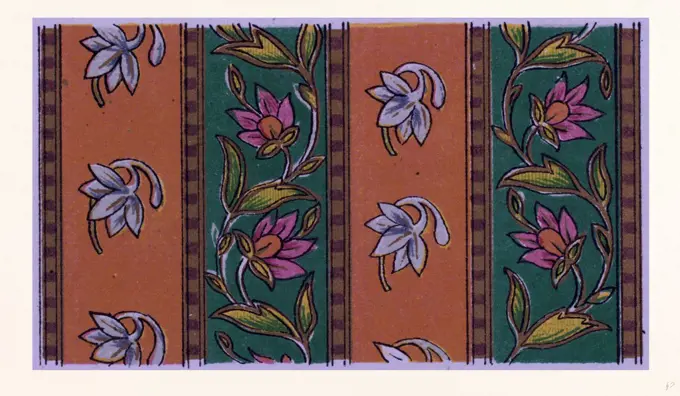
Collection of 18th-century fabric fragments showcasing intricate floral brocade and embroidery designs in rich colors and textures.

Fragment zijdeweefsel, c. 1690 - c. 1710 Fragment silver -gray silk with pattern in green, pink and light brown of vase with leaf work and flower -filled basket.  Ketting an element: Silk. lampas (textile material) Fragment silver -gray silk with pattern in green, pink and light brown of vase with leaf work and flower -filled basket.  Ketting an element: Silk. lampas (textile material)
Fragment zijdeweefsel, c. 1690 - c. 1710 Fragment silver -gray silk with pattern in green, pink and light brown of vase with leaf work and flower -filled basket. Ketting an element: Silk. lampas (textile material) Fragment silver -gray silk with pattern in green, pink and light brown of vase with leaf work and flower -filled basket. Ketting an element: Silk. lampas (textile material)
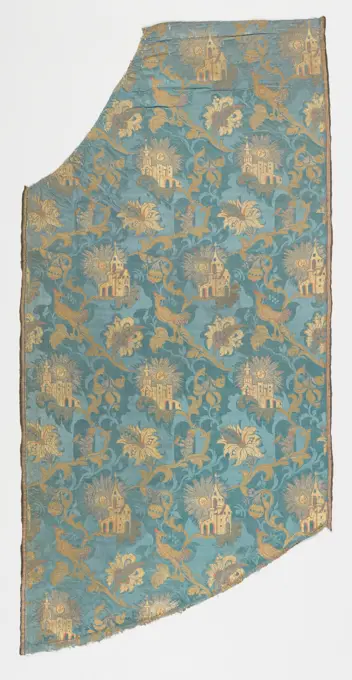
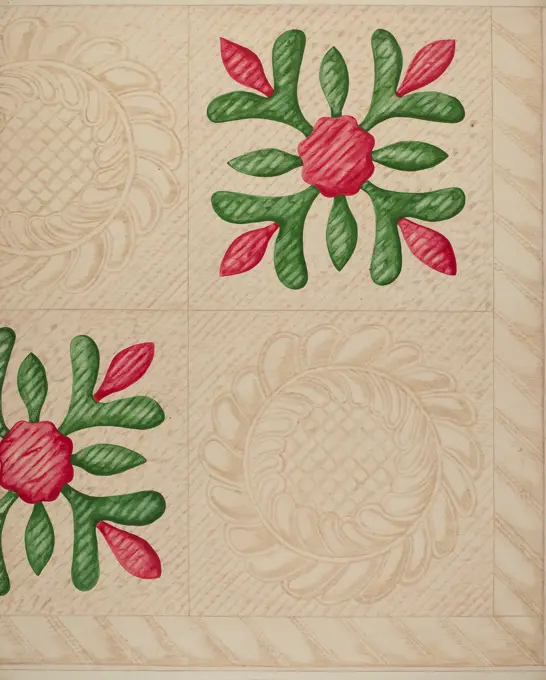
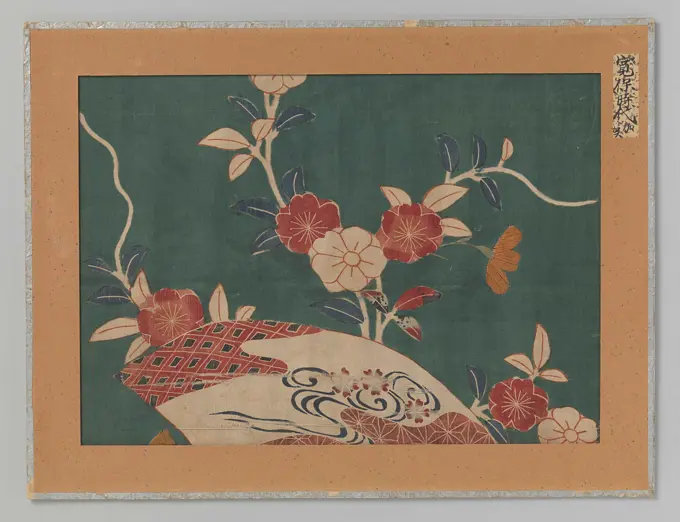
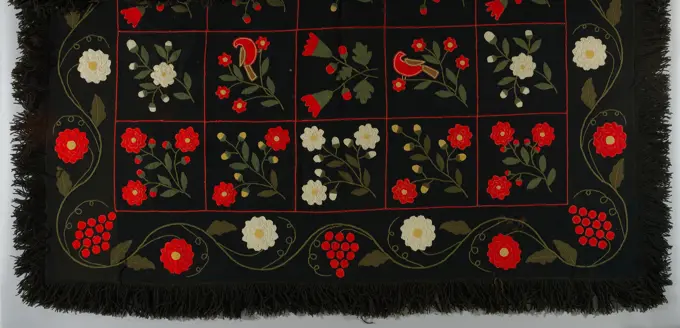
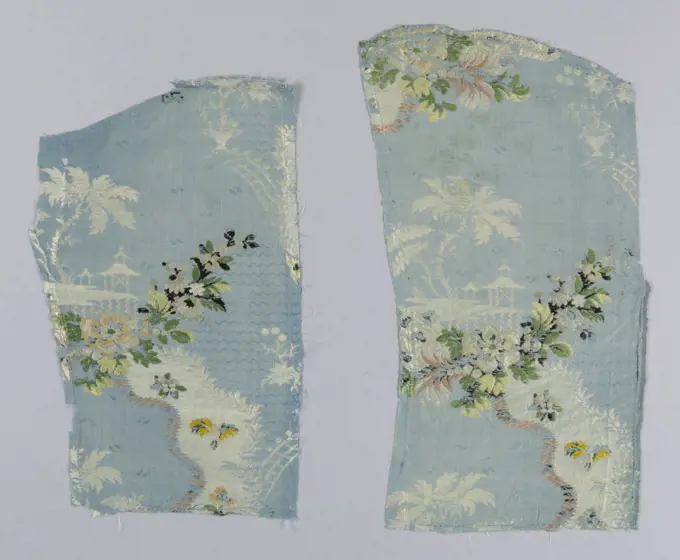
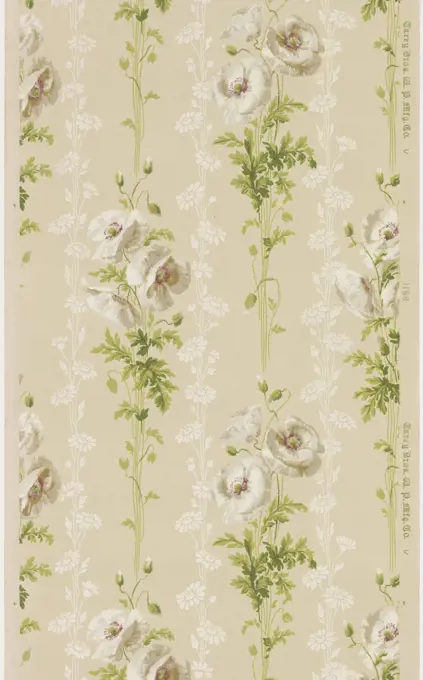
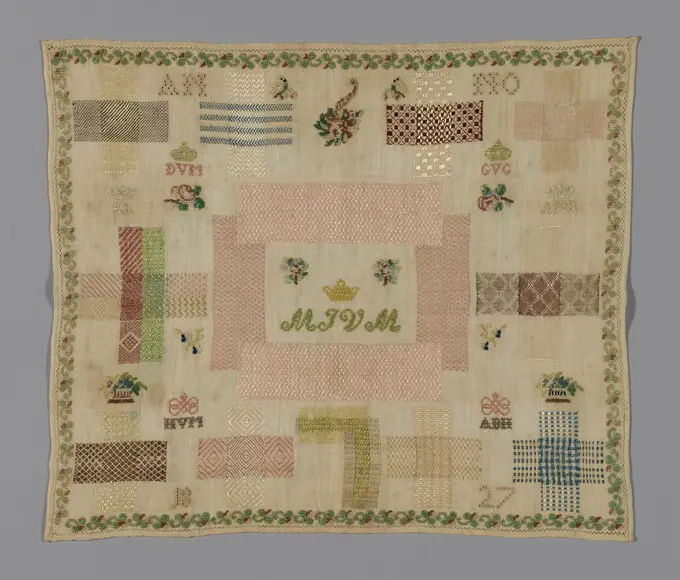
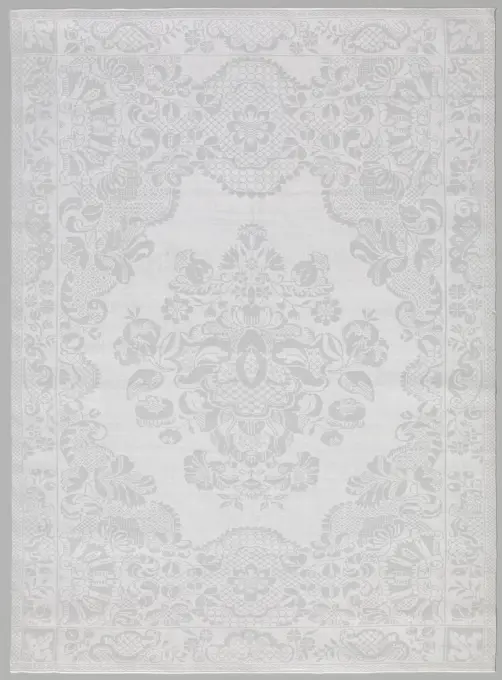
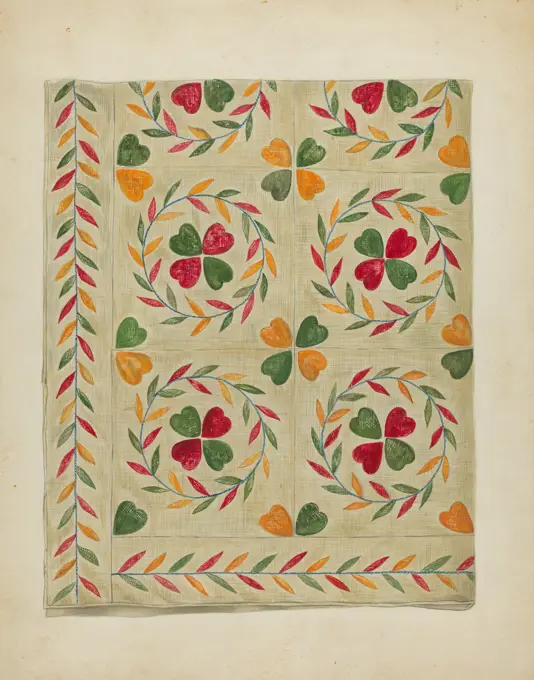
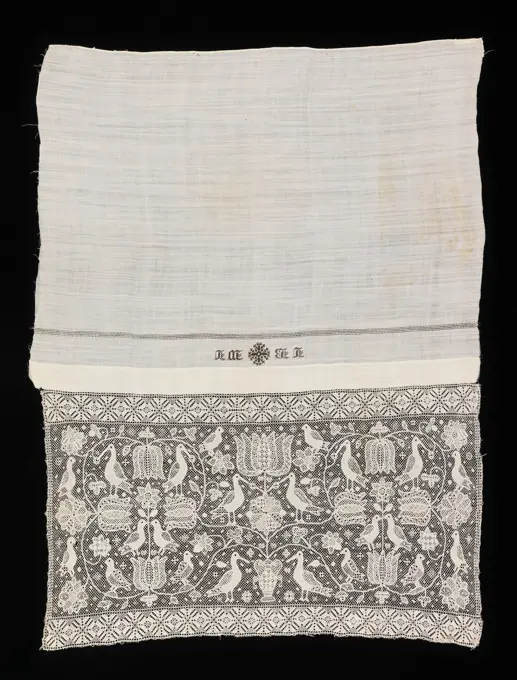
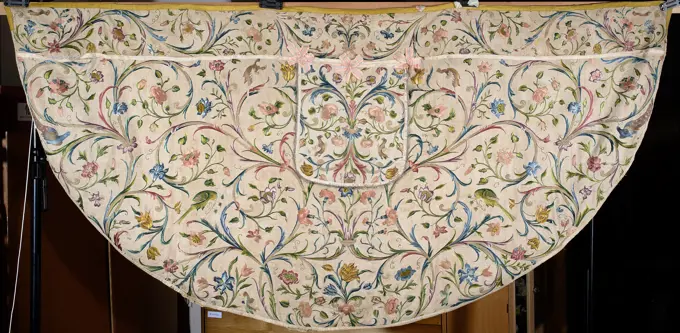
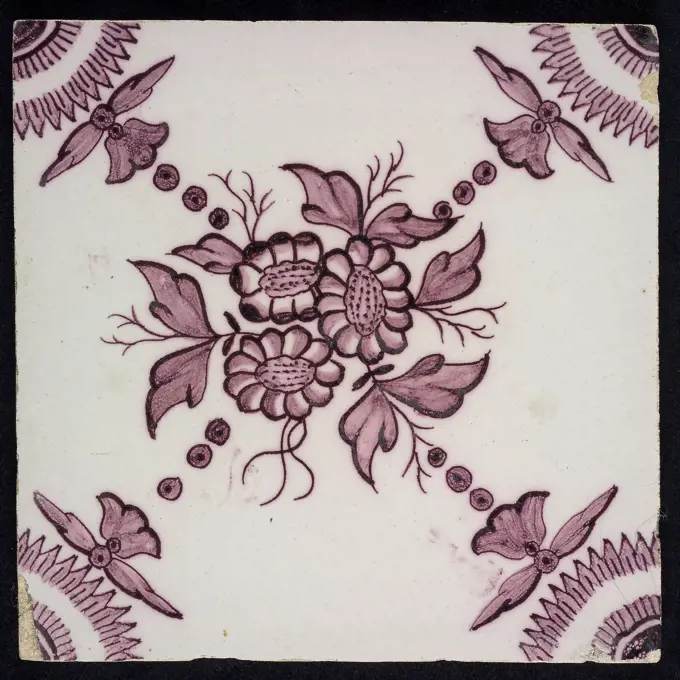
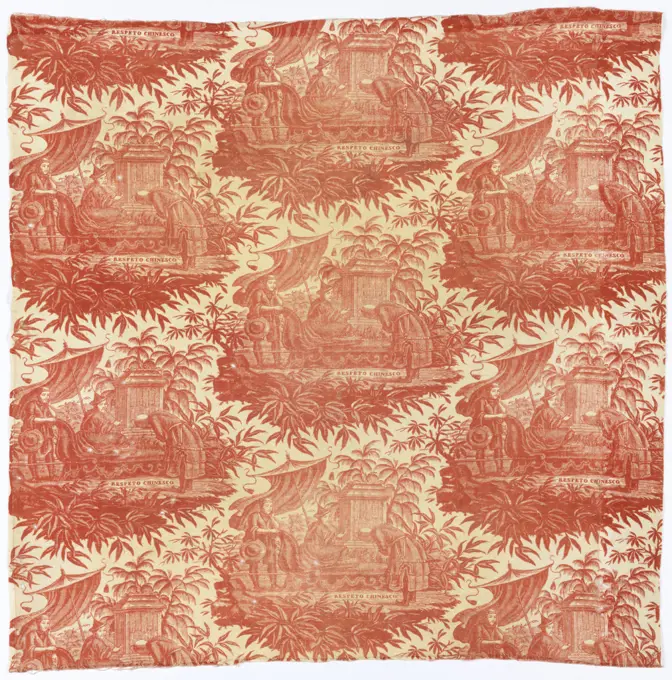
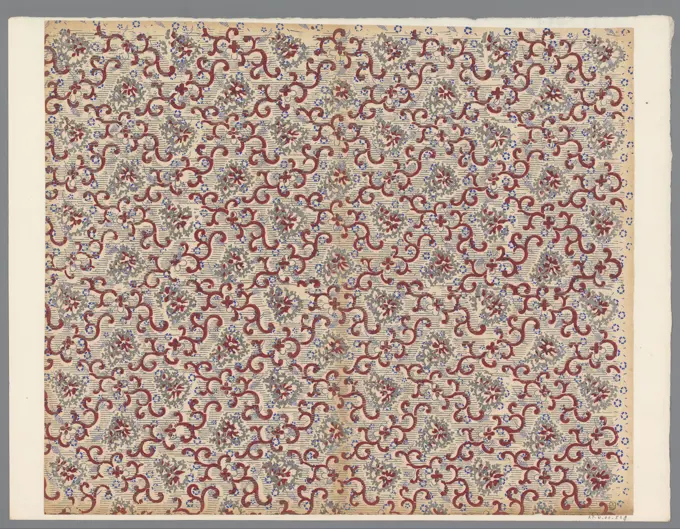
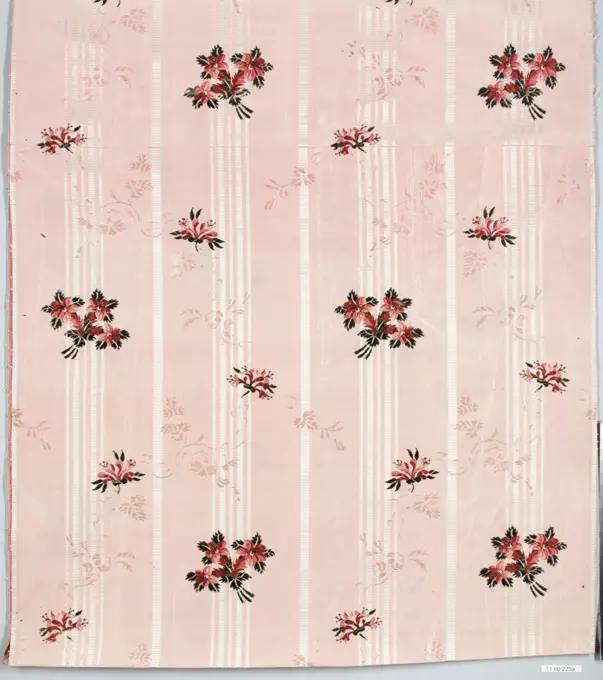
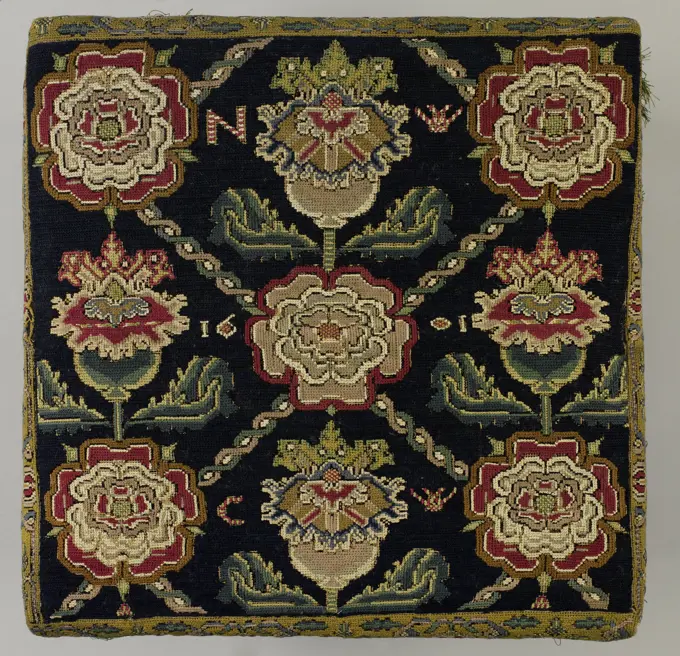
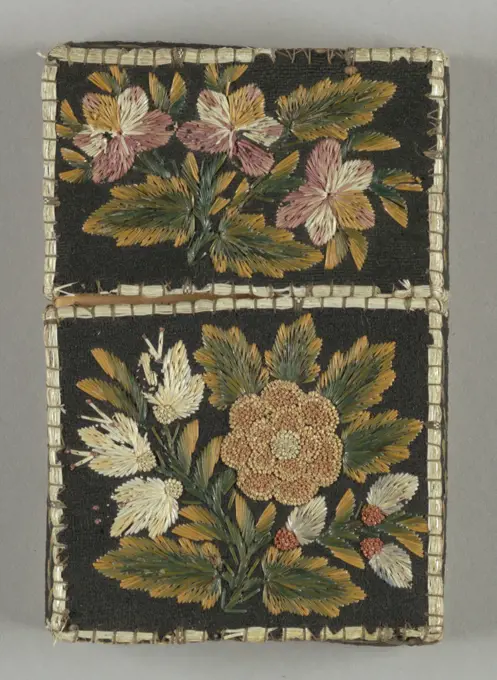
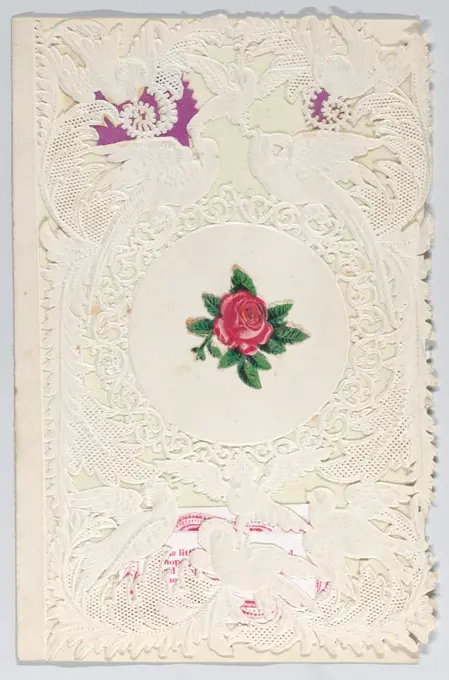
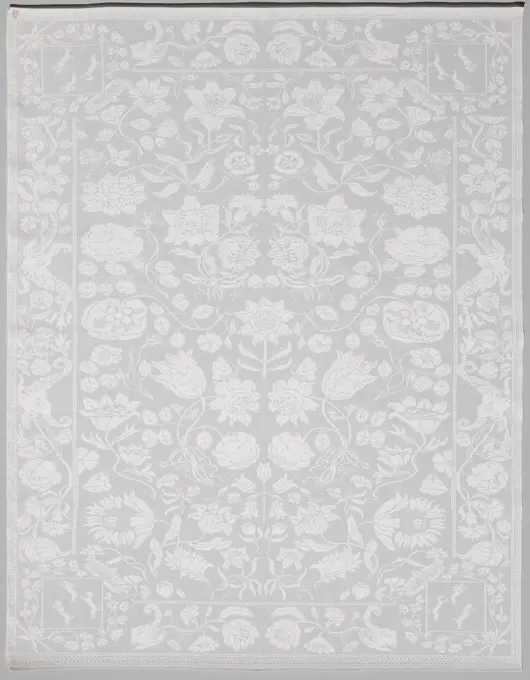
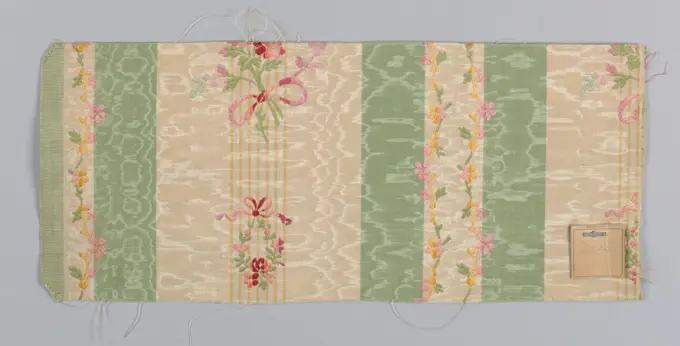
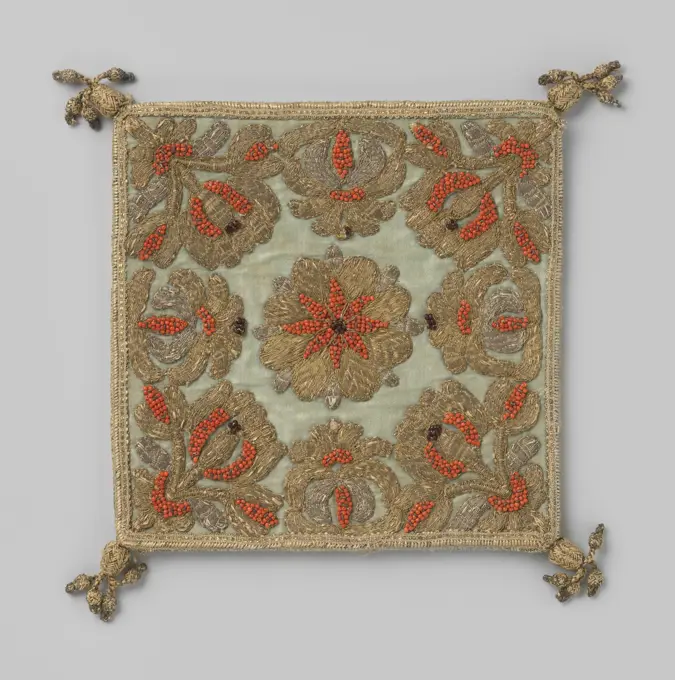
Fragment red silk. Fragment red silk with pattern of diamond-shaped stylized flowers surrounded by leaf raft.Leaf with lanes pattern of flowers with bows and decorative frames with winding rank, anonymous, 1700 - 1850  Leaf with lanes pattern of flowers with bows between flower ornaments and decorative frames with loose flowers, oval and winding tendrils. Used as a cover.  paper. block printing (relief printing process) ornament derived from plant formsPanel and Fragment Made 1690-1710 France. Silk, silk chenille, and silvered-metal-strip-wrapped silk, warp-float faced 7 1 satin weave with supplementary patterning warps bound in plain interlacing, supplementary brocading wefts bound in 3 1 twill interlacings, and self-patterned by areas of plain weave .Fragment; silk, metallic threadSample, Orinoka Mills, (Philadelphia, Pennsylvania, USA), Light brown warp with white and blue weft, white and gold color weft, and white and dark pink weft., USA, ca. 1910, woven textiles, SampleLong Sampler, 1600s. England, 17th century. Embroidery: silk on linen tabby ground; overall: 60.1 x 18.1 cm (23 11/16 x 7 1/8 in.).Fragment, Medium: silk and metal Technique: brocaded damask, Large leaves and globular bud forms. Brocaded threads silver and gold metallic, blue, yellow, lavender, pink, peach and green on ivory satin damask. Style is known as 'bizarre'., Italy, 1695-1725, woven textiles, FragmentKatherine Hastings, Quilt, c 1937 QuiltFragment, Medium: silk, metallic yarns Technique: woven with supplementary weft patterning (brocade), Fragment of brocaded silk. White and grey ground with details brocaded in metallic yarns and green and pink silk, showing a flowering plant on a dotted background. One selvage present., France, mid-18th century, woven textiles, FragmentTable Cover; silk and metal wrapped silk thread, linen foundationFragment Made 1575-1600 Italy. Silk, 4 1 satin damask weave .Fragment, 1800s. China, 19th century. Silk; overall: 47 x 8.9 cm (18 1/2 x 3 1/2 in.).Handkerchief probably French late 19th centurySidewall - Sample (USA); machine-printed; 67 x 48 cm (26 3/8 x 18 7/8 in.)Piece 18th century Japan. Piece 71627Fragment, Medium: silk Technique: plain weave with supplementary weft, Fragment with serpentine floral sprays in green and rose on a white background patterned with lace-like bands and delicate foliage., 18th century, woven textiles, FragmentCourt presentation handkerchief 1840-60 Belgian. Court presentation handkerchief 168490Fragment textile. Textile fragment, print and blackboard on dark green fond.Lampas wall covering with lovebird pattern, c. 1770 - c. 1790 Wall extension, consisting of a lane Lampas. Lovebird pattern. Lyon (possibly) lampas (textile material) Wall extension, consisting of a lane Lampas. Lovebird pattern. Lyon (possibly) lampas (textile material)Fragment multicolored silk dam mast, anonymous, 1730 A fragment of yellowish white silk tissue, with colored flowers. France silk. cotton (textile) damask A fragment of yellowish white silk tissue, with colored flowers. France silk. cotton (textile) damaskDoily (USA); linen, silkTemplate with chrysanthemum, Anonymous, 1800 - 1909  Japanese template (Katagami) with a pattern of chrysanthemum on a chessboard background. Japan paper. silk cutting flowers ~ ornament. flowers: chrysanthemumTablecover ca. 1840-60 American. Tablecover 16865Sampler, Medium: silk embroidery on cotton foundation Technique: embroidered in cross, marking cross, stem, chain, satin and running (pattern darning) stitches on plain weave foundation, Eight darning crosses and one patch insertion. Date and crowned initials in the center., Netherlands, 1813, embroidery & stitching, SamplerFragments, Medium: silk Technique: plain weave with supplementary weft, Light blue taffeta ground with incomplete design of white ribbon serpentine with minute polychrome flowers scattered over it. Spray of larger flowers across serpentine at regular intervals. Small-scale landscape with two pagodas under trees, brocaded in white; small dots and zigzags in ground fabric. Component a: has part of right selvage present - flower pot with dwarf tree above landscape., France, mid-18th century, woven textiles, FragmentsFragment zijdeweefsel; gedamasceerde lampas.Two fragments silk tissue with a pattern of flowers of green, brown, yellow and pink silk and gold thread. The color pink is bleached until cream.Half of shawl with embroidered trimming. unknownSidewall, Carey Bros. W.P. Mfg. Co., Philadelphia, Pennsylvania, founded 1882, Machine-printed paper, Floral stripe design, with columns of white poppy flower bouquets on stems separated by narrower bands of daisy-like flowers on stems. Printed in white, lavendar, and green on a taupe ground., Philadelphia, Pennsylvania, USA, 1905-1915, Wallcoverings, SidewallSampler Made 1827 Germany. Linen, plain weave; embroidered in cross and darning stitches .Fragment (Japan)Sutra Cover Made 1590-1599 China. Silk, warp-float faced 4 1 satin weave with supplementary patterning wefts bound in weft-float faced 1 4 satin interlacings .Rug Made 1801-1900 United States. Variety of fibers, plain weave with variety of fibers, yarns, felted, knitted, oblique interlaced and/or woven strips, forming hooked pile .Napkin with lace pattern and flowers, anonymous, 1725 - 1730 White Linnamasten napkin with a 'lace' pattern and leaf motif in the corners. In the middle, completely detached, an ornament with moazic filling and with leaves, flowers and fruits. Around a wide scalloped bond with various mosaic fillings and with leaf volits and flowers. A fan -shaped ornament in the corners. Lying and running edges: ornaments with mosaic fillings, volutes, branches with flowers and berries. In the corners a diagonally -wise leaf ornament. Flanders (Possible) linen (material) damask White Linnamasten napkin with a 'lace' pattern and leaf motif in the corners. In the middle, completely detached, an ornament with moazic filling and with leaves, flowers and fruits. Around a wide scalloped bond with various mosaic fillings and with leaf volits and flowers. A fan -shaped ornament in the corners. Lying and running edges: ornaments with mosaic fillings, volutes, branches with flowers and berries. In the corners aFragment, Medium: silk Technique: 4&1 satin damask, Vertically symmetrical design of fruit, small flowers and large leaves in cream-colored silk., England or France, 18th century, woven textiles, FragmentWedding handkerchief 1886 Belgian. Wedding handkerchief 169206Mary Berner, Bedspread, c 1936 BedspreadIket (Headcloth) Made 1801-1900 Java. Cotton, batik dyed .Burse(Corporal Case), 17th century. Italy, Genoa, 17th century. Cut and uncut silk velvet, metal thread lace; overall: 26.1 x 26.1 cm (10 1/4 x 10 1/4 in.).Towel End; linenBodily bone;  18th century (1701-00-00-1800-00-00);Flower ornaments, peacocks, birdsSample early 19th century French. Sample. French. early 19th century. Silk and metal thread on silk. Textiles-EmbroideredTextile (France); silk on silkMedieval ornamentTextile, Medium: cotton Technique: printed by engraved plate on plain weave, Narrow stripes with architectural objects, plants and ornament filling the space betwen the stripes. In red on white., England, 1775-85, printed, dyed & painted textiles, TextileCoverlet Made 1854 New York. Cotton and wool, plain weave double cloth; woven on loom with Jacquard attachment; full loom width . Ira Hadsell (Weaver)Fragment; cottonTextile (France); silkOrnament tile, flowers, around leaf work, corner motif quarter rosette, wall tile tile sculpture ceramic earthenware glaze, baked 2x painted glazed Square yellow shard two nail holes Purple on white fond tile bakery Piet HeijnHandkerchief of white batist with an edge of Honitonker. Natural batist handkerchief with an edge natural colosside: Honiton side. The batist interior has four lobes. The symmetrical pattern on the side exists in the corners of two diagonally placed roses between leaves. The sloping edge exists alternately from a five-spinning flour and an oval with fill pattern. Above every middle oval (halfway each side) is a comparable oval flower, with an α-symmetrical additional petals edge. The inner edge, where the side is sewn to the batist, consists of a decorative edge of connected ovals on which Halfoval 'gates', with a cross in a cross in each other. The motifs are made in a cut-off and linen stroke with openwork edges. They are equipped with contour wires and in a single leaf the leaf veins are accentuated with clost relief contours. Forms are applied in petals and to realize the ornamental grounds in the oval (flowers). The motifs are connected by a braid soil with picots. The sloping edgFragment; silkSamples, Orinoka Mills, (Philadelphia, Pennsylvania, USA), a. orange/red ground (warp) with motifs in green and yellow (weft), b. gold color ground with motifs in green and white, c. gold color ground with motifs in green and pink, d. red ground with pink and darker red motifs, e. gold color ground with gold color motifs, USA, ca. 1910, woven textiles, SamplesPiece 18th century Japan. Piece 71641Textile, Medium: cotton Technique: printed by engraved roller on plain weave, Square fragment in red on white of a repeating vignette depicting a Chinese gentleman seated in an open litter as he receives the respectful bow of another man. The litter has a canopy suspended from a pole. One of the men carrying the litter stands behind it. Underneath the scene are the words, 'Respeto Chinesco.' Leafy foliage surrounds the vignettes., Spain, early 19th century, printed, dyed & painted textiles, TextileLambijn, Anonymous, 1720 - 1740 Yellow silk lambin of a bed garnish embroidered with peacocks, flowers, butterflies, horns of abundance in multicolored silk, omboard and decorated with blue passion, lined with coarse linen and yellow silk. Intended for the right side of the bed, outside. Canton silk. linen (material) Yellow silk lambin of a bed garnish embroidered with peacocks, flowers, butterflies, horns of abundance in multicolored silk, omboard and decorated with blue passion, lined with coarse linen and yellow silk. Intended for the right side of the bed, outside. Canton silk. linen (material)Leaf with spreading pattern of seals and flowers, Anonymous, 1800 - 1900  Leaf with spreading pattern of stylized tendrils over different flowers.  paper. block printing (relief printing process) ornament derived from plant formsSidewall (USA); machine-printed; 51 x 34 cm (20 1/16 x 13 3/8 in.)Panel ca. 1774 French. Panel 219030Two pieces of dalmatic. unknown, authorTextile (probably France); wool; warp: 35cm (13 3/4 in. ) by weft 30.5cm (12in. ) Pattern: Size of repeat: 14 by 7 in.Textile (France); Warp x Weft: 109.5 x 87 cm (43 1/8 x 34 1/4 in.) Repeat H: 24.1 x 21.6 cm (9 1/2 x 8 1/2 in.); Purchase, General Funds; 1985-6-1Textile, The Lily; Designed by Arthur Wilcock; England; cotton; Warp x Weft: 78 x 76 cm (30 11/16 x 29 15/16 in.)Sampler (Austria); silk; Frame H x W: 41.9 x 69.5 cm (16 1/2 x 27 3/8 in.)Piece French 19th centuryFragment; silk, metallic threadTextile Swatches Onondaga Silk Company, Inc. (1925-1981). Textile Swatches, 1948-1959. 80 acetate; 20 metal, (a): 9 1/2 x 4 1/2 in. (24.1 x 11.4 cm).    1948-1959Fragment; silk, metallic yarnsSamples (USA); Manufactured by Orinoka Mills (United States); Warp x Weft (a): 21 × 64 cm (8 1/4 × 25 3/16 in.) Warp x Weft (b): 21 cm (8 1/4 in.)Textile; bast fiber warp, cotton weftCarpet Fragment (USA); wool, cotton, hempTile; tin-enamelled earthenwareMedallions et cartouches a l'antique, Jean-Baptiste Huët, (French, 1745-1811), Medium: cotton Technique: printed by engraved plate on plain weave foundation, Medallions and cartouches containing a sphinx, a putti on a bull, a seated woman with an oil lamp and a seated woman holding an owl surrounded by women in classical dress, garlands and animals. In red on white., Jouy, France, ca. 1800-05, printed, dyed & painted textiles, Fragment, FragmentCushion cover 1601 British. Cushion cover 20556018th grade cover, front GAL1991.271.1_1Cover, Medium: linen, silk Technique: embroidered on plain weave, Central panel has embroidery in design of crowned birds on either side of a basket of flowers. Carnation ornaments in corners with borders of stylized flowers and drawn work., Spain, 19th century, embroidery & stitching, CoverLampas wall covering with lovebird pattern, c. 1770 - c. 1790 Wall extension, consisting of a lane Lampas. Lovebird pattern. Lyon (possibly) lampas (textile material) Wall extension, consisting of a lane Lampas. Lovebird pattern. Lyon (possibly) lampas (textile material)Card case, Medium: bark, straw, wool Technique: embroidered, Slim box with sliding lid covered in black wool which is embroidered in colored straw in a floral design., USA, early 19th century, embroidery & stitching, Card caseMaterials from Patchwork Bedspread. Dated: c. 1936. Dimensions: overall: 35.6 x 27.8 cm (14 x 10 15/16 in.). Medium: watercolor, graphite, and gouache on paperboard. Museum: National Gallery of Art, Washington DC. Author: Frances Lichten.Darning sampler. Culture: British. Dimensions: Framed: 20 1/8 x 20 1/8 in. (51.1 x 51.1 cm). Maker: Frances Boyce (British). Date: 1780.Frances Boyce produced a very finely worked selection of decorative darning stitches, made further challenging by the delicate nature of the foundation fabric on which she worked. Apparently, her skill went hand in hand with modesty, as her signature is quite small. Museum: Metropolitan Museum of Art, New York, USA.BOK;  18th century (1701-00-00-1800-00-00);duvetPiece ca. 1890 British. Piece. British. ca. 1890. Cotton. Textiles-PrintedPiece early 19th century French, Lille or Arras. Piece 214651Fragment, Medium: silk, metal-wrapped silk-core yarns Technique: 4/1 satin damask weave with discontinuous supplementary weft patterning (brocade) Label: silk satin damask brocaded with silk and metallic yarns, Pale blue damask brocaded with red silk and silver metallic yarns, in feather-like shapes and floral scrolls in the 'bizarre' style. Both selvages present., possibly France, Venice, possibly Italy, 1700-1705, woven textiles, FragmentSampler (Germany); silk embroidery on linen foundationValentine 1847-70 Anonymous. Valentine. Anonymous. 1847-70. Cameo-embossed, openwork lace paper, chromolithography, colored paper, red inkLinnamast napkin with a flower pattern, anonymous, c. 1670 - c. 1680 Linnamast napkin with stripped flowers and the women's weapon of De Witt. The napkin is part of five napkins (BK-1987-28-A to BK-1987-28-F). Netherlands linen (material) damask Linnamast napkin with stripped flowers and the women's weapon of De Witt. The napkin is part of five napkins (BK-1987-28-A to BK-1987-28-F). Netherlands linen (material) damaskPieces of white silk, c. 1725 - c. 1799 Manipel part of a set of pieces of white silk with woven flowers of silk and gold thread served as stola and manipel. The Stola consists of nineteen pieces, the manipel of four pieces.  silk Manipel part of a set of pieces of white silk with woven flowers of silk and gold thread served as stola and manipel. The Stola consists of nineteen pieces, the manipel of four pieces.  silkSample (USA); Manufactured by Orinoka Mills (United States); 1989-80-73Bursa with embroidery of gold thread with blood corals on a gold rosette, anonymous, c. 1675 - c. 1700 Bursa with embroidery of gold thread. The pattern has a center axle of blood corals on a gold rosette at the front. The Beur has four glans -shaped brushes. Italy whole: Silk. decoration:. Decoration: Red Coral (Material) embroidering Bursa with embroidery of gold thread. The pattern has a center axle of blood corals on a gold rosette at the front. The Beur has four glans -shaped brushes. Italy whole: Silk. decoration:. Decoration: Red Coral (Material) embroideringFragment Made 1750-1800 Japan. Plain compound satin, silk and gilt paper; 2 strips to m.m.Bed curtain border. Culture: Russian. Dimensions: 83 in. (210.8 cm). Date: early 19th century.This object is from the collection of Natalia de Shabelsky (1841-1905), a Russian noblewoman compelled to preserve what she perceived as the vanishing folk art traditions of her native country. Traveling extensively throughout Great Russia, she collected many fine examples of textile art of the wealthy peasant class. From the 1870s until moving to France in 1902, Shabelsky amassed a large collection of intricately embroidered hand-woven household textiles and opulent festival garments with rich decoration and elaborate motifs. The Brooklyn Museum holdings include many fine examples including the majority of the garments. Portions of Shabelsky's collection are also housed at the Museum of Fine Arts, Boston, the Cleveland Art Museum, and the Russian Museum of Ethnography in St. Petersburg.Depictions of the goddess are common in Russian embroidery, traditionally associated with fertility. The fPersian ornamentFragment of embroidery  posy motifs (seamed fragments of vest pockets) unknownVintage invitation card with ornate elegant abstract floral design, black on gray with ribbon. Vector illustration.Textile (France); silkSalesman's Sample. France, possibly Lyon. Date: 1780-1790. Dimensions: 21 × 17.8 cm (8 1/4 × 7 in.). Silk, warp-float faced twill weave with supplementary patterning wefts and supplementary pile warps forming cut, voided velvet; embroidered with silk floss in satin, single satin and stem stitches; French knots. Origin: France. Museum: The Chicago Art Institute, Chicago, USA.Sampler (Austria); Embroidered by Karoline Berger (Austrian); Student at Kunstgewerbeschule; cotton embroidery on cotton foundationSewing sample, France, late 19th century, Sewing sampleTextile (Italy); cottonTrueblood Signature Quilt