Historic Italian Textile Fragments

A collection of various textile fragments showcasing intricate designs, including silk, lace, and velvet. Features motifs of foliage, architectural elements, and floral patterns.

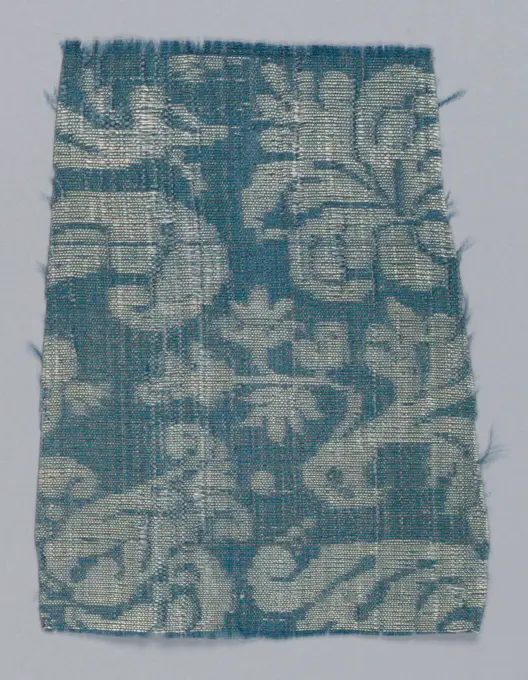
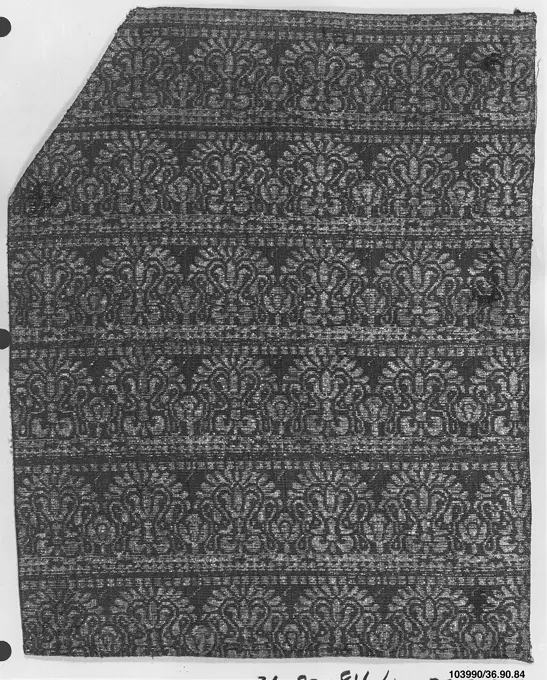
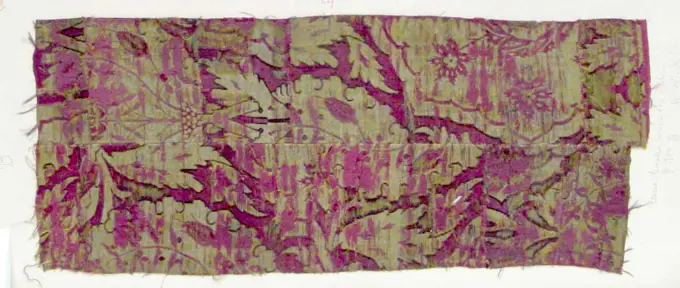
Fragments, Medium: silk, metallic thread Technique: damassé (8-harness satin and plain weave (doubled warps and wefts) plus discontinuous supplementary weft floats, Vertically-striped arrangement of small simplified architectural vignettes with oversized foliage alternates with vertical stacked columnar scrolls with simple flower motifs. Metallic floral forms are superimposed on yellow-green damaseé-patterned background., Europe, late 17th century, woven textiles, Fragments
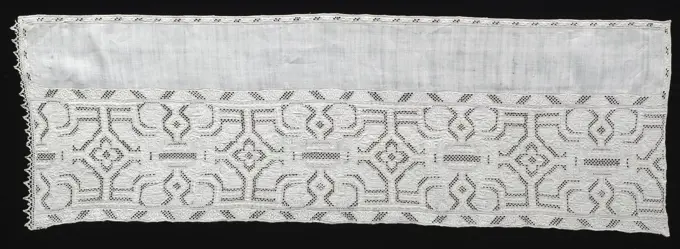
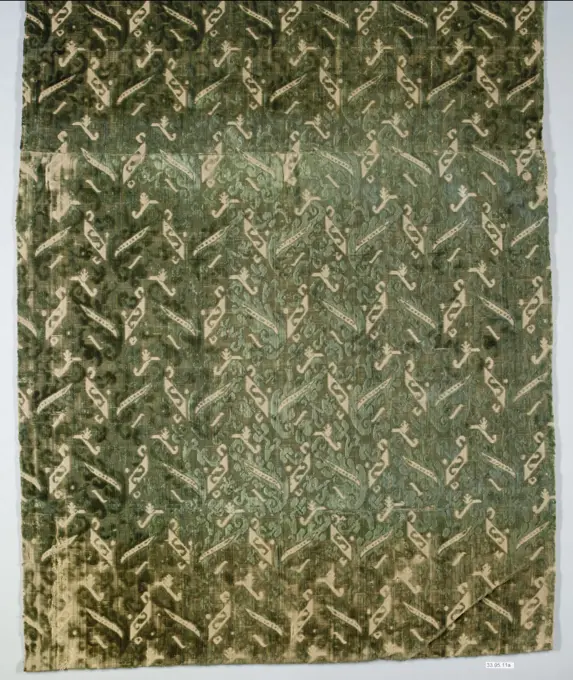
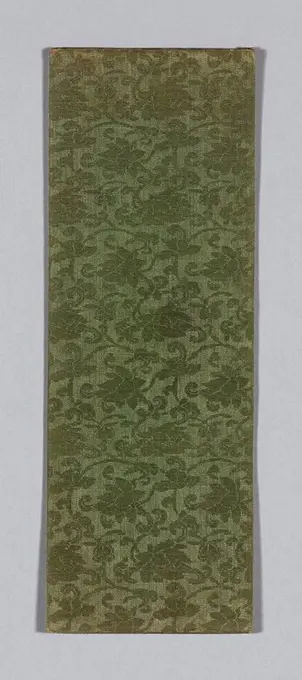
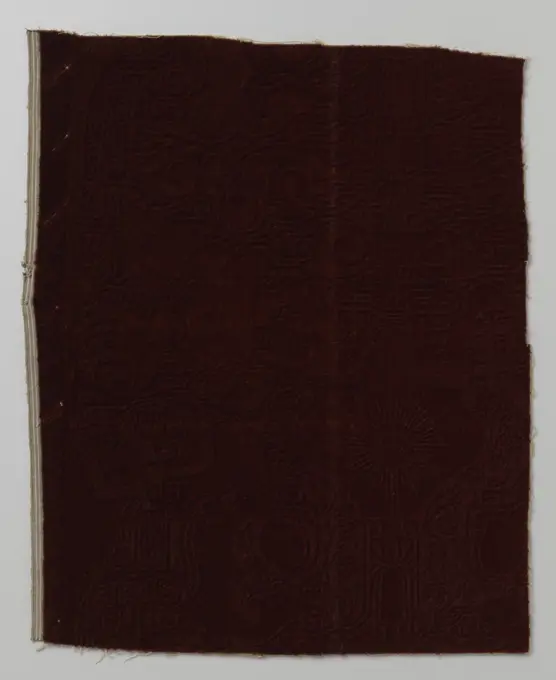
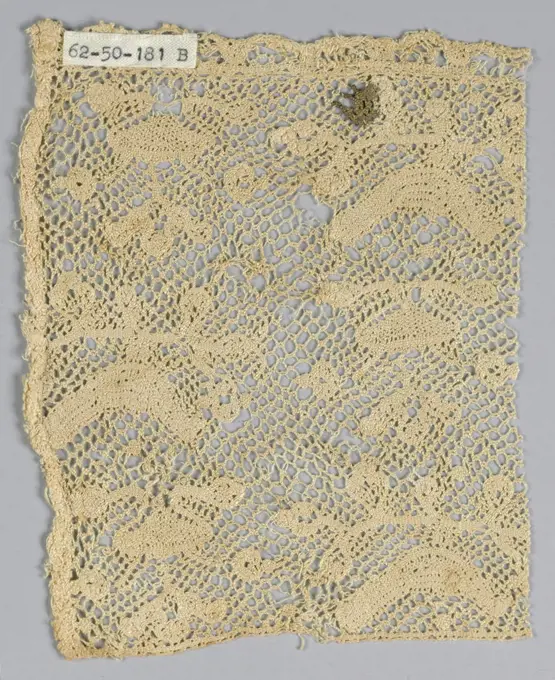
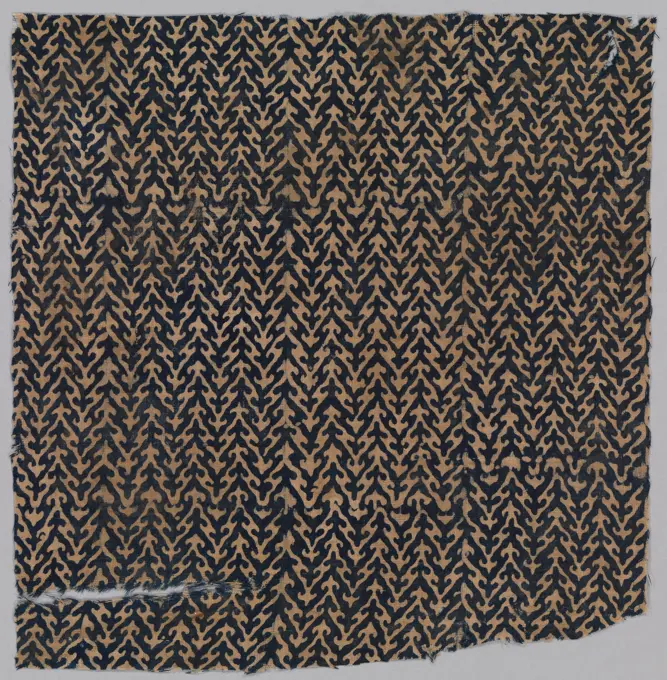
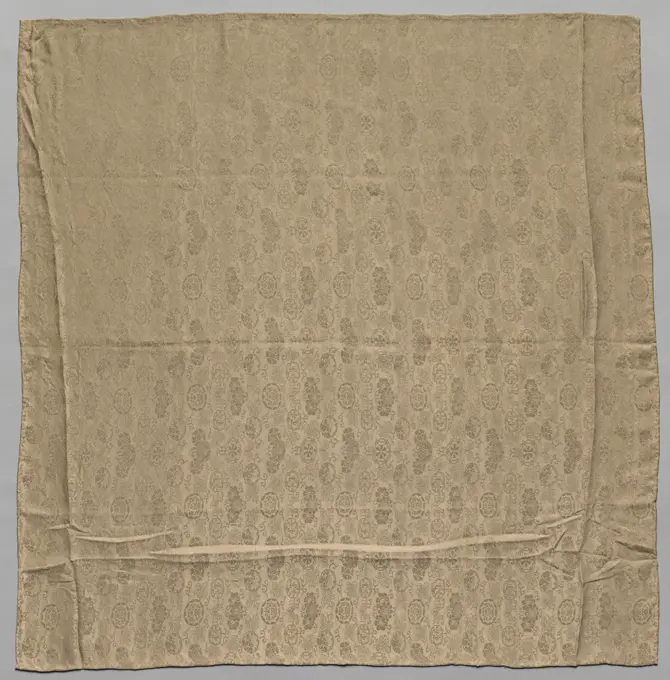
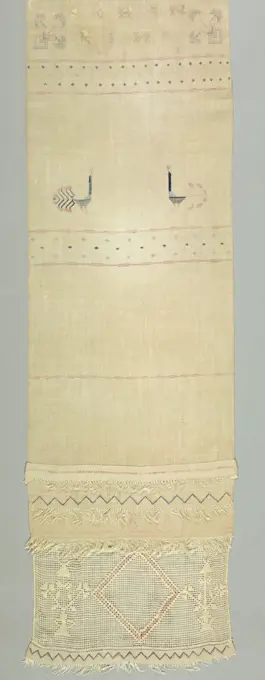
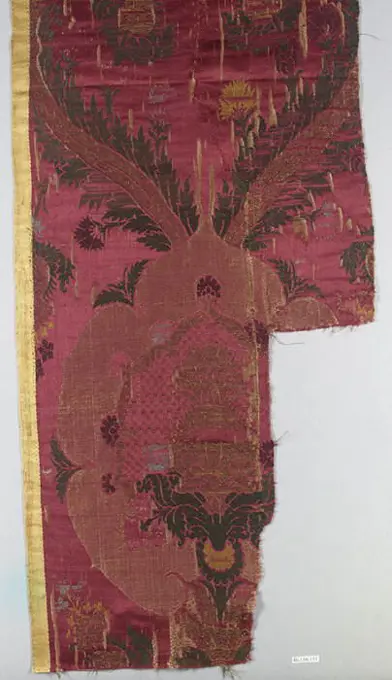
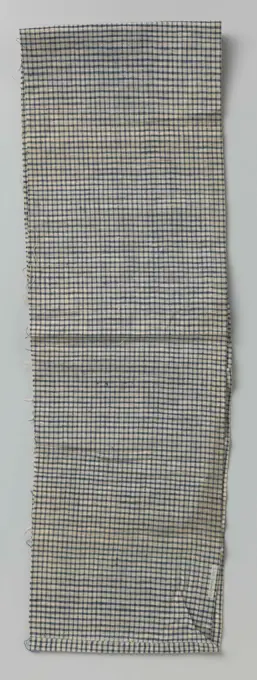
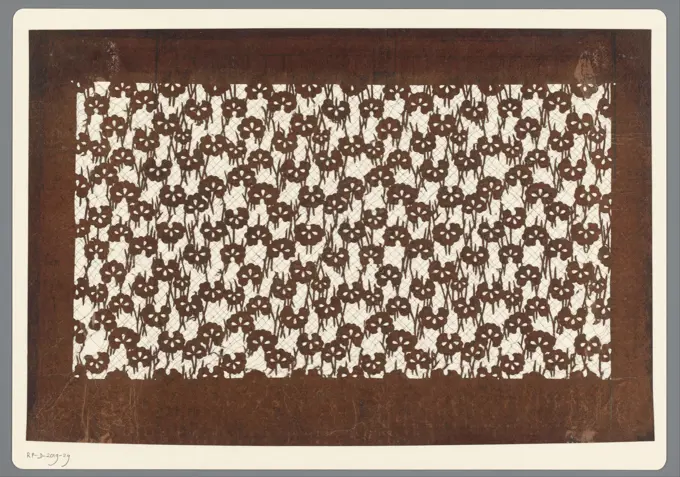
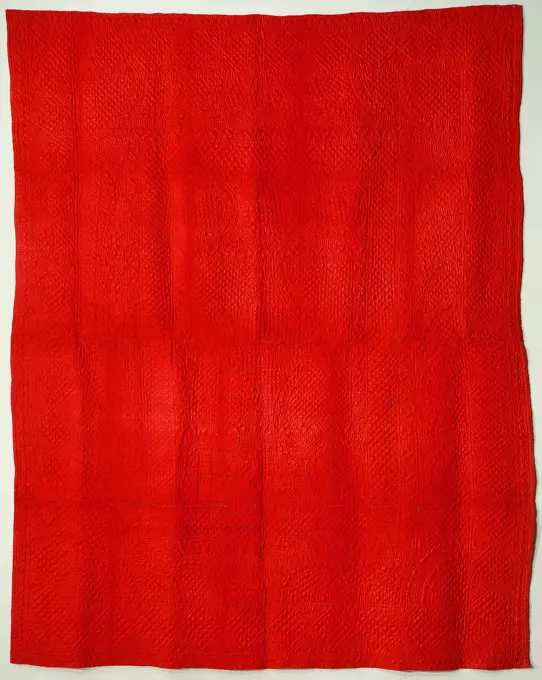
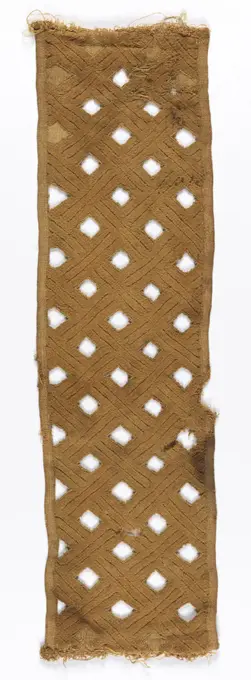
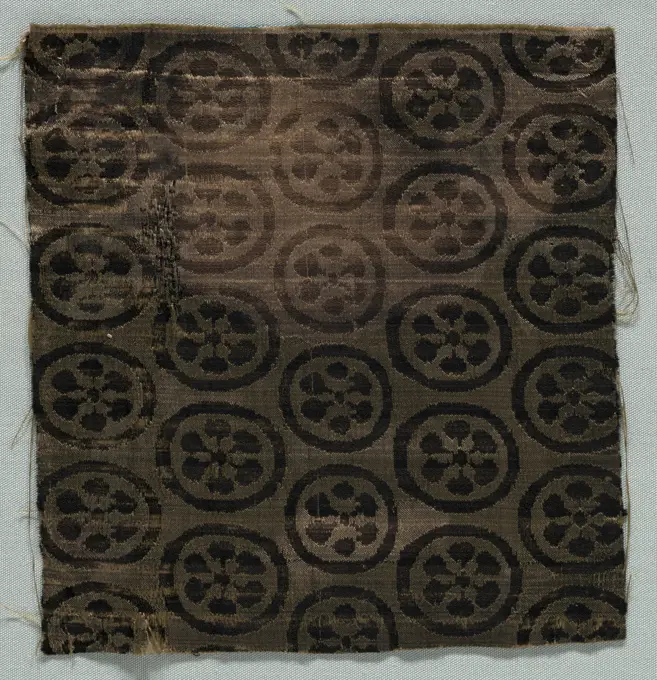
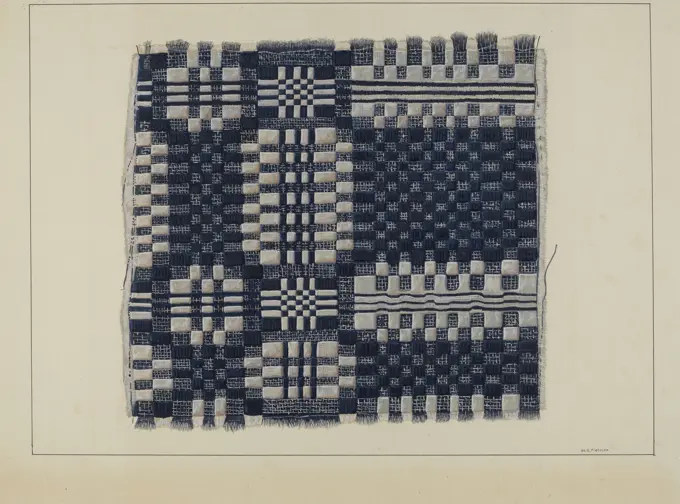
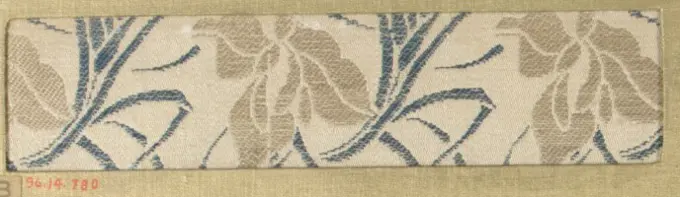
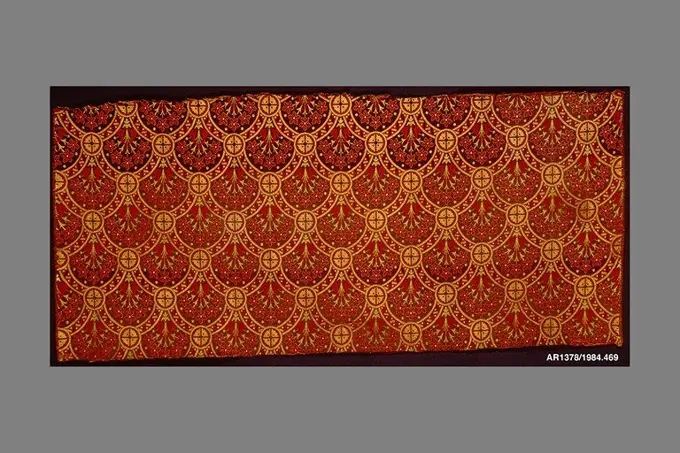
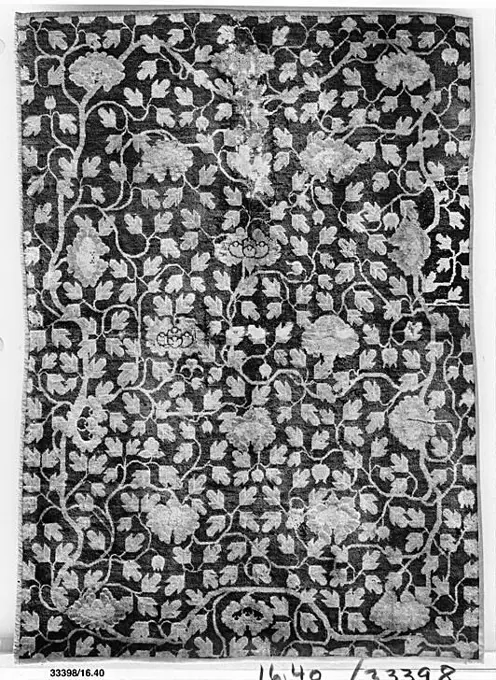
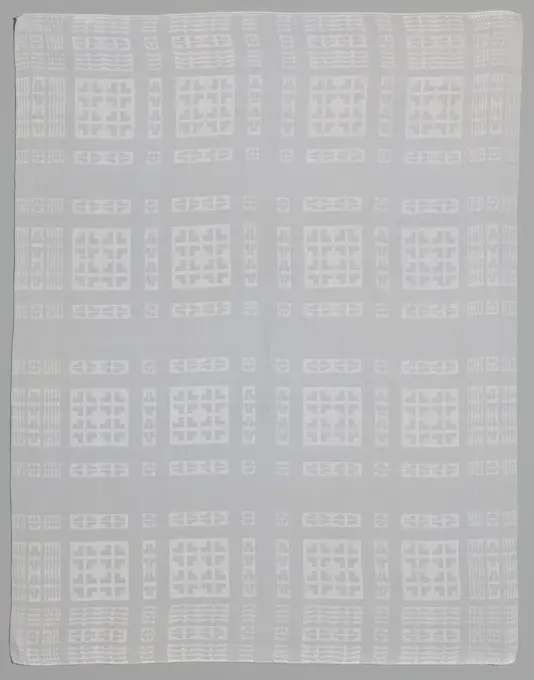
Fragments, Medium: silk, metallic thread Technique: damassé (8-harness satin and plain weave (doubled warps and wefts) plus discontinuous supplementary weft floats, Vertically-striped arrangement of small simplified architectural vignettes with oversized foliage alternates with vertical stacked columnar scrolls with simple flower motifs. Metallic floral forms are superimposed on yellow-green damaseé-patterned background., Europe, late 17th century, woven textiles, FragmentsFragment (Italy); silkNeedlepoint (Cutwork) and Bobbin Lace Panel, late 16th century. Italy, Venice , late 16th century. Lace, needlepoint: linen; average: 33 x 104.5 cm (13 x 41 1/8 in.).Piece 16th-17th century Italian. Piece 222878Fragment Made 1600-1650 Italy. cisele voided cloth velvet .Coverlet fragment, Medium: wool, cotton Technique: double cloth, Vertical-horizontal repeat of large squares broken by small geometric trellis framework and other broad bands of geometric patterning. Reversible 'Summer and Winter' weave in dark blue and white., USA, late 18th-early 19th century, woven textiles, Coverlet fragmentSleeve cloth; Sarung. Cook cloth with geometric motifs and birds.Panel (Albania); silk and metallic threadPiece 16th-17th century Italian. Piece 223381Border Fragment 17th century Italian. Border Fragment 461652Strip bobbin with hanging rosette flower between windows, anonymous, c. 1925 - c. 1934  Strip of natural-colored bobbin, Valenciennes side. Under a wide lane with a spray pattern of large round mosjes, the lower half of the pattern consists of a rosette flower, which hangs down on a curved branch. The flower is probably placed between two windows. However, the strip is so short that it does not produce a complete picture. Under the flower you can see a large part of a lobed shell, with a muse in each lob. The motifs are connected by a Maas soil, a diamond-shaped Valenciennes ground. The motifs are made in linen battle with recesses and openwork edges. The Bloemhart is decorated with a snowflake. The recesses in the petals are decorated with crossing couples. The top of the strip is straight finished. The lobed shell along the bottom is finished with picots. Belgium (possibly) cotton (textile) Bobbi Lace / Valenciennes LaceWoven silk with lace design first half 17th century Italian. Woven silk with lace design 223190Sutra Cover. China. Date: 1590-1599. Dimensions: 34.5 × 12.1 cm (13 5/8 × 4 3/4 in.)Repeat: 13.5 × 6.2 cm (5 3/8 × 2 3/8 in.). Silk, 4:1 satin damask weave. Origin: China. Museum: The Chicago Art Institute, Chicago, USA.Fragment, 1500s - 1600s. India, Mughal Period, 16th - 17th century. Block printed cotton; overall: 39.1 x 11.5 cm (15 3/8 x 4 1/2 in.).Sampler; silk and linen embroidery on linenSpray Trijp, design "Zeenymphen", in Bruinrood, Carel Adolph Lion Cachet, in or after 1918 - c. 1925 Confirmation or spancing material, spray trijp, with design "Zeenymphen" in brown red. Netherlandsmaker: Eindhoven Pool layer: mohair. Ground tissue: Cotton (textile) Confirmation or spancing material, spray trijp, with design "Zeenymphen" in brown red. Netherlandsmaker: Eindhoven Pool layer: mohair. Ground tissue: Cotton (textile)Kesa Made 1801-1844 Japan. Silk and gold-leaf-over-lacquered-paper strip, warp-float faced 2 1 ëZí twill weave with weft-float faced 1 2 ëZ' twill interlacings of secondary binding warps and supplementary patterning wefts; lined with silk, plain weave .Fragment late 16th century Italian. Fragment 230665Fragments, Medium: linen Technique: bobbin lace made in Lille style but without heavy outlining thread, Densely worked fragments in a provincial Lille-style design., Germany or Italy, 18th century, lace, FragmentsTextile Fragment 13th-14th century Dated to either the thirteenth or fourteenth century, this plain-woven, block-printed, cotton textile fragment was once part of a much larger piece. This fragment exhibits the unique characteristics of technique and decoration associated with textile production in Western India, in the province of Gujarat, during the Middle Ages. The fragments design creates an interlinking chevron pattern which was a design specifically produced for an Egyptian market. Many fragments with this design have been found in Egypt, a fact indicating that such block-printed vibrant fabrics with this design were highly in demand. Found near the site of Fustat, Egypt, these textiles have been preserved largely due to the arid and dry climate of the region. This fragment serves as evidence of the Red Sea maritime trade and travel relations between both these areas and highlights their transregional and cross-cultural connections during medieval times.. Textile Fragment 44853Fragment (Dress Fabric) Made 1701-1800 Iran. .Fragment, Medium: silk, metallic yarns Technique: damassé weave in 8-harness satin plus plain weave with floats of alternate wefts and discontinuous supplementary weft patterning (brocade), all bound in 3/1 twill, Fragment of green silk damask brocaded with design in the bizarre’ style showing flowering vines in red, yellow and green with scrolls in silver. One selvage remains., France, late 17th-early 18th century, woven textiles, FragmentFragment (France); silk; Warp x Weft: 32.8 x 64.5 cm (12 15/16 x 25 3/8 in.)Fashion veil, c. 1930, 96 1/2 x 51 5/16 in. (245.11 x 130.33 cm), Silk, metallic threads; brocade; needlework, India, 20th century, Textile traditions changed slowly in the villages, but in the cities a wealthy elite kept up with Western trends. When traditional weavers catered to the new tastes, the results could be intriguing, as in this Art Deco veil featuring European-style floral sprays and serpents auspiciously associated with Hindu deities. Woven in Varanasi, a north-central Indian city long known for its gold and silver thread brocades, this veil might have been worn in any metropolitan center.Fragment, 1800s. China, 19th century. Silk; overall: 66.7 x 68.6 cm (26 1/4 x 27 in.).Piece early 17th century Italian. Piece 220610Piece 18th century Japan. Piece 71776Petticoat Made 1701-1800 France. Cotton, plain weave; block printed; embroidered .Cravat End (France); linenObi fragment, Medium: silk Technique: plain compound twill weave, Obi fragment with black silk ground with allover ground figure in tan and white silks. Design of branches forming lozenges and maple leaves. Broad black stripes at bottom., Japan, late 19th century, woven textiles, Obi fragmentPiece late 18th or early 19th century Japan. Piece. Japan. late 18th or early 19th century. Silk. Edo period (1615-1868). Textiles-WovenKesa Made 1750-1800 Japan. This garment is exceptional in two ways. It is unusually well-presrved, with its ivory ring and all straps and cords in place, thus allowing its presentation on a form, over a robe, in a way that correctly simulates the way it was worn. Also, it was made from an uwagi, a formal over-robe worn only by woman of the highest social standing during the Edo period. Its decoration of rows of lozenges based on floral forms is entirely embroidered in silk and gilt-paper-wrapped thread.. Silk; plain weave, embroidered with silk and gilt-paper-strip-wrapped silk .Baan Zijddamast with a design of blocks and stripes ,, c. 1900 - c. 1920 Baan Zijddamast with a design of blocks and stripes in blue, red, brown and black on golden yellow stock. Eastern textile. Japan silk damask Baan Zijddamast with a design of blocks and stripes in blue, red, brown and black on golden yellow stock. Eastern textile. Japan silk damaskTowel cover, Medium: cotton on linen Technique: withdrawn element with darned motifs, Towel cover with cross borders in geometric and floral designs, peacocks and plants worked in cross stitch. At the bottom a band of drawnwork showing a lozenge shape with plants on either side embroidered in darning and overcasting stitches. The towel is ornamented with four applied bands with warp fringes. Warp fringe at bottom., Pennsylvania, USA, 1813, lace, Towel coverPiece late 15th century Spanish. Piece 227238Border 16th or 17th century Italian. Border 461467Fragment (Italy); silk and metal; Bequest of Richard Cranch Greenleaf in memory of his mother, Adeline Emma Greenleaf; 1962-56-6-aKussenovertrek.Linen bluetteruit cushion cover.Handkerchief French 19th centuryFragment Made 1775-1800 JapanFragment; silk; Bequest of Richard Cranch Greenleaf in memory of his mother, Adeline Emma Greenleaf; 1962-56-122Genopte and sliced velvet with geometric pattern of hexagons, with stylized flower, in greenish blue. Coating or scanning fabric of gene and sliced velvet with geometric pattern of hexagons, with stylized flower, in greenish blue.Fragment 16th century Italian. Fragment 230174Scarf, from a four-piece group, 11 13/16 x 21 1/8 in. (30 x 53.66 cm), Cotton, ChinaTemplate with flowers and sticks, anonymous, 1800 - 1909  Japanese template (katagami) with a pattern of a stylized flower or leaf between stems or sticks. Partly visible in the top of the Japanese text frame between lines. Japan paper. silk cutting flowers ~ ornamentPiece 18th-19th century Japan. Piece 66662Panel. India. Date: 1775-1800. Dimensions: 36.6 x 103.8 cm (14 3/8 x 40 3/8 in.)Repeat: 16.6 x 25 cm (6 1/2 x 9 7/8 in.)Border width: 27.8 cm (11 in.). Cotton, plain weave; block printed; possibly painted; glazed. Origin: India. Museum: The Chicago Art Institute, USA.Fragment, Medium: silk Technique: plain compound weave, Tan silk with supplementary weft of the same color forming a design of lozenges. At intersection of lozenges are large floral motifs. Smaller, similar motifs appear in the center of the lozenges. One selvedge present., France, 18th century, woven textiles, FragmentQuilt, wholecloth calamanco ca. 1785-1810 American or British The top, back, filling, and quilting thread of this calimanco quilt are all made of wool fibers. The top is of a glazed red wool; the back, of a tan unglazed wool; the quilting thread is dyed red-orange. The top is composed of four lengths of fabric, stitched together horizontally. The piece is decorated with a central diamond-quilted panel, with surrounding borders in diamond, fan, and circular patterns.. Quilt, wholecloth calamanco 13853Fragment 16th century Italian. Fragment. Italian. 16th century. Silk. Textiles-VelvetsPiece 16th-17th century Italian. Piece 229164Panel, Medium: raffia Technique: plain weave embroidered with pile stitches, cutwork, Panel of undyed woven raffia with pile embroidery. Regular lattice pattern of three pile stripes; diamond-shaped centers cut out to make open trellis effect. Long edges hemmed, short edges unfinished., Kasai, Democratic Republic of the Congo, late 19th century, embroidery & stitching, PanelVest or beechje van Kloskant with fine volutes. Vest or beechje from natural colosside: Binche-Kant. Rectangular model, composed of five straight strips. At a ground ground, a five-grade ground, is a deeply wavy rank, which comes from a C-voltage. Then through a palm with extends like a horn with a wide edge and then starting with the C-volt again. The motifs are made in slurbase with openwork edges and in slurbase. As ornamental ground, a snowflaking soil has been applied in the C-voltage. The sides are finished with a soil, with the exception of the middle strip. This is slightly longer than the other strips and sticks something from the cardigan on both sides. The short sides of this excellent strip are not finished.Textile Swatches Onondaga Silk Company, Inc. (1925-1981). , 1948-1959. 64 acetate, 36 silk, 45 x 23 3/4 in. (114.3 x 60.3 cm).    1948-1959Fragment. Italy. Date: 1601-1700. Dimensions: . Brocaded silk. Origin: Italy. Museum: The Chicago Art Institute, Chicago, USA.Fragment; silkSilk dress with flower design, c. 1770 - c. 1850 Silk rug with floral design of browned side with a design of flower and leaf vines in the center in pink, yellow and gray on blue stock; wide edge of idem design of bouquets/buta motif. Lined with changean side in red/yellow and cross -sized cotton edge, printed with pattern of stripes with flower vines. Sewn in label with in the 19th century () Handwriting: "A fabric with multicolored small flowers from Persia, no. 5". Persia silk. cotton (textile) Silk rug with floral design of browned side with a design of flower and leaf vines in the center in pink, yellow and gray on blue stock; wide edge of idem design of bouquets/buta motif. Lined with changean side in red/yellow and cross -sized cotton edge, printed with pattern of stripes with flower vines. Sewn in label with in the 19th century () Handwriting: "A fabric with multicolored small flowers from Persia, no. 5". Persia silk. cotton (textile)Textile Fragment 16th-17th century. Textile Fragment 454527Fragment (France); silkFragments; silk, metallic threadFragment black silk damest. A fragment of black damask. The striped ground has a pattern of flower branches and leaves.Fragments of a Chasuble, 1600s. Italy, 17th century. Velvet; overall: 24 x 16 cm (9 7/16 x 6 5/16 in.).Border, Medium: cotton Technique: block printed (red and black) and immersion-dyed (yellow) on plain weave, A field of shells within scrolls. Border stripe of fretwork containing alternating shell and flower motif., Europe, ca. 1812, printed, dyed & painted textiles, BorderSilk Damask, 1400s. Italy, 15th century. Damask, silk; overall: 18 x 19 cm (7 1/16 x 7 1/2 in.).Tapestry.   Maker: UnknownAltar Cloth mid-19th century() Japan. Altar Cloth 68345Piece 16th century possibly Spanish. Piece 226990Shoulder Cloth (Kumbut Juangga,Cindé)Piece 19th century Japan. Piece 72123Textile; silk and linenRunner Made 1860-1870 England. Silk, plain weave with supplementary patterning warps; edged with gilt-metal-strip-wrapped silk and silk, bobbin lace braid and extended weft cut fringe; woven on loom with Jacquard attachment .Piece 17th century Italian. Piece 224065Piece French 19th century View more. Piece. French. 19th century. Silk. Textiles-WovenCover belonging to the office of H.R. Smokmaker, Voterik and Co., H. Steynert, c. 1933 - c. 1957  Linen Hoes belonging to Official Civil Code by H.R. Smokmaker. Surabaya linen (material)   Dutch East Indies, TheWomans Tubular Skirt (Kewatek Méan)Textile Swatches Onondaga Silk Company, Inc. (1925-1981). , 1948-1959. Silk, possibly synthetic fiber, 22 1/4 x 19 in. (56.5 x 48.3 cm).    1948-1959Samples (USA); Manufactured by Orinoka Mills (United States); Warp x Weft (a): 19 × 20 cm (7 1/2 × 7 7/8 in.) Warp x Weft (b): 21 × 10 cm (8 1/4 × 3 15/16 in.)Chasuble unknownNapkin with the coat of arms of Cornelis Hop, Anonymous, c. 1700 - c. 1724 Napkin van Linnamast with the coat of arms of Cornelis Hop. Midfield: Symmetrical pattern of multifaceted volutes with blocked thickenings at the junctions. In between a lying oval shield with a weapon of Cornelis Hop (1685-1762), ambassador at the court of King Louis XV of France: celebrated, 1 and 4 header standing on Bol (the bird of 1, that of 4 surrounding); 2 and three two lined wings. Heart shield shared: 1 a crossbar, 2 on the right a five -pointed star, on the left a desired Wassenaar. The shield covered with five -sized crown. Shield holders: On the right an eagle, on the left an aligned lion. Edges: weapon trophies. Corners: a round axle. All around blocks. Southern Netherlands linen (material) damask Napkin van Linnamast with the coat of arms of Cornelis Hop. Midfield: Symmetrical pattern of multifaceted volutes with blocked thickenings at the junctions. In between a lying oval shield with a weapon oSleeve 18th century Greek Islands, Karpathos. Sleeve 221738Textile Swatches Onondaga Silk Company, Inc. (1925-1981). , 1948-1959. cotton, silk, 44 1/2 x 17 in. (113 x 43.2 cm).    1948-1959Fragments, Medium: silk, linen Technique: two integrated structures, plain weave plus plain weave, Flowering urn with birds within curving, fruiting vines with leopards in blue and gold. Narrow vertical border with diagonal plant motifs at right side., 17th century, woven textiles, FragmentsSkirt, 20th century, 36 1/8 x 25 1/4 in. (91.76 x 64.14 cm), Cotton, Laos, 20th centuryFragment 18th century Italian. Fragment 230394William O Fletcher, Blue and White Homespun, c 1937 Blue and White HomespunFragment Made 1601-1650 Italy. Silk, warp-float faced satin weave self-patterned by seversing of faces (damask) .Fragment. Provincial Inca; Peru, Possibly Nazca Valley, south coast. Date: 1476-1532. Dimensions: 58.3 x 33.2 cm (23 x 13 1/8 in.). Cotton and wool (camelid), plain weave with brocading wefts. Origin: Peru. Museum: The Chicago Art Institute, Chicago, USA.Man's Tunic 17th-18th century () Aymara. Man's Tunic. Aymara. 17th-18th century (). Camelid hair. Bolivia. Textiles-WovenFragment. Italy. Date: 1775-1800. Dimensions: 9.5 x 21.6 cm (3 3/4 x 8 1/2 in.). Silk; twill velvet foundation. Origin: Italy. Museum: The Chicago Art Institute, Chicago, USA.Textile Swatches Onondaga Silk Company, Inc. (1925-1981). , 1948-1959. Silk, 48 x 18 in. (121.9 x 45.7 cm).    1948-1959Piece 18th-19th century Japan. Piece 66504Length of woven wool and silk 1870s Christopher Dresser British, Scottish The repeating pattern of stylized flowers arranged in a fan shape within an arch in red and gold on a shaded green ground reflects Christopher Dresser's interest in Japanese textiles, while it also fulfills his requirements for good textile design. Dresser argued that textiles, unlike pictorial art, were only suited for flat, ornamental design. As he elaborates in Principles of Decorative Design (1873), "The ornamentist when enriching a fabric deals only with a surface, and has no thought of placing pictures thereon; he has simply to enrich or beautify that which without his art would be plain and unornamental."This pattern was shown at the 1871 International Exhibition in London, and illustrated in the accompanying Art-Journal Catalogue, where it was advertised as "Very beautiful and not extremely costly fabrics for upholstering purposes, manufactured by Messrs. J. W. and C. Ward of Halifax, from the designs by Kang Rug second half 17th century China. Kang Rug 68294Printed Trijp with design "Akelei", Theo Nieuwenhuis (attributed to), c. 1918 - c. 1925 Covered or spancing material of printed tripe with design "Akelei" in dark yellow on dark green stock. designer: Netherlandsmanufacturer: Eindhoven Pool layer: mohair. Ground tissue: Cotton (textile) printing Covered or spancing material of printed tripe with design "Akelei" in dark yellow on dark green stock. designer: Netherlandsmanufacturer: Eindhoven Pool layer: mohair. Ground tissue: Cotton (textile) printingPiece 17th century Italian. Piece 216926Fragment of mourning wheels. Fragment black mourning wheelsChinese ornamentServet van Pellendas, Anonymous c. 1850 - c. 1900 Pelendet van Pellendamast with edges all around. The napkin is marked: PDK 18 and belongs to a napkin with invnr. BK-1980-124-A. Eastern Netherlands (possibly) linen (material) Pelendet van Pellendamast with edges all around. The napkin is marked: PDK 18 and belongs to a napkin with invnr. BK-1980-124-A. Eastern Netherlands (possibly) linen (material)Ralph Atkinson, Coverlet (Blanket), c 1936 Coverlet (Blanket)Fragments; silk; Bequest of Richard Cranch Greenleaf in memory of his mother, Adeline Emma Greenleaf; 1962-56-47-a/c