Historic Keys and Spurs

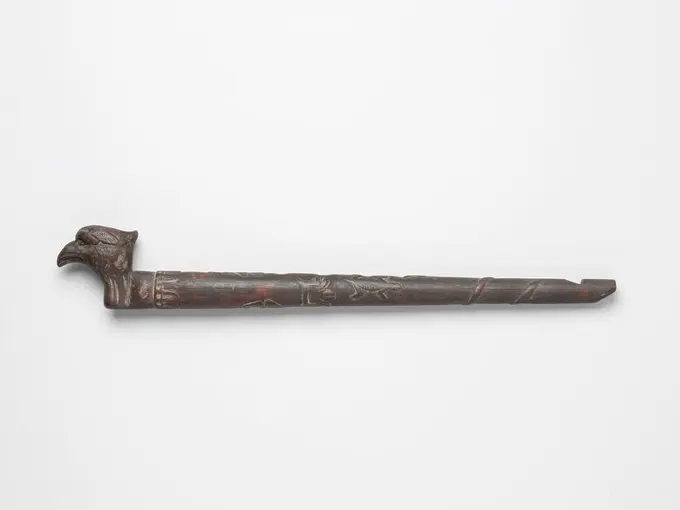
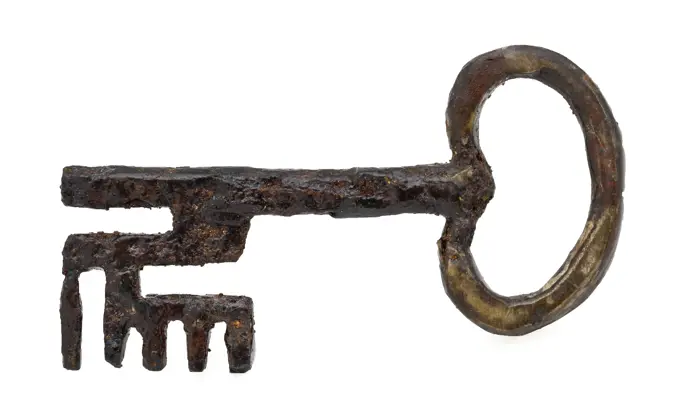
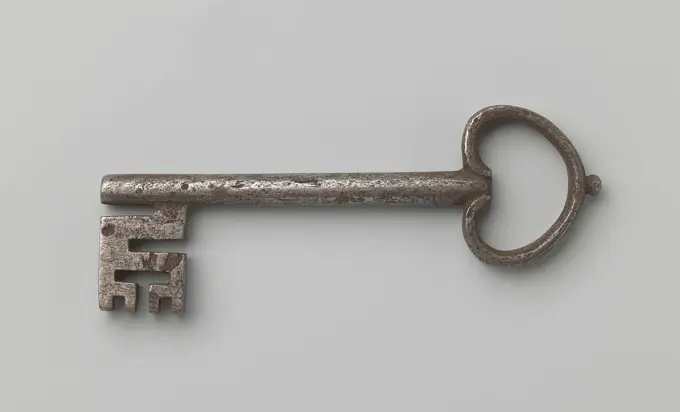
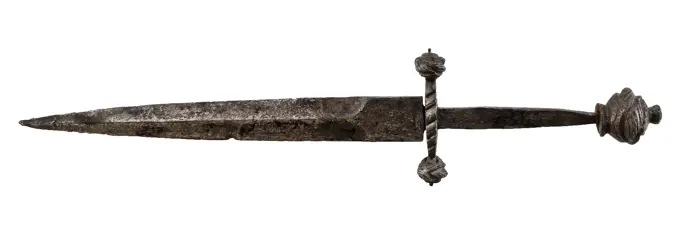
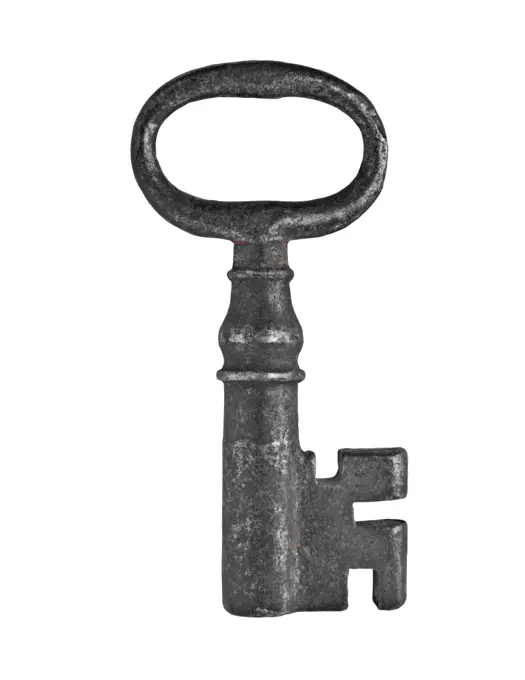
Various keys from different centuries, including ornate metal designs and a unique spur, showcasing antique craftsmanship and historical significance.

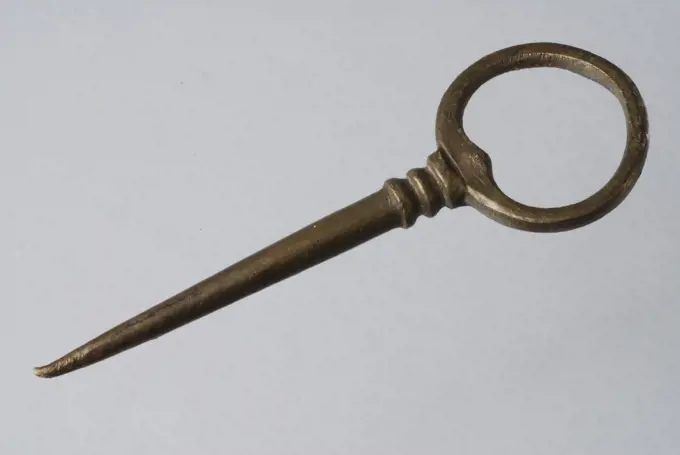
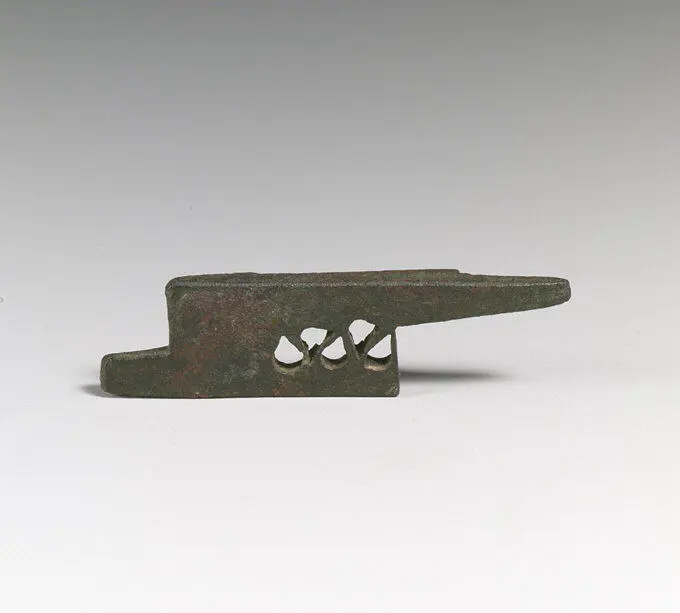
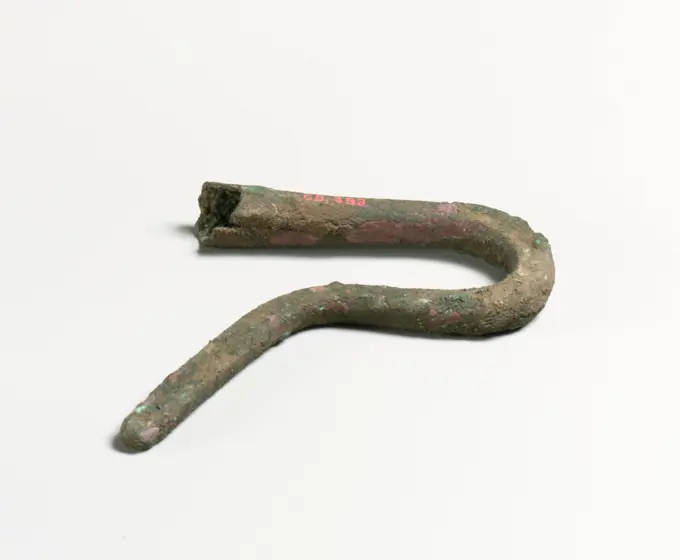
Coat hook or coat closure, open worked flat metal object ending in bent point, closure clothing accessory clothing soil find copper metal, cast Open worked flat metal object ending in bent point (broken down). Open rectangle to confirm archeology Rotterdam to connect rail tunnel close closes Soil discovery: trajectory rail tunnel Rotterdam.
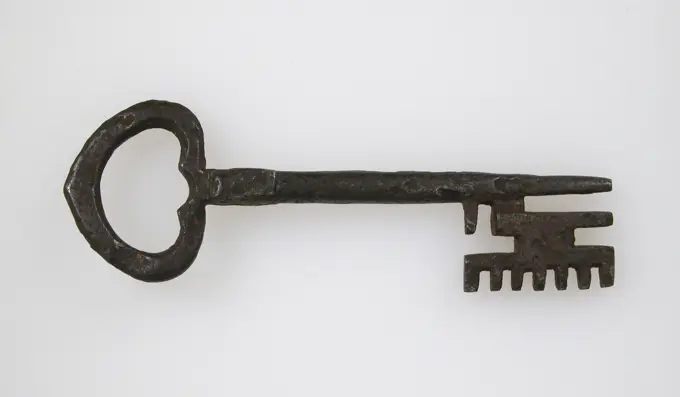
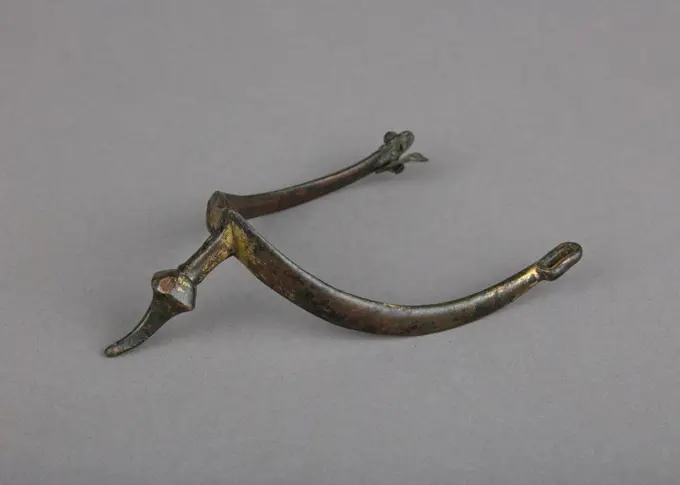
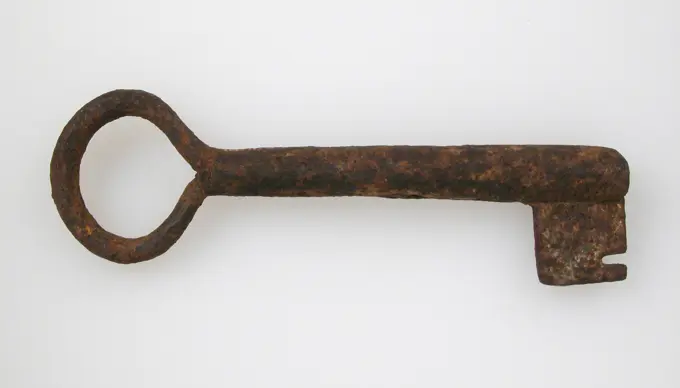
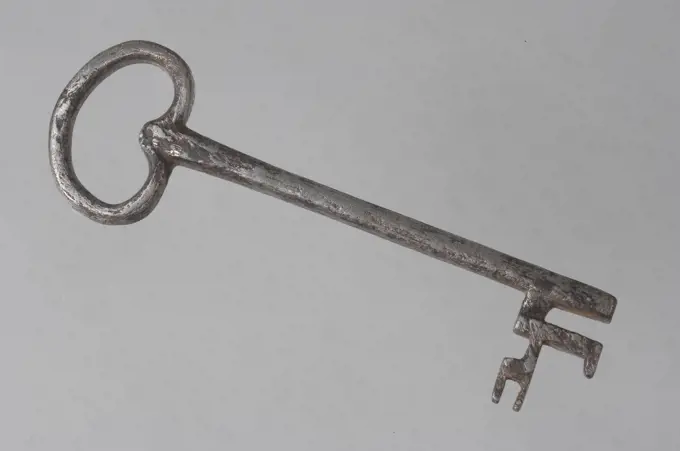
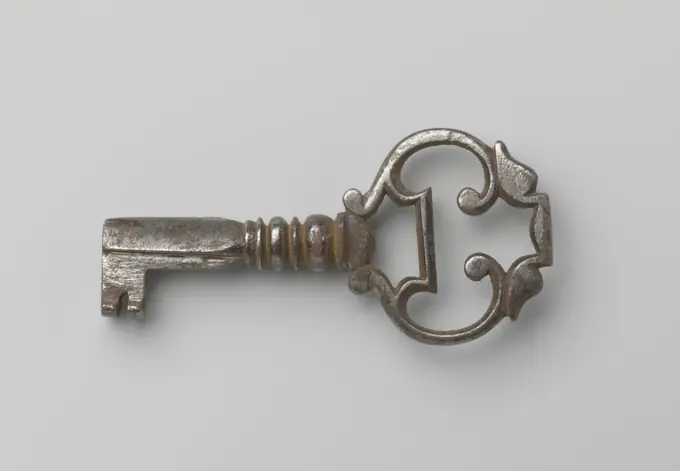
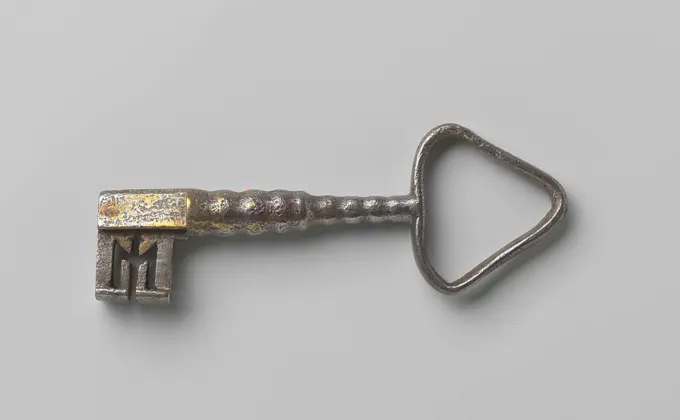
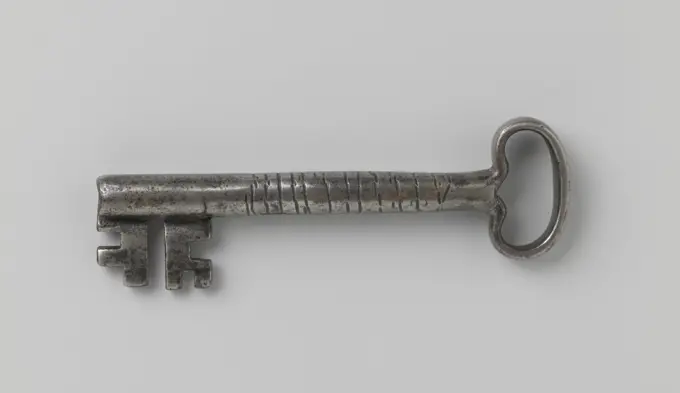
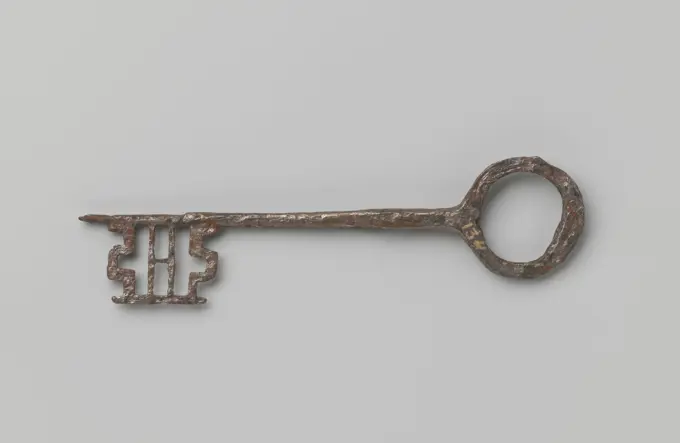
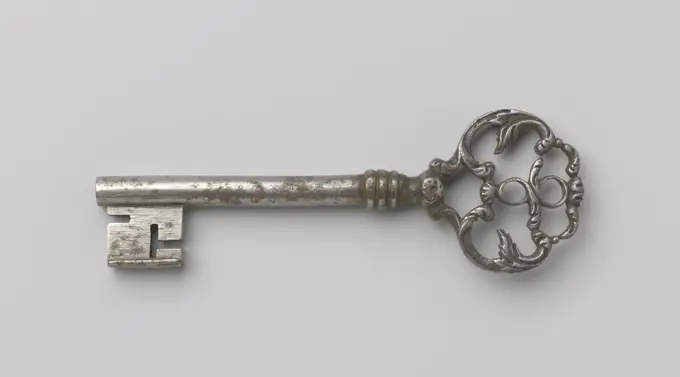
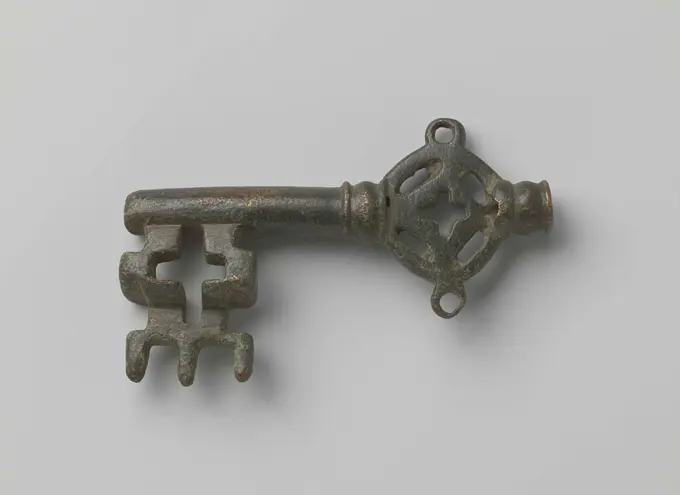
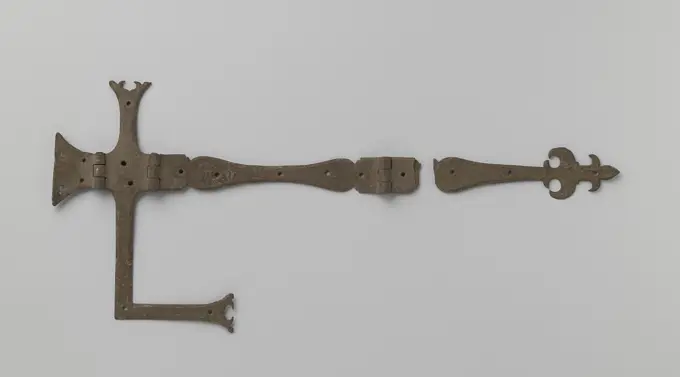
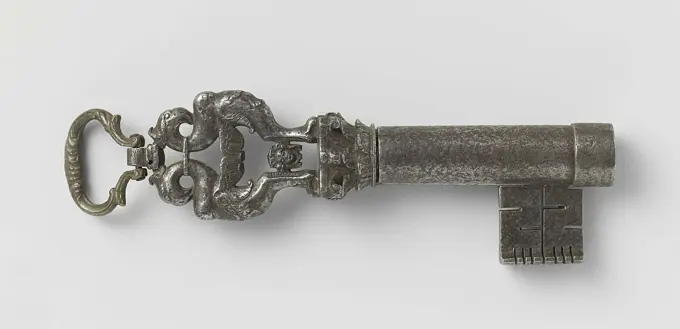
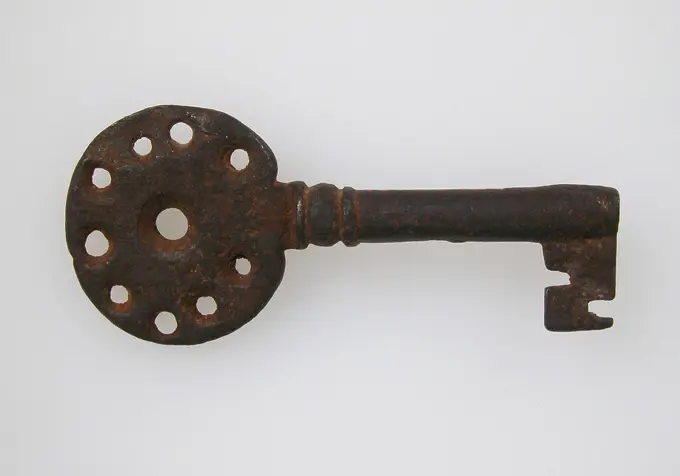
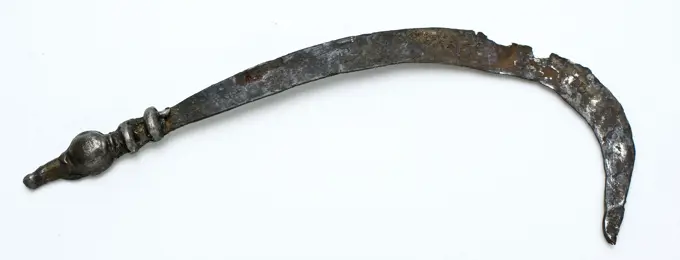
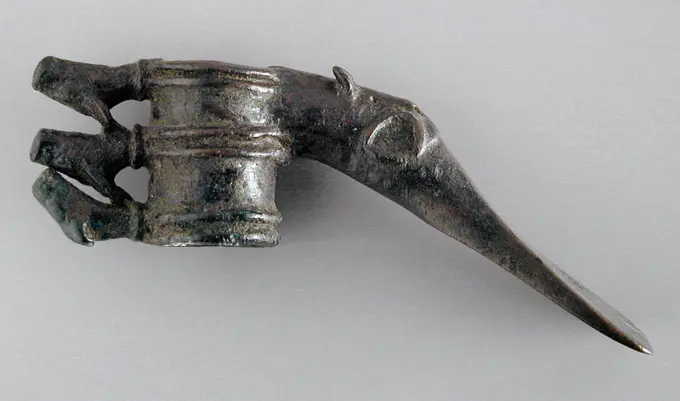
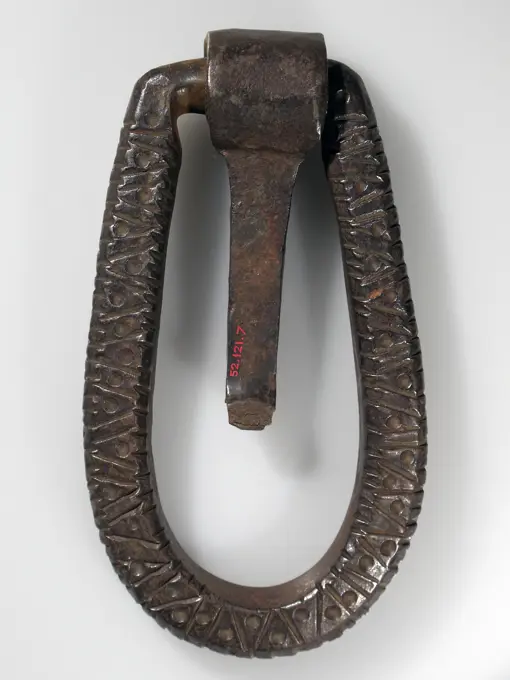
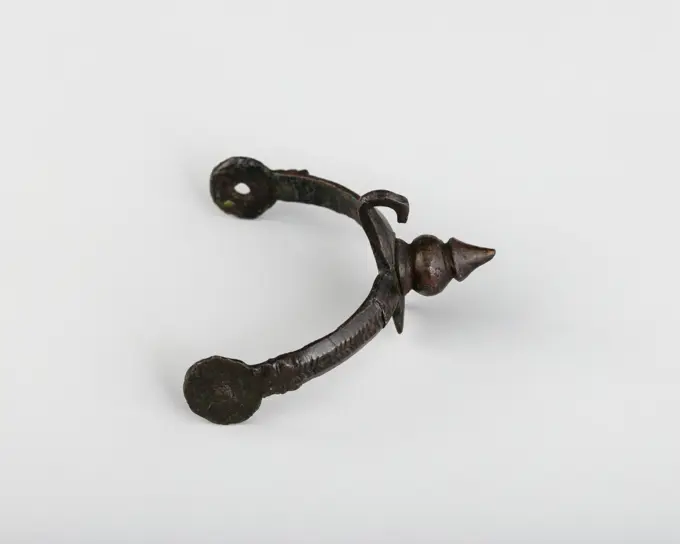
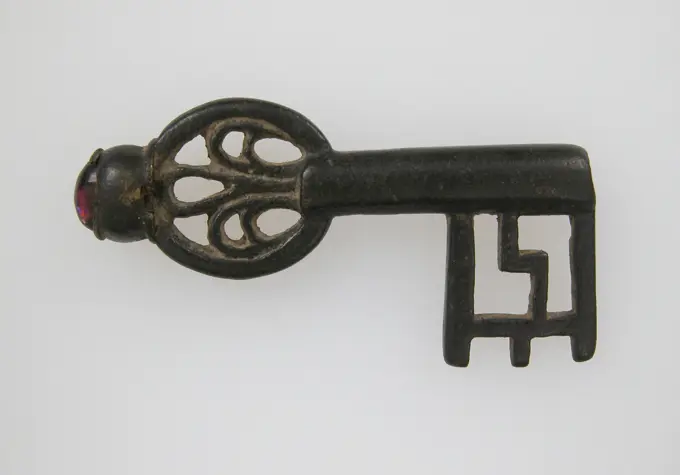
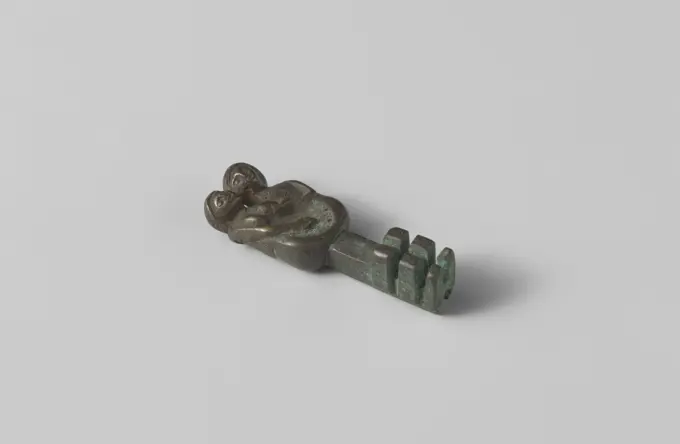
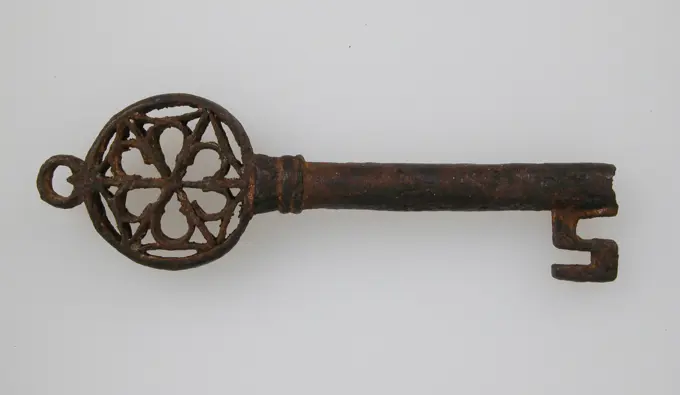
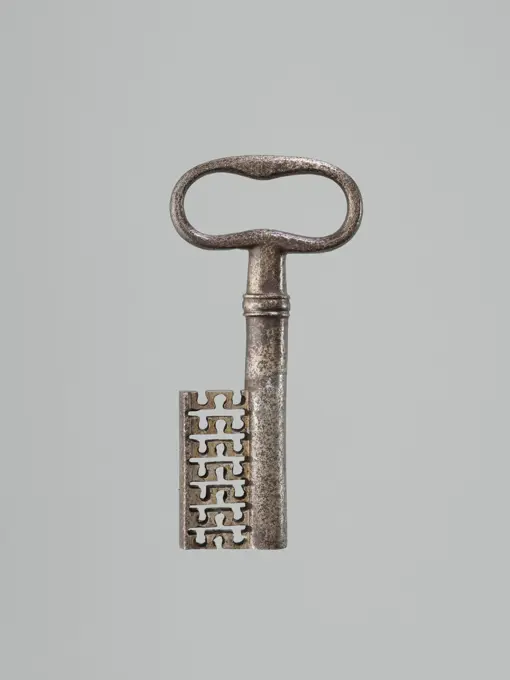
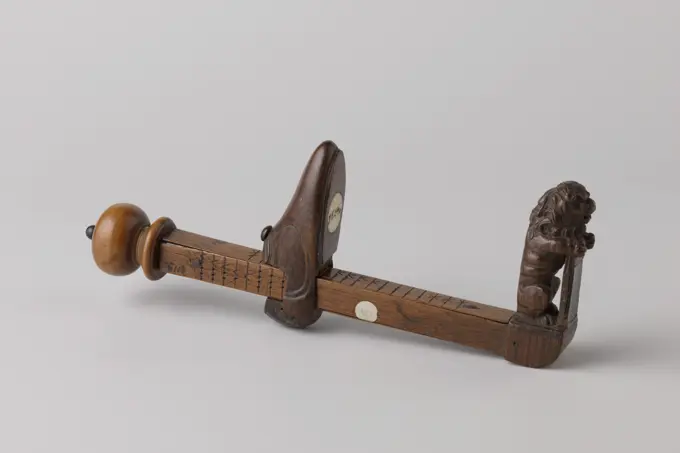
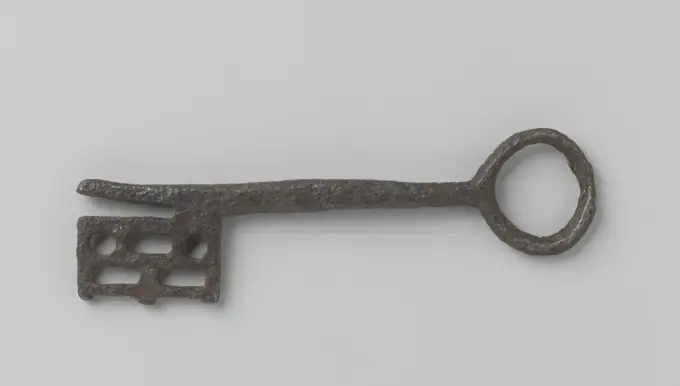
Key, c. 1300 - c. 1400 Key with four -sided shaft, ring -shaped eye and openwork quadrangular beard with three elongated and two round cut -outs.  iron (metal) Key with four -sided shaft, ring -shaped eye and openwork quadrangular beard with three elongated and two round cut -outs.  iron (metal)Key 14th century German. Key 463351Prick Spur (Right) ca. 1200 German The prick spur was the first type of spur to be invented, and it consists of a goad or prick, more or less pointed, connected to side arms or a heel plate. The earliest spurs were probably simple thorns attached at the back of the heel, before they started to be made out of metal in antiquity. Prick spurs were the main type of spurs used in the Middle Ages until the mid-14th century, when they were supplanted by rowel spurs, which appeared in Europe a century before and with which they had cohabitated for a time. As a knights status was closely related to his horse, spurs became one of the symbols of chivalry, and one of the tokens given to him during his knighting.. Prick Spur (Right). German. ca. 1200. Copper alloy, gold. Equestrian Equipment-Spurs39 keys from the collection of Emmanuel Vita Israël, anonymous Pipe key, so -called "bishop's key" of which the handle has a rooster -shaped incision.  bronze (metal) Pipe key, so -called "bishop's key" of which the handle has a rooster -shaped incision.  bronze (metal)Key 14th century German. Key 463369Key 15th century German The decoration of Gothic iron locks and keys was often elaborate and of the highest standard of workmanship. The motifs were frequently drawn from Gothic architecture, reproducing on a miniature scale complicated tracery patterns and even tiny statuettes. A number of these tiny locks were compound, with some of the mechanisms concealed from view, and required two or even three keys used in sequence to open them. It has been suggested that the greatly expanded use of locks on doors, or coffrets and other types of storage chests was a result of the increasing urbanization of life and the new emphasis on material wealth and private ownership which developed in the late Middle Ages.. Key. German. 15th century. Iron. Metalwork-IronCoat hook or coat closure, open worked flat metal object ending in bent point, closure clothing accessory clothing soil find copper metal, cast Open worked flat metal object ending in bent point (broken down). Open rectangle to confirm archeology Rotterdam to connect rail tunnel close closes Soil discovery: trajectory rail tunnel Rotterdam.Key 15th century German The decoration of Gothic iron locks and keys was often elaborate and of the highest standard of workmanship. The motifs were frequently drawn from Gothic architecture, reproducing on a miniature scale complicated tracery patterns and even tiny statuettes. A number of these tiny locks were compound, with some of the mechanisms concealed from view, and required two or even three keys used in sequence to open them. It has been suggested that the greatly expanded use of locks on doors, or coffrets and other types of storage chests was a result of the increasing urbanization of life and the new emphasis on material wealth and private ownership which developed in the late Middle Ages.. Key 463339Key 15th century German The decoration of Gothic iron locks and keys was often elaborate and of the highest standard of workmanship. The motifs were frequently drawn from Gothic architecture, reproducing on a miniature scale complicated tracery patterns and even tiny statuettes. A number of these tiny locks were compound, with some of the mechanisms concealed from view, and required two or even three keys used in sequence to open them. It has been suggested that the greatly expanded use of locks on doors, or coffrets and other types of storage chests was a result of the increasing urbanization of life and the new emphasis on material wealth and private ownership which developed in the late Middle Ages.. Key 468863Fibula, Aucissa type late 1st century B.C.-mid-1st century A.D. Roman. Fibula, Aucissa type 256014HorseshoeIron key with heart-shaped eye, massive key handle and cruciform beards in beard, key iron value foundations iron, hand forged Key with heart-shaped eye (handle) solid rectangular key handle cross-shaped notches (horizontal and vertical) in key beard and symmetrical keyhole cross-section archeology Rotterdam Delfshaven hang-en-sluitwerk Soil discovery found in the ground in 1924 during excavation work for the Lage Erfbrug in Delfshaven.Key, c. 1600 - c. 1699 Key whose handle consists of two intercourse, by means of a rod and two leaves, connected and driven to each other. The shaft consists at the top of two tori between discs and then becomes triangular.  iron (metal) Key whose handle consists of two intercourse, by means of a rod and two leaves, connected and driven to each other. The shaft consists at the top of two tori between discs and then becomes triangular.  iron (metal)Sleutel.Key with triangular eye, corrugated shaft, which widens downwards and then proceeds three-sided. The beard has an occupancy similar to a stylized German eagle.Key, c. 1400 - c. 1950 Key.  iron (metal) Key.  iron (metal)Key late 14th century German. Key 468918Pipe key, c. 1300 - c. 1400 Pipe key made of a piece forged. The shaft is decorated with an irregularly stabbed spiral. The eye -shaped eye.  iron (metal) forging Pipe key made of a piece forged. The shaft is decorated with an irregularly stabbed spiral. The eye -shaped eye.  iron (metal) forgingPipe key, c. 1500 - c. 1525 Pipe key in which the handle was created by the conveyor of a tire to a large and a small eye. A lily rises in the big eye. The capital is spherical and has profiled edges above and below. The beard is grooved lengthwise. France iron (metal) Pipe key in which the handle was created by the conveyor of a tire to a large and a small eye. A lily rises in the big eye. The capital is spherical and has profiled edges above and below. The beard is grooved lengthwise. France iron (metal)Key, c. 1400 - c. 1500 Key with a large round eye, a buckling shaft and symmetrically carved under the beard. With accompanying label.  iron (metal) Key with a large round eye, a buckling shaft and symmetrically carved under the beard. With accompanying label.  iron (metal)Dagger Indian, Bhil 18th-19th centuryPin from the wreck of the East Indies Hollandia, Anonymous, 1700 - in Or Before 1743  Tools and instruments, sewing and sailmaking, pin; fragm, bow, id. NG 1980-27H3265. Netherlands copper (metal)   SecondKey early 15th century French The decoration of Gothic iron locks and keys was often elaborate and of the highest standard of workmanship. The motifs were frequently drawn from Gothic architecture, reproducing on a miniature scale complicated tracery patterns and even tiny statuettes. A number of these tiny locks were compound, with some of the mechanisms concealed from view, and required two or even three keys used in sequence to open them. It has been suggested that the greatly expanded use of locks on doors, or coffrets and other types of storage chests was a result of the increasing urbanization of life and the new emphasis on material wealth and private ownership which developed in the late Middle Ages.. Key 468910Door hanger with lily motive, 1400 - 1500 A forged iron door hanger, running into a lily.  iron (metal) forging A forged iron door hanger, running into a lily.  iron (metal) forgingBrass corkscrew, corkscrew tool kit soil found brass metal, cast brass corkscrew Round eye on conical pin at the end tiny slant hook. On the transition from pen to eye two profile ridges archeology open uncorking wine drinkingKey, c. 1400 - c. 1950 Key, In the Ring the initials P.L.M.F.A.  iron (metal) Key, In the Ring the initials P.L.M.F.A.  iron (metal)Old key isolated on white background.Key, c. 1300 - c. 1400 Key with a handling similar to a four -cacky wheel and a shaft that ends in a point. Strongly incised and large beard.  bronze (metal) Key with a handling similar to a four -cacky wheel and a shaft that ends in a point. Strongly incised and large beard.  bronze (metal)Pipe key, 1700 - 1750 Pipe key with round handle and consisting of leaf fillets, in the middle an 8 forming and resting on a toothed bullet.  iron (metal) Pipe key with round handle and consisting of leaf fillets, in the middle an 8 forming and resting on a toothed bullet.  iron (metal)Pipe key. Pipe key with handle consisting of a cut-away square, a corner of which rests on the capital. The side corners are provided with eyes and the upper corner of a profiled tors-shaped increase, which must have served to keep something bad. The beard is formed from two changing inner corners and ends in three teeth. There is a cut-away crotch in handle and beard.Batter ..Pen Case with Inkwell. Egypt, 19th century. Metal. Silver, engravedSleutel.Key whose shaft and grabbed a T with an eye in the intersection.Key 1st-7th century Roman. Key. Roman. 1st-7th century. Copper alloy. Metalwork-BronzeThe Amsterdam apothecary and art collector Emmanuel Vita Israël. He donated his collection, comprising keys dating from Roman antiquity to the 19th century, to the Koninklijk Oudheidkundig Genootschap (Royal Antiquarian Society) in 1937. Vita Israël claimed that his key collection had grown more or less by accident: being one of the few collectors of keys, dealers automatically made their way to him.Buckle ca. 100 B.C.-ca. 500 A.D. Ibero-Roman. Buckle. Ibero-Roman. ca. 100 B.C.-ca. 500 A.D.. Bronze. Miscellaneous-Buckles & OrnamentKey. Culture: German. Dimensions: Overall: 3 1/16 x 1 5/16 x 3/8 in. (7.7 x 3.4 x 1 cm). Date: 14th-15th century.The decoration of Gothic iron locks and keys was often elaborate and of the highest standard of workmanship. The motifs were frequently drawn from Gothic architecture, reproducing on a miniature scale complicated tracery patterns and even tiny statuettes. A number of these tiny locks were compound, with some of the mechanisms concealed from view, and required two or even three keys used in sequence to open them. It has been suggested that the greatly expanded use of locks on doors, or coffrets and other types of storage chests was a result of the increasing urbanization of life and the new emphasis on material wealth and private ownership which developed in the late Middle Ages. Museum: Metropolitan Museum of Art, New York, USA.Key, c. 1600 - c. 1699 Key whose selection of leaf and edge motifs is composed. The shaft is drilled four -pass -shaped and passes into sections during the handle.  iron (metal) Key whose selection of leaf and edge motifs is composed. The shaft is drilled four -pass -shaped and passes into sections during the handle.  iron (metal)Flute. Culture: Aztec. Dimensions: L. 450 mm; W. 34 mm; H. 67 mm; Wt. 158 g.. Date: 16th century (). Museum: Metropolitan Museum of Art, New York, USA.Iron key, kidney-shaped handle, beard with six teeth, key iron commodity founding iron metal, forged sawn iron key. Kidney-shaped handle completely or partially completed Beard with six serrations on three sides archeology close theft prevention store storage chestSleutel.Key with bean-shaped eye on which a button.Iron dagger, knobs on hilt and crossbar, marked, dagger stab weapon arm soil found iron metal, forged Iron dagger. Two-edged leaf Tapered Flat angel short parole both marked with letter X At the ends of the hilt and the parapet are imitation buttons ending in point or button mark: X archeology Rotterdam weapon stabbing fighting protect status militaria war Soil discovery found during groundwork too Rotterdam.Pipe key. Pipe key whose oval eye is formed by an iron band. Under the eye, the shaft has a thickening.Pin key 18th century possibly Italian. Pin key. possibly Italian. 18th century. Wrought iron. Metalwork-IronKey, 1725 - 1775 Key. Steel: octagonal, narrower to the ring. Ring: Asymmetrical leaf ranks. Beard: Divided into two halves, with straight fronts, in both halves symmetric notches  iron (metal) Key. Steel: octagonal, narrower to the ring. Ring: Asymmetrical leaf ranks. Beard: Divided into two halves, with straight fronts, in both halves symmetric notches  iron (metal)Pipe key. Pipe key whose annular eye above the disk enters a pointed increase above the disc. Short shaft.Bolt. Bolt 244225Earring, whalebone with embossed ornamental button, earring regional dress jewelery accessory clothing ground find iron silver tin metal, handforged Balein with profiled ornamental bud Fragment of an ear iron archeology Rotterdam City center Stadsdriehoek Oostplein Newhaven adorn head covering hat regional dress traditional clothing Soil discovery: Oostplein end New Port 1985.Seat hook of gilded bronze, anonymous, c. -200 - c. 0 Seat hook of gilded bronze. China bronze (metal). gilding (material) gilding Seat hook of gilded bronze. China bronze (metal). gilding (material) gildingLadle Handle. Culture: Coptic. Dimensions: Overall: 8 3/4 x 1 5/8 x 15/16 in. (22.2 x 4.2 x 2.4 cm). Date: 4th-7th century. Museum: Metropolitan Museum of Art, New York, USA.Adze-head. Iran, Luristan, circa 1350-1000 B.C.. Arms and Armor; adzes. Bronze, castAxe head ca. 2000-1500 B.C. Iran. Axe head 324059Flintlock of a Gun 1740 Europe. Steel .Whetstone Socket. Iran, Luristan, circa 1350-1000 B.C.. Tools and Equipment; sockets. Bronze, castSleutel.Key with beautifully edited ring, in which a crown.Pipe key. Pipe key, so-called "bishop key", the flat diamond-shaped handle of which exhibits different forms of cutouts.Excavated horseshoeSleutel.Key with bean-shaped eye and four-sided shaft, which ends past the beard.Staff () 2nd millennium B.C.. Staff () 325126Door Knocker 15th-16th century European. Door Knocker. European. 15th-16th century. Iron. Metalwork-IronPrick Spur 2nd-3rd century Gallo-Roman This small bronze spur, inlaid in silver, was found in Paris in the river Seine. It was secured to the heel of the rider by means of a strap attached to two side buttons (now missing). An extra strap passed through the heels hook (shaped as a horses head) before going around the ankle, to be sure that it would not move.In antiquity, spurs were not used in pairs, but rather as a single accessory attached to only one of the feet. They were used, as they are today, for directing a horse to move forwards. Evolved from Celtic and Roman types, this kind of spur is found in Roman Gaul in contexts dated between the 1st and the 3rd century A.D. In Britain, related indigenous examples can be dated from the 4th century, the horses head usually replaced by a simple hook.. Prick Spur. Gallo-Roman. 2nd-3rd century. Copper alloy, silver. Paris. Equestrian Equipment-SpursSplit Shot (Projectile) for a Cannon Made 1600-1700 Austria. Iron .Key 15th century () French () The decoration of Gothic iron locks and keys was often elaborate and of the highest standard of workmanship. The motifs were frequently drawn from Gothic architecture, reproducing on a miniature scale complicated tracery patterns and even tiny statuettes. A number of these tiny locks were compound, with some of the mechanisms concealed from view, and required two or even three keys used in sequence to open them. It has been suggested that the greatly expanded use of locks on doors, or coffrets and other types of storage chests was a result of the increasing urbanization of life and the new emphasis on material wealth and private ownership which developed in the late Middle Ages.. Key. French (). 15th century (). Copper alloy, cabochon amethyst. Metalwork-LattenKey, c. 1400 - c. 1950 Key whose handle consists of a naked female and men's figure sitting next to each other, touching each other. Rome bronze (metal) Key whose handle consists of a naked female and men's figure sitting next to each other, touching each other. Rome bronze (metal)Spoon with round bowl and flattened, hexagonal handle, spoon cutlery soil find tin metal, cast Round tray short rat tail hexagonal handle Front stem smashed crowned rose Archeology Rotterdam railroad tunnel food Soil discovery: railway tunnel Rotterdam.Bronze tap, without stopper with spout in the form of stylized animal head, tap part soil found bronze metal, cast Mottled gray red-metal tube that is slightly tapered at the back and where at the front hollow tube is fixed at right angles to where the plug is hears. At the front of this tube is spout in the form of stylized animal head On the right side of the spout are two holes archeology tap holder component barrel beerFlat-nose pliers  on a white backgroundKey 15th century German The decoration of Gothic iron locks and keys was often elaborate and of the highest standard of workmanship. The motifs were frequently drawn from Gothic architecture, reproducing on a miniature scale complicated tracery patterns and even tiny statuettes. A number of these tiny locks were compound, with some of the mechanisms concealed from view, and required two or even three keys used in sequence to open them. It has been suggested that the greatly expanded use of locks on doors, or coffrets and other types of storage chests was a result of the increasing urbanization of life and the new emphasis on material wealth and private ownership which developed in the late Middle Ages.. Key 463332Knife Handle (Kozuka) ca. 1615-1868 Japanese A kozuka is a handle of a by-knife that is part of a sword mounting. It is kept in a slot on the reverse of a katana scabbard, often with a matching kōgai (hairdressing tool).. Knife Handle (Kozuka) 34638Key, 1600 - 1699 Key. Corning with a lock (BK-NM-8726-A).  iron (metal) Key. Corning with a lock (BK-NM-8726-A).  iron (metal)Door knocker in the shape of a small dog 15th or 16th century Spanish The later Middle Ages was practically a second Iron Age, producing vast quantities of armor, weaponry and all manner of functional objects from nails to elaborate strap work hinges, ornate locks and household tools. A highly specialized craft, the best ironsmiths took pride in bringing decorative refinement to their works often elaborating surfaces that could not be seen and transfiguring the functional into the figural. These door knockers are fine examples of the wit, humor, and skill the best ironsmiths could bring to their products.This door knocker is in the form of a small dog, the tang replacing the rear legs and the splayed front legs serving as the striker. The head has a long snubbed snout, an abstracted open mouth showing the tongue and short rounded ears with a circular depression below each. The eyes and nostrils are indicated by holes pressed into the malleable iron when hot. A collar rings its neck.. DDouble Key 15th-16th century European The decoration of Gothic iron locks and keys was often elaborate and of the highest standard of workmanship. The motifs were frequently drawn from Gothic architecture, reproducing on a miniature scale complicated tracery patterns and even tiny statuettes. A number of these tiny locks were compound, with some of the mechanisms concealed from view, and required two or even three keys used in sequence to open them. It has been suggested that the greatly expanded use of locks on doors, or coffrets and other types of storage chests was a result of the increasing urbanization of life and the new emphasis on material wealth and private ownership which developed in the late Middle Ages.. Double Key. European. 15th-16th century. Iron. Metalwork-IronHunting horn. Copper hunting horn.Belt Buckle 6th-7th century Frankish or Burgundian. Belt Buckle 465302 Frankish or Burgundian, Belt Buckle, 6th7th century, Iron, silver inlay, bronze, Overall: 8 1/16 x 3 5/8 x 1 3/16 in. (20.4 x 9.2 x 3 cm). The Metropolitan Museum of Art, New York. Gift of J. Pierpont Morgan, 1917 (17.192.234)Onderdeel van een werktuig, gedecoreerd.Part of a tool of tinned iron, presumably from a collection. The wide part is opened with geometric surfaces and two circles, which are open on one side to hang something. This wide part runs narrower to the end to a slim, flat pin, which curls to the end.Body Ornament Japan. Body Ornament. Japan. Bone. Final Jmon period (ca. 1000-300 B.C.). BoneShepherd's crook Cypriot. Shepherd's crook. Cypriot. Bronze. Bronzes. A lock plate with robbery. Gothic.Mold for the handle of a pewter can. Mold for the handle of a pewter can, from brass. It is decorated with the figure of Judith with the head of Holofernes, and the year 1621, and the letters: JVS.Key. Key whose eye is formed by two minister of turtle doves. The shaft is formed by two interlocking hands with bottom and above profiles.Short pin unknownAxle pin China. Axle pin. China. Bronze. Western Zhou dynasty (1046-771 B.C.). MetalworkSmall oval pewter ornamental buckle, clasp fastener component soil find tin metal, w 1.6 Round bracket angel. Leather fragment attached to the clasp with nail archeology Rotterdam rail tunnel confirmation Soil discovery: rail tunnel Rotterdam.Old keyMitten Gauntlet for Left Hand with Rondel (Manifer). Culture: Italian. Dimensions: H. 13 1/2 in. (34.3 cm). Date: ca. 1480-1500. Museum: Metropolitan Museum of Art, New York, USA.Amulet - IchneumonHinge 1700-1800 American. Hinge 4312Duck-Billed Axe Head, 1540-1296 BC. Egypt, New Kingdom, Mid-Dynasty 18, 1540-1296 BC. Bronze; overall: 13.8 x 13.1 cm (5 7/16 x 5 3/16 in.).kellnermesser,messer ** waiter knife,waiter knifes 647-fgdLatchkey;  18th century (1701-00-00-1820-00-00);Hammer. Germany. Date: 1500-1599. Dimensions: L. 19.1 cm (7 1/2 in.). Gilded bronze head and horn. Origin: Germany. Museum: The Chicago Art Institute, Chicago, USA.Olive lamp with Sylen's head; Unknown Italian workshop; 1st century (1-00-00-100-00-00);Model Of An Anchor, Rijkswerf Willemsoord, 1864 instruction model Iron model of a securitas anchor. This anchor has no ordinary anchor stick; This has been replaced by a short stick at right angles to the cross of the arms. The arms and anchor sticks turn together in the forked end of the shaft, forcing the anchor stick into the ground; The stick is brought into the correct position by a rope on a harp near the Ankerkruis, with which the anchor can also be lifted. The hands are in the same surface as the arms. There is a harp at the top of the shaft. Scale 1: 5 (estimate). model maker: Den Helderafter design by: Marseille iron (metal)Ring 13th century () French or German. Ring 466808vintage rusty cabinet lock key over white, clipping pathWood and iron sickle, Mikulcice, Great Moravia, 9th-10th cent. Czech Republic.Fibula pijawkowata z wydłużoną nóżką. unknown, authorTools.Most of the implements found on Nova Zembla are carpentry and shipbuilding tools. The (surgeons) saw is the exception and was probably used to perform amputations.Buckle with angel and cylindrical sleeve around square bracket, buckle fastener part soil find copper brass metal, cast Square with angel and cylindrical sleeve round bracket. Part of horse harness archeology Rotterdam Kralingen-Crooswijk Struisenburg Oostmaaslaan fastening rigging close the seal Soil discovery: Oostmaaslaan at the site of the Schieland pumping station.Extendable foot size., Anonymous, 1662  An extendable foot size with footrest in the form of a lying lion. Along the stand on three of the sides of sizes in Roman figures. Each measure is 0.7 cm. A shoe is moved vertically along the stand, which indicates the correct size. Under the sole of the foot an ivory circle with date 1662. At the top a spherical button, on which a small black button for a crown. Netherlands wood (plant material). ivory cuttingTopknot Pin, 918-1392. Korea, Goryeo period (918-1392). Bronze; overall: 9.6 cm (3 3/4 in.).