Historic Knives and Tools

A selection of historical knives and daggers, showcasing ornate designs and cultural significance. Each piece reflects craftsmanship and unique styling from various eras.
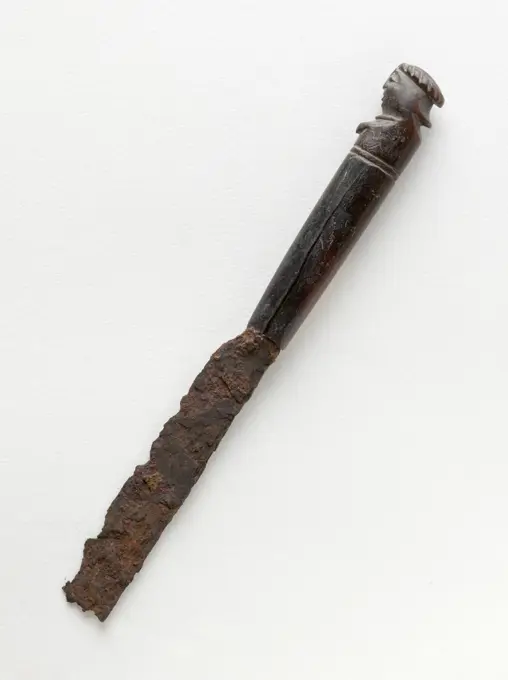
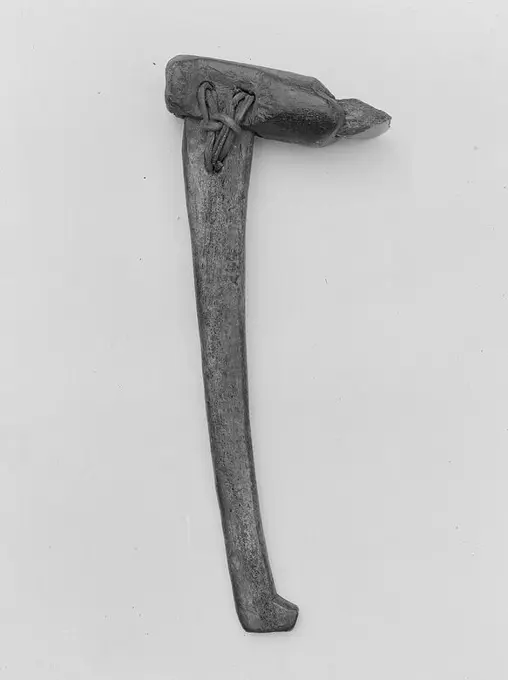
Surgery knife. Sculpted and metal bone, 1200-1400. Paris, Carnavalet museum. 77958-4 Archeology Medievale, surgical knife, thousand-year-old, medium-aged, metal, bone, medieval period, sculpt, 14th century
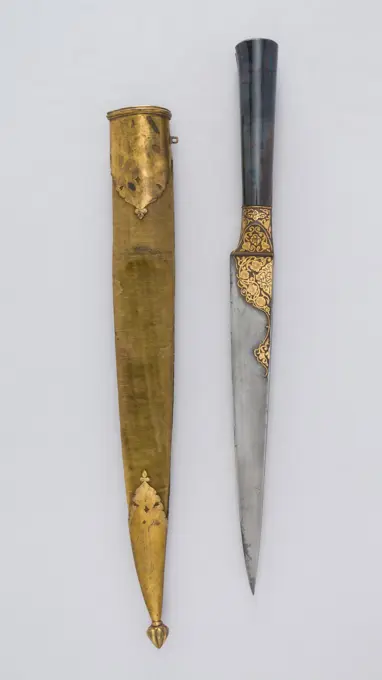
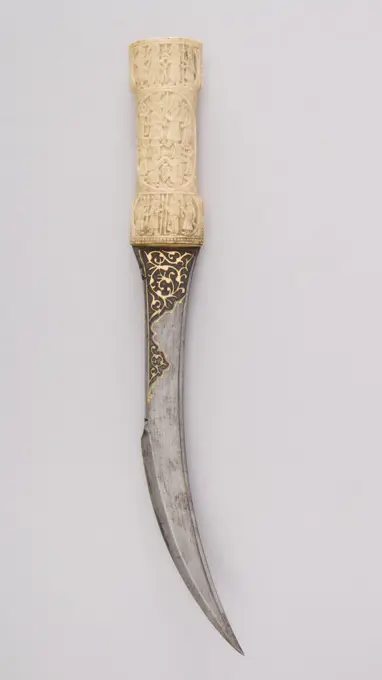
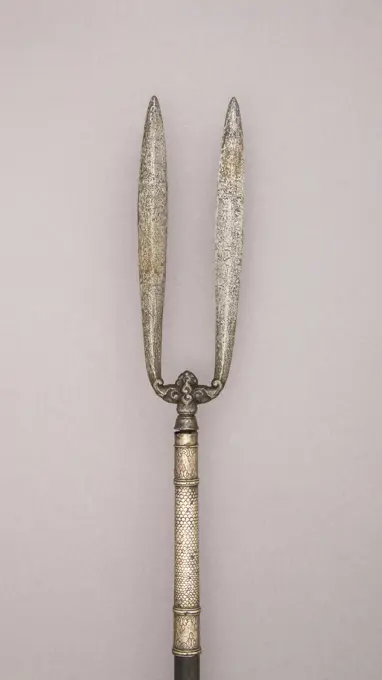
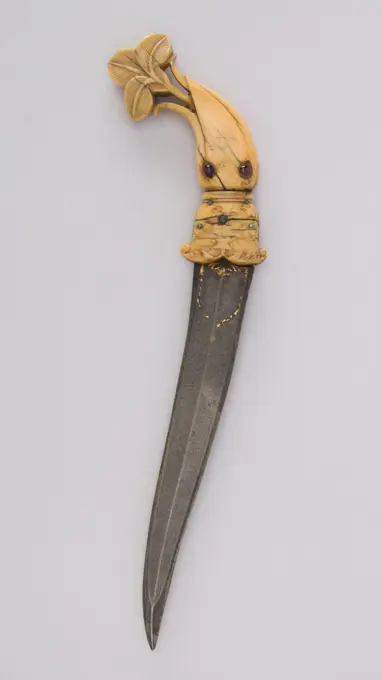
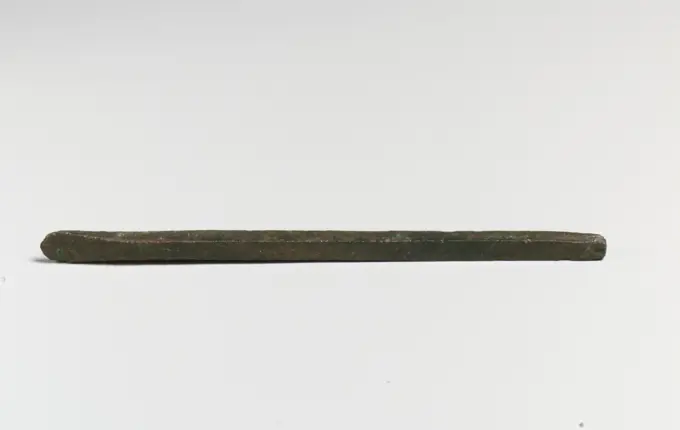
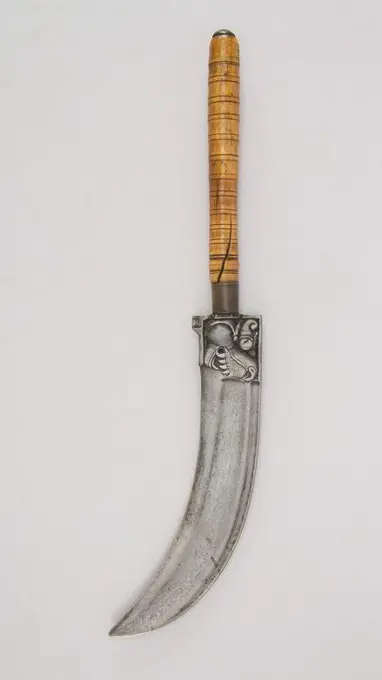
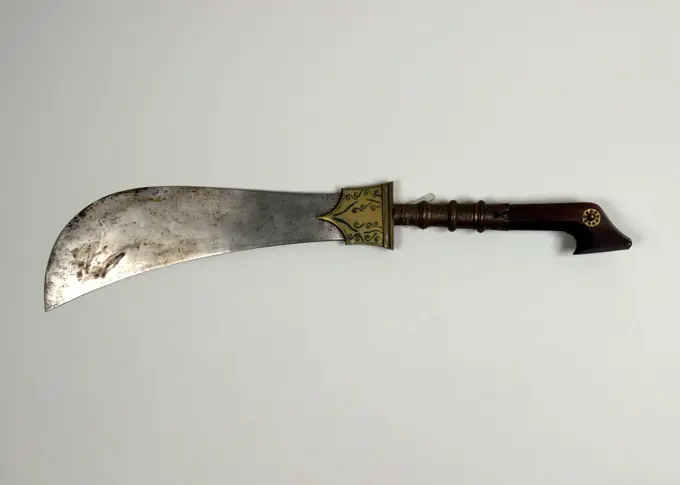
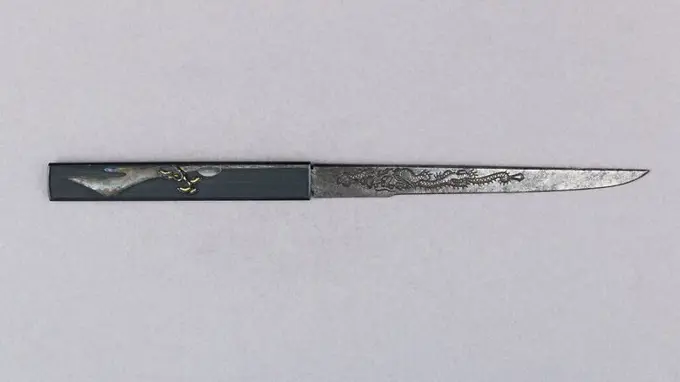
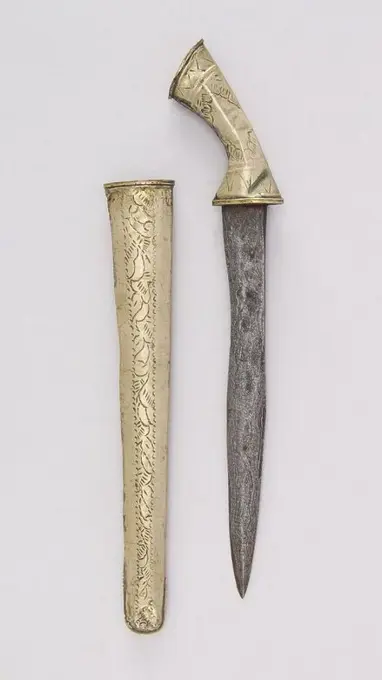
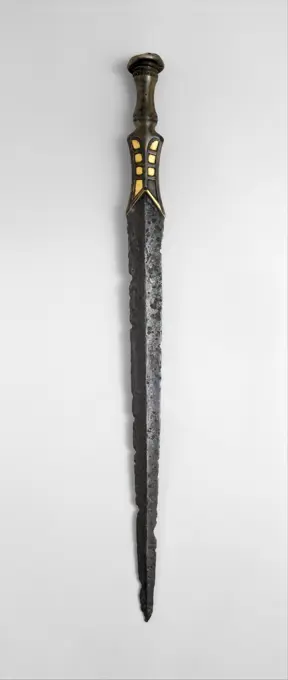
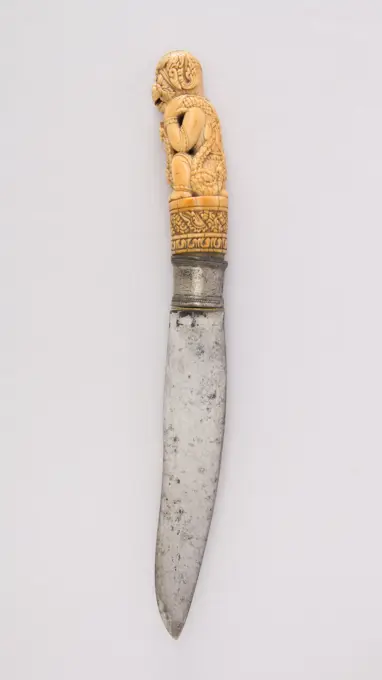
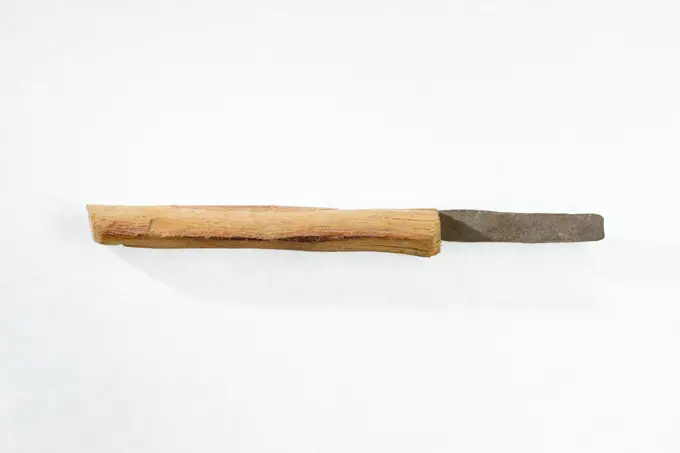
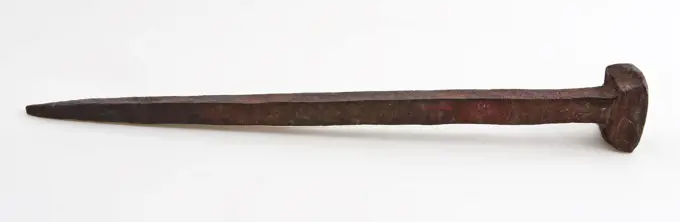
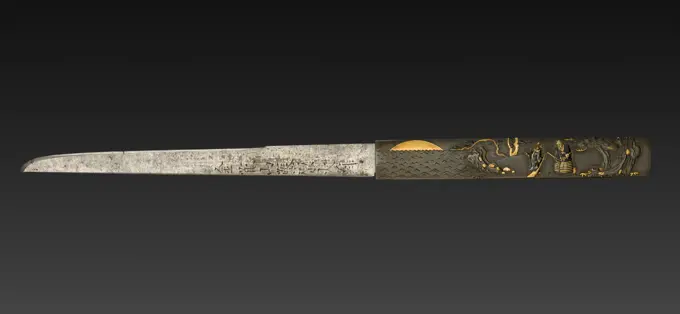
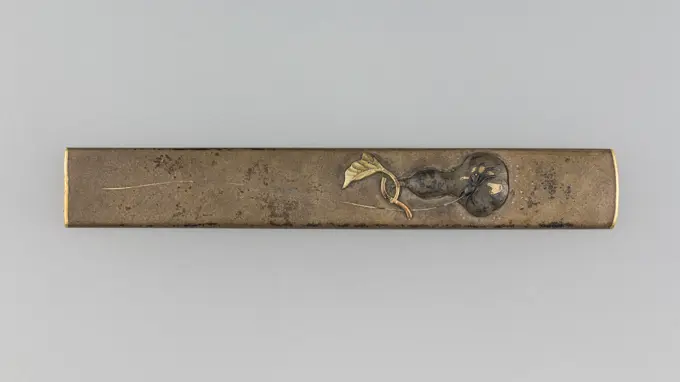
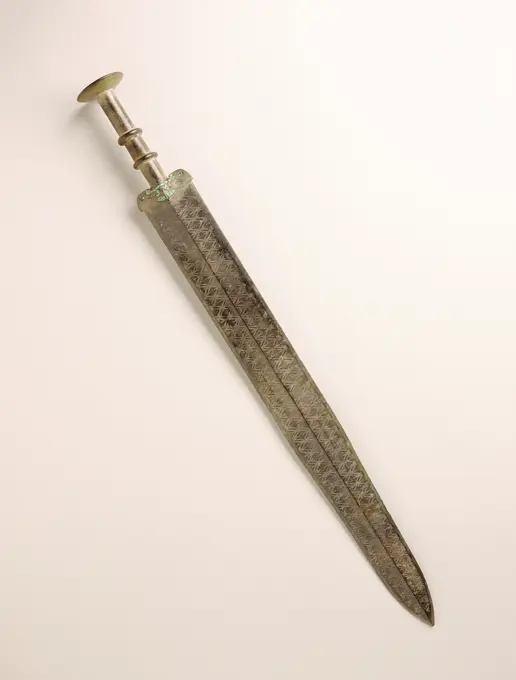
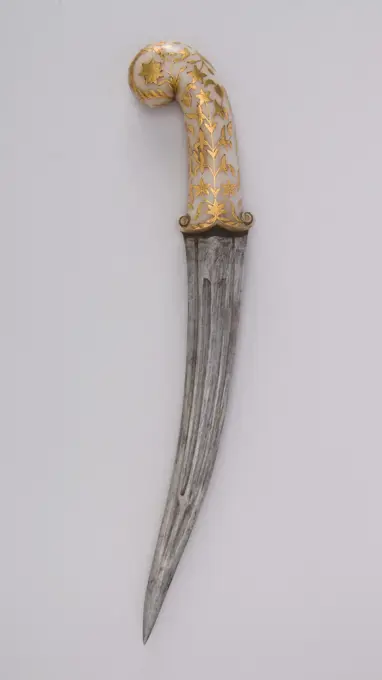
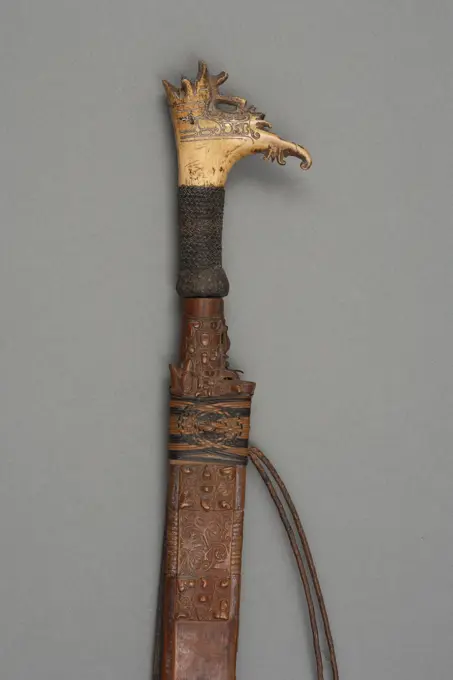
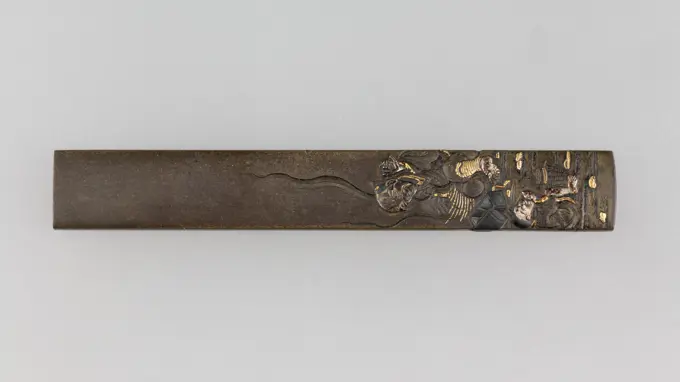
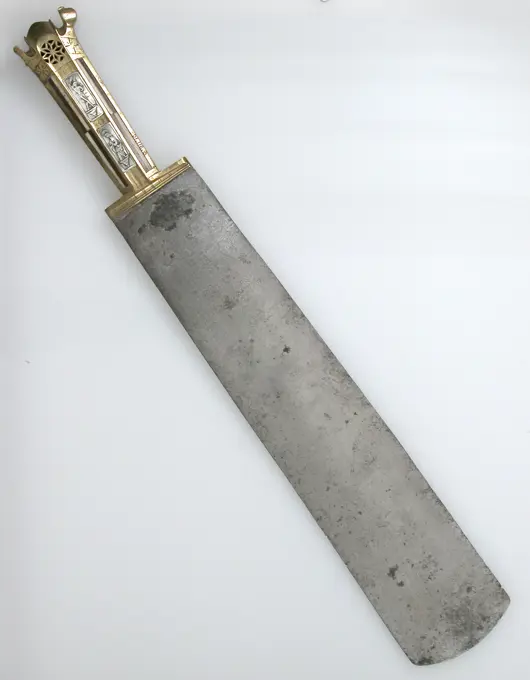
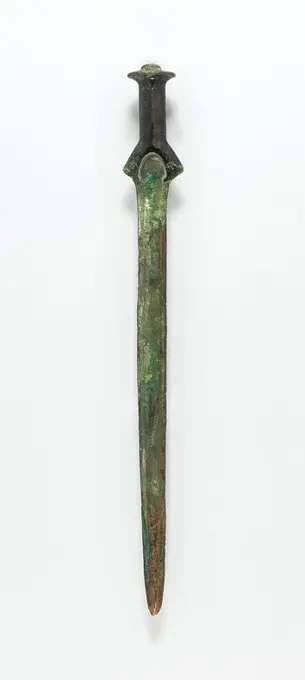
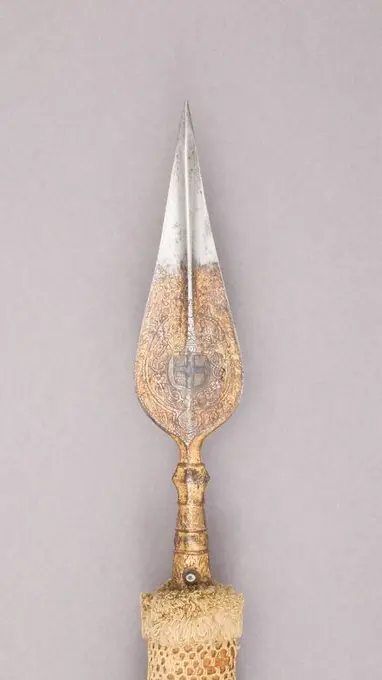
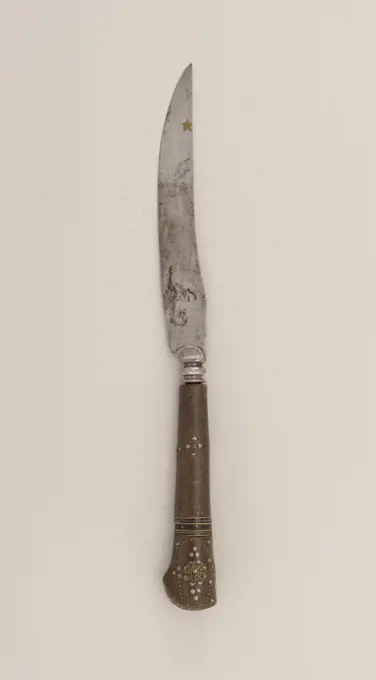
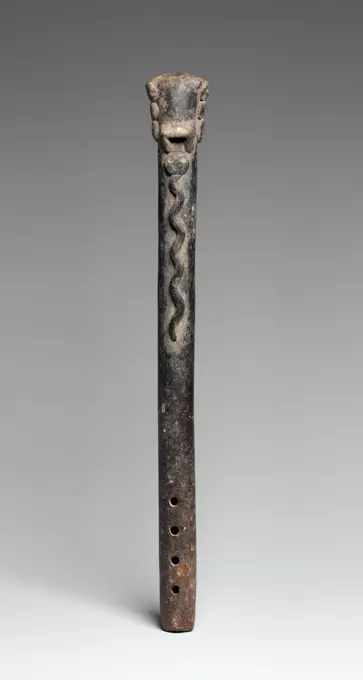
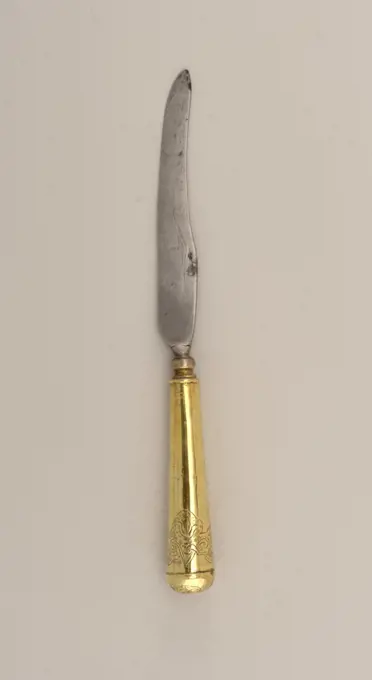
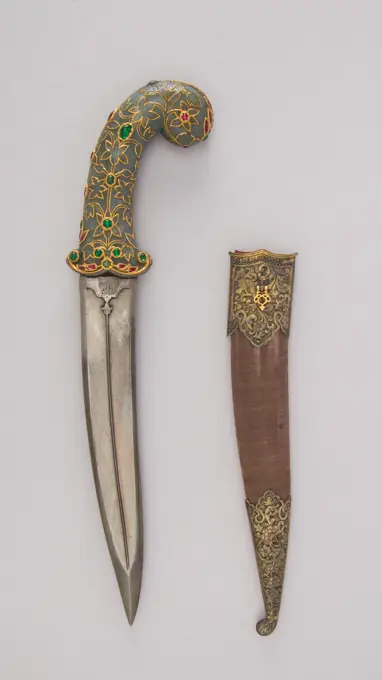
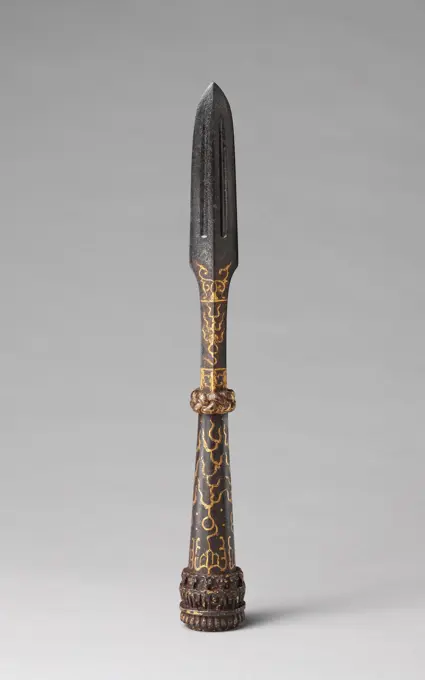
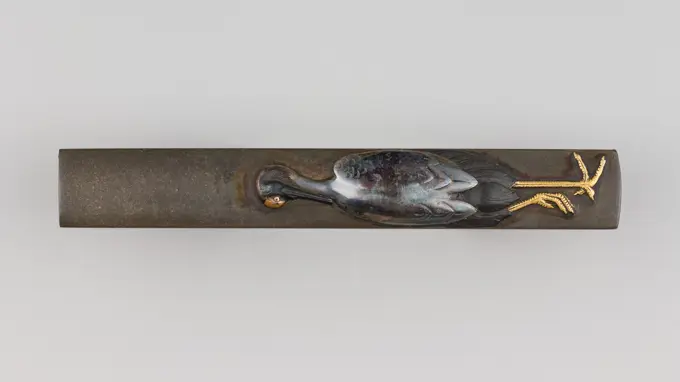
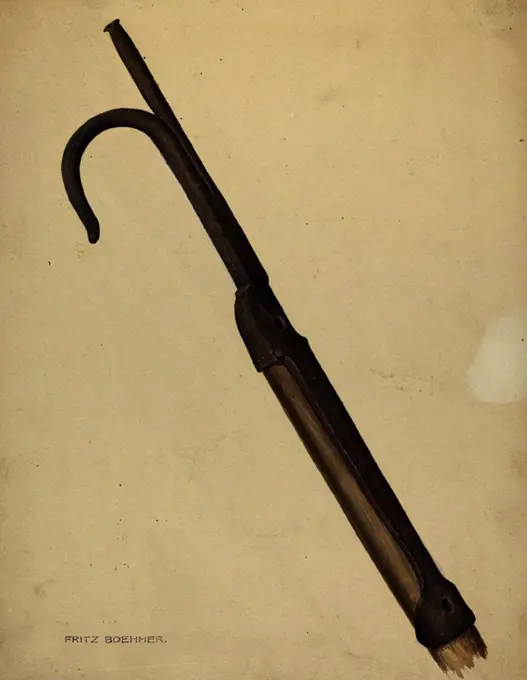
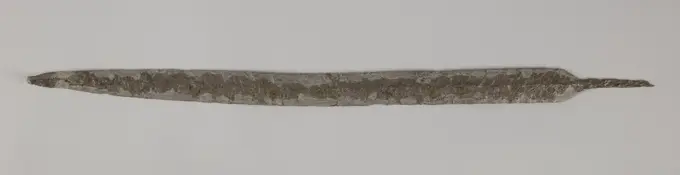
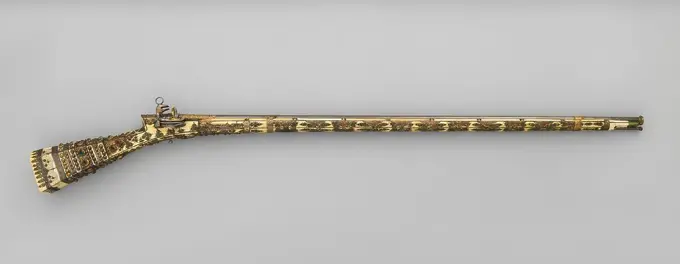
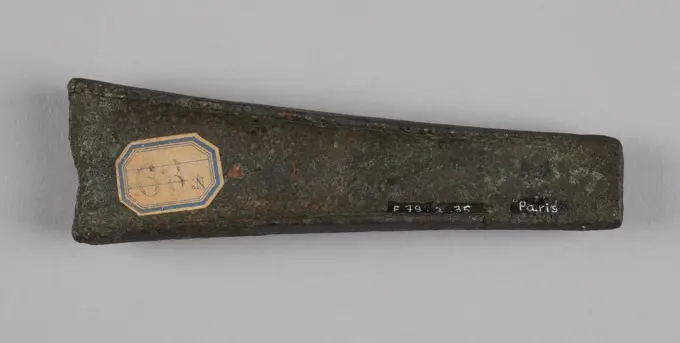
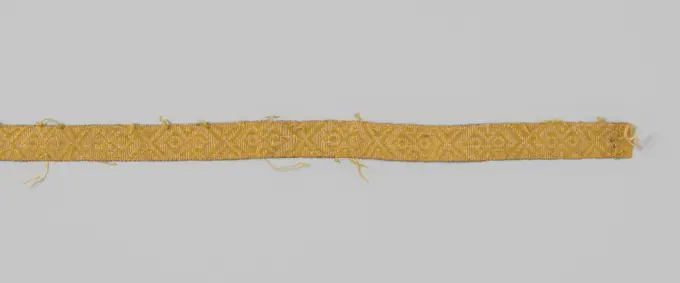
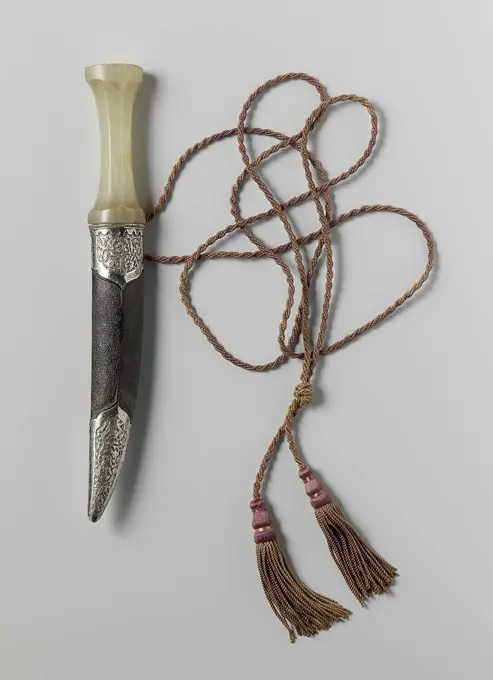
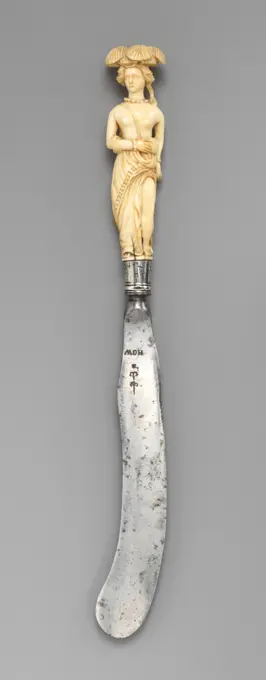
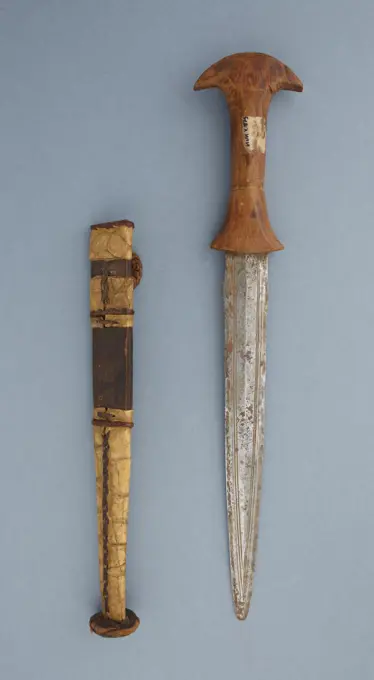
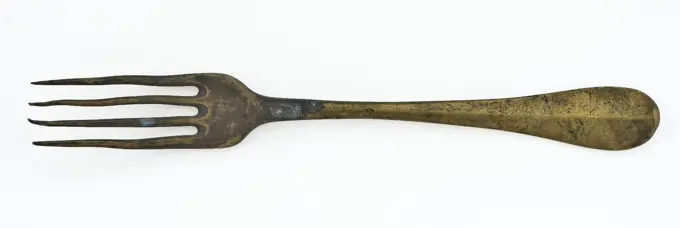
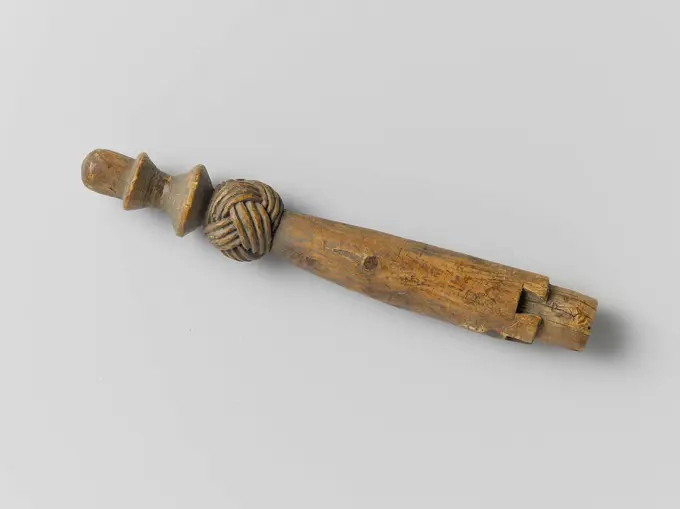
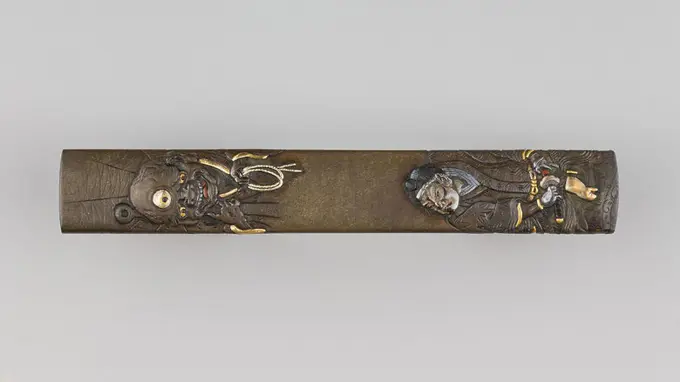
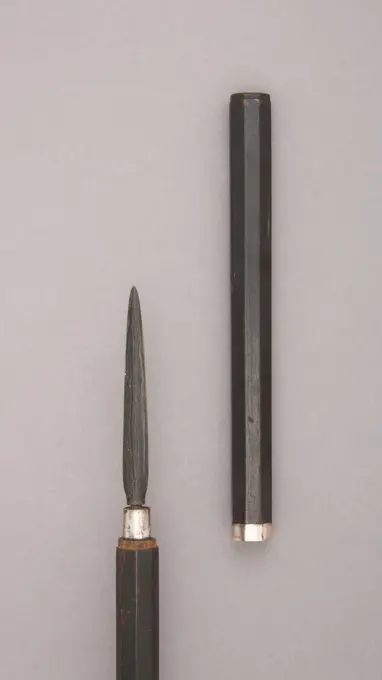
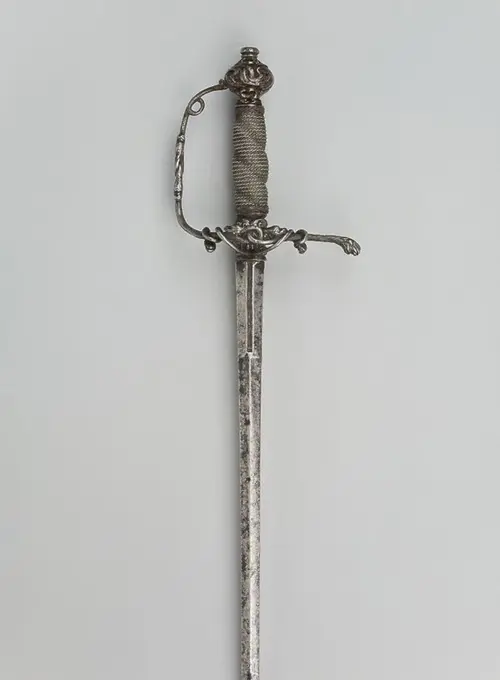
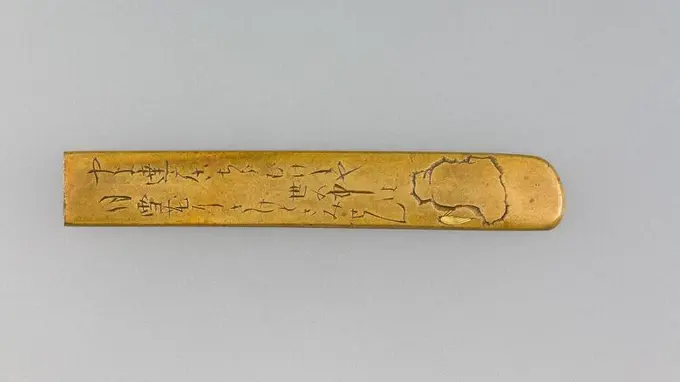
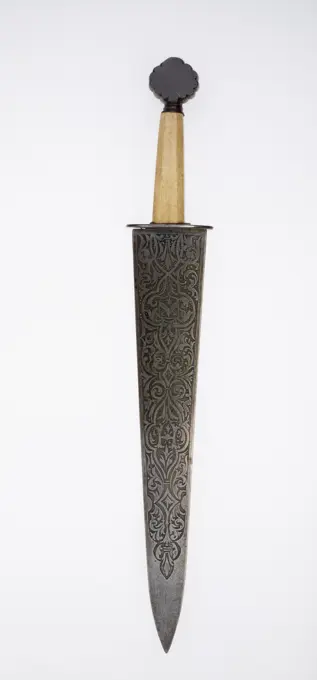
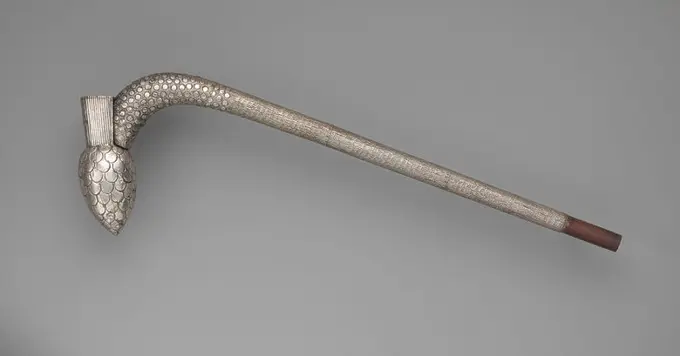
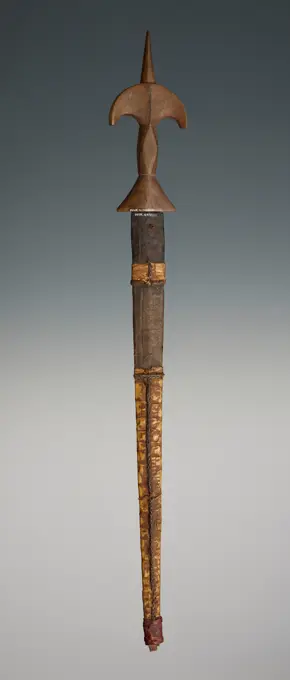
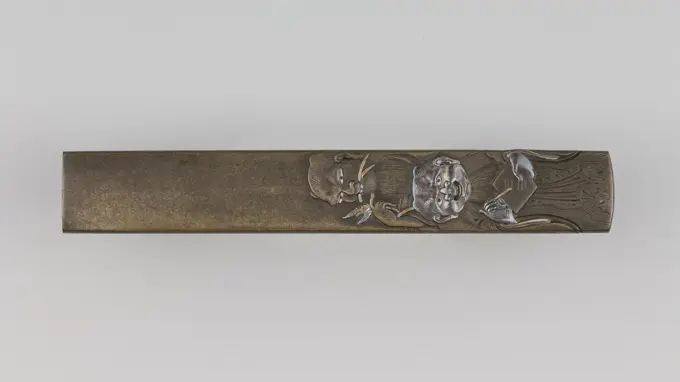
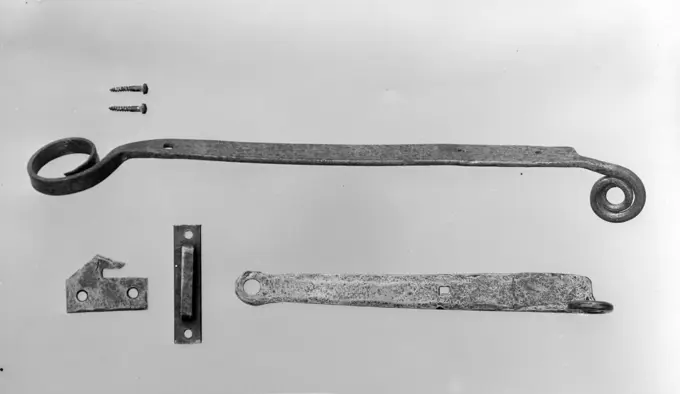
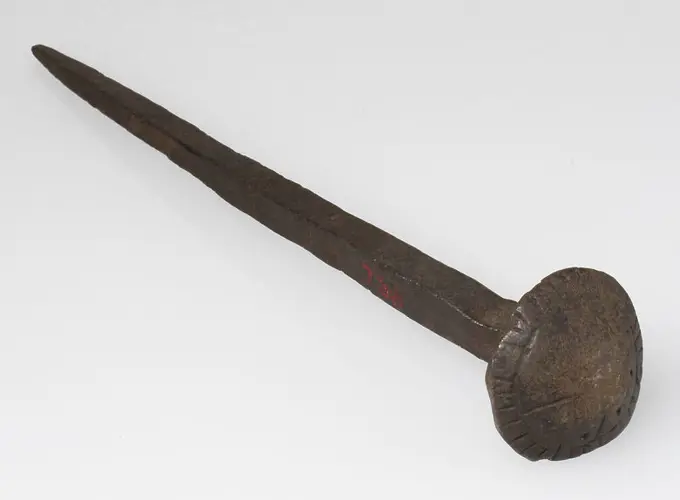
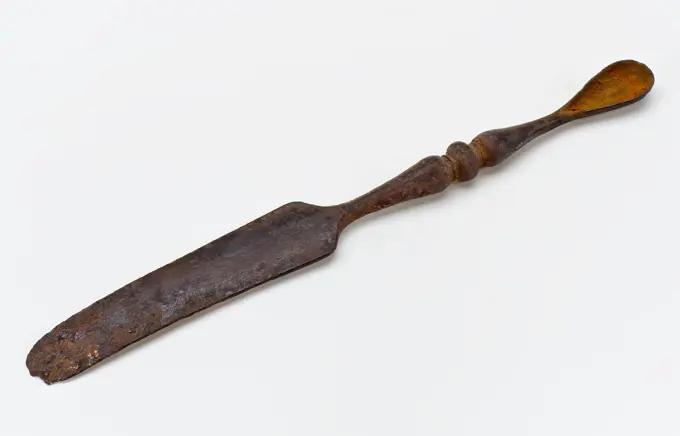
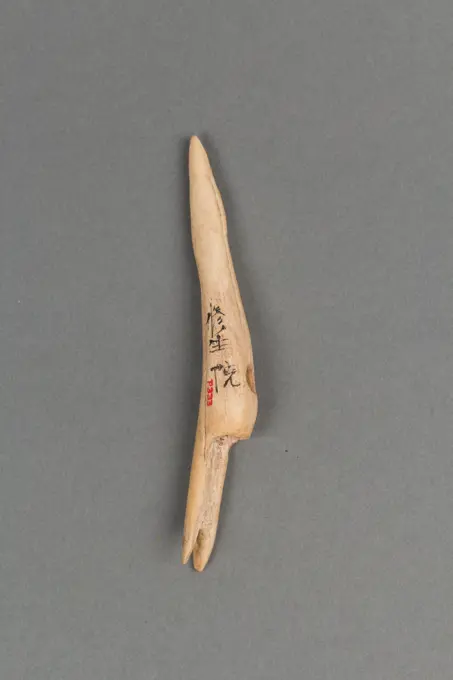
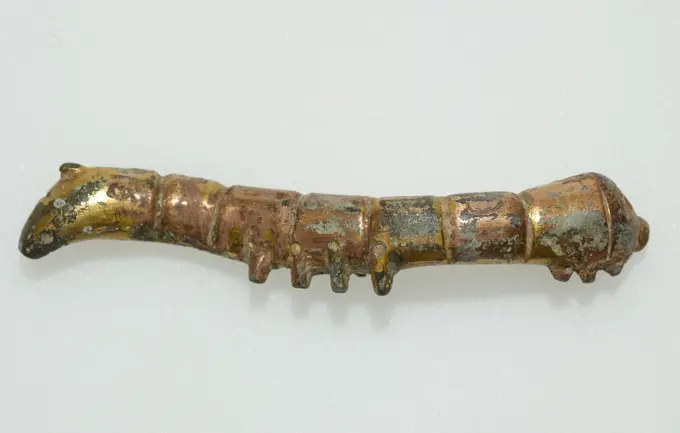
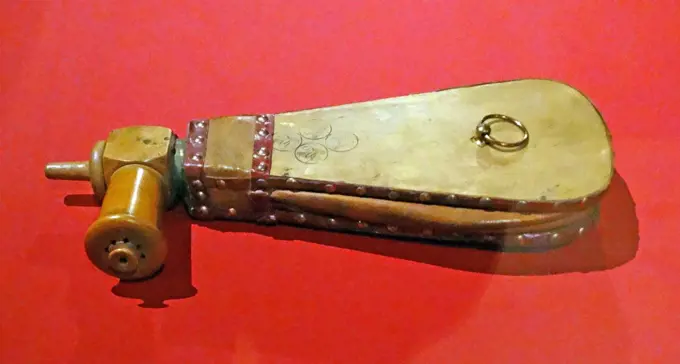
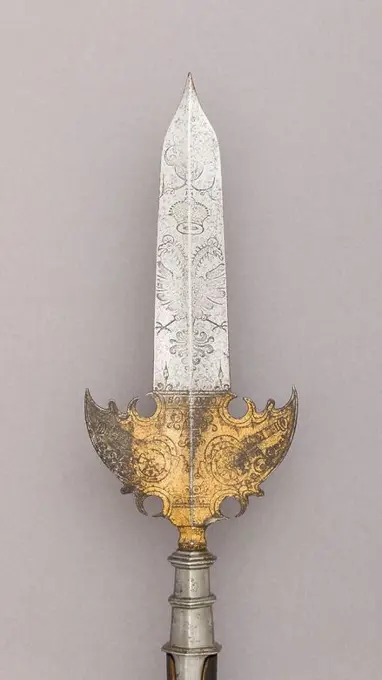
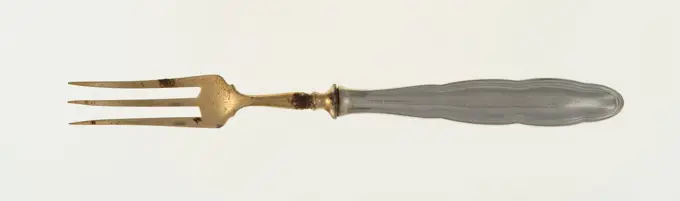
Dessert fork; Würtembergische metallwarefabrik - WMF (Germany; Wytwónia Z Otnarz; 1880-1914); after 1880 (1890-00-00-1914-00-00);Dagger (Kard) with Sheath ca. 1800 Persian, Qajar The hilt and the blade are both decorated in gold with religious inscriptions, including some fo the ninety-nine names of Allah.. Dagger (Kard) with Sheath 24302Dagger 19th century Indian, Mughal. Dagger 31828Dagger (Jambiya) 19th century Persian, Qajar. Dagger (Jambiya) 31450Two Pronged Spear (Bident) 16th-19th century Javanese. Two Pronged Spear (Bident) 30642Dagger (Khanjar) mid-17th century Indian, Mughal. Dagger (Khanjar). Indian, Mughal. mid-17th century. Steel, ivory (elephant), gemstone, gold. DaggersBronze chisel ca. 2900-2200 B.C. Minoan Shaft is squared off with a flat end.. Bronze chisel 247621Surgery knife. Sculpted and metal bone, 1200-1400. Paris, Carnavalet museum. 77958-4 Archeology Medievale, surgical knife, thousand-year-old, medium-aged, metal, bone, medieval period, sculpt, 14th centuryTable knife first quarter 17th century British, London. Table knife. British, London. first quarter 17th century. Silver, steel, agate. Metalwork-SteelCleaver. Culture: South Indian. Dimensions: H. 17 1/4 in. (43.8 cm); H. of blade 9 3/4 in. (24.8 cm); W. 2 in. (5.1 cm); Wt. 1 lb. 3 oz. (538.6 g). Date: 18th-19th century. Museum: Metropolitan Museum of Art, New York, USA.Pin. Pin 244246Moplah Knife 18th-19th century Indian, Coorg. Moplah Knife. Indian, Coorg. 18th-19th century. Steel, brass, rosewood. KnivesKnife Handle (Kozuka) with Blade. Culture: Japanese. Dimensions: L. including blade 8 5/8 in. (21.9 cm); L. excluding blade 3 3/4 in. (9.5 cm); W. 9/16 in. (1.4 cm); thickness 1/4 in. (0.6 cm); Wt. 1.7 oz. (48.2 g). Date: 18th century. Museum: Metropolitan Museum of Art, New York, USA.Belt hook, 5th-3rd century BCE, 5 11/16 × 9/16 × 1 1/16 in., 0.2 lb. (14.45 × 1.43 × 2.7 cm, 0.1 kg), Bronze with silver inlay, China, 5th-3rd century BCEKnife with Sheath. Culture: Javanese. Dimensions: H. with sheath 12 1/16 in. (30.6 cm); H. without sheath 11 in. (27.9 cm); H. of blade 7 3/4 in. (19.6 cm); W. 2 1/4 in. (5.7 cm); Wt. 3.6 oz. (102.1 g); Wt. of sheath 1 oz. (28.3 g). Date: 16th-19th century. Museum: Metropolitan Museum of Art, New York, USA.Short Sword (Duan Jian) ca. 4th-1st century B.C. Eastern Central Asia From its inception in the third millennium B.C., the sword served equally as a weapon and as a symbol of social status and power. During the first millennium B.C., in the hands of the nomadic peoples of the Eurasian steppes, it became, along with the bow, one of the primary cavalry weapons of the ancient world. Groups such as the Scythians, the Yuezhi, the Xiongnu, and the Xianbei achieved a succession of federations and kingdoms in Eurasia by combining the use of sword and bow with an unparalleled skill in horsemanship. Archaeological investigations of burial sites have established the importance of the sword both as a valued possession and a sign of rank in various nomadic societies. While burial context has made it possible to identify some types of swords with specific nomadic peoples, others, like this example, are difficult to attribute with certainty. The complex techniques required for the manufacture of thisBallock Knife ca. 1450-1500 Western European, possibly Britain The ballock knife, also sometimes called a kidney dagger, was a very popular form of dagger worn by men throughout northern Europe in the 15th and 16th centuries. It served as an eating utensil, tool, and weapon.. Ballock Knife. Western European, possibly Britain. ca. 1450-1500. Steel, bone, lead. DaggersDagger (Dha or Dah Hmyaung) 18th century Burmese. Dagger (Dha or Dah Hmyaung) 31588Model Chisel from a Foundation Deposit ca. 1479-1458 B.C. New Kingdom. Model Chisel from a Foundation Deposit. ca. 1479-1458 B.C.. Wood, bronze or copper alloy. New Kingdom. From Egypt, Upper Egypt, Thebes, Deir el-Bahri, Tomb of Senenmut (TT 353), Foundation deposit 3 and 5a, MMA excavations, 1926-27. Dynasty 18Wrought iron nail Laurenskerk, nail foundations iron, grams Iron nail with flat head archeology construction Laurenskerk City Triangle Rotterdam Second World War war bombardment May 1940 May days debris removal The nail is by Dr. Jan Gerrit van Gelder (1903-1980) curator of prints and drawings Museum Boijmans van Beuningen removed from the warm rubble of the Laurenskerk in the late may of May 1940.Blade with Handle (Kozuka), 1615-1868. Japan, Edo period (1615-1868).Knife Handle (Kozuka) mid-17th century Japanese A kozuka is a handle of a by-knife that is part of a sword mounting. It is kept in a slot on the reverse of a katana scabbard, often with a matching kōgai (hairdressing tool).. Knife Handle (Kozuka) 29698Sword (Kris), 1800s. Java. Iron with carved wooden handle; overall: 45.2 cm (17 13/16 in.); blade: 35.6 cm (14 in.).Sword (Jian) with Chevrons. China, Late Eastern Zhou dynasty, Warring States period, 481-221 B.C.. Arms and Armor; swords. Cast bronze with turquoise inlayDagger (Khanjar) 19th century Indian, Mughal or Deccan. Dagger (Khanjar). Indian, Mughal or Deccan. 19th century. Steel, jade or agate, gold. DaggersFlint and wood knife used for cutting wild plants from the Kebaran culture. Dated 18,000 years agoConical parasol button with Niello-silver handle. Konian umbrella button with Niello-silver handle. Dark breach of chopper and high conical handle of silver with black cubes in Niello technique. Brands: V for odds and 800 for low silver content.Sword of Iban Dayak in Sarawak, Borneo, Malaysia, Southeast Asia, AsiaLilla or rotary bass with an octagonal fire mouth and a decorated loop.Knife Handle (Kozuka) mid-19th century Japanese A kozuka is a handle of a by-knife that is part of a sword mounting. It is kept in a slot on the reverse of a katana scabbard, often with a matching kgai (hairdressing tool).. Knife Handle (Kozuka). Japanese. mid-19th century. Copper-silver alloy (shibuichi), gold, silver, copper-gold alloy (shakud). Sword Furniture-KozukaServing Knife 15th-16th century Austrian This serving knife, and its pair (see ac. no. 51.118.2), has been attributed to Hans Sumersperger of Hall, the knifesmith of Maximilian I, at whose splendid court the influence of northern late Gothic and Italian Renaissance met. This masters name appears in the royal accounts of 1492-1498. The brass handles are inlaid with bone, walnut, and carved mother-of-pearl. The steel blades are flat and thinly ground. Although there are no makers marks on either the handles or the blades, the style, design, and iconography connect these knives with other works by Sumersperger. Both these knives are related to hunting knife sets of a Burgundian type that became popular after his marriage to Mary of Burgundy. It is possible that these two serving knives (the broad tongue-shaped blade of one has been repaired) were themselves part of a complete hunting set which would have included two single-edged knives of varied size for skinning and cutting, a more deIron Eastern spear headsSword of Achtkantschwert Type. Culture: Central European. Dimensions: L. 20 1/2 in. (52 cm); W. 1 15/16 in. (4.9 cm); Wt. 1 lb. 3.7 oz. (558.5 g). Date: 13th-10th century B.C..This sword exemplifies one of the most popular European types of the Middle Bronze Age period, which is commonly known as the "octagonal sword" (Achtkantschwert in German) in reference to the longitudinal division of the grip into eight facets. Although it exhibits all of the usual constructional and formal features of the type, the ornamentation of its hilt with punched dots and chased crescents is distinctive. Specifically, it is peculiar to a small group of octagonal swords, which have all been excavated in Germany, and are collectively known as the Hausmoning subtype in reference to the find spot of one specimen. In conception, it is especially close to that of two examples discovered in Unterfhring and Steinheim, respectively, both in Bavaria. The distribution of the dots and crescents on the hilt,Bone Weaving Bobbin 8th-mid-16th century Peru; north coast (). Bone Weaving Bobbin 309263Caucasian kanjar with a sheathSmall Sword, 1800-1911. China, Qing dynasty (1644-1911). Metal blade, ivory handle;Scissors 18th-19th century Calligraphers used scissors to cut paper to the exact size and shape required for the work at hand. Many pairs of scissors are decorated with floral and other designs in gold overlay, making them works of art in their own right.. Scissors 444627Knife with pointed blade and wooden Handle, consisting of two thin plates, knife cutlery soil find wood Horn iron metal, archeology Rotterdam City center Stadsdriehoek Delftsevaart Soil discovery of the partial reclamation of the Delftse Vaart in Rotterdam for the purpose of making the lift over the Vaart in the summer of 1928.Spontoon. Culture: Italian, Savoy. Dimensions: L. 90 in. (228.6 cm); L. of head 10 in. (25.4 cm); W. 2 1/4 in. (5.7 cm); Wt. 2 lbs. 6 oz. (1077.3 g). Date: early 18th century. Museum: Metropolitan Museum of Art, New York, USA.Knife - William McF. Notman's christening cutleryKnife, Horn, brass, steel, Scimitar-shaped blade, drop bolster with baluster-shaped neck. Handle similar to fork (1985-103-37)., Germany or Austria, 1650-1700, cutlery, Decorative Arts, KnifeMiner's Processional Axe. German, Saxony. Date: 1675. Dimensions: L. 92.7 cm (36 1/2 in.)Wt. 3 lb. Steel, wood, and staghorn. Origin: Saxony. Museum: The Chicago Art Institute, Chicago, USA.Model of a Main Topsail Yard, anonymous, c. 1850 demonstration model Model of a large marsa, with two slide sailing muscles. Special is the Latwerk around the RA in the middle, for reinforcement and as protection against wear. Netherlands wood (plant material). brass (alloy)Molding; wood, carvedKnife (Piha Kaetta) with Sheath. Culture: Sri Lankan. Dimensions: H. with sheath 14 1/16 in. (35.7 cm); H. without sheath 12 13/16 in. (32.5 cm); W. 2 in. (5.1 cm); Wt. 13.2 oz. (374.2 g); Wt. of sheath 2.4 oz. (68 g). Date: 18th-19th century. Museum: Metropolitan Museum of Art, New York, USA.Dagger (Kindjal) with Sheath. Culture: Caucasian. Dimensions: L. with sheath 20 1/4 in. (51.4 cm); L. without sheath 19 in. (48.3 cm); W. 1 7/16 in. (3.7 cm); Wt. 9 oz. (255.1 g); Wt. of sheath 2.7 oz. (76.5 g). Date: 18th-19th century. Museum: Metropolitan Museum of Art, New York, USA.Flute 200 B.C.-100 A.D. Colima. Flute. Colima. 200 B.C.-100 A.D.. clay. PreColumbian. Colima, Mexico. Aerophone-Whistle Flute-recorderKnife, steel, brass, Sabre-shaped blade with globular bolster. Tapered cylindrical handle with round top, engraved floral decoration, on top of handle a rozette. (Initial 'A'), Netherlands or Germany, early 18th century, cutlery, Decorative Arts, KnifeDagger (Khanjar) with Sheath 18th-19th century hilt, Indian, Mughal; sheath, Indian, Kutch. Dagger (Khanjar) with Sheath 31825Spearhead (/清 矛頭) 17th-18th century Chinese Despite its heavy surface patina, this spearhead is very similar to another example in The Met's collection (acc. no. 2000.206a, b) for the form of its blade and the presence of a realistic braided ring rendered in chiseled steel (here at the midpoint, rather than the base of the socket). At its base there is a collar of stylized lotus petals and a ring of the trefoil-like ruyi motif. The surface above this is damascened in gold with simplified designs of flaming pearls and mountains and waves.. Spearhead (/清 矛頭) 24974Spoon with oval container and straight handle with a diamond -shaped cross -section, anonymous, c. 1590 - c. 1596 spoon Spoon with oval container and a straight handle with a diamond -shaped cross -section. Steel attack a point. Netherlands tin (metal) casting  Nova Zembla. Saving HuysKnife Handle (Kozuka) 18th century Japanese A kozuka is a handle of a by-knife that is part of a sword mounting. It is kept in a slot on the reverse of a katana scabbard, often with a matching kgai (hairdressing tool).. Knife Handle (Kozuka). Japanese. 18th century. Copper-silver alloy (shibuichi), silver, copper-gold alloy (shakud), gold, copper. Sword Furniture-KozukaZoar Apple Hook. Dated: c. 1937. Dimensions: overall: 35.6 x 27.8 cm (14 x 10 15/16 in.) Original IAD Object: 14" long. Medium: watercolor and graphite on paperboard. Museum: National Gallery of Art, Washington DC. Author: Fritz Boehmer.Body ornament Japan By the Middle Jmon period, the food supply in Japan had stabilized enough that the Jmon people could focus their activities more on crafts and spiritual life. This led to the development of a wide variety of body ornaments, including necklaces and hairpins, some of which feature very elaborate designs. It is speculated that body ornamentation may have served a religious or spiritual purpose, but it may also have represented social rank and status.. Body ornament. Japan. Bone. Final Jmon period (ca. 1000-300 B.C.). BoneHairpin Sri Lankan 19th centuryFruit knife, F. Nicoud, French, active 1890, Silver, steel, One of twelve fruit knives with mother-of-pearl handles and engraved and gilt decoration on blades., ca. 1890, cutlery, Decorative Arts, Fruit knifeSilk Gallic Sword (attributed title). Iron. Carnavalet museum, history of Paris. Prehistory. Sword.Wheellock Hunting Pistol with Sword Grip second half of 16th century South German. Wheellock Hunting Pistol with Sword Grip. South German. second half of 16th century. Steel, gold. Firearms-Pistols-WheellockMiquelet Rifle. Culture: Turkish. Dimensions: L. 60 3/4 in. (154.31 cm); L. barrel 47 in. (119.4 cm); Cal.48 in. (12.0 mm); Wt. 10 lb. 12 oz. (4862 g). Date: late 18th century.The miquelet is an early and sturdy form of flintlock popular throughout the Ottoman Empire from the seventeenth into the early twentieth century. Several elaborately decorated guns very similar to this example are still preserved in Istanbul, possibly made for the Ottoman Imperial guard. Museum: Metropolitan Museum of Art, New York, USA.Hache with a rights (attributed title). Bronze. Carnavalet museum, history of Paris.Passement of linen and yellow side in diamond pattern, anonymous, c. 1700 - c. 1899 Passement of linen and yellow side in a pattern of windows in windows. BK-NM-12186-19, BK-NM-12186-20-A and BK-NM-12186 have the same pattern. Europe silk. linen (material) Passement of linen and yellow side in a pattern of windows in windows. BK-NM-12186-19, BK-NM-12186-20-A and BK-NM-12186 have the same pattern. Europe silk. linen (material). Dagger (Khanjar) with handle of Onyx in leather sheath with silver fittings.Model of a Made Mast, anonymous, c. 1400 - c. 1950 scale model Model of a round -peeping mast with nommers and longitudinal people. The mast consists of a solid king and two scales, held together by copper hoops. The hoops are tightened with wedges. Above the Zalingen is the mast square with also copper hoops. The top is covered with textile. Netherlands (possibly) wood (plant material). brass (alloy). textile materialsKnife 18th century Ephraim How. Knife. British. 18th century. Steel, ivory. Metalwork-SteelAdze (Hootar). Culture: America (Alaska). Dimensions: H. 1 9/16 in. (4 cm); W. 7/8 in. (2.2 cm). Museum: Metropolitan Museum of Art, New York, USA.Hunting Knife ca. 1500 Hans Sumersperger Austrian The grip is inlaid with the coat of arms of Austria in carved mother-of-pearl; the blade bears the mark of Hans Sumersperger, court knifesmith to Emperor Maximilian I (1459-1519). Such knives formed part of a group of implements that were used to prepare freshly killed game, including bear, wild boar, and deer, after a hunt.. Hunting Knife 21962Dagger with a vaginaKnife with Porcelain Handle, Chelsea Porcelain Manufactory, English, established ca. 1743/45, steel, silver; soft paste porcelain, vitreous enamel, Straight-sided blade with rounded top, plain bolster. Silver ferrule with scalloped edges. Pistol-shaped, white porcelain handle decorated in relief with floral sprays., England, ca. 1750-1755, cutlery, Decorative Arts, knife, knifeCopper fork with four long teeth and flat handle with rounded end, fork cutlery soil find copper metal, archeology Rotterdam City Triangle Delftware Soil discovery: Delftsche Vaart drainage for new lift bridge in 1928.Folding knife 17th century Swiss or German. Folding knife. Swiss or German. 17th century. Steel, silver, horn, metal. Metalwork-SteelThread or hair needle with a children's figure between flowers, François Quien (attributed to), 1739 The wide, cast part of the flat, rushing needle is decorated at the front with a standing child in the midst of flowers; The rear shows curly flower vines. The top of the needle has a crest with a drop -shaped hole; A cone -shaped hole has been saved on the underside of the decorated part. This needle has the double feature of a thread and a hair needle. A ribbon could be reached by the cone -shaped hole, with which a lace or corset was closed. In the smaller hole at the top, a decorative wheel could be attached in case the needle in the hair was worn. Amsterdam gold (metal) The wide, cast part of the flat, rushing needle is decorated at the front with a standing child in the midst of flowers; The rear shows curly flower vines. The top of the needle has a crest with a drop -shaped hole; A cone -shaped hole has been saved on the underside of the decorated part. This needle has the doubleCUCHILLO AFALCATADO DE UXAMA. EDAD DEL HIERRO CULTURA IBERICA. (DEPOSITO: MUSEO ARQUEOLOGICO NACIONAL).Knife lift with a clamping button. Messenheft with a clam-shaped button including a sphere in the form of braided rope.Knife (Kukri), c. 1750-1800. Nepal. Steel with etched surface and wooden handle, leather covered scabbard with brass mounts; overall: 40 cm (15 3/4 in.); blade: 31.8 cm (12 1/2 in.).Knife Handle (Kozuka). Culture: Japanese. Dimensions: L. 3 13/16 in. (9.7 cm); W. 9/16 in. (1.4 cm); thickness 3/16 in. (0.5 cm); Wt. 1.2 oz. (34 g). Maker: Hamano Haruyuki (Japanese, died ca.1830). Date: late 18th-early 19th century. Museum: Metropolitan Museum of Art, New York, USA.Spear with Sheath 18th-19th century Malayan. Spear with Sheath 30650Razor 1550 BCE-1295 BCE Egypt. Bronze . Ancient EgyptianFork (England); steel, brass, wood; L x W x D: 21.2 x 2.4 x 2 cm (8 3/8 x 15/16 x 13/16 in.); The Robert L. Metzenberg Collection, gift of Eleanor L. Metzenberg; 1985-103-50Smallsword. Western European. Date: 1630-1670. Dimensions: Overall L. 91.5 cm (36 in.)Blade L. 76.2 cm (30 in.)Wt. 1 lb. 4 oz. Iron, steel, brass, and wood. Origin: Europe, western. Museum: The Chicago Art Institute, Chicago, USA.Knife Handle (Kozuka). Culture: Japanese. Dimensions: L. 3 1/2 in. (8.9 cm); W. 9/16 in. (1.4 cm); thickness 3/16 in. (0.5 cm); Wt. 0.8 oz. (22.7 g). Date: ca. 1800. Museum: Metropolitan Museum of Art, New York, USA.Sheath for a Dagger, c. 1600. Case: iron alloy with gold inlay; pen: feather; overall: 33.5 cm (13 3/16 in.).Pseudo Renaissance daggerKama with a scabbardRoyal Scepter (Makpo). Culture: Fon peoples, Danhomè Kingdom. Dimensions: H. 24 7/8 × W. 8 1/8 × D. 2 1/8 in. (63.2 × 20.6 × 5.4 cm). Date: 19th century.This arm-length scepter is composed of a wooden core wrapped in precious silver. The outer metal is applied as thin overlapping sheets of silver nailed to the surface. The wood end of the staff is now exposed but was probably originally covered in metal as well. The straight shaft of the scepter progressively thickens and curves at an almost ninety-degree arc. Reinforcing this contour and adorning the extremity of the staff is a bulbous finial representing a pineapple carved from a separate piece of wood and affixed to the shaft with a metal peg. Stamped and punched patterns adorning the entire silver surface subtly underscore the different sections of the scepter: tight, short rows of dotted lines on the straight section of the shaft; small indented circles with flurries of small dots on the upper arched part; larger semi-circles in kriss- Indonesian DaggerKnife with vaginalKnife Handle (Kozuka) late 18th century-early 19th century Katsutora Japanese A kozuka is a handle of a by-knife that is part of a sword mounting. It is kept in a slot on the reverse of a katana scabbard, often with a matching kgai (hairdressing tool).. Knife Handle (Kozuka). Japanese. late 18th century-early 19th century. Copper-silver alloy (shibuichi), silver. Sword Furniture-KozukaLatch, Bar, and Catch 1700-1800 American. Latch, Bar, and Catch. American. 1700-1800. Iron. Made in Pennsylvania, United StatesNail. Culture: European. Dimensions: Overall: 1 3/4 x 9 1/2 in. (4.4 x 24.1 cm). Date: 15th-16th century. Museum: Metropolitan Museum of Art, New York, USA.Sabre owned by General Karol Kniaziewicz (1762-1842) Boutet, Miko Aj ChristmasCombination of curved spatula and spoon in one piece, spatula tools equipment foundations iron metal, archeology Rotterdam Stadscentrum Triangle Mariniersweg medical equipment Soil discovery: Mariniersweg Rotterdam.Toggle harpoon head Japan The Jmon period is the earliest period in Japanese history, lasting from roughly 14,000 to 300 BCE. The Jmon people were primarily hunter-gatherers, hunting land animals and gathering vegetables and nuts on the land as well as hunting and fishing at sea. This toggle harpoon head, which works by detaching from the shaft of the harpoon once it is stuck in an animal while remaining attached to the shaft by a rope, facilitated the hunting of larger animals at sea. It allowed the Jmon people to practice both opportunistic as well as deliberate hunting of large sea mammals including whales, which are known to have been part of the diet of some Jmon communities along with other sea mammals like seals.. Toggle harpoon head. Japan. Bone. Final Jmon period (ca. 1000-300 B.C.). BoneFigure-top spoon probably 1629 Dutch, Enkhuizen. Figure-top spoon 188289 Dutch, Enkhuizen, Figure-top spoon, probably 1629, Silver, Overall: 7 9/16  2 5/16 in. (19.2  5.9 cm). The Metropolitan Museum of Art, New York. Gift of Mrs. Samuel P. Avery, 1897 (97.2.266)Mezuza. The Jewish law in an iron capacity, as is hung to the doors of Israelites.Posey holder, Silver filigree, Upper part, a cone with three bands of filigree showing a flower pattern and two, a leaf pattern, silver pin on chain. Lower part, an ornament of scrolls and flowers above an hexagonal ornament (each side decorated in design of roses with leaves) ending in three leaves; chain with ring attached to central ornament., probably India, mid-19th century, jewelry, Decorative Arts, Posey holderSilk Worm, 3rd century BCE- 3rd century CE, 7/16 x 2 7/8 x 5/8 in. (1.11 x 7.3 x 1.59 cm), Gilt bronze, China, 3rd century BCE- 3rd century CETobacco resuscitator kit from London. English, made from leather, boxwood and brass, 1774.Sword Cane 18th-19th century Philippine, Moro. Sword Cane 30959Needle Case Korea. Needle Case 57459Partisan-Spontoon. Culture: Austrian. Dimensions: L. 89 1/2 in. (227.3 cm); L. of head 12 1/2 in. (31.8 cm); W. 4 1/2 in. (11.5 cm); Wt. 2 lbs. 8 oz. (1134 g). Date: 17th century. Museum: Metropolitan Museum of Art, New York, USA.