Historic Lace Fragments

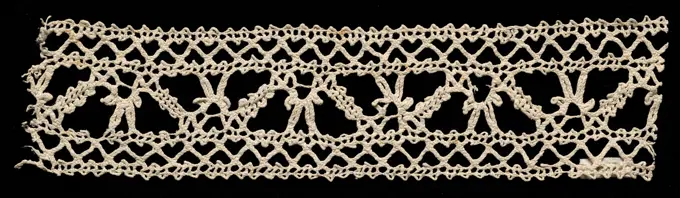
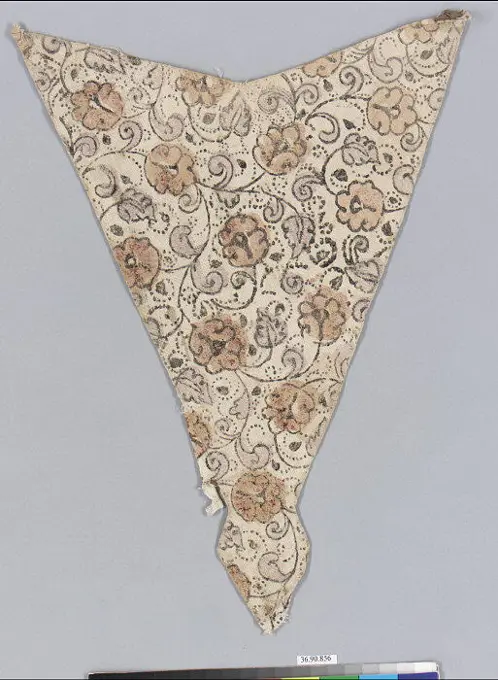
Antique lace pieces showcasing intricate floral and geometric patterns, reflecting historical textile craftsmanship.

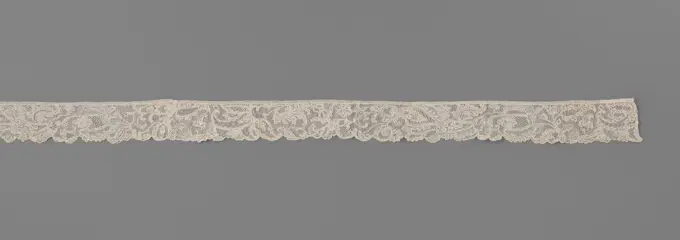
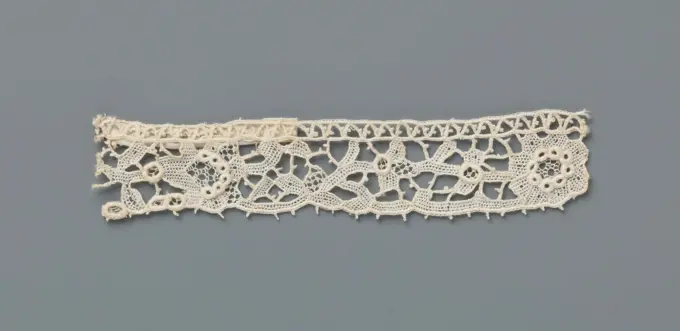
Hapslip van Kloskant with carnation and rocaille, anonymous, c. 1750 - c. 1760  Heat slip of natural -colored bobbin: Mechelen side. One rounded end and the other end is straightened straight and not finished. The repeating pattern consists of a carnation that is placed in the length direction of the hat-slip exchanged by a rocaille motif from which a split branch with leaves rises. Some of the leaves affect one of the long sides. The pattern along the long sides also consists of connected leaves and a rocaille motif at a regular distance. The motives are made in linen battle with sparingly applied recesses and equipped with thicker contour threads. The motifs are connected by a grid, a Mechelen soil. Decorative lands have been used in the rocailles and between some leaves. Apart from the cut end, the edges of the hat slip are finished with picots. Mechelen linen (material) bobbin lace / Mechlin (lace)
Hapslip van Kloskant with carnation and rocaille, anonymous, c. 1750 - c. 1760 Heat slip of natural -colored bobbin: Mechelen side. One rounded end and the other end is straightened straight and not finished. The repeating pattern consists of a carnation that is placed in the length direction of the hat-slip exchanged by a rocaille motif from which a split branch with leaves rises. Some of the leaves affect one of the long sides. The pattern along the long sides also consists of connected leaves and a rocaille motif at a regular distance. The motives are made in linen battle with sparingly applied recesses and equipped with thicker contour threads. The motifs are connected by a grid, a Mechelen soil. Decorative lands have been used in the rocailles and between some leaves. Apart from the cut end, the edges of the hat slip are finished with picots. Mechelen linen (material) bobbin lace / Mechlin (lace)
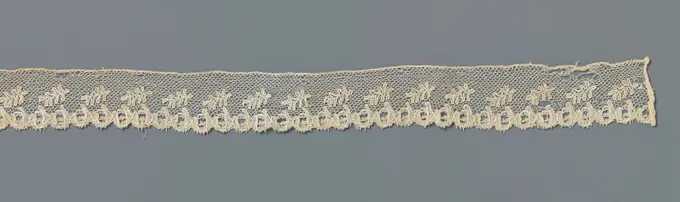
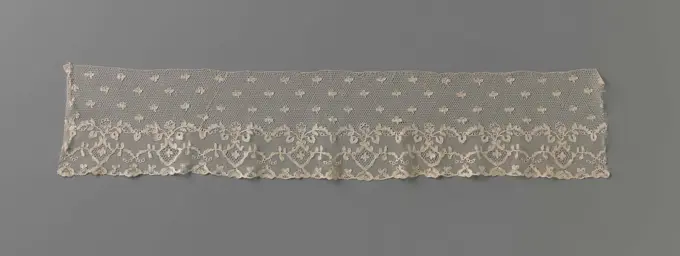
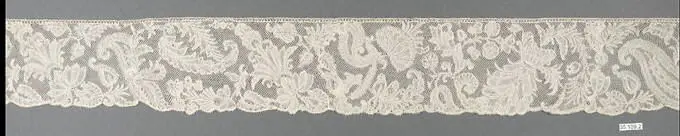
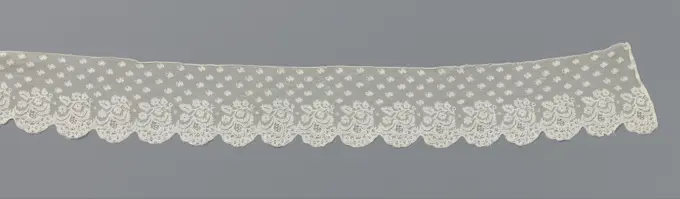
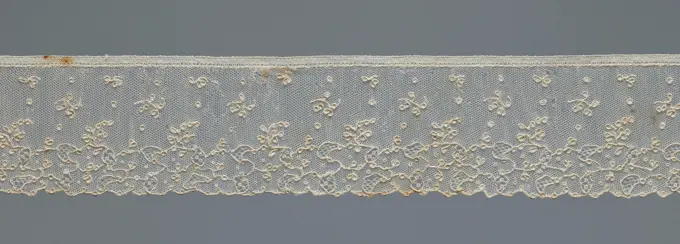
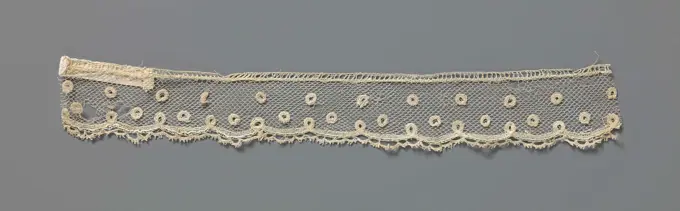
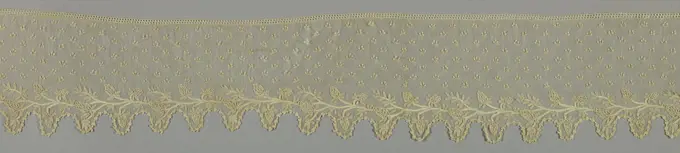
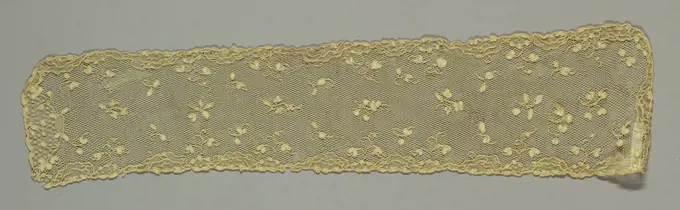
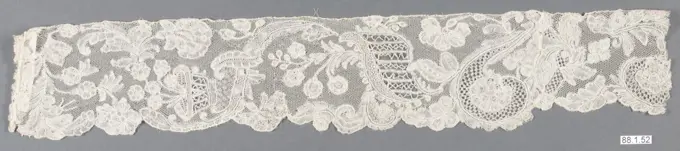
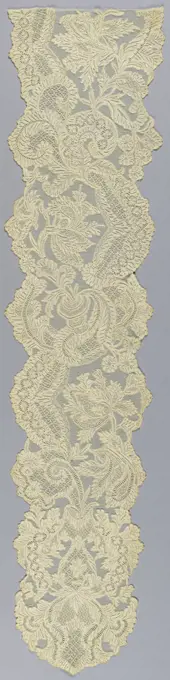
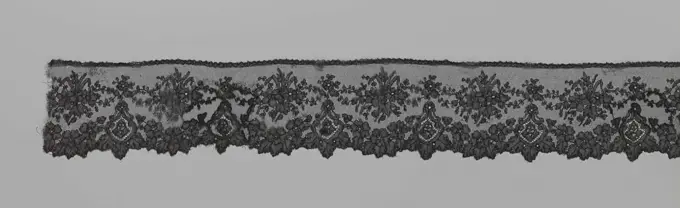
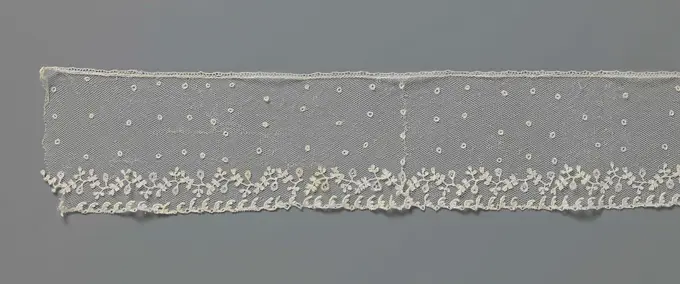
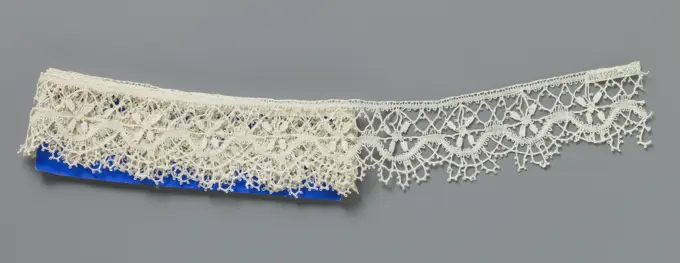
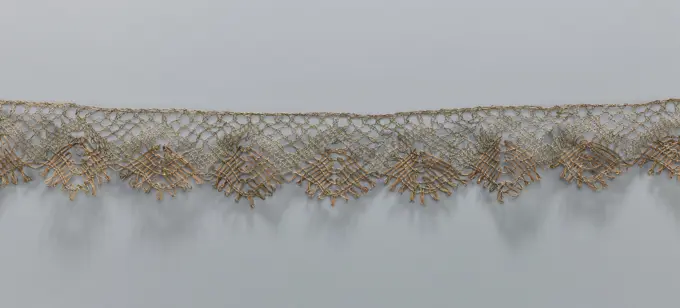
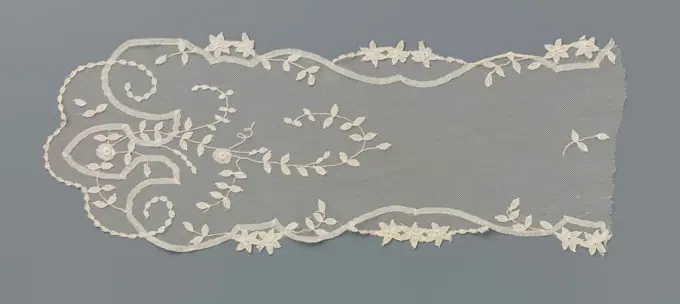
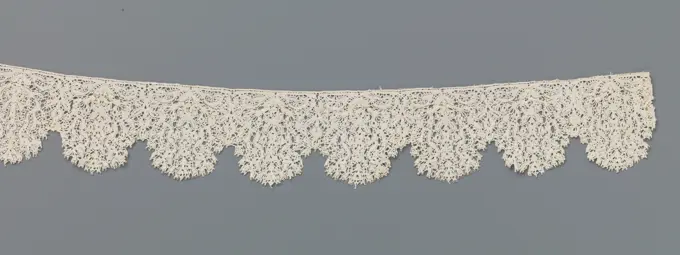
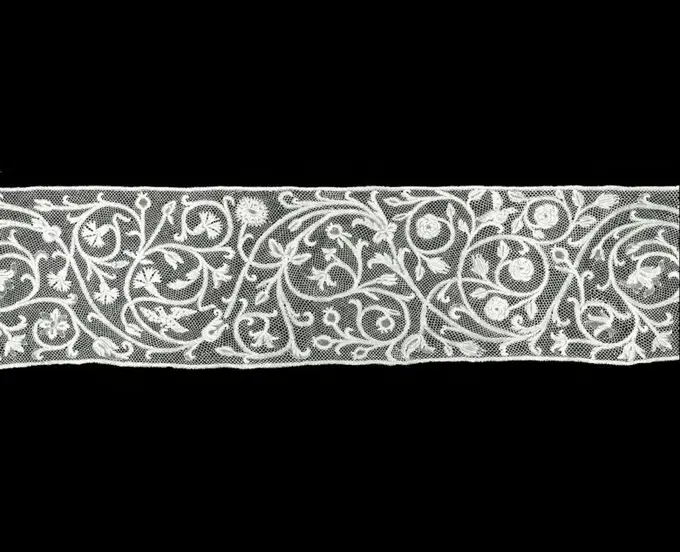
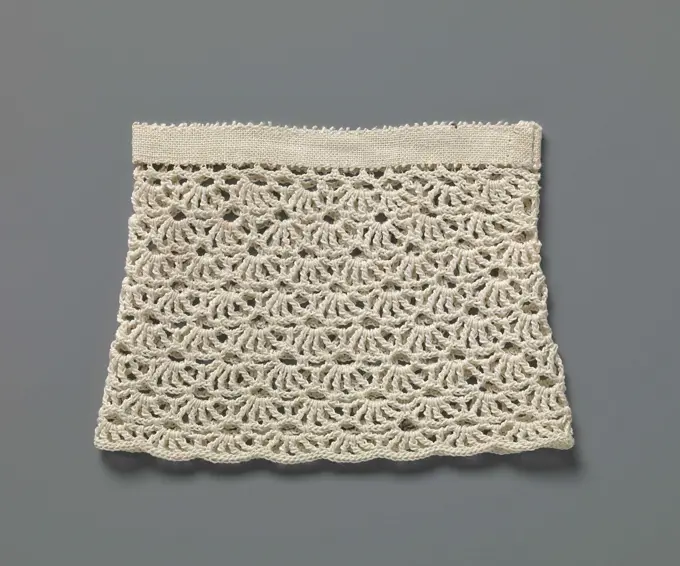
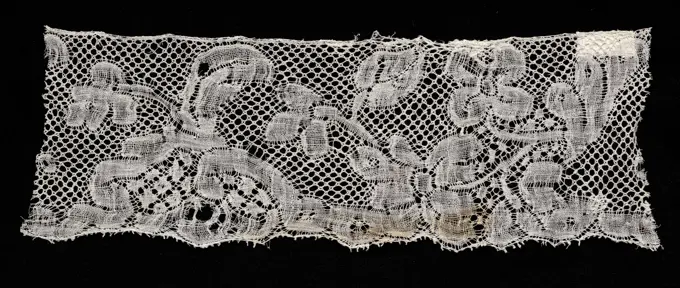
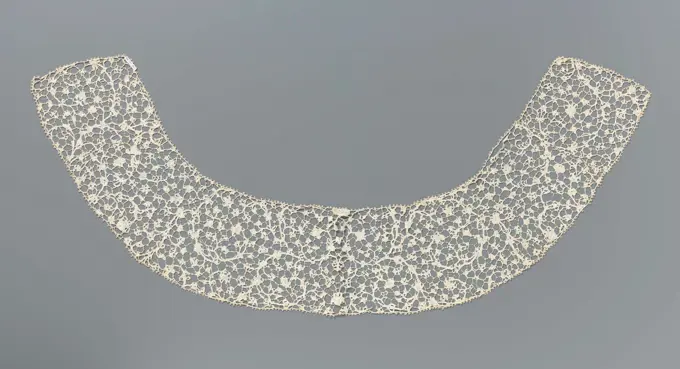
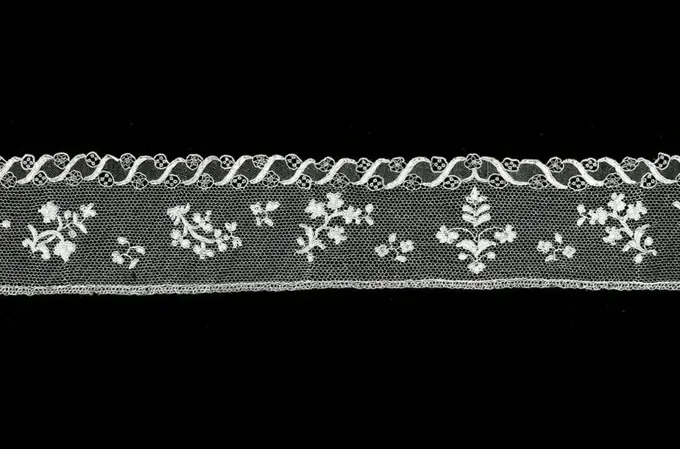
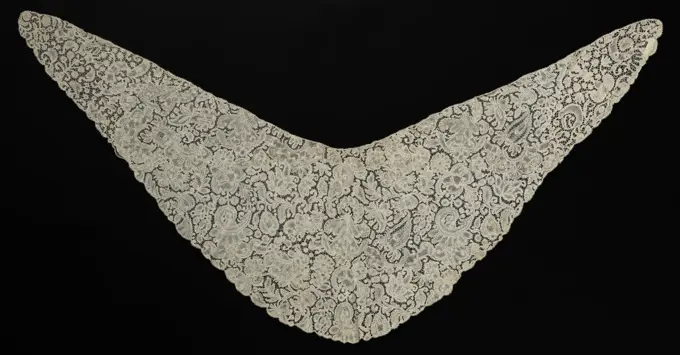
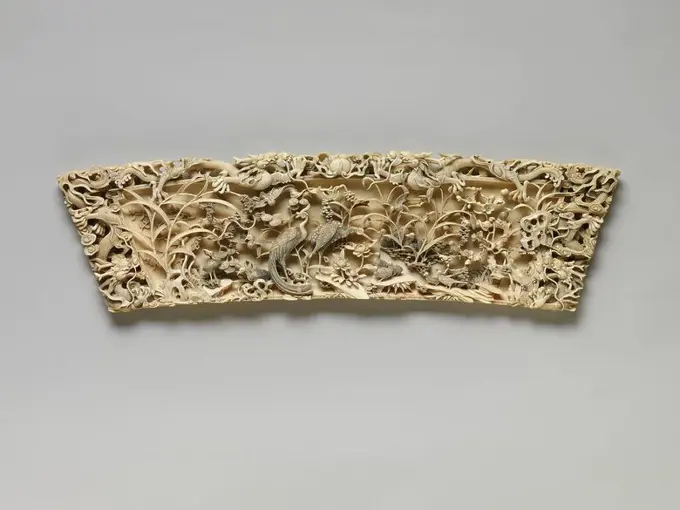
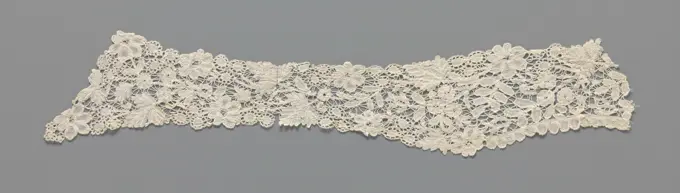
Sjaalkraag (helft) van kloskant met eikeblaadjes en rozen.Scarf collar (half) of natural colosside: Bruges flower work. Rectangular model with one sloping side and a narrowing and widening with a small kink in it. Pattern with different types of flowers and leaves, including Eike leaves and roses. The motifs are interconnected by a braid soil where the braids are placed in zigzag lines as a grille. The collar is cut in the middle.Fragment of lace unknownFragment of the lace;  End of the 18th century (1791-00-00-1800-00-00);Kloskant interlimpse with florets, anonymous, c. 1890 Between two arched edges, with openings in front of a ribbon, a lane with square meshes runs, on which a row of roses stand on crooked twigs. Valenciennes side. Ieper (possibly) linen (material) Bobbi Lace / Valenciennes Lace Between two arched edges, with openings in front of a ribbon, a lane with square meshes runs, on which a row of roses stand on crooked twigs. Valenciennes side. Ieper (possibly) linen (material) Bobbi Lace / Valenciennes LaceBobbin Lace (Punto di Milano) Insertion and Edging, 17th-18th century. Italy, Milan, 17th-18th century. Lace, bobbin; average: 10.5 x 45.8 cm (4 1/8 x 18 1/16 in.).Strook kloskant met schuin geplaatste veervormige blaadjes.Strip natural colosside: Lille side. The repeating pattern consists on the center line from a row of diagonally placed veer-shaped leaves with a row of circular motifs connected below, which form openwork scoops. The motifs are connected by a fine grille, a tulet. The energy-saving fireworks is made in linen stroke, with thicker and shiny contour wires. The top is just finished. The scivels along the underside are finished with picots.Strip 18th century Hungarian. Strip 221376Volant van kloskant met ruitvormige medaillons.Volant of natural colosside: Parisian side. The ground has been shared in two in a paris soil with clover leaves at the top and a tulet below. In the last one is a symmetrical pattern of diamond-shaped openwork medallions with sidewalks crowned by a flower between two leaves. The leaves, the side drinks and a series of flowers and ranks in the sculpture are released in three closed garlands. The motifs are made in linen stroke and equipped with contour wires. A rose soil has been applied as ornamental ground.Border (one of three) 18th century Flemish, Brabant. Border (one of three). Flemish, Brabant. 18th century. Bobbin lace, point d'Angleterre. Textiles-LacesHapslip van Kloskant with carnation and rocaille, anonymous, c. 1750 - c. 1760  Heat slip of natural -colored bobbin: Mechelen side. One rounded end and the other end is straightened straight and not finished. The repeating pattern consists of a carnation that is placed in the length direction of the hat-slip exchanged by a rocaille motif from which a split branch with leaves rises. Some of the leaves affect one of the long sides. The pattern along the long sides also consists of connected leaves and a rocaille motif at a regular distance. The motives are made in linen battle with sparingly applied recesses and equipped with thicker contour threads. The motifs are connected by a grid, a Mechelen soil. Decorative lands have been used in the rocailles and between some leaves. Apart from the cut end, the edges of the hat slip are finished with picots. Mechelen linen (material) bobbin lace / Mechlin (lace)Collar early 18th century Flemish. Collar 212527Piece 17th century Northern Italian. Piece 212510Strip bobbin with hanging leaf branch, anonymous, c. 1820 - c. 1830 Strip of natural -colored bobbin: Mechelen side. Under a spreading pattern of one -sided targeted twigs with one round flower, the repeating pattern of the scrap edge consists of a curved branch. A large composite flower hangs down between two leaf fillets on this twig. The flower consists of a drop -shaped flower heart with half a wreath of five rosette flowers around it. Every successive flower forms a semicircular shell in this way. The motifs are made in linen stroke and equipped with thicker and shiny contour threads. The motifs are connected by a fine grid, a Mechelen soil. In the drop -shaped flower hearts, a coarser ornamental soil has been used with cubes made in shape. The scrap edge is finished with picots. The top of the strip is straight finished. Southern Netherlands linen (material) bobbin lace / Mechlin (lace) Strip of natural -colored bobbin: Mechelen side. Under a spreading pattern of one -sided targeStrip bobbin with a circle between oval peony motif, anonymous, c. 1900 - c. 1909 Strip of natural -colored Dutch bobbin. The repeating and symmetrical pattern consists of a stylized oval peony between two smaller and rounder peonies, which spring from the side of flower with an S-shaped leaf. Between the successive peony motifs there is a separate circle along the underside of the strip. The motifs are made in linen battle with recesses and openwork edges. There is a single loose snowflakes in the linen work. The motifs are connected by a grid, a Parisian soil. The top and bottom are straight finished, with picots on one side. Flanders (Possible) cotton (textile) bobbin lace Strip of natural -colored Dutch bobbin. The repeating and symmetrical pattern consists of a stylized oval peony between two smaller and rounder peonies, which spring from the side of flower with an S-shaped leaf. Between the successive peony motifs there is a separate circle along the underside of the strip. The mStrip of needle side with plumed tendrils, anonymous, c. 1875 - c. 1895 Strip of natural -colored needle side: Venetian rose side. On a bar of land with six -sided meshes, rich branches, to the left and right, are swiveling and right -wing, sometimes dwelling, sometimes walking. There are multifaceted, carefully detailed button -shaped flowers. Here and there the top of a slender has grown through an opening in the branch. Straight finish of alternately an eye and a triangle. BURANO linen (material) Venetian rose point Strip of natural -colored needle side: Venetian rose side. On a bar of land with six -sided meshes, rich branches, to the left and right, are swiveling and right -wing, sometimes dwelling, sometimes walking. There are multifaceted, carefully detailed button -shaped flowers. Here and there the top of a slender has grown through an opening in the branch. Straight finish of alternately an eye and a triangle. BURANO linen (material) Venetian rose pointStrip bobbin with bows, anonymous, c. 1799 - c. 1800 Strip of natural -colored bobbin, Lille side. The repeating and continuous pattern starts under the center line of the strip and consists of a kind of bows that are connected to each other by a configuration of four circles, above which you can always see a configuration of three poesjes. A wavy line along the underside is formed by a succession of circles, the two circles on the wave sticks are slightly larger. The motifs are connected to each other at the top of the pattern by a fine Maas soil, a tuler floor. The Mosjes are made in form. The motifs are largely made with a decorative land and surrounded by thicker and shiny contour threads. The top is straight. The wavy line forms the shells along the bottom, which are finished with picots. Southern Netherlands linen (material) bobbin lace / Lille lace Strip of natural -colored bobbin, Lille side. The repeating and continuous pattern starts under the center line of the strip and conFragment of the lace;  18th century (1701-00-00-1800-00-00);Collar of crocheted with window and fan pattern, anonymous, c. 1930 Narrow straight collar of natural crochet. Three rows with diamonds, made with unloading. Below that two rows of fan, made with crocheted sticks. The impellers form a wavy edge on the bottom. The top is trimmed with a woven edge. West-Europa cotton (textile) crocheting Narrow straight collar of natural crochet. Three rows with diamonds, made with unloading. Below that two rows of fan, made with crocheted sticks. The impellers form a wavy edge on the bottom. The top is trimmed with a woven edge. West-Europa cotton (textile) crochetingStrook applicatiekant met cirkeltjes en lusjes.Strip of natural brussels application side: dick side applicated on machining tulle. Spreading pattern with two rows of circles, or large open messes. Slight regular arches along the bottom edge, which constitutes a loop at the intersection to the next arc. The arches have been split in linse stroke and trimmed with smaller-piced arcs. Relief contours along the motifs with a thicker thread. The top edge is trimmed with a splitting strap.Piece 18th century French. Piece 214066Strook kloskant met margrietjes.A coarse mesh stock (square mesh) with marbriefs above beads of pearls. Valenciennes side.Band, Medium: linen, hair Technique: needle lace with ground of loop & twist with twist return, Scalloped border showing continuous branch of cone-shaped blossoms., Alençon, France, 1800-1850, lace, BandBand fragment, Medium: linen Technique: punto in aria needle lace, Band fragment with broad scrolls, leaves and flowers., Italy, early 17th century, lace, Band fragmentBands, Medium: linen Technique: needle lace, Two small bands of Argentan lace with a border of lumpy half circles. Field is filled with small floral sprigs., France, 18th-19th century, lace, BandsStrip of needle side with acanthus leaves, anonymous, c. 1720 - c. 1730 Strip of natural-colored needle side: Régence side. The strip belongs to a hat. The pattern consists of acanthus leaves and lush flowers. The motifs are connected to each other by a Maas soil decorated with square mushes. Fullwork with recesses and multifaceted decorative stitches. Relief contours with feston stitches. France whole: Linen (Material) Strip of natural-colored needle side: Régence side. The strip belongs to a hat. The pattern consists of acanthus leaves and lush flowers. The motifs are connected to each other by a Maas soil decorated with square mushes. Fullwork with recesses and multifaceted decorative stitches. Relief contours with feston stitches. France whole: Linen (Material)Fragment ca. 1725 Flemish, Brussels. Fragment 212528Cuff of needle side with bows, anonymous, c. 1875 - c. 1909 Cuff of natural -colored needle side: Venetian relief side. On a very open bar of land there are irregular volute vines with leaf voltuties and multifaceted flowers. List of triangles. Venice (possibly) linen (material) Venetian raised work Cuff of natural -colored needle side: Venetian relief side. On a very open bar of land there are irregular volute vines with leaf voltuties and multifaceted flowers. List of triangles. Venice (possibly) linen (material) Venetian raised workCap streamers, Medium: linen Technique: needle lace, Cap streamers of Point de Venise à Réseau in an asymmetric design of floral and foliated forms are flanked at intervals by scalloped garlands, emerging from a geometrically shaped base., France, early 18th century, lace, Cap streamersBorder (one of three) 18th century Flemish, Brabant. Border (one of three) 223085Japonstrook van kloskant met de schildvormige medaillons.Japon strip from black climbing side: Chantilly side. Closed motifs are closed on an open mesh fond. Three symmetrical turmbled medallions rise on the nodes of the slippers, which are caught in two pairs of C volutes. Above the slot a large, above the medallions, a small flower tough occurs, with tagged flower leaves as a crowning. The inner edge is decorated with a chain of heart-shaped leaves.Fragment of the lace;  XVII century (1601-00-00-1700-00-00);Strook applicatiekant met golvende rank en ronde knopjes.Strip natural applicating office: Brussels climbing side applicated on slighten ground. This type of side is also known as the name: Point d'Angleterre. Spreading pattern with open moes. Along the finely scalloped bottom edge of sickle leaves, a wavy rank walks on which round buttons and deeply incised. Motifs from Brussels climbing side with the typical ribs or clost relief contours. One kind of open ornamental stitch. The top is trimmed with a border clamping side.Dass slip with candelabre motifs, anonymous, c. 1690 - c. 1709 Dassle slip of natural -colored needle side: flat Venetian side or point de France. On a coarse hexagonal Maas soil there is a backdrop of five symmetrical and very thin Candelabre motifs, which are connected by branched spiral vines, on which miniature palmet flowers and buds are. Finished on three sides with alternating large and small triangular arches. Italy (possibly) linen (material) flat Venetian (needle point) Dassle slip of natural -colored needle side: flat Venetian side or point de France. On a coarse hexagonal Maas soil there is a backdrop of five symmetrical and very thin Candelabre motifs, which are connected by branched spiral vines, on which miniature palmet flowers and buds are. Finished on three sides with alternating large and small triangular arches. Italy (possibly) linen (material) flat Venetian (needle point)Strip bobbin with a border with slanted flower stems with two flowers, anonymous, c. 1780 - c. 1795 Strip of natural -colored bobbin, Parisian side. The repeating pattern consists of a spray pattern of twigs with three petals and along the underside an edge with slanted flower stems with two flowers per stem always. The spreading pattern is made on a Maas soil, the Paris soil. The motifs in the pattern along the bottom edge are connected by a finer Maas soil, a tuler floor, with mosjes. The motifs are made in linen battle with thicker and shiny contour threads. A decorative land has been used in the flowers. The top and bottom are straight, with the bottom with picots. Southern Netherlands linen (material) bobbin lace / Paris lace Strip of natural -colored bobbin, Parisian side. The repeating pattern consists of a spray pattern of twigs with three petals and along the underside an edge with slanted flower stems with two flowers per stem always. The spreading pattern is made on a Maas sStrip application side with rosette flowers along the bottom, anonymous, c. 1840 - c. 1870 Strip natural -colored Brussels Application side: Kloskant Applicated on Machine Tulle. On a fine hexagonal mesh ground, a succession of small, uniform, rosette flowers is sewn along the underside. Above it a row with alternating a circle and a hanging twig with a round flower and two leaves. Motives in bobbin with linen battle, cut -outs such as decorative element and burst of relief contours. The top is straight finished with a wide -ranged wire bundle. Brussels  Brussels Applied Strip natural -colored Brussels Application side: Kloskant Applicated on Machine Tulle. On a fine hexagonal mesh ground, a succession of small, uniform, rosette flowers is sewn along the underside. Above it a row with alternating a circle and a hanging twig with a round flower and two leaves. Motives in bobbin with linen battle, cut -outs such as decorative element and burst of relief contours. The top is straight finiStrip Application side of machine ribbon side with star flowers on mechanical tulle, anonymous, c. 1920 Strip of natural -colored application side: ribbon side Applicated on mechanical tulle with diamond -shaped meshes. The strip may belong to the slip of an Echarpe. Flat sculpture, formed by a smooth list and star flower. Belgium linen (material). cotton (textile) Luxeuil Lace Strip of natural -colored application side: ribbon side Applicated on mechanical tulle with diamond -shaped meshes. The strip may belong to the slip of an Echarpe. Flat sculpture, formed by a smooth list and star flower. Belgium linen (material). cotton (textile) Luxeuil LaceBorder; linen; Bequest of Marian Hague; 1971-50-388Strip bobbin with crosses made of four blocks made with shape strokes, anonymous, c. 1900 - c. 1914 Strip of natural-colored bobbin, cluny side. Between a regular and open network of picoted braids, a regular wavy strap in linen battle runs under the horizontal center line of the strip. Above each golf valley a cross has been made in shape, with four blocks from a round in linen battle. Above each cross, braids form the contours of a triangle. Beads of two windows form on each wave top. Semi -rounds are formed under the wavy strap, with braids decorating each shell with three arcs. The braids that form the scrap edge are also decorated with picots. A narrow strap runs in Linnenlag along the right -handed top of the strip. The strip is wrapped around a blue store paper, stating: 3 1/2 m a f3.- f10.50. France (possibly) cotton (textile) bobbin lace / Cluny lace Strip of natural-colored bobbin, cluny side. Between a regular and open network of picoted braids, a regular wavy strap in linenTextile Swatch , 1950s to 1960s. Silk, 21 x 10 in. (53.3 x 25.4 cm).    1950s to 1960sStrip of lace plunger with love buttons, anonymous, c. 1900 - c. 1909 Strip of natural -colored lace -ups: fillet side. Ranks run over the full width that are placed both slanted and straight. There are love buttons on the oblique tibbles. On each parallelepipedum a standing, a hanging branch with two cross -oriented chalice flowers respectively. The motifs are embroidered in the stopping technique on a knotted network of square meshes. At the top and bottom are finished with a straight edge. Netherlands linen (material) embroidering Strip of natural -colored lace -ups: fillet side. Ranks run over the full width that are placed both slanted and straight. There are love buttons on the oblique tibbles. On each parallelepipedum a standing, a hanging branch with two cross -oriented chalice flowers respectively. The motifs are embroidered in the stopping technique on a knotted network of square meshes. At the top and bottom are finished with a straight edge. Netherlands linen (material) embFragment of the lace;  End of the 18th century (1791-00-00-1800-00-00);Border (Fragment) Made 1725-1775 Flanders. Linen, bobbin straight lace .Edging late 18th century French. Edging 222858Slip van machinale lintkant met bandwerk.Slip of natural machine side: machine ribbon side. Associated with an echarpe. The slip has a lobed end and an unfinished start. An open, symmeteric pattern of thin spiral raft, which is widely scattered leaves and roses, is framed by a flat sculpture, formed by a smooth list and starflowers.Strip bobbin cartouches between slanted twisted tires, anonymous, c. 1760 - c. 1770 Strip of natural -colored Brussels bobbin. The pattern consists of three arches of slanted twisted tires crowned by a lobed cartouche and connected to each other on the bottom by a clock -shaped cartouche. After the three arches, the twisted tires turn into connected ovals that also form an arc and are cut by flowers and leaves from the Outijdevan de strip. A flower branch hangs down from the cartouche in each bow. Three loose flower branches hang between the arches. The motifs are largely made in linen battle with openwork edges, but otherwise with few recesses. Some flower hearts and petals and the like are made in mains. Most motives are provided with burst relief contours. The motifs are connected by a fine Maas soil, a drachel soil. As a decorative land, fine snowflake grounds have been used in the twisted tires and braids in the cartouches and branches between the flower branches. The top is straiMachinale lace, Anonymous, c. 1880 - c. 1900 Machine side with a sculpted edge with picots. The sculpts are formed by flowers, each time a leaf branch. West-Europa . Machine side with a sculpted edge with picots. The sculpts are formed by flowers, each time a leaf branch. West-Europa .Strip bobbin with fine thistle flowers and whimsical scallops, anonymous, c. 1630 - c. 1640 Strip of natural -colored bobbin, Old Flemish side. The symmetrical scales from which the strip is built up have the edges on the bottom. The sculptes occur from a volute along the top edge where two tendrils from the middle twist down a straight -hanging central slin. Small stylized thistle flowers form at the ends of the tenders. There is hardly any soil. The motifs are made in linen battle with openwork edges. The scoops are deposited with fine picots. The top is finished with a straight edge. Southern Netherlands linen (material) bobbin lace / old Flemish lace Strip of natural -colored bobbin, Old Flemish side. The symmetrical scales from which the strip is built up have the edges on the bottom. The sculptes occur from a volute along the top edge where two tendrils from the middle twist down a straight -hanging central slin. Small stylized thistle flowers form at the ends of the tenders. TheStrip crochet side with five-pointed stars and flowers made with open circles. Part of a strip of natural-colored Irish crochet side. The original, repetitive pattern consists of a double row with a total of eight triangular floral motifs made with open circles, interspersed with one five-pointed star with a circle in the middle and a circle of each point. Crocheted irregular mesh soil with picots. Top and bottom are finished with a straight edge.Salary unknownBorder Made 1701-1800 Italy. Linen, bobbin straight lace (of continuous clothwork tapes; worked in large sections) .Fragment (Italy); linenHeat slips from Binchekant, sewing, anonymous, c. 1740 - c. 1760 Hats slips from Binchekant, sewn. One long side is straight, the other side is varied, just like the ends. Binche linen (material) Binche Lace Hats slips from Binchekant, sewn. One long side is straight, the other side is varied, just like the ends. Binche linen (material) Binche LaceBorder, Medium: natural linen Technique: bobbin lace, discontinuous tape, Fragment of a band with floral forms forming tabs., Italy or Belgium, 17th century, lace, BorderFragment early 19th century Spanish. Fragment 218343Fragment (Border) Made 1690-1710 France. Linen, needle lace .Bobbin Lace Insertion without Selvage, mid 16th century. Italy, Venice, mid 16th century. Lace, bobbin; average: 3.5 x 31.8 cm (1 3/8 x 12 1/2 in.).Strip bobbin with pearl and rosette list, anonymous, c. 1830 - c. 1850 There is a running pattern on the traly land, a Mechelen soil (also known as ice ground), with a few stripped four -pass -shaped mulets. Along the inside there are small hanging rosette branches, a dune rose in the middle on larger volute stems, which spring with the same flower that forms the final piece of the pure circular arch -shaped scallops. The sculptes consist of a pearl and rosette list, which encloses a middle track with gridwork. Mechelen side. Belgium linen (material) bobbin lace / Mechlin (lace) There is a running pattern on the traly land, a Mechelen soil (also known as ice ground), with a few stripped four -pass -shaped mulets. Along the inside there are small hanging rosette branches, a dune rose in the middle on larger volute stems, which spring with the same flower that forms the final piece of the pure circular arch -shaped scallops. The sculptes consist of a pearl and rosette list, which encloseStrip bobbin with triangular scales including a braided circle, anonymous, c. 1925 - c. 1937  Strip of natural -colored bobbin. The repeating and symmetrical pattern consists of a band with open worked circles in a wastage ground. There are triangular scallops under the tire, always one shell under one openwork circle. In the triangle, two braids run straight down from the tire. A circle with a braid hangs under each triangular shell. It concerns 20th-century side made to a 16th-century pattern. Pescocostanzo linen (material) bobbin laceBorder. Italy, Milan. Date: 1701-1750. Dimensions: 22.8 x 203.3 cm (9 x 80 in.). Linen, bobbin part lace. Origin: Milan. Museum: The Chicago Art Institute, Chicago, USA.Edging (possibly France); cottonFragment, Medium: linen Technique: bobbin lace (Brussels-style), Fragment with a diagonal arrangment of small-scale floral sprays. Both borders have oval forms filled with brides. Vrai droschel ground., Belgium, 1750-1800, lace, FragmentLambal of a cradle, anonymous, c. 1700 - c. 1750 Lambal for a cradle, of light blue silk daum mast with a pattern of somewhat whimsical, embroidered flowers, on the bottom edge, with cream -colored tire in a pattern of volutes, trimmed with cream -colored fringe. China silk embroidering / damask Lambal for a cradle, of light blue silk daum mast with a pattern of somewhat whimsical, embroidered flowers, on the bottom edge, with cream -colored tire in a pattern of volutes, trimmed with cream -colored fringe. China silk embroidering / damaskPattern with uncompleted piece of lace, Medium: parchment, linen thread Technique: bobbin lace made in Lille style with heavy outlining thread, Pattern and partially worked piece of Lille style lace with flowers and curved leaves., 19th century, lace, Pattern with uncompleted piece of laceCuff from crochetware with impeller motif. Cuff of natural colored crocheted. Eight rows with impellers made with crochet sticks. The range forms a wavy edge on the bottom. The top is trimmed with a woven edge.Bobbin Lace Edging, 18th century. Spain, Huelva, 18th century. Lace, bobbin; average: 5.4 x 18.8 cm (2 1/8 x 7 3/8 in.).Towel border 1840-70 Russian. Towel border 173385Border, Medium: linen Technique: plain weave embroidered with deflected element work, Fragment of a woven linen border with with deflected element work, showing design of large blossoms and leafy scrolls that form a slightly scalloped edge., possibly France, possibly Italy, 18th century, embroidery & stitching, BorderTextile (possibly France); cottonTextile Swatches Onondaga Silk Company, Inc. (1925-1981). , 1948-1959. Silk, 23 1/2 x 8 in. (59.7 x 20.3 cm).    1948-1959Section of crocheted side imitation coarse Venetian side, anonymous, c. 1890 - c. 1909 V-shaped support piece of natural-colored Irish crocheted side, imitation coarse Venetian needle side. The long sides of the V are finished with a potented bow edge. The short side is not finished. Ireland cotton (textile) V-shaped support piece of natural-colored Irish crocheted side, imitation coarse Venetian needle side. The long sides of the V are finished with a potented bow edge. The short side is not finished. Ireland cotton (textile)Berthe van naaldkant met spiraalranken.Berthe from natural needle side: Flat Venetian side. Pattern: Symmetrical thin tubs with large spirals are branched and equipped with many flower buds and some, moderately large, palmet flowers. The motifs are made with a strongly connected feston stitches, whereby different patterns in flowers and leaves have been realized with recesses. The motifs are connected to each other by relatively long, single and double bars with one or a few composite picots. If the bars are interconnected, a wheel of picots is applied to the nodes, a so-called Raderpicot. All sides are finished with RaderPicots.Border. France. Date: 1780-1799. Dimensions: 8.2 × 159.1 cm (3 1/4 × 62 5/8 in.)Width repeat: 24.0 cm (9 1/2 in.). Linen, needle lace of a type known as "Point d'Argentan" with buttonholed mesh ground. Origin: France. Museum: The Chicago Art Institute, Chicago, USA.Kloskant collar with feathered leaf fillets and rosette flowers, anonymous, c. 1750 Collar of natural -colored Brabant bastard. Asymmetrical pattern with feathered leaf voltuties, rosette flowers, palm flowers, pear-shaped and aubergine-shaped flowers, composite flowers, fruit races and rocailles. The motifs are connected by a potented braid ground. Fullwork in linen and mains stroke, fiddled separately and with some relief contour lines (ribs). The faintly scalloped lower edge stems from the pattern. The upper edge is finished with a very narrow struggle with picots. Southern Netherlands linen (material) bobbin lace / Brabant bobbin lace Collar of natural -colored Brabant bastard. Asymmetrical pattern with feathered leaf voltuties, rosette flowers, palm flowers, pear-shaped and aubergine-shaped flowers, composite flowers, fruit races and rocailles. The motifs are connected by a potented braid ground. Fullwork in linen and mains stroke, fiddled separately and with some relief contour lPlaque with dragon, pheasant, quail, and other birds amidst bamboo and plum blossom. Culture: China. Dimensions: H. 6 1/8 in. (15.6 cm); W. 21 1/4 in. (54 cm); D. 7/8 in. (2.2cm). Date: late 19th century.Despite the Qianlong mark (1736-95) carved into the back of this plaque, stylistic features, such as the dragon's large horns and awkwardly rendered claws, indicate that this object was produced later, possibly for export. It is decorated with an incised landscape on the back. Museum: Metropolitan Museum of Art, New York, USA.Strook naaldkant met verschillende liggende bloemen op een rij aan een rank en dikke gefestonneerde cirkeltjes.Strip needle side: Venetian relief side with thick scented circles. Pattern with different lying flowers in a row to a rank. The motifs are connected to each other with few picoted bars. Decorative stitches, including diamond stitch, in the flower hearts and in a few petals. The very flat sloping edge is finished with picots. The top of the strip is straight finished.Pair of Bracelets Bracelets; iron; L x W (a): 21.5 x 6.4 cm (8 7/16 x 2 1/2 in.) L x W (b): 21.5 x 6.4 cm (8 7/16 x 2 1/2 in.)Border (Italy); linenTip of door band 15th century German. Tip of door band 468824Fragment of the lace - Wolant;  19th century (1801-00-00-1900-00-00);Fragment, Medium: linen Technique: bobbin lace (Brussels-style), Fragment has a conventionalized tulip and leaf design., Belgium, 1750-1800, lace, FragmentBorder Made 1850-1900 Italy. Linen, bobbin straight lace .Bobbin Lace Edging, 16th-17th century. Italy, Venice, 16th-17th century. Lace, bobbin; average: 5.8 x 29.3 cm (2 5/16 x 11 9/16 in.).Cap Streamer (Belgium); linenSampler 19th century German. Sampler. German. 19th century. Wool, knitted lace. Textiles-LacesTwo Fragments from a Border. England, Devonshire or Dorset. Date: 1661. Dimensions: a: 72.4 × 13.3 cm (28 1/2 × 5 1/4 in.)b: 60 × 13 cm (23 5/8 × 5 1/8 in.). Linen, bobbin part lace. Origin: England. Museum: The Chicago Art Institute, Chicago, USA.Cloisonné garnet piece. From the Byzantine EmpireEdging 16th century Italian, Venice. Edging 221086Kloskant cape with the pergola with wound columns, anonymous, c. 1860 - c. 1880 Cape of black bobbin: Chantilly side. A fan -shaped model with an extended point is divided into a collar, a middle part, a pergola with eight columns and a border of peacock -tailed sculptes. A fairly rough grid land is only empty in the collar, but also strewn with mosies. The collar is decorated with a closed garland from Winde. The pergola shows columns that are wounded with garlands and an inner decor of high, triangular bouquets, which are symmetrical compared to the middle and largest bouquet. Flower wreaths hang off, through which the terrace of the pergola runs straight through. The scales are more than a semicircle deep and alternately filled with radiating, intertwined pointed and oval links and with palmets, accompanied by a daisy. Small inner shells consist of a bouquet with hanging oak leaf edge. Along the closure a cross row of braided links. Belgium silk bobbin lace Cape of black bobbin: ChaSampler, Medium: cotton, linen Technique: embroidered, Horizontal sampler with two wide and two narrow bands of openwork techniques in white., Mexico, 19th century, embroidery & stitching, SamplerInsertion 17th century Italian. Insertion. Italian. 17th century. Bobbin lace. Textiles-LacesStrip bobbin with wavy line, anonymous, c. 1870 Strip of natural-colored bobbin: Valenciennes side. On a grid, a square Valenciennes-ground, are stripped-in stemless daisies between sequins. A wavy list of zigzag line runs along the edge, on either side of which unilaterally targeted stems with chalice flower. The motifs are made in linen battle with openwork edges and recesses. Crossing couples ensure a decorative effect and there is a snowflake in Bloemharten. The strip is wrinkled on a narrower strip with stemless daisies. Sluis (Possible) linen (material) Bobbi Lace / Valenciennes Lace Strip of natural-colored bobbin: Valenciennes side. On a grid, a square Valenciennes-ground, are stripped-in stemless daisies between sequins. A wavy list of zigzag line runs along the edge, on either side of which unilaterally targeted stems with chalice flower. The motifs are made in linen battle with openwork edges and recesses. Crossing couples ensure a decorative effect and there is a snowflake Bobbin Lace Insertion, early 17th century. Italy, Venice, early 17th century. Lace, bobbin; average: 5.8 x 21.7 cm (2 5/16 x 8 9/16 in.).Bobbin Lace Insertion and Edging, early 17th century. Italy, Venice, early 17th century. Lace, bobbin; average: 9 x 47.7 cm (3 9/16 x 18 3/4 in.).Strip knotted side with two rows of loops, anonymous, c. 1900 Strip of natural knotted side: Frivolité. Two rows of loops. On the top and bottom there is a picot on each loop. Europe linen (material) Strip of natural knotted side: Frivolité. Two rows of loops. On the top and bottom there is a picot on each loop. Europe linen (material)Corner 18th century French. Corner. French. 18th century. Needle lace. Textiles-LacesPiece 18th century possibly French. Piece 223957Lappet first half 18th century Flemish, Brussels. Lappet 227627Attic Black-Figure Eye Cup Fragment. UnknownCollar of crocheted lace with three rows of flat rosette flowers, anonymous, c. 1890 - c. 1909 Curved rectangular collar of natural -colored Irish crocheted side. Pattern with three rows of flat rosette flowers and a crocheted irregular mesh soil with picots. Finished on all sides with three -part arches with picots. Ierland (possibly) cotton (textile) Curved rectangular collar of natural -colored Irish crocheted side. Pattern with three rows of flat rosette flowers and a crocheted irregular mesh soil with picots. Finished on all sides with three -part arches with picots. Ierland (possibly) cotton (textile)Fragment 16th century Italian, Venice. Fragment 220957