Historic Lace Fragments

Antique lace pieces showcasing intricate floral and geometric patterns, reflecting historical textile craftsmanship.

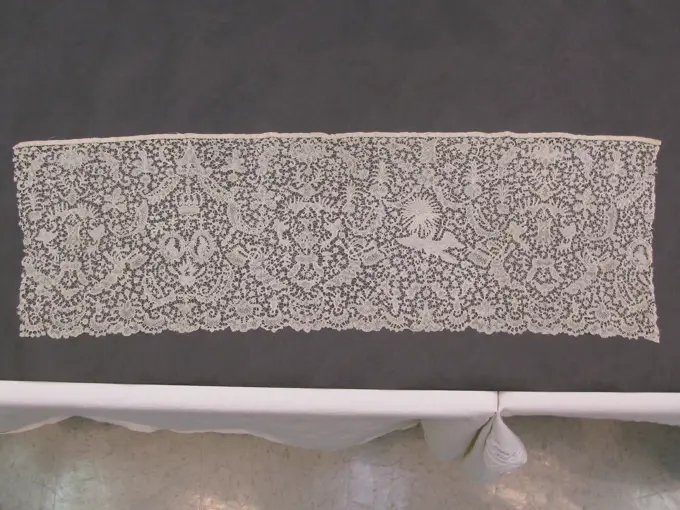
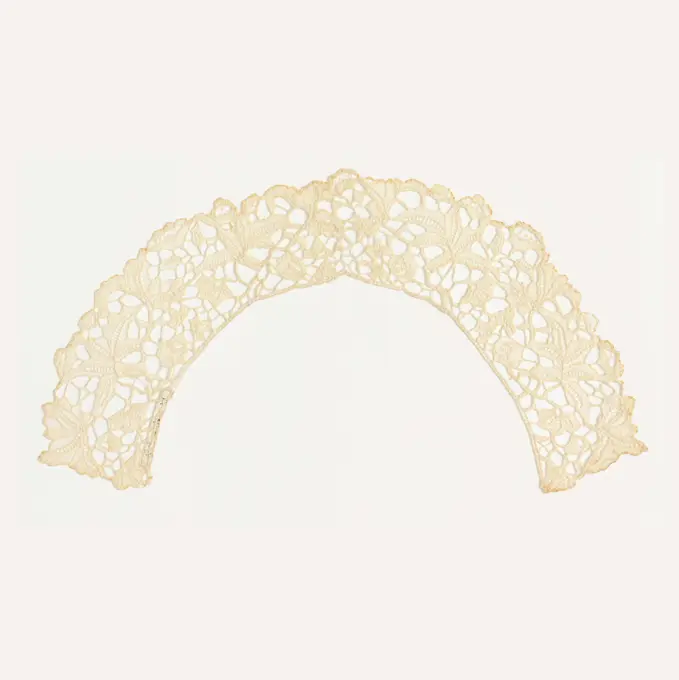
Hapslip van Kloskant with carnation and rocaille, anonymous, c. 1750 - c. 1760  Heat slip of natural -colored bobbin: Mechelen side. One rounded end and the other end is straightened straight and not finished. The repeating pattern consists of a carnation that is placed in the length direction of the hat-slip exchanged by a rocaille motif from which a split branch with leaves rises. Some of the leaves affect one of the long sides. The pattern along the long sides also consists of connected leaves and a rocaille motif at a regular distance. The motives are made in linen battle with sparingly applied recesses and equipped with thicker contour threads. The motifs are connected by a grid, a Mechelen soil. Decorative lands have been used in the rocailles and between some leaves. Apart from the cut end, the edges of the hat slip are finished with picots. Mechelen linen (material) bobbin lace / Mechlin (lace)
Hapslip van Kloskant with carnation and rocaille, anonymous, c. 1750 - c. 1760 Heat slip of natural -colored bobbin: Mechelen side. One rounded end and the other end is straightened straight and not finished. The repeating pattern consists of a carnation that is placed in the length direction of the hat-slip exchanged by a rocaille motif from which a split branch with leaves rises. Some of the leaves affect one of the long sides. The pattern along the long sides also consists of connected leaves and a rocaille motif at a regular distance. The motives are made in linen battle with sparingly applied recesses and equipped with thicker contour threads. The motifs are connected by a grid, a Mechelen soil. Decorative lands have been used in the rocailles and between some leaves. Apart from the cut end, the edges of the hat slip are finished with picots. Mechelen linen (material) bobbin lace / Mechlin (lace)
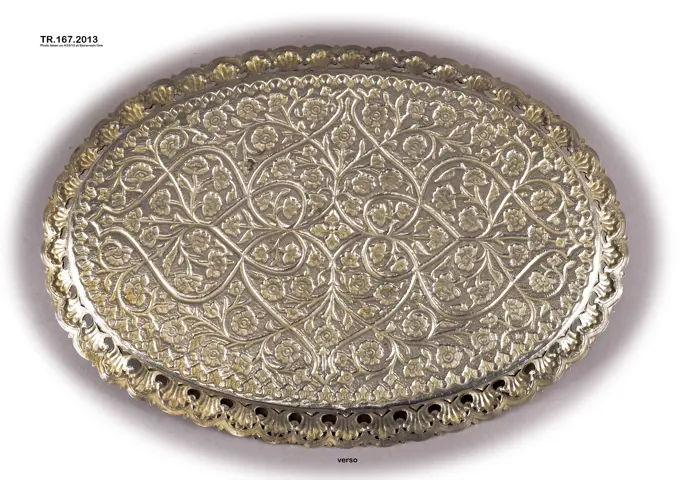
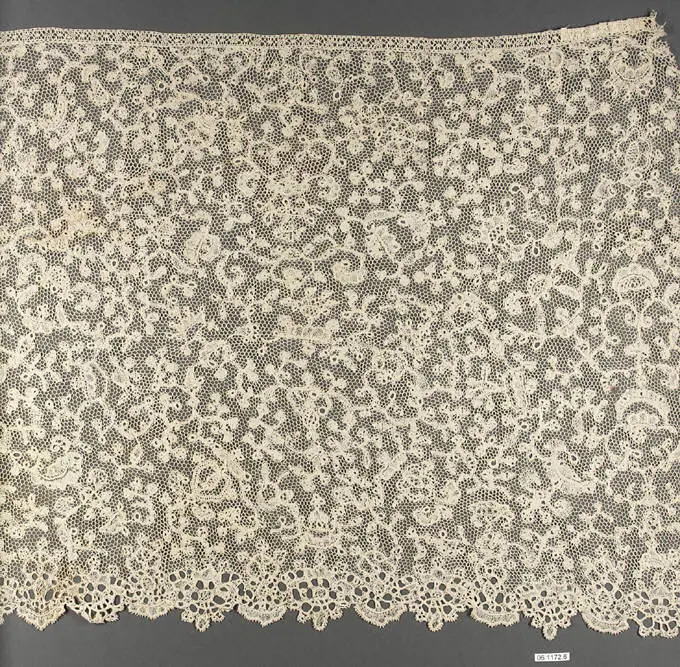
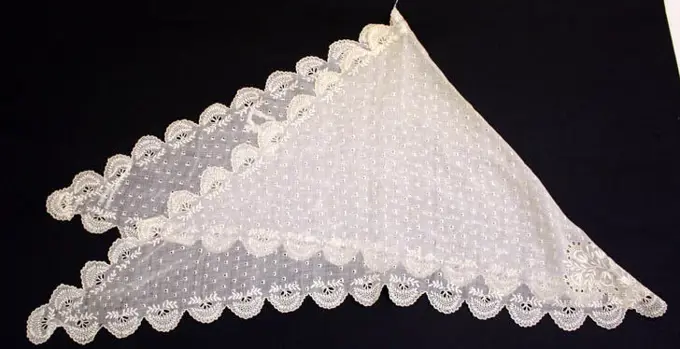
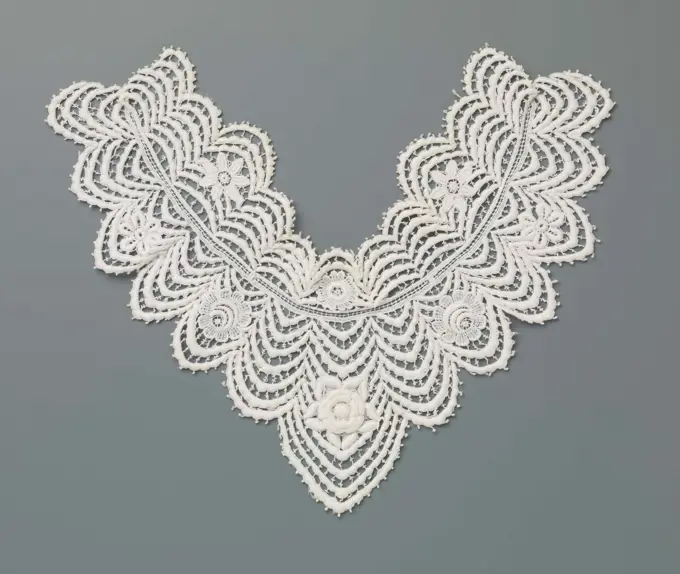
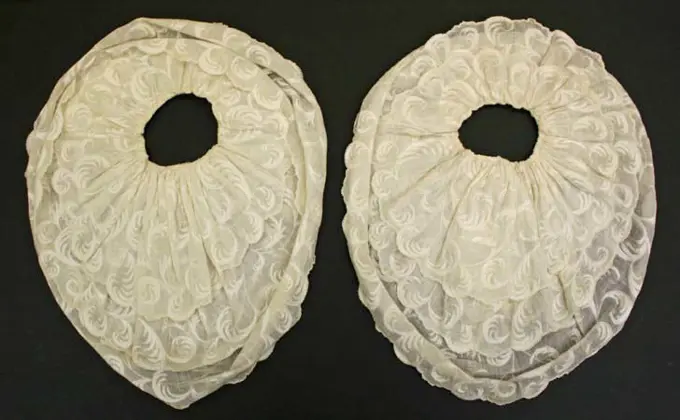
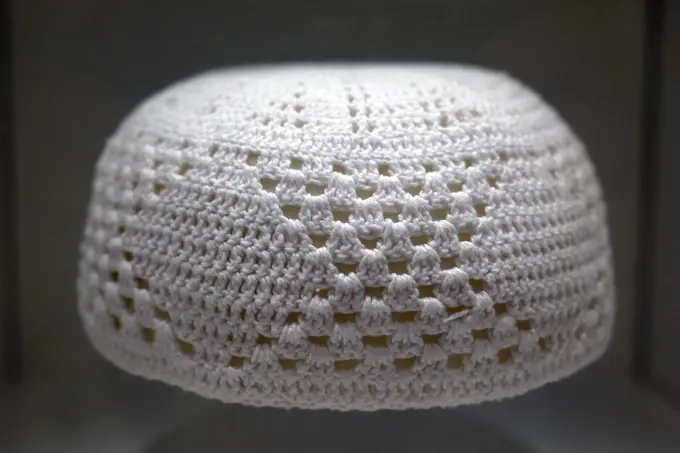
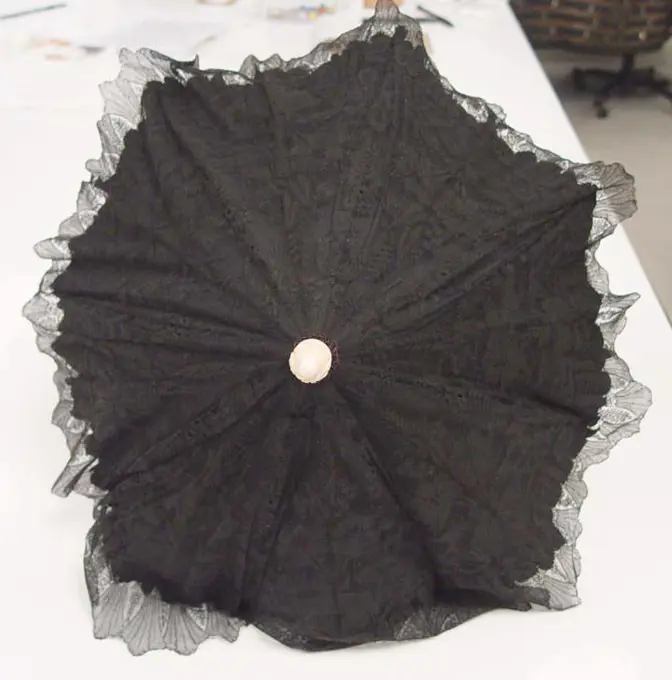
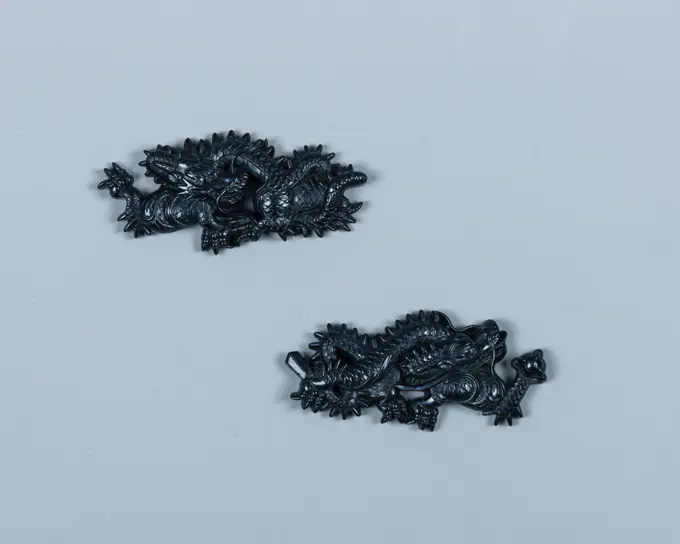
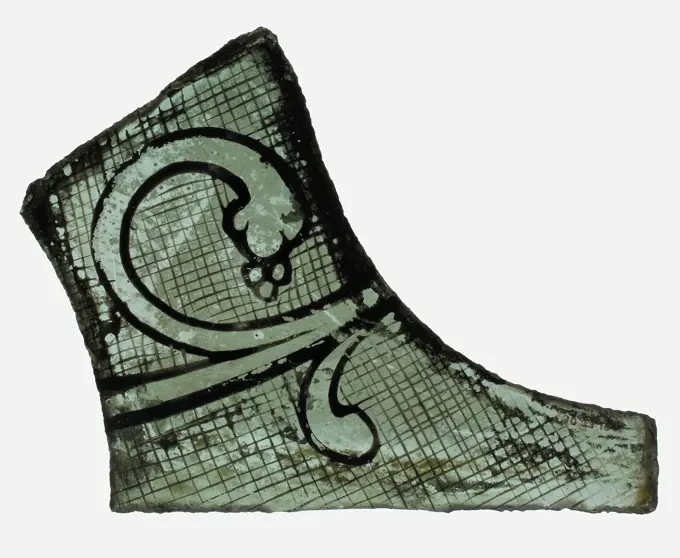
Fine example of Ottoman art patterns in viewMiser's purse, Medium: silk, metal Technique: crocheted, Crocheted maroon silk evenly ornamented with cut steel beads; opening at side controlled by two octagonal cut steel rings. Four lined tassels of steel beads at each end., France, early 19th century, costume & accessories, Miser's purseSilver Gilt Tray late 18th century This tray shows European influence in its oval shape (Indian trays generally being of round shape), while the decorative leafy motifs also loosely recall vase-inspired profiles that were popular in paintings, textiles, and carvings all over the region. The nature of the ornament combines a long standing taste in the Deccan for arabesque-based decoration, with a balance and symmetry that indicate Mughal taste.. Silver Gilt Tray. late 18th century. Silver; gilded. From India, Hyderabad. MetalSpoon, heavy glass, sharpened, anonymous, c. 1400 - c. 1950 Spoon, made of heavy glass, sharpened.  glass Spoon, made of heavy glass, sharpened.  glassMosque ceiling Ceiling at Mustafa Pasha Mosque in Skopje Copyright: xZoonar.com/MarkoxBericx 6843098Kerchief 1700-1945 American or European. Kerchief 119280Flounce 18th century Flemish. Flounce 213008Veil ca. 1844 probably Indian. Veil 117564Embroidery Sample (USA); Designed by Alberto Fasola (1892 - 1978); Manufactured by Rialto Art EmbroideryFichu 1700-1942 American. Fichu 119199Border. Northern Europe. Date: 1675-1725. Dimensions: 14.9 x 209.5 cm (5 3/4 x 82 1/2 in.). Linen, needle lace with woven tapes. Origin: Northern Europe. Museum: The Chicago Art Institute, Chicago, USA.Blue Embroidered Cushion 16th Century.Woman's Collar. Belgium, Grammont, 19th century. Costumes; Accessories. Silk machine net with silk Chantilly bobbin lace trimTurkish needle work embroidery Ornamental with lace patterns, details, flowersCollar of machining with thirteen Spitsovale tubs at the bottom and eleven semi-circle shoulers at the top. Collar of machining: Etkant, imitation crocheted. Semi-circular model with a sloping edge both on top and top. The thirteen Spitsovale tubs on the bottom of the collar take direction in the middle. The schulpts are made up of five to ten steady bowes. The arcs are thick, as thick scented cordons, and are interconnected with picotted bars. In the middle shell there is a star-shaped flower with a rosette flower as a flower heart. Left and right are still in a shell and a rosette flower with six oval petals in a shell. The eleven semi-circular shelter at the top of the collar are structured in the same way, but are rounded by the lower slip. With this tube edge the middle shell is the smallest and there is a rose. In the two-after-last and also greatest scallop in this edge, there is a flower with seven pointed leaves on the left and right.Collar or front with an intermediate sling with abstracted floral pattern placed between eight openwork circles, c. 1850 - c. 1920  Collar or front with an intermediate facial with abstracted floral pattern placed between eight openwork circles. West-Europa linen (material)Engageantes 1750-75 European. Engageantes 119998Two joined pieces 18th century French. Two joined pieces 220044Cap mid-19th century American. Cap 109324Two pointed scales of bobbin with pointed leaves, anonymous, c. 1925 Two point sculptures of natural-colored bobbin, Cluny side. Two sharp triangular point sculptes are only connected to each other on the straight top. A smaller triangle hangs down from the top in each triangle. The outlines of the triangles are formed by a narrow strap in linen battle. The spaces in the triangles are filled with a braid ground and pointed leaves made in form. Netherlands (possibly) linen (material) bobbin lace / Cluny lace Two point sculptures of natural-colored bobbin, Cluny side. Two sharp triangular point sculptes are only connected to each other on the straight top. A smaller triangle hangs down from the top in each triangle. The outlines of the triangles are formed by a narrow strap in linen battle. The spaces in the triangles are filled with a braid ground and pointed leaves made in form. Netherlands (possibly) linen (material) bobbin lace / Cluny laceTurkish needle work embroidery Ornamental with lace patterns, details, flowersRegensburg Museum of History. Taqiyah is a cap for Muslim men. which is worn during prayer. It is a sign of humility and respect.  Regensburg. Germany.Fringe Made 1601-1800 Italy. Silk, warp-striped, warp-faced plain weave with extended ground weft loop fringe; grouped and knotted; with attached loop and cut fringe tassels .White side intermediate edge, c. 1920 White side intermediate facility. NijmegenBelgium (possibly) cardboard White side intermediate facility. NijmegenBelgium (possibly) cardboardFragment of a Fan probably 10th century. Fragment of a Fan 452403Parasol French 1860sFlounce 1695 Flemish. Flounce. Flemish. 1695. Bobbin lace. Textiles-LacesCollar (Austria); linenWhite fabric doilyline in morocco africa old tile and colorated floor ceramic abstractSword-Grip Ornaments (Menuki) late 17th-early 18th century Got Tsj Japanese These menuki feature a design of dragons.. Sword-Grip Ornaments (Menuki). Japanese. late 17th-early 18th century. Copper-gold alloy (shakud). Sword Furniture-MenukiGlass Fragment 13th-14th century French (). Glass Fragment. French (). 13th-14th century. Colorless glass. Glass-StainedPair of tassels 17th century Italian. Pair of tassels. Italian. 17th century. Linen. Textiles-TrimmingsClose up woman holding decorated plate