Historic Metal Candlesticks and Cups

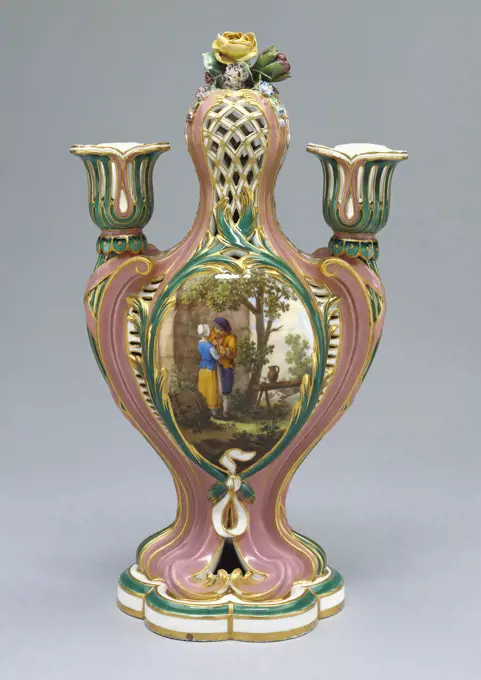
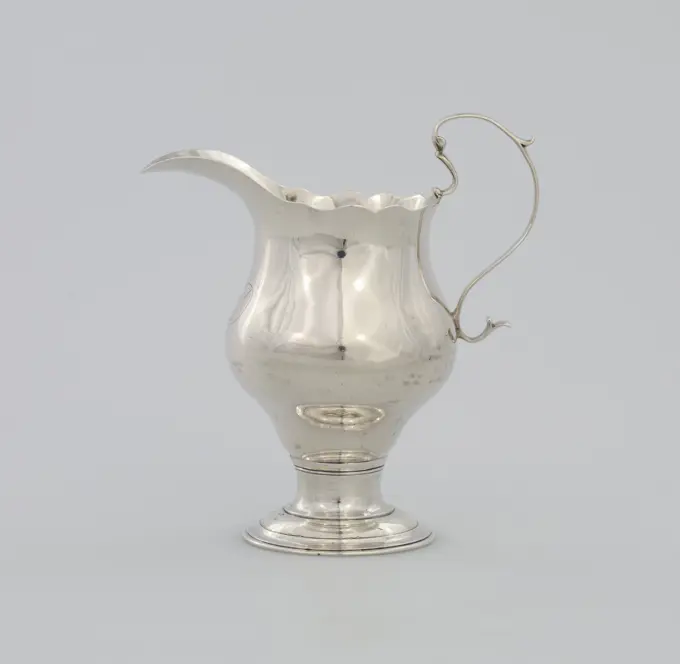
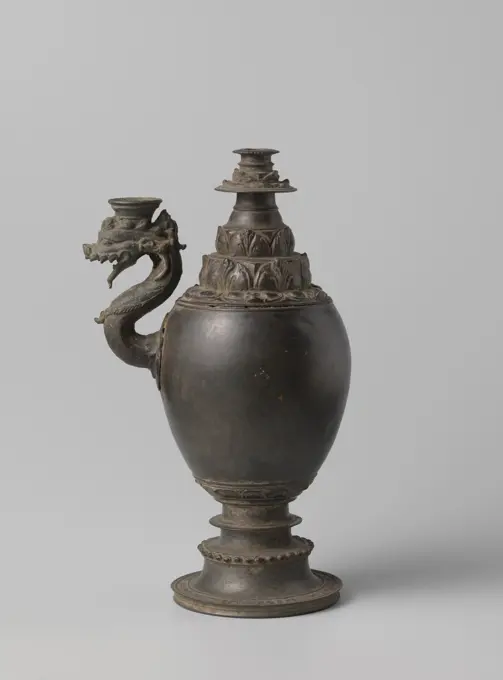
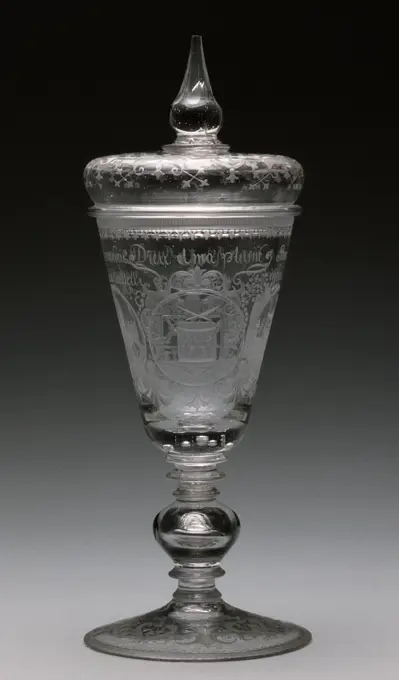
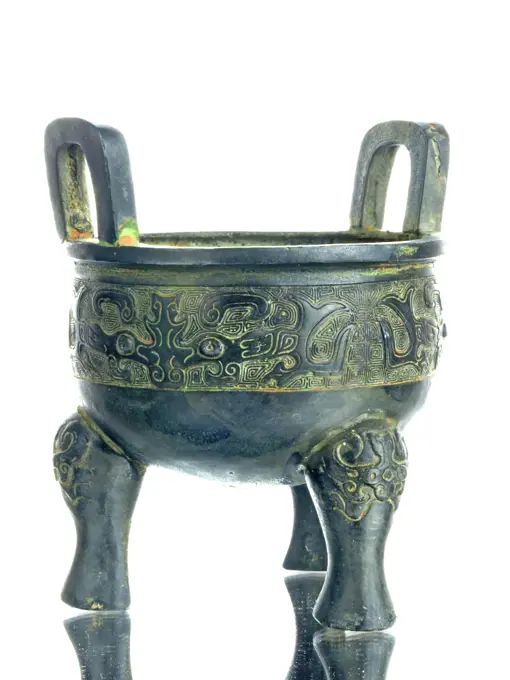
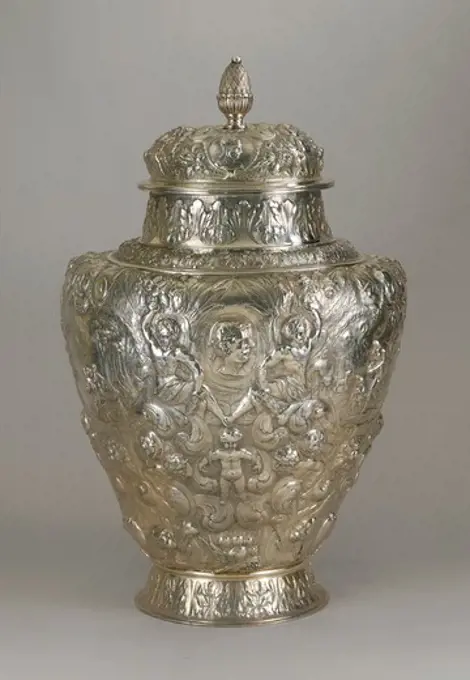
Antique metal candlesticks and ornate cups from various periods, featuring intricate decorations and historical significance, reflecting craftsmanship and artistry.
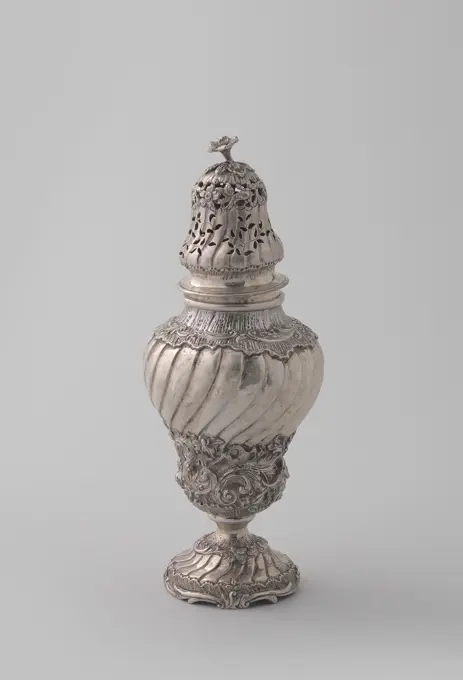
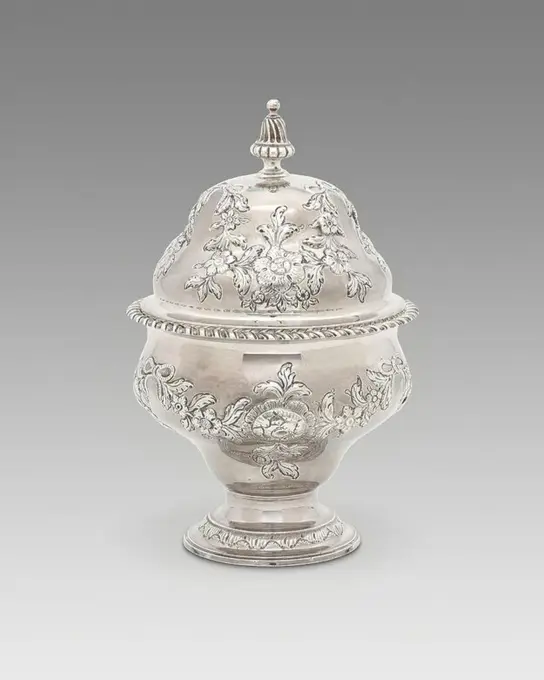
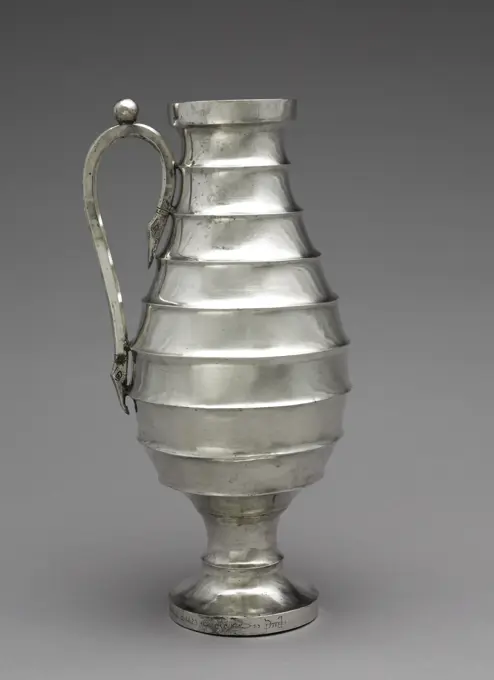
Silver sugar spreader, inverted pear shape on curved foot with twisted openwork cap decorated with driven rocailles, tibulas, flowers and birds., Jan Verdoes (Falsification of), 1746 Silver sugar spreader. The reverse pear -shaped barrel, the vaulted foot and the openwork cap are twisted and decorated with driven rocailles, tiflens, flowers and birds. Haarlem silver (metal) Silver sugar spreader. The reverse pear -shaped barrel, the vaulted foot and the openwork cap are twisted and decorated with driven rocailles, tiflens, flowers and birds. Haarlem silver (metal)
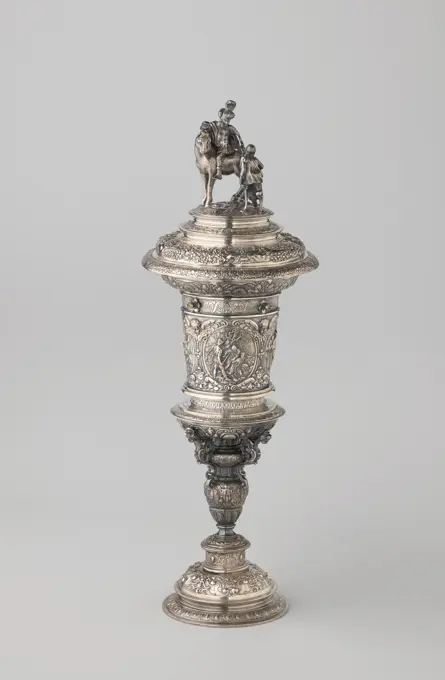
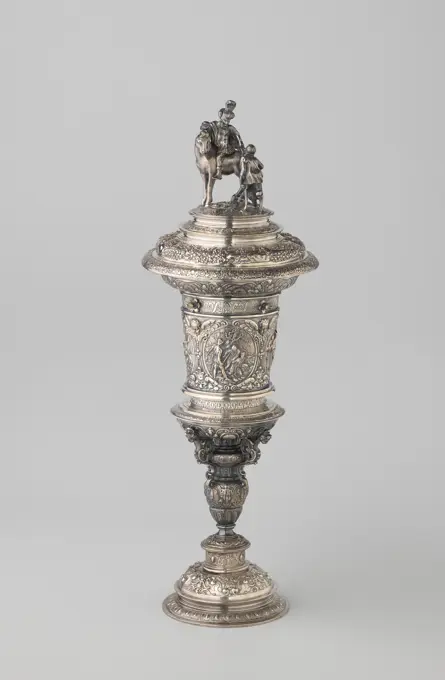
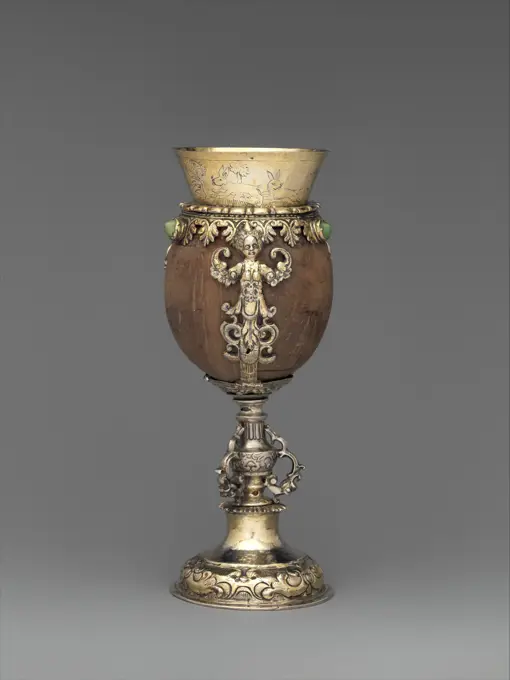
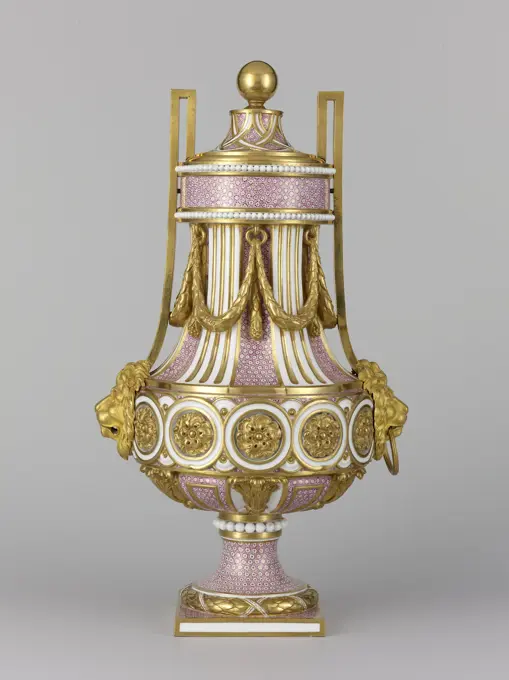
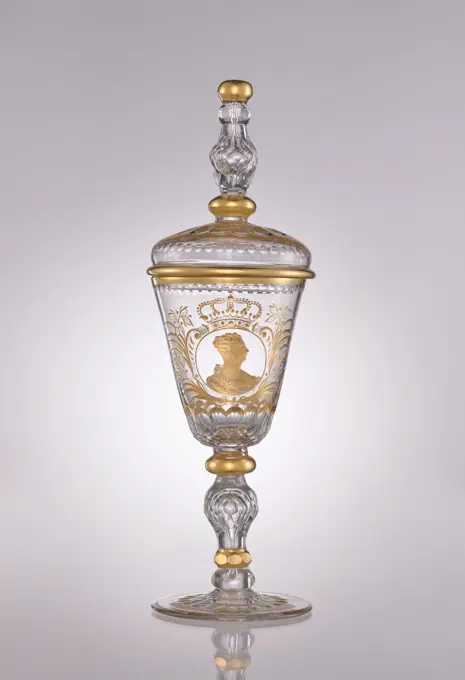
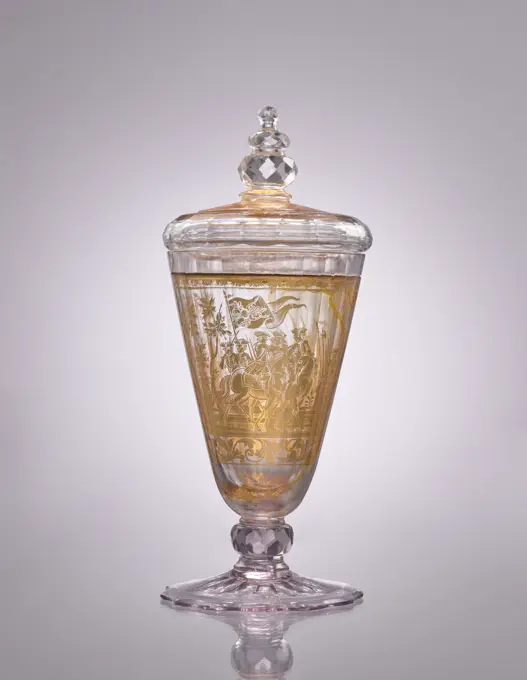
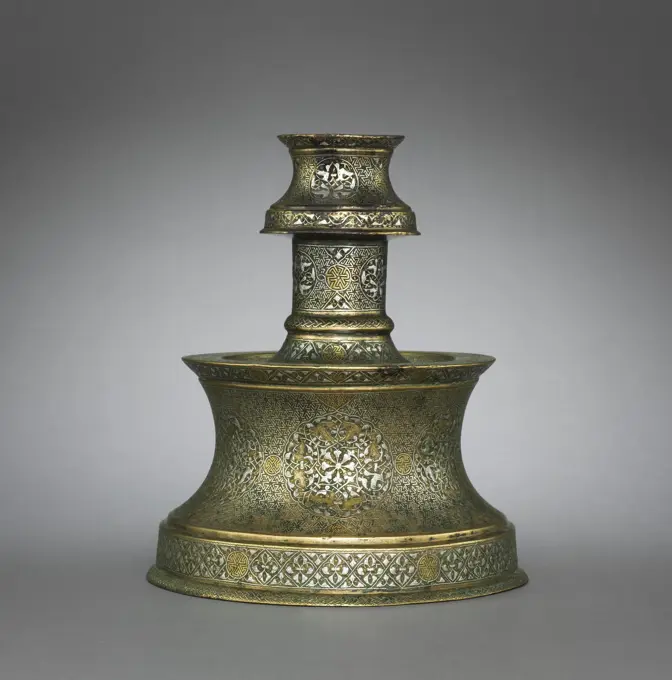
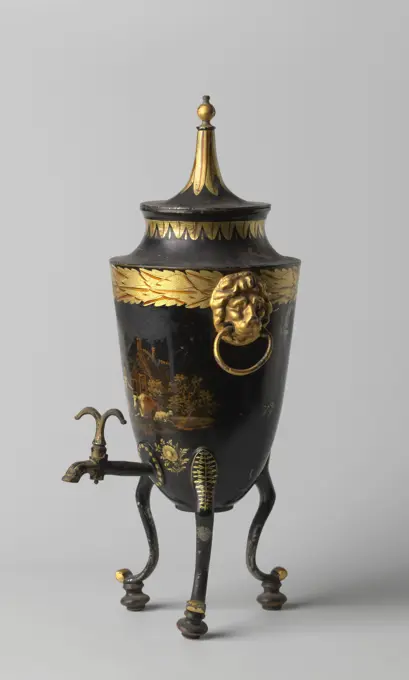
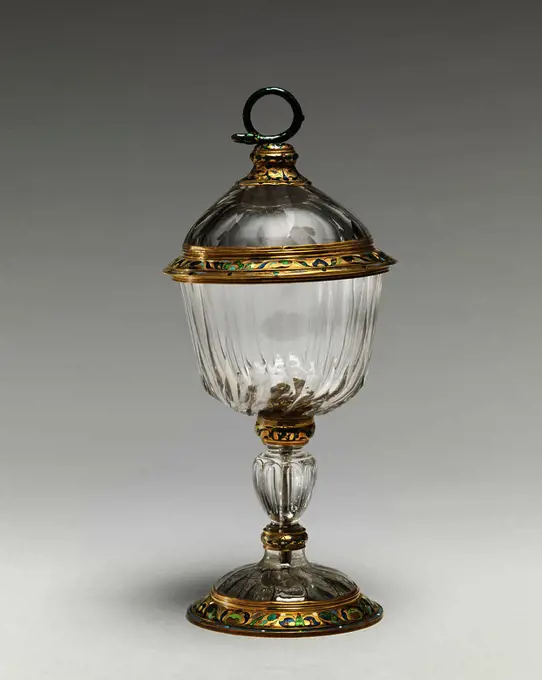
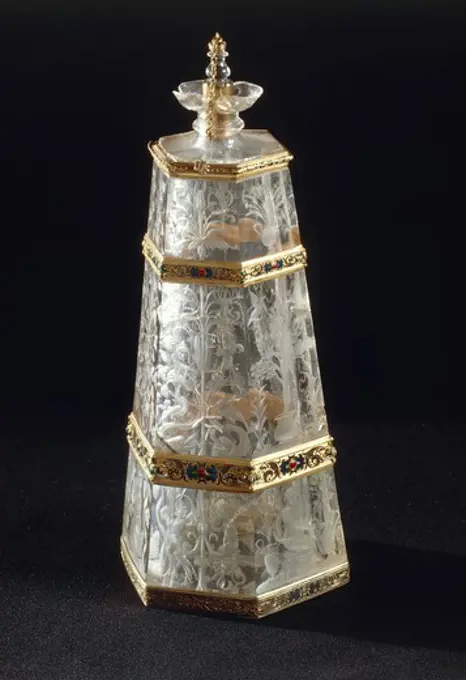
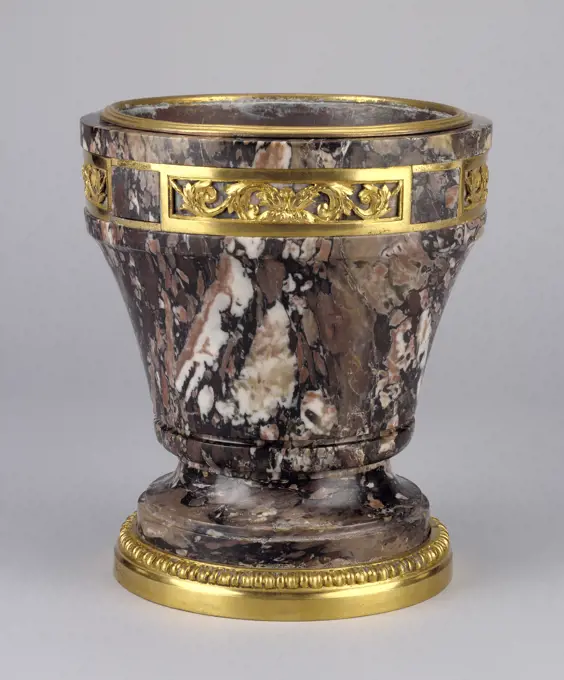
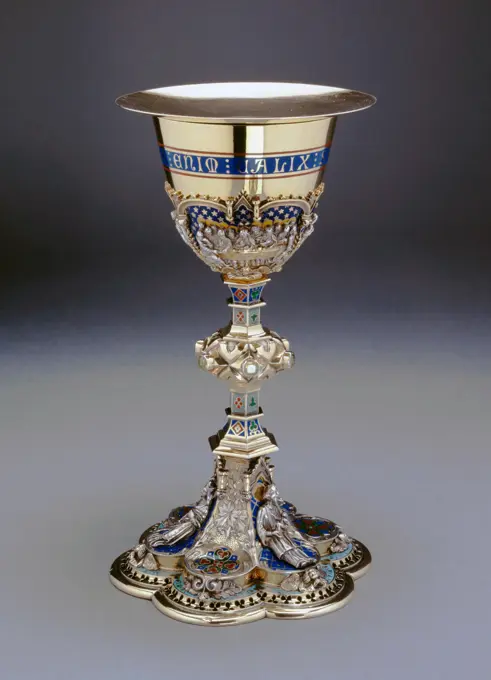
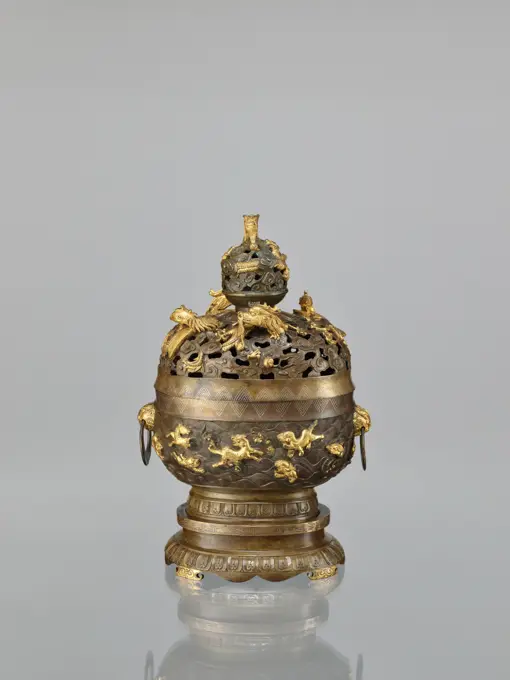
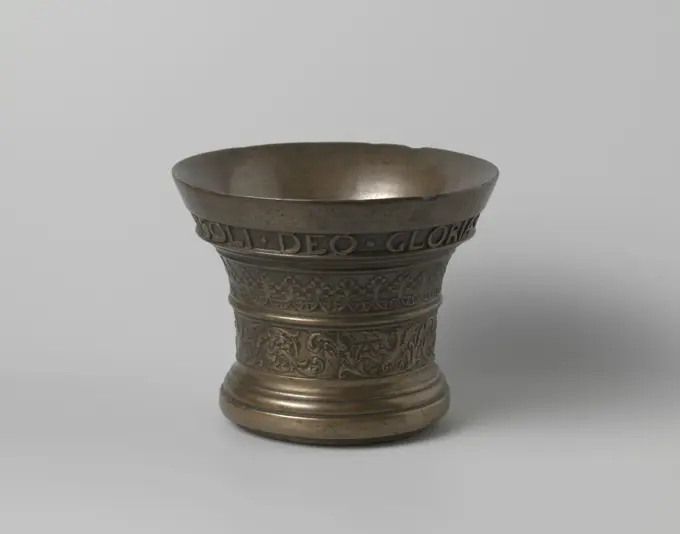
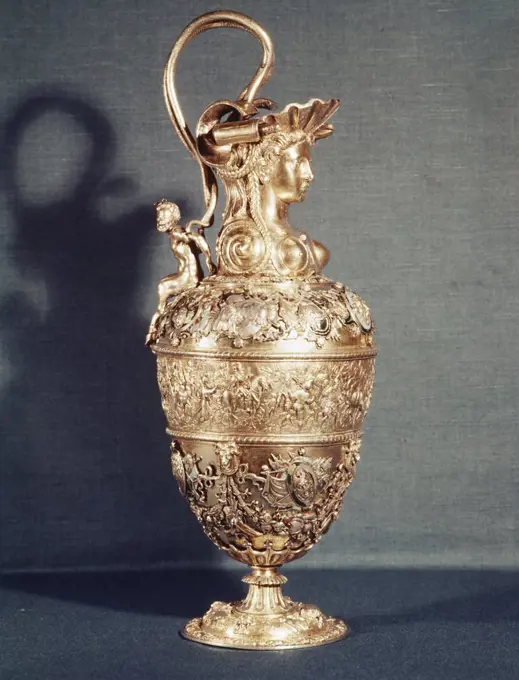
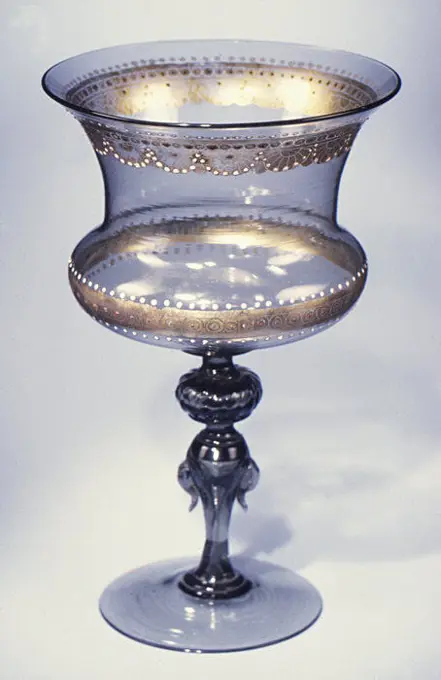
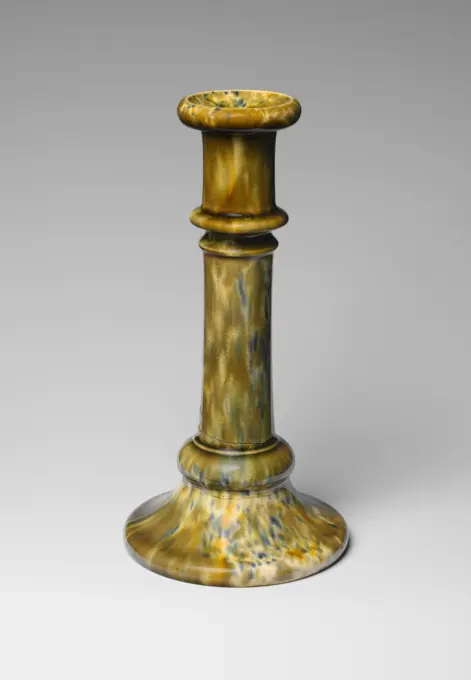
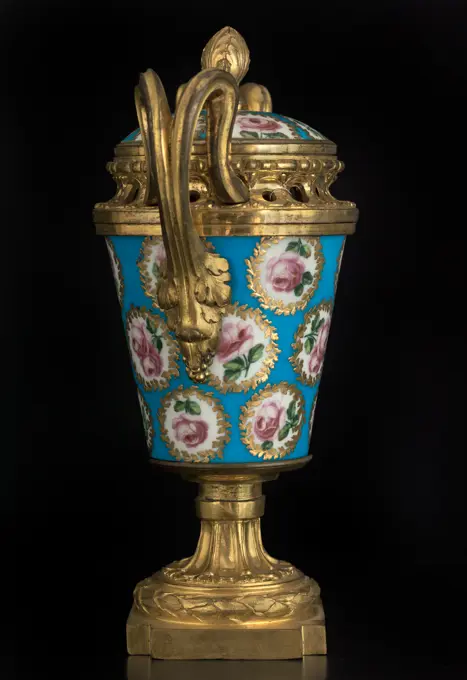
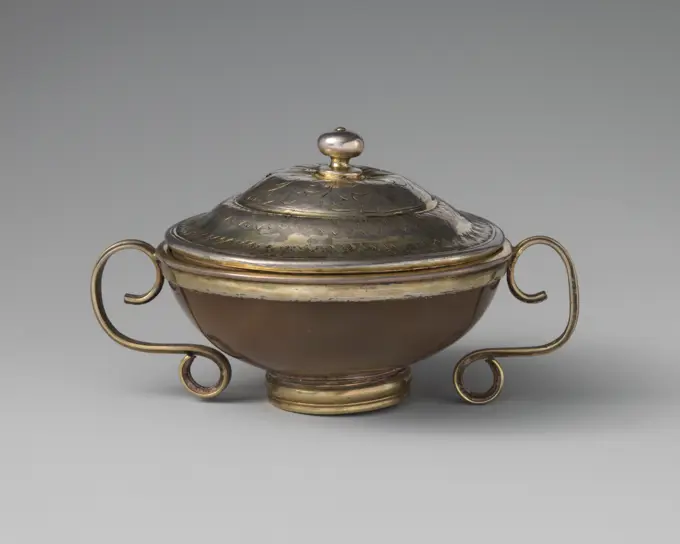
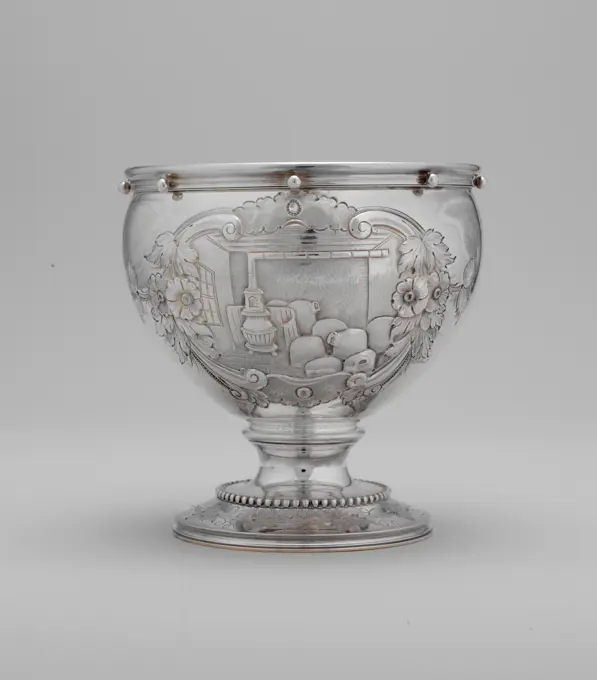
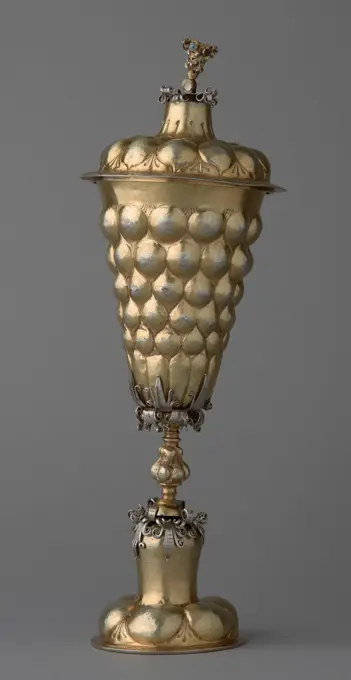
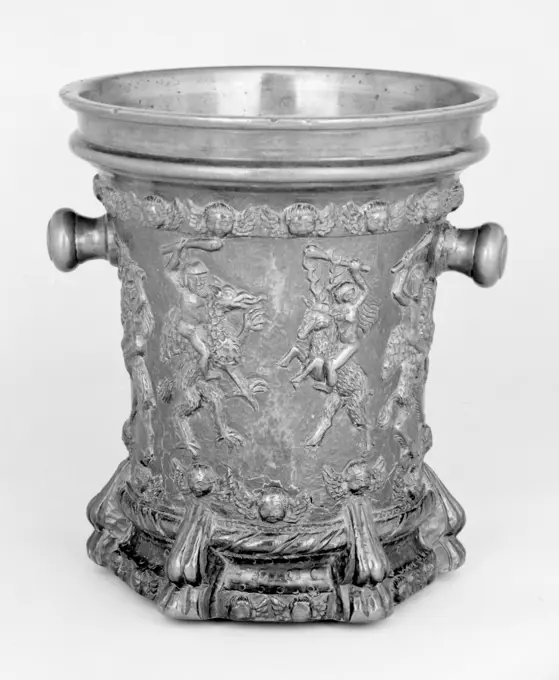
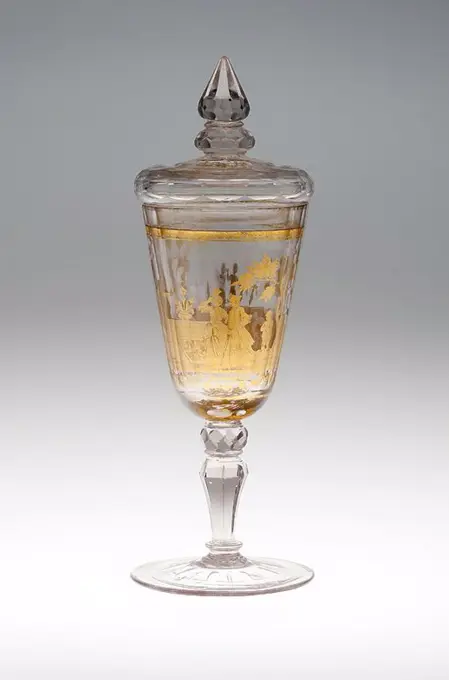
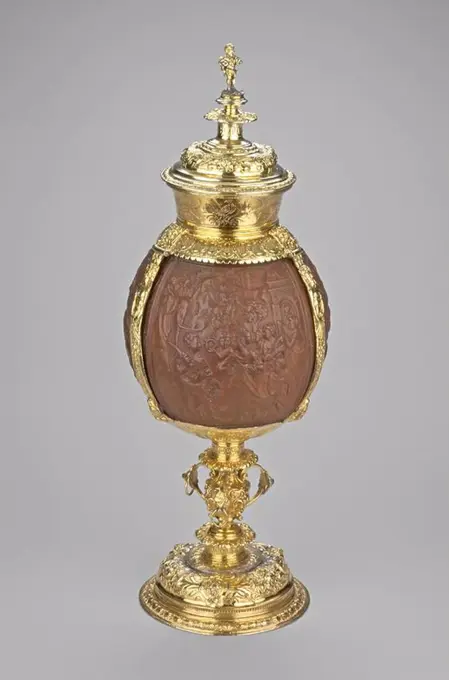
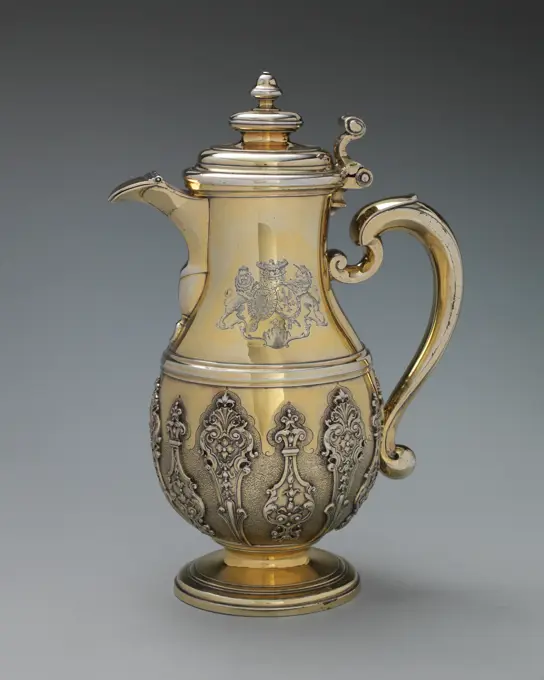
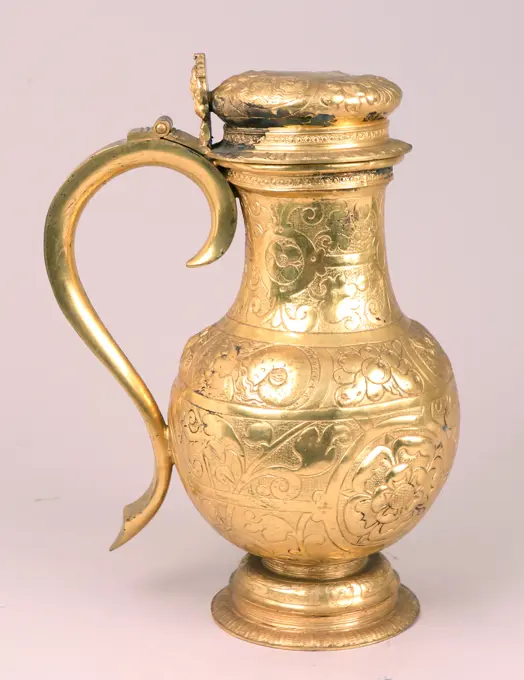
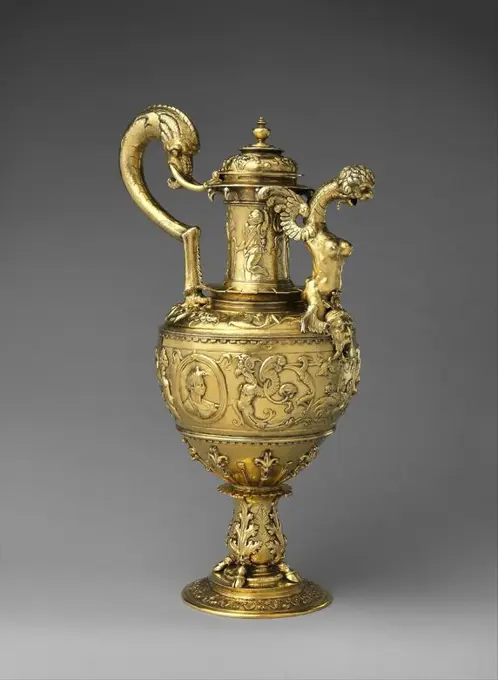
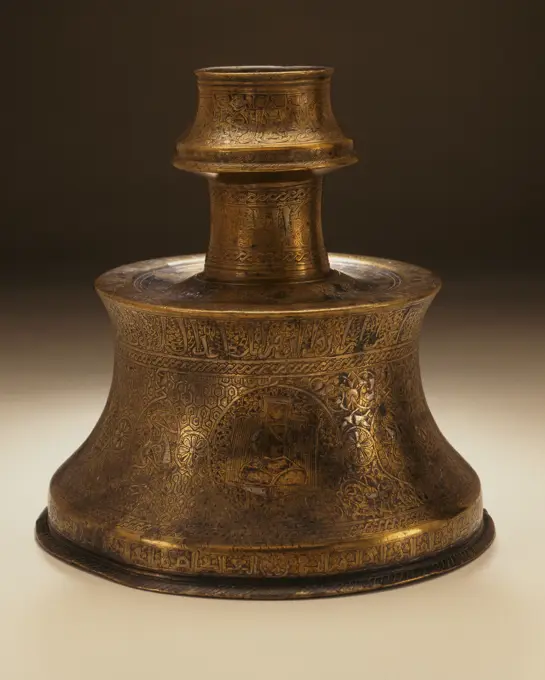
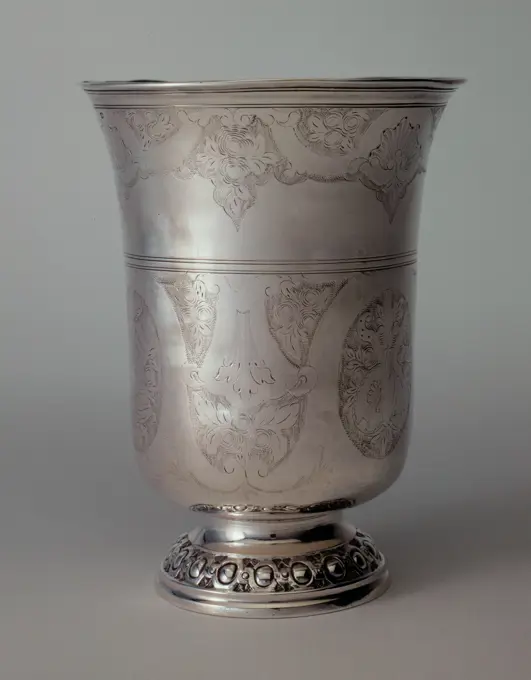
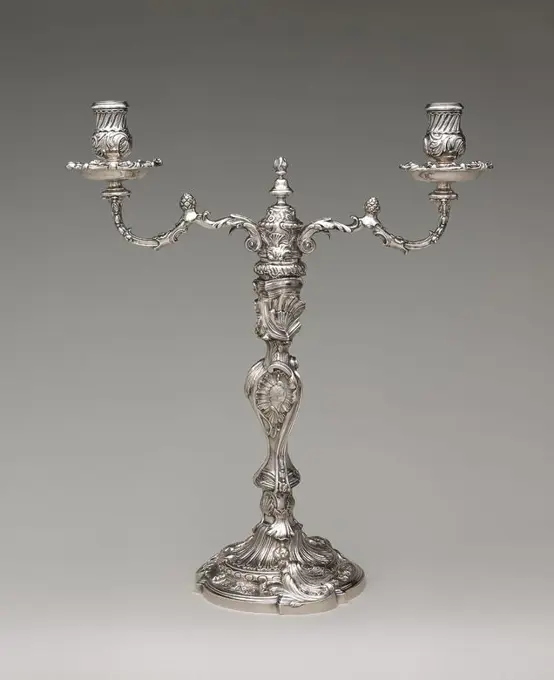
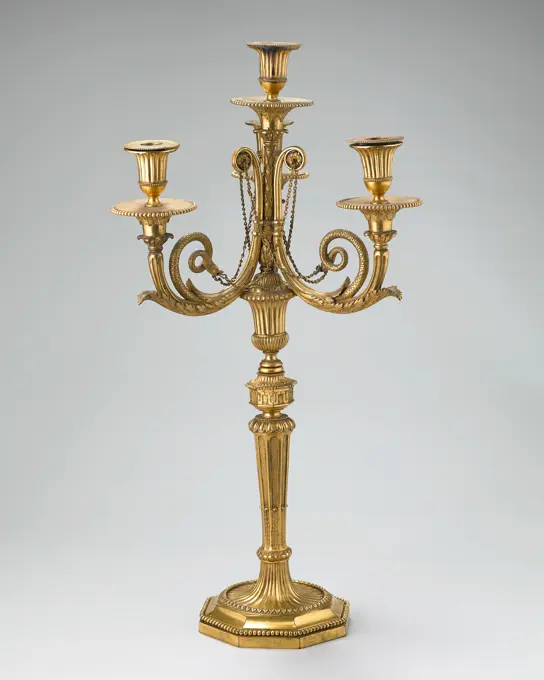
Merchandise, anonymous, c. 1590 - 1596 candlestick Candlestick, four-part consisting of a wide-ranging circular foot decorated with two eggs, a flat fat bowl decorated with egg list, a baluster-shaped shaft with disc-shaped knot on top and bottom and a cylindrical candle holder with two round leakage horses. Netherlands tin (metal) casting  Nova Zembla. Saving HuysGalvanoplastic reproduction of the cup of the St. Maartens or Brouwersgilde in Haarlem, Fa. Elkington & Co., 1881 Galvanoplastic reproduction of the cup of the St. Maartens or Brouwersgilde in Haarlem. The cup decorated with Renaissance ornaments consists of a cuppa, which is placed on a foot with a baluster-shaped tribe and four volutes that end in women's heads. The top of the cuppa has a widened edge, on which a profiled lid rests with a plastic group as a crown, representing Sint Maarten who cuts his cloak in two for a beggar. The middle section carries four oval medallions, interspersed by winged angel heads and other motifs, which display scenes from the life of Saint. This sees the conversion of two robbers, the generation of a boy from the dead, Sint Maarten in the construction of a church and his deathbed. Various ornamental decorations have been applied to the entire object, which include leaf motifs, rolling work, flowerguirles and satyr figures. Londonmaker: NetherlandsdesiGalvanoplastic reproduction of the Cup of the St. Maartens or Brouwersgilde van Haarlem. Galvanoplastic reproduction of the Cup of the St. Maartens or Brouwersgilde van Haarlem. The cup decorated with Renaissance ornaments consists of a cuppa that is placed on a foot with a baluster-shaped trunk and four volutes, which in women's heads end. The top of the Cuppa has a widened edge, on which a profiled lid rests with a crowning a plastic group, representing Sint Maarten who cuts his cloak in half for a beggar. The center piece carries four oval medallions, interspersed by winged angel heads and other motifs, which displays scenes from the life of the saint. They see the conversion of two robbers, the generation of a boy from death, Sint Maarten at the construction of a church and his deathbed. Various ornamental ornamental ornaments have been applied to the entire object, which include leaf motifs, rollerwork, flower gluy sands and satyrfigures.Beaker and Cover 19th century (16th century style) Probably Friedrich Hillebrand German. Beaker and Cover 463412Silver sugar spreader, inverted pear shape on curved foot with twisted openwork cap decorated with driven rocailles, tibulas, flowers and birds., Jan Verdoes (Falsification of), 1746 Silver sugar spreader. The reverse pear -shaped barrel, the vaulted foot and the openwork cap are twisted and decorated with driven rocailles, tiflens, flowers and birds. Haarlem silver (metal) Silver sugar spreader. The reverse pear -shaped barrel, the vaulted foot and the openwork cap are twisted and decorated with driven rocailles, tiflens, flowers and birds. Haarlem silver (metal)Coconut cup ca. 1650 Johannes Fridericus Benedick The hunting scene engraved on the lip may to refer to the cups use after hunting trips when a welcome drink was offered to the most prestigious guests. The decoration is inspired by Virgil Soliss prints, which were available to craftsmen in pattern books. By adding the turquoises, the goldsmith catered to the local taste for the Ottoman. Marked coconut cups from the Hungarian/Transylvanian region are extremely rare. Of the twenty cups preserved at the Hungarian National Museum in Budapest only one is marked.LiteratureJudit H. Kolba. Hungarian Silver: The Nicolas M. Salgo Collection. London, 1996, p. 60, no. 38.ReferencesElemér Kőszeghy. Magyarországi ötvösjegyek a középkortól 1867-ig / Merkzeichen der Goldschmiede Ungarns vom Mittelalter bis 1867. Budapest, 1936, no. 1397 [makers mark.For a coconut cup formerly belonging to a Hungarian aristocratic family, see Judit H. Kolba and Annamária T. Németh. Schätze des Ungarischen Barock. EGalvanoplastic reproduction of a lid to a cup, fa. Vollgold & Sohn, 1533 Galvanoplastic Reproduction of a lid Calling with a jar of Gilded Silver, known as the Pocal Mit Jonas of 156 (see BK-NM-5356-1). Berlin copper (metal). silver (metal) gilding Galvanoplastic Reproduction of a lid Calling with a jar of Gilded Silver, known as the Pocal Mit Jonas of 156 (see BK-NM-5356-1). Berlin copper (metal). silver (metal) gildingGoblet 19th century Italian, Venice (Murano). Goblet. Italian, Venice (Murano). 19th century. Glass. GlassStanding cup with cover. Culture: French, Paris. Dimensions: Overall: 7 × 5 × 3 3/8 in. (17.8 × 12.7 × 8.6 cm). Date: mid-17th century, finial 19th-early 20th century. Museum: Metropolitan Museum of Art, New York, USA.Pair of Vases (Greek vase Daplessis rectified), Manufacture de Sèvres, 1780 Vase of multicolored painted porcelain, with a pink stock with white and golden dots. The vase stands on a round foot on a squint. The vaulted lid has a gilded sphere as a button. The two ribbon -shaped rising ears are bent straight at the top and end up in a lion's head with a ring in the mouth. Hanging garlands along the neck and on the belly is a band with circles within which leaves in relief. The vase is marked. Sèvres porcelain. bronze (metal). gilding (material) gilding Vase of multicolored painted porcelain, with a pink stock with white and golden dots. The vase stands on a round foot on a squint. The vaulted lid has a gilded sphere as a button. The two ribbon -shaped rising ears are bent straight at the top and end up in a lion's head with a ring in the mouth. Hanging garlands along the neck and on the belly is a band with circles within which leaves in relief. The vase is marked. Sèvres porcelain. broPair of Vases (Greek vase Daplessis rectified), Manufacture de Sèvres, 1780 Vase of multicolored painted porcelain, with a pink stock with gold and white dots. The vase stands on a round foot on a square plinth. The vaulted lid has a gilded sphere as a button. The two ribbon -shaped rising ears are bent to the ant straight and end up in a lion's head with a ring in the mouth. Hanging garlands along the neck and on the belly is a band with circles within which leaves in relief. The vase is marked. Sèvres porcelain. bronze (metal). gilding (material) gilding Vase of multicolored painted porcelain, with a pink stock with gold and white dots. The vase stands on a round foot on a square plinth. The vaulted lid has a gilded sphere as a button. The two ribbon -shaped rising ears are bent to the ant straight and end up in a lion's head with a ring in the mouth. Hanging garlands along the neck and on the belly is a band with circles within which leaves in relief. The vase is marked. Sèvres porcCup with cover; Zchlin (glassworks; 1736-1890); 1740-1750 (1740-00-00-1750-00-00);Zofia Dorota Hanoverska (Queen of Prussia - 1687-1757), Portraits, rulersJug. Culture: British, after German, Danzig original. Dimensions: Overall (confirmed): 12 1/16 × 8 1/2 × 6 1/2 in. (30.6 × 21.6 × 16.5 cm). Date: 19th century, after 17th century original.This electrotype is after a seventeenth-century original in the Chéréméteff collection, St. Petersburg, at the time of reproduction. The form is derived from similarly dated examples of Raeren stoneware. Museum: Metropolitan Museum of Art, New York, USA.Goblet and cover. Czechy, creatorCandlestick, 1250-1350. Eastern Anatolia. Sheet brass inlaid with silver; overall: 24.4 cm (9 5/8 in.); diameter of base: 21.3 cm (8 3/8 in.).Sgabello, Chair of Notenhout, Anonymous, 1500 - 1600 Chair of Notenhout, resting on a stand placed in spread, front and backboard, connected by a sport. The front board is decorated with a twisted button flanked by Acanthusvoluten. The backboard and the wide seating rules also wear a button. The back has the shape of an inverted similar triangle with two flat panels. The upper sill ends on both sides in a circle rosette and has a shield with a tree in the middle, and is further decorated with a cartouche and leaf vines in Intarsia. Italy wood (plant material). walnut (hardwood) Chair of Notenhout, resting on a stand placed in spread, front and backboard, connected by a sport. The front board is decorated with a twisted button flanked by Acanthusvoluten. The backboard and the wide seating rules also wear a button. The back has the shape of an inverted similar triangle with two flat panels. The upper sill ends on both sides in a circle rosette and has a shield with a tree in the middle, Cranes Kan Of Blik With Painting of Boertafere, Anonymous, 1800 - 1850 Cranes jug of can. The three legs with wooden, baluster -shaped feet wear a jug with a reversed conical body. At the bottom of the Kan is a crane of copper. Two gilt lion heads have been installed on the sides with a ring in their mouths. The high, tissue lid has a glans -shaped button. The tap jug is painted black and decorated with gold decorations of leaves and flowers. Above the tap is a painting of a landscape with a farmhouse, a farmer, a farmer's and cattle. Netherlands Paws: Wood (plant material). Kraantje: Copper (Metal). Enamel Paint casting / painting Cranes jug of can. The three legs with wooden, baluster -shaped feet wear a jug with a reversed conical body. At the bottom of the Kan is a crane of copper. Two gilt lion heads have been installed on the sides with a ring in their mouths. The high, tissue lid has a glans -shaped button. The tap jug is painted black and decorated with gold decorations of leavPilgrim flask ca. 1680-1700 I.P.S.. Pilgrim flask 236594Covered Cup with Serpent Handle. Dated: c. 1620/1630 (all but stem and mounts); late 16th century (stem); late 19th century (mounts). Dimensions: overall: 23.2 x 10.3 x 10.3 cm (9 1/8 x 4 1/16 x 4 1/16 in.). Medium: rock crystal and enameled gold. Museum: National Gallery of Art, Washington DC. Author: Freiburg-im-Breisgau 17th Century (cup, cover, probably foot, finial with serpent; Probably Italian 16th Century (stem); Western European 19th Century (mounts).Double Cup (Doppelpokal). Germany, Stuttgart, circa 1600. Furnishings; Serviceware. Silver giltGoldsmith's art, Italy, 16th century. Hexagonal rock crystal, enamelled gold, gilt silver flask. Height cm. 26.3Miskelk, anonymous, c. 1500 - c. 1550 The object consists of foot, tribe, nodus and cuppa. A copper edge has been soldered against the copper border, consisting of six pieces. Around the tribe are resp. The bottom strain, the nodus and the upper part applied and sounded. The cuppa placed on a yellow copper rosette has been beaten from red copper and has been told inside. The object is gilded, with the exception of the bottom of the foot. The foot has six lobes with awkward engraved three -pass ornament in Gothic style and a Maltese cross. The foot runs six -square to the middle. The trunk is also built -up. The Nodus has six facets, on which stylized four-leaf rosettes are engraved, and furthermore six bulges with engraved three-pass decorations at the top and bottom. Furthermore, leaf edges have been cast on both sides of the nodus. Germany brass (alloy). copper (metal). engraving / gilding / soldering The object consists of foot, tribe, nodus and cuppa. A copper edge has been soldereTea Urn, 1811-1825. Harvey Lewis (American, 1835). Silver; overall: 39.4 x 25.4 cm (15 1/2 x 10 in.).Lidded Vase, porcelain factory The Hague, c. 1777 - c. 1790 Spherical vase with lid on a square pedestal. The vase has two ears in the form of a satyr head with two curled snakes from his head. One side is decorated with a medallion in which a face on Oudewater, the other side with buildings in a water landscape. Around this a blue distance with "Caillouté" in gold. Marked with a stork in blue on the glaze. N.B. Doornik's soft porcelain painted in The Hague. The HaguePorlaine Company: Doornik porcelain Spherical vase with lid on a square pedestal. The vase has two ears in the form of a satyr head with two curled snakes from his head. One side is decorated with a medallion in which a face on Oudewater, the other side with buildings in a water landscape. Around this a blue distance with "Caillouté" in gold. Marked with a stork in blue on the glaze. N.B. Doornik's soft porcelain painted in The Hague. The HaguePorlaine Company: Doornik porcelainBeaker of Archaistic Design 18th-19th century China. Beaker of Archaistic Design. China. 18th-19th century. Bronze. Qing dynasty (1644-1911). MetalworkCovered Goblet with Male and Female Silhouettes. Germany, Silesia, Warmbrunn; Decorated by Johann Sigismund Menzel (German, 1744-1810). Date: 1790-1800. Dimensions: H. 26.5 cm (10 7/16 in.). Glass. Origin: Germany. Museum: The Chicago Art Institute, Chicago, USA.Pair of Vases (Jardinières); Paris, France; about 1785; Brèche violette with gilt bronze mounts and brass liners;Sugarbowl and cover, pewter, On a wide foot, a bowl with strait sides, decorated with portrait medallions of Caesar Augustus, and laurel garlands. Conical cover with urn finial., The Netherlands, ca. 1800, metalwork, Decorative Arts, Sugarbowl and coverBeaker 9th-11th century Lambayeque (Sicán) (). Beaker 309125Sanctuary lamp Witkiewicz, Kazimierz (1880 1973), HeilbergerCharles Eugène Trioullier. Chalice and coat hook. Museum of Fine Arts of the City of Paris, Petit Palais. 71786-9 Chalice, cut, metal, Patere, vaseCadel from the cover based on;  18th century (1701-00-00-1800-00-00);Sugar Bowl 1850 John C. Moore In 1850, Marshall Lefferts, president of the New York and New England and the New York State telegraph companies, was presented with "a splendid service of plate" to honor his construction of telegraph lines from New York to Boston and Buffalo. It was designed by John C. Moore in the "modern French" style, with floral chasing and rusticated castings. Surmounting the kettle is a figure of Zeus holding lightning boltsan allegory of electricity.. Sugar Bowl 2522Covered Sugar Bowl. Bancroft Woodcock; American, 1732-1817; Wilmington, Delaware. Date: 1765-1775. Dimensions: 18.4 × 11.1 × 11.4 cm (7 1/4 × 4 3/8 × 4 1/2 in.); 361.3 grams. Silver. Origin: Wilmington. Museum: The Chicago Art Institute, Chicago, USA.Mortar and Pestle, Cornelis Ouderogge, 1637 The cast round auger extends upwards, has a high protruding edge and a profiled base, which is applied higher than the bottom of the object. On the edge in Latin Majuskels the inscription Soli Deo Gloria Ovwerrogge Fecit 1637 with punctuates consisting of a window (five times) and an eight -leaf rosette. The wall is divided in two by a profiled rib. The upper Frisian is made up of stylized leaves on inverted triple arcs. The motive of the lower Frisian, repeated more than twice, consists of a bird with spread wings between symmetrical turgery, which consists of two volutes on both sides, the first of which ends in a flower and the second is executed in stylized acanthus leaf. Rotterdam bronze (metal) casting The cast round auger extends upwards, has a high protruding edge and a profiled base, which is applied higher than the bottom of the object. On the edge in Latin Majuskels the inscription Soli Deo Gloria Ovwerrogge Fecit 1637 with punctuaVase (France); Emile Gallé (French, 1846-1904); glass, enamel, goldWater Jug Antiques Vase; Painted by Charles-Nicolas Dodin (French, 1734 - 1803); Sèvres, France; 1759; Soft paste porcelain, pink and green ground colors, colored enamel decoration and gilding; 24.9 x 14.4 x 9.4 cm (9 13,16 x 5 11,16 x 3 11,16 in.)Creamer, c. 1775-1780, Joseph Richardson; Maker: Nathaniel Richardson, active 1785-1791, 4 5/8 x 4 3/8 x 2 3/4in. (11.7 x 11.1 x 7cm), Silver, United States, 18th centuryWijwater vase, Anonymous, 930 - 1300 Wijwater vase (incomplete, part of the top is missing) of bronze. East Java bronze (metal) Wijwater vase (incomplete, part of the top is missing) of bronze. East Java bronze (metal)Decorative vase, with covers; Koenigliche Porzellan Manufaktur (KPM; Berlin; 1763-1918); around 1780 (1770-00-00-1780-00-00);acanthus (ornament), classicism (style), decorative vessels, ribbonsBowl 19th century, after 17th century original British, after Russian original This electrotype is after a seventeenth-century original at Uspenski Sobor (Cathedral Church of the Assumption), Moscow, at the time of reproduction.. Bowl 186608Covered Commemorative Goblet. Germany, Upper Saxony or Silesia, circa 1720. Furnishings; Serviceware. Free-blown and engraved glassEwer with borders with an inscription, anonymous, c. 1200 - c. 1220 Can be decorated from quartz fritry with ties with inscription in Luster and Ingrift in Luster on a surface of Opaak Wit Tin-Lood-Alkilarlaze. is the earthenware. glaze. luster (textile) painting / vitrification Can be decorated from quartz fritry with ties with inscription in Luster and Ingrift in Luster on a surface of Opaak Wit Tin-Lood-Alkilarlaze. is the earthenware. glaze. luster (textile) painting / vitrificationGoblet 19th century Italian, Venice (Murano). Goblet 186207Wine Vessel (Zun) ca. 11th-10th century B.C. China. Wine Vessel (Zun) 61313Candlestick. Culture: German. Dimensions: Height: 10 in. (25.4 cm). Date: 15th century. Museum: Metropolitan Museum of Art, New York, USA.Oval vase with flat lid, decorated with figural scene set in landscape: women and children at a stream. Kinkôzan, Sôbei VII (1867-1927), ceramistCandlestick 1830-70 American. Candlestick 1363Manufacture of Sèvres. Vase mounted. Porcelain, gilded bronze, 1770-1780. Paris, Cognacq-Jay museum. 79737-21 Anse, decorative art, bronze gilded, lid, gilding, manufacture of sevres, flower motif, porcelain, vase monte, 18th 18th 18th 18th 18th 18th 18 centuryStemCupCandlestick (France); fire-gilt bronzeCoffee grinder with brass batter on wooden cupboard, Simon Renard, c. 1700 - c. 1725 The object consists of the cupboard and the drawer, which are made of oak, and are richly provided with copper fittings, the grinding of iron, a funnel and a crank button of yellow buyer and an iron swivel, covered with yellow buyer. The grinding is mounted in the cupboard, the grinding work is mounted against the upper surface of the cupboard, on which the Edam letters are cut in the batter. On the upholstery of the crank the signature: Fait Par Simon Renard Maitre Serrurier A Huy. How Brass (Alloy). Milot and crank: Iron (Metal). Cabinet and drawer: Oak (Wood) striking (metalworking) / forging / cutting The object consists of the cupboard and the drawer, which are made of oak, and are richly provided with copper fittings, the grinding of iron, a funnel and a crank button of yellow buyer and an iron swivel, covered with yellow buyer. The grinding is mounted in the cupboard, the grinding work is mounteMiniature porringer late 17th-early 18th century I.S.. Miniature porringer. German. late 17th-early 18th century. Silver-gilt, agate. Metalwork-Silver-MiniatureStadskan van Tin with lid, anonymous, c. 1550 - c. 1600 Stadskan with Tin lid. On the high, hollow, conical base with a wide position ring, a baluster -shaped body with a straight -up lip edge, where tires are applied to decoration at the widest point of the body, halfway through the neck and the lip edge. The top is closed with a vaulted, round lid with a button in the middle. The lid runs through angular thumb rest and a one-cash hinge into an elongated S-shaped handle. Netherlands tin (metal) casting Stadskan with Tin lid. On the high, hollow, conical base with a wide position ring, a baluster -shaped body with a straight -up lip edge, where tires are applied to decoration at the widest point of the body, halfway through the neck and the lip edge. The top is closed with a vaulted, round lid with a button in the middle. The lid runs through angular thumb rest and a one-cash hinge into an elongated S-shaped handle. Netherlands tin (metal) castingStepped Pitcher, AD 400-600. Sasanian, Iran, 5th-7th Century. Silver; overall: 35.6 cm (14 in.).Vase, ivory, Germany, 1871, Decorative Arts, VaseSlop bowl 1862-63 Wood and Hughes Presented to Christian Dorflinger upon his retirement from the Long Island Flint Glass Works in 1863, this service (2006.90.1-4) is ornamented with meticulously chased scenes of the glassworks itself. The slop bowl is ornamented with a scene of a drying room with a potbelly stove and crucibles. Dorflinger was one of the most successful nineteenth-century American glassmakers, operating several factories in Brooklyn before his retirement. He later established a thriving glasshouse in White Mills, Pennsylvania. The Museum has two important glass items from Dorflinger's Brooklyn period: an 1859 presentation vase (1988.391.1) and an 1861 compote (1972.232.1) made for President and Mrs. Abraham Lincoln.. Slop bowl 1548 Maker: Wood and Hughes, 184599, Slop bowl, 186263, Silver, 5 3/8 x 5 3/16 in. (13.7 x 13.2 cm). The Metropolitan Museum of Art, New York. Friends of the American Wing Fund, 2006 (2006.90.4)Candlestick forming a pair. 13th century. Museum of Fine Arts of the City of Paris, Petit Palais. 24210-4 Religious art, candlestick, email, inlays, Middle AgesPrzeszo Przyszoci Don't,Candlestick with profiled foot and strain, resting on three claw legs. The object is composed of the following parts: the base, trunk and the fat catcher, which are poured into one whole, and the candle pin. The trunk is released from inside to the lower button. The profiled round and rather flattened base is transferred into the round profiled strain with two buttons and then in a fat catcher, on which the short, pivoted candle pin profiled on the bottom is applied. The round-deepened fat catcher has six decorations in the wall, consisting of a perforation in the form of a four-pass. The narrow slightly rising edge of the fat catcher is about in a narrow raised edge with six detailed piered tilting. The candlestick has three cams at the bottom of the inside, to which the claw feet are committed. A tilting is damaged. The pin is shortened.Rinse bowl with painting in gold on royal blue fond with arcade, gothic traces. Rinse bowl of porcelain, part of a crockery, painted in gold on a royal blue fond with a arcade-dowry with gothic traces. The entire surface is plated outside this decor. Brands: See General Record.Mortar ca. 1525 Austrian or Swiss. Mortar 203965Terracotta chalice. Culture: Etruscan. Dimensions: Other: 6 7/8 x 6 11/16 in. (17.5 x 17 cm). Date: ca. 550 B.C..Goblet-shaped cup with frieze of heads of sphinxes in relief. Museum: Metropolitan Museum of Art, New York, USA.Dinos. Culture: Cypriot. Dimensions: 6 7/8in. (17.5cm). Date: 750-600 B.C..Deep bowl on high foot with two handles and panels of triangles and rosettes. Museum: Metropolitan Museum of Art, New York, USA.Candlestick 1830-70 American. Candlestick 1362Mass cup; Schmidt, Samuel Gotthelf (1752 or 1753-1827); End of the 18th century; plaque-around 1755 (1791-00-00-1800-00-00);Salt barrel with flower and leaf vines, Abraham Marshoorn (attributed to), 1711 Salt barrel decorated with driven flower and leaf vines and resting on three legs. The wide, curved foot gradually turns into a convex, turned edge with bowl -shaped center. Haarlem silver (metal) Salt barrel decorated with driven flower and leaf vines and resting on three legs. The wide, curved foot gradually turns into a convex, turned edge with bowl -shaped center. Haarlem silver (metal)Chalice, c. 1450-1480. Hungary, Budapest, 15th century. Gilt silver and filigree enamel; overall: 24.6 cm (9 11/16 in.).Communion set. Central to the Protestant celebration of the Holy Communion is the remembrance of the Last Supper, when Christ and his disciples gathered for the last time. Christ asked that his suffering and death be commemorated with a communal meal. This is why wine is poured into cups and bread is placed on plates during religious services. This communion set from Dordrecht ranks among the most richly decorated altar plate.Ritual bell with handle in the shape of the vajra, 18th century, Unknown Japanese, 7 1/8 × 3 1/8 × 3 1/8 in. (18.1 × 7.94 × 7.94 cm), Bronze, Japan, 18th century, In Esoteric Buddhist ritual, a priest places five bronze bells on the main altar table. Each bells handle is a unique symbolic shape. Together they represent five manifestations of the Buddha that each represents a distinct form of wisdom, the so-called Five Wisdoms of the Five Cosmic Buddhas. The bell placed at the center of the table represents Dainichi Nyorai, the Supreme Buddha of the Cosmos and possessor of complete wisdom. Its handle is shaped like a stupa, a building that holds relics and is a place for meditation. The remaining four bells, including the five-pronged version here, are placed at the four corners of the table to represent the active/unrestricted wisdom of Fukūjōju Nyorai, the mirror wisdom of Fudō Myōō, the equality wisdom of Hōshō Nyorai, and the observational wisdom of Amida Nyorai.WIne Glass and Cover. Bohemia, Czech Republic. Date: 1725-1735. Dimensions: 26 × 8.3 cm (10 1/4 × 3 1/4 in.). Glass with engraved gold leaf decoration. Origin: Bohemia. Museum: The Chicago Art Institute, Chicago, USA.Cup 17th century Swiss, Basel. Cup 193462Coconut Cup with Scenes from the Life of David. English or Netherlandish. Date: 1577-1578. Dimensions: H: 29.5 cm (11 5/8 in.). Silver gilt and coconut shell. Origin: London. Museum: The Chicago Art Institute, Chicago, USA.Kastanjevaas decorated with griffins. Kastanjevaas decorated with griffins.Gravy Boat (1 of 2), 1746-1747. Samuel Wood (British). Silver; average: 10.2 cm (4 in.); lip to handle: 20.4 cm (8 1/16 in.); to handle: 10 cm (3 15/16 in.); to lip: 9 cm (3 9/16 in.).Jug with cover (one of a pair) 1713/14 Simon Pantin I British The arms of later owners Frederick Augustus (1763-1827), Duke of York,and his wife, Frederica Charlotte of Prussia, are engraved on the sides.. Jug with cover (one of a pair). British, London. 1713/14. Silver gilt. Metalwork-SilverFlagon 19th century, after 1612-13 original Elkington & Co. British This electrotype is after a seventeenth-century original (1612-13), at time of reproduction in the Treasury of the Kremlin, Moscow.. Flagon. British, Birmingham, after British, London original. 19th century, after 1612-13 original. Silver on base metal. Metalwork-ElectrotypeCandlestick with profiled foot and trunk, resting on three claw legs, anonymous, c. 1450 - c. 1500 The object is composed of the following parts: the foot, the trunk and the fat catcher, which are cast in one whole, and the candle pin. The trunk is hollow on the bottom to the bottom knot. The profiled round and rather flattened foot turns into the round -profiled trunk with two knots and then in a fat catcher, on which the short candle pin profiled at the bottom is applied. The round deepened fat catcher has six decorations in the wall, consisting of a perforation in the form of a four -pass. The narrow slightly rising edge of the fat catcher turns into a narrow raised edge with six detailed tilts. The candlestick has three cams at the bottom, on which the claw feet are contested. A bilt is damaged. The pin is shortened. Northern Netherlands (possibly) brass (alloy) casting The object is composed of the following parts: the foot, the trunk and the fat catcher, which are cast in one whoCreamer 1785-1800 Daniel Van Voorhis. Creamer. American. 1785-1800. Silver. Made in New York, New York, United StatesSpittoon in Double Bell Design late 18th-early 19th century. Spittoon in Double Bell Design 447094Ceremonial ewer. Culture: Portuguese. Dimensions: H. 17 7/8 × W. 11 1/2 in., Wt. 112.7oz. (45.4 × 29.2 cm, 3194g); Diam. of foot: 5 1/2 in. (14 cm). Date: ca. 1520-50.The ewer exemplifies the individual interpretation of the Renaissance style in Portugal. Its daring juxtaposition of whimsical, exotic and macabre sculptural details attests to the commanding quality of Portuguese design. By combining the extravagant and the bizarre--fabulous beasts, mythological creatures and all too mortal humans, vanitas symbols of earthly fame, beauty and of inevitable death--it mirrors perfectly the period's taste for the odd and the unexpected that was a result of the astonishing successes of Portuguese navigators' voyages of discovery. Very likely a royal commission, the form of the ewer is rooted in the last phase of the Manueline style, named for King Manuel I (1469-1521) that combines details of flamboyant Late Gothic architecture, Italian, as well as Flemish, elements and even references to thCandlestickFlask 801 CE-1100 Syria. Glass . IslamicArgand Lamp. Dimensions: 17 7/8 x 17 x 7 7/8 in. (45.4 x 43.2 x 20 cm). Maker: Attributed to Messenger Company. Date: 1835-40. Museum: Metropolitan Museum of Art, New York, USA.. The low rejuvenating foot of the round vase is decorated with an engraved band of stylized leaf motifs. The vase rests on this, which is made up of a globe body and a high, slightly stretched neck. The body is divided into six oval lobes on the widest point, each decorated with a stylized floral pattern on a punched background. A turquoise is applied in the middle of each floral pattern. Six peacocks, seen from the front, are shown below this edge of six lobes. They are separated by flowers. Above the lobe edge there are alternately three masks and three dragonflies. This richly ornamented portion curls to the top, wherein an ear is formed above each dragonfly. Through realistic shown nails and even sets of holes as for the closure of a buckle, zone reminiscent of rolling leather is awakened in this rollerwork. From this the slender neck rises, which is characterized by a pronounced hammering structure. For a moment under the narrowest part, the neck is decorated with three turquoiseCandlestick. Eastern Anatolia, mid-13th century. Metal. Brass with silver inlayPierre-Antoine Famechon. "Cup". Money. 1788-1789. Museum of Fine Arts of the City of Paris, Petit Palais. 74381-24 Money, silverware, gobletCandelabrum (one of a pair). Culture: British, London. Dimensions: Height: 15 1/4 in. (38.7 cm). Maker: David Willaume II (British, 1693-1761). Date: 1742/43.The modeler of these candlesticks, influenced by contemporary French designs, has endowed the usually static form with an organic, upward-sweeping energy. Although the rococo style in England developed its own distinctive character, it remained strongly associated with France and French taste. Museum: Metropolitan Museum of Art, New York, USA.Moss agate and enamel stem cup ca. 1660 South German, probably Augsburg. Moss agate and enamel stem cup 460539Turban Helmet. Culture: Western Iranian, in the style of Turkman armor. Dimensions: H. 11 1/2 in. (29.2 cm); Wt. 3 lb. 5 oz. (1496 g). Date: late 15th century.Helmets of this type are usually called turban helmets because of their large bulbous shape and the flutings that imitate the folds of a turban. Because certain dervish groups wore turbans wound with a prescribed number of folds to represent an important mystical number, it is likely that turban helmets were regarded not merely as armor but also a kind of religious insignia, their very shape marking the wearer as a fighter in the Holy War. Turban helmets, together with mail-and-plate armor of matching decoration, were intended for the heavy cavalry and are recorded as early as the fourteenth century. This example appears to have belonged to the dynasty of the Ak-Koyunlu (White Sheep Turkoman) that ruled northwestern Iran and Anatolia in the fifteenth century. The inscriptions, damascened with gold and silver, glorify temporal ruCloches (dish covers), coolers, soup tureens, sauceboats, salt cellars, pepper and mustard pots, Jean Baptiste Claude Odiot, c. 1819 Empire terrine of gilded silver. Oval flat dish with lid, worn by two kneeling angels on an oval base. This is on legs in the form of four female semi -figures on lion's claw. Engraved with the alliance weapon Potemkin. Paris silver (metal). gilding (material) gilding Empire terrine of gilded silver. Oval flat dish with lid, worn by two kneeling angels on an oval base. This is on legs in the form of four female semi -figures on lion's claw. Engraved with the alliance weapon Potemkin. Paris silver (metal). gilding (material) gildingAnonymous, three -branched candelabra (main title). Golden bronze. Petit Palais, Museum of Fine Arts of the City of Paris.anique chinese smoking pot. chinese smoking potAttributed to Circle of Guglielmo della Porta, Cup with Allegorical Scenes and Shields of Este Arms, 1560s Cup with Allegorical Scenes and Shields of Este ArmsCandlestick Base with Interlacing Dragons. Dimensions: H. 9 3/8 in. (23.75 cm)Diam. 13 9/16 in. (34.4 cm). Date: early to mid-13th century.The central band of three densely decorated zigzag bands consists of pairs of confronted winged dragons with knotted serpentine bodies, feline forelegs, and tails ending in interlacing dragons' heads. The dragon with an open mouth and knotted snakelike body may relate to the devastating pseudo-planets al-Jawzahr and Nawbahr, which were thought to cause solar and lunar eclipses by devouring the sun and moon. It has also been connected to ancient Central Asian and Mesopotamian beliefs regarding dragons, which have been subject to a range of interpretations, from potency to royalty and harmony to protection. Such meanings are confirmed by the benedictory and apotropaic inscriptions, as well as the luxurious medium. Museum: Metropolitan Museum of Art, New York, USA.Spittoon, 1700 - 1800  Wagging with gold -plated foot and a trumpet -shaped mouth and a black lacquered convex belly decorated with three cartouches in relief, representing pagodas and a figure in a boat in the midst of a traditional Chinese landscape with trees and birds. The inside of the mouth is engraved with peonies, butterflies and a bird. Tonkin . casting  Vietnam. CantonSilversmith's art, Great Britain, 17th century. Embossed silver vase with lid decorated with mythological figures, London, 1693.Bowl with cover probably 19th century Italian, Venice (Murano). Bowl with cover. Italian, Venice (Murano). probably 19th century. Glass. GlassCover of a vase, painted with flower and leaf vines on a black stock, Meissener Porzellan Manufaktur, c. 1715 Lid of red Böttger-SteenGoed. The lid has the shape of the neck of a vase with a vaulted lid with a button. The neck is provided with profiles on the top and bottom and has an all-round rooted band in relief in the middle. The lid is completely covered with a black glaze, also on the inside. The multicolored painting in white, blue, red, green, purple and black is equipped with cold lacquer and gold and consists of flower and leaf vines on the neck under the relief band and an ornamental frieze in gold above it. Remnants of a multi -colored painting are visible on the curved part of the lid. The profiles are largely gilded. Halfway the button runs a deepened golden trim. The lid is not marked. Float stoneware lacquering Lid of red Böttger-SteenGoed. The lid has the shape of the neck of a vase with a vaulted lid with a button. The neck is provided with profiles on the top and bo