Historic Pottery and Ceramics

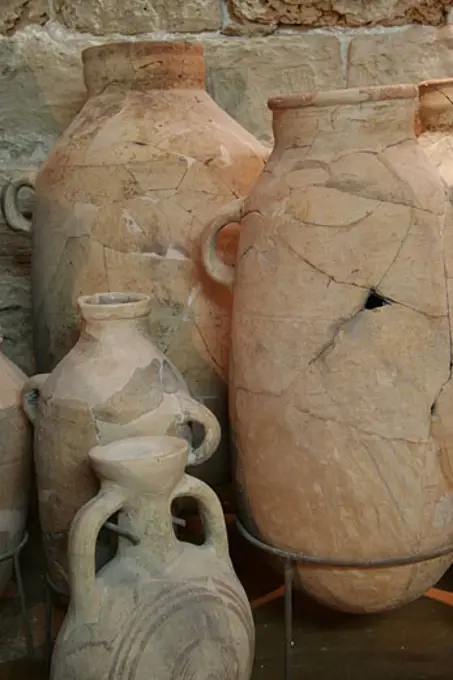
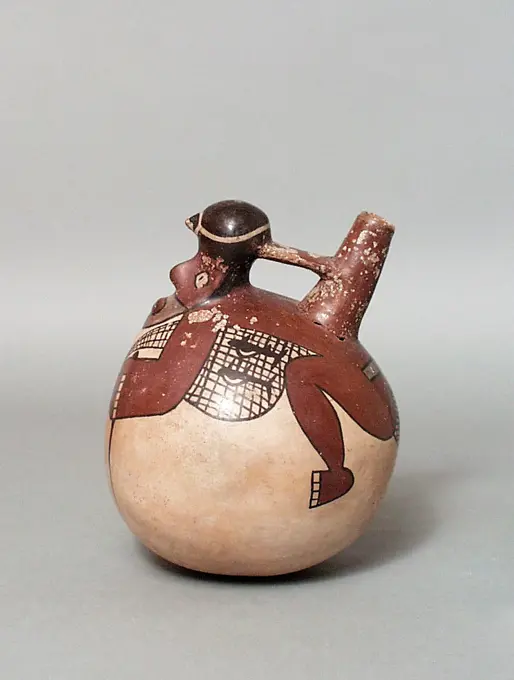
An assortment of ancient pottery including jars and flasks from different cultures, highlighting unique shapes, textures, and historical significance.
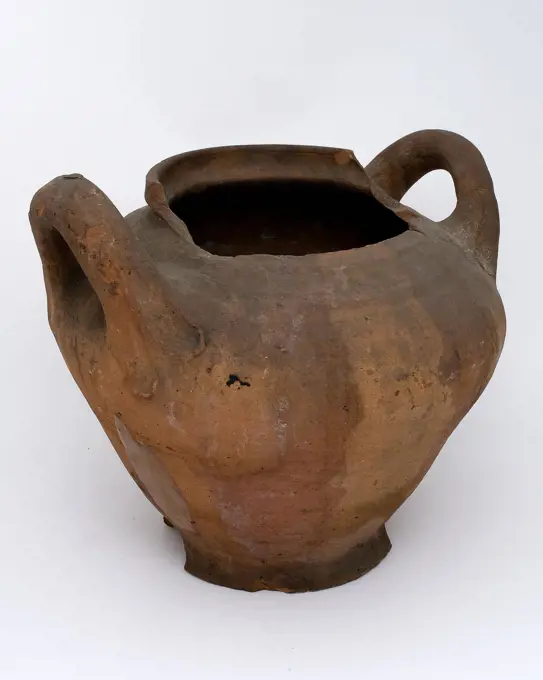
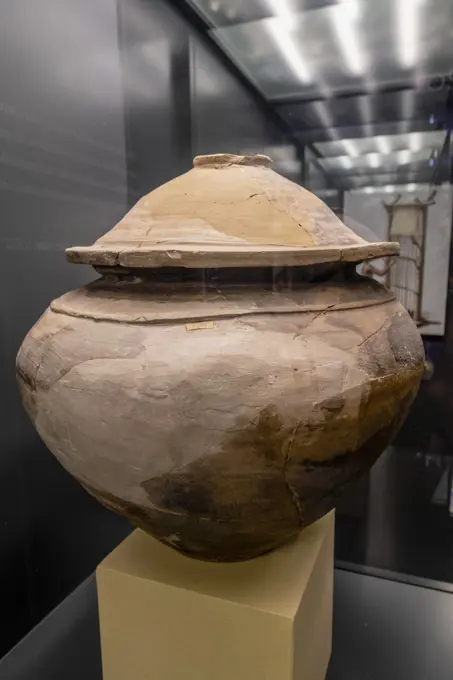
Pottery cover on stand, with two lying, high ears, unglazed, aspot cover pot holder soil find ceramic pottery, hand-turned baked Pottery cover up red shard unglazed two upwardly hung horizontally placed sausage stand. Sphere model narrowing downwards. Small neck opening with short, upright top edge Top edge with collar on the outside Glaze tears on the underside archeology indigenous pottery extinguish heating fireplace
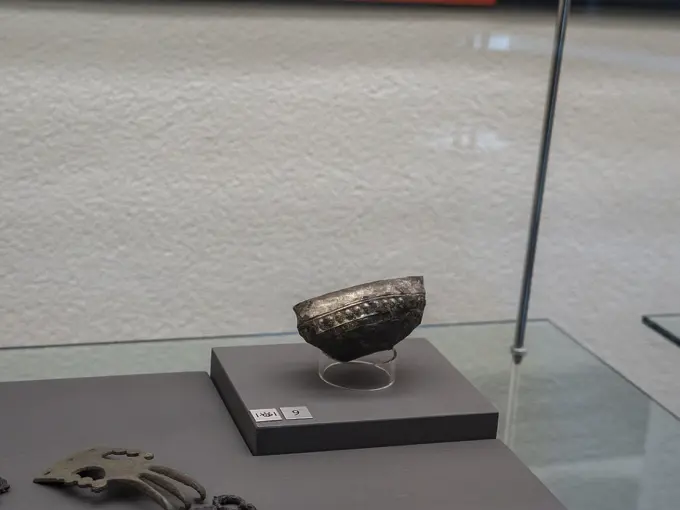
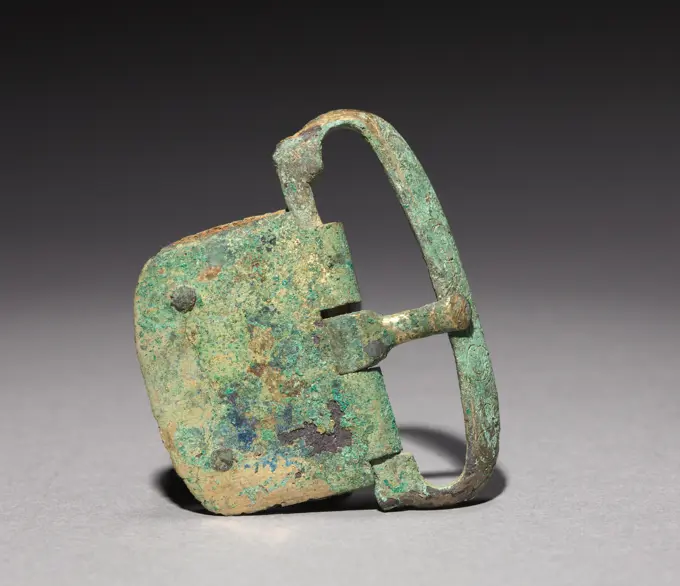
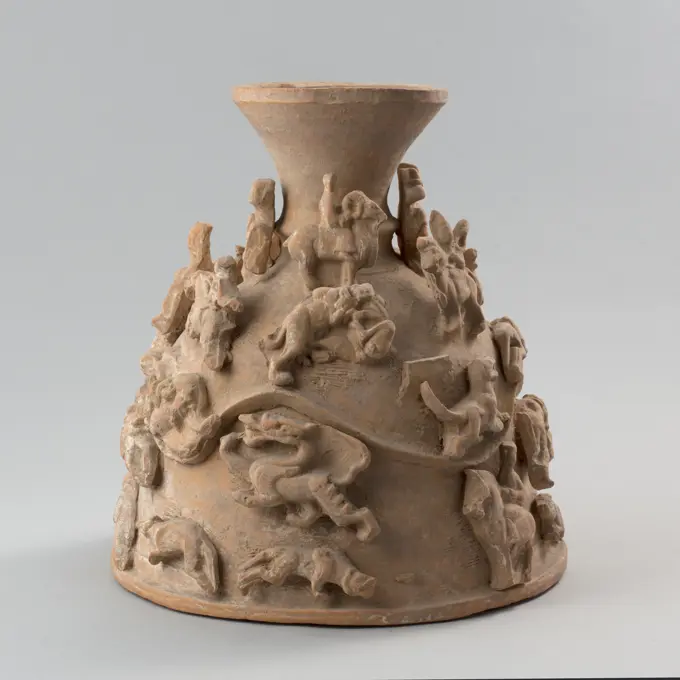
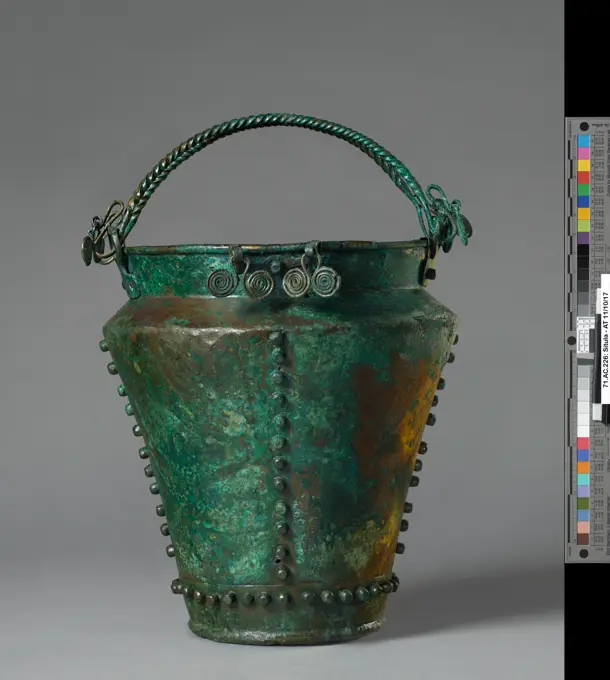
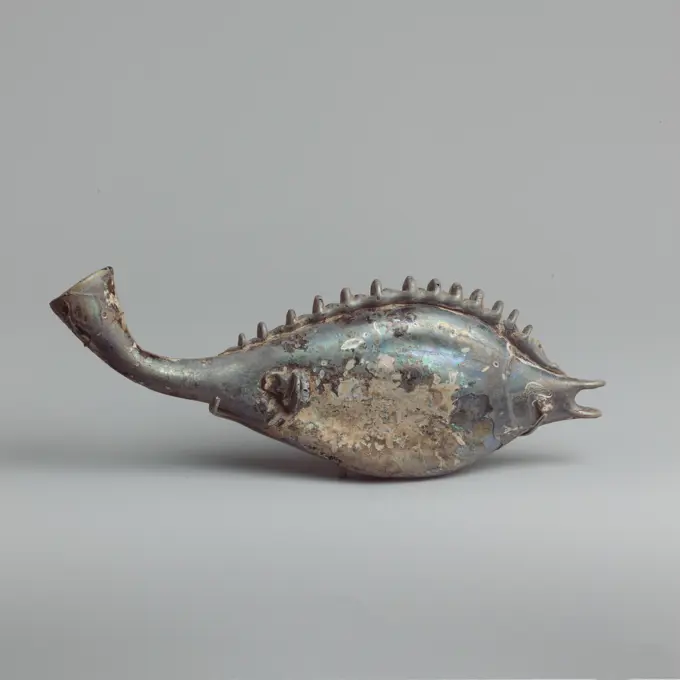
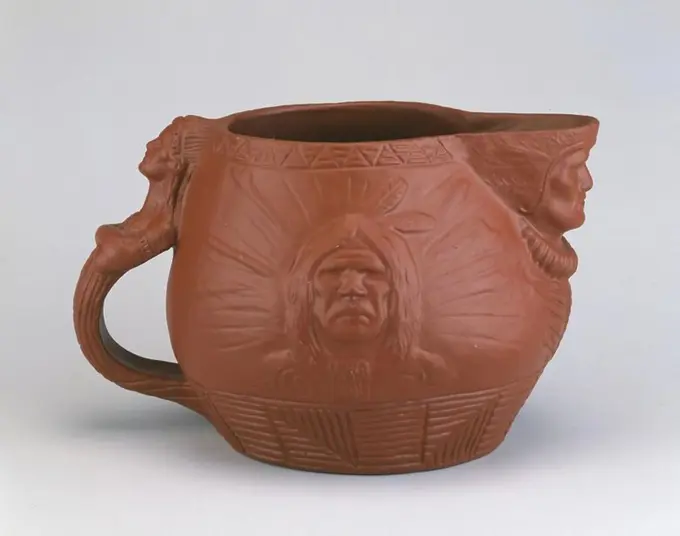
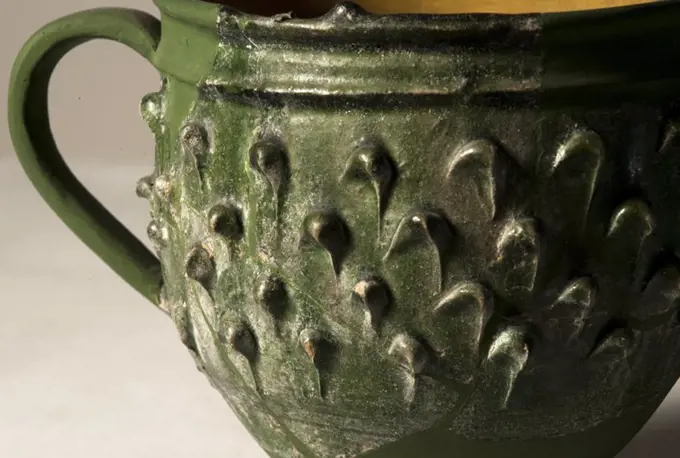
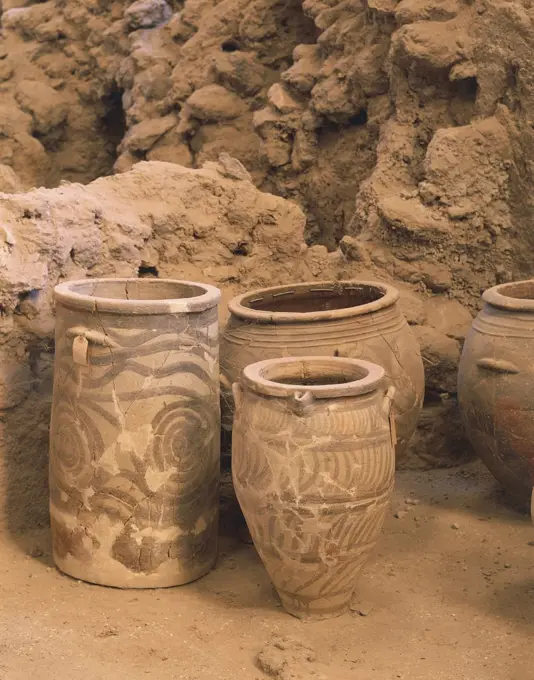
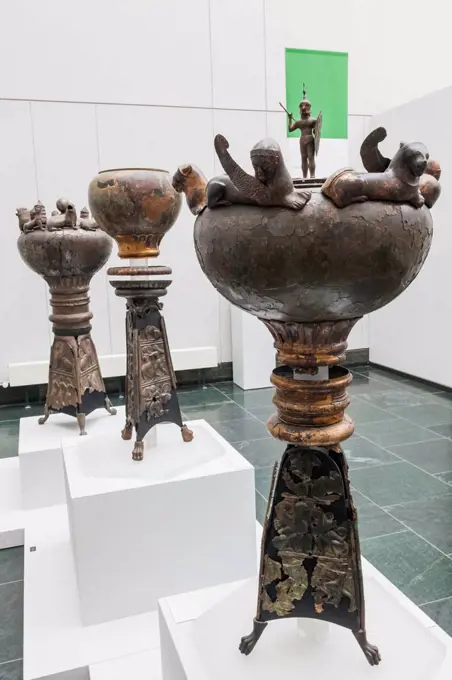
Bowl with Repeating Inscription, "Happiness" 9th-10th century The bowls is painted in a combination of yellow-staining and non-staining black. The inscription repeatedly wishes "happiness", and the form of its foliated terminals is typical of Nishapur.. Bowl with Repeating Inscription, "Happiness" 449548TIESTO PARA RECOGER LA RESINA DE LOS PINOS - S XX ARTE POPULAR -. Location: ALFARERIA. MARRATXI-PORTOL. MALLORCA. SPAIN.Box probably 11th century This metal box was excavated at the site of Tepe Madrasa in Nishapur. Nishapur was a vital city in the early and middle Islamic periods, located along one of the main trajectories that connected Iran and West Asia Islamic lands with Central Asia and China. These itineraries are often referred by the term Silk routes but were in fact crucial to the movement of constellations of materials and objects, as well as people and ideas. The diverse population of Nishapur and its surroundings, from the better-researched elite groups of merchants, land-owning aristocracy, and literates, to the less-known artisans, farmers, miners, and servants, were instrumental in adapting global cultural trends to create their own distinctive visual languages. This is seen in the material remains of everyday life in medieval Nishapur  from pots and pans to lighting devices, inkwells, textiles and trimmings, jewelry, games and toys, talismanic devices, weapons, coins, and architectural Celtibera Aufbewahrungsgefäß Celtibera storage jar, cooked clay, Contrebia Leucade, Aguilar del Rio Alhama, Museo de la Romanización, Calahorra, La Rioja , Spain, Europe Copyright: xZoonar.com/BartomeuxBalaguerxRotgerx 22945834Bell Possibly Borneo n. d.Pot from the Urnfield culture, 1300 BC-750 BC. Artist: UnknownShallow decorated pottery bowl or dish. Berber (Rif), Morocco, North AfricaOld Arabic metal pitcher Museum of Navarra, Pamplona, Navarra,Spain.Jug for Molasses. Dated: c. 1938. Dimensions: overall: 37.6 x 30.3 cm (14 13/16 x 11 15/16 in.) Original IAD Object: 9 1/8" High approx 8" Dia(base). Medium: watercolor, graphite, and gouache on paper. Museum: National Gallery of Art, Washington DC. Author: Charles Caseau.Cylinder;  IX-XI century (801-00-00-1100-00-00);Semerau-Siemianowski, Władysław (1849-1938), Semerau-Siemianowski, Władysław (1849-1938)-collection, gift (provenance), Islam (culture), art of IslamBelt Buckle, 1100s. Korea, Goryeo period (918-1392). Bronze gilt; overall: 4.8 x 5.5 cm (1 7/8 x 2 3/16 in.).Base for funeral lamp ". Terracotta. Dynasty of Han de l'Est (206 BC at 220 AD). Paris, Cernuschi museum. 157046-30 Asian art, Chinese art, han, east dynasty, funeral lamp, base, terracottaThe Mizgaga Museum at NahsholimSingle Spouted JarFragment of a Situla. UnknownKylix, V to III bC, Carada necropolis, Iberian Museum of Jaén, Andalusia, Spain.Glass flask in the form of a fish 3rd century A.D. Roman Uncertain color (probably colorless); trails in same glass.Rounded, thickened rim; neck bent upward to form tail, tapering towards body; body flattened into irregular lentoid shape; bottom drawn out in two solid projections to form mouth.Fine trail wound once round neck; another trail wound once around lower body to form gills; between gills and mouth, two applied blobs for eyes, one on each side of body; long thick trail applied to upper edge of body from behind mouth to base of neck, pinched into thirteen flat, projecting flanges, for dorsal fin; and two large blobs, tooled into vertical, flat flanges, applied to top of body as rear fins (these are anatomically incorrect).Intact; pinprick bubbles; severe pitting and weathering, with most of surfaces covered in a grey, enamel-like weathering layer and some patches of brilliant iridescence.Glass containers in the form of a fish were probably made in the Syro-Palestinian region. WCERAMICA DE FIGURAS ROJAS. Location: MUSEO ARQUEOLOGICO-CERAMICA GRIEGA. GRANADA. SPAIN.Broken, patched clay jug stands on dusty ground next to lumps of clayPitcher. Designed by Edward Kemeys; American, 1843-1907; Made by Joseph Green (dates unknown); Ottawa, Illinois. Date: 1885-1895. Dimensions: 14.3 × 22.9 cm (5 5/8 × 9 in.). Earthenware. Origin: Chicago. Museum: The Chicago Art Institute, Chicago, USA.Jar 7th-6th millennium B.C.. Jar 327118Cristal Romano. Torre Llauder. Museo de Mataró.CANTARO SEMIVIDRIADO-S XX ARTE POPULAR. Location: ALFARERIA. BURGOS. SPAIN.cinerary urns, Castellones de Ceal, Hinojares, Iberian culture, Archeological Museum. Úbeda, Jaén province, Andalusia, Spain.Portland Vase, a Roman cameo glass vase. Dated 1st CenturyGreece - Cyclades Islands - Santorini Island. Akrotiri Excavations, Terracotta Pithoi (large storage jars)Ancient vases set isolated on black background. Vector cartoon illustration of antique pottery, vessels with cracks and ornament patterns, brown clay jar, amphora, ceramic urn, history museum exhibits. Ancient vases set isolated on black backgroundGermany, Bavaria, Munich, Glyptothek and State Collections of Antiquities Museum, Exhibit of Greek Bronze Vessels from Perugia in Italy dated 540 BCRoman vase icons set cartoon vector. Ancient greek or roman ceramic. Archaeological artifact. Roman vase icons set cartoon vector. Ancient greek or roman ceramic