Historic Pottery Vessels

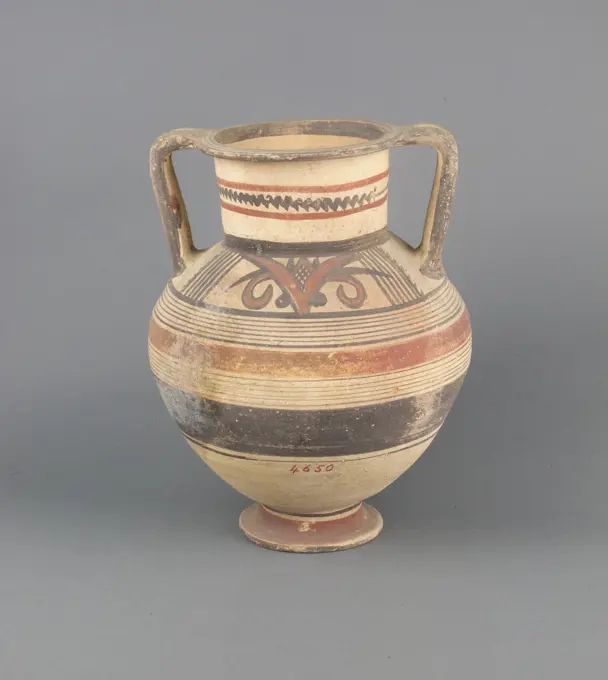
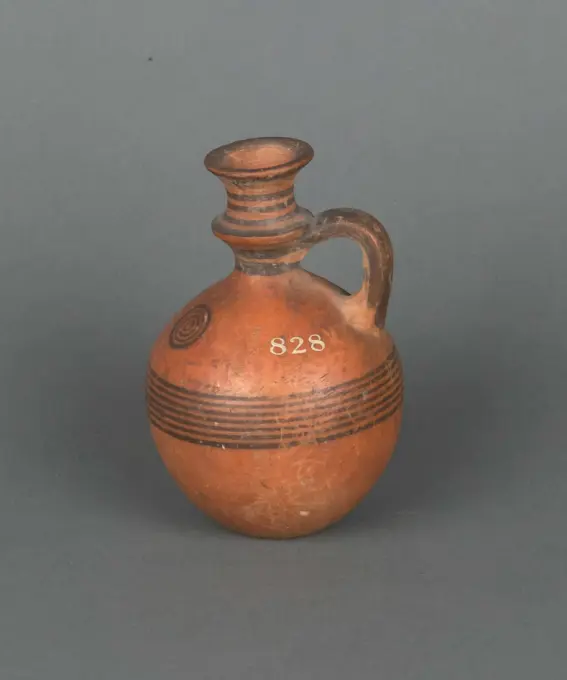
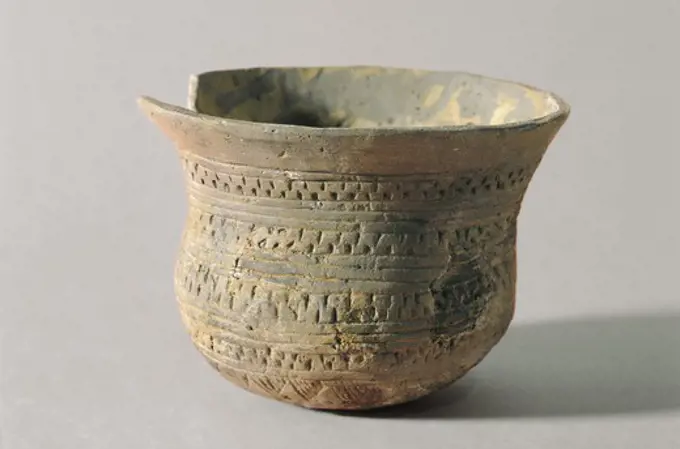
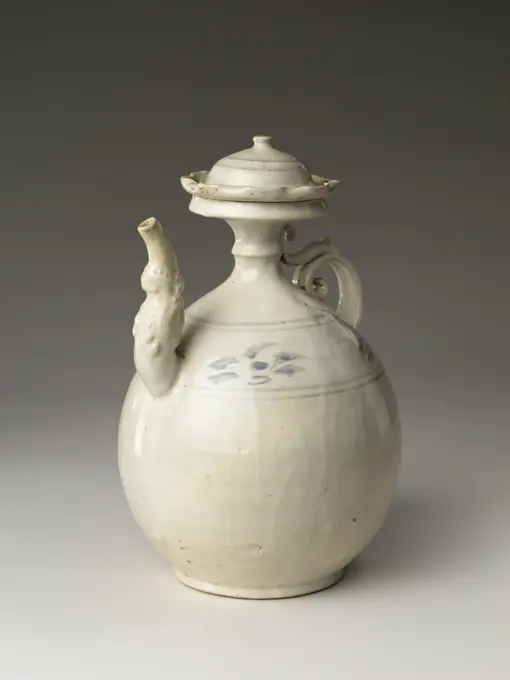
Ancient and decorative pottery pieces from different eras, showcasing unique shapes and textures, reflecting cultural heritage.

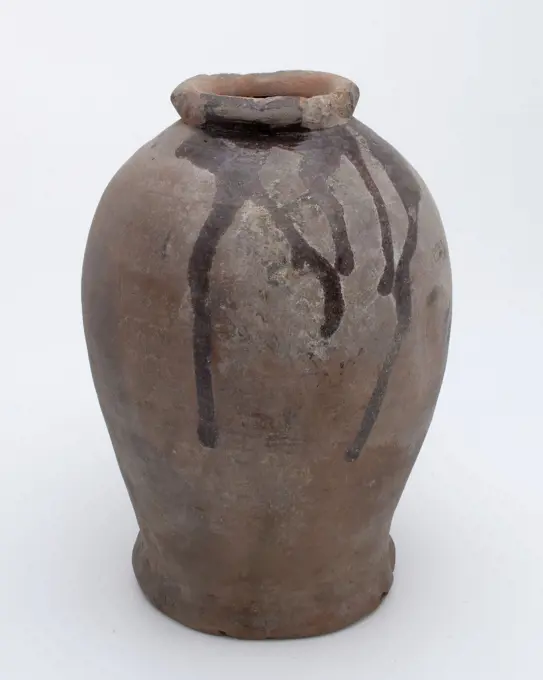
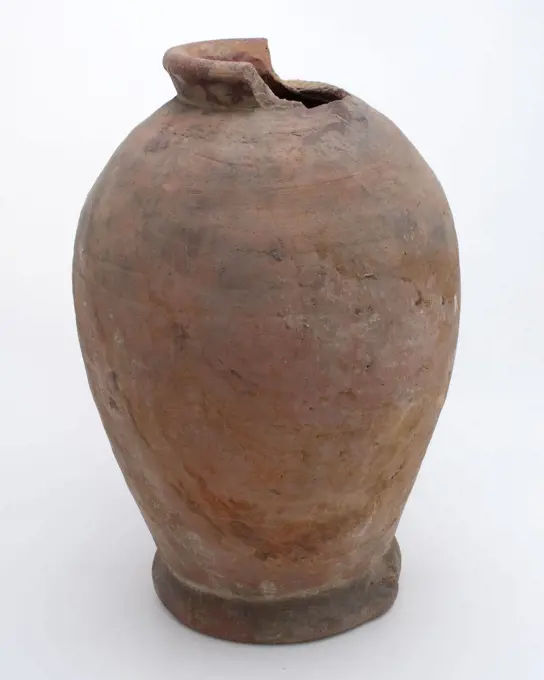
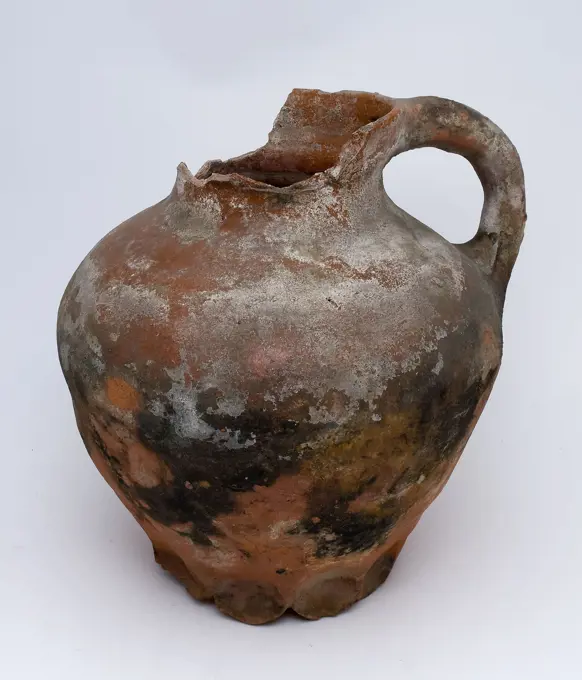
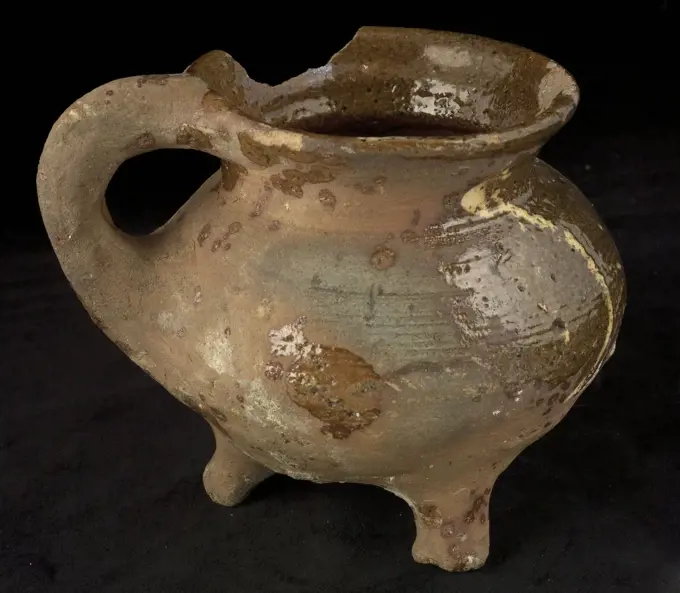
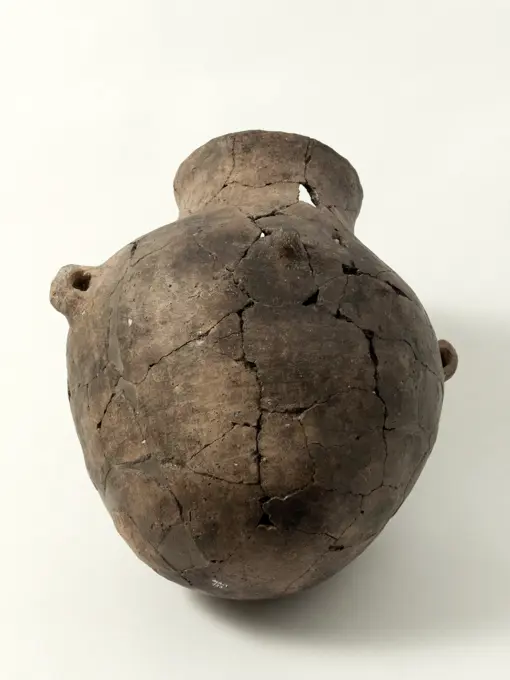
Earthenware grape, cooking pot on three legs, with two ears, grape cooking pot tableware holder utensils earthenware ceramics earthenware glaze lead glaze, hand-turned glazed baked Pottery cooking pot grape-model red shard sparingly glazed Two sausages rotated three legs. Extremely poor condition of the surface. Damage to (soil) salts archeology Rotterdam City center Stadsdriehoek Hoogstraat indigenous pottery food preparation cooking kitchen Soil discovery: during the renovation of house on the Hoogstraat (very deep in the ground).
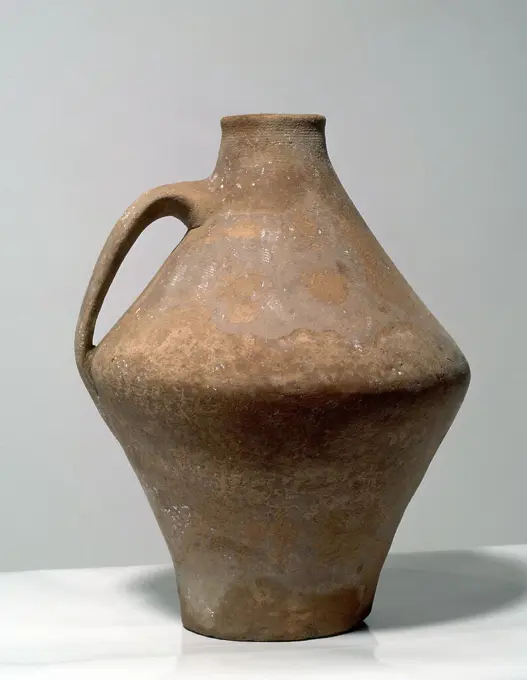
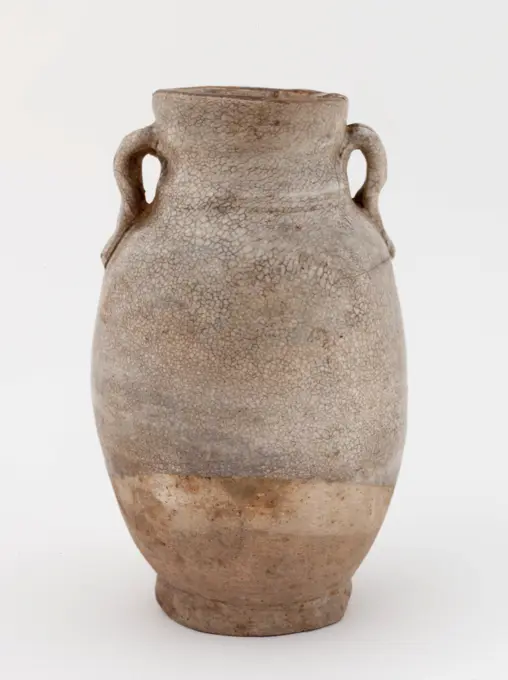
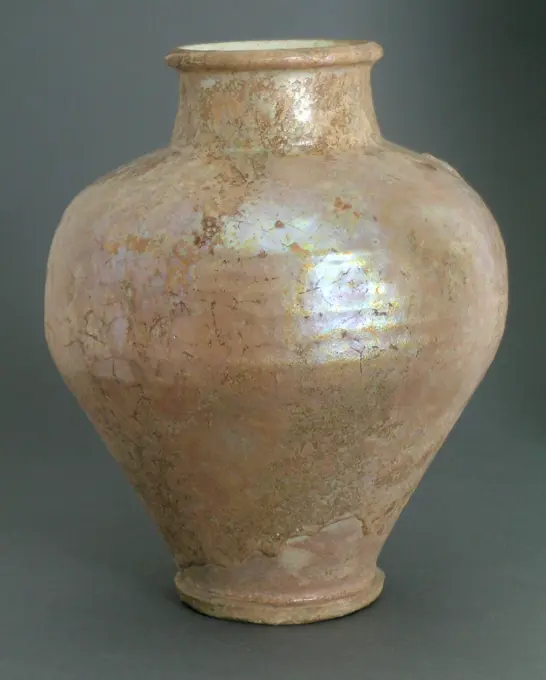
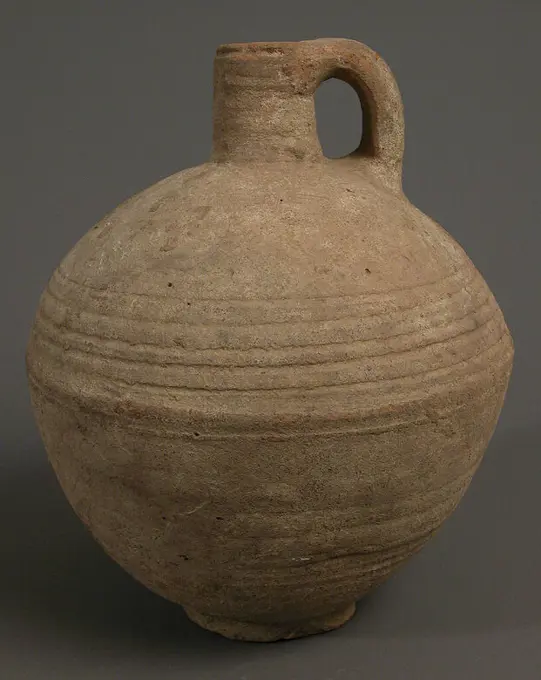
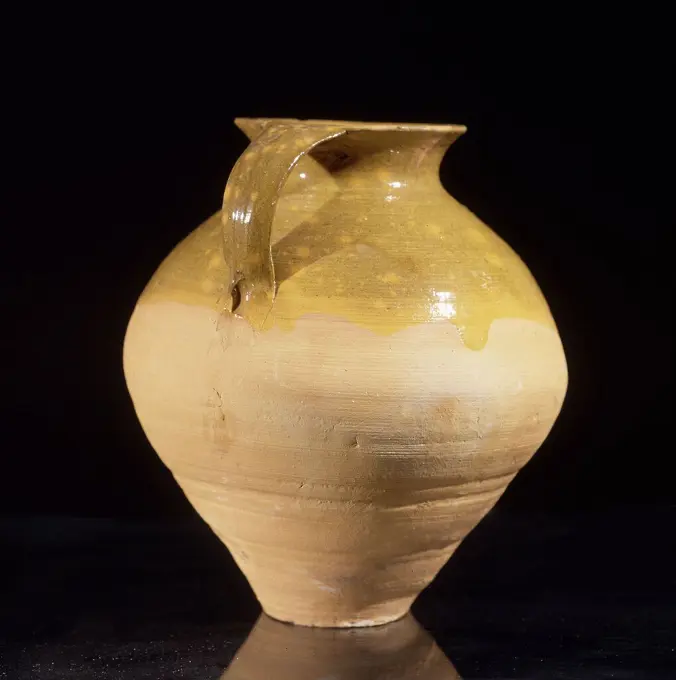
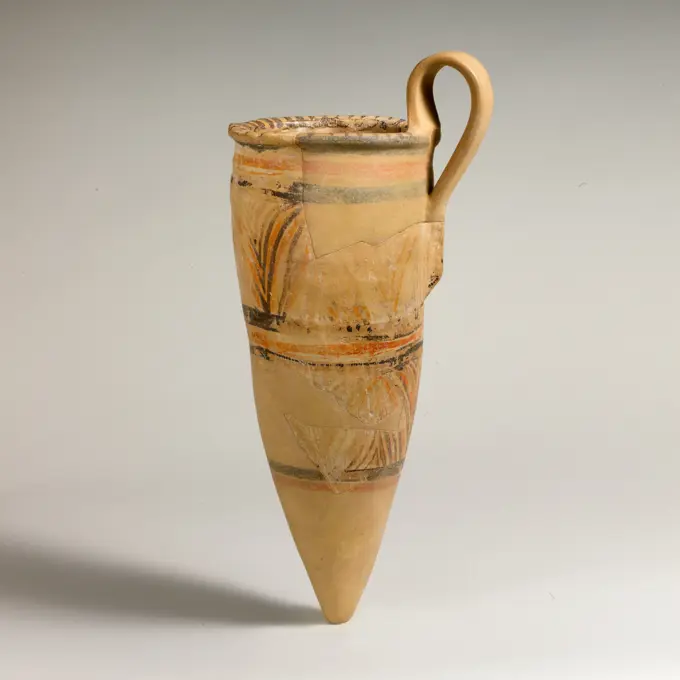
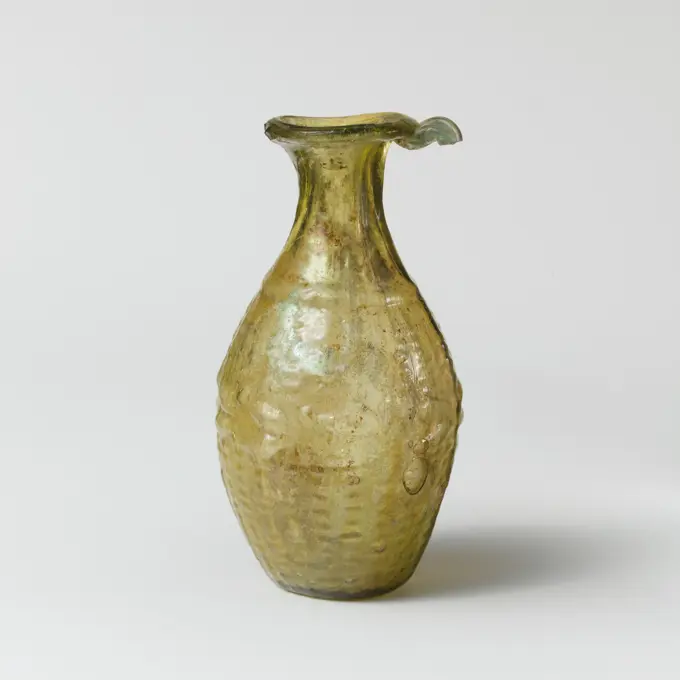
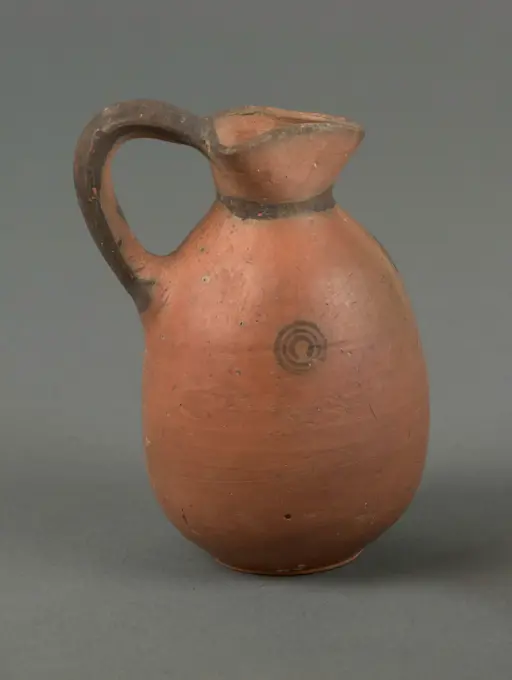
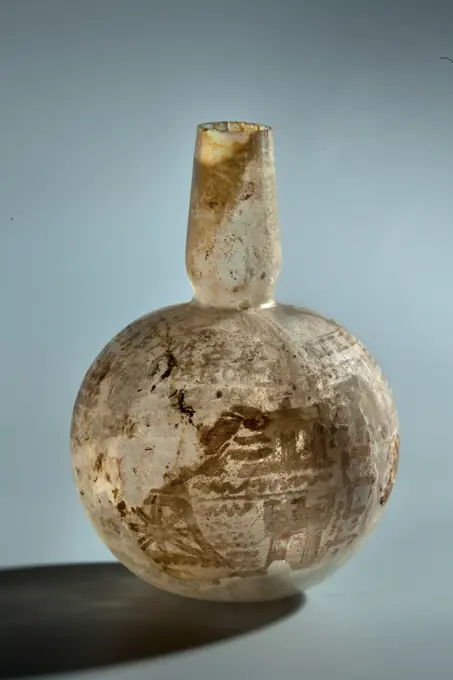
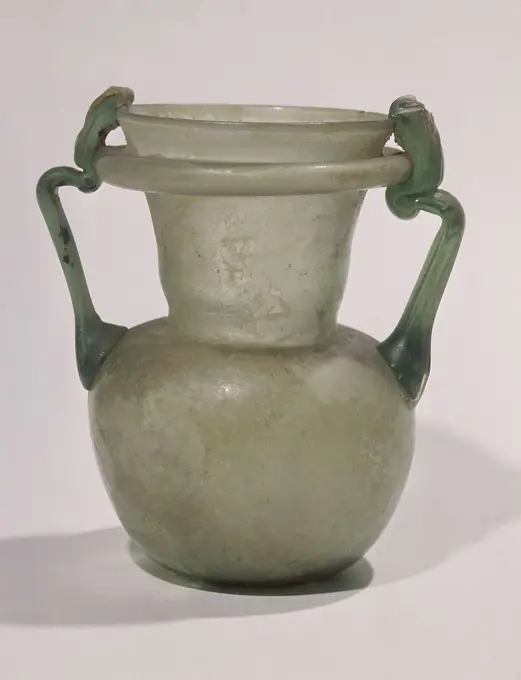
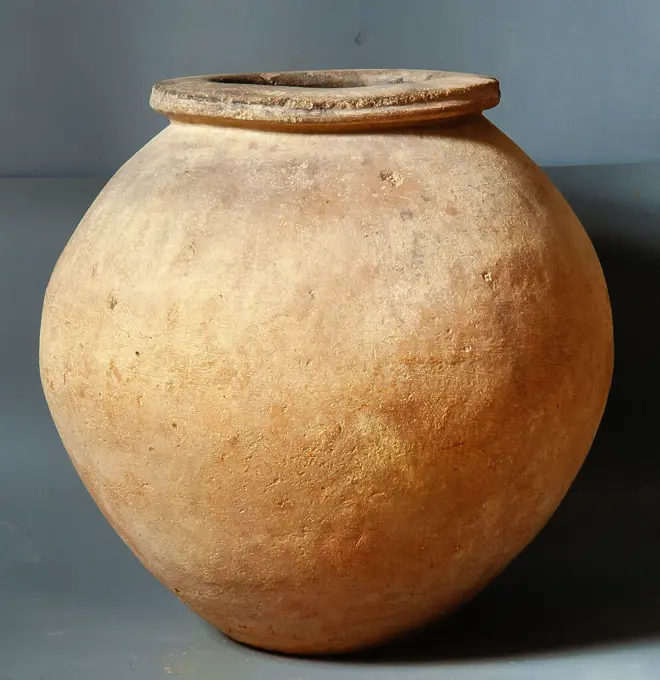
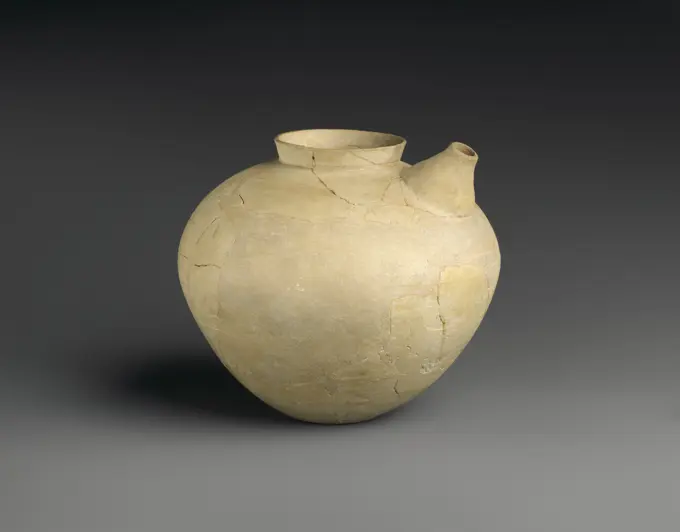
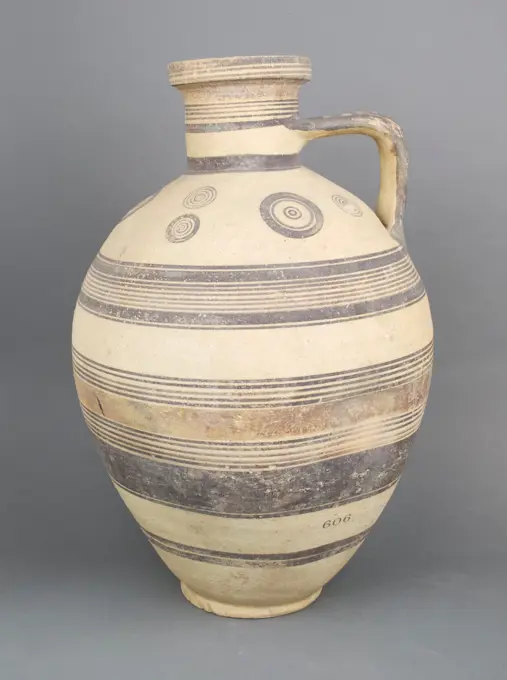
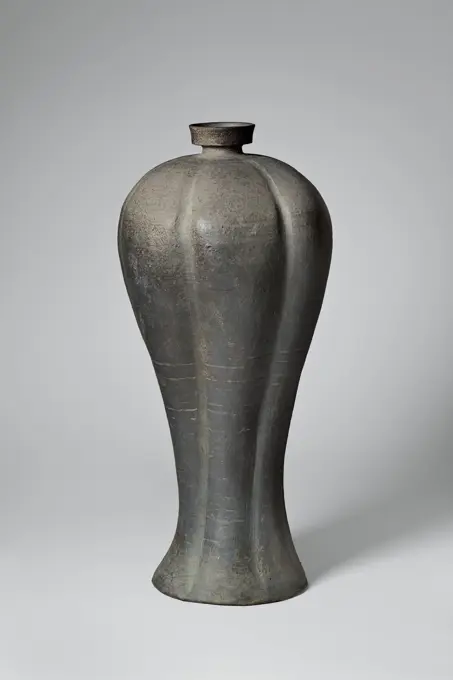
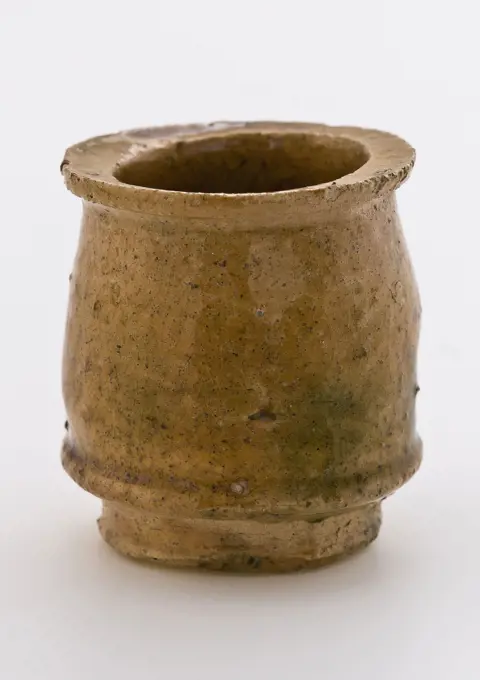
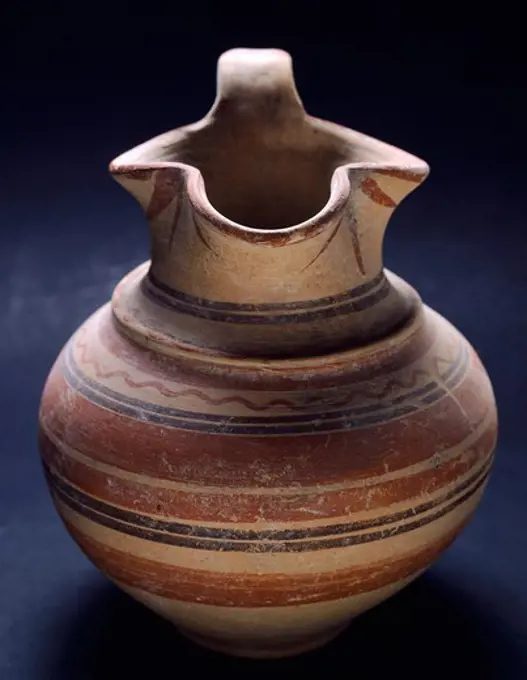
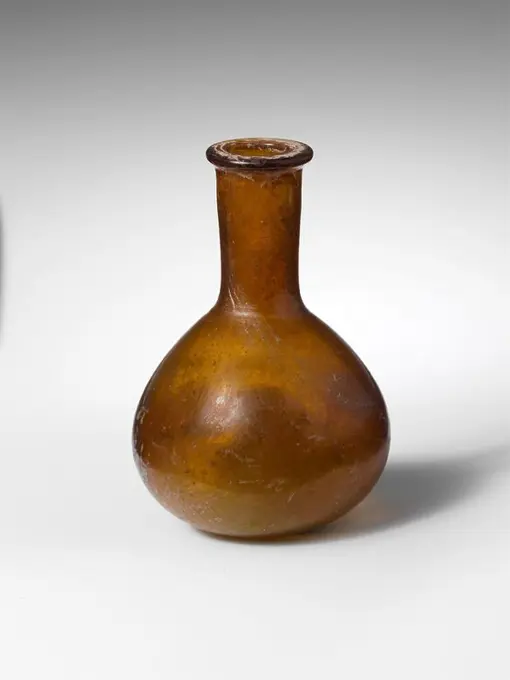
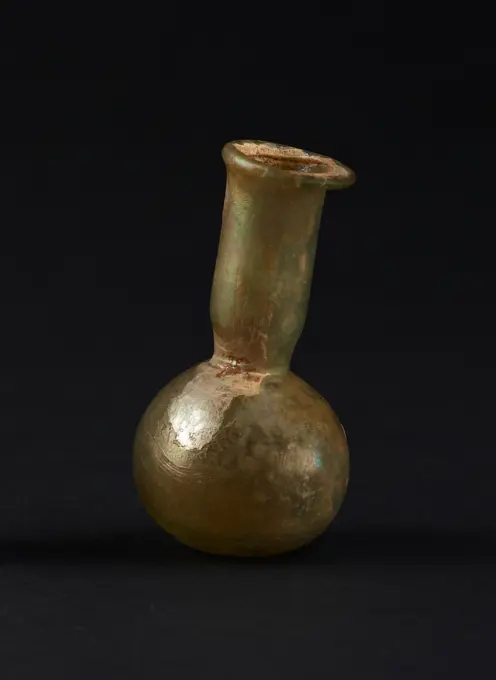
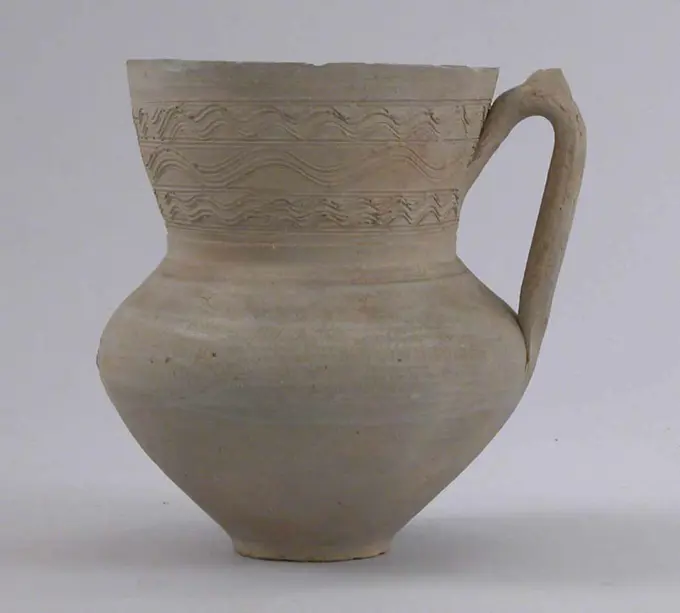
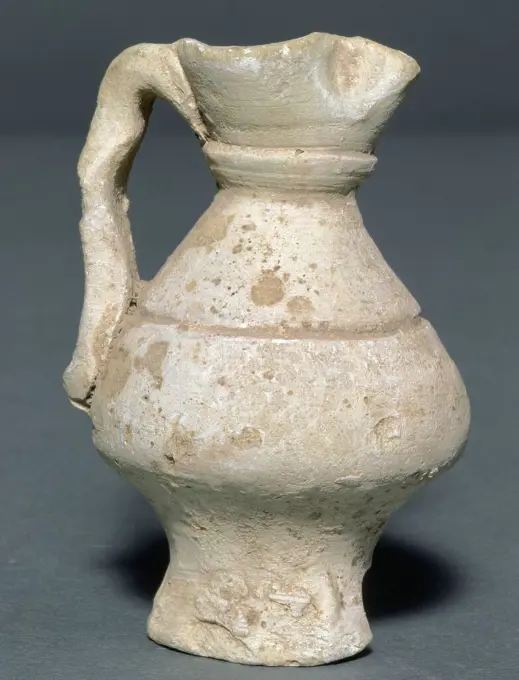
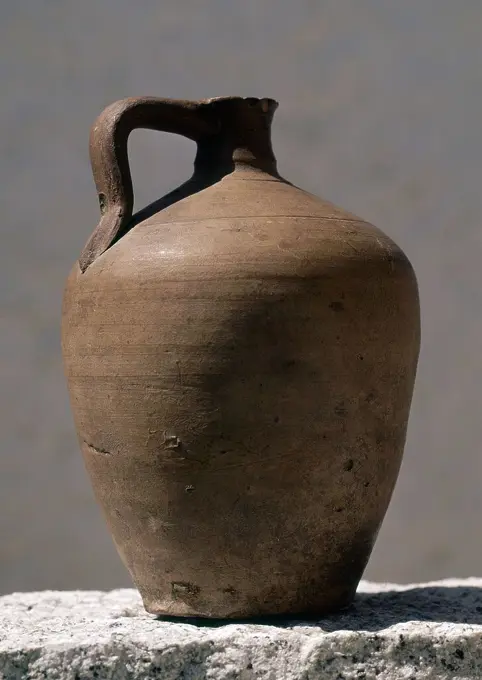
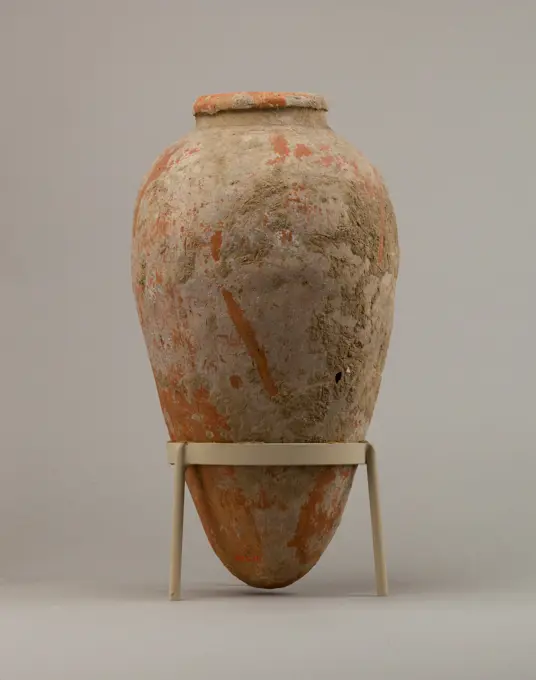
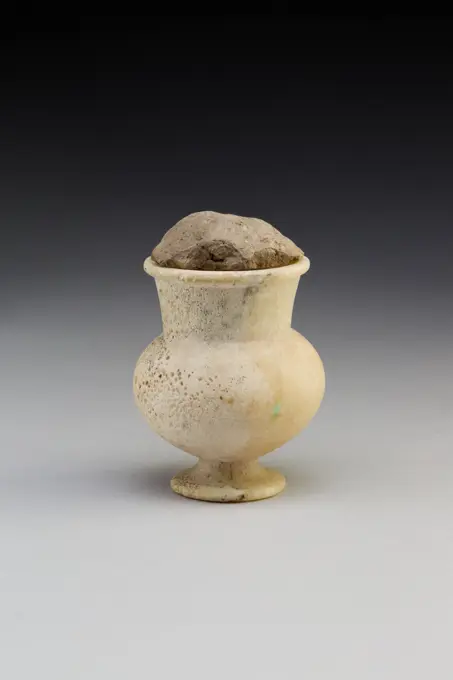
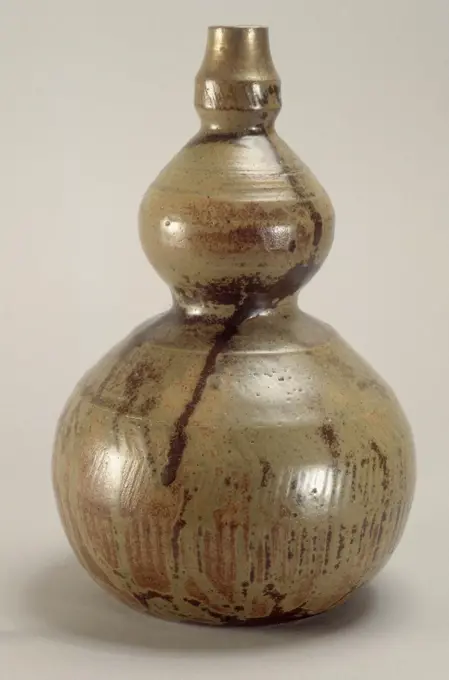
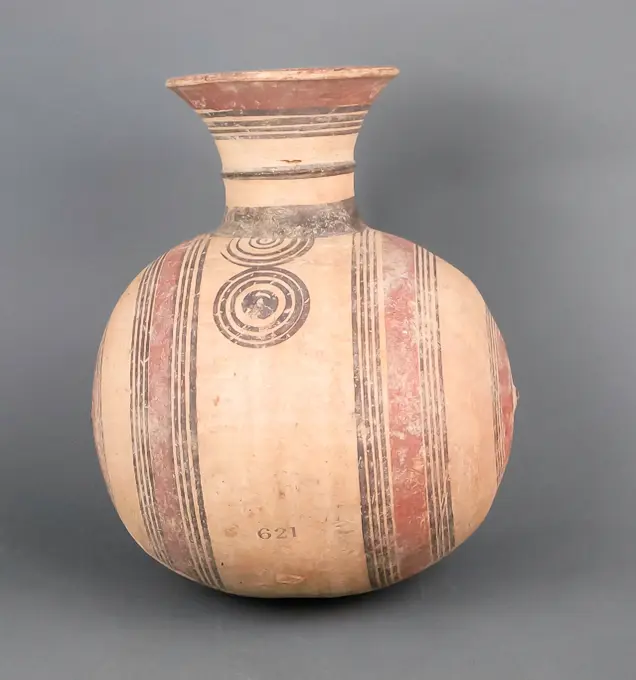
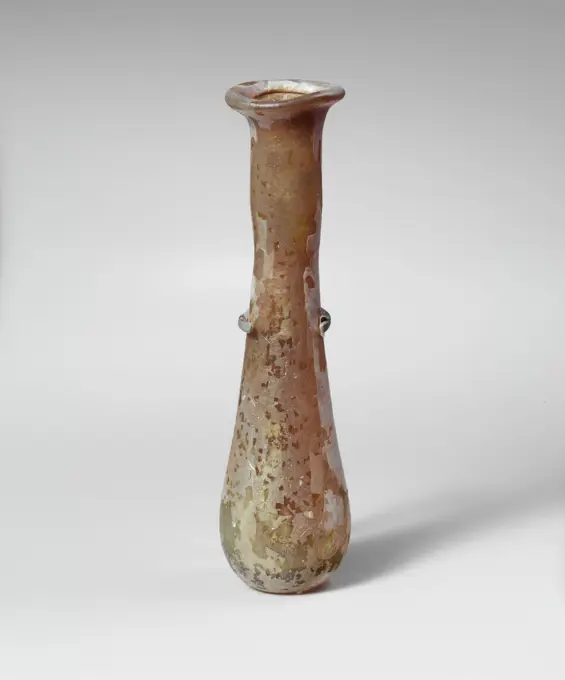
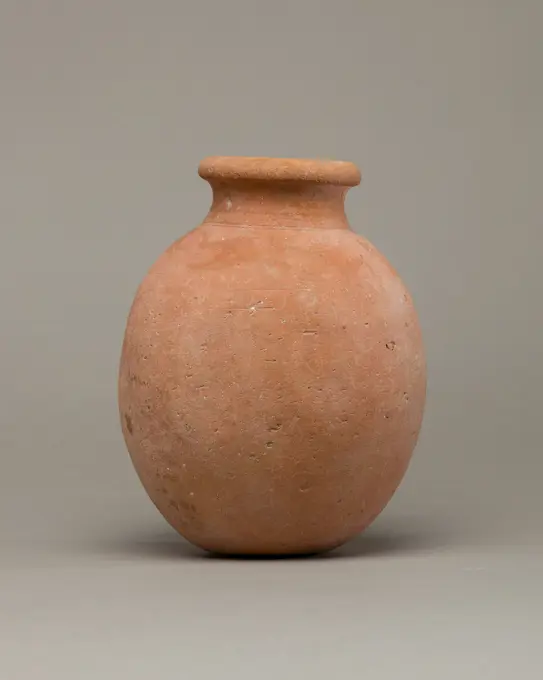
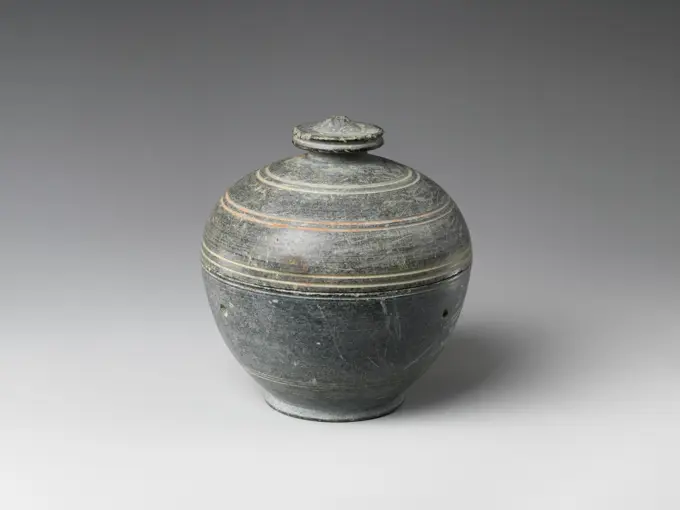
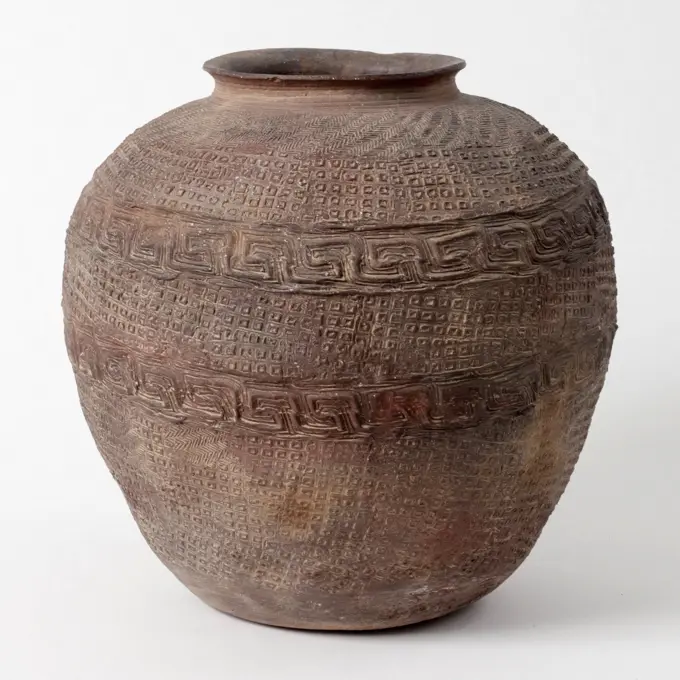
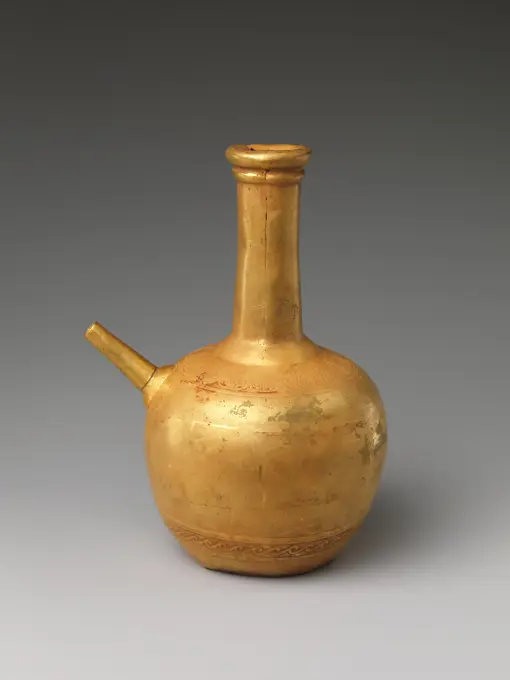
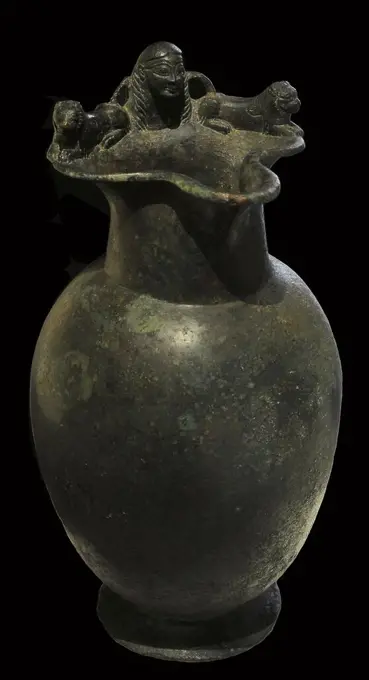
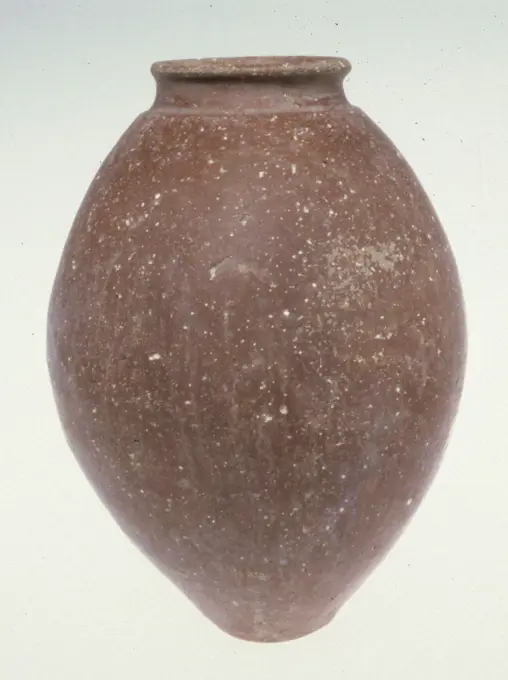
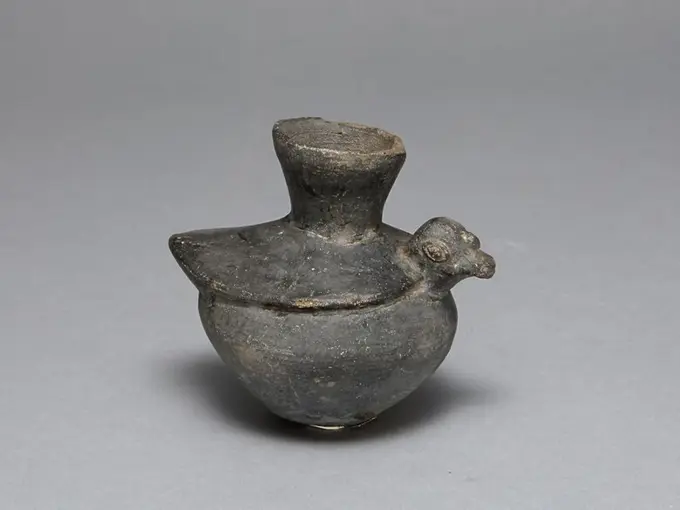
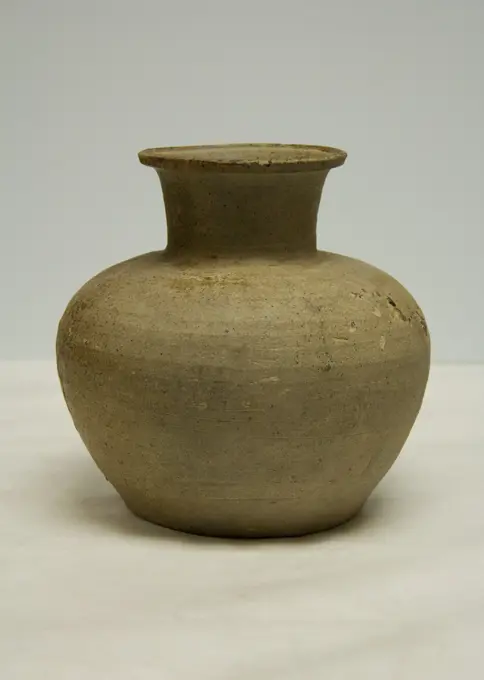
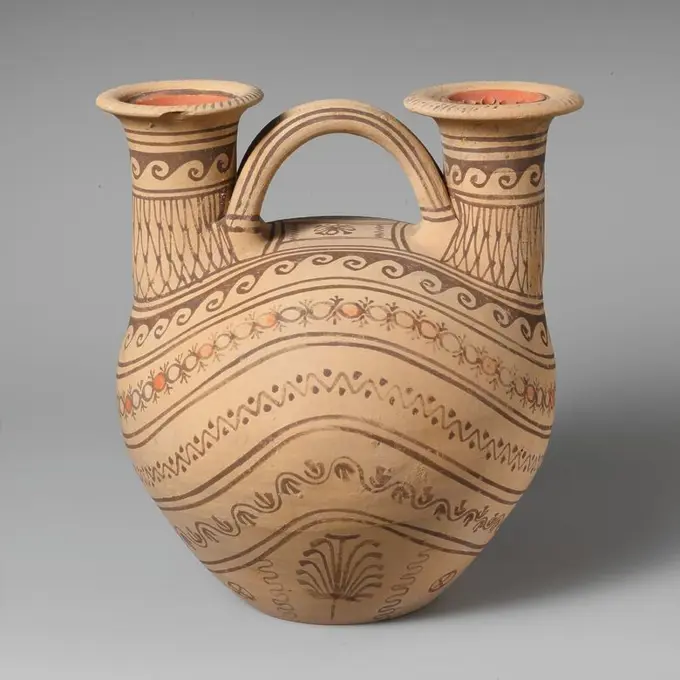
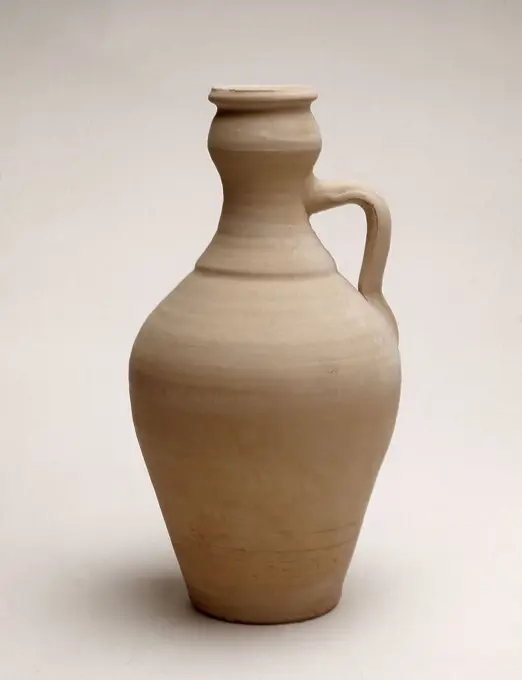
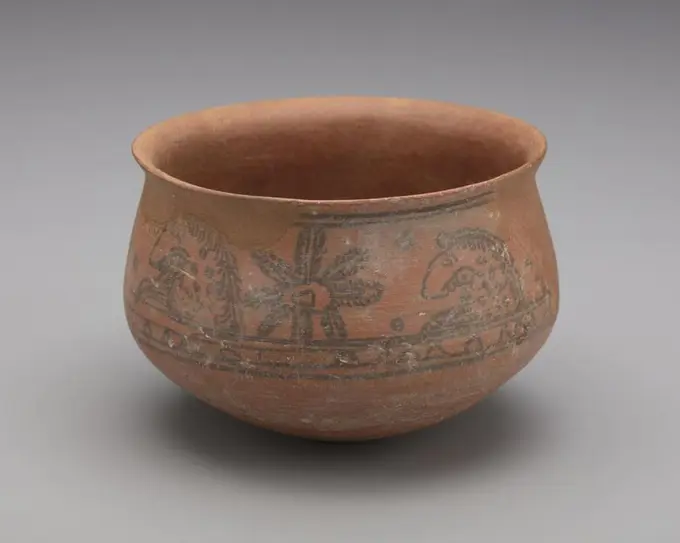
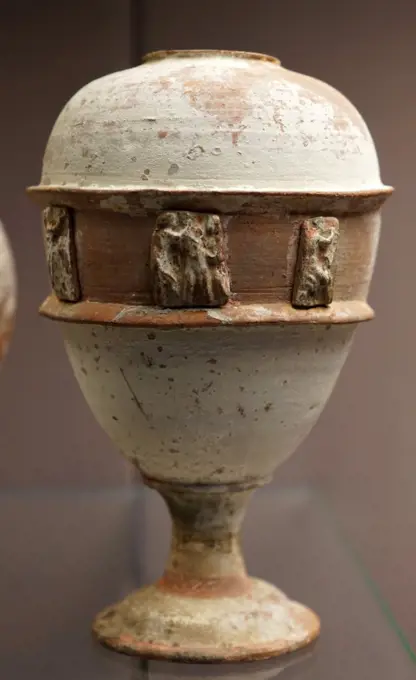
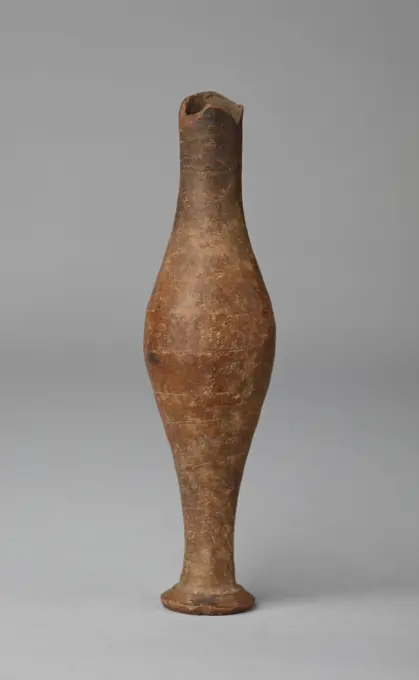
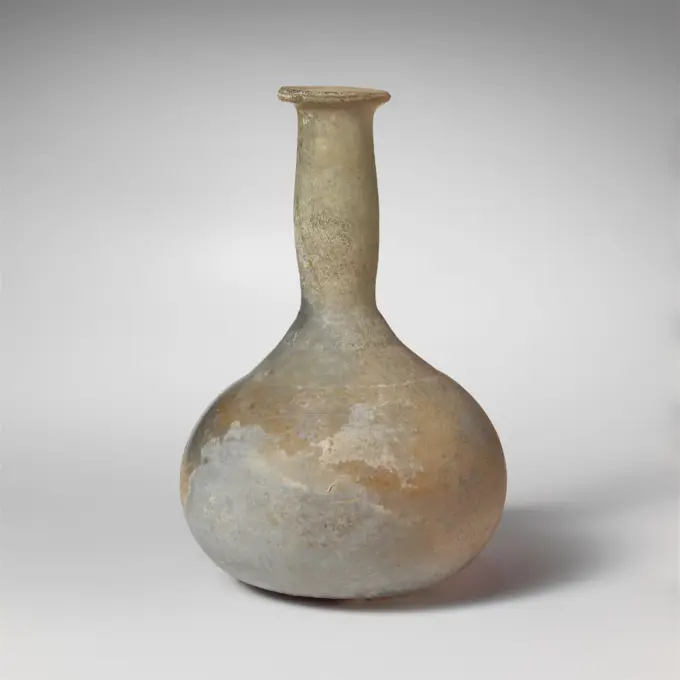
Glass perfume bottle 1st-2nd century A.D. Roman Translucent pale blue green.Rounded rim folded out and tooled around outer lip; flaring mouth; slightly convex cylindrical neck, tooled in around base; squat globular body; thick, flat bottom.Slight uneven horizontal tooled indent around top of body.Intact; few bubbles; dulling, pitting, and iridescent weathering, with one large lump of soil attached to side and bottom of interior.. Glass perfume bottle 244639Jar, water ca. 1859-1749 B.C. Middle Kingdom. Jar, water. ca. 1859-1749 B.C.. Pottery, marl C. Middle Kingdom. From Egypt. Dynasty 12, late - Dynasty 13, earlyOLLA O CANTARO DE BOCA ANCHA CON UN ASA- PARCIALMENTE VIDRIADO. Location: ALFARERIA. NIÑODAGUIA. Orense. SPAIN.CANTARO TIPO DAROCA CON UNA SOLA ASA Y CUELLO CORTO - CERAMICA POPULAR - SIGLO XX. Location: ALFARERIA. SESTRICA. Saragossa Zaragoza. SPAIN.Jar ". Sandstone, transparent covered cream slip. Song / yuan. Paris, Cernuschi museum.chine, Song dynasty (960-1279) / Yuan (1279-1368). Anse, Chinese art, Chinese Ceramic, container, Song dynasty, Yuan dynasty, Song time, Yuan time, extended form, jar, container, terracottaJug (Bartmann jug) with a coat of arms, anonymous, c. 1625 - c. 1699 Jug (beard fancier bush) of stoneware on the standing surface with a spherical body and narrow neck. The C-shaped ear is attached to the neck and shoulder. Profiles on the neck. Covered with a brown Engobe. On the abdomen in relief three times a printed and imposed medallion with a weapon. On the neck, continuously on the shoulder, a bearded man. Frechten. Cheek stoneware. glaze. engobe vitrification  Enkhuizen Jug (beard fancier bush) of stoneware on the standing surface with a spherical body and narrow neck. The C-shaped ear is attached to the neck and shoulder. Profiles on the neck. Covered with a brown Engobe. On the abdomen in relief three times a printed and imposed medallion with a weapon. On the neck, continuously on the shoulder, a bearded man. Frechten. Cheek stoneware. glaze. engobe vitrification  EnkhuizenNaczynie. unknown, authorVase. Syria or Anatolia, late 12th-early 13th century. Ceramics. Fritware, glazedEarthenware grape, cooking pot on three legs, with two ears, grape cooking pot tableware holder utensils earthenware ceramics earthenware glaze lead glaze, hand-turned glazed baked Pottery cooking pot grape-model red shard sparingly glazed Two sausages rotated three legs. Extremely poor condition of the surface. Damage to (soil) salts archeology Rotterdam City center Stadsdriehoek Hoogstraat indigenous pottery food preparation cooking kitchen Soil discovery: during the renovation of house on the Hoogstraat (very deep in the ground).Jug. Culture: Coptic. Dimensions: Overall: 10 11/16 x 8 13/16 in. (27.2 x 22.4 cm). Date: 4th-7th century. Museum: Metropolitan Museum of Art, New York, USA.Pottery pot on stand, baluster shape, used in the sugar industry, sugar bowl pot holder soil find ceramic earthenware glaze lead glaze, hand turned glazed baked Pottery pot on stand. Baluster shape with round shoulder and narrow neck opening. Thick and round neck edge Smooth finished Red shard internal glazed whimsical glaze tears over the outside. Here sugar cones were made archeology indigenous earthenware sugar confectionery sugar industryLei wine vessel, 6th century BCE, 10 1/16 × 12 1/4 in., 15.2 lb. (25.56 × 31.12 cm, 6.9 kg), Bronze, China, 6th century BCEEwer 8th-9th century. Ewer 448984OLLA O CANTARO DE BOCA ANCHA CON UN ASA - PARCIALMENTE VIDRIADO. Location: ALFARERIA. NIÑODAGUIA. Orense. SPAIN.Terracotta conical rhyton (ritual vessel) ca. 1600-1525 B.C. Minoan With fern pattern in red and black.. Terracotta conical rhyton (ritual vessel). Minoan. ca. 1600-1525 B.C.. Terracotta; Fine painted ware, Floral style. Late Minoan IA. VasesEarthenware pot on stand, baluster shape, used in the sugar industry, sugar bowl pot holder soil find ceramic earthenware glaze lead glaze, hand-turned glazed earthenware pot on stand. Baluster shape with round shoulder and narrow neck opening protruding neck thick neck edge Red edged internal glazing Sugar cones made here archeology indigenous earthenware sugar confectionery sugar industryJug with the Feast of Herod, anonymous, c. 1570 - c. 1575 Jug of stoneware on a high base with an egg -shaped body and narrow, long neck. The ear is attached to the neck and shoulder. Profiles on the neck, shoulder and foot. Covered with a brown Engobe. Four printed and imposed medallions with the feast of Herod on the belly and neck in relief. Attached to the ear a pewter frame with lid and the foot is also contained in a pewter frame. Raeren. Rae Stoneware. Glaze. Engobe. frame: tin (metal) vitrification Jug of stoneware on a high base with an egg -shaped body and narrow, long neck. The ear is attached to the neck and shoulder. Profiles on the neck, shoulder and foot. Covered with a brown Engobe. Four printed and imposed medallions with the feast of Herod on the belly and neck in relief. Attached to the ear a pewter frame with lid and the foot is also contained in a pewter frame. Raeren. Rae Stoneware. Glaze. Engobe. frame: tin (metal) vitrificationJar ca. late 6th century China. Jar 49903. Gray bearded manner of stoneware. The bullet-shaped belly is decorated with imposed oily branches. At the front of the neck a volatile beard man.Glass amphoriskos (flask) 1st half of 1st century A.D. Roman Translucent yellow green, with pale blue green handle.Uneven, thick, oval rim, folded out, over and in, then flattened into side of flaring mouth; concave neck expanding into shoulder; ovoid body; circular base with flat bottom; rod handle applied to underside of rim and drawn downwards. One continuous mold seam around body and across bottom, extending right up to rim and forming thick ridges to sides of neck and a faint raised line across bottom.Shaped like a miniature storage jar encased in a wicker basket with a thick edge to its mouth around shoulder and decorated around the middle of body with a wreath of paired laurel leaves and berries: on one side leaves running from left to right, on the other from right to left.Intact, but missing all of one and most of the other handle; some large and pinprick bubbles; slight pitting, weathering, and iridescence on exterior, patches of encrustation, weathering, and brilliant iridesJuglet ca. 750-600 B.C. Cypriot. Juglet. Cypriot. ca. 750-600 B.C.. Terracotta. Cypro-Archaic I. VasesA bottle with a view of the city of Baiae;  end of the 3rd century (291-00-00-300-00-00);GołuchówVessel (Jiao Dou) 13th-11th century B.C. China. Vessel (Jiao Dou) 61330JARRA DE VIDRIO ROMANO. Location: MUSEE D'ARTS DECORATIFS. MADRID. SPANIEN.Pottery water jug, on stand fins, standing sausage ear, sparingly glazed, water jug crockery holder soil find ceramic earthenware glaze lead glaze, hand turned glazed baked Pottery jug red shard with lead glaze on neck and shoulder the inside is also sparingly glazed standing sausage by ten pinched stand fins. Sphere model with high shoulder. Short neck with cuff collar. Traces on the bottom archeology indigenous pottery serve serve cooking kitchen food prepare water washingCANTARO DE CERAMICA. Location: ALFARERIA. NIÑODAGUIA. Orense. SPAIN.Dolia romana destinada a la conservación y almacenaje de alimentos. Can Serra Museu de Mataró.ARTE PREHISTORICO. VASO CAMPANIFORME. VALLE DEL MANZANARES. MADRID. MUSEO MUNICIPAL. MADRID.Glass cup. Culture: Roman. Dimensions: H.: 3 1/8 in. (7.9 cm)Diam.: 3 in. (7.6 cm). Date: 2nd-3rd century A.D..Translucent pale yellowKnocked-off, uneven rim; bulging collar below; convex sides tapering downwards; plain concave bottom.Four large indents in body.One faint wheel-abraded horizontal line around top of body below collar.Intact; pinprick and larger bubbles; iridescence with patches of weathering on interior. Museum: Metropolitan Museum of Art, New York, USA.Bottle 12th-13th century. Bottle 447275Spouted jar 4th millennium B.C.. Spouted jar. 4th millennium B.C.. Ceramic. Uruk. Mesopotamia, NippurJug 480-400 B.C. Cypriot One handle, bands and on shoulder concentric circles.. Jug. Cypriot. 480-400 B.C.. Terracotta. Cypro-Classical I. VasesJuglet 2500-1900 B.C. Cypriot Pear-shaped with handle, concentric circles and groups of lines.. Juglet. Cypriot. 2500-1900 B.C.. Terracotta. Early Cypriot. VasesLobed maebyeong, 13th century, Unknown Korean, 18 1/2 × 8 1/4 × 8 5/16 in. (46.99 × 20.96 × 21.11 cm), Stoneware with incidental ash glaze, Korea, 13th century, Vessels like this one, with its relatively narrow base that elegantly swells to broad shoulders and then narrows dramatically at the mouth, first gained popularity in China in the 900s, and came to be called 'plum vessels,' or meiping in Chinese. Known as maebyeong in Korea, they are sometimes described as having been used for displaying branches of blossoming plum or other flowers but were more likely used to store plum wine. The lobes of this gracefully curving maebyeong are meant to suggest the sectioned exterior of a melon.Pottery ointment jar, belly model, white shard, yellow glazed, ointment jar holder soil found ceramic earthenware glaze lead glaze h 4,3, hand turned glazed baked Pottery ointment jar. Belly model with tiny belly protruding ridge and constriction above the foot. Flat and protruding upper edge. White shard and completely yellow glazed except the bottom of the bottom. Some green spots in the glaze layer Stand surface Two damage in the sidewall of removed stuck foreign pottery archeology Rotterdam IJsselmonde health care indigenous pottery packaging ointment care medication medicine handicraft pharmacy Soil discovery: IJsselmonde well 2 Rotterdam 1972.Pottery vase, Apulia, Italy. Daunia Civilization, 7th-6th Century BC.Jarree et Couvercle ". Groves. Vietnamese-Xe-xive Cernuski. Paris, Musée Cernuski. 72185-12 Cover, gres, jar, Vietnamese objectJarra procedente de Solibernat, Torres de Segre. Siglo XI. Museu d'Història de Catalunya.Terracotta jug with barbotine decoration. Culture: Roman. Dimensions: H. 5 11/16 in. (14.5 cm). Date: 1st century A.D..One-handle with sprays of foliage in relief. Museum: Metropolitan Museum of Art, New York, USA.Glass perfume bottle. Culture: Roman. Dimensions: H.: 3 7/16 in. (8.7 cm). Date: 1st century A.D..Translucent deep honey brown.Everted, horizontal rim with rounded outer lip; cylindrical neck, tapering downward, with slight tooling marks around base; squat piriform body; small flat bottom.Intact; some bubbles and blowing striations; patches of dulling and creamy, iridescent weathering, with soil encrustation on interior. Museum: Metropolitan Museum of Art, New York, USA.FOREIGN OLDJar 9th-10th century. Jar 449623JARRITO BIZCOCHADO DE JUGUETE - SIGLOS XII O XIII -CERAMICA TOLEDANA. Location: PRIVATE COLLECTION. MADRID. SPAIN.CANTARO PARA AGUA CON UN ASA - SIN VIDRIAR - S XX ARTE POPULAR. Location: ALFARERIA. CAMPO REAL. MADRID. SPAIN.Terracotta Nicosthenic neck-amphora. Culture: Etruscan. Dimensions: 7 15/16in. (20.2cm). Date: 6th century B.C..On the handles in relief, female figure with two felinesThe contrast between the narrow neck and the full body, the thinness of the handles, and the hard glossy surface give this Nicosthenic neck-amphora a mannered character. Museum: Metropolitan Museum of Art, New York, USA.Rough ware jar ca. 2960-2770 B.C. Early Dynastic Period. Rough ware jar. ca. 2960-2770 B.C.. Pottery. Early Dynastic Period. From Egypt, Northern Upper Egypt, Abydos, Osiris Temple precinct, Tomb M12, Egypt Exploration Fund excavations, 1902. Dynasty 1Open-Mouthed Cosmetic Jar with Mud Stopper ca. 1504-1447 B.C. New Kingdom This Egyptian alabaster jar was found with two others inside the coffin of a scribe named Amenemhat. The jars had been placed near the head of the mummy along with a bundle containing knives, razors, and a whetstone. All three jars were well made from fine-grained white stone. This one originally contained some sort of liquid that left a brown, crusty residue. It was sealed with a stopper made of Nile mud.Amenemhat was the son of a man named Neferkhawet, and his burial was found in the family tomb in Western Thebes.. Open-Mouthed Cosmetic Jar with Mud Stopper. ca. 1504-1447 B.C.. Travertine (Egyptian alabaster), mud. New Kingdom. From Egypt, Upper Egypt, Thebes, Asasif, Tomb of Neferkhawet (MMA 729), east chamber, Burial of Amenemhat (V), inside coffin by head, MMA excavations. Dynasty 18, earlyOinochoe 7th-6th century B.C. Etruscan. Oinochoe. Etruscan. 7th-6th century B.C.. Terracotta. VasesJean Carriès (1855-1894). "Trois bulging gourd". Enamelled sandstone and golden drips. Museum of Fine Arts of the City of Paris, Petit Palais. 24201-25 Ceramic, gold, gourd, gres emaille, bulge, threeSmall lidded jar with handle, second half of 5th century, Unknown Korean, 4 9/16 × 4 7/8 × 3 5/8 in. (11.59 × 12.38 × 9.21 cm), Earthenware, Korea, 5th century, Even after the introduction of the climbing kiln in the early fourth century, Korean potters continued to make low-fired earthenware in addition to more durable stoneware.Krater 750-600 B.C. Cypriot Krater with bands, zigzag line and lotus design.. Krater. Cypriot. 750-600 B.C.. Terracotta. Cypro-Archaic I. VasesJuglet 750-600 B.C. Cypriot Handle-ridge jug with horizontal bands and two concentric circles on front of shoulder.. Juglet. Cypriot. 750-600 B.C.. Terracotta. Cypro-Archaic I. VasesBell shaped vessel. Neolithic art. Ceramics. SPAIN. CATALONIA. BARCELONA. Vic. Vic Episcopal Museum.Jar. Northern Afghanistan, 2200-1800 B.C.. Furnishings; Serviceware. FaienceEwer with makara spout Vietnam, Hong River region ca. 14th century This finely formed glazed ewer with leaf-shaped strap handle and spout in the form of a mythical dragon makara was intended for serving wine. Its elegant form, of bulbous body and slender neck with flared rim, creates a pleasing silhouette to grace a dining table. The decorative focus has been on the modelled strap handle and dragon-shaped spout with only the most minimal painted decoration, sketchily brushed flowers reserved between two double-lines on the shoulder. Such glazed stoneware ewers of this type were produced in the ceramic industry that prospered in the Hong (Red) River delta region of northern Vietnam in the thirteenth and fourteenth century. Such ewers are rarely found in an export context and appears to have been largely for domestic consumption. View more. Ewer with makara spout. Vietnam, Hong River region. ca. 14th century. Stoneware with iron-underglaze floral décor and ivory glaze. Tran Dynasty (1225Jug, barrel-shaped 850-750 B.C. Cypriot Bands and concentric circles.. Jug, barrel-shaped. Cypriot. 850-750 B.C.. Terracotta. Cypro-Geometric III. VasesSmall stoneware jug, brown, salted glaze, belly model, jug holder soil find ceramic stoneware glaze salt glaze, hand-turned glazed fired Small pitcher or oil jug of stoneware Belly model with sloping transition to the neck Filling ring at the top of the neck (unusual) Plotty sandy. brown-coated salt-glaze Short rat tail of the ear across the abdomen archeology oil wrapping store store carryGlass perfume bottle 1st-2nd century A.D. Roman Translucent light yellow green.Rim folded out, over, and in; slender, cylindrical neck with tooled indent around base; elongated conical body, rounded below; small, thick, flat bottom.Intact; few bubbles; dulling, pitting, and whitish iridescent weathering.. Glass perfume bottle 244676Pottery cooking jug, grape model, decorated in sludge technology, on three outstanding legs, grape cooking pot tableware holder kitchenware earthenware ceramics earthenware glaze lead glaze clay, hand turned decorated glazed fried lemonade Pottery cooking jug or grape red shard decorated in sludge technology on three legs. Vertical sausage ear Fine turns on the shoulder. Sparely glazed neck and part shoulder and the bottom only under the neck opening. Decoration consists of yellow bows or sickles on the shoulder. Outstanding legs. Funnel shaped upper edge archeology Rotterdam indigenous pottery cooking food preparation kitchen Soil discovery Rotterdam.Globular necked jar of desert clay ca. 3850-2960 B.C. Predynastic Period. Globular necked jar of desert clay 552612Reliquary Box With a Lid 1st century Pakistan. Reliquary Box With a Lid. Pakistan. 1st century. Stone. SculptureJar 4th-7th century Coptic. Jar 475752Small AmphoraAmphora late 4th-7th century Coptic. Amphora 475759Jar ". Terracotta. Fighter kingdoms. Paris, Cernuschi museum. Chinese art, round shape, jar, decorative motif, combatant kingdoms, terracottaJar with LidJug or 'Jacobakan', anonymous, c. 1450 - c. 1499 Ribbed can (Jacobakan) of stoneware on a wavy foot with an egg -shaped body and long neck. The C-shaped ear is attached to the neck. The jug is decorated with turning virgins and a profile on the shoulder. Siegburg. Siegburg (Possibly) stoneware. glaze vitrification Ribbed can (Jacobakan) of stoneware on a wavy foot with an egg -shaped body and long neck. The C-shaped ear is attached to the neck. The jug is decorated with turning virgins and a profile on the shoulder. Siegburg. Siegburg (Possibly) stoneware. glaze vitrificationJar with Handles 2500 BCE-1500 BCE Japan. Some of the oldest pottery in the world has been found in Japan. Although the countryís population was made up of hunters and gatherers during the Jomon period (12,500ñ300 B.C.), there was a stable pattern of settlements, making pottery production a possibility. The Jomon (literally ìcord-mark decorationî) period is characterized by low-fired earthenware pottery with indentation marks, raised patterns, and sometimes flamboyant sculptural elements on the rims; such vessels can be found in regions across the Japanese archipelago. Those works displaying a highly refined artistic sense may have served ceremonial functions.This open-work decorated jar is of the Ubayama (Kasori E) type found in the Neolithic shell mounds of Ichikawa in Chiba; this vessel type is characterized by integration of ornamentation and form, and an increasingly complex manner of patterning clay. Here double-lined ìwavesî made from coils of clay surge toward one of the perforKendi 8th-early 9th century Indonesia (Java). Kendi 40146Large bottle with two handles. Terracotta. Neolithic. Paris, Carnavalet museum. Handle, bottle, neolithic, terracotta, dishes, archeological vestigePitcher of Valdegamas, for the libation ritual. On top of the handle, there are depicting a divinity, Potnia Theron. Bronze. Iberian. Orientalizing period. 6th century BC. Valdegamas (Don Benito, province of Badajoz, Extremadura, Spain). National Archaeological Museum. Madrid. Spain.Red polished ware jar ca. 3500-3300 B.C. Predynastic, Naqada II. Red polished ware jar. ca. 3500-3300 B.C.. Pottery. Predynastic, Naqada II. From Egypt, Southern Upper Egypt, Hierakonpolis (Nekhen), Fort Cemetery (Hk 27), Tomb 32, MMA excavations, 1934-35Fragment of a jug with the coat of arms of Amsterdam, anonymous, c. 1630 - c. 1649 Fragment of a jug of stoneware on a high foot with an egg -shaped body and a tapered neck. The ear and part of the neck are missing. A broad bond with lines on the neck, some closely. Partly covered with cobalt blue. On the abdomen three times printed and imposed medallion with the weapon of Amsterdam in relief. On the weapon the date '1630'. Westerwald. Westerwald stoneware. glaze. cobalt (mineral) vitrification Fragment of a jug of stoneware on a high foot with an egg -shaped body and a tapered neck. The ear and part of the neck are missing. A broad bond with lines on the neck, some closely. Partly covered with cobalt blue. On the abdomen three times printed and imposed medallion with the weapon of Amsterdam in relief. On the weapon the date '1630'. Westerwald. Westerwald stoneware. glaze. cobalt (mineral) vitrificationRoman glass. Bottle. National Roman Museum (Baths of Diocletian). Rome. Italy.Jar. Thailand, Singburi, 15th-16th century. Furnishings; Serviceware. Stoneware with brown glazePottery flower pot, orange shard, unglazed, sausage ear, on stand, flower pot holder earth discovery ceramic earthenware, hand-turned baked Pottery flowerpot red shard unglazed sausage ear stand ring four holes in the bottom standring revolving armaments archeology indigenous pottery decorate garden kitchen cooking home interiorBlackware Jar in the Form of a Bird. Chimú; North coast, Peru. Date: 1200-1450. Dimensions: H. 10.6 cm (4 3/16 cm). Ceramic. Origin: North Coast. Museum: The Chicago Art Institute, Chicago, USA.Flask; Roman Empire; 3rd century; Glass; 16.5 x 9.2 cm (6 1,2 x 3 5,8 in.)VASO DE CORIA DEL RIO. Location: MUSEO ARQUEOLOGICO-COLECCION. Sevilla. Seville. SPAIN.Glass alabastron (perfume bottle). Culture: Greek, Eastern Mediterranean. Dimensions: H.: 4 1/16 in. (10.3 cm). Date: late 6th-5th century B.C..Opaque white, with handles in same color; trails in translucent purple.Broad rim-disk, with radiating tools marks on upper surface and small mouth; short cylindrical neck; narrow sloping shoulder; straight-sided body with upward taper; convex bottom; below shoulder, two vertical ring handles with knobbed tails applied over trail decoration.One trail attached at edge of rim-disk; another applied as an irregular loop over neck and top of body and wound down in spiral six times, then tooled into a close-set zigzag pattern around middle of body; below this, a third fine trail wound twice horizontally around body.Intact, apart from minor chips in trail on rim-disk; slight dulling and pitting, and most of body covered with creamy iridescent weathering. Museum: Metropolitan Museum of Art, New York, USA.Jar 9th century Japan. Jar. Japan. 9th century. Stoneware with natural ash glaze. Heian period (794-1185). CeramicsFlask 600-480 B.C. Cypriot. Flask. Cypriot. 600-480 B.C.. Terracotta. Cypro-Archaic II. VasesEarthenware cover on stand, short neck edge with lid groove, unglazed, cover pot aspot stock pot pot holder soil find ceramic pottery, hand-turned baked Pottery cover-up orange-red shard unglazed lid slot two horizontally placed ears rotating ring stand. Ovoid model with wide neck opening and narrow foot Outstanding upper edge with groove on the outside possible binding groove for the closure. On the inside clear must that the height shows to what level the pot has been filled. Possible semi-finished archeology indigenous pottery deaf fireplace heating room kitchenJug with round base and round spout, Incised Red Polished Ware, Early Bronze Age, 2000 BC. from CyprusCup Italic. Cup. Italic. Terracotta. VasesTerracotta askos (flask) with two spouts. Culture: Native Italic, Daunian, Canosan. Dimensions: H.: 8 3/4 in. (22.2 cm). Date: 3rd century B.C..The addition of a second spout and the more varied polychromy are features of late Daunian askoi. Museum: Metropolitan Museum of Art, New York, USA.Roman Blown Glass 1st century A.D.amphora Miniature; Greece; terra-cottaJuglet. Culture: Cypriot. Dimensions: 3 1/16in. (7.8cm).Jug with globular body and high handle; unpainted clay. Museum: Metropolitan Museum of Art, New York, USA.Bottle with Incised Designs 5th-4th century B.C. Paracas. Bottle with Incised Designs 308584Egypt, Vessel decorated with lotusEarthenware chevron, red shard, unglazed, three carrying feet on the upper edge, on three legs, ceramic soil found ceramic earthenware, hand-turned baked Pottery chunk red shard unglazed three upright legs on the mouth rim rather long handle (not original) three-legged scour marks on the inside archeology indigenous pottery food preparation cooking heating kitchenCooking pot. 5th century AD. Ceramics. Coming from the Roman dump of Vila-Roma. Spain. National Archaeological Museum. Tarragona. Catalonia, Spain.CANTARO DE CUELLO ANCHO Y ALTO DE UNA SOLA ASA - CERAMICA PARA AGUA - SIGLO XX. Location: ALFARERIA. ORBA. Alicante. SPAIN.Painted Bowl with Faunal and Floral Design. Pakistan; Ancient region of Gandhara. Date: 401 AD-500 AD. Dimensions: 7.9 × 11.9 × 12 cm (3 1/8 × 4 11/16 × 4 3/4 in.). Terracotta with black pigment. Origin: Gandhara. Museum: The Chicago Art Institute, Chicago, USA.Oval pottery vessel with relief decoration, from Libya. Dated 200 BCFOREIGN OLDCANTARO PARA AGUA - CUELLO ALTO Y ESTILIZADO CON UN ASA - ARTE POPULAR S XX. Location: ALFARERIA. Seville. SPAIN.Beaker and Cup. UnknownPottery cooking jug, grape-model, red shard, lead glaze, on three legs, bottom unglazed, cooking jug be found in the earthenware pottery glaze lead glaze, hand-turned glazed baked Pottery cooking jug grape-model red shard lead glaze three-legged bottom unglazed archeology indigenous earthenware food prepare cooking food kitchen