Historic Swords and Writing Tools

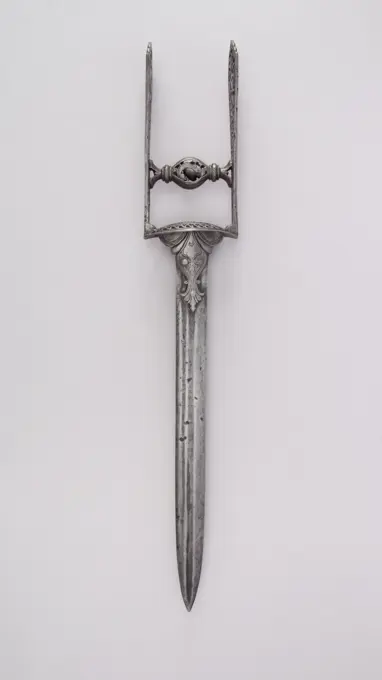
Images of historical swords and writing instruments, portraying the artistry and functionality from earlier centuries.

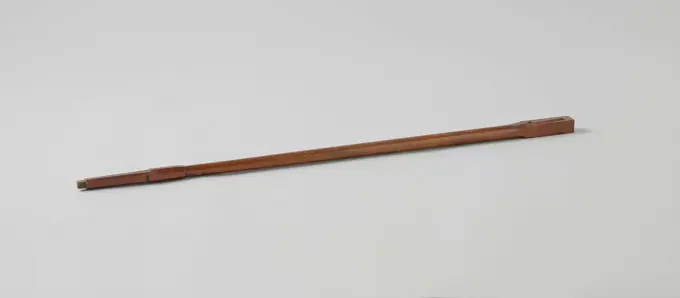
Busk ca. 1660 French. Busk 84193
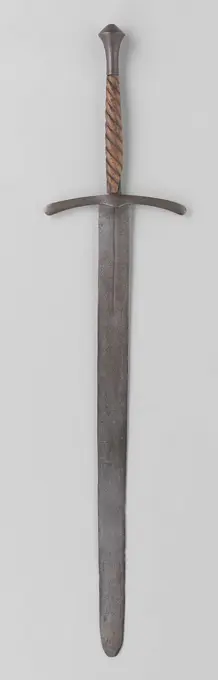
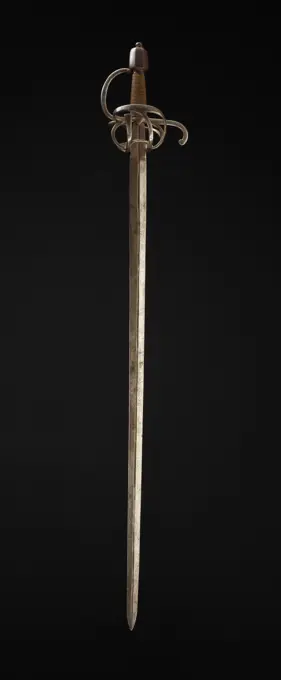
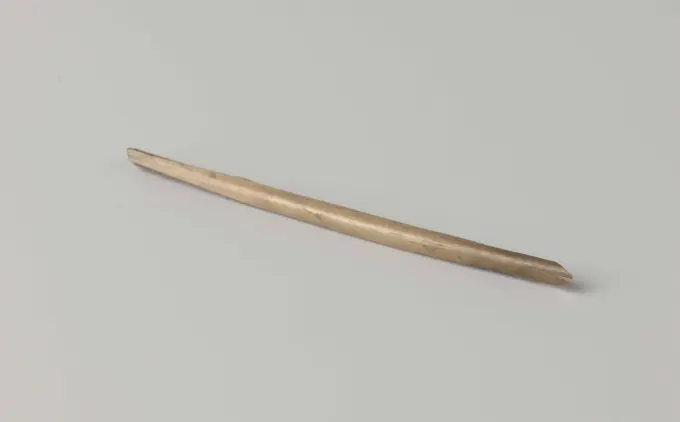
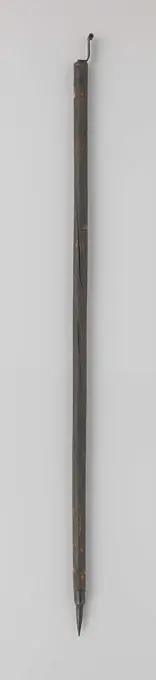
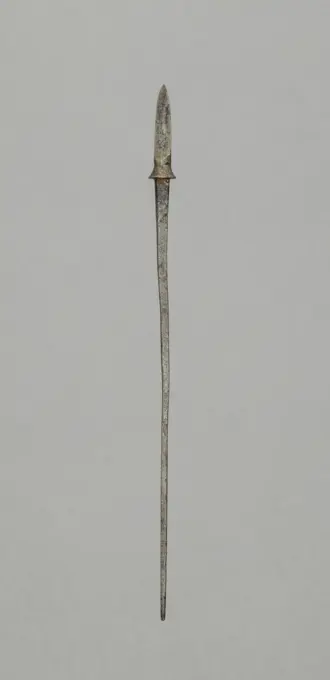
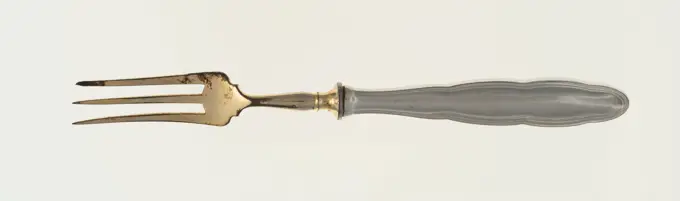
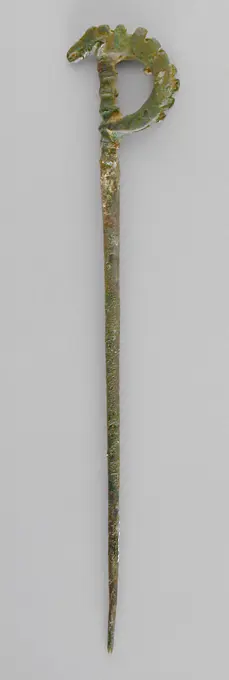
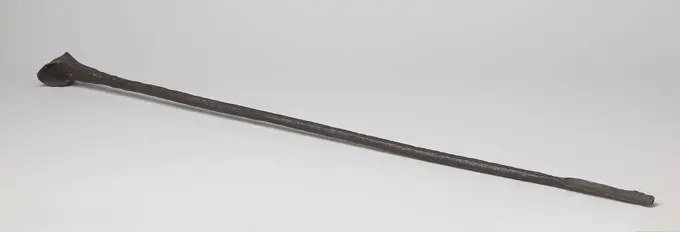
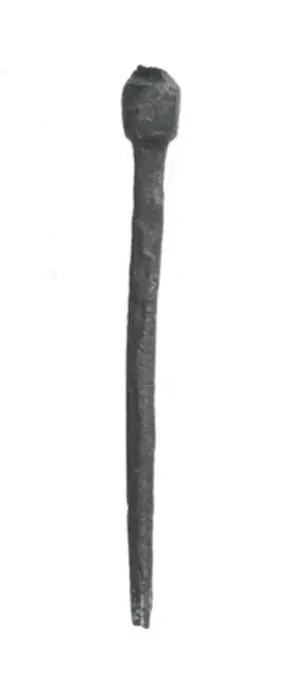
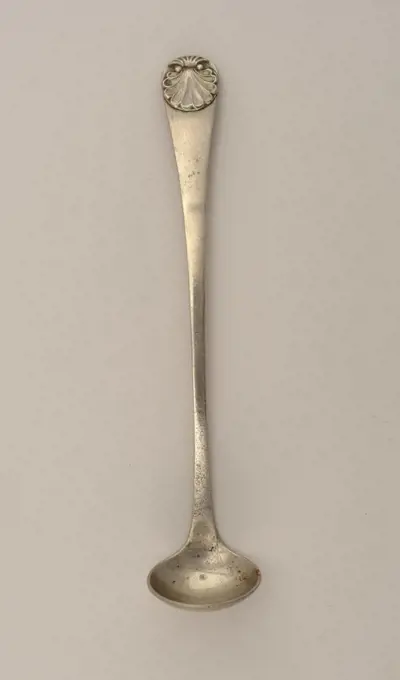
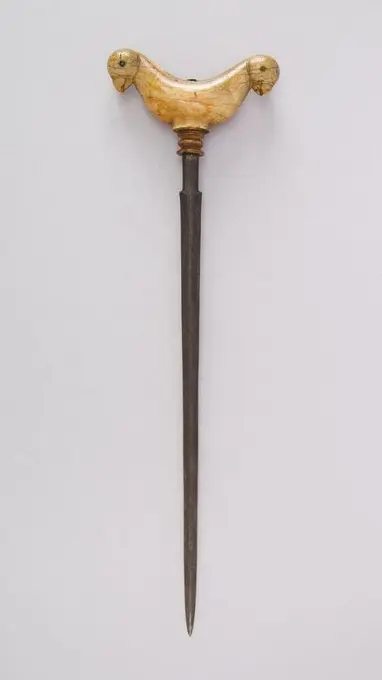
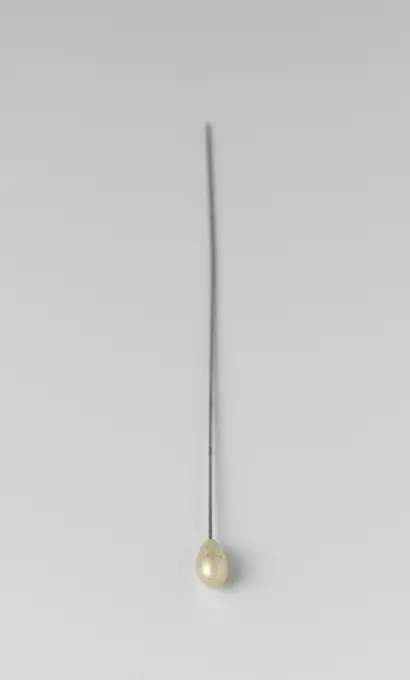
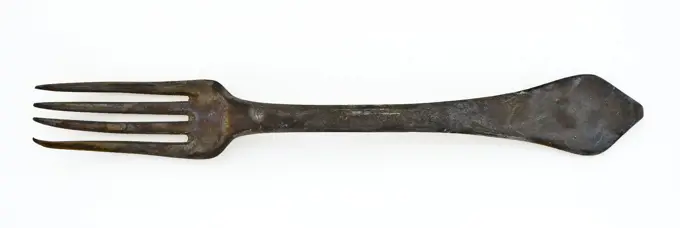
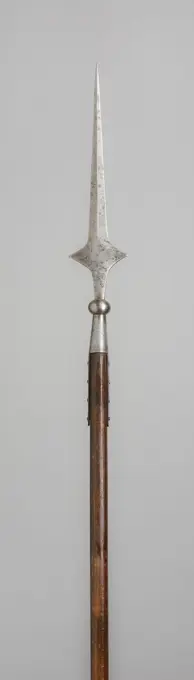
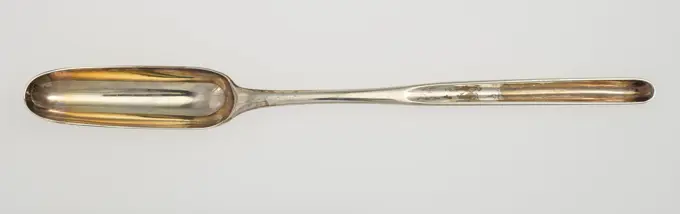
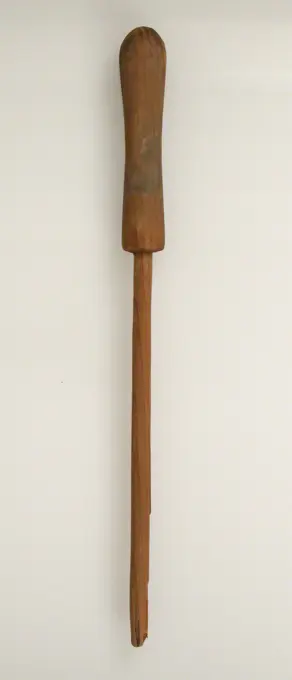
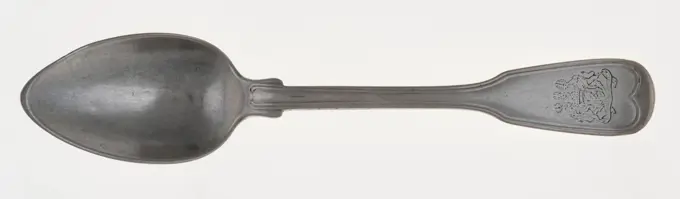
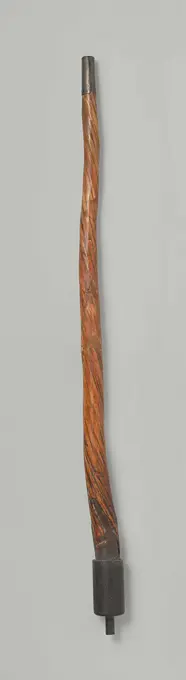
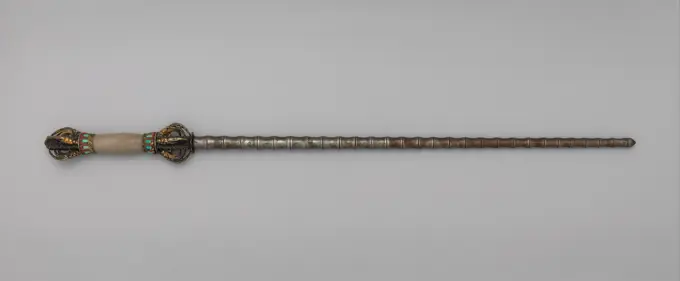
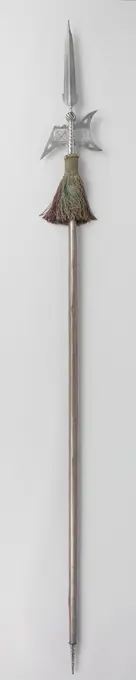
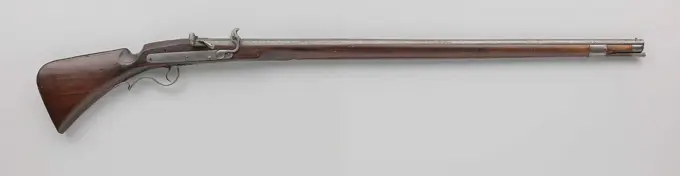
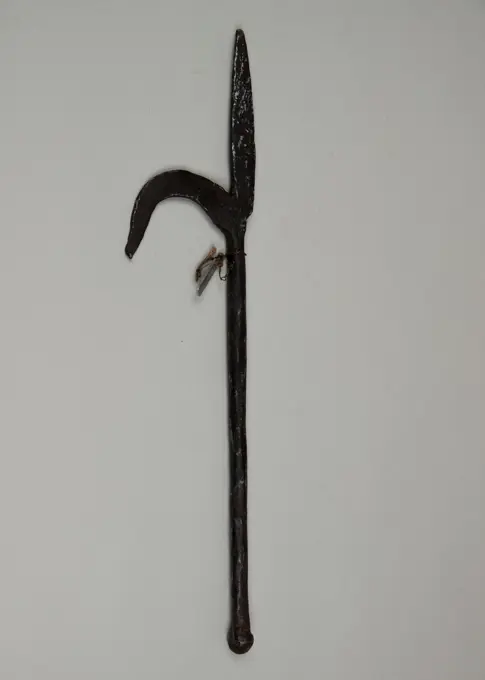
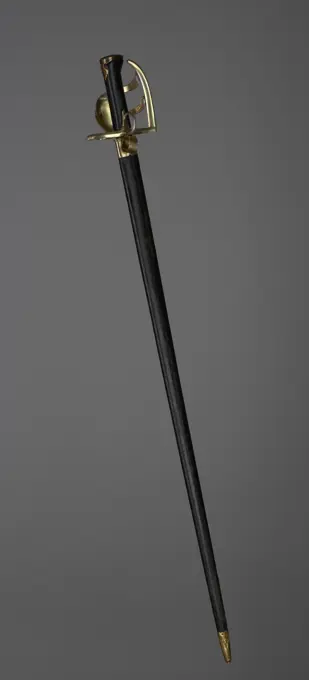
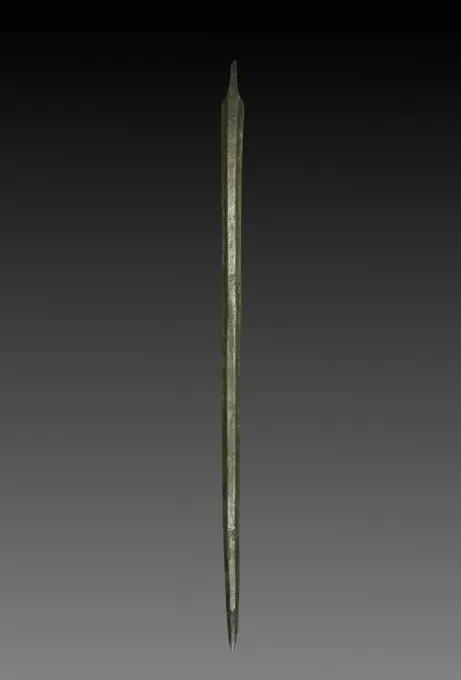
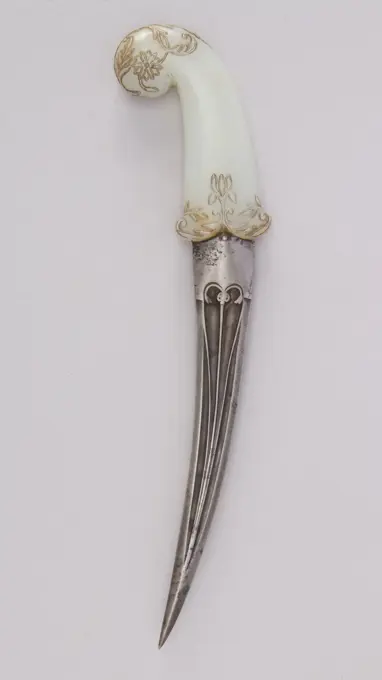
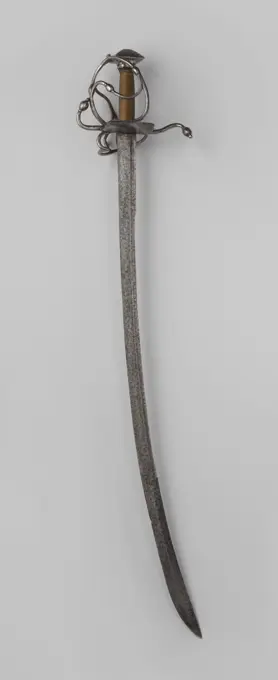
Sinclairsabel, anonymous, 1575 - 1599 sabre Sinclair label. The hilt has a flattened, pyramid -shaped hilt button incised with sloping lines; The wooden handle is wrapped with yellow-covered wire and has narrow braided grip rings on top and bottom; The korfevest consists of rods with a button at the end with a small button on it; The horizontal, lobed plate is soldered to the parent block and worked with two round holes. The one -sided blade is bent and suddenly jumps in to broaden again; Equipped with a narrow groove à la Montmorency.  oak (wood). iron (metal) solderingSlag- of beulszwaard.Sword with twisted wooden handle of later date, braintered toll-shaped anti-clock and slight downwardly curved upper bar. On the broad, double, straight blade in the trenched year 1662 and a black brand with the arms of Haarlem (portrait sword with 4 stars on either side). At the bottom of the trench white brand with coat of arms with a vertical bar with 2 stars on either side.RapierGoose feather writing pin. .Furket, defect.Furket or musket fork whose left fork has been demolished. The shaft is made of wood that is blackly painted with an iron point at the end.Rifle, anonymous, 1600 - 1649 matchlock rifle Rifle with wick lock, copper ornaments and cutting. Europe Loop, lock, tractor: Iron (metal). Kolf, drawer, pumping, loading stick: Wood (plant material). Kolf hood, tractor bracket: Copper (Metal)Busk ca. 1660 French. Busk 84193Degen Kingdom of the Netherlands; Dutch army dog. Those with fire-gone ornamental copper hilt, consisting of: button, front bracket, handle with two pearly nuts plates. Half pearl rod with button. Two bug leaves, one of which is large. On a baffle plate: W with crown surrounded with laurel wreath and trophy. Senior partially blued iron blade with fire-gulbed etched trophies and floral / vegetative decorations. On the heel the initials S.V.J., downside: à solingen.Bore Measuring Rod, Rijkswerf Fijenoord, 1843 artillery accessories A round wooden with a square opening in the middle. Rotterdam wood (plant material)Hellebaard, Anonymous, 1600 - 1699 Halberd Hellebaard with octagonal wooden stick. The 4 lips are nailed to the stick. At the end of the lips also a iron ring browned on the stick. The ax runs wide from below. The back of it is bent point -shaped and has four small protrusions. Central to the ax a round recess with a copper shape. The lower point of the ax has been demolished. The Lanspunt is narrow and striker.  wood (plant material). iron (metal). copper (metal)   UtrechtArrow Point, 1700s. Japan, Edo period (1615-1868). Steel; overall: 17.7 cm (6 15/16 in.); head: 3.2 cm (1 1/4 in.).Dessert fork; Würtembergische metallwarefabrik - WMF (Germany; Wytwónia Z Otnarz; 1880-1914); after 1880 (1890-00-00-1914-00-00);Pin. Iran, Luristan, circa 1350-800 B.C.. Jewelry and Adornments; pins. BronzeScheepsstimmermans drill with a hollowed spoon, a handle with round diameter and excellent wings.scheapsstimmans Drill With a Hollowed Spoon, A Handle with Round Diameter and Excellent Wings. Such A Drill is Shown on the Plate Between Folio 26 and 27 from Gerrit de Veer (UIGAVE 1605). Spoon gauge.Public officers with Schede., Anonymous, c. 1800 - c. 1900 sword Degen with copper hilt, silver handle and movable bump plate. The Kling Blauw is damaged, on one side inscription: F.W. Schimmelbusch, on the other side: in Solingen. With black leather sheath. Coming from F. Berikhausen, 1st lieutenant 17th Infantry department. Solingen Kling: Iron (Metal). hilt: copper (metal). Handle: Silver (Metal). Schede: Leather gilding  West-EuropaCalipers or Similar Tool, Steel, Hinged metal tool., before 1916, Tool, ToolPin ca. 3rd-7th century A.D. Sasanian. Pin. Sasanian. ca. 3rd-7th century A.D.. Bronze. Sasanian. Iran, Qasr-i Abu Nasrspoon, metal, Ladle form, with round bowl, tapering stem with rounded terminal applied with cast shell., USA, 19th century, cutlery, Decorative Arts, spoonCrutch Dagger (Zafar Takieh, "Cushion of Victory"). Culture: hilt, South Indian; blade, European. Dimensions: L. 17 3/4 in. (45.1 cm); W. 5 1/4 in. (13.3 cm); Wt. 11.4 oz. (323.2 g). Date: 17th-18th century. Museum: Metropolitan Museum of Art, New York, USA.Officier fire rifle for army or militia, Hendrick Brandt (Geweermaker), c. 1790 flintlock gun The final plate is engraved with a trophy and a signature in writing. The Wapen van Amsterdam is stamped on a ring on the back of the loop, three brands: MR, P and a brand that cannot be identified are stamped on the left; A bayonethaft is attached under the tromp. The flask is easily cut and inlaid with silver wire. Apart from the silver thumb plate, the batter of gilt -and -east is and consists of three sliding treadmills, a thumb plate engraved with the writing letters IF in a mirrored monogram and crowned with a Silver Duty Crown; The bunch of hinged brackets is made of iron; All the batter, except the loops, are engraved with trophies; All iron screw heads are chiseled, which excluded the handle; The loading stick is made of steel. Amsterdam silver thread. brass (alloy). gilding (material). silver (metal). iron (metal). steel (alloy). wood (plant material) engraving / inlay (process) / giTambora late 19th century Indian. Tambora 500801Scabbard, Before 1918. Indonesia, Sulawesi (Celebes). overall: 68.6 cm (27 in.); blade: 50.8 cm (20 in.).Infantry tab Corps Mariniers no. 2 Model 1819, Anonymous, 1819 - 1830 sabre Infantry label No. 2 Model 1819 with copper hilt, consisting of: button, handle hood, grip with continuous marker, front bridge, half pare bar. Curved iron blade with trench. Coming from Marine Corps, in 1830-1832 (Snouckaert). Scheepssabel no. 2 m 1818, the weapon has a blade with channels and comes from the Marine Corps.  kling: iron (metal). gevest: brass (alloy)Hat pin with ball round white button from Bakeliet, Anonymous, c. 1910 - c. 1930 Hat pin with BOTELIET BOTELIET () Netherlands (possibly) pen: Metal. Button: Bakelite (TM) forging Hat pin with BOTELIET BOTELIET () Netherlands (possibly) pen: Metal. Button: Bakelite (TM) forgingVine Pattern Salad Spoon, c. 1872-80. Tiffany & Co. (American, New York, est. 1837). Silver; overall: 26.1 cm (10 1/4 in.).Hairpin 200-500 Roman. Hairpin 465109 Roman, Hairpin, 200500, Copper alloy, Overall: 3 7/8 x 3/16 x 1/8 in. (9.9 x 0.5 x 0.3 cm). The Metropolitan Museum of Art, New York. Gift of J. Pierpont Morgan, 1917 (17.191.60)Sword (Shamshir) 19th century Indian. Sword (Shamshir). Indian. 19th century. Steel, agate. SwordsPewter fork, marked, fork cutlery soil find tin metal, angelswand archeology Rotterdam Soil discovery Rotterdam.. Steel and wood (pine) .a hundred;  19th century (1800-00-00-1810-00-00);Sum  a firearm battle unknownBlunt Pile and Shaft of a Javelin ca. 1479-1458 B.C. New Kingdom. Blunt Pile and Shaft of a Javelin. ca. 1479-1458 B.C.. Bronze or copper alloy, wood, reed. New Kingdom. From Egypt, Upper Egypt, Thebes, Sheikh Abd el-Qurna, Tomb of Senenmut (TT 71), below, deposit of hunting weapons, MMA excavations, 1935-36. Dynasty 18Dunning, desired: G.., Gerrit Honig, 1727 sword Iron. Oramamentated cash -in copper hilt. Louis XV style. Button with bracket, grip, pare rod marked GH (Gerrit Honig), Ezelshoef, Ricasso and Botplaat. The whole in symmetrical princes. Shoot plate is bent into two curls on one side. Iron three-sided blade with etched decorations. On the heel a remnant of gilding. Amsterdam iron (metal). silver (metal) forging / gilding / etchingEared Spear 1500-1600 Germany. Steel and wood (pine) .Bassoon Butt Joint, Johannes van de Knikker, c. 1780 - c. 1800 Fagot of maple wood with four copper valves and with eight uncovered holes. Copper monpiece and copper rings of which the lower one is missing. Tilburg maple (wood). copper (metal) Fagot of maple wood with four copper valves and with eight uncovered holes. Copper monpiece and copper rings of which the lower one is missing. Tilburg maple (wood). copper (metal)Marrow spoon, 1782-1783, 8 7/8 × 7/8 × 3/4 in. (22.54 × 2.22 × 1.91 cm), Silver, England, 18th century, Marrow spoons were commonly used by European diners in the eighteenth century for the easy removal of marrow from the bone. They were often made of silver, with a long, thin bowl. Many, such as the present, were double-ended. Hester Batemanthe maker of the larger spoonwas the most prolific female silversmith of her age. During her thirty-year career after she took over her late husband’s workshop in 1760, her silver would have been found in nearly every middle-class household in London.Standing candlestick 1730-50. Standing candlestick 1170Kama kanjarSeedDessert fork; Würtembergische metallwarefabrik - WMF (Germany; Wytwónia Z Otnarz; 1880-1914); after 1880 (1890-00-00-1914-00-00);Distaff () 3rd-5th century Coptic. Distaff (). Coptic. 3rd-5th century. Wood. Made in Byzantine Egypt. Woodwork-MiscellanyGoldweight Blacksmith's Tongs, 19th-20th century, 1/2 x 5/8 x 3 in. (1.27 x 1.59 x 7.62 cm), Brass, Ghana, 19th-20th centuryPin ca. late 3rd-early 2nd millennium B.C. Bactria-Margiana Archaeological Complex. Pin 326783Wooden walking stick with an ivory handle, walking stick wood ivory, textile image cutting Cylindrical wooden walking stick that tapers downwards with an ivory tip and an ivory bent edited handle Two letters are engraved on the head of the handle and black engraved handle engraved: MJ physical tool animal material accessory clothingStaf, anonymous, c. 1900 A wooden staff with a golden button, decorated with engraved leaf motifs and the initials 'PB X' inlaid with 10 precious stones, in a cover of Rodezijde and cotton. A gift from Pakubuwono X, Susuhunan from Surakarta. Soerakarta wood (plant material). gold (metal). precious stone (material). silk. cotton (textile) engraving / forging A wooden staff with a golden button, decorated with engraved leaf motifs and the initials 'PB X' inlaid with 10 precious stones, in a cover of Rodezijde and cotton. A gift from Pakubuwono X, Susuhunan from Surakarta. Soerakarta wood (plant material). gold (metal). precious stone (material). silk. cotton (textile) engraving / forgingLontslot rifle belonging to Cornelis Tromp, Anonymous, c. 1650 - c. 1679 matchlock rifle Lontslot rifle with an octagonal loop and a strongly bent slender flask, characteristic of guns made in Tonkin (North Vietnam). Association is also present. North Vietnam (Possible) copper (metal). haan en banden: silver (metal). walnut (hardwood). lacquer (coating). iron (metal). bone (material). mother of pearlIvory pin late 2nd-3rd century A.D. Roman Pin.. Ivory pin 249032Stamper of bronze. Stamper of cast bronze. This is slightly wider to the ends.Unicorn-horns, anonymous, c. 1000 - c. 1099 tooth (material) Part of tormented Narwaltand. Broken copy. Northwest Europe ivory   Mariakerk. Utrechta hundred;  19th century (1800-00-00-1810-00-00);Ladle 1760-61 British, London. Ladle 192104Model of a Main Topmast.Model of a round large steam, made out of a piece, with a thick square heel with two discs and lockwood hole, an octagonal homer and square top.Bodestaf van het wijnkopersgilde.Round wooden stick with sections, decorated with wood carving. On top, a bacchus is on a barrel with a drinking scale in the right and a grinding tray in the left hand. According to that Adam and Eve before and after the fall, including marriage (-couple) and a woman with two children. Down five smoking and drinking men who make a round dance. The staff ends in a grape trim. Silver rings should be between the scenes, of which only the lower one is still present.Wooden Spindle Made 1000-1476 Peru. Wood .Hair Pin, 7 3/4 x 2 x 3/4 in. (19.69 x 5.08 x 1.91 cm), Silver, ChinaSword (Shamshir) 19th century Persian. Sword (Shamshir). Persian. 19th century. Steel, leather. SwordsShovel on white backgroundClub -cane 20Dagger (Katar) 17th century Indian, Thanjavur; blade, European. Dagger (Katar) 31418Blade for a Double-Edged Sword (Ken) 5th century Japanese The ken, a sword with a straight double-edged blade based on Chinese prototypes, was used in Japan from at least the third century until the sixth century. At the end of that period, the double-edged sword was gradually superseded by the single-edged type, from which all later Japanese swords developed. This ken was discovered in one of Japans most famous early burial mounds, known as the Eda Funayama kofun (burial mound), located in Kumamoto Prefecture, on Ky?sh? Island, in southern Japan. The mound, which was excavated first in 1873, yielded many rare items, including jewelry, crowns, ceremonial shoes, armor parts, mirrors, and several swords, all of very high quality.Swords of this period are extremely rare and show the earliest stage in the development of Japanese sword blades. This blade was given to The Metropolitan Museum of Art in 1906, as part of an exchange of art objects with the Imperial Museum in Tokyo that was arrUnicorn horns.For centuries, these three objects appeared on Catholic feast days on the high altar of the Mariakerk, Utrecht. Candlesticks were placed on their pointed ends. People believed the horns were those of a unicorn, a mythical creature then regarded as a symbol of the Virgins chastity. They are, in actual fact, the teeth of a narwhal, a type of whalesteel nail isolated on grey background top view steel nail isolated on grey background top view Copyright: xZoonar.com/gutaperx 18244080Ladle 304 B.C.-A.D. 364 Ptolemaic or Roman Period. Ladle. 304 B.C.-A.D. 364. Bronze or copper alloy. Ptolemaic or Roman Period. From EgyptModel of a Made Mast, anonymous, c. 1738 demonstration model Round mast with octagonal top, hommer with ears, and driving bed. The mast itself consists of an octagonal mast king surrounded by eight cheeks. The parts are held together by Kuipbands. A number of short shelves around the mast form a flat riding bed from the front, the ears on the sides and behind half an eight -eight. This model can be varied and originally belonged to NG-MC-498. Rotterdam (possibly) wood (plant material). brass (alloy). paint (coating)Taiea Ceremonial Club, 19th century, 48 1/16 x 1 7/8 x 1 3/16 in. (122.08 x 4.76 x 3.02 cm), Wood, shell, New Zealand, 19th centuryDessert spoonFireman's Pick Ax Made 1600-1868 Japan. Wood and iron .Tussenzetsel van kloskant met dikke vierpuntige sterbloempjes tussen twee rijen halve cirkeltjes.Natural climbing side interlock: Old Flemish side. The repeating and symmetrical pattern exists along the top and bottom of the strip of a row of half circles, with a row thick four-pointed starflowers in between on the center line of the strip. The motifs are made in linen stroke with openwork edges. The motifs are connected by thick short braids that seem to form the beginning of a grille. In the center of the flowers, a simple (ornamental) base is applied. Upper and bottom of the strip are straight finished.Sauerkraut Stomper. Dated: 1939. Dimensions: overall: 38 x 23 cm (14 15/16 x 9 1/16 in.) Original IAD Object: 24" long; 1 1/2" in diameter. Medium: watercolor and graphite on paperboard. Museum: National Gallery of Art, Washington DC. Author: Edward Unger.Baton (Bian) 18th-19th century Chinese. Baton (Bian) 27304Hinge, c. 1400 - before 1950   iron (metal)   iron (metal)Ivory hairpin. Culture: Roman. Dimensions: H.: 6 1/8 in. (15.6 cm). Date: ca. 1st century A.D..The head of the pin is decorated with the figure of a seated monkey. Museum: Metropolitan Museum of Art, New York, USA.Spanning Lever (Gaffle or "Goat's-Foot" Lever). Culture: Spanish, Madrid. Dimensions: L., extended 20 1/4 in. (51.4 cm); W. 2 3/8 (6 cm); Wt. 1 lb. 6 oz. (618 g). Date: probably third quarter of the 16th century. Museum: Metropolitan Museum of Art, New York, USA.Acorn Knop Spoon mid-15th century British. Acorn Knop Spoon 471578Looking Glass 1725-50. Looking Glass 4828Executioner's Kris with Sheath. Culture: Sumatran. Dimensions: L. with sheath 25 3/8 in. (64.5 cm); L. without sheath 25 5/16 in. (64.3 cm); L. of blade 22 in. (55.9 cm); W. 2 3/4 in. (7 cm); Wt. 10.7 oz. (303.3 g); Wt. of sheath 5.5 oz. (155.9 g). Date: 16th-19th century. Museum: Metropolitan Museum of Art, New York, USA.Khāēn late 19th century Thai or Burmese Legend holds that this free-reed instrument, played in the tribal music of Thailand and Laos, was invented to imitate the voice of the karaweik bird. To sound the Khāēn one exhales or inhales into a wind chamber to activate metal reeds which are attached to each bamboo pipe and concealed by the wooden chamber. Opening a finger hole above the chamber allows air to vibrate the reed and sound. Also found in Laos, this mouthorgan is related to others throughout Asia.. Khāēn 500812a hundred;  19th century (1800-00-00-1810-00-00);Hellebaard with round stick and iron point, anonymous, c. 1599 - c. 1799 Halberd Hellebaard with iron blade gathering in a point with a roasted middle bone, at the bottom of the blade two upward wings. Under the blade an iron sphere with recesses located diagonally next to each other. The ax has the shape of a half moon and has recesses on the leaf on both sides in the form of two crossed anchors. The house is ribbed. The shaft has springs on four sides over the entire length. The shoe is made of iron and descending in a point. Europe Kling, Nodus, Bijl, House: Iron (Metal). Shoe, feathers: Iron (metal). Rope. Shaft: Wood (Plant Material)   EuropeLontslotmusket, mogelijk van de Amsterdamse Stadswacht.Possibly a lontlotran from the Amsterdam city guard. Rectangular lock plate with conventional rooster. The loop is equipped with an iron backforth and visor grain; The pan is round; On top of stamped with the coat of arms of Amsterdam and at the bottom with a T. de Kolf is unfinished. The iron batter consists of two wide drawers, a S-shaped trigger bracket that is back from the flask, and the flask plate; The loading stick is equipped with an iron hood.Weight belonging to the Zaanse Klok, Reyn de Jong, c. 1770 Weight of brass belonging to a Zaanse clock. Zaandam brass (alloy) Weight of brass belonging to a Zaanse clock. Zaandam brass (alloy)Ellemaat.Length of 1 tbsp. Near the start of the size (the thickest part) on the side on which the distribution is also applied: single (unreadable) stamps.Cane, Malacca cane, gold handle and dark wood tip., Slender stick. Gold handle with blue enamel monogram SWB, and 'S. W. Bridgham 49 W 23 St', engraved., USA, ca. 1900, costume & accessories, Decorative Arts, CaneBow -Oboe, Hendrik Richters, c. 1720 Oboe, black ebony with ivory, three valves, six holes, two of which are double and two in the cup. Amsterdam ebony (wood). ivory Oboe, black ebony with ivory, three valves, six holes, two of which are double and two in the cup. Amsterdam ebony (wood). ivoryFork with two teeth; Steel with a long, rejuvenating needle to the end., Johannes Calkoen (attributed to), c. 1650 Fork of gold, with two teeth. On the stem there is a long to the end of rejuvenating needle. Amsterdam gold (metal) Fork of gold, with two teeth. On the stem there is a long to the end of rejuvenating needle. Amsterdam gold (metal)Ancus 19th century Indian, Mysore. Ancus 30840Przeszo Przyszoci unknownClub -Bow -Battle sword, anonymous, 1575 - 1600 two-handed sword Twohander with a later wooden handle and an earlier octagonal hilt button that seems to come from a battle sword. The straight, two -edged blade has pare hooks on either side and is seriously ground. Northern Germany wood (plant material). metalSword Blade, 2nd-1st Millenium BC. Iran, Luristan (), 2nd-1st Millenium BC. Bronze; overall: 82.4 cm (32 7/16 in.).top view of wooden spoon with seasoned salt top view of wooden salt spoon with seasoned salt with dried vegetables and flavours isolated on white background Copyright: xZoonar.com/ValeryxVoennyyx 13600449Mustard spoon 19th century Dutch. Mustard spoon 188269Staff of the messenger of a charity, Anonymous, 1600 - 1699  Ebbenhouten staff with round grip, underneath two twisted pieces, completely under a grape chocolas. On the top above the grip a round plastic of a woman with a child on her arm one on her skirts (symbol of charity). Netherlands ebony (wood)Estoc, early 1500s. Germany, early 16th Century. Steel, wood and leather; overall: 156.6 cm (61 5/8 in.); blade: 125.3 cm (49 5/16 in.); quillions: 26.2 cm (10 5/16 in.); grip: 30 cm (11 13/16 in.). The French word estoc means "thrust" and therefore was adopted as the name for this long thrusting sword. It has a fairly long grip and simple cross-shaped hilt. The rigid blade, designed for thrusting at armored opponents, is three-sided for strength. The estoc was sometimes carried from the saddle. From the early 1300s, it was used by cavalrymen as an auxiliary side arm when a horseman had dismounted.Dagger (Khanjar) 18th-19th century Indian, Mughal or Deccan. Dagger (Khanjar) 31686Nail 15th-16th century European. Nail. European. 15th-16th century. Iron. Metalwork-IronObject ID #18804257; iron; L x W: 19.5 x 2.3 cm (7 11/16 x 7/8 in.); The Robert L. Metzenberg Collection, gift of Eleanor L. Metzenberg; 1985-103-32