Historic Terracotta Artifacts

An assortment of ancient terracotta lamps and whistles from Costa Rica and Anatolia, highlighting historical craftsmanship and design from various cultures.
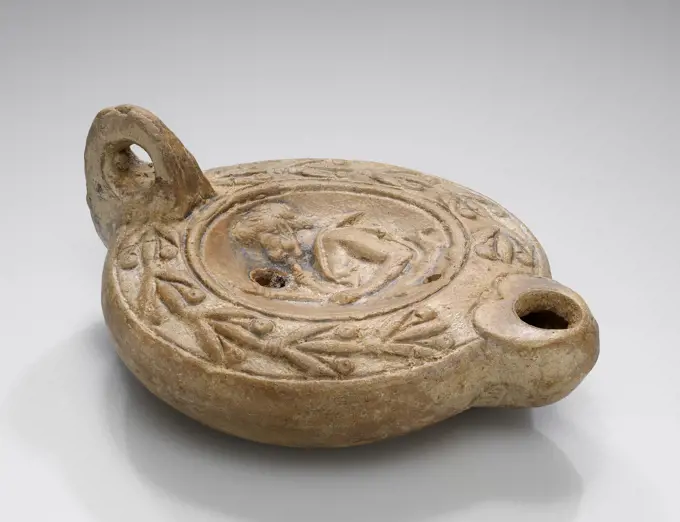
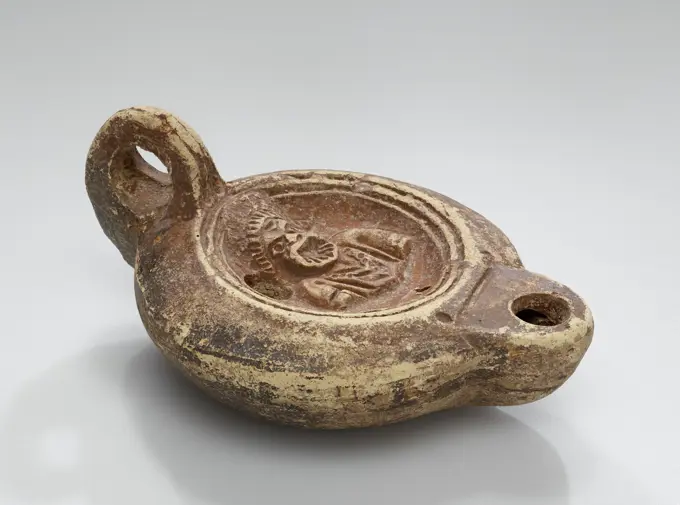
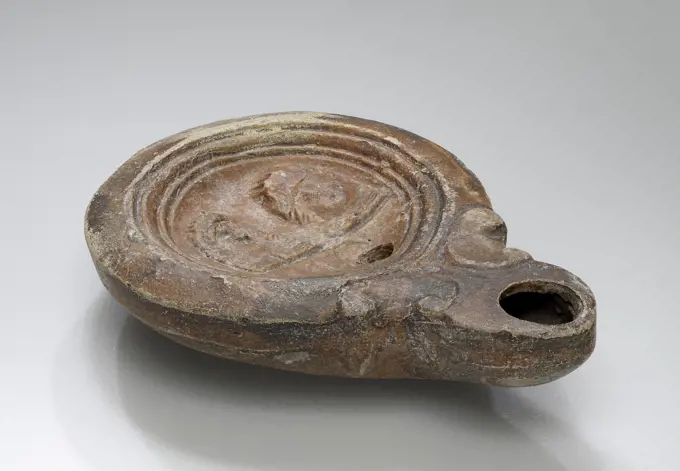
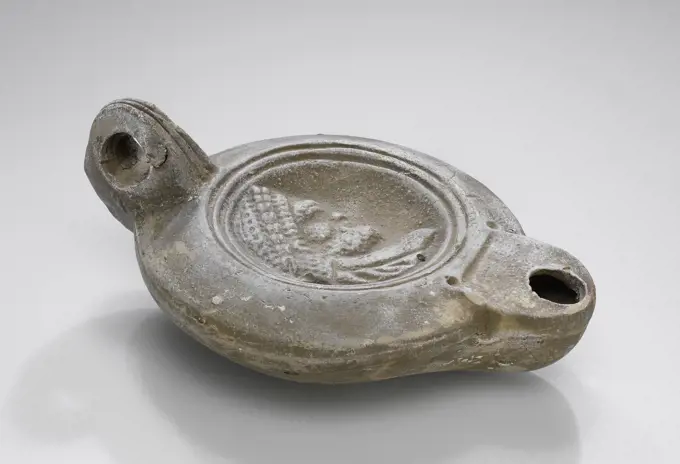
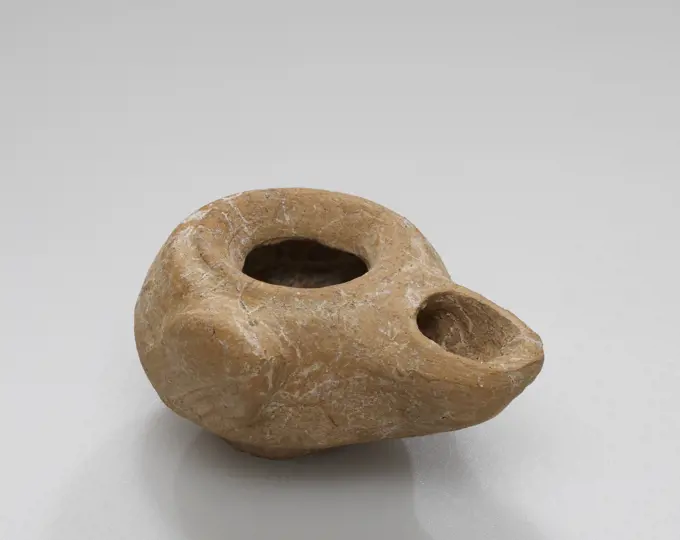
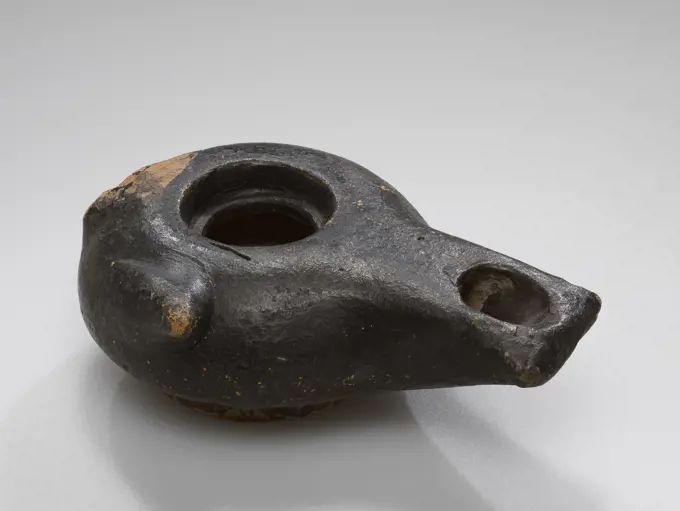
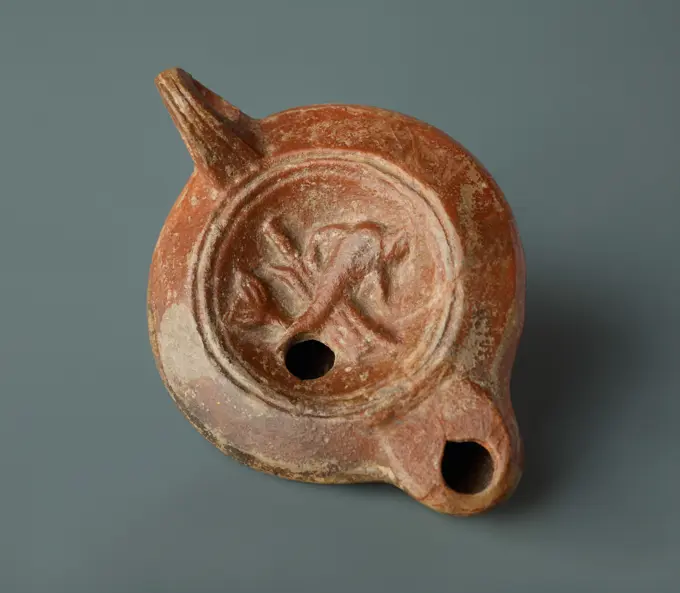
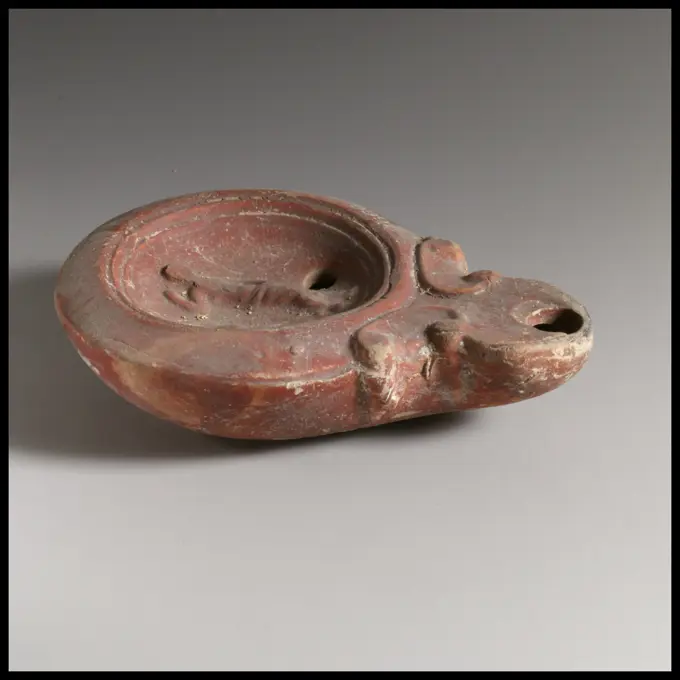
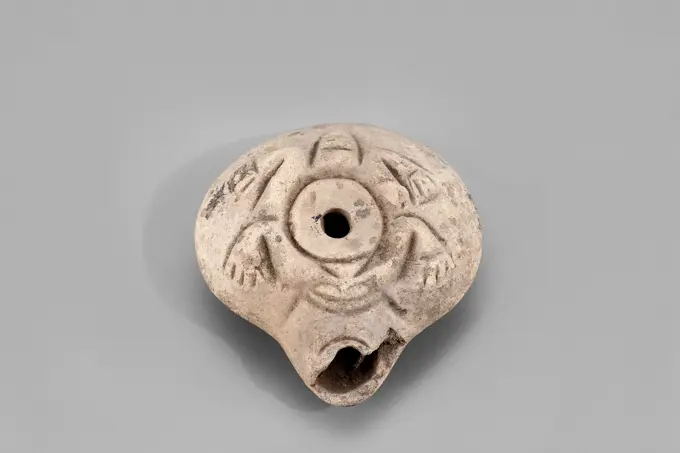
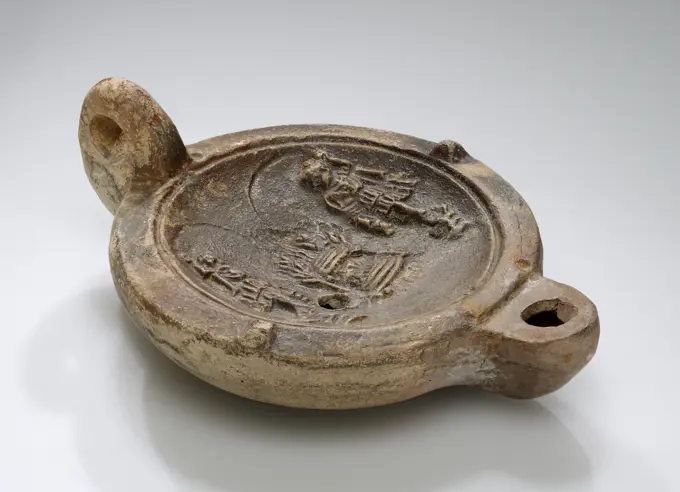
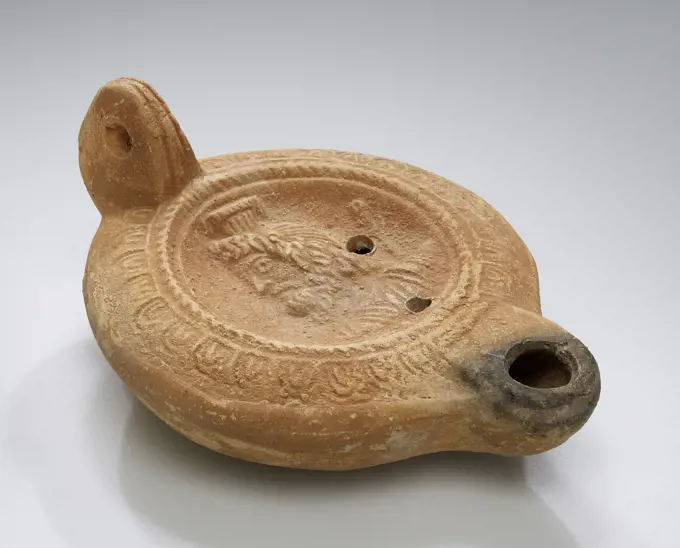
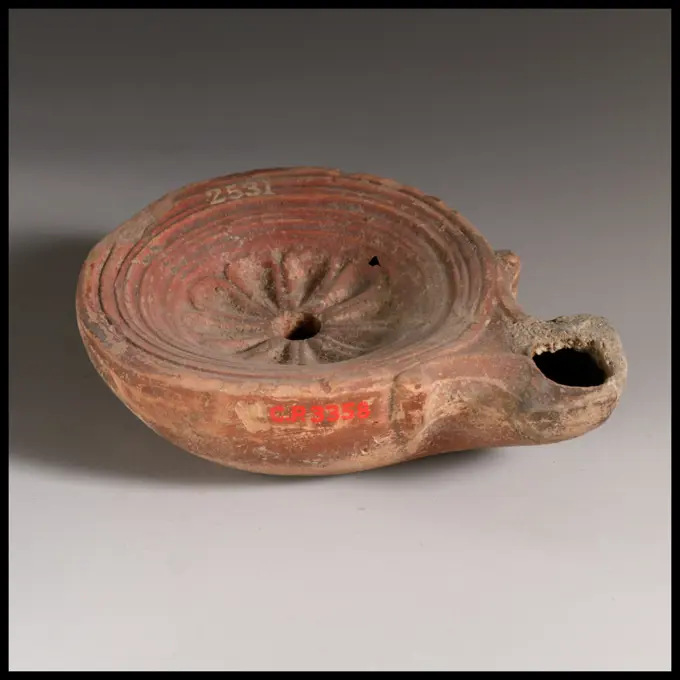
Lamp, North Africa; 2nd century; Terracotta; 2.6 x 8 x 10.2 cm (1 x 3 1,8 x 4 in.)
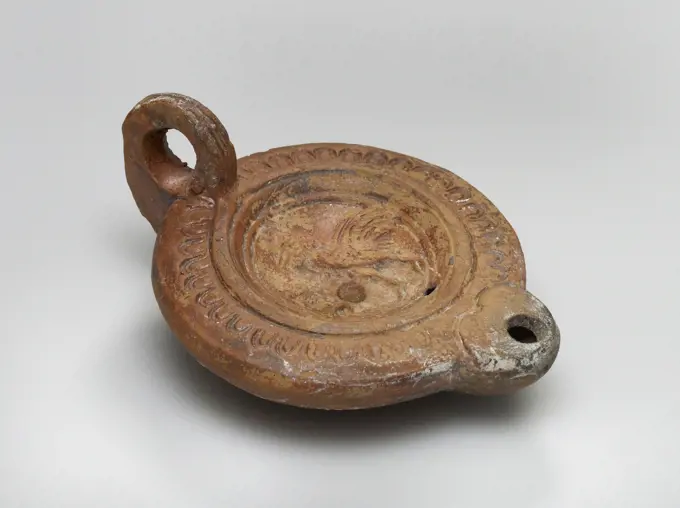
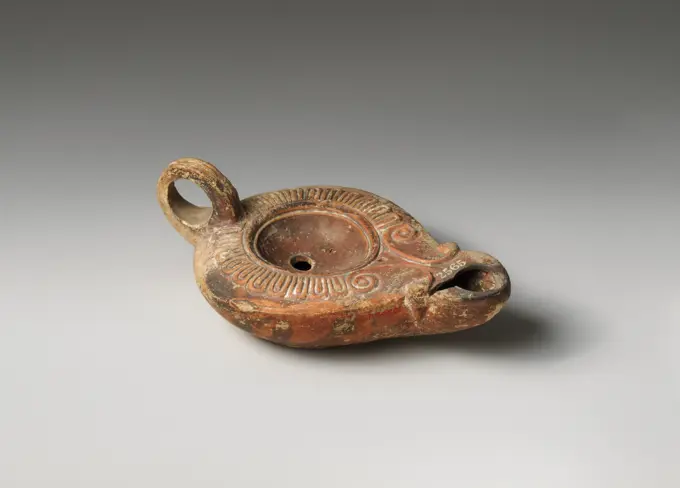
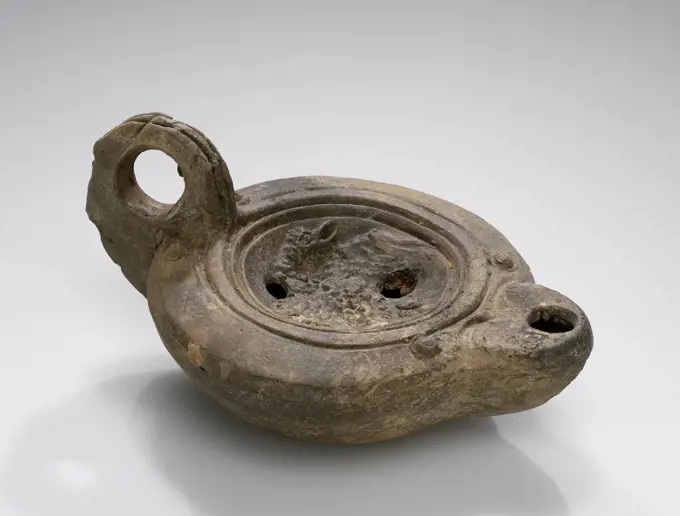
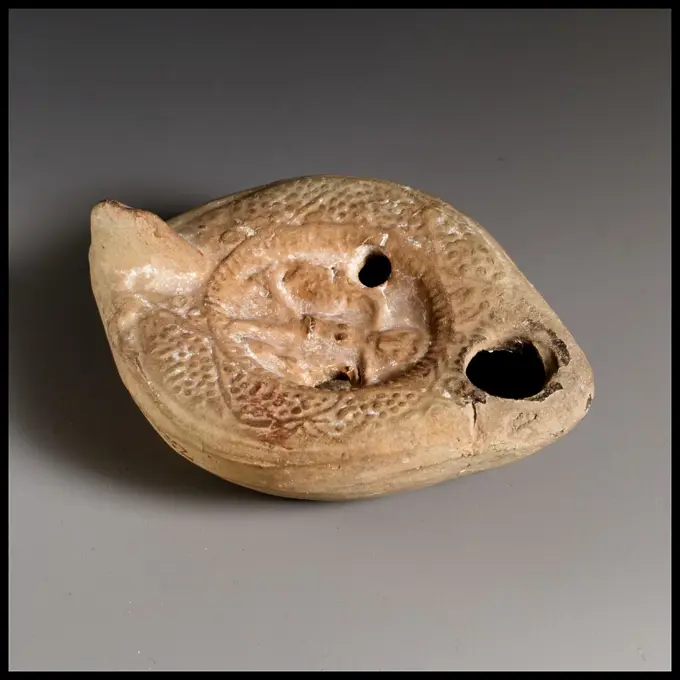
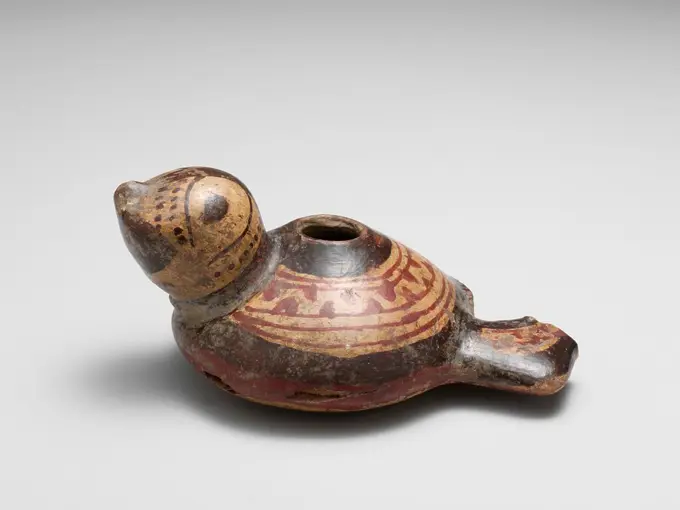
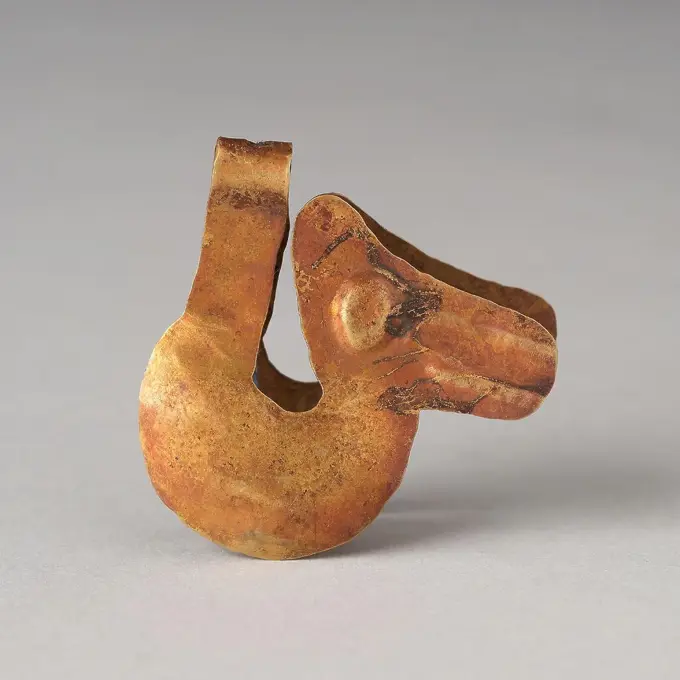
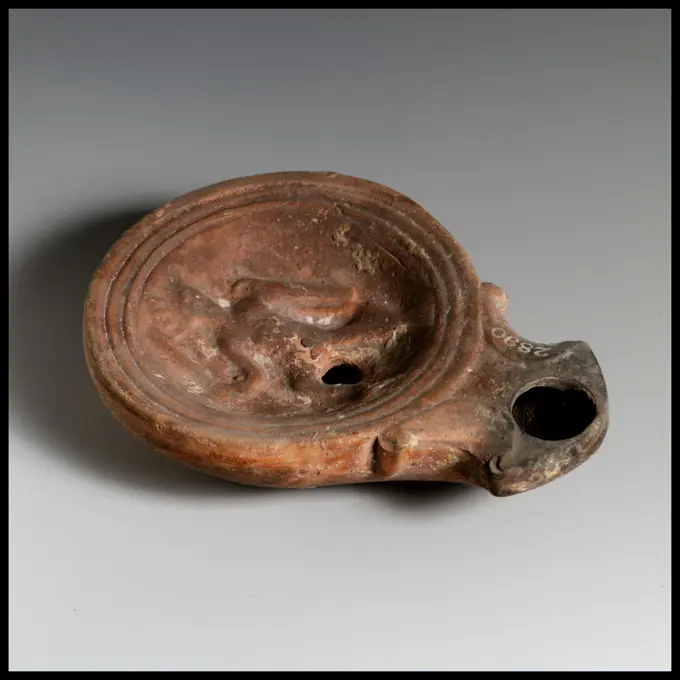
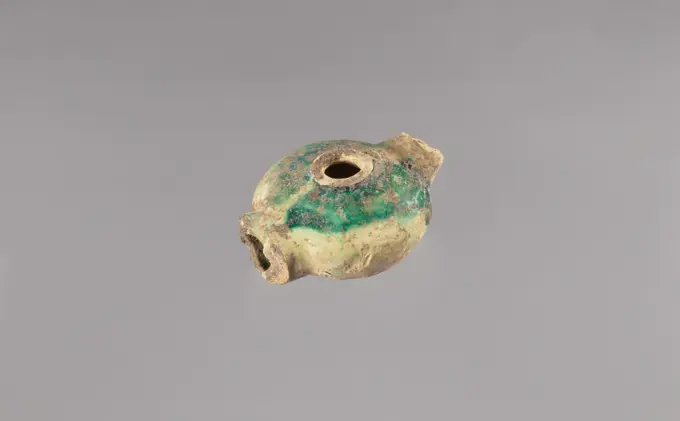
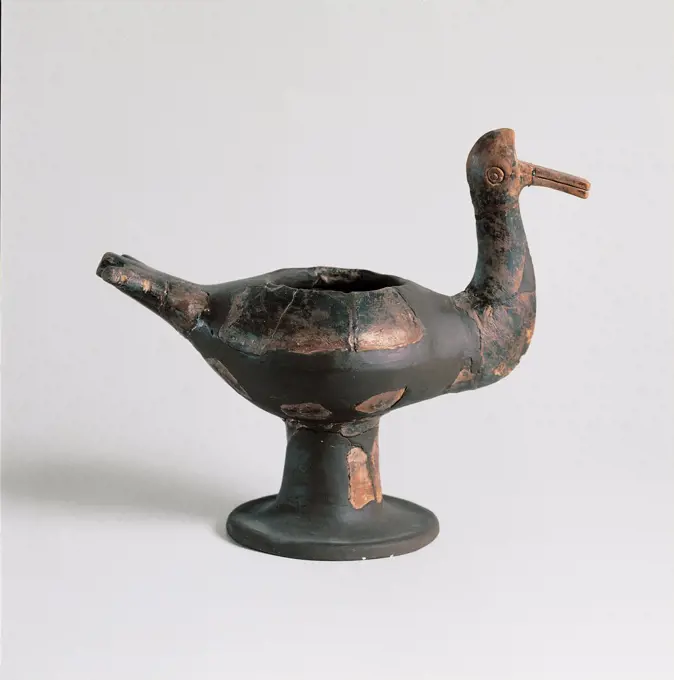
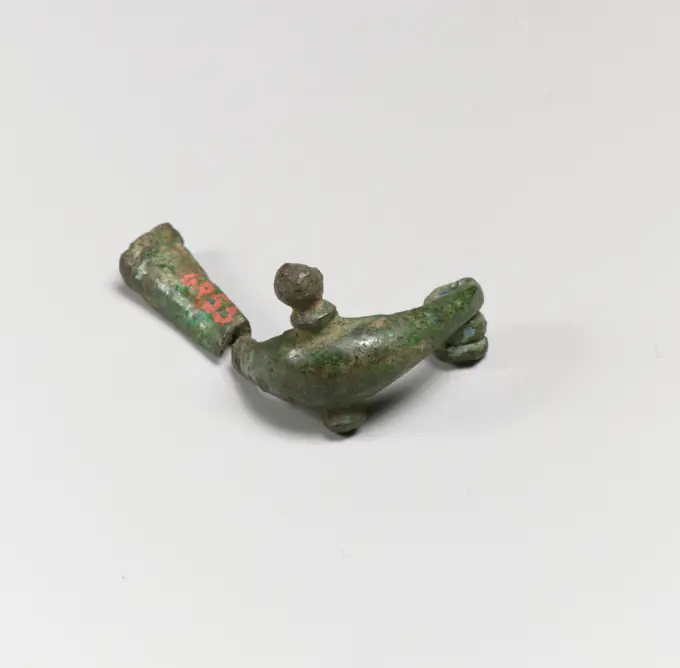
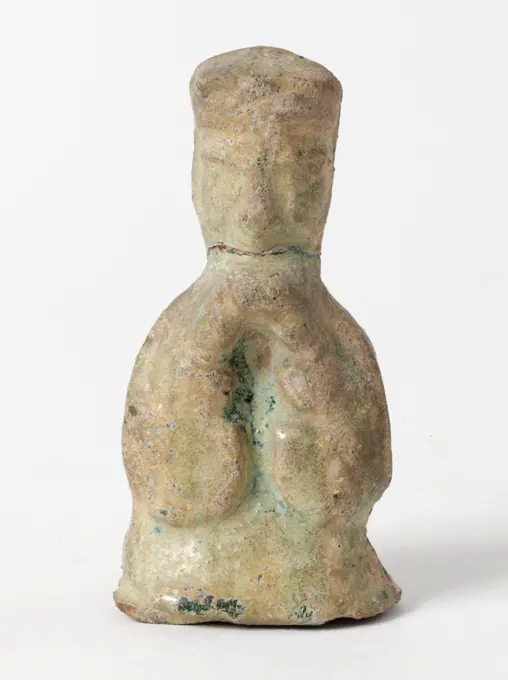
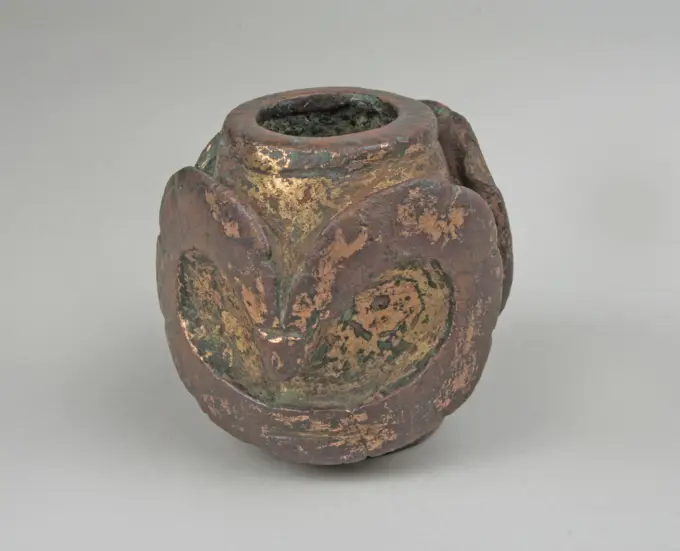
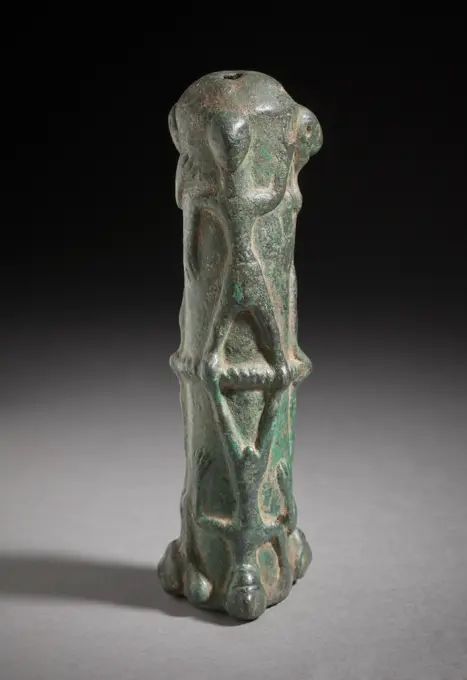
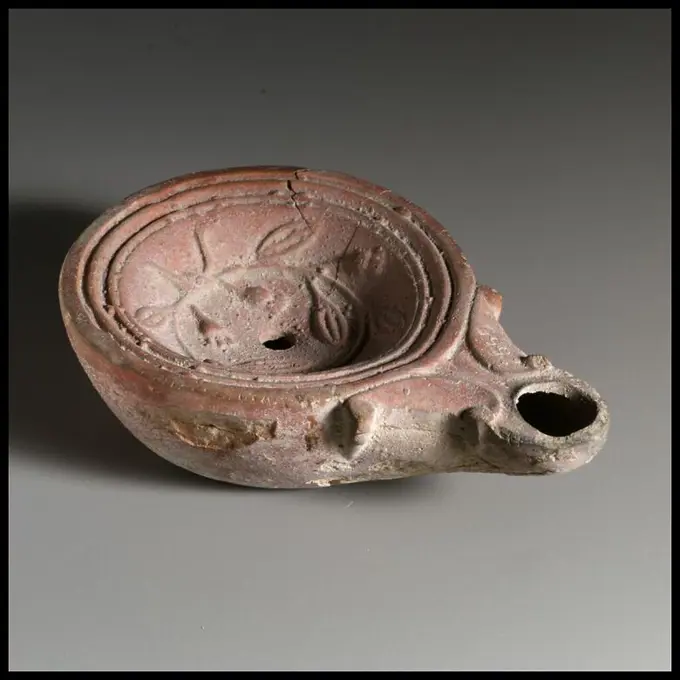
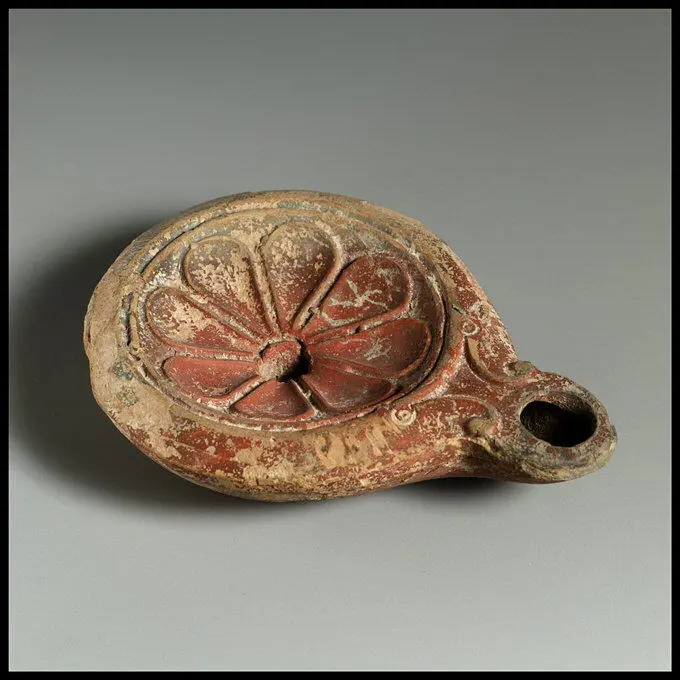
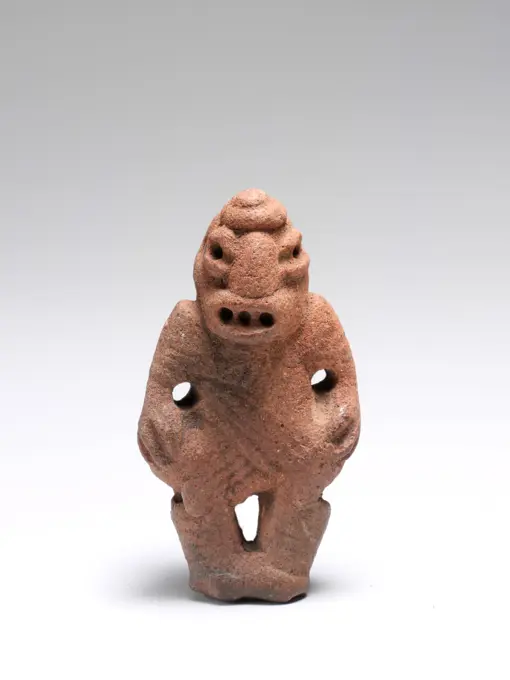
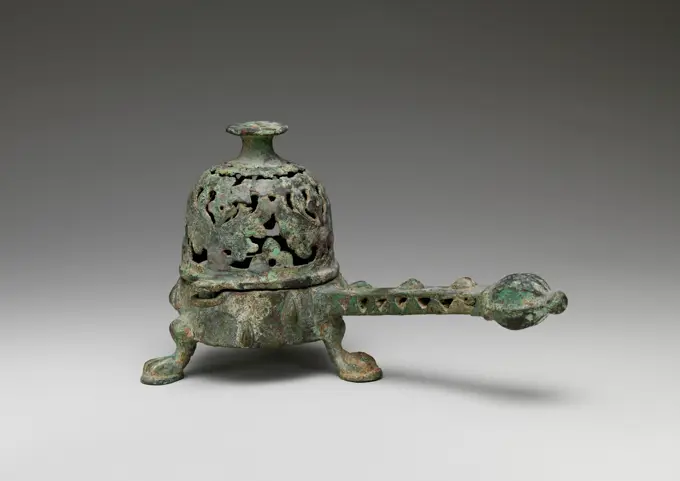
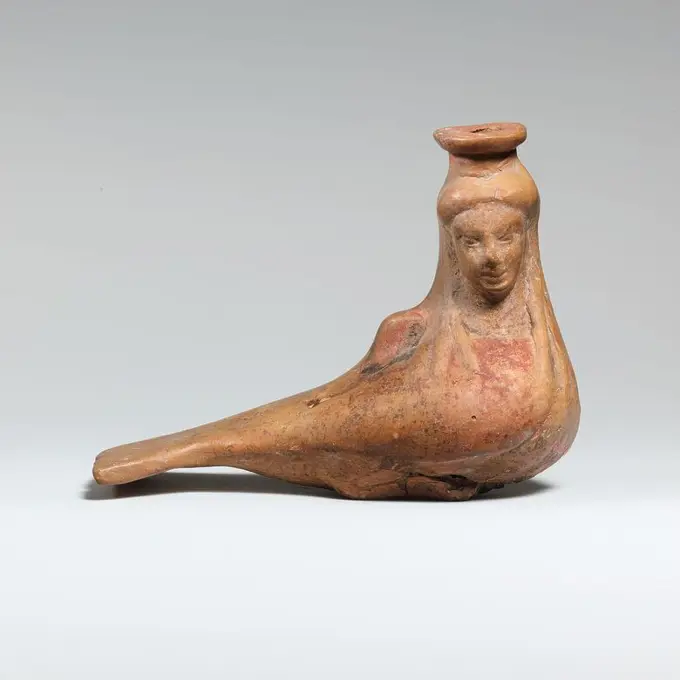
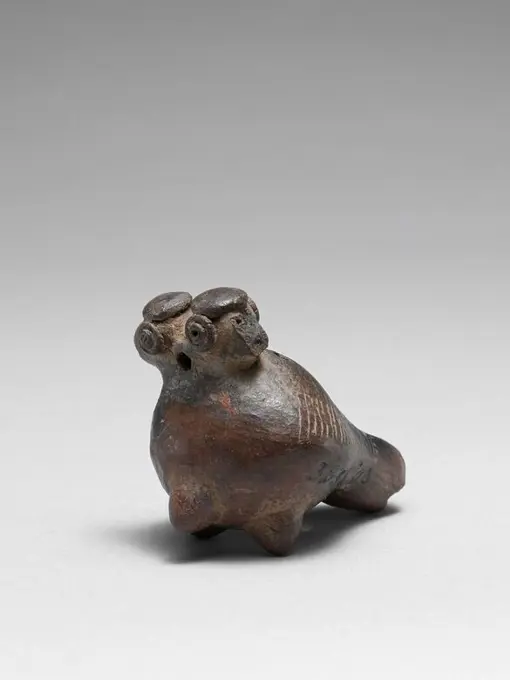
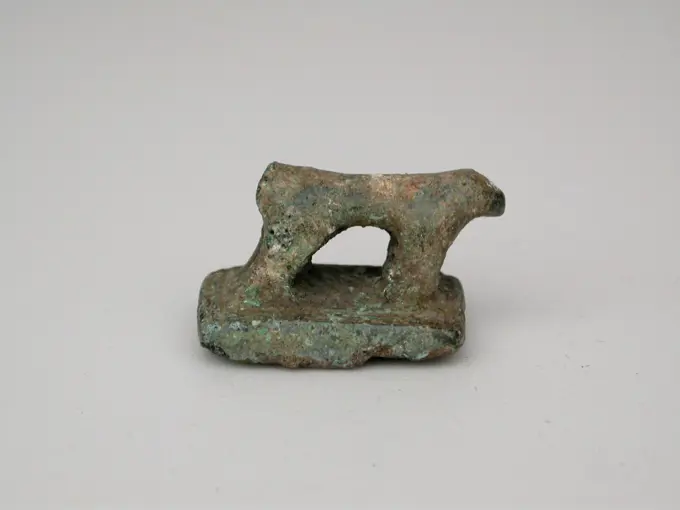
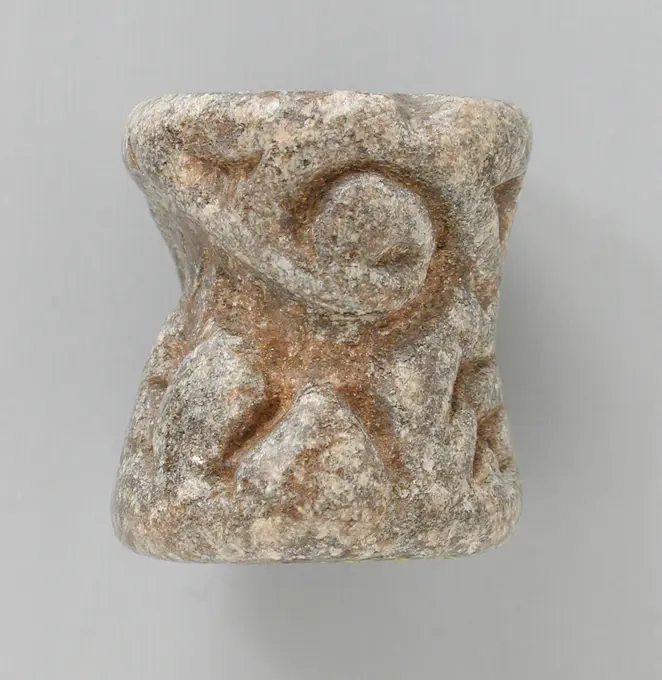
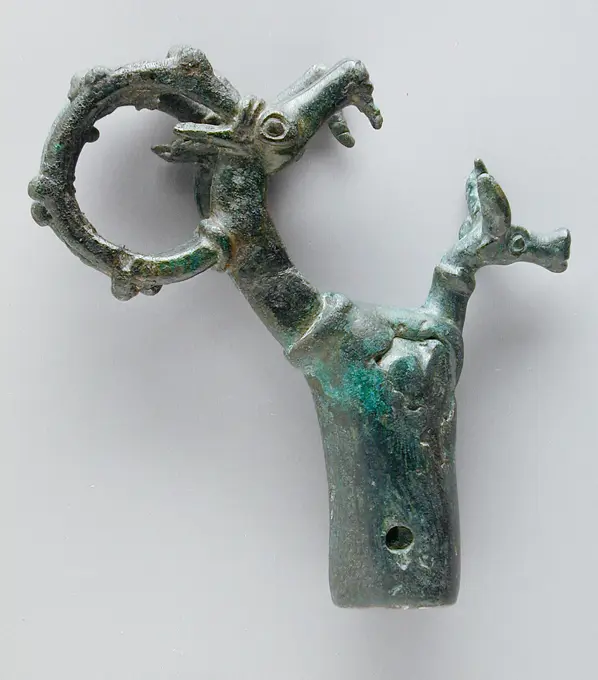
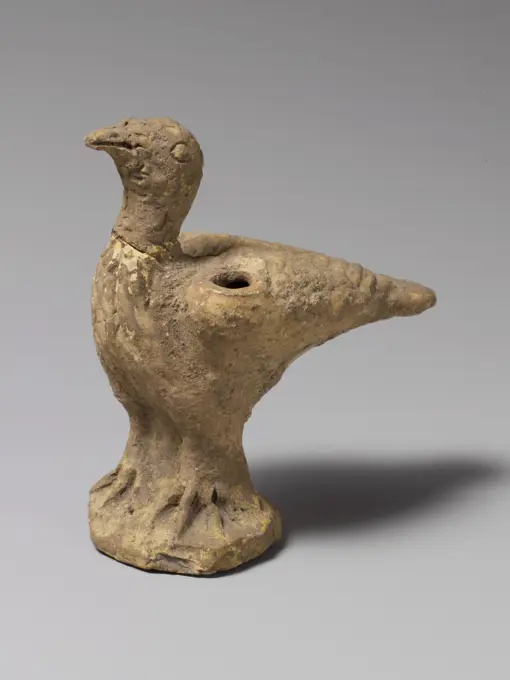
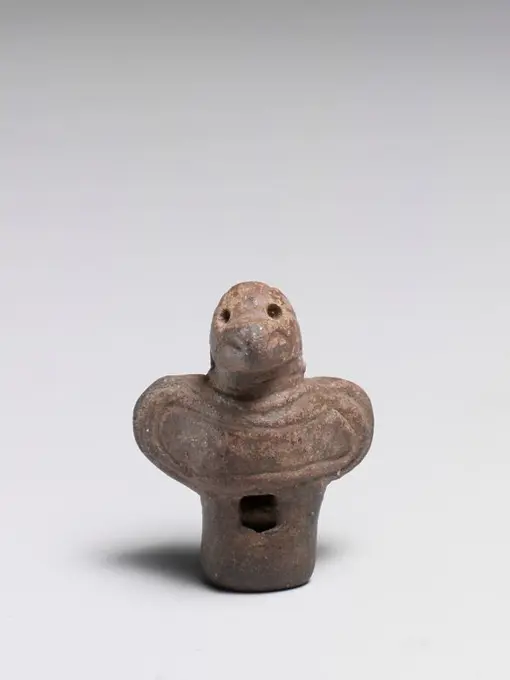
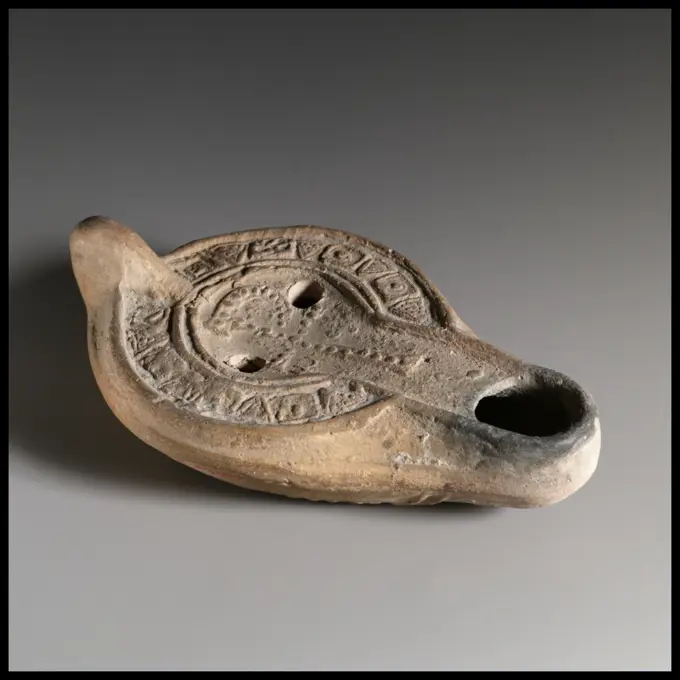
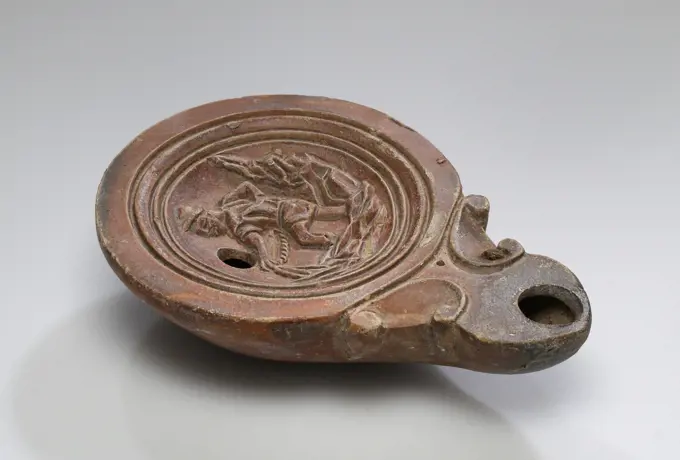
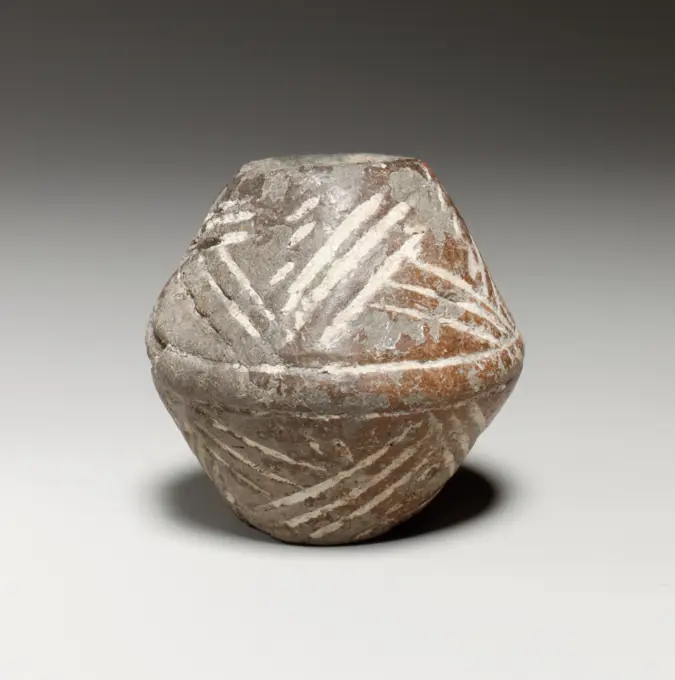
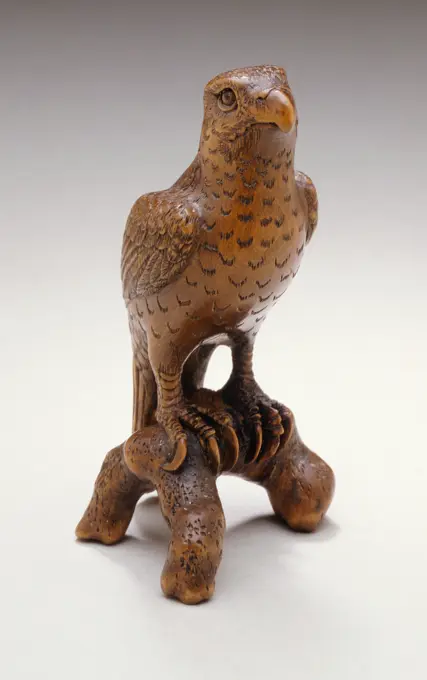
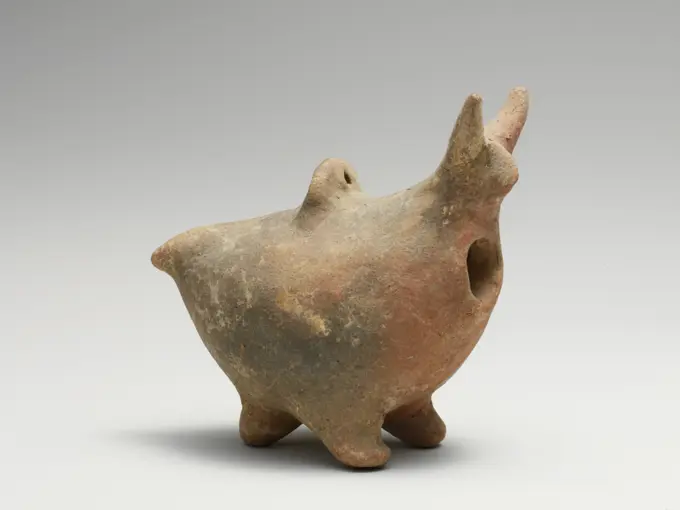
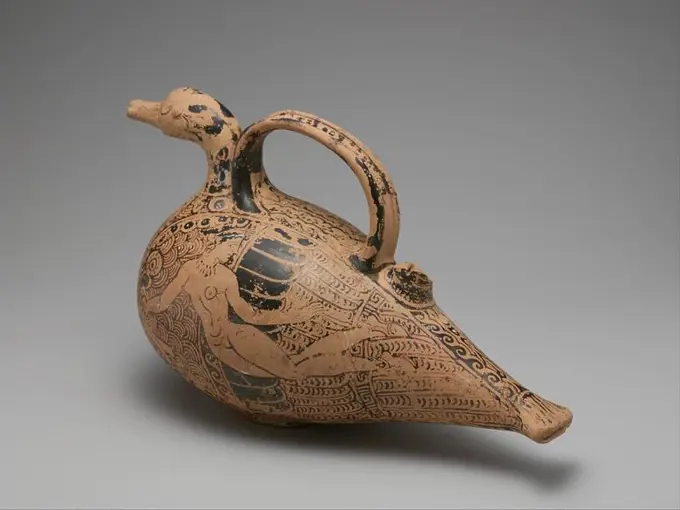
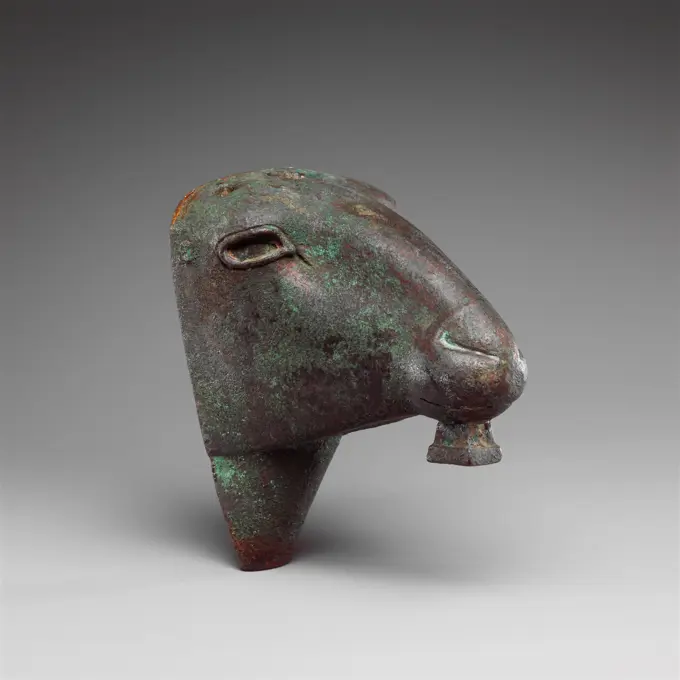
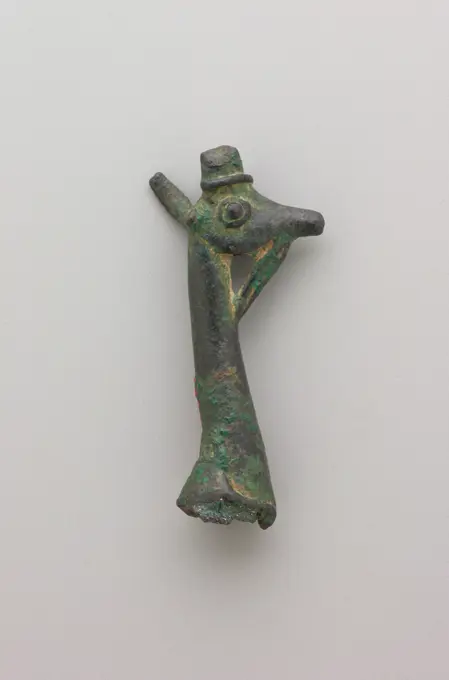
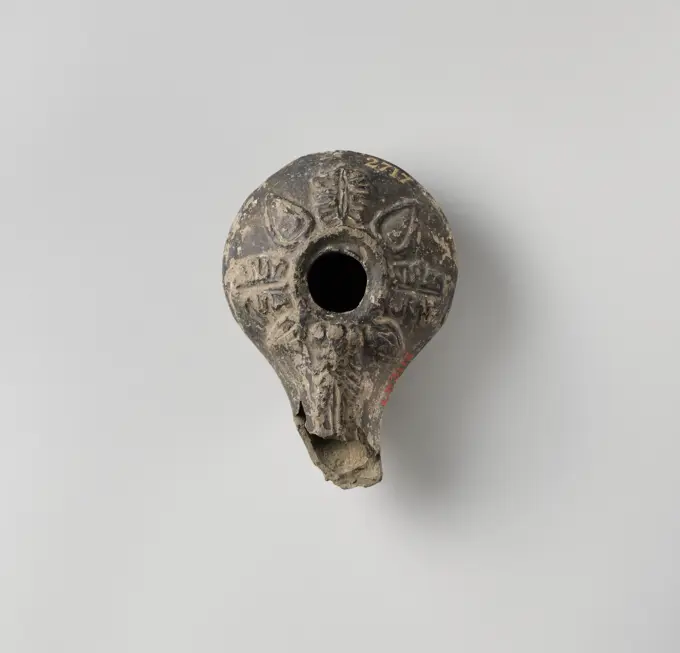
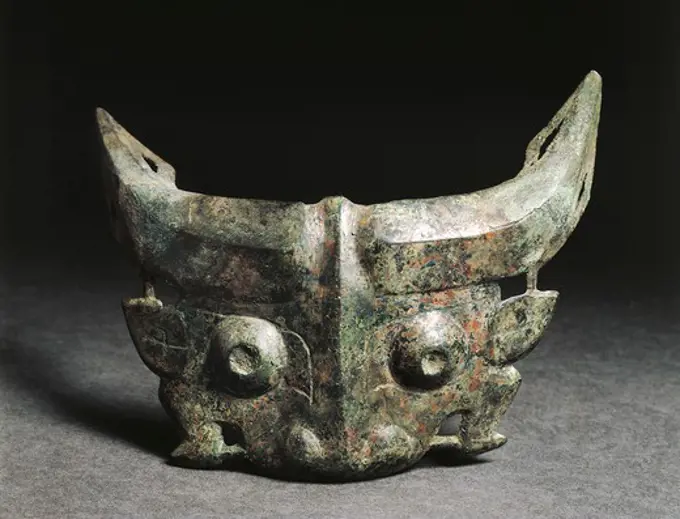
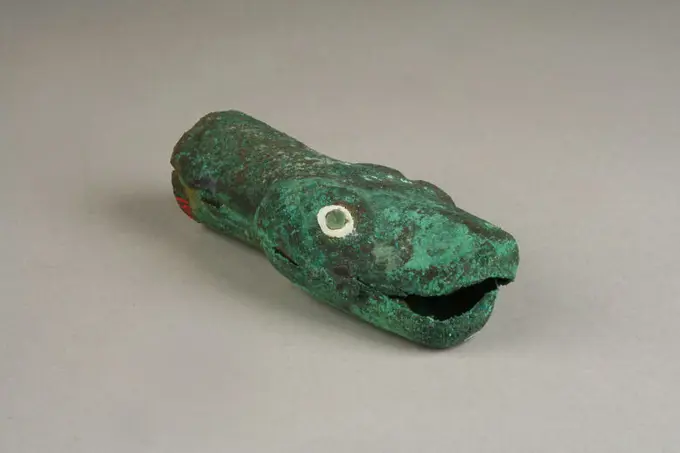
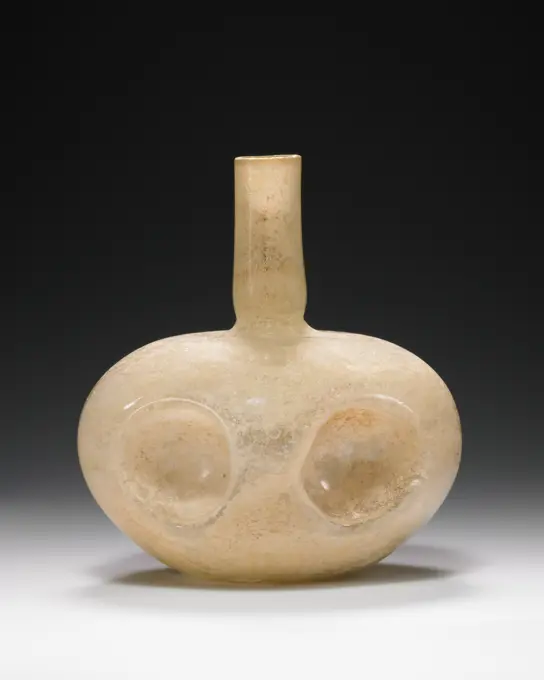
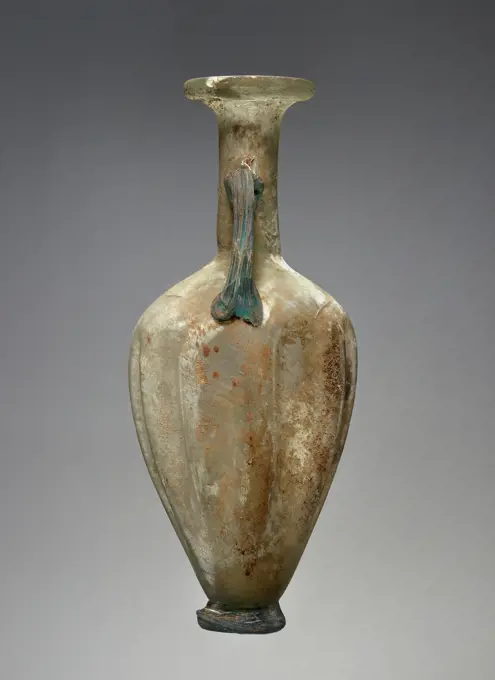
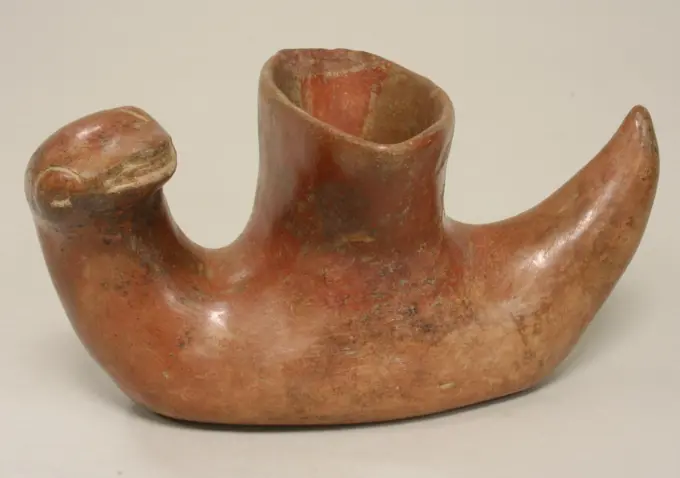
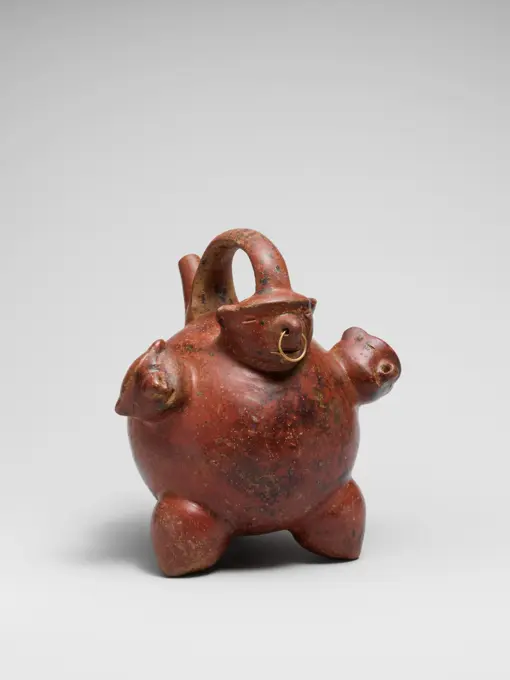
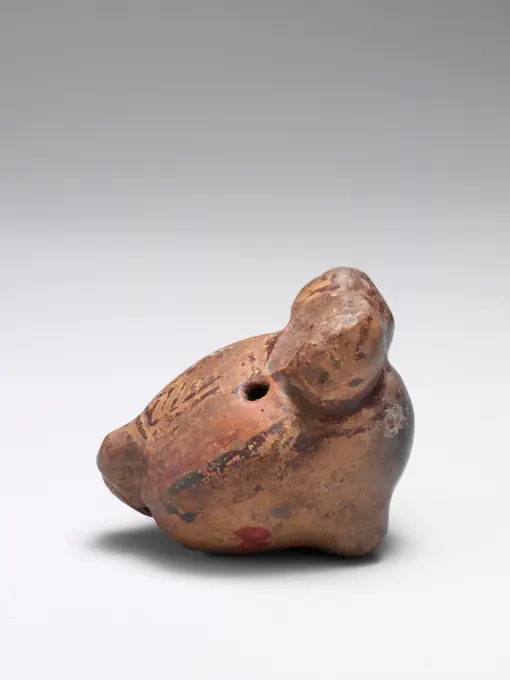
Pottery Whistle 800-1525 Costa Rican. Pottery Whistle. Costa Rican. 800-1525. Clay. Pre-Columbian. Diquis Region, Costa Rica. Aerophone-Whistle Flute-whistleLamp, Anatolia; 1st - 4th century; Terracotta; 2.6 x 7.2 x 9.5 cm (1 x 2 13,16 x 3 3,4 in.)Lamp. UnknownTerracotta oil lamp 1st century B.C.-1st century A.D. Roman Mold-made, with tall ring handle. Plain, deep discus, surrounded by a raised band flanked by two grooves. Broad, almost horizontal shoulder decorated with a raised pattern of rounded tongues, each with a central rib, radiating outward from edge of the discus and ending at the front in spirals forming the volutes flanking the back of the nozzle, with a large wick hole. Narrow handle, with large round finger hole, decorated with three incised lines, running along the front and top of the handle. An incised base ring, and a broad, flat base.The front of the handle added and joined to back that forms part of the molded body.Intact.. Terracotta oil lamp. Roman. 1st century B.C.-1st century A.D.. Terracotta. Early Imperial. TerracottasLamp, Asia Minor; 1st - 4th century; Terracotta; 2.6 x 7 x 9 cm (1 x 2 3,4 x 3 9,16 in.)Lamp, Anatolia; 1st century B.C. - 1st century A.D; Terracotta; 2.8 × 6 × 12.2 cm (1 1,8 × 2 3,8 × 4 13,16 in.)Terracotta oil lamp. Culture: Roman, Cypriot. Dimensions: Overall: 1 1/4 x 3 in. (3.2 x 7.6 cm). Date: 3rd-4th century A.D..Vessberg Type 18. Unpierced handle. Mold-made. Discus: naked man facing front but moving to right, holding large bulbous jar in lowered right hand and with a small amphora below raised left arm; around edge of discus, close-set, short radiating lines. Two filling holes. On broad shoulder, stylized vines with many grapes. On concave base, Greek letters in relief:. Museum: Metropolitan Museum of Art, New York, USA.Lamp. UnknownLamp, North Africa; 2nd century; Terracotta; 2.6 x 8 x 10.2 cm (1 x 3 1,8 x 4 in.)Lamp. UnknownLamp. UnknownLamp, North Africa; 1st - 4th century; Terracotta; 3 x 7 x 9.8 cm (1 3,16 x 2 3,4 x 3 7,8 in.)Lamp. UnknownPottery Whistle. Culture: Costa Rican. Dimensions: L.: 10.5 cm (4-1/8 in.); W.: 6.9 cm (2-3/4 in.); H.: 5.3 cm (2-1/8 in.); Wt. 90 gm. Date: ca. 800-1525. Museum: Metropolitan Museum of Art, New York, USA.Glass pendant in the form of a miniature jar late 3rd-4th century A.D. Roman Uncertain color, appearing black, with same color loop handle; applied blobs in opaque yellow, white, and light blue.Large rounded loop at top for suspension; squat globular body; oval pad base with rounded edge and flat bottom.Body decorated with small marvered blobs of varying sizes and colors.Intact; dulling, pitting, black weathering, and faint iridescence.. Glass pendant in the form of a miniature jar. Roman. late 3rd-4th century A.D.. Glass; rod-formed, blobbed, and tooled. Late Imperial. GlassLamp. UnknownLamp. UnknownAmulet of a Seated Cat. Egypt, Old Kingdom - New Kingdom (2687 - 1081 BCE). Jewelry and Adornments; amulets. Faience (sculpted in the round)Lamp, North Africa; 1st - 4th century; Terracotta; 2.1 x 7 x 10.2 cm (13,16 x 2 3,4 x 4 in.)Lamp, South Anatolia, Anatolia; 3rd century B.C; Terracotta; 2.1 × 3.5 × 5 cm (13,16 × 1 3,8 × 1 15,16 in.)Terracotta oil lamp. Culture: Roman, Cypriot. Dimensions: Overall: 1 1/8 x 3 1/4 in. (2.9 x 8.3 cm).Loeschcke Type 1B. Mold-made. Large discus: mask of Pan, with large, curved horns, pointed ears, and taenia at sides of face, surrounded at edge by ovules, with a narrow band of lines and grooves at edge. Volutes flanking nozzle. Within raised base ring, uneven base, with small impressed letters across center: FAVSTI.Body intact, but most of nozzle missing. Museum: Metropolitan Museum of Art, New York, USA.Tweezers in the Shape of a Bird. Probably Chimú; North coast, Peru. Date: 1000-1400. Dimensions: L. 3.5 cm (1 3/8 in.). Gold. Origin: Peru. Museum: The Chicago Art Institute, USA.Terracotta oil lamp 1st century A.D. Roman, Cypriot Loeschcke Type 1B. Mold-made. Discus: gladiator facing right but advancing left, wearing crested helmet, holding long rectangular shield on his left arm and a sword in raised right hand, and his right leg bent under him, with a band of concentric lines and grooves towards edge. Single filling hole between his legs. Volutes flanking nozzle. Within raised base ring, flat base, with the raised letter I at center.Intact.. Terracotta oil lamp. Roman, Cypriot. 1st century A.D.. Terracotta. Early Imperial. TerracottasLamp. UnknownUnglazedvesselLamp. UnknownTied FormStirrup Spout Bottle with Figures. Culture: Chimú. Dimensions: H. 9 3/4 x W. 5 13/16 in. (24.8 x 14.8 cm). Date: 12th-15th century. Museum: Metropolitan Museum of Art, New York, USA.Ewer 9th-10th century This ewer was excavated at the site of Qanat Tepe in Nishapur. Nishapur was a vital city in the early and middle Islamic periods, located along one of the main trajectories that connected Iran and West Asia Islamic lands with Central Asia and China. The term "Silk routes" often refers to these itineraries, but these were, in fact, crucial to the movement of constellations of materials and objects, as well as people and ideas. The diverse population of Nishapur and its surroundings, from the better-researched elite groups of merchants, land-owning aristocracy, and literates, to the lesser-known artisans, farmers, miners, and servants, were instrumental to adapting global cultural trends that led to the creation of a distinctive visual language. This is seen in the material remains of everyday life in medieval Nishapur - from pots and pans to lighting devices, inkwells, textiles and trimmings, jewelry, games and toys, talismanic devices, weapons, coins, and architecAnonymous, small shift (usual name). Cernuschi Museum, Asia Museum of Asia in the city of Paris.Lamp, Paestum, Italy; 2nd century B.C; Terracotta; 3.1 × 6 × 9 cm (1 1,4 × 2 3,8 × 3 9,16 in.)Bronze statuette of a goose ca. 3rd-1st century B.C. Greek Goose in midstride, looking left.. Bronze statuette of a goose 255405Oil lamp. unknown, craftsmanSwan vase, terracotta,Lamp. UnknownOil LampFibula, boat-shaped type 8th-6th century B.C. Italic Boat-shaped type, in two fragments.. Fibula, boat-shaped type 246318Terracotta oil lamp 1st century A.D. Roman Loeschcke Type 4. Mold-made. Discus: female figure (Aphrodite/Venus) standing to front, with right arm raised to face and left holding drapery around her lower body; to left, a vase on a column; a single filling hole at lower right; band of lines and grooves around edge; sloping, narrow, undecorated shoulder. Volutes flanking broad nozzle. Incised base ring, and flat base.Intact.. Terracotta oil lamp 241487Statuette man seated ". Terracotta with green lead glaze. Han dynasty (206 BC-220 AD). Paris, Cernuschi museum. Chinese art, seated, Chinese ceramic, Han dynasty, Han time, man, Chinese object, statuette, terracottaMace Head 1st-7th century Moche. Mace Head 312961Socket. Western Iran, Luristan bronzes, circa 2600-2200 B.C.. Tools and Equipment; sockets. Bronze, castTerracotta lamp: on discus, myrtle wreath. Culture: Roman, Cypriot. Dimensions: Overall: 1 1/4 x 3 7/8 in. (3.2 cm, 3 7/8 in.). Date: ca. A.D. 50-100. Museum: Metropolitan Museum of Art, New York, USA.Terracotta oil lamp. Culture: Roman, Cypriot. Dimensions: Overall: 1 1/8 x 2 3/4 in. (2.9 x 7 cm). Date: 4th-5th century A.D..Vessberg Type 18. Unpierced handle. Mold-made. Discus: prancing horse facing left, flanked to either side by herring-bone wreath. Two large filling holes. On shoulder, floral design including rosettes. On concave base, in relief Greek letters: uncertain. Pale buff clay. Museum: Metropolitan Museum of Art, New York, USA.Terracotta oil lamp ca. A.D. 50-100 Roman, Cypriot Loeschcke Type 5. Mold-made. Discus: rosette of eight hollow petals arranged around the central filling hole, with a single groove towards edge. Small volutes flanking nozzle. Within incised base ring, flat base, with raise letter at center: I.Intact, except for chip in shoulder towards back. Piercing of filling hole badly executed.. Terracotta oil lamp 241734Aryballos (perfume jar) in the form of a hedgehog Late Period 6th century BC View more. Aryballos (perfume jar) in the form of a hedgehog. 6th century BC. Faience. Late Period. From Egypt. Dynasty 26Jug. Round jug of pottery with paint residues. PingsdorfDecorated jar, by Unknown artist, 15th Century - 14th Century b.C.,, impasto pottery. Italy: Campania: Naples: National Archaeological Museum. Whole artwork. Decoration volutesDouble Pottery Whistle 500 B.C.-500 A.D. Costa Rican. Double Pottery Whistle. Costa Rican. 500 B.C.-500 A.D.. Clay. San Jose, Republic of Costa Rica. Aerophone-Whistle Flute-whistleLampka. unknown, authorShawabty Jar with Lid (lid), 1295-1069 BC. Egypt, New Kingdom, Dynasty 19 (1295-1186 BC) - Dynasty 20 (1186-1069 BC). Nile silt ware; diameter: 22.2 cm (8 3/4 in.); diameter of mouth: 11.6 cm (4 9/16 in.); overall: 29.4 cm (11 9/16 in.).Incense Burner with Domed Cover 8th-9th century Incense burners like this one were popularly used in the late antique and Byzantine eastern Mediterranean, and their production continued into the Islamic period. In Christian contexts, incense was used in church services, while in the Islamic world it seems to have been used by caliphs in their palaces and by elites in their homes. This three-legged incense burner with a low cylindrical body and a hinged, relatively high domed cover was a common type. The cover, pierced to emit smoke, is decorated with wings and vegetal designs; the legs are shaped like feline paws.. Incense Burner with Domed Cover 452804Jug or vase of stoneware. Jug or vase of stoneware with two ears to get a cord by getting.Vase fragment Minoan. Vase fragment. Minoan. Terracotta. Early Minoan III. VasesTerracotta vase in the form of a siren. Culture: East Greek, Rhodian. Dimensions: Other: 3 3/4 x 4 7/8 in. (9.5 x 12.4 cm). Date: ca. 550-500 B.C..Vase in the shape of a siren. Museum: Metropolitan Museum of Art, New York, USA.Pottery Whistle. Culture: Costa Rican. Dimensions: L. 6.1 cm (2-7/16); W. 4 cm (1-11/16 in.); H. 4.3 cm (1-11/16 in.); Wt. 30 g. Date: 800-1525. Museum: Metropolitan Museum of Art, New York, USA.Incese box in the shape of a bird, anonymous, anonymous, c. 1700 - c. 1799 Incense box made of stoneware in the form of a young bird, painted in underlaze blue. Raku. Japan stoneware. glaze. cobalt (mineral) painting / vitrification Incense box made of stoneware in the form of a young bird, painted in underlaze blue. Raku. Japan stoneware. glaze. cobalt (mineral) painting / vitrificationScherf of a Martavaan from V.O.C. ship De 'Witte Leeuw', Anonymous, Before 1613  Scherf of a Martavaan with concretion and coral-like attack from V.O.C. ship De 'Witte Leeuw'.  earthenware   Sint-HelenaSeal with Quadruped 800 BCE-600 BCE Thessaly. These precious bronzes objects are votives, or devotional gifts, made for gods. They come in many forms. Some are miniature sculptures of animals, mostly depicting horses, deer, and birds. Others are items of personal adornment, including beads and brooches. Quite a few seem once to have been attached to something else. This assemblage is characteristic of the thousands of votives that were hung from sacred trees or placed in sanctuaries around Greece. Once a shrine was full, the votives were gathered together and ceremonially buried to make room for more offerings. This comes from Thessaly in north-eastern Greece.. Bronze . Ancient GreekStirrup Spout Bottle with Manioc Form 5th-7th century Moche. Stirrup Spout Bottle with Manioc Form 308558Cylinder Seal. Iran, Mesopotamia or Syria, about 3300-2900 B.C.. Tools and Equipment; seals. Black serpentine rockWhetstone Socket. Iran, Luristan, circa 1350-1000 B.C.. Tools and Equipment; sockets. Bronze, castLamp. UnknownGrandguard and Bevor for the Tourney Made 1540-1570 Brunswick. Steel, brass, and leather .Lamp 5th-6th century. Lamp 448014Lamp, North Africa; 1st - 4th century; Terracotta; 3 x 8.5 x 12 cm (1 3,16 x 3 3,8 x 4 3,4 in.)Ocarina. Culture: Tairona People; Gayraca style. Dimensions: L. 3.2 cm (1-1/4 in.); W. 2.6 cm (1-1/16 in.). Date: 1300-1500. Museum: Metropolitan Museum of Art, New York, USA.Terracotta oil lamp. Culture: Roman, Cypriot. Dimensions: Overall: 1 x 3 1/2 in. (2.5 x 8.9 cm).Discus: rosette with many wavy petals around a central filling hole. Narrow, continuous shoulder decorated with ovules. Volutes flanking nozzle. Raised base ring; concave base inscribed: P·C·F. Museum: Metropolitan Museum of Art, New York, USA.Terracotta oil lamp 5th century A.D. Roman Hayes Type 2. Mold-made, with unpierced handle. Discus: chi-rho, with top at back, decorated with lines of dots, and other symbols with the P and below the two horizontal arms; two filling holes at either side; discus surrounded by a raised line that extends forward at the front, forming a broad channel to large wick hole. Shoulder: pattern of raised symbols arranged in squares and triangles. Flat oval base, with a central cross, decorated with a vertical line; two raised lines around edge of base, joining with two other lines that extend towards the back of the handle, and two other sets of lines flanking the nozzle; a row of raised dots around bottom of body.Intact.On the discus is the Christian chi-rho monogram. The shape and decoration of this lamp, made somewhere in the Greek East, are related to and probably copied from those of African red-slip ware lamps.. Terracotta oil lamp. Roman. 5th century A.D.. Terracotta; mold-made. Late ImperiOil Lamp. Culture: Coptic. Dimensions: Overall: 4 5/16 x 2 3/16 x 11/16 in. (10.9 x 5.5 x 1.7 cm). Date: 4th-7th century. Museum: Metropolitan Museum of Art, New York, USA.Fragments of a cart or chariot, S-shaped braces ca. 500-480 B.C. Etruscan Large collection of bronze and iron attachments once belonging to a chariot.. Fragments of a cart or chariot, S-shaped braces 253019 Etruscan, Chariot fragments, S-shaped braces, ca. 500480 B.C., Bronze, Iron, K9 &K10: 5 1/4 in. (13.3 cm) Width: 2 3/4 in. (7 cm). The Metropolitan Museum of Art, New York. Fletcher Fund, 1929 (29.131.3k9k10)Lamp, Egypt; 1st - 4th century; Terracotta; 3 x 7.7 x 11.2 cm (1 3,16 x 3 1,16 x 4 7,16 in.)Terracotta biconical spindle-whorl with flat top ca. 2500-2075 B.C. Cypriot The whorl is chipped at one end. Two horizontal grooves at the carination divide the body into two registers. Engraved decoration, filled with lime; around the upper and lower registers of the body are groups of three oblique lines crossing one another, with three strokes in the intervals.On the chronology of this long-lived spindle-whorl type, see inv. no. 74.51.942. This example could be Early Cypriot I in date. (VK). Terracotta biconical spindle-whorl with flat top. Cypriot. ca. 2500-2075 B.C.. Terracotta; handmade. Early Cypriot ILarge Bell Vietnam (North) 500 BCE-300 CE View more. Large Bell. Vietnam (North). 500 BCE-300 CE. Bronze. Bronze and Iron Age period. MetalworkPlaque Fragment with Floral Tendril Decorations. UnknownStatuette of a bird (dove). Statuette of a bird (dove) 244798Sculpture of a Falcon. Harumitsu (Japan, active circa 1860-1880). Japan, second half of 19th century. Costumes; Accessories. Wood with inlaysTerracotta zoomorphic askos (vessel) ca. 2500-1900 B.C. Cypriot Askos in the form of an animal.. Terracotta zoomorphic askos (vessel). Cypriot. ca. 2500-1900 B.C.. Terracotta; Red Polished Ware. Early Bronze Age. VasesTerracotta duck-askos (flask with spout and handle). Culture: Etruscan. Dimensions: H. 5 5/8 in. (14.3 cm). Date: ca. 350-325 B.C..This Etruscan pottery style is associated with workshops active in Chiusi and Volterra during the second half of the fourth century B.C. In addition to the duck's body and wings with carefully rendered feathers, each side is decorated with a floating nude female holding a ribbon. On some related pieces, these figures are winged and have often been identified as Etruscan lasas, nymph-like characters frequently depicted on engraved mirrors and pottery. The precise function of duck-askoi has been hotly debated. Many seem too large to have been used for expensive scented oils and instead may have contained lamp oil or olive oil. Because some earlier duck-askoi have been found with a special type of barrel-shaped vase, some scholars have suggested a connection with wine. Museum: Metropolitan Museum of Art, New York, USA.Ram head for attachment ca. 1070-664 B.C. Third Intermediate Period Images of gods were carried out of temples on festival days on processional bark-shrines. Most often the image itself was concealed in a shrine, but sculpted heads at the prow and stern identified the god to the populace, royal statuary surrounded and protected the god hidden in the shrine, and other protective gods rode at the prow. This large ram's head would have appeared on Amun's processional barque.. Ram head for attachment 545960Pelican, 1800s. America, North American Indian, Channel Islands, Island of San Nicolas. Stone; overall: 6.5 x 4.1 x 4.5 cm (2 9/16 x 1 5/8 x 1 3/4 in.).Sockle for a Whetsone in Shape ofIbexPeg for a Patten-type Shoe, c 1800s. Africa, Central Africa, Democratic Republic of the Congo, Kuba or Bushongo, 19th century. Wood and glass beads; overall: 12 x 4 cm (4 3/4 x 1 9/16 in.).Terracotta oil lamp 1st century B.C. Greek Mold-made. Carinated body. Discus forming a narrow groove around large filling hole. Sharply slanting shoulder decorated in relief with three leafy sprays alternating with two lotus buds, and two smaller buds at front flanking back of nozzle; indistinct ornament on top of long nozzle. Raised, slightly convex base.Body complete but front of nozzle broken off and missing.. Terracotta oil lamp. Greek. 1st century B.C.. Terracotta. Hellenistic. TerracottasOil LampTerracotta statuette of a male flute-player. Culture: Cypriot. Dimensions: H. 5 7/8 in. (14.9 cm). Date: ca. 750-600 B.C..The flaring lower part of the cylindrical body is wheel-made and hollow; the upper part and the head are handmade and solid. Museum: Metropolitan Museum of Art, New York, USA.Ritual mask depicting a Taotie, China. Chinese Civilisation, Western Zhou Dynasty, 11th-8th century.Model Lamp Figurine. Egypt, Ptolemaic Period - Roman Period (332 BCE - 300 CE). Sculpture; models. BronzeTerracotta oil lamp 1st century B.C.-1st century A.D. Roman Loeschcke Type 1A. Mold-made. Discus: rosette with ten radiating petals, issuing from a single small, central filling hole; broad band of lines and grooves around edge. Volutes flanking angular nozzle with large wick hole. Incised base ring, and uneven, concave bottom.Intact, except for one tiny hole on right edge of discus.. Terracotta oil lamp. Roman. 1st century B.C.-1st century A.D.. Terracotta. Early Imperial. TerracottasBridge and Spout Bottle with Seated Prisoner Vicús 1st-3rd centuryCenser 11th-12th century German. Censer 463197Staff Head. Culture: Moche (Loma Negra). Dimensions: H. 15/16 x W. 1 5/16 x D. 2 7/8 in. (2.4 x 3.3 x 7.3 cm). Date: 390-450. Museum: Metropolitan Museum of Art, New York, USA.Vase fragment East Greek/Sardis, Lydian. Vase fragment 252796 East Greek/Sardis, Lydian, Vase fragment, Terracotta, Overall: 5 7/8 x 3 1/2in. (14.9 x 8.9cm). The Metropolitan Museum of Art, New York. Gift of The American Society for the Excavation of Sardis, 1926 (26.199.229)Figure Vessel 2nd century B.C.-A.D. 3rd century Colima. Figure Vessel 309860Flask with Indentations. UnknownAmphora with Indentations; Roman Empire; 4th century; Glass; 19.3 x 8.5 cm (7 5,8 x 3 3,8 in.)Animal Vessel 2nd century B.C.-A.D. 3rd century Colima. Animal Vessel 313155Oil Lamp HandleFragment of stoneware funnel neck with three appliqués, funnel beaker cup drinking utensils tableware holder fragment soil find ceramics stoneware glaze salt glaze, hand turned stamped molded glazed fried Neck-belly fragment of stoneware funnel neck gray shard localized salt-glaze rings archaeology import pottery drink serve wine beer bibleWhistle Jar 100-900 A.D. Calima. Whistle Jar. Calima. 100-900 A.D.. Ceramic. Pre-Columbian. Colombia. Aerophone-Whistle Flute-vessel fluteFemale Figure, 1500s. Guinea Coast, Sierra Leone, Sherbro Island, 16th century. Soapstone; overall: 5.7 cm (2 1/4 in.).