Historic Textile Fragments

Beautifully patterned textile fragments from different historical periods, highlighting intricate designs and craftsmanship.

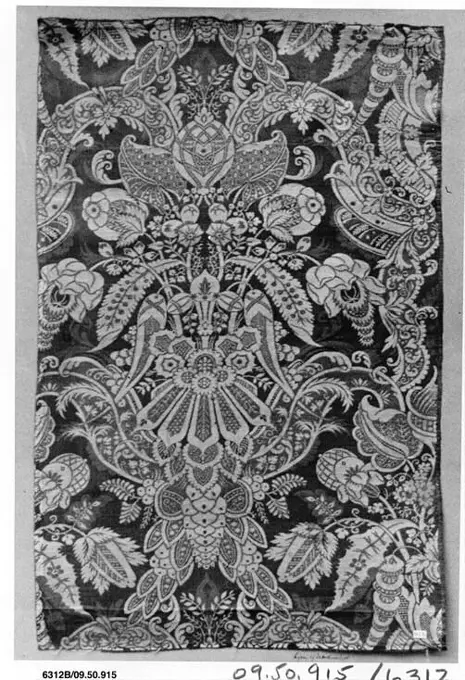
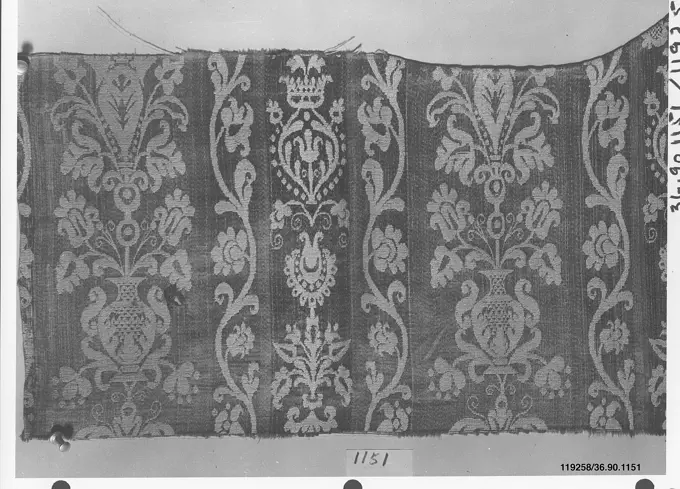
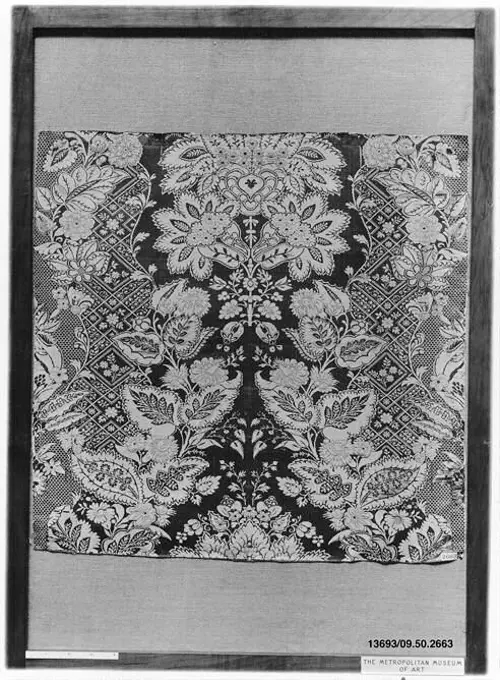
Textile, Medium: silk Technique: damassé (10-harness satin plus 9/1 twill with paired warps), Fragment of a large scale symmetrical pattern reversed on the center line of the textile. An urn with flowers placed in offset rows connected by a curving vine (almost an ogee framework) having grape vines and heads of wheat. Background is a dull salmon and the pattern is yellow twill. Intact selvage on right side., France, late 18th century, woven textiles, Textile
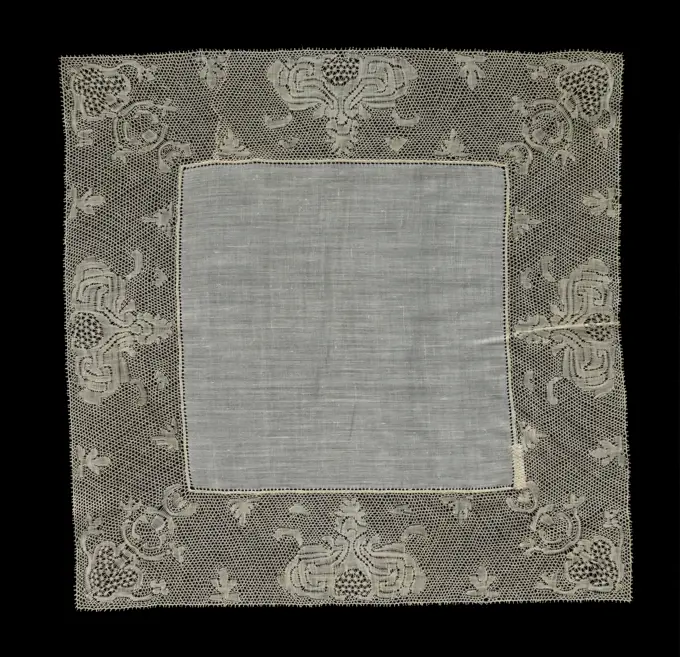
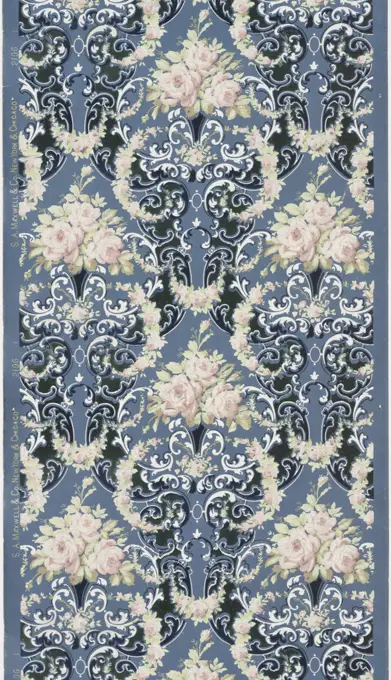
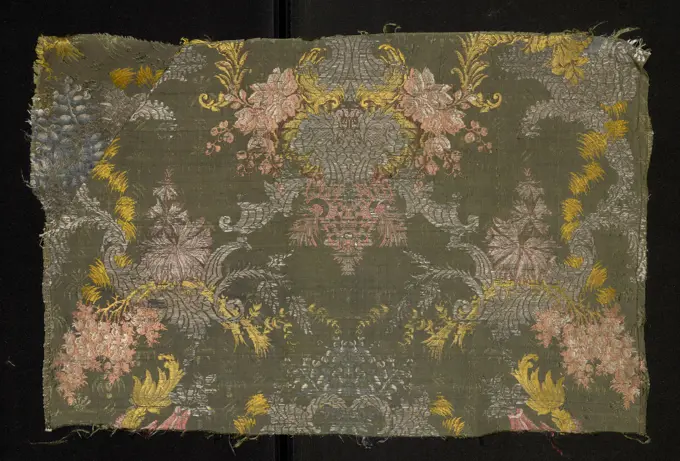
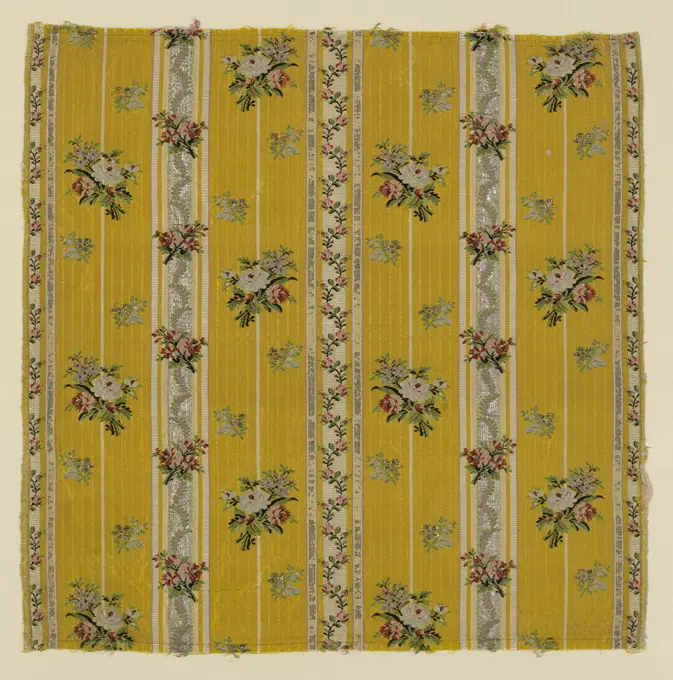
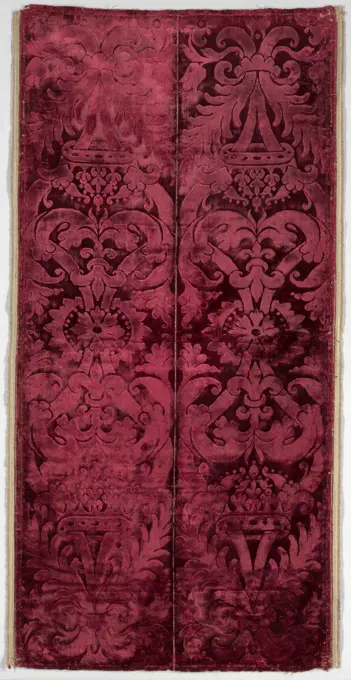
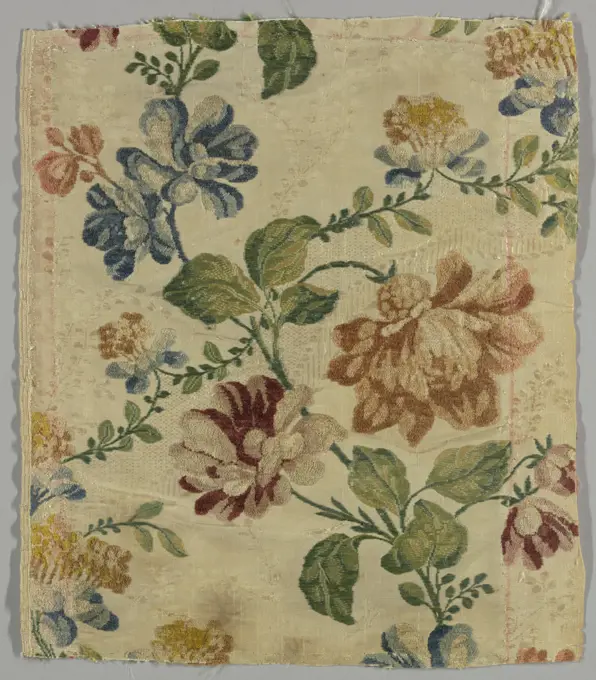
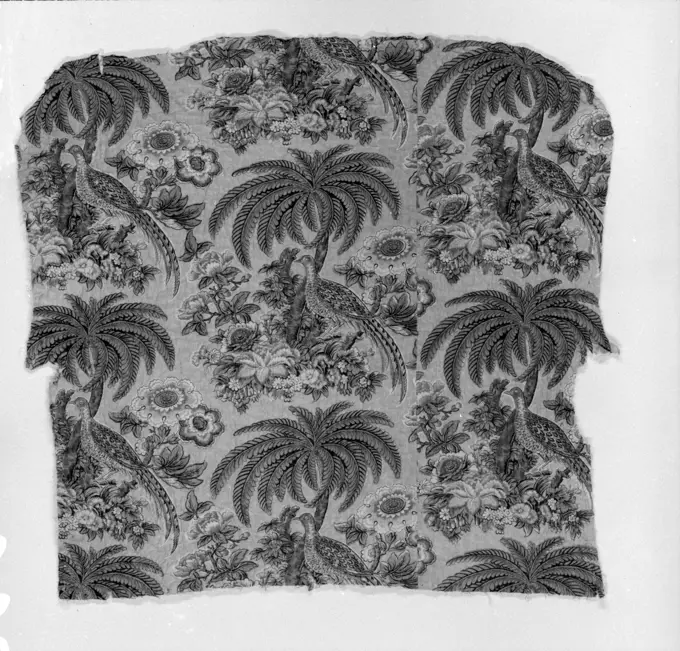
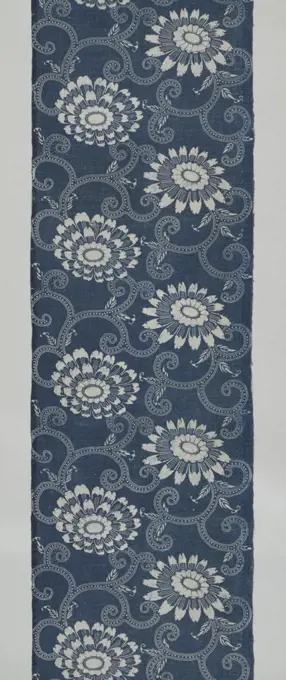
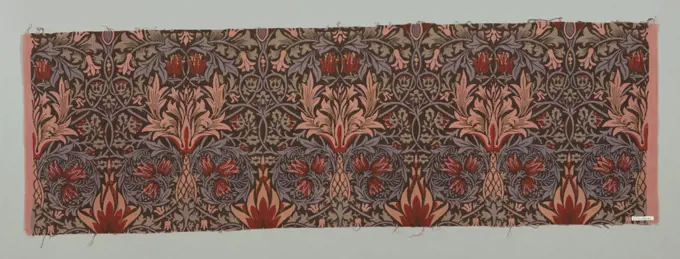
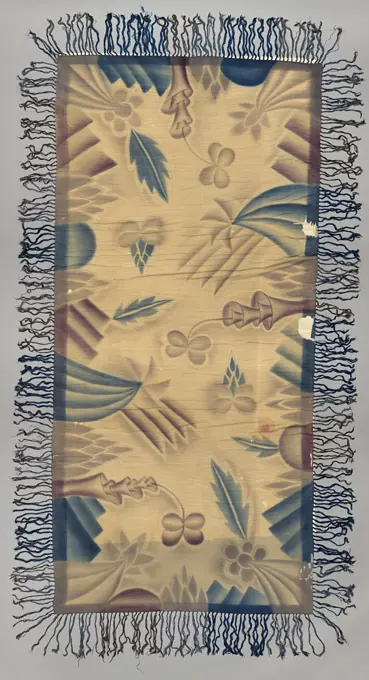
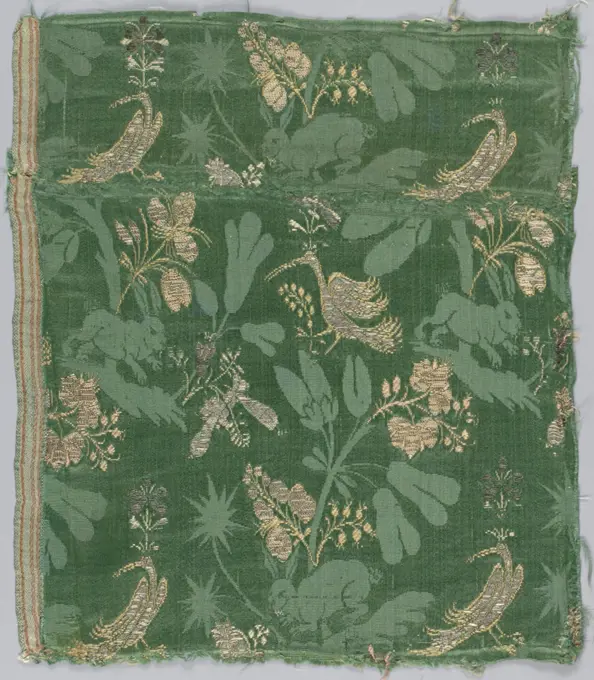
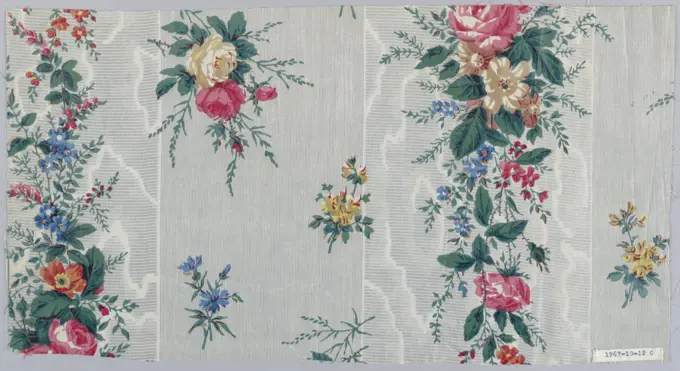
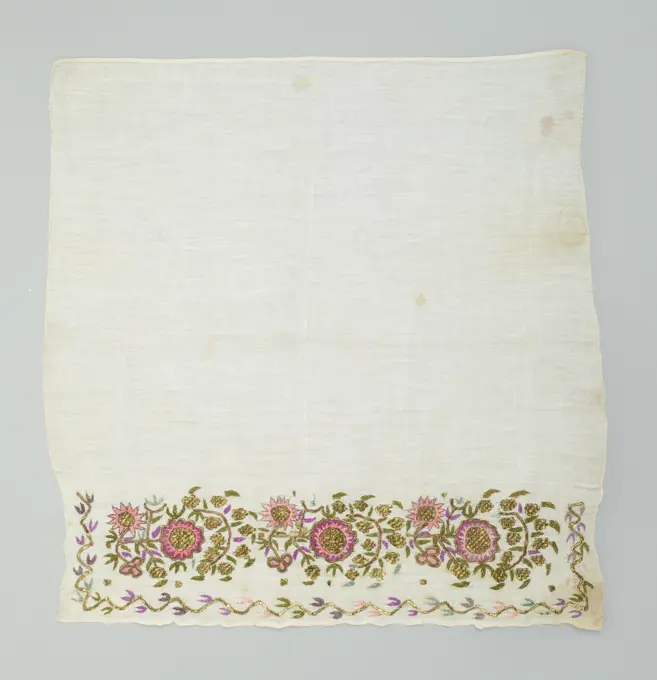
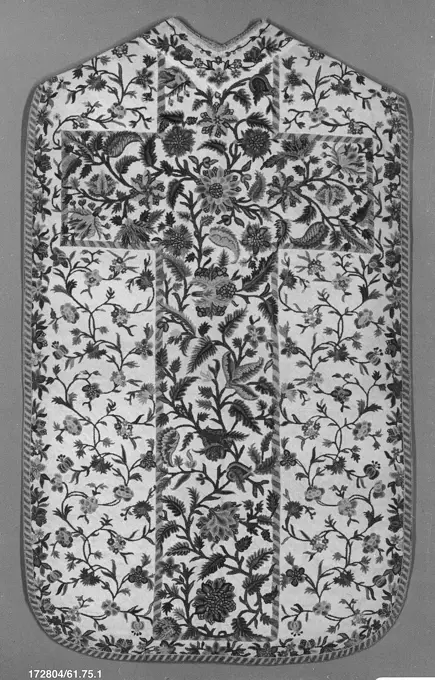
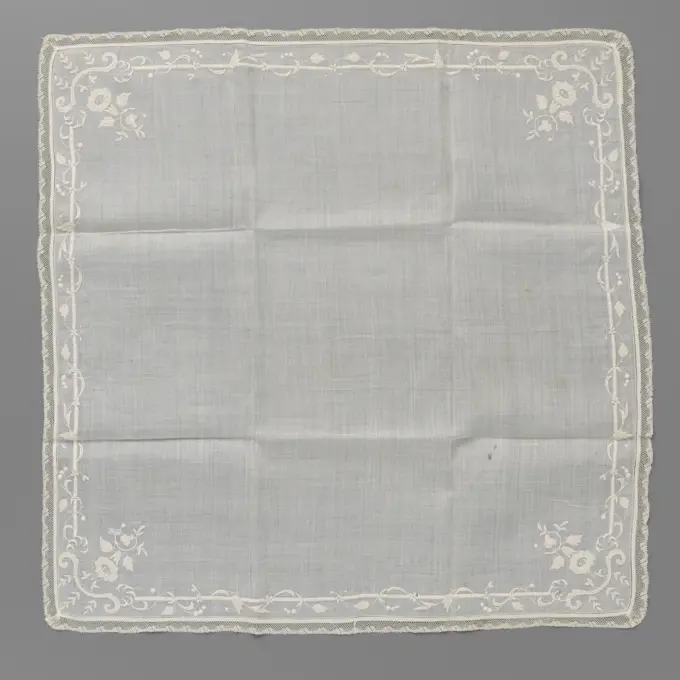
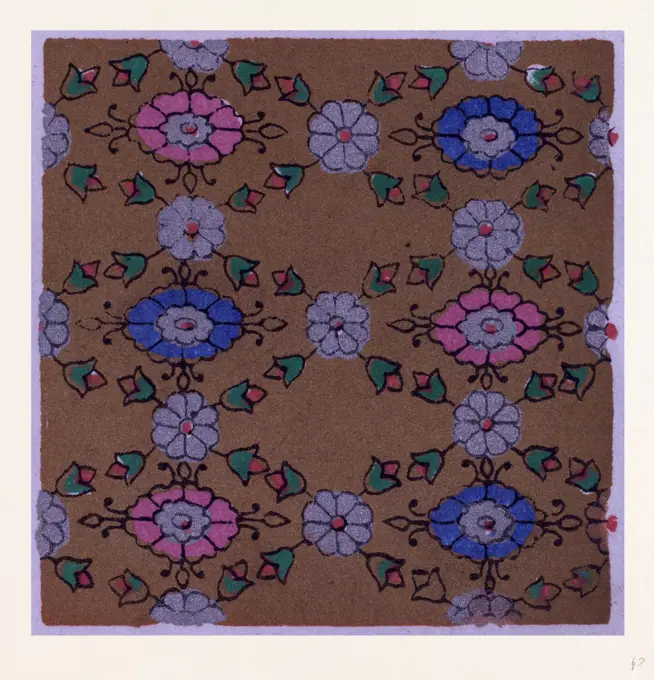
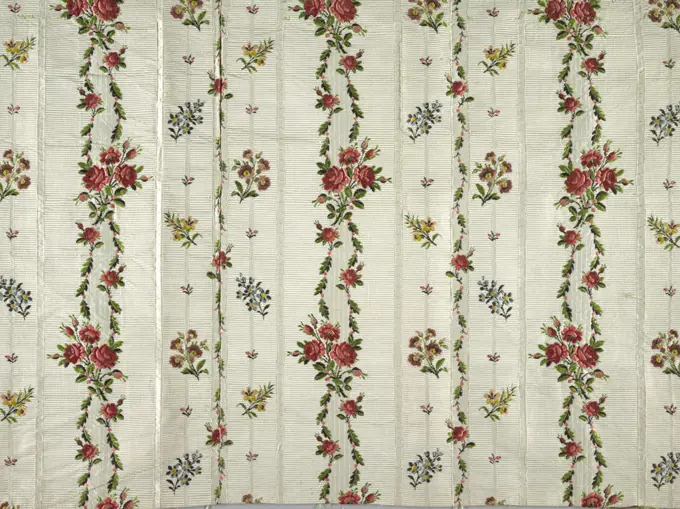
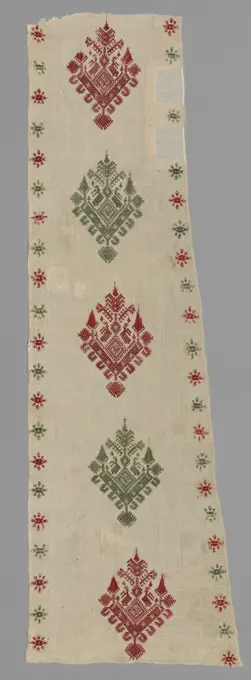
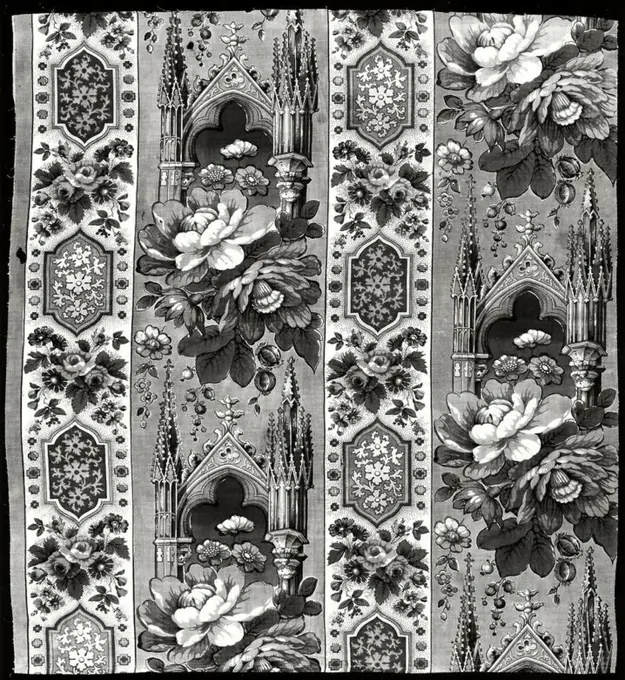
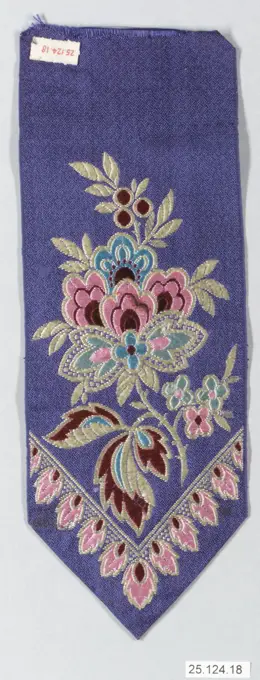
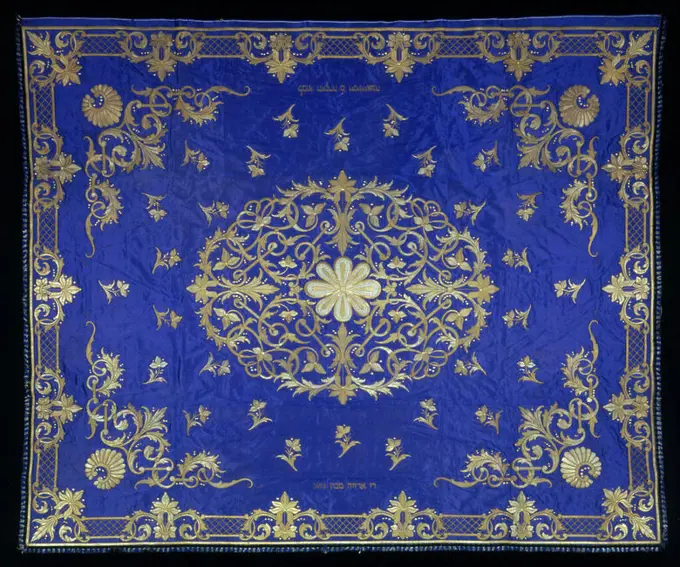
Piece 1720-25 French, Lyons. Piece 216196Panel Made 1725-1775 England. Silk, satin weave with brocading wefts and self-patterned by ground weft floats .Textile Book Cover, 1800s. Japan, 19th century. Silk; overall: 22 x 12.7 cm (8 11/16 x 5 in.).Sidewall - Sample, Daisy; Designed by William Morris (British, 1834-1896); Manufactured by Jeffrey & Company (United Kingdom); Made for Morris & Co. (United Kingdom); block-printed paperPiece 18th century Attributed to Lazareff. Piece 222390Sidewall, Maxwell & Co., S.A., Chicago, Illinois, USA, Machine-printed paper, liquid mica, Floral bouquets and swags, connected by acanthus scrolls. Printed in shades of blue, tan, off-white and white on blue ground., USA, 1905-1915, Wallcoverings, SidewallPanel. Made in China for the European/American market. Date: 1701-1725. Dimensions: 109.8 × 74.5 cm (43 1/4 × 29 3/8 in.). Silk, stripes of weft rib plain weave; painted with pigment; alternating with stripes of warp-float faced satin weave. Origin: China. Museum: The Chicago Art Institute, Chicago, USA.Fragment; silk, silver foil on silk threadFragment of the fabric;  1. PO. 18th century (1701-00-00-1750-00-00);Society for the Care of the Monuments of the Past (Warsaw - 1906-1944) - collection, fabricsPanel Made 1755-1775 France. Silk, warp-float faced 7 1 satin weave with supplementary brocading wefts and self-patterned by ground weft floats .Piece 18th century French. Piece 223229Textile Fragment 17th century. Textile Fragment 454576Textile Fragment 18th century. Textile Fragment. 18th century. Linen; embroidered in silk. Attributed to present-day Uzbekistan, Bukhara. Textiles-EmbroideredFragment Made 1601-1625 France. Silk, satin damask weave .Curtain (Original Design Entitled "Kennet"). Designed by William Morris (English, 1834-1896); Produced by Morris & Company, 1875-1940; Woven at Merton Abbey Works, 1881-1940; England, Surrey, Wimbledon. Date: 1887. Dimensions: 94 × 69.5 cm (37 × 27 3/8 in.)Repeat: 59 × 17 cm (23 1/4 × 6 3/4 in.). Silk, satin weave with self-patterning ground wefts. Origin: England. Museum: The Chicago Art Institute, Chicago, USA.Flower or tire work. Mark: Will 18 WH 200nl., Anonymous, 1800 - 1899 Napkin made of white linen with a pattern of flower ornaments and band work, brand Sal and 18 Wh 2oonl Germany (possibly) linen (material) Napkin made of white linen with a pattern of flower ornaments and band work, brand Sal and 18 Wh 2oonl Germany (possibly) linen (material)Fragment multicolor silk tissue. Fragment multicolor silk tissue. A white ground has a pattern of multicolored flower branches.Handkerchief with a border of climbing side with serving leaves. Handkerchief with a lobed batters center piece and an edge of natural colosside: duchesse-side. Around a geloD batters center piece runs a edge side with an open braid soil. A symmetrical pattern exhibits eight large, deep shelters that are built out of a pendulum of hanging spheres. Inside there is a daisy between loose blossoms. In the swing, there are trusses of lilacs flowers, creating a rounded, virtually square circumference.Fragment Made 1770-1780 France. Silk, silvered-metal strips, and silvered-metal-strip-wrapped silk (frisÈ), plain weave with supplementary patterning warps and supplementary brocading wefts .Procurators Velvet Stole, c. 1575- 1600. Italy, Venice, late 16th century. Dyed silk; velvet in two heights of cut pile (pile on pile, alto e basso), woven as two stole widths; overall: 142.2 x 71.1 cm (56 x 28 in.); mounted: 147.3 x 77.5 cm (58 x 30 1/2 in.).Textile Fragment, 1800s. Japan, 19th century. Silk, metallic thread; average: 16.2 x 8.6 cm (6 3/8 x 3 3/8 in.).Piece 1760-65 French. Piece 219667Fragment 17th century Italian. Fragment 230045Textile, Medium: silk and chenille Technique: plain compound cloth, brocaded, Large-scale serpentine branches brocaded in green silk with flowers in polychrome chenille threads. Secondary design of ribbon-like serpentines and small branches in floats of wefts of same color as ground fabrics., France, 18th century, woven textiles, TextilePiece 18th century Russian or French. Piece 222391Piece 18th century Japan. Piece 71873Purse (France); gold-wrapped silk, horsehairPiece ca. 1830-35 British. Piece. British. ca. 1830-35. Cotton, roller-printed. Made in EnglandPiece ca. 1750 French. Piece 223359Textile, Medium: cotton Technique: plain weave, indigo dyed, resist applied with stencil (katazome), Large chrysanthemums in off-set repeat, one row facing up and the other down, with curled and dotted stems. In ivory on an indigo blue ground., Japan, 19th century, printed, dyed & painted textiles, TextileSidewall (USA); Manufactured by Robert Graves Co. (United States); machine-printed paper; 103.5 x 49.5 cm (40 3/4 x 19 1/2 in.)Fragment Made 1750-1800 France. Silk, plain compound cloth .SERVATE;  18th century (1701-00-00-1800-00-00);Fragment Made 1775-1825 Japan. Plain compound cloth, silk & gilt & silvered paper; 2 1/2 strips to m.m. .Snakehead, Medium: cotton Technique: printed on plain weave, Symmetrical medium-scale design of large tangent tear shapes and arabesques formed by twining stems and filled with leaves adn flowers, in pind, yellow, red, gray-green and lavender on black ground., England, designed 1877, printed, dyed & painted textiles, Textile, TextilePiece. Culture: British. Dimensions: L. 38 1/2 x W. 49 1/4 inches (loom width 25 3/4 inches)97.8 x 125.1 cm. Date: ca. 1830. Museum: Metropolitan Museum of Art, New York, USA.Embroidered shawl unknownBobbin Lace Handkerchief, late 19th-20th century. Belgium, Binche, late 19th-20th century. Linen center with bobbin lace edging; average: 22.9 x 22.9 cm (9 x 9 in.).Band (Italy); silk on linen; Bequest of Marian Hague; 1971-50-87Elongated scarf on which blue and gray fantasy figures, leaves and flowers, with a tall blue and gray frills along the edge. Language scarf on which in watercolor or watercolor a pattern of blue and gray fantasy figures, including flowers from spiral kerks and loose leaves. Along the edge is a long blue and gray frills knottedWoven silk late 17th century Italian or Spanish. Woven silk 224243Piece 1720-25 French. Piece 217026Fragment, medium; silk, metallic Technique: combination of two structures, 7&1 satin plus plain weave, Birds, rabbits and flowers in green and silver., 17th century, woven textiles, FragmentTextile, Schwartz-Huguenin, Medium: cotton Technique: printed by engraved roller on plain weave, Three pieces, same ground design but different floral patterns. Ground printed , probably by Molette, in two wide stripes in grey, one in very narrow pin stripe, one in horizontal bars of minute dots with moire effect in white. A) Floral pattern in one stripe of rose cluster, small detached roses in other. B) Different rose cluster. C) Long spray of roses and cream-colored flowers and smaller clusters., 1851-63, printed, dyed & painted textiles, TextileDrawing, Design for a bracelet; ItalyPiece 1775-92 French. Piece 220270Fragment of embroidery on satin unknownDoor curtain of printed cretonne with swans and lissen. Door curtain of printed cretonne with swans and lisses and on three sides provided with passing element and with metal rings.Border; silk. metallicFragment pink rip tissue. Fragment of pink rips fabric with pattern of naturalistic flowers, leaves and seed balls.ChaIIce veil  violet, vertical stripes with motif of twigs with apple flowers unknownTrimming of embroidered shawl unknownChasuble 18th century French. Chasuble 228824Piece 16th century Italian. Piece 226312Piece 18th century French or Italian. Piece 214109Piece British late 19th centuryFragment; silk, linen or cottonSilk tissue with a 'side pattern' and metal wire, anonymous, c. 1720 Silk tissue with a 'lace pattern'. Natural and light brown silk and silver -colored metal wire (partly frisé). France (possibly) silk. metal thread Silk tissue with a 'lace pattern'. Natural and light brown silk and silver -colored metal wire (partly frisé). France (possibly) silk. metal threadCrewel Work Curtain Made 1700-1750 England. Cotton and linen twill weave; wool embroidery .Fragment textiel, anonymous, 1781 - 1789 Textile fragment, embroidery of petals in diamond -shaped motifs. Japan silk Textile fragment, embroidery of petals in diamond -shaped motifs. Japan silkFragment (England); wool, cottonBatist handkerchief with slender round straight line and flower branch in the corners and trimmed with an edge of Valenciennes side, anonymous, c. 1850 Natural Batist handkerchief with embroidery - Whitework - and finished all around with a border of bobbin: Valenciennes side. Square model. Along the edges of the handkerchief, an embroidered slender winds around a narrow straight line. In the corners, the straight line is interrupted by a slanted volute with a flower branch. The strip side has a pattern that consists of connected narrow lines along the edge on the underside and above that the side consists of a square Valenciennes ground. The handkerchief is stored with another handkerchief in a sachet. Europe cotton (textile) Embroidering / Bobbi Lace / Valenciennes Lace Natural Batist handkerchief with embroidery - Whitework - and finished all around with a border of bobbin: Valenciennes side. Square model. Along the edges of the handkerchief, an embroidered slender winds around a naBonnet veil, Medium: silk Technique: machine embroidery on machine-made net, Repeating scalloped border with large leaf set into each scallop along the bottom edge. Motifs are embroidered in a chain stitch onto a net ground. Narrow scroll along remaining three edges and dotted field., Europe, late 19th century, lace, Bonnet veilIndian ornamentFragment, 1800s. China, 19th century. Silk; overall: 57.8 x 28.6 cm (22 3/4 x 11 1/4 in.).Machinale lace with poppies at the ends, anonymous, c. 1890 - c. 1899 Strikdas of natural -colored machine side: machine tulle with machine embroidery. Elongated rectangular model. The tie has a pattern at the ends, the tulle is unprocessed. At each end there are three deep sculptures, each with a symmetrical pattern of C-Voluten and a godrons. Thin flower stems spring from this pattern. Per shell three upright stems with different heights on which nodding flowers, poppies. The long sides are finished with a regular scrap edge along which there is a braid. Plauen (Possibly) cotton (textile) Strikdas of natural -colored machine side: machine tulle with machine embroidery. Elongated rectangular model. The tie has a pattern at the ends, the tulle is unprocessed. At each end there are three deep sculptures, each with a symmetrical pattern of C-Voluten and a godrons. Thin flower stems spring from this pattern. Per shell three upright stems with different heights on which nodding flowers, poPiece 18th century Russian. Piece 219796Tegelveld with sixteen tiles, Anonymous, 1760 - 1810 Tile field of 16 tiles (4 x 4) with purple painted ornaments of leaves, curl and meander. Four tiles together form a rosette in the middle. Netherlands earthenware. tin glaze majolica Tile field of 16 tiles (4 x 4) with purple painted ornaments of leaves, curl and meander. Four tiles together form a rosette in the middle. Netherlands earthenware. tin glaze majolicaFragment. Date/Period: Early 18th century. Fragment. Medium: silk. Technique: 7&1 satin damask. Height: 810 mm (31.88 in); Width: 740 mm (29.13 in). Author: UNKNOWN.Fragment of decorative manuterge unknownBedcover, Medium: silk Technique: plain compound cloth, brocaded, Bedspread made in 19th century from old fabric and two fragments of same material. White ribbed silk with vertical taffeta stripes. Brocaded design, in polychrome silks and rose and red chenille, of serpentine rose vines (over taffeta areas) and scattered floral sprays., 1750-1800, woven textiles, BedcoverPortion of a Bed Tent, 1600s - 1700s. Greece, Cyclades Islands, Pholegandros, 17th-18th century. Embroidery: silk on linen tabby ground; overall: 97.8 x 32.1 cm (38 1/2 x 12 5/8 in.).Sutra Cover 16th century China. Sutra Cover 39925Textile (England); cottonFloral print 1770-75 Oberkampf Manufactory French. Floral print 221992Quilted bed cover first quarter 18th century British. Quilted bed cover 229040Linnamast napkin with a edge pattern ,, 1725 - 1735 White Linnamasten napkin with centrally and in the corners of flower motif and along the edges "Kant" pattern. Marked with binding holes, a crown in one corner and "ADB 12", diagonally against it in the corner "HD and 11", "JHS" in Red Cross stitch. Flanders (Possible) linen (material) damask White Linnamasten napkin with centrally and in the corners of flower motif and along the edges "Kant" pattern. Marked with binding holes, a crown in one corner and "ADB 12", diagonally against it in the corner "HD and 11", "JHS" in Red Cross stitch. Flanders (Possible) linen (material) damaskPiece late 18th century French. Piece 223661Fragment of Point de Milan lace 17th-18th century Italian or Flemish. Fragment of Point de Milan lace. Italian or Flemish. 17th-18th century. Bobbin lace, Milanese lace. Textiles-LacesMachine-made Openwork Samples (USA); cardboard, linen, silk, metallic; 1971-26-2-19Sutra Cover China 16th centuryPiece ca. 1735 French. Piece 221213Fragment (Furnishing Fabric). England. Date: 1830-1850. Dimensions: 63.8 × 58.9 cm (25 1/8 × 23 1/8 in.)Repeat: 36.2 cm (14 1/4 in.). Cotton, plain weave; roller printed. Origin: England. Museum: The Chicago Art Institute, Chicago, USA.Piece second half 15th century Italian, Venice. Piece 227232Fragment of bed hanging. Date/Period: 1796-1810. Fragment of bed hanging. Medium: linen. Technique: needle lace with ground of loop and twist with twist return. Author: Clérambault.Textile (France); silk, cottonBanner early 19th century Spanish. Banner 26951Piece 18th century French. Piece 224482Piece 18th-19th century Japan. Piece 67567Fragment Italian or French 18th-19th centuryWoman's necktie 1870-80 French. Woman's necktie 221673Piece 18th-19th century Japan. Piece 66237Piece 1720-25 French. Piece 217321Veil, Medium: linen Technique: needlework on net, Embroidered net veil in a flora pattern arranged as a border with a flower and vine motif in two corners., Limerick, Ireland, 19th century, embroidery & stitching, VeilSidewall, Block printed on handmade paper, Drapery paper with lace floral motifs and green clover design in center. Bunches of fabric on either edge. Foliate swags on far edges of paper. Printed in shades of gray, white and green on off-white ground., France, 1810-20, Wallcoverings, SidewallTextile Fragment, 1800s. Japan, 19th century. Silk, metallic thread; overall: 21.5 x 10.7 cm (8 7/16 x 4 3/16 in.).Bedcover, anonymous, c. 1710 - c. 1720 Spread of white satin with embroidery in blue, white and black floss side and with gold thread. The pattern has fan -shaped and rushed palmets on the sides; On the diagonals a small lily-shaped flour, on which an empty coat of arms is hung on a bow. The bedspread belongs to a bed (BK-1958-20-A) and curtains with lambreins (BK-1958-20-C). China silk. satin embroidering  Castle Rosendael Spread of white satin with embroidery in blue, white and black floss side and with gold thread. The pattern has fan -shaped and rushed palmets on the sides; On the diagonals a small lily-shaped flour, on which an empty coat of arms is hung on a bow. The bedspread belongs to a bed (BK-1958-20-A) and curtains with lambreins (BK-1958-20-C). China silk. satin embroidering  Castle RosendaelPiece 16th-17th century Italian. Piece 223361Marriage Canopy. Date/Period: 1867/68. Ceremonial Art-Textile. Silk-satin weave: embroidered with metallic thread and spangles Silk-satin weave: embroidered with metallic thread and spangles. Height: 1,632 mm (64.25 in); Width: 1,346 mm (52.99 in). Author: UNKNOWN ARTIST.Fragment (France); Produced by Oberkampf & Cie. (France); cotton