Historic Textile Fragments

Beautifully patterned textile fragments from different historical periods, highlighting intricate designs and craftsmanship.

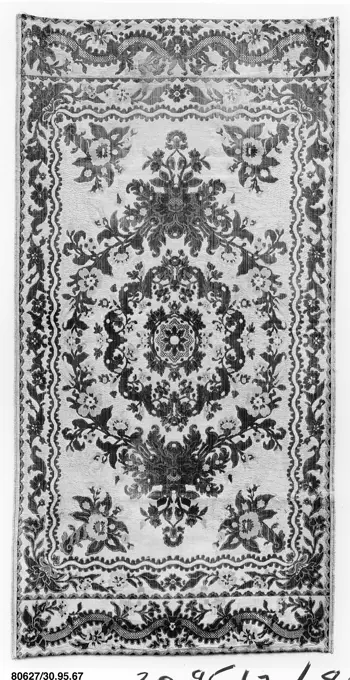
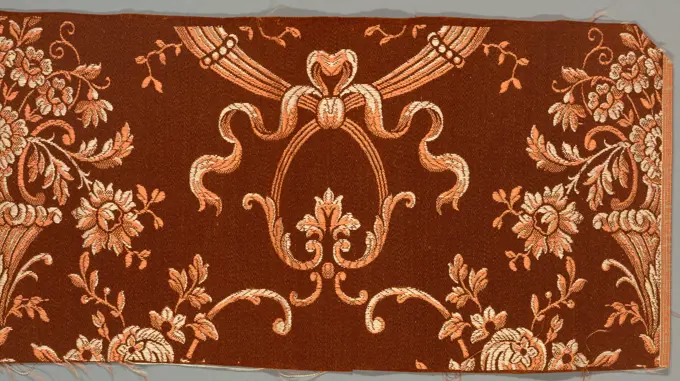
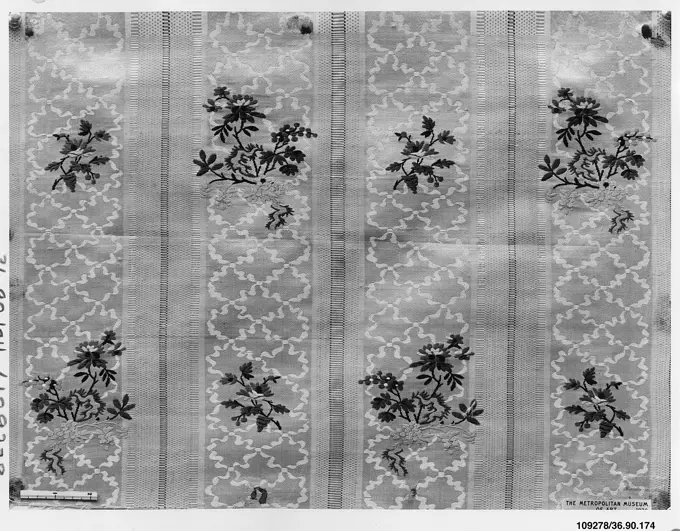
Textile, Medium: silk Technique: damassé (10-harness satin plus 9/1 twill with paired warps), Fragment of a large scale symmetrical pattern reversed on the center line of the textile. An urn with flowers placed in offset rows connected by a curving vine (almost an ogee framework) having grape vines and heads of wheat. Background is a dull salmon and the pattern is yellow twill. Intact selvage on right side., France, late 18th century, woven textiles, Textile
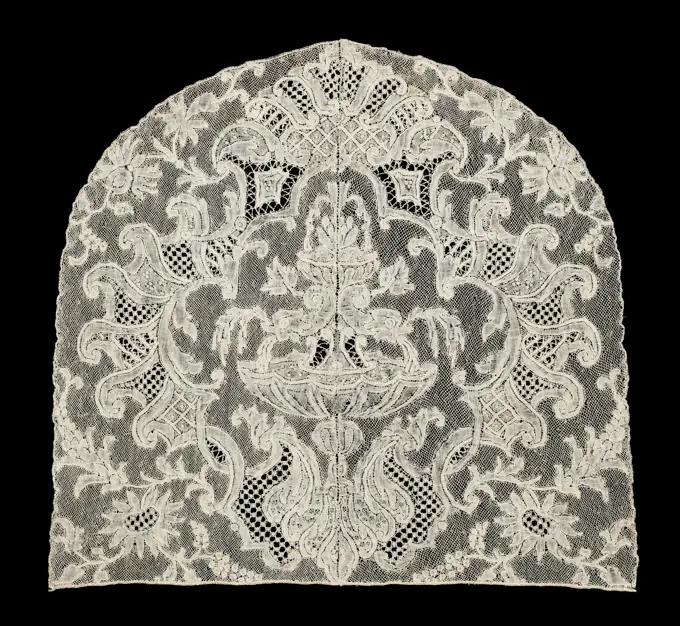
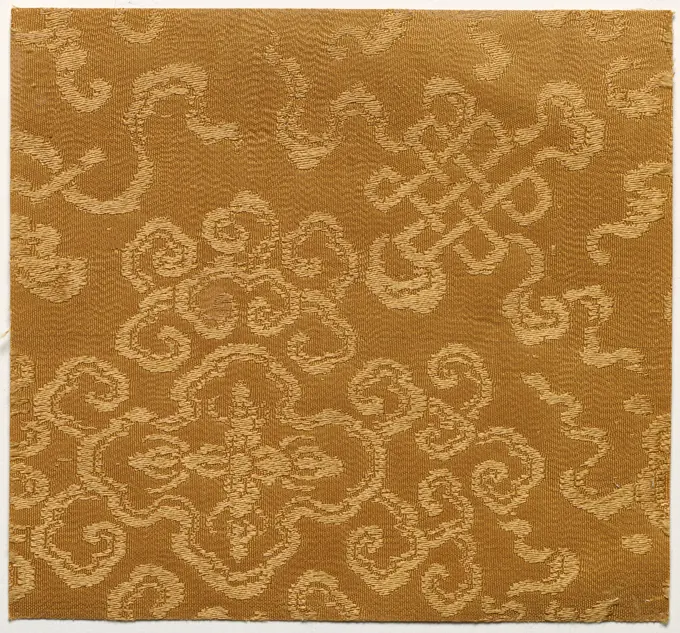
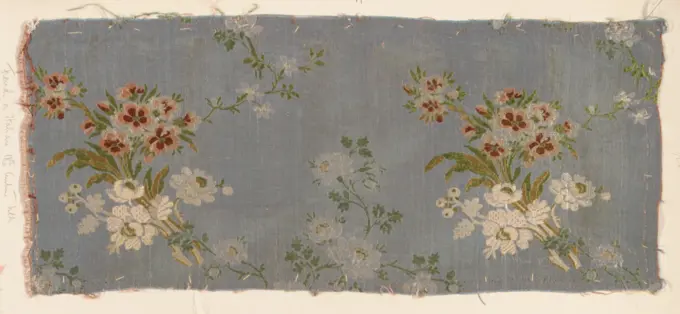
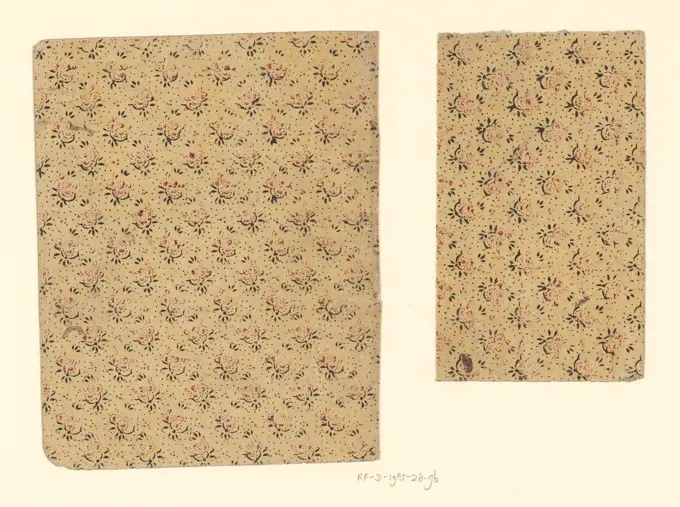
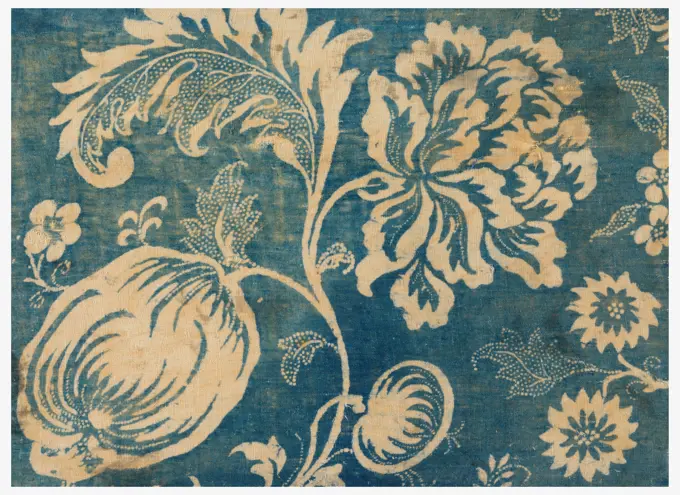
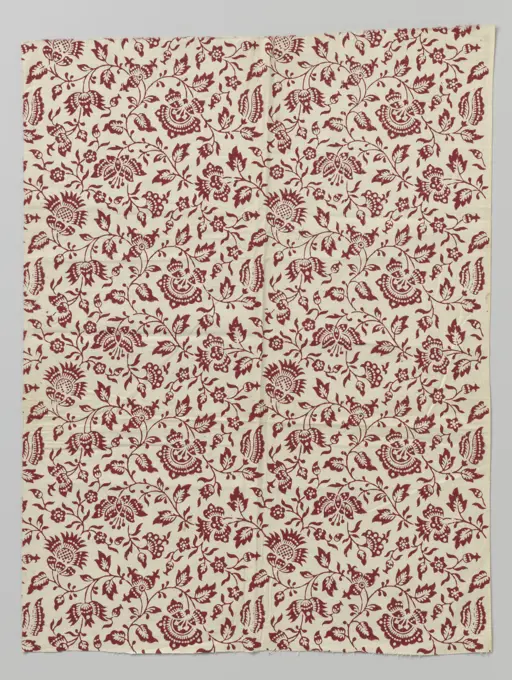
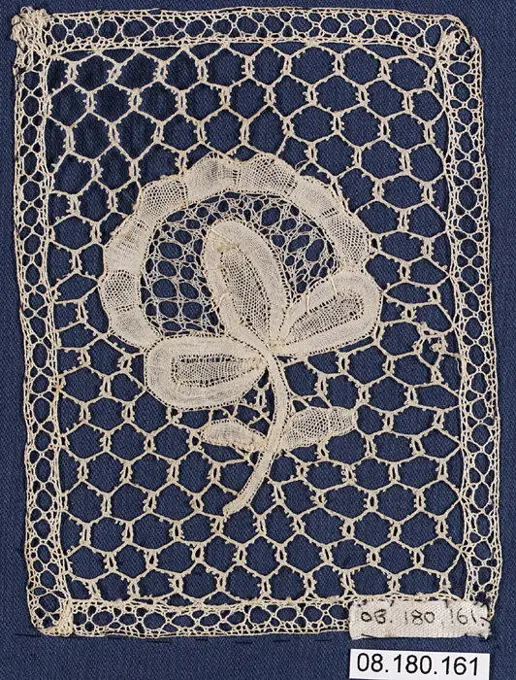
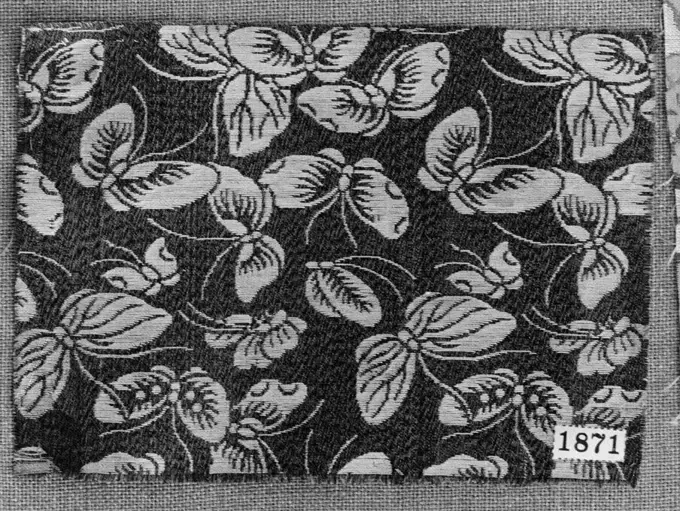
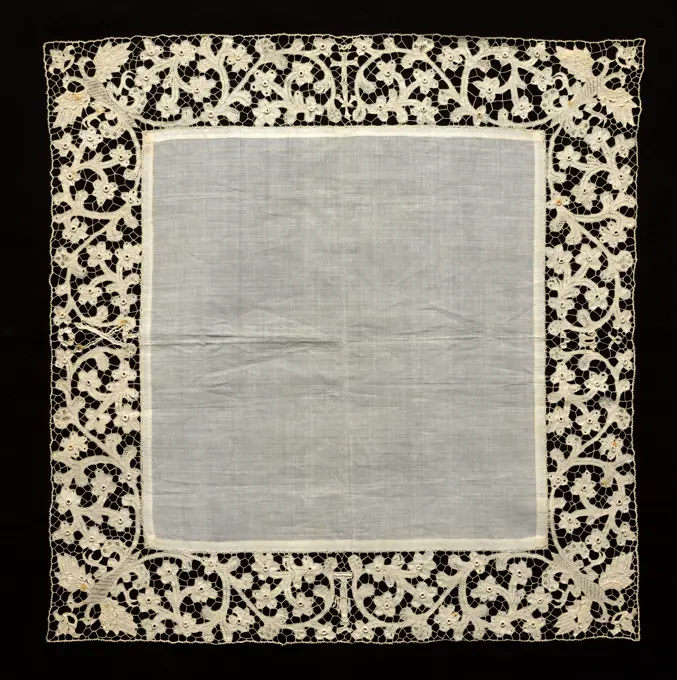
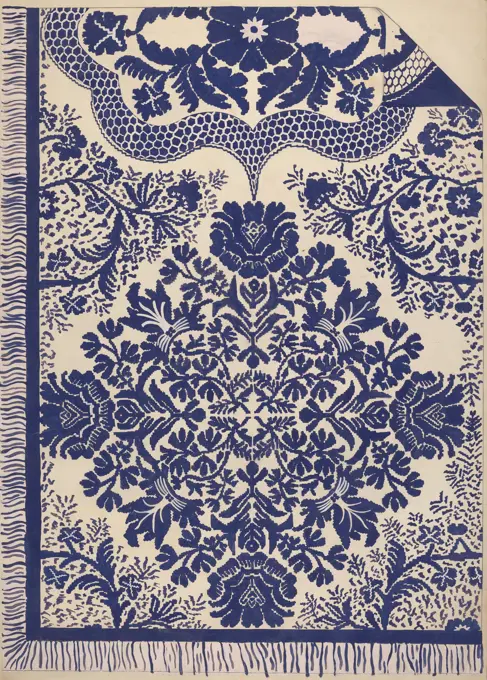
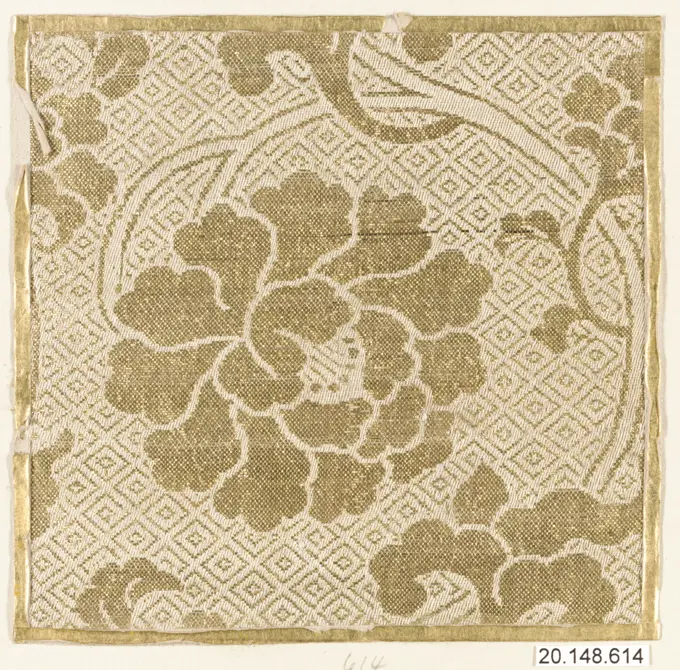
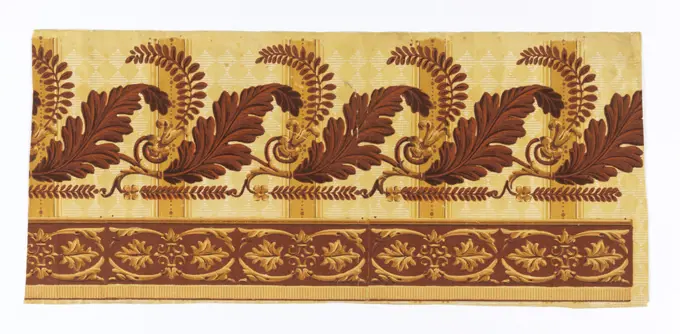
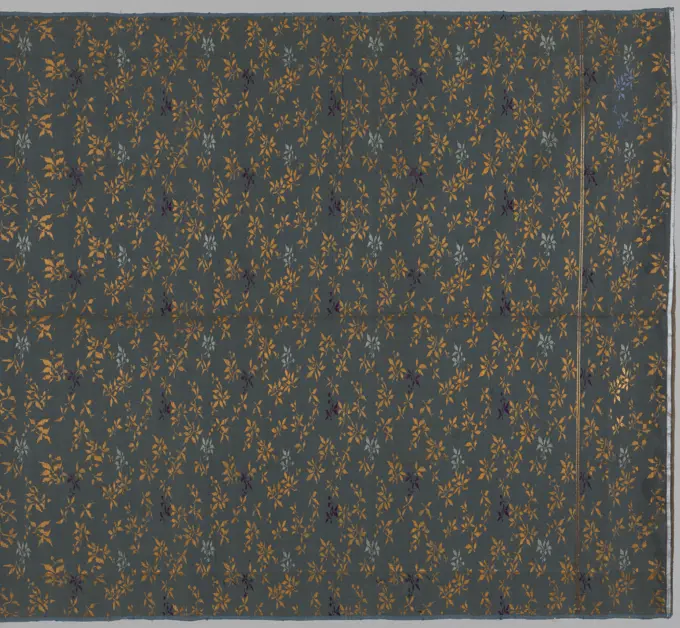
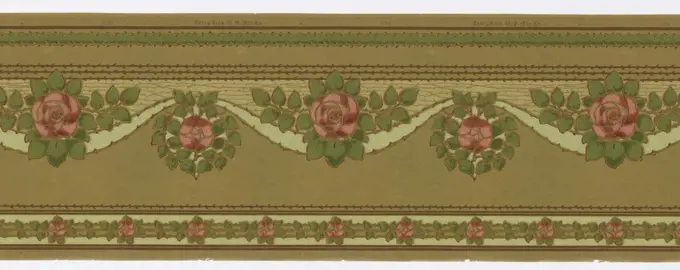
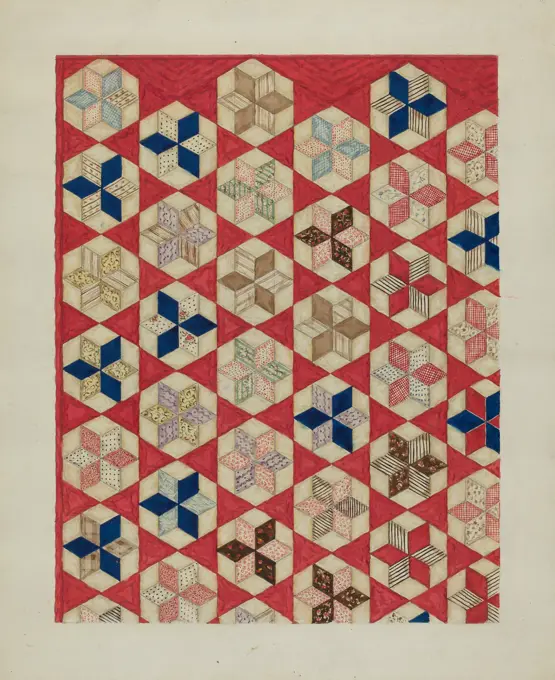
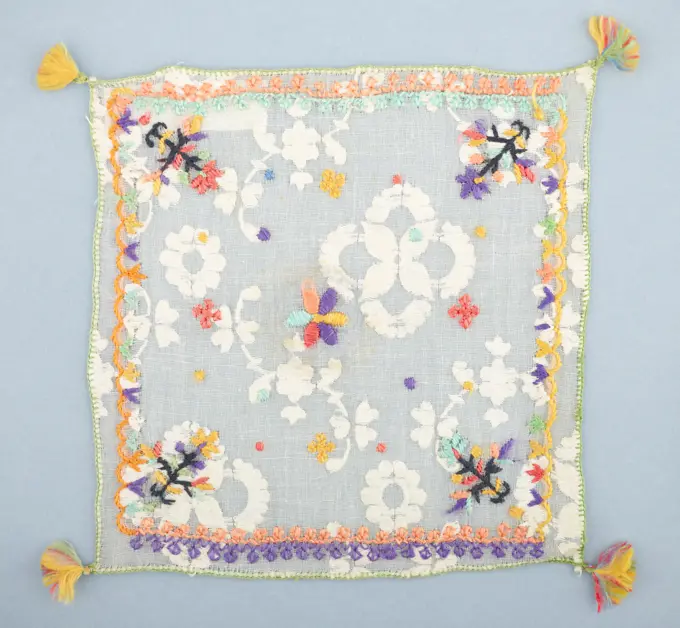
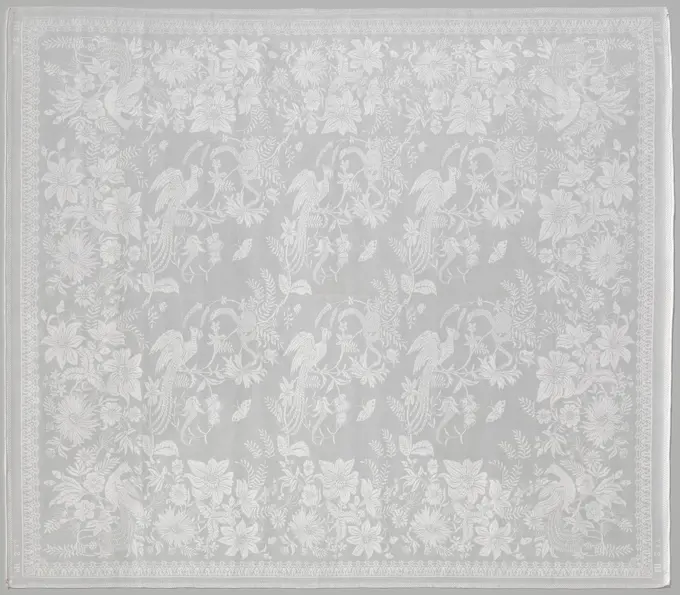
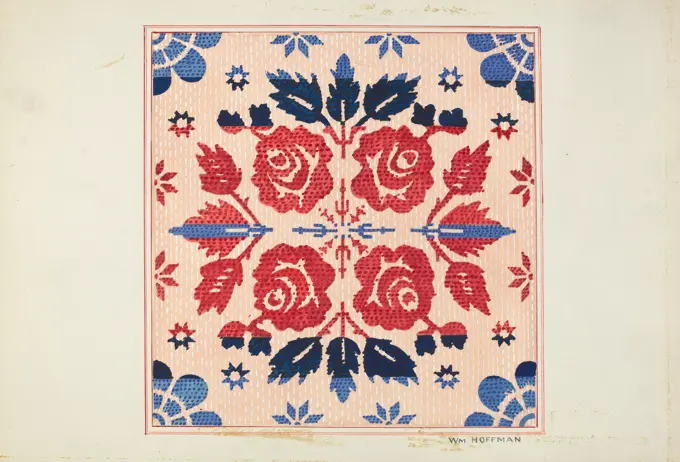
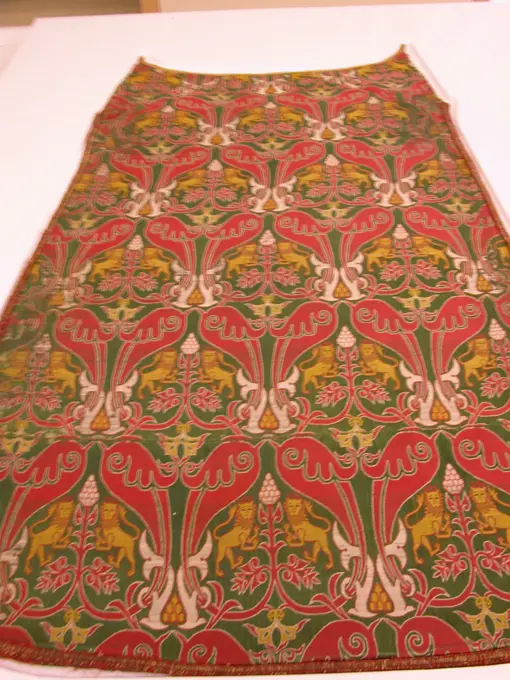
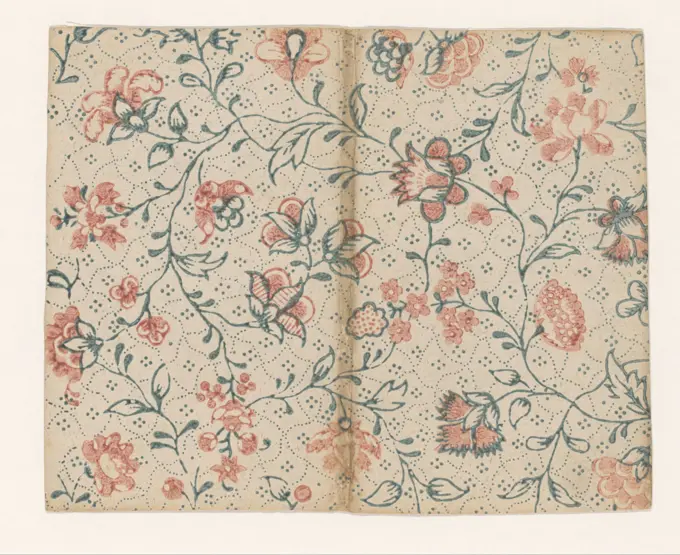
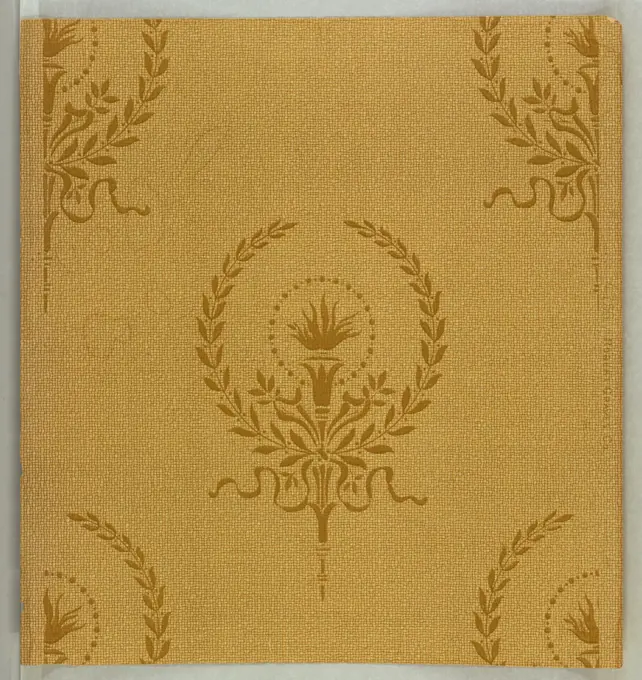
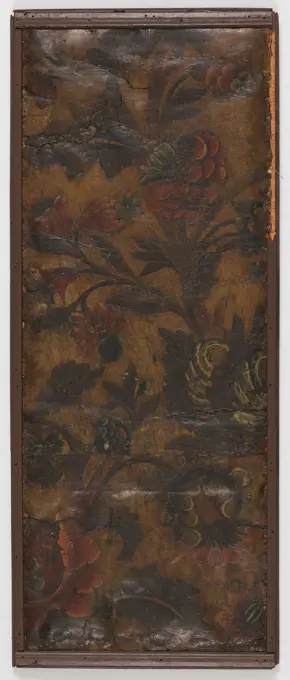
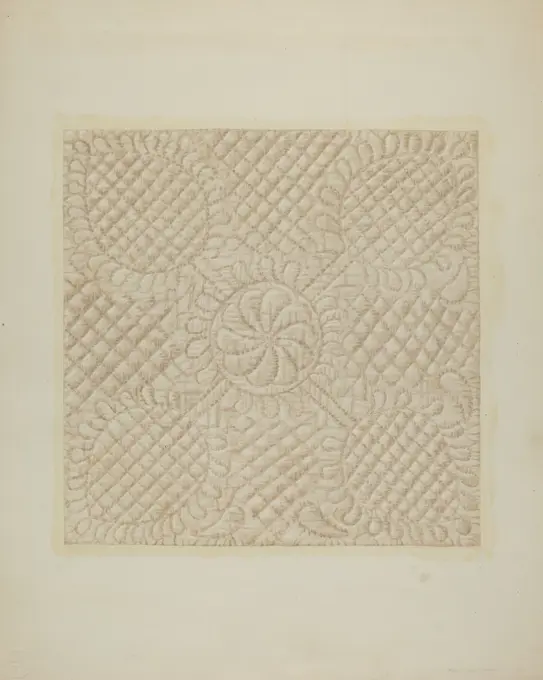
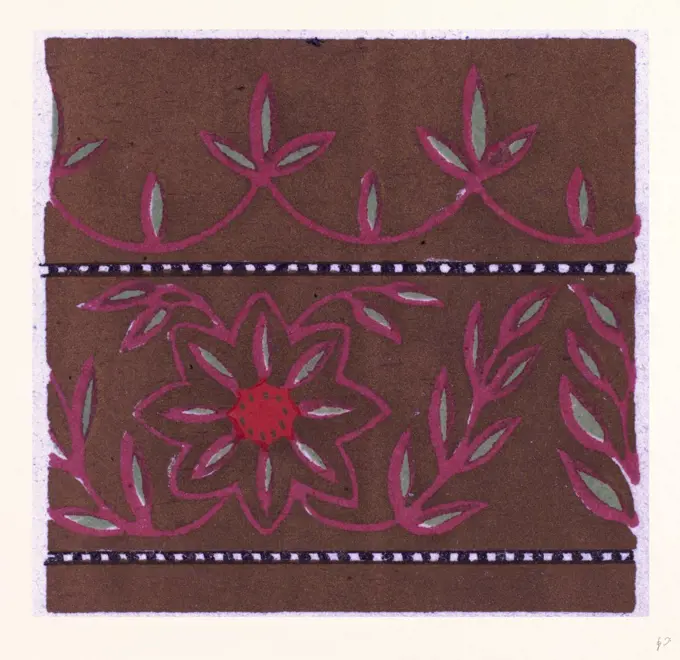
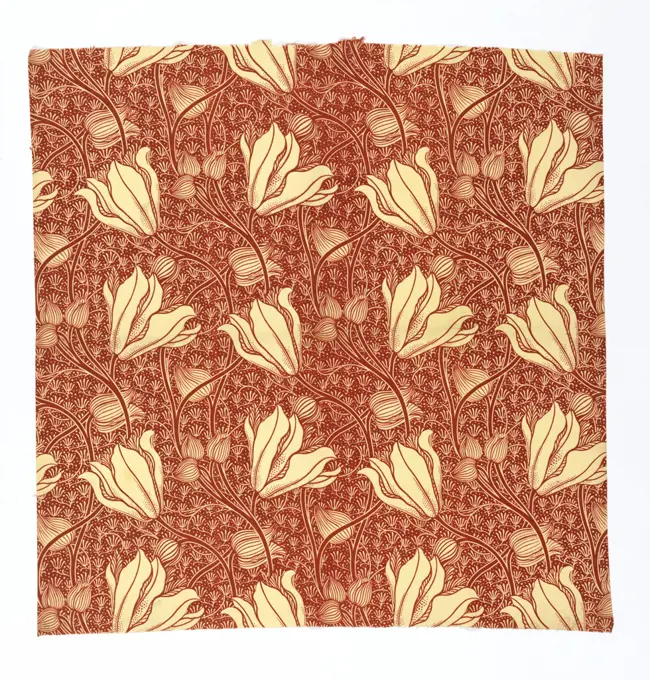
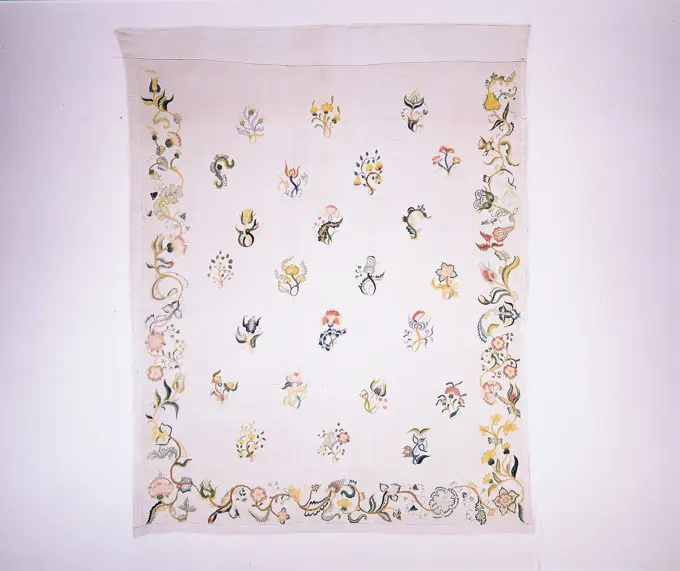
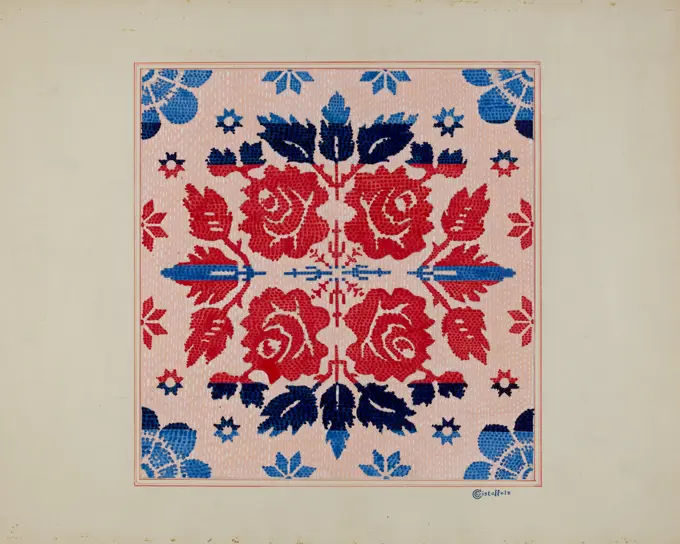
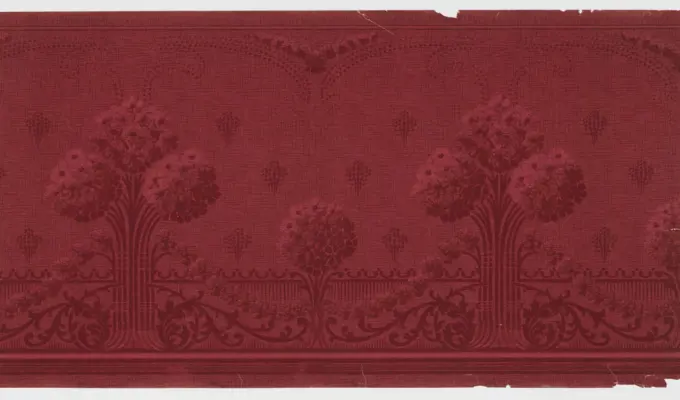
Fragment (Spain); silkPiece second half 16th century Italian. Piece 222897Sidewall (USA); Manufactured by Cresswell & Washburn Ltd; machine-printed paper; 49.5 x 58 cm (19 1/2 x 22 13/16 in.)Cap Crown (Belgium); linenTextile Fragment, 1800s. Japan, 19th century. Silk; average: 12.7 x 12.1 cm (5 x 4 3/4 in.).Fragment 16th century Italian, Florence. Fragment 214788Pocket, Medium: cotton Technique: printed on plain weave, Plain square calico pocket; design of foliage and flowers in yellow, green, and dark brown on light brown ground. Drawstring at top., USA, ca. 1870, printed, dyed & painted textiles, PocketPiece 18th-19th century Japan. Piece 67178Piece 18th century Albergo di Virtù. Piece 222357Fragment 18th century Italian or French. Fragment 230230Tissue unknownSamples (USA); Manufactured by Orinoka Mills (United States); Warp x Weft (a): 17.5 × 87 cm (6 7/8 × 34 1/4 in.) Warp x Weft (b): 22 × 28 cm (8 11/16 in. × 11 in.)Two blades with flower branch spreading pattern on points stock, Anonymous, 1750 - 1900  Two sheets with a flower branch of flower branch on points stock. Two separate fragments of a cover.  paper. lacquer (coating) lacquering / block printing (relief printing process) ornament derived from plant formsFragment (France); cottonBed Hanging, 19th century, 100 x 75 in. (254 x 190.5 cm), Cotton, United States, 19th centuryChasuble 1720-30 Italian. Chasuble 227575Cover Made 1601-1700 Turkey. Small, rectangular panels like this example are sometimes referred to as mirror covers, used to hang over mirrors as talismans to ward off the evil eye, a curse believed to be cast by a malevolent stare caused by jealousy or envy. They might also be used as covers for serving trays or for Quríans resting on reading stands. Embroidery represented domestic production that, at least until the early 18th century, imitated the more costly silks and velvets popular at the imperial court. Here, the embroidered pattern consists of pomegranate fruits, leaves, and scrolling vines.. Linen, plain weave; embroidered with silk floss in running stitches, pattern darning; main warp fringe .Fragment cotton printed in red with an asymmetrical pattern of butterfly -shaped flowers ,, 1700 - 1800 Fragment cotton printed in red with an asymmetrical pattern of butterfly -shaped flowers on from the right -hand tilting branches. From the top of the branches, always the same branch with large flowers, the middle butterfly -shaped. Alsace cotton (textile) printing Fragment cotton printed in red with an asymmetrical pattern of butterfly -shaped flowers on from the right -hand tilting branches. From the top of the branches, always the same branch with large flowers, the middle butterfly -shaped. Alsace cotton (textile) printingJulius Mihalik, Chintz Bedspread, c 1938 Chintz BedspreadHanging French 19th centuryPainted cotton with medallion and figures Made 1401-1500 India. cotton, plain weave; painted mordant; resist-dyed; painted .Piece 18th century French. Piece 223269Fragment blue brochure silk with a white pattern, anonymous, 1740 - 1760 Fragment silk tissue with a blue soil on which white side garlands with flower branches.  silk Fragment silk tissue with a blue soil on which white side garlands with flower branches.  silkOne-half of a Bedspread Made 1601-1700 Greece. Linen, plain weave; embroidered with silk in running, pattern darning and stem stitches .Lap of embroidered silk, anonymous, c. 1700 - c. 1799 Lap of embroidered side. Fragment silk tissue with a pattern of multicolored flower branches and ornaments in gold boring clock on a white soil. France (possibly) silk. embroidering Lap of embroidered side. Fragment silk tissue with a pattern of multicolored flower branches and ornaments in gold boring clock on a white soil. France (possibly) silk. embroideringPiece 1730-40 French. Piece 217193Fragment, Medium: cotton Technique: block printed with resist in two reds on plain weave foundation; vat dyed in indigo., Curving branches with flowers and buds., Europe, late 18th century, printed, dyed & painted textiles, FragmentSquare early 19th century Flemish. Square 214516Fragment veelkleurige gebrocheerde zijde.Fragment multicolor silk tissue. A white ground has a pattern of multicolored flowers with thick stems, between which small, brown geometric figures. The fragment consists of two consistent fragments.Drawstring bag ca. 1800 probably Austrian. Drawstring bag 117190Fragment, Medium: silk Technique: plain weave patterned by supplementary warp floats and discontinuous supplementary wefts, Serpentine bands with bouquets on white ground., 18th century, woven textiles, FragmentTextile, Technique: block printed with resist paste on plain weave foundation, immersion dyed in indigo vat, Fan-like shapes sprouting small leaves in an off-set arrangement., Sain-Bel, France, ca. 1790, printed, dyed & painted textiles, TextileCurtain Designed by Ida F. Clark Associated Artists American ca. 1883-85 This fabric featuring scallop shells interlaced with seaweed is among the few patterns produced by textile designer Candace Wheelers firm, Associated Artists, that can be attributed to a specific artist. Ida F. Clark began her career as an embroiderer for Wheelers earlier partnership with Louis C. Tiffany but soon became one of the chief designers at Associated Artists. According to the press, she created "the more conventional designing done by the house." Clark reused the motif seen here, which was printed on both cotton velveteen and ribbed cotton, from the border of her 1881 prizewinning wallpaper design. View more. Curtain. American. ca. 1883-85. Cotton velveteen, printed. Made in New York, New York, United StatesFragment of an Embroidered Coverlet in Asian Fabric, anonymous, c. 1720 - c. 1740 Fragment of a multi -colored tambourated Indian bedspread, decorated with volutes and flowers. Gujarat cotton (textile). silk twill / embroidering Fragment of a multi -colored tambourated Indian bedspread, decorated with volutes and flowers. Gujarat cotton (textile). silk twill / embroideringPiece Japan. Piece 67908Chalice Veil, 17th century. Italy, Milan, 17th century. Lace, needlepoint and bobbin (Punto di Milano); average: 51.2 x 52.4 cm (20 3/16 x 20 5/8 in.).Katherine Hastings, Coverlet, c 1937 CoverletPiece 18th century China. Piece 71558Textile; Manufactured by Schwartz-Huguenin; cottonFragment textiel, anonymous, 1772 - 1781 Textile fragment, press orange-colored damask. Japan silk Textile fragment, press orange-colored damask. Japan silkWoman's necktie 1870-80 French. Woman's necktie 221675Sidewall (USA); machine-printed paper; 28 x 12 cm (11 x 4 3/4 in.)Piece 18th-19th century Japan. Piece 67008Embroidery sample for a mans suit or waistcoat ca. 1785-1815 French. Embroidery sample for a mans suit or waistcoat 223134Textile, Medium: cotton Technique: printed, Fragment of printed cotton in an allover design of flowers, birds and trees. Colors are red, blue and yellow., Suriname, late 19th century, printed, dyed & painted textiles, TextilePiece probably early 19th century French. Piece 219122Fifteen designs for jewelry, 1695 print Page 17 from series of 17 sheets.  paper engravingTextile; silkSutra Cover with Peony and Auspicious Symbols in a Lattice 16th century China. Sutra Cover with Peony and Auspicious Symbols in a Lattice 76624Piece 18th-19th century Japan. Piece. Japan. 18th-19th century. Silk. Edo (1615-1868). Textiles-WovenChair back and seat cover 1795-99 French. Chair back and seat cover 222134Piece 17th century Japan. Piece 71609Carpet 1850-60 American. Carpet. American. 1850-60. WoolSquare, Medium: silk, linen net foundation Technique: needlework on hand knotted net, Portion of a large scale, multicolored floral design on green knotted net., Italy, 17th century, lace, SquareFragment (Near East); silk, metallicCeiling Paper (USA); Manufactured by Maxwell & Co., S.A. (United States); machine-printed paper, liquid mica; 88.5 x 49.5 cm (34 13/16 x 19 1/2 in.)Sampler 19th century Austrian or German. Sampler 228680Ceiling Paper (USA); Manufactured by Maxwell & Co., S.A. (United States); machine-printed paper, liquid mica; 91 x 49 cm (35 13/16 x 19 5/16 in.)Floral print ca. 1775 French, Jouy-en-Josas. Floral print 221834Top of embroidered pall unknownFragment silk tissue with Cérise Fond of Chenille, on which a poppy wire poppy ,, 1735 - 1740 Fragment silk tissue with an incomplete, asymmetrical pattern: a bright green swinging leaf branch, slightly slanted to the right, wears a large poppy in gold thread and light pink, randeed in salmon pink, with dark red chenille shadows and a heart of five Cérise Chenille flowers with green edges. Bottom left, half cut, a purple flower with gold thread and dark purple chenille shadows. At the top right a hanging leaf branch with a bunch of fruits in gold thread, orange silk and dark brown Chenille. France (possibly) silk. twill Fragment silk tissue with an incomplete, asymmetrical pattern: a bright green swinging leaf branch, slightly slanted to the right, wears a large poppy in gold thread and light pink, randeed in salmon pink, with dark red chenille shadows and a heart of five Cérise Chenille flowers with green edges. Bottom left, half cut, a purple flower with gold thread and dark purple cFragment (China); silk; temperaLengths of Textile, 1723-1774. France, 18th century, Period of Louis XV (1723-1774). Plain compound cloth, brocaded; silk; average: 88.6 x 54.6 cm (34 7/8 x 21 1/2 in.).Textile, Medium: silk Technique: satin weave with discontinuous supplementary weft patterning (brocade), Two pieces of cream-colored satin brocaded with a design of broken stems and branches with flowers in blue, green, red, brown and black silks. Piece a is backed with white buckram and bound with gold and black striped velvet., Spitalfields, England, ca. 1750, woven textiles, TextileBorder, Block-printed paper, flocked, Large acanthus leaves alternate with acacia leaves, both in brown flock. Divided by ochre uprights (pilaster strip) with panels having white parallel lines forming diamonds. Top border consists of brown paired acanthus leaves on brown flock., France, 1815-25, Wallcoverings, BorderBonnet Veil Made 1875-1900 England. Silk, Leavers machine lace .Slip (Unfinished) Made 1601-1700 England. Linen, plain weave; drawing in graphite .Length of Textile, late 1800s - early 1900s. Japan, late 19th-early 20th century. Silk; average: 411.3 x 68.7 cm (161 15/16 x 27 1/16 in.).Frieze, Carey Bros. W.P. Mfg. Co., Philadelphia, Pennsylvania, founded 1882, Machine-printed paper, Stylized rose with foliage, above and below serpentine ribbon. Band of thorny rose stem along top edge. At bottom edge, band of rose and stem, possibly to be cut off and used separately., Philadephia, Pennsylvania, USA, 1905-1915, Wallcoverings, FriezeLon Cronk, Patchwork Quilt  Evening Star, c 1936 Patchwork Quilt - Evening StarTablecloth, embroidered unknownMachine Lace Bed Canopy, early 19th century (after 1810). France, early 19th century (Empire Period, 1804-1815). Cotton embroidery on cotton hexagonal mesh; average: 209.6 x 241.3 cm (82 1/2 x 95 in.).Bonnet veil, Medium: linen Technique: needlework on net, Bonnet veil of embroidered net with a floral border on three sides with the widest border at the bottom edge. Border has a pattern of flower clusters and leaves with small flower heads scattered across the field., Europe, 1800-1850, lace, Bonnet veilTrimming (France); silkFragment. Turkey. Date: 1601-1700. Dimensions: 44.5 x 50.6 cm (17 1/2 x 20 in.). Embroidered. Origin: Turkey. Museum: The Chicago Art Institute, Chicago, USA.Napkin with bird of paradise and snake, anonymous, c. 1850 - c. 1899 Linnamast napkin with bird of paradise and snake. Midfield: Equal scenes that have been placed next to each other four times and transfer in two rows. On a branch branch on the left is a bird of paradise with a head of the head, taking a fruit thos, while slightly higher a winding snake is founding against him. Rand: transition from center to edge without a dividing line. A garland of densely closed flowers. Overhoeks the same bird. A bead cord and a list of C-Voluten and a chalice flower runs outside. Germany (possibly) linen (material) damask Linnamast napkin with bird of paradise and snake. Midfield: Equal scenes that have been placed next to each other four times and transfer in two rows. On a branch branch on the left is a bird of paradise with a head of the head, taking a fruit thos, while slightly higher a winding snake is founding against him. Rand: transition from center to edge without a dividing line. A garCarpet fragment, Medium: worsted wool, jute Technique: machine-made uncut tapestry pile, Dyed worsted wool woven under a surface weft. There is a bottom weft and two filler warps held together by jute 'chains.' Design consists of large-scale allover repeat with only small areas of the ground visible. Predominating are the large red and blue flowers with green leaves., USA, 1850-1900, woven textiles, Carpet fragmentWilliam Hoffman, Coverlet, 1935 1942 CoverletFragment of Chasuble 15th century This silk textile fragment once functioned as the back of a chasuble, as is indicated by the shape of the piece. The textile is ornamented with pairs of confronting coroneted lions on either side of a stylized tree. The lions have been compared to a Granadine textile bearing Nasrid heraldic emblems and rampant lions, which possibly served as the model. Variants of this pattern, depicting slightly different plant forms or animals suggest that these textiles were mass-produced. For similar textiles in the museums collection, see also 11.23, 25.120.453, and 1981.372. Listen to experts illuminate this artwork's story Listen Play or pause #6643. Overview: Nasrid Silks Supported by Bloomberg Philanthropies We're sorry, the transcript for this audio track is not available at this time. We are working to make it available as soon as possible.. Fragment of Chasuble 447119Piece 18th century French. Piece 223275Floral art pattern example of the Ottoman timeLeaf with tifles with flowers and diamond -shaped point stock, anonymous, 1700 - 1850  Leaf with tibaries with flowers and diamond -shaped point stock. Use as a cover.  paper. block printing (relief printing process) ornament derived from plant forms. Linen, bobbin part lace (continuous clothwork tapes) .Sidewall - samples, Robert Graves Co., New York, New York, Machine-printed, Repeating motif of lighted torch in wreath, tied with ribbon. Printed in tan on lighter tan weave-like background., New York, USA, 1890-1920, Wallcoverings, Sidewall - samplesLeather (Holland); leather, embossed, silvered, painted; 87.5 x 35.5 cm (34 7/16 x 14 in.)Fred Hassebrock, Detail of Quilt  Tulip Pattern, c 1939 Detail of Quilt - Tulip PatternIndian ornamentTextile (England); cottonTwo excerpts textile, Anonymous, 1772 - 1781 Textile fragments, two on one leaf, embroidery on red stock. Japan silk Textile fragments, two on one leaf, embroidery on red stock. Japan silkPiece mid-18th century French. Piece 223695Piece 18th-19th century Japan. Piece 67420Textile (France); Designed by Fernand Nathay; Manufactured by Tassinari & Chatel (France); silkThe Lily, Arthur Wilcock, Medium: cotton Technique: roller-printed on plain weave, William Morris inspired design of large white lilies and buds on long stems waving back and forth on a deep red ground with a small overall filling of dots and tendrils., England, 1886-90, printed, dyed & painted textiles, Textile, TextileRomania, Wallachia, Sinaia. Traditional hand made Romanian lace & textile.Bedcover Made 1801-1900 France. Muslin embroidered with cotton in tambour and satin stitches accented with drawn work .Enbroidered bed curtain ca. 1745 Sarah Noyes Chester This piece is made of three panels of linen stitched together and embroidered with wool in satin, split, stem, star, and French-knot stitches. It is embroidered through two layers of linen, the top layer of which is extremely fine. It has been rebacked since it came to the Museum. The central area is embroidered with fruit trees and flowering plants, including pear, yellow apple, cherry, thistle, carnation, and rose. The piece is bordered on three sides with fantastic flowering vines in shades of blue, green, yellow, salmon, pink, and red.. Enbroidered bed curtain 13605Cornelius Christoffels, Coverlet (Section), c 1936 Coverlet (Section)Lambal or strip of application embroidery; Satin and cord side on velvet ,, c. 1550 - c. 1600 Lambal or strip of application boarding; Satin and cord side on velvet. On a wine-red stock, the pattern has yellow, lying S-ranks within a frame of yellow. Silk Damask is used for the nodes, for the heart of a palm flower, for acanthus leaves and for the volute termination. The contours and a few bonds are from cord side in yellow and green. A second strip or lambreaker belongs to the strip or lambijn. Italy satin. silk. velvet (fabric weave) embroidering Lambal or strip of application boarding; Satin and cord side on velvet. On a wine-red stock, the pattern has yellow, lying S-ranks within a frame of yellow. Silk Damask is used for the nodes, for the heart of a palm flower, for acanthus leaves and for the volute termination. The contours and a few bonds are from cord side in yellow and green. A second strip or lambreaker belongs to the strip or lambijn. Italy satin. silk. velvet (fabric weavSample (USA); Manufactured by Duplan Silk Corporation; silk; Warp x Weft: 34.4 x 60 cm (13 9/16 x 23 5/8 in.)Frieze, Gledhill Wall Paper Co., New York, New York, founded 1900, Machine-printed paper, Tall group of three flower clusters, each resembling a ball, alternating with a shorter single cluster of flowers, also shaped like a ball. Floral swags connect the motifs. Printed in reds on deep red imitation fabric background., New York, New York, USA, 1905-1915, Wallcoverings, Frieze