Historic Textile Fragments

Collection of various textile fragments featuring intricate floral and geometric patterns, including Italian, Persian, and Chinese designs from the 13th to 17th centuries.
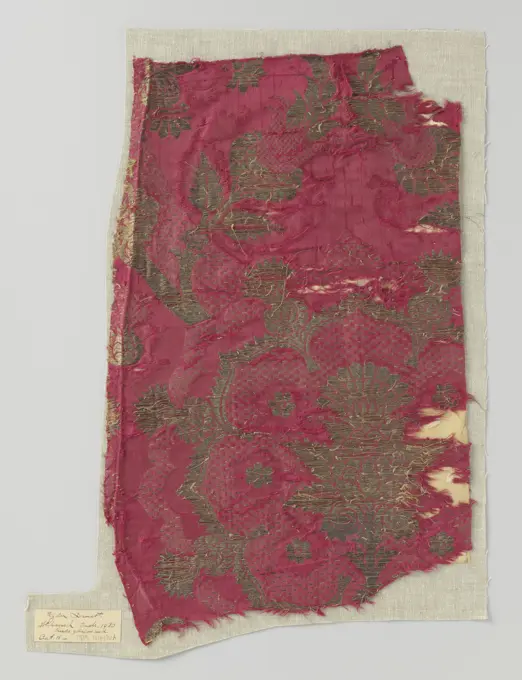
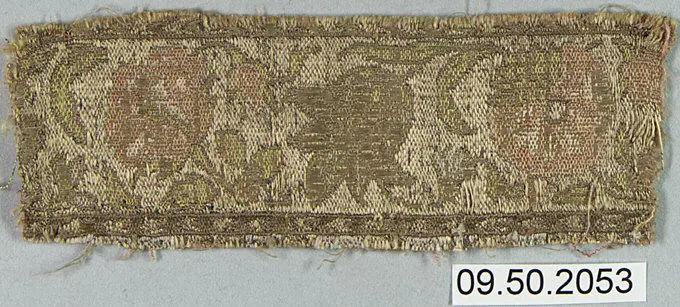
Fragment red damask brokaat with pomegranate moths, anonymous, c. 1450 - c. 1499 Fragment of red silk damask brokat with pomegranate skills. Italy silk. damask Fragment of red silk damask brokat with pomegranate skills. Italy silk. damask
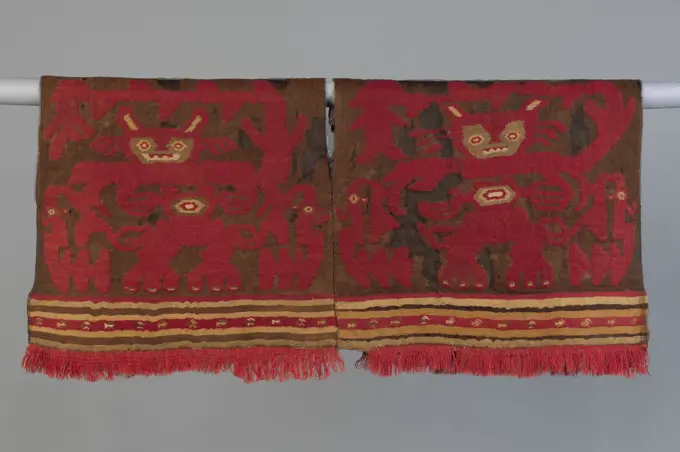
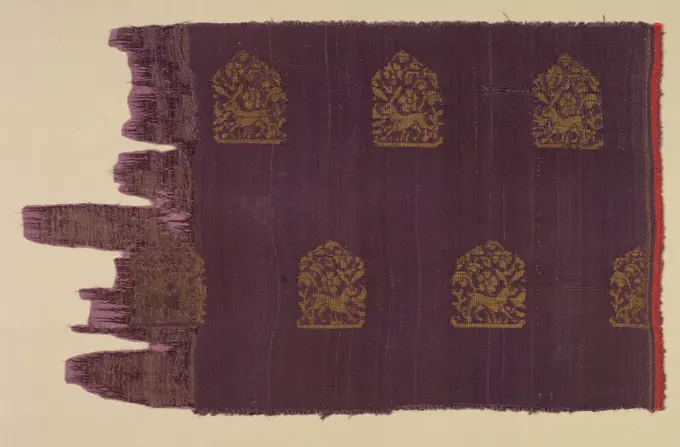
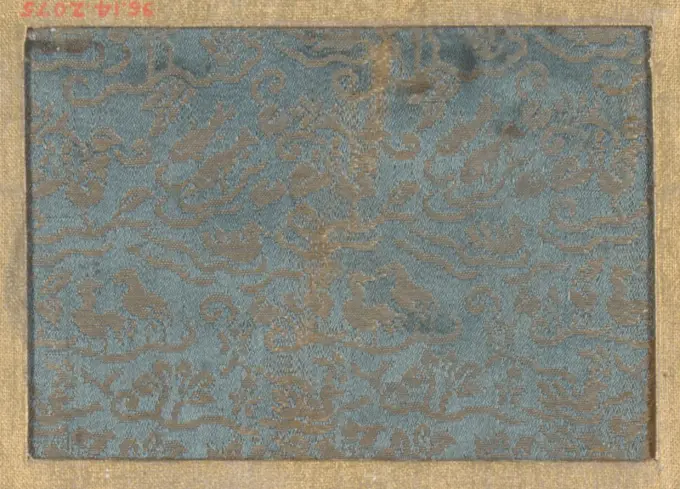
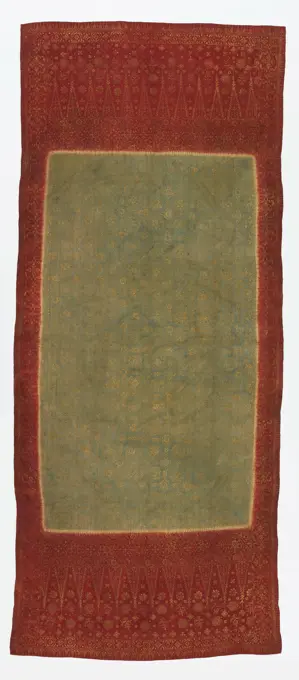
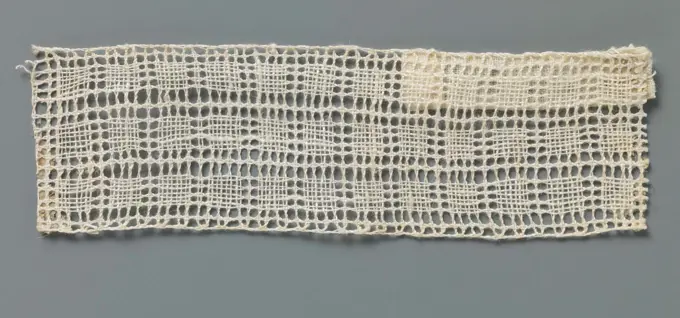
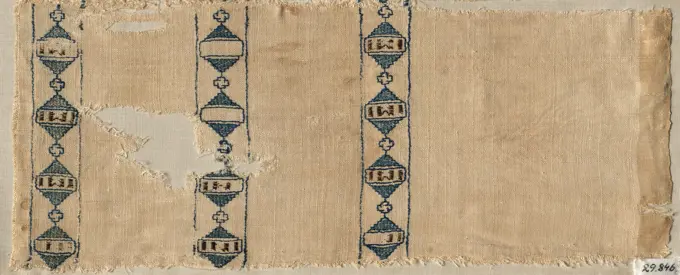
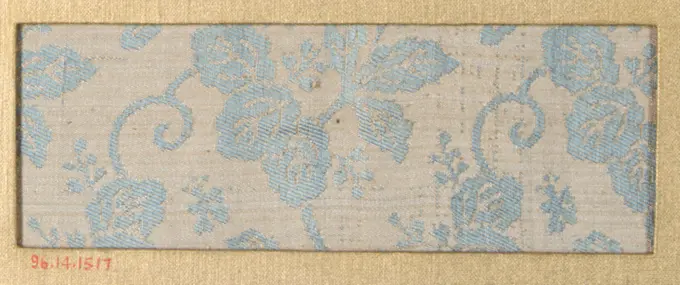
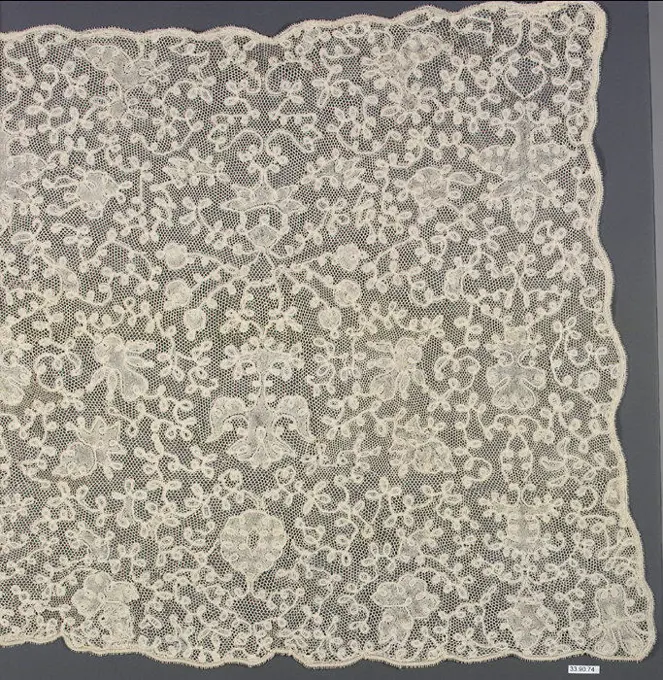
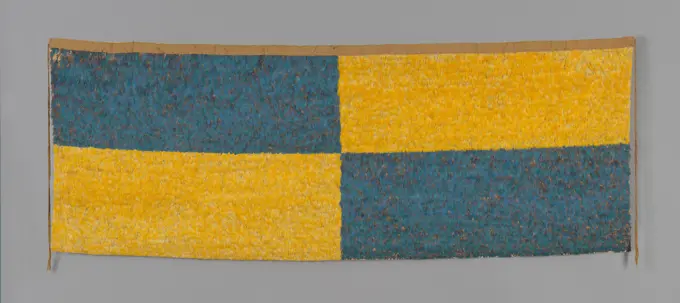
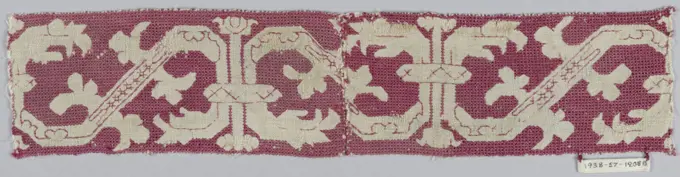
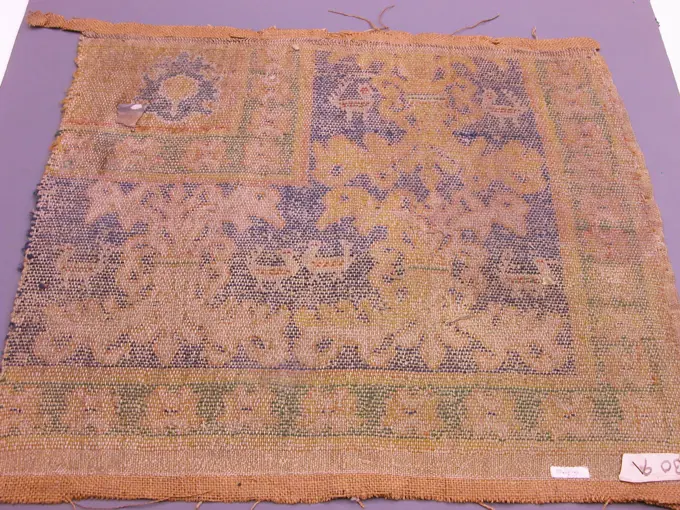
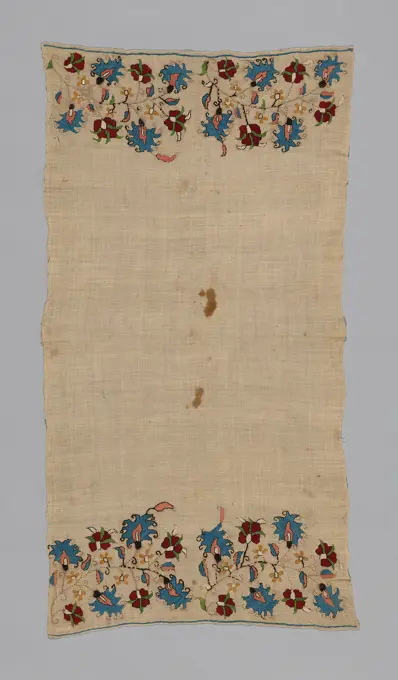
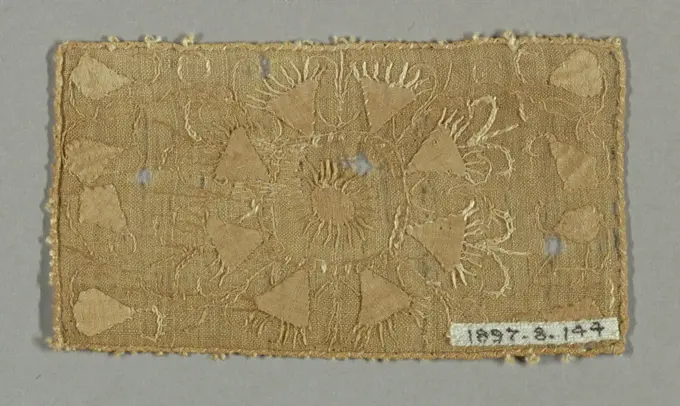
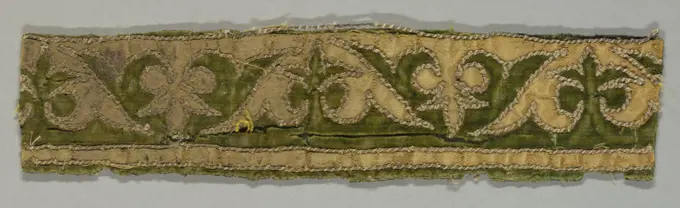
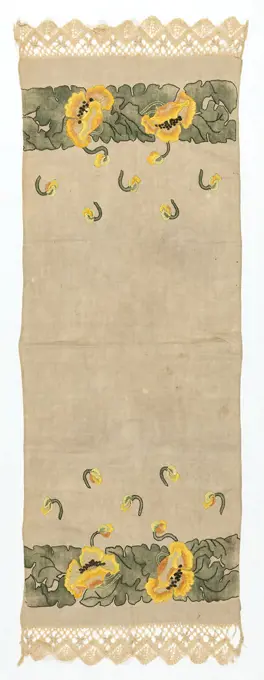
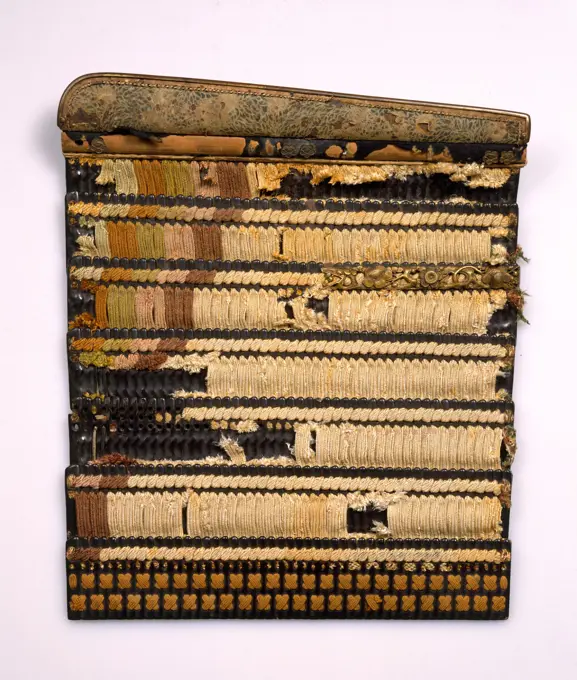
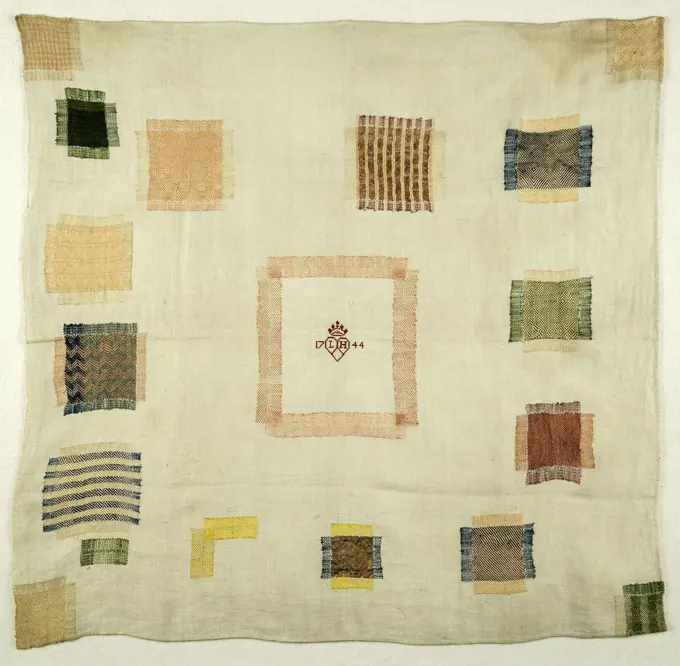
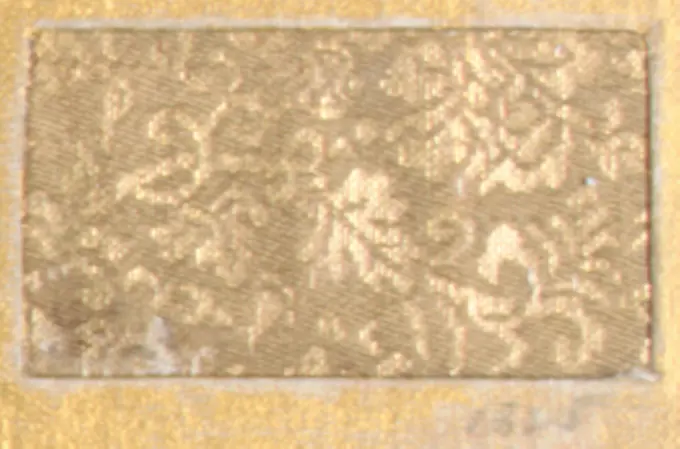
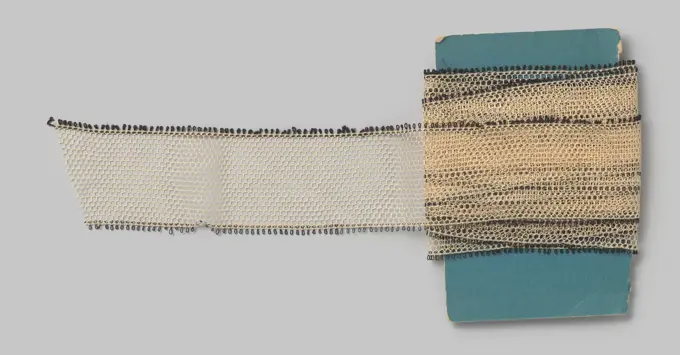
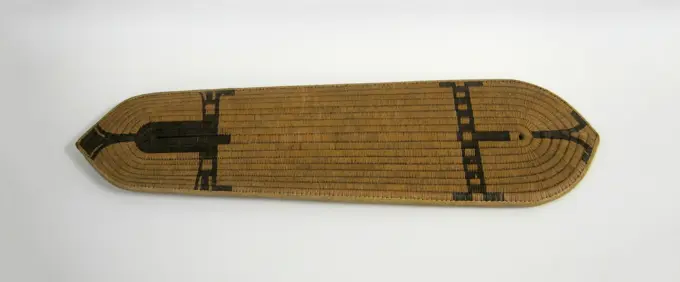
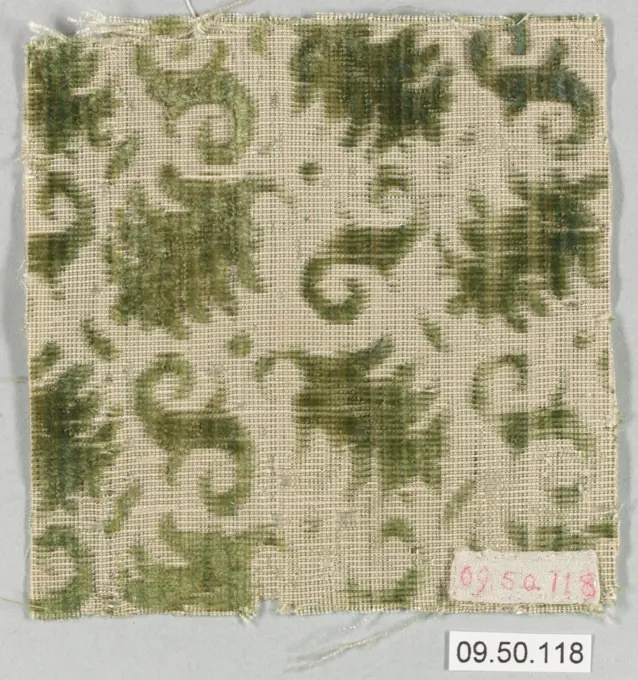
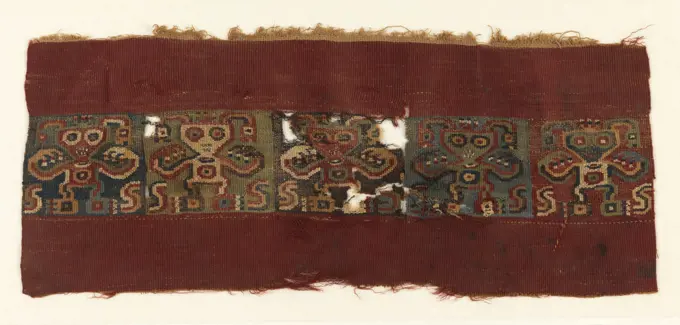
Fragment, Medium: wool, cotton Techique: plain woven with discontinous weft (tapestry), Red ground has a central horizontal band with blocks of blue, green, black, blue, and red. Each square contains the same upright figure with dangling antennae in multicolor., Peru, 13th century, woven textiles, FragmentSampler (Mexico); silk embroidery on linen foundationBand 17th-18th century. Band 445888Tunic 12th-15th century Chimú. Tunic 312786Fragment, Medium: linen Technique: bobbin lace (Lille-style with heavy outlining thread), Fragment of Lille style bobbin lace., 18th century, lace, FragmentFragment, Medium: silk, metallic Technique: plain weave with supplementary wefts and decorative slashing, Brown silk with design of oval reticello-like shapes. Both selvages present. Fabric is slashed in a pattern., 17th century, woven textiles, FragmentBrocade with Hares, 1200s-mid-1300s. Northern China, Yuan dynasty (1271-1368). Silk: tabby, brocaded; gold thread; overall: 26 x 42.8 cm (10 1/4 x 16 7/8 in.). The motif of the hare among bushes may relate to the hunting activities of the Khitan, the Jurchen, and the Mongols. Hare hunts are recorded in the Liaoshi (History of the Liao Dynasty) and were often reported by envoys returning to China from the northern states. The asymmetry of the image in this textile is characteristic of Jin brocades. However, the paired (instead of single) warps reveal the influence of craftsmen from the eastern Iranian world and therefore dates the textile to the Mongol period.Piece 18th-19th century Japan. Piece. Japan. 18th-19th century. Silk. Textiles-WovenTextile Fragment , 1000-1700. Cotton, 1 1/2 × 2 in. (3.8 × 5.1 cm).   Arts of the Americas 1000-1700Fragment of Coptic fabric unknownGeorge Constantine, Handkerchief, 1935 1942 HandkerchiefFragment of embroidery. unknown, authorFragments, Medium: silk, metallic Technique: woven, Asymmetrical branches with floral decoration in brown, white, gold and silver., 17th century, woven textiles, FragmentsSelendang (shoulder Cloth) (Indonesia); silkPiece 18th-19th century Japan. Piece. Japan. 18th-19th century. Silk. Edo (1615-1868). Textiles-WovenFragments, Medium: silk Technique: plain weave, Fragments of woven silk in an irregular plaid in red with dark blue, tan and cream., 13th century, woven textiles, FragmentsFragment of two parts of woolen tissue, anonymous, c. 1601 - c. 1625 Fragment of a woolen tissue. On a stock of RIPS, a pattern of stylized sheets on a short handle is hanging and horizontally ripped. Put on a piece of linen. Germany Ketting an element: Silk. Entry: Wool Fragment of a woolen tissue. On a stock of RIPS, a pattern of stylized sheets on a short handle is hanging and horizontally ripped. Put on a piece of linen. Germany Ketting an element: Silk. Entry: WoolPiece 18th-19th century Japan. Piece 67386Tussenzetsel van kloskant met drie rijen vierkantjes.Natural Collaboration Interest: Punk. The repeating and geometric pattern consists of three rows of squares in linen battle with openwork edges. Upper and bottom of the strip are straight finished.Piece 18th-19th century Japan. Piece. Japan. 18th-19th century. Silk. Textiles-WovenTowel or Napkin Made 1801-1900 Turkey. embroidered . AnonymousBorder (For Table Cover) Made 1875-1900 England. Pattern of cotton, plain weave; drawing; glazed; cotton, woven tapes with linen, needle lace and cotton and linen, bobbin lace fillings .Fragment Made 1201-1400 Egypt. .Pillowcase from the estate of M.A. de Ruyter, Anonymous, 1575 - 1625  Pillowcase of white linen with two worked edges in Point Coupé and an entredeuz from Kloskant and slice, both with geometric motif. Six ribbons to close. Marked. There are damp spots and a few stops on the fabric. Italy (possibly) linen (material). bobbin laceFragment, Medium: linen, cotton Technique: plain weave with supplementary weft, Supplementary blue weft floating alternatively face to face creating a design of birds flanking a rosette., Italy, 17th century, woven textiles, FragmentTwo Fragments of a Scarf or Headdress, 1300s. Egypt, Mamluk period, 14th century. Silk embroidery on linen tabby ground; overall: 11.2 x 27.7 cm (4 7/16 x 10 7/8 in.).Tapestry Bag with Pockets 7th-9th century Wari. Tapestry Bag with Pockets. Wari. 7th-9th century. Camelid hair, cotton. Peru. Textiles-WovenChalice Cover. Europe. Date: 1650-1700. Dimensions: 37 × 37 cm (14 1/2 × 14 1/2 in.). Linen, needle lace with woven tapes. Origin: Europe. Museum: The Chicago Art Institute, Chicago, USA.Piece 18th-19th century Japan. Piece 67230Towel, Medium: linen, cotton Technique: plain weave with continuous supplementary weft; bird's eye twill weave, Perugia-type towel with bands of blue patterning at each end of a white field. Pattern bands, same at both ends starting from the bottom, have birds separated by trees and confronted lions separated by guard borders of arrow heads., Italy, 16th-18th century, woven textiles, TowelMatelasse (Pieces from dress 1923.1639a) Made 1880-1890 France. Garnet velvet with moss green satin allover design of single large roses. Velvet, satin and wool.Matelasse is Jacquard figured fabric of heavy compound weave having raised pattern as if quilted or wadded. It was made of all materials or combinations of materials .Flounce late 17th century Italian or Netherlandish. Flounce. Italian or Netherlandish. late 17th century. Bobbin lace, Milanese lace. Textiles-LacesFragments, 1100s - 1300s. India, 12th-14th century. Plain cloth, resist dyed; cotton; average: 12.3 x 15.5 cm (4 13/16 x 6 1/8 in.).Fragments (Spain); silk; gilded goldbeaters' skin wound around a silk coreFragment silk tissue. Fragment of 2 pieces of purple silk assembled together with green and gold of dragons, alternated with the heads of each other, interspersed with lobed oval medallions in which two lions dawbled towards each other.Feathered Panel A.D. 600-900 Wari The discovery of an ancient burial or ceremonial site in the upriver region of the Churunga Valley, in far south Peru, received little attention in the turbulent world of 1943. Decades later, it would take two generations of Andean scholars to painstakingly piece together the puzzling story of this discovery, which included the largest and most spectacular find of Precolumbian Peruvian feather work to date.Protected from decay by being rolled, placed into large ceramic jars, and buried in the arid soil, the cache included an estimated ninety-six panels, each densely covered with tens of thousands of small glossy macaw body feathers, primarily from the blue and yellow macaw (Ara ararauna). Although these panels were found in the dry western foothills of the Andes, the birds home is the Amazonian rainforest, far to the east. The effort required to secure such a mind-bogglingly large supply of either feathers or live birds suggests that colorful feathersBand, Medium: silk, linen Technique: embroidered, Italy, 17th century, embroidery & stitching, BandChasuble;  18th century (1701-00-00-1800-00-00);Carpet Fragment probably 18th century. Carpet Fragment 451459Towel/Napkin Made 1601-1700 Turkey. Linen, plain weave; embroidered with silk in double running, twined double running and stem stitches; both selvages present .Panel with a tree pattern. Culture: Assyrian. Dimensions: 13 7/8 x 19 5/8 in. (35.2 x 49.8 cm). Date: ca. 8th century B.C..This piece of ivory furniture was found in a storage room in Fort Shalmaneser, a royal building at Nimrud that was used to store booty and tribute collected by the Assyrians while on military campaign. It was probably part of a bed or couch, judging from the long strips of ivory inlay associated with it, which are also in the Metropolitan Museum's collection (59.107.2a, b). Nineteen other similar furniture pieces, probably chair backs, were stacked in orderly rows in the same storage room. They are rare examples of ancient ivory furniture still in its original form; usually, the wooden frames holding the ivory pieces together have disintegrated by the time they are excavated, but since these chairs and couches were buried after the sack of the Assyrian palaces in 612 B.C., their arrangement was preserved. Set in a modern wood frame, this piece combines plain flat sShawl, late 1800s. India, Punjab, late 19th century. Tapestry twill; wool; overall: 261.6 x 118.8 cm (103 x 46 3/4 in.).Fragment, Medium: linen Technique: applique and embroidery, Light brown rectangular fragment with a crude floral form suggested by a spoked circle surrounded by triangular petals. Left and right edges have diamond shapes connected by lines of stitching., Belgium or France, early 17th century, embroidery & stitching, FragmentKontusz sash/belt. unknown, authorBand, Medium: silk, metallic thread Technique: appliqué, Fleur-de-lis pattern with yellow on green counterchange., France or Italy, 17th century, embroidery & stitching, BandTable runner, Medium: linen ground, silk embroidery Technique: stenciled and embroidered on plain weave, crocheted border, Rectangular Arts & Crafts-style embroidered and stenciled table runner has a design of large dark green leaves and two large yellow flowers at both ends. Small yellow sprigs float above the leaves and flowers. Both ends have a crocheted border added., USA, ca. 1912, embroidery & stitching, Table runnerMolding; wood, paintedTray cloth, 1917-1918, United Kingdom, by William Hansen. Gift of Eileen Tiller, 2008.Fragment of a Box 17th century. Fragment of a Box 448378Shoulder Guard (Ō-Sode) mid-late 14th century Japanese Large square sode are the earliest form of shoulder guards used in Japan. This rare, unrestored example is almost contemporary with the Ashikaga armor in the center of this gallery.. Shoulder Guard (Ō-Sode). Japanese. mid-late 14th century. Iron, leather, lacquer, silk, gilt copper. Armor PartsDarning sampler worked with colored silk on unbleached linen, centrally embroidered crowned dark red heart, LH 1744, exercise, stoplap needlework footage linen silk, textile embroidery cross stitch stopping fairly large almost square piece of finely woven unbleached linen. The cloth has selvedge on the left and 0.3 cm hem on all other sides. The layout of the piece is quite uneven. The piece shows aspects of early 18th century stopovers, among other things, the irregular arrangement of the stoppers and the difference in size and the rectangular effect thereof. We have worked with silk in the colors pink light peach dark blue green yellow ivory-colored purple and gray embroided: LH 1744 handcraft educationCope with a Hood mid-15th century Italian or Spanish. Cope with a Hood. Italian or Spanish. mid-15th century. Silk. Textiles-EcclesiasticalBand; silk, linenMouw van machinale kant met spitsovale medaillons voor aan een avondjapon.Sleeve from natural machine side for an evening dress. Rectangular model with one sloping side and a sloping edge. The pattern consists of a row of spiral oval medallions, outlined by a flower garland above garlands of bowl flowers with a diamond pattern and some flower garlands with hanging leaves. Above are garlands of ribbons and branches with bows above and down and a motif of volutes and branches with leaves and buttons.Kesa Made 1775-1825 Japan. .Genevieve Sherlock, Hitchcock Chair, c 1940 Hitchcock ChairSampler, Medium: cotton and silk embroidery on cotton foundation Technique: embroidered in running stitch (pattern darning) on plain weave foundation, Irregularly placed darning crosses and corner mends containing simulated plain weave and twill., Germany, 19th century, embroidery & stitching, SamplerLinen ornament Beautiful table cloth linen with ornament decoration Copyright: xZoonar.com/Baloncicix 14274091Textile (Egypt); linen, silkTextile Fragment 17th century. Textile Fragment. 17th century. Silk, metal thread. Made in Iran. TextilesPiece 18th-19th century Japan. Piece 67044Fragment of a Bowl 9th-10th century. Fragment of a Bowl 450169Untitled Untitled, Anni Albers, 1941, rayon, linen, cotton, wool, jute, Bauhaus Copyright: xZoonar.com/Tolox 21629999Sidewall - Fragment; machine-printed; 23 x 24 cm (9 1/16 x 9 7/16 in.)Fragment, 1600s. Iran, 17th century. Brocade; silk and metal; overall: 36.9 x 11.5 cm (14 1/2 x 4 1/2 in.).Piece 18th-19th century Japan. Piece 67320Cardboard on which coarse cream-white silk tulle, with black picots, gustav schnitzler, c. 1900 Cardboard on which coarse cream-white silk tulle, with black picots. NijmegenFrance (possibly) whole: Silk. Cardboard. Cardboard on which coarse cream-white silk tulle, with black picots. NijmegenFrance (possibly) whole: Silk. Cardboard.Linen mark (Type IV) ca. 1961-1917 B.C. Middle Kingdom. Linen mark (Type IV). ca. 1961-1917 B.C.. Linen. Middle Kingdom. From Egypt, Upper Egypt, Thebes, Deir el-Bahri, Tomb MMA 507 (The Slain Soldiers), MMA excavations, 1926-27. Dynasty 12Aurifries with embroidery of silk and gold thread on linen ,, c. 1525 - c. 1530 Aurifries from which parts of the embroidery have been removed. These parts are set up separately and numbered BK-NM-5440-B and C. Southern Netherlands-Zuid-Nederland linen (material). silk. embroidering Aurifries from which parts of the embroidery have been removed. These parts are set up separately and numbered BK-NM-5440-B and C. Southern Netherlands-Zuid-Nederland linen (material). silk. embroideringSample Book (USA); cotton, silk, linen, woolTurban Cloth, 19th century, 151 x 36 1/2 in. (383.54 x 92.7 cm), Silk; dyed, India, 19th centuryForehead Cloth, late 1500s. England, Elizabethan Period, late 16th century. Silk, gold and silver thread, sequins, padding, linen; embroidery; overall: 16.8 x 38.7 cm (6 5/8 x 15 1/4 in.). Sumptuous interlacing scrolls bearing flora and fruit embroidered with gold, silver, and silk thread decorate this set composed of a coif (cap see 1934.206) and forehead cloth (seen here). Individual motifs representing England appear within the scrolls, such as the Tudor rose, carnation, honeysuckle, and acorn. Fashionable ladies wore coifs in the house as semiformal dress and in bed for receiving guests. The large loops along its lower edge were drawn together to keep it in place. Worn pointing backward, the forehead cloth functioned like a visor, supposedly preventing wrinkles and keeping off the sun and cold air.Fragments Made 1501-1600 Spain. silk; cut, voided velvet against plain weave foundation .Fragment of a brand patch, anonymous, c. 1830 - c. 1840 fragment Upper of a brand patch with later additions. Netherlands  embroideringFragment; silk; Bequest of Richard Cranch Greenleaf in memory of his mother, Adeline Emma Greenleaf; 1962-56-97Fragment (Japan)Stick;  18th century (1701-00-00-1800-00-00);Cape 17th century Spanish. Cape. Spanish. 17th century. silk, linenFragment silk tissue. Fragment, composed of 7 peeled parts, from gray-blue silk with pattern of palm-shapes and pairs to each other wolves. Pattern is signed.Church tablecover. unknown, authorShield (lava lava), 20th century, 34 3/8 x 9 3/4 x 1 1/4 in. (87.31 x 24.77 x 3.18 cm), Raffia, Solomon Islands, 20th century, Extremely light and maneuverable, the shield (lava lava) was essential to the men of the Solomon Islands. Shield forms varied by region but most were made of coiled cane and decorated with dye. In battle, these shields were used to deflect arrows and spears as well as execute complex movements. This ability to wield the lava lava was gained after a long apprenticeship during adolescence. Shields, often passed down through generations, were only given when the young men were deemed ready. Even after Western firearms were introduced and it no longer served defensive purposes, the lava lava was still carried everywhere, representing the shield-bearer's social rank as well as his personal identity.Piece 16th-17th century Italian. Piece 215519Velvet 16th-17th century Italian. Velvet. Italian. 16th-17th century. Textiles-VelvetsFragment, 1100s - 1300s. India, 12th-14th century. Plain cloth, resist dyed; cotton; overall: 16.5 x 13.1 cm (6 1/2 x 5 3/16 in.).Piece 16th-17th century Italian. Piece 216933Gigerl-Tarock, Treff Kontusz sash/belt. Królewska manufaktura jedwabna w Grodnie (Grodno; wytwórnia tkanin jedwabnych i pasów; 1768-1780), manufactureFragment of a shirt fourth quarter 18th century Russian. Fragment of a shirt 175599Band (Egypt); warp; s-spun linen. wefts; s-spun linen, s-spun woolSidewall, Block-printed on paper, Small wallpaper fragments, diamond pattern containing stylized cross-shaped four-petal flowers backed by larger cross-shaped area forming four fleur-de-lis. Printed in putty, tan and gold. Parts 'a' and 'b' are joined together., USA, 1850-80, Wallcoverings, SidewallPiece 18th-19th century Japan. Piece 65846Fragments; silkTextile Fragment 4th century. Textile Fragment 443326MITRA DE S VALERO. Location: CATEDRAL. RODA DE ISABENA. HUESCA. SPANIEN. SAN VALERO.Fragment of a Shoulder Band 4th-5th century. Fragment of a Shoulder Band 443787Shijo paintings, Leporello book: gray-green brocade cover with leaf-like motif, top left blank title strip, 21 sheets with 20 paintings in Shijo style of landscapes, plants and animals., anonymous, Japan, 1850 - 1900, paper, cardboard, kaft, drawing, h 182 mm × w 120 mm t 26 mmFragment, Medium: linen Technique: bobbin lace, Fragment of Mechlin lace with incomplete conventionalized design. 'Fond de neige' ground., Belgium, 18th century, lace, FragmentFragment of embroidery unknownSampler (England); linenPiece 18th-19th century Japan. Piece 67392