Historic Textile Fragments

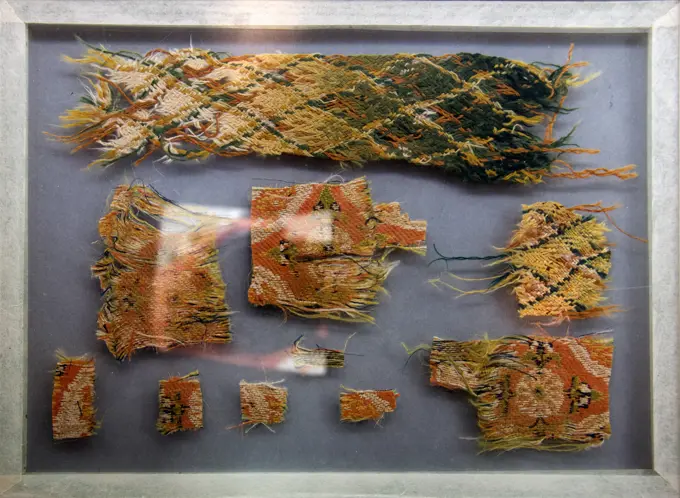
Collection of fabric fragments showcasing intricate patterns and motifs, including floral and leaf designs in silk and linen from various historic origins.

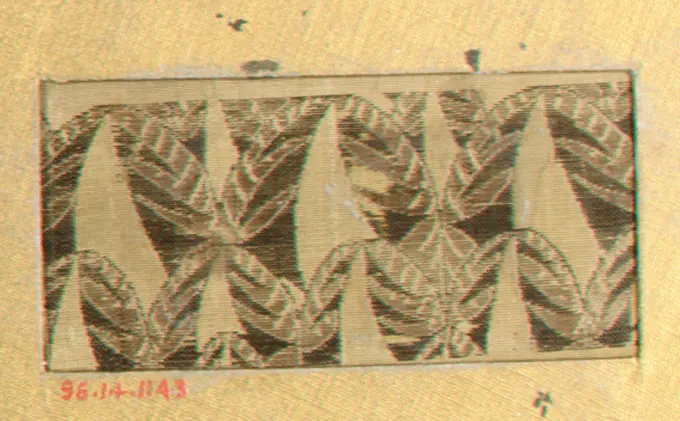
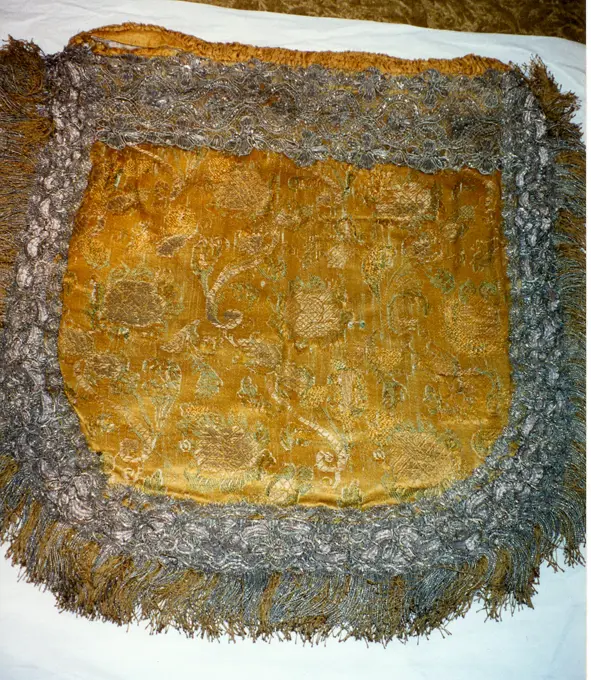
Fragment yellow side with leaf motif in yellow and red, anonymous, c. 1580 - c. 1600 Fragment of yellow -green silk with pattern of stylized flower branches in rows to the left and to the right. Italy silk. metal thread Fragment of yellow -green silk with pattern of stylized flower branches in rows to the left and to the right. Italy silk. metal thread
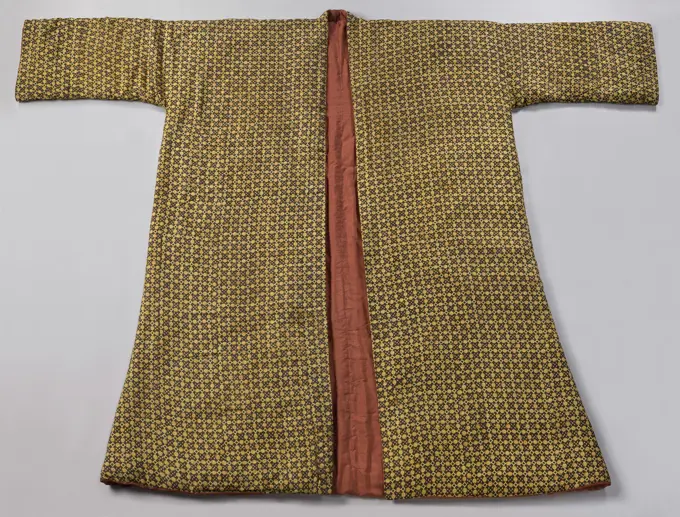
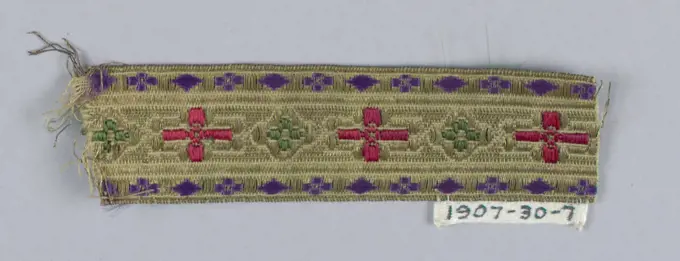
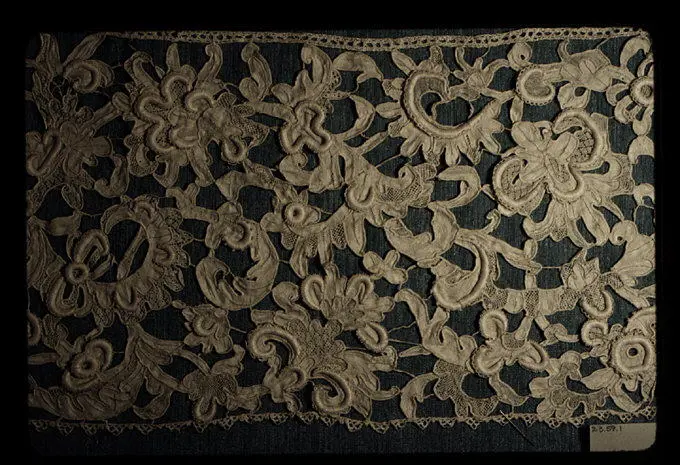
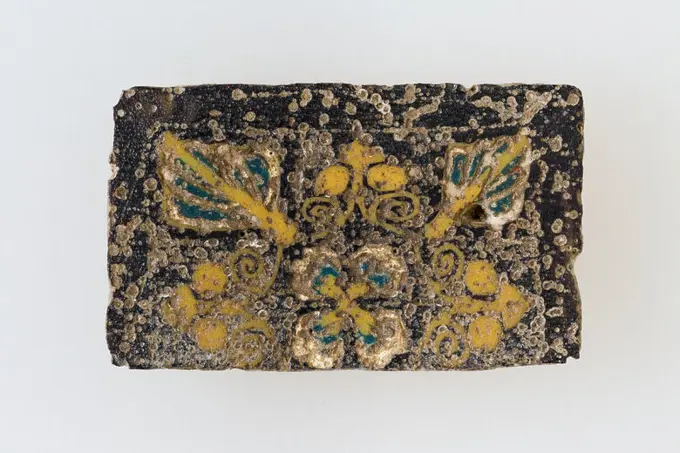
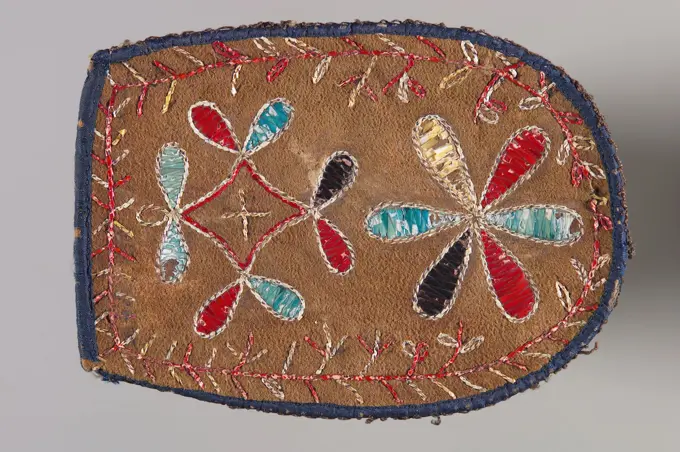
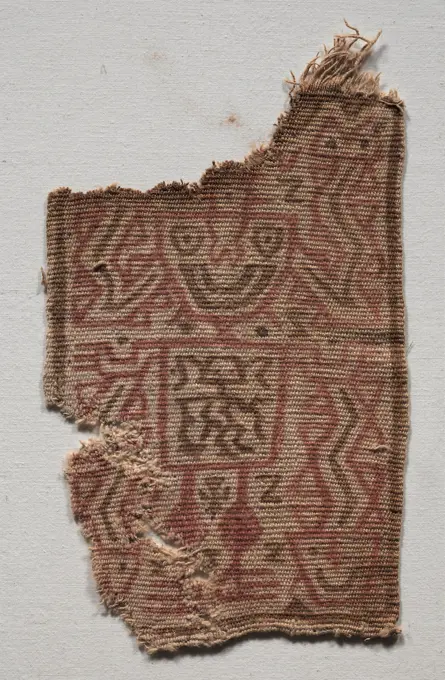
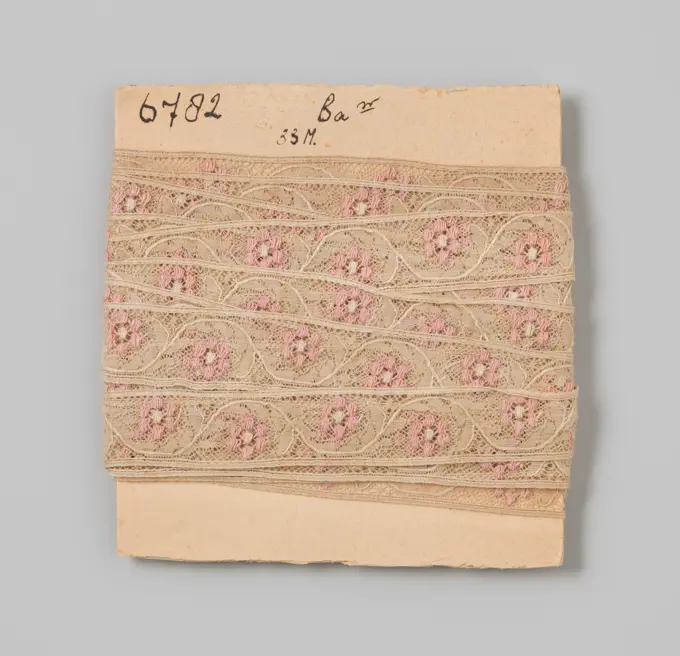
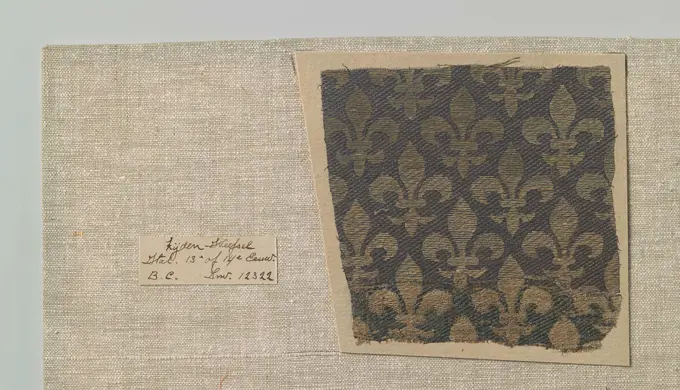
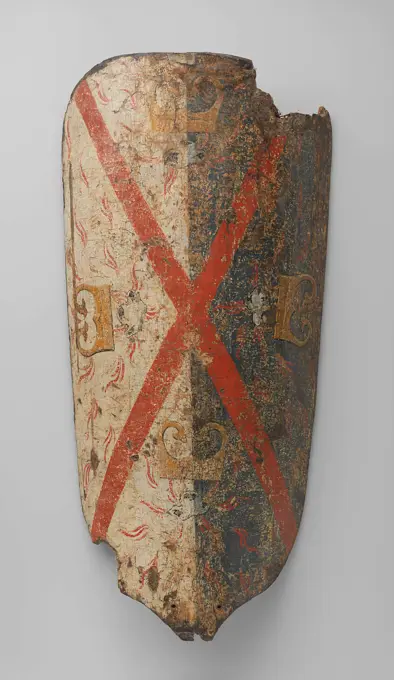
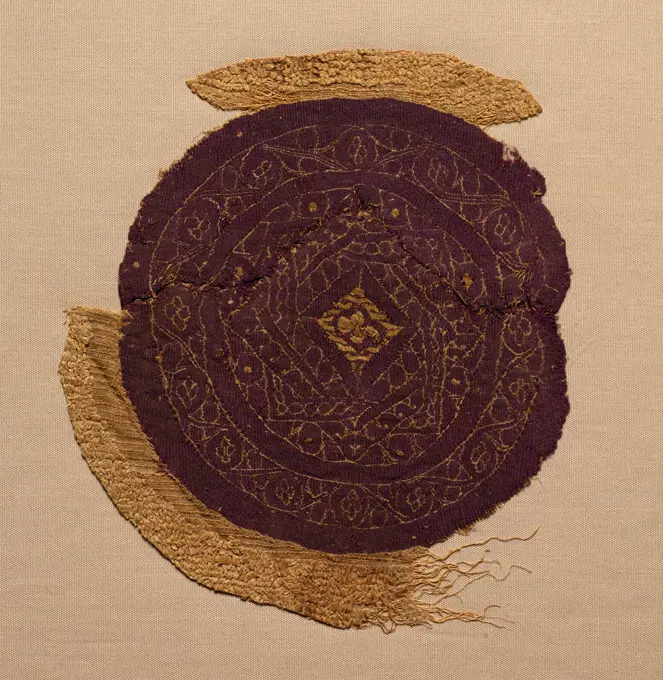
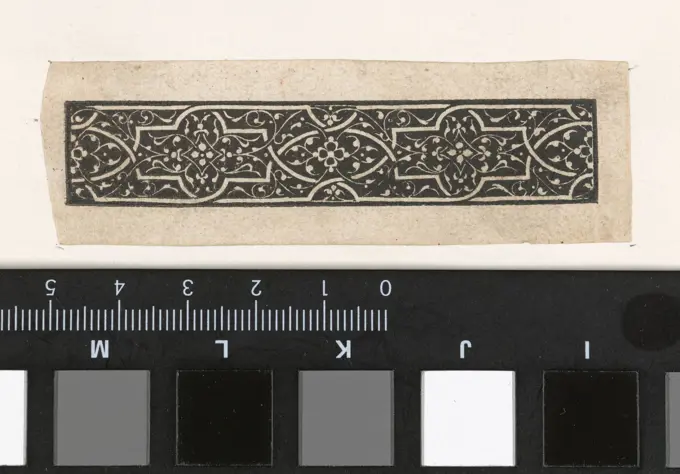
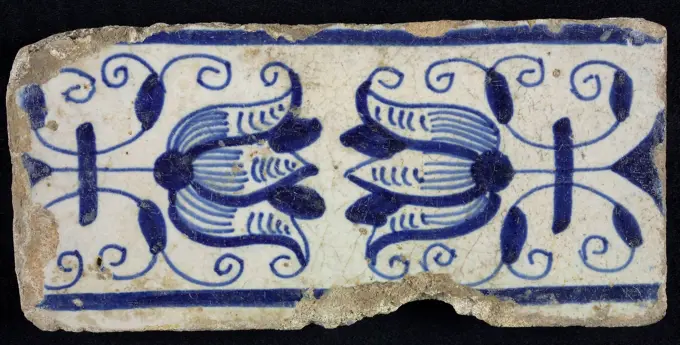
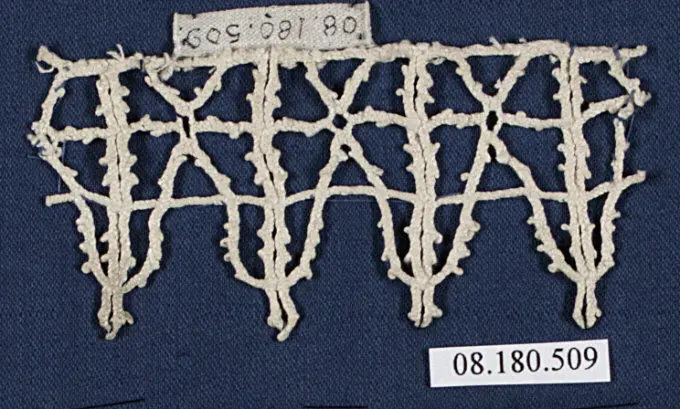
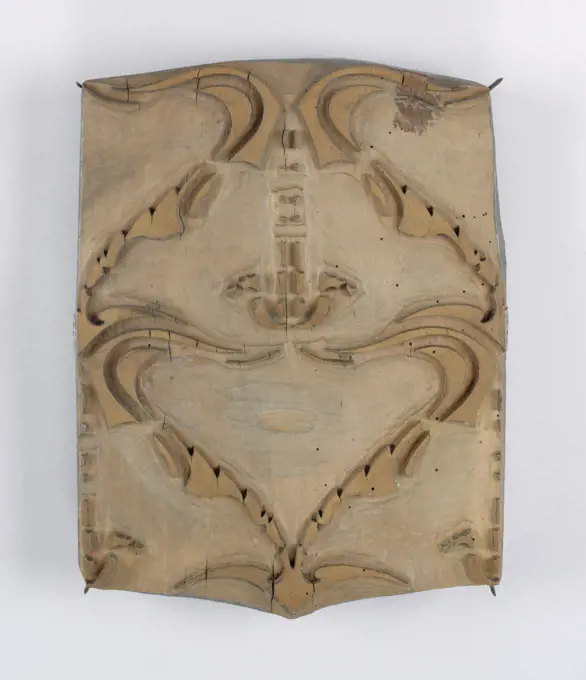
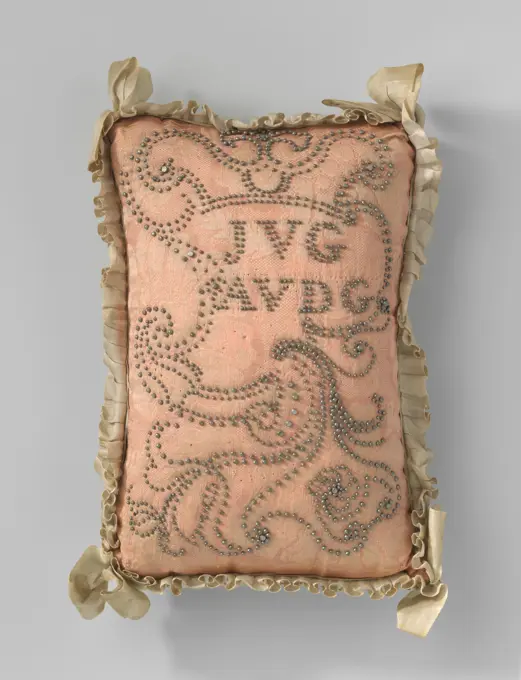
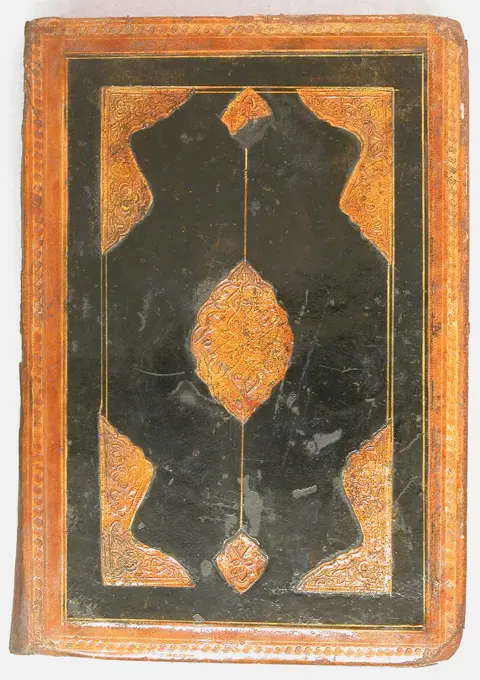
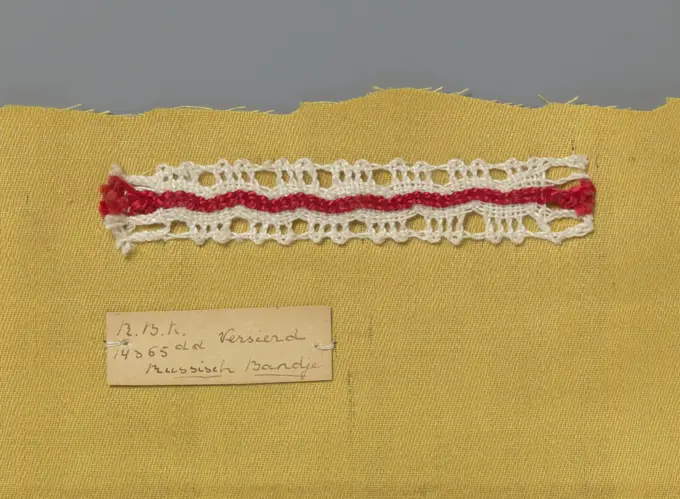
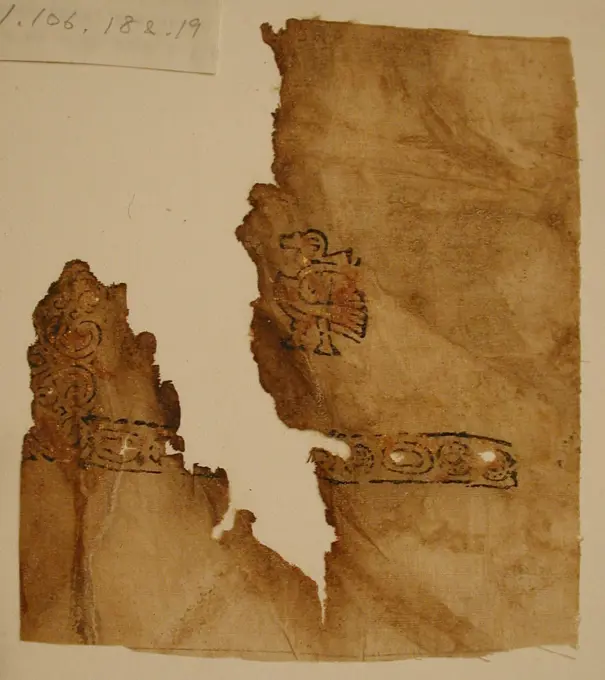
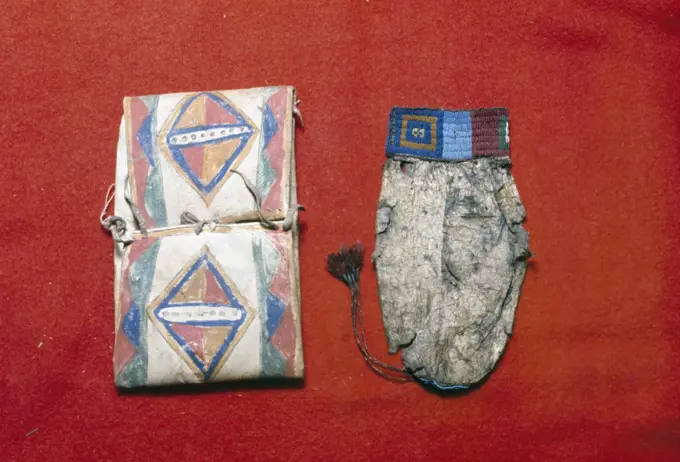
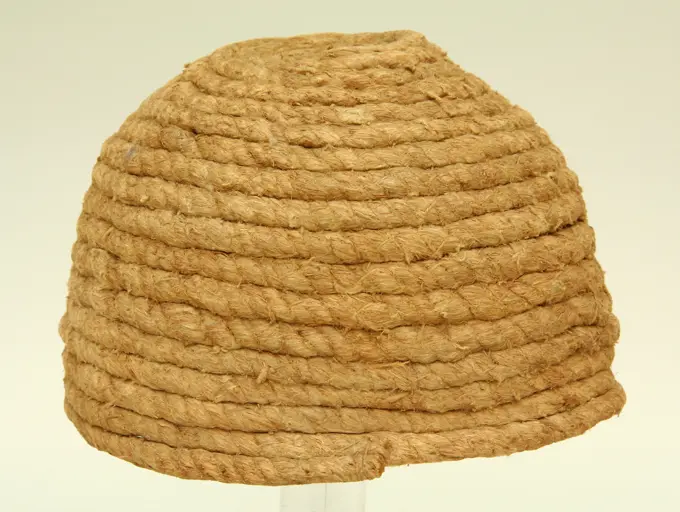
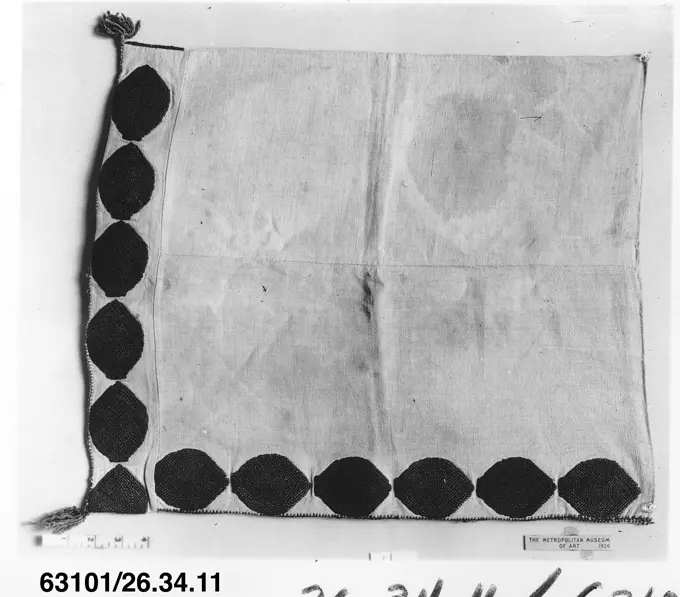
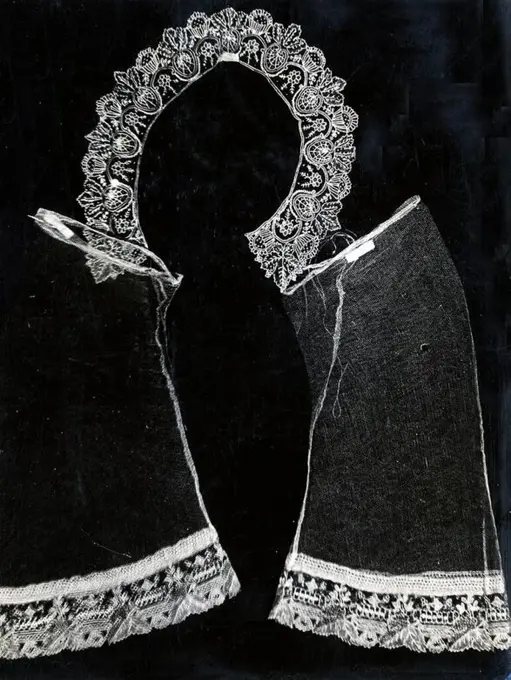
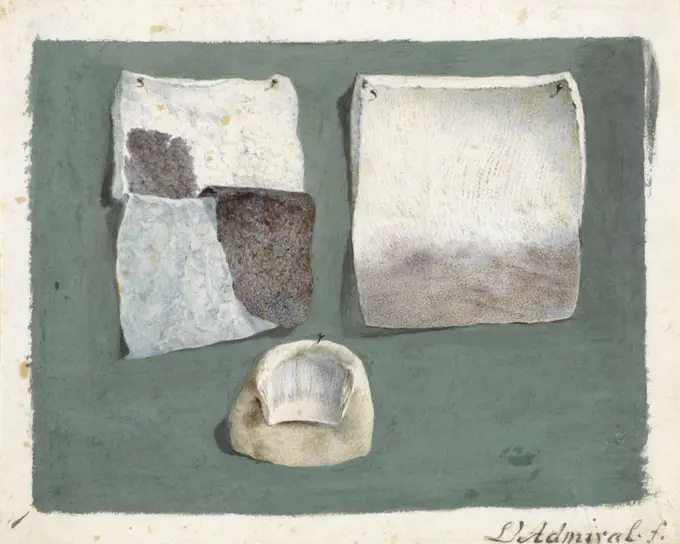
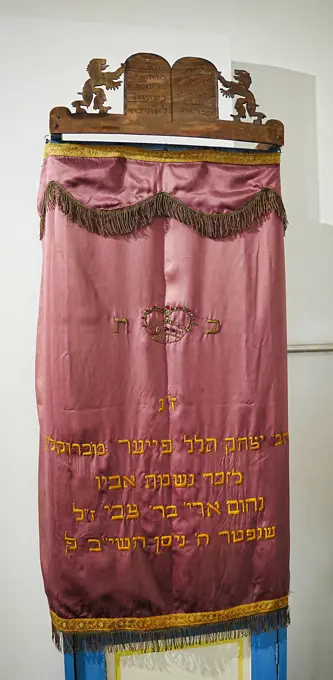
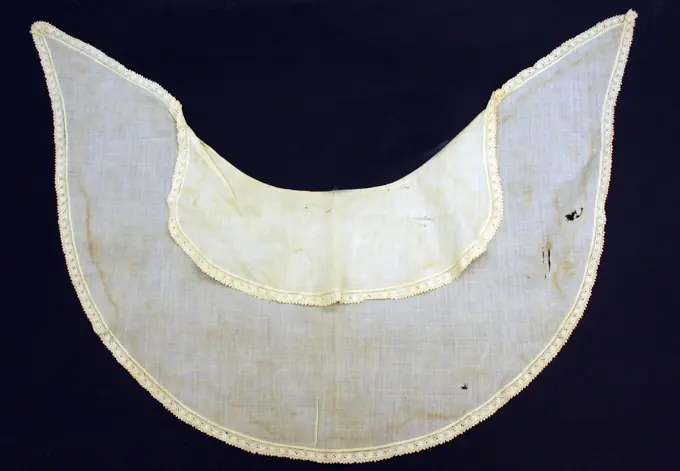
Neckpiece 1700-1945 American or European. Neckpiece 119274Wool Rug Fragment withPilePiece 18th-19th century Japan. Piece 66955House jacket of printed silk, padded and lined with red silk. House jacket from yellow silk, on which with blocks in red and a dark color (indigo) Is printed a geometric pattern of windows, flowers and dots. Ringing model, with a small upper board and partly reflected not too wide, long sleeves. Quilted with silk watts and lined with wine red side.Gold side strip, 1700 - 1800 Gold side strip.  . Gold side strip.  .Tissue fragment with clavus. Natural linen fabric with decoration of a brown clavus. The Clavus and the Tabula consist of repetitive circle motif with an irregular motif with six cikels at the end. At the Clavus, a natural-colored running figure with raised hand is woven. The edges of the Clavus consist of a continuous line with excellent rods with a stump tip. In the linen tissue, four thickened impacts are woven from approximately approximately. 14 cm long.Fragment silk tissue with embroidery ,, c. 1630 Fragment blue silk tissue with white embroidery. The pattern has rows of staggered flower branches. The fragment has white, silk fringe on two sides. Netherlands silk. linen (material) embroidering Fragment blue silk tissue with white embroidery. The pattern has rows of staggered flower branches. The fragment has white, silk fringe on two sides. Netherlands silk. linen (material) embroideringTextile (France); wool on cottonFringe European 19th centuryFragment from the Mantle of Don Felipe Made 1201-1300 Spain. Silk and gilt-animal-substrate-wrapped silk, three-color complementary weft plain weave with inner warps .Fringe (Greece); silk, metallic thread (gold strips wound on a silk core)Fragments of embroidered skirt unknownTrimming, Medium: silk and metal, Trimming (galloon) with design of a cross in red silk, alternating with lozenge in green silk, between borders with small lozenge and flower in purple silk; on ground of metallic gold thread; furnishing trim, France, mid-19th century, trimmings, TrimmingFlounce 17th century Italian, Venice. Flounce 221458Fragment, Medium: cotton Technique: plain weave with tied-resist patterning, Small hollow squares reserved in white are grouped so as to build up a diamond pattern, each enclosing a bird motif on a tan background. Small folds tied and uncapped. Remains of one selvage intact., Peru, 900-1400, printed, dyed & painted textiles, FragmentPiece 12th century Japan. Piece 71014Inlay, palmette. Dimensions: H. 1.8 × W. 2.9 cm (11/16 × 1 1/8 in.). Date: 100 BC-100 AD.A mosaic glass technique allowed multiples of an image to be created: a figural or design composition was made by bundling colored glass canes, which were then drawn out into a long bar. The bar was then sectioned at right angles, probably by striking the bar with appropriate tools, to produce small inlay tiles. The tile would then be smoothed and polished on the face intended to appear outwards. Museum: Metropolitan Museum of Art, New York, USA.Pouch, 18th-19th century, 4 3/4 x 3 1/2 in. (12.1 x 8.9 cm), Animal hide, quills, cotton, United States, 18th-19th century, The quillwork on this bag is a good example of the type of natural materials that were being used before the introduction of manufactured glass beads. The quills are colored with natural dye. The flowing lines and curvilinear patterns that are found in nature are found in the quillwork pattern on this bag.Textile Fragment 5th-6th century. Textile Fragment 443532Mummy Bundle "Mask", 200 BC-1. Peru, South Coast, Ica Valley, Ocucaje site, Paracas style (700 BC-AD1). Plain warp-faced cloth, painted: cotton; overall: 25 x 14.5 cm (9 13/16 x 5 11/16 in.).Intermediate base, off -white, with a wavy line and pink flowers, Gustav Schnitzler, c. 1920 Intermediate base, off -white, with a wavy line and pink flowers. NijmegenFrance (possibly) cardboard Intermediate base, off -white, with a wavy line and pink flowers. NijmegenFrance (possibly) cardboardFragment blauw samiet met patroon van fleurs-de-lis in goud.Elongated fragment blue Samiet with a pattern in gold from close-styled fleurs-de-lis in diagonal rows. The fragment is attached to a piece of cardboard and the pattern is supplemented with paintwork.WIT LINES PLEASE PROVIDE,, 1800 - 1850 White linen peel napkin, marked Kroon H. Northern Netherlands linen (material) White linen peel napkin, marked Kroon H. Northern Netherlands linen (material)Shield. A shield offered protection in battle and made its carrier recognizable on the battlefield since it bore the symbol of the ruler or town for which he was fighting. The shield with three crowns is from the German town of Cologne, and the shield with Saint Andrews cross is that of the Duke of Burgundy, who ruled over several Dutch provinces.Berlin Wool Work SamplerFragment with Gold Foil and Apotropaic Interlacing Knots, 300s-400s. Egypt, Byzantine period, 4th-5th century. Undyed linen, dyed wool, and gold foil; plain weave with supplementary weft-loops, slit-tapestry weave with supplementary weft wrapping; overall: 20.4 x 18.5 cm (8 1/16 x 7 5/16 in.); mounted: 33 x 33 cm (13 x 13 in.). The rare gold foil and rich purple wool in these two fragments originally enriched a luxurious fabric. Costly gold foil wrapped around a silk core forms the central motif within a diamond, woven in tapestry weave. The surrounding interlacing knot designachieved with three overlapping squares (in the small fragment) or interlacing squares (in the large fragment)offered protection from danger and harm. The roundels were woven with extra, or supplementary, linen wefts wrapped on the purple ground. Linen pile loops in the ground fabric resisted abrasion in furnishing fabrics and provided insulation in tunics.Frisian with white moresken and arabesken on a black distance, anonymous, after bernard salomon, c. 1516 - c. 1571 print In the middle there is an oval between two rectangles with bulbs in the middle and in the middle of semi -rounds. France (possibly) paperDouble-Sided Comb 7th century Frankish. Double-Sided Comb 465823 Frankish, Double-Sided Comb, 7th century, Bone, iron pins, Overall: 5 1/2 x 2 1/16 x 1/2 in. (14 x 5.2 x 1.2 cm). The Metropolitan Museum of Art, New York. Gift of J. Pierpont Morgan, 1917 (17.193.95)Petrahil, embroidered unknownPiece 18th-19th century Japan. Piece 66862Hood from a cope 18th century french. Hood from a cope. french. 18th century. silk; metal. Textiles-EcclesiasticalFragments, Medium: linen Technique: withdrawn element work with needlework, Fragments have flowers and stems of plain weave surrounded by grid of withdrawn element work., Paris, France, late 19th century, lace, FragmentsBatists children's hat, embroidered with garlands and loose flowers and leaves, anonymous, c. 1850 - c. 1900  A children's hat of Batist embroidered with garlands and loose flowers and leaves. Netherlands batiste embroideringKerchief from Tutankhamun's Embalming Cache ca. 1336-1327 B.C. New Kingdom In December 1907 Theodore M. Davis, a wealthy American who was funding excavations in the Valley of the Kings, discovered a small pit near the tomb of Seti I. Inside the pit were approximately a dozen large sealed whitewashed storage jars (09.184.1). Among other things, the jars contained bags of natron (a kind of salt), pieces of linen with hieratic inscriptions dated to Years 6 and 8 of a king named Tutankhamun (throne name Nebkheperure). At the time, almost nothing was know about Tutankhamun, and Davis declared that he had discovered the king's tomb.Davis received a number of the jars and their contents in the division of finds and, in 1909, he gave most of his share to the Metropolitan Museum. It was only later that Herbert Winlock, the field director of the Museum's excavations at Thebes, realized that the natron and linen were embalming refuse from the mummification of Tutankhamun.Worn linen sheets and cloBelt Buckle and Ornamental Plaques. Culture: China. Dimensions: H. 1 3/16 in. (3 cm); L. 20 1/2 in. (52 cm). Date: 7th century.Belts embellished with plaques made of various materials were worn in many of the nomadic cultures that roamed the Central Asian steppe in the first millennium B.C. and later. Some were made in China for its northern neighbors; others were fashioned and used domestically, particularly from the fifth to the eighth century, when nomadic confederacies often ruled parts of northern China.This elegant set is an unusual example of such adornments made using glass, a precious commodity in Tang China that was both produced locally and imported from western Asia. Minute pieces of comma-shaped brown and green glass have been carefully placed into small enclosures defined by thin gilt bronze wires to create images of a bird against a floral background in the rectangular plaques and a flower with four petals in the square one. Tiny seed pearls fill the borders of all theBlue border tile, waving floral pattern with tulips, above and below blue border, border tile wall tile tile sculpture ceramic earthenware glaze, baked 2x glazed paintedFragment, Medium: silk Technique: unpatterned velvet, a. eight pieces of unpatterned green velvet sewn together, b. four pieces of unpatterned green velvet sewn together, c. four pieces of unpatterned green velvet sewn together, 19th century, woven textiles, Fragmentclose up of an empty wooden sign on white background with clipping pathFragment 16th century Italian. Fragment 214859Printing block, Medium: wood, One from a set of five blocks for printing fabric. This presumably would have been the third in the series to have been printed., Crayford, England, late 19th century, appliances & tools, Printing blockDress border early 19th century French. Dress border 226480Dark slate on tablecloth, top viewTextile Fragment 11th century. Textile Fragment 448252Chapan (robe), Medium: silk, metallic yarns, cotton Technique: compound weave (robe); warp ikat (lining), Robe patterned with ogival lattice in gold metallic on a terra-cotta silk foundation. Edges trimmed with knitted silk in red, blue, yellow, black and white. Lined with silk and cotton warp ikat fabric in red, white and yellow., Bukhara, second half 19th century, costume & accessories, Chapan (robe)PatternLittle boy hiding in gunny bagTable Cover (USA); linen, cottonBirth cushion of Rose Zijddamast and Yellow Satin with a pattern of pink carnations, in which a crown and the initials JVG and AVDG are stung with head pins of different thickness, anonymous, c. 1750 Birth cushion of Rose Zijddamast and Geel Satin with a pattern of pink carnations, in which a crown and the initials JVG and AVDG are stung with head pins of different thickness. Netherlands Fabric: Silk. Fabric: Silk. Fabric: Satin. Lint: Silk. Cup spell: Metal damask Birth cushion of Rose Zijddamast and Geel Satin with a pattern of pink carnations, in which a crown and the initials JVG and AVDG are stung with head pins of different thickness. Netherlands Fabric: Silk. Fabric: Silk. Fabric: Satin. Lint: Silk. Cup spell: Metal damaskFringe, Medium: silk Technique: woven, Red fringe with a plain-woven heading and a skirt of red threads., Italy, 17th century, trimmings, FringeBookbinding (Jild-i kitab) 17th-18th century. Bookbinding (Jild-i kitab). 17th-18th century. Leather, lacquer, gold. Made in Iran or Turkey. CodicesFolk embroidery pattern unknownHoliday card - Christmas card from Mr. and Mrs. Harry HoudiniSidewall, Machine-printed paper, Egyptian Revival style; vertical stripe pattern of banded flowers alternating with large gold lotus flower on striped red ground., USA, 1875, Wallcoverings, SidewallSteel bobbin with coarse wire as an example of a ribbon in linen stroke with red decorative wire that is used in Russian ribbon side, anonymous, c. 1900 - c. 1930 sample Steel natural and colored bobbin with coarse wire as an example of a ribbon in linen stroke with red decorative wire and recesses. This type of ribbon is used in Russian ribbon side. West-Europa cotton (textile) bobbin lace / tape lace (bobbin lace) / Russian tape laceRosette Fragment Coptic. , 5th-7th century C.E. Flax, wool, 3 1/2 x 3 3/4 in. (8.9 x 9.5 cm).   Egyptian, Classical, Ancient Near Eastern Art 5th-7th century C.E.Ship flag. Scheepsvlag van de 'Amsterdam'. Dutch tricolor with inscription in black and gold on both sides. On the front in the lower right corner the label with the second inscription.Steel climbing side with coarse thread as an example of a picro edge. Steel natural colosside with coarse thread as an example of a picro edge. It is a strip made in the lower side of picro edge on the outside. PicoTres are made in different ways. The matching fragment shows a piece of chantilly side in which the type of picro edge as made in the steel. The date concerns the steel. Other laces in which such a PicoTrand can be found are: Valenciennes side, Malinois side, Lille side, Paris side, Brussels-drake (both the older and more modern clamps that are manufactured in the Brussels manner).Textile Fragment 4th-5th century. Textile Fragment 443927Embroidery embroideryStacked cuboid bales of harvested hay in the slanted sunlight stamped cuboid balls of harvested hay in an angle in an inclined sunlightSample early 19th century French. Sample 224827TROZOS DE CERMICA CON REFLEJOS METALICOS. Location: INSTITUTO VALENCIA DE DON JUAN-COLECCION. MADRID. SPAIN.Embroidered Mantle Fragment 5th-2nd century B.C. Paracas. Embroidered Mantle Fragment. Paracas. 5th-2nd century B.C.. Camelid hair. Peru. Textiles-WovenSilk stocking from the wreck of the East Indies' t Vliegend Hart, Anonymous, 1730 - 1735 in 1735  Fragment (heel) From a silk stocking. Raggy piece of textile. Stocking. Middelburg silkHigh res cardboard elementsMantle Nasca. Mantle, 0-100 C.E. Camelid fiber, 108 11/16 x 50 13/16 in. (276.1 x 129.1 cm).   Arts of the Americas 0-100 C.E.Textile Fragment, Undetermined (NK) or Hat, Fragment or Headband, Fragment (AR) Wari (). , 1400-1532 or 600-1000 C.E. Cotton, camelid fiber, 1 15/16 x 1 3/4 in. (5.0 x 4.5 cm).   Arts of the Americas 1400-1532 or 600-1000 C.E.Muff 1850s European. Muff 122020Textile Fragment 9th century. Textile Fragment 448595Roundel with Botanical Decoration Coptic. , 5th-7th century C.E. Flax, wool, 1 9/16 x 1 9/16 in. (4 x 4 cm).   Egyptian, Classical, Ancient Near Eastern Art 5th-7th century C.E.Mitts early 17th century Italian. Mitts 157530Parfleche and water bag, Sioux tribe artifactsIndian TradeClothCerveliere (Cap Worn Under Mail) possibly German 15th century View more. Cerveliere (Cap Worn Under Mail). possibly German. 15th century. Rope. MiscellaneousTextile Fragment 3rd-4th century. Textile Fragment 443250Silk Kaponsche rock with gray -blue stock on which rice bundles and flower branches in red with green and red with blue, filled with silk cotton wool and lined with yellow silk, anonymous, 1700 - 1750 Silk Klangon Rock with gray -blue stock on which rice bundles and flower branches in red with green and red with blue, filled with silk cotton wool and lined with yellow silk. Model: This jacket is the same as the standard pattern of the Japanese Kosode with the exception of the Shawlkraag, which is not composed here of remaining pieces of fabric, but is cut as one long strip. At first glance, the model of the sleeves seems the most abnormal, but here the hanging kimonom ropes have been turned and cut open. The original cososdes always follows the pattern of the sleeves that of the buildings, but here it is perpendicular to it as a result of the entertainment. A kosode is made as standard from a piece of 10.5 m with a dust width of approx. 32.0 cm. 10.54 m fabric with a width of 37.0 cm iWorkpiece of a strip of needle side in the making on green incentive with linen surface, anonymous, c. 1850 - c. 1899 Workpiece of a strip of needle side in the making, on an incentive of green colored parchment. On the left, the Maas soil is complete around the still opened motifs. On the right side started with making relief contours around the opened motives and a relief filling. The pattern has a scalloped edge. A wavy band runs along the edge that is interrupted by leaves. Flower branches emerge on the points where the leaves cross the tire. Belgium linen (material). parchment (animal material) basting / sewing Workpiece of a strip of needle side in the making, on an incentive of green colored parchment. On the left, the Maas soil is complete around the still opened motifs. On the right side started with making relief contours around the opened motives and a relief filling. The pattern has a scalloped edge. A wavy band runs along the edge that is interrupted by leaves. Flower branSaddle bag 18th century Greek Islands, Rhodes. Saddle bag 221716Shirt -Sample early 19th century French. Sample 224836Collar. Belgium. Date: 1860-1869. Dimensions: 22.8 × 24.2 cm (9 × 9 1/2 in.)Width repeat: 4.5 cm (1 3/4 in.). Cotton, needle lace of a type known as "Point de Gaze". Origin: Belgium. Museum: The Chicago Art Institute, Chicago, USA.Anatomical study of human skin and nail, nails (fingers), skin (human), other anatomical details, Jan l'Admiral (mentioned on object), Amsterdam, 1737, paper, gouache (paint), h 117 mm × w 146 mmFragment, Medium: linen Technique: needle lace, Fragment of raised lace in a pattern of a trefoil bud with a central superimposed rosette and a portion of a leaf with a diamond diaper pattern., Venice, Italy, 17th century, lace, FragmentSample early 19th century French. Sample 224813Linen with ink mark ca. 1981-1640 B.C. Middle Kingdom. Linen with ink mark. ca. 1981-1640 B.C.. Linen, paint. Middle Kingdom. From Egypt, Memphite Region, Lisht South, Double Row of Pits, Pit 6L.P8, MMA excavations, 1923-24. Dynasty 12-13Shawl early 19th century. Shawl 446219Fragment of Woven Silk 13th century China. Fragment of Woven Silk. China. 13th century. Silk. Textiles-Woven4 Textile Fragments, Undetermined or Mantle, Tassels, 4 Fragments Chimú. , 1000-1400. Cotton, camelid fiber, a. 18.0 x 14.0 cm.   Arts of the Americas 1000-1400Tora curtain from a private bedroom around 1950 Jew. Museum Franken in Fürth Toravorhang from a private bedroom around 1950 Jew. Museum Franken in Fürth