Historic Textile Fragments

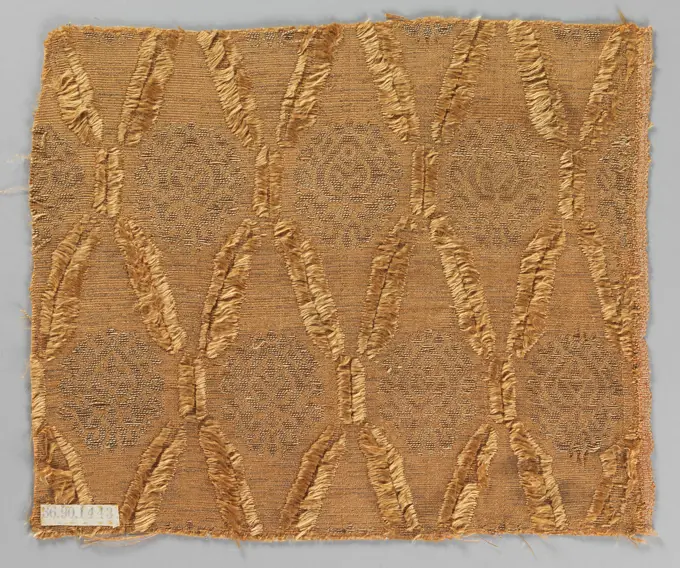
A variety of textile fragments showcasing brocaded silk and velvet patterns, highlighting luxury materials and intricate designs from past centuries.
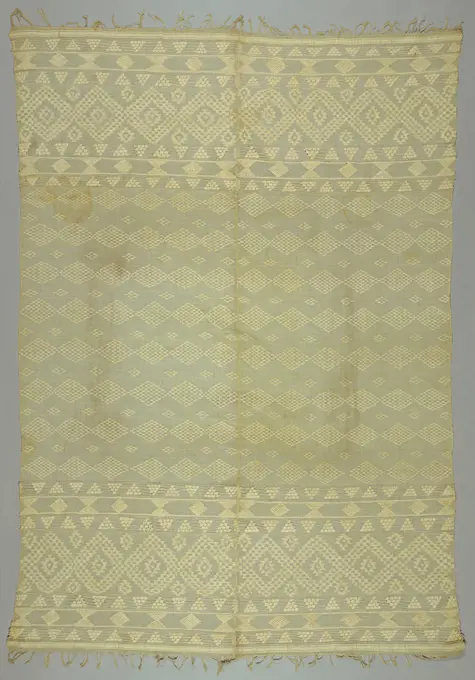
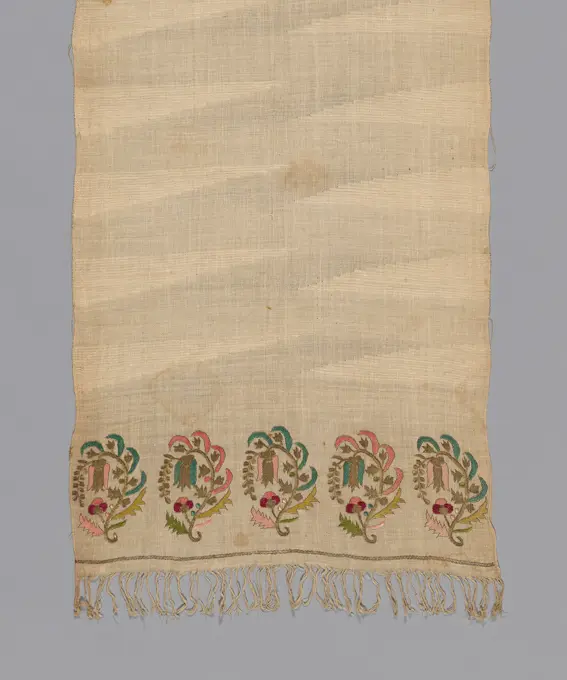
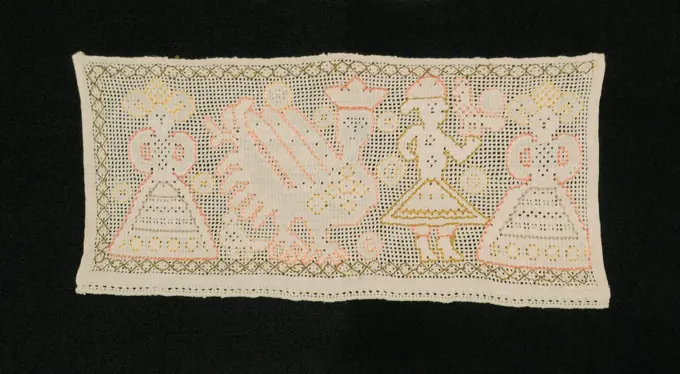
Textile, Medium: cotton Technique: woven, Two lengths of sheer cotton seamed down longest edge. Spaced bands of lozenges and triangles inlaid with heavier cotton thread. Deep borders edged with openwork bands at either end. Twisted warp fringe., Albania, late 19th-early 20th century, woven textiles, Textile
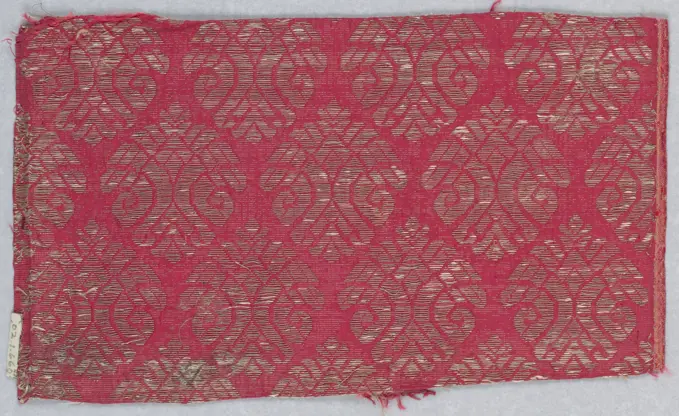
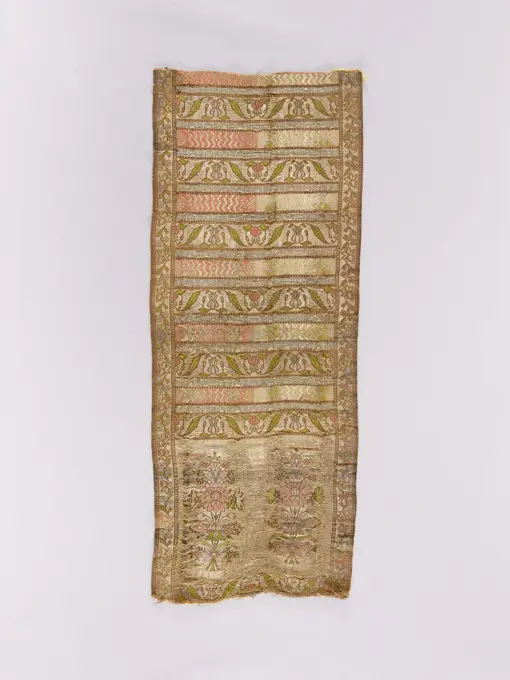
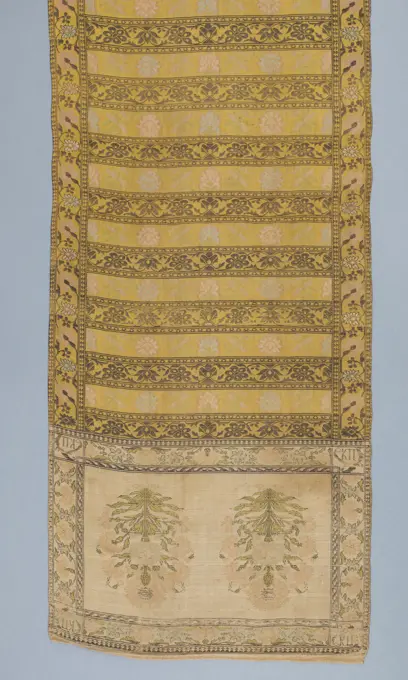
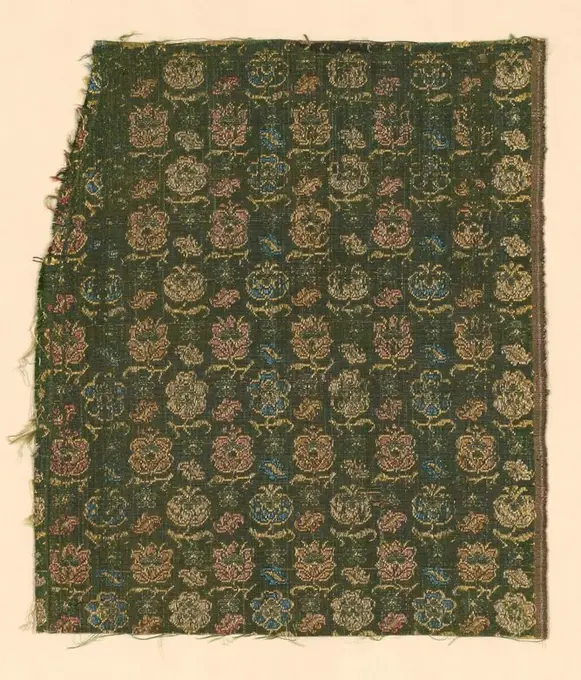
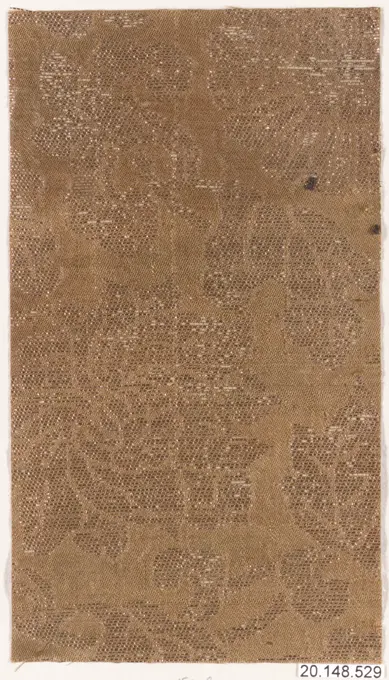
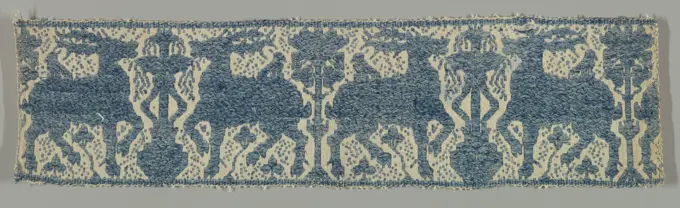
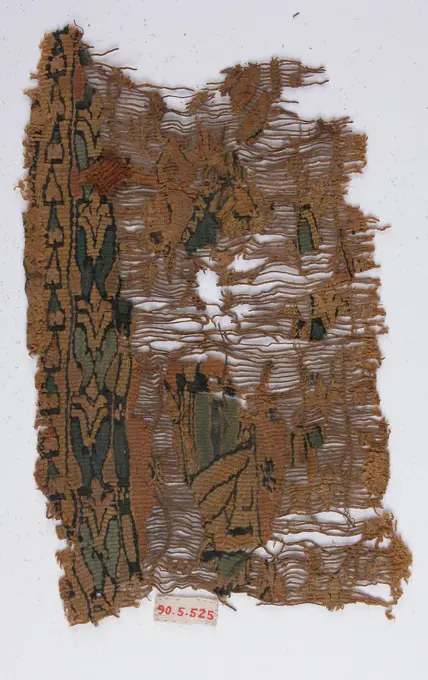
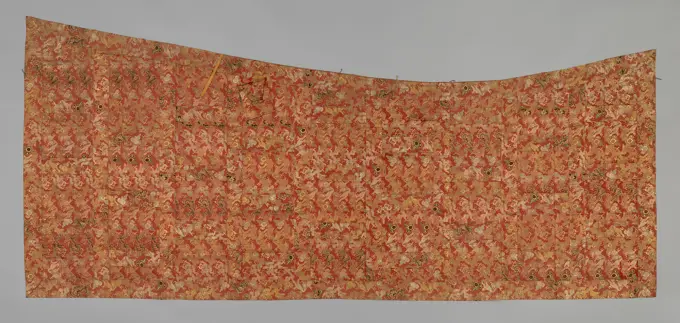
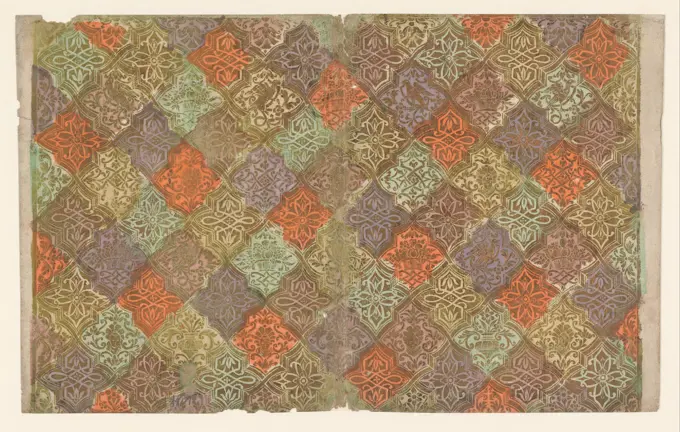
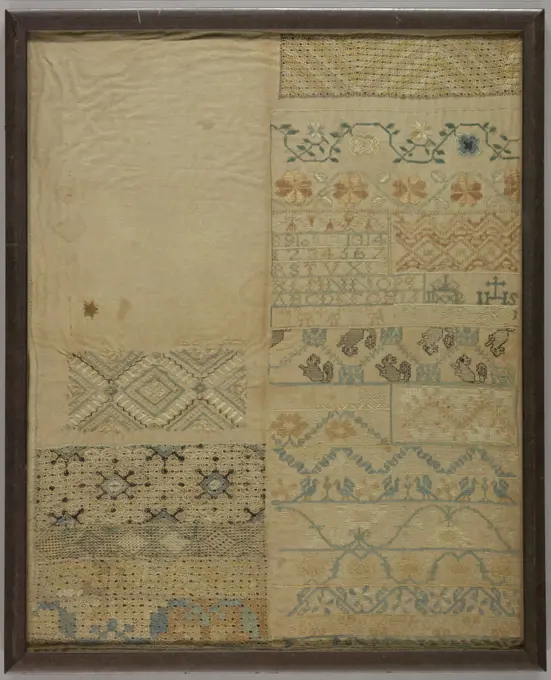
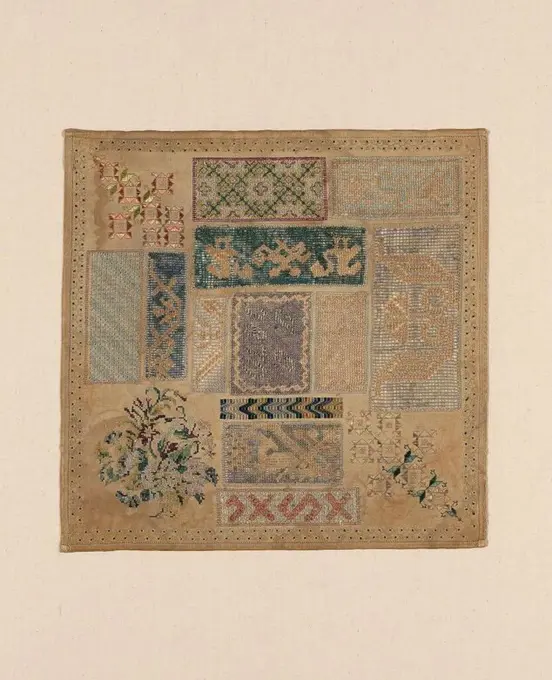
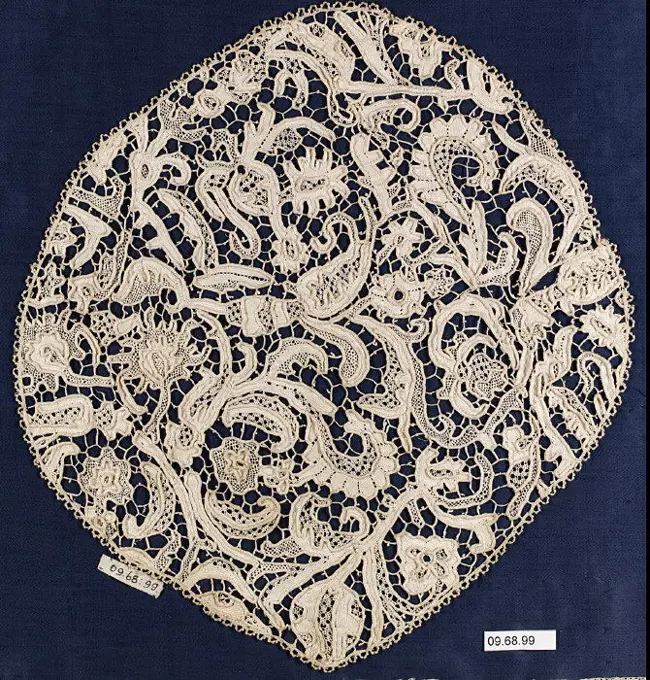
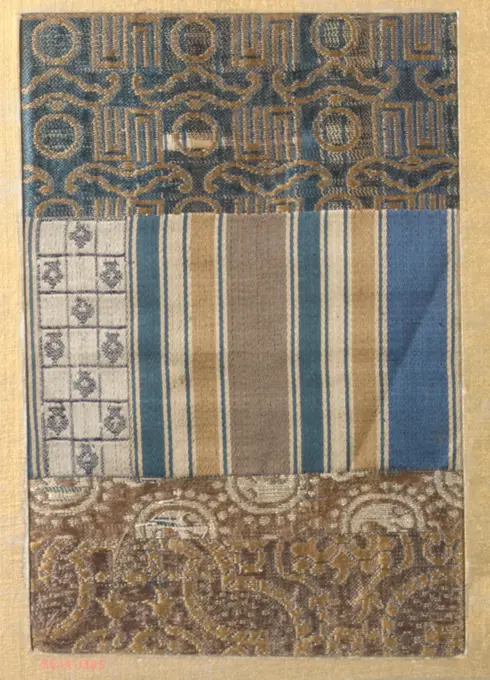
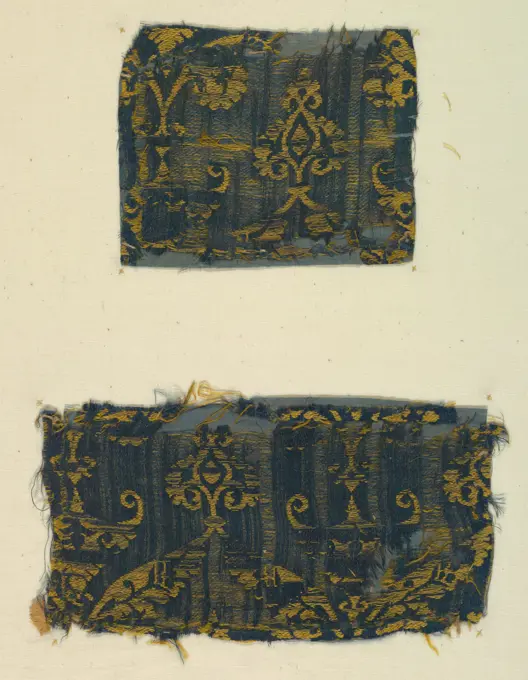
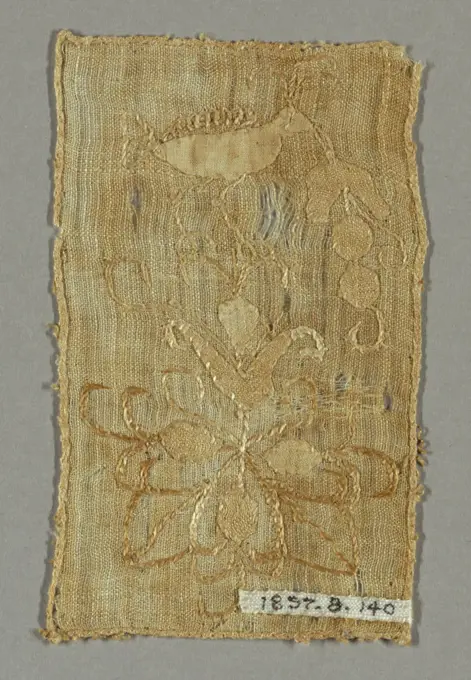
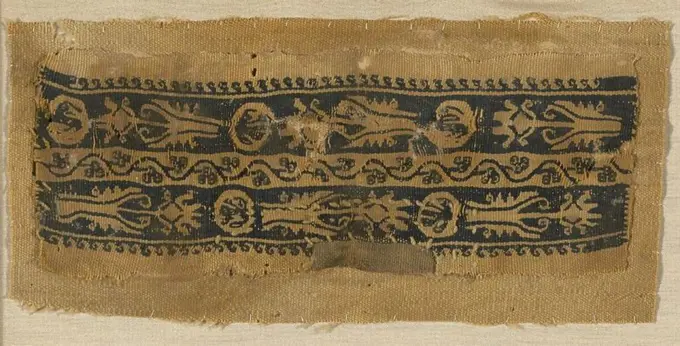
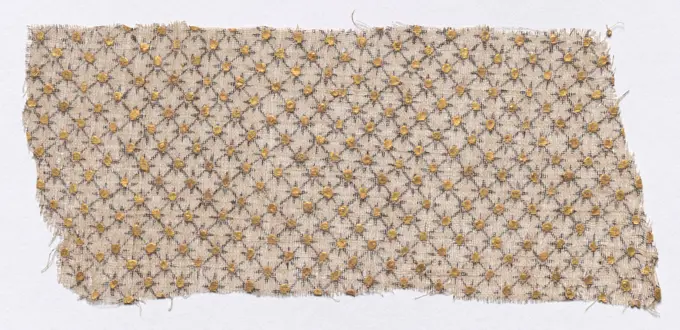
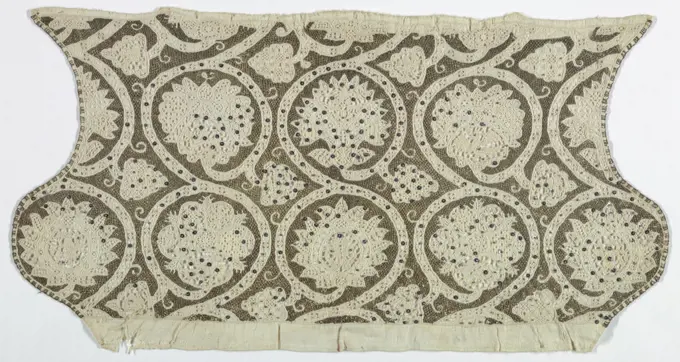
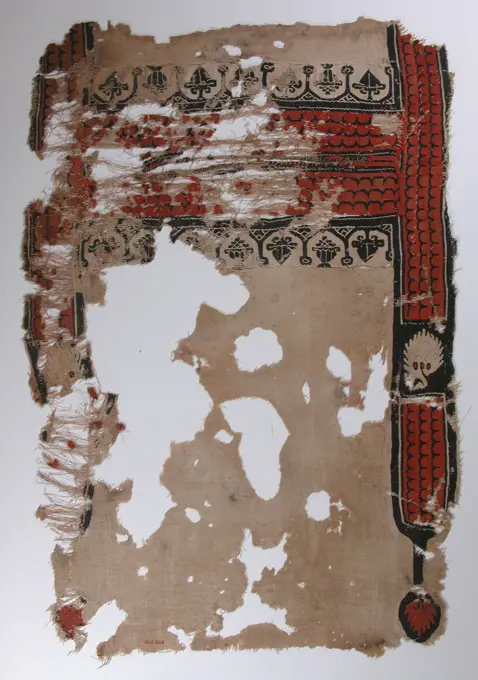
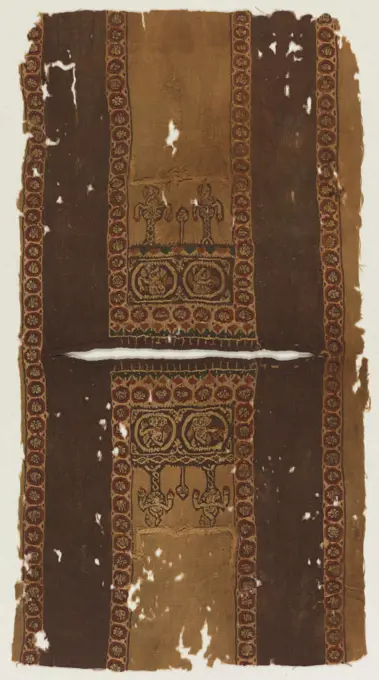
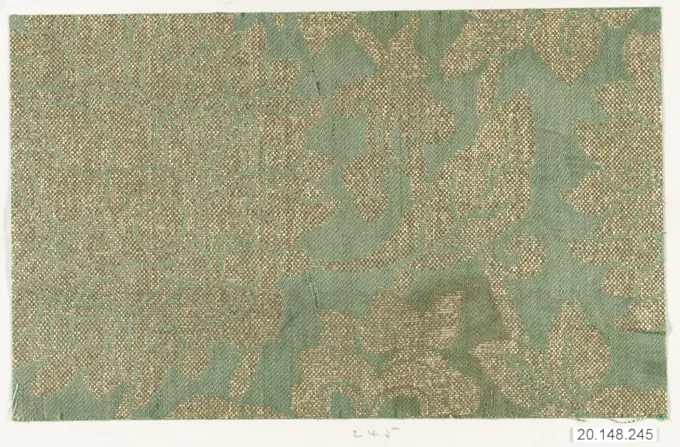
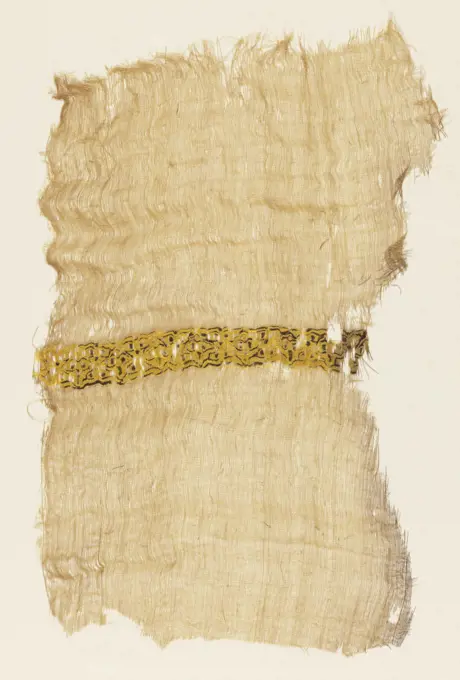
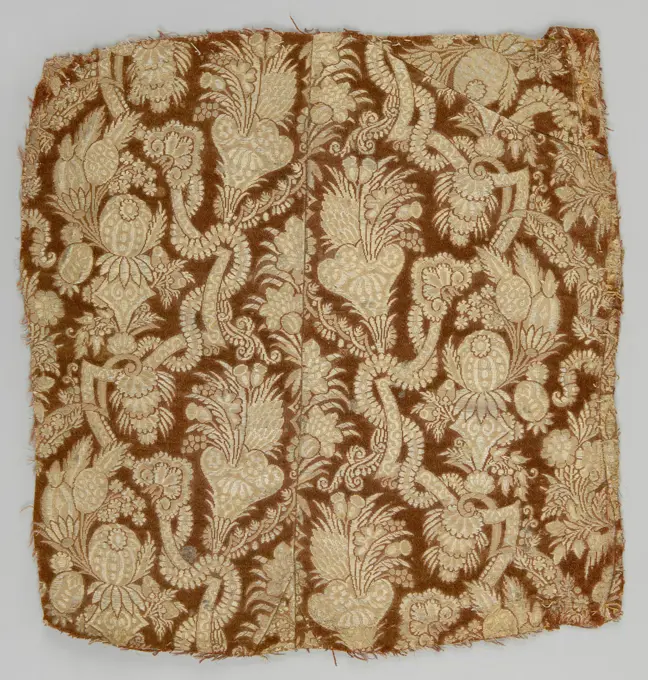
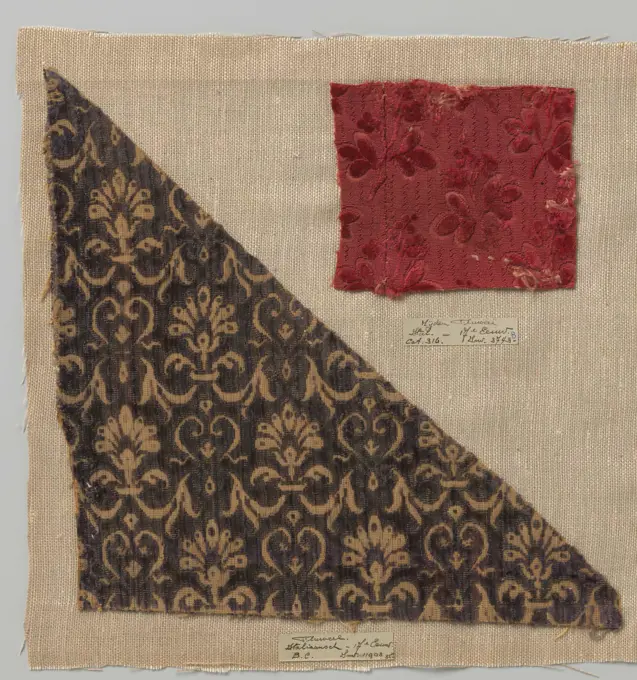
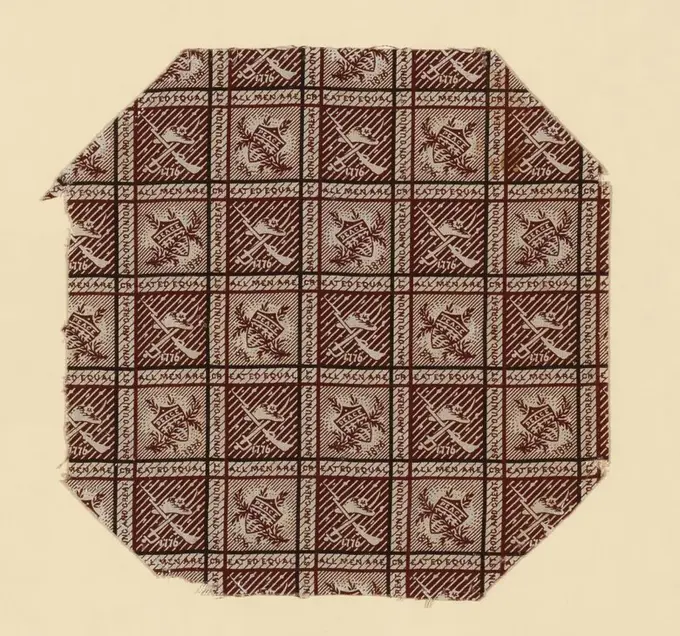
Fragment of brocaded silk with imitation slashing 17th century Italian. Fragment of brocaded silk with imitation slashing. Italian. 17th century. Silk and metal thread. Textiles-WovenFragment, Medium: silk Technique: cut and uncut supplementary warp pile (velvet) on satin ground, Fragment of green cut and uncut velvet on self-colored satin ground. Design of tiny flowering branches alternately pointing up and down., Italy, late 16th-early 17th century, woven textiles, FragmentBand From A Garment Or Hanging (Egypt); woolPillow cover, Medium: linen, silk Technique: plain weave embroidered with withdrawn element work, Woven linen pillow cover showing an allover diamond pattern with dark yellow and blue embroidery., possibly Italy, possibly Spain, 17th century, embroidery & stitching, Pillow coverHalf of the Silk Silk belt unknownFragment (Egypt); linen, silk; 1939-11-18Tapestry (Italy); silk, metal wrapped linen; Warp x Weft (A): 26.7 x 20 cm (10 1/2 x 7 7/8 in.) Warp x Weft (B): 9.5 x 16.8 cm (3 3/4 x 6 5/8 in.)Weefselfragment met tabula, anonymous, c. 300 - c. 599 Natural linen tissue fragment with sown tabula in dark blue. The surface is divided into four with the same geometric motif in flying wire technology with on the one hand 16 compartments with next to each other curly motif, on the other hand a diagonally running T-motif. Around the whole border with heart -shaped ornament. Egypt Ketting an element: Linen (material). Entry: Wool tapestry Natural linen tissue fragment with sown tabula in dark blue. The surface is divided into four with the same geometric motif in flying wire technology with on the one hand 16 compartments with next to each other curly motif, on the other hand a diagonally running T-motif. Around the whole border with heart -shaped ornament. Egypt Ketting an element: Linen (material). Entry: Wool tapestryFragment Made 1325-1375 Lucca. Silk and gilt-animal-substrate-wrapped linen, warp-float faced 3 1 twill weave with supplementary patterning wefts bound by secondary binding warps in (weft-float faced 1 3) twill interlacings (on reverse face secondary binding warps and supplementary wefts form detached interlacing) .Textile, Medium: cotton Technique: woven, Two lengths of sheer cotton seamed down longest edge. Spaced bands of lozenges and triangles inlaid with heavier cotton thread. Deep borders edged with openwork bands at either end. Twisted warp fringe., Albania, late 19th-early 20th century, woven textiles, TextileFragment. Italy. Date: 1675-1700. Dimensions: 42.3 x 24.3 cm (16 5/8 x 9 3/4 in.)Repeat: 14.9 x 16.8 cm (5 7/8 x 6 5/8 in.). Silk and gilt-metal-strip-wrapped silk, satin weave and plain weave with supplementary brocading wefts and supplementary self-patterning warps. Origin: Italy. Museum: The Chicago Art Institute, Chicago, USA.Embroidered kerchief trimming unknownFragment of fabric brocaded with gold unknownFragment; silk, metallicPurse, Medium: silk, metal Technique: woven, (a) Envelope-shaped purse in blue-green silk brocaded in silver and gold with rose silk. Bird under canopy with confronted rampant lions. (b) Blue silk brocaded in silver. Basket of flowers, center, with symmetrical floral border., France, late 17th-early 18th century, costume & accessories, PurseFragment (Spain); silk, metallic thread; Warp x Weft: 33.7 x 27.3 cm (13 1/4 x 10 3/4 in.)Purse, Medium: silk Technique: woven, Small envelope-shaped purse in green and white silk. Pattern in white silk is a symmetrical arrangement of a crown with confronted dolphins and three fleurs-de-lis above with stylized foliage borders. Lined with pink taffeta., France, late 17th-early 18th century, costume & accessories, PurseTextile, Medium: silk Technique: two integrated fabric structures, 4&1 satin plus plain weave., Very worn green and white., 17th century, woven textiles, TextileFragment, 1600s. Iran, 17th century. Compound twill weave; overall: 53.3 x 15.6 cm (21 x 6 1/8 in.).Fragment 15th-16th century Spanish or Near Eastern. Fragment 230260Fragment of a Kontusz sash/belt. unknown, authorFragment, Medium: Z-spun wool, S-spun linen, dye Technique: slit tapestry weave, Woven fragment of dark purple wool and undyed linen. At left, an abstracted four-point flower; at right, an animal within a roundel. Border at top and bottom. One brown weft carried at a time; two undyed linen wefts carried at a time., Egypt, 500-800, woven textiles, FragmentRussian sash  wedding sash unknownFragment 16th century Spanish. Fragment. Spanish. 16th century. Silk, metal thread. Textiles-VelvetsFragment. Chuquibamba; Peru, Probably south coast. Date: 1476-1532. Dimensions: 62.2 x 99.5 cm (24 1/2 x 39 1/8 in.)repeat: 8.8 x 6 cm (3 1/2 x 2 3/8 in.). Wool (camelid), interlocking tapestry weave with inserts of complementary weft weave. Origin: Peru. Museum: The Chicago Art Institute, Chicago, USA.Sari Made 1801-1900 India. Red silk and gold .DOECT; Long cloth. JalamPan; Morning / afternoon Doek.Fragment. Italy. Date: 1625-1675. Dimensions: 26.7 x 22.5 cm (10 1/2 x 8 7/8 in.)Repeat: 10.2 x 7.2 cm (4 1/16 x 2 7/8 in.). Silk and silvered-metal strip, plain weave with supplementary patterning warps, supplementary patterning wefts, and facing. Origin: Italy. Museum: The Chicago Art Institute, Chicago, USA.Towel Made 1875-1900 Turkey. embroidered .Piece 17th century Japan. Piece 71523Textile (Iran); silkTowel Fragment (Italy); cotton; Warp x Weft: 14 x 54.6 cm (5 1/2 x 21 1/2 in.)Textile Fragment 6th-7th century. Textile Fragment 444011Towel border 1800-1850 Russian. Towel border 175590Sidewall (USA); block-printed; 70 x 50 cm (27 9/16 x 19 11/16 in.)Trouser Band Made 1875-1900 China. Forty-four pairs and eight odd pieces of embroidered sleeve, ankle bands, etc. on gauze. . Han-ChineseTextile Sample from Sample Book 19th century Japan. Textile Sample from Sample Book 68232Fragment red damask brokaat with pomegranate moths, anonymous, c. 1450 - c. 1499 Fragment of red silk damask brokat with pomegranate skills. Italy silk. damask Fragment of red silk damask brokat with pomegranate skills. Italy silk. damaskKesa Made 1775-1825 Japan. .Edging late 18th century French. Edging 222836Embroidered Sari, 1800s - early 1900s. India, Patna, 19th - early 20th century. Embroidery; silk and metal thread and sequins on cotton tabby ground; overall: 197.5 x 122 cm (77 3/4 x 48 1/16 in.).Rank badge, Medium: silk and metallic embroidery on silk foundation Technique: embroidered with stem, split, and couching stitches on satin weave, Rank badge for a civil official of the fifth rank. Embroidered silk and metallic yarns showing a silver pheasant facing a sun disk, on a ground of clouds and surrounded by auspicious symbols. Diagonal lines at bottom and meandering key border. Seam down the center., China, mid- 19th century, embroidery & stitching, Rank badgeFragment Made 1600-1650 Italy. cisele voided cloth velvet .Ribbon (France); silk, cottonFragment silk tissue of a seat cover., C. 1805 Fragment yellow silk tissue, from a seat cover. The pattern has pink palmets and arabesks on a yellow ground. The fragment is part of thirteen fragments with invnr. BK-1992-18-A to BK-1992-18-M. France silk Fragment yellow silk tissue, from a seat cover. The pattern has pink palmets and arabesks on a yellow ground. The fragment is part of thirteen fragments with invnr. BK-1992-18-A to BK-1992-18-M. France silkLeaf with windscreen pattern with flower baskets and masks, anonymous, c. 1700 - c. 1850 brocade paper Leaf with window pattern with the field filling ornaments with flower baskets, masks and flowers. Used as a cover.  paper. relief printing ornament derived from plant forms. mask, mascaron ~ ornamentChurch tablecover. unknown, authorFragment Made 1801-1900 Italy. Silk, warp-float faced 7 1 'S' twill weave with plain interlacings of secondary binding warps and pairs of self-patterning ground wefts .Joined Tapestry Fragments with Fringe 10th-15th century Peru; central coast (). Joined Tapestry Fragments with Fringe 308085Band; silk on linenFragment, Medium: silk, metallic thread Technique: cut and uncut supplementary warp pile (velvet) in a twill weave foundation, Fragment of cut and uncut dark blue-green velvet in a pattern of floral branches on a gold-colored ground., Italy, 16th-17th century, woven textiles, FragmentSampler, Medium: cotton, silk Technique: cross stitch embroidery, withdrawn and deflected element work, satin and stem stitch embroidery, Silk in blues, greens, yellows and pale oranges on white cotton. Composed in two sections: on the left, only half completed, geometric pattern bands with deflected element work. On the right, cross stitch floral bands, a cross stitch band with mice, alphabets and numerals, satin stitch floral and vine patterns., Spain, ca. 1800, embroidery & stitching, SamplerTextile (India); cotton; Warp x Weft: 20.5 × 13.3 cm (8 1/16 × 5 1/4 in.); Bequest of Marian Hague; 1971-50-493Flounce (Belgium); linen; Bequest of Richard Cranch Greenleaf in memory of his mother, Adeline Emma Greenleaf; 1962-50-142Conciliate belt; Manufaktura Paschalis Jakubowicz (Warsaw; label Pasów; 1788-1794); 18th century (1701-00-00-1800-00-00);Piece 16th-17th century Italian. Piece 223584Merklap from colored silk on cotton muslin .. Merklap from silk on cotton. The embroidery has two rows of cartouches with inscriptions, underneath the coat of arms of Amsterdam with an Eike tree with initials IA and a stylized floral pattern with initials ar. All around runs a border with different alphabets and monograms.Border 17th century Italian. Border 219727Fragment Made 1000-1476 Peru. Cotton, plain weave with band of cotton and wool (camelid), slit and single interlocking tapestry weave with supplementary weft slit closure .Textile with Brocade ca. 1425-50 Italian. Textile with Brocade 463699Fragment 17th century Italian. Fragment 230173Sampler. Mexico. Date: 1870. Dimensions: 41.3 x 41.9 cm (16 1/4 x 16 1/2 in.). Linen, plain weave; drawn work embroidered with linen, silk, and gilt-metal-strip-wrapped silk in back, cross, darning, double running, hem interlocking lace, overcast, and Russian overcast stitches; embroidered with silk in Algerian eye, antique hem, back cross, double running, running, and satin stitches. Origin: Mexico. Museum: The Chicago Art Institute, Chicago, USA.Round piece 17th century Italian or Spanish. Round piece 218038Sampler (Spain); cottonPiece 18th-19th century Japan. Piece 67104Fragment multicolor silk tissue. Fragment silk tissue with a white soil on which a pattern of vertical zigzag lines where around a winding branch and through which fruit bulbs.Velvet Fragment, 1600s. Italy, 17th century. Velvet; overall: 19 x 14 cm (7 1/2 x 5 1/2 in.).Band, Medium: silk embroidery on linen foundation Technique: embroidered on plain weave, Border of natural linen embroidered in red silk in a geometric design of two intertwined strands, with a floral pendant edge., Morocco, 19th century, embroidery & stitching, BandFragment, 1400s (). India, 15th century (). Stamped resist, applied mordant, dyed; cotton; overall: 17.8 x 11.5 cm (7 x 4 1/2 in.).Fragment, Medium: linen Technique: plain weave embroidered with withdrawn element work, needlework filling stitches, Woven linen fragment showing an allover pattern of large and small diamond shapes in withdrawn element work and embroidery on plain weave., Italy, 16th century, embroidery & stitching, FragmentFragment Silk flows with a pattern in the ocher of windscreen -forming tire garlands in which palmettes, anonymous, 1500 - 1599 Fragment Silk flows with a pattern in the ocher of windows forming bands garlands in which palmettes. Italy, 16th century. Italy silk Velvet chiseled Fragment Silk flows with a pattern in the ocher of windows forming bands garlands in which palmettes. Italy, 16th century. Italy silk Velvet chiseledBorder Made 401 CE-500 CE Egypt. Wool and linen, slit tapestry weave .Fragments (possibly Italy); silkFragment, Medium: linen Technique: applique and embroidery, Light brown rectangular fragment with a conventionalized design of a bird with a leaf and foliated floral forms., Belgium or France, early 17th century, embroidery & stitching, FragmentFragment; warp; s-spun linen. wefts; z-spun linen, z-spun woolHandkerchief third quarter 19th century Flemish, Brussels. Handkerchief 222808Border 17th century Italian or Greek. Border 213088Cuff Band. Coptic; Egypt. Date: 401 AD-600 AD. Dimensions: 8.4 × 22.2 cm (3 1/4 × 8 3/4 in.). Wool, tapestry weave. Origin: Egypt. Museum: The Chicago Art Institute, Chicago, USA.Fragment, 1800s. India, Rajasthan or Northern Deccan, 19th century. Block printed, painted and overprinted with gold leaf; cotton; overall: 6 x 14 cm (2 3/8 x 5 1/2 in.).Coif, Medium: linen, metal-wrapped silk-core threads, metal strip, metal spangles Technique: embroidered in chain and satin stitches; withdrawn element work with overcasting and looping stitches; cutwork with needle lace fillings; metallic threads worked in detached looping; spangles secured by a loop of linen thread wrapped with a short strip of metal, on plain weave foundation, Woman's linen coif, opened flat, with a design of scrolling branches framing flower heads. The background is entirely worked in metallic gold thread, leaving the branches and flowers reserved in the white linen. The linen is worked in a variety of open-work stitches, and spotted with gold spangles., England, late 16th century, costume & accessories, CoifFragment with star and cross design from the tomb of Don Felipe, 1200-1274. Spain, probably Almeria. Taqueté: silk and gold thread; average: 54.6 x 38.1 cm (21 1/2 x 15 in.).Towel Ends 19th century. Towel Ends 444441Tiraz Tapestry; silk, linenFragment of a Tunic 4th century. Fragment of a Tunic 444325Dasslip from needle side with serpentine tendrils. Natural Carriage Dasslip: Flat Venetian side. Symmetrical serpentine tendrils with buttons. In the rounded corners a composite branch placed. On three silk triangular arches in turn large and small.Tunic fragment, Medium: wool Technique: tapestry weave with split and dovetailed interlocking, eccentric weft, wrapping, Section of a tunic, probably for a child, with the neck opening in the center; the front and back are identical panels. Below the neck are two roundels each with a figure wearing a mantle and carrying a shield. Below the band hang two figures on chains. The panel is bordered by a series of small roundels containing rosettes or birds., 8th - 10th century, woven textiles, Tunic fragmentFragment ; silkPiece 16th-17th century Italian. Piece. Italian. 16th-17th century. Silk. Textiles-VelvetsCarpet Fragment, late 1800s-early 1900s. Iran, Rayy. Silk: knotted pile; overall: 61 x 37.5 cm (24 x 14 3/4 in.).Piece 18th century Japan. Piece 71995Piece 18th century Japan. Piece 71234Tiraz fragment, Medium: linen, silk Technique: plain weave, slit tapestry with eccentric wefts, Tiraz fragment of loosely woven natural-colored linen with a band of yellow and brown silk. Possibly from the Fatamid Period., Egypt, 10th-12th century, woven textiles, Tiraz fragmentFragment of silk fabric unknownHandkerchief unknownFragment (Peru); woolFragment; silk, linenMaarten de Vos sketchbook. Dating: 1550 - 1570. Place: Nederlanden. Measurements: h 153 mm × w 225 mm. Museum: Rijksmuseum, Amsterdam.Fragment silk velvet .. a fragment of velvet. On a brown, yellow silk soil are shown in purple velvet horizontally gerigned palmets and arabesque.Trimming fragment, Medium: silk Technique: woven, Flower and stems in pale colors on dark ground, France, 19th century, woven textiles, Trimming fragmentFragment. United States. Date: 1876. Dimensions: 20.2 × 20.2 cm (8 × 8 in.). Cotton, plain weave; roller printed. Origin: United States. Museum: The Chicago Art Institute, Chicago, USA.