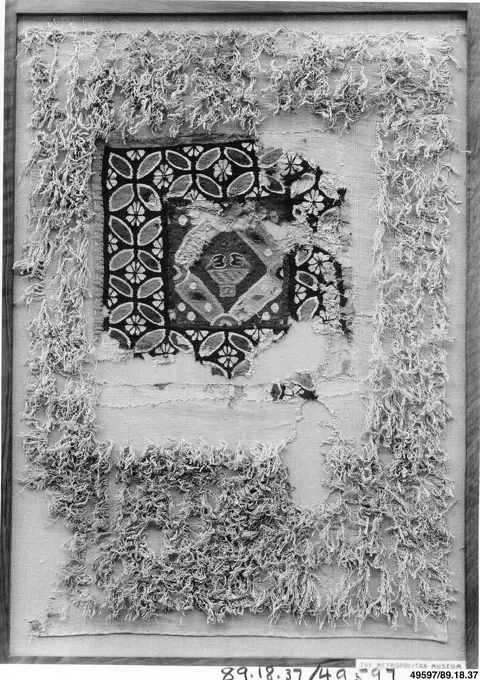
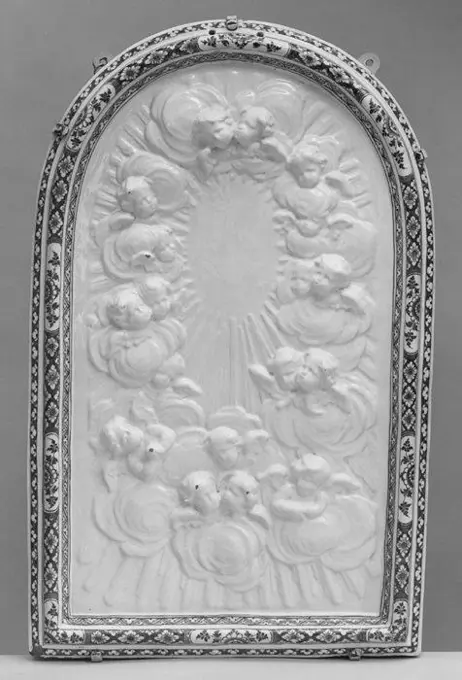
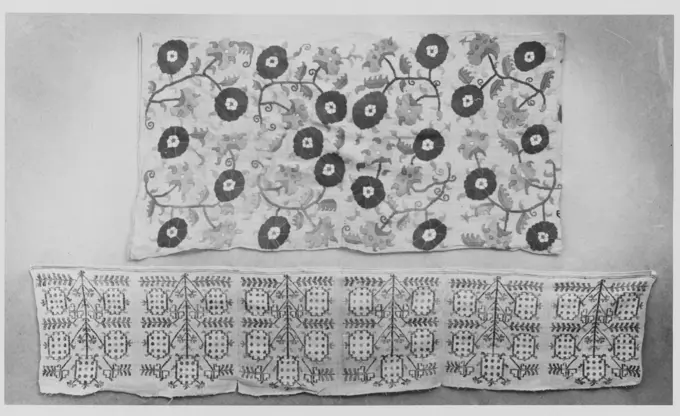
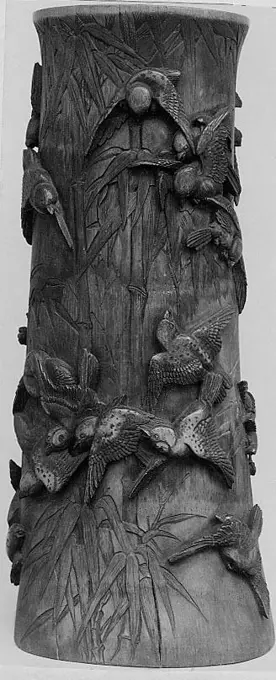
Historic Textile Fragments

Fragments of textiles from different cultures and centuries, featuring intricate patterns and historical significance.
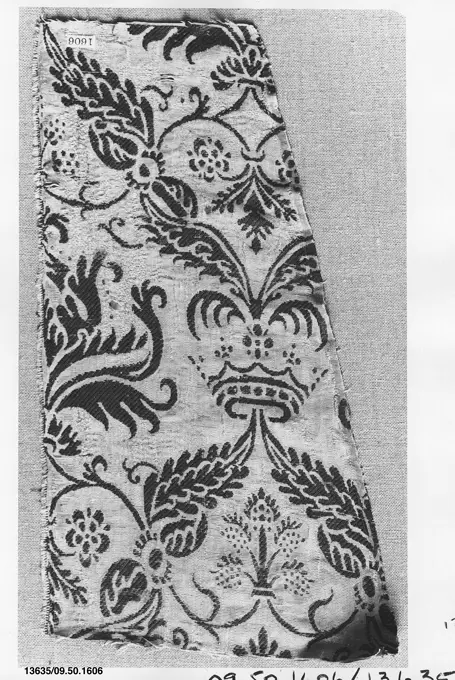
Piece 17th century Spanish. Piece 216629
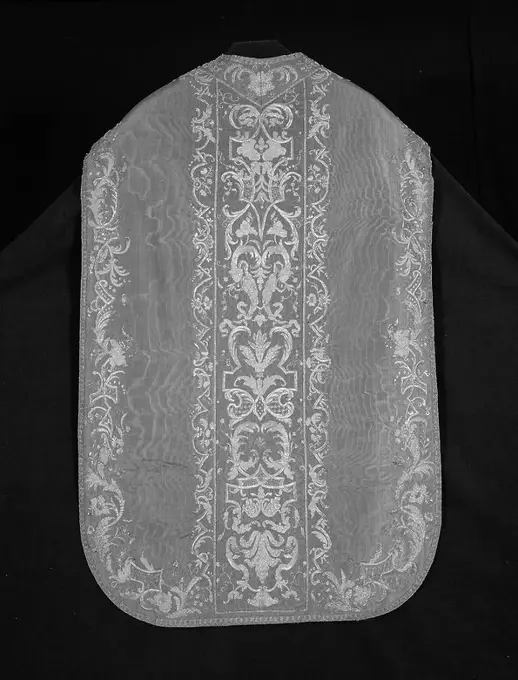
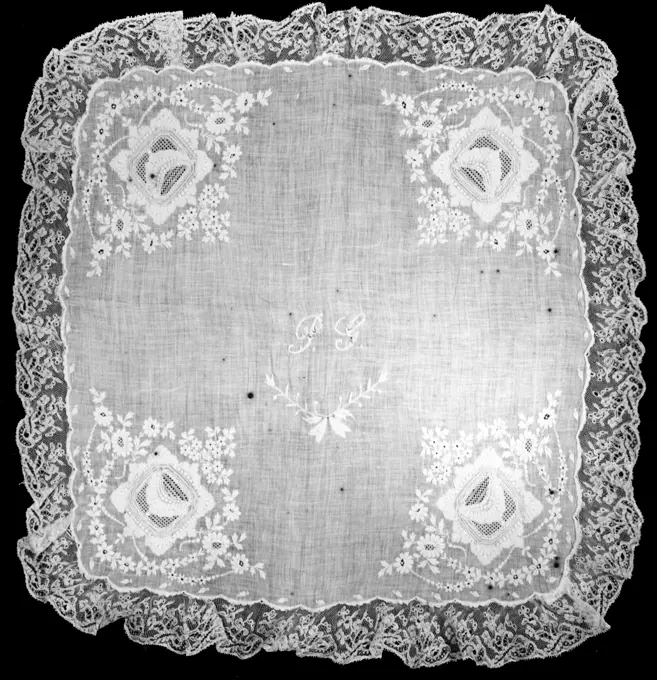
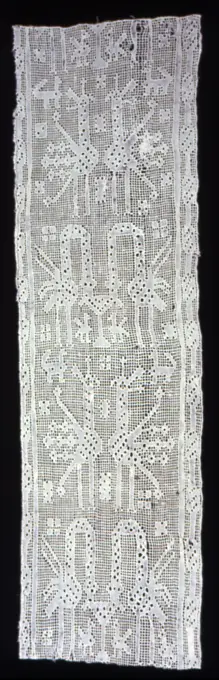
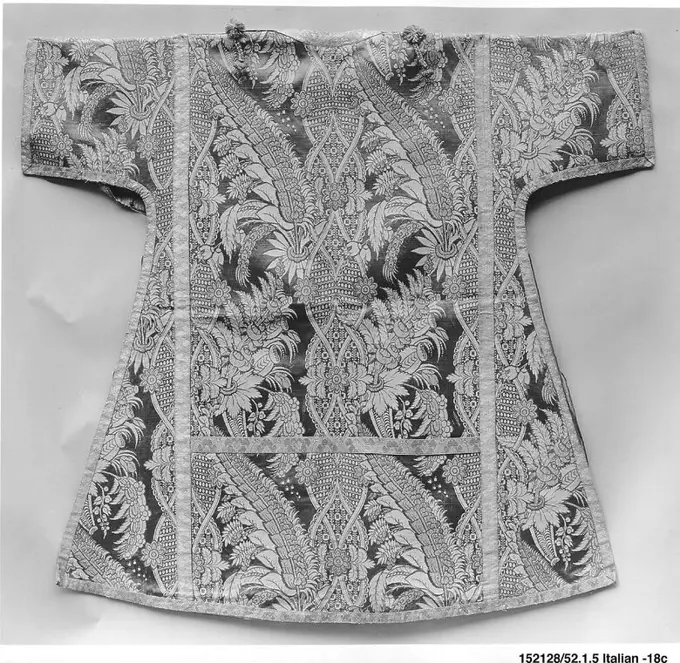
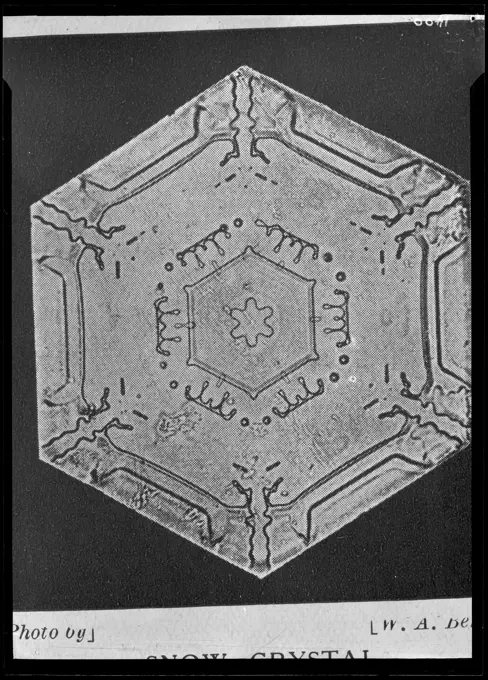
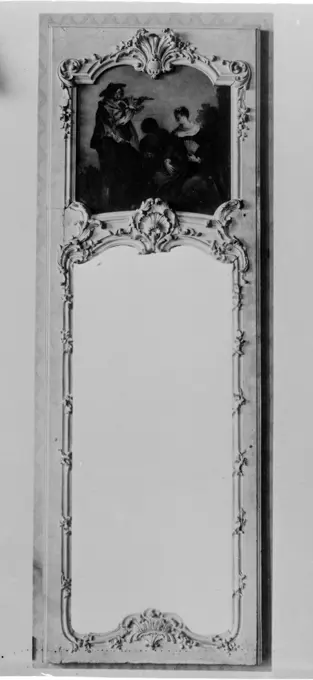
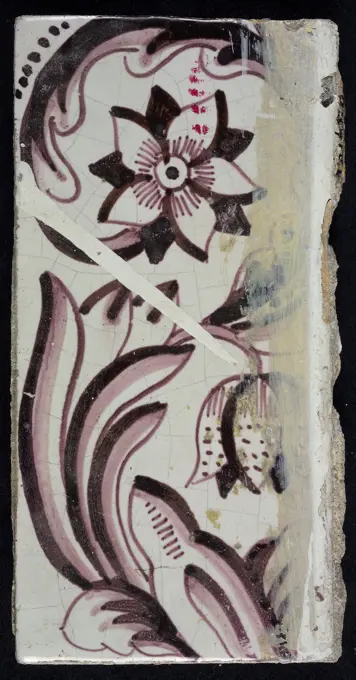
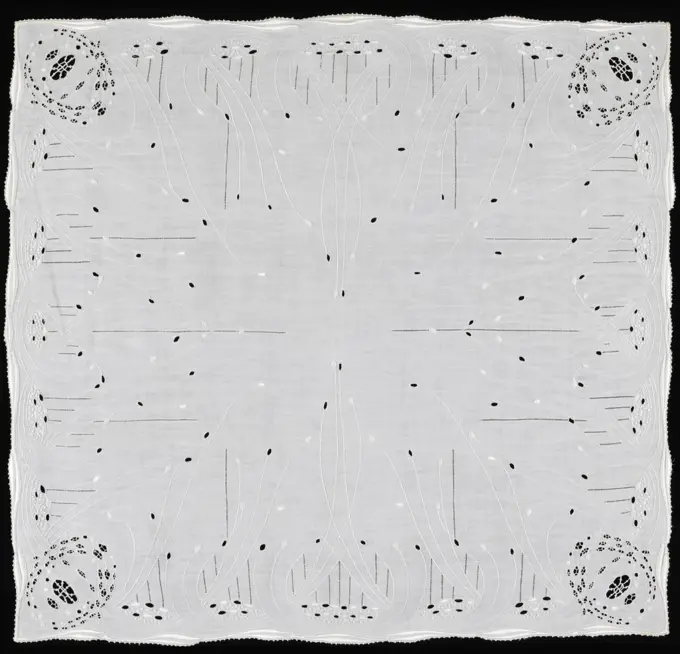
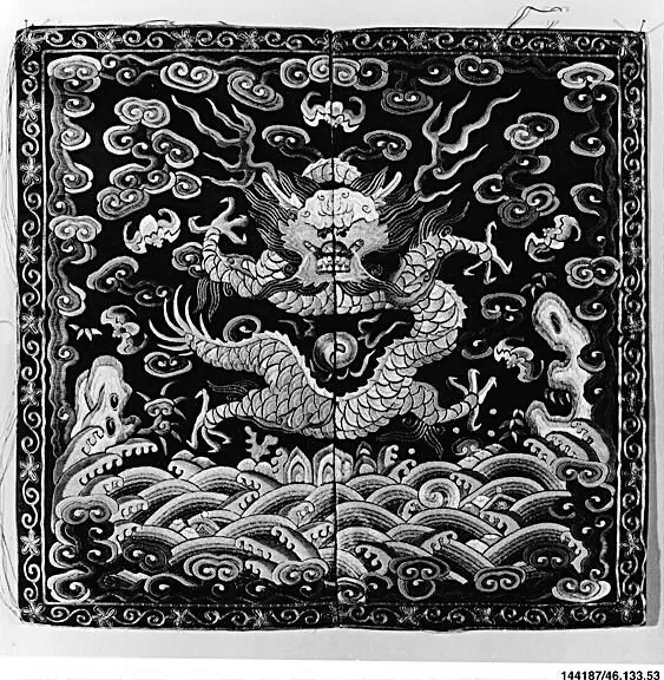
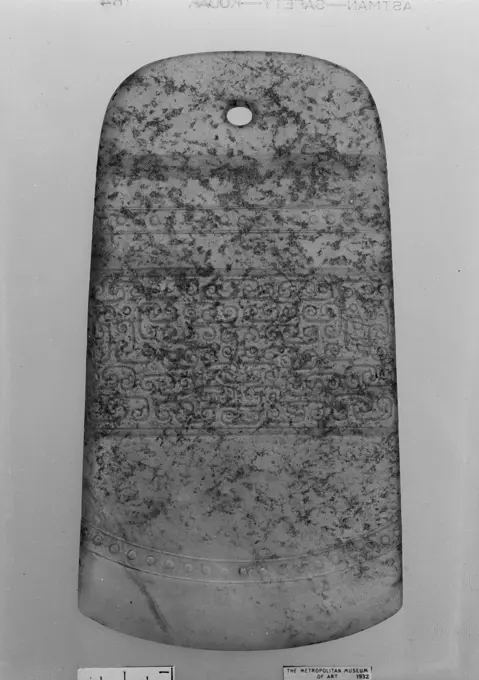
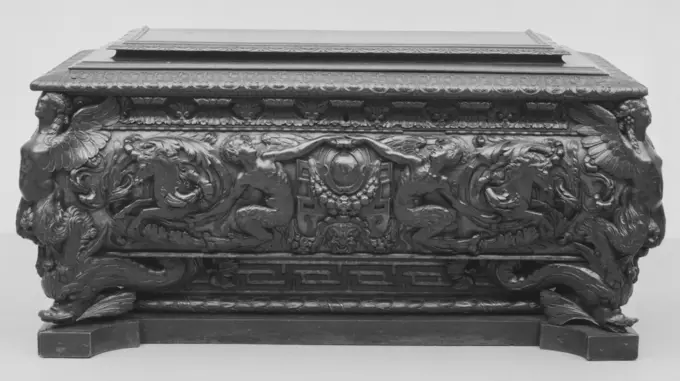
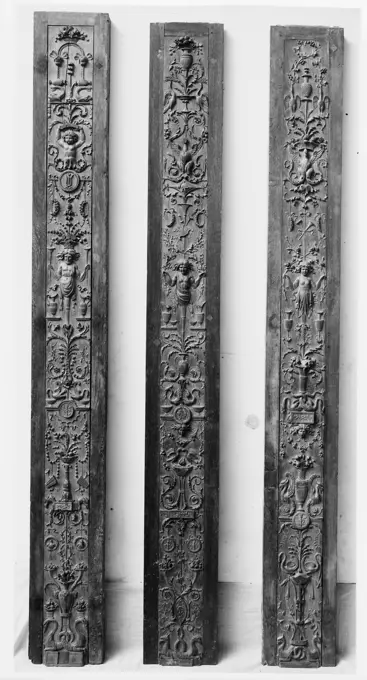
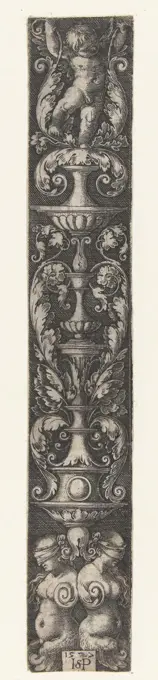
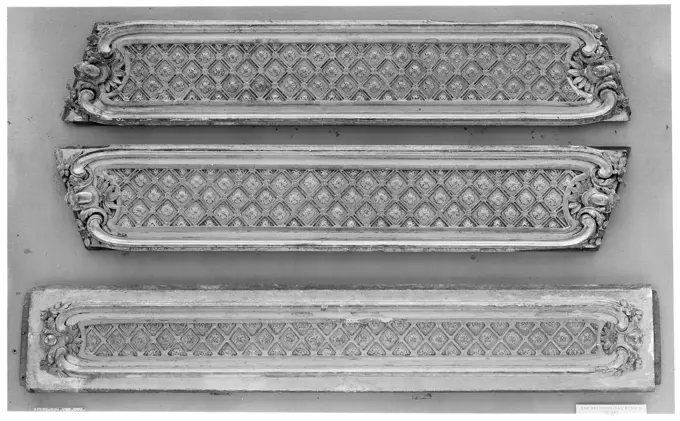
Band 16th century Italian. Band 215654Table cover with coat of arms of knight. unknown c. 1650-1700 Tapestry Dimensions: H 10' x W 6' Tapestry Materials/Techniques: unknown Culture: Flemish Weaving Center: unknown Ownership History: French & Co. purchased from Mr. Enzio Rehbinder, received 10/19/1951; sold to Jean Michaeloff 1/16/1962. Coat of arms of knight with paternal connection to the Holy Roman Emperor: 4 stacked compartments with lions in 3 & eagle in top, surmounted by crown; arms in wreath with tied bouquets in corners (BRD) garland with fruit & flowers French & Co. stock sheet in archive, 51510Part of a door from a bed tent 18th century Greek Islands, Kos. Part of a door from a bed tent 216490Edging French, St. Bonnet le Chateau 19th century View more. Edging. French, St. Bonnet le Chateau. 19th century. Bobbin lace. Textiles-LacesPiece 16th-17th century Italian. Piece 223464Piece early 19th century French. Piece 226808Cover early 19th century. Cover 443078Piece 18th century French. Piece 224005Hood 1591 Spanish. Hood 222925Piece ca. 1725 () Spanish. Piece 213150Sampler 1738 Southern German. Sampler 227050Shawl mid-19th century possibly French. Shawl 221443Piece 18th century Japan. Piece 66650Piece. Culture: Italian. Dimensions: L. 45 x W. 3 3/4 inches (114.3 x 9.5 cm). Date: 16th-17th century. Museum: Metropolitan Museum of Art, New York, USA.Length 1880s French or British. Length 229330Chasuble, Stole, and Maniple. France or Italy. Date: 1675-1725. Dimensions: a: 112 × 75 cm (44 1/8 × 29 1/2 in.)b: 209 × 23.2 cm (82 1/4 × 9 1/8 in.)c: 50.7 × 22.2 cm (20 × 8 3/4 in.). Silk, warp-faced, weft-ribbed plain weave; watered (moiré); underlaid with linen, plain weave; embroidered with gilt-metal strips, spangles, pieces, and wire, and gilt-metal-strip-wrapped silk (file and frisé), in laid work, couching, padded couching, and French knots; edged with gilt-metal-strips and gilt-metal-strip-wrapped silk, bobbin-made tapes. Origin: France. Museum: The Chicago Art Institute, Chicago, USA.Sleeve piece 17th century Italian, Venice. Sleeve piece. Italian, Venice. 17th century. Needle lace, gros point lace, bobbin lace. Textiles-LacesPiece 19th century Japan. Piece 72195Handkerchief Made 1850-1875 France. Linen, plain weave; pulled thread work in back and Indian drawn ground stitches; darned points; embroidered with cotton in back, buttonhole, double running, overcast, padded satin, and split stitches; edged with cotton and linen, Levers machine lace with darned outlines .Cravat End (Belgium); linenBorder; linen; Bequest of Marian Hague; 1971-50-211Fragment of a Band. Dimensions: 7 1/2 in. high 3 1/16 in. wide (19 cm high 7.7 cm wide). Date: 6th century. Museum: Metropolitan Museum of Art, New York, USA.Cover 17th century Italian. Cover 218627Sampler, Medium: cotton Technique: embroidered in stem, cross, running, and satin stitches on machine-made net foundation, Net divided into a grid of twelve squares., Germany, 1849, embroidery & stitching, SamplerTemple Banner 19th century China. Temple Banner. China. 19th century. Plaques-silk, on silk, backed with cardboard; streamers on silk, lined with cotton. Qing dynasty (1644-1911). Textiles-EmbroideredTextile Fragment 4th-5th century. Textile Fragment 445896Door of the main entrance with iron batter. Double access door decorated with volutes, flowers and two medallions with climbing lions.Apron ornament French 18th century View more. Apron ornament. French. 18th century. Gilt bronze. Metalwork-Gilt BronzePiece 16th-17th century Italian. Piece 223450Sleeve 18th century Greek Islands, Karpathos. Sleeve 221718Piece 17th century Italian. Piece 212993Dalmatic. Culture: Italian. Dimensions: H. 41 x W. 43 inches (104.1 x 109.2 cm). Date: 18th century. Museum: Metropolitan Museum of Art, New York, USA.Piece. Culture: possibly French. Dimensions: L. 22 1/4 x W. 11 inches (56.5 x 27.9 cm). Date: early 18th century. Museum: Metropolitan Museum of Art, New York, USA.Fan Holder 18th-19th century China. Fan Holder 68845Cap crown 18th century French. Cap crown 218115Fragment, Velvet, France, ca. 1880, woven textiles, FragmentCover early 19th century. Cover. early 19th century. Silk, metal wrapped thread; embroidered. Attributed to Turkey. Textiles-EmbroideredFragment 17th century Spanish. Fragment 220117Sample ca. 1840 French, Mulhouse. Sample. French, Mulhouse. ca. 1840. Cotton. Textiles-PrintedPiece 18th century French. Piece 224400Mangle-board 1776 Dutch. Mangle-board 191714Stole early 18th century possibly Italian. Stole 226316Handkerchief Made 1801-1900 Philippines. Linen, plain weave; embroidered .Piece 18th century French. Piece 228809Cap crown French early 18th centuryPiece 1760-70 French. Piece 220234Textile Fragment 6th-7th century. Textile Fragment 444023Pillowcase 18th century German. Pillowcase 227767Textile Fragment 18th-19th century. Textile Fragment 445655Tile 1640-60 Dutch. Tile. Dutch. 1640-60. Tin-glazed earthenware. Ceramics-PotteryTextile Fragment 3rd-4th century. Textile Fragment 443374Piece 16th-17th century Italian. Piece 223378Piece 18th century French. Piece 224260Amice late 16th century Spanish. Amice 226747Snow Crystals, 1912 - 1926, by James McDonald.Collar ca. 1825 Belgian. Collar 79081Fragment (Furnishing Fabric) Made 1801-1825 France. cotton .Statue robe mid-18th century Italian. Statue robe. Italian. mid-18th century. Silk and metal thread on silk. Textiles-EmbroideredFragment of Band 4th-6th century. Fragment of Band 447598Sampler 19th century Austrian or German. Sampler 228687Sutra Cover with Floral Scroll 16th century China. Sutra Cover with Floral Scroll 50542Trimming, vintage engraved illustration.Pieces (2) 16th century Spanish or Italian. Pieces (2). Spanish or Italian. 16th century. Silk. Textiles-WovenPiece 18th century French. Piece 224113Pier mirror (trumeau de glace) 18th century Painting in the manner of Nicolas Lancret French. Pier mirror (trumeau de glace). Painting in the manner of Nicolas Lancret (French, Paris 1690-1743 Paris). French. 18th century. Oak. WoodworkFan Holder 18th-19th century China. Fan Holder 68828Star-Shaped Tile 13th century. Star-Shaped Tile. 13th century. Stonepaste; luster-painted with touches of cobalt on opaque white glaze under transparent glaze. Made in Iran, probably Kashan. Ceramics-TilesPiece Italian 17th centuryBag 17th century Italian. Bag 221556Piece 16th-17th century German or Italian. Piece 223608Textile Fragment 5th-6th century. Textile Fragment 444066Rank Badge with Wild Goose 19th century China. Rank Badge with Wild Goose 68946Embroidery Sample (USA); Made by Madame Sabo, Inc. (New York, NY, USA); rayon ground, silk and wool thread, glass beadsRectangular edge tile in purple with sling decor of speckled tulip, flower with ten triangular petals of which the inside are white, leaves, type of tulip fawn, yellow pottery, edge tile wall tile tile sculpture ceramic earthenware glaze, baked 2x glazed paintedTextile Fragment 4th-5th century. Textile Fragment 443242Plaque ca. 1740 Possibly by Olérys Factory Faience, or tin-glazed and enameled earthenware, first emerged in France during the sixteenth century, reaching widespread usage among elite patrons during the seventeenth and early eighteenth centuries, prior to the establishment of soft-paste porcelain factories. Although characterized as more provincial in style than porcelain, French faience was used at the court of Louis XIV as part of elaborate meals and displays, with large-scale vessels incorporated into the Baroque garden designs of Versailles. Earlier examples of French faience attest to the strong influence of maiolica artists from Italy. Later works demonstrate the ways in which cities such as Nevers, Rouen, Lyon, Moustiers, and Marseille developed innovative vessel shapes and decorative motifs prized among collectors throughout Europe. While faience can be created from a wide mixture of clays, it is foremost distinguished by the milky opaque white color achieved by the addition ofSutra Cover Sutra Cover, ca. 17th-18th century. Carved wood, 9 3/4 x 28 in. (24.8 x 71.1 cm).   Asian Art ca. 17th-18th centuryBag. Culture: probably German. Dimensions: L. 5 x W. 3 1/2 inches (12.7 x 8.9 cm). Date: 17th century. Museum: Metropolitan Museum of Art, New York, USA.Tab China. Tab 68789Textile Fragment early 19th century. Textile Fragment. early 19th century. Linen, silk; plain weave, embroidered. Attributed to Turkey. Textiles-EmbroideredHek door of fencing and hazard, decorated with heart -shaped composite volutes. Housing in the form of point with S-Voluten. OFF. Mannheimer., 1600 - 1699 A four -part fence consisting of two doors and two side panels; The frame is composed of vertical and horizontally placed rules, the latter allocation over the entire width in two wide between three narrow jobs. In the large lanes there are vertically placed eight-sided bars with above and below one row and in the middle a double row of composite S-volutes that form heart-shaped motifs. Each part of the fence is crowned by a pointed motif of S-Voluten. Italy iron (metal) A four -part fence consisting of two doors and two side panels; The frame is composed of vertical and horizontally placed rules, the latter allocation over the entire width in two wide between three narrow jobs. In the large lanes there are vertically placed eight-sided bars with above and below one row and in the middle a double row of composite S-volutes that form Hanging 19th century China. Hanging 69866Vase 19th century Japan. Vase 62246Tea Cloth (France); Designed by Hector Guimard ((French, 1867-1942)); linenBorstdoek, anonymous, 1900 - 1949  Tanimbar Islands cotton (textile)  Tanimbar Islands cotton (textile)Rank Badge with Four-Clawed Dragon mid-18th century China. Rank Badge with Four-Clawed Dragon 69796Stole (Epitrachilion) probably Greek 19th century View more. Stole (Epitrachilion). probably Greek. 19th century. Silk and metal thread on silkPiece 18th century China. Piece. China. 18th century. Silk / Compound weave. Qing dynasty (1644-1911). Textiles-WovenPin ca. 7th century B.C. Iran. Pin 324725Hatchet China. Hatchet. China. Jade. Han dynasty (206 B.C.-A.D. 220). JadeTextile Swatches Onondaga Silk Company, Inc. (1925-1981). Textile Swatches, 1948-1959. 72 silk; 28 metal, a-h: 11 x 3 1/2 in. (27.9 x 8.9 cm).    1948-1959Cassone (one of a pair) second half 16th century Italian Roman cassoni of the second half of the sixteenth century are characterized by skillfully executed relief carvings that either illustrate narratives, often after ancient Roman writers, or are lavishly ornamental. The latter is the case with this chest and its pair (54.161). The two pieces differ only in a few details and slightly in their degree of preservation. In former times they could probably have been distinguished by the coats of arms painted on the front in the strapwork cartouches, but none of the polychrome decoration has survived. All the raised parts were once gilded, and this decoration has been partly preserved, albeit with much retouching. In both examples the layered plateaux of the lid are replacements.. Cassone (one of a pair) 201874Textile Fragment 3rd-4th century. Textile Fragment 443220Pilaster panel (part of a set of eight) 18th century French. Pilaster panel (part of a set of eight). French. 18th century. Oak. WoodworkFlat decoration with two blindfolded women at the bottom; Flat decorations: candelabers with grotesken and leaf raft.two blindfolded women wear back to back a candelaber or vases and leaf drinks. On top of IT is a putto. One or 2 sheets.Prime Minister's Garter Banner -- This is a facsimile of the banner which has just been hung over the stall of Sir Anthony Eden in St. George's Chapel, Windsor, ready for his installation as a Knight of the Garter by the Queen on June 13th. It is a silken banner emblazoned by hand in oils of the coat of arms of Sir Anthony Eden to whom it has been presented as a taken of esteem by its makers, Messrs John Edgington & Co. Ltd., of old Kent Road, S.E. April 28, 1955.Set of panels 1700-1735 French. Set of panels. French. 1700-1735. Carved and gilded wood. WoodworkKandodelaber with two children with cat and dog at vase; Ornament panels.Candelaber made up of two children with a cat and dog at a vase to pee two children. Above two bunnies on either side of a vase, a breast cure surrounded by leaf refinters and the crowning with two children who each hold a fish on a ropeSleeve Band 19th century China. Sleeve Band 68683Piece 19th century China. Piece 69742