Historic Textile Fragments

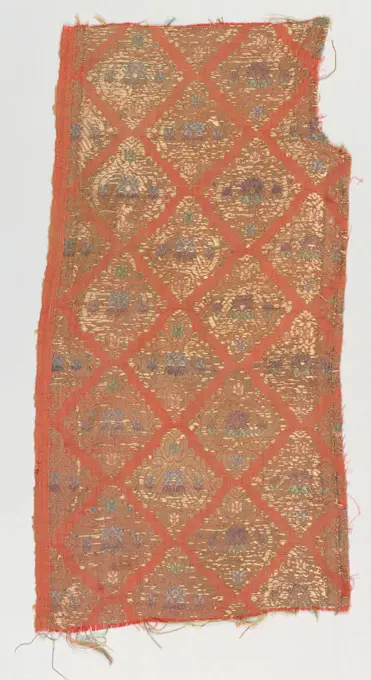
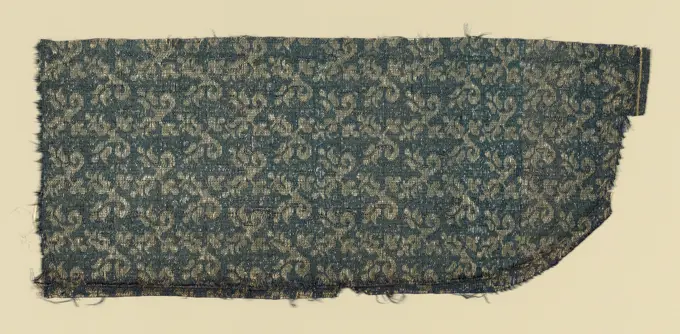
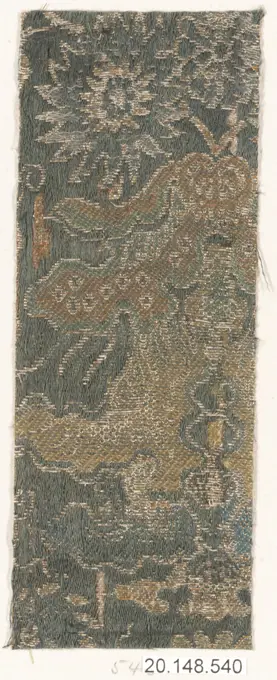
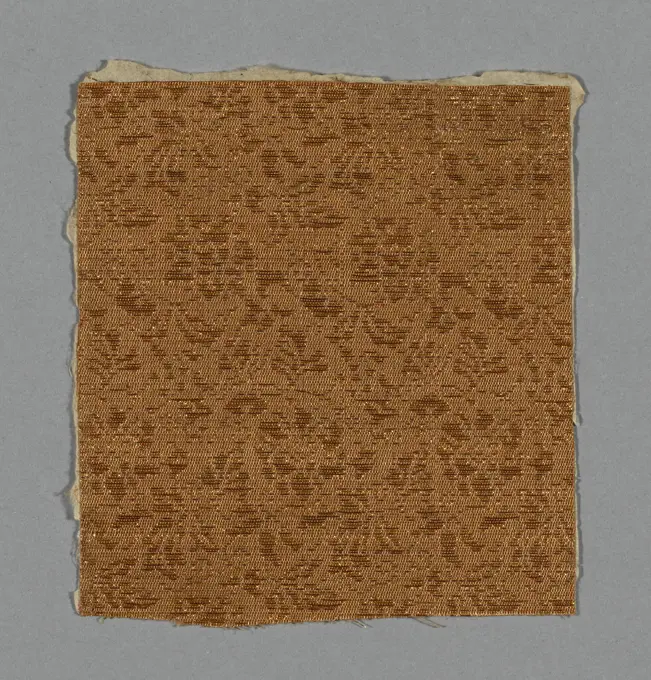
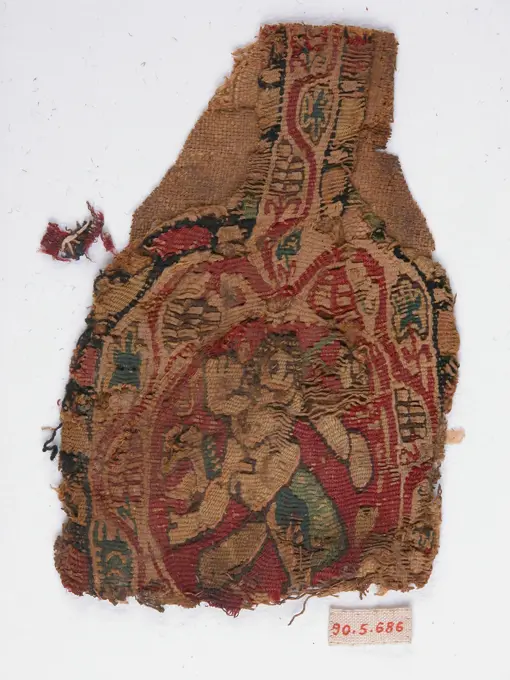
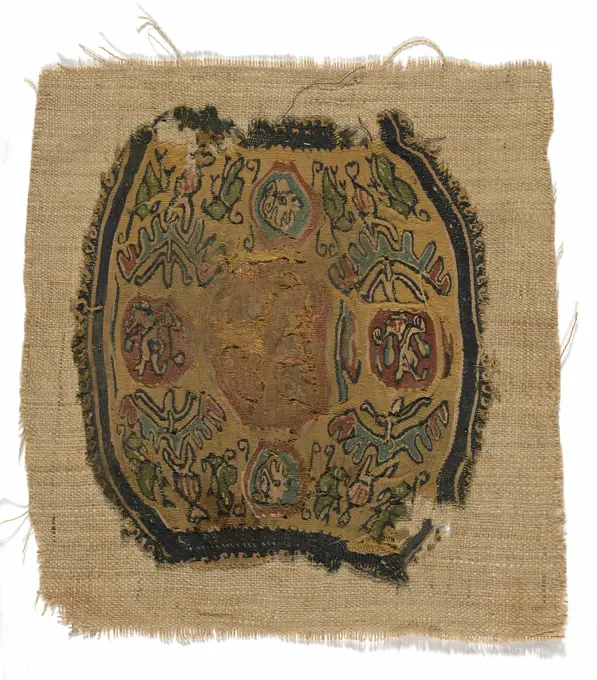
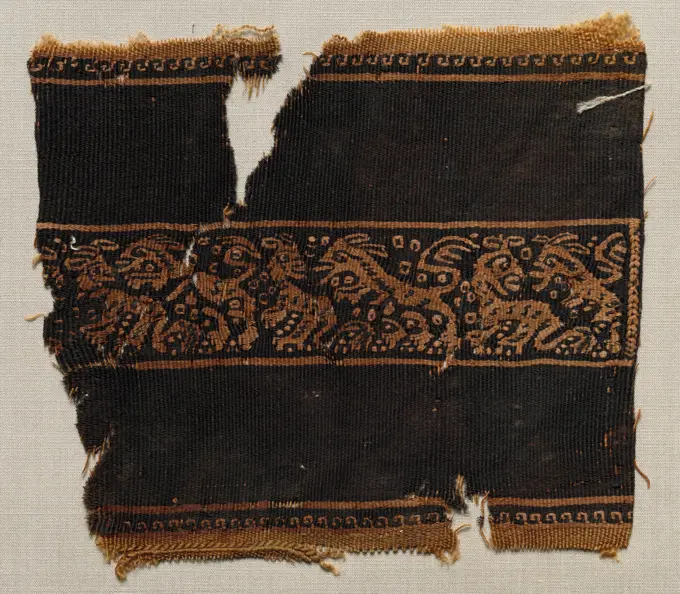
Fragments showcasing intricate patterns and textures from historical textiles, featuring floral and animal motifs in ancient styles.

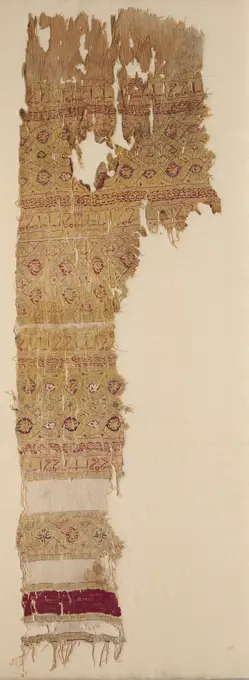
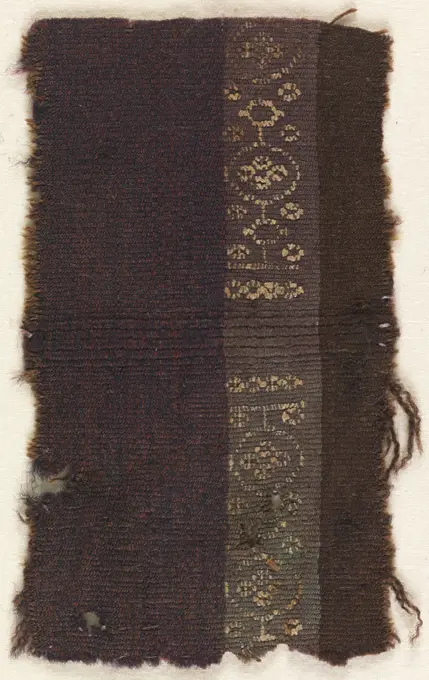
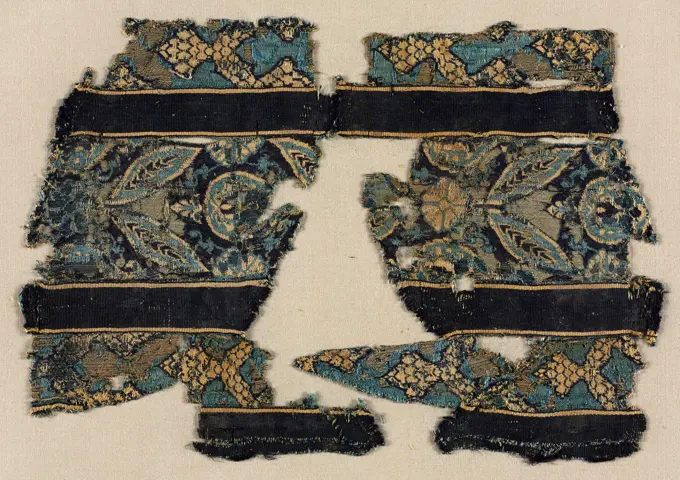
Fragment samiet, anonymous, c. 400 - c. 599 Tissue fragment with a red pattern on green soil, consisting of roller corners, alternately filled with a deer jumping to the right or a dog that runs to the left. A stylized floral pattern between the huge corners. The pattern is interrupted by a horizontal strap made of dark blue with a connected circle motif in flying wire technology. Egypt Necklace: Linen (Material). impact: Wool. Flying wire: Linen (Material) samite / tapestry Tissue fragment with a red pattern on green soil, consisting of roller corners, alternately filled with a deer jumping to the right or a dog that runs to the left. A stylized floral pattern between the huge corners. The pattern is interrupted by a horizontal strap made of dark blue with a connected circle motif in flying wire technology. Egypt Necklace: Linen (Material). impact: Wool. Flying wire: Linen (Material) samite / tapestry
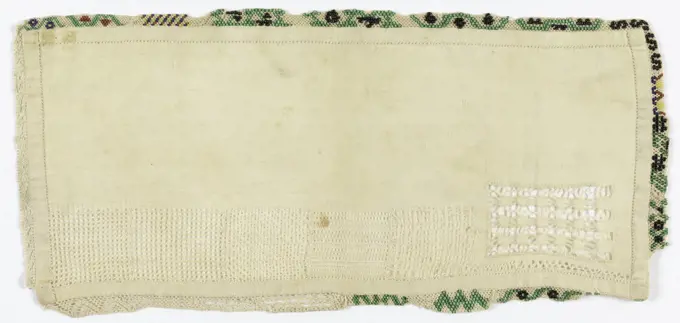
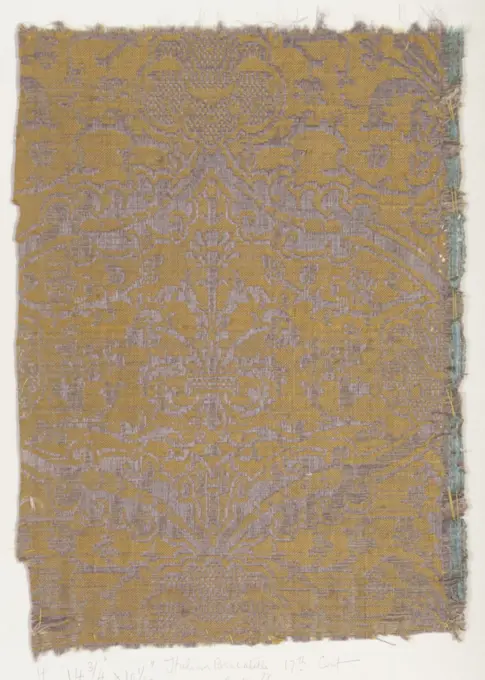
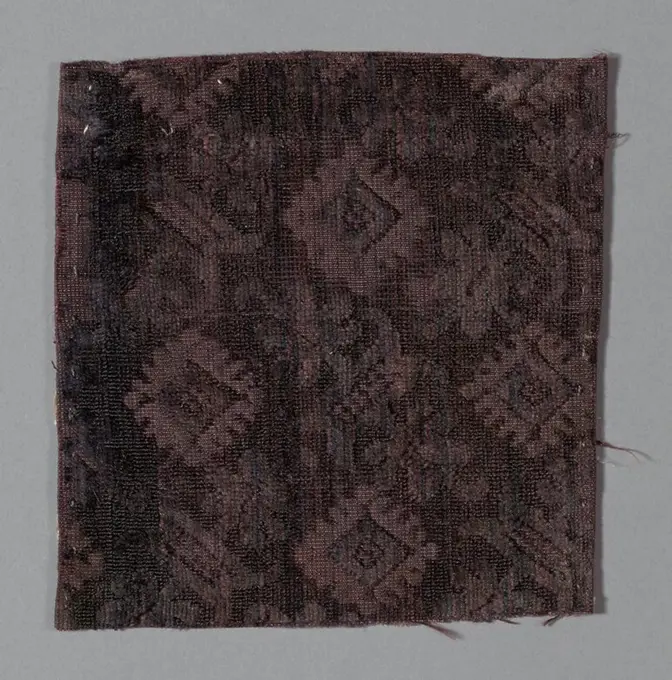
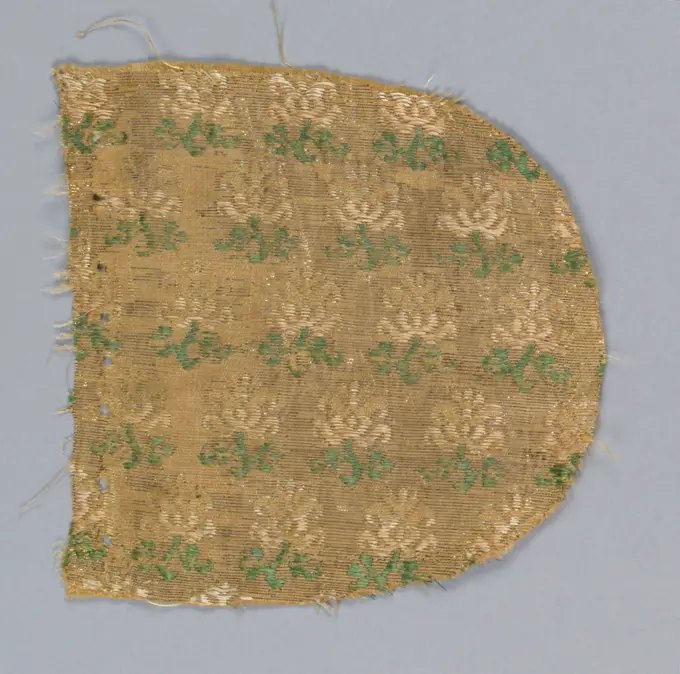
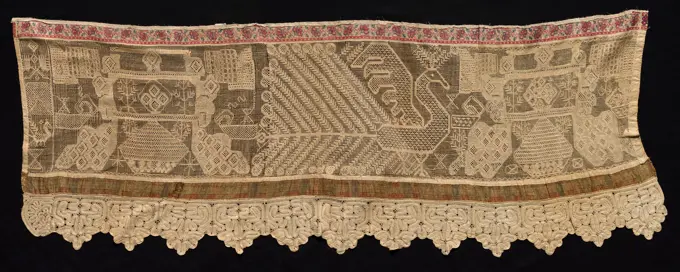
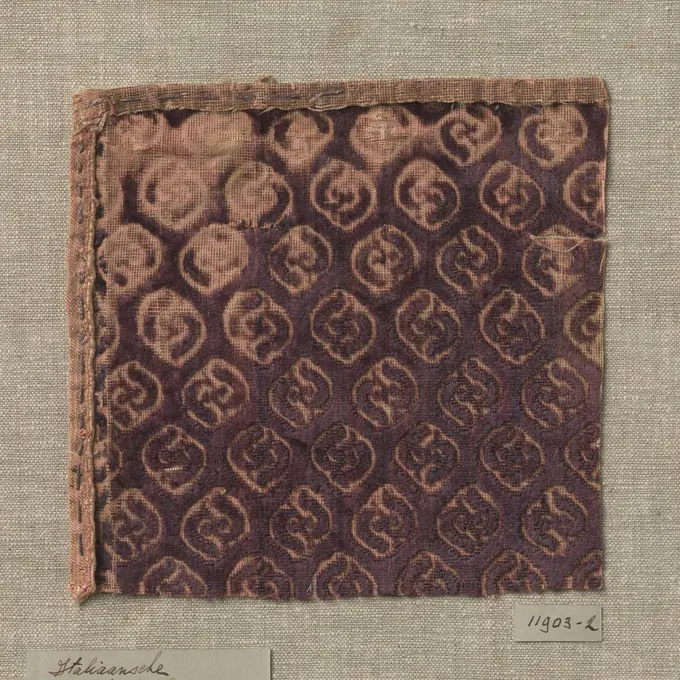
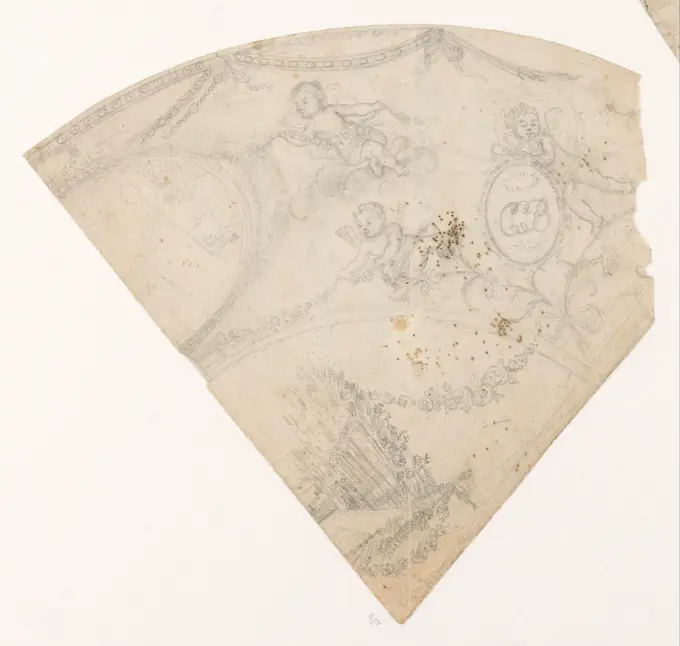
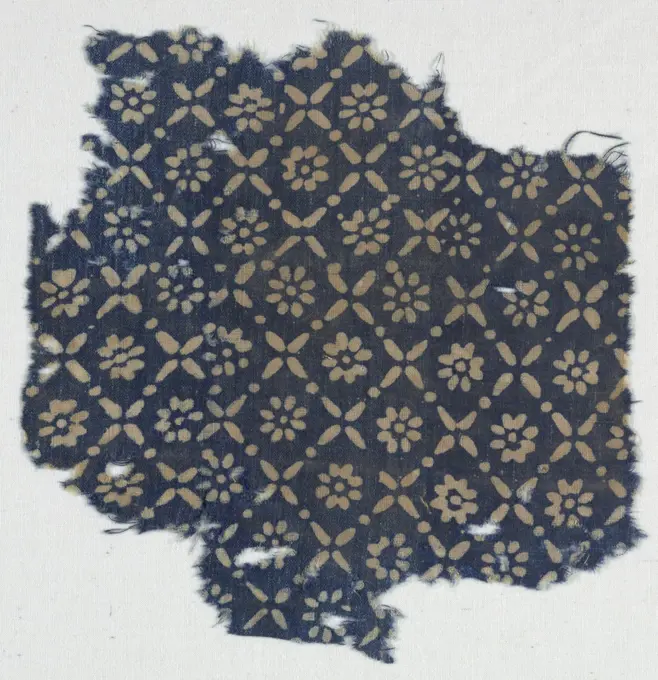
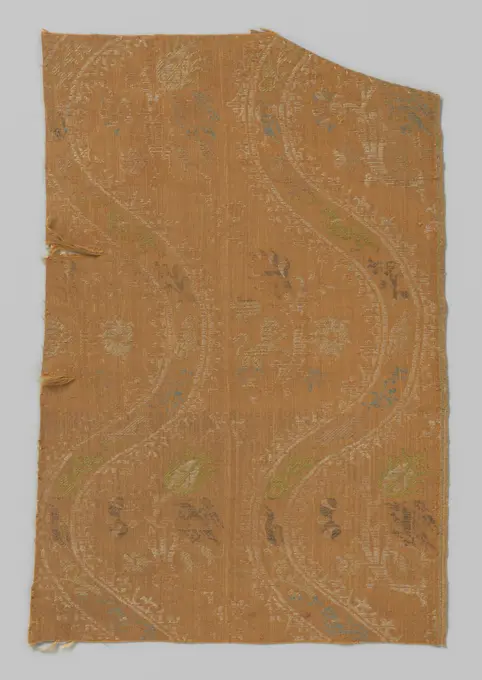
Rips side with wavy tires, anonymous, c. 1600 - c. 1699 Fragment of light brown rips side with an impact of a flat silver metal strip. The pattern is made of white, yellow, blue, brown and green and consists of two wavy tires, in the tires patterns of dogs, falcons and flowers are visible, between the tires are larger patterns of flowers against which a dog or a falc is placed.  Ketting an element: Silk. Fragment of light brown rips side with an impact of a flat silver metal strip. The pattern is made of white, yellow, blue, brown and green and consists of two wavy tires, in the tires patterns of dogs, falcons and flowers are visible, between the tires are larger patterns of flowers against which a dog or a falc is placed.  Ketting an element: Silk.Piece 18th-19th century Japan. Piece 66118Fragment (possibly Iran); woven; 1896-20-3-bFragment Made 1625-1675 Italy. Silk and gold gilt strips, plain weave with supplementary patterning wefts; shades of blue .Fragment samiet, anonymous, c. 400 - c. 599 Tissue fragment with a red pattern on green soil, consisting of roller corners, alternately filled with a deer jumping to the right or a dog that runs to the left. A stylized floral pattern between the huge corners. The pattern is interrupted by a horizontal strap made of dark blue with a connected circle motif in flying wire technology. Egypt Necklace: Linen (Material). impact: Wool. Flying wire: Linen (Material) samite / tapestry Tissue fragment with a red pattern on green soil, consisting of roller corners, alternately filled with a deer jumping to the right or a dog that runs to the left. A stylized floral pattern between the huge corners. The pattern is interrupted by a horizontal strap made of dark blue with a connected circle motif in flying wire technology. Egypt Necklace: Linen (Material). impact: Wool. Flying wire: Linen (Material) samite / tapestryTkanina koptyjska. unknown, authorFragment 16th century Italian. Fragment 230204Piece 18th century Japan. Piece 71534Fragment Made 1700-1800 Japan. Silk, cotton, and silvered and gilded paper strip, twill weave with paired warps and complementary patterning wefts and supplementary brocading wefts .Fragment multicolored brochure side. Fragment multicolored silk. A moss-green ground has a pattern of flower and leaf shapes in red brown a yellow green.Sampler, Medium: cotton, glass beads Technique: withdrawn element work on plain weave foundation, Unfinished sampler with five withdrawn element patterns in white, beadwork, and needle lace edge., Mexico, 19th century, embroidery & stitching, SamplerFragment early 17th century Italian. Fragment 230325Fragment, Medium: silk Technique: 4&1 satin damask, Lions and plants forming a grid in yellow and red. Fragment very worn., 17th century, woven textiles, FragmentBeltFragment of Wall covering of Ceriserode Satijn, Anonymous, 1600 - 1699 Fragment of wall covering from Ceriserode Satin. Is part of a group of 26.5 parts. Holes in the object (nail holes) and stains (probably glue residues) France (possibly) satin Fragment of wall covering from Ceriserode Satin. Is part of a group of 26.5 parts. Holes in the object (nail holes) and stains (probably glue residues) France (possibly) satinFragment (Dress Fragment). Italy. Date: 1601-1700. Dimensions: 10.5 x 10.2 cm (4 1/8 x 4 in.). Silk, velvet; cut and uncut; plain weave foundation. Origin: Italy. Museum: The Chicago Art Institute, Chicago, USA.Textile Fragment 5th-6th century. Textile Fragment 443728Piece 18th-19th century Japan. Piece. Japan. 18th-19th century. Silk. Textiles-WovenFragment, Medium: Technique: supplementary warp forming raised pile in plain weave foundation (velvet), Three branched ornaments with scrolling leaves. Deep mauve on gold., 17th century, woven textiles, FragmentTextile Fragment 4th century. Textile Fragment 443331Fragment; silk and metallicPiece 17th century Japan. Piece 71922Two fragments of the application unknownPiece 18th-19th century Japan. Piece 67351Embroidery; silk on linen; Bequest of Marian Hague; 1971-50-20Fragment (Spain); silk, metallic, linenSampler, Medium: silk embroidery on cotton foundation Technique: embroidered in withdrawn element work, aztec stitch, on plain weave foundation, Nineteen bands of pattern., Mexico, 18th century, embroidery & stitching, SamplerTextile Fragment 4th-5th century. Textile Fragment 444136Fragment (Germany); linenTable cover, Medium: linen Technique: plain weave with bobbin lace insertions Label: woven linen with bobbin lace insertions, Linen table cover with hemstitching and six pieces of lace insertion showing Indian motifs: two rectangular pieces show two braves with bows framing tepees and four squares in the corners show a man in a canoe, a woman with a papoose, a brave with a bow, and a tepee., USA, ca. 1900, lace, Table coverPiece of woven cloth. unknown, authorFragment van rode zijde.Fragment of red silk with pattern in yellow, gold and silver of leaf and tape work.Fragment mounted onto a support fabric, Medium: Warp; S-spun linen, Wefts;s-spin wool, s-spun linen Technique: slit tapestry woven, A fragmentary spade-shaped garment or textile ornament. There are areas of linen plaine weave ground around the base of the ornament, Egypt, 4th century, woven textiles, Fragment mounted onto a support fabricTextile with Dragons and Phoenixes late 13th-14th century China This fragment provides a rare example of the famed cloth of gold” produced in China and Central Asia in the thirteenth and fourteenth century under the rule of the Yuan Mongol dynasty (1271-1368). It is woven with red silk threads that have been supplemented by gold threads, and shows a row of two floral roundels that contain sinuous dragons chasing a pearl, and an upper row of three partial flowers roundels that contain phoenixes. The roundels have been woven in horizontal rows and are set against a background of tiny gold hexagons.. Textile with Dragons and Phoenixes. China. late 13th-14th century. Silk and gold thread lampas. Yuan dynasty (1271-1368). Textiles-WovenFragment of a Tunic 4th-5th century. Fragment of a Tunic 443781Towel, L.65 x W.33 in., Cotton, silk, metallic thread; needlework, TurkeyFragment, 1100s - 1300s. India, 12th-14th century. Plain cloth, resist dyed; cotton; overall: 6.1 x 26.7 cm (2 3/8 x 10 1/2 in.).Collar of batist with whitework semi -circular model that still has to be cut from the rectangular piece of batist, anonymous, c. 1860 Collar of batist with embroidery: whitework. Half -circle -shaped model on rectangular batist piece. The collar has already been completed, but not yet cut out of the fabric. The embroidery has a pattern of flower bouquets in the middle and loose berry trusses. The outer edge with a cross -placed Spitsoval is set between ribbed edges. Netherlands batiste embroidering Collar of batist with embroidery: whitework. Half -circle -shaped model on rectangular batist piece. The collar has already been completed, but not yet cut out of the fabric. The embroidery has a pattern of flower bouquets in the middle and loose berry trusses. The outer edge with a cross -placed Spitsoval is set between ribbed edges. Netherlands batiste embroideringTextile (Egypt); cottonTextile Fragment 5th-6th century. Textile Fragment 443784Fragment of a Chasuble, 1400-1420. Italy, beginning of the 15th century. Velvet (cut and voided); silk; overall: 24.1 x 12.1 cm (9 1/2 x 4 3/4 in.).Letter Pouch of Michiel de Ruyter, Anonymous, c. 1650 - c. 1675 bag Plat green velvet bag (letter bag) with red leather edges. On the velvet, pieces of leather are sewn on which plant motifs and abstract motifs are embroidered with silver thread. Decorated on both sides; Under the flap is the inscription: De Ruyter. Inside covered with linen, two compartments separated by a piece of leather. Maghreb leather. linen (material). velvet (fabric weave). silver thread embroideringFragment 12th-15th century Chimú. Fragment 314686Fragment, Medium: Warp; S-spun linen. Wefts; S-spun linen, S-spun wool Technique: slit tapestry woven with supplementary weft wrapping. Woven, Square medallion sewn onto linen fabric with weft pile loops. The square has baskets, or bowls, containing fruits or flowers., Egypt, 4th-5th century, woven textiles, FragmentPiece 18th-19th century Japan. Piece 66500Border with Peacock Motif, 18th-19th century. Russia, 18th-19th century. Cutwork and drawnwork: linen; straight (continuous) bobbin lace (tape lace) edging; applied silk (est.) ribbon and embroidery; overall: 52.1 x 145.4 cm (20 1/2 x 57 1/4 in.). This valance, a decorative drapery made for attachment at the frame of the bed, was a typical object from the dowry of a bride in eighteenth and nineteenth-century Russia. The valance, which shows a magnificent peacock flanked by temples or shrines, would have been made for the wedding night of a newlywed couple.Piece 18th-19th century Japan. Piece. Japan. 18th-19th century. Silk. Edo period (1615-1868). Textiles-WovenFragment Made 201 CE-1000 Egypt. . Ancient EgyptianFragment, Medium: linen Technique: plain weave embroidered with deflected element work, Fragment from a border of woven linen with a slightly scalloped edge, and showing a design of flowers and sprigs., possibly Italy, possibly France, 18th century, embroidery & stitching, FragmentSampler(Limar)Textile 19th century Japan. Textile 68007Towel (Denmark); linenTiraz with guilloche bands and fringe, 1100s. Egypt, Fatimid period. Plain weave with inwoven tapestry weave: linen and silk; overall: 55 x 17.5 cm (21 5/8 x 6 7/8 in.).Piece 18th century Japan. Piece 72175Siapo (tapa cloth) textilesKesa Made 1825-1875 Japan. Silk and gold-leaf-over-lacquered-paper strips, warp-float faced 4 1 satin weave with supplementary patterning wefts bound in weft-float faced 1 2 'Z' twill interlacings; patches silk and gold-leaf-over-lacquered-paper strips, warp-float faced 2 1 'Z' twill weave with weft-float faced 1 2 'Z' twill interlacings of secondary binding warps and supplementary patterning wefts; lined with silk, 4 1 satin damask weave .Piece 19th century Japan. Piece. Japan. 19th century. Silk, metallic thread. Edo (1615-1868). Textiles-WovenSilk fabric;  before 1795 (1780-00-00-1795-00-00);Textile, Medium: cotton Technique: resist-dyed, India, 15th century, printed, dyed & painted textiles, TextileFragment red silk velvet. Fragment Red Silk Ciselé Velvet. The Pattern Has Palmet Medallions.Cotton sash for clothing unknownTrouser Band Made 1875-1900 China. Forty-four pairs and eight odd pieces of embroidered sleeve, ankle bands, etc. on gauze. . Han-ChineseScarf End Made 1801-1900 Spain. .Fragment, Medium: linen, wool Technique: plain weave with discontinuous wefts (tapestry), Fragment of dark brown wool tapestry with a pattern band incorporating circular patterns in tan., Egypt, 4th-6th century, woven textiles, FragmentTextile Sample from Sample Book 19th century Japan. Textile Sample from Sample Book 68140Band; silk and metal-wrapped threads; Bequest of Marian Hague; 1971-50-52Miniature Dress 12th-13th century Ica. Miniature Dress 312829Fragment of a Tunic 4th-5th century. Fragment of a Tunic 443865Fragment; silk, metallicFragment 16th century Italian. Fragment 230142Piece 18th-19th century Japan. Piece. Japan. 18th-19th century. Silk. Textiles-WovenHalf skirt (asku), c. 1940-1950, 38 x 29 in. (96.5 x 73.7 cm), Wool, dye, Bolivia, 20th centuryFragment, 1100s. Egypt, Ayyubid, 12th century. Tabby with supplementary weft; silk; overall: 7 x 9 cm (2 3/4 x 3 9/16 in.).Fragment ciselé velvel in purple with continuous pattern of windows filled with S-shaped volute. Fragment silk ciselé velvel with recesses in purple with continuous pattern of windows filled with S-shaped volute.Fragment yellow silk tissue with multicolored embroidery. Fragment yellow silk tissue with multicolored embroidery. The fragment consists of four consistent fragments. Embroidery has a flower branch with blue and red flowers and flower buds of green, pink, orange and silver. At the fragment a fragment belongs in the form of a flower, with red embroidery.Fragment (Dress Fabric) Made 1601-1625 Italy. Cisele voided cloth velvet .Textile; silk, metallic thread; Warp x Weft: 107 x 54 cm (42 1/8 x 21 1/4 in.)Band Fragment with Botanical Decoration Coptic. Band Fragment with Botanical Decoration, 5th-7th century C.E. Flax, wool, 3 x 14 1/2 in. (7.6 x 36.8 cm).   Egyptian, Classical, Ancient Near Eastern Art 5th-7th century C.E.Textile fragment, probably part of a garment, 1300s - 1400s. Egypt, Mamluke period, 1300s-1400s. Double cloth weave; silk; overall: 21 x 17.1 cm (8 1/4 x 6 3/4 in.).Piece 18th-19th century Japan. Piece. Japan. 18th-19th century. Silk. Textiles-WovenScarf (USA); silk warp, cotton weftTextile Fragment 4th century. Textile Fragment. 4th century. Wool, linen; plain weave, tapestry weave. Made in Egypt. TextilesFragment silk velvet broker (four pieces sewn together). Fragment silk velvet (four pieces sewn together) with a pattern of pomegranates with a pomegranate pattern with gold thread.Steel sheet from the seventeenth century, filled with the collection of Zdzis Ava Wolski in 1916 - front view on a 1: 1 scale; Sztolcman, W Adys Aw Roman (1873-1950); 1916 (not after November 3, 1916) (1916-00-00-1916-00-00);Shawl (Mexico); cotton, silk, metallic threadManiple. unknown, authorDecoration, Jan Brandes, 1770 - 1808 drawing Part of the decoration for a ceiling: angels, a monogram and a driveway or perk. The paper is cut in the shape of a fan.  paper. pencil  Cupids: 'Amores', 'Amoretti', 'Putti'Fragment, Medium: cotton Technique: resist-printed on plain weave, Fine cotton plain weave with blue resist ground and small-scale all-over design of rosettes within squares formed by diagonally crossing lines and dots., India, 14th-15th century, printed, dyed & painted textiles, FragmentTrimming, Medium: silk, Yellow trimming fragment in a zigzag design with open flowers. Triangular spaces filled with lines meeting at right angles., France or Spain, 18th century, trimmings, TrimmingTextile Fragment 1st century B.C.-1st century A.D.. Textile Fragment 443650Handkerchief ca. 1842 American. Handkerchief. American. ca. 1842. linen, cottonRosette Fragment Coptic. , 5th-7th century C.E. Flax, wool, 3 x 3 1/2 in. (7.6 x 8.9 cm).   Egyptian, Classical, Ancient Near Eastern Art 5th-7th century C.E.Fragments (India); silk and metallic thread on wool foundationTextile Fragment 6th century. Textile Fragment 444165Piece 16th-17th century Italian. Piece 224416Fragment blue velvet brocade with pomegranate moth, anonymous, c. 1470 - c. 1480 Fragment silk velvet brokate with pouring pomegranate in lobed contour on blue soil pattern of golden by flowers and leaves. See also B and C. Italy silk. velvet (fabric weave) Fragment silk velvet brokate with pouring pomegranate in lobed contour on blue soil pattern of golden by flowers and leaves. See also B and C. Italy silk. velvet (fabric weave)Roundel Made 501 CE-800 CE Egypt. Linen and wool, tapestry weave . CopticFragment, with Part of a Clavus, from a Tunic, 700s - 800s. Egypt, Early Islamic period, 8th - 9th century. Tabby weave, inwoven tapestry ornament; wool and linen; overall: 12.8 x 15 cm (5 1/16 x 5 7/8 in.).Fragment, Medium: silk, cotton, linen, metallic thread Technique: bobbin lace () probably machine, Allover design of small diamonds within diamonds with triangular scallops. Scaled and with wide slits in silver on a yellow silk ground., 19th century, trimmings, FragmentSidewall - Fragment (United States or England); machine-printed, flocked