Historic Textile Fragments

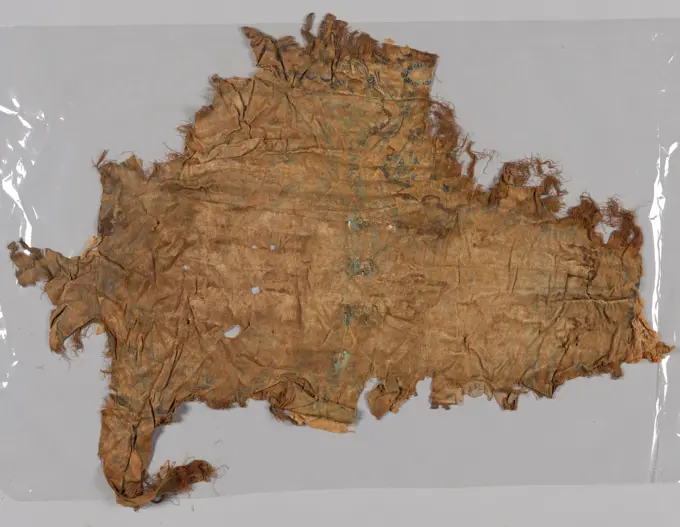
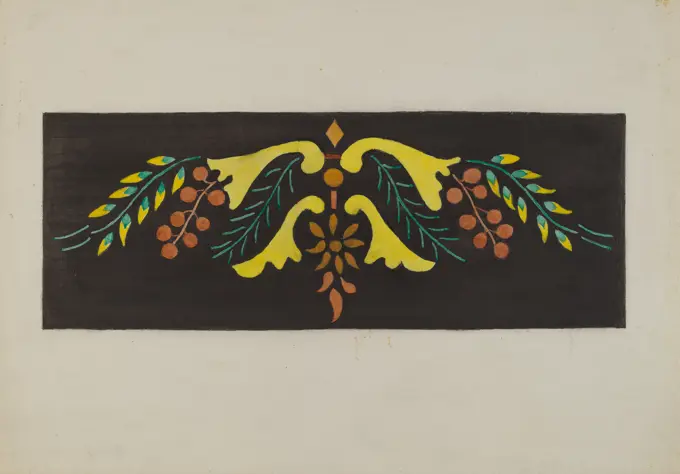
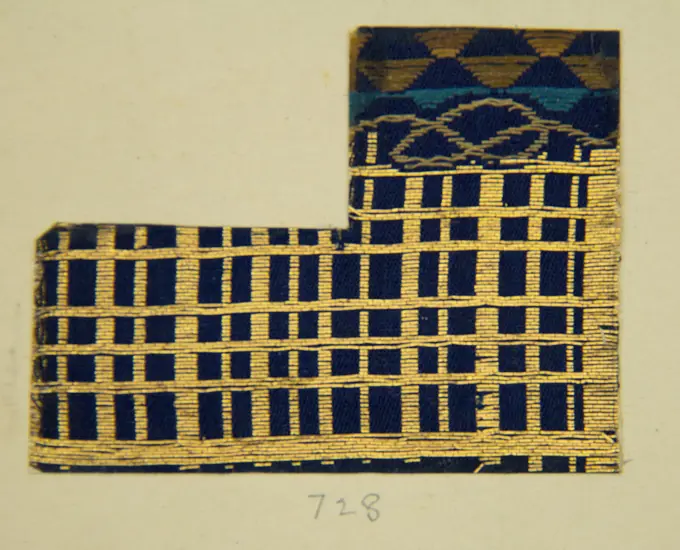
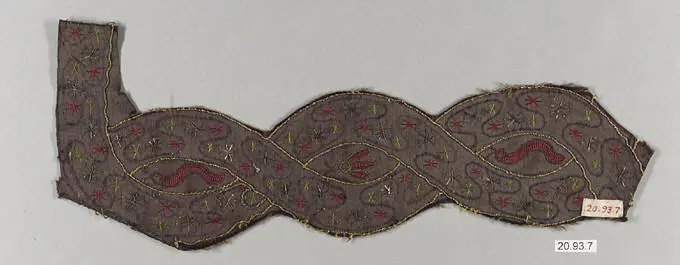
Fragments showcasing intricate patterns and textures from historical textiles, featuring floral and animal motifs in ancient styles.

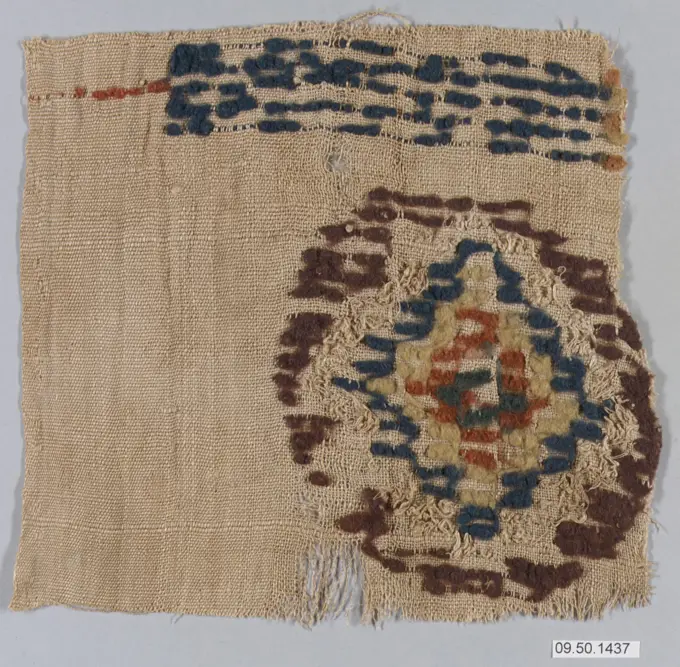
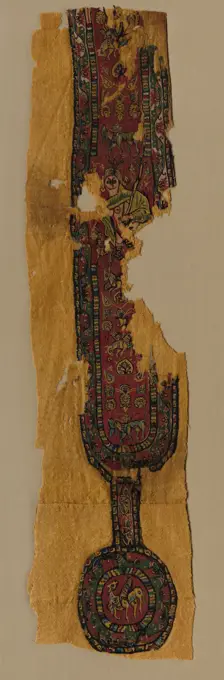
Fragment samiet, anonymous, c. 400 - c. 599 Tissue fragment with a red pattern on green soil, consisting of roller corners, alternately filled with a deer jumping to the right or a dog that runs to the left. A stylized floral pattern between the huge corners. The pattern is interrupted by a horizontal strap made of dark blue with a connected circle motif in flying wire technology. Egypt Necklace: Linen (Material). impact: Wool. Flying wire: Linen (Material) samite / tapestry Tissue fragment with a red pattern on green soil, consisting of roller corners, alternately filled with a deer jumping to the right or a dog that runs to the left. A stylized floral pattern between the huge corners. The pattern is interrupted by a horizontal strap made of dark blue with a connected circle motif in flying wire technology. Egypt Necklace: Linen (Material). impact: Wool. Flying wire: Linen (Material) samite / tapestry
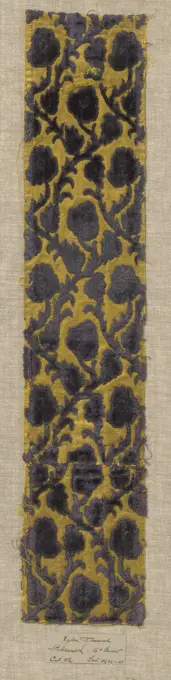
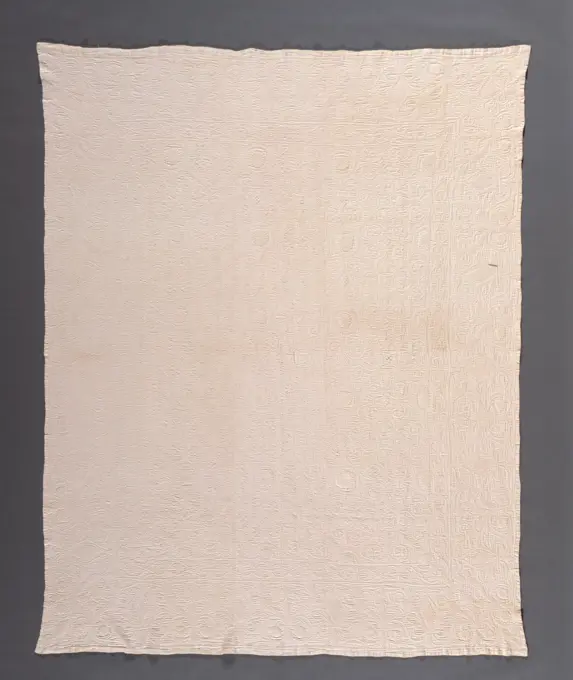
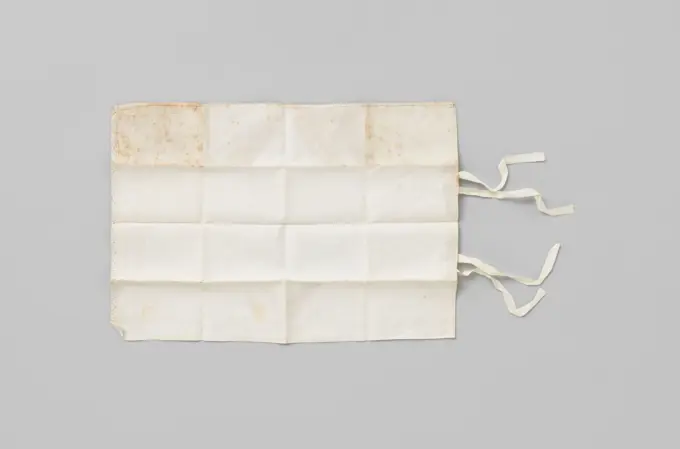
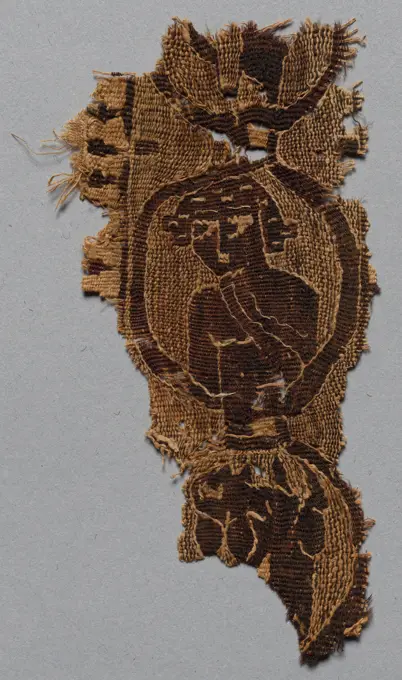
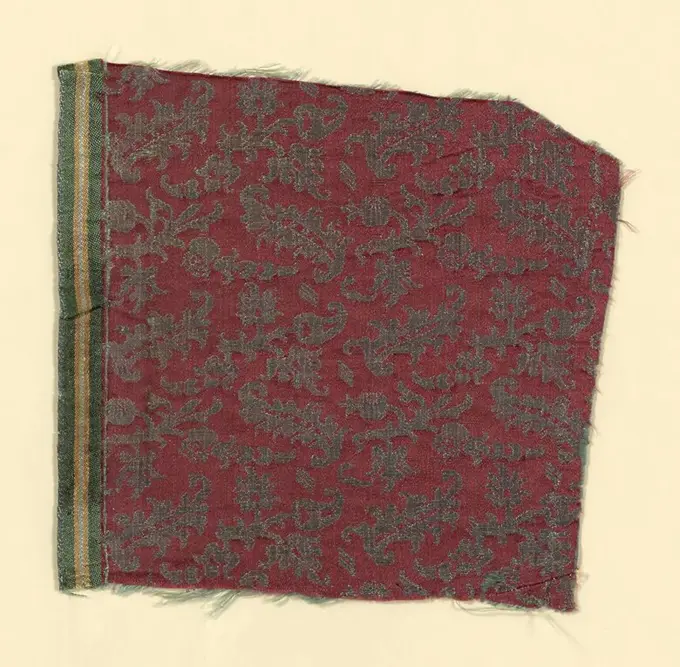
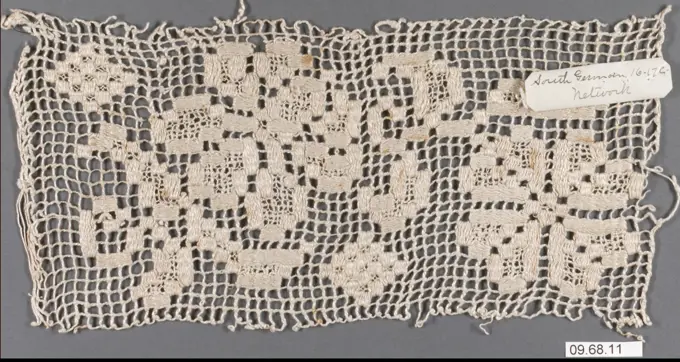
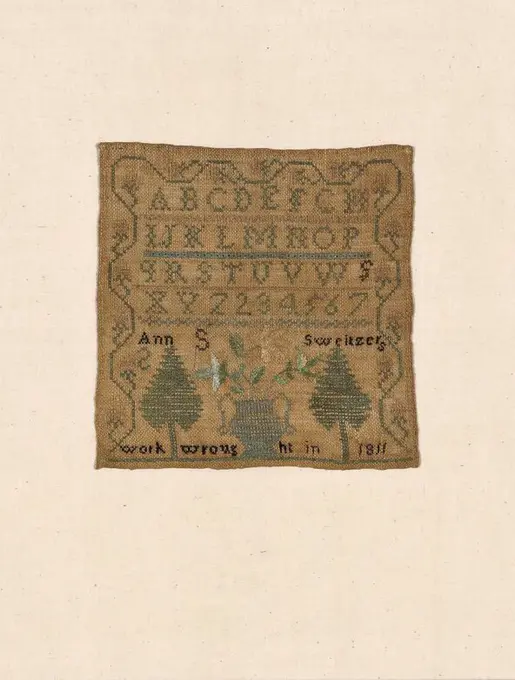
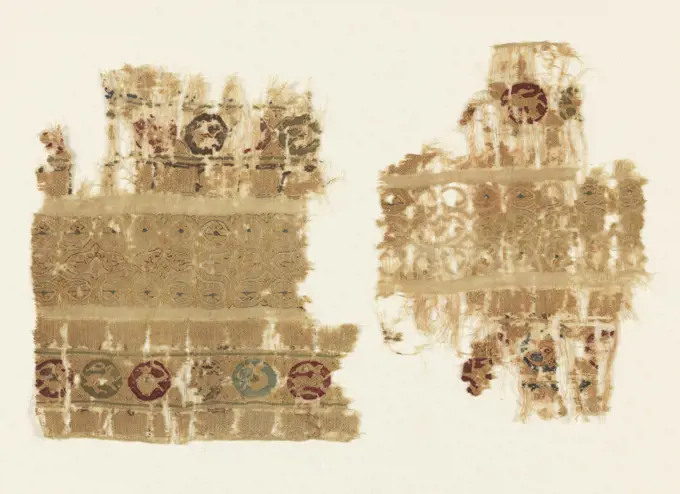
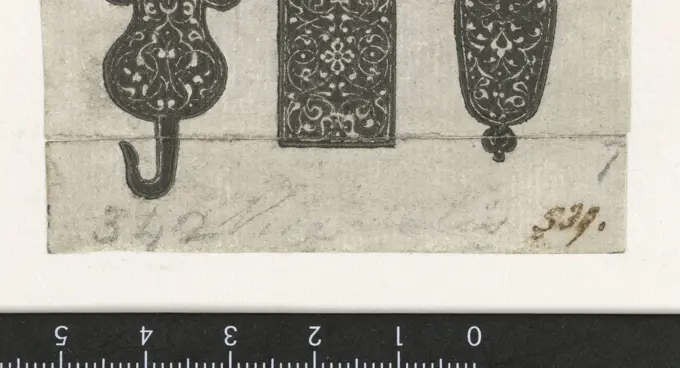
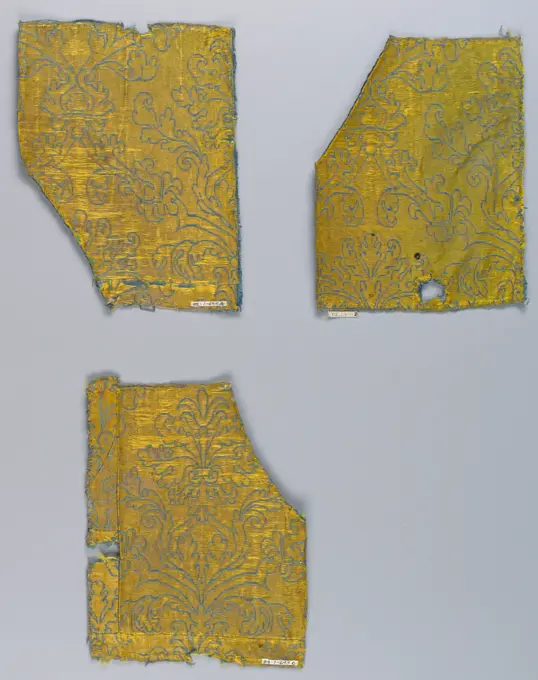
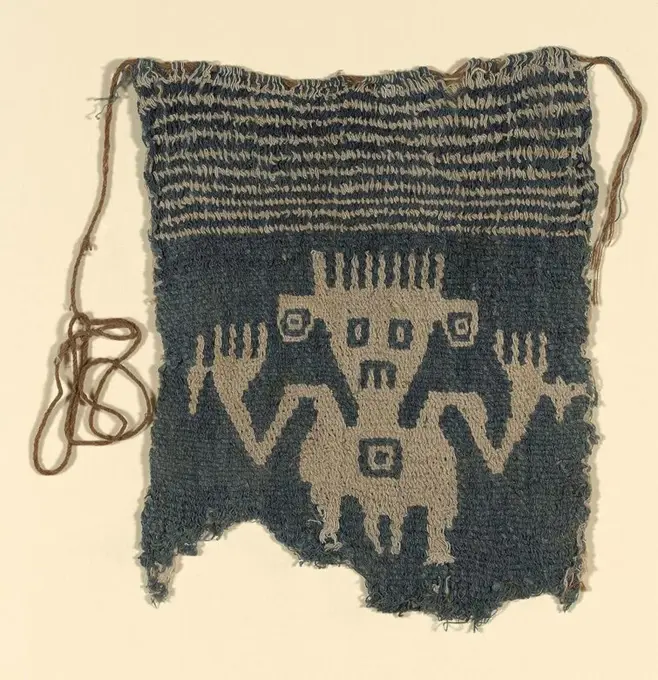
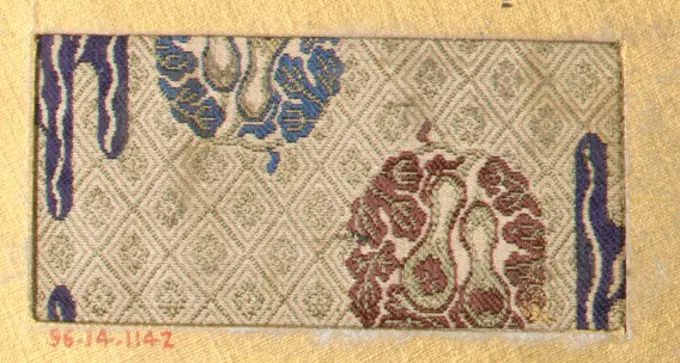
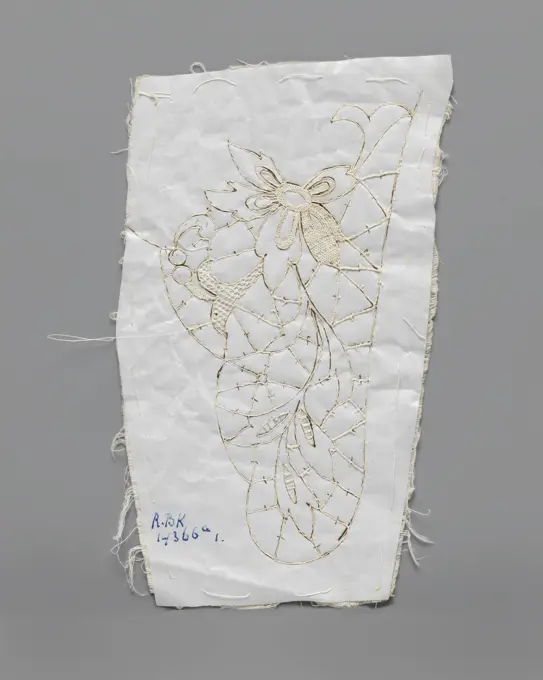
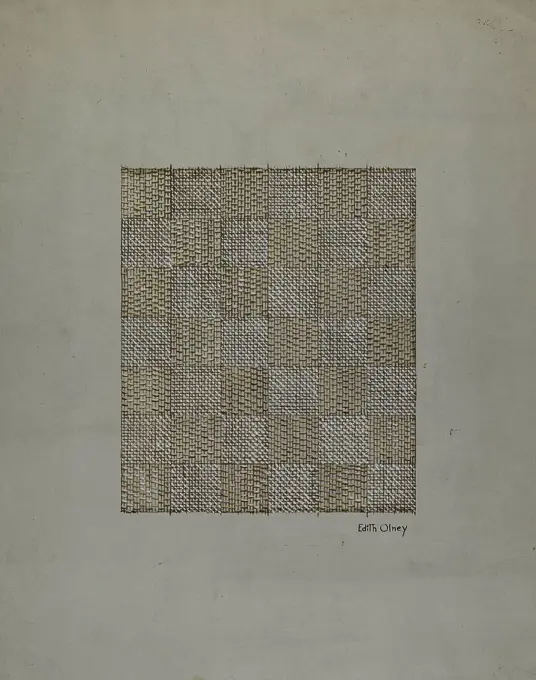
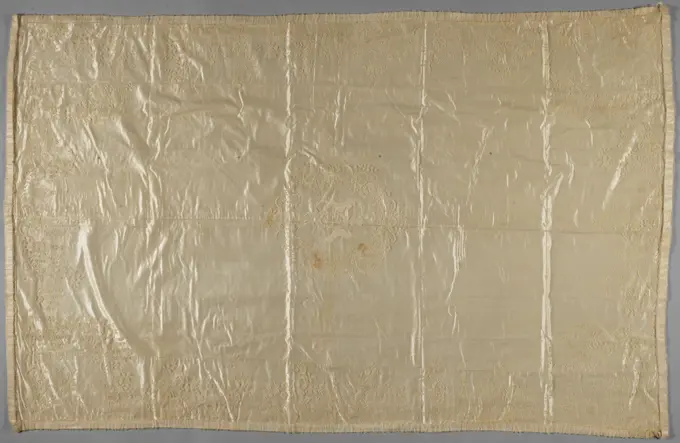
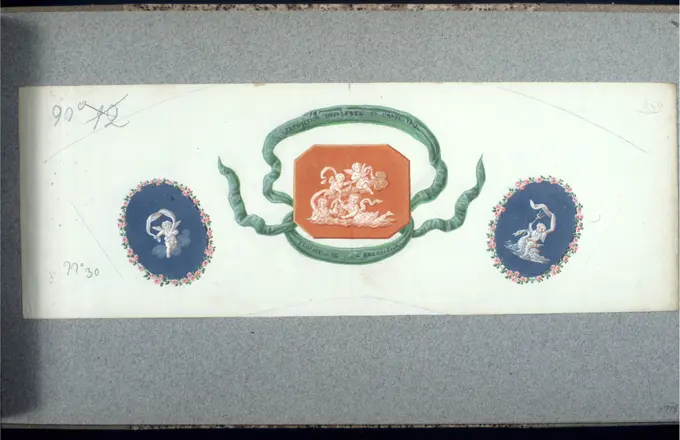
Fragment; silkLeaf with irregular structure of Verschilling Forms, Anonymous, 1850 - 1920  Leaf with irregular amorphous structure of lines and different shapes, with folding tracks.  paper.  fantasy ornamentFragment 16th century Italian. Fragment. Italian. 16th century. Silk. Textiles-VelvetsFragment zijde fluweel.A fragment of velvet. On yellow silk with hard gold thread soil a drawing of branches and blades in purple.Textile, Medium: linen, silk Technique: tapestry weave, plain weave, Small towel or cover in undyed plain weave linen with a narrow tapestry weave band in blue and ivory at each end, and a floral band in blue, yellow and ivory at center. Eccentric wefts, slits. Warp fringes at both ends. One quarter at corner is missing., Egypt, 10th-12th century, woven textiles, TextileStoplap van Katoen op Linnen, Johanna Hendrika Scholtz, c. 1880 Cotton stop patch on linen. The embroidery consists of nine stops in various stitches. Up to the top left, the piece is marked: 119. Dutch Reformed Diaconie Orphanage cotton (textile). linen (material) embroidering Cotton stop patch on linen. The embroidery consists of nine stops in various stitches. Up to the top left, the piece is marked: 119. Dutch Reformed Diaconie Orphanage cotton (textile). linen (material) embroideringLinnen kelkdoek met een rand kloskant met rozetbloemen aan golvende ranken.Kelkker of natural linen with a border around around a border: old crash side with braid ground. Square model. The repeating pattern consists of a wavy rank with a single rosette flower under the golf tops and in the golf valleys a curly leaf. The motifs are made in linen battle with openwork edges and sparingly a single small recesses. The motifs are connected by a braid ground. Some leaves are made under and above the tendrils with a fairly closed ornamental soil. The very slight sloping edge stems from the pattern and is finished with picots.Piece 18th-19th century Japan. Piece 67311Fragment (possibly USA); Company: F. Schumacher & Co. (United States); silk, cotton, velvet; Warp x Weft: 66 x 40.5 cm (26 x 15 15/16 in.) H (age marks): 11.4cm (4 1/2in.)All-White Quilt. France, second half of 18th century. Textiles; quilts. Quilted, corded and stuffed linenFragment Made 1601-1650 Italy. Silk, cut, uncut, and voided velvet against plain weave foundation .Lumbar break, 1640 - 1660 Lendloop van Linen, Entre-Deux van Kloskant, brand I G. Northern Netherlands linen (material). bobbin lace Lendloop van Linen, Entre-Deux van Kloskant, brand I G. Northern Netherlands linen (material). bobbin laceFragment (Belgium); linen; 1923-35-8Sketchbook - Animals and Decorative Objects, James Cromar Watt (Aberdeen, Scotland, 1862 - 1940) 1899Fragment; linenMedallion (Egypt); warp: s-spun linen. weft; s-spun linen, s-spun woolFragment rode zijde satijn met floral motief in zilver lamel.Fragment red silk with silver colored ornament with blue outline of winding branches with flowers and leaves.Frivolita bag in a flat, almost square model, of dark beig green taffeta with woven vertical ecru-colored stripes. Frivolita bag in a flat, almost square model, of dark beig green taffeta with woven vertical ecru-colored stripes. The bag is folded at the top, so that the lining of the same material is. A seam along the entire edge. A tunnel is sewn against the top, through which a beigular ribbon with serrated edges. On the two corners at the bottom of the bag two bows of the same ribbon.Bedcover Made 1801-1900 United States. Cotton, plain weave; quilted diagonally throughout; with additional three-dimensional quilting . Sarah Stewart (Maker)Textile 19th century Japan. Textile 68053Piece 18th-19th century Japan. Piece. Japan. 18th-19th century. Silk. Textiles-WovenFragment 16th century Italian. Fragment 230556Collar of linen batist with whitework, unfinished, anonymous, c. 1840 - c. 1860 Collar of linen batist with whitework, the workpiece is unfinished. Netherlands linen (material). sailcloth Collar of linen batist with whitework, the workpiece is unfinished. Netherlands linen (material). sailclothTextile Fragment 5th-6th century. Textile Fragment 444138Textile Fragment 3rd-4th century. Textile Fragment 443562Piece 18th-19th century Japan. Piece 66803Fragment silk tissue of a seat cover., C. 1805 Fragment yellow silk tissue, from a seat cover. The pattern has pink palmets and arabesks on a yellow ground. The fragment is part of thirteen fragments with invnr. BK-1992-18-A to BK-1992-18-M. France silk Fragment yellow silk tissue, from a seat cover. The pattern has pink palmets and arabesks on a yellow ground. The fragment is part of thirteen fragments with invnr. BK-1992-18-A to BK-1992-18-M. France silkTextile Fragment 7th-8th century. Textile Fragment 444113Towel or Cover 17th century Italian. Towel or Cover 461392Piece early 19th century French. Piece 223624Clavus with Linked Roundels, 400s - 500s. Egypt, Byzantine period, 5th - 6th century. Tabby weave with inwoven tapestry ornament, linen and wool; overall: 6 x 11.6 cm (2 3/8 x 4 9/16 in.).Paper for diploma Beautiful needlework. Linen with flower branch embroidered in red with satin stitch.Textile Fragment 6th century Coptic. Textile Fragment 475260Fragment. Italy. Date: 1601-1650. Dimensions: 15.6 x 16.5 cm (6 1/8 x 6 1/2 in.). Silk, warp-float faced satin weave self-patterned by reversing of faces (satin damask). Origin: Italy. Museum: The Chicago Art Institute, Chicago, USA.Fragment of Shoulder Band 5th-6th century. Fragment of Shoulder Band 443697Fragment. Culture: Crusader. Dimensions: 3 1/4 × 3/4 × 3/16 in. (8.2 × 1.9 × 0.4 cm). Date: 13th century. Museum: Metropolitan Museum of Art, New York, USA.Textile Fragment 4th-5th century. Textile Fragment 445756Fragment of a cloak of ciselé velvet with bobbin, according to tradition from Hugo de Groot, Anonymous, c. 1600 - c. 1699 Fragment of a mantle of black ciselé velvet on which black bobbin is sewn. According to tradition, the fragment comes from a cloak by Hugo de Groot. Netherlands silk. velvet (fabric weave) Fragment of a mantle of black ciselé velvet on which black bobbin is sewn. According to tradition, the fragment comes from a cloak by Hugo de Groot. Netherlands silk. velvet (fabric weave)Fragment or piece 16th-17th century Southern German. Fragment or piece 217943Textile Fragment with Interlace Pattern 3rd-4th century The composition of the purple panel recalls patterns used on contemporary floor mosaics, pointing to the many links between architectural decoration and the textile arts. The main design, executed with delicate white threads on a purple ground, consists of a meander pattern framing four squares filled with interlace.. Textile Fragment with Interlace Pattern 443358Fragment of a multicolored brochure side. A fragment of a silk tissue. A pendulum in red-brown and yellow from which light gray branches of flowers with red and yellow hearts spring. Note: Self side; 0.5 cm Skin bond (5 edge wires, 2 mm, red - gray - red).Fragment, Medium: silk Technique: cut and uncut pile in a plain weave foundation (velvet), Floral sprigs facing in alternate directions. Green on yellow., 17th century, woven textiles, FragmentFragment; silkBliżej Kultury unknownTextile Fragment 6th century. Textile Fragment 444171Fragment Silk Brokaat tissue with a pattern of pastel -colored flowers on striped soil, 1600 - 1800 Fragment Silk Brokaat tissue with a pattern of pastel -colored flowers on striped soil. Pattern: vertical silver lanes (perishing up to the yellow core) interspersed with narrow light blue lanes in gray-beige frame. Filling of curved flower branches and stiff palm flowers in pink with white and pink with silver. Eastern textile. Persia silk. brocade (textile) Fragment Silk Brokaat tissue with a pattern of pastel -colored flowers on striped soil. Pattern: vertical silver lanes (perishing up to the yellow core) interspersed with narrow light blue lanes in gray-beige frame. Filling of curved flower branches and stiff palm flowers in pink with white and pink with silver. Eastern textile. Persia silk. brocade (textile)Textile Fragment 4th century. Textile Fragment 445718Cover late 16th or early 17th century Italian or Spanish. Cover. Italian or Spanish. late 16th or early 17th century. Silk; metal; cotton. Textiles-VelvetsMiniature Tunic 14th-early 16th century Inca. Miniature Tunic. Inca. 14th-early 16th century. Cotton, camelid hair. Peru. Textiles-WovenFragment multicolored brocatel, 1775 - 1800 Five fragments of a silk tissue. Brown silk warp with impacts of silver wire and of white, green, pink and red-brown side. The drawing consists of large diamond-shaped medallions in which leaf and fruit motifs. Note: Self -sides; put together small fragment; twill, satin, 1 cm wide. Different types and colors silk.  silk. linen (material). metal thread broach Five fragments of a silk tissue. Brown silk warp with impacts of silver wire and of white, green, pink and red-brown side. The drawing consists of large diamond-shaped medallions in which leaf and fruit motifs. Note: Self -sides; put together small fragment; twill, satin, 1 cm wide. Different types and colors silk.  silk. linen (material). metal thread broachSouvenir d' Armentiere, 1917, France, maker unknown. Gift of the Chatfield family, 1936.Piece 18th-19th century Japan. Piece. Japan. 18th-19th century. Silk. Textiles-WovenSampler. Ann S. Sweitzers (American, active c. 1811); United States. Date: 1811. Dimensions: 21.4 x 21.2 cm (8 3/8 x 8 3/8 in.). Linen, plain weave; embroidered with silk in cross, eyelet hole, satin and stem stitches. Origin: United States. Museum: The Chicago Art Institute, Chicago, USA.Clavi (Decorative Band), 700s. Egypt, Umayyad period (661-750) or Abbasid period (750-1258). Wool; plain weave with slit-tapestry weave; overall: 81 x 20.3 cm (31 7/8 x 8 in.); mounted: 92.7 x 68.6 cm (36 1/2 x 27 in.). Classical figures and winged animals remained popular during the early Islamic period. The nude male may portray Dionysus, Greek god of wine; he holds his thyrsus, a staff ornamented with ivy leaves and pine cones, as he pours liquid from a small jug for the panther. These colorful designs would have decorated the front or back of a tunic and one sleeve. Elaborate embellishments were cherished. Thus, once a tunic began to fray, its decoration was sewn onto a new one, as seen on this winter-weight woolen tunic cloth. Its finely detailed motifs, some with eccentric drawing, are woven in tapestry weave, the equivalent of painting with weft thread; discontinuous horizontal wefts are interlaced only where needed in the design.Samples (9) early 19th century French. Samples (9). French. early 19th century. Silk. Textiles-WovenPiece 18th-19th century Japan. Piece. Japan. 18th-19th century. Silk. Edo (1615-1868). Textiles-WovenTablecloth, 1660 - 1670 White linen dams of tablecloth with an allegory on the four seasons. Used as a curtain. South of the Netherlands linen (material) damask White linen dams of tablecloth with an allegory on the four seasons. Used as a curtain. South of the Netherlands linen (material) damaskDrawing, Design for a Bracelet; Italy; pen and brown ink, gray wash, green, yellow watercolor, traces of graphite support: off-white wove paper; 8.7 x 22.3 cm (3 7/16 x 8 3/4 in.) Mat: 35.6 x 45.7 cm (14 x 18 in.)Tiraz fragment, Medium: linen, silk Technique: plain weave, slit tapestry with eccentric weft, doublesided, Tiraz fragment of natural linen with three tapestry bands. Two outer bands have a repeat of medallions containing alternately a bird and a rabbit; above and below is Islamic inscription. The central band has a repeating ogee shape with scrolls containing two confronted birds., Egypt, 10th-12th century, woven textiles, Tiraz fragmentHook and two costume ornaments, anonymous, After Bernard Salomon, c. 1516 - c. 1571 print  France (possibly) paperBarbe 1860s Belgian. Barbe. Belgian. 1860s. no medium availableVeil 1827 American. Veil 98129Baby Carrier, 33 1/2 x 53 1/2 in. (85.09 x 135.89 cm), Cotton; needlework, ChinaTextile Fragment 4th-5th century. Textile Fragment 443216Textile Fragment 4th-5th century. Textile Fragment 443724Textile Fragment 6th-7th century. Textile Fragment 443706Knife Handle (Kozuka). Culture: Japanese. Dimensions: L. 3 3/4 in. (9.5 cm). Date: ca. 1615-1868. Museum: Metropolitan Museum of Art, New York, USA.Chalice Cover (Italy); silk on linen; Bequest of Marian Hague; 1971-50-102Fragment; 1975-79-5-aFragments; silk, bast (), metallicDos piezas con bajorelieves clásicos, motivos florales.Fragment; silk, metallic threadDetail from a Senegalese kaftan from Western Africa. Senegalese kaftans are an ankle length garment with bell sleeves, worn by men. Dated 20th CenturyLinen mark (Type XXX) ca. 1961-1917 B.C. Middle Kingdom. Linen mark (Type XXX). ca. 1961-1917 B.C.. Linen. Middle Kingdom. From Egypt, Upper Egypt, Thebes, Deir el-Bahri, Tomb MMA 507 (The Slain Soldiers), MMA excavations, 1926-27. Dynasty 12Printing block, Medium: wood, metal, Square wood block for printing handkerchiefs. Set with design in metal of rosettes and arches., USA, late 19th century, appliances & tools, Printing blockFragment. Peru, Central Coast. Date: 900 AD-1470. Dimensions: 27.5 x 21.2 cm (10 7/8 x 87 3/8 in.). Top: cotton, plain weave with paired warps.Center: cotton, plain weave double cloth; two selvages present. Origin: Peru. Museum: The Chicago Art Institute, Chicago, USA.A sash from the funeral of Adam Mickiewicz in Krakow on July 4, 1890Piece 18th-19th century Japan. Piece. Japan. 18th-19th century. Silk. Textiles-WovenTextile, Medium: linen, silk Technique: embroidered, Undyed linen cloth crossed with two parallel bands with stemmed heart forms in blue silk cross-stitch on tan silk chain-stitch and stem-stitch ground; dark brown silk cross-stitch guard borders. One plain selvage with double warps. Narrow hand hem on opposite side., Egypt, 12th-13th century, embroidery & stitching, TextileSquare (USA); cottonShaker Coverlet. Dated: 1935/1942. Dimensions: overall: 27.3 x 22.3 cm (10 3/4 x 8 3/4 in.). Medium: watercolor and graphite on paper. Museum: National Gallery of Art, Washington DC. Author: Alois E. Ulrich.Trimming, Medium: silk Technique: uncut supplementary warp pile on satin ground (velvet), Trimming fragment in a design of red fretwork on a yellow ground., France, 19th century, trimmings, TrimmingFragment from a Garment (larger fragment), 900s. China, Lao dynasty (907-1125), 10th century. Weft-faced compound twill, silk; overall: 138 x 133 cm (54 5/16 x 52 3/8 in.).Valance Made 1750-1770 Connecticut. Linen, plain weave; embroidered in Romanian, satin, and stem stitches . Hannah Hinman Twitchell PierceFragment with Ornamental Bands of Vases with Leaves 4th century Matisse-like vases sprouting leaves, vines, or thickets of vines, with the vines often inhabited by birds and animals, appear repeatedly in Coptic textiles either as the main elements of a composition or hidden in a complex design.. Fragment with Ornamental Bands of Vases with Leaves. 4th century. Wool, linen; plain weave, tapestry weave. Country of Origin Egypt. TextilesFragment of Peruvian fabric unknownPiece 18th-19th century Japan. Piece 66151Genevieve Sherlock, Hitchcock Chair, c 1940 Hitchcock ChairMorocco, Fes, Chouara tanneryTextile, Medium: silk Technique: 4&1 satin damask, Interlacing ogives containing foliage and urns, Blue/green warp, yellow weft. Selvages at both sides., 16th-17th century, woven textiles, TextilePiece 17th century Japan. Piece. Japan. 17th century. Silk / Compound weave. Textiles-WovenPiece late 16th century British. Piece 220681Irritent stated on a double piece of cotton and with trace wires and needle side stitches for making a part of a collar of needle side, Belgian interned (Village Elisabeth, Amersfoort), c. 1915 - c. 1924  Property for a part of a collar of Venetian needle side. The needle side pattern is drawn with ink on light blue paper and holes are then stung along the pattern lines. A trace wire is sewn through this 'incentive' and the double layer of cotton. Some parts have already been filled with needle side stitches. If all needle side stitches are made over and between the trace wires, the incentive and the cotton surface can be cut and removed. Then you only have a needle side, in this case a part of the collar that can then be processed with the other parts and the edge into a collar. The design of the collar was made by a person from Belgium who was interned in the 'Elisabeth-Dorp' camp in Amersfoort in the First World War. Mrs. Van Nierop started making the collar and has donated the unfiLinen Luncheon Set. Dated: c. 1940. Dimensions: overall: 36 x 28.8 cm (14 3/16 x 11 5/16 in.). Medium: watercolor, gouache, and graphite on paper. Museum: National Gallery of Art, Washington DC. Author: Edith Olney.Spread from Applications Officialant of Queen Sophie. Bedspread of natural-colored application side, coniferous lace - Brussels gauze side - applicated on machine tulle. In the middle of a tulle rectangle, within a wreath, the oval coat of arms of Wurtemberg, held by a crowned climbing lion and a climbing deer and covered by a crowned helmet. The large initials, S and W are applied under an empty banderole. The wreath is made up of a winding rosary, interrupted by six standing oval medallions, which are covered by a dome with uivorous, rushed to the center. A large oval middle is saved by the edge, which consists of larger oval ovals and symmetrical branches; Large roses, carnations, blossom branches and long, incised leaves are growing on the branches. A cream-colored satin surface and a tuled-covered straight edge complete the bedspread, which is decorated with large crême bows on the edge, at the headboard, and on the corners. The corresponding cushion cover has almost the same pattBag, Technique: knotted net, Italy or Spain, 1830-60, costume & accessories, BagTiraz fragment, Medium: linen, pigment Technique: plain weave, painted and stamped, Grayish-tan plain cloth with stamped diagonal lines in relief. Rows of Arabic characters painted over entire surface. Two seams., Egypt, 12th-14th century, printed, dyed & painted textiles, Tiraz fragmentDarning sampler. Date/Period: 1711. Darning sampler. Medium: silk embroidery on linen foundation. Technique: embroidered in running (pattern darning) and cross stitches on plain weave. Author: UNKNOWN.Coffin with two adjacent lids placed and over the entire surface decorated with forged tires in a square diamond pattern, pulling traps and lock plates. Wooden coffin with two adjacent lids placed and over the entire surface decorated with forged tires in a square diamond pattern. On one lid, three robberies with a draw ring and on the other lid are two robbery (one of which is missing) that correspond to a lock plate. The two outer lock plates are no longer present.Drawing, Designs for Souvenir Fans for the 1867 Paris Exposition Universelle; France