Historic Textile Trimmings

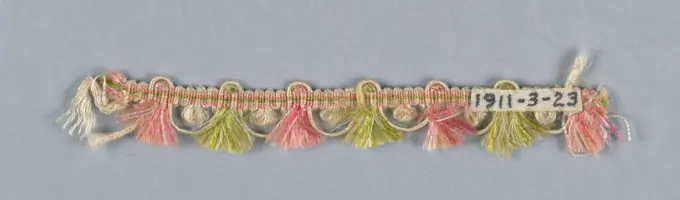
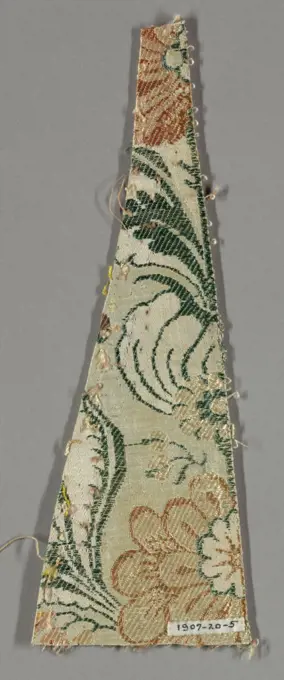
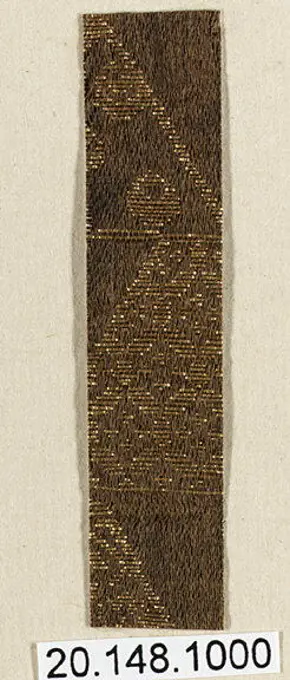
Close-up views of decorative textile trimmings and laces from the 18th century, showcasing intricate patterns and fine craftsmanship.

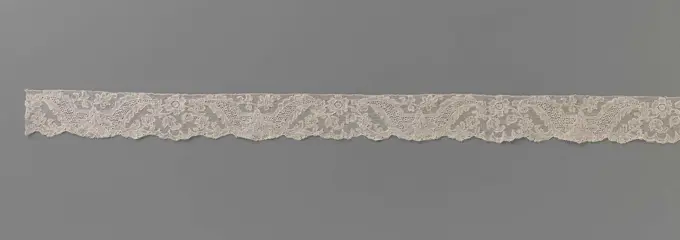
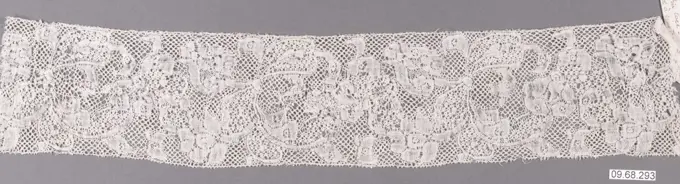
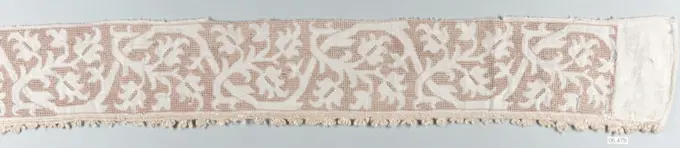
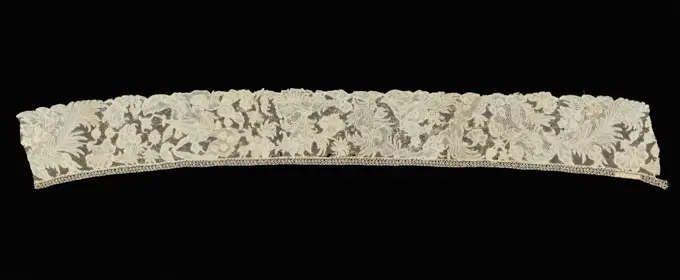
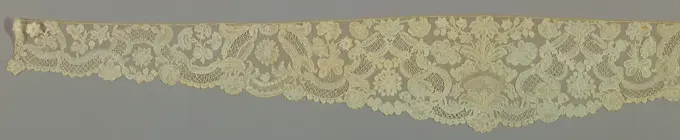
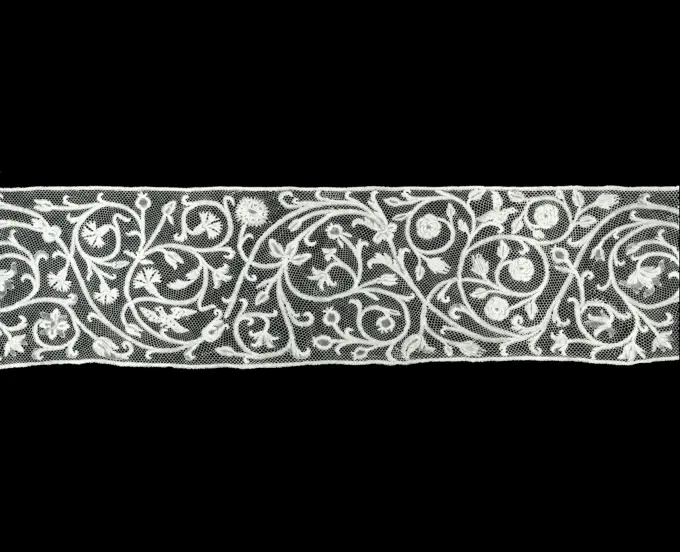
Border, Medium: linen Technique: needle lace, Border shows scrolls of floral and foliated forms. Pattern connected by picoted bars and outlined by cordonnet. Solidly-worked areas are interspersed by decorative filling stitches known as gaze quadrillée., France or Italy, 1650-1700, lace, Border
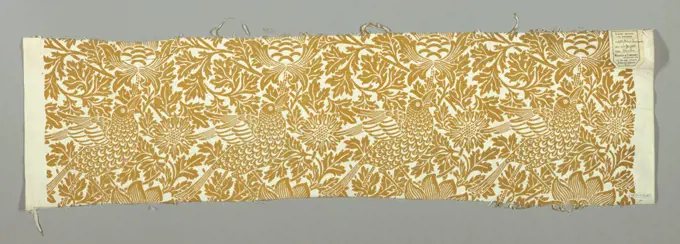
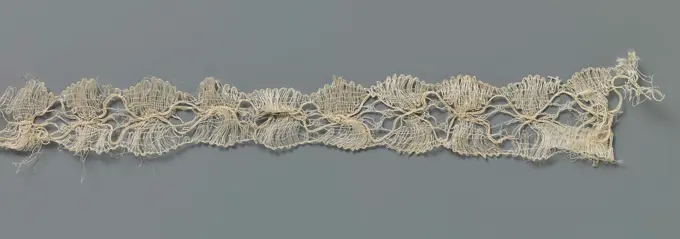
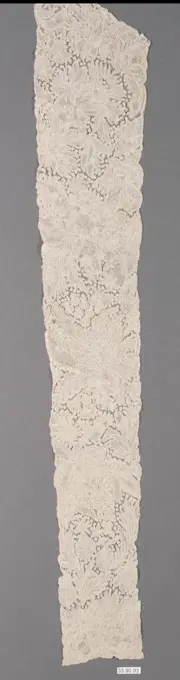
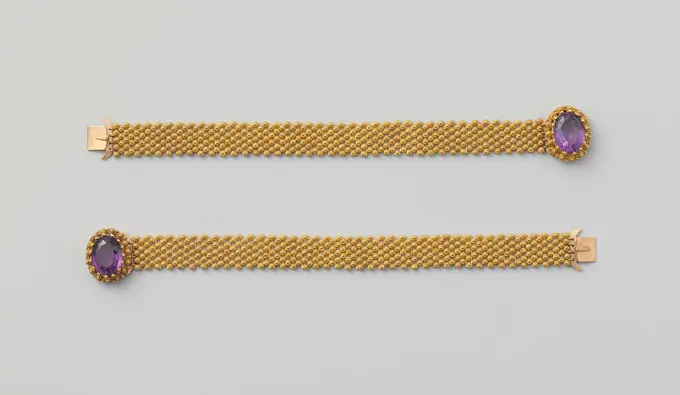
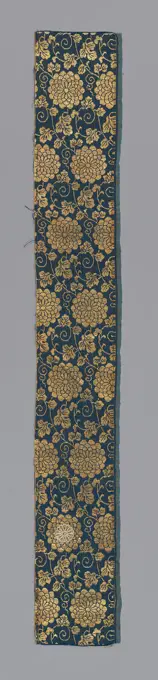
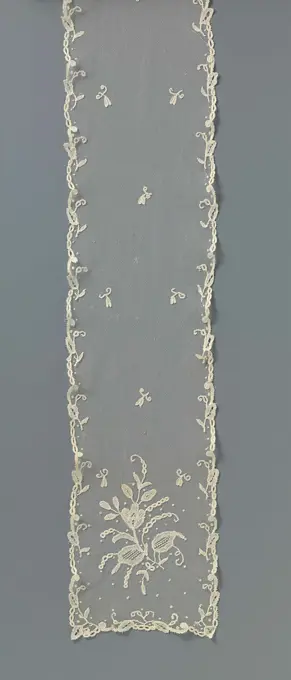
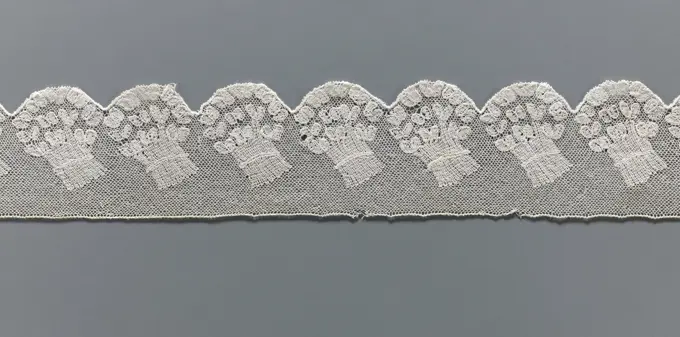
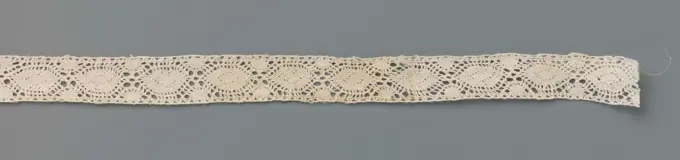
Galloon 18th century French. Galloon 213991Galloon 18th century () European. Galloon. European. 18th century (). Silk. Textiles-TrimmingsBands, Medium: linen Technique: bobbin lace, continuous braid-like, 18th-19th century, lace, BandsWaistband () ca. 1750 British, London, Spitalfields. Waistband (). British, London, Spitalfields. ca. 1750. Silk. Textiles-WovenStrip of bobbin with a thinner pattern with heart -shaped cartouches, anonymous, c. 1700 - c. 1749 Strip of natural-colored bobbin, binche side. The repeating and thin pattern consists of a symmetrical triangular composition, formed by a heart -shaped cartouche between two bragged feathered volute leaves. Between these consecutive compositions is a reverse triangular composition with a smaller trailerzium -shaped cartouche between two feathered leaves, which are slanted up to the top edge. The motifs are connected by a decorative land, a snowflake ground. The motifs are made in linen and mains, with openwork edges. The bottom is straight finished and provided with picots. The top is finished with a separate strap. The short sides are right finished. Binche linen (material) Bobbi Lace / Binche Lace Strip of natural-colored bobbin, binche side. The repeating and thin pattern consists of a symmetrical triangular composition, formed by a heart -shaped cartouche between two bragged feathereTrimming, Medium: silk, silver metallic thread Technique: woven, Design of open flowers and leaf scroll., Italy, 16th century, trimmings, TrimmingBobbin Lace Edging, 20th century. France or Flanders, 20th century. Lace, bobbin; average: 99.1 x 4.5 cm (39 x 1 3/4 in.).Trimming, Medium: silk Technique: woven, Design of pointed leaves placed alternately up and down., Italy, 16th century, trimmings, TrimmingStrip of needle side with running spirals, anonymous, c. 1875 - c. 1895 Strip of natural -colored mixed side: Venetian ribbon side. Tray soil with picots. Wide spirals, on a running slank with ivy leaves, end in various small flowers. A cracked bow edge runs along the right outside. Italy (possibly) linen (material) mixed lace / Venetian tape lace (mixed lace) Strip of natural -colored mixed side: Venetian ribbon side. Tray soil with picots. Wide spirals, on a running slank with ivy leaves, end in various small flowers. A cracked bow edge runs along the right outside. Italy (possibly) linen (material) mixed lace / Venetian tape lace (mixed lace)Border, Medium: linen Technique: needle lace, Border shows scrolls of floral and foliated forms. Pattern connected by picoted bars and outlined by cordonnet. Solidly-worked areas are interspersed by decorative filling stitches known as gaze quadrillée., France or Italy, 1650-1700, lace, BorderStrip 18th century Flemish, Mechlin. Strip. Flemish, Mechlin. 18th century. Bobbin lace. Textiles-LacesKloskant dress strip with zigzag rivière, anonymous, c. 1750 - c. 1760 Strip of natural -colored Brussels bobbin. A rivière in Zigzaglijn is crossed by spiral ranks, which enclose fan -shaped medallions. The motives are connected by a drachel soil. A coarser hexagonal soil has been used in the Rivières. On the fields that are bordered by the Rivière, there are twigs on which flowers in the form of pomegranates, pears or winged insects. The strip was probably used or made for a dress. Brussels linen (material) bobbin lace / Brussels bobbin lace Strip of natural -colored Brussels bobbin. A rivière in Zigzaglijn is crossed by spiral ranks, which enclose fan -shaped medallions. The motives are connected by a drachel soil. A coarser hexagonal soil has been used in the Rivières. On the fields that are bordered by the Rivière, there are twigs on which flowers in the form of pomegranates, pears or winged insects. The strip was probably used or made for a dress. Brussels linen (material) bobbinGimp probably European 19th centuryNeedlepoint (Burano Point) Lace Lappet, early 18th century. Italy, Burano, early 18th century. Lace, needlepoint; average: 10.2 x 135.9 cm (4 x 53 1/2 in.).Bobbin Lace Lappet, early 18th century. Belgium, Brussels, early 18th century. Lace, bobbin: linen; average: 10.8 x 108 cm (4 1/4 x 42 1/2 in.).Strook kloskant met anjer in u-vormige reserve.Strip natural colosside: Mechelen side. The repeating pattern consists of two compositions, one with a u-shaped spare carnation and the other with an arc formed by two flower branches with one rosette flower in the top. The motifs are connected by a fine Maas soil, the Malinois. The motifs are made in linen stroke with recesses, and has thicker and shiny contour wires. An ornamental ground with snowflakes combined with larger round motifs is applied in the U-shaped reserves. The scalloped underside comes from the pattern and is finished with picots. The top is just finished.Flounce with Suns and Flowers.In the course of the 17th century lace patterns became less rigid. The elegant vines and medallions with floral motifs of this band suggest that it was made in Venice.Textile Fragment (Japan)Piece 18th century Flemish. Piece 218234Strook applicatiekant met een strooipatroon en rozetjes in ovaaltjes langs de onderzijde.Strip natural colored Brussels application side: needle side applicated on slighten ground. The repeating pattern consists of a scattering pattern of twigs and various rosette flowers with or without stem and along the underside of the strip of oval formed by a strong curled twig with a rosette at the end. The motifts are mainly made of widely spotted thread bundles. As ornamental ground, a coarse hexagonal maas soil has been applied in the ovals. The top is finished with a separate clust strap. The very bland scaled underside is finished with very fine picots.Bobbin Lace Edging, 18th century. France, Valenciennes, 18th century. Lace, bobbin: linen; average: 278.2 x 6.4 cm (109 1/2 x 2 1/2 in.).Strip 18th century Flemish. Strip. Flemish. 18th century. Bobbin lace. Textiles-LacesNeedlepoint (Point Alençon) Lace Edging, 18th century. France, Alençon, 18th century. Lace, needlepoint: linen; average: 7.7 x 142.2 cm (3 1/16 x 56 in.).Trimming; metallicInsertion ca. 1600 Italian. Insertion. Italian. ca. 1600. Bobbin lace. Textiles-LacesBorder 16th century Italian. Border 212701Strip 17th-18th century Dutch. Strip 212429Border, Technique: bobbin lace, Bobbin lace pillow border, floral forms; mid-18th century Brussels, mid-18th century, lace, BorderGalloon 17th-18th century Unknown. Galloon. Unknown. 17th-18th century. Metal thread. Textiles-TrimmingsCap Streamers (France); linenFragment, Medium: linen Technique: bobbin lace (Lille style with heavy outlining thread), Fragment of Lille-style insertion lace in a pattern of rectangles., France, 19th century, lace, FragmentGimp mid-19th century French. Gimp 214224Border (Belgium); linenBarbe 18th century French. Barbe. French. 18th century. Needle lace, point dAlençon. Textiles-LacesFringe, Medium: silk Technique: woven, Yellow fringe with a plain-woven heading and thread skirt., Italy, 16th century, trimmings, FringeGalloon 17th-18th century Unknown. Galloon 213800Galloon 18th century Italian. Galloon 213379Edge, Medium: Technique: bobbin lace (Valenciennes ground), Valenciennes, 18th century, lace, EdgeBird and Anemone, Medium: cotton Technique: printed, Medium-scaled design of flowering branches with perching birds. In deep golden yellow on a white ground, with plain unprinted selvedges., England, designed 1882, printed, dyed & painted textiles, Textile, TextilePiece 16th-17th century Italian. Piece 215546Edging, Medium: cotton Technique: machine made, Black cotton lace edging; horizontal repeat of circular and oval motifs., USA, 19th century, lace, EdgingStrip of needle side with C-shaped motifs for dollhouse cabinet, anonymous, c. 1700 - c. 1799 Strip of natural needle side, point the france. Pattern with narrow C-shaped motifs on an irregular soil with picoted bars. Volwerk decorated with recesses, no relief. The underside is finished with a straight edge with potente arches. The top is trimmed with a border bobbin. The strip belongs to an ebony dollhouse cabinet. unknown linen (material) Strip of natural needle side, point the france. Pattern with narrow C-shaped motifs on an irregular soil with picoted bars. Volwerk decorated with recesses, no relief. The underside is finished with a straight edge with potente arches. The top is trimmed with a border bobbin. The strip belongs to an ebony dollhouse cabinet. unknown linen (material)Banner, Kangxi period, 1662-1722, L.206 in., silk, China, 17th -18th centuryPennant.Long triangular pennant, blue pants with white double sword, the flight with a white and a red job, tilting so that a truncated triangle is created. Six attachment points for the stick to the pants.Upholstery Trimming (France); silkKloskant intermediate mate with zigzag line, anonymous, c. 1875 - c. 1949 Piles of Natural -colored bobbin side: Mechelse side. In the middle of the fine grid, a Mechelen soil (also known as ice soil), an openwork band runs in Zigzaglijn, cut over by two types of rosettes. Belgium linen (material) bobbin lace / Mechlin (lace) Piles of Natural -colored bobbin side: Mechelse side. In the middle of the fine grid, a Mechelen soil (also known as ice soil), an openwork band runs in Zigzaglijn, cut over by two types of rosettes. Belgium linen (material) bobbin lace / Mechlin (lace)Trimming, Medium: silk, silver metallic thread Technique: woven, Design of curving band with leaf motif placed alternately up and down. Two scalloped borders forming serpentine band. In white and silver metallic thread., France, 18th century, trimmings, TrimmingTie, Medium: linen Technique: needle lace with ground of loop & twist with loop & twist return, Linen double lapet, needle lace, Point de Gaze. All-over floral clusters and sprays. Elaborate star at both ends of lappet with radiating sections ending in leaves., Belgium, 1850-1900, lace, TieBobbin Lace Edging, 18th century. France, Valenciennes or Flanders, 18th century. Lace, bobbin: linen; average: 6.5 x 144.8 cm (2 9/16 x 57 in.).Green ribbon for a festive decor, isolated on a white background Green ribbon for a festive decor, isolated on a white background Copyright: xZoonar.com/OleksandrxKostiuchenkox 10044614Fragment of lace. unknown, authorStrip with corner late 17th century Spanish. Strip with corner. Spanish. late 17th century. Bobbin lace, Milanese lace. Textiles-LacesBorder, Medium: linen Technique: needle lace, Border with a slightly scalloped border edged on one side by floral sprays., France, late 18th century, lace, BorderOrphrey 16th century French. Orphrey. French. 16th century. Velvet and metal thread. Textiles-EmbroideredRemaining blade of ornamental weighing, blade epee part soil find iron metal, Long narrow tapering blade triangular in cross-section with staggered angel archeology Rotterdam rail tunnel armament militaria Soil discovery: rail tunnel Rotterdam.Fringe mid-18th century French. Fringe 225073Sword Belt 18th century French. Sword Belt. French. 18th century. Leather, velvet, silver thread. Swords-AccessoriesOrnamental Shoulder Band from a Tunic, 600-650. Egypt, Byzantine period, first half of the 7th century. Tapestry weave with supplementary weft wrapping; undyed linen and dyed wool; overall: 60.3 x 5.7 cm (23 3/4 x 2 1/4 in.); mounted: 67.3 x 16.5 cm (26 1/2 x 6 1/2 in.).Fragment, Medium: silk Technique: plain weave with supplementary weft patterning (brocade), Triangular shaped silk textile fragment showing incomplete design of florals in coral, pink, green, and purple secondary wefts., possibly France, possibly Spain, early 18th century, woven textiles, FragmentBorder, Medium: linen Technique: bobbin lace, Mechlin style, The design shows symmetrical scroll-work with interlacing floral sprays., N. Europe, mid-18th century, lace, BorderPassementerie 18th century French. Passementerie 213362Spindle (distaff) 18th century Italian. Spindle (distaff). Italian. 18th century. Boxwood. Sculpture-MiniatureRibbon 18th century French. Ribbon 215687Piece 19th century Japan. Piece. Japan. 19th century. Silk / Compound weave. Textiles-WovenFringe, Medium: silk Technique: woven, Pink and yellow fringe with a plain-woven heading. Skirt threads are arranged to form stripes., Spain, 17th century, trimmings, FringeTrimming, Medium: silk, metallic thread, metallic strips, Design of broken hexangles arranged as a central band with borders on either side comprised of metallic strips. Metallic thread and strips on yellow and white., Italy, 17th century, trimmings, TrimmingBorder (Italy); linenGalloon 18th century French. Galloon. French. 18th century. Silk and cotton. Textiles-TrimmingsHebrew ritual lace (one of four) early 18th century Italian, Burano. Hebrew ritual lace (one of four) 226260Edging 16th century Italian. Edging. Italian. 16th century. Bobbin lace. Textiles-LacesLace, bobbin, 19th Century, Brussels, maker unknown. Gift of Yvonne Riddiford, 2007.Lace, 1800s , maker unknown. Bequest of Mrs Alice Bakewell, 1965.Fringe early 19th century British. Fringe 225079Sleeve Ruffle (Belgium); linenRibbon of red velvet, consisting of three pieces of ribbon, anonymous, c. 1400 - c. 1950 Ribbon of red velvet, consisting of three pieces of ribbon sewn together. West-Europa velvet (fabric weave) Ribbon of red velvet, consisting of three pieces of ribbon sewn together. West-Europa velvet (fabric weave)Ornament 19th century Russian. Ornament 173417Strook kloskant met ruitvormig veld tussen gespiegelde waaiers.Strip natural colosside, blonde. The repeating pattern consists of a impeller mirrored over the length axis, which form slots on the top and bottom of the strip. A cut-away diamond field is formed between the mirrored impellers in which an ornamental ground is applied. The windows are equipped with continuous contour wires, which cross each other on the length axis.BraceletSword knife hilt, Joi, 1500 - 1900 Engraved representation of Daruma; Signed Joi. Japan copper (metal) Engraved representation of Daruma; Signed Joi. Japan copper (metal)Ribbon (France); silkLappet (one of a pair) early 18th century Flemish, Brussels. Lappet (one of a pair) 222782Trimming (France); 1909-2-181Silk Fragment, 1600s. Italy, 17th century. Lampas weave, silk and metal thread; overall: 25.4 x 50.8 cm (10 x 20 in.).Fringe, Medium: silk Technique: woven, Pink, yellow, blue, white and green fringe with a woven heading. Skirt threads arranged to form colored stripes., Spain, 17th century, trimmings, FringeArmband van goud en amethist.Bracelet of gold and amethyst. The stones are surrounded and connected with golden rosettes.Bobbin Lace Lappet, 18th century. Belgium, Mechelen, 18th century. Lace, bobbin: linen; average: 10.2 x 104.2 cm (4 x 41 in.).Textile, Medium: silk, metallic yarns Technique: twill weave, Narrow band showing repeating pattern of flowers and birds., Iran, 17th-early 18th century, woven textiles, TextileScribal palette 306-30 B.C. Ptolemaic Period. Scribal palette. 306-30 B.C.. Wood, brush, ink. Ptolemaic Period. From Egypt; Said to be from Fayum, Kom el-GirzaBorder Made 1701-1750 Milan. Linen, bobbin part lace .Fragment Made 1801-1825 Japan. Plain compound twill silk and gilt paper; two strips to m.m. .Sampler, Medium: cotton Technique: crochet (interlooping), Very long narrown sampler of fifty-nine knitted patterns in white cotton, Germany, late 19th century, knotted, knitted and crocheted textiles, SamplerMutsenslip van applicatiekant met enkele bloemtak.Barbe of natural-colored application side, climbing side applicated on machine tulle. Some loose scattering branches are applied to the center of the rectangular field; These are on one piece in duds and on the other in tambourish. At the straight ends there is always a coarse branch with flowers and leaves on a sowed feathers. Edge of flat slot, turning from a switchband and a knob with a close-up drink.Lint, belt, van Linnen (); OP EEN ORANJE ONEERGROND STAAT IN BEOFT LETTERS Het Opschrift: Longitvdo + Sepvlcri + of Our Lord + Jesv Christ + in Iervsalem Abraham Cosson +, Anonymous, c. 1500 - c. 1600 Lint, belt, van Linnen (). OP EEN ORANJE ONEERGROND STAAT IN BEOFT LETTERS Het Opschrift: Longitvdo + Sepvlcri + of our Lord + Jesv Christ + in Iervsalem Abraham Cosson +. West Asia (Possible) whole: Linen (Material) Lint, belt, van Linnen (). OP EEN ORANJE ONEERGROND STAAT IN BEOFT LETTERS Het Opschrift: Longitvdo + Sepvlcri + of our Lord + Jesv Christ + in Iervsalem Abraham Cosson +. West Asia (Possible) whole: Linen (Material)Fragment of the lace;  18th century (1701-00-00-1800-00-00);Breast Wrapper or Shawl(Dedahauan)Border early 18th century Italian or Dutch. Border 212835Edging French, Arras 19th centuryGalloon Italian 19th centuryStrip -Tussenzetsel van kloskant met een middenlijn van spitsovalen.Interesting of natural colosside. The pattern consists of a middle line of spiral travels between the lower and top edge always right above each other a small spouse. The motifs are interconnected by a causative mesh soil applied. The motifs are made in linen battle with recesses and open editors. Upper and bottom of the strip are straight finished. The intermediate site comes from or intended for bedding.