Historic Tools and Artifacts

Images of ancient tools and weaponry, featuring intricate designs and craftsmanship that reflect historical significance and artistry.

Rapier with iron basket and button and wide pare bar, anonymous, c. 1550 - c. 1600 rapier Rapier with iron basket and button and wide pare bar. Wooden hilt, partly still with copper wire. Very rusted. Soil find Haarlemmermeer. Europe kling, korf: iron (metal). greep: wood (plant material). copper (metal)   Haarlemmermeer
Rapier with iron basket and button and wide pare bar, anonymous, c. 1550 - c. 1600 rapier Rapier with iron basket and button and wide pare bar. Wooden hilt, partly still with copper wire. Very rusted. Soil find Haarlemmermeer. Europe kling, korf: iron (metal). greep: wood (plant material). copper (metal) Haarlemmermeer
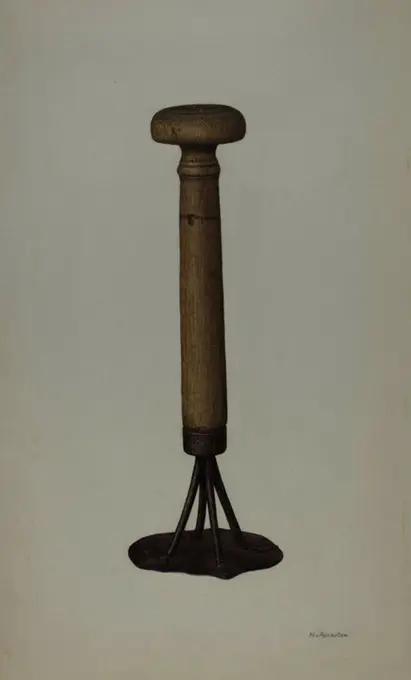
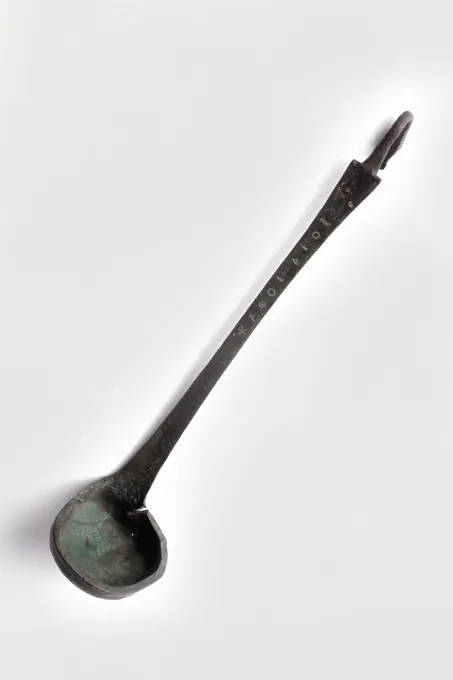
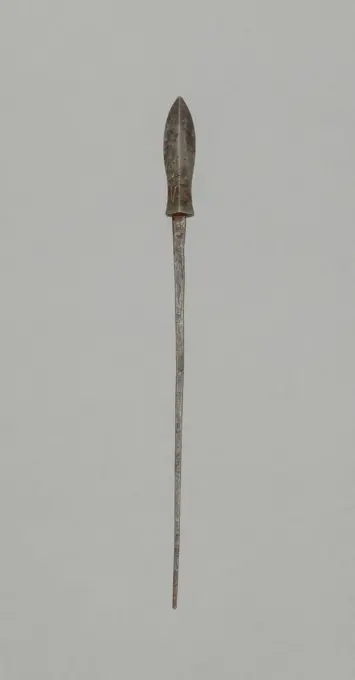
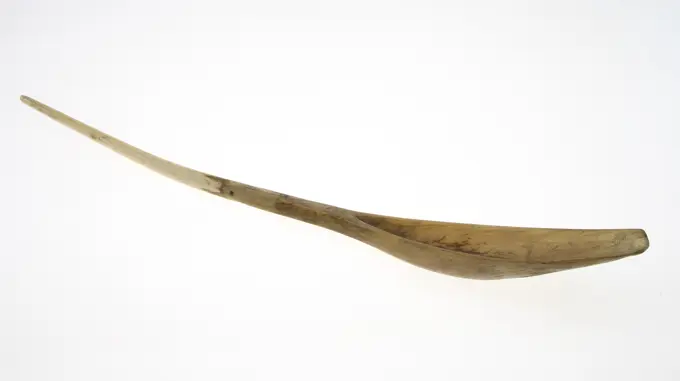
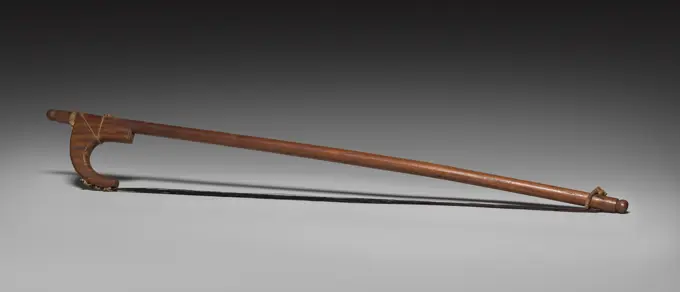
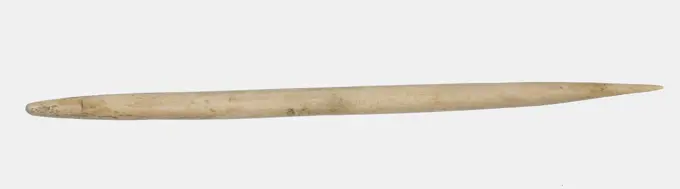
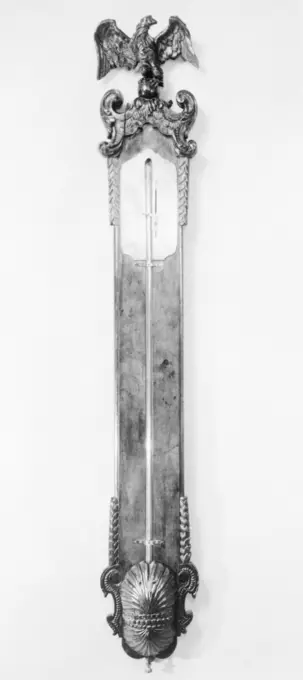
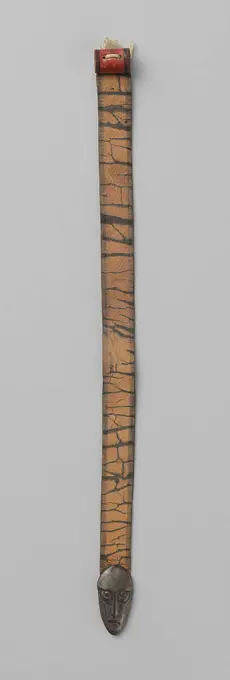
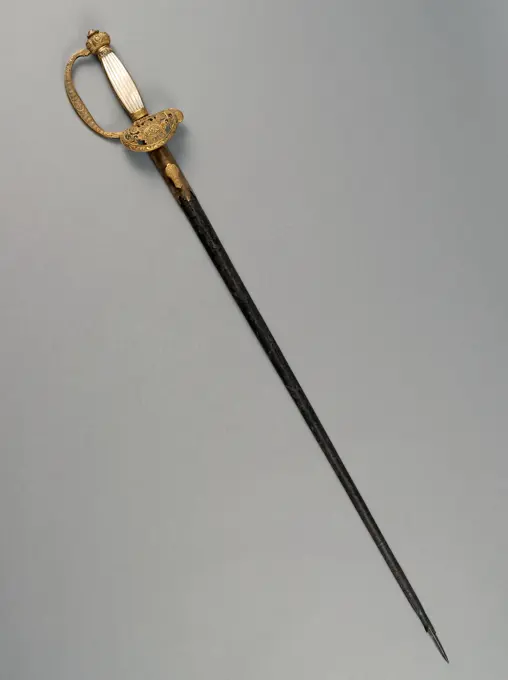
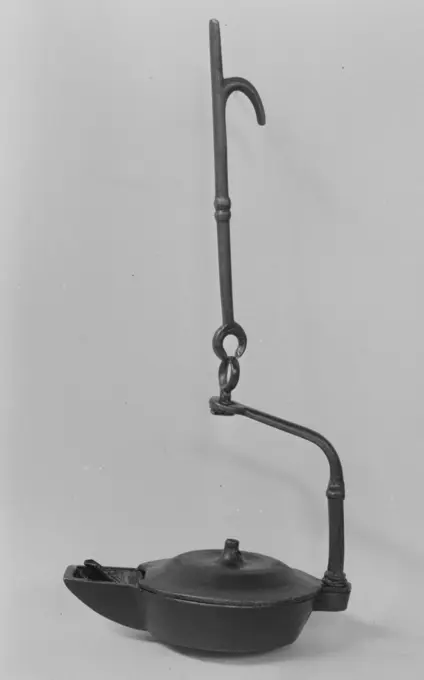
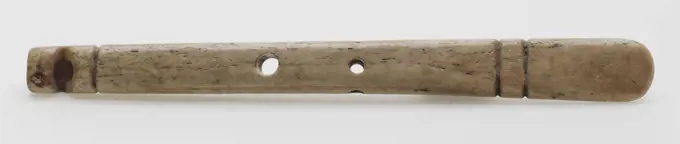
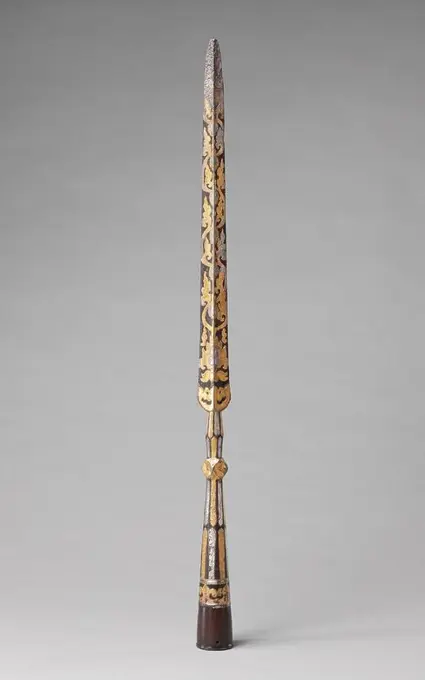
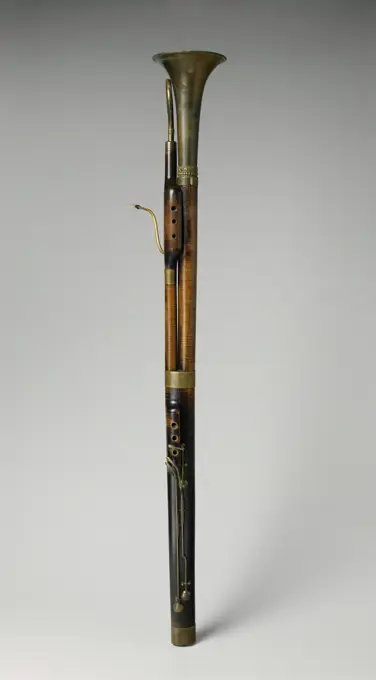
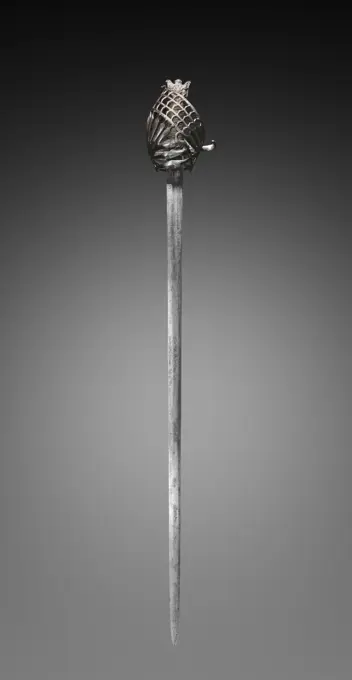
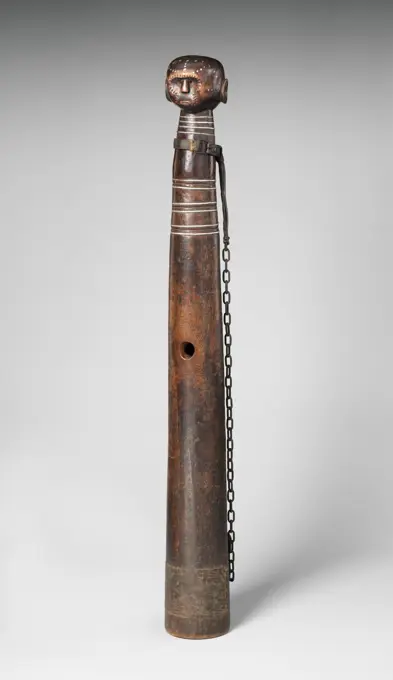
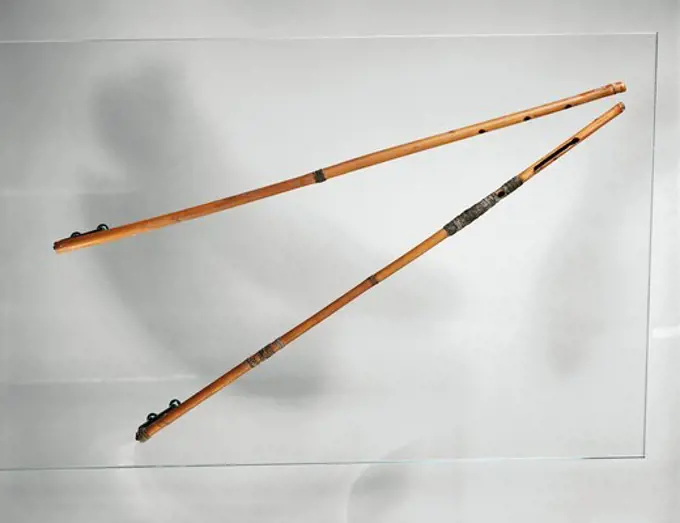
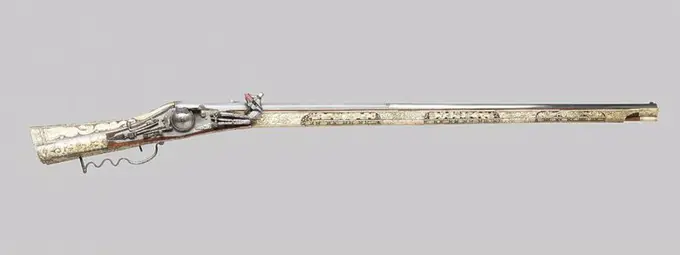
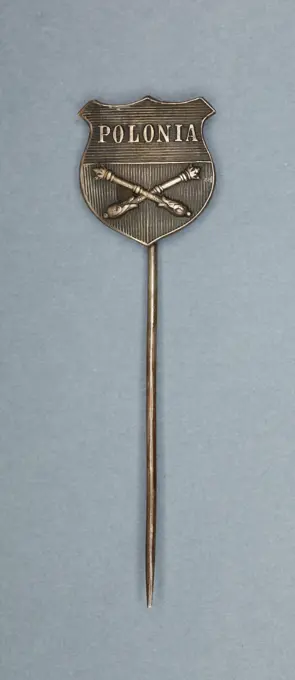
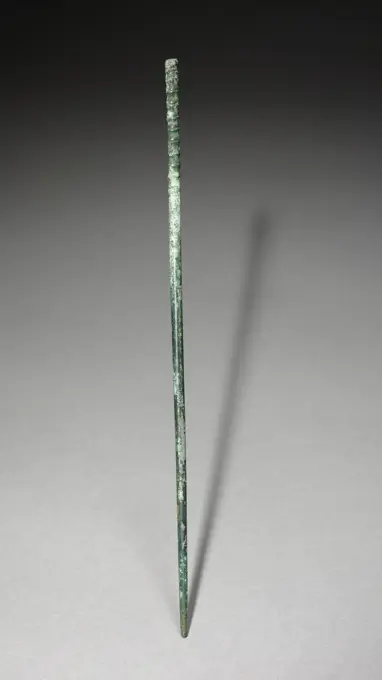
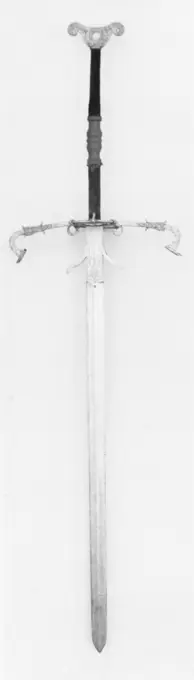
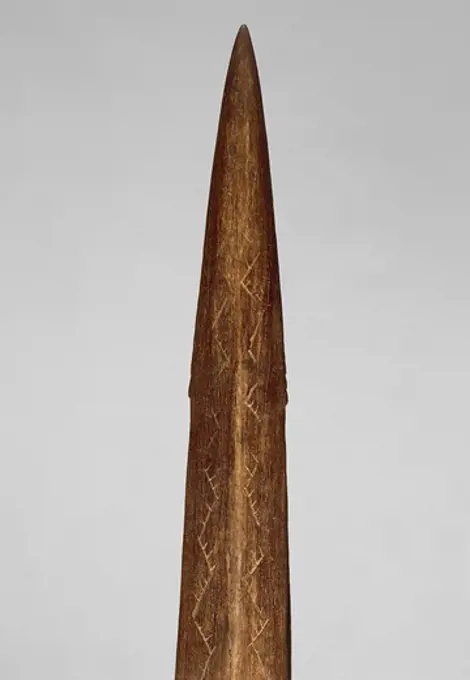
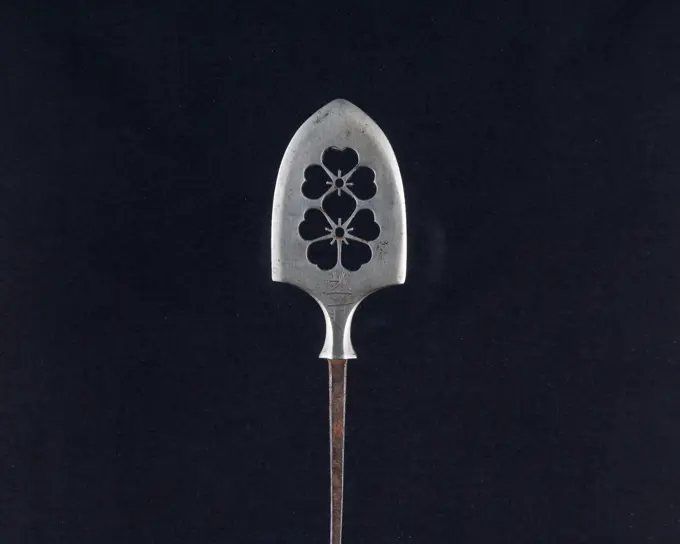
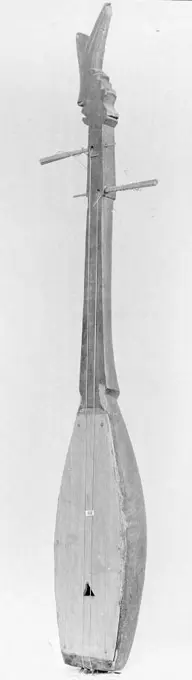
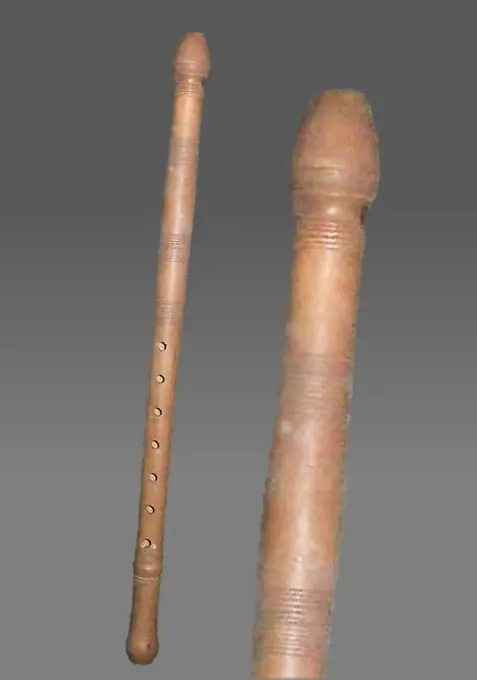
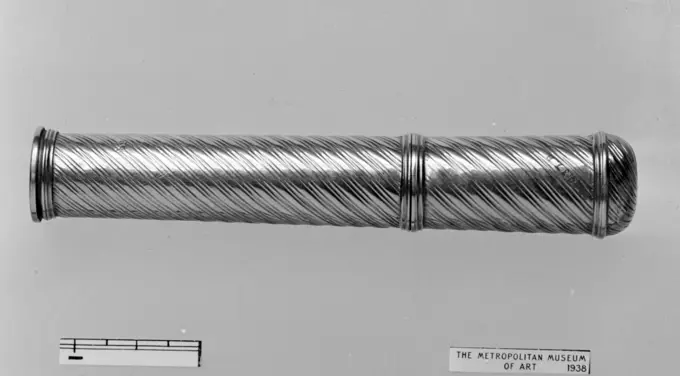
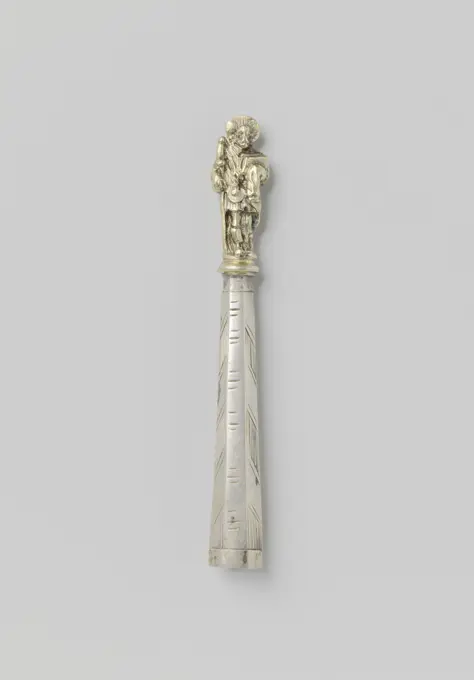
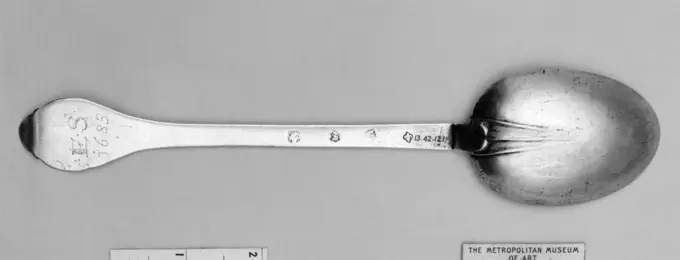
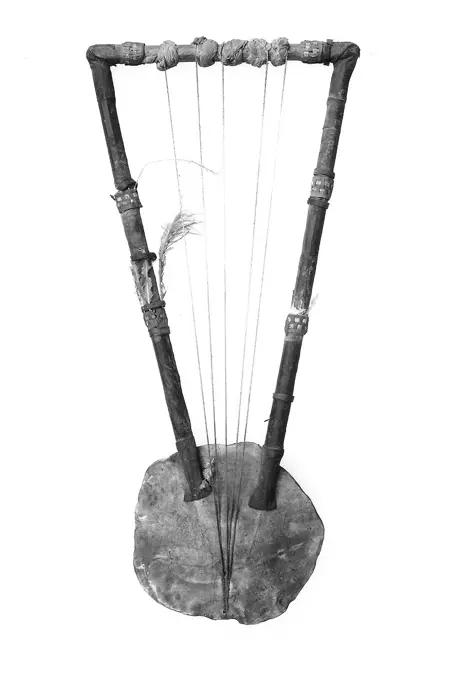
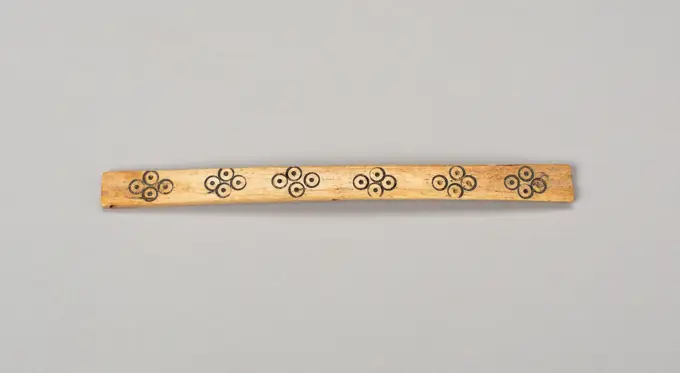
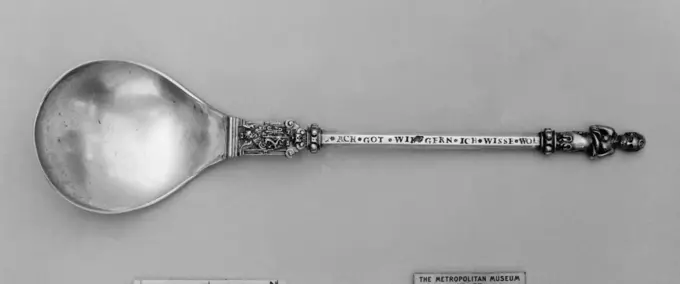
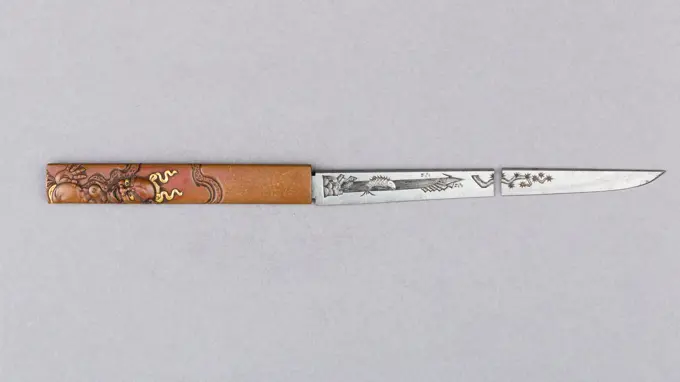
Knife Handle (Kozuka) with Blade 18th century Japanese A kozuka is a handle of a by-knife that is part of a sword mounting. It is kept in a slot on the reverse of a katana scabbard, often with a matching kōgai (hairdressing tool).. Knife Handle (Kozuka) with Blade 35070Oboe, D. Lott, c. 1750 Hobo of Blank Buxushout with three brass valves and eight holes, the third and fourth of which are double. The instrument consists of three separate pieces. Germany boxwood (hardwood). brass (alloy) Hobo of Blank Buxushout with three brass valves and eight holes, the third and fourth of which are double. The instrument consists of three separate pieces. Germany boxwood (hardwood). brass (alloy)Masher. Dated: c. 1940. Dimensions: overall: 45.8 x 28.1 cm (18 1/16 x 11 1/16 in.) Original IAD Object: 4 7/16" in diameter. Medium: watercolor, graphite, and colored pencil on paperboard. Museum: National Gallery of Art, Washington DC. Author: Nicholas Amantea.KnifeBassoonLadle with a handle in the form of a main one;  5th century BC (-500-00-00--401-00-00);Falkenhausen, Ernst von (1925) - collection, KingdomCampania Caserta Capua Museo Campano96. Hutzel, Max 1960-1990 Medieval: Byzantine architectural fragments; parchment fragments with miniatures (12th century) from Montecassino; painted wooden crucifix (13th century); Carolingian crucifixes; Bishop's miter (11th century) of gold and silver damask; fresco (13th century). Post-medieval: Architecture (15th century). Formerly the Palazzo Antignano. Unusual Catalan/Moorish-style portal; Paintings on panel and canvas (15th-18th centuries); marble intarsia (16th century); marble sculpture: busts of Christ and Mary (17th century); sculpture of saints in marble and in wood (15th century); painted and gilded sculpture in wood; marble grave sculpture (16th century); sarcophagus with allegorical carvings; gold reliquary "Rosa d'Oro"; crucifix made of elephant tusk Specific Location: Pianterreno Antiquities: Italic sculpture (seated women holding babies); inscription. Photo campaign #1: 533 photos. Roman relief and sculpture; cinerary urns; Greek anCERBATANA DE FELIPE II-ESPAÑA-H.1545/65-MADERA,CUERO,TEJIDO Y ORO. Location: PALACIO REAL-REAL ARMERIA DE MADRID. MADRID. SPAIN.Lion head ca. 6th-4th century B.C. Achaemenid. Lion head 324109Axe, 1900s. Southern Africa, Zimbabwe, 20th century. Iron, wood, and metal; overall: 15.8 cm (6 1/4 in.).Arrow Point, 1700s. Japan, Edo period (1615-1868). Steel; overall: 15.3 cm (6 in.); head: 3.8 cm (1 1/2 in.).Ice strainer -Ceremonial staff, anonymous, 1604  The staff of rosewood is decorated with images of European princes, biblical representations, the titles of Prince Maurits and the weapon of the city of Enkhuizen. Perhaps the staff was made in Calicut on the west coast of India on the occasion of the Friendship Treaty that VOC Admiral Steven van der Haghen closed in 1604 with the prince there. Ceremoniesaf, crowned by a large, hollow, silver -plated copper button in the form of a stocky baluster, around which four lancet -shaped leaves and on which a four -leaf flower (one of the magazines slightly dented). The shape looks like a pomegranate. At the bottom of the staff a copper point that has been cut with a few lines. The staff is completely decorated with cutting work and divided into Zônes. In the upper Zône the weapon of Prince Maurits and the weapon of Enkhuizen, which was covered by a Fleuron crown, held by the virgin of that city. Below that a zône with tormented tires, in which alternating orWalking stick of wood around which turtle and on which a gilded button, decorated with mythological representations, anonymous, c. 1700 - c. 1800 Walking stick of wood around which turtle and on which a gilded button, decorated with mythological representations in relief. Metal point. Netherlands (possibly) stok: wood (plant material). stok:. knop: gilding (material) cutting / gilding Walking stick of wood around which turtle and on which a gilded button, decorated with mythological representations in relief. Metal point. Netherlands (possibly) stok: wood (plant material). stok:. knop: gilding (material) cutting / gildingBow, 1800s. India. overall: 62.2 x 8 x 1.4 cm (24 1/2 x 3 1/8 x 9/16 in.).Weaving tool ca. 1295-1070 B.C. New Kingdom, Ramesside. Weaving tool. ca. 1295-1070 B.C.. Bone. New Kingdom, Ramesside. From Egypt, Memphite Region, Lisht North, Late New Kingdom Settlement, MMA excavations, 1920-22. Dynasty 19-20Spoon 19th century, after 17th century original British, after German original This electrotype is after a seventeenth-century original, a treasure of the patriarch, Moscow, at the time of reproduction.. Spoon. British, after German original. 19th century, after 17th century original. Silver on base metal. Metalwork-ElectrotypeLans of the arms rack of governor-general J.C. Baron Baud, Anonymous, c. 1700 - c. 1800  Round wooden shaft painted in black, red, yellow and green with representations of boddhisattvas, human figures and geometric motifs. Bottom shaft and shell with horizontal notches granted in oval point. Shell has pointed upper edge. Narrow blade ending in sharp point. The four lips are without decoration and, alternately, different from length. The base of the blade is decorated with tenders, in relief, gilding and rubies. The blade is decorated with boddhisattva figure and geometric motifs, continuously in centrally simplified floral pattern. Bottom part of Kling is decorated with rubies on the ends. India wood (plant material). iron (metal). silver (metal). ruby (mineral) cutting / forging / casting / inlay (process)Meter met handvat.Meter with distribution and calculation in decimeters. First decimeter in centimeters. V.Z.V. label.Drumstick, late 19th-early 20th century, 11 5/8 x 3/8 in. (29.53 x 0.95 cm), Wood, United States, 19th-20th centuryTorricellian barometer ca. 1730 British. Torricellian barometer 203686Boekenlegger.Bookmark consisting of a leather strap, rolled up at one end and secured with a white cord, and at the other end is caught in a silver plate in the shape of a mask.Sharpening stones on whiteSpoon with silver handle, pear -shaped bowl of shell. Retailable stem is crowned by a pineal., Anonymous, 1550 - 1650 Spoon with a handle of silver and a pear -shaped bowl of shell. The stem is crowned by a pineal, and can be retracted. North Europe silver (metal). gilding (material). gilding Spoon with a handle of silver and a pear -shaped bowl of shell. The stem is crowned by a pineal, and can be retracted. North Europe silver (metal). gilding (material). gildingFrançois-Désirée Froment-Meurice (1801-1855). Sword of Academician by Victor Hugo. Clear handle and chopped bronze, plant leather scabbard with a black and copper finish. 1841. Paris, house of Victor Hugo. 51264-4 Apparat, bronze chisel, copper, French writer, Epee academicien, black finish, leather scabbard, man of letters, mother -of -pearl, handgage, uniform, uniform, 19th XIXth 19th 19th 19th 19Candelabrum ca. 500 B.C. Etruscan . Candelabrum. Etruscan . ca. 500 B.C.. Bronze. Archaic. BronzesTe Poel, Oak cutting plate, sharpening board shelf kitchen utensils miniature toy relaxant model oak wood, carpenter elongated narrow grinding surface rounded top with hanging hole underside casing for sharpening material with sloping lid 1868 Sibilla van Embden playing grinding metal processing kitchenBetty lamp 18th century possibly French. Betty lamp. possibly French. 18th century. Iron. Metalwork-IronMiniature tongs (part of a set). Artist: David Clayton (British, active 1689). Culture: British, London. Dimensions: Length: 4 1/4 in. (10.8 cm). Date: ca. 1720-30. Museum: Metropolitan Museum of Art, New York, USA.Sword knife hilt, anonymous, 1500 - 1900 Kozuka in the form of an arrow case; Decoration in gold and silver; signed. Japan iron (metal). gold (metal). silver (metal) Kozuka in the form of an arrow case; Decoration in gold and silver; signed. Japan iron (metal). gold (metal). silver (metal)Legs biting tip with whistle at the end, part of rattle, bite stick rattle toy relaxant soil find leg ivory, cut One end round and flattened other side narrow round and pierced archeology Rotterdam City Triangle Mariniersweg Kipstraat Hoogstraat play baby child Ground finding corner Mariniersweg Kipstraat Hoogstraat.Ancient tools from Koryo (Goreyo) (Goreyo) dynasty. Tweezers made of bronze. From Koryo (Goreyo) (Goreyo) dynasty (918-1392).Model of a Made Bowsprit. Round bowsprit with shield and violin pieces. The bowsprit has eight cheeks, clamped against the king with tub tires. Two cleats for the slices are applied to two-thirds of the length on either side. On both sides there is a violin piece with a disc below. The shield has brackets for the stamp stick and the GoUSSTW; Eyes for the running stages and other locations on the back.Spearhead and Ferrule. Culture: Tibetan. Dimensions: L. of spearhead 27 1/8 in. (68.9 cm); L. of ferrule 13 5/8 in. (34.6 cm). Date: 17th-18th century. Museum: Metropolitan Museum of Art, New York, USA.Contrabassoon in C 1825-33 Johann Tobias Uhlmann This standard Austrian model was widely used in music played outdoors. It descends to C and features a tuning slide in the wing joint.. Contrabassoon in C. Austrian. 1825-33. Maple, brass. Vienna, Austria. Aerophone-Reed Vibrated-double reedSchiavona Broadsword, early 1700s. Italy, Venice, early 18th Century. Steel and silver wire grip. silver pommel; overall: 107.3 cm (42 1/4 in.); blade: 92.7 cm (36 1/2 in.); grip: 9.8 cm (3 7/8 in.); guard: 12.7 cm (5 in.). The schiavona-type broadsword features a complex barred guard that slopes forward. Its name derives from the Italian word for "Slavonic" and refers to the Slavonian corps who served as bodyguards to the Doge of Venice until the end of the Venetian Republic in 1797. Such swords were popular mainly with the Venetians.Haidi (笛 ) 19th century Chinese This double reed instrument was introduced to China around the beginning of the 16th century and takes its name from the Middle Eastern zurna. Several varieties are found in China, including a smaller version called a haidi. The player, whose mouth completely covers the small reeds, uses circular breathing (through the nose) to maintain a constant tone. It was first used by the military, but today it is played in ensemble or as a solo instrument.. Haidi (笛 ) 500598Tomb column China. Tomb column. China. Sunbaked terracotta. Han dynasty (206 B.C.-A.D. 220). SculptureTrumpet Tanzanian ca. 1850-1900 View more. Trumpet. Tanzanian. ca. 1850-1900. Wood, metal, leather. Tanzania. Musical instrumentsRapier with Scabbard Spanish, Toledo 18th century The rapier was the principal civilian sidearm throughout the sixteenth and seventeenth centuries. Designed for cut-and-thrust fencing of progressively complex techniques, the rapier is characterized by a double-edged blade with an acute point and an elaborate guard for the hand. The guards, usually of iron or steel, were subject to a variety of embellishment. They were engraved, chiseled, gilded, damascened, and encrusted in gold and silver in keeping with fashionable styles. Unless otherwise noted, the materials, attributions, and dating given here refer to the hilts. Rapier blades, invariably of steel, bear a variety of makers marks denoting their origin in the two principal centers of blademaking, Toledo in Spain and Solingen in Germany. View more. Rapier with Scabbard. Spanish, Toledo. 18th century. Steel, leather, copper wire. Toledo. SwordsHairpin Part 1st-4th century Roman. Hairpin Part 465101 Roman, Hairpin Part, 1st4th century, Copper alloy, Overall: 2 1/16 x 1/8 in. (5.3 x 0.3 cm). The Metropolitan Museum of Art, New York. Gift of J. Pierpont Morgan, 1917 (17.191.53)Broda z maski sarkofagowej. unknown, authorMarrow spoon ca. 1743-45 Johann Beckert V German. Marrow spoon 231606Wood double oboeWheellock-Matchlock Gun. German; Thuringia (Possibly Suhl). Date: 1580-1600. Dimensions: . Steel, walnut, and horn. Origin: Suhl. Museum: The Chicago Art Institute, Chicago, USA.Spoon (France); Made by Lambert & Jozan, Veuve; silver; L x W x D: 17 x 3.2 x 1.8 cm (6 11/16 x 1 1/4 x 11/16 in.)Finial 10th century Punuk. Finial. Punuk. 10th century. Ivory (walrus). United States, Alaska. Bone/Ivory-OrnamentsShapes for skewers; Groszkowski, Teodor (1863-1930), Factory of Plated Products T. Groszkowski (Warsaw; Factory; 1892-1930); 1892-1930 (1892-00-00-1930-00-00);Przeszo Przyszoci unknownFork 17th century Italian, Venice. Fork 192229Flageolet in A mid-19th century French. Flageolet in A. French. mid-19th century. Wood, horn. France. Aerophone-Whistle Flute-flageoletStudy for the tie of the Polish Student Corporation Polonia at the University of DorpadChopstick, 918-1392. Korea, Goryeo period (918-1392). Bronze; overall: 23.3 cm (9 3/16 in.).Blood bag pin -Halberd. German. Date: 1575. Dimensions: L. 213.4 cm (84 in.)Blade L. 80.6 cm (31 3/4 in.)Wt. 4 lb. 10 oz. Steel, iron, and wood (oak). Origin: Germany. Museum: The Chicago Art Institute, Chicago, USA.Knife with an iron openwork hiltStick of a banner of the armed civilian power, anonymous, 1800 - c. 1806  Banner of the model of 13.2.1800. Ecru, an oval of two bent laurel branches in the middle, which are held together at the top by a large bow of red-white-blue ribbon. The white course is wider than the other two. This says in golden classic capital: 3rd bataillon, and: 3rd half brigade. In the oval a ranging lion in natural color with three -quarters of the head surrounded; In the lifted right leg a crooked sword with yellow hilt. He walks in a landscape under a slightly cloudy blue sky. Parade side: ditto oval with laurel branches, bow and inscription. On the red oval in golden classic capital: for the homeland and the law. Netherlands wood (plant material). linen (material)   NetherlandsTwo-Handed Processional Sword carried by Guard of Duke Julius of Brunswick dated 1573 German, Brunswick. Two-Handed Processional Sword carried by Guard of Duke Julius of Brunswick 25077Prehistory, Sweden, Neolithic. Engraved wooden point. From Offerdal.Tweezer and Ear-Spoon Korea. Tweezer and Ear-Spoon. Korea. Bronze. Goryeo dynasty (918-1392). MetalworkArrowhead (Yanone) 18th century Japanese Although today Japanese warriors are renowned most for their swordsmanship, archery, especially from horseback, has been an essential part of samurai warfare and culture for centuries. Arrows were fitted with heads of varying shape according to their intended use in war, the hunt, or target practice. Arrowheads made for use on the battlefield incorporated different designs intended for specialized purposes such as the piercing of armor or to cause maximum damage to horses and unarmored personnel.Large arrowheads, pierced and elaborately chiseled with landscapes, birds, flowers, dragons, and Buddhist divinities, were created to be admired for the beauty of their metalwork and design rather than for use in archery. Such highly elaborate examples may have been made for presentation or as a votive offerings to a shrine.. Arrowhead (Yanone). Japanese. 18th century. Steel. Archery Equipment-ArrowheadsEmbroidery punch with sheath 18th century Dutch. Embroidery punch with sheath. Dutch. 18th century. Wood. Textiles-Methods and MaterialsPleated fan and case, Painted and gilded paper leaf, gilt bronze guards and sticks with enamel plaques and cut steel, paste gem at rivet head, Pleated fan. Painted and gilded paper leaf. Obverse: garden scene of a woman and young girl painting. Ends decorated with designs in gold and colors on green ground. Reverse: scene of three women fishing by a stream. Gilt bronze guards and sticks, guards with oval enamel plaques and cut steel. Amethyst paste rivet head. In plain white satin covered box., USA, early 20th century, costume & accessories, Pleated fan and caseBlikan late 19th century Bornean. Blikan 501431Arrowhead ca. late 1st millennium B.C. (). Arrowhead. ca. late 1st millennium B.C. (). Bronze. Anatolia ()Arrow with composite stone tip ca. 1479-1458 B.C. New Kingdom. Arrow with composite stone tip. ca. 1479-1458 B.C.. Reed, wood, quartz, adhesive. New Kingdom. From Egypt, Upper Egypt, Thebes, Sheikh Abd el-Qurna, Tomb of Senenmut (TT 71), below, deposit of bows and arrows, MMA excavations, 1935-36. Dynasty 18Cylindrical harpoon with a row of teeth, Santimamiñe cave, Kortezubi, Arkeologi Museoa, Museo Aqueologico, Bilbao, Bizkaia, Pais Vasco, Spain.Candlestick 1895-1905 Germany. Patinated bronze .Piccolo in D-flat early 19th century French. Piccolo in D-flat. French. early 19th century. Wood, silver. France. Aerophone-Blow Hole-side-blown flute (transverse)Bagpipe chanter, anonymous, c. 1850 - c. 1896 Pip of a bagpipe England wood (plant material) Pip of a bagpipe England wood (plant material)Fork (The Netherlands or Flanders); silver, steel; L x W: 17.5 x 1.4 cm (6 7/8 x 9/16 in.); The Robert L. Metzenberg Collection, gift of Eleanor L. Metzenberg; 1985-103-73Saber with sheath, anonymous sabre Turkish model saber with iron stump and ivory grabbed with chain. Marked P.H. van Mansveld. With iron sheath, iron rings and leather couple. Coming from Lieutenant Tobias of the 6th Regiment Hussars.  iron (metal). ivory. koppel: leatherPike. Culture: Spanish. Dimensions: L. 82 in. (208.4 cm); L. of head 4 3/4 in. (12.2 cm); W. 1 in. (2.5 cm); Wt. 1 lb. 14 oz. (850.5 g). Date: 17th century. Museum: Metropolitan Museum of Art, New York, USA.Slinger from a pump, c. 1400 - c. 1950 An iron pump garland, with the two associated consoles.  iron (metal) An iron pump garland, with the two associated consoles.  iron (metal)Surgical instruments, by Unknown artist, 1st Century, bronze and copper alloy. Italy: Campania: Naples: National Archaeological Museum: 116444. Surgical instruments case probe spatula probesPen handle (part of a set) 1848-49 S. Mordan & Co., England The firm of Nicholls & Plincke was founded by members of the relatively large community of English silversmiths and craftsmen working in Saint Petersburg. After 1840 it was one of the most important retailers of luxury items before Carl Fabergé overshadowed all competitors. Several contemporary Saint Petersburg newspapers praised the high-quality products of the magasin anglais Nicholls & Plincke.According to the donor's family tradition, this rare set with more than fifty items bearing the monogram CMI was "originally made for and used by Colin Macrae Ingersoll 1819-1903, when he accompanied his father, Ralph Isaacs Ingersoll 1788-1872, to the Court of Czar Alexander II of Russia, where the latter served President James Knox Polk 1795-1849 as Minister Plenipotentiary from 1846 to 1848.. The family story has always been that the set and case were made for stagecoach travel in Russia."Plain silver objects—like the eweKohl Stick ca. 1635-1458 B.C. Second Intermediate Period-Early New Kingdom. Kohl Stick 546938Shield-top spoon 19th century probably German. Shield-top spoon 188111Kaval late 19th century Turkish The kaval while similar to the Syrian nāy is found in southeastern Europe and Turkey. Obvious differences between the two endblown flutes are the material used and the arrangement and number of fingerholes. This boxwood flute, used as a pastoral instrument, has been turned on a lathe. The term kaval is also used for duct flutes. The names of musical instruments often reveal origin, context, or musical function. In Europe, North Africa, and Asia where contact with Middle Eastern culture occurred, variations of Arabic and Persian terms for instruments are widespread. Usually, related names refer to similar instruments; however, this is not always true. Among these "floating terms" are the names zūrna, rabāb, kāmanja, nāy, and dombak.. Kaval 501054object on white - tool hammer close upSword (Kris), Before 1916. Philippines. overall: 71.9 cm (28 5/16 in.); blade: 57.2 cm (22 1/2 in.).Noord Afrikaans geweer met Amsterdamse loop.The Mediterranean lock is manufactured in Algiers or Tunis; The lock plate is narrow and runs into a curve; The rooster is equipped with two fingers in the form of corners with coral at the ends; Embossed praise; The tractor has the shape of a coral button; Arab Inscriptions are located on the lock plate and rooster. The loop is labeled with the coat of arms of Amsterdam and at the bottom with the letters IC and a unclear brand; The visor grain is from Geelkoper. The flask is inlaid with silver leaf drinks and arabesque, and with coral; The preloading is shortened and closed with white cow horn; The screw plates for the three lock bolts are also made of white cow horn and have the shape of floral skirts; Show remnants of a protective boister pad. The batter consists of a gold-plated glass flask inlaid with coral rounds and engraved with prainmesh, and a sliding tape from Zinger Can with flowers and prainmaking in relief; The loading stick hasÉtui 1764-65 Germain Chayé In eighteenth-century Europe, Paris led the production of high-quality luxury goods. Parisian goldsmiths made a wide range of small, personal articles such as snuffboxes; étuis to hold sealing wax, tweezers, or utensils for sewing; souvenirs, which contained thin ivory tablets for note taking; and shuttles for knotting lace. Gold snuffboxes and boxes decorated with portrait miniatures were prized and frequently given as royal gifts, often to ambassadors or members of the court in lieu of cash payments for their services. Coveted and admired, these boxes were produced from a variety of materials. The best were skillfully made of gold and embellished with diamonds, enameled decoration, lacquer, and other luxurious materials. By the middle of the century, the taking of snuff had become an entrenched social ritual, and the snuffbox, too, had become an important social prop. Snuffboxes were considered highly fashionable accessories, with some merchants advertisingCase for Chopstick and Knife Kit -Souvenir Trade, early 1900s. Japan, Meiji period (1868-1912) to Taishō period (1912-26). Enamel, wood, walrus ivory or bone, metal; overall: 1.7 cm (11/16 in.).Fan box, anonymous, c. 1890 Fan box for a folding range with batist leaf decorated with copper lovers and beets made of coarse tulle, painted in gouache. Netherlands (possibly) cardboard Fan box for a folding range with batist leaf decorated with copper lovers and beets made of coarse tulle, painted in gouache. Netherlands (possibly) cardboardNeck mushrang of iron, in the model of a scissors, for the folds in a neep hat. A nip mushrang of iron. In the model of a scissors with rectangular curved eyes and two thick roll round, stump terminating tongs.Silver spoon stalk ending in apostle figure, anonymous, c. 1600 - c. 1625 Spoon stalk of silver ending in a gilded apostle figure Germany silver (metal) gilding Spoon stalk of silver ending in a gilded apostle figure Germany silver (metal) gildingAttic Black-Figure Eye Cup Handle Fragment. UnknownMeubelbrandijzer.Furniture branding iron. The block-shaped upper end, which shows a (inhabed) Crowned ornamental capital letter W, goes on the back in a long pin of square cross-section. The focused end has reflected, with which the whole was originally present with a currently no longer present, probably wooden handle.Spoon ca. 1650 Possibly by Timothy Skottowe. Spoon 192262Kissar late 19th century East African. Kissar 501159Lime Spatula in the Shape of a Pipe 500 B.C.-A.D. 300 Indonesia (Java, Lumajang, Pasiran). Lime Spatula in the Shape of a Pipe. Indonesia (Java, Lumajang, Pasiran). 500 B.C.-A.D. 300. Bronze. Bronze and Iron Age period. MetalworkBalance-Beam Scale with Incised Circles in Diamond Pattern 500 CE-800 CE Peru. Bone with pigment . NazcaArrow made of bamboo pointing downwardsTwo-Handed Sword 15th-16th century Italian. Two-Handed Sword. Italian. 15th-16th century. Steel, gold. SwordsKey; 1904-21-2Figure-top spoon late 16th-early 17th century Augustus Heyne. Figure-top spoon 188305 Maker: Augustus Heyne, master 1571/72, died 1601, Maker: Possibly by Hans Waidely, died 1606, Figure-top spoon, late 16thearly 17th century, Silver, parcel-gilt, Length: 8 3/4 in. (22.2 cm). The Metropolitan Museum of Art, New York. Gift of Mrs. Samuel P. Avery, 1897 (97.2.282)Glaive-Halberd 1650 Germany. Steel, wood (oak), and iron .Medical Instrument with Paddle Finial. UnknownOnly no-fire candle in candlestick. Closeup. Isolated on white background. Studio photography.