Historic Trade Cards

Charming vintage trade cards featuring children and whimsical designs, promoting tobacco products from the late 19th century.
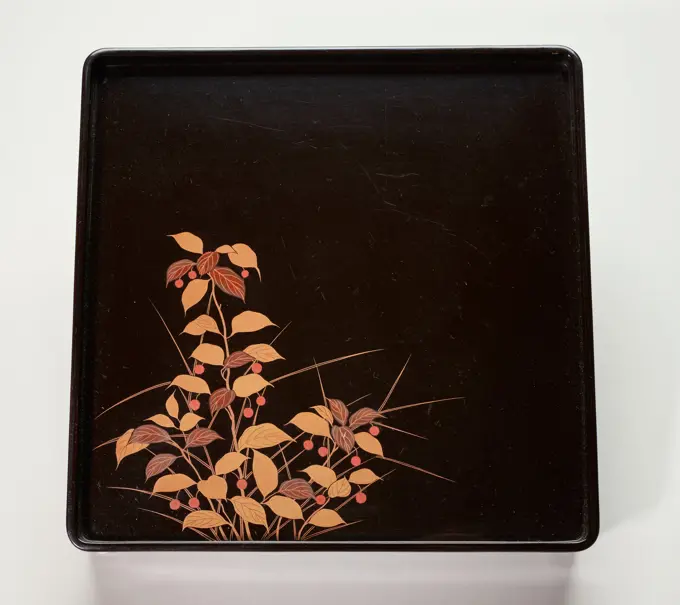
Small Serving Tray with Spearflower Design, late 18th century, Attributed to Yamamoto Shunshō VI, Japanese, died 1803, 2 1/2 × 10 3/4 × 10 3/4 in. (6.35 × 27.31 × 27.31 cm), Lacquer, Japan, 18th century, Originally from a set of ten, the five trays on display here show a variety of plant motifs associated with the seasons, and executed in hiramaki-e (low sprinkled picture) with gold and pigmented powders. The bottom of one of the trays bears the seal 'Shunshō,' for the family of lacquer artisans. The Shunshō school was established by Yamamoto Shunshō (1610-1682) and continued on until the end of the 19th century. Shunshō I was well known for his mastery of the togidashi-e (polished out picture) technique, which is used on these pieces. However, the naturalism of the plant designs indicates that this is a later piece by either Shunshō V (Jirobei, b. 1734) or VI (Masanori, d. 1803).
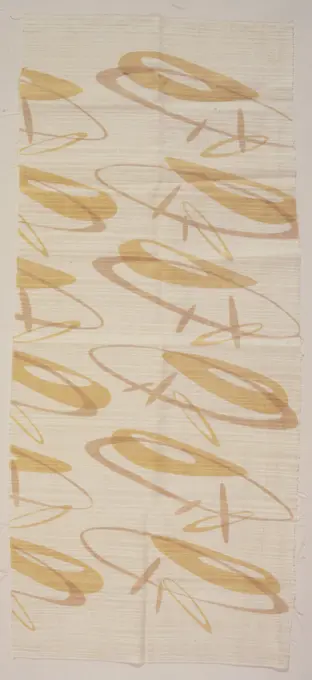
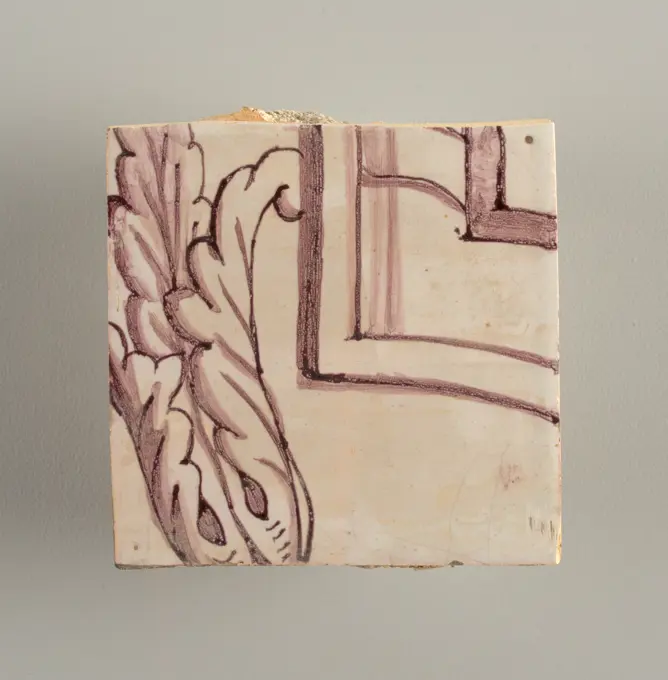
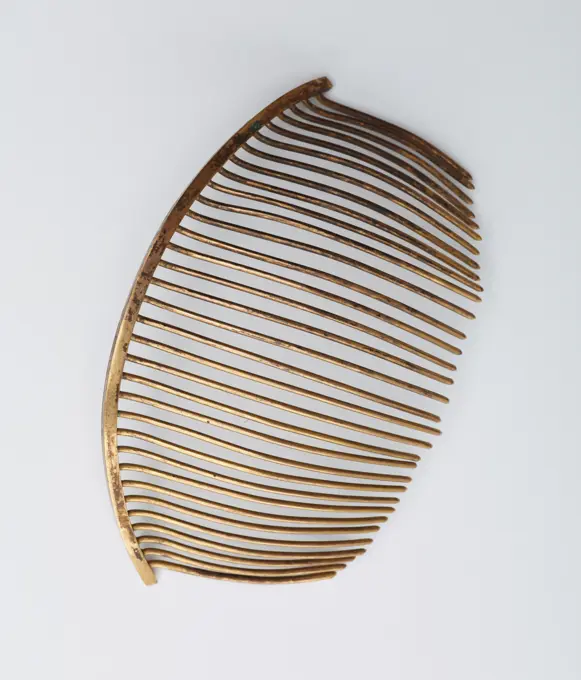
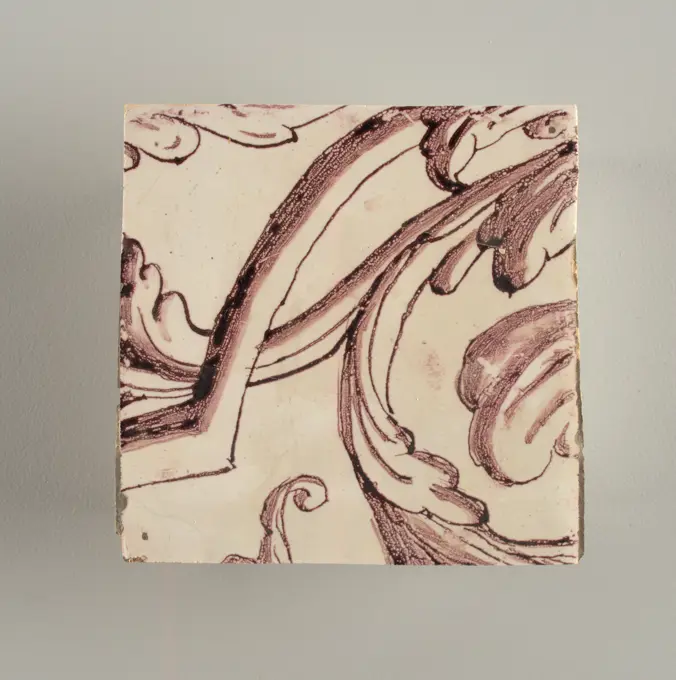
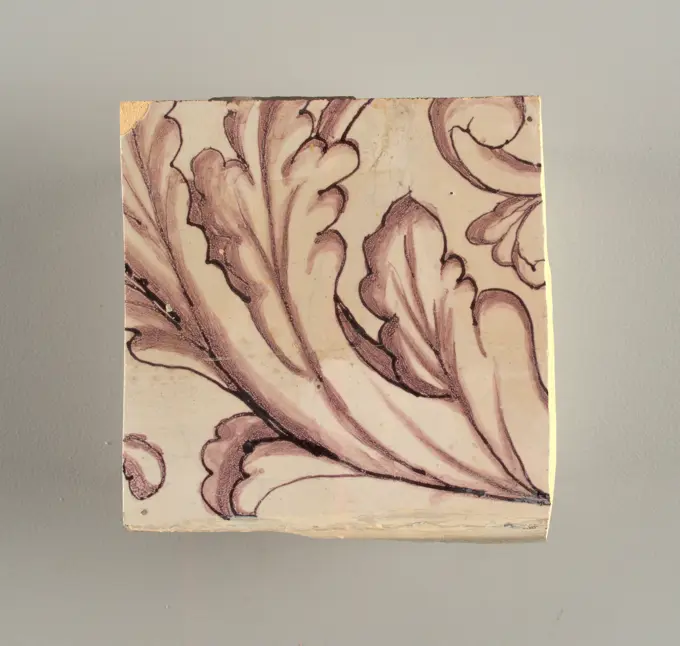
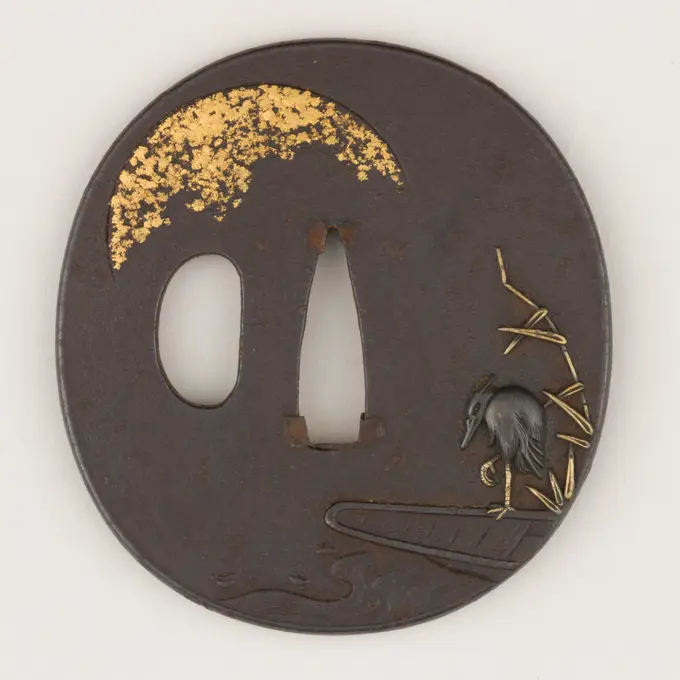
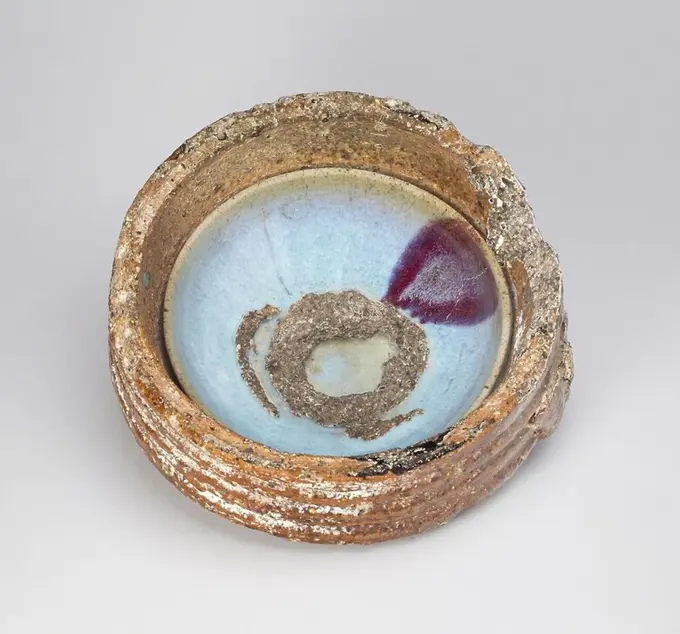
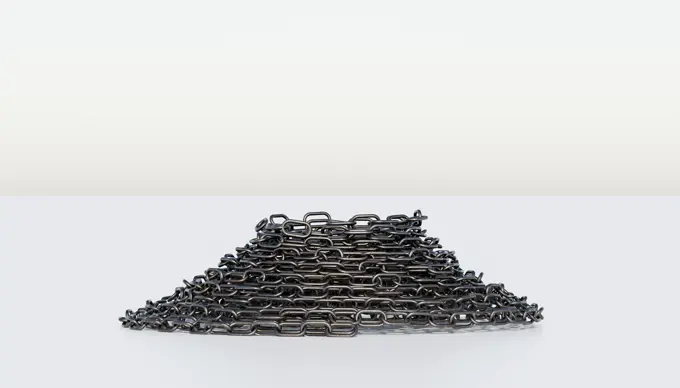
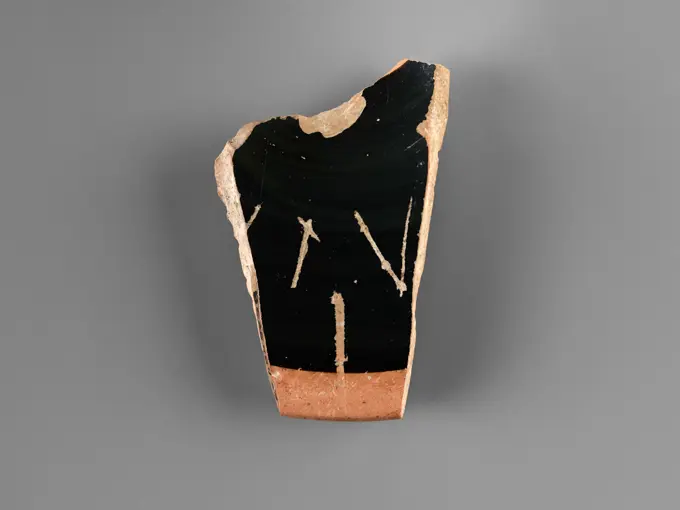
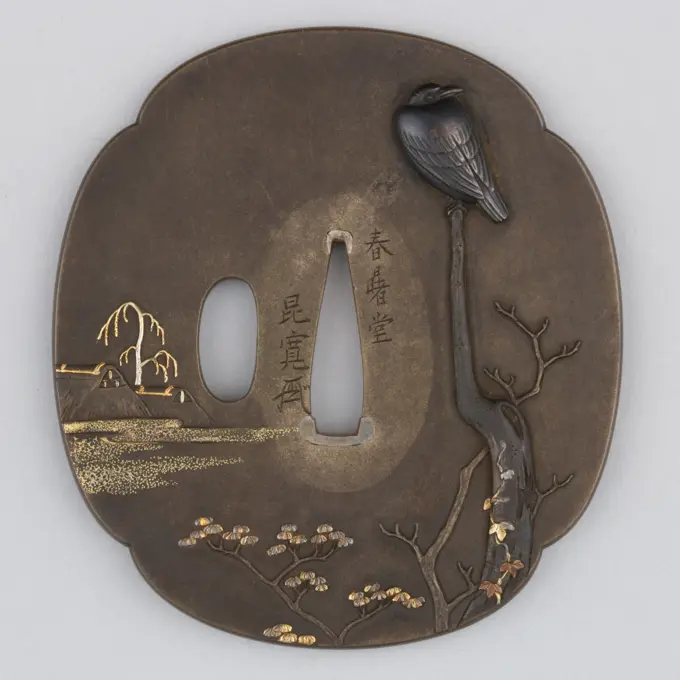
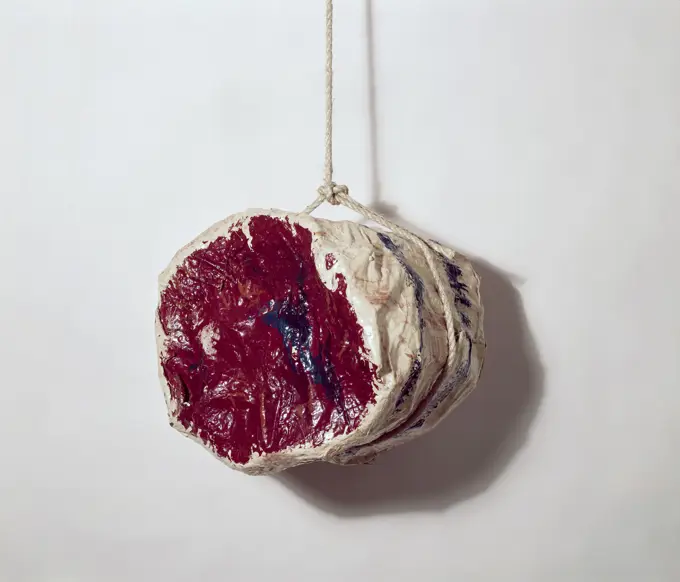
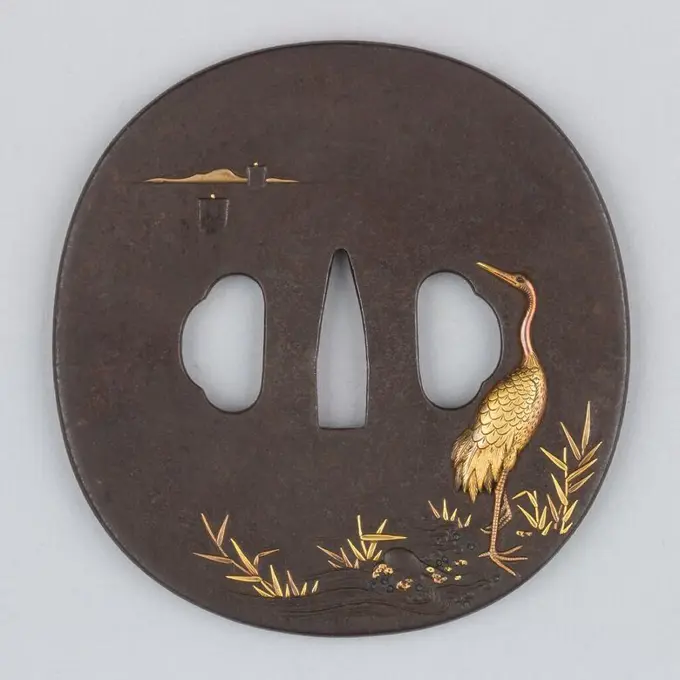
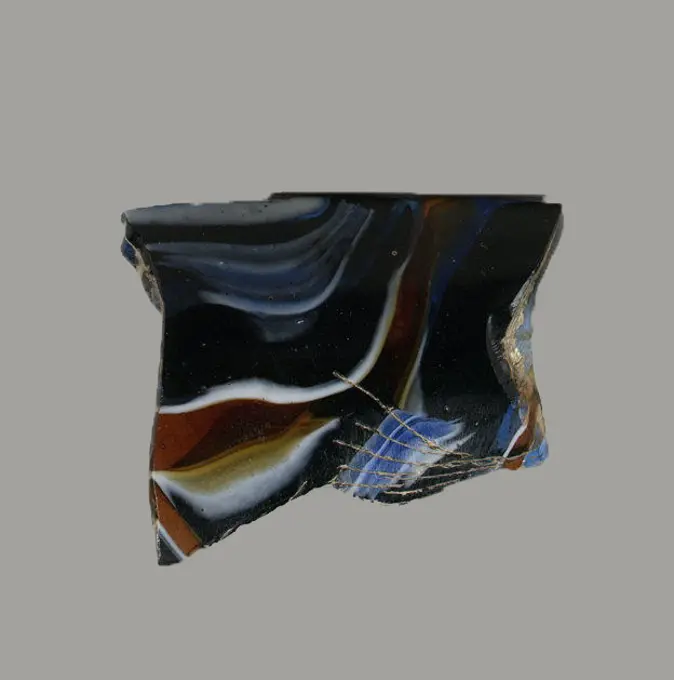
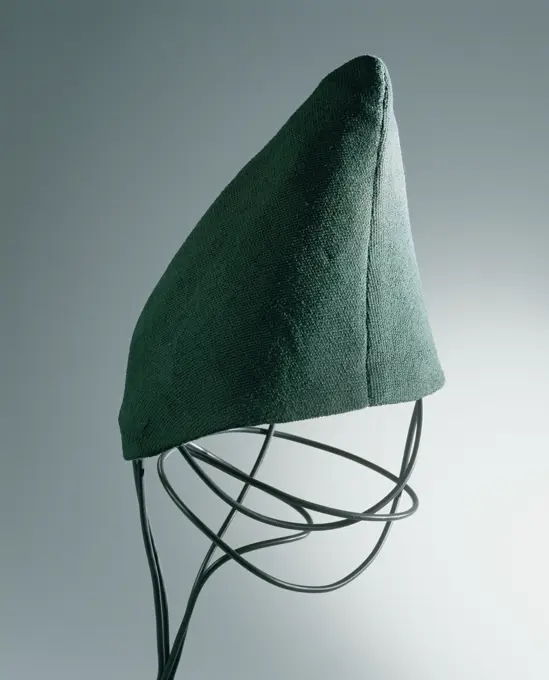
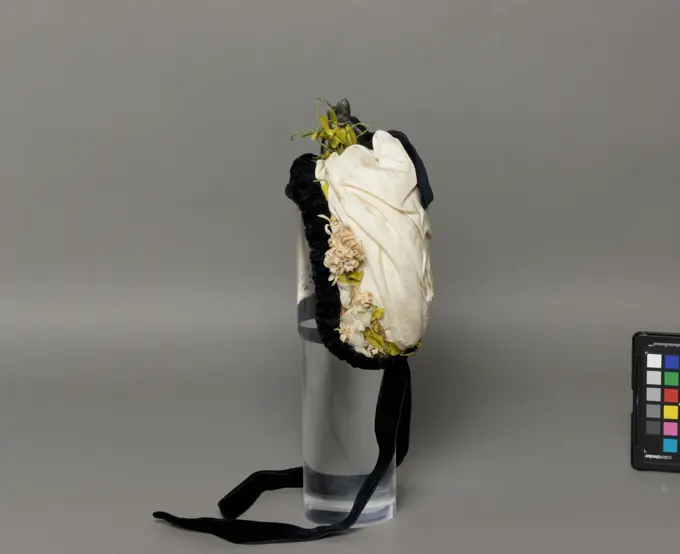
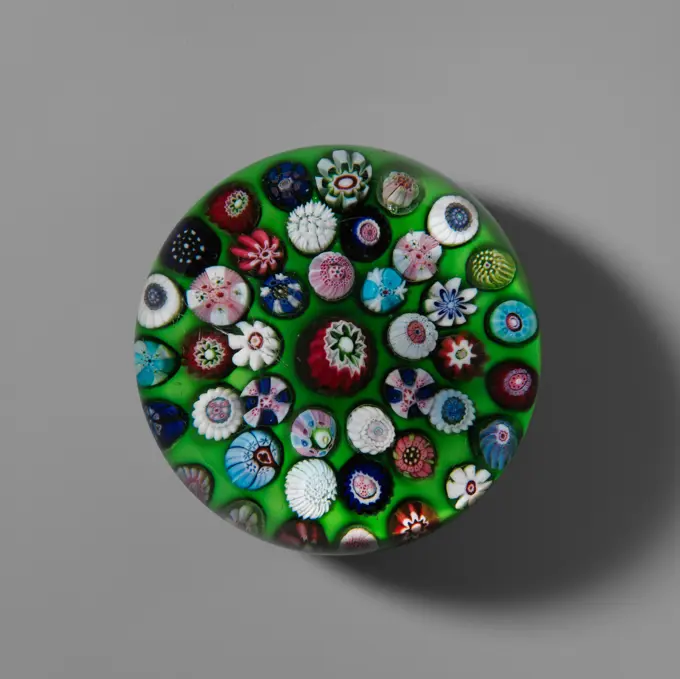
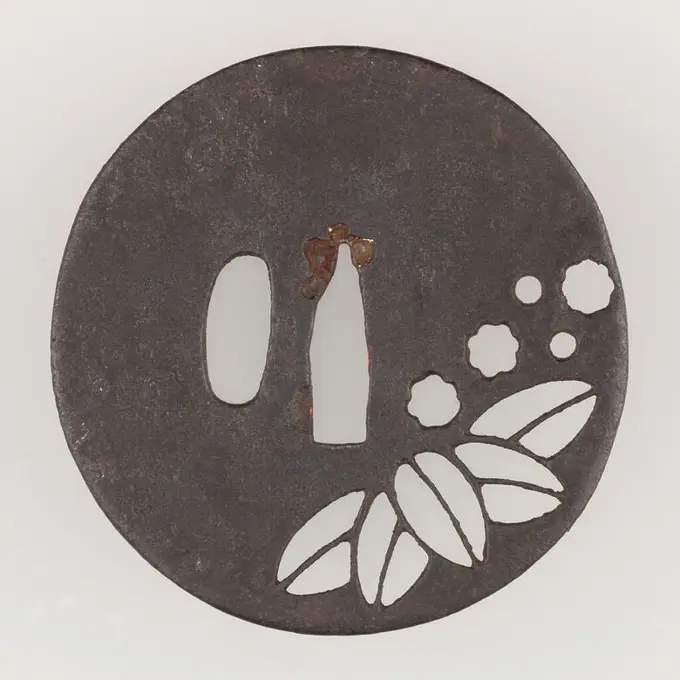
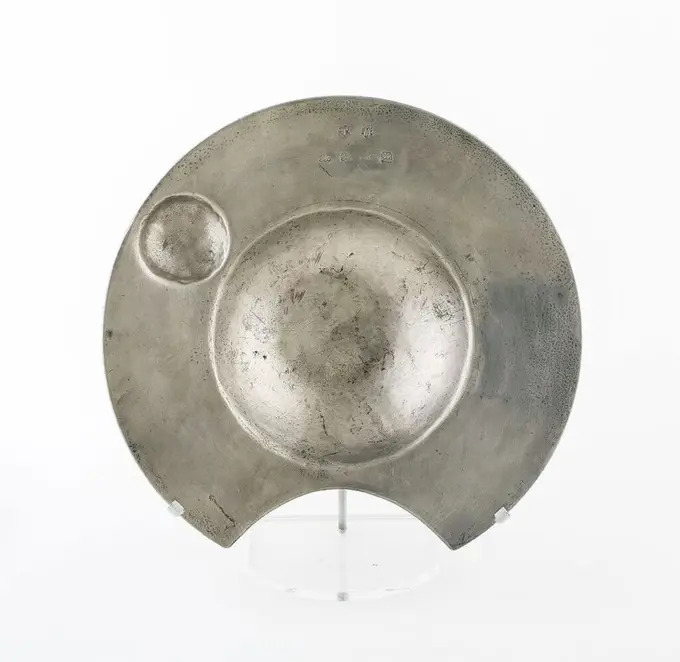
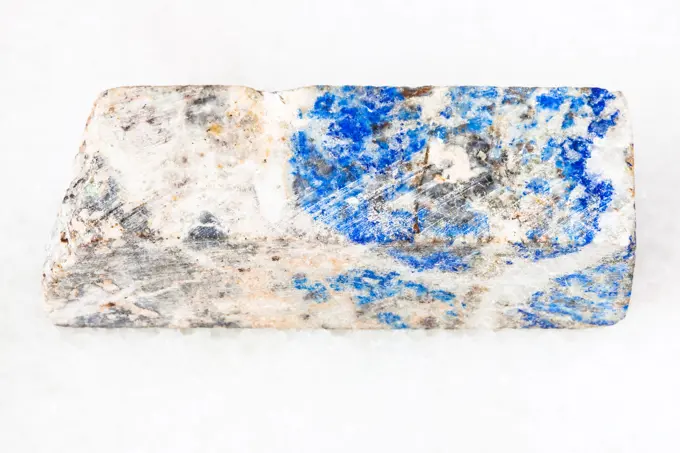
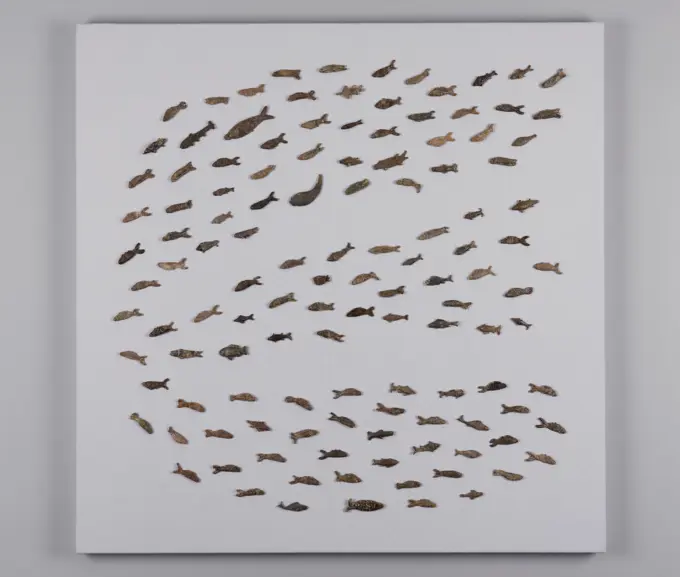
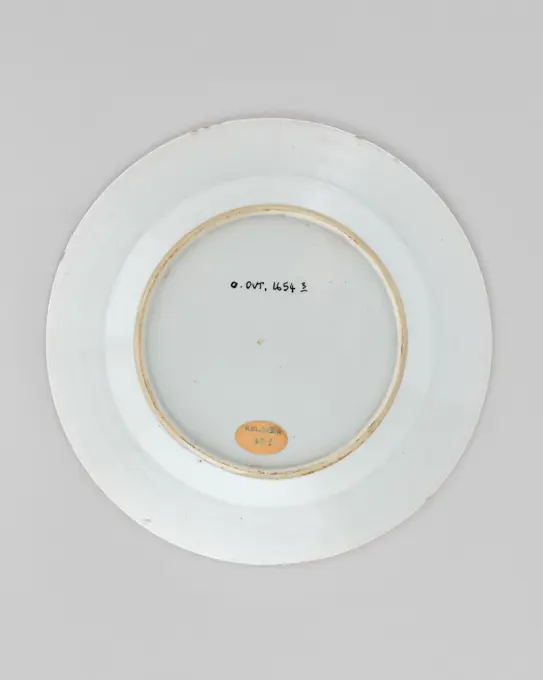
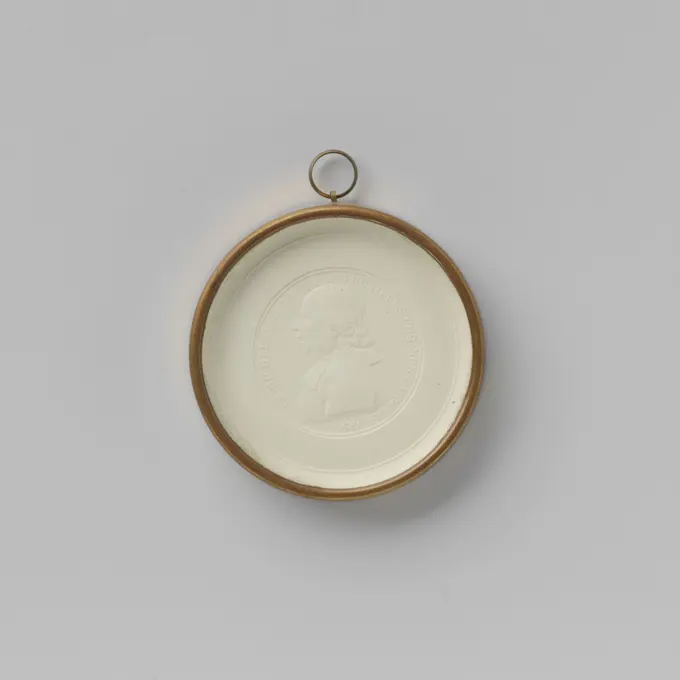
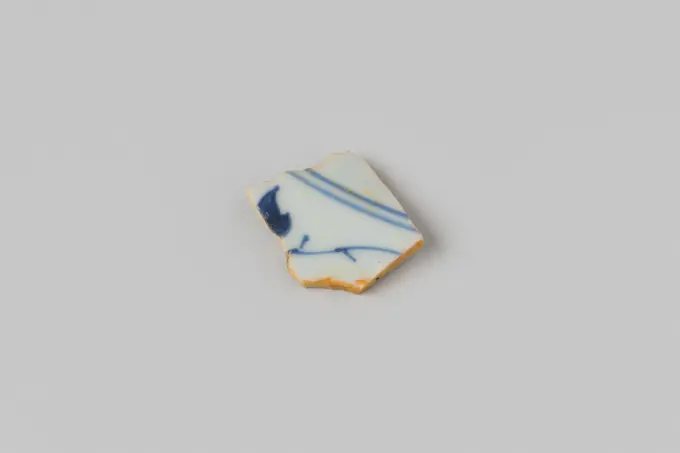
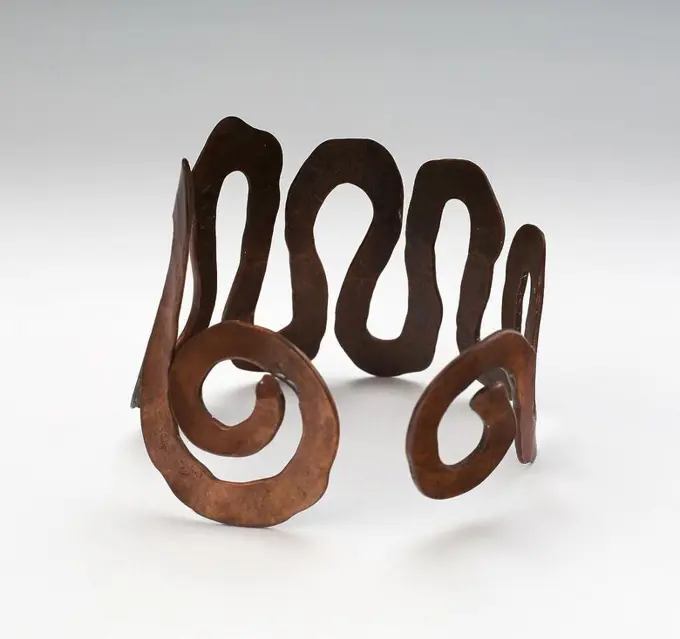
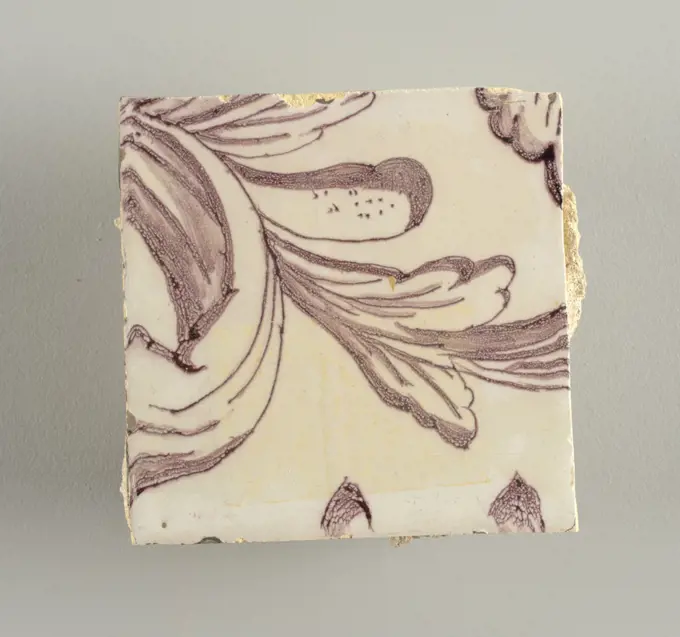
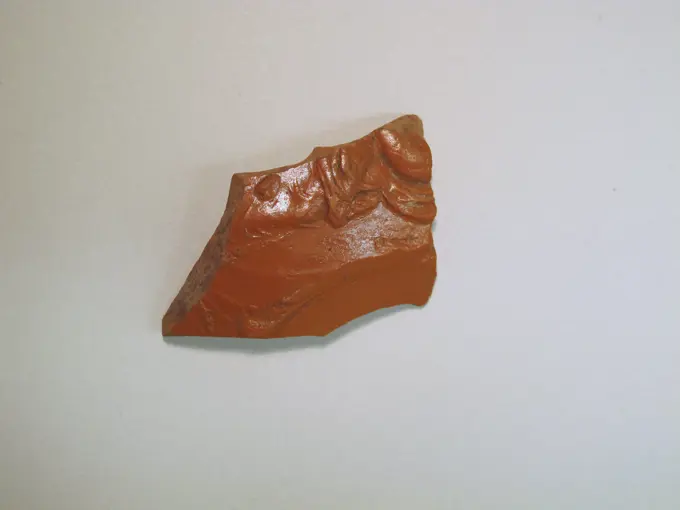
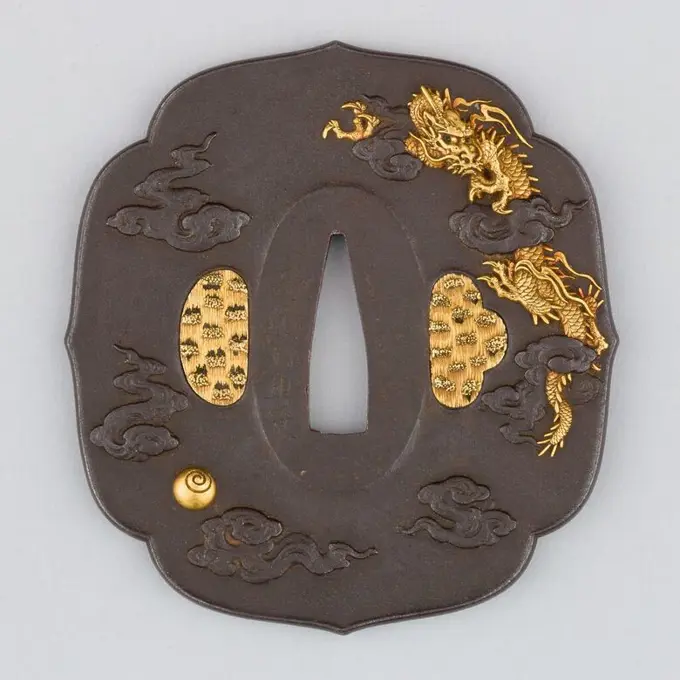
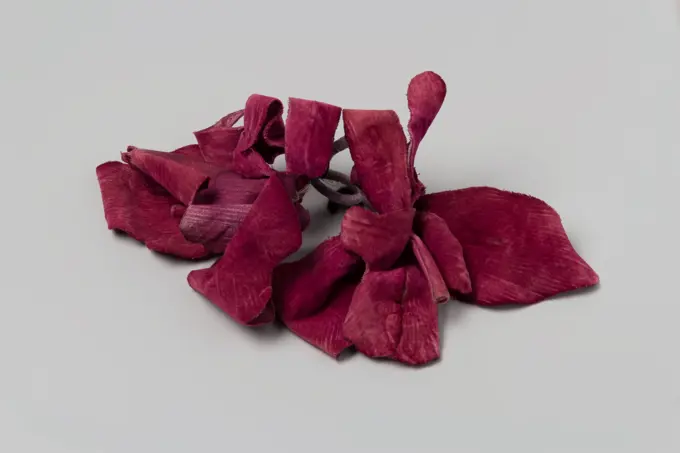
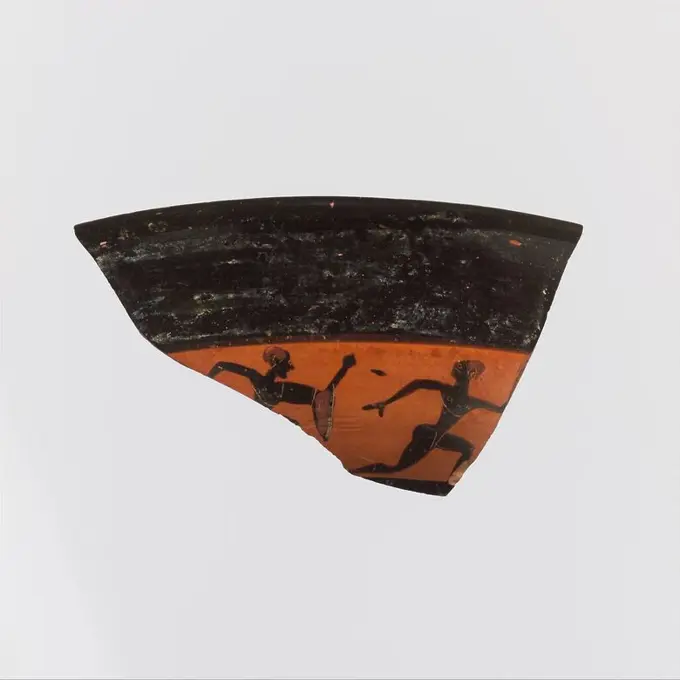
Fragment of a kylix: band-cup (drinking cup). Culture: Greek, Attic. Dimensions: Overall: 1 3/4 x 3 15/16in. (4.5 x 10cm). Date: ca. 540 B.C..Parts of two youths running full speed; one has chlamys draped over arm. Museum: Metropolitan Museum of Art, New York, USA.Tile wall facing, Tin-glazed earthenware, underglaze, Horizontal rectangle. Thirty tiles wide and twenty-three tiles high with opening for fireplace eleven tiles wide and ten high. Foliage arabesques disposed about three vertical axes from which are emphazised by urns at center and right, and at left by the figure of a standing woman carrying an infant on her arm and accompanied by two children., Possibly Rotterdam, Holland, Possibly Delft, Netherlands, ca. 1725, tiles, Decorative Arts, Tile wall facingTile Wall Facing (Netherlands); tin-glazed earthenware, underglazeSword Guard (Tsuba). Culture: Japanese. Dimensions: H. 2 3/4 in. (7 cm); W. 2 5/8 in. (6.7 cm); thickness 3/16 in. (0.5 cm); Wt. 5 oz. (141.7 g). Date: 19th century. Museum: Metropolitan Museum of Art, New York, USA.Tile Wall Facing (Netherlands); tin-glazed earthenware, underglazeComb unknownSmall Serving Tray with Spearflower Design, late 18th century, Attributed to Yamamoto Shunshō VI, Japanese, died 1803, 2 1/2 × 10 3/4 × 10 3/4 in. (6.35 × 27.31 × 27.31 cm), Lacquer, Japan, 18th century, Originally from a set of ten, the five trays on display here show a variety of plant motifs associated with the seasons, and executed in hiramaki-e (low sprinkled picture) with gold and pigmented powders. The bottom of one of the trays bears the seal 'Shunshō,' for the family of lacquer artisans. The Shunshō school was established by Yamamoto Shunshō (1610-1682) and continued on until the end of the 19th century. Shunshō I was well known for his mastery of the togidashi-e (polished out picture) technique, which is used on these pieces. However, the naturalism of the plant designs indicates that this is a later piece by either Shunshō V (Jirobei, b. 1734) or VI (Masanori, d. 1803).Wall Facing (Holland); tin-glazed earthenware, underglazeTile Wall Facing (Netherlands); tin-glazed earthenware, underglazeSword Guard (Tsuba) Depicting Heron on Boat (路平安図鐔) 18th century Shōzui This tsuba shows on the obverse a heron standing with one leg raised at the edge of a boat, a symbolism that represents such a peace and calmness that it was therefore traditionally associated with wishing someone a "safe journey" (ichiro-heian) in Japan. The upper left area shows a rising sun and on the reverse we see the moon and towards the bottom a small rock formation, small bamboo, and running water.The artist Shōzui (政隨, 1696-1769) was trained by master Nara Toshinaga (奈良利寿, 1667-1736). After finishing his apprenticeship, he parted with the Nara School and established his own school, the Hamano (浜野) School, which became one of the most thriving and influental currents of the art of sword fitting making throughout the Edo period. Apart from Shūhōsai (穐蜂斎), Shōzui also used the art names Otsuryūken (乙柳軒), Miboku (味墨), Yūkotei (遊壷亭), Keitō (圭竇), and Keitōrin (圭竇林).. Sword Guard (Tsuba) Depicting Heron on Boat Vase fragment 1st century B.C.-1st century A.D. Roman Satyr with cup.. Vase fragment 250322Paperweight 1801-1900 Clichy. Glass . Clichy GlasshousePaperweight 1840-1865 France. The colorful geometric clusters embedded in this paperweight reflect the nineteenth-century European fascination with optical effects. Sir David Brewster invented the kaleidoscope in 1815, and its colorful and changing patterns brought great visual entertainment. Paperweights such as this example reformed this childlike pastime for a sophisticated adult audience. Depicted in glass were tiny glittering flowers, small black and blue cameos of figures, and even miniature bottlecaps. These were delicately arranged within the orb for the observant eye to discover.From the late 1840s to early 1860s, French manufacturers of fine glass and crystalósuch as Baccarat (Alsace), Clichy (Paris), and Saint-Louis (Lorraine)ócatered to the vast public enthusiasm for beautiful yet functional desk accessories. Paperweights, which were designed to secure loose papers against drafts, were among their most popular products.. Glass . Baccarat GlassworksBowl in Saggar. China. Date: 1279-1368. Dimensions: H. 13.5 cm (5 5/16 in.); diam. 25.0 cm (9 13/16 in.). Bowl: Jun ware, glazed stonewareSaggar: earthenware. Origin: Hunan. Museum: The Chicago Art Institute, Chicago, USA.3D render of a pile of metal chain links on a white surface.Carnavalet museum, medal collection Henri V head right in the right in a medallion.Leg and part of an arm, Richard Nicolaüs Roland Holst, 1904 drawing   paper. pencil  legs. legsFruit bowl, the flat with fruits and nuts in relief, Nicolaas Antoine Bosch, c. 1853 - c. 1867 Fruit bowl on a round base of white glazed earthenware. On the flat fruits and nuts in releëf. The edge with vines and four birds in relief. Maastricht . vitrification Fruit bowl on a round base of white glazed earthenware. On the flat fruits and nuts in releëf. The edge with vines and four birds in relief. Maastricht . vitrificationColorful geometric website sale tag button. Colorful geometric website sale tag button. universal internet bannerAttic Red-Figure Cup Fragment (type B). UnknownTile, Anonymous, 1720 - 1760 Tile with a multicolored (blue, red and green) flower vase with a bird on either side surrounded by sprinkled green. In the corners, red -saving carnations. Netherlands earthenware. tin glaze majolica Tile with a multicolored (blue, red and green) flower vase with a bird on either side surrounded by sprinkled green. In the corners, red -saving carnations. Netherlands earthenware. tin glaze majolicaDrinking Mug. Dated: c. 1938. Dimensions: overall: 35.8 x 27.9 cm (14 1/8 x 11 in.) Original IAD Object: 3 7/8" high; 3" in diameter. Medium: watercolor and graphite on paper. Museum: National Gallery of Art, Washington DC. Author: Howell Rosenbaum.Linen mark ca. 1051 B.C. Third Intermediate Period. Linen mark 559950Sword Guard (Tsuba) ca. 1615-1868 Japanese A tsuba is a sword guard and part of a sword mounting. It is mounted between the swords blade and grip to protect the users hands.. Sword Guard (Tsuba) 25777Textile Sample, Swizzles Ruth Adler Schnee (American, born Germany 1923). , ca. 1948. Linen, 22 1/2 x 52 3/4 in. (57.2 x 134.0 cm).  Beginning in 1947, Ruth Adler began designing simple modern fabrics for home furnishing. Swizzles is an example of her lively work and may take its name from the ubiquitous swizzle stick” stuck into many a 1950s cocktail glass. The textile is full of the organic patterning that would become a hallmark of the era’s aesthetic. Adler arrived in Michigan in the mid-1940s to attend the Cranbrook Academy of Art and never left the Detroit area. Together with her husband, Edward Schnee, she established a studio and retail outlet devoted to bringing good design to the city. It was, however, her work as a textile designer for which she is best known.  ca. 1948Paperweight 1840-1865 Clichy. The colorful geometric clusters embedded in this paperweight reflect the nineteenth-century European fascination with optical effects. Sir David Brewster invented the kaleidoscope in 1815, and its colorful and changing patterns brought great visual entertainment. Paperweights such as this example reformed this childlike pastime for a sophisticated adult audience. Depicted in glass were tiny glittering flowers, small black and blue cameos of figures, and even miniature bottlecaps. These were delicately arranged within the orb for the observant eye to discover.From the late 1840s to early 1860s, French manufacturers of fine glass and crystalósuch as Baccarat (Alsace), Clichy (Paris), and Saint-Louis (Lorraine)ócatered to the vast public enthusiasm for beautiful yet functional desk accessories. Paperweights, which were designed to secure loose papers against drafts, were among their most popular products.. Glass . Clichy GlasshouseCollar -Phoenix Hair Comb, 20th century, 10 1/2 x 6 1/2 x 3 3/8in. (26.7 x 16.5 x 8.6cm), Silver, plastic, China, 20th centurySword Guard (Tsuba) ca. 1615-1868 Japanese A tsuba is a sword guard and part of a sword mounting. It is mounted between the swords blade and grip to protect the users hands.. Sword Guard (Tsuba) 34415Euro sign wrapped in goldSize of 1/16 oil size with handle, anonymous, c. 1810  Size of 1/16 oil mate with handle (approx. 1/32 liters), v.z.v. label. Netherlands tin plate   NetherlandsIncense in incense holderDie; engraved steelA stack of twenty dollar billsWebsite banner on white with sample text. Button with your promo text, sale symbolFish Hook. UnknownFish Hook. UnknownMeat by Claes Oldenburg, sculpture, born 1929Glass bowl with painted decoration 3rd century B.C. Greek Colorless; gilding and red enamel paint.Ground vertical rim; side of body sloping in and rounded at bottom; flat bottom.Painted and gilded decoration on interior: building with a gabled roof and a porch supported by columns, flanked by trees; in the left foreground is a large Macedonian shield; on the right a large box (pyxis) with pointed lid.Broken and repaired with areas of fill; some pinprick bubbles; rotary grinding marks; black, enamel-like weathering and iridescence.On the interior of these bowls (2005.269.1-.2) are painted scenes in red and gold leaf, possibly also with other colors now indiscernible. Both scenes can be taken to represent sanctuaries, suggesting that the glass bowls may have been made as ritual offerings.. Glass bowl with painted decoration. Greek. 3rd century B.C.. glass; cast and painted. Hellenistic. GlassSword Guard (Tsuba). Culture: Japanese. Dimensions: H. 3 3/8 in. (8.6 cm); W. 3 1/4 in. (8.3 cm); thickness 1/4 in. (0.6 cm); Wt. 6.2 oz. (175.8 g). Date: 18th century. Museum: Metropolitan Museum of Art, New York, USA.white ink swirling waterClose-up of small seashells with pieces of blue and green sea-glassGlass mosaic ribbed bowl fragment late 1st century B.C.-early 1st century A.D. Roman Rim fragment.Translucent deep honey brown, cobalt blue, and opaque white.Outsplayed rim with rounded lip; slightly convex curving side tapering downward.Ribbon mosaic pattern formed from lengths of one or more canes with wavy blue, white, and brown threads, some in parallel lines; on exterior, parts of three slanting ribs, with flattened and tooled tops.Some bubbles; polished interior; pitting of surface bubbles and weathering of linear scratches on interior; dulling and creamy iridescent weathering on exterior and jagged edges.. Glass mosaic ribbed bowl fragment. Roman. late 1st century B.C.-early 1st century A.D.. Glass; cast and tooled. Early Imperial. GlassWall Facing (Holland); tin-glazed earthenware, underglazeCarnavalet Museum, Medals CollectionPaper for diploma Beautiful needlework. Scalloped strip tulle crossed with pattern of flower branches.Punthoed van Groen completed, Suzanne Talbot, c. 1943 - C. 1947 Pot hat of green bouclé, with black lining. Paris weft loop weave Pot hat of green bouclé, with black lining. Paris weft loop weaveGrahal-Manzara. Carnavalet 2013-2016 collection sites. Numismatics.Police cap of the 3rd regiment of Algerian recognition spahis that belonged to Colonel Paul Fouchet. Mechanically and manual sewn fabric. 1945-1947. General Leclerc Museum of Hauteclocque and the Liberation of Paris, Jean Moulin Museum. 3rd Regiment of Algerian Spahis, 3rd RSA, Army of Africa, Army, French Army, Infantry, Policeman, Spahi, Military Uniform, BonnetChain with Pendant 18th-19th century Dogon peoples. Chain with Pendant 320337Dish with a landscape, anonymous, A.T. Vaillant, c. 1850 - c. 1860 Leaf -shaped bowl of porcelain, painted on the glaze in sepia and gold. On one side on the front a modeled leaf, turned on with gold. On the flat a landscape with a person with a wander stick in front of a large building. Golden Rand. Signed in the performance with A.T.V. and marked on the bottom with III t. Europe porcelain. glaze. gold (metal) painting / gilding / vitrification Leaf -shaped bowl of porcelain, painted on the glaze in sepia and gold. On one side on the front a modeled leaf, turned on with gold. On the flat a landscape with a person with a wander stick in front of a large building. Golden Rand. Signed in the performance with A.T.V. and marked on the bottom with III t. Europe porcelain. glaze. gold (metal) painting / gilding / vitrificationCushion-Framed Mirror. England. Date: 1675-1685. Dimensions: 134.6 × 109.2 cm (53 × 43 in.). Frame of walnut and pine (secondary), with marquetry of ebony, rosewood, holly, and other woods. Origin: England. Museum: The Chicago Art Institute, Chicago, USA.Woman's BonnetHand guard, anonymous, 1800 - 1900 Rounded rectangular tsuba with raised edge; On both sides in Iroe-Taka-Zogan dragonflies that fly above a stream. Japan gold (metal). silver (metal). copper (metal) Rounded rectangular tsuba with raised edge; On both sides in Iroe-Taka-Zogan dragonflies that fly above a stream. Japan gold (metal). silver (metal). copper (metal)Black Empty Sign Board with string for hanging on wallPaperweight mid-19th century French, Clichy. Paperweight. French, Clichy. mid-19th century. Glass. GlassSword Guard (Tsuba). Culture: Japanese. Dimensions: H. 3 3/16 in. (8.1 cm); W. 3 1/8 in. (7.9 cm); thickness 1/8 in. (0.3 cm); Wt. 2.9 oz. (82.2 g). Date: 16th century.This tsuba features an openwork design of snow and bamboo. It is made in the so-collared tosho (swordsmith's) style. Museum: Metropolitan Museum of Art, New York, USA.Barber's Bowl. William Allen; English, active 1674-1695; England. Date: 1675-1685. Dimensions: 4.5 x 24.1 cm (1 3/4 x 9 1/2 in.). Pewter. Origin: London. Museum: The Chicago Art Institute, Chicago, USA.block from Lazurite stone on white macro shooting of natural mineral - block from Lazurite stone on white marble from Ural Mountains Copyright: xZoonar.com/ValeryxVoennyyx 12349438Lluis Ventós / "Komari", 2006, Sculpture, 17,7 x 9,2 x 19,4 cm.Empty wooden rectangular cutting board on a plain background, flatley with copy space Empty wooden rectangular cutting board on a plain background, flatley with copy space. Kitchen utensils in home kitchen Copyright: xZoonar.com/TetianaxChernykovax 21758017Votive Fish. UnknownVotive Fish. UnknownVotive Fish. UnknownVotive Fish. UnknownVotive Fish. UnknownVotive Fish. UnknownHandkerchief;  19th/20th century (1890-00-00-1920-00-00);Close-up of design on a plate, Milan, Lombardy, ItalyChalkboard vector hand drawn doodles cartoon set of Music objectSlash  stone made on black background in frame.Unknown (n. - d.), Plate (main title). Ceramics, hard porcelain, polychrome enamels. Petit Palais, Museum of Fine Arts of the City of Paris.Colorful geometric website sale tag button. Colorful geometric website sale tag button. Vector universal internet bannerTile wall facing, Tin-glazed earthenware, underglaze, Horizontal rectangle. Thirty tiles wide and twenty-three tiles high with opening for fireplace eleven tiles wide and ten high. Foliage arabesques disposed about three vertical axes from which are emphazised by urns at center and right, and at left by the figure of a standing woman carrying an infant on her arm and accompanied by two children., Possibly Rotterdam, Holland, Possibly Delft, Netherlands, ca. 1725, tiles, Decorative Arts, Tile wall facingChristmas balls isolated on white background.Abbe ch. Michel de l'eee, Gottfried Eichler, locket One -sided medallion in brass ring rear glass on bearing eye and carrying ring. Front: breastpiece man to the left inside. Reverse: label with inscription. Berlin gypsum. brass (alloy). glass castingShard of a plate from the wreck of the East India Hollandia.Porcelain, Plate, Type 3; Fragm or Rim, SIM. Or 1980-27H3202C.Bracelet. Alexander Calder; American, 1898-1976; Probably Roxbury, Connecticut. Date: 1940. Dimensions: H. 6.5 cm (2 9/16 in.). Copper. Origin: United States. Museum: The Chicago Art Institute, Chicago, USA.Tile wall facing, Tin-glazed earthenware, underglaze, Horizontal rectangle. Thirty tiles wide and twenty-three tiles high with opening for fireplace eleven tiles wide and ten high. Foliage arabesques disposed about three vertical axes from which are emphazised by urns at center and right, and at left by the figure of a standing woman carrying an infant on her arm and accompanied by two children., Possibly Rotterdam, Holland, Possibly Delft, Netherlands, ca. 1725, tiles, Decorative Arts, Tile wall facingMagnesite gemstone on white backgroundPie plate, 19th century, 1 1/4 x 10 5/8 x 10 5/8 in. (3.18 x 26.99 x 26.99 cm), Pottery, United States, 19th centuryChristmas garland, elevated viewWood Log cut in round thin pieces on canvasGold balance. A gold balance with a silver scale.Chalkboard with a hand drawing drop of waterWall Facing (Netherlands); tin-glazed earthenware, underglaze; 5 tiles tall, various wideWall Facing (Holland); tin-glazed earthenware, underglazeVase fragment 1st century B.C.-1st century A.D. Roman. Vase fragment 250448Groovy eyeball flowers bouquet 2D linear illustration concept. Boho 70s creepy floral arrangement cartoon object isolated on white. Trippy flowers metaphor abstract flat vector outline graphic. Groovy eyeball flowers bouquet 2D linear illustration conceptBORD, TELDERD MET Het wing pattern decor, Meissener porcelain manufactory, 1901 Plate of painted porcelain. The board is painted in green and blue with the Flügelmuster. The board belongs to a service (BK-1976-65-1 to BK-1976-65-34) and is marked. Float porcelain Plate of painted porcelain. The board is painted in green and blue with the Flügelmuster. The board belongs to a service (BK-1976-65-1 to BK-1976-65-34) and is marked. Float porcelainShards Kraakporcelain from V.O.C. ship De 'Witte Leeuw', Anonymous, Before 1613  Shards Kraakporcelain from V.O.C. ship De 'Witte Leeuw'. Jingdezhen bone china (material)   Sint-HelenaVase fragment ca. 1981-1640 B.C. Middle Kingdom. Vase fragment 560596Jaw bones of dead animal with teeth intact isolated on white backgroundSharf of white -baking earthenware, with white glaze, with a line on the edge and dots in blue and yellow, anonymous, 1600 - 1650  Northern Netherlands earthenware. glaze majolica  Northern Netherlands earthenware. glaze majolicaShards of a wine bowl from V.O.C. ship De 'Witte Leeuw', Before 1613  Shards of a wine bowl from V.O.C. ship the 'Witte Leeuw'.  porcelain   Sint-HelenaCosmetic background for product presentation. White empty plaster podium with shadows on biege background. Background for product presentation.Fragment silk tissue .. Fragment silk tissue. A pink soil has rows of light blue, double leaves on a white handle, between which a small white branch.Sword Guard (Tsuba). Culture: Japanese. Dimensions: H. 3 in. (7.6 cm); W. 2 7/8 in. (7.3 cm); thickness 1/4 in. (0.6 cm); Wt. 4.8 oz. (136.1 g). Date: 19th century. Museum: Metropolitan Museum of Art, New York, USA.Thai style tray isolated on white backgroundCorsage, consisting of two orchids from Violet Velvet, with Steel, Anonymous, c. 1930 - c. 1950 Flower corsage, consisting of two orchids from Violet Velvet, with paper steel. Netherlands bloem: velvet (fabric weave). steel: paper. steel: cutting Flower corsage, consisting of two orchids from Violet Velvet, with paper steel. Netherlands bloem: velvet (fabric weave). steel: paper. steel: cutting