Historic Weaponry

An assortment of historical weapon artifacts including swords, guns, and ceremonial daggers, featuring ornate designs and aged patinas, conveying a sense of craftsmanship.

Statteniedegen with Schede from Minister P.J. Oud, Anonymous, 1933 - 1937 civil servant's sword Statementaltegen with a triangular etched iron blade and a white leather sheath. The hilt consists of a sideways pare bracket, a hanging shot and a handle button. The entire hilt is made of copper and decorated with various motifs and curls. On the mouth of the Schede an etched flor motif. Netherlands (possibly) kling: iron (metal). schede: leather. greep: mother of pearl. gevest: copper (metal) etching  The Hague
Statteniedegen with Schede from Minister P.J. Oud, Anonymous, 1933 - 1937 civil servant's sword Statementaltegen with a triangular etched iron blade and a white leather sheath. The hilt consists of a sideways pare bracket, a hanging shot and a handle button. The entire hilt is made of copper and decorated with various motifs and curls. On the mouth of the Schede an etched flor motif. Netherlands (possibly) kling: iron (metal). schede: leather. greep: mother of pearl. gevest: copper (metal) etching The Hague
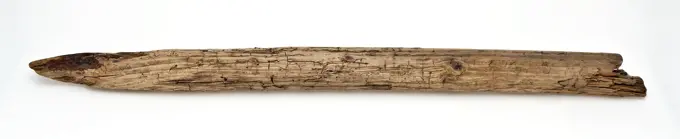
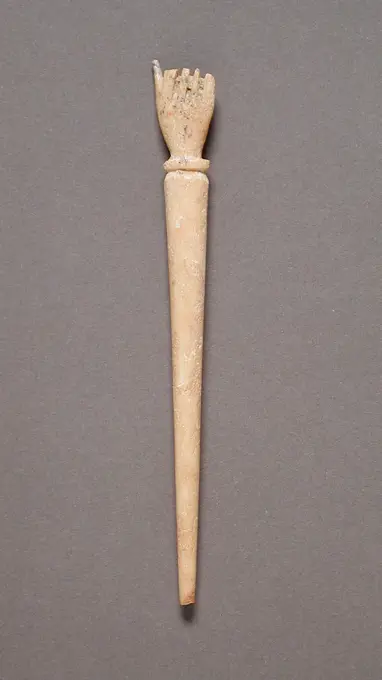
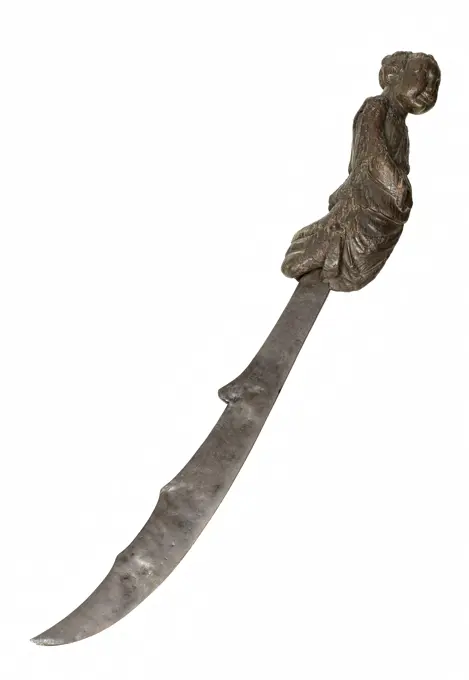
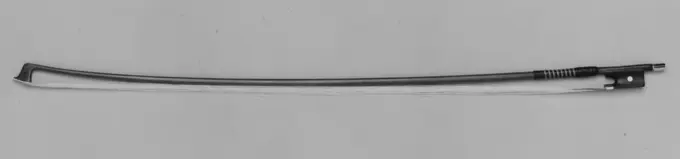
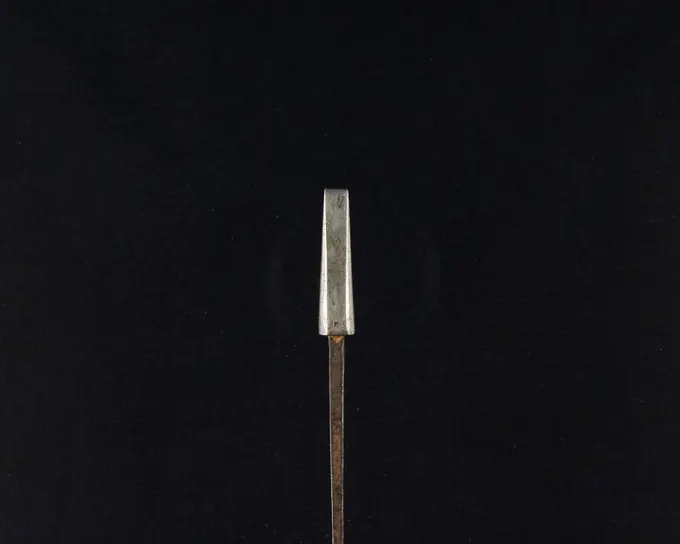
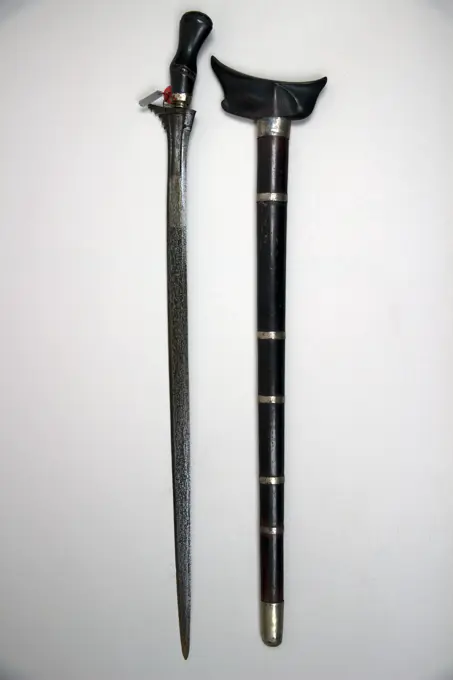
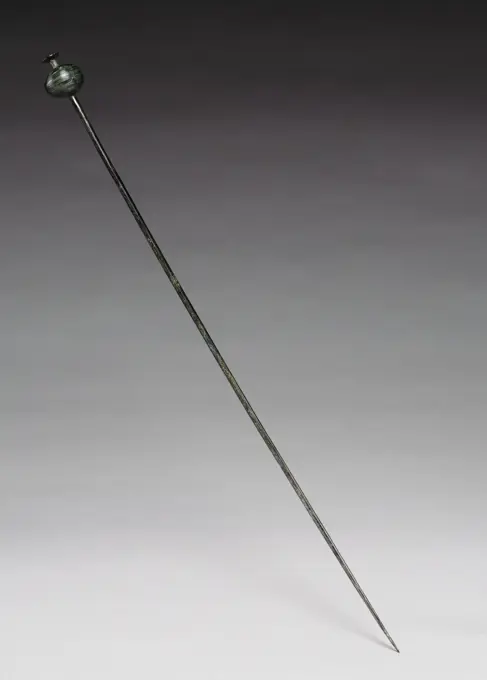
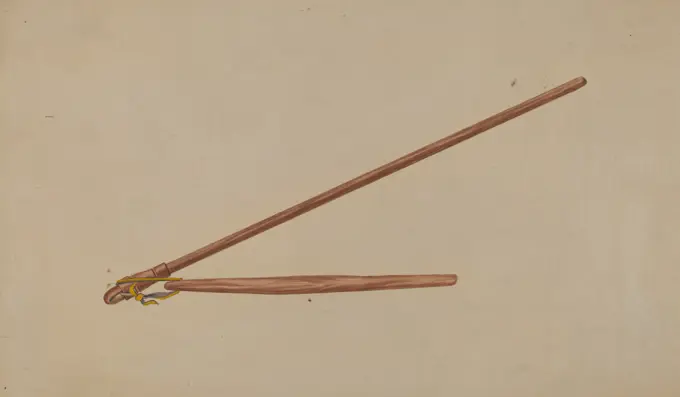
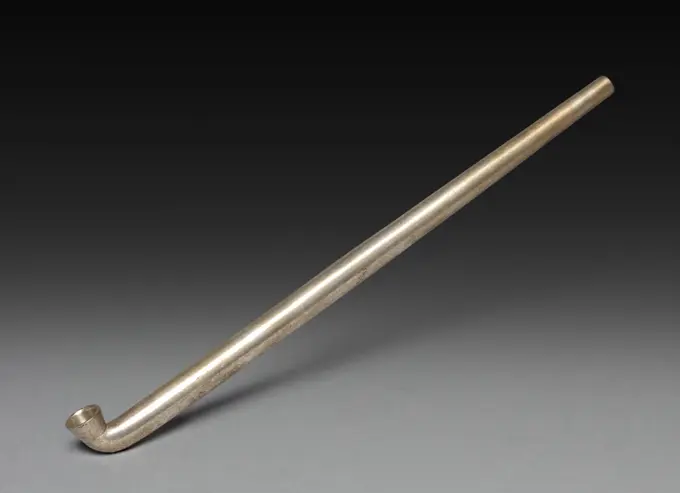
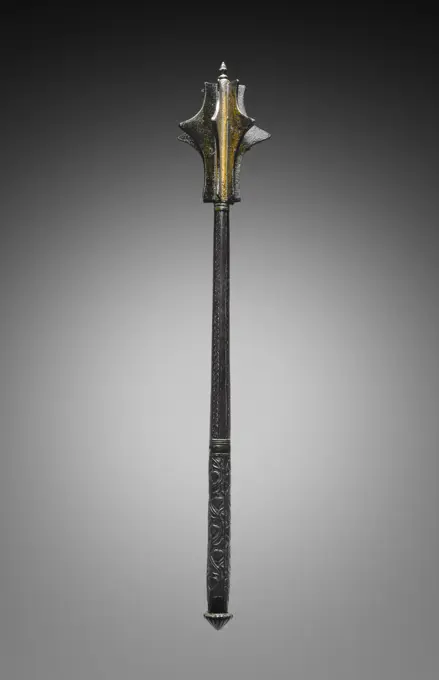
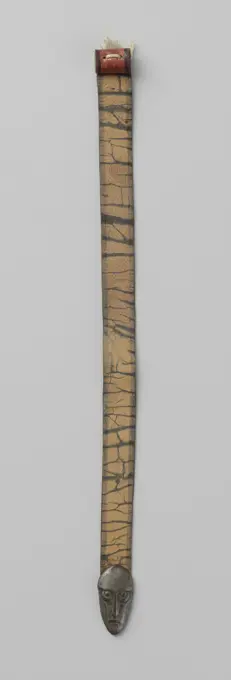
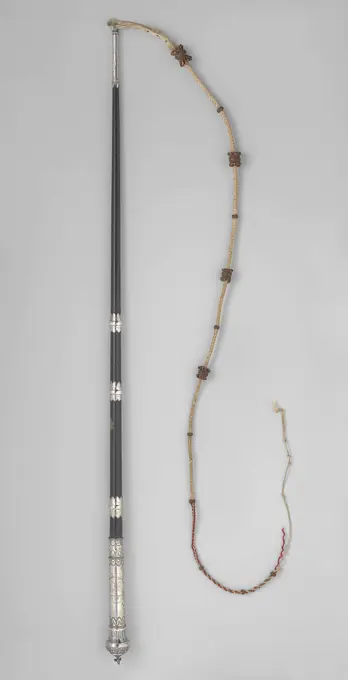
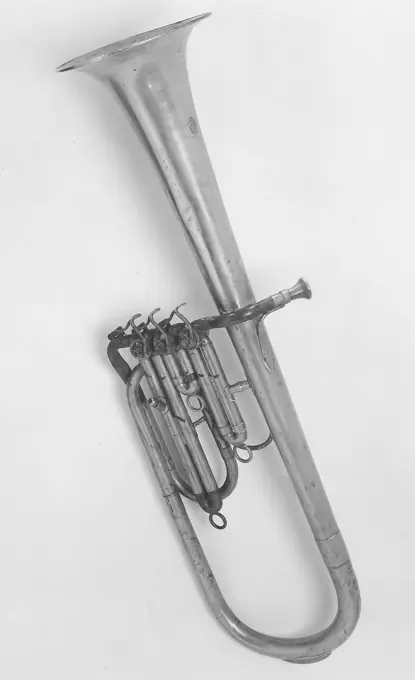
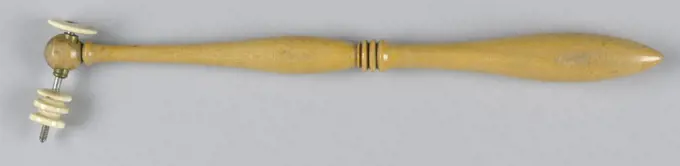
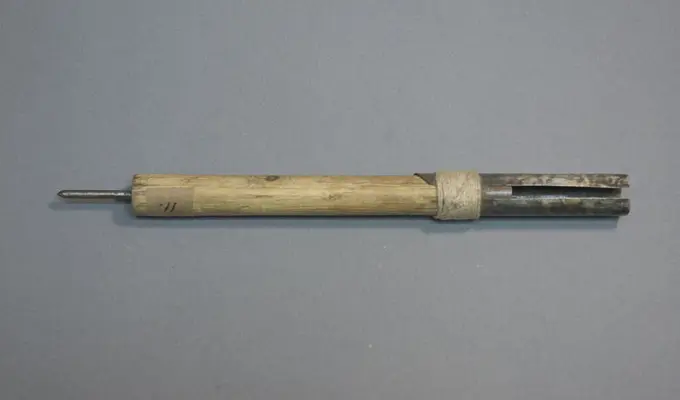
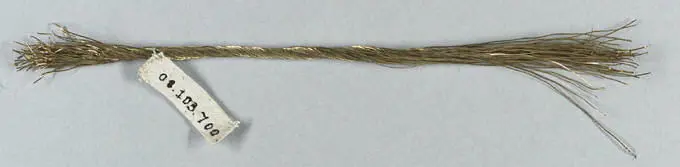
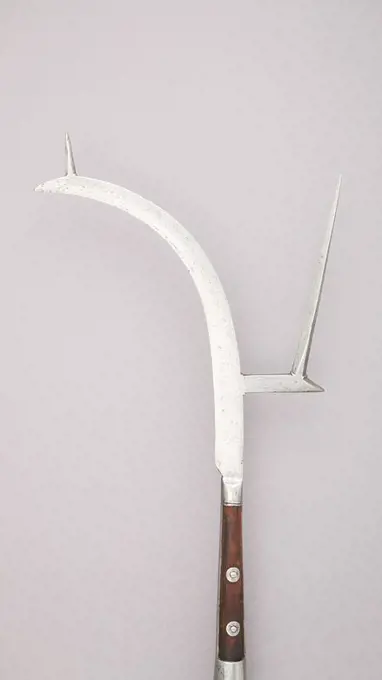
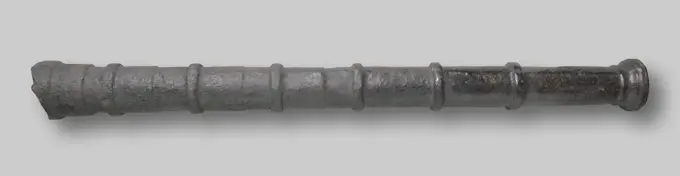
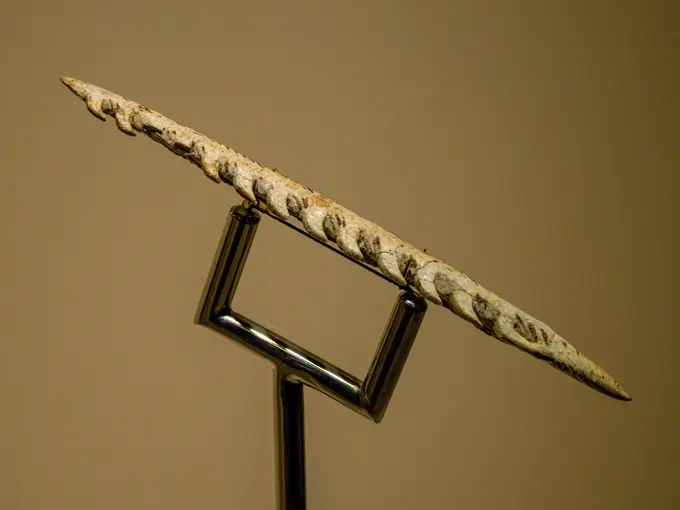
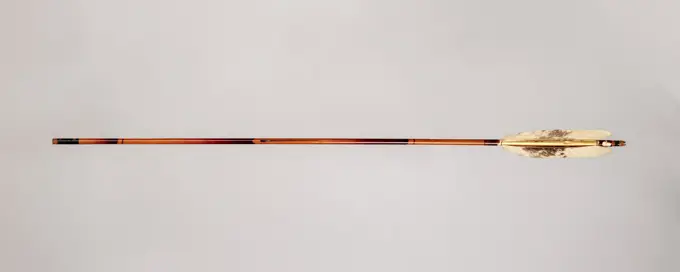
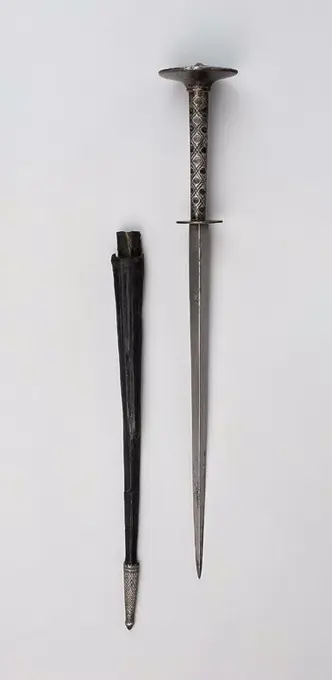
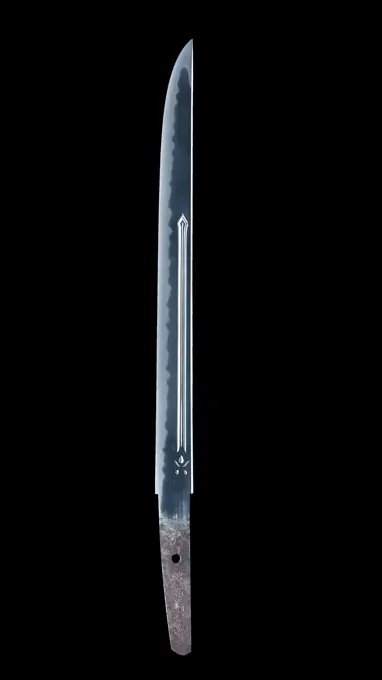
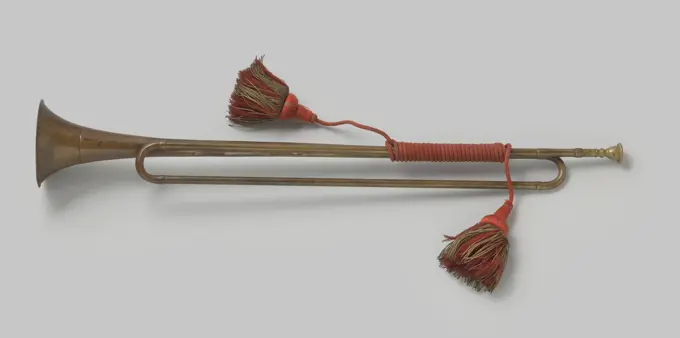
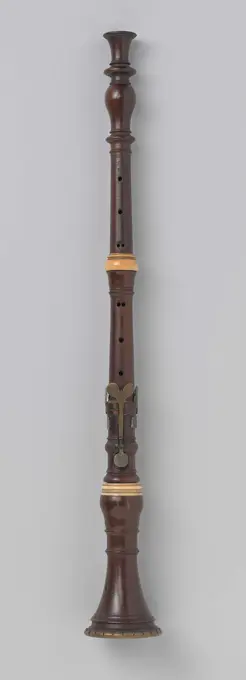
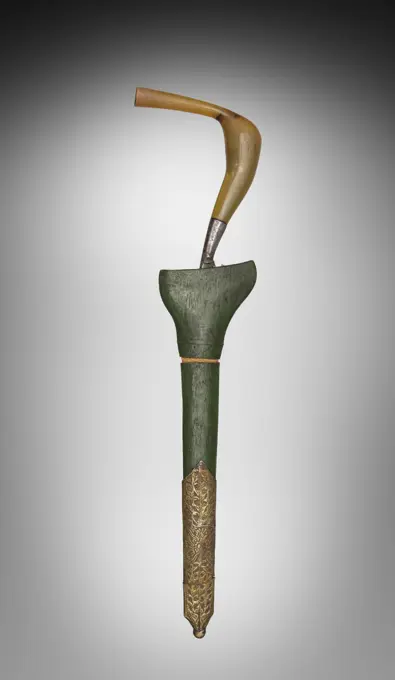
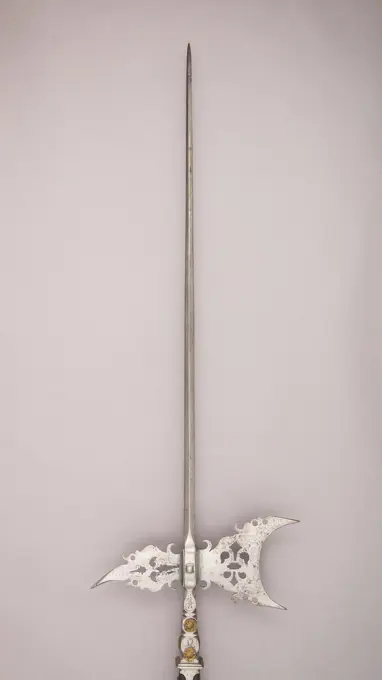
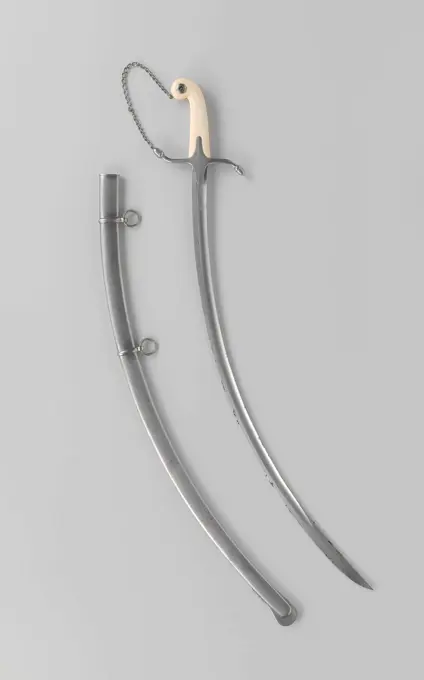
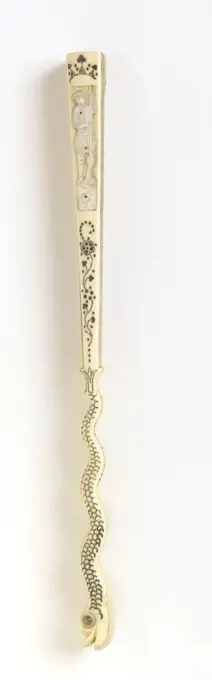
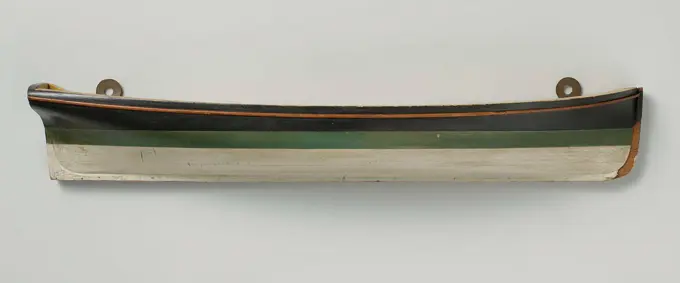
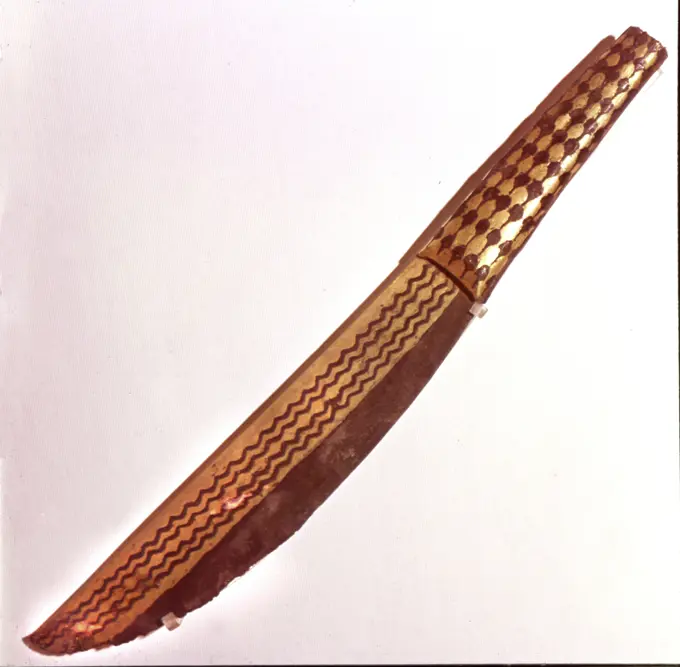
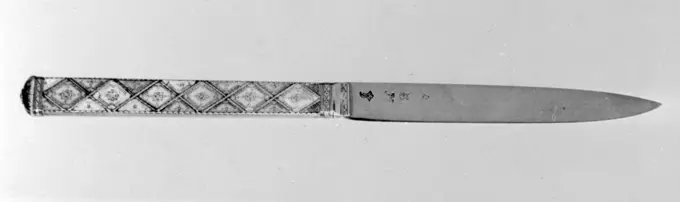
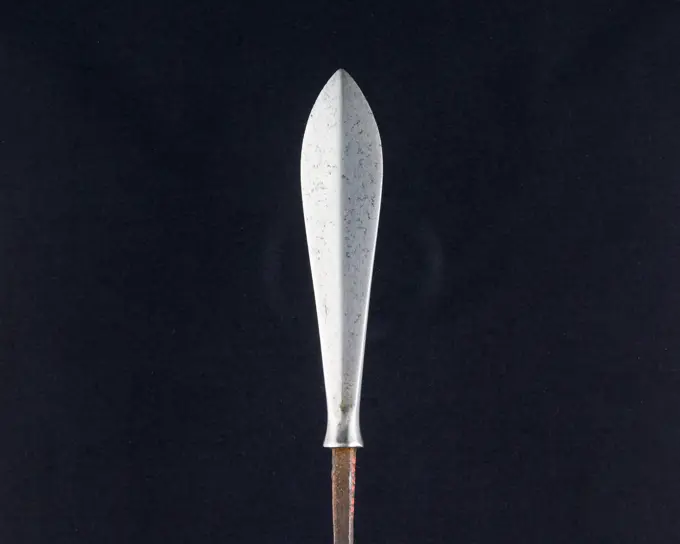
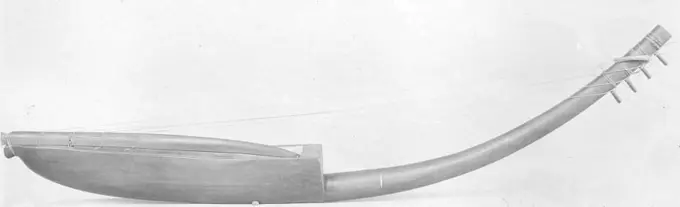
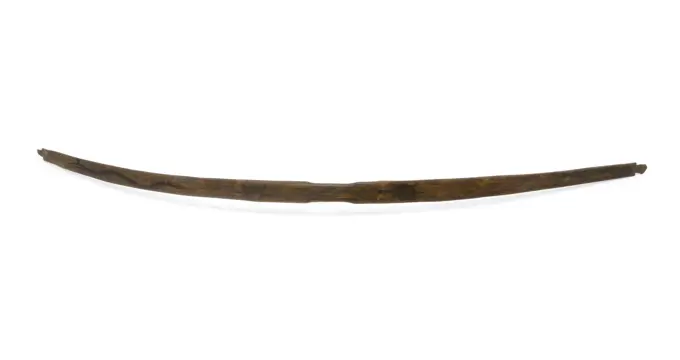
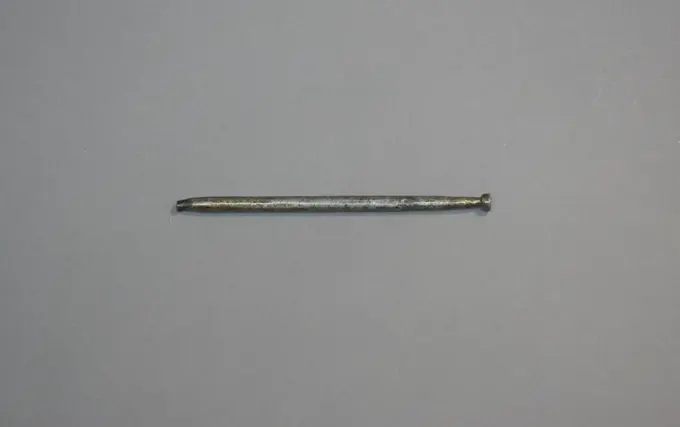
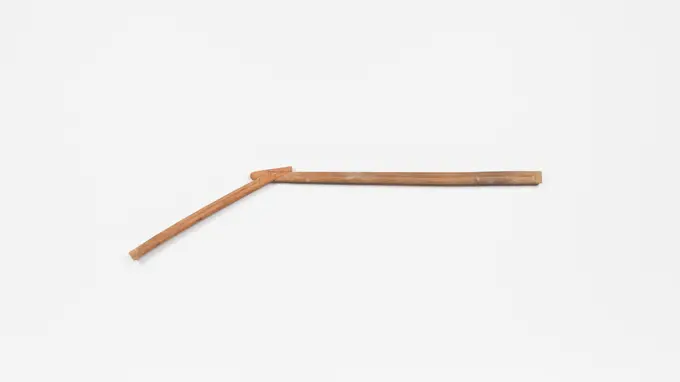
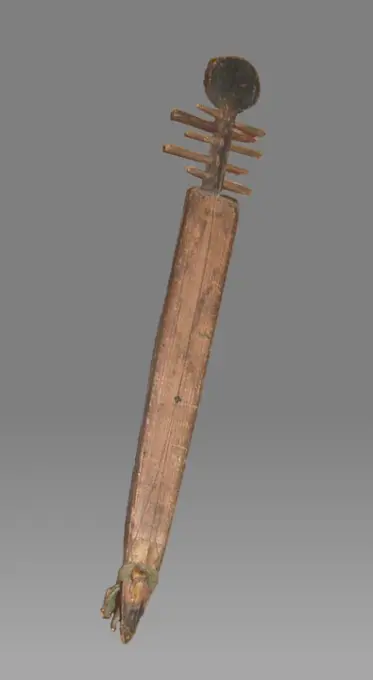
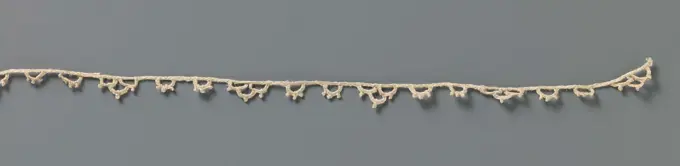
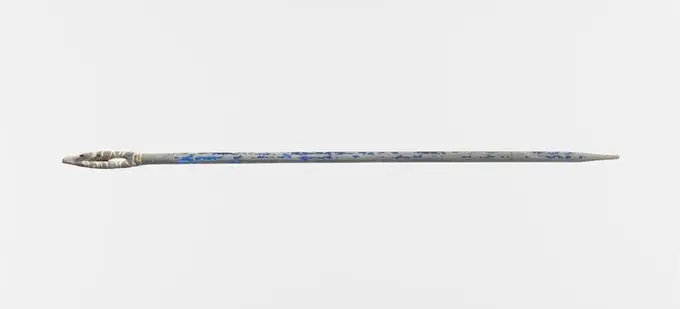
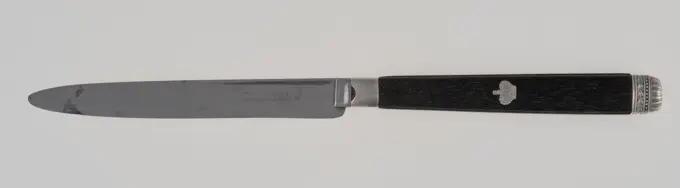
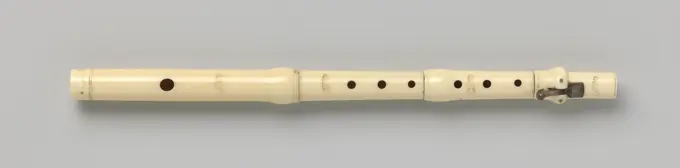
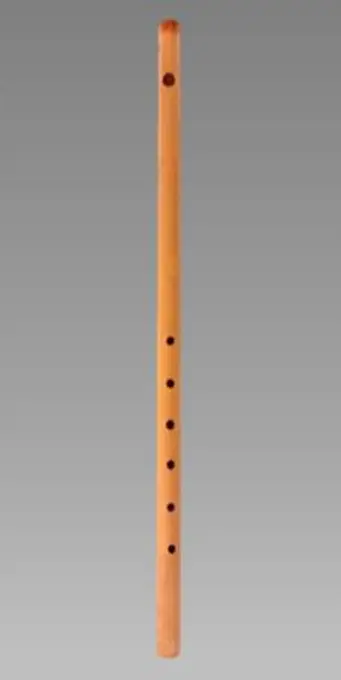
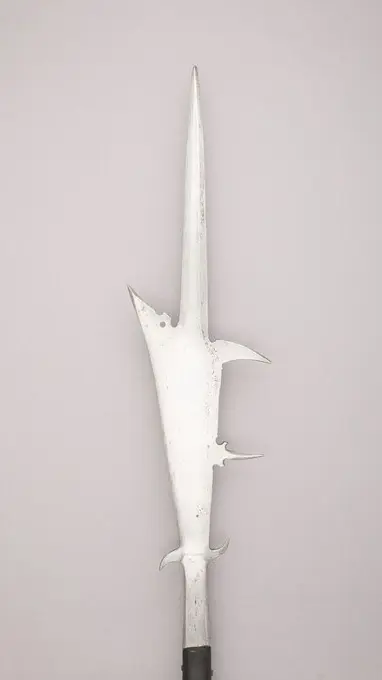
Drumstick, late 19th-early 20th century, 12 15/16 x 7/16 in. (32.86 x 1.11 cm), Wood, United States, 19th-20th centurySheath for a Kris 18th-19th century Philippine. Sheath for a Kris 30935Silver price presses of silver in the shape of a budgeted goose feather. To the right of the shaft the beards were cut away, the top is sloped off.Polished wooden post, shaft of boat hook or oar, pile ground find timber, cut Wood pile. Highlighted Open nail hole and remnants of rusted nail Probably belonged to boat hook or oar archeology Rotterdam City Triangle Mariniersweg scheepvaart archaeological find in the soil Mariniersweg 1983.Cosmetic Applicator or Pin. Afghanistan, 3rd century. Jewelry and Adornments; pins. IvoryAU CIMETERRE At the cemeterre ". Iron and wood riveted. XVIIth century.Bow 1900-1920 Alfred Joseph Lamy French. Bow 504518Chesnut limb against black backgroundArrowhead (Yanone). Culture: Japanese. Dimensions: L. 6 5/8 in. (16.8 cm); L. of head 1 3/8 in. (3.5 cm); W. 5/16 in. (0.8 cm); Wt. 0.6 oz. (17 g). Date: 18th century. Museum: Metropolitan Museum of Art, New York, USA.Executioner's Kris with Sheath 16th-19th century Sumatran. Executioner's Kris with Sheath 31235Bow -Garment Pin, c. 1400 BC. Possibly Hungary, Bronze Age, c. 2500-800 BC. Cast and wrought bronze; overall: 35.9 x 2.3 cm (14 1/8 x 7/8 in.).Frank Eiseman, Flail, c 1937 FlailEggbeater -Tobacco Pipe, 1800s-early 1900s. Japan, Edo period (1615-1868) to Meiji period (1868-1912). Silver; overall: 19.8 cm (7 13/16 in.).Pipe of black pipe earth. Pipe of black pipe earth.Javelin 1600 Spain. Steel and wood .Seven-Flanged Mace, c. 1540-50. Italy (), 16th century. Gilded russet steel; with chiseled foliate decoration; overall: 64.5 cm (25 3/8 in.); head: 11.4 cm (4 1/2 in.). The mace was primarily a weapon for mounted warriors in both actual combat and courtly contests. For this reason it was regarded as a knightly weapon. Arming oneself with a mace had gradually taken on significance among the nobility and commanding officers. It eventually came to be considered a badge of rank, to be carried by its owner in parades and other ceremonial occasions, as this decorated example certainly was.Aeolian Harp early 19th century European. Aeolian Harp. European. early 19th century. Chordophone-Zither-blownPrzeszo PrzyszociBookmark, Erich Wichmann (Possible), c. 1920 - c. 1930 Bookmark consisting of a leather band that has been rolled up at one end and has been fixed with a white cord, and is caught in a silver plate in the form of a mask at the other end. Netherlands silver (metal). leather Bookmark consisting of a leather band that has been rolled up at one end and has been fixed with a white cord, and is caught in a silver plate in the form of a mask at the other end. Netherlands silver (metal). leatherOboe, Johann Wendelinus Weisse, c. 1830 Hobo in dark brown stained palm wood with thirteen brass valves and three ivory rings. Marked on the middle and bottom: Arend / Weisse / Dresden. Dresden boxwood. brass (alloy). ivory Hobo in dark brown stained palm wood with thirteen brass valves and three ivory rings. Marked on the middle and bottom: Arend / Weisse / Dresden. Dresden boxwood. brass (alloy). ivoryZweep met handvat van donkergelakt hout, waaraan een knop van gedreven zilver en een koord van wit leer waarop ornamenten van gevlochten leer.Whip with handle of donge wardruised wood, to which a spherical knob of silver with two driven flower ornaments between which a engraved crowned weapon of a bowler hat and two crucified trails and including engraved: 'Bodawraave den 1 MEY 1780'. On top of the button two rows of overlapping shells. Along the handle three silver tires with slot on either side. On the silver, engraved point a cord of white leather in which ornaments of leather in copper-colored loops and a purple, green and purple braided band. On the end of white, red and green rotated cord.Baadstok at Singalese cannon or Lewuke's cannon, anonymous, 1745 framework  Sri Lanka wood (plant material) sawingSitar late 19th century Indian This small decorative sitar features an ostrich egg body and 7 strings.. Sitar 500760Alto Saxhorn in E-flat ca. 1865-80 John Howard Foote. Alto Saxhorn in E-flat. American. ca. 1865-80. Brass, nickel-silver. New York, New York, United States. Aerophone-Lip Vibrated-hornPhenakistiscope, R.W. Hume, Leith, Scotland, Wood and ivory, Handle in wood with three ivory fittings for viewing phenakistiscope discs., Leith, Scotland, United Kingdom, ca. 1840, toys & games, Handle, HandleFireplace with twisted pliers, anonymous, c. 1700 - c. 1725 The object consists of the following cast parts: a pliers with handle, a rivetable tang parts a riveted eye. The tang parts are twisted and have round flat ends. The handle is baluster -shaped. Netherlands brass (alloy) casting The object consists of the following cast parts: a pliers with handle, a rivetable tang parts a riveted eye. The tang parts are twisted and have round flat ends. The handle is baluster -shaped. Netherlands brass (alloy) castingTubular Bowdrill for Carving Jade. Culture: China. Dimensions: L. 8 1/2 in. (21.6 cm); Diam. 5/8 in. (1.6 cm). Date: 20th century. Museum: Metropolitan Museum of Art, New York, USA.Overhead view of a single screw isolated on white backgroundKnife (e,f) Fork (England); green-stained ivory, steel, silver; (d) cm: L: 20.4 x W: 1.5 x D: 1.2Cord 17th-18th century probably European. Cord. probably European. 17th-18th century. Tinsel and metal thread. Textiles-TrimmingsTweezers ca. 1390-1353 B.C. New Kingdom. Tweezers. ca. 1390-1353 B.C.. Bronze. New Kingdom. From Egypt, Upper Egypt, Thebes, Malqata, Palace of Amenhotep III, MMA excavations, 1911-12. Dynasty 18Bill. Culture: British. Dimensions: L. 96 in. (243.8 cm); L. of head 20 1/2 in. (52.1 cm); W. 11 7/16 (29 cm); Wt. 3 lbs. 4 oz. (1474.2 g). Date: ca. 1450. Museum: Metropolitan Museum of Art, New York, USA.Belt -Ancient Egyptian, Bronze axes. Middle Kingdom (2040-1640 BC).Copper Pin 12th-15th century Chimú (). Copper Pin 315381Cast iron rear loader, anonymous, c. 1475 - c. 1550 cannon Cast iron room piece with six ring -shaped thickening. The room and the wooden drawer in which the cannon originally located have not been preserved. The back of the cannon is damaged. The metal thickness is larger at the rear than at the front.  cast ironCDK unknownZylindrische Harpune mit einer Reihe von Zähnen Cylindrical harpoon with a row of teeth, Santimamine cave, Kortezubi, Arkeologi Museoa, Museo Aqueologico, Bilbao, Bizkaia, Pais Vasco, Spain Copyright: xZoonar.com/Tolox 22846531Flute, Johann Heinrich Gottlieb Streitwolf, c. 1810 Palmhout flute with seven valves. Marked: Streitwolf Göttingen. Göttingen boxwood (hardwood). ivory. brass (alloy) Palmhout flute with seven valves. Marked: Streitwolf Göttingen. Göttingen boxwood (hardwood). ivory. brass (alloy)Medical Instrument: () Spatula. UnknownLantern clock ca. 1660 British. Lantern clock 191528Arrow, 1700s. Japan, Edo period (1615-1868). Bamboo shaft tipped with wooden point and heeled with pheasant feathers; average: 90.2 cm (35 1/2 in.).Roundel Dagger and Scabbard. German. Date: 1500-1525. Dimensions: L. 39 cm (15 5/16 in.)Blade L. 27.7 cm (10 7/8 in.)Wt. 9 oz. Steel, leather, and iron. Origin: Saxony. Museum: The Chicago Art Institute, Chicago, USA.Tool. >>carpenters pencil isolated on whiteTromboneBlade and Mounting for a Short Sword (Wakizashi) blade, (1852); mounting, 19th century Japanese A wakizashi is a short sword with a blade between 30 and 60 cm long, usually worn in tandem with a full-length sword (katana). Wakizashi were fashionable in the Muromachi period (1392-1573) and later.. Blade and Mounting for a Short Sword (Wakizashi). Japanese. blade, (1852); mounting, 19th century. Steel, wood, rayskin (samé), lacquer, thread, copper-gold alloy (shakud), silver, copper-silver alloy (shibuichi). Tokyo. SwordsScepter case () ca. 1981-1802 B.C. Middle Kingdom. Scepter case (). ca. 1981-1802 B.C.. Wood. Middle Kingdom. From Egypt, Upper Egypt, Thebes, Deir el-Bahri, Tomb MMA 104, MMA excavations, 1926-27. Dynasty 12SaberStaff with Herakles knots ca. 3rd-6th century A.D. Sasanian. Staff with Herakles knots 325840The Pearl Sword, 1844. Ceremonial sword of the Lord Mayor of the City of London. 'The sword measures four feet. The sheath is of gold, set with pearls, and the handle of richly chased gold, bearing devices significant of Justice and Mercy...the sword - the gift of the Sovereign - symbolizes the exclusive jurisdiction which, as chief officer of the Corporation, he exercises within the city walls'. From "Illustrated London News", 1844, Vol V.Club -Arrow Point, 1700s. Japan, Edo period (1615-1868). Steel; overall: 28 cm (11 in.); head: 7.4 cm (2 15/16 in.).Fringe 1750 British. Fringe 225062Attachment feather for a large crown ca. 595-30 B.C. Late Period-Ptolemaic Period. Attachment feather for a large crown 571369Signal-Trumpet, anonymous, c. 1800 - c. 1850 Signal trumpet in es. Brass, wounded with red cord, of which two brushes. A winding, clockwise. Germany copper (metal). wool. rope Signal trumpet in es. Brass, wounded with red cord, of which two brushes. A winding, clockwise. Germany copper (metal). wool. ropeOboe.Hobo of fruit wood, mounted with ivory rings and with buyer to the chalice. Three copper valves. Marked in two places in banderoles: C Rijkel.Dagger, 1800s. Java. Iron with horn handle and wood; overall: 34.4 cm (13 9/16 in.); blade: 20.4 cm (8 1/16 in.).curry spices on white background. curryFork (Netherlands); Manufactured by J.M. van Kempen and Son, Voorschoten (Netherlands); silver; cm: L: 14 x W: 1.7Halberd ca. 1590 French. Halberd. French. ca. 1590. Steel, brass, wood. Shafted WeaponsSTOP fork; Fraget, Józef (Warsaw; Silver and Plated Products Factory; 1824-1945); Years of the 19th century (1880-00-00-1900-00-00);Two -bump fork for fish; Korzec (Porcelain and faience manufacture; 1790-1832); 19th century (1801-00-00-1901-00-00);Tourney Lance, probably late 1800s (in 16th century style). Unassigned (European), probably late 19th century (in 16th century style). Wood, five concave sections, painted red and white; steel point; overall: 278.2 cm (109 1/2 in.); head: 12.6 cm (4 15/16 in.).wooden Screwdriver. one screwdriver isolated on white backgroundSabel met schede.Turkish model saber with iron bump bracket and ivory handle with chain. Signature P.H. Van Mansveld. With iron sheath, iron rings and leather couple. Coming from Lieutenant Tobias from the 6th Hussars.Pleated fan, Painted paper leaf, carved ivory sticks with inlaid metal pins and mother-of-pearl, Pleated fan with a gouache painted paper leaf showing the story of Vertumnus and Pomona by the well, with a putto reclining nearby. The ivory sticks are carved like a swimming dolphin with scales of silvered piqués. The guards have applied figures of soldiers in mother-of-pearl., probably England, 1730-40, costume & accessories, Pleated fanFork with a handle (goat);  18th century (1701-00-00-1800-00-00);Turpentine Scraper. Dated: c. 1940. Dimensions: overall: 35.5 x 26.6 cm (14 x 10 1/2 in.) Original IAD Object: 12" long. Medium: watercolor and graphite on paper. Museum: National Gallery of Art, Washington DC. Author: Fred Hassebrock.Bandelier or Schelkoord (fragment) of green silk rip ribbon, with floral motifs embroidered of silver wire and vloszijde, at the end of ornament with hanging garlands, trimmed all around with loop frills of metal wire, anonymous, c. 1700 - c. 1750 Bandelier or Schelkoord (fragment) of green silk rip ribbon, with floral motifs embroidered of silver thread and vloszijde, at the end of ornament with hanging garlands, trimmed all around with loop frills of metal wire. Partly lined with coarse woven cotton in flat binding. Ornament at the end worked on ditto coarse cotton and reinforced with cotton or parchment. Incomplete; one end cut off and sewn into a point. West-Europa whole: Silk. Decoration: Silver thread. Decoration:. lining: cotton (textile). reinforcement: Paper embroidering Bandelier or Schelkoord (fragment) of green silk rip ribbon, with floral motifs embroidered of silver thread and vloszijde, at the end of ornament with hanging garlands, trimmed all around with loop frills of Half Model of a Launch.Polychromed block model (starboard) from a sloop. Flat mirror. The seam runs to both ends, one bark wood. Peaked round trip.Copper Lime Spoon with Bird Top 15th-16th century Inca. Copper Lime Spoon with Bird Top 315255Phoenician knife in gold and silver. Byblos, King Chemou Abi Tomb. 18th cent. BC. LEBANON.Wand -Knife 1776-77 French, Paris. Knife. French, Paris. 1776-77. Gold, mother-of-pearl. Metalwork-Gold and PlatinumArrowhead (Yanone) 18th century Japanese Although today Japanese warriors are renowned most for their swordsmanship, archery, especially from horseback, has been an essential part of samurai warfare and culture for centuries. Arrows were fitted with heads of varying shape according to their intended use in war, the hunt, or target practice. Arrowheads made for use on the battlefield incorporated different designs intended for specialized purposes such as the piercing of armor or to cause maximum damage to horses and unarmored personnel.Large arrowheads, pierced and elaborately chiseled with landscapes, birds, flowers, dragons, and Buddhist divinities, were created to be admired for the beauty of their metalwork and design rather than for use in archery. Such highly elaborate examples may have been made for presentation or as a votive offerings to a shrine.. Arrowhead (Yanone). Japanese. 18th century. Steel. Archery Equipment-ArrowheadsClub -Buni 19th century copy of 1500 B.C. object Egyptian. Buni 501030Yeah one hundred; Tauron-Parisot (couples; Factory; 1839-); 1. PO. 19th century (1850-00-00-1850-00-00);ChainDagger and Scabbard late 17th-early 18th century. Dagger and Scabbard 448553Bow -Drill for carving jade 20th century China These steel drills with blunt points (zhuangding or dingzi in Chinese), flat heads (tuozi), or curving heads (wazi) are used for high relief carving, undercutting, and fine shaping of small jade works. The craftsman holds the jade in one hand against the drill, which is mounted on a spinning shaft. He or she rotates the shaft using foot treadles, while continuously applying abrasives, usually sand mixed with water, to the tip of the drill, which cuts the jade.. Drill for carving jade 62069Table fork 18th century Swiss. Table fork. Swiss. 18th century. Steel, silver, wood. Metalwork-SteelBent stave ca. 1859-1640 B.C. Middle Kingdom. Bent stave. ca. 1859-1640 B.C.. Wood, paint. Middle Kingdom. From Egypt, Memphite Region, Lisht South, tomb of Imhotep, Tomb 5100, MMA excavations, 1913-14. Dynasty 12-13Tonkari (ンコリ) late 19th century Japanese (Ainu) Played by the indigenous Ainu people of northern Japan to accompany ritual, song and dance, the tonkori an instrument on the verge of extinction by the 1970s. Today it is being revived as an important part of Ainu heritage. The star shaped soundhole contained a ball that gave the instrument its soul.. Tonkari (ンコリ) 500691Rifle for Stalking, Jan Nelleman (I), c. 1680 - c. 1690 flintlock gun BUKS FOR THE BERSJACHT. The iron lock is engraved with praise and a signature. The heavy iron loop has a soul drawn with six grooves, and a guid rib; The visor grain is made of yellow, the visor is covered with an iron roof; On top stamped with a crowned monogram EWB () Increased in gold, with the inscription Samvel Ridderspore behind it; To the left stamped with a crowned shield with S.R.S. Incested in yellow and on the right with a non -identified sign in an oval. The wooden flask is lacquered to mimic carrot nut wood and simply cut; On the right cheek of the flask is a flask with sliding lid, the left cheek has a cheek plate; Faced at the front with cow horn. The iron fittings consists of three loading stokkers, an ajour processed screw plate in the form of a hose with praise, a tractor bracket engraved with a bird on a branch, the tractor plate with engraved praise, and a flat flask with the top in one point; An pink pepper on white backgroundStrook naaldkant met gefestonneerde halfronde picots aan een koord.Strip or cord with scented semicircular picots, natural needle side to a braided cord. The semicircular picots are separate from each other in a repeating pattern to the cord: two single followed by a triple. Each semicircular Picot is decorated with three (the two single) or one (the triple) small picots.old rusty iron nail isolated on a white backgroundGlass needle. Culture: Roman. Dimensions: 1/4 × 6 3/4 × 1/8 in. (0.6 × 17.1 × 0.3 cm). Date: ca. 1st century A.D..Translucent blue; opaque white trail.Circular cross section; upper end tooled into two rounded arms, tapering to a point, with narrow oval eye; lower end tapering to a rounded point.Upper end decorated with marvered spiral trail.Intact, except for point of upper end, which has weathered broken edge; dulling and creamy brown weathering.Blue glass with enameled head. Museum: Metropolitan Museum of Art, New York, USA.Chimney Lamp American 1800-1900Needle with Two Eyes and Bent Tip. UnknownYeah; Tauron-Parisot (couples; Factory; 1839-); XIX-XX century (1901-00-00-2000-00-00);Piccolo, Christopher Gerock, c. 1815 Piccolo consisting of four parts of ivory with a silver valve. Inscriptions are on all four parts. The masterpiece has an extra inscription: 8. London ivory. klep: silver (metal) cutting / casting Piccolo consisting of four parts of ivory with a silver valve. Inscriptions are on all four parts. The masterpiece has an extra inscription: 8. London ivory. klep: silver (metal) cutting / castingTransverse Flute Phillipine or Melanesian (New Guinea) late 19th century View more. Transverse Flute. Phillipine or Melanesian (New Guinea). late 19th century. Cane. New Guinea (Phillipine). Aerophone-Blow Hole-side-blown flute (transverse)Guisarme. Culture: Italian. Dimensions: L. 8 ft. 9 in. (266.7 cm); L. of head 28 1/4 in. (71.8 cm); W. 7 1/8 in. (18.1 cm); Wt. 5 lbs. 5.2 oz. (2415.4 g). Date: ca. 1530. Museum: Metropolitan Museum of Art, New York, USA.Walking stick with gilded handle, God, bakelite, USA, late 19th century, costume & accessories, Decorative Arts, stick, stick