Historic Weaponry

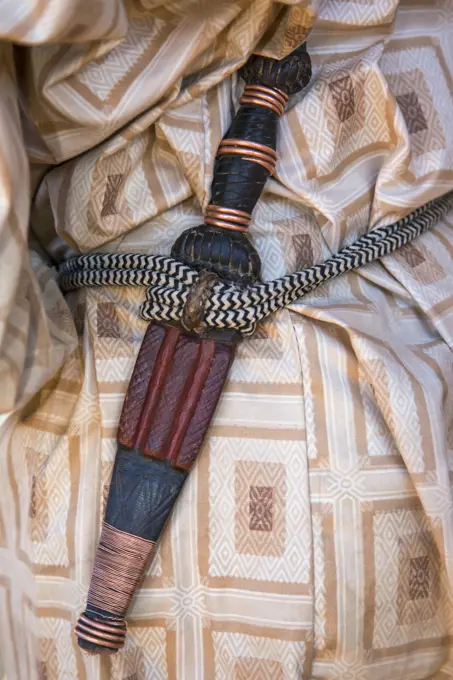
An assortment of historical weapon artifacts including swords, guns, and ceremonial daggers, featuring ornate designs and aged patinas, conveying a sense of craftsmanship.

Statteniedegen with Schede from Minister P.J. Oud, Anonymous, 1933 - 1937 civil servant's sword Statementaltegen with a triangular etched iron blade and a white leather sheath. The hilt consists of a sideways pare bracket, a hanging shot and a handle button. The entire hilt is made of copper and decorated with various motifs and curls. On the mouth of the Schede an etched flor motif. Netherlands (possibly) kling: iron (metal). schede: leather. greep: mother of pearl. gevest: copper (metal) etching  The Hague
Statteniedegen with Schede from Minister P.J. Oud, Anonymous, 1933 - 1937 civil servant's sword Statementaltegen with a triangular etched iron blade and a white leather sheath. The hilt consists of a sideways pare bracket, a hanging shot and a handle button. The entire hilt is made of copper and decorated with various motifs and curls. On the mouth of the Schede an etched flor motif. Netherlands (possibly) kling: iron (metal). schede: leather. greep: mother of pearl. gevest: copper (metal) etching The Hague
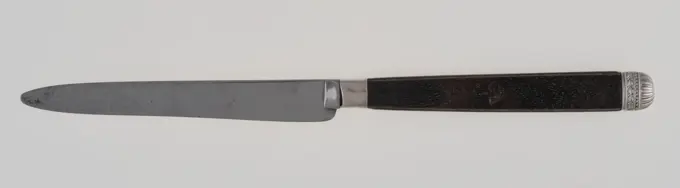
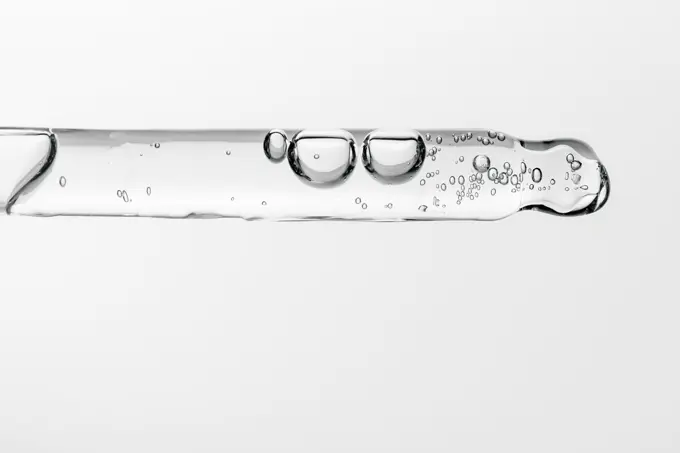
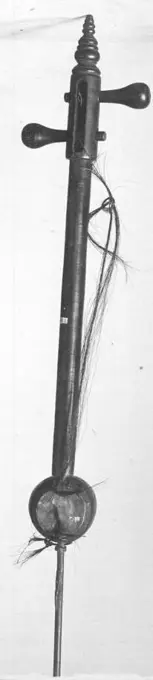
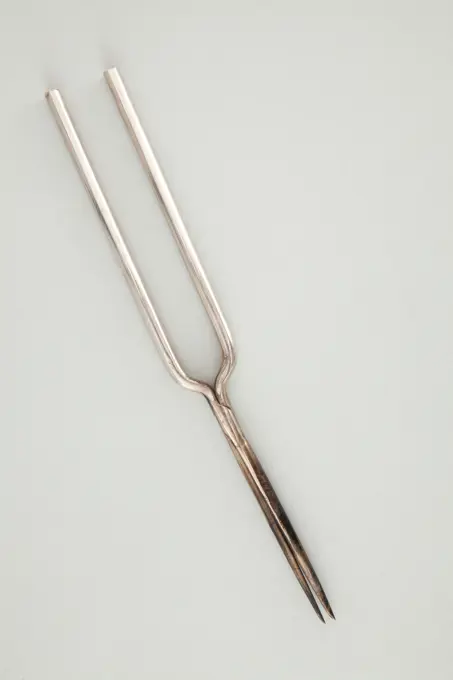
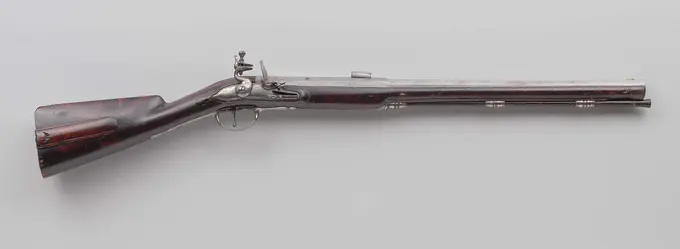
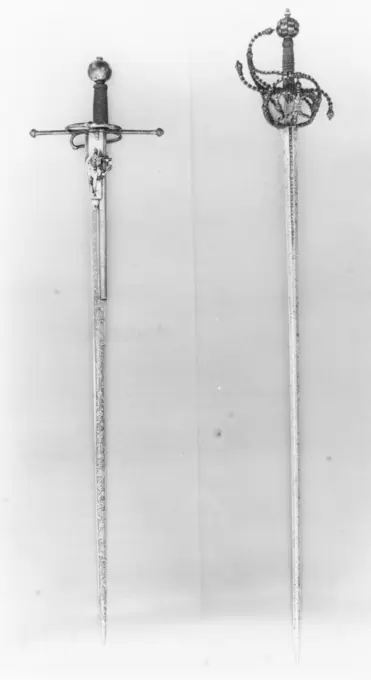
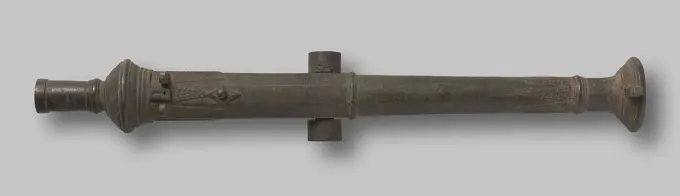
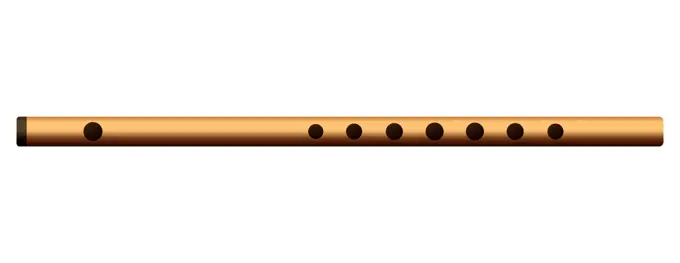
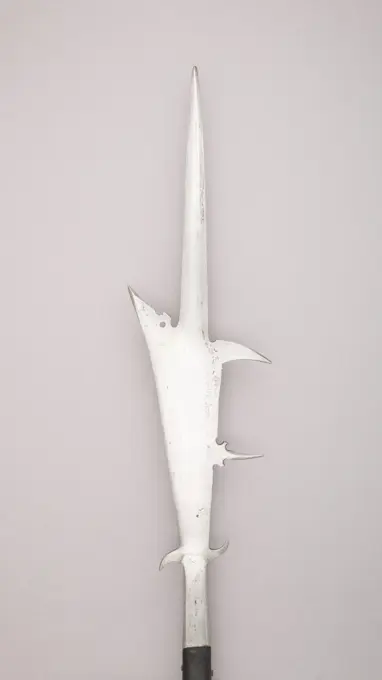
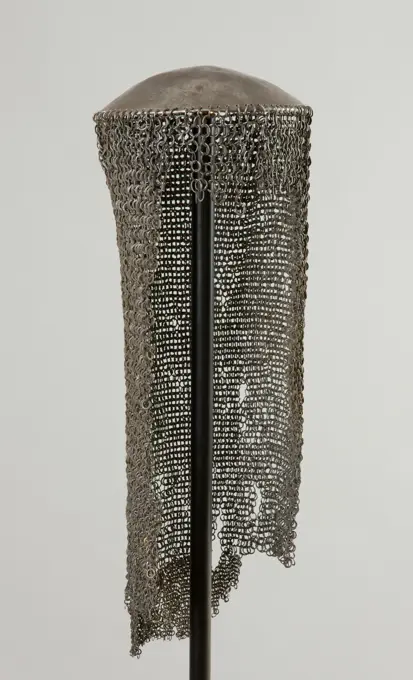
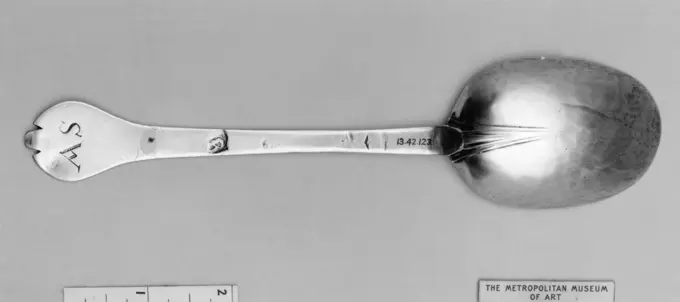
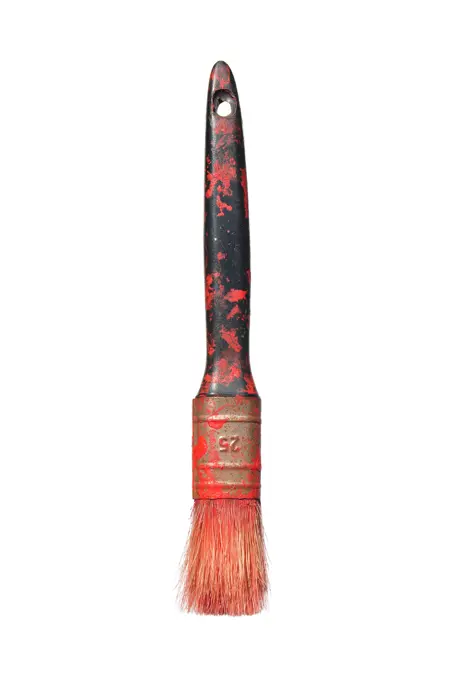
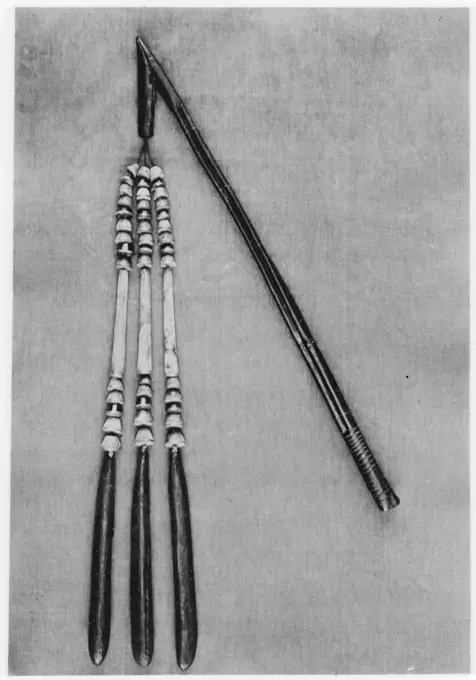
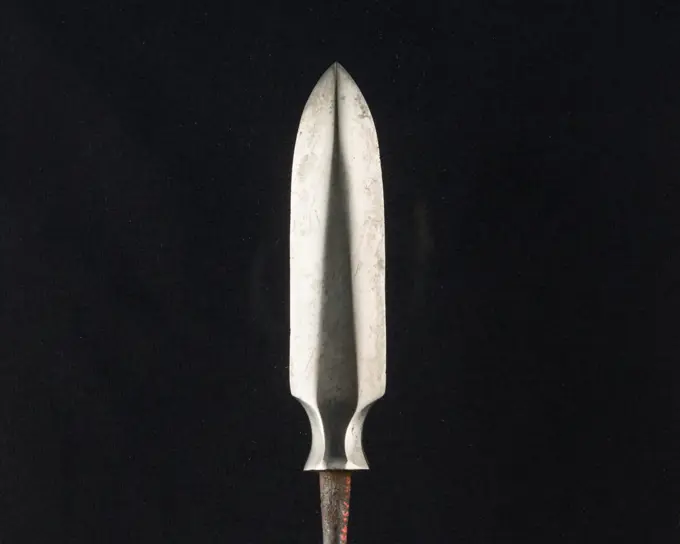
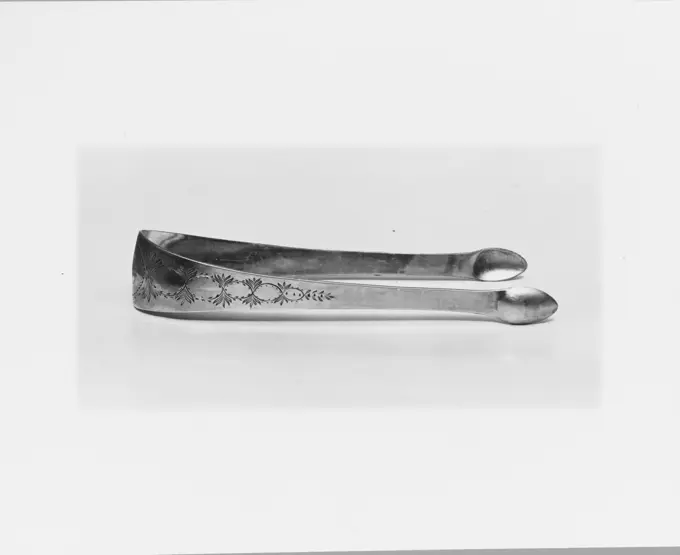
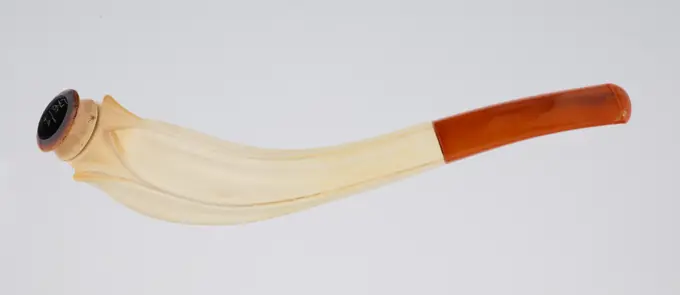
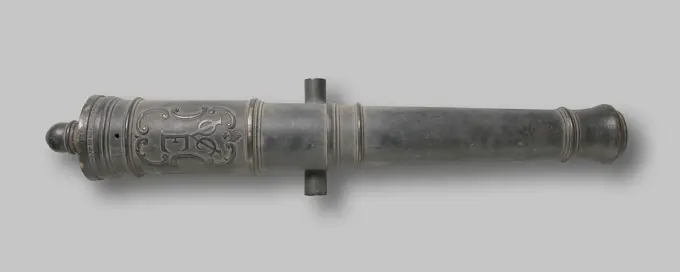
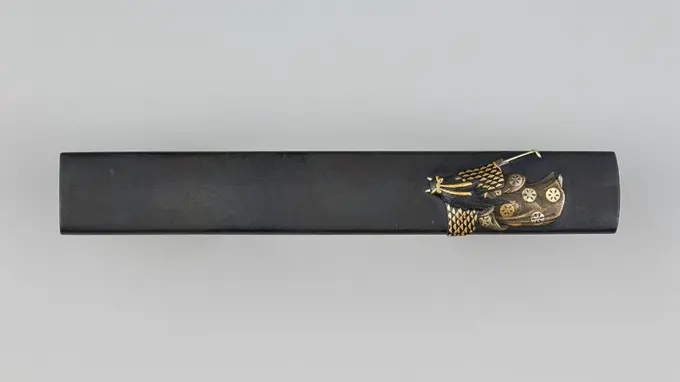
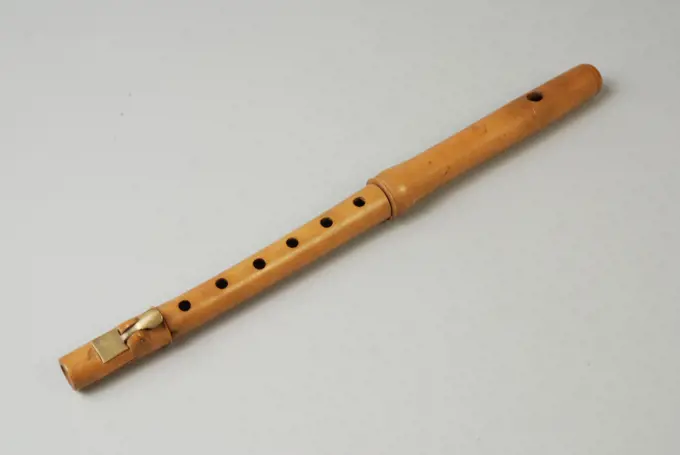
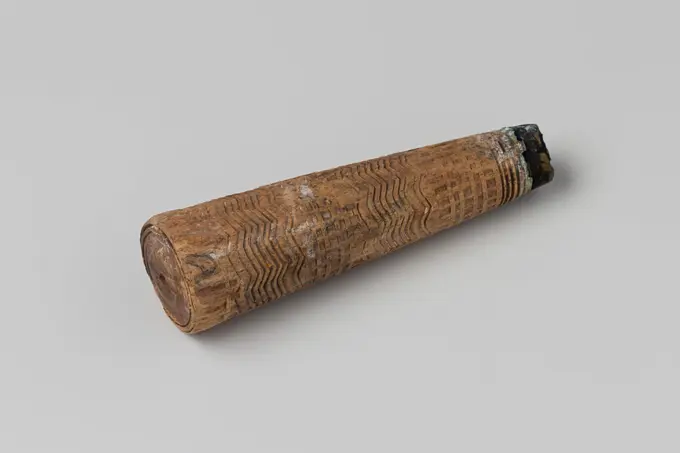
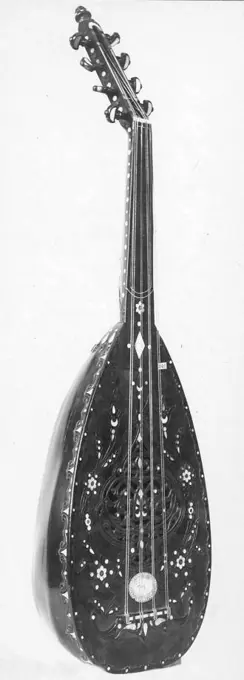
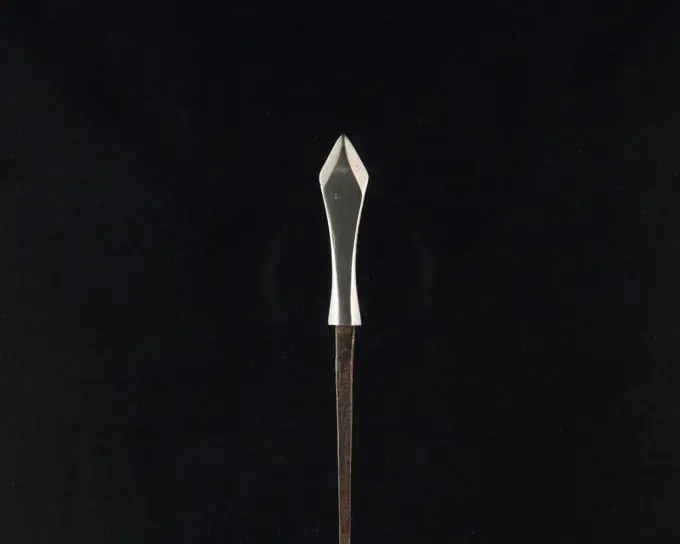
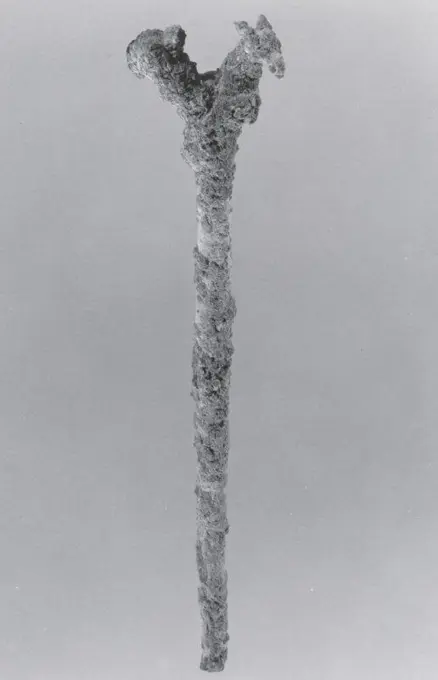
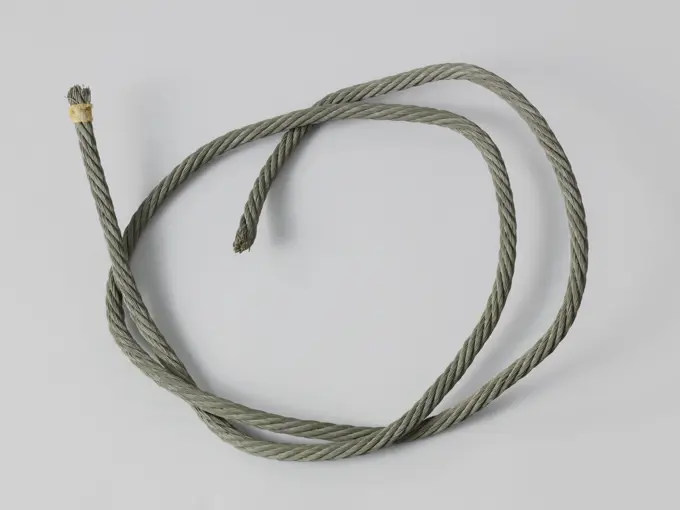
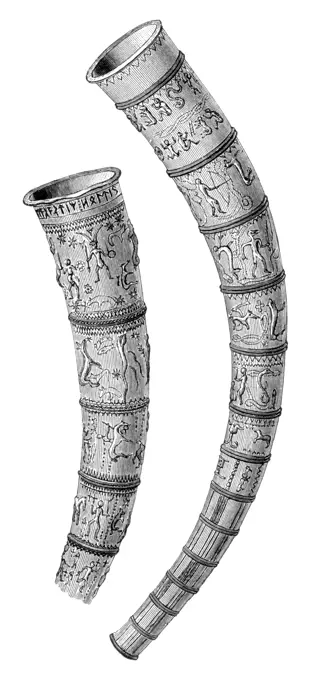
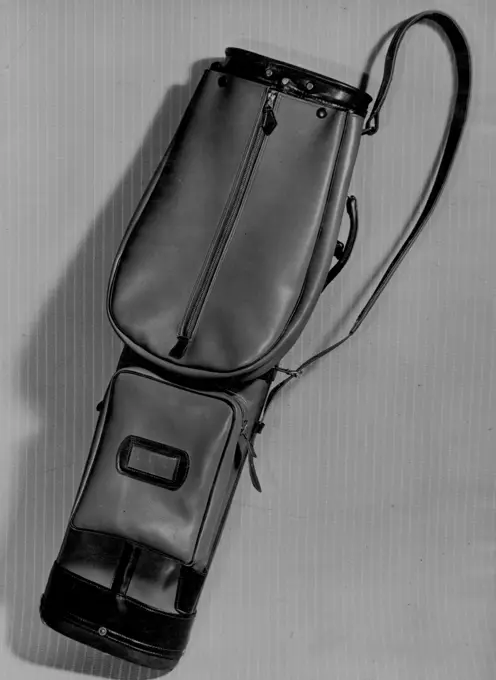
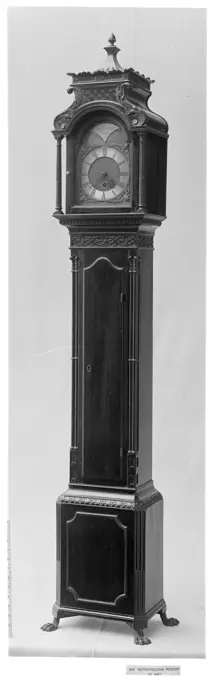
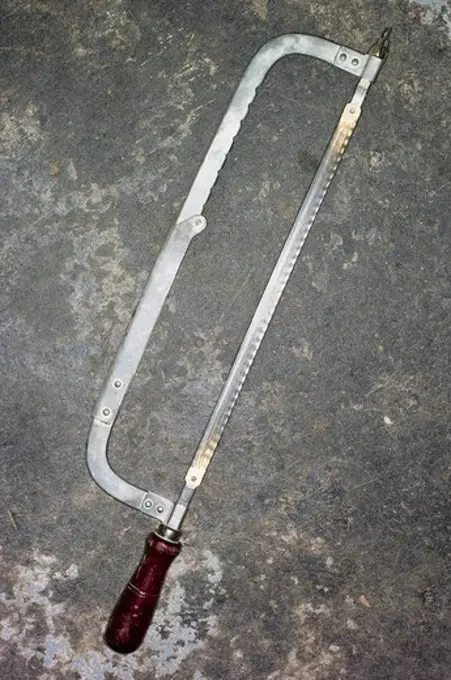
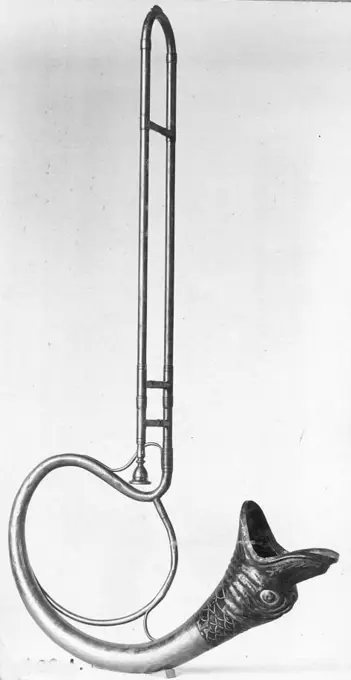
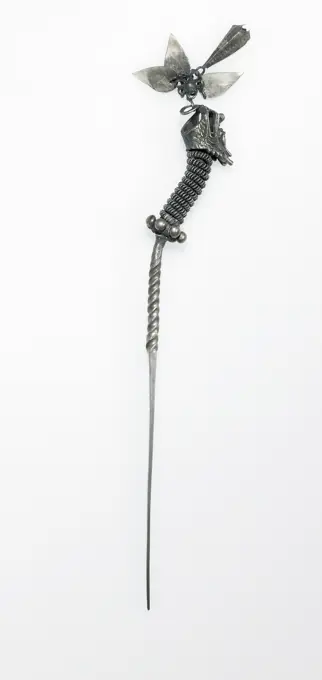
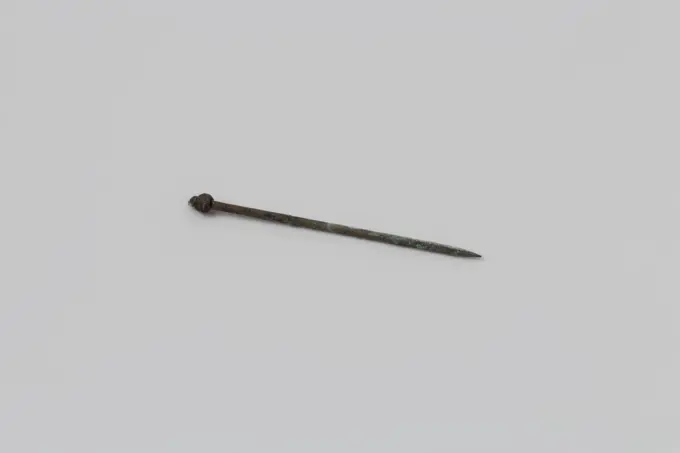
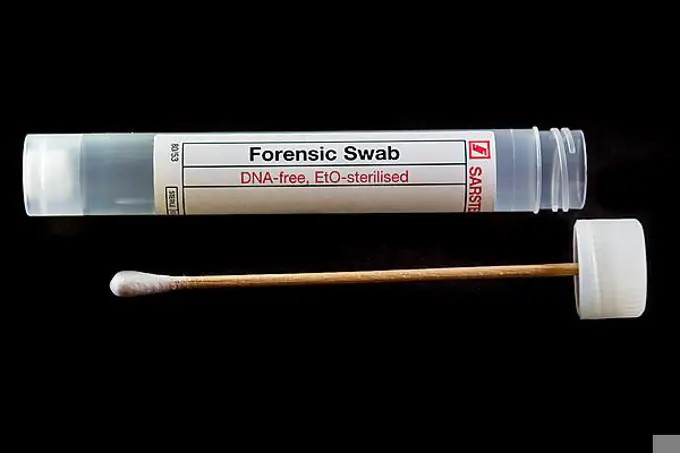
Handle, 1027-775 BCE, 7 x 5/8 x 3/8 in. (17.78 x 1.59 x 0.95 cm), Highly calcified grey-green jade with traces of red pigment, China, 11th-8th century BCEFolding spoon and fork combination probably early 19th century possibly Dutch. Folding spoon and fork combination 188189 possibly Dutch, Folding spoon and fork combination, probably early 19th century, Silver, pearl shell, 6 3/8  1 7/16 in. (16.2  3.7 cm). The Metropolitan Museum of Art, New York. Gift of Mrs. Samuel P. Avery, 1897 (97.2.165)Copper wire from the wreck of the East Indians Hollandia, Anonymous, 1700 - in or Before 1743  Varied parts or fragments, wire; fragm, eroded, circular in section, slightly tapering. Netherlands copper (metal)   SecondFluteA Single Hot DogHair comb or comb of imitation turtle, with a long row of narrow teeth, tapered.Model Chisel from a Foundation Deposit. Dimensions: L. 5.1 × W. 0.4 cm (2 × 3/16 in.). Dynasty: Dynasty 18. Reign: Joint reign of Hatshepsut and Thutmose III. Date: ca. 1479-1458 B.C.. Museum: Metropolitan Museum of Art, New York, USA.Tureen and stand with a ladle, Engelbart Joosten, 1772 Terrine of silver on underpotel, with spoon, lid and inner box (BK-1958-19-A, B, C, D, E). Oval bin on four rocaille feet is surrounded by loose garland that is connected to the handles by Leeuwekop at both ends. On two shields combined weapon from Assueer Jan Baron van Torck etc. and from Eusebia Jacoba de Rode van Heeckeren. The terrine with a loose inner box and the underpotel are deposited with a cable edge. The vaulted lid is decorated with leaves on the four corner points and is crowned by a leaf rosette with a vass -shaped button. The oval corrugated plateau has two mascaron -shaped handles and the same weapon as described above. The spoon with oval container has a shell decoration at the front of the handle, at the rear the weapon in Voluten. All pieces marked. The Hague, Engelbart Joosten, 1772. The Hague silver (metal) Terrine of silver on underpotel, with spoon, lid and inner box (BK-1958-19-A, B, C, D, E). Oval bin on fYeah; Tauron-Parisot (couples; Factory; 1839-); XIX-XX century (1901-00-00-2000-00-00);Galloon 18th century Italian. Galloon. Italian. 18th century. Silk. Textiles-TrimmingsA drop of cosmetic preparation falls from a pipette filled with bubbles. Perfect for showcasing your product.Degen from F. Boogaard.Degen with fire-digging Iron hilt: button, front bracket, handle wrapped with copper wire, Ricasso, Ezelshoef, two shoves. Iron blade with etched ornamentics. On the heel remnants of gilding. Coming from F. Boogaard, Captain 2nd Battaljon 3rd Department of Mobile North Holland Schutterij.Vase China. Vase. China. Porcelain. Qing dynasty (1644-1911), Qianlong period (1736-95). CeramicsKamānja agūz (old fiddle) late 19th century Arabian. Kamānja agūz (old fiddle) 500998Sotck exchange. Mid -19th. GAL1979.135.8Hair hairdressing ironRifle for stalking.BUKS for the Bershacht. The iron slot is engraved with praise and a signature. The heavy iron loop has a soul drawn with six grooves, and a target rib; The visor grain is from Geelkoper, the visor is covered with an iron hood; On top of stamped with a crowned monogram EWB () Incredied in gold, with the inscription Samvel Ridderspore; Links stamped with a crowned shield with res.s. Increded in Geelkoper and on the right with an unidentified sign in an oval. The wooden flask is lacquered to simulate carrot nut wood and simple cut; On the right walk from the flask is a folk box with sliding lid, the left hand has a chimney plate; off at the front with Koehoorn. The iron attachment consists of three charging bokekokers, an ajour processed screw plate in the form of a hose with prainmesh, a trigger bracket engraved with a bird on a branch, the trigger plate with engraved praise, and a flat bottle plate with the top in a point; An iron picture is attached to the flask, prIncense Burner with Cover in the Form of a Lotus Blossom 17th century Japan. Incense Burner with Cover in the Form of a Lotus Blossom 59948Alto Recorder in F-sharp mid-18th century Johann Wilhelm Oberlender (the Elder) Oberlender and his family were among the most prominent makers of woodwinds in Nuremberg during the city's heyday as a center for instrument building. This alto recorder in G' is stamped "I.W. OBERLENDER" inside a tilted scroll over the letter "O.". Alto Recorder in F-sharp. German. mid-18th century. Wood, horn. Nürnberg, Germany. Aerophone-Whistle Flute-recorderStrook macramé met enkele knoopjes in lange franjes.Natural Macramé strip. The strip is rectangular with a tip at the bottom. Along the bottom of the knotary work the wires hang down as long fringes. Some buttons are laid here and there and there.Schuurplank, Johannes of Summer Wil (i) (attributed to), 1761 Sanding board with a heart -shaped carrying eye at the top and a container with lid at the bottom. A line is engraved along the edge of the sanding board. The grinding board is marked: stk. = Amsterdam, Jrl. = B (1761), Mt. = Pieter van Somerwil I, crowned o and an ax. Amsterdam silver (metal) Sanding board with a heart -shaped carrying eye at the top and a container with lid at the bottom. A line is engraved along the edge of the sanding board. The grinding board is marked: stk. = Amsterdam, Jrl. = B (1761), Mt. = Pieter van Somerwil I, crowned o and an ax. Amsterdam silver (metal)Bobbin 1842 British, Bedfordshire. Bobbin. British, Bedfordshire. 1842. Bone and beads. Textiles-Methods and MaterialsCombination Sword with Wheellock Pistol ca. 1580 German, Saxony. Combination Sword with Wheellock Pistol 25050Transverse Flute in D-flat. Culture: French. Dimensions: Height: 24 3/4 in. (62.9 cm). Maker: Claude Laurent (French, Langres active 1805-1848 Paris). Date: 1813.Claude Laurent, a Parisian watchmaker and mechanic, invented the technology to produce glass flutes that became an early 19th century novelty. He used lead crystal and other types of glass to make white, cobalt blue, and uranium green flutes. This fragile white crystal flute has four brass keys but Laurent manufactured more complicated key systems including one invented by Theobald Boehm (1794-1881), "the father of the modern flute." "Crystal flutes" went out of style after Laurent's death but his innovative use of pillars to mount the keys became an industrial standard. Museum: Metropolitan Museum of Art, New York, USA.Bronzen lilla.Bronze lilla, decorated with triangles of leaf ornament to mouths and zund holes, without ears.Spoon, multi -colored painted with Deutsche Blumen, Insekten and Fruits, Meissener Porzellan Manufaktur, c. 1750 - c. 1760 Spoon of painted porcelain. The oval lobed container is painted with Deutsche Blumen, Insects and Fruits. The stem and the end are decorated with a gilded rocaille ornament and relief and decorated with Deutsche Blumen. The spoon belongs to a service (BK-17474-1 to BK-17474-253). The spoon is marked. Float porcelain Spoon of painted porcelain. The oval lobed container is painted with Deutsche Blumen, Insects and Fruits. The stem and the end are decorated with a gilded rocaille ornament and relief and decorated with Deutsche Blumen. The spoon belongs to a service (BK-17474-1 to BK-17474-253). The spoon is marked. Float porcelainTibia 100 BC-200 AD Italian (Ancient Roman). Tibia. Italian (Ancient Roman). 100 BC-200 AD. Bone. Rome, Italy. Aerophone-Reed Vibrated-double reedFitting in kaarsvorm met electriciteitsdraad.Fitting has probably been part of the wall arm.Spoons, 3 Roman. Spoons, 3 250538 Roman, Spoons, 3, Bronze, Other (.84): 4 9/16 in. (11.6 cm) Other (.85): 5 7/8 in. (14.9 cm) Other: 6 1/8 in. (15.6 cm). The Metropolitan Museum of Art, New York. Rogers Fund, 1917 (17.230.84.86)Musical whistle of wood mockup. Realistic illustration of musical whistle of wood vector mockup for web design isolated on white background. Musical whistle of wood mockup, realistic styleGuisarme Italian ca. 1530Pin with button of rolled metal wire, pin soil find copper brass metal, drawn wounded Long pin with button of wound copper wire archeology Rotterdam City triangle Mariniersweg Kipstraat Hoogstraat sewing textile processing clothing pins soil finding corner Mariniersweg Kipstraat Hoogstraat.Teddy bearSpoon 1695-96 I. G., London. Spoon. British, London. 1695-96. Silver. Metalwork-SilverPinsel Pinsel Copyright: xZoonar.com/RobertxBiedermannx 3635343A screw isolated on white backgroundFlail scepter from the tomb of Senebtisi ca. 1850-1775 B.C. Middle Kingdom. Flail scepter from the tomb of Senebtisi. ca. 1850-1775 B.C.. Faience, wood, carnelian, gold, wood, paint. Middle Kingdom. From Egypt, Memphite Region, Lisht North, Tomb of Senwosret (758), Pit 763, burial of Senebtisi, MMA excavations, 1906-07. Dynasty 12, late-early 13Flat vector painting tools in childish style. Hand drawn art supplies, paint brushes for acrylic, gouache. Clipart elements isolated on white backgroundA porcupine spineArrowhead (Yanone) 18th century Japanese Although today Japanese warriors are renowned most for their swordsmanship, archery, especially from horseback, has been an essential part of samurai warfare and culture for centuries. Arrows were fitted with heads of varying shape according to their intended use in war, the hunt, or target practice. Arrowheads made for use on the battlefield incorporated different designs intended for specialized purposes such as the piercing of armor or to cause maximum damage to horses and unarmored personnel.Large arrowheads, pierced and elaborately chiseled with landscapes, birds, flowers, dragons, and Buddhist divinities, were created to be admired for the beauty of their metalwork and design rather than for use in archery. Such highly elaborate examples may have been made for presentation or as a votive offerings to a shrine.. Arrowhead (Yanone). Japanese. 18th century. Steel. Archery Equipment-ArrowheadsTongs 1810-20 Ezekiel Burr. Tongs. American. 1810-20. Silver. Made in Providence, Rhode Island, United StatesCigar holderSawBronzen kanon, VOC Enkhuizen.Front loader; Grape that excludes a little pointed. Kulas band; Between Zundgat and first fracture, Keur in high relief Rococo cartouche with the voc e weapon inside. The E is placed right from the center. Around Zundgat with rectangle engraved around it. Two tires at the second break and collar. With tapping.Medieval chainmail armour and sword, text spaceReed Pipe 19th century Native American (Haida). Reed Pipe. Native American (Haida). 19th century. wood, spruce root. British Columbia, Canada. Aerophone-Reed Vibrated-pipeKnife Handle (Kozuka). Culture: Japanese. Dimensions: L. 3 13/16 in. (9.7 cm); W. 9/16 in. (1.4 cm); thickness 1/4 in. (0.6 cm); Wt. 1.3 oz. (36.9 g). Maker: Iwama Masayoshi (Shoro) (Japanese, 1764-1837). Date: late 18th-early 19th century. Museum: Metropolitan Museum of Art, New York, USA.Pipe Case 19th century Japan. Pipe Case 60518Dwarsfluit.Flute of yellow wood, with white legs tires and a copper valve. Signature: c.f. Paul, Neukirchen.Fork. Worcester Porcelain Factory; Worcester, England, founded 1751. Date: 1755-1765. Dimensions: L. 21 cm (8 1/4 in.). Soft-paste porcelain with underglaze blue decoration, silver and steel. Origin: Worcester. Museum: The Chicago Art Institute, Chicago, USA. Author: Worcester Royal Porcelain Company.Anefo photo collection. Mr Smulders devices etc. 7 March 1950Scepter with Human FaceYeah one hundred; Malcz, Karol (1797-1867), Gerlach (Warsaw; 1760-), Silver Products Factory K.F. Malcza (Warsaw; Sreber label; 1828-1864); 1825-52 (1852-00-00-1852-00-00);Martin (), Simple wooden (palm wood) Flute or piccolo from three parts, flute flute aetrophone musical instrument acoustic wood copper metal, drilled twisted Wooden flute in three parts The middle part, has six tone holes The seventh finger hole on the pedestal, is covered by copper flap for the little finger. Marked on mouthpiece (C) burned in: MARTIN with climbing lion music concert flutes leisure relaxationKnife lift from the wreck of the East Indiesman Hollandia.knife, Handle, Cylindrical: tapering; ID. NG 1979-403H, Ferrule, NG 1980-27H426.Quwaytara late 19th century Moroccan A smaller, narrower, and more decorative variant of the Arab ūd, the quwaytara is now found only in Algeria. Its name means "Andalusian ūd," referencing music introduced to North Africa by Moors following their expulsion from Iberia at the end of the fifteenth century. This beautiful version features a vase-shaped Tree of Life soundhole.. Quwaytara 501019Arrowhead (Yanone) 18th century Japanese Although today Japanese warriors are renowned most for their swordsmanship, archery, especially from horseback, has been an essential part of samurai warfare and culture for centuries. Arrows were fitted with heads of varying shape according to their intended use in war, the hunt, or target practice. Arrowheads made for use on the battlefield incorporated different designs intended for specialized purposes such as the piercing of armor or to cause maximum damage to horses and unarmored personnel.Large arrowheads, pierced and elaborately chiseled with landscapes, birds, flowers, dragons, and Buddhist divinities, were created to be admired for the beauty of their metalwork and design rather than for use in archery. Such highly elaborate examples may have been made for presentation or as a votive offerings to a shrine.. Arrowhead (Yanone). Japanese. 18th century. Steel. Archery Equipment-ArrowheadsPin ca. late 3rd-early 2nd millennium B.C. Bactria-Margiana Archaeological Complex. Pin 326777Third Flute.Flute of palm wood with six valves. Signature: G. Schüster.Sample of an Iron Tiller Rope, anonymous, 1866 sample Monster of a galvanized iron wire steering bar, cable stroke with six water strands of eighteen yarns each, around a heart of rope. Netherlands (possibly) iron (metal). ropeBlack and White Illustration of fifth century horns found at Gallehus, North Jutland, Denmark;Macro colorful feather patternRoman candelabon;  1st century (1-00-00-100-00-00);Ladle 1720-50 British (American market). Ladle. British (American market). 1720-50. Stoneware. Made in Staffordshire, England***** bag manufactured by Messrs. Sinclair Owen & Co. Ltd. Lancs.Among the luxury class travel goods shown at the "Britain Can Make It" Exhibition which was opened by the King on September 24th, are many of fine workmanship and improved design. December 17, 1946. (Photo by Maltby & Warner).Sword -Longcase clock 1775-80 Clockmaker: James Cowan. Longcase clock. Scottish, Edinburgh. 1775-80. Mahogany, bronze. HorologyGermany, Hessen, Frankfurt, Saw in factoryA stock photograph of an artists paint brush with fresh colorful paint on its bristles.Lute late 16th century Italian. Lute 500551Tenor Trombone in B-flat early 19th century European. Tenor Trombone in B-flat 504545Hair Pin, 7 1/4 x 2 1/2 x 3/4 in. (18.42 x 6.35 x 1.91 cm) (with chains dangling), Silver, ChinaAfrica, Chad, Barakatra, Ennedi, Sahara. A typical Tubu knife with an attractive leather scabbard and handle decorated with copper wire.Pins. Europe or North America, before early 19th century. Jewelry and Adornments; pins. MetalPin from the wreck of the East Indies' t Vliegend Hart ,, 1700 - 1735  Copper pin with head. Pin. Middelburg copper (metal)Souvenir spoon with view of the Doge's Palace and the Campanile European late 19th centuryBliżej Kultury unknownSouvenir of Józef Czapski  Pencil Contains  GilbertForensic cotton swab for securing DNA, sterile, DNA trace analysis