Historical and Decorative Rings

Collection of antique rings and earrings, showcasing intricate designs and gemstones, highlighting craftsmanship from ancient civilizations.

For Ostrog Ziembowski, Aleksander
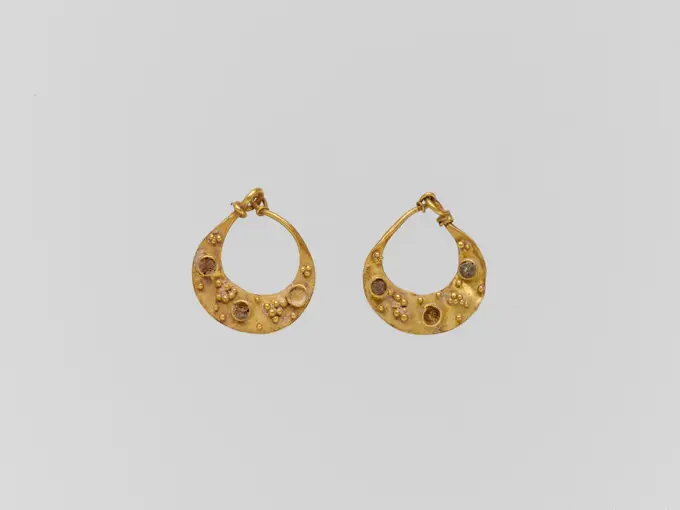
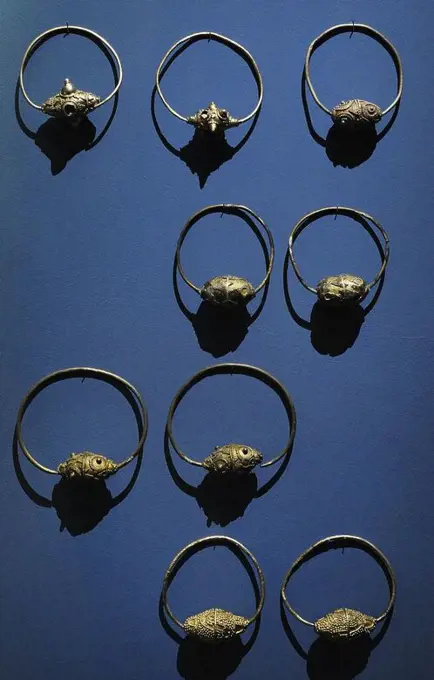
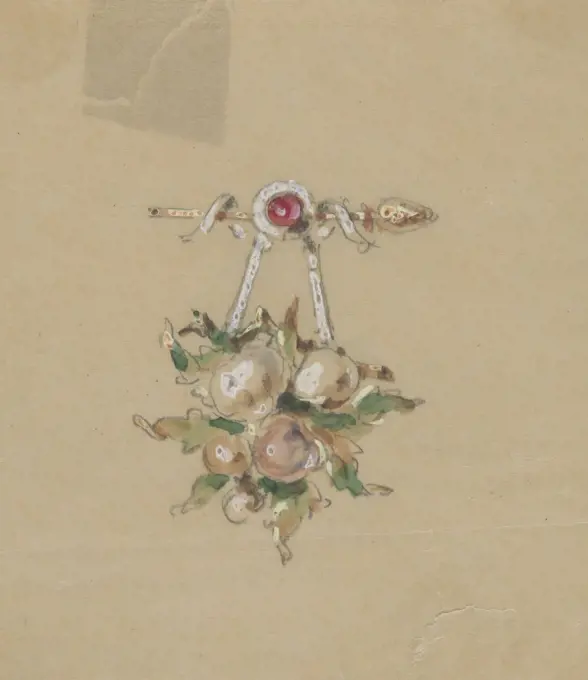
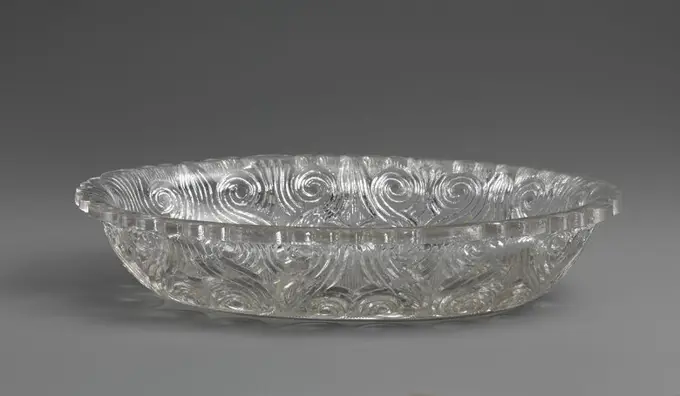
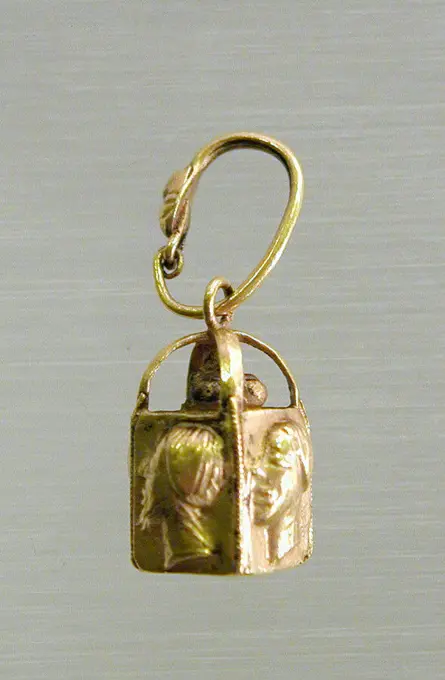
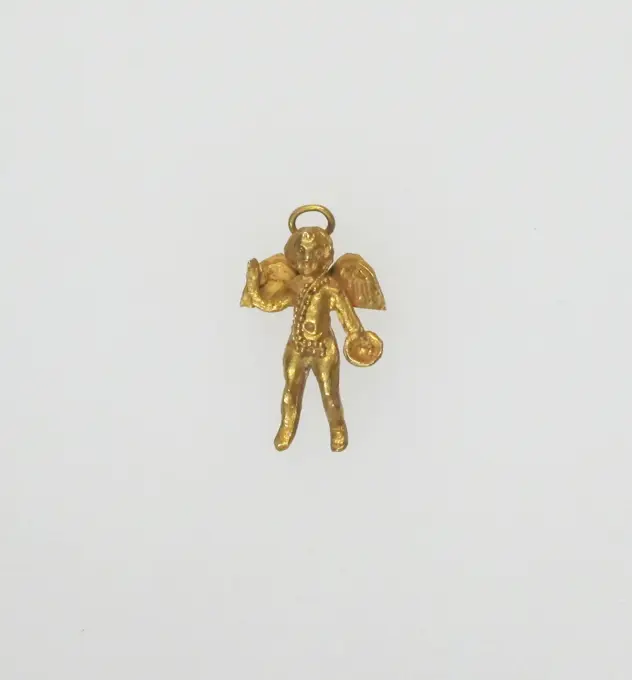
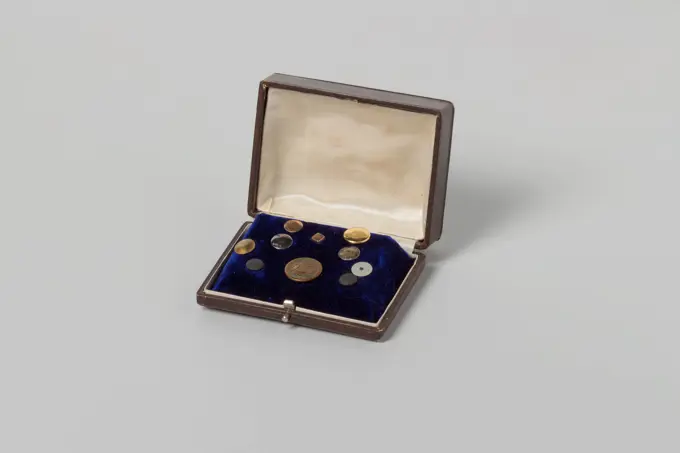
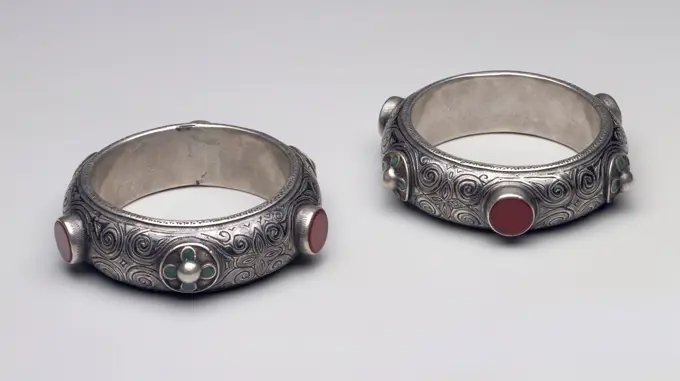
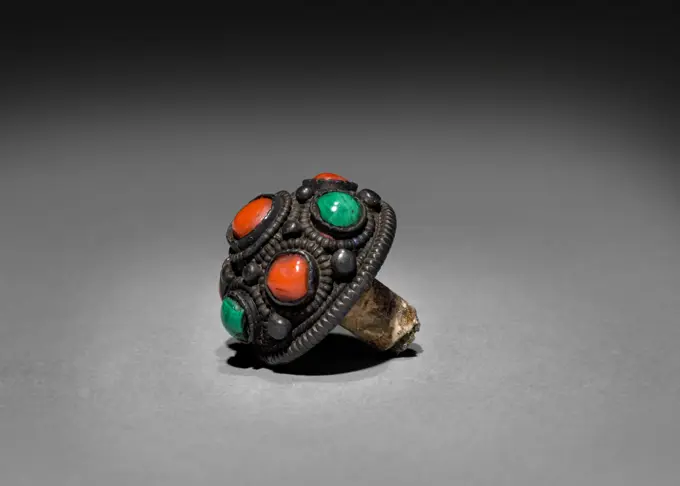
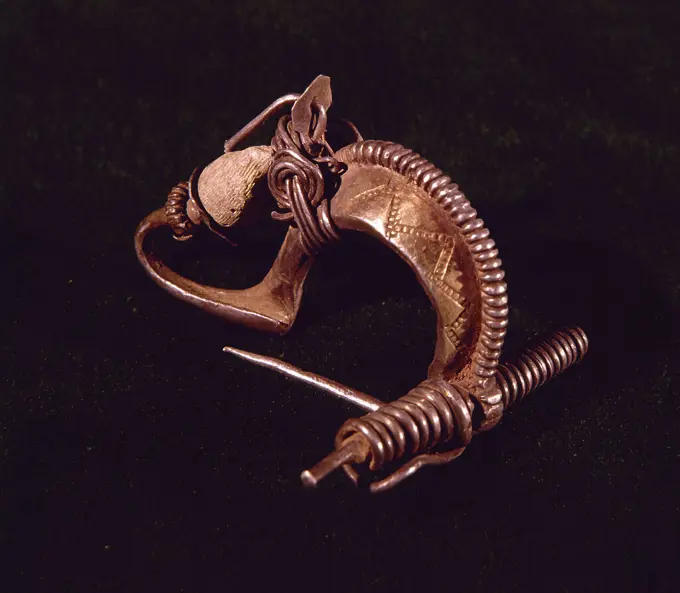
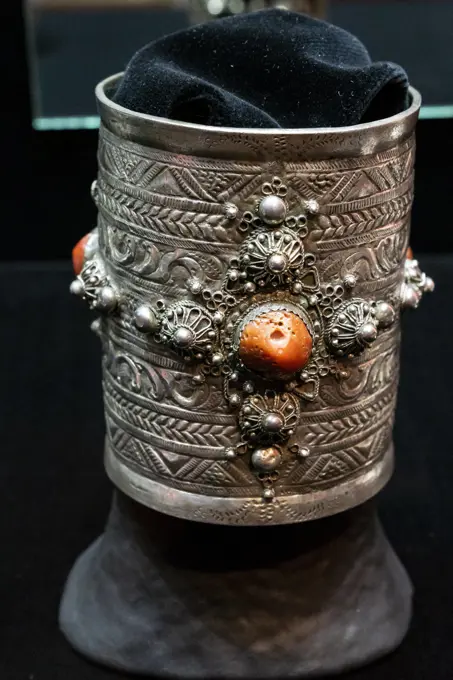
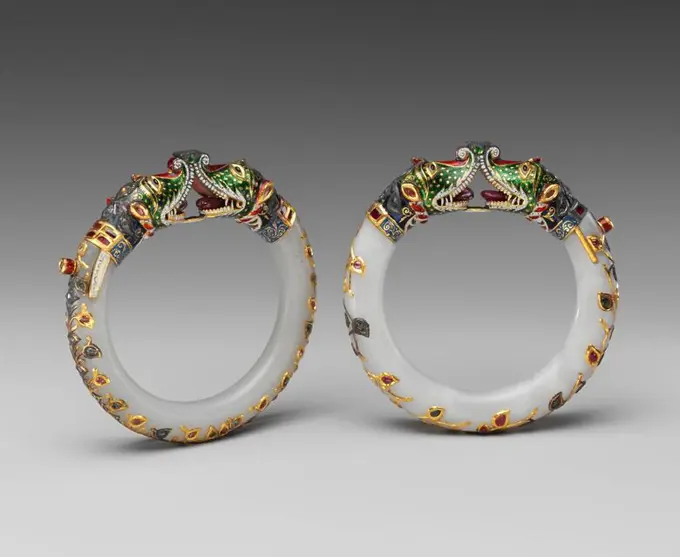
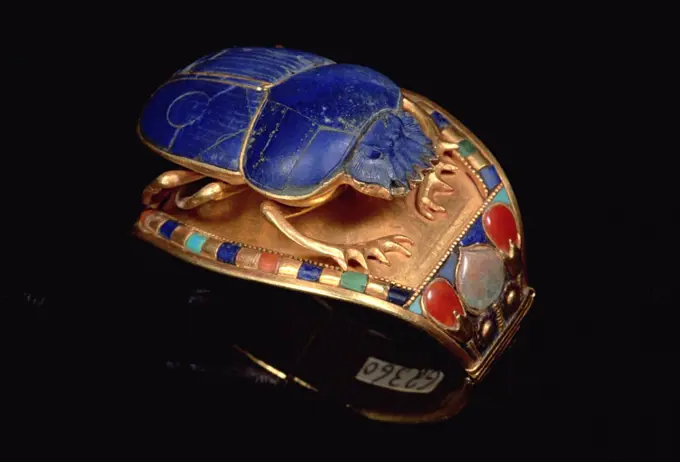
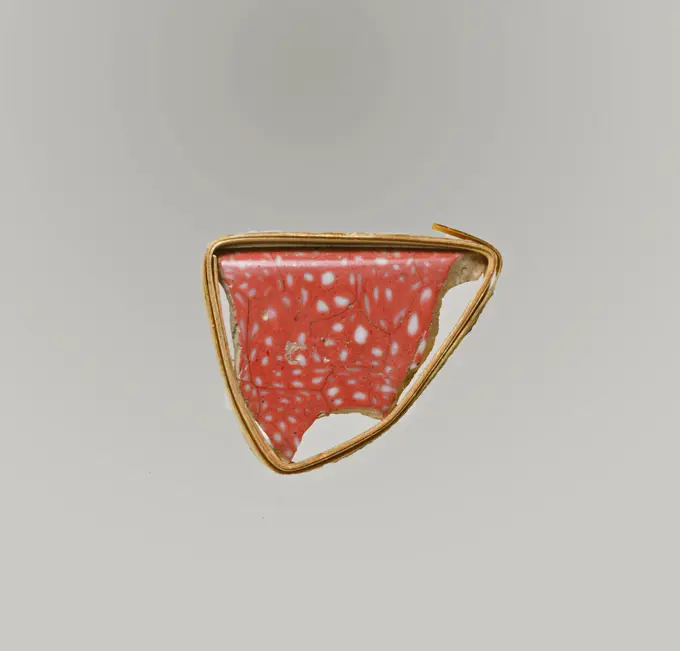
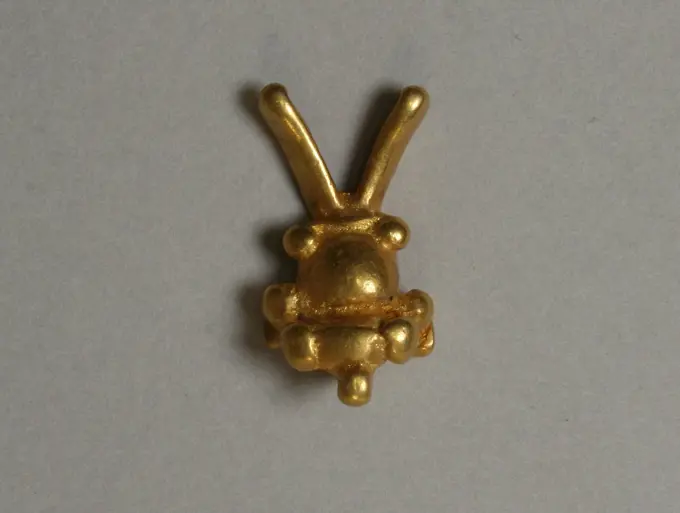
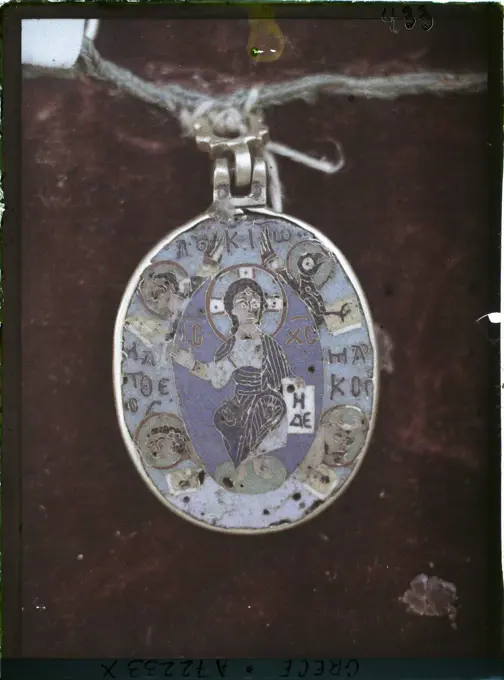
Ornament, one of four, 7th-10th century, 2 5/8 x 2 1/2 in. (6.7 x 6.4 cm), Silver, China, 7th-10th centuryHalf of the belt buckleGold crescent-shaped earring 5th century B.C.-1st century A.D. Cypriot The crescent-shaped earring is very long-lived in Cyprus and, as yet, impossible to date securely. Most examples are probably Roman.. Gold crescent-shaped earring. Cypriot. 5th century B.C.-1st century A.D.. Gold. Classical-Roman. Gold and SilverRing with Claw setGemFart from antique GEMM - Jupiter Wycraci  1 PO. XVII century (1600-00-00-1650-00-00);Luxurious temple earrings from graves of female members of the ruling class. Biskupija-Crkvina, Gornji Koljani-Crkvina. Croatia. Museum of Croatian Archaeological Monuments, Split, Croatia.RingTwo Designs for Brooches with a Fruit Garland Design for a rod brooch with a hanging fruit bunch, designer: Henri Cameré, Paris, c. 1864 - c. 1894, tracing paper, brush, h 101 mm × w 84 mmDish. Culture: American. Dimensions: L: 11 1/ 8 in (28.3 cm), W: 7 3/4 in (19.7 cm), H: 2 1/4 in (5.7 cm). Manufacturer: Probably Boston & Sandwich Glass Company (Sandwich, Massachusetts, 1825-88). Date: 1828-32.America's greatest contribution to glassmaking technology was the invention of the glass press by which a vessel could be formed and decorated in one motion with the use of a mold and a plunger. In the earliest years, designers mimicked the geometric patterns on cut glass. Soon, they broke free of the limitations of those cut patterns with the new-found ability to introduce designs that would not have been technically possible in cut glass. This oval dish is a superb example of that critical moment. Rather than diamonds and squares, typical of cut patterns of the day, the dish features bold S-scrolls. The dish is also innovative in its background design of fine ribbing, which contributes to the overall brilliance. Museum: Metropolitan Museum of Art, New York, USA.Stirrup-shaped Ring with Green Stone in Square Mount Second half of the 8th-second half of the 10th century Indonesia (Java). Stirrup-shaped Ring with Green Stone in Square Mount 50208Bracelet Regulant, Jan (ca 1760 1807)Ring: Head of Hathor. Egyptian. Date: 1390 BC. Dimensions: W. 0.5 cm (3/16 in.); diam. 1.6 cm (5/8 in.). Faience. Origin: Egypt. Museum: The Chicago Art Institute, Chicago, USA. Author: Ancient Egyptian.Pair of Ear Clips with Keben Fruit Motif Second half of the 8th-second half of the 10th century Indonesia (Java). Pair of Ear Clips with Keben Fruit Motif 50052Bracelet, Hair, gold, black and white enamel, Bracelet of brown-gray hair, elaborately braided, and clasp in three sections of gold, ornamented, on outer sections, with black enamel, on central, with black and white enamel in design of floral spray., USA, mid-19th century, jewelry, Decorative Arts, BraceletPair of gold earrings with four relief faces late 4th-3rd century B.C. Phoenician Hoop of plain gold with hook and eye clasp, decorated below with an applied small disk modeled as a Black's head. Threaded on the hoop by means of a small suspension ring is a box-like hollow pendant with a slightly concave undecorated base. The four rectangular sides are embossed with alternating heads of a youth and a bearded man, all facing left. The vertical edges of the box are decorated with soldered-on strips of milled wire. The top of the box is decorated with a pyramid of larger and smaller granules. Attached to the top corners of the box are two intersecting transverse strips, slightly triangular in section, on top of which is soldered the small suspension ring mentioned above. Pair of gold earrings with four relief faces. Phoenician. late 4th-3rd century B.C.. Gold. Hellenistic. Gold and SilverRing set with a Mouse Design Amulet. Dimensions: diam: 2.6 cm (1 in.)Other (Amulet): h. 0.6 cm (1/4 in); l. 1.5 cm (9/16 in); w. 0.8 cm (5/16 in). Dynasty: Dynasty 18. Reign: reign of Thutmose III. Date: ca. 1479-1425 B.C..This ring is inscribed with the cartouche of Thutmose III. Museum: Metropolitan Museum of Art, New York, USA.old brass ring door handle old brass ring door handle on urban door Copyright: xZoonar.com/VVxVoennyyx 5033136School bag. Rectangular school bag, with open-worked top, containing a carrying eye. A branch is engraved on the sliding plate and a child's head is attached to it. The school bag has been marked: twice a dolphin in a triangle and the engraved letters AW.. Button from gold and light green email, with a ruby.Pendant with Eros ca. 330-30 B.C. Greek. Pendant with Eros. Greek. ca. 330-30 B.C.. Gold. Hellenistic. Gold and SilverRingMiniature Baskets, Before 1923. America, Native North American, Southwest, Arizona, Akimel O'odham (Pima), Unassigned. overall: 1.3 x 2.6 cm (1/2 x 1 in.).Catering - farting;  19th/20th century (1890-00-00-1910-00-00);Ring: Usermaatre-Setepenre (Rameses II). Egyptian. Date: 1279 BC-1213 BC. Dimensions: W. 0.6 cm (1/4in.); diam. 1.9 cm (3/4 in.). Faience. Origin: Egypt. Museum: The Chicago Art Institute, Chicago, USA. Author: Ancient Egyptian.Ethiopian Knighthood (Order of the Trinity), received by Willem Drees, Arthus Bertrand, in or after c. 1885  The order star is the same as the carrying sign, but without a crown and with fire tongues between the flower motifs on the edges; A sturdy (golden) pin is attached to the bottom. Paris gilding (material) striking (metalworking)  Netherlands. EthiopiaStirrup. Culture: West Slavic. Dimensions: H. 5 5/16 in. (13.5 cm); W. 5 3/4 in. (14.6 cm); D. 1 in. (2.5 cm); Wt. 3.8 oz. (107.7 g). Date: 12th-13th century.This simple stirrup of Slavic type is said to have been found on the site of Dolkheim, today in Northern Poland.Horses had great importance in Slavic society, in both its social and religious aspects. Equestrian equipment, like stirrups, spurs and bits, are regularly found in their burials, even after their Christianization, among the goods warriors wanted to bring with them to the afterlife. The elite would sometimes even be accompanied by sacrificed horses, a meaningful practice at that time, considering the high economic value of horses. Museum: Metropolitan Museum of Art, New York, USA.Scarab Finger Ring Middle Kingdom ca. 1981-1802 B.C. The scarab (kheper) beetle was one of the most popular amulets in ancient Egypt because the insect was a symbol of the sun god Re. This association evolved from the Egyptians' misunderstanding of the scarab's life cycle. An adult beetle lays its eggs inside a ball of dung, which is then buried underground. When the young beetles hatch, the only portion of this process easily visible to an observer is the beetle emerging fully developed from a dung ball, a seemingly magical event. Thus, the Egyptian word for scarab translates as "to come into being."The scarab forms food balls out of fresh dung using its back legs to push the oversized spheres along the ground toward its burrow. The Egyptians equated this process with the sun's daily cycle across the sky, believing that a giant scarab moved the sun from the eastern horizon to the west each day, making the amulet a potent symbol of rebirth. The earliest scarab amulets appeared in the FPrikslede, W. Freen, c. 1856 - c. 1858 On an elongated plate is a puncture sleigh on which a man sits with a stitch and with a puncture stick in each hand. In front of the sled is a man with a stitch and with a rope attached to the sled in his left hand. The plate has an engraved ZIG-Zag line along the edge. The image is marked with a dolphin and a master sign. Dordrecht silver (metal) On an elongated plate is a puncture sleigh on which a man sits with a stitch and with a puncture stick in each hand. In front of the sled is a man with a stitch and with a rope attached to the sled in his left hand. The plate has an engraved ZIG-Zag line along the edge. The image is marked with a dolphin and a master sign. Dordrecht silver (metal)BROCHE CON FORMA DE PEZ PROCEDENTE DE ESTADOS UNIDOS - 1940 - BISUTERIA - DISEÑO DE MAZER. Location: PRIVATE COLLECTION.Pectoral in the Shape of a Leopard 6th century B.C. North China. Pectoral in the Shape of a Leopard 62469With dark brown leather covered box, covered with white satin on the inside; The vaulted bottom is covered with blue velvet, 1900 - 1925 With dark brown leather covered box, covered with white satin on the inside; The vaulted bottom is covered with blue velvet West-Europa Leather. upholstery: satin. Covering bottom: Velvet (Fabric Weave) With dark brown leather covered box, covered with white satin on the inside; The vaulted bottom is covered with blue velvet West-Europa Leather. upholstery: satin. Covering bottom: Velvet (Fabric Weave)Earring with pyramid of balls. Earring with pyramid of balls 243034Bracelet, one of a pair, 20th century, 1 x 4 in. (2.5 x 10.16 cm), Silver, enamel, Morocco, 20th centuryBRAZALETE DE ORO CON CABEZA DE SERPIENTE PROCEDENTE DE POMPEYA - SIGLO I DC. Location: BRITISH MUSEUM. LONDON. ENGLAND.Powder Box (Poudrier), 1779-1780. Jean-Joseph Barrière (French). Enamel on gold; diameter: 1.8 x 5.5 cm (11/16 x 2 3/16 in.).Renaissance ring with the Kornice coat of arms. unknown, authorSnuff Bottle (stopper), 1644-1911. China, Qing dynasty (1644-1911). Glass; overall: 7.7 x 4.2 cm (3 1/16 x 1 5/8 in.).FIBULA IBERICA. Location: MUSEO ARQUEOLOGICO-COLECCION. CORDOBA. SPAIN.Ring 1550 BCE-656 BCE Egypt. Carnelian, silver (or electrum) . Ancient EgyptianBroochAmazigh bracelet from Aures Amazigh bracelet from Aures, Algeria, Corral del Carbón , al-fundaq al-yadida, 14th century, Granada, Andalusia, Spain Copyright: xZoonar.com/TOLOxBALAGUERx 21956678Ring with Red Stone 8th-12th century Indonesia (Central Java). Ring with Red Stone 64195Bracelet. Culture: India. Dimensions: Diam. 3 1/8 in. (7.9 cm). Date: 18th-19th century. Museum: Metropolitan Museum of Art, New York, USA.Asia, Sri Lanka, Kandy. emerald and gold necklaceVera Cruz, 1350. Museu-Tresor de la Catedral de Girona / Museo Tesoro de la Catedral de Gerona.Wedding Rings presented in Ring BoxKing Tut's bracelet with scarab, Cairo Museum, Egypt"Niagara Falls" Matchsafe; USA; aluminum; 7 x 3.7 x 1.2 cm (2 3/4 x 1 7/16 x 1/2 in. )Glass mosaic carinated dish fragment late 1st century B.C.-early 1st century A.D. Roman Opaque red and white.Short, horizontal rim with rounded edge; carinated side with one convex curve.Mosaic pattern formed from polygonal sections of a single cane in a red ground with irregular pattern of white rods.Polished interior, with pitting of surface bubbles; thick, iridescent weathering on exterior, outer edge of rim, and jagged edges.. Glass mosaic carinated dish fragment. Roman. late 1st century B.C.-early 1st century A.D.. Glass; cast. Early Imperial. Glassbead necklace, first iron age, Museum of Navarra, Pamplona, Navarra,Spain.Insect Ornament 1st-7th century Calima (Yotoco). Insect Ornament 309991Shoe buckles British 18th century View more. Shoe buckles. British. 18th century. metal, rhinestonesMatchsafe, silver, enamel, England, 19th century, containers, Decorative Arts, MatchsafeTulip shape icon made of metalMont Athos, Greece , 1918 - Greece - Fernand Cuville - (September) (French - Mont Athos , Grèce). Christianity, monastery, object of worship, accessory, Middle Ages, jewelry, Religion, clothing, artOrnament Korea. Ornament 44825Seville, April 1992. Universal Exhibition of Seville 1992. In the image, merchandising items. Cufflinks and tie clip.Metal sign for a bottle with wine;  XIXW. (1801-00-00-1900-00-00);