Historical Armor and Artifacts

Artifacts from medieval armor, including a brigandine plate and various buttons made from bone and glass, reflecting historical craftsmanship.
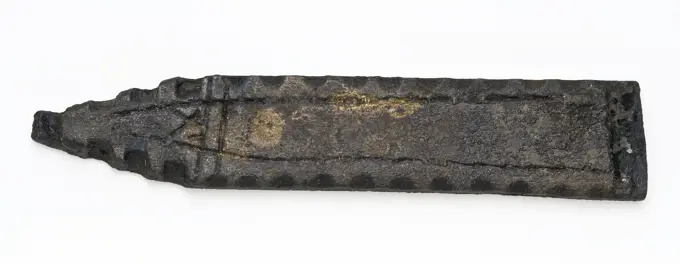
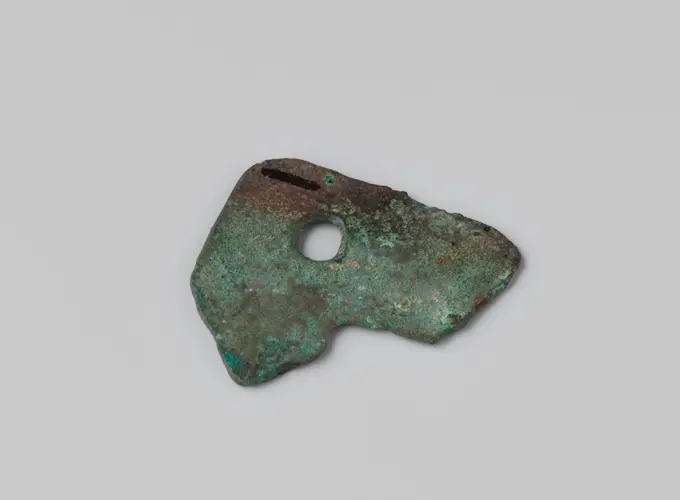
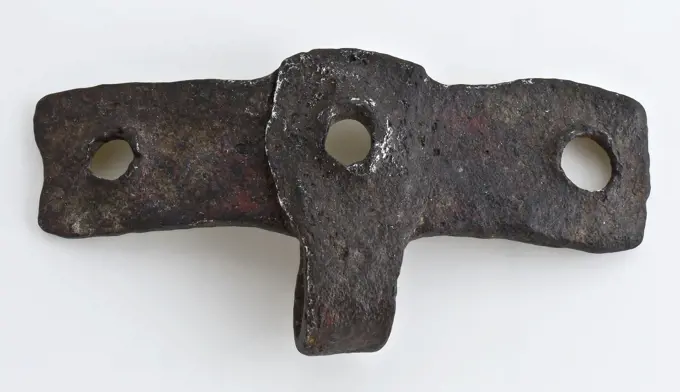
Copper decorative fittings with linear decoration, decorative fittings soil find copper metal, cast engraved Oblong strip copper in point ending Lobed and toothed edges Contour following engraved lines cross on the slant archology adorn
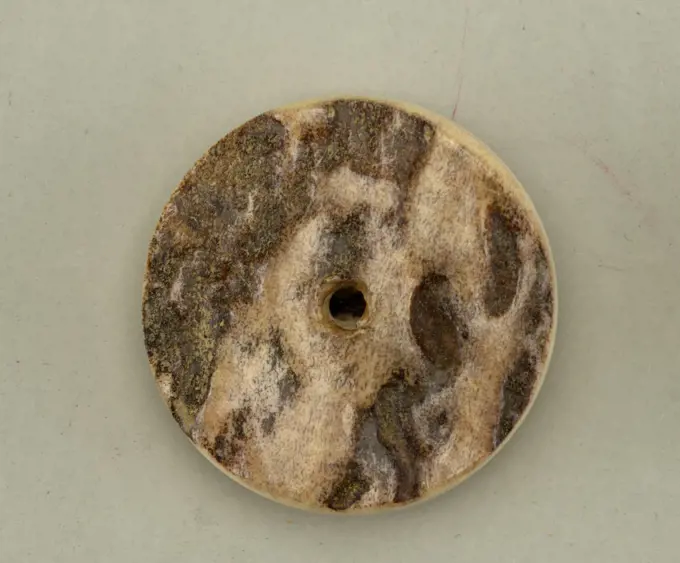
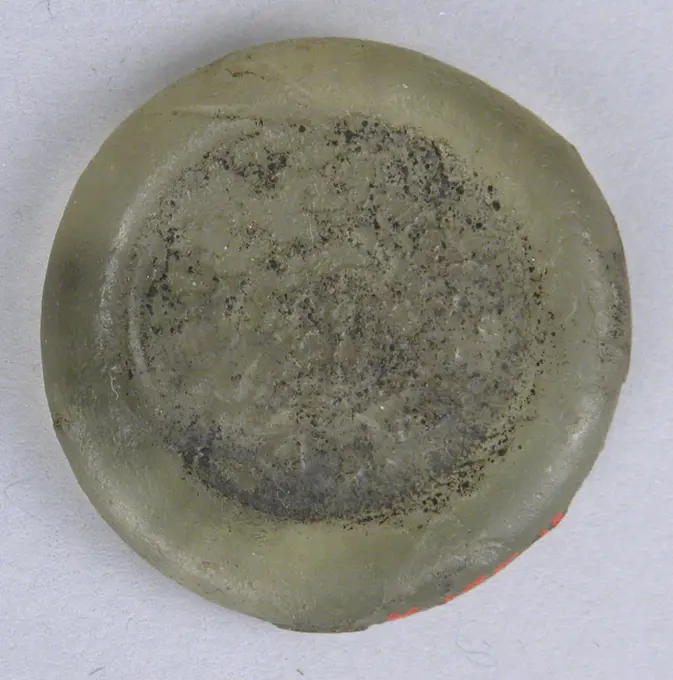
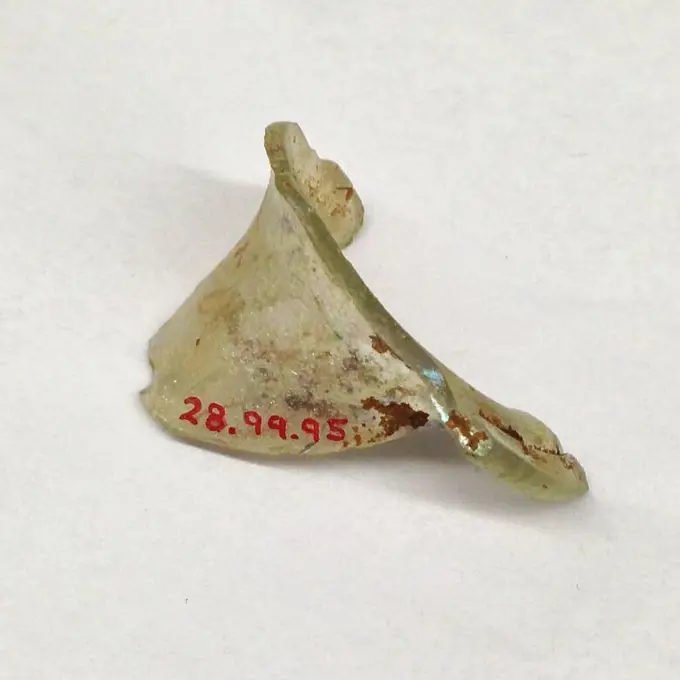
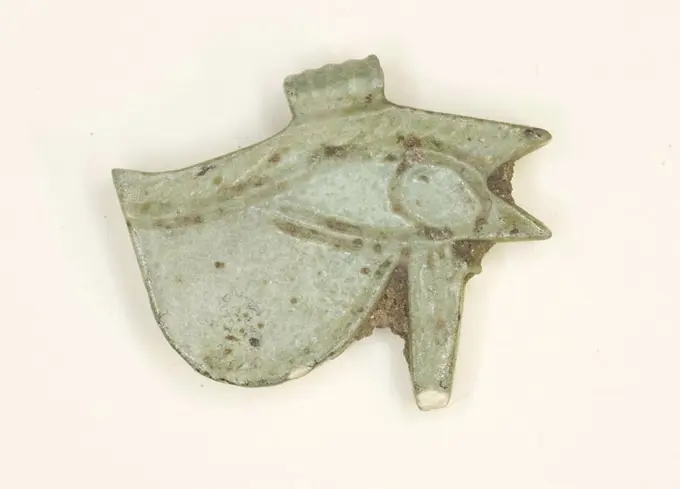
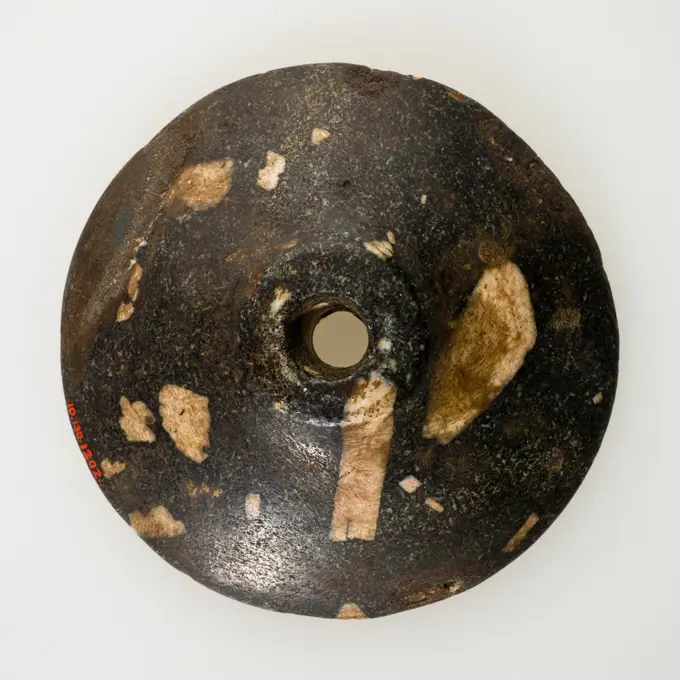
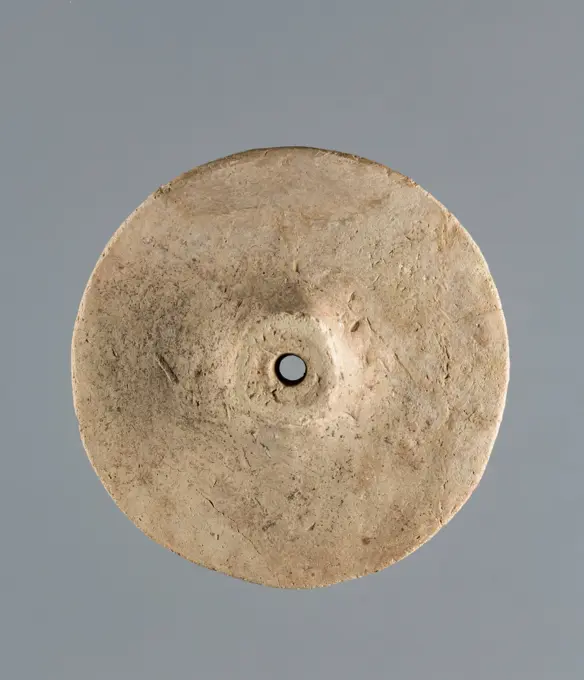
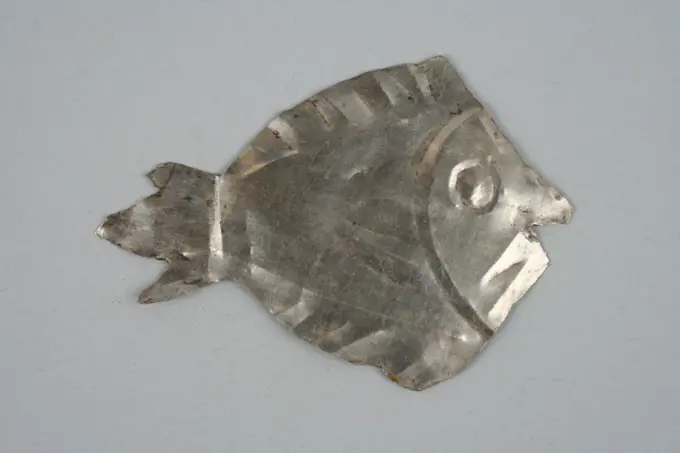
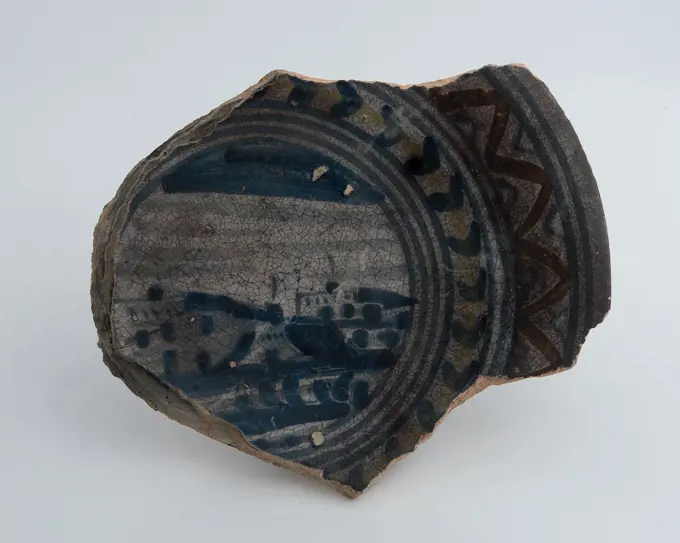
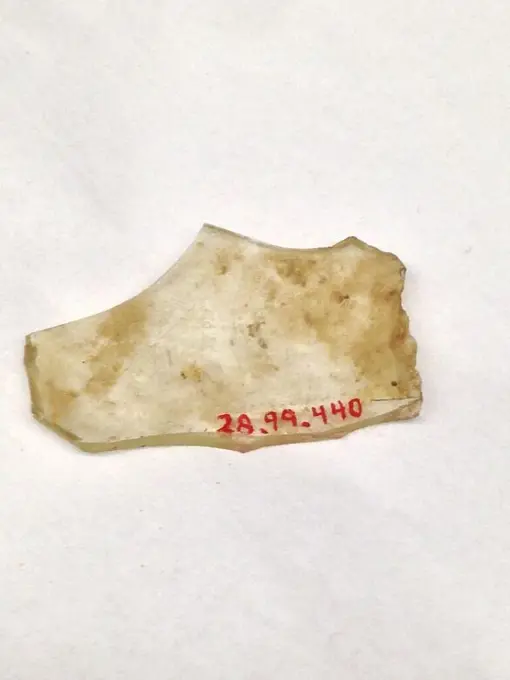
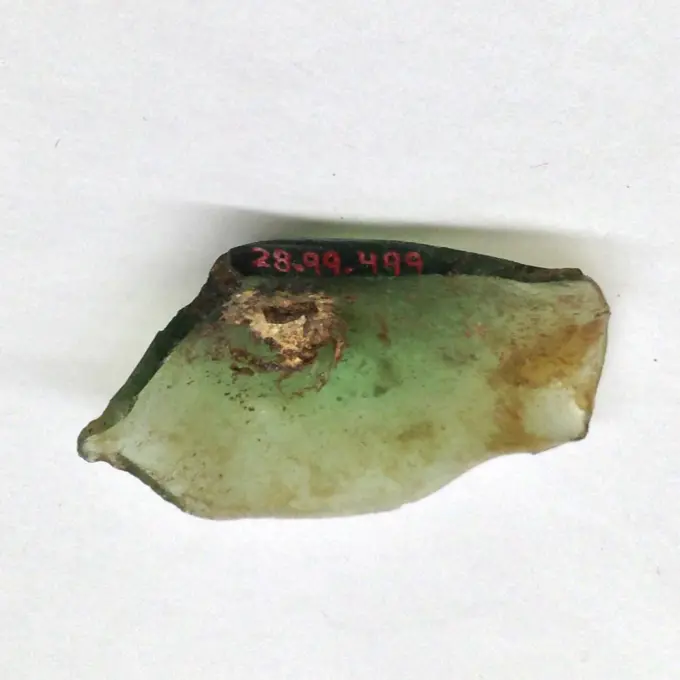
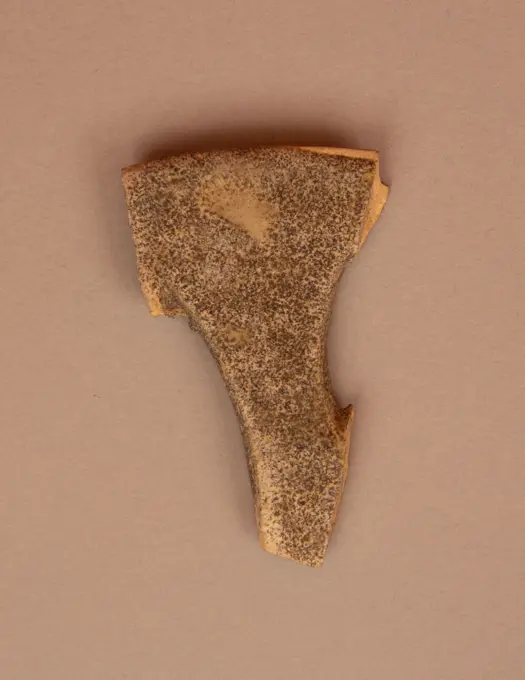
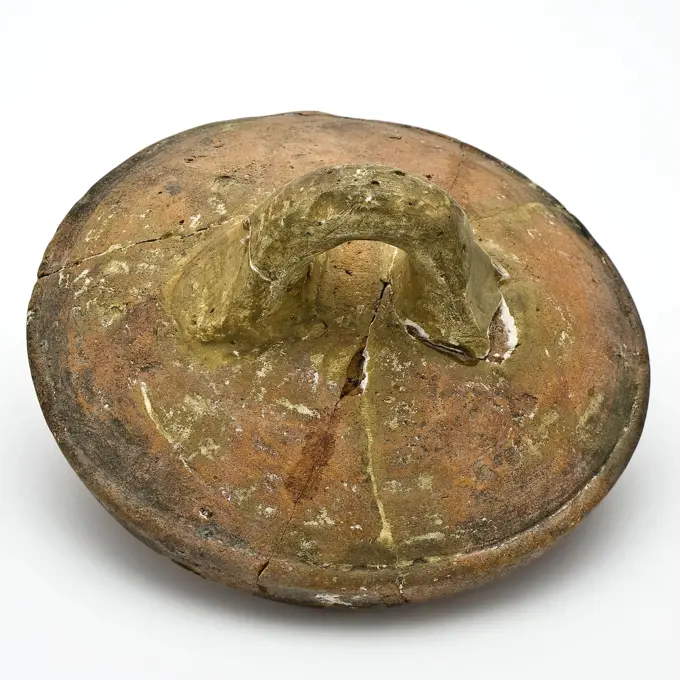
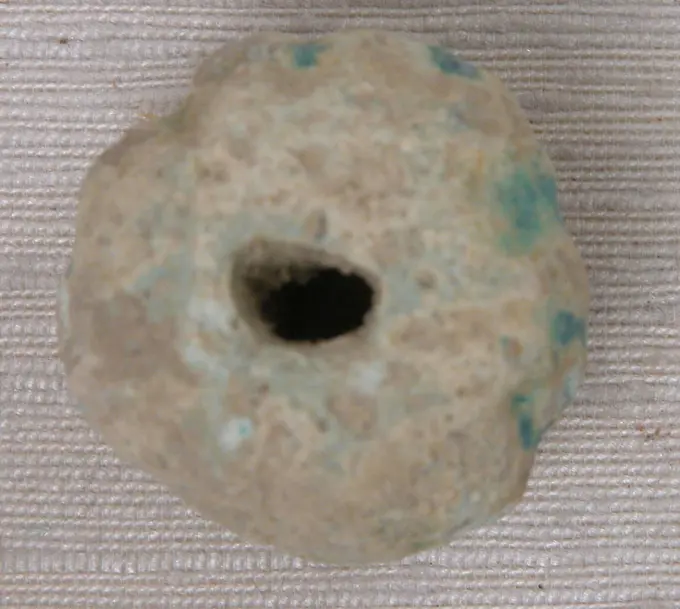
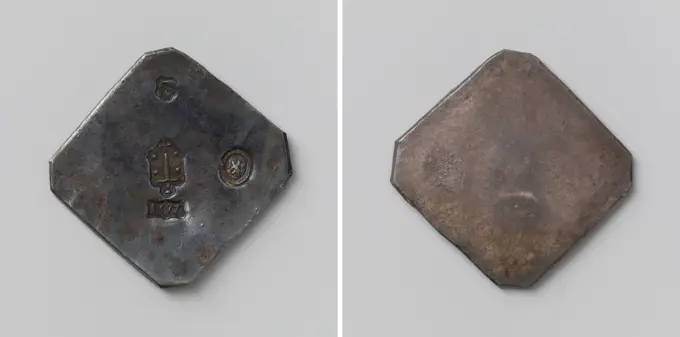
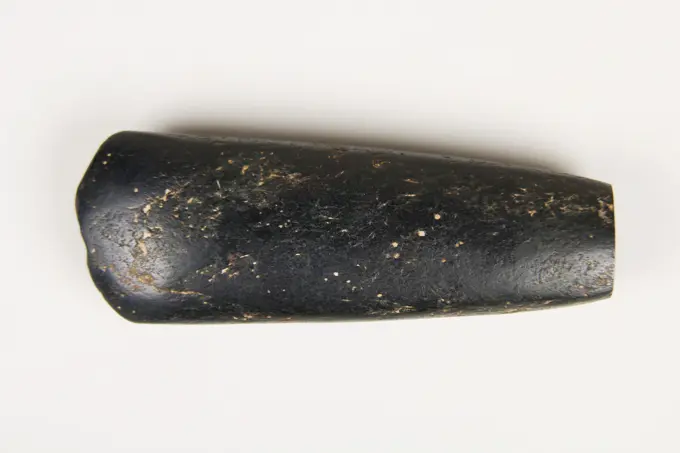
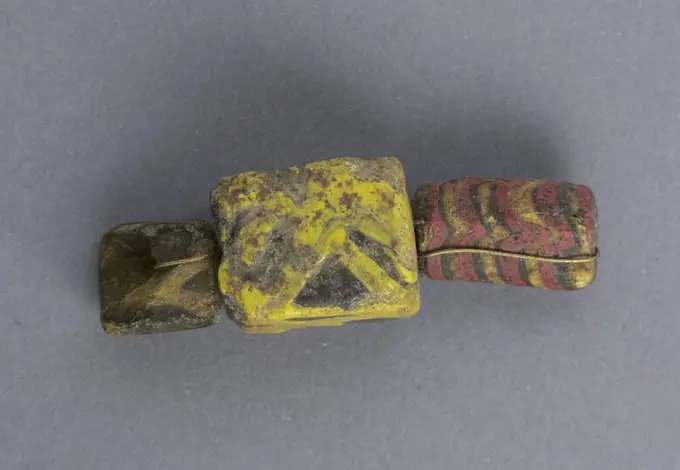
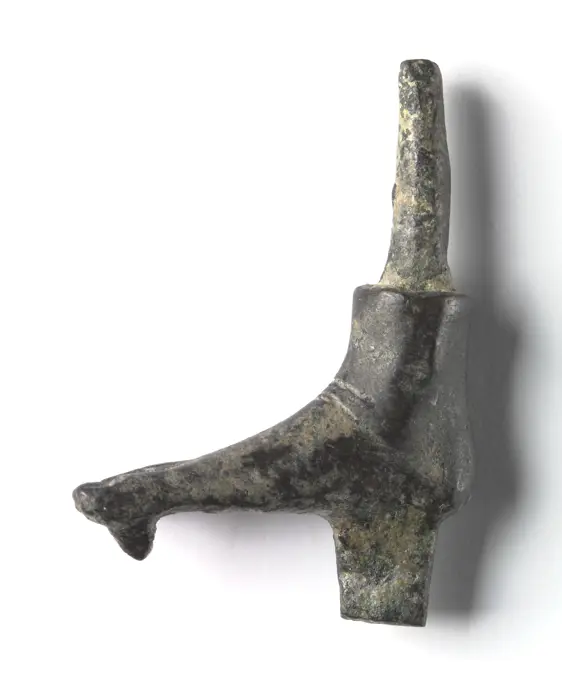
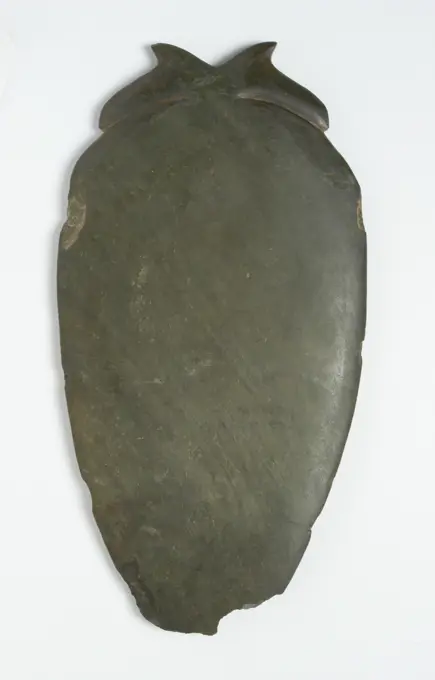
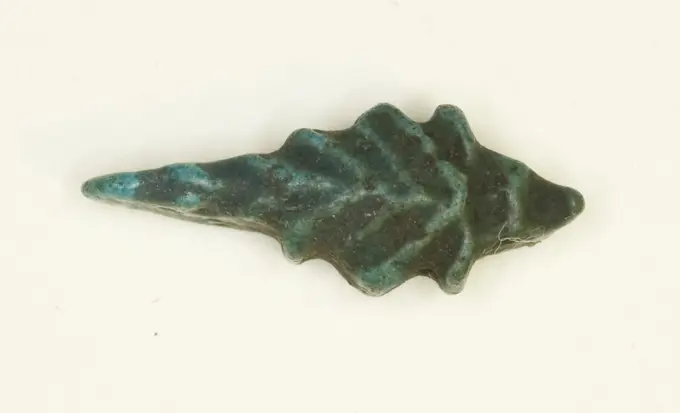
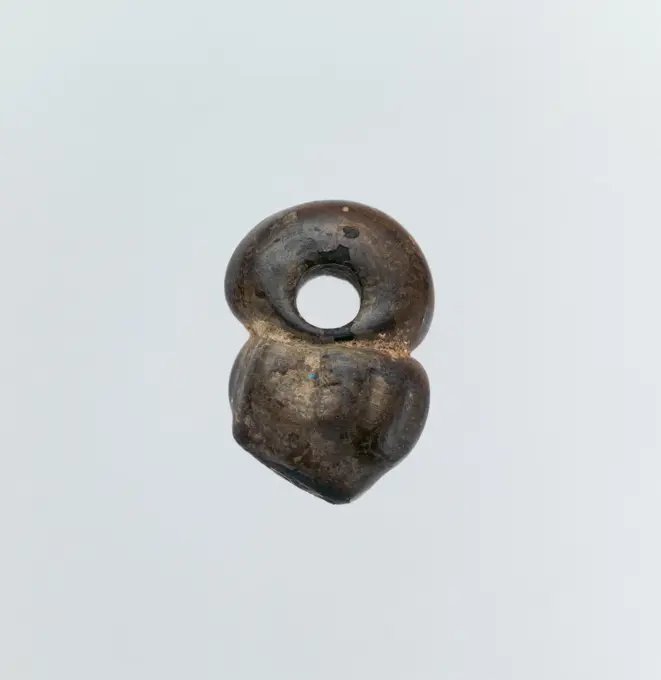
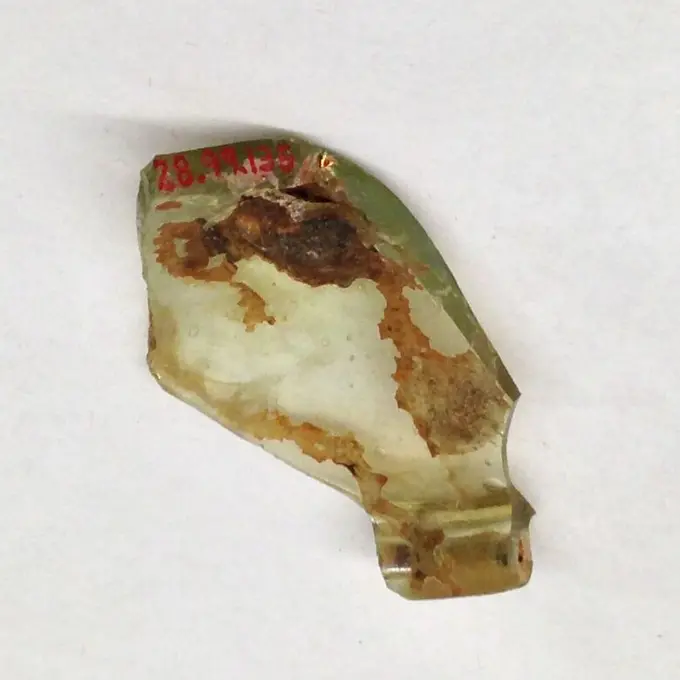
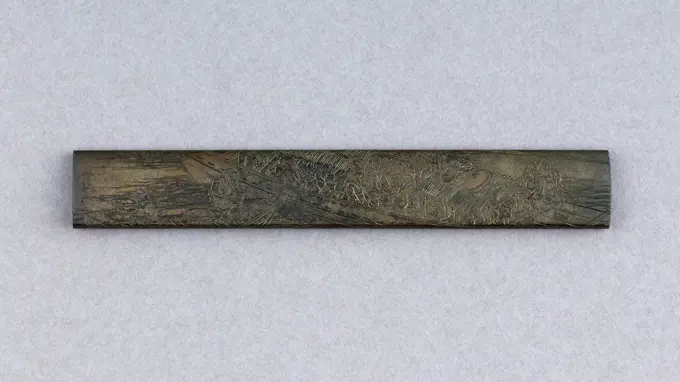
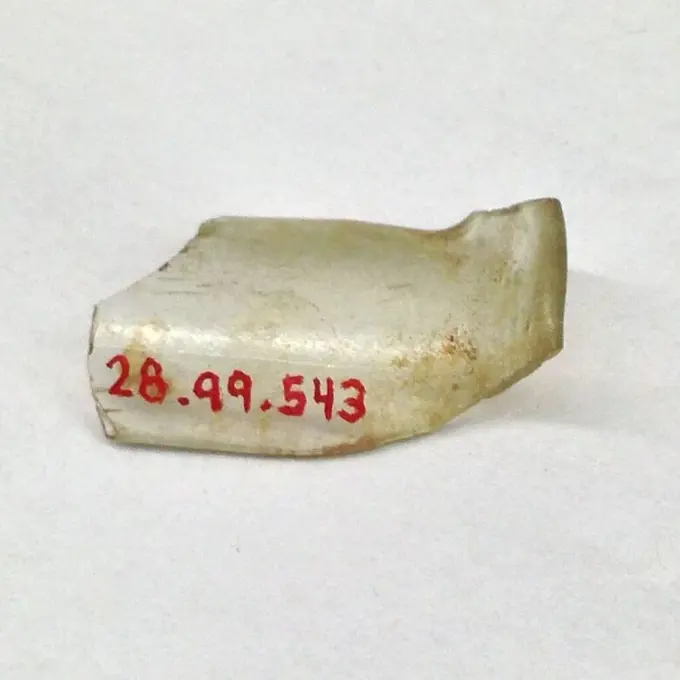
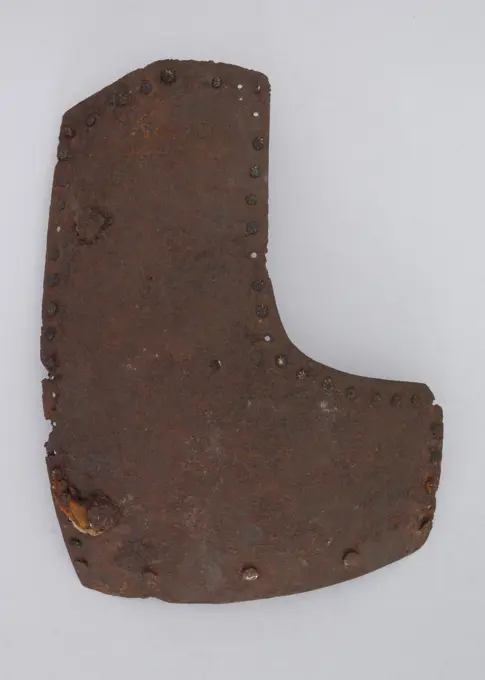
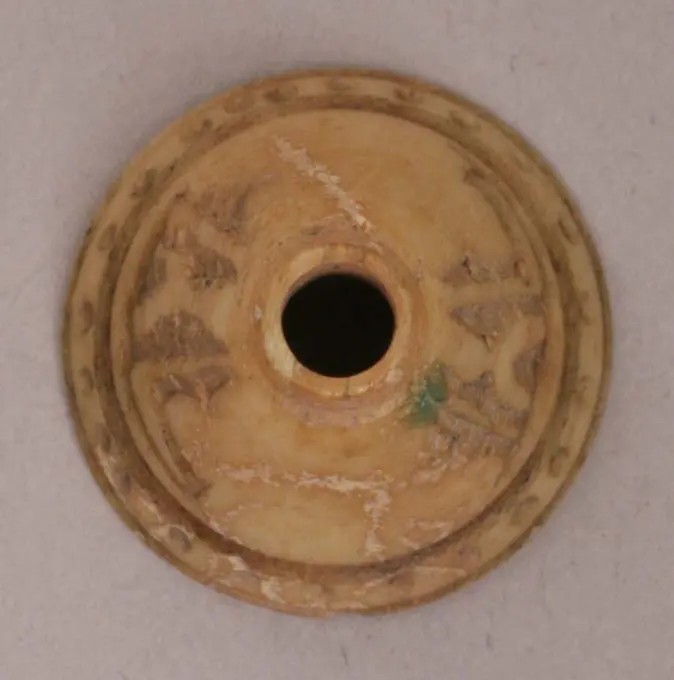
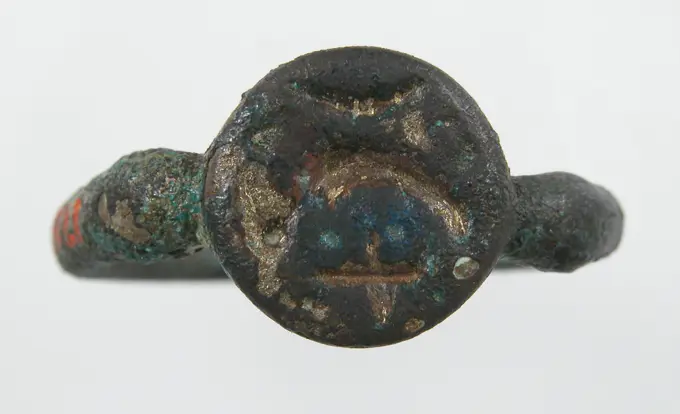
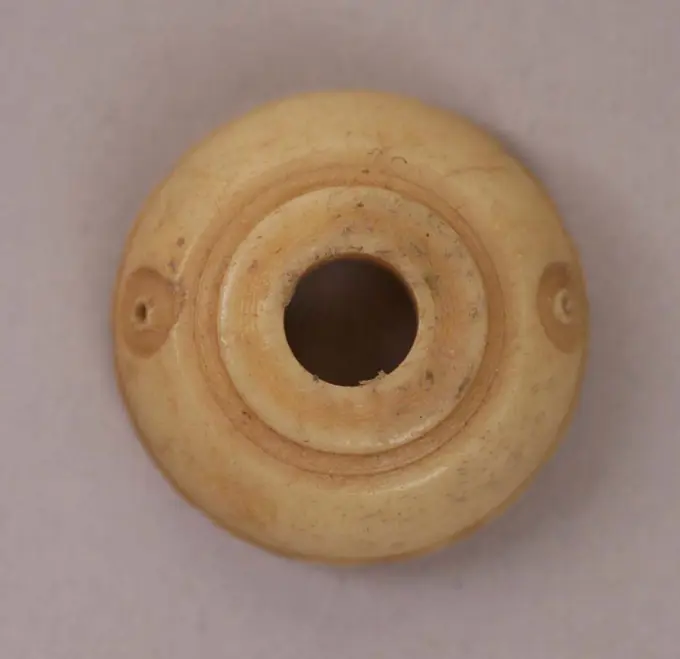
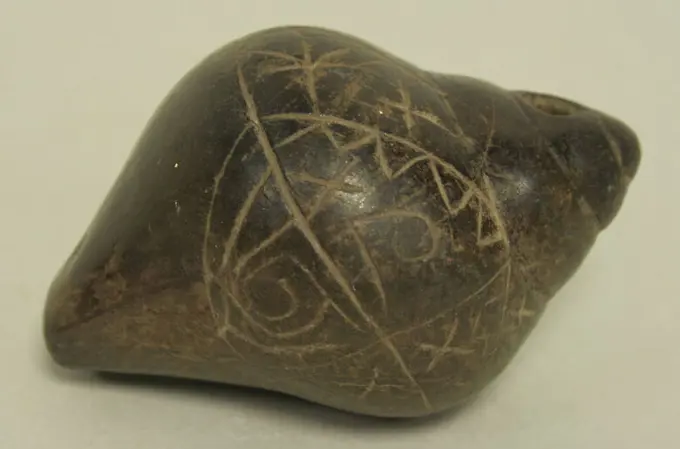
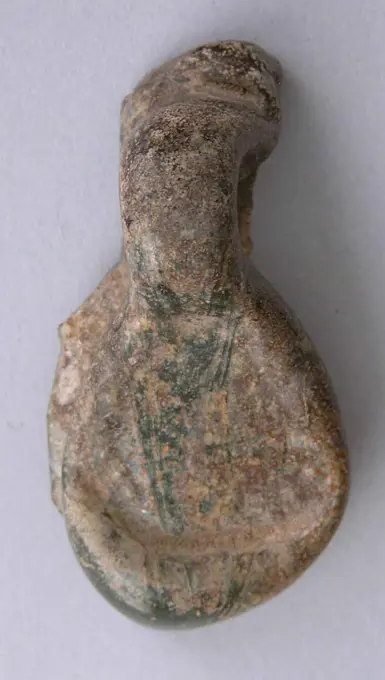
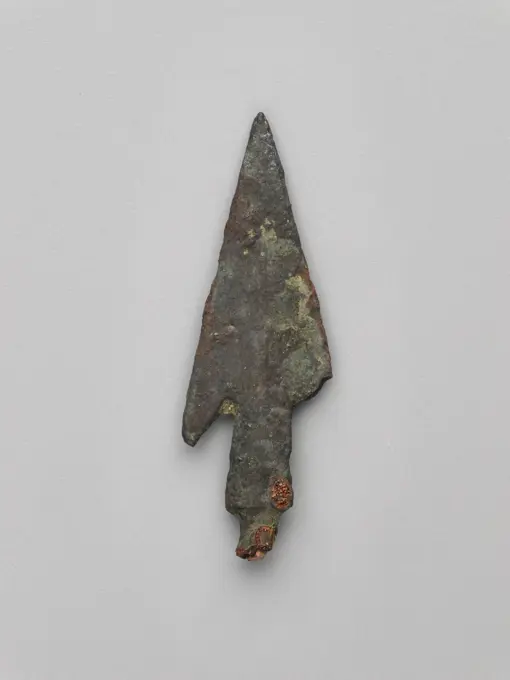
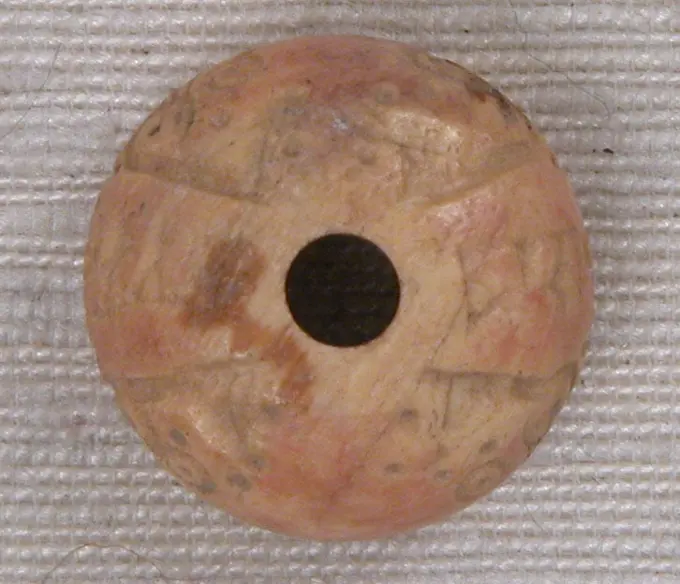
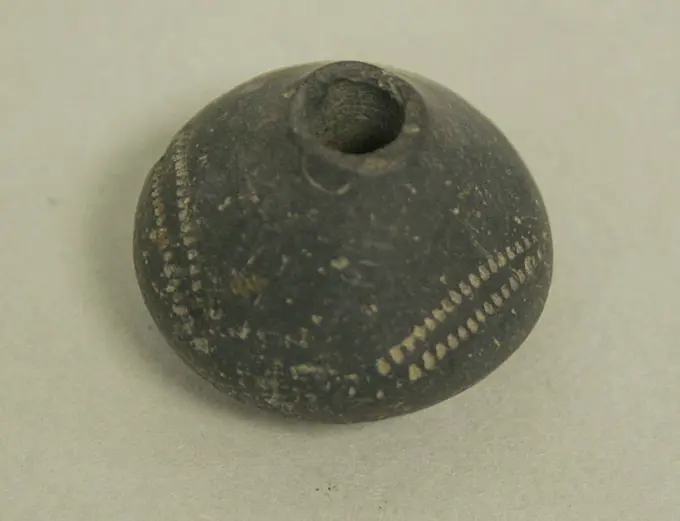
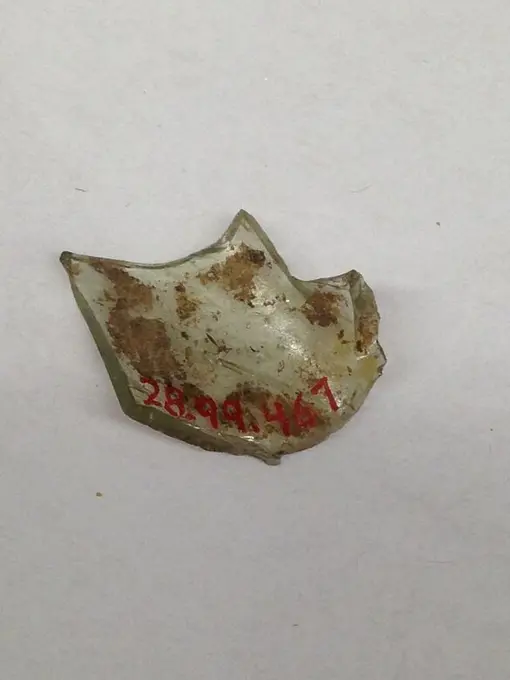
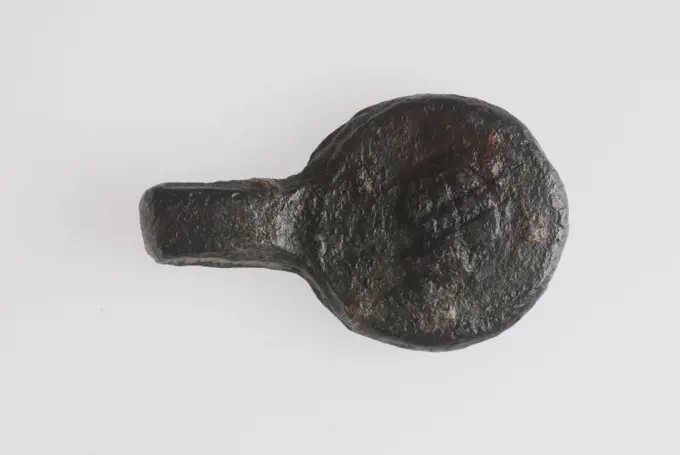
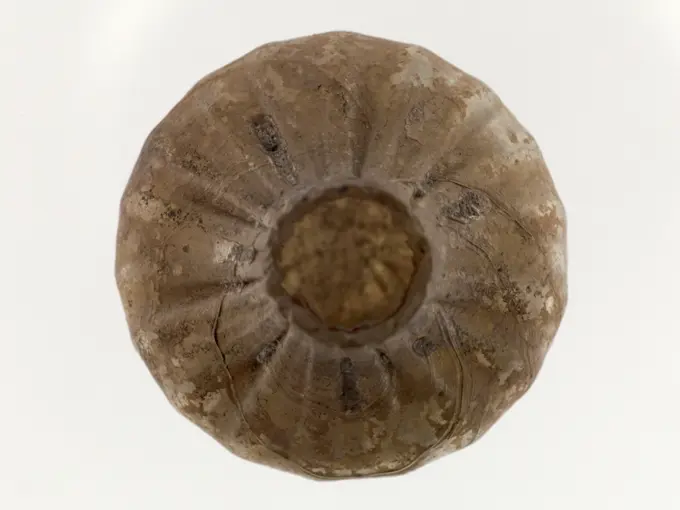
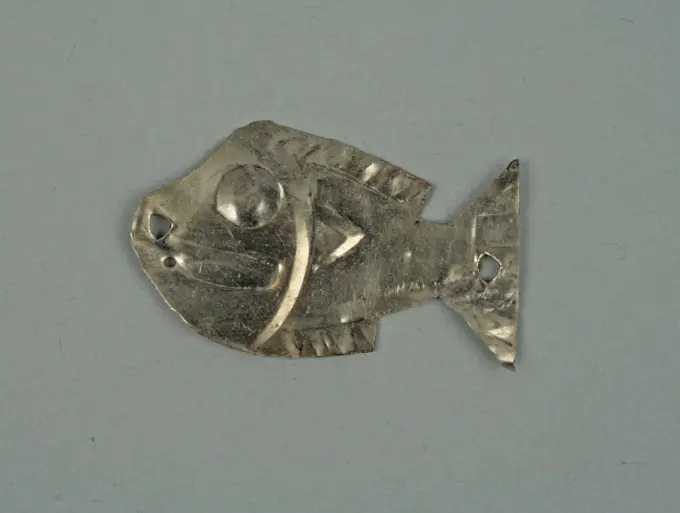
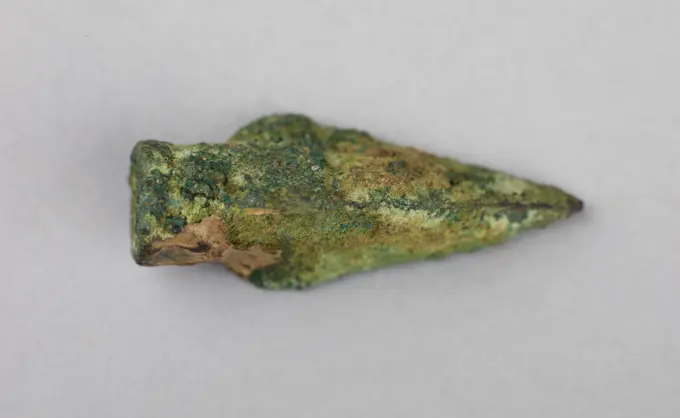
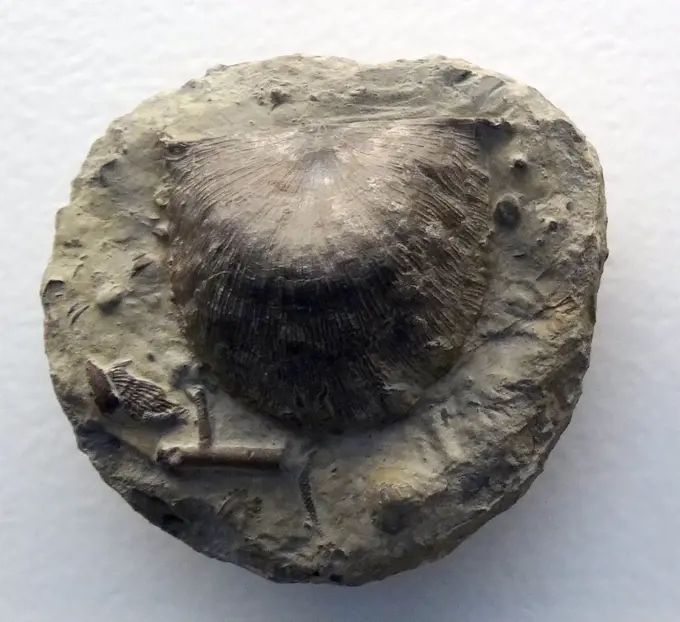
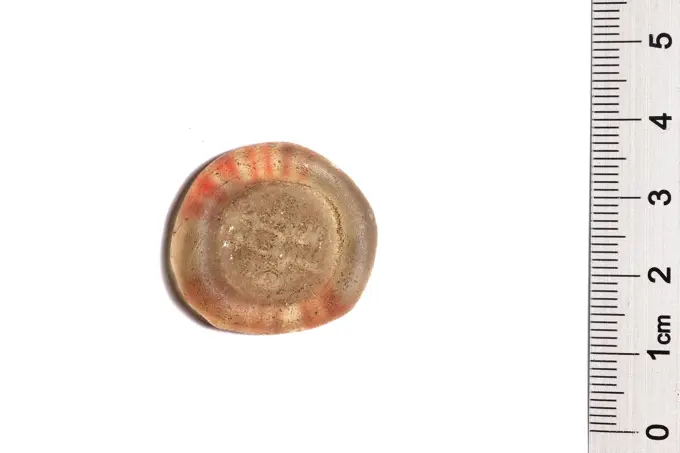
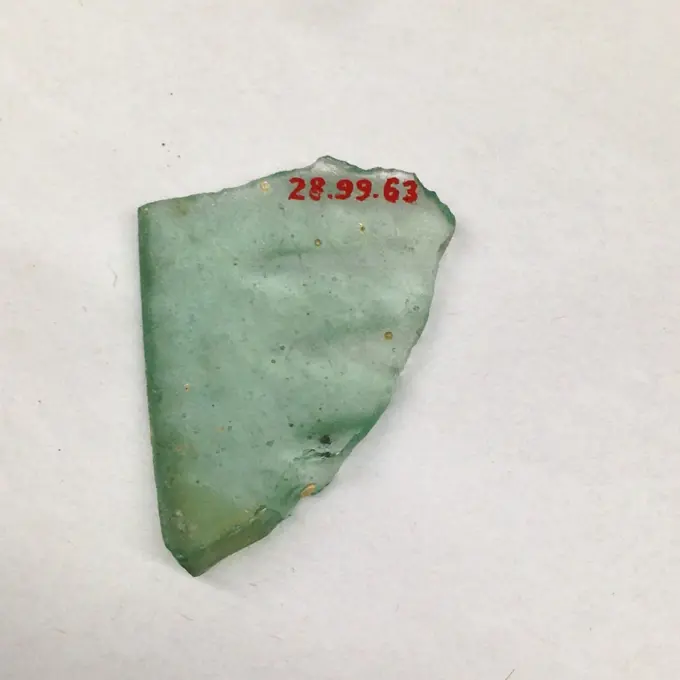
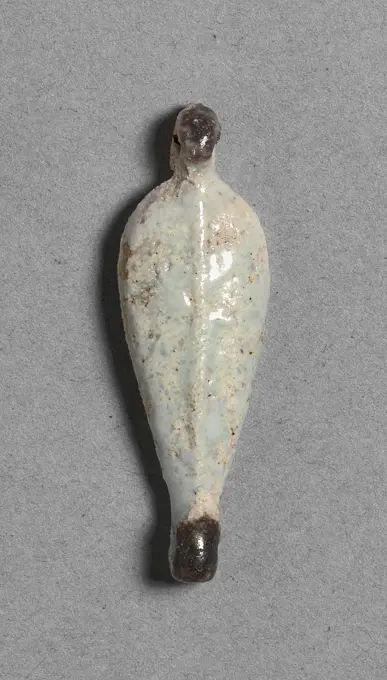
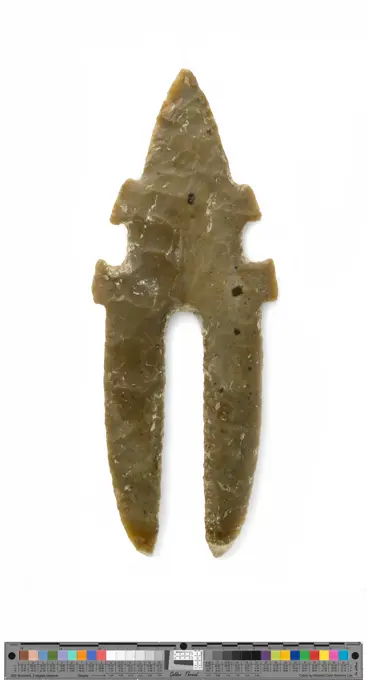
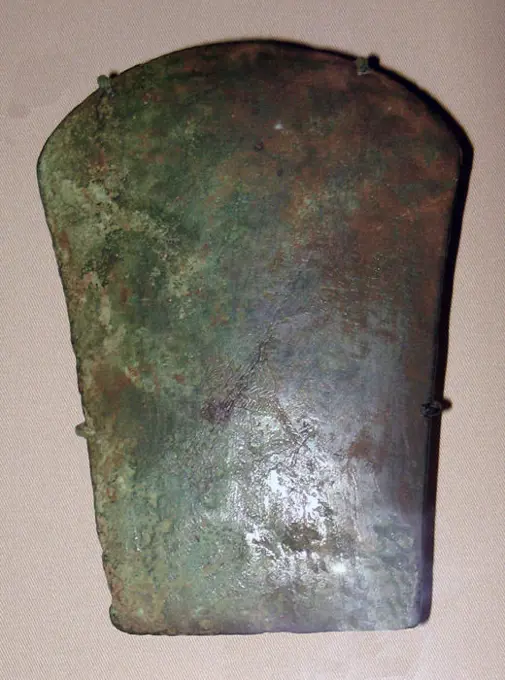
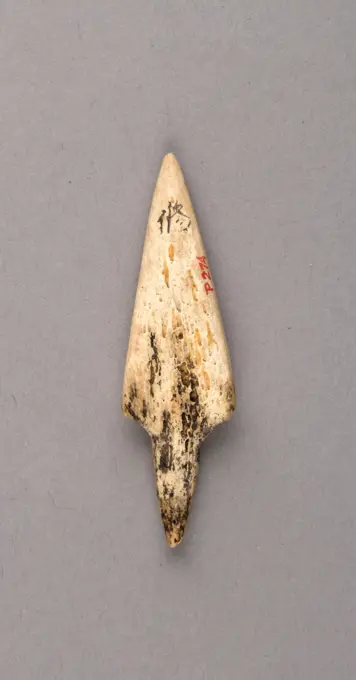
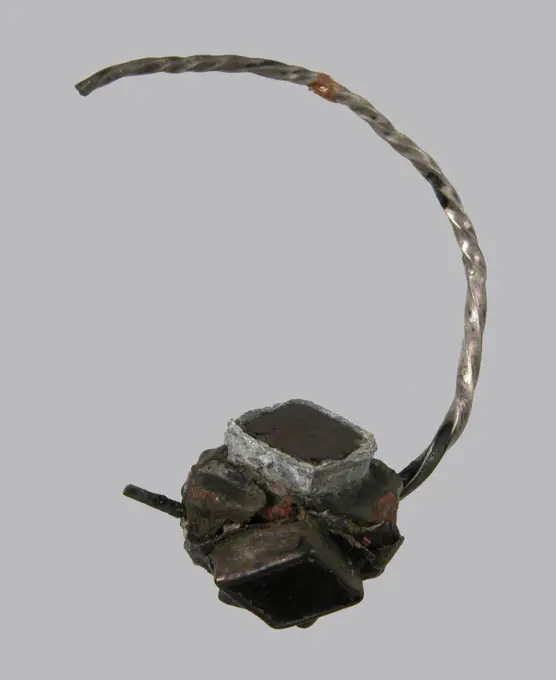
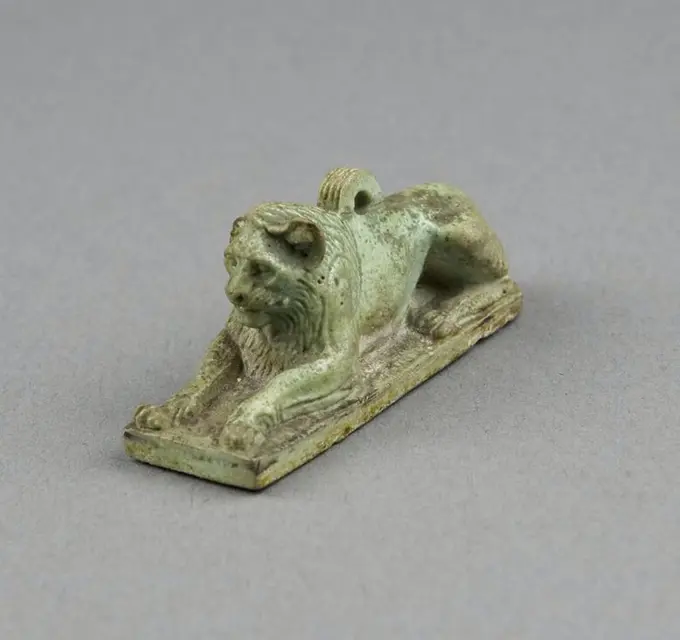
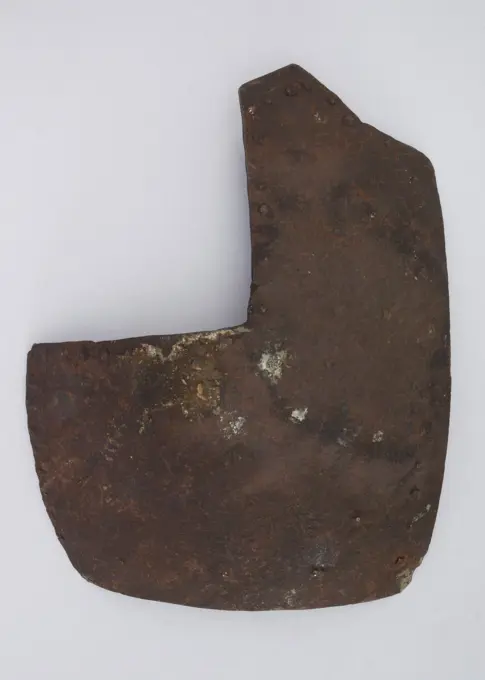
Brigandine Plate 1400-1450 Italian This is part of a large find of medieval armor discovered in 1840 in the ruins of the fortress of Chalcis, on the Greek island of Euboea (then a Venetian colony called Negroponte). The fortress had been captured and destroyed by the Turks in 1470. Now divided largely between the Ethnological Museum, Athens, and The Metropolitan Museum of Art, the Chalcis hoard contains many rare and unusual elements of fourteenth- and fifteenth-century armor. Of particular importance are the variety of headpieces and the many fragments of brigandines (armor for the torso constructed of small plates riveted to layers of fabric), some of which retain portions of their original velvet covering. The Chalcis armor provides a unique picture of the armament used in the Aegean, one of the easternmost military outposts of the Venetian empire.. Brigandine Plate 34354Buttons, bone antler, 5 circular buttons made of deer's antlers with rough portion used for ornament; one hole., Component -a is on card 2, possibly France, late 19th century, costume & accessories, Decorative Arts, ButtonsCoin Weight 11th century. Coin Weight. 11th century. Glass. Attributed to Egypt. GlassFragment. Culture: European or Middle Eastern. Dimensions: L. 1 1/2 in. (3.8 cm). Date: ca. 1150-ca. 1250. Museum: Metropolitan Museum of Art, New York, USA.Anonymous small asymmetrical ax blade (common name). Bronze. Cernuschi Museum, Asia Museum of Asia in the city of Paris.Copper Axe with Shells 3rd century B.C.-A.D. 2nd century Vicús. Copper Axe with Shells 315287Scherf van Kist bottle from V.O.C. ship De 'Witte Leeuw', Before 1613  Sharf of Kist bottle from V.O.C. ship De 'Witte Leeuw', Bottles of green glass with twisted lines and coral-like attack.  .   Sint-HelenaFragment 8th-9th century. Fragment 448833Copper decorative fittings with linear decoration, decorative fittings soil find copper metal, cast engraved Oblong strip copper in point ending Lobed and toothed edges Contour following engraved lines cross on the slant archology adornLamp 8th-9th century. Lamp 448991Ring 3rd-12th century. Ring 446255Amulet of the Eye of the God Horus (Wedjat). Egyptian. Date: 1069 BC-664 BC. Dimensions: 2 × 2.25 × .5 cm (3/4 × 7/8 × 3/16 in.). Faience. Origin: Egypt. Museum: The Chicago Art Institute, Chicago, USA. Author: Ancient Egyptian.Sculpture Fragment 4th-7th century Coptic. Sculpture Fragment 478561Bead; stoneButton or Bead or Spindle Whorl 8th-10th century The dot-in-circle motif recalls designs presumed to be of magical significance, most likely an abstract eye to ward off the evil-eye, which serves an apotropaic function. Easily reproduced with a tool and visible in many cultures and times, this symbol may have lost its meaning, and become simply a decorative pattern, or may have one that we have not yet discovered.. Button or Bead or Spindle Whorl 450062Mace head ca. 3850-2960 B.C. Predynastic Period. Mace head. ca. 3850-2960 B.C.. Porphyry. Predynastic Period. From EgyptCostume Ornament 11th-12th century Central coast (). Costume Ornament 308793Fragment ca. 1150-ca. 1250 European or Middle Eastern. Fragment 695403Koło z modelu wozu. nieznany warsztat północno mezopotamski, workshopTextile Ornament 14th-15th century Chimú. Textile Ornament 308757Fragment of dish, polychrome decorated, with landscape as representation, dish crockery holder soil find ceramic earthenware glaze tin glaze lead glaze, hand turned glazed decorated fried Fragment dish yellow shard polychrome decorated with strongly stylized landscape on stand ring Used colors: blue and yellow color in the midfield only blue Outside uniform gray but strongly discolored archeology Rotterdam Stadscentrum Stadsdriehoek Oudehaven indigenous pottery serving table eating crockery Soil discovery: Oude Haven Rotterdam.Fragment. Culture: European or Middle Eastern. Dimensions: L. 2 1/8 in. (5.4 cm). Date: ca. 1150-ca. 1250. Museum: Metropolitan Museum of Art, New York, USA.Fragment ca. 1150-ca. 1250 European or Middle Eastern. Fragment. European or Middle Eastern. ca. 1150-ca. 1250. Glass, ceramic. Glass-VesselsCymbal 30 B.C.-A.D. 364 Roman Period. Cymbal 551066Shard ca. 4th-5th century Pakistan. Shard 50855Fragments of Ceramics with Opacified Glaze 9th century. Fragments of Ceramics with Opacified Glaze. 9th century. Earthenware; glazed. Found/excavated Iraq, Samarra. CeramicsJade Inlay before 16th century Mexican. Jade Inlay. Mexican. before 16th century. Jade. Mexico, Mesoamerica. Stone-OrnamentsPottery lid with lying ear as handle, red shard, unglazed, lid closure earth discovery ceramic pottery, hand-turned baked lid red pottery lying sausage ear restoration in gypsum unglazed curved lid with semi-round shape The edge is diagonally cut inward archeology Capelle aan den IJssel House in Capelle castle indigenous pottery cooking kitchen storage utensils tableware Soil discovery: canal south side house in Capelle ± 1395-1500 Capelle aan den IJssel 1963.Beads 8th-13th century This object was excavated at Nishapur.Nishapur was a vital city in the early and middle Islamic periods, located along one of the main trajectories that connected Iran and West Asia Islamic lands with Central Asia and China. These itineraries are often referred to by the term Silk routes’ but were in fact crucial to the movement of constellations of materials and objects, as well as people and ideas. The diverse population of Nishapur and its surroundings, from the better-researched elite groups of merchants, land-owning aristocracy, and literates, to the less-known artisans, farmers, miners, and servants, were instrumental in adapting global cultural trends to create their own distinctive visual languages. This is seen in the material remains of everyday life in medieval Nishapur - from pots and pans to lighting devices, inkwells, textiles and trimmings, jewelry, games and toys, talismanic devices, weapons, coins, and architectural fragments.Nishapur lost its pPart or fittings from the wreck of the East Indians Hollandia, Anonymous, 1700 - in Or Before 1743 part Strip-shaped fitting; fragm, id. 80H1670, eroded. Netherlands copper (metal)Daalder, emergency coin from Haarlem, beaten during the siege, Anonymous, 1572 - 1573 coin. siege coin Unilateral, diamond -shaped emergency coin with beveled corners. Front: three stamps above each other, and one right of it; From bottom to top: Master sign: Dooden head; City coat of arms: Conversely, sword with two stars on either side, a cross on the point of sword; year; On the right a knock: lion on shield. Reverse: Blanco Haarlem silver (metal) striking (metalworking)  HaarlemDisk Brooch Frankish 6th centuryAx 1500-500 B.C. India. Ax 50631Fragment ca. 1150-ca. 1250 European or Middle Eastern. Fragment 696595Axe Mexico. Axe. Mexico. Black jadeite. Pre-Columbian period. JadeBeads, 3. Dimensions: Width (largest bead): 5/8 in. (1.6 cm)Width (smallest bead): 3/8 in. (1 cm). Museum: Metropolitan Museum of Art, New York, USA.Conical Game Piece. Dimensions: Preserved H. 2.6 cm (1 1/16 in.); Diam. 2 cm (13/16 in.). Dynasty: Dynasty 18, early. Reign: reign of Thutmose I-early sole Thutmose III. Date: ca. 1504-1447 B.C..The first room that the Museum's excavators cleared in the family tomb of Neferkhawet was the east chamber. In the northwest corner of this room they found a mis-matched partial set of gaming pieces. The two types, conical and spool-shaped, are common components of the board games senet and 20-squares which were usually combined in a single game box with the game boards on opposite sides, and a drawer for the gaming pieces and the throw sticks or knuckle bones that were used like dice to determine how the pieces were moved on the boards. The eight gameing pieces, five conical and three spool-shaped, were lying on their sides next to the outlined remains of an insect-eaten game box. Museum: Metropolitan Museum of Art, New York, USA.Stone Earflare before 16th century Mexican. Stone Earflare 317338Bronze Mount from a "Shawabty Bundle": Right Foot, c. 1336-1256 BC. Egypt, Thebes, Wadi Qubbanet el-Qirud, New Kingdom, Late Dynasty 18 or early Dynasty 19. Bronze; overall: 2.7 cm (1 1/16 in.).Palette. Egypt, Pre-Dynastic Period (circa 5500 - 3050 BCE). Tools and Equipment; palettes. SlateAmulet of a Crocodile 1550 BCE-664 BCE Egypt. Faience . Ancient EgyptianPlaque for a Collar or Necklace 8th century. Plaque for a Collar or Necklace 446250Spindle Whorl 10th-early 16th century Mexican. Spindle Whorl 307716Fragment. Culture: European or Middle Eastern. Dimensions: L. 3 in. (7.6 cm). Date: ca. 1150-ca. 1250. Museum: Metropolitan Museum of Art, New York, USA.Round Plaque 3rd century B.C.-A.D. 2nd century Vicús. Round Plaque 315583Glass pendant in the form of a miniature jar late 3rd-4th century A.D. Roman Uncertain color, appearing black, with same color pad base and loop handle.Large rounded loop at top for suspension; small, squat globular body; slanting pad base with flat bottom.Body decorated with vertical ribbing.Intact; dulling, most surfaces covered in dark brown weathering.. Glass pendant in the form of a miniature jar. Roman. late 3rd-4th century A.D.. Glass; rod-formed and tooled. Late Imperial. GlassBracelet, 2nd-3rd Century AD. Egypt, Roman Empire. Iron; diameter: 5 cm (1 15/16 in.).Fragment. Culture: European or Middle Eastern. Dimensions: L. 2 in. (5.1 cm). Date: ca. 1150-ca. 1250. Museum: Metropolitan Museum of Art, New York, USA.Planets-manager. Cornalet Collection Sites 2013-2016. Numismatic.Spindle Whorl, one of sixteen, 15th century, 7/8 x 1 3/8 in. (2.22 x 3.49 cm), Stone, Mexico, 15th centuryKnife Handle (Kozuka) 19th century Japanese A kozuka is a handle of a by-knife that is part of a sword mounting. It is kept in a slot on the reverse of a katana scabbard, often with a matching kōgai (hairdressing tool).. Knife Handle (Kozuka) 33374Fragment. Culture: European or Middle Eastern. Dimensions: L. 1 1/2 in. (3.8 cm). Date: ca. 1150-ca. 1250. Museum: Metropolitan Museum of Art, New York, USA.Peg. Peg. BoneShawabty of Ditamenpaankh, 715-656 BC. Egypt, Late Period, Dynasty 25. Terracotta; overall: 6 x 2.6 x 1.5 cm (2 3/8 x 1 x 9/16 in.).Hand-forged hinge blade or frame for handle, hinge fitting soil find iron metal, handforged Handforged some bent hinge or frame for handle with centered and excellent pivot point (eye) three mounting holes archeology underground pit Rotterdam City triangle Groenendaal confirm Soil discovery: underground pit Groenendaal vuillaag at 2 m -NAP found 1975-09-15.Brass book fittings with engraved decoration, decorative fittings ground find copper brass metal, whipped riveted engraved Double batter with at the end hook Other end flares out and has lobes and four protruding points Two holes with pins archeology Rotterdam close rail tunnel book adornment Soil discovery: trajectory Rotterdam rail tunnel.Shard: Carnivore's Torso ca. 4th-5th century Pakistan. Shard: Carnivore's Torso 51259Brigandine Plate 1400-1450 Italian This is part of a large find of medieval armor discovered in 1840 in the ruins of the fortress of Chalcis, on the Greek island of Euboea (then a Venetian colony called Negroponte). The fortress had been captured and destroyed by the Turks in 1470. Now divided largely between the Ethnological Museum, Athens, and The Metropolitan Museum of Art, the Chalcis hoard contains many rare and unusual elements of fourteenth- and fifteenth-century armor. Of particular importance are the variety of headpieces and the many fragments of brigandines (armor for the torso constructed of small plates riveted to layers of fabric), some of which retain portions of their original velvet covering. The Chalcis armor provides a unique picture of the armament used in the Aegean, one of the easternmost military outposts of the Venetian empire.. Brigandine Plate 27668Spindle Whorl 9th-10th century Spindle whorls aided in the making of thread by maintaining the momentum of the spindle. This conically shaped bone spindle whorl was excavated at Nishapur. It is decorated with two stylized letter-like inscriptions, possibly undeciphered Kufic, on either side of the central hole and a bottom border of two incised lines with dots in between; all incisions were inlaid with dark colored paste. Hundreds of spindle whorls were excavated at Nishapur, providing further evidence that the city possessed a thriving textile industry. Their incised designs exhibit a wide variety of motifs ranging from geometric forms to zoomorphic figures.. Spindle Whorl 449271Finger Ring 7th century Frankish. Finger Ring 464999 Frankish, Finger Ring, 7th century, Copper alloy, traces of gilding, Overall: 1 x 1/2 in. (2.5 x 1.2 cm) bezel: 1/2 x 3/16 in. (1.2 x 0.4 cm). The Metropolitan Museum of Art, New York. Gift of J. Pierpont Morgan, 1917 (17.191.290)Button or Bead 9th-10th century The dot-in-circle motif recalls designs presumed to be of magical significance, most likely an abstract eye to ward off the evil-eye, which serves an apotropaic function. Easily reproduced with a tool and visible in many cultures and times, this symbol may have lost its meaning, and become simply a decorative pattern, or may have one that we have not yet discovered.. Button or Bead 450011Ceramic Whistle in the Form of a Shell. Culture: Ecuadorian. Dimensions: Length 2-1/2 in. (6.4 cm). Date: 5th-15th century. Museum: Metropolitan Museum of Art, New York, USA.Spear Point. Western Iran, circa 1000-825 B.C.. Arms and Armor; spears. BronzeSeal Impression 8th-10th century This object was excavated at Nishapur.Nishapur was a vital city in the early and middle Islamic periods, located along one of the main trajectories that connected Iran and West Asia Islamic lands with Central Asia and China. These itineraries are often referred to by the term Silk routes’ but were in fact crucial to the movement of constellations of materials and objects, as well as people and ideas. The diverse population of Nishapur and its surroundings, from the better-researched elite groups of merchants, land-owning aristocracy, and literates, to the less-known artisans, farmers, miners, and servants, were instrumental in adapting global cultural trends to create their own distinctive visual languages. This is seen in the material remains of everyday life in medieval Nishapur - from pots and pans to lighting devices, inkwells, textiles and trimmings, jewelry, games and toys, talismanic devices, weapons, coins, and architectural fragments.Nishapur Stone Earflare before 16th century Mexican. Stone Earflare 317335Stone Celt before 16th century Costa Rica. Stone Celt 317221Arrowhead ca. 3rd-7th century A.D. Sasanian This bronze arrowhead is flat with somewhat barbed sides and a tang. Weapons were often found at the Fortress at Qasr-i Abu Nasr.The small town and fortress of Qasr-i Abu Nasr is located near Shiraz in southern Iran at a strategic point at the intersection of defensive mountains, available water sources, and along roads entering the Shiraz plain. The site was excavated by archaeologists from The Metropolitan Museum of Art for three seasons from 1932-1935. The town was occupied, at least intermittently, from the Parthian period (3rd century B.C.-3rd century A.D.) to the Muzaffarid period (13th-14th century A.D.). The major occupation, including the extensive fortress, dates to the Late Sasanian period (6th-7th century A.D.).The eastern part of Qasr-i Abu Nasr is a raised plateau of a roughly triangular shape. During the Sasanian period the plateau was fortified by a wall and densely occupied. Archaeological finds from the fortress show a wide Cylinder Seal. Mesopotamia, 2500-1500 B.C.. Tools and Equipment; seals. StoneHook Pendant before 16th century Mexican. Hook Pendant 317376Button or Bead 9th-10th century The dot-in-circle motif recalls designs presumed to be of magical significance, most likely an abstract eye to ward off the evil-eye, which serves an apotropaic function. Easily reproduced with a tool and visible in many cultures and times, this symbol may have lost its meaning, and become simply a decorative pattern, or may have one that we have not yet discovered.. Button or Bead 450002Earplug, one of 15, 15th century, 13/16 x 1 5/8 in. (2.06 x 4.13 cm), Jade, Mexico, 15th centurySpindle Whorl A.D.1-500 North coast (). Spindle Whorl 308923Fragment. Culture: European or Middle Eastern. Dimensions: L. 1 1/8 in. (2.9 cm). Date: ca. 1150-ca. 1250. Museum: Metropolitan Museum of Art, New York, USA.Linen lead with teasel, weapon of Augsburg, cloth seal hallmark ground find lead metal, poured beaten Linen lead with on the front the coat of arms of Augsburg flower of the teasel thistle on carved pillar On the reverse the of Augsburg Closed, archeology authenticate government cloth trade textile trade trade guildBottle. Glass. Paris, Carnavalet museum. 51538-2 Bottle, distantHinge Cypriot. Hinge 244230Fish Ornament 11th-12th century Peru; central coast (). Fish Ornament 308816ArrowheadAxe Papua New Guinea (Huon Gulf). Axe 43698Fragment ca. 1150-ca. 1250 European or Middle Eastern. Fragment 696629Rusted old screw isolated on white backgroundStrophonella euglypha from WorcestershireDisk Brooch 500-700 Frankish. Disk Brooch 465241 Frankish, Disk Brooch, 500700, Gold on copper alloy, glass paste, Overall: 1 1/8 x 1/8 in. (2.9 x 0.3 cm). The Metropolitan Museum of Art, New York. Gift of J. Pierpont Morgan, 1917 (17.192.18)Fish Ornament. Culture: Peru; central coast (). Dimensions: Length 1-1/2 in.. Date: 11th-12th century. Museum: Metropolitan Museum of Art, New York, USA.Hammered Silver Miniature Crown 11th-mid-16th century Peru; north or central coast (). Hammered Silver Miniature Crown 309031A fragment of zinc sheet from Adam Mickiewicz's coffinWeight. unknown, craftsmanLamp 2nd-7th century. Lamp 447837Fragment of a Bowl 13th century French or German. Fragment of a Bowl 26494Petal-Shaped Bead, c. 1391-1353 BC. Egypt, New Kingdom, Dynasty 18, reign of Amenhotep III. Faience; overall: 3 x 1 cm (1 3/16 x 3/8 in.).Eccentric Flint. Belize, Guatemala, Honduras, or Mexico, Maya, 600-900 CE. Stone. ChertTool with Punch Marks 1500-500 B.C. India. Tool with Punch Marks. India. 1500-500 B.C.. Copper. MetalworkArrowhead Japan The Jōmon period is the earliest period in Japanese history, lasting from roughly 14,000 to 300 BCE. The Jōmon people were primarily hunter-gatherers, using arrowheads such as this one to hunt a variety of land animals. Archaeological evidence indicates that the Jōmon hunted over 60 species of mammal throughout the Japanese archipelago, including tanuki (Japanese raccoon dogs) and monkeys, both of which would likely be considered unpalatable in contemporary Japanese society.. Arrowhead 62247Earring 6th-7th century Frankish. Earring 465170 Frankish, Earring, 6th7th century, Silver, traces of gilding, glass paste or garnet (), Overall: 1 5/8 x 1 3/16 x 5/8 in. (4.2 x 3 x 1.6 cm) bead: 9/16 x 5/8 in. (1.4 x 1.6 cm). The Metropolitan Museum of Art, New York. Gift of J. Pierpont Morgan, 1917 (17.192.115)Relief Fragment from the Tomb Neferu or Khety ca. 2030-1640 B.C. Middle Kingdom. Relief Fragment from the Tomb Neferu or Khety 561808Knife blade late 4th or early 3rd century B.C. Etruscan One edge knife used in the preparation of banqueting.. Knife blade. Etruscan. late 4th or early 3rd century B.C.. Iron. Late Classical or Hellenistic. Miscellaneous-IronAmulet of a Crouching Lion. Egyptian. Date: 664 BC-525 BC. Dimensions: 2.5 × 5.5 × 2 cm (1 × 1 × 3/4 in.). Faience. Origin: Egypt. Museum: The Chicago Art Institute, Chicago, USA. Author: Ancient Egyptian.Dagger-Blade (Ge) 1300 BCE-1050 BCE China. Jade .Fragment ca. 1150-ca. 1250 European or Middle Eastern. Fragment 695260Fragment 14th century. Fragment 446462