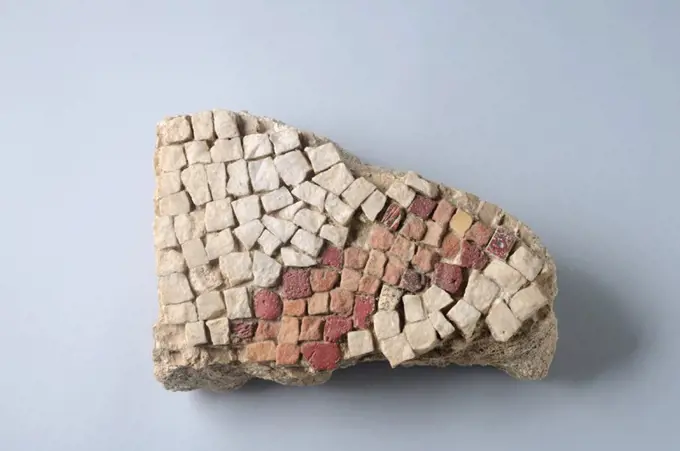
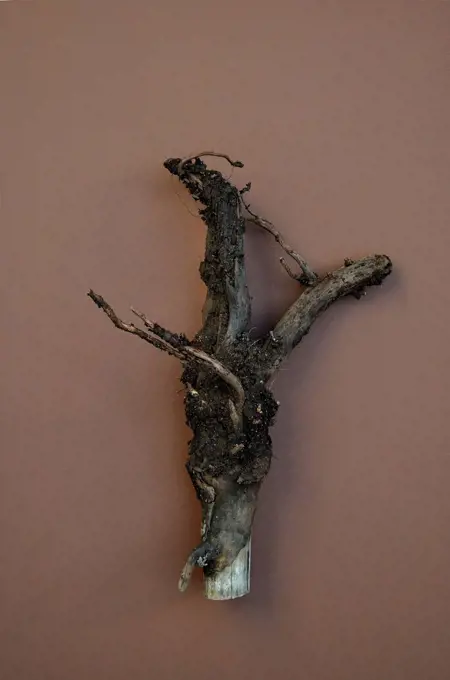
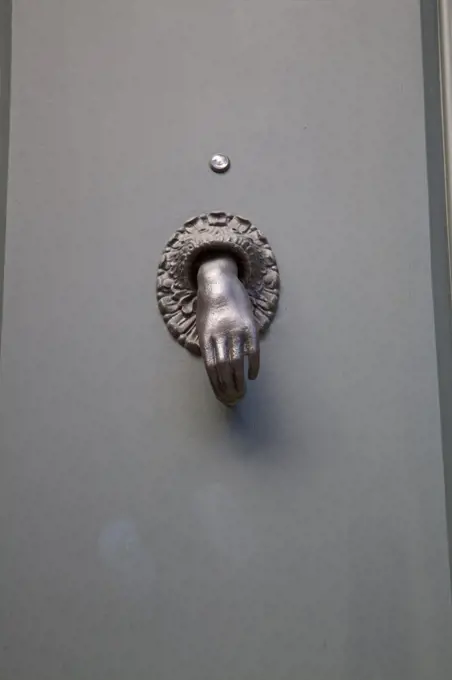
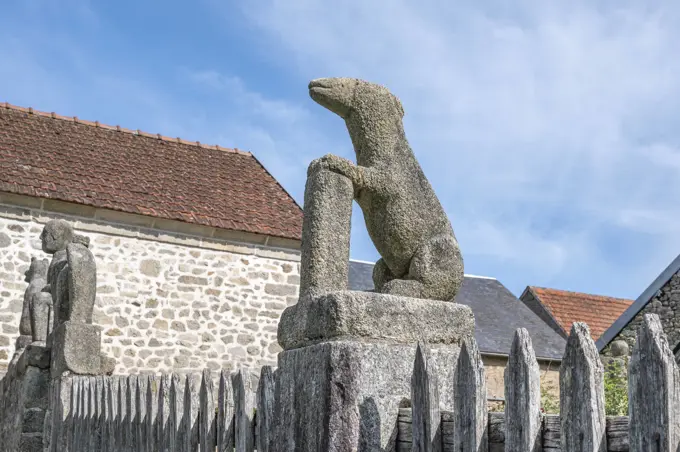
Historical Artifacts

Artifacts from shipwrecks and historical items like bottle fragments and stamps, reflecting a blend of history and craftsmanship.

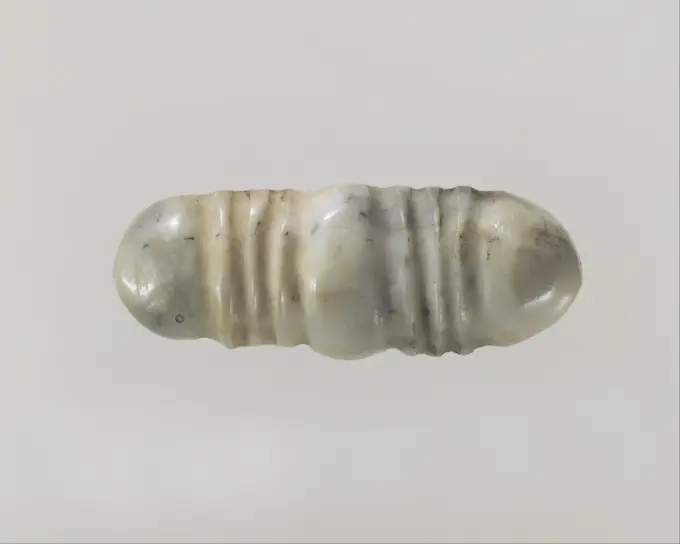
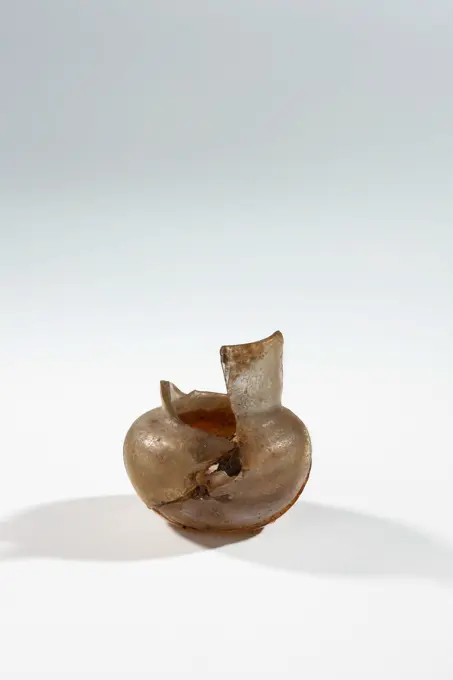
Fragment basement bottle from a shipwreck, anonymous, c. 1700 - c. 1735  Bottom of a basement bottle.  .
Fragment basement bottle from a shipwreck, anonymous, c. 1700 - c. 1735 Bottom of a basement bottle. .
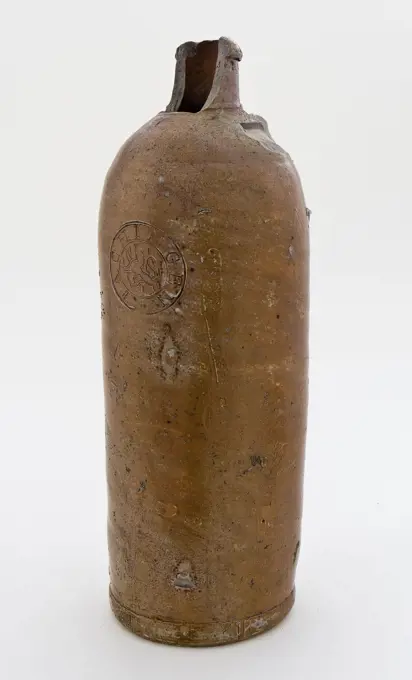
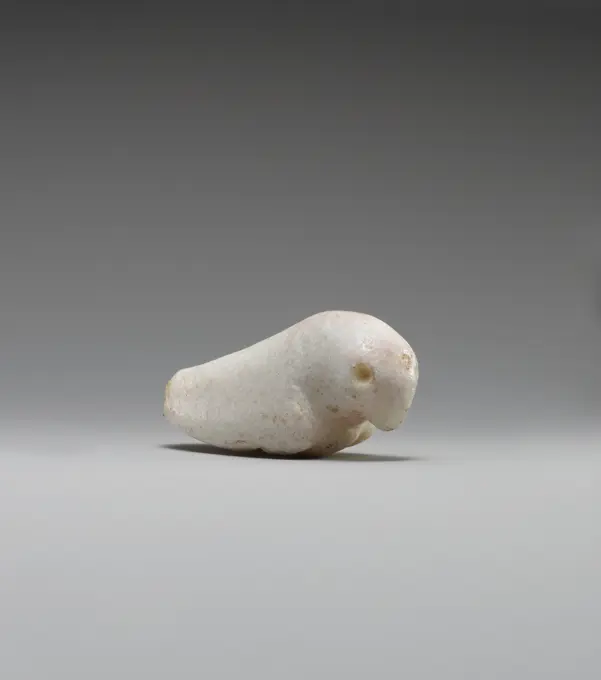
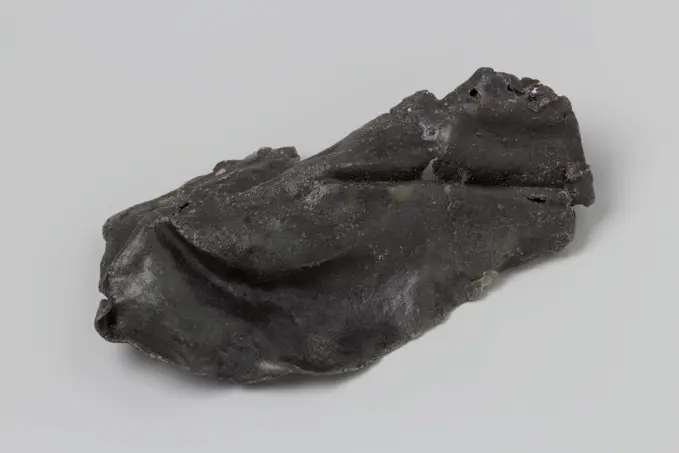
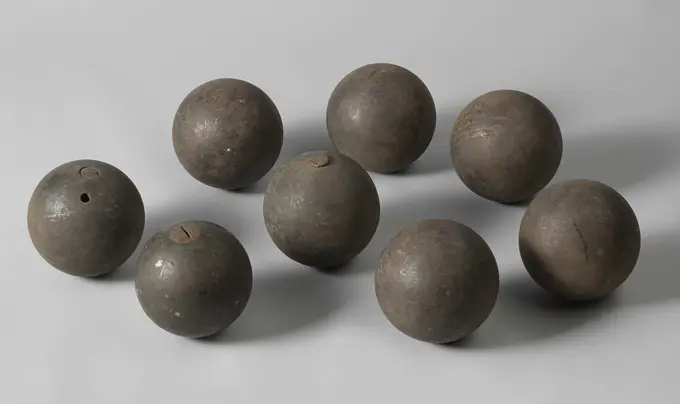
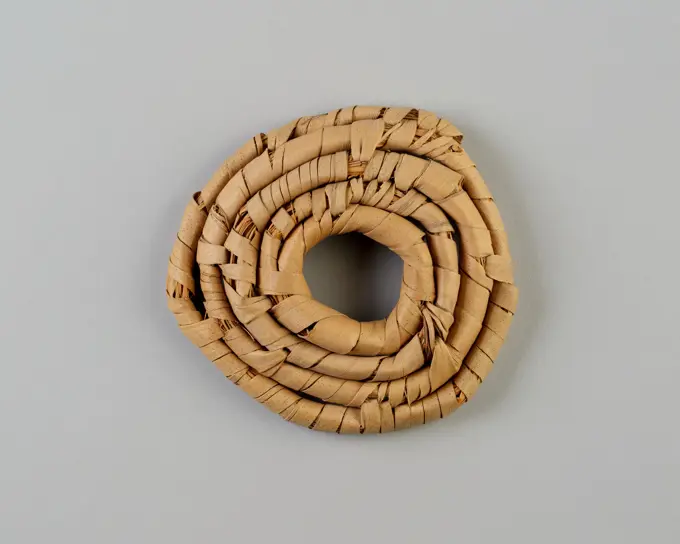
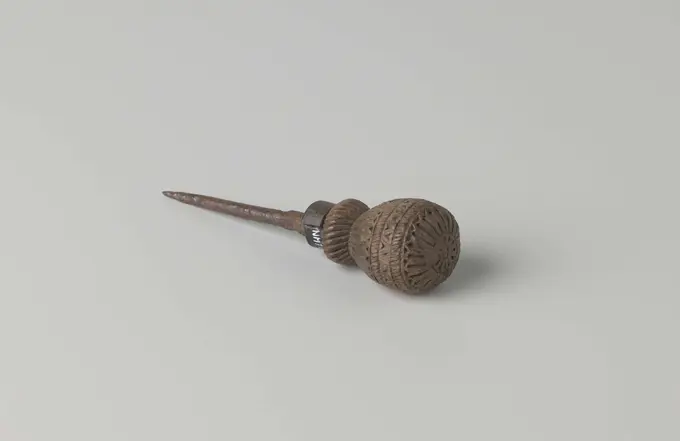
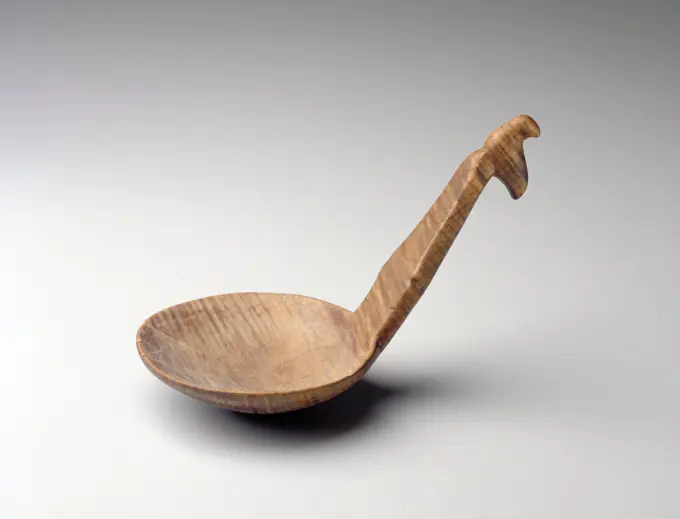
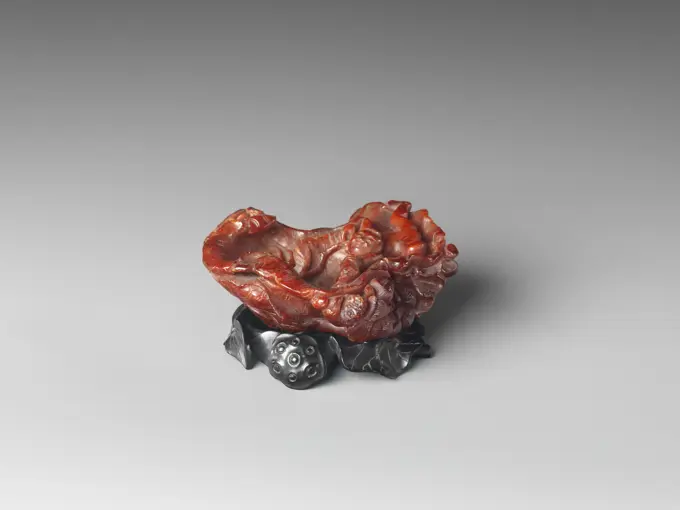
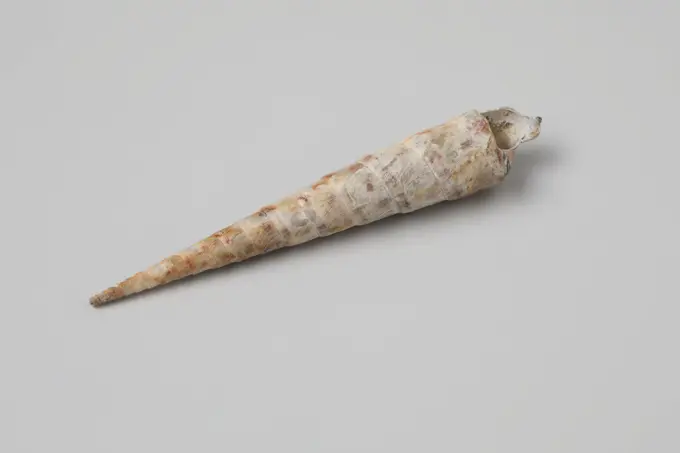
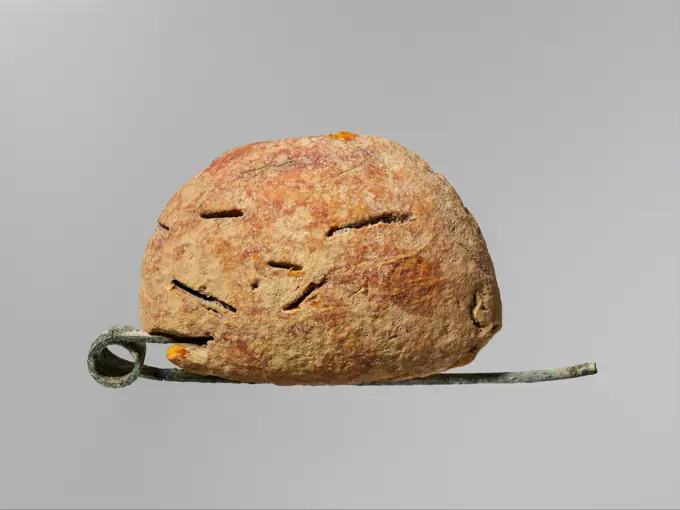
Ornament or button for harness ca. 9th-7th century B.C. Assyrian This small shell piece was found in a well in the Northwest Palace of Ashurnasirpal II at Nimrud, together with other similar shell ornaments, several of which are also in the Metropolitan Museums collection (54.117.16, .19). They were probably thrown into the well when the palace was sacked, in 614 B.C. and then again two years later. They can be identified as horse trappings, and were probably part of a leather harness which disintegrated in the well sludge. Horses in the reliefs of the palace of Sargon II at Dur Sharrukin (modern Khorsabad) are represented with double-fan shaped ornaments on their bridles, as in a relief in the Metropolitan Museum (33.16.1) showing a groom with two horses. Because of the close parallel with the reliefs from the palace at Dur Sharrukin, the equestrian harness elements from this well probably date to the time of Sargon in the late eighth century B.C. At this time, the Northwest Palace wPlanets-manager. Cornalet Collection Sites 2013-2016. Numismatic.Turkey, Hattusa, Fictile vase in the shape of a tower depicting hittites Gods and ritual formulasSpeciman of Mortar from the Great Pyramid ca. 2550 B.C. Old Kingdom. Speciman of Mortar from the Great Pyramid 558193Blowjob head in concrete is from the wreck of the East India Hollandia. Pipe, bowl, healermark illegible; Fragment, concreted.Auguste Rodin, Right Hand, possibly 1880 Right HandMagical figurine of foreigner ca. 1981-1650 B.C. Middle Kingdom. Magical figurine of foreigner. ca. 1981-1650 B.C.. Limestone. Middle Kingdom. From Egypt, Memphite Region, Lisht North, debris, MMA excavations, 1906-07. Dynasty 12-13Stoneware mineral water pitcher, cylindrical with round shoulder, sausage ear and short neck, mineral water pitcher jar product packaging container soil find ceramic stoneware glaze salt glaze approx., hand-turned glazed baked stoneware mineral pitchers cylindrical with round shoulder short neck and sausage ear. Stand area with traces of deduction and soul. Glazed. Marked under the ear and marked on the front with medallion Medallion in the medallion: FACHINGEN in the midfield left clawing lion archeology Rotterdam Kralingen-Crooswijk Struisenburg Oostmaaslaan Boslaan Buizengat advertising indigenous pottery import drinking water drinking medicine packaging Soil discovery: Buizengat Oostmaaslaan Boslaan Rotterdam an old landfill of urban waste.Bowl; unknown eastern workshop; Kon. I - early century A.D. (100-00-00-110-00-00);gift (provenance)Bell-shaped bowl with a white glaze, anonymous, c. 1600 - c. 1699 Bell -shaped bowl of porcelain, covered with a white glaze. Marked on the underside with an unidentified seal brand. A chip in the edge. White porcelain. South China porcelain. glaze. cobalt (mineral) vitrification Bell -shaped bowl of porcelain, covered with a white glaze. Marked on the underside with an unidentified seal brand. A chip in the edge. White porcelain. South China porcelain. glaze. cobalt (mineral) vitrificationFrog Figure; Designed by Valdemar Engelhardt (Danish, 1869 - 1915); Made by Royal Copenhagen Porcelain Manufactory (Denmark); Denmark; porcelain, crystalline glazeGlass bowl. Culture: Roman. Dimensions: Height: 1 5/8 in. (4.1 cm)Diam.: 2 13/16 x 2 1/16 in. (7.1 x 5.2 cm). Date: ca. 3rd century A.D..Translucent pale blue green.Tubular collared rim, folded our, round, and down; horizontal, uneven neck; slightly convex sides, tapering gently downwards; pushed-in bottom with prominent pontil scar at center.Intact; pinprick bubbles and one black impurity in rim; pitting and creamy brown weathering with slight iridescence on exterior. Museum: Metropolitan Museum of Art, New York, USA.MORTERO. ROMANO. (DEPOSITO: MUSEO ARQUEOLOGICO NACIONAL).Brass from brass decorated with standing figures and a lion's head. The object consists of a round fat catcher and a candle holder, which are driven and engraved ornament, and a cast steal with an ornament of O.A. four standing figures and two heads in medallions and a lion head. The handle has an eye, to which the sconce can be hung. The stem is riveted with red copper nails to the recovered fat catcher.Bake of wood, round. Bake from Without, round.Fragments Pijpenkoppen from the wreck of the East Indians Hollandia, Anonymous, 1700 - in Or Before 1743  Pipe, bowl, heelmark: coat of arms of the city of Amsterdam; fragm, 2hsm1,2. Netherlands pipe clay   SecondMiniature Bowl 3rd-8th century Teotihuacan. Miniature Bowl. Teotihuacan. 3rd-8th century. Ceramic. Mexico, Mesoamerica. Ceramics-ContainersBlowjob from the wreck of the East Indieschief Hollandia. Pipe, Bowl, Healmar: Crowned 91; 1HSM1.MountButton from the wreck of the East India hollandia. Button. (1) Flat, commanded RIM, Relieved Decoration of Fabric Motif (1.7D, 0.3T), Loop-ShankFalcon Figurine ca. 3300-2900 B.C. Naqada III-Dynasty 1. Falcon Figurine. ca. 3300-2900 B.C.. Quartzite. Naqada III-Dynasty 1. From EgyptSpoon 1st-4th century Roman. Spoon 468244Plastic; Amorphous figure. Abstract sculpture of an organic shape that rises from an oval foot. At half height is a coating that passes into a button-like shape.SpoonLamp. UnknownGlass bowl. Culture: Roman. Dimensions: Height: 1 7/16 in. (3.7 cm)Diam.: 3 1/4 x 1 1/2 in. (8.3 x 3.8 cm). Date: 2nd-3rd century A.D..Translucent greenish yellow.Rim folded out and down, forming rounded, partially tubular collar to mouth with inner lip; bulging sides curving in to integral, low tubular base ring; flat bottom with traces of pontil and slight kick.Intact; few bubbles; dulling, slight pitting, and iridescence on exterior, creamy, iridescent weathering on interior. Museum: Metropolitan Museum of Art, New York, USA.Terracotta head of a deer 4th century B.C. Greek, South Italian, Tarentine This extraordinarily sensitive representation was probably a patrix, the model from which molds were taken for making figural vases in the shape of a deer's head. Such rhyta were common in Apulian pottery and can be seen among the Apulian vases nearby.. Terracotta head of a deer 248411Fragment sheet metal of copper from the wreck of the East Indians Hollandia, 1700 - in or before 1743  Parts of artefacts; eroded fragments: materials; copper. Netherlands copper (metal)   SecondExcerpt from a lead plate from the wreck of the East Indians' t Vliegend Hart ,, 1729 - 1735 sheet lead Piece Platlood, Gebutst, Without Hole. Sheet fragments. Middelburg lead (metal)Szydło. unknown, authorPinnacle, 1400s. France, 15th century. Oak; overall: 200.7 x 30.5 cm (79 x 12 in.).Kogel van brons.Bullet with Zundgat where an iron lock has been placed. To the closure piece the letter P and No.1. Left of the locking piece a white spot.Czarka. nieznany warsztat północno mezopotamski (ca 2600-ca 2350 a.C.), workshopBaluster. Culture: British. Dimensions: Height: 28 in. (71.1 cm). Date: late 17th-early 18th century. Museum: Metropolitan Museum of Art, New York, USA.Terracotta oil lamp. Culture: Roman. Dimensions: 2 5/16 × 4 1/16 in. (5.9 × 10.3 cm). Date: 2nd century A.D..Mold-made, with ring handle. Small discus: a wreath around a single central filling hole, and surrounded by a band of lines and grooves. On the broad, sloping shoulder, a row of large impressed ovules. Large, rounded nozzle. Irregular vertical incised lines along front of handle. Base ring, and a raised, slightly convex base. The front of the handle added and joined to back that forms part of the molded body.Intact, but one small hole in base ring towards the nozzle. Museum: Metropolitan Museum of Art, New York, USA.Pillow, blue-white striped, trimmed with green cord. Pillow of blue white striped fabric (white linen, blue cotton) filled with down. On the left, respectively deposited with a green silk shaded.Bottle. unknown, craftsmanCandlestick with three-sided foot, decorated with dragon heads and people figures in the middle of tendrils. In the ornament on the three sides of the foot, a dragon head is located in the middle, from which the rank ornament sprouts, in which a figure is recorded on each corner. The three-sided foot originally formed the basis of a candlestick, which consisted of a nodus, fat catcher and candle pin at the top of a nodus. These are presumably replaced in the fifteenth century or later by a round trunk with two buttons and a substantially cylindrsiche candle holder with two openings in the form of standing rectangles. The strain with tin is soldered at the bottom of the foot.Bead 4th-7th century Coptic. Bead. Coptic. 4th-7th century. Wood, bone or ivory. Made in Kharga Oasis, Byzantine Egypt. WoodworkPot Stand ca. 1479-1458 B.C. New Kingdom. Pot Stand. ca. 1479-1458 B.C.. Straw and palm leaf. New Kingdom. From Egypt, Upper Egypt, Thebes, Deir el-Bahri, Tomb of Senenmut (TT 353), Foundation deposit 2, 5a, scattered, MMA excavations, 1926-27. Dynasty 18Lady's Stirrup late 18th-19th century French Ladies side saddles of the 18th and early 19th century were made with only one stirrup on the left side of the horse, which were shaped up as slippers that would give more stability and elegance to the rider. Here it consists of a small leather slipper is sewn on a regular iron stirrup.. Lady's Stirrup. French. late 18th-19th century. Leather, iron, vegetal thread. Equestrian Equipment-StirrupsPlaque in the Shape of an Animal. Culture: China. Dimensions: H. 1 in. (2.5 cm); W. 2 5/8 in. (6.7 cm). Museum: Metropolitan Museum of Art, New York, USA.Gunners powder horn.This powder horn is made from an almost complete cow horn. The decoration is fitting: a gunner with a slow match on a staff (linstock) standing by a heavy field cannon. On the other side a deer is fleeing from a hunter with his dogs. The stopper to close the open end of the horn has been lost. Translation of inscription: When I begin to fire, many shall feel my ire.Vase fragment ca. 575-550 B.C. Etruscan Part of body and hind legs of lion to left.. Vase fragment. Etruscan. ca. 575-550 B.C.. Terracotta. Archaic. VasesCollective tomb of Udías, Neolithic, Las Cascaras, Canales, Museum of prehistory and archeology (MUPAC), Santander, Cantabria, Spain.Els with sliced and decorated handle. Round pointed blade, round wooden button with incised decoration.Ladle, c. 1860, 5 13/16 x 3 7/16 in. (14.8 x 8.7 cm), Wood, United States, 19th centuryBatter from the wreck of the East Indians Hollandia, Anonymous, 1700 - in or before 1743  Fittings, bands and bracing, flat; straight flat strip, fold-over rim at both ends, eroded. Netherlands copper (metal)   SecondPlejerko with a cover;  19th century (1801-00-00-1900-00-00);Baluster with stabbed C and S-Voluten, Anonymous, c. 1740 - c. 1760 S-shaped baluster with stabbed C and S-Voluten with rocaille shells. Northern Netherlands wood (plant material) S-shaped baluster with stabbed C and S-Voluten with rocaille shells. Northern Netherlands wood (plant material)Hat 1720-50 probably German The flat and grandiose cartwheel, firmly secured to the head, was the favored hat type of the second quarter of the eighteenth century. Few survive; this is an exceptionally fine example.. Hat 80582Goldweight Cluster of Four Seed Pods, 19th-20th century, 7/8 x 1 11/16 x 1 3/4 in. (2.22 x 4.29 x 4.45 cm), Brass, Ghana, 19th-20th centuryCOLMENA - 1996-1997. Author: JOSE MARIA SICILIA. Location: PRIVATE COLLECTION.Golden Artifact From Yotoco Malagana Tribe (Lime Container) In The Gold Museum In La Candelaria, The Old Town Of Bogota, ColombiaSnuifdoos, , 1700 - 1800  Oval box with lid. Decoration in relief of black stylized flower branches in a gold -colored stock. Japan metal.   JapanSnuff box of silver with lid of mother-of-pearl on which in engraving and relief the representation of three amorets. Square box of silver with a pearl lid, on which carving of three amorets in engraving and relief. Against a hilly background, trees in a puddle of the left is a little boy with a rod in the right hand. Behind him there is a child who has put his right hand on his shoulder. Right in the foreground is a third child, which raises his left hand. A fish has just stopped. Plants in the foreground, trees in the background; The water is surrounded by reeds.Close-up of a boneVessel, amphora; Unknown Gaza Range workshop (Gaza Zone); NEW VI-VI century (575-00-00-700-00-00);Red Ink Cake, 1816, Wu Lien-p'u, 19th century, 5 1/2 x 1 1/8 x 1/2 in. (13.97 x 2.86 x 1.27 cm), Red color and animal adhesive, China, 19th century, Vermilion ink was used by the emperor for the corrections of memorials as well as by court officials and scholars for punctuation marks. This stick is cast on both sides with short poetic inscriptions. One side readsFigure-top spoon 1722, with later additions Dutch, Haarlem. Figure-top spoon 188317 Dutch, Haarlem, Figure-top spoon, 1722, with later additions, Silver, 7 7/8 x 1 13/16 in. (20.0 x 4.6 cm). The Metropolitan Museum of Art, New York. Gift of Mrs. Samuel P. Avery, 1897 (97.2.294). Depiction of two backgills connected, two holes for the cord. Manju Type.Dish with a Child Chasing a Fish 18th-19th century China It seems likely that, in addition to its playful quality, the theme of a child catching a fish, presumably a carp, also had overtones of good wishes. It remains unclear as to whether this dish had a function or served as an object for display.. Dish with a Child Chasing a Fish 60679Emilia-Romagna Ferrara Ferrara Museo Civico di Schifanoia37. Hutzel, Max 1960-1990 General Notes: INCOMPLETE RECORD--NEGATIVES PROCESSED, PRINTS FILED German-born photographer and scholar Max Hutzel (1911-1988) photographed in Italy from the early 1960s until his death. The result of this project, referred to by Hutzel as Foto Arte Minore, is thorough documentation of art historical development in Italy up to the 18th century, including objects of the Etruscans and the Romans, as well as early Medieval, Romanesque, Gothic, Renaissance and Baroque monuments. Images are organized by geographic region in Italy, then by province, city, site complex and monument.Pair ofWalnutsSmall legs pointed with two barbs, pointed harpoon soil found bone, sawn cut cut Late stone age archeology Maglemose culture Rotterdam Maasvlakte prehistoric stone age late stone age fishing fishing catch feeding hunt Soil discovery Maasvlakte Maglemose culture.Brass Handle Brass Metal Round Handle at House Door Copyright: xZoonar.com/MarkoxBericx 14567016Ceramic vase with pierced ears. Mouth diameter 24, 5 cm Height 41 cms Width 35 cms - Iron Age from the archaeological site of "Ecce Homo" in Alcala de Henares - "Burgo de Santiuste Museum " (Madrid ). SPAIN.ancient Egyptian plough with traces of the bronze blade that was used to churn up the fertile soil deposited by the Nile's annual flood. About 1550-1069 BC, New Kingdom period Wood, bronzeAmulet, Wedjat eye ca. 1550-1295 B.C. New Kingdom. Amulet, Wedjat eye. ca. 1550-1295 B.C.. Agate. New Kingdom. From Egypt. Dynasty 18Pendants with double bull-shaped protomes, bronze, Marche, Italy. Piceno Civilization, 6th Century BC.Small JugSilver miniature sweeper, sweeper doll toy miniature model toy silver, Round sweeper with long hair and long twisted (twisted) handle with hanging ring home interior play dollhouse Bishop RotterdamBegging Poodle, c. 1895-1915. House of Fabergé (Russian, 1842-1918). Agate, rubies; overall: 6.4 x 2.6 x 2.3 cm (2 1/2 x 1 x 7/8 in.). In creating luxurious accessories for a desk or tabletop, the House of Fabergé often used native hardstones such as multicolored agate and jasper, green nephrite, pink rhodonite, and rock crystal found in the Ural Mountains of western Russia. By paying careful attention to the unique colors and textures of the stones, Fabergé and his craftsmen brought them to life, turning milky agate into this figure of a begging poodle or brown and black jasper into sleeping puppies. The use of native materials also promoted Russian nationalism, which appealed greatly to the tsar and his family.Shawnee clay pottery jar collected on historic village sites in Ohio. The pot would have been used for storage and cooking.Terebra subulata shell from the wreck of the Dutch East India ship Witte Leeuw, before 1613  Shell from V.O.C. ship the 'Witte Leeuw'.  .   Sint-HelenaOld Polish split-sleeve undercoat buttons. unknown, authorChangsha (ceramic production center), box (usual name), 0618. Green-yellow covered sandstone. Cernuschi Museum, Asia Museum of Asia in the city of Paris. These small ho boxes could contain ointments or eyeshadows, cosmetics or medicines. They also served to contain the red paste with cachet necessary for the seals of calligraphy and paintings.Dog harness fastener -Hat standard of lilac painted wood, anonymous, c. 1910 - c. 1930 A high hat standard with a round foot and a straight trunk on which a sphere rests support. Lilac painted. West-Europa wood (plant material) painting A high hat standard with a round foot and a straight trunk on which a sphere rests support. Lilac painted. West-Europa wood (plant material) paintingSmall CatapultBallSelection of Mughal thumb rings, which were taken by the British Army during the Siege of Seringapatam in 1799. Dated 18th CenturyFire-Making Tool Element (LotingSantik)Stop of Vaatwerk from the wreck of the East Indians Hollandia, Anonymous, 1700 - in Or Before 1743  Vessel part, stopper; ID. Of 1979-527. Netherlands glass   SecondAncient Greek bronze kothon on a tripod stand. Dated 500 BCWater Dish, one of a pair, 1662-1722, 2 1/2 in. (6.4 cm), Porcelain with peach bloom glaze, China, 17th-18th centuryGlass pendant in the form of a dolphin. Culture: Roman. Dimensions: H.: 13/16 in. (2.1 cm). Date: ca. 4th century A.D..Translucent cobalt blue.Large hole through circular body, drawn out to form large upright tail with applied fins on either side; other applied fins on lower edge of body and applied nose to head.Intact, except for chip on nose; pinprick bubbles; slight dulling and iridescent weathering. Museum: Metropolitan Museum of Art, New York, USA.Mosaic Opus Tessellatum. parietal. in limestone. 22, 5 x 16, 5 cms. (4 th CE ) - Roman period, from "the House of Hyppolytus "- Archaeological site of Complutum in Alcalá de Henares (Madrid). SPAIN.Withered root on brown background, close upCork from a champagne bottle on a wooden background wornNumber seven wrapped in brown paperAnonymous / "Factoria de lucernas", 1st century, Ceramics.Flower-Shaped Fitting mid-7th-9th century Northwest China/Eastern Central Asia. Flower-Shaped Fitting 65223Door and doorknocker on West Village Brownstone, Greenwich street, Greenwich Village, New York, USABronze and amber fibula (safety pin) 7th century B.C. Etruscan or Italic Fibula with a bronze clasp and spring supporting a large amber bow. Too large to be worn in life, it was most likely made expressly for burial with the deceased.. Bronze and amber fibula (safety pin) 252467 Etruscan or Italic, Bronze and amber fibula (safety pin), 7th century B.C., Amber, Other (amber): 5 3/4 in. (14.6 cm) Other (pin): 8 in. (20.3 cm). The Metropolitan Museum of Art, New York. Fletcher Fund, 1926 (26.60.39)Hilt of a Dagger. Culture: Indian, Mughal. Dimensions: L. 4 7/8 in. (12.4 cm); W. 2 3/4 in. (7 cm); Wt. 6 oz. (170.1 g). Date: late 17th-early 18th century.Horse-head dagger hilts are first depicted in paintings of the Padshahnama (Chronicle of the King of the World), about 1635, a manuscript documenting the reign of the Mughal emperor Shah Jahan (r. 1628-58). As horses were highly prized in Mughal culture, it is not surprising that horse-head daggers were the most popular subject for zoomorphic hilts for several centuries. This example is notable for its sensitive carving of the horse's head and mane. Museum: Metropolitan Museum of Art, New York, USA.Skulptur von François Michaud in Masgot The postman François Michaud has adorned his small Limousin village with iconic granite sculptures, Limouisn, France Copyright: xZoonar.com/HilkexMaunderx 22216319