Historical Artifacts

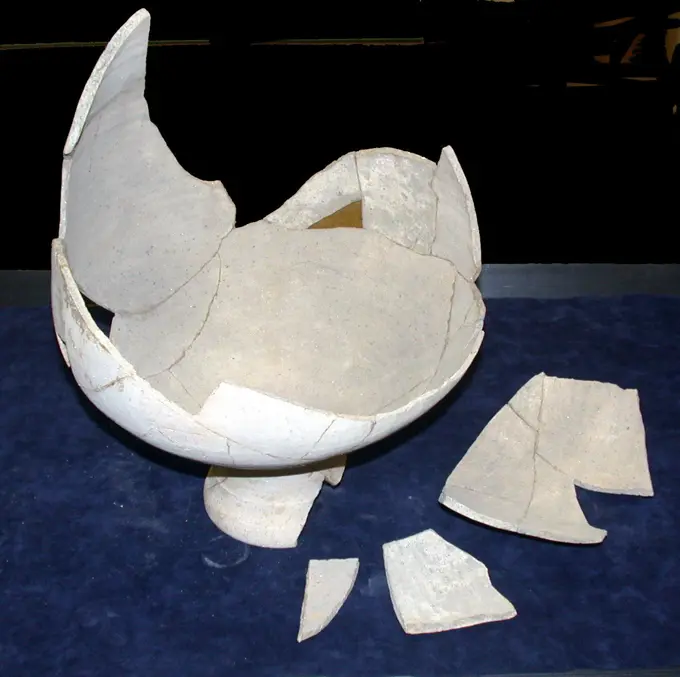
Fragments of ancient artifacts including a bottle, horse remains, oil lamp, and vase pieces, showcasing relics from various historical periods.
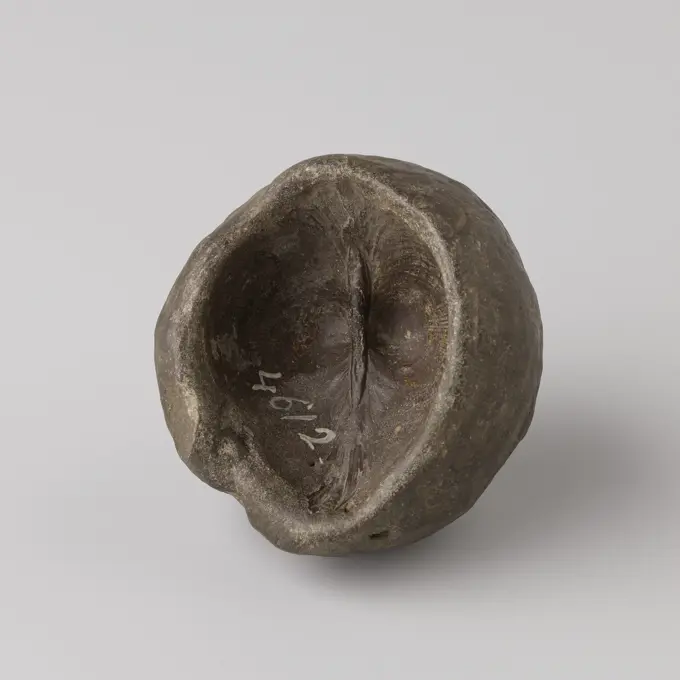
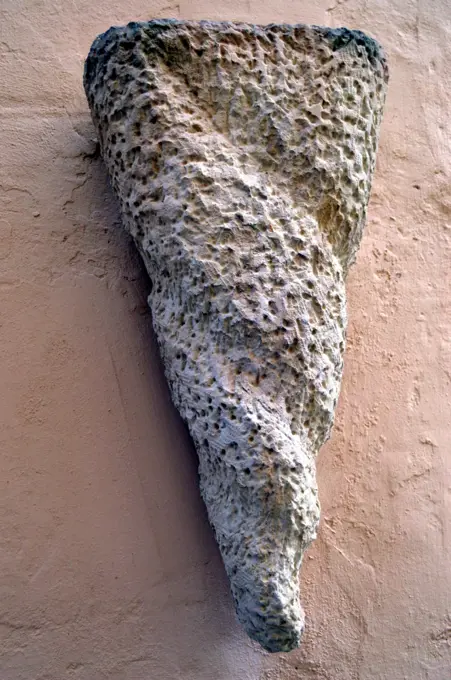
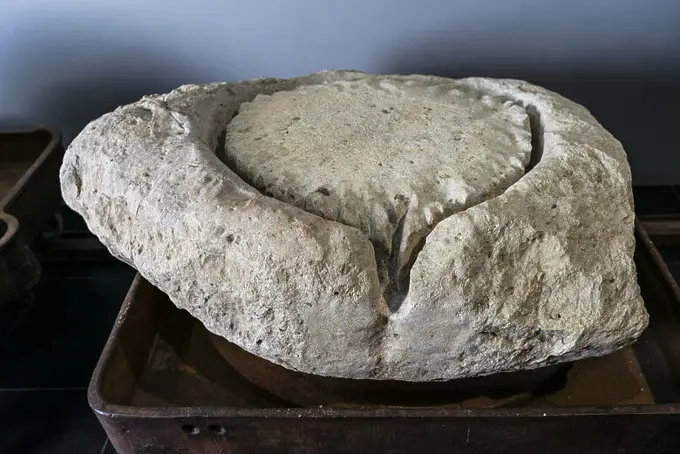
Bullet -shaped stone with print shell, not applicable, -5000 --2300  Bullet -shaped stone with hollowing, in which the print of open bin -valve shell. The stone is almost certainly a phosphorite sandstone concretion, perhaps from the Pliocene but more likely from the Miocene. (5-23 million years ago.) In and around the Netherlands, such concretions occur in the Achterhoek and Twente, as well as in Flanders. The shell may be a glycymeris species. (Determined based on photo by Frank Wesselingh, Naturalis)  .
Bullet -shaped stone with print shell, not applicable, -5000 --2300 Bullet -shaped stone with hollowing, in which the print of open bin -valve shell. The stone is almost certainly a phosphorite sandstone concretion, perhaps from the Pliocene but more likely from the Miocene. (5-23 million years ago.) In and around the Netherlands, such concretions occur in the Achterhoek and Twente, as well as in Flanders. The shell may be a glycymeris species. (Determined based on photo by Frank Wesselingh, Naturalis) .
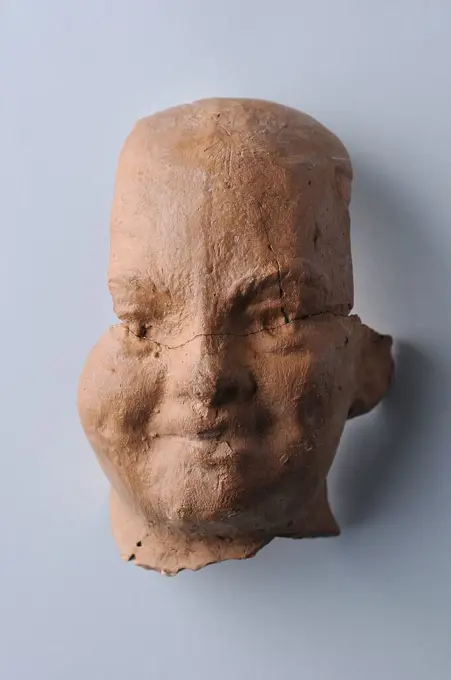
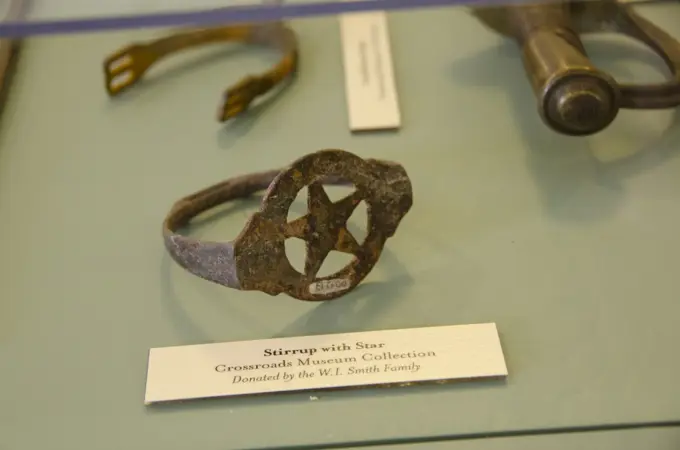
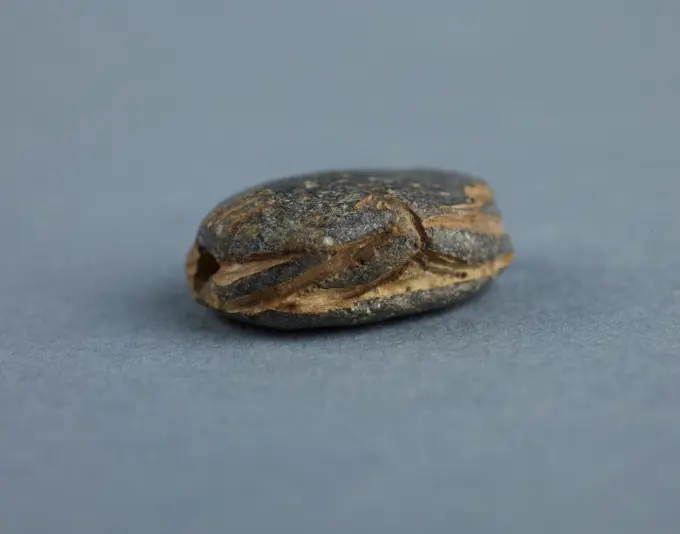
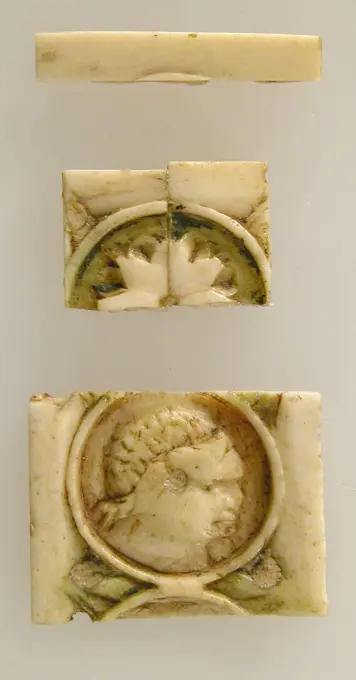
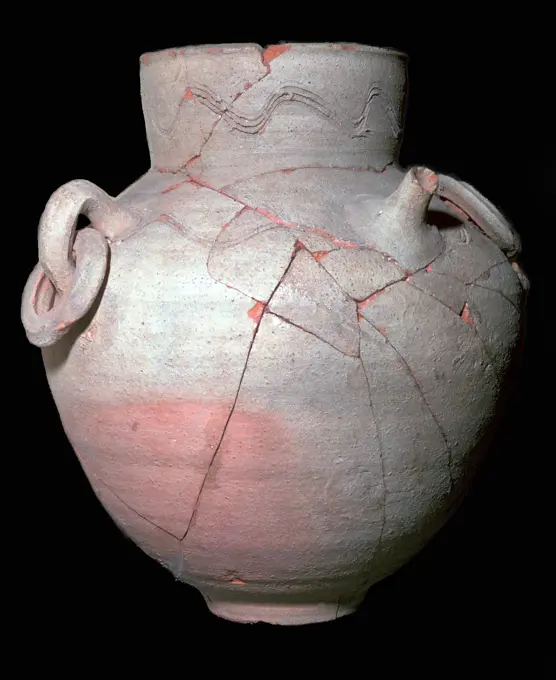
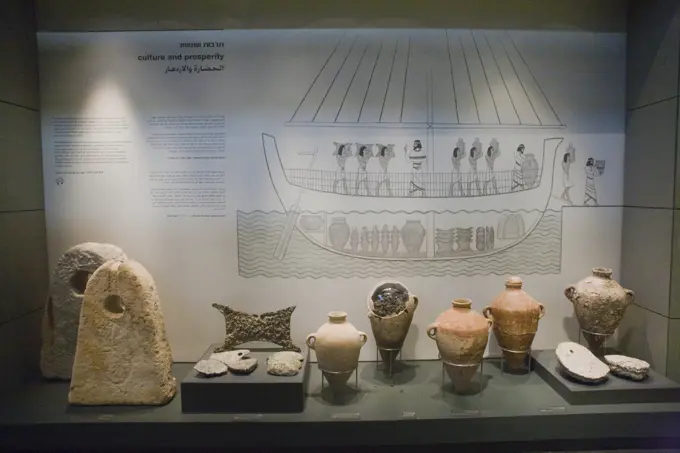
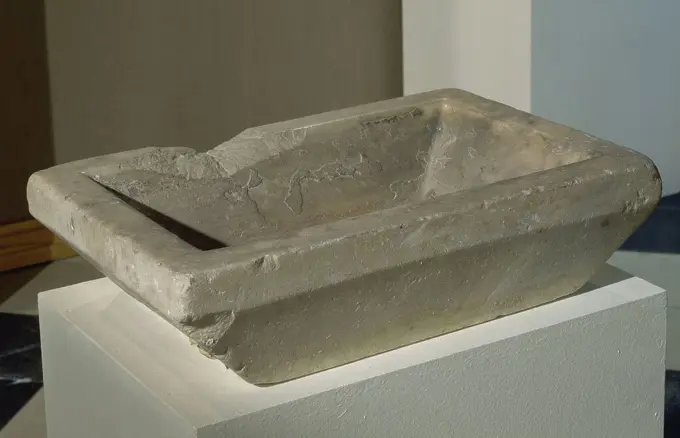
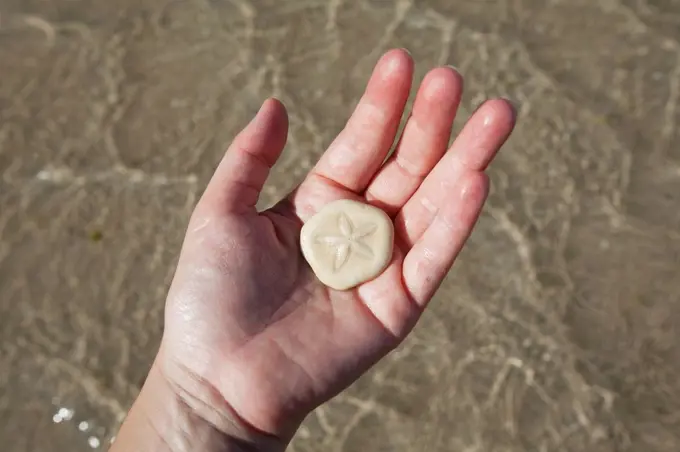
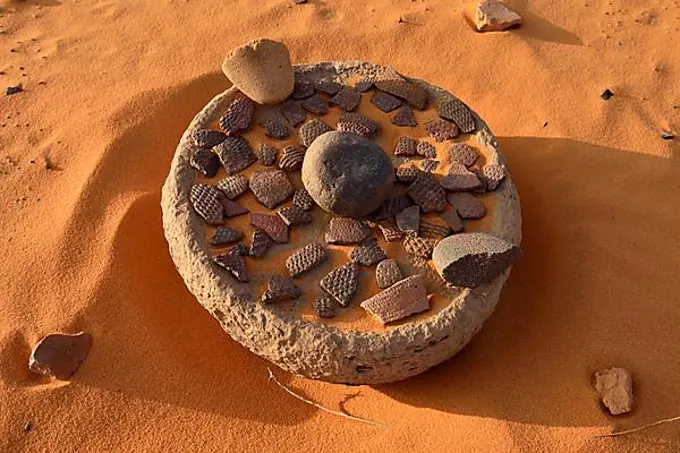
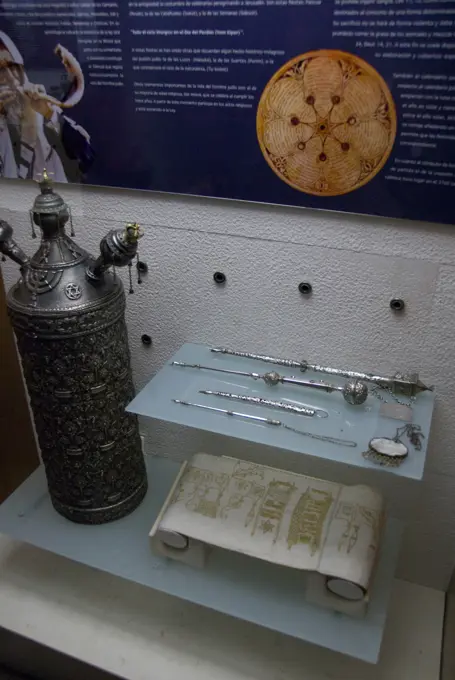
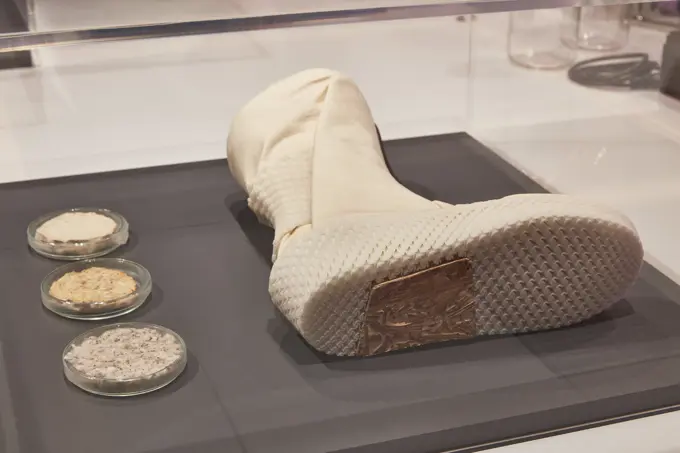
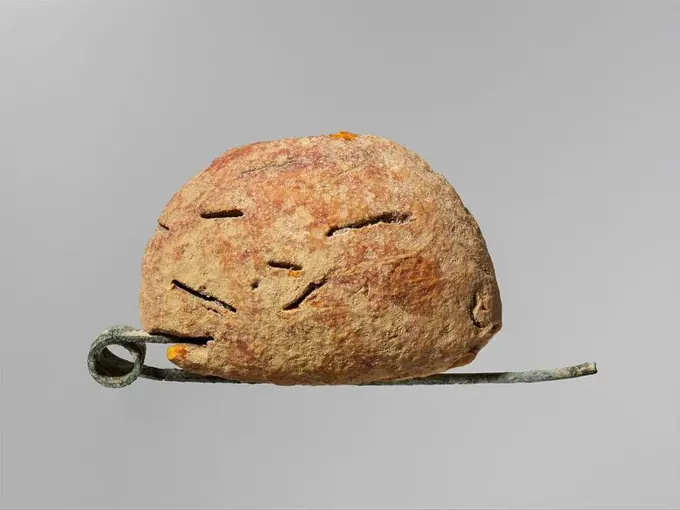
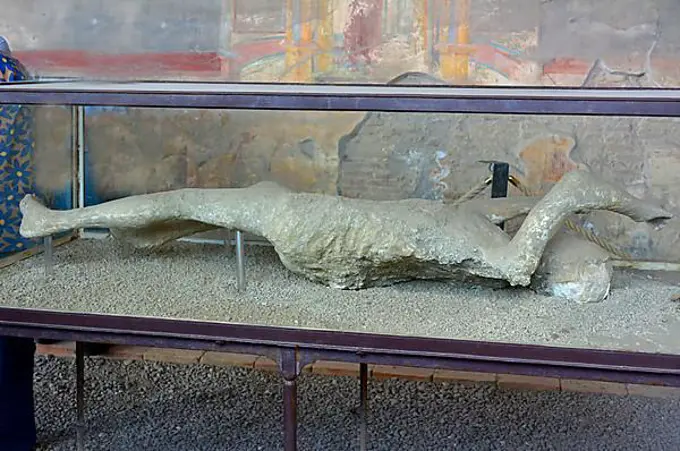
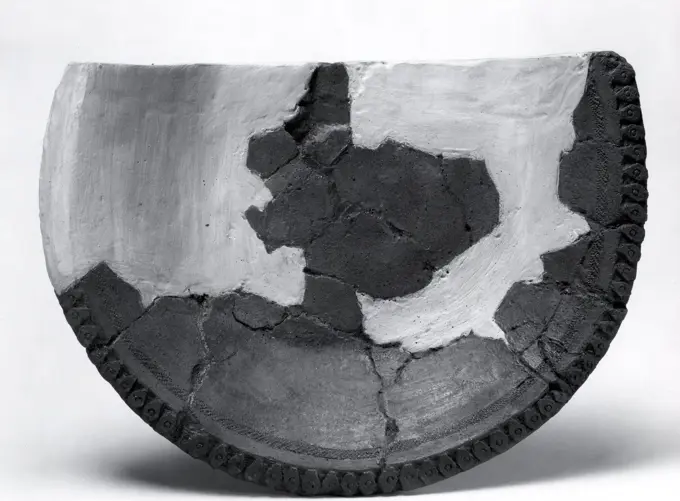
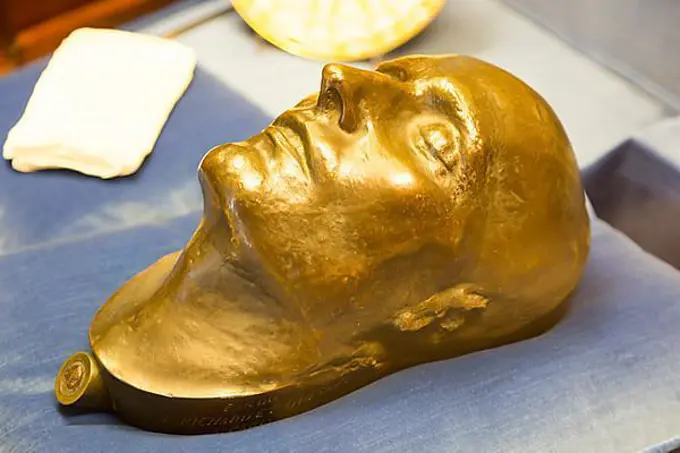
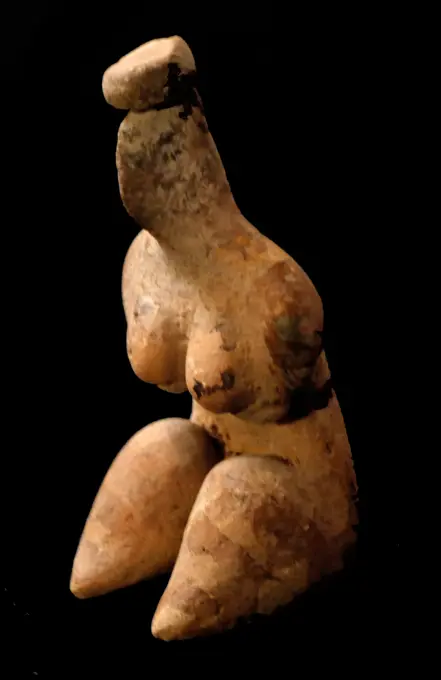
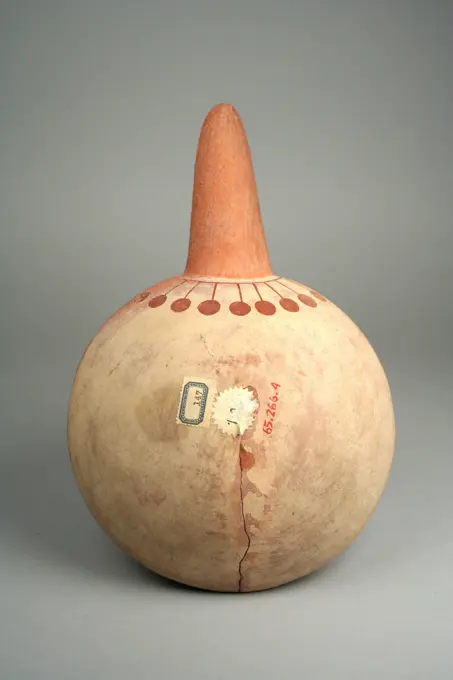
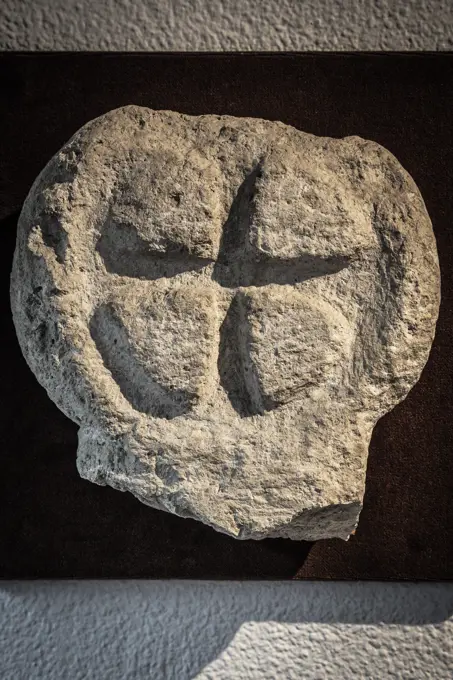
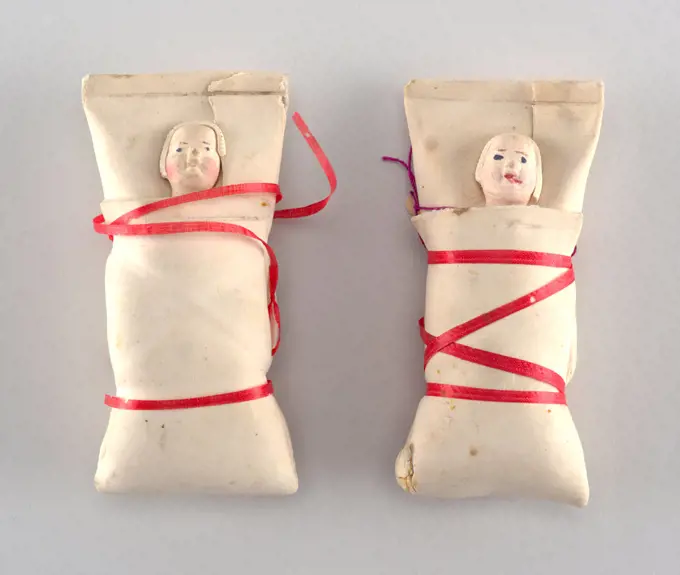
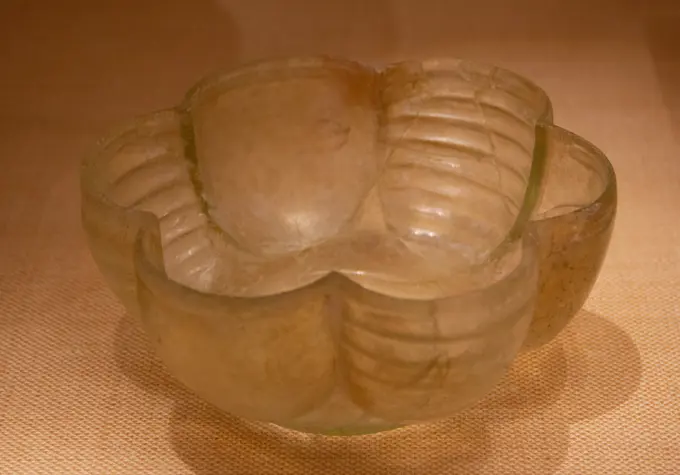
Bowl 8th-9th century Wheel-cutting was one of the most important contributions of early Islamic artisans to glass-making. They would first blow an object with thick walls that could withstand the pressure of the wheel, then cut away the glass, creating a relief decoration, such as the flutes inside the lobes on this vessel. Such lobing was characteristic of Bactrian and Sasanian silver vessels, an indication that artists translated models derived from metalwork in other media.. Bowl. 8th-9th century. Glass, colorless with greenish tinge; mold blown, cut. Attributed to Iran. GlassLead Figure with Glass and Ivory Inlay 7th Century B.C. Turkey Colorful iron metal mineral texture surface macro detailChild's head of terracotta figurine . Height 7 cm Width 5, 1 cm. (1 st - 3 rd CE ) - Roman period from archaeological site of Complutum in Alcalá de Henares (Madrid). SPAIN.calavera de una de las once mil vírgenes, siglo XIII, Sala de reliquias, Monasterio de Santa María de San Salvador de Cañas, Cañas, La Rioja, Spain.USA, Mississippi, Corinth. Crossroads Museum, famous point where two important trunk railroads in the Confederacy crossed, Civil War collection, stirrup.ScarabCasket Fragments 10th century () Byzantine. Casket Fragments 470262An electric wall lamp in the shape of stone cone on a mauve wall.Blue Spiky Seashell on DriftwoodNabatean Vase. Artist: UnknownAncient pottery used for transport and trade, Israel National Museum, in Jerusalem, IsraelIslamic press for the production of olive oil, 11th-12th century, Gilena Museum Collection, Ecomuseum/Arqueodromo Molino de La Casería, province of Seville, Spain.PILETA DE ABLUCIONES EN MARMOL-13X50X33-S X. Location: MUSEO HOSPITAL DE SANTA CRUZ. SPAIN.Jug ca. 3rd-7th century A.D. Sasanian. Jug 323025a tourist holds a sand dollar sea shell near el nido, bacuit archipelago, palawan, philippinesCollection of neolithic artefacts, Tadrart, Tassili n'Ajjer National Park, Sahara, Algeria, AfricaBananaSpain, Castilla-La Mancha,Toledo. El Transito synagogue (aka Sinagoga del Tr·nsito or Synagogue of Samuel ha-Levi) circa 1357. Sephardic museum.Exhibition artefacts. Moving to Mars at The Design Museum, London, United Kingdom. Architect: N/A, 2019.Bronze and amber fibula (safety pin). Culture: Etruscan or Italic. Dimensions: Other (amber): 5 3/4 in. (14.6 cm)Other (pin): 8 in. (20.3 cm). Date: 7th century B.C..Fibula with a bronze clasp and spring supporting a large amber bow. Too large to be worn in life, it was most likely made expressly for burial with the deceased. Museum: Metropolitan Museum of Art, New York, USA.dientes perforados, , cueva de Bolinkoba, Abadiño, Arkeologi Museoa, museo aqueologico, Bilbao, Bizkaia, Pais Vasco, Spain.Italy, Italia, Pompei Dead in showcase, scavi archeologici di Pompei, EuropeCast of a Dish mid-20th century Lapita people. Cast of a Dish 314216Bronze death mask of Napoleon Bonaparte, Bowood House and gardens, Calne, Wiltshire, England, United Kingdom, EuropeHand holding a betle nut, Myeik or Mergui, Myanmar, AsiaTell Halaf, Clay Fertility Idol, circa 5,000 BC. Ancient Near East, Anatolia (central Turkey) and Northern Syria, Tell Halaf. The Halaf culture of Anatolia and ancient Syria came about in approximately 5000 BCE and created female figurines with particular fertility attributes that are displayed in this example. Note how the figure sits with upraised knees and legs extended, with both of her arms cradling and supporting her protruding breasts.Vessel with Handle 3rd-5th century Moche. Vessel with Handle 309302Lime stone disc stele from the 12th century visualtoth - early Middle Ages limestone disc stele from the 12th century visualtoth - early Middle AgesAustria, Vienna, Kaisergruft. Imperial Burial Vault, resting place of the Hapsburg Royal Family. Crypt of King Ferdinand Maximilian of Mexico (Editorial Use Only)Ornament, Christmas tree, Sugar on cotton, Swaddled babies, tied with red ribbon., USA, 1850-99, ornament, Decorative Arts, Ornament, Christmas treeCasting porcelain pasteNeolithic limestone statue of a griffon vulture found in Karahan Tepe, Sanliurfa Museum, Sanliurfa, Turkey. (Editorial Use Only)