Historical Artifacts

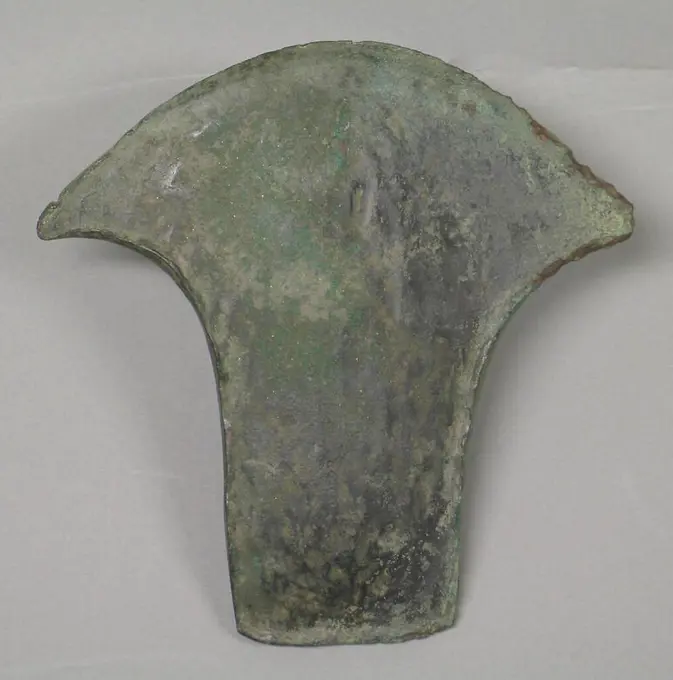
Ancient artifacts including harness elements and stone objects, representing historical craftsmanship and design from various cultures.

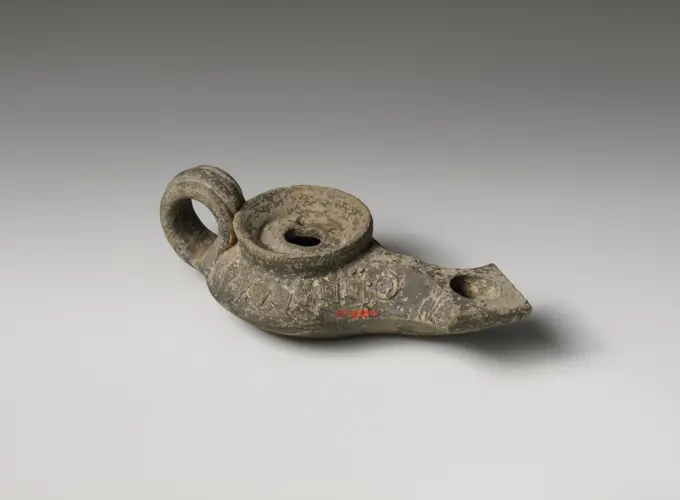
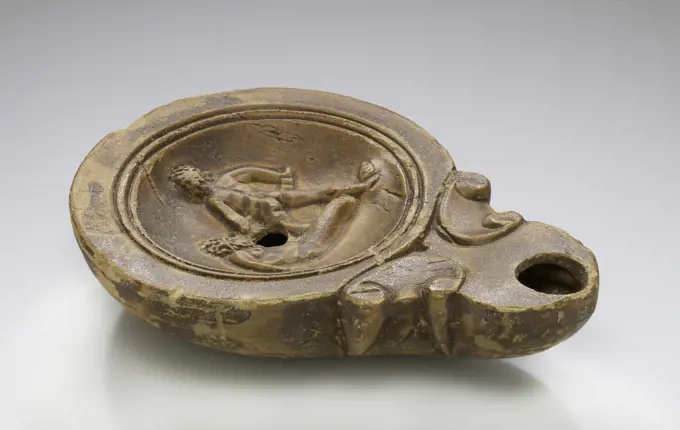
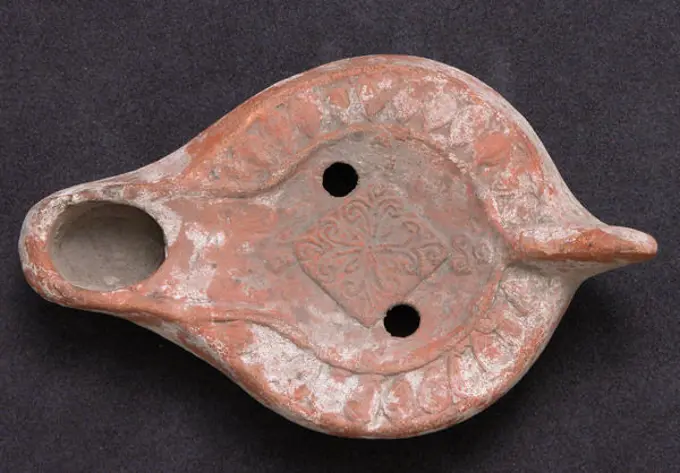
Lamp, Italy; 2nd - 1st century B.C; Terracotta; 3.7 × 5.6 × 8.5 cm (1 7,16 × 2 3,16 × 3 3,8 in.)
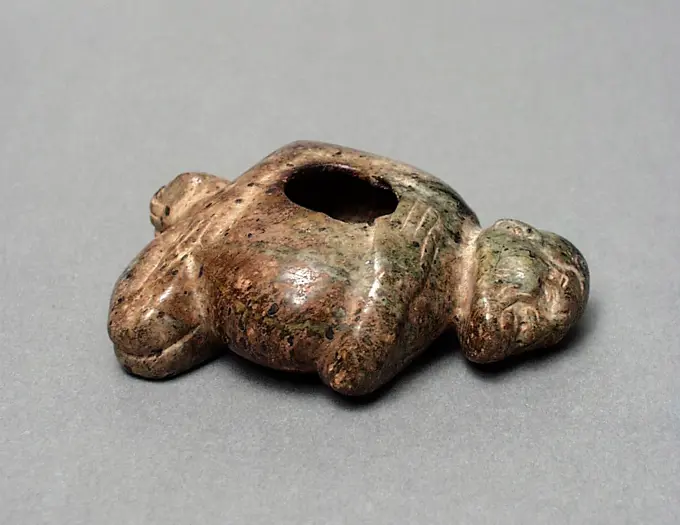
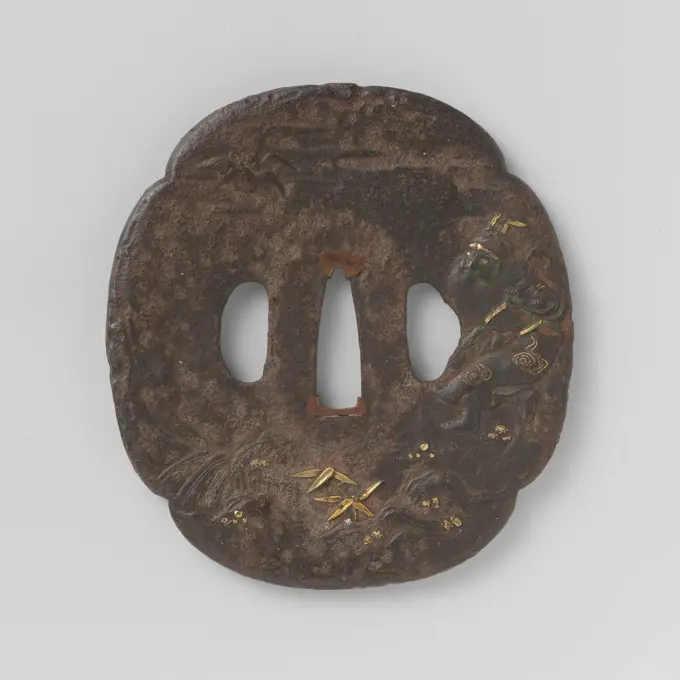
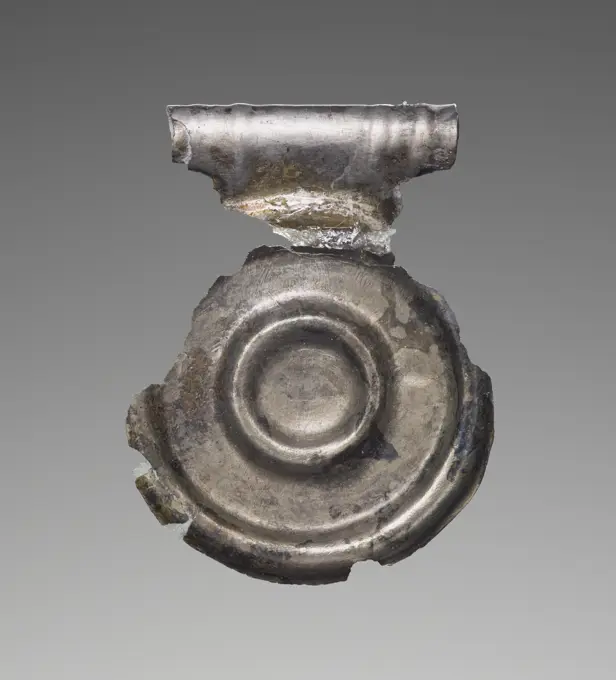
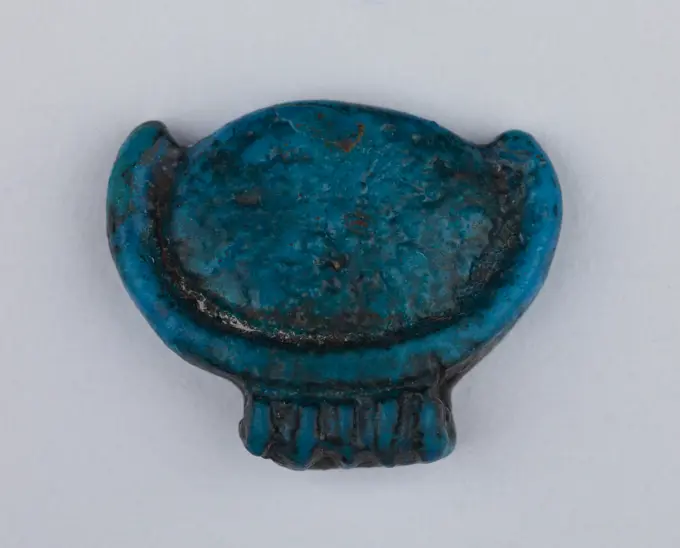
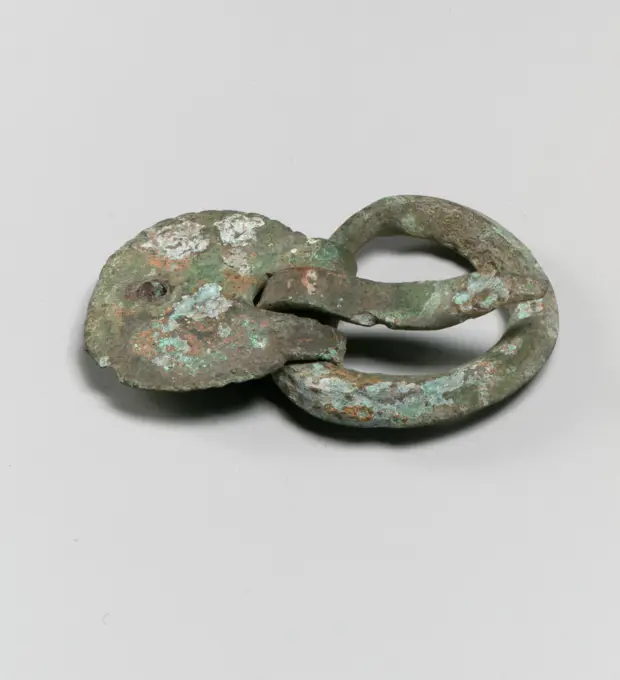
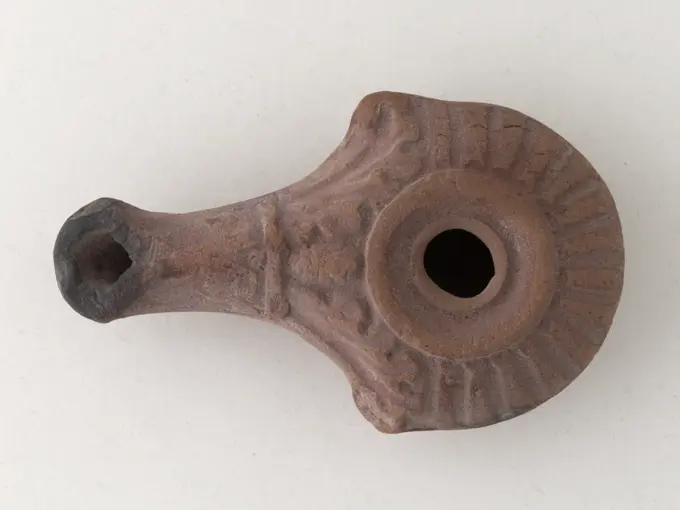
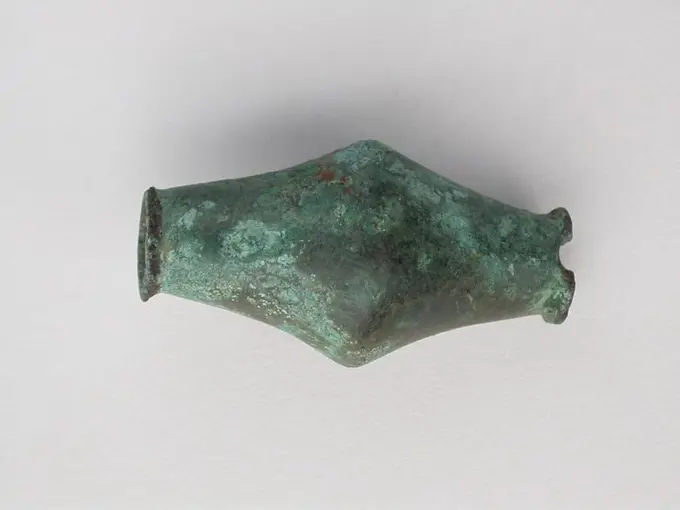
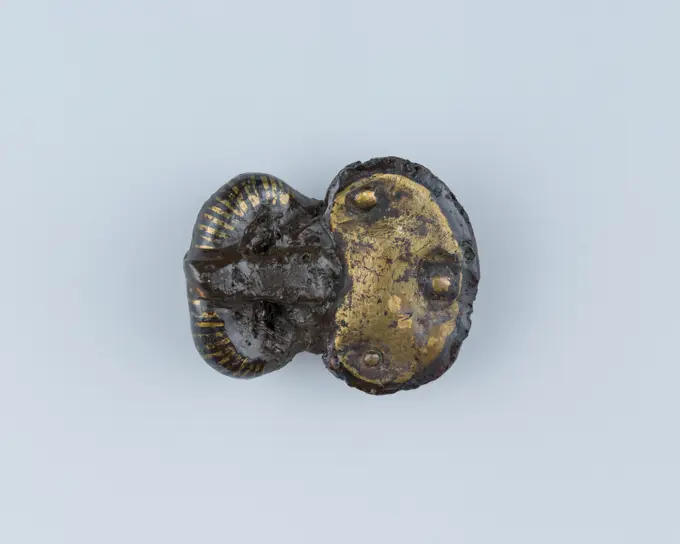
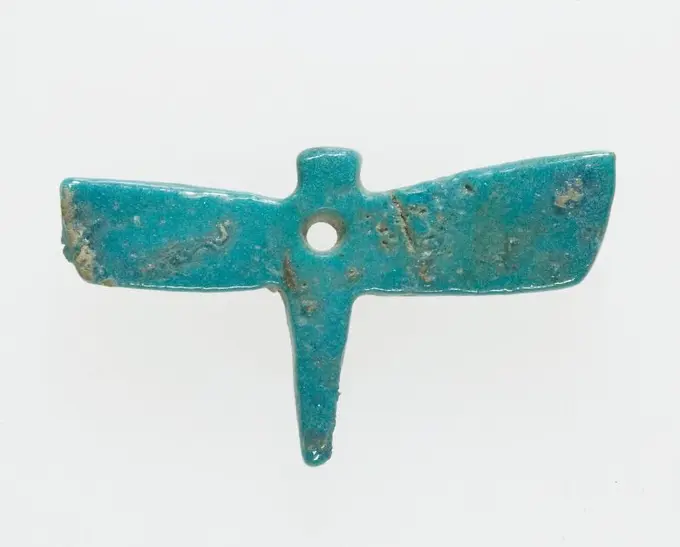
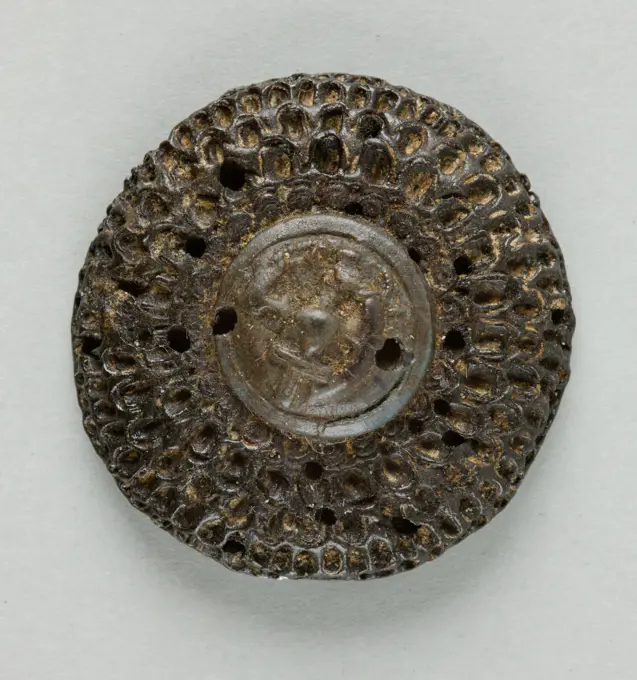
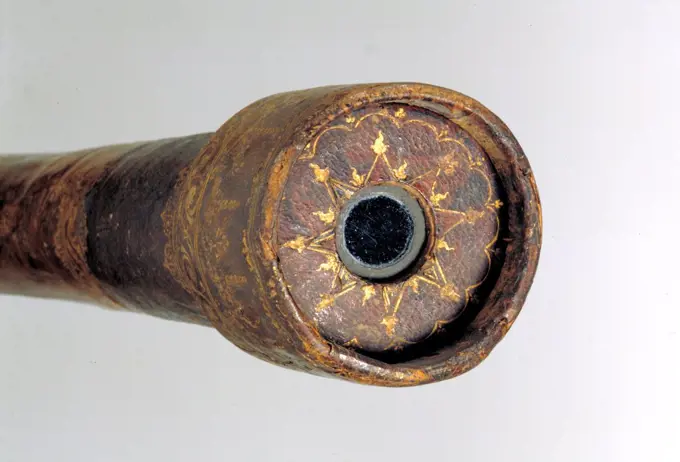
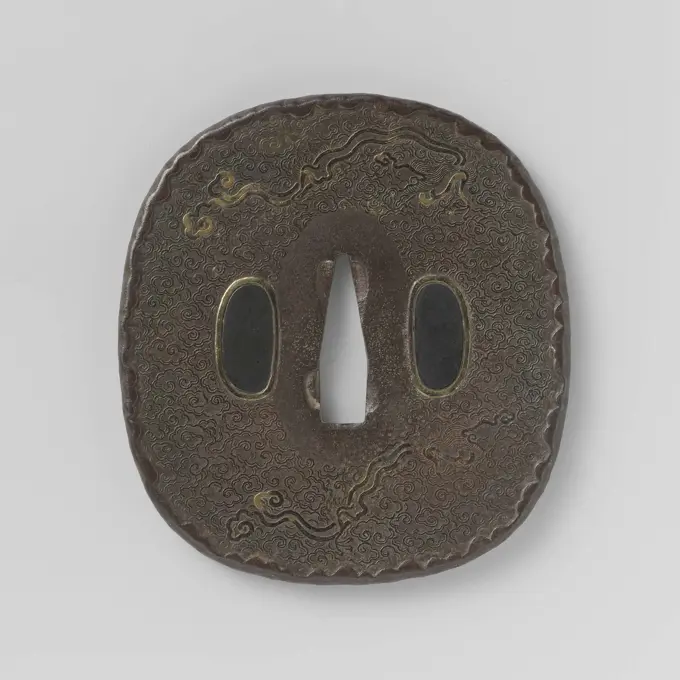
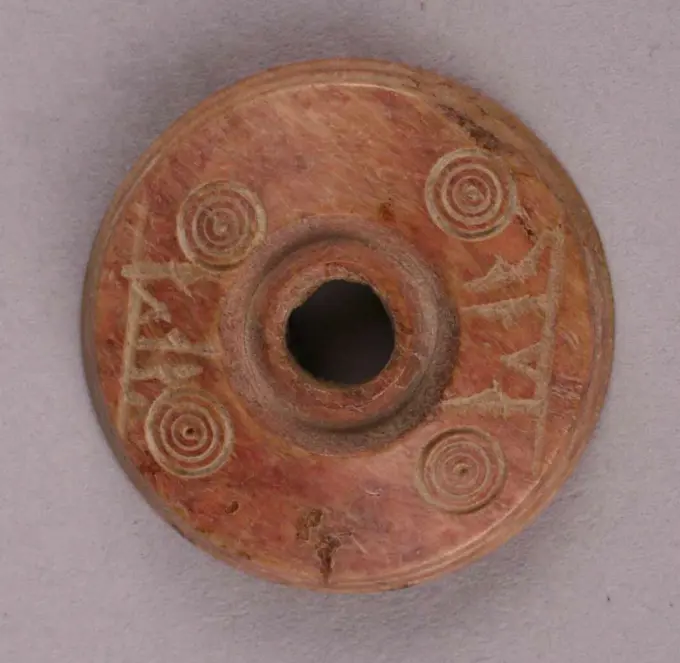
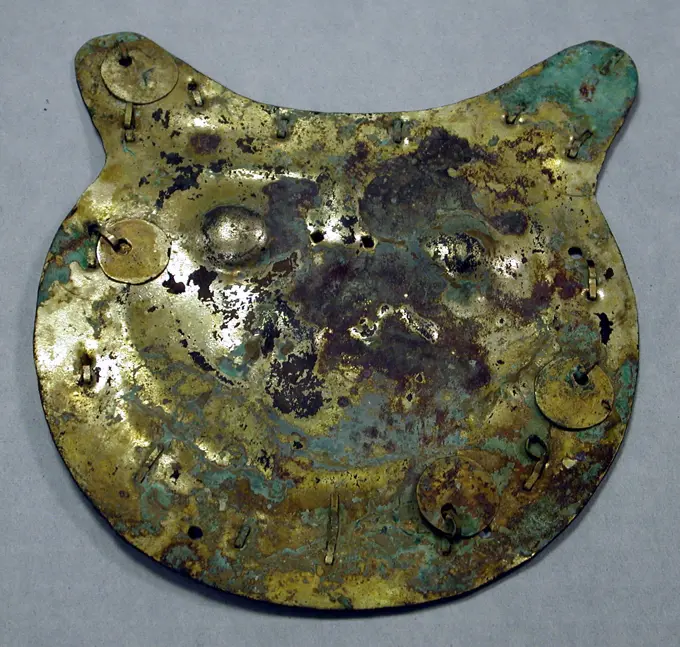
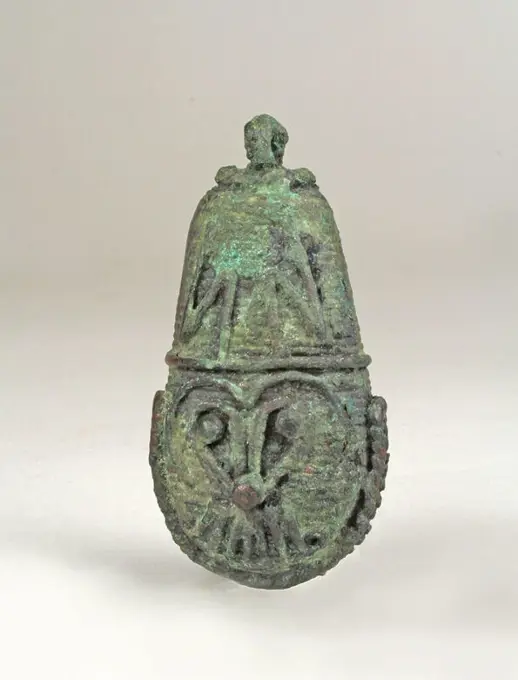
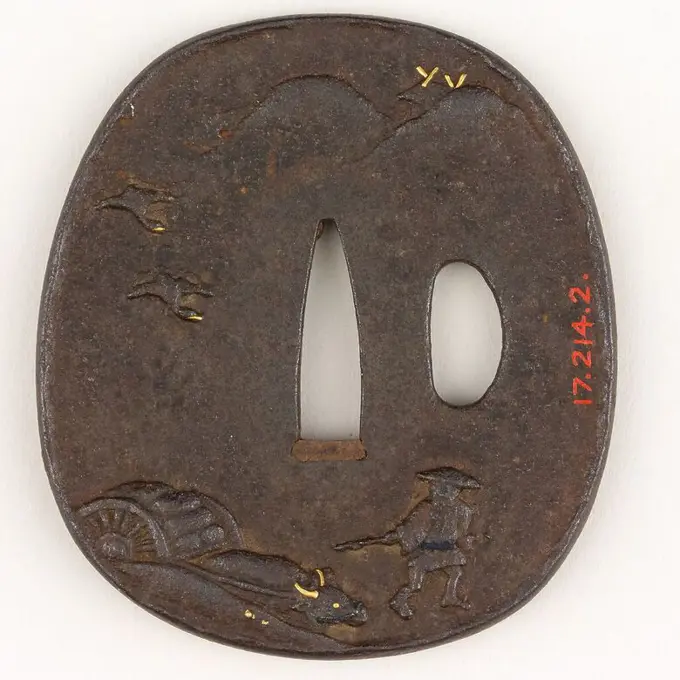
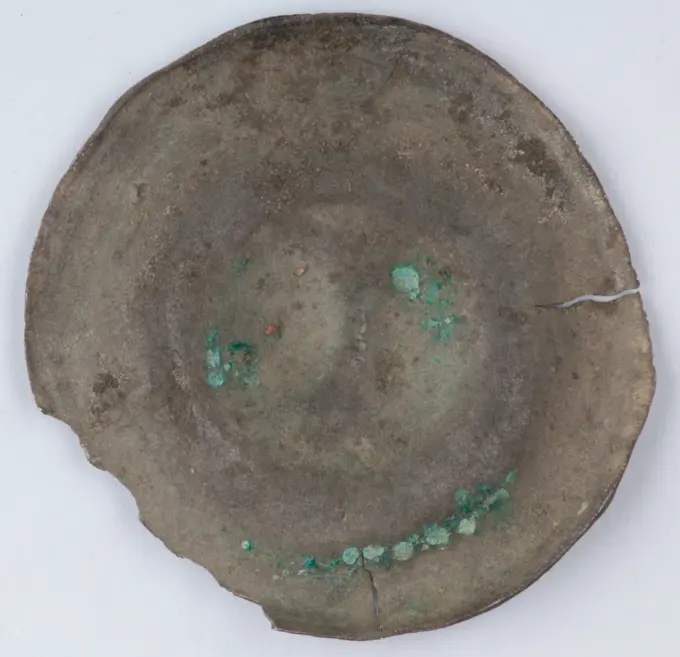
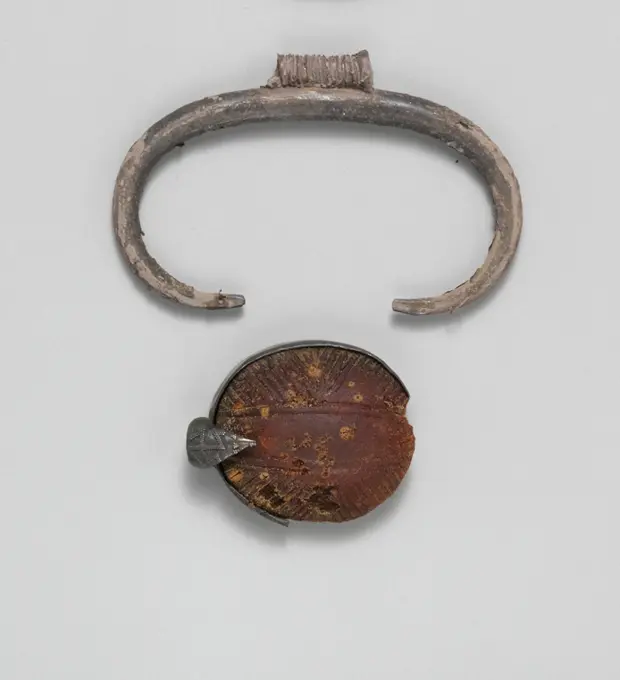
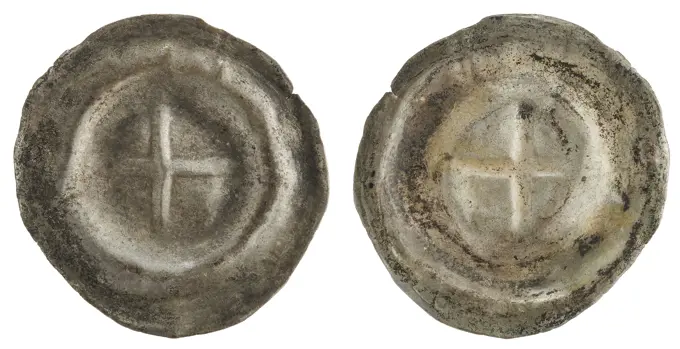
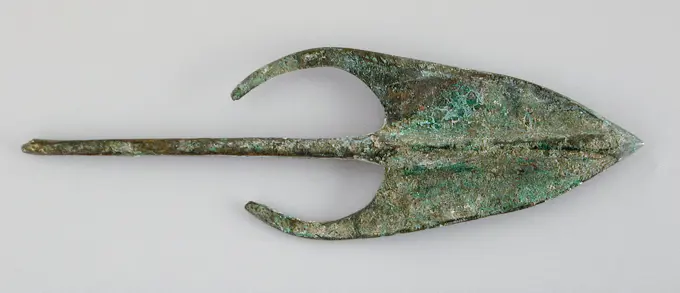
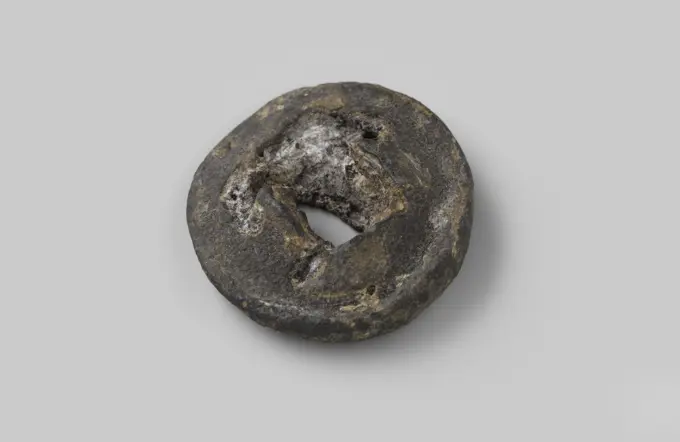
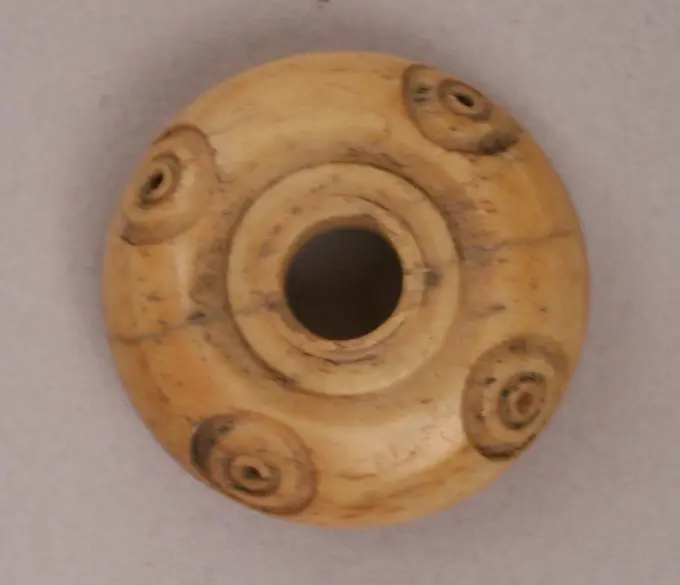
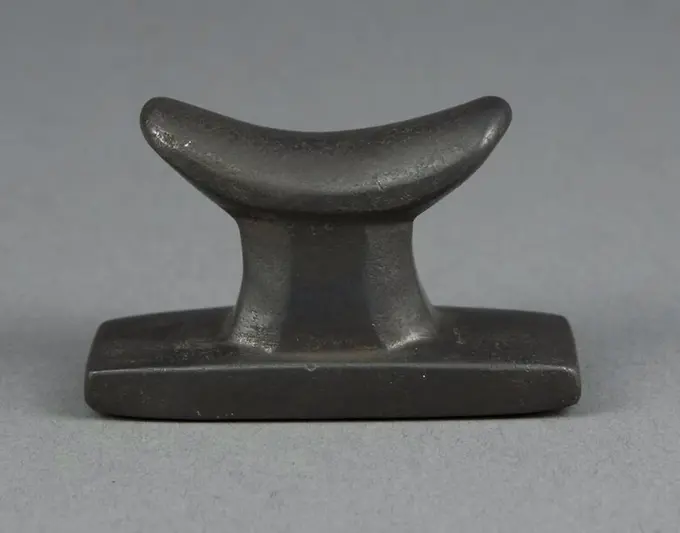
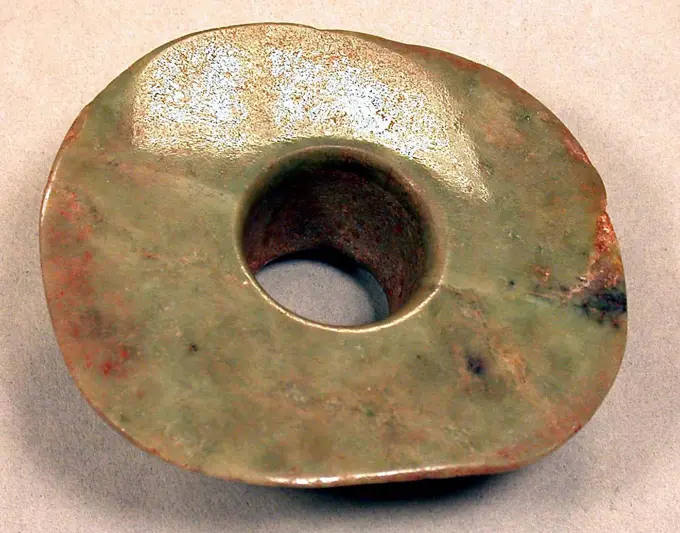
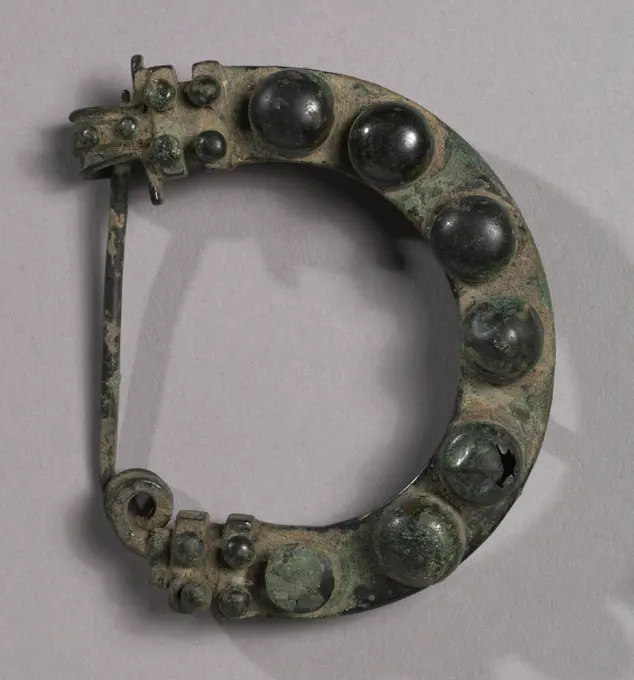
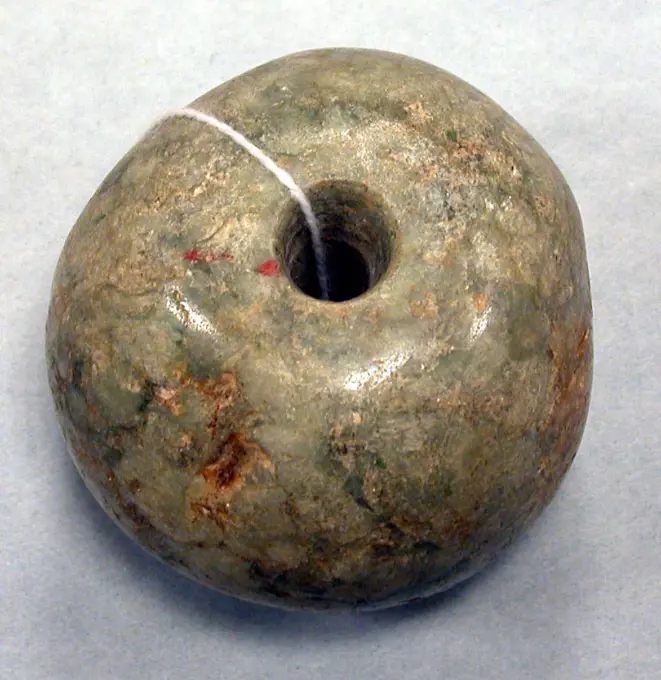
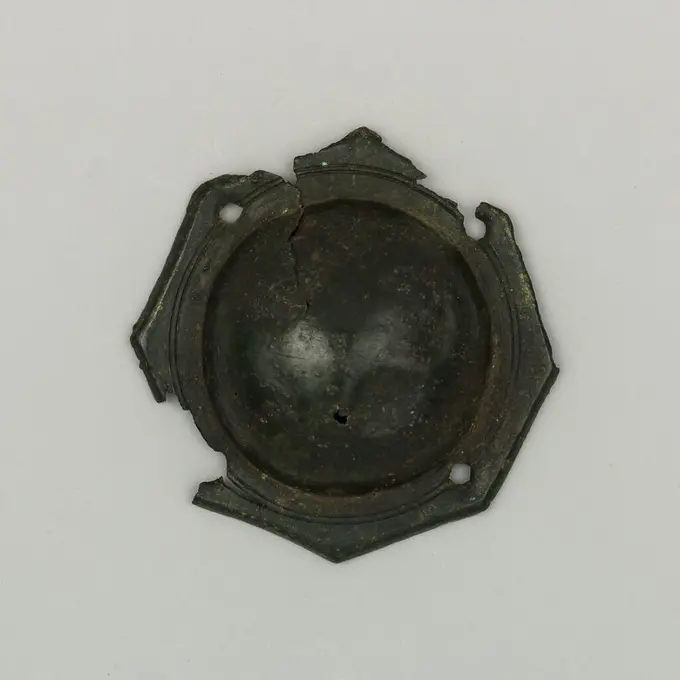
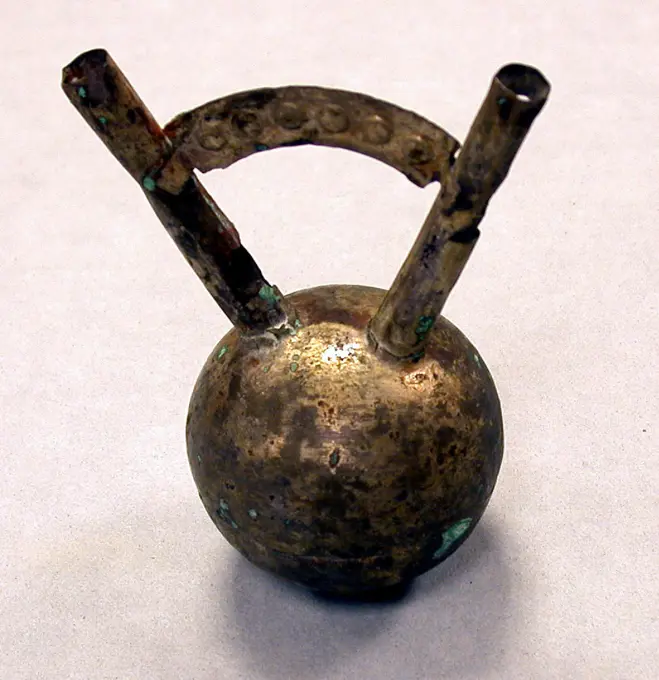
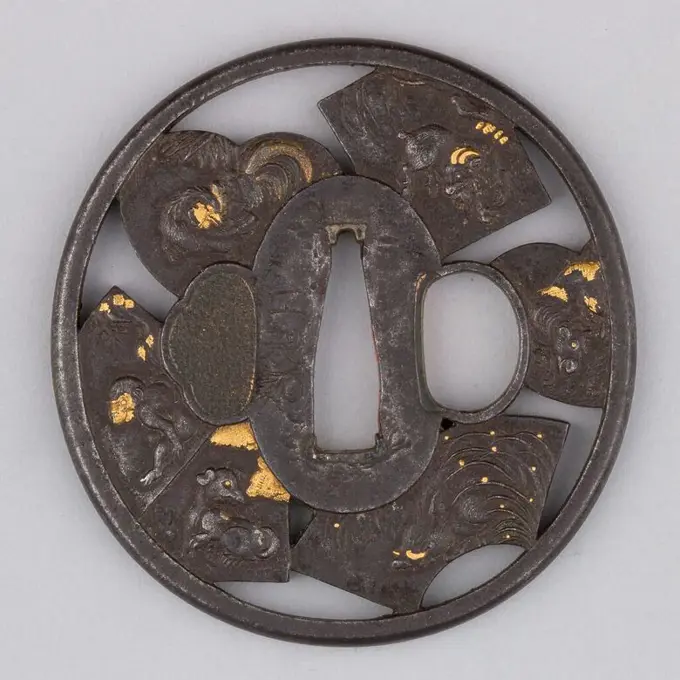
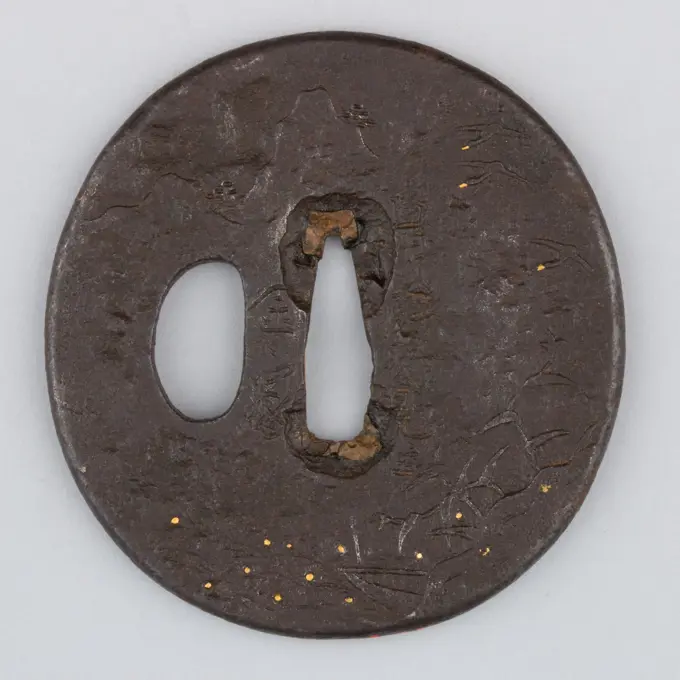
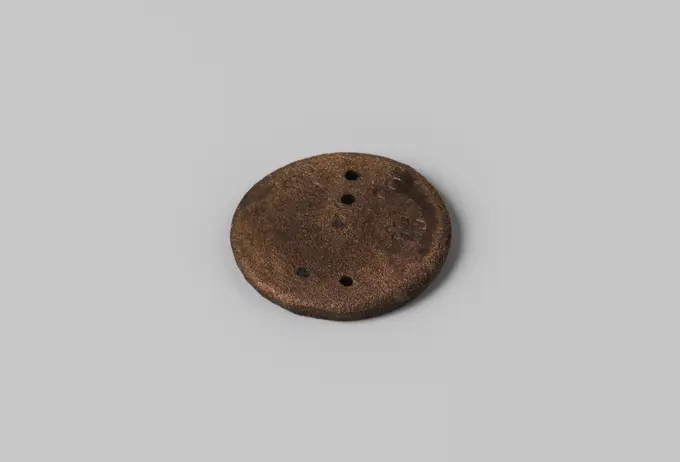
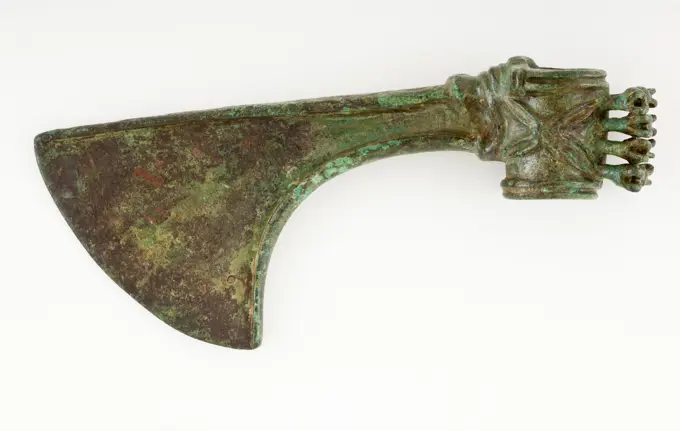
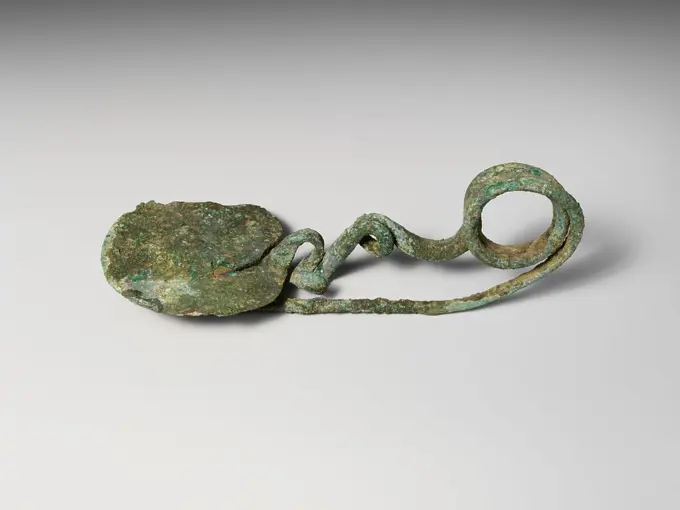
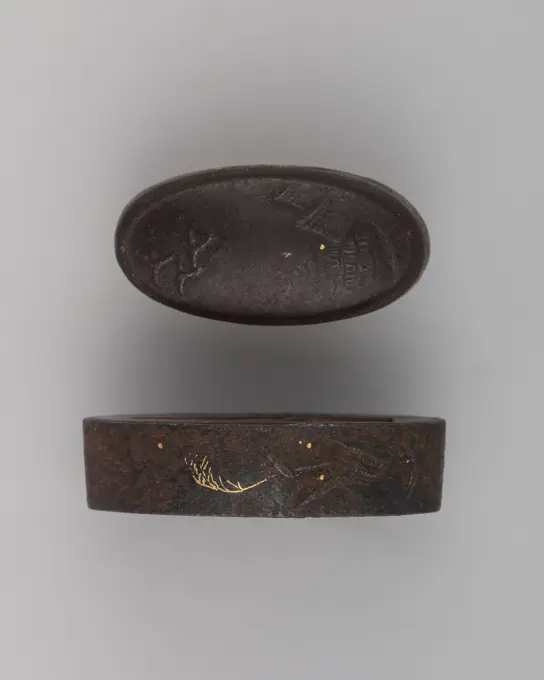
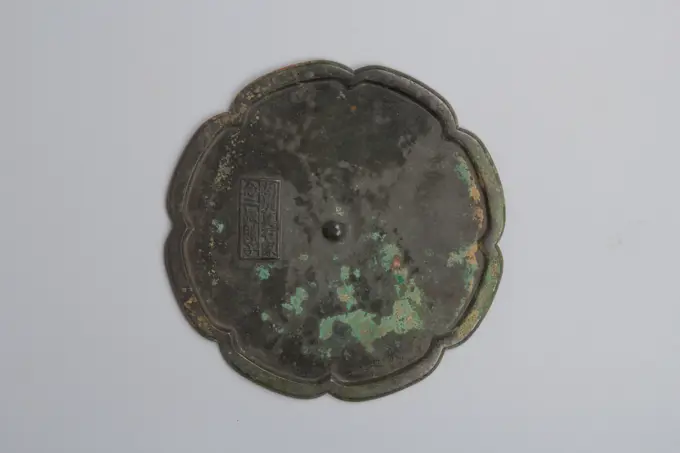
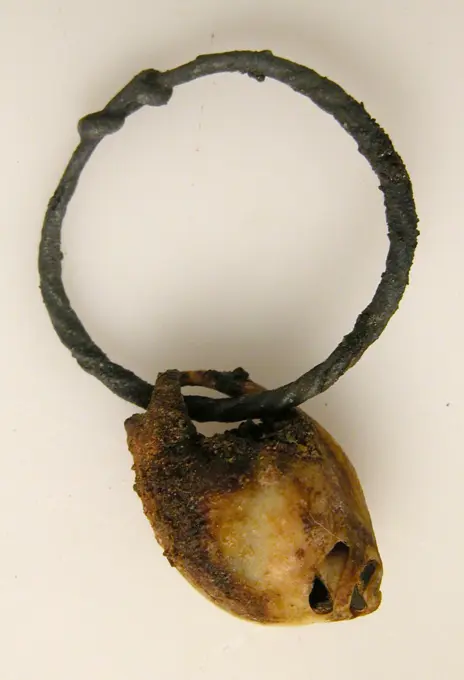
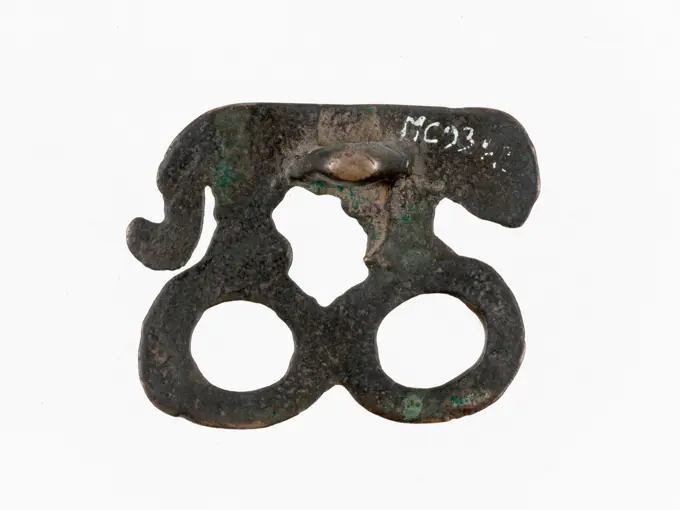
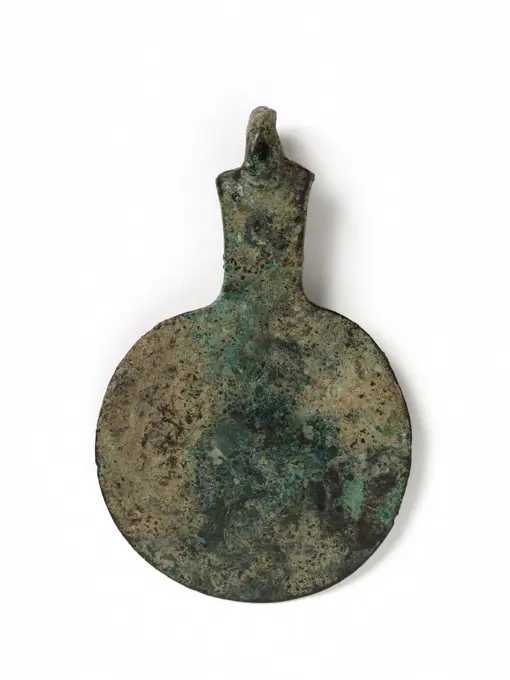
Harness element. Hand -hanged handle disc by ring. Perse, Hurvin. IXEM-VIII century BC. Paris, Cernuschi museum. 35179-9 Ring, bronze, disc, element, harness, sleeveStone Earflare before 16th century Mexican. Stone Earflare 317438Excavated horseshoeLamp, Italy; 2nd - 1st century B.C; Terracotta; 3.7 × 5.6 × 8.5 cm (1 7,16 × 2 3,16 × 3 3,8 in.)Container Depicting Aged Male on His KneesButton or Bead 9th-10th century The dot-in-circle motif recalls designs presumed to be of magical significance, most likely an abstract eye to ward off the evil-eye, which serves an apotropaic function. Easily reproduced with a tool and visible in many cultures and times, this symbol may have lost its meaning, and become simply a decorative pattern, or may have one that we have not yet discovered.. Button or Bead 450013Bow Fibula 800 BCE-700 BCE Greece. This precious bronze object is a votive, or devotional gift, made as an offering to the gods. They come in many forms, such as animals, beads and brooches. Many seem once to have been attached to something else. Votives were hung from sacred trees or placed in sanctuaries around Greece. Once a shrine was full, the votives were ceremonially buried to make room for more offerings.. Bronze . Ancient GreekSpindle Whorl 10th-early 16th century Mexican. Spindle Whorl 307693. Mokko-shaped tsuba with shoki on the front shoki and two bats in a landscape in relief and inlay in gold; A bridge over a stream at the rear.Pendant. UnknownAmulet - Solar DiscPolished Stone Axe (Masei sekifu) Japan The polished axe (masei sekifu) or celt is the most common type of stone implement used during the Neolithic age in East Asia. Such examples have been excavated with Jmon pottery, as well as with Yayoi pottery and bronze artifacts. The earliest Japanese examples are said to date to 30,0000 years B.C., and are among the oldest stone implements in the world.. Polished Stone Axe (Masei sekifu). Japan. Serpentine. Late Jmon period (ca. 1500-1000 B.C.). StoneCopper scales, round and flat with a upper edge in which three holes are applied. Libra of copper, round and flat with a standing edge in which three holes are applied. The scale has probably served for weighing medicines. According to the feather, a barber or surgine has been included with the journey.End of the car model; Unknown Night -Tamanian workshop; approx. 2600 2350 BC ; Early period D Azira III (-2605-00-00--2345-00-00);Phiale, miniature. Culture: Greek. Dimensions: Other: 2 1/16in. (5.3cm).Blackish clay, with seven depressions on the inside. Museum: Metropolitan Museum of Art, New York, USA.Spindle Whorl 9th-15th century Mexican. Spindle Whorl 315837Buckle With oval rim of angular section and back piece with one rivet.. Buckle 246781Hollow Bangle with Striations and Pellets 300 B.C.-A.D. 400 Thailand. Hollow Bangle with Striations and Pellets 53365Fragment of an Ewer 8th-9th century. Fragment of an Ewer 448707Crossbow mechanism. Bronze. Cernuschi Museum, Asia Museum of Asia in the city of Paris.Terracotta oil lamp 2nd century B.C. Greek, Cypriot Mold-made, with applied loop handle and a long nozzle, ending in a triangular spout around the large wick hole. On discus: central, large filling hole, surrounded by three evenly-spaced smaller holes; around discus, broad collar, flaring upward. On shoulder at sides and under handle, a series of raised oblongs or diamonds, each decorated within with similar smaller shapes, interspersed with small, raised dots. On nozzle, a spiral on each side and a long fluted object (a vase) on the top. Raised base ring and flat base.. Terracotta oil lamp. Greek, Cypriot. 2nd century B.C.. Terracotta. Hellenistic. TerracottasLamp. Impasse Nicole (1882), coll. MAGNE. Terracotta. High Empire. Delphiniform. Paris, Carnavalet museum. Delphiniform, High Empire, Lamp, Oil lamp, TerracottaLamp, North Africa; 1st - 4th century; Terracotta; 2.5 x 8 x 11 cm (1 x 3 1,8 x 4 5,16 in.)Lamp 4th century Small earthenware lamps, made from double molds, were the most commonly used source of light in daily Coptic life. A wick produced from plant fiber or linen fabric was placed in a reservoir filled with oil, generally castor or sesame oil, and illuminated. The disc of this red earthenware lamp is decorated with a dolphin encircled by a border of palm leaves.. Lamp 447975Stamp Seal. Northern Iran, circa 1350-800 B.C.. Tools and Equipment; seals. Bronze, castBiconical Bead. Greek; Thessaly. Date: 800 BC-600 BC. Dimensions: 3.6 × 5.1 × 3.6 cm (1 3/8 × 2 × 1 3/8 in.). Bronze. Origin: Greece. Museum: The Chicago Art Institute, Chicago, USA. Author: ANCIENT GREEK.Fragment ca. 1150-ca. 1250 European or Middle Eastern. Fragment 694183Buckle 450-500 Frankish. Buckle. Frankish. 450-500. Iron, copper alloy. Niederbreisig. Miscellaneous-Buckles & OrnamentDragonfly amulet. Dimensions: h. 1.8 cm (11/16 in); w. 3.1 cm (1 1/4 in); d. 0.3 cm (1/8 in). Dynasty: Dynasty 12-13. Date: ca. 1981-1640 B.C.. Museum: Metropolitan Museum of Art, New York, USA.ButtonGalileo's telescope by Anonymous master  / Museo Galileo, Florence/ 1610/ Italy/ Wood, leather/ History of science/ L 98/ ObjectsSpindle Whorl A.D.1-500 Peruvian; north coast (). Spindle Whorl 308908Plate from the wreck of the East Indians Hollandia, Anonymous, 1700 - in or before 1743 plate (dishes) Plate, squashed, eroded, id. NG 1980-27H2288, no marks legible. Netherlands tin (metal)   SecondBelt Buckle Tongue 4th-7th century Frankish. Belt Buckle Tongue 469814. Rounded rectangular tsuba with irregular elevated edge; Two dragons at the front in Hon-Zogan in the middle of stylized clouds; At the rear a dragon amidst stylized clouds; The Ryo-Hitsu are filled with shakudo.Buckle middle of 6th century Frankish. Buckle 465555 Frankish, Buckle, middle of 6th century, Copper alloy, silvered, Overall: 1 3/16 x 13/16 x 1/4 in. (3 x 2 x 0.6 cm). The Metropolitan Museum of Art, New York. Gift of J. Pierpont Morgan, 1917 (17.193.233)Carnavalet Museum, Medals CollectionTile Fragment 1334-1434. Tile Fragment 450547Earflare before 16th century Mexican. Earflare 317117Bone spindle whorl. Culture: Cypriot. Dimensions: Diameter 7/8 in. (2.2 cm). Date: ca. 1600-1050 B.C..With circles. Museum: Metropolitan Museum of Art, New York, USA.Button or Bead 9th-10th century The dot-in-circle motif recalls designs presumed to be of magical significance, most likely an abstract eye to ward off the evil-eye, which serves an apotropaic function. Easily reproduced with a tool and visible in many cultures and times, this symbol may have lost its meaning, and become simply a decorative pattern, or may have one that we have not yet discovered.. Button or Bead 449237Copper Animal Plaque 3rd century B.C.-A.D. 2nd century Vicús. Copper Animal Plaque 315645Buckle. Bronze, northwest China. 5th-4th centuries before J.-C. Paris, Cernuschi museum. A stylized raptor head serves as a hook for this loop made in a bivalve mold. Two caprine heads appear along the loop. On the other hand, forming a rectangle, the ring used to fix the belt takes the features of a sudden, hatching marking its mane. The reverse is slightly concave. Belt Buckle, belt buckle, bronze, northwest China, Northwestern Porcelain, Animal, ChinaBell with Face (Tlaloc). Culture: West Mexico. Dimensions: H. 2 5/8 x W. 1 3/8 x D. 1 3/8 in. (6.7 x 3.5 x 3.5 cm). Date: 11th-16th century.Metalworkers in West Mexico produced this pear-shaped bell between the 11th and 16th centuries. It is likely made of a copper alloy--that is, copper chemically mixed with another element--based on the analysis of similar bells (Hosler 2014; Schulze 2008). The metalworkers employed lost-wax casting to fabricate the bell and used a cast filigree design. The bell shows the face of Tlaloc, a deity venerated in various parts of Mesoamerica and associated with caring for land, making it fertile, and controlling rains. The presence of a circular loop at the top of the bell implies that it was designed to be worn, perhaps on the human body, or to be attached to another material. Below this loop there is a ring that shows a braided design. The upper half of the bell's resonator features two zigzag motifs on the obverse. They are oriented downward, and theSword Guard (Tsuba). Culture: Japanese. Dimensions: 2 7/8 x 2 1/2 in. (7.3 x 6.4 cm). Date: 18th century. Museum: Metropolitan Museum of Art, New York, USA.Duchy of Sieradz , Brakteat, 2nd half of the 13th  beginning of the 14th centuryButton ca. 3rd-7th century A.D. Sasanian. Button 322790Silver gilt and amber pendant 7th century B.C. Etruscan Elliptical hoop topped by a suspension tube. The base of the ring accommodates an ovoid amber bead mounted so it may swivel. The amber is incised with simple geometric motifs.. Silver gilt and amber pendant. Etruscan. 7th century B.C.. Amber, silver, gold. Archaic. Miscellaneous-AmberButton or Spindle Whorl 5th-8th century. Button or Spindle Whorl 449173BraceletTool fragment (Binette) (Title allocated). Iron. Carnavalet museum, history of Paris.bracteate denarius. Zakon krzyżacki (1190-), issuerIndefinite Ruler, Brakteat Guziczki, XIII/XIV W.Spear Point. Western Iran, circa 1000-825 B.C.. Arms and Armor; spears. BronzeDisc -shaped fragment from the wreck of the East Indians Hollandia, Anonymous, 1700 - in Or Before 1743 fragment Varied parts or fragments, discs and disc-shaped fragments; eroded; circular, flat, one side slightly domed, central square opening. Netherlands lead (metal)   SecondButton or Bead 9th-10th century The dot-in-circle motif recalls designs presumed to be of magical significance, most likely an abstract eye to ward off the evil-eye, which serve an apotropaic function. Easily reproduced with a tool and visible in many cultures and times, this symbol may have lost its meaning, and become simply a decorative pattern, or may have one that we have not yet discovered.. Button or Bead 449252Bronze bracelet 8th century B.C. Italic, possibly Daunian Decorated with a series of grouped vertical and diagnoal engraved lines.. Bronze bracelet. Italic, possibly Daunian. 8th century B.C.. Bronze. Geometric. BronzesAmulet of a Headrest. Egyptian. Date: 700 BC-1 BC. Dimensions: 3.5 x 5.7 x 2.2 cm (1 3/8 x 2 1/4 x 7/8 in.). Hematite. Origin: Egypt. Museum: The Chicago Art Institute, Chicago, USA. Author: Ancient Egyptian.Spindle Whorl 10th-early 16th century Mexican. Spindle Whorl. Mexican. 10th-early 16th century. Ceramic. Mexico, Mesoamerica. Ceramics-ImplementsEarflare before 16th century Mexican. Earflare 317116Key Handle Roman 1st-7th centuryLead disc, conical, possibly weight, weight ground find lead metal, grams cast Flattened spherical solid metal object. Reverse side of holling archeology Rotterdam railway tunnel roads Soil discovery: trajectory Rotterdam rail tunnel.StampArched Fibulae (2 of 2), 725-675 BC. Asia Minor, Phrygia, late 8th-early 7th Century BC. Bronze; overall: 6 x 7.5 cm (2 3/8 x 2 15/16 in.). Dated to the time of King Midas, these fibulae may have been a matched pair. The type was popular and has been found throughout Anatolia and in Greece. In the 5th century BC the Greek historian Herodotus wrote that the Phrygian king Midas reigned in the late 8th century BC, and dedicated a throne to the oracle at Delphi. This is the earliest historical reference to the Phrygians, a name given them by the ancient Greeks. The passage in Herodotus, taken together with archaeological finds in the Ionian Greek city states and on the Greek mainland, shows that Phrygians and Greeks enjoyed close relations in the late 8th to early 7th century BC.Key 1st-7th century Roman. Key 462966Lamp 5th-6th century. Lamp 448011Stone Bead before 16th century Mexican. Stone Bead. Mexican. before 16th century. Stone. Mexico, Mesoamerica, Guerrero, Balsas River region. Beads-OrnamentsCloth with Rotterdam weapon with six-pointed star and initials, cloth seal hallmark ground find lead metal, Cloth lead with at the front the coat of arms of Rotterdam in pearl ring with on both sides RD and kind of flower above and on the other side in circle and striped border six-pointed star with squares or small lilies and letters or numbers between the rays Closed, RD archeology Rotterdam rail tunnel authentication government textile trade textile trade trade guild Soil discovery: trajectory rail tunnel Rotterdam.Boss for a Crupper Strap. Culture: Ottoman, probably Eastern Europe. Dimensions: Diam. 2 1/2 in. (6.4 cm); Wt. 0.6 oz. (17 g). Date: 18th century.This octagonal boss decorated the cross-section of an Eastern European Ottoman crupper strap (preventing the saddle from slipping forwards). Museum: Metropolitan Museum of Art, New York, USA.Miniature Silver Double Spout Bottle 11th-late 15th century Chimú or Chancay. Miniature Silver Double Spout Bottle 308926ScarabSpindle Whorl, 700s - 900s. Iran, early Islamic period, 8th - 10th century. Bone, incised; overall: 0.7 x 1.8 x 1.8 cm (1/4 x 11/16 x 11/16 in.).Halles and Paris markets: Hudelot, Ancien Halles and Markets of Paris: Hudelot, Ancient Diet . Bronze.Sword Guard (Tsuba). Culture: Japanese. Dimensions: Diam. 2 3/4 in. (7 cm); thickness 3/16 in. (0.5 cm); Wt. 4.2 oz. (119.1 g). Date: 18th century. Museum: Metropolitan Museum of Art, New York, USA.Sword Guard (Tsuba) ca. 1615-1868 Japanese A tsuba is a sword guard and part of a sword mounting. It is mounted between the swords blade and grip to protect the users hands.. Sword Guard (Tsuba) 33429Ax. Culture: India. Dimensions: 6 13/16 x 6 3/4 in. (17.3 x 17.1 cm). Date: 1500-500 B.C.. Museum: Metropolitan Museum of Art, New York, USA.Disk Brooch 8th-9th century Merovingian. Disk Brooch 466206Lamp 100 CE-299 CE Italy. terracotta . Ancient RomanCover of a closing weight from the wreck of the East Indians Hollandia, Anonymous, 1700 - in or before 1743 lid Weight, cupweight, lid; id. NG 1980-27H33, eroded, 3 marks id. NG 1980-27H2892 legible. Netherlands copper (metal)   SecondCostume Ornament 11th-12th century Central coast (). Costume Ornament 308780Lead Role from the wreck of the East Indies' t Vliegend Hart ,, 1700 - 1735 lead Tube rolled lead picture. Black-gray in color. The cavity filled with rust or residues of rope. Roll of Lead. Middelburg lead (metal)Bangle with Circular Motifs ca. 2700 B.C.-A.D. 400 Thailand. Bangle with Circular Motifs 53283Shaft-hole Axehead. Iran, Luristan, circa 1350-1000 B.C.. Arms and Armor; axes. Bronze, castBrakedate Halter; 15th century (1401-00-00-1500-00-00);Dzik's head (iconogr.), Unilateral coins, city coinsGreece, Egypt, Ptolemeusz II (285 246), Alexandria, after 265 B.C., bronze (AE) Mint Alexandria, Ptolemeusz II Philadelfos (285 246)Bronze disc-type fibula (safety pin). Culture: Italic. Dimensions: Other: 4 13/16 in. (12.2 cm). Date: 10th century B.C..Serpentine fibulae have distinctive coiled bows. Disk-type have an enlarged clasp in the shape of an ovoid disk. This fibula incorporates both elements. Museum: Metropolitan Museum of Art, New York, USA.Carnavalet museum, tokens collectionSword-Hilt Collar (Fuchi) late 18th-early 19th century Japanese A fuchi is a collar that is mounted at the base of the grip of a sword hilt, usually made as part of a set with a matching kashira (pommel cap).. Sword-Hilt Collar (Fuchi). Japanese. late 18th-early 19th century. Iron, gold. Sword Furniture-Fuchi-KashiraSmall copper ring with empty setting, ring ornament clothing accessory clothing soil find copper brass metal d 0.1, cast Small copper ring children's ring. Deep tapered setting for stone square at the front bread-shaped at the back archeology Rotterdam railway tunnel decorate status prosperity Soil discovery: Railway tunnel 1988-1993.Weight ca. 1295-1070 B.C. New Kingdom, Ramesside. Weight 568372Mirror Korea. Mirror. Korea. Bronze. Goryeo dynasty (918-1392). MirrorsBit Boss. Culture: possibly French or Netherlandish. Dimensions: Diam. 3 15/16 in. (10 cm); Wt. 2.3 oz. (65 g). Date: 16th century.Bit bosses were ornamental elements decorating both sides of a horse bit. Museum: Metropolitan Museum of Art, New York, USA.Game Piece 4th-7th century Coptic. Game Piece 478565Spindle Whorl 10th-early 16th century Mexican. Spindle Whorl. Mexican. 10th-early 16th century. Ceramic. Mexico, Mesoamerica. Ceramics-ImplementsScrew cap from the wreck of the East Indies Princesse Maria, Anonymous, 1670 - 1686 screwcap Round pewter screw cap for a basement bottle, black corroded. Screw Cap. Netherlands tin (metal)Ring with Shell 4th-7th century Coptic. Ring with Shell. Coptic. 4th-7th century. Copper alloy, shell. Made in Kharga Oasis, Byzantine Egypt. MiscellaneousAmong the remnants from the Safe House’ were many utilitarian household objects, such as plates, cutlery andbrushes. The taps originally were attached to wooden barrels containing water or wine. The spike candleholders’,which could be hammered into a wooden beam, were particularly convenient.Plate. Bronze. 5th century BC. J.-C.NORD DU HEBEI and west of the Liaoning. Paris, Cernuschi museum. 59515-1 ANTIQUITE, BRONZE, antique, plaqueTin button with stud decor, knot clothing accessory clothing soil find tin metal, cast Pewter knot Hemisphere framed field with stud decor as decoration. Small copper loop as an attachment eye on the back of archeology dress to adornItaly, Garda Lake, Fictile votive lamp with two wicks from the excavation site of Riva del Garda