Historical Artifacts and Collectibles

Unique historical items including a snuffbox, votive fragments, and decorative pottery, showcasing intricate detailing and cultural significance from various eras.

Discount Scherf of earthenware with a flower drawing in a circle, in underly glaze blue, anonymous, 1500 - 1799   earthenware. glaze   earthenware. glaze
Discount Scherf of earthenware with a flower drawing in a circle, in underly glaze blue, anonymous, 1500 - 1799 earthenware. glaze earthenware. glaze
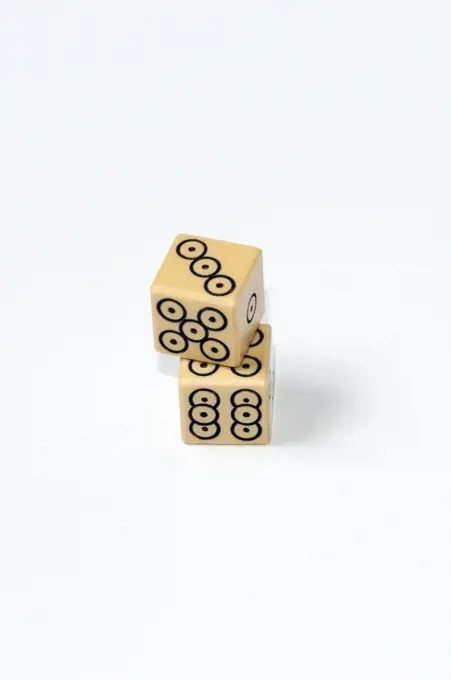
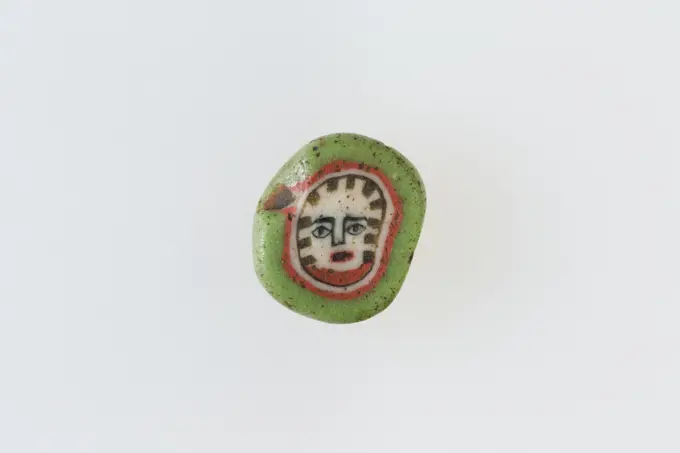
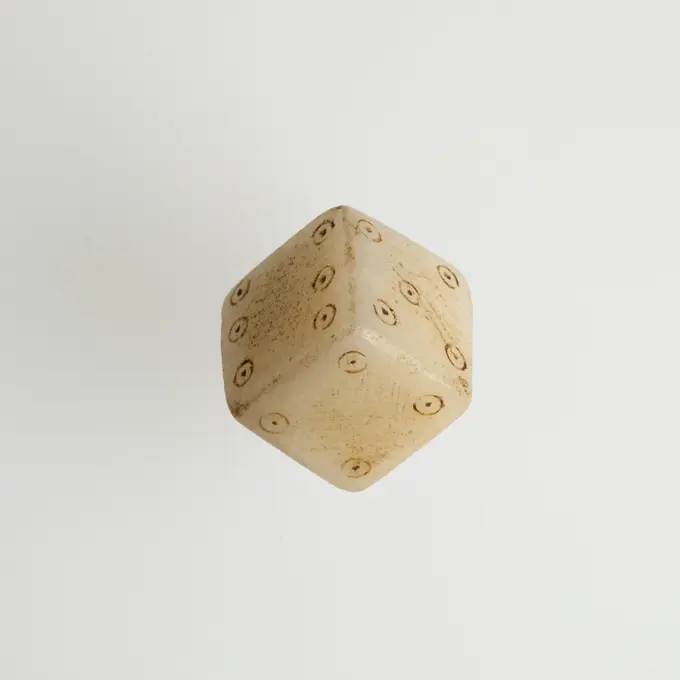
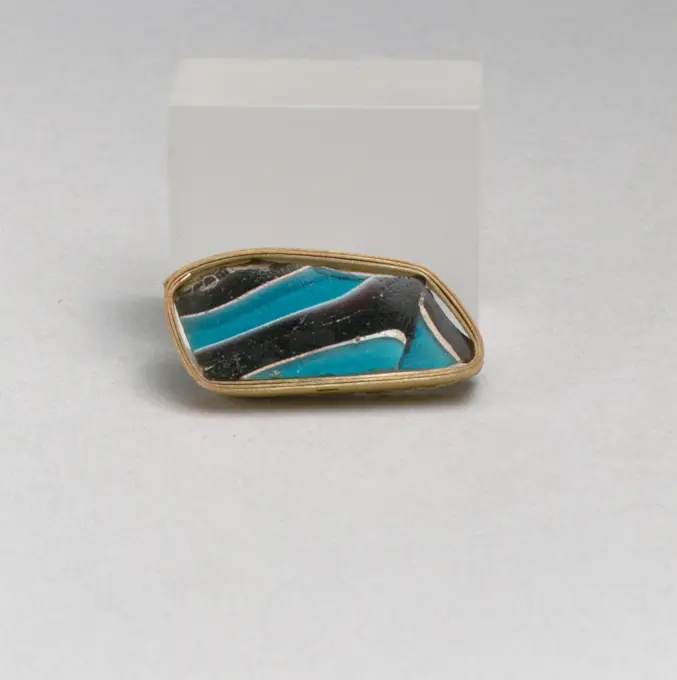
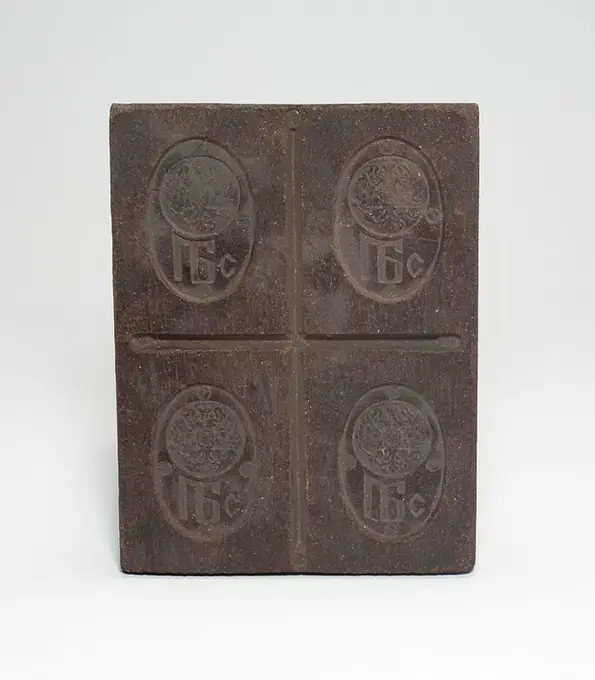
Mosaic glass fragment. The small glass fragment shows several flowers in millefiori technology on a white background, which are separated from each other through a turquoise grid in the form of a honeycomb. A flower consists of a red dot with black contour as a core. Three of the flowers is a white circle with a part of the flowers, with others a yellow. White circles with black contour make the petals around this core. In Roman times, it used colored, ornamented glass for vessels, mosaics, wall decorations and furniture ornaments. For the production, different colored glasses were molded into tubes and rods. These were compressed and heated, causing a long bar. The glass sliced now had a wide variety of amorphous or floral patterns.Fragment of a vessel. A low curvature of the glass fragment allows the assignment to a vessel. The edge fragment is highly weathered and has a staining on which glass artists of modern times - for example, Louis Comfort Tiffany (1848-1933) - oriented. Burry for the elaborate manufacturing process and its fragility included glass of the luxury articles of antiquity. Stack of dice, Elevated ViewCarnavalet museum, tokens collectionInlay / bead blank with face 100 BC-100 AD Ptolemaic Period-Roman Period A mosaic glass technique allowed multiples of an image to be created: a figural or design composition was made by bundling colored glass canes, which were then drawn out into a long bar. The bar was then sectioned at right angles, probably by striking the bar with appropriate tools, to produce small inlay tiles. The tile would then be smoothed and polished on the face intended to appear outwards.. Inlay / bead blank with face. 100 BC-100 AD. Glass. Ptolemaic Period-Roman Period. From EgyptDouble-Pentagon-Shaped Tile mid-13th-14th century Whether loose or on a building, Iranian glazed tiles fascinated scholars and collectors for aesthetic reasons. The tiles role in the decoration of facades and minarets in the second half of the eleventh century became an early subject of academic investigation.. Double-Pentagon-Shaped Tile 453997Die 30 B.C.-A.D. 364 Roman Period Cubic dice have been in use in the Near East since the third millennium B.C., with different systems used at different times for distributing the points. In Egypt, examples dating to the New Kingdom are reported as isolated finds at el-Amarna, Lisht and Deir el-Bahri. The numbering of the opposite sides (1-6, 2-5, 3-4), each adding up to seven, comes into more general use only later, as reflected by this die. During the Greco-Roman period, cubic dice became more common and gradually replaced throwing sticks and knuckle bones for use with board games.. Die 551069Spindle Whorl , 1000-1532. Clay, pigment   Arts of the Americas 1000-1532Glass mosaic fragment late 1st century B.C.-early 1st century A.D. Roman Body fragment.Translucent deep purple appearing black, turquoise blue, light blue, and opaque white.Shallow convex curving side.Meandering-strip mosaic pattern formed from large sections of one or more canes in alternating turquoise blue and purple stripes flanked by white lines; on interior, parts of a polygonal cane with a cluster of purple rods outlined in white with a central light blue rod.Polished exterior, with pitting of surface bubbles; dulling, pitting, and patches of iridescent weathering on interior, and some iridescent weathering on three edges, but one short edge unweathered.. Glass mosaic fragment 257278Cylinder Seal with the Name of Pepi I ca. 2289-2255 B.C. Old Kingdom. Cylinder Seal with the Name of Pepi I. ca. 2289-2255 B.C.. Steatite. Old Kingdom. From Egypt. Dynasty 6nice piece cut woodWhite decorated sweet pastry biscuit as Christmas baubleComplicated business question. Isolated whitePlanets-manager. Cornalet Collection Sites 2013-2016. Numismatic.Plaquette van Aventuri glass, with eleven rosettes from Millefiiglas, the middle one with a portrait of Camillo Benso, Count Cavour; In the rosette below the monogram BS., Giacomo Franchini, 1845 - 1847 Plaquette, rectangular, of gold -colored aventuran glass with eleven rosettes from Millefiiglas, the middle one with a portrait of Camille Benso, Graaf Cavour and the monogram BS. Venice glass. aventurine glass. millefiori glass Plaquette, rectangular, of gold -colored aventuran glass with eleven rosettes from Millefiiglas, the middle one with a portrait of Camille Benso, Graaf Cavour and the monogram BS. Venice glass. aventurine glass. millefiori glasscairate abstract   rusty brass brown knocker in a  door curch  closed wood italy  lombardy Biscuit or Sugar Paste Mold. Russia. Date: 1700-1750. Dimensions: 23.2 x 17.8 x 2 cm (9 1/8 x 7 x 3/4 in.). Wood. Origin: Russia. Museum: The Chicago Art Institute, Chicago, USA.Wooden Helmet 1400 A.D. Decorated with turquoise mosaic and shell inlay. AztecThree Dice, Ancient Egypt, Roman PeriodColored crayon chalk on a white background isolated.Alphabet blockTile Wall Facing (Holland); tin-glazed earthenware, underglazeStamp