Historical Artifacts and Fragments

Ancient fragments including wall paintings, mosaics, and oracle bones showcasing cultural and historical significance.
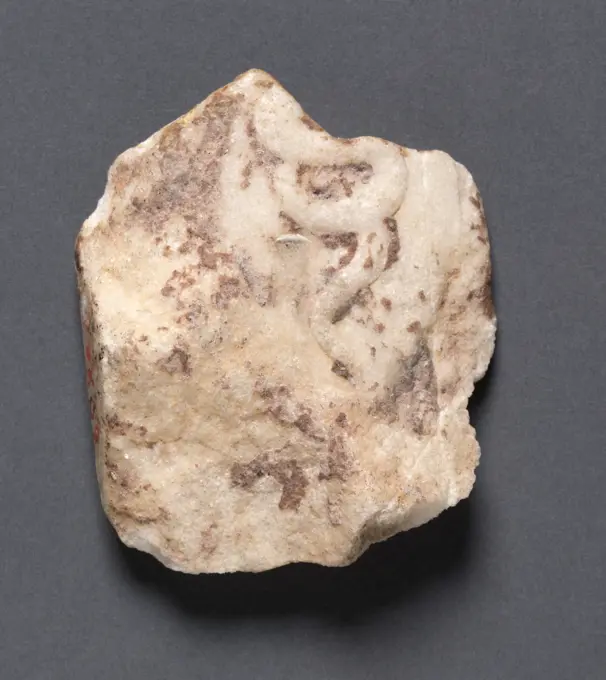
Fragment sent with "Dancing Lady": Serpent in Relief, c. 50 BC. Greece, Alexandria (), 1st century B.C.. Marble; overall: 85.4 cm (33 5/8 in.).
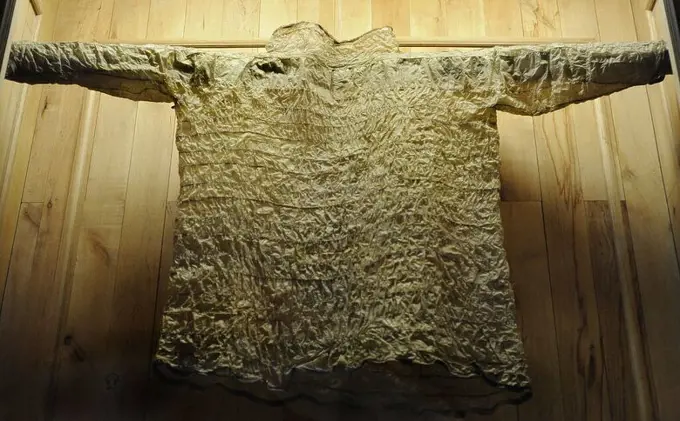
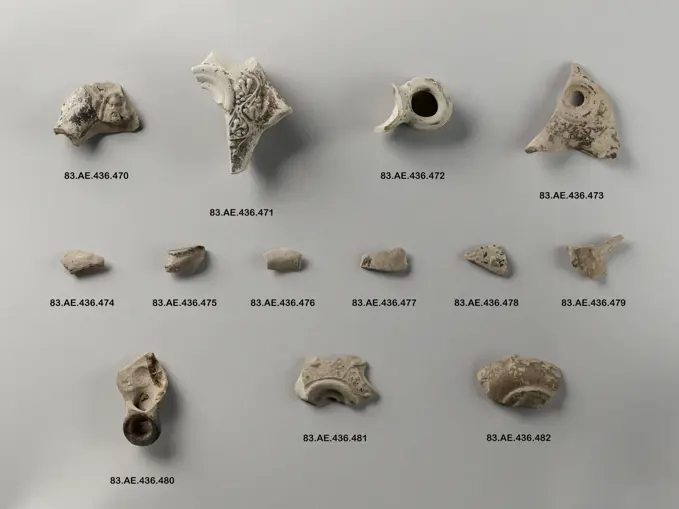
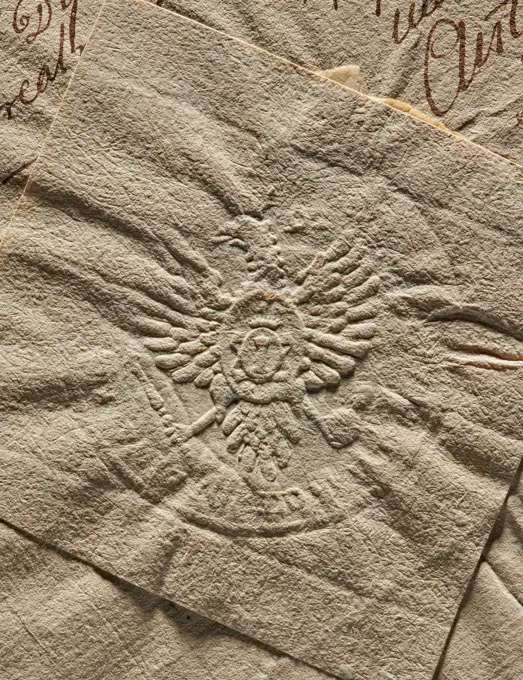
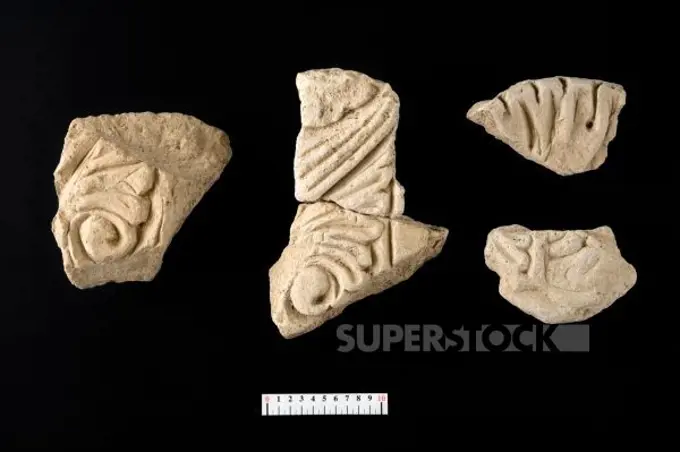
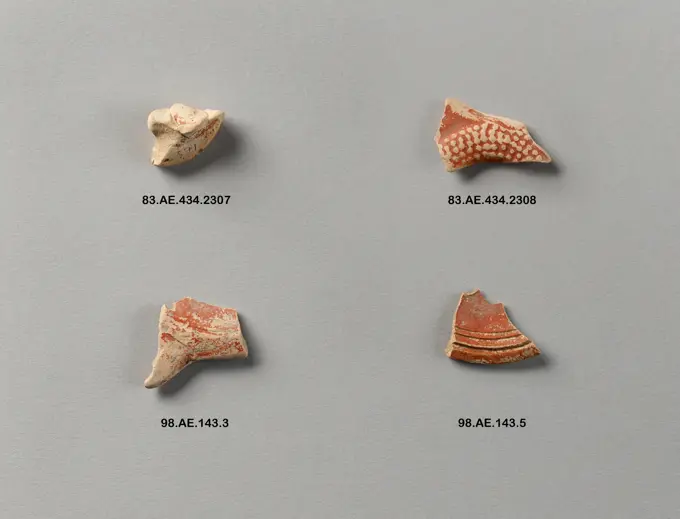
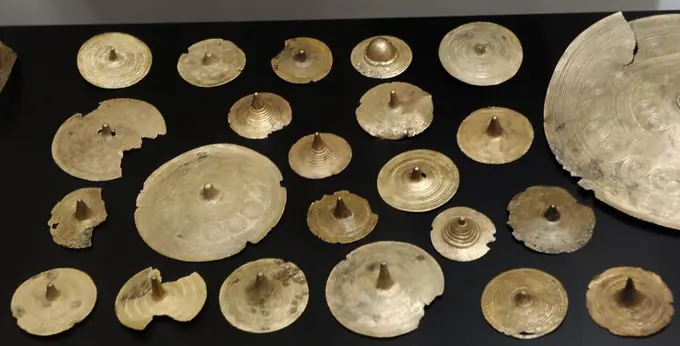
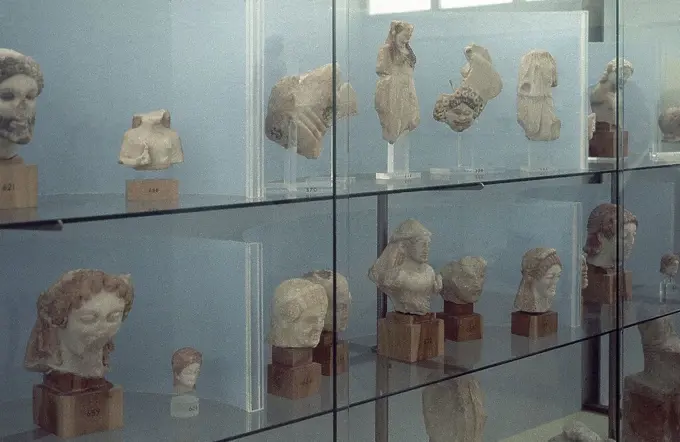
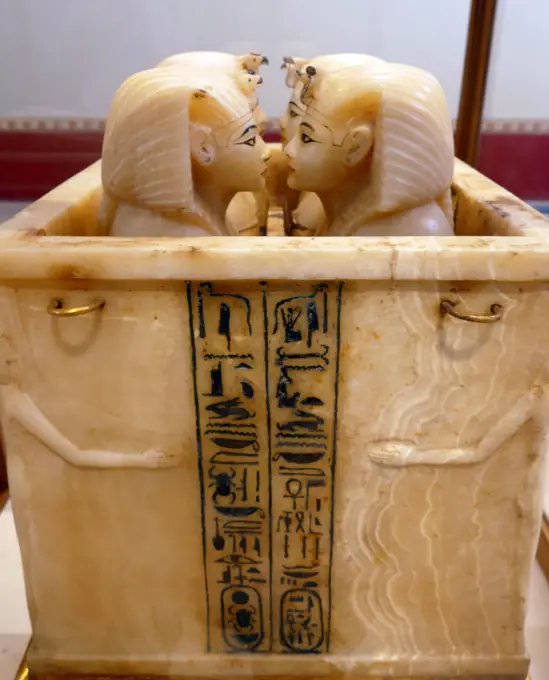
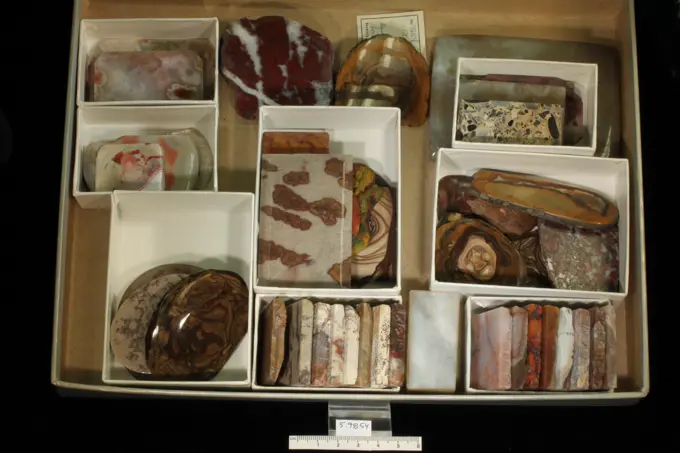
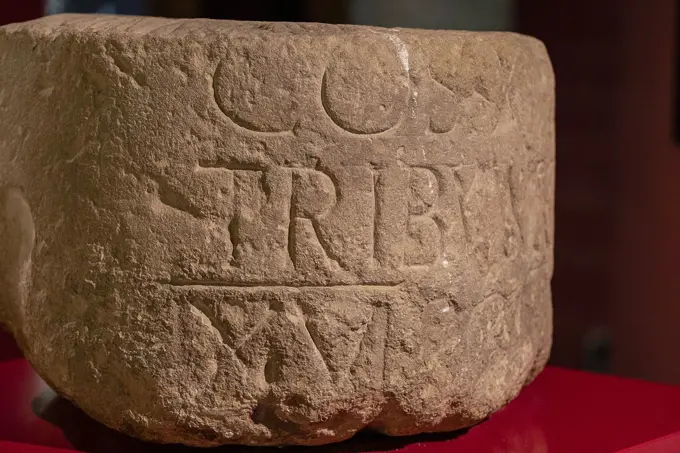
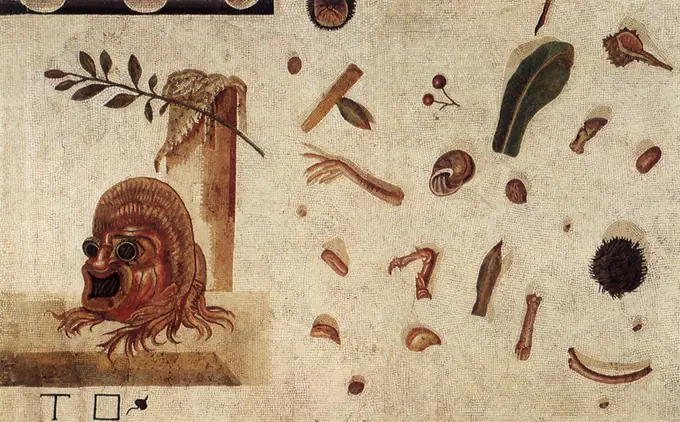
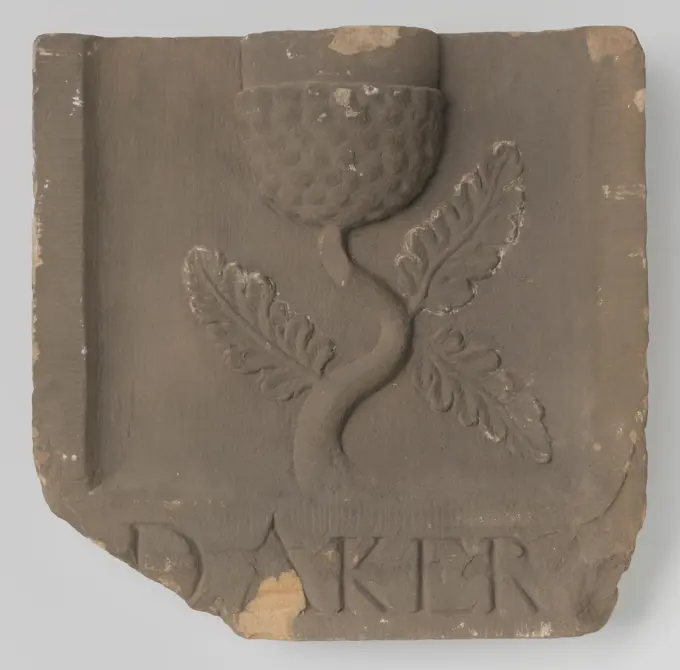
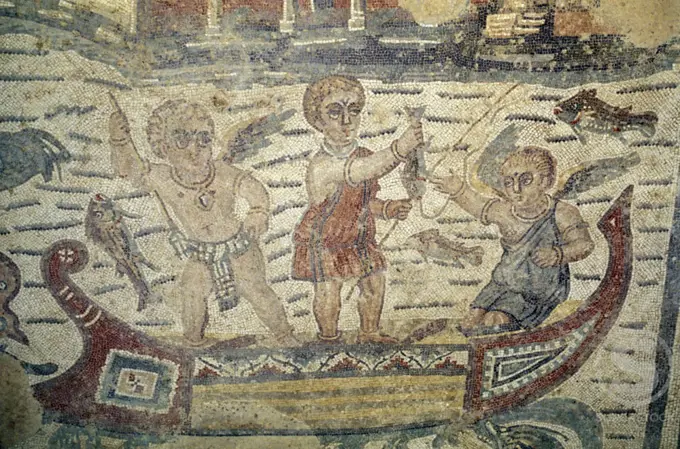
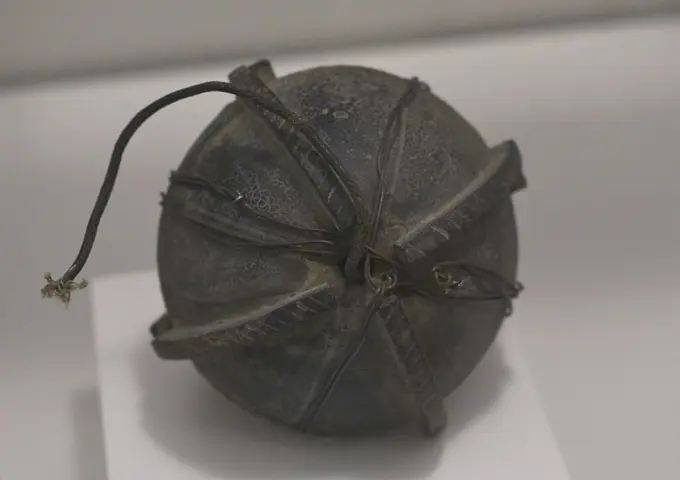
Spanish Civil War (1936-1939). Blasting charge, c. 1936. Metal. Army Museum. Toledo, Spain.Pacific Eskimos. The Chugach. Waterproof jacket of seal or walrus intestine made by the Inuit, 1775-1800. Alaska, United States of America. North America. Piece collected during a Spanish scientific expedition, 18th century. Museum of the Americas. Madrid, Spain.Italic Lamp Fragment. Unknownseal of the Confederation of the Krakow Voivodeship. Konfederacja województwa krakowskiego, signatoryFragments of Romanesque decorative stuccoes, after restoration, recto, basilica of Santa Maria Maggiore, Lomello, Lombardy. Italy, 11th century.Collection of protective amulets from ancient Iraq. The amulets would be worn to ward off evil spirits and demons. Dated 10th Century BCNingxia,ChinaRoman Red Ware Lamp Fragment. UnknownWeight: 1 1/4 deben ca. 1981-1640 B.C. Middle Kingdom. Weight: 1 1/4 deben. ca. 1981-1640 B.C.. Travertine (Egyptian alabaster). Middle Kingdom. From Egypt, Memphite Region, Lisht North, Cemetery, MMA excavations, 1920-22. Dynasty 12-13Circular bronze belt ornaments. Bronze Age. 1400 BC. Found at Vognserup Enge, near Holbaek. National Museum of Denmark. Copenhagen. Denmark.VITRINAS DEL MUSEO DE LA ACROPOLIS. Location: MUSEO DE LA ACROPOLIS. ATHENS. GREECE.Alabaster Canopic chest with canopic jars, found in Tutankhamen's Tomb. They were used to contain the internal organs removed during the process of mummification. Tutankhamen was an Egyptian pharaoh of the 18th dynasty (ruled c. 13321323 BC)Quartz. mineralsmiliario, I a.C, Calahorra, Museo de la Romanización, Calahorra, La Rioja , Spain, Europe.Unswept Floor with Mask and Leftovers. Facing brick with image of an Aker and the inscription: D Aker, Anonymous, c. 1400 - c. 1950 Facing brick on which an Aker is depicted with caption D Aker. Coming from a corner of Damrak and Kapelsteeg. unknown sandstone Facing brick on which an Aker is depicted with caption D Aker. Coming from a corner of Damrak and Kapelsteeg. unknown sandstoneItaly, Sicily, Piazza Armerina, Villa of Casale, Mosaic with fishing scene, 2nd-4th C. A.D.