Historical Artifacts and Tools

Artifacts varying from ancient javelins and pins to decorative hair needles, representing craftsmanship across different cultures and eras.
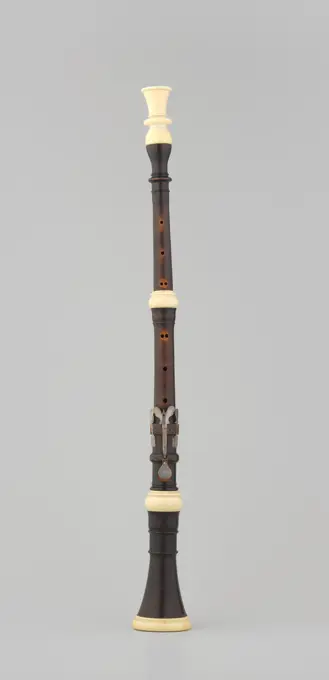
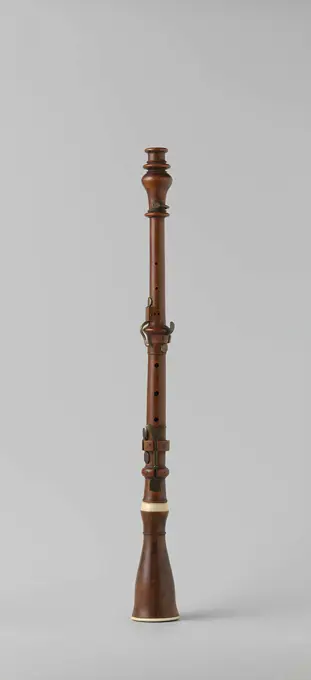
Oboe, Frederick Richters, c. 1720 - c. 1730 Hobo van Palmhout, mounted with ivory. Three silver valves. The third and fourth gap are double. Marked: F. Richters / Klaver with the Steel to the right. Amsterdam boxwood. ivory. kleppen: silver (metal) Hobo van Palmhout, mounted with ivory. Three silver valves. The third and fourth gap are double. Marked: F. Richters / Klaver with the Steel to the right. Amsterdam boxwood. ivory. kleppen: silver (metal)
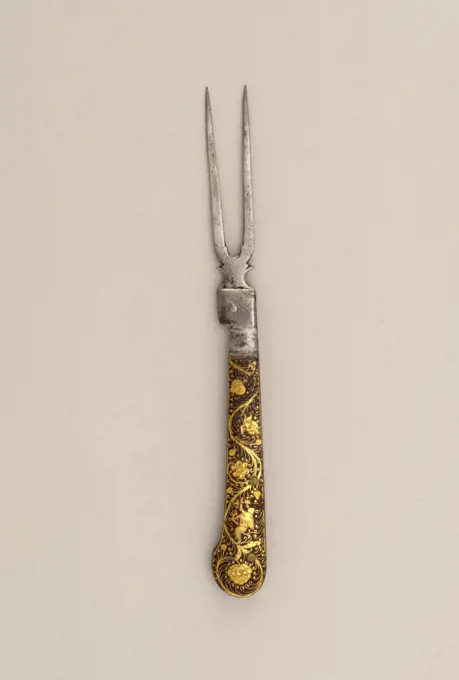
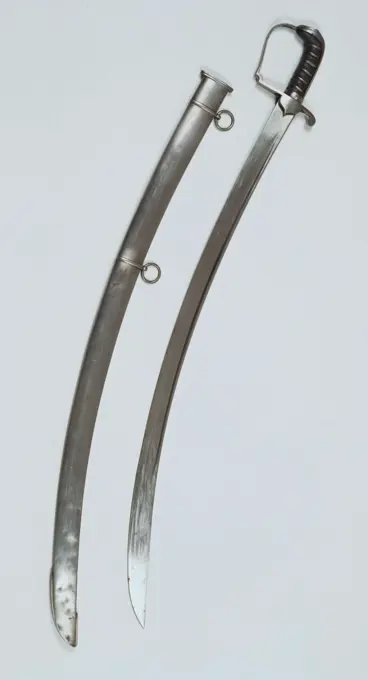
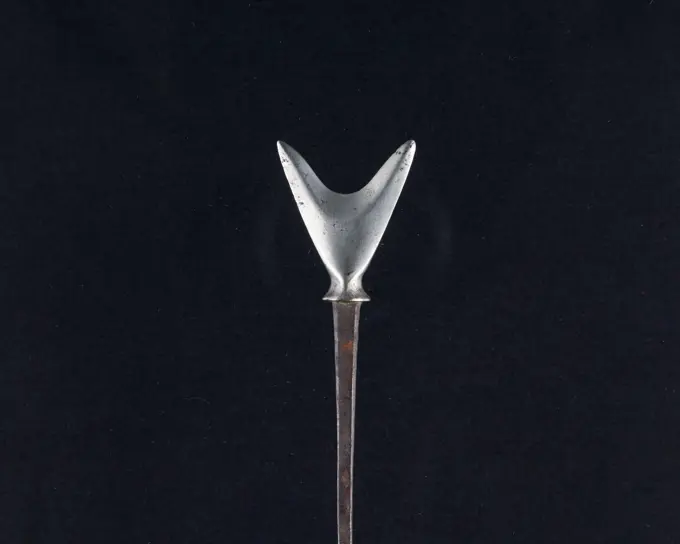
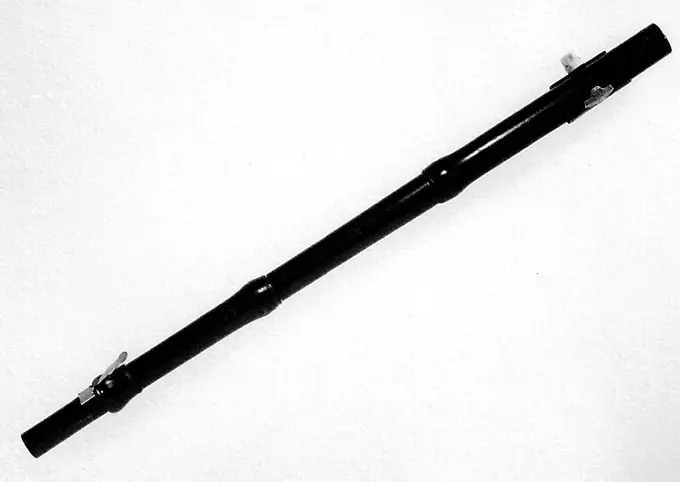
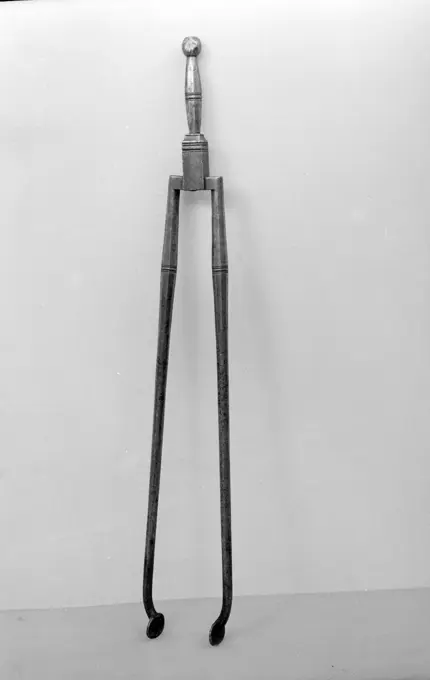
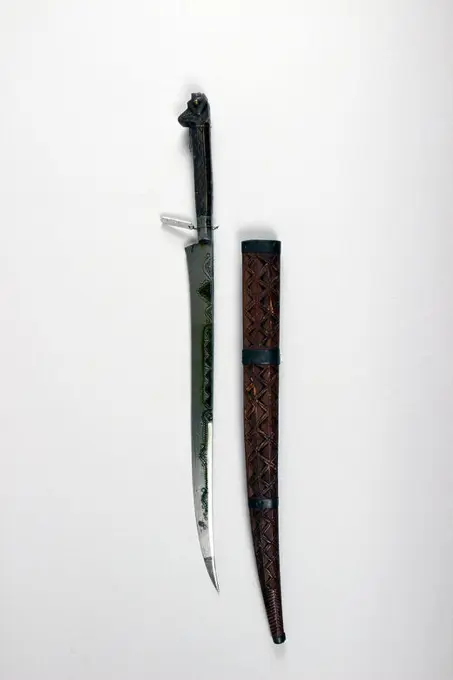
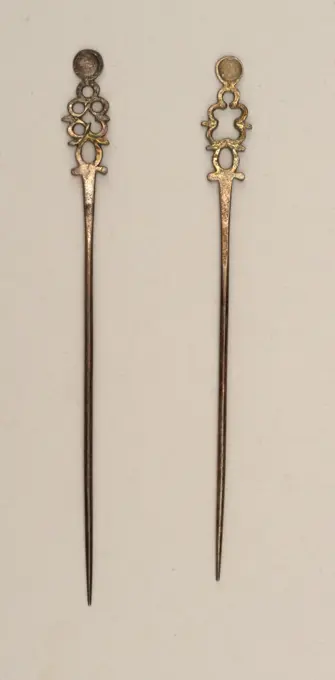
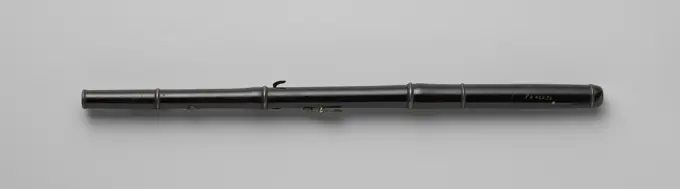
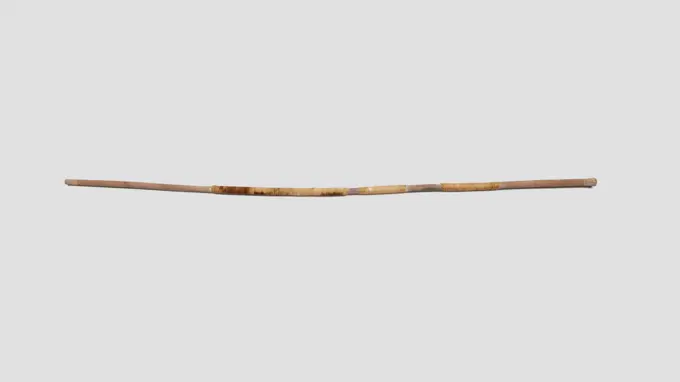
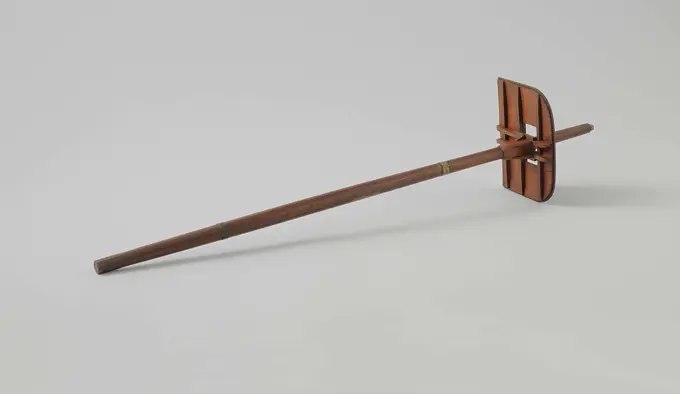
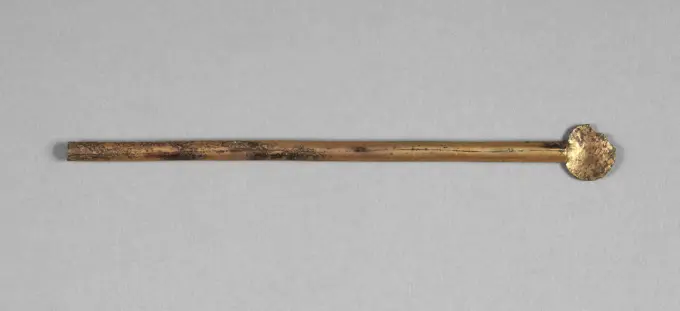
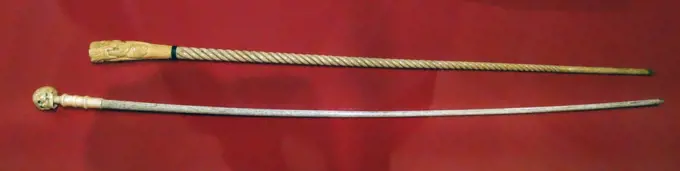
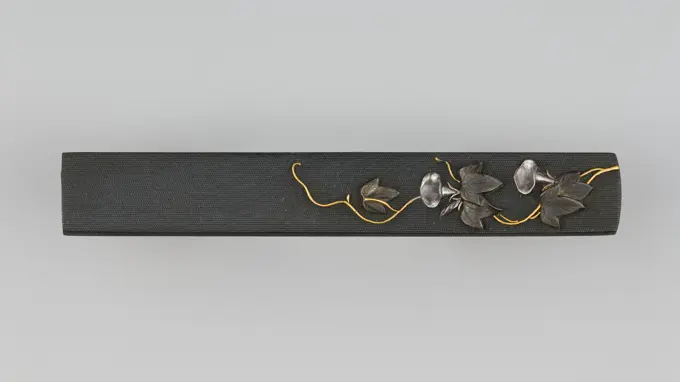
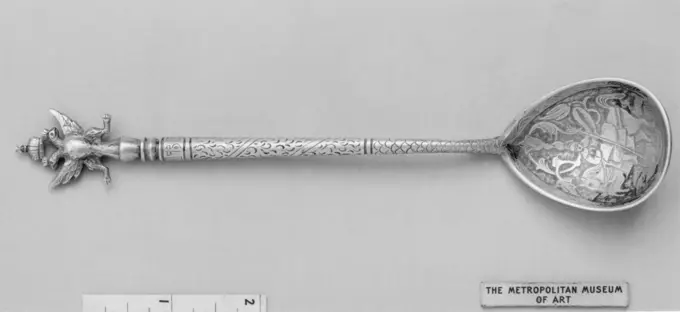
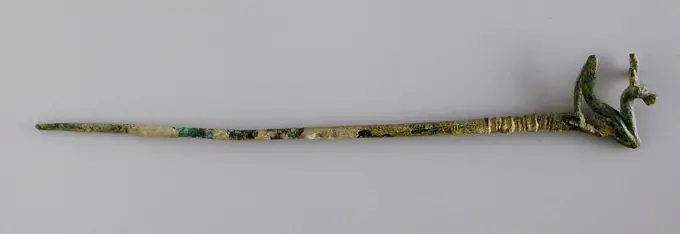
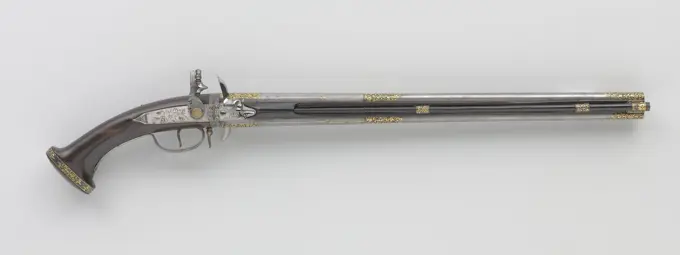
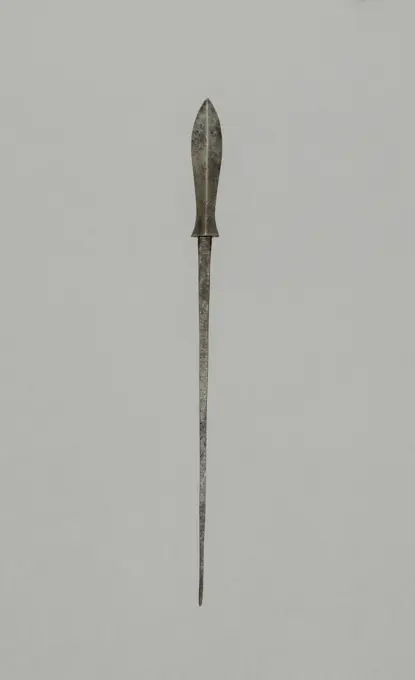
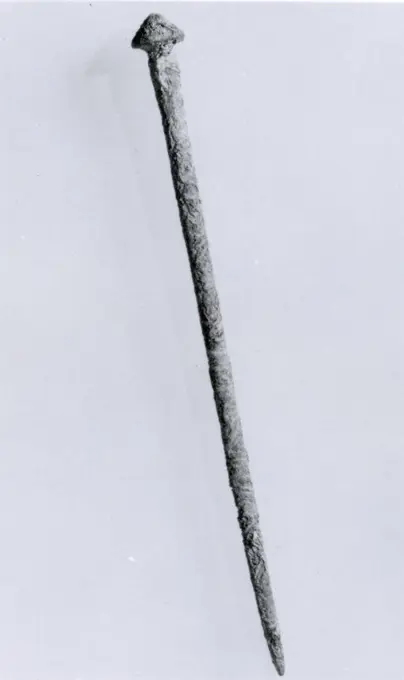
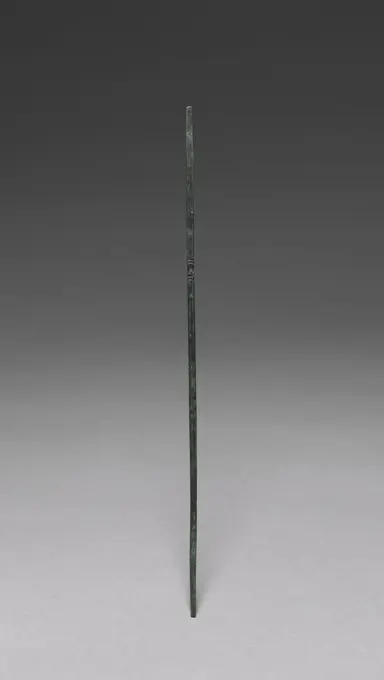
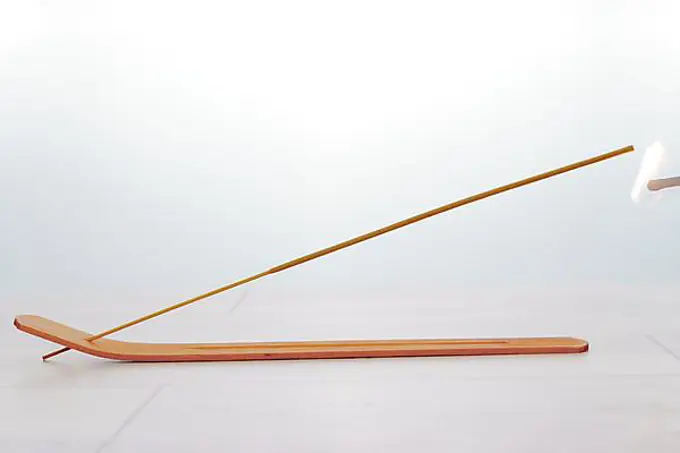
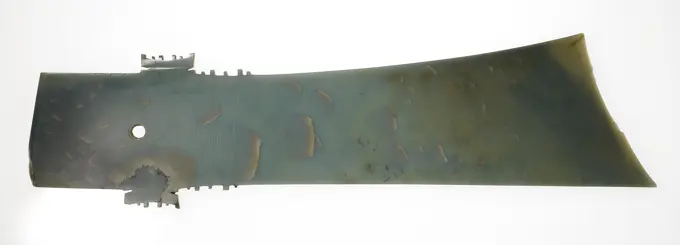
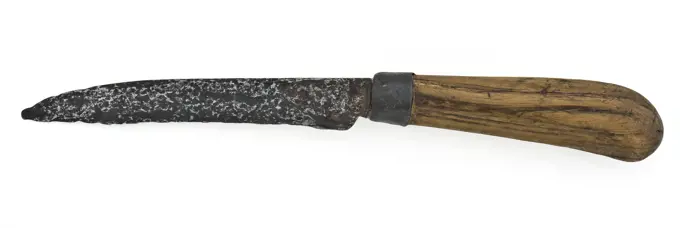
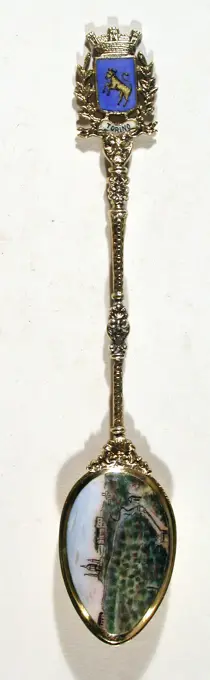
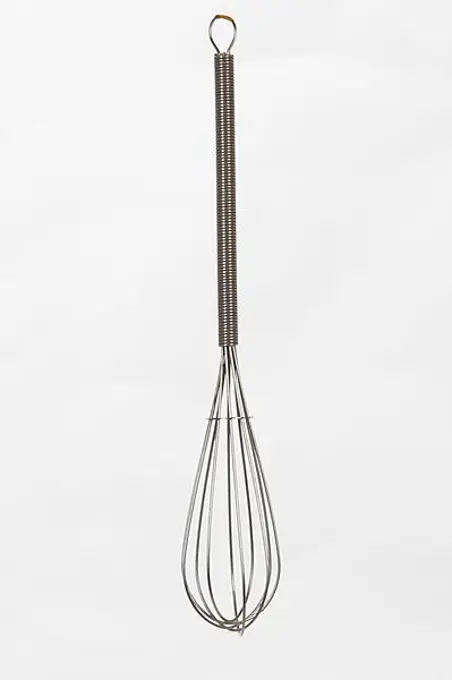
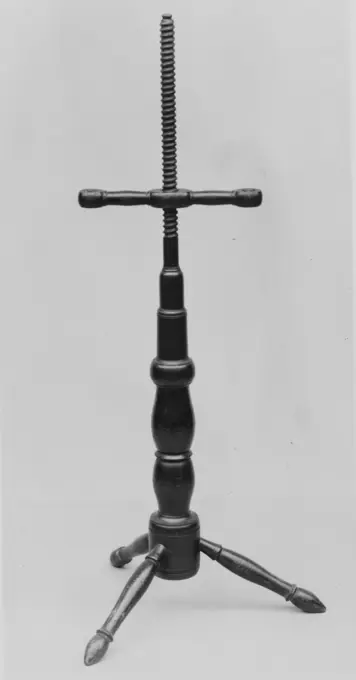
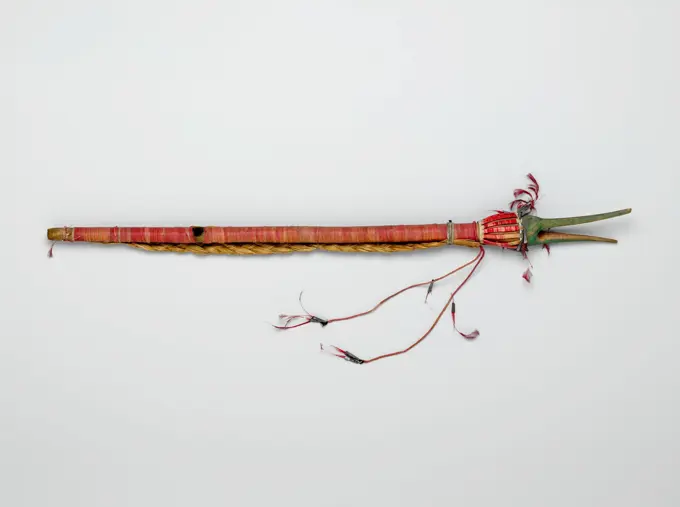
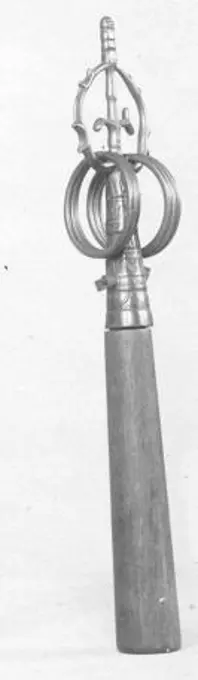
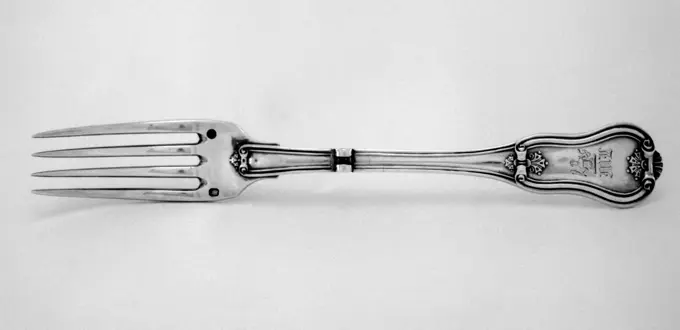
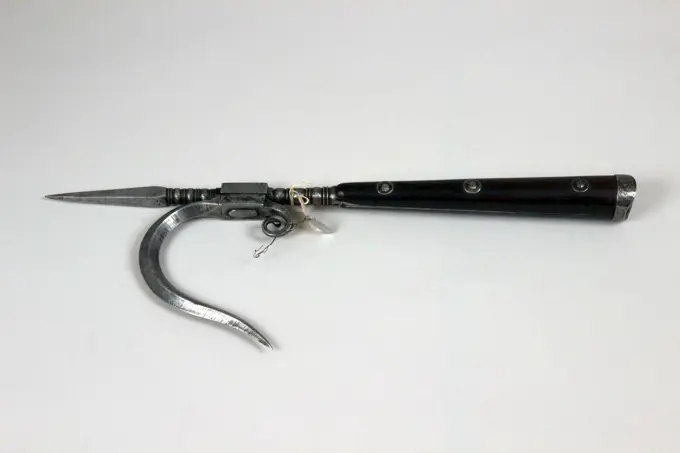
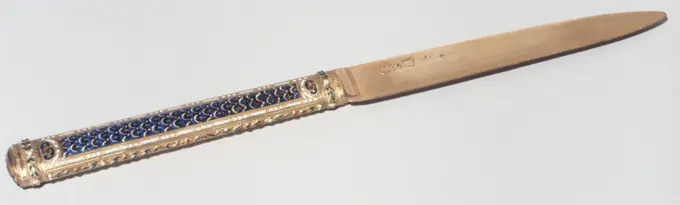
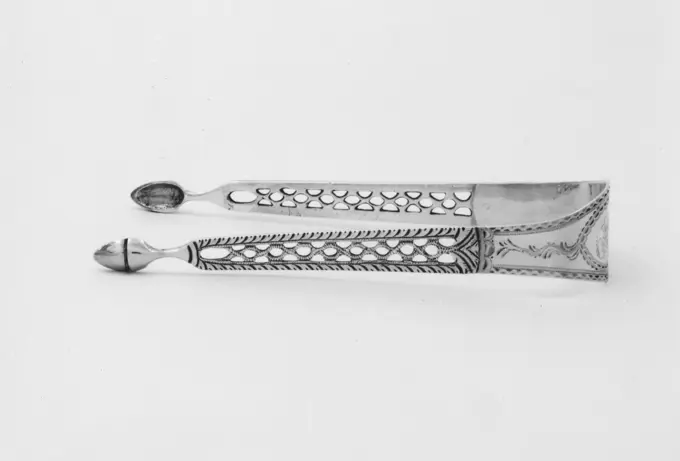
Kozio Malcz, Karol (1797-1867), Silver Products Factory K.F. Malcza (Warsaw; Sreber label; 1828-1864); 1. PO. 19th century (1800-00-00-1850-00-00);Ladle (France); Manufactured by Charles Victor Gibert (French); silver; L x W x D: 29.1 x 6.2 x 3.8 cm (11 7/16 x 2 7/16 x 1 1/2 in.)Two gun rays belonging to Cornelis Tromp, Anonymous, c. 1650 - c. 1679 case. gun accessories Two red -lacquered wooden rifle rays belonging to the wick slot guns from the ensemble. The fires do not protect the entire gun, but only the top and were probably attached to the guns with silk ribbons. southeast Asia cypress (wood). lacquer (coating) lacqueringFlute in D ca. 1821 British. Flute in D 505160Tongs 18th century. Tongs 3656Knife (France); porcelain, silver, steel; L x W: 24.6 x 2.2 cm (9 11/16 x 7/8 in.); The Robert L. Metzenberg Collection, gift of Eleanor L. Metzenberg; 1985-103-234TeaspoonEVENTAIL. "Entrelacs of painted flowers and golden glitter". Ivory enhanced silver, golden headband. Paris, Carnavalet museum. EVENTAIL: Entrelacs of painted flowers and golden glitter Fashion accessory, EventailKnife (Flyssa) with Sheath. Culture: Moroccan. Dimensions: H. with sheath 16 1/4 in. (41.3 cm); H. without sheath 15 1/8 in. (38.4 cm); H. of blade 10 3/4 in. (27.3 cm); W. 1 in. (2.5 cm); Wt. 5.5 oz. (155.9 g); Wt. of sheath 1.4 oz. (39.7 g). Date: possibly 19th century. Museum: Metropolitan Museum of Art, New York, USA.Hair Pin; silverThird Flute.Torten flute of ebony with silver fittings, with twelve holes and five valves. Address (pressed letters between two stars): Sax (facr du roi) a bruxelles (four times); Sax with two stars and the year 1821. Tert's flute.Imitation Roman Surgical Instrument. UnknownStraight staff ca. 1981-1802 B.C. Middle Kingdom. Straight staff. ca. 1981-1802 B.C.. Wood, cord. Middle Kingdom. From Egypt, Middle Egypt, Meir, Khashaba excavations, 1910-11; Probably from Tomb of Ukhhotep or Hapiankhtifi. Dynasty 12Rooster, anonymous, c. 1775 - c. 1800 Roast on three legs and a flat handle with a button at the end. The schedule has eight bars. The grid is marked: crowned V in shield. Netherlands silver (metal) Roast on three legs and a flat handle with a button at the end. The schedule has eight bars. The grid is marked: crowned V in shield. Netherlands silver (metal)Sugar hammer, 20th century, 11 5/8 x 3 1/2 x 1 in. (29.53 x 8.89 x 2.54 cm), Silver, Morocco, 20th centuryOboe.Hobo with five valvesSilapa Sword, 1700s-1800s. India. Gold with inlay and leather; overall: 92.7 cm (36 1/2 in.).Przeszo Przyszoci unknownClub (Knobkerrie), late 1800s or early 1900s. Southern Africa, South Africa, Northern Ngun-style or Zulu-style maker. Wood; overall: 66 cm (26 in.).Model of a Made mast. Round mast with octagonal top and march; The donkey head is missing. The mast itself consists of an octagonal mast king surrounded by eight cheeks. The parts are held together by two tub tires. A number of short shelves around the mast forms a flat dragon, on the sides the ears with cling that supports the calves, and behind half a socket. The Mars is around from the front and is worn by the longitudinal and wisdom. The mars floor is closed with shelves, which are secured on top of her pegs. This model can be exploited. This mast is made according to the 'Hollandse Method' (see NG-MC-127).Oboe, Schott fils, 1840 Hobo van Ebony with five valves, ivory rings, a removable stamp and a small Viennese cup. The third gap is double. Marked on all parts: wheel / B. Schott Fils / A Mayence. Mainz ebony (wood). ivory Hobo van Ebony with five valves, ivory rings, a removable stamp and a small Viennese cup. The third gap is double. Marked on all parts: wheel / B. Schott Fils / A Mayence. Mainz ebony (wood). ivorySwan Gun, Jan Knoop, 1700 - 1799  The tail of the lock plate acts as a sliding safety and is equipped with a hard soldered thumb; The lock is unprocessed except for an engraved acanthus leaf and a signature. The round loop is extremely long. The root knotwood flask is cut into relief with, among other things, acanthus leaves; The handle has a cheek plate. The iron batter consists of six loading stokkers, an S-shaped screw plate, a tractor bracket, and a flask hood with irregularly shaped edges; The chest of drawers has an iron roof. Utrecht iron (metal) soldering / engraving / cuttingBonePinInsufficient (username), -276. Copper and zinc alloy (brass). Carnavalet museum, history of Paris.Offering Post(Peo)Partisan ca. 1625 French. Partisan 26700vintage wooden ladle spoon over white, clipping pathTangent Sight, anonymous, 1860 - 1870 demonstration model. test model A long set -up rod, consisting of a square iron rod with pyramid -shaped top where grooves cross. A bowl is installed on one side, from 8 to 30: the distance between the numbers is exactly 1 cm. These and NG-MC-1889-29-B both fit in support NG-MC-1374. Netherlands iron (metal)Souvenir spoon with finial in form of William Shakespeare's house in Stratford-on-Avon Saunders & Shepherd British late 19th centuryTobacco Pipe, late 1800s-early 1900s. Japan, Meiji period (1868-1912). Bamboo, metal, silver/brass alloy, and copper (); overall: 24.5 cm (9 5/8 in.).Walking sticks used by Charles Darwin. English, 1860-1870.Knife Handle (Kozuka) late 18th-early 19th century Japanese A kozuka is a handle of a by-knife that is part of a sword mounting. It is kept in a slot on the reverse of a katana scabbard, often with a matching kgai (hairdressing tool).. Knife Handle (Kozuka). Japanese. late 18th-early 19th century. Copper-gold alloy (shakud), silver, gold, copper-silver alloy (shibuichi). Sword Furniture-KozukaPin with a nude male and an ibex ca. 8th-7th century B.C. Iran. Pin with a nude male and an ibex 325866Steel hook with flattened handle, Imra, c. 1900 - c. 1950 A steel hook with flattened handle. Address: Imra / Geschützt. Germany (possibly) whole: Steel (Alloy) A steel hook with flattened handle. Address: Imra / Geschützt. Germany (possibly) whole: Steel (Alloy)Cinquedea 1800-1900 Italy. Bone and brass .Heap ground green peppercorn isolated on white backgroundHairpin ca. 1981-1640 B.C. Middle Kingdom. Hairpin. ca. 1981-1640 B.C.. Wood. Middle Kingdom. From Egypt, Memphite Region, Lisht South, tomb west of the tomb of Senwosretankh, debris, MMA excavations, 1933-34. Dynasty 12-13Folding fork, FGS, silver, gold, steel, brass, Fork has two flat tines, decorative chiseling at the join and a broad neck. Pistol-shaped flat handle with stylized floral damascening with gold flowers and cupid. Tines fold into handle. Brass rivets on handle., possibly Carlsbad, Germany, ca. 1700, cutlery, Decorative Arts, Folding forkBlood bag pin -Lipbrush holder cosmeticsSpoon 19th century Russian. Spoon 188064Transverse Flute in F-sharp late 18th or early 19th century French. Transverse Flute in F-sharp 504754Pipe of white soil with loosely figures with five lilies, anonymous, c. 1400 - c. 1950 Pipe of white soil with loosely figures with five lilies.  earthenware. pipe clay Pipe of white soil with loosely figures with five lilies.  earthenware. pipe clayMeter with handle, anonymous, c. 1820  Meter with distribution and calculation in decimeters. First decimeter in centimeters. V.z.v. label. Netherlands wood (plant material). brass (alloy)   NetherlandsPinCooker. Silver sleeve. The sleeve has an oval cross-section flattened on the sides and rejuvenates itself to the end. Front and back and 1 side have an engraved decoration.Alto 'Duytse Schalmey', Richard Haka, c. 1680 Alto Duytse Schalmey in two parts, with two brass valves and a brass edge around the edge of the cup. The cup is cracked in several places. Two loose pieces of wood are held in place by the brass edge Amsterdam boxwood (hardwood). brass (alloy) Alto Duytse Schalmey in two parts, with two brass valves and a brass edge around the edge of the cup. The cup is cracked in several places. Two loose pieces of wood are held in place by the brass edge Amsterdam boxwood (hardwood). brass (alloy)Sabel Model 1912 with sheath from General of Daalen.Walking Cable, Model 1912.Double-barreled flintlock turnover pistol, Michel de la Pierre (attributed to), 1645 - 1650 flintlock pistol Flint gun with rotating walking. The lock consists of three plates: a back plate with the lock mechanism and the two front plates, each with a pan and a fire sample; De Haan is decorated with ajour work; The lock is engraved and chiseled in bas-relief with flowers, flower vines and a snake; The rooster screw has a head of gilded yellow buyer; signature on the front plates. The two -mounted runs are damped in gold with three groups of leaf vines on a blazed surface: on the back, in the middle and near the tromp. The flask made of rosewood consists of two parts: the grooved frontade, on one side in front of the chest of drawers, and the handle. The iron batter is decorated in the same way as the walking and consists of two loading sticks, a loop-shaped tractor bracket with a right in front of the turning mechanism, an S-shaped screw plate engraved with two entangled snakes and a tUniversity Scepter. Culture: North German. Dimensions: Overall: 57 9/16 x 2 3/16 in. (146.2 x 5.6 cm)Head of scepter: 4 15/16 x 2 3/16 in. (12.6 x 5.6 cm)bottom knop: 5 11/16 x 1 5/16 in. (14.5 x 3.3 cm)shaft diameter: 3/8 in. (1 cm)shaft knop diameter: 13/16 in. (2 cm). Date: early 15th century (1419 with alterations after 1478).University scepters, generally made in pairs during the Middle Ages, were carried at the head of academic processions and signified the authority of the university faculty. The engraving on the handle states that this scepter was given in penance to the cathedral chapter of Lübeck in 1478. The circumstances are unknown, but it is probable that the heraldic shield with the arms of the bishopric of Lübeck and the figure of Saint John the Baptist, one of the patron saints of the cathedral, were added at this time. It is thought that this scepter was made for the University of Rostock and that its mate, much altered, is now in the St. Annen- Museum in LübeckArrow Point, 1700s. Japan, Edo period (1615-1868). Steel; overall: 16.2 cm (6 3/8 in.); head: 4.6 cm (1 13/16 in.).Pin ca. late 3rd-early 2nd millennium B.C. Bactria-Margiana Archaeological Complex. Pin 326707Walking Stick with Companion Hunting Sword, Knife, and Scabbard. Culture: German or Austrian. Dimensions: Walking stick (2017.23a); L. 33 13/16 in. (85.9 cm); W. 5 1/4 in. (13.3 cm); Wt. 10.5 oz. (297.7 g); sword and scabbard (2017.23b, c); L. with scabbard 24 1/2 in. (62.2 cm); L. without scabbard 23 3/4 in. (60.3 cm); W. 2 3/4 in. (7 cm); Wt. 13.5 oz. (382.7 g); Wt. of scabbard 3.5 oz. (99.2 g); knife (2017.23d); L. 6 7/16 in. (16.4 cm); W. 13/16 in. (2.1 cm); Wt. 1.6 oz. (45.4 g). Date: ca. 1780.This seemingly unique hunting garniture was made for Maximilian Franz of Austria (1756-1801), the youngest son of Empress Maria Theresa (1717-1780), presumably before he became Prince Archbishop and Elector of Cologne in 1784. Comprising a sword with scabbard and byknife, and a matching walking stick, it is remarkable for the finely painted Meissen porcelain of which the grip and handles are made. Derived from a suite of etchings by the Augsburg artist Johann Elias Ridinger, and appropriateChopstick, 918-1392. Korea, Goryeo period (918-1392). Bronze; overall: 24.3 cm (9 9/16 in.).Close-up of an incense stick isolated on a white background12 Mpresh, Barraw, 1800 - 1825. measuring rod Iron bat, on one side size division in decimeters, on the other in Aune. Front inscription: 12 decimetres; Signature: Baradelle a Paris. Reverse inscription: Aune. Paris iron (metal) forging / striking (metalworking)Bessers, homework broom, homework copyright: xzoonar.com/lutzxwallrothx 3055828Door key ca. 3rd-7th century A.D. Sasanian. Door key 323256Toilet Implement in the Shape of a Pin Roman 200-500Hammered Silver Miniature Scepter 8th-mid-16th century Peru; north coast (). Hammered Silver Miniature Scepter 309159Rod Late Period 664-332 B.C. View more. Rod. 664-332 B.C.. Copper. Late Period. From Egypt, Upper Egypt, Thebes, Asasif, Tomb MMA 812, MMA excavations, 1929-30. Dynasty 27-30Head of GrasshoperChang Scepter, 12th-11th century BCE, 15 3/4 x 4 5/16 x 1/4 in. (40.01 x 10.95 x 0.64 cm), Pale greenish-blue nephrite (jade), China, 12th-11th century BCE, The innately beautiful bluish-green color of this ritual scepter, with its russet inclusions combines with a simplicity and elegance of form to elevate this ancient object to a realm of aesthetic grace that is timeless. Ceremonial weapons and implements represent some of the earliest Chinese jades as the origins of this type of object lies in the Neolithic period. It was largely during the early Bronze Age however, in Shang and Western Zhou, that some utilitarian weapon types evolved into a limited group of particular shapes executed in precious jade that held ritual significance in important political and social ceremonies. Most of the ceremonial jade scepters that have survived were buried in tombs suggesting they also held significance for the spirit in the afterlife. Ancient bronze inscriptions record the use of land and jade aSignal Horn in B early 19th century French. Signal Horn in B. French. early 19th century. brass. France. Aerophone-Lip Vibrated-hornTable knife with slightly curved blade, slide-on Handle with blade on the side, knife cutlery soil find iron wood metal, archeology Rotterdam Kralingen Muted Slaak underground pit Soil discovery Rotterdam dredging layer underground pit Gedempte Slaak 16-01-1978.Miniature Toy Zampogna 19th century possibly Italian. Miniature Toy Zampogna. possibly Italian. 19th century. wood, leather. Italy or France. Aerophone-Reed Vibrated-bagpipeFork and knife ca. 1740-50 possibly Saint-Cloud factory. Fork and knife. French, possibly Saint-Cloud. ca. 1740-50. Porcelain, silver, steel. possibly Saint-Cloud factory (French, mid-1690s-1766). Ceramics-PorcelainWheellock Rifle. German. Date: 1595. Dimensions: L. 104 cm (41 in.)Barrel L. 72.3 cm (29 7/16 in.)Caliber .50Wt. 6 lb. 15 oz. Iron, brass, walnut, horn, and mother-of-pearl. Origin: Germany. Museum: The Chicago Art Institute, Chicago, USA.Fender late 18th century British. Fender 192903Churn. Dated: c. 1939. Dimensions: overall: 45.7 x 38.3 cm (18 x 15 1/16 in.). Medium: watercolor, graphite, and colored pencil on paperboard. Museum: National Gallery of Art, Washington DC. Author: Aaron Fastovsky.Pochette. Culture: German. Dimensions: 17 3/8 × 1 9/16 × 1 11/16 in. (44.2 × 4 × 4.3 cm). Maker: Georg Wörle. Date: 1670s. Museum: Metropolitan Museum of Art, New York, USA.Arrow, 1800s. Japan, Edo period (1615-1868) to Meiji period (1868-1912). Bamboo shaft tipped with metal point and heeled with feathers; average: 87 cm (34 1/4 in.).Shell fragment ca. 2900-2350 B.C. Sumerian. Shell fragment 324888Walking stick of copper, with enamelled rune signs, anonymous, c. 1700 - c. 1800 Walking stick of copper, with enamelled rune signs, constellations () And other small drawings of animals, among other things, against a white background.  whole: copper (metal). decoration: forging Walking stick of copper, with enamelled rune signs, constellations () And other small drawings of animals, among other things, against a white background.  whole: copper (metal). decoration: forgingEntire pen, anonymous, c. 1590 - c. 1596  Whole more pen.  . cutting  Nova Zembla. Saving HuysHaakbus, anonymous, 1400 - 1500  Crochet bus with octagonal run that is rounded to the mouth. Bent rang with a button, tapping with forkle, Zundgat on top. The original hook has been demolished and the bus is now equipped with a ring with horizontal taps and fork. On top of the loop, in front of the Zundgat, a smashed decoration of a coat of arms with six balls. At the back of the room 2 unreadable sterery.  iron (metal)umbrella Lans behorend bij wapenrek van Cornelis Tromp.The wood from the lance is lacquered. Schoen van Geelkoper and seizure at Klings van Rankeoper. Associated sheath. The blade of the lance has a Japanese form, but misses a hole in the angel for attaching the blade to the stick. The Angel has a rough surface that was struck with resin and was fixed in the stick's hole. This way of assembly is characteristic of stick weapons and white weapons from Southeast Asia.For BilboqueówClub -MeasuringStickSouvenir spoon with view of Turin European late 19th centuryWire whiskCandlestand 1700-1800 American. Candlestand 1173White clay pipe, unnoticed, with smooth handle, clay pipe smoking equipment smoke floor pottery ceramics pottery, pressed finished baked White clay pipe unnoticed with smooth handle. Press seam still present on the stem at the bottom archeology smoking tobaccoBaluster mid-18th century British. Baluster. British. mid-18th century. Oak. WoodworkWhistle Native American (Sioux) 19th century This whistle has no finger holes, creating a limited tonal range and making it ideal for signaling. Today, the whistle's use varies with each community, but in the past a leader used it to direct Grass Dance singers to resume or cease their songs. Some dancers held these symbolic crane-headed whistles as they flattened the grass during their dance.The sole opening in the shaft of the whistle is a duct window. Carved and hollowed from a single piece of wood and wrapped in red-dyed strips of reeds, this whistle features two braided lengths of sweetgrass lashed to its underside. Sweetgrass is considered sacred and used as a means of purification in many tribes. A collar of red-dyed, quilled spokeswith small rolled-metal cones and dyed down feathers surround the crane's beak. Two elongated tethers with feather adornment are attached at the collar's base.Shakugio 19th century Japanese This sistrum (rattle) is used both in Buddhist and Shinto ritual.. Shakugio. Japanese. 19th century. Wood, metal. Japan. Idiophone-Shaken-rattleTraveling spoon and fork ca. 1833 Joseph-Baptiste Fuchs. Traveling spoon and fork 205410Ink Marking Pen. Dated: c. 1940. Dimensions: overall: 39.5 x 30.7 cm (15 9/16 x 12 1/16 in.) Original IAD Object: 10 7/8" long1 3/4" in diameter. Medium: watercolor and graphite on paperboard. Museum: National Gallery of Art, Washington DC. Author: Edward Bashaw.Pipe, late 1700s - early 1800s. America, late 18th - early 19th century. Silver; overall: 2.3 cm (7/8 in.).Ancus 18th-19th century Indian. Ancus 30842Tobacco Pipe, 1700s to mid-1800s. Japan, Edo period (1615-1868). overall: 41.4 cm (16 5/16 in.).Oboe, Henri Brod, c. 1835 - c. 1838 Hobo van Rozenhout with eleven brass valves. Leave type instrument, as it was played by BROD. Marked on all three parts: Brod *. Marked on the back of all parts: 212. The third and fourth gap are double. There is a brass ring at the top of each part. Original box of mahogany with a brass handle and an oval keyhole of mother -of -pearl. The box contains a key and a reed box without wicker. The inside of the suitcase is covered with red leather. On the lid is a challenged inscription in ink: CE Hautbois Est Celui Que Jouait / Brod au Moment the Sa Mort. / Emporte A .... (Algerie) / Par F .... Qui / y Ait mort .... and 1846 Il Me .... revenu and 1847 / v.e.b. difficult to read. Paris rosewood (wood). copper (metal). brass (alloy) Hobo van Rozenhout with eleven brass valves. Leave type instrument, as it was played by BROD. Marked on all three parts: Brod *. Marked on the back of all parts: 212. The third and fourth gap are double. There is a brass ring aSchnupftabakrohr des Guahibo-Stammes Snuff tube of the Guahibo tribe, Amazon. Artifacts of America. Publication of the Meyers encyclopedia, Vol. 7, Leipzig, Germany, 1910. LicenseRF Copyright: xZoonar.com/SergeyxKohlx 23196726Klok, Zaanland, Van Oakhout with painted dial, Goslink Ruempol, c. 1400 - c. 1950 Oak Zaanland clock with painted dial, placed between two columns. The clock is equipped with whole and half percussion. On the dial the name Goslink Ruempol. clockmaker: Northern NetherlandsZaanstreek Clock: Wood (plant material). Clock: Oak (Wood). Weights: Brass (Alloy) Oak Zaanland clock with painted dial, placed between two columns. The clock is equipped with whole and half percussion. On the dial the name Goslink Ruempol. clockmaker: Northern NetherlandsZaanstreek Clock: Wood (plant material). Clock: Oak (Wood). Weights: Brass (Alloy)Sable with sheath.Sabel with a few side-wire bracket and a handle of fish skin. The sheath is equipped with two support rings.Arrowhead (Yanone) 18th century Japanese Although today Japanese warriors are renowned most for their swordsmanship, archery, especially from horseback, has been an essential part of samurai warfare and culture for centuries. Arrows were fitted with heads of varying shape according to their intended use in war, the hunt, or target practice. Arrowheads made for use on the battlefield incorporated different designs intended for specialized purposes such as the piercing of armor or to cause maximum damage to horses and unarmored personnel.Large arrowheads, pierced and elaborately chiseled with landscapes, birds, flowers, dragons, and Buddhist divinities, were created to be admired for the beauty of their metalwork and design rather than for use in archery. Such highly elaborate examples may have been made for presentation or as a votive offerings to a shrine.. Arrowhead (Yanone). Japanese. 18th century. Steel. Archery Equipment-ArrowheadsKnife 1786-87 French, Paris An intricate vocabulary of techniques has been used in the enameling of the handle. The wider panels are in basse taille; a deep translucent blue laid over wave-patterned gold ground has been further decorated with a pattern composed of small pieces of gold and colored foil embedded between layers of the enamel. Framing and contrasting with these shimmering panels are bands of opaque and translucent colors in a raised technique associated with the Geneva-born enameler Jean Cotteau (1739-after 1812), who was working at the Sèvres Manufactory in the same vein 1780-84.Knives of this delicacy were probably not used on the dining table although it is possible this example might have been a fruit knife. Enameled gold knives are mentioned occasionally in eighteenth-century documents but without any indication as to their use.. Knife. French, Paris. 1786-87. Gold, enamel. Metalwork-Gold and PlatinumSugar Tongs 1775-85 Probably Benjamin Lemar (Lamar). Sugar Tongs. American. 1775-85. Silver. Made in Philadelphia, Pennsylvania, United States