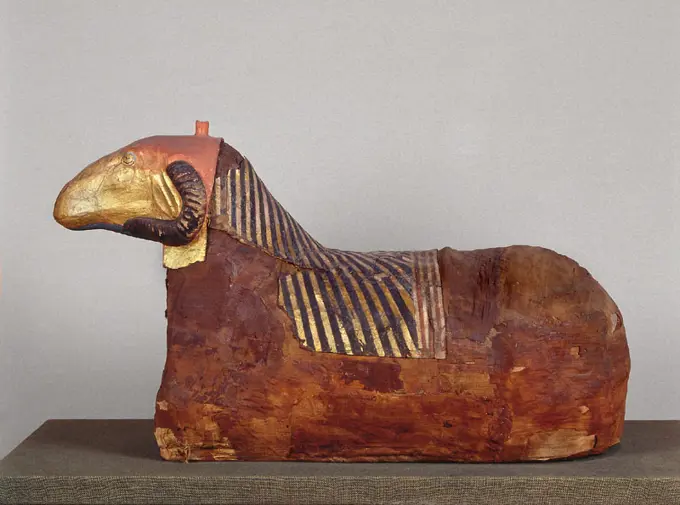
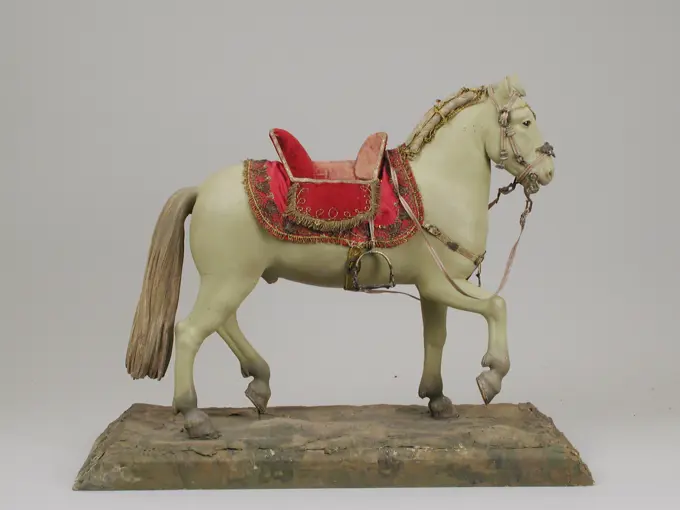
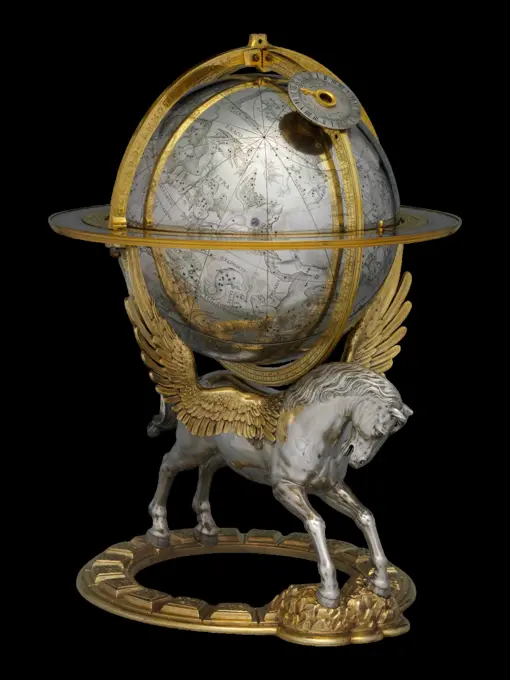
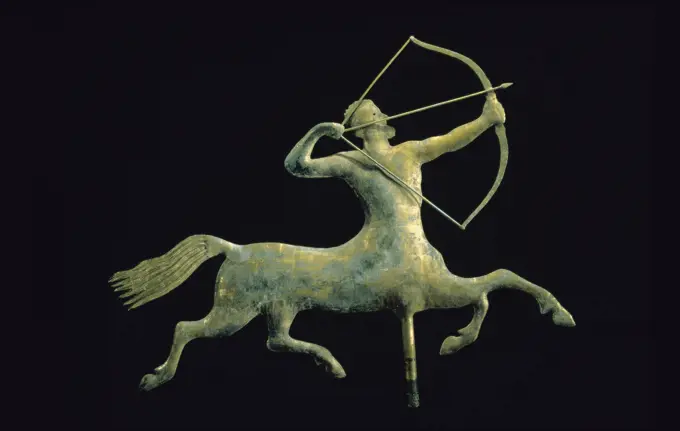
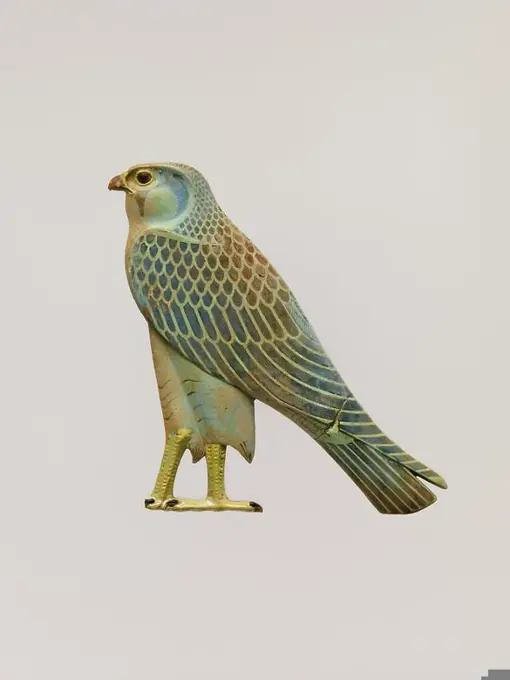
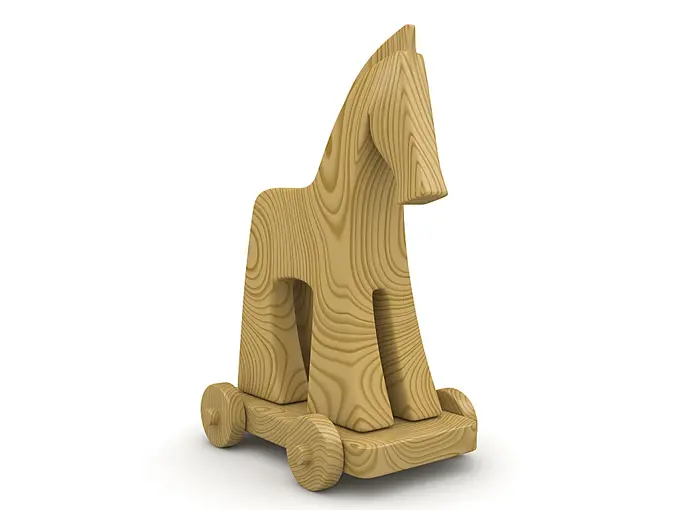
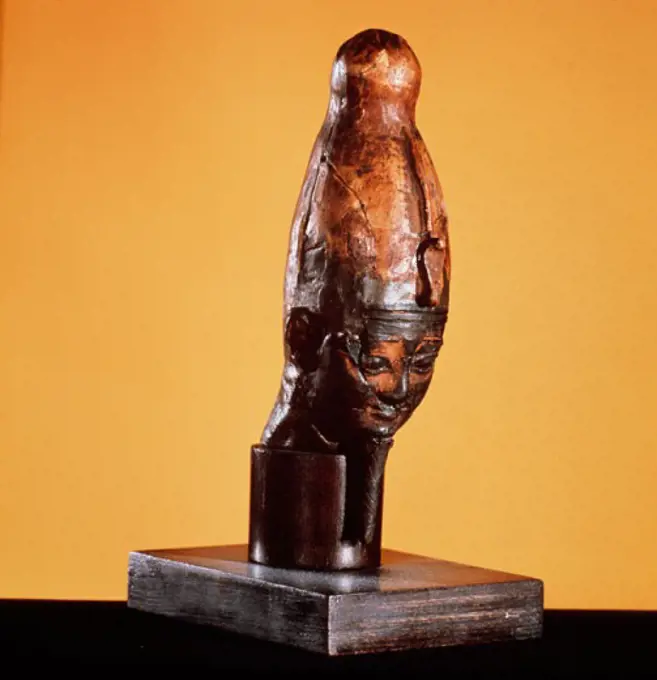
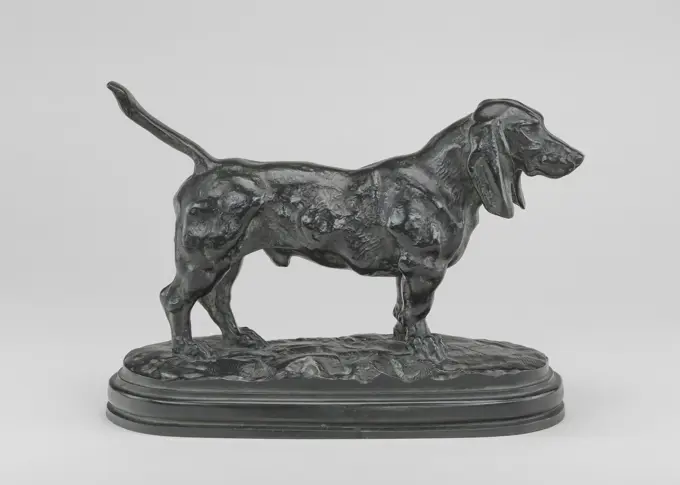
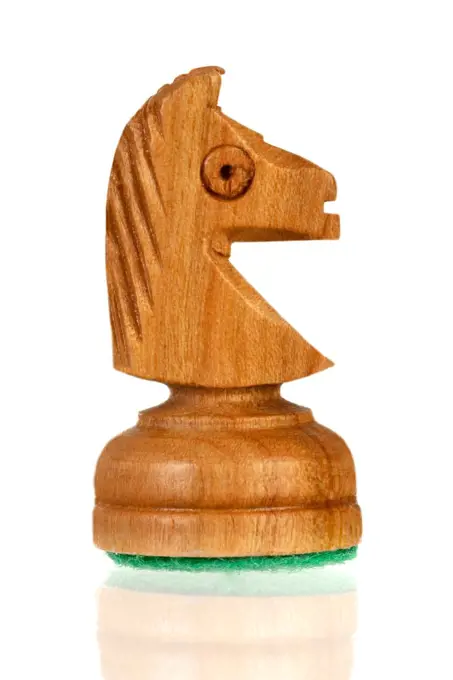
Historical Bird Figurines

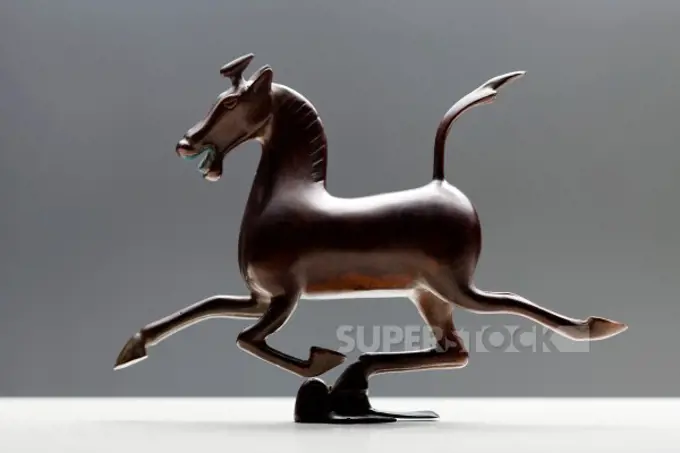
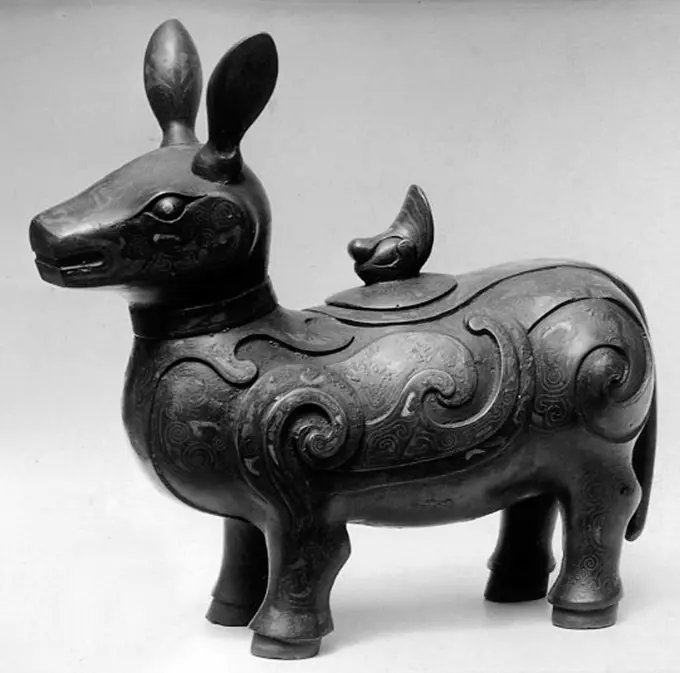
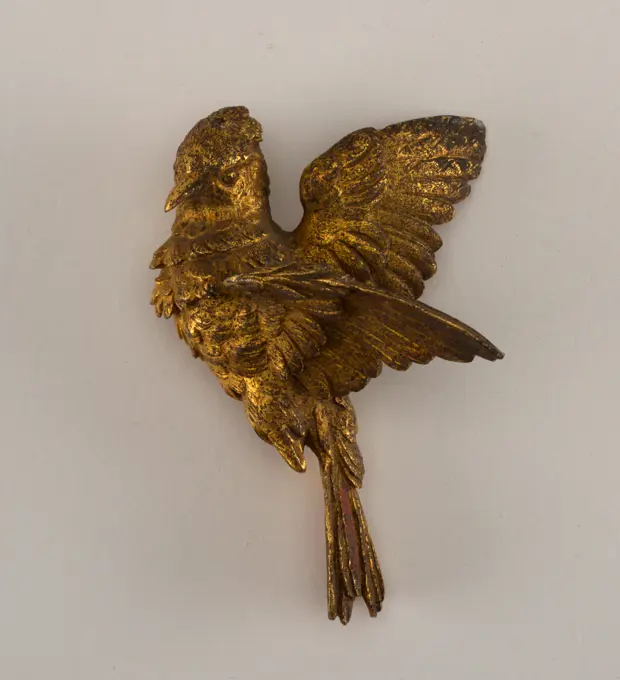
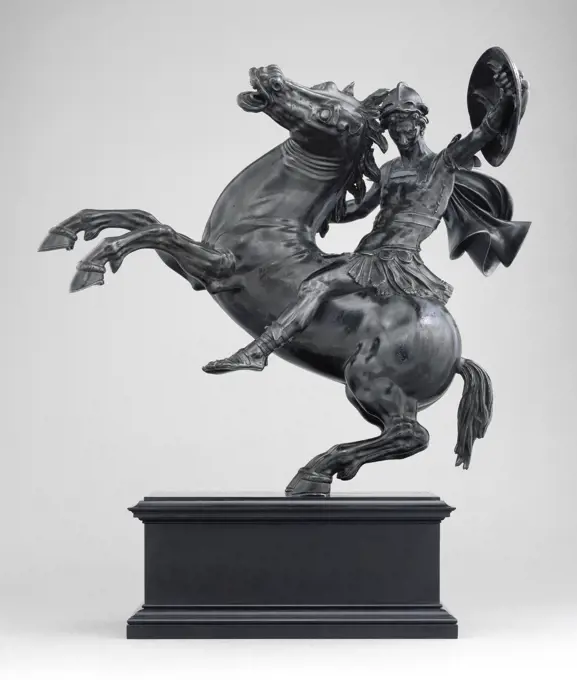
Bronze and gold decorative bird figures from ancient cultures, showcasing intricate designs and significant historical context.
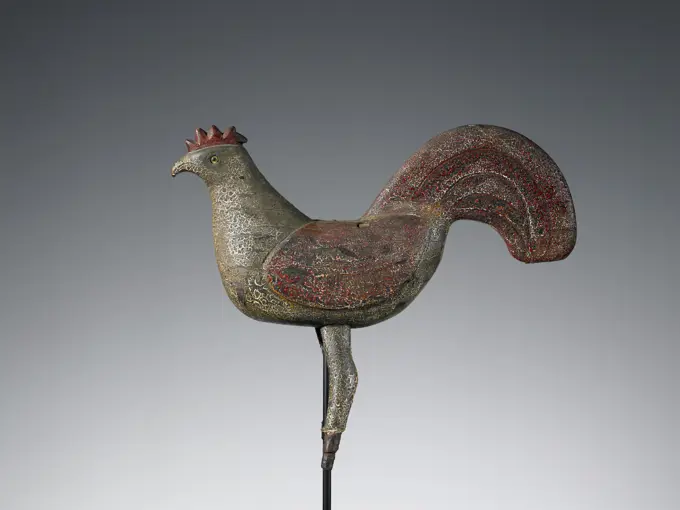
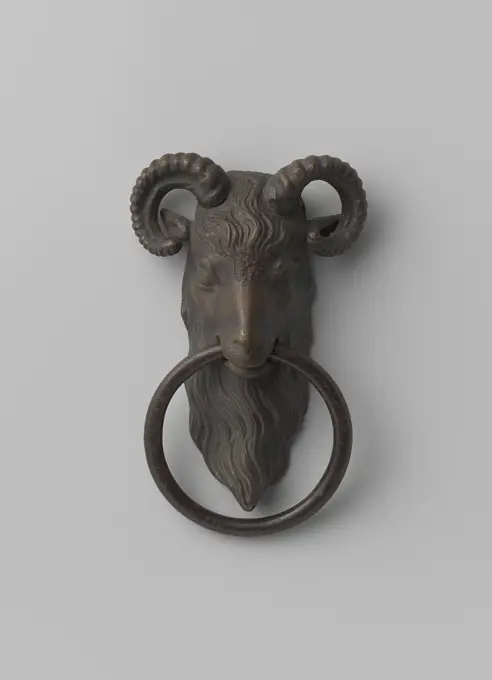
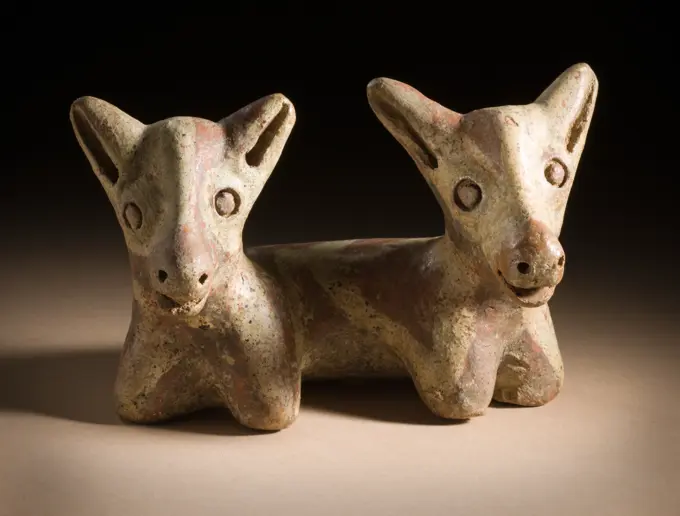
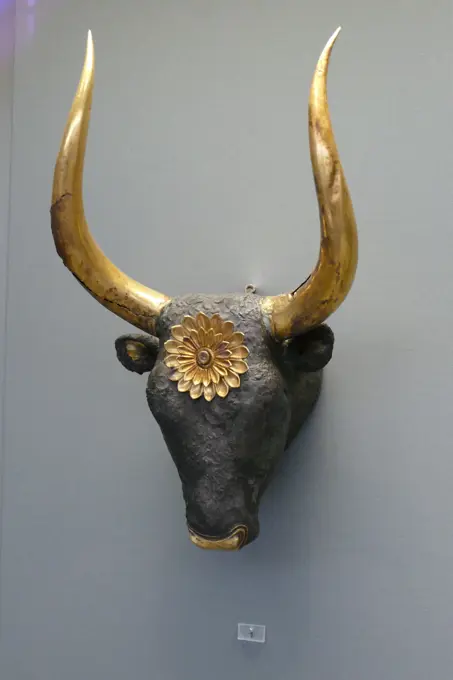
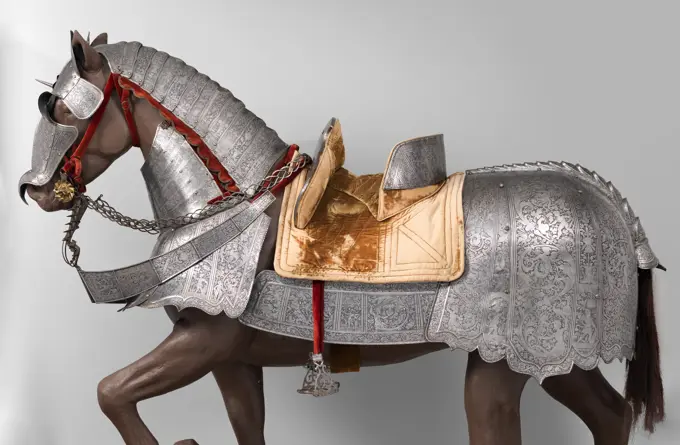
Cockerel weathervane, c. 1820, 16 x 5 1/2 x 17 3/4 in. (40.64 x 13.97 x 45.09 cm), Wood, pigment, glass, United States, 19th century
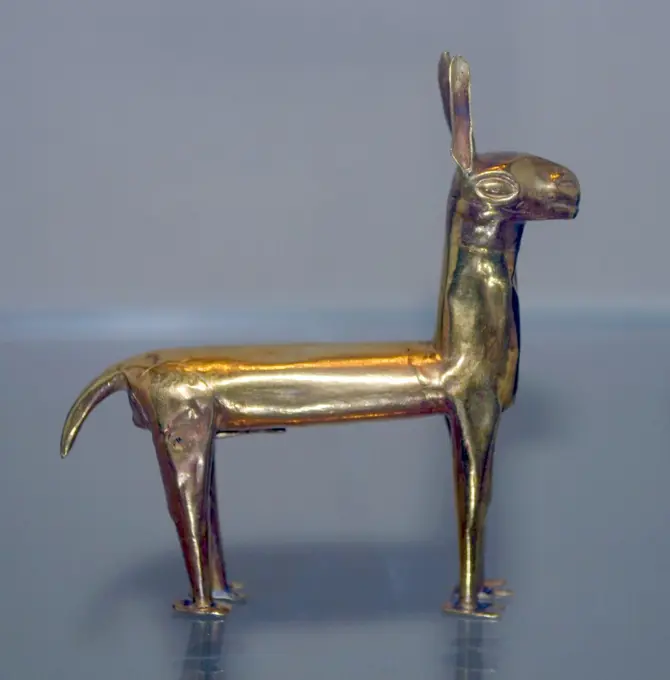
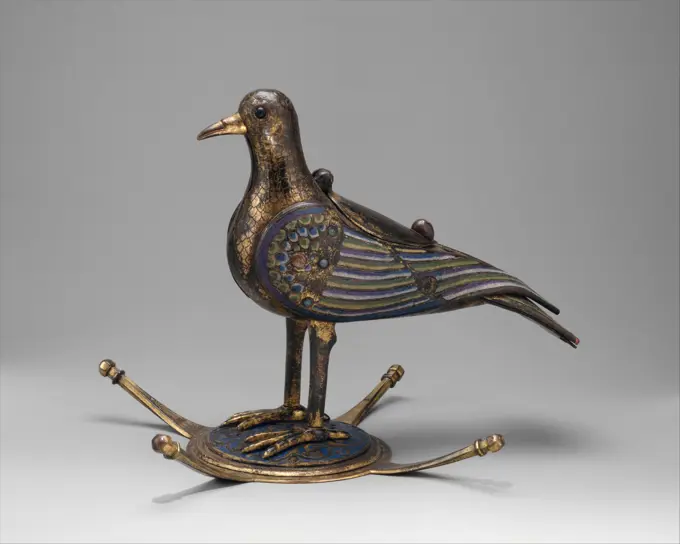
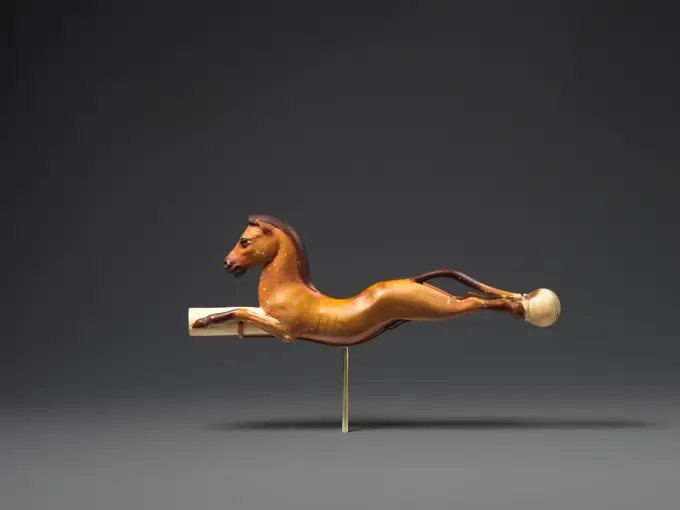
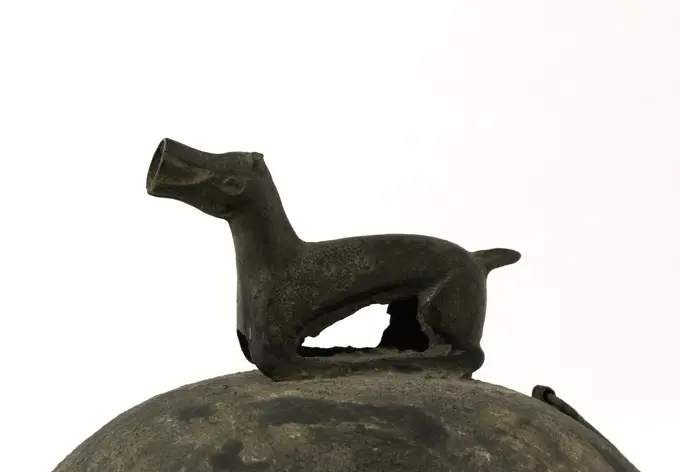
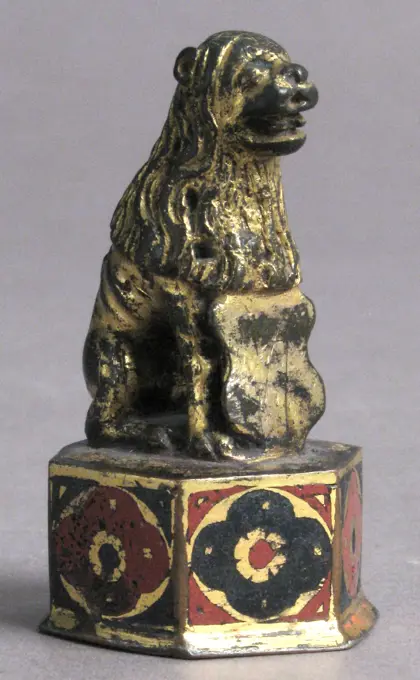
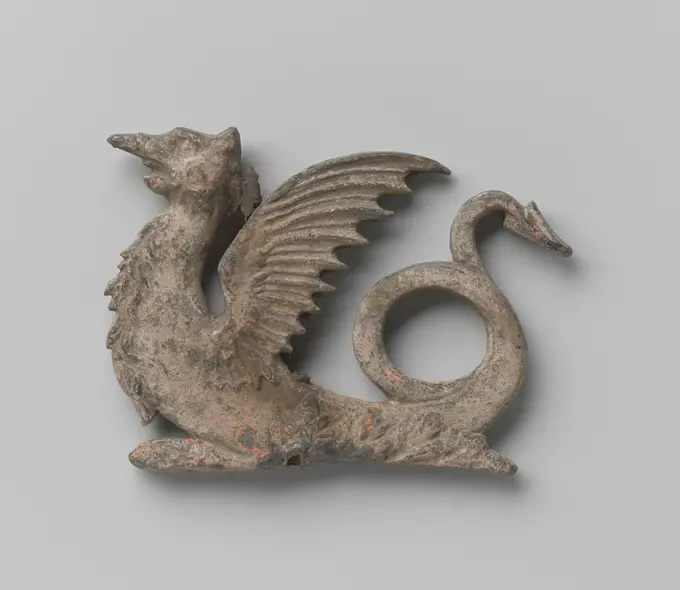
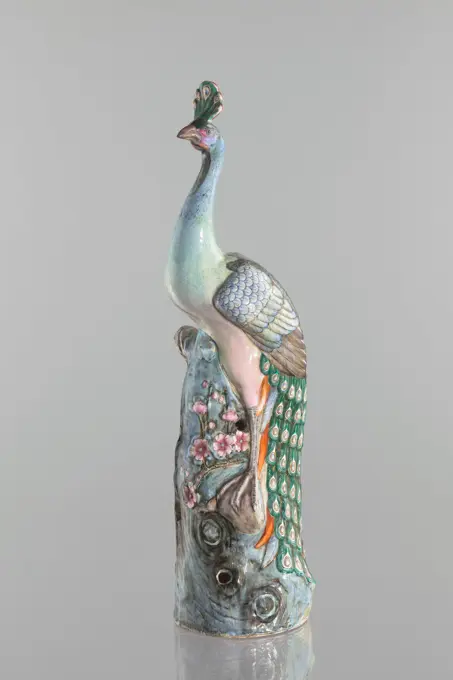
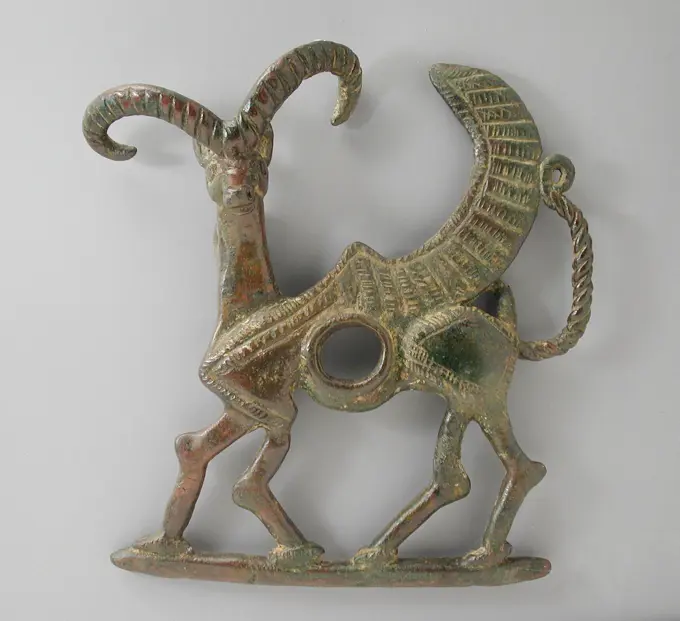
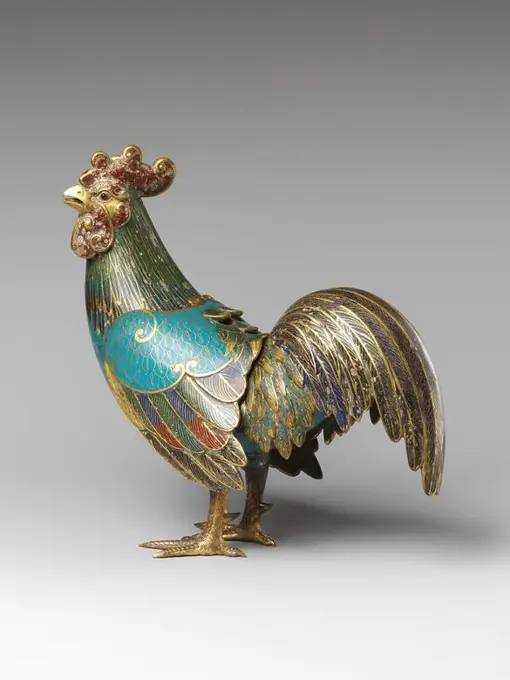
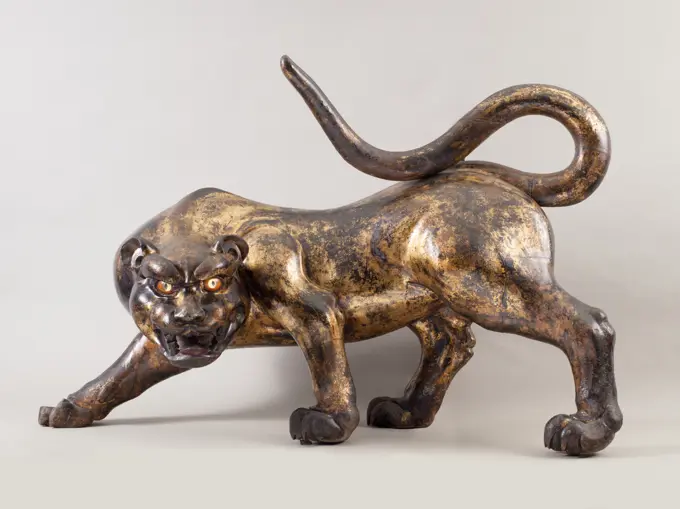
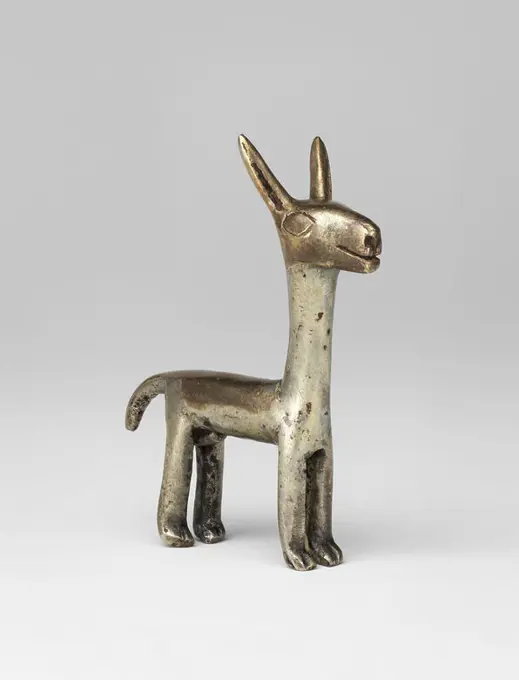
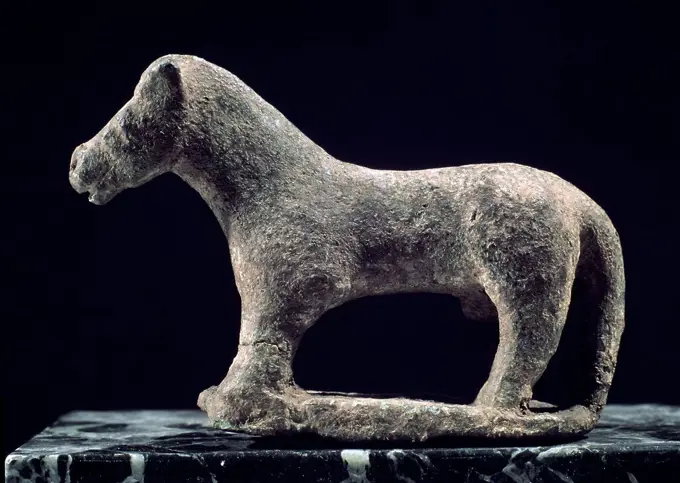
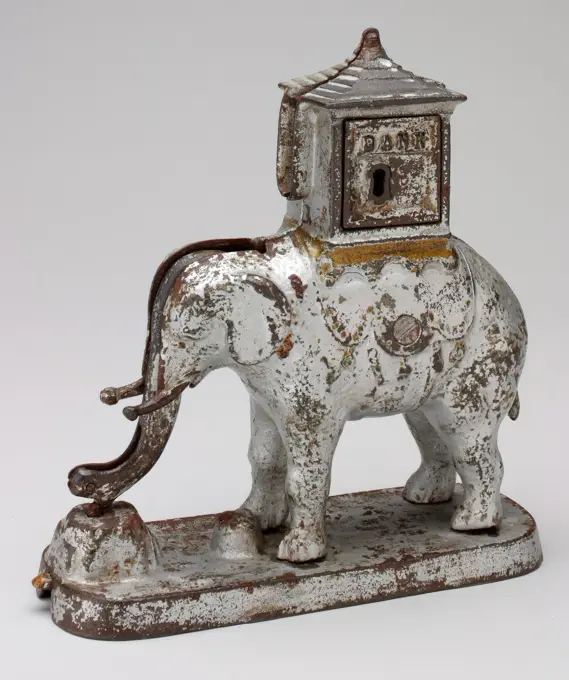
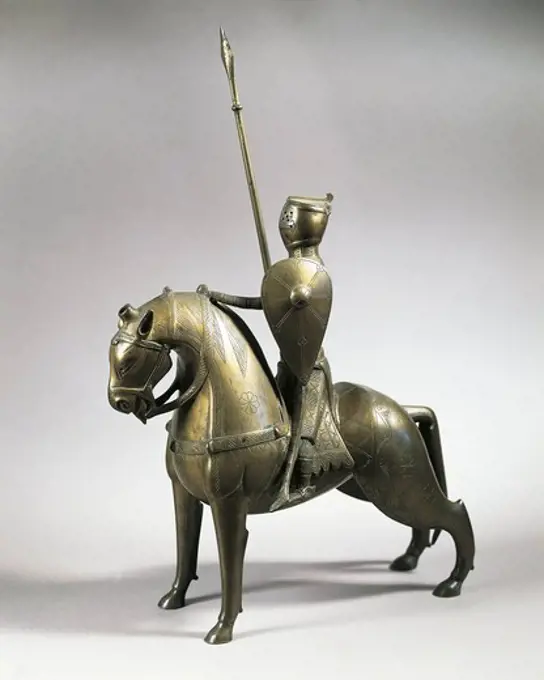
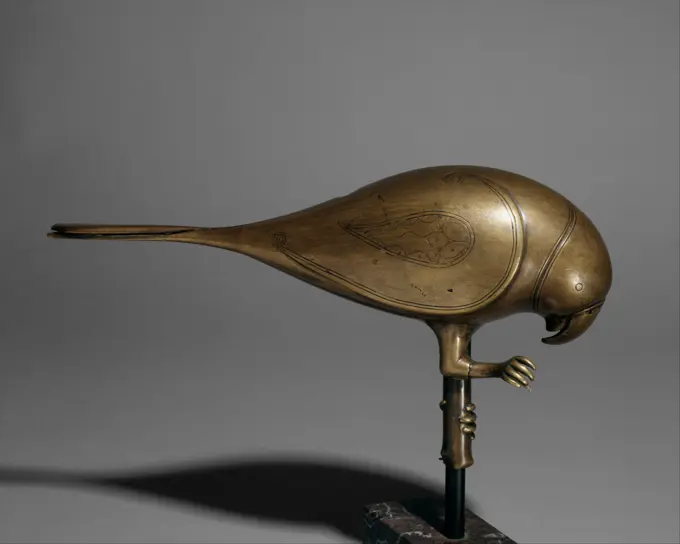
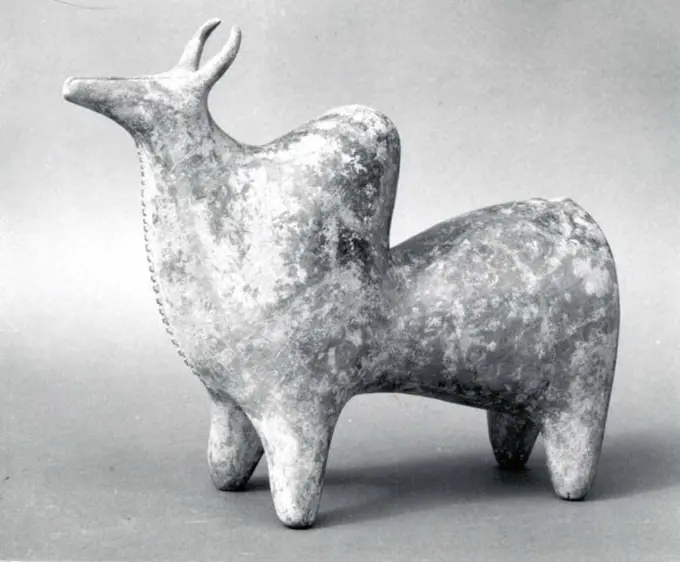
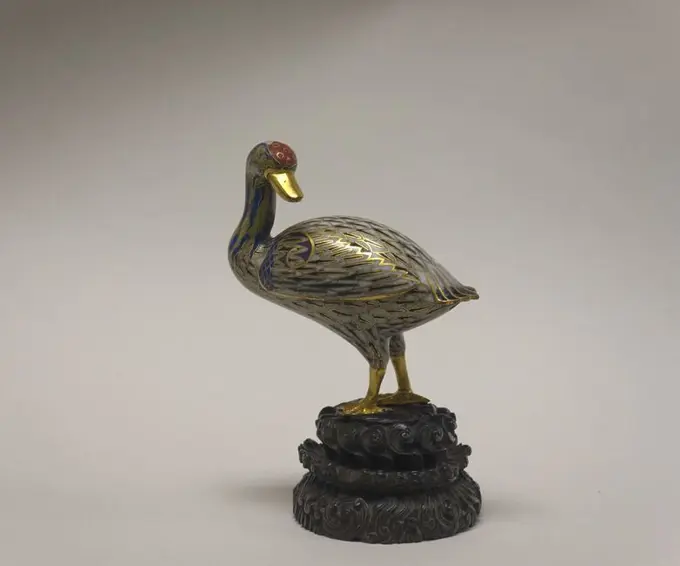
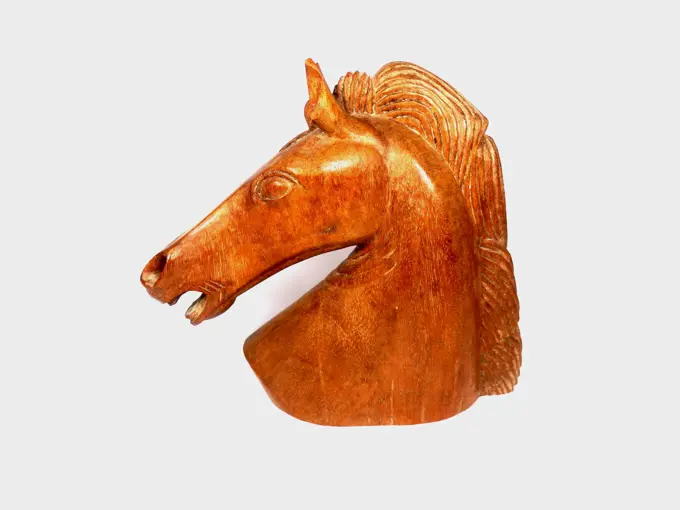
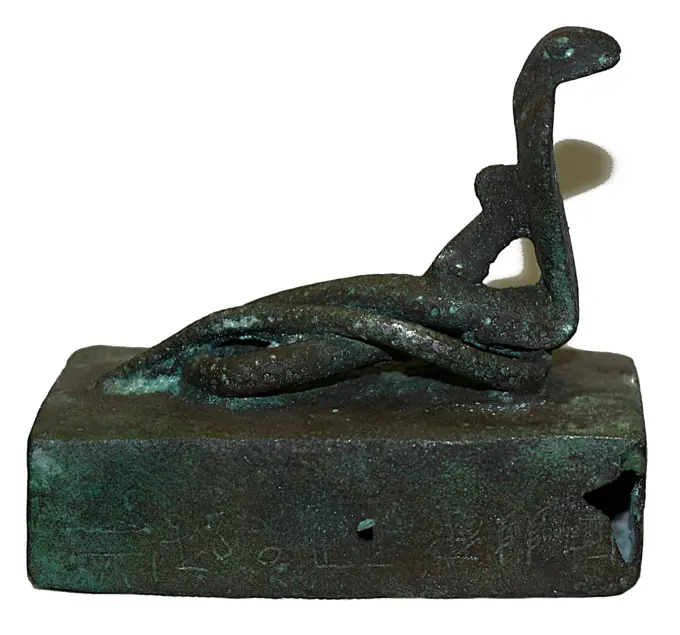
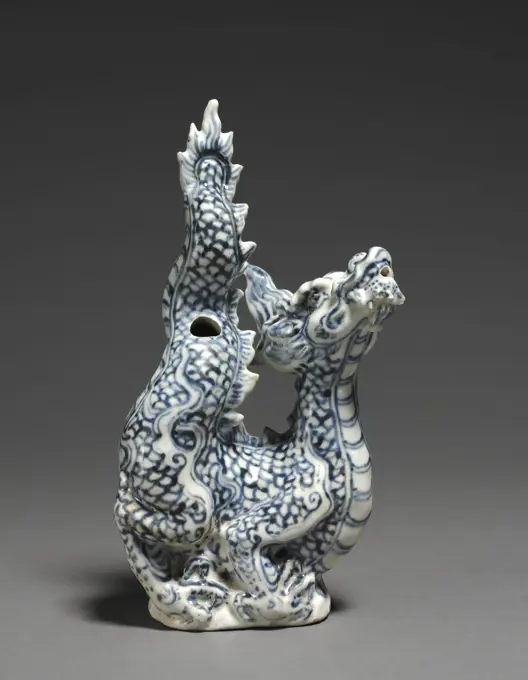
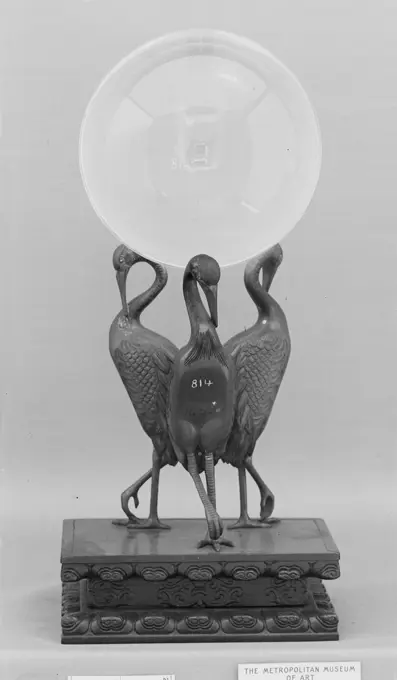
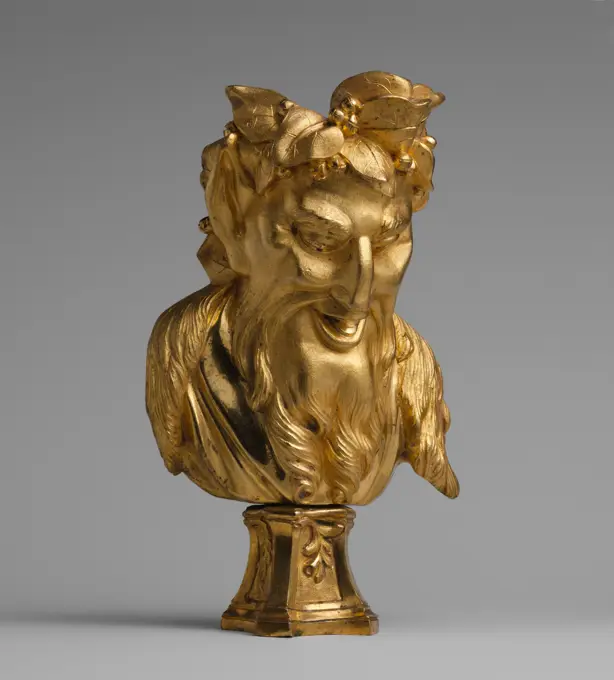
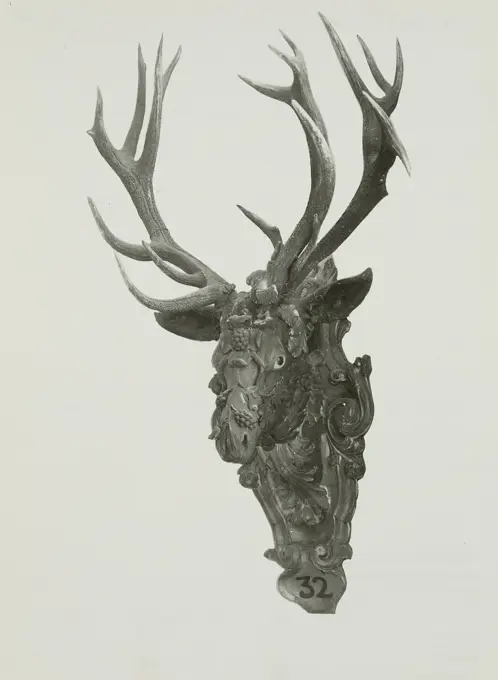
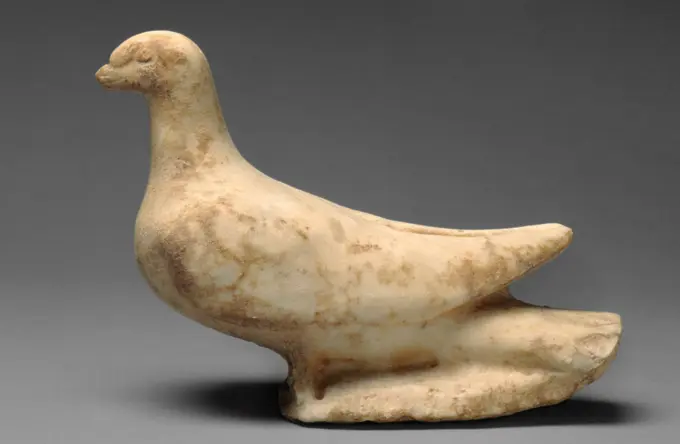
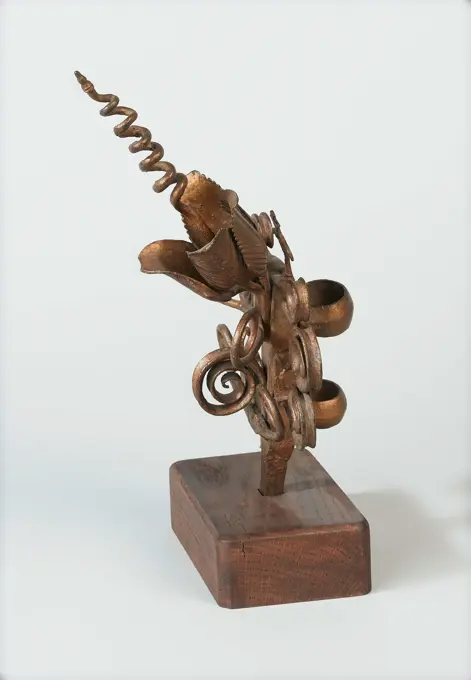
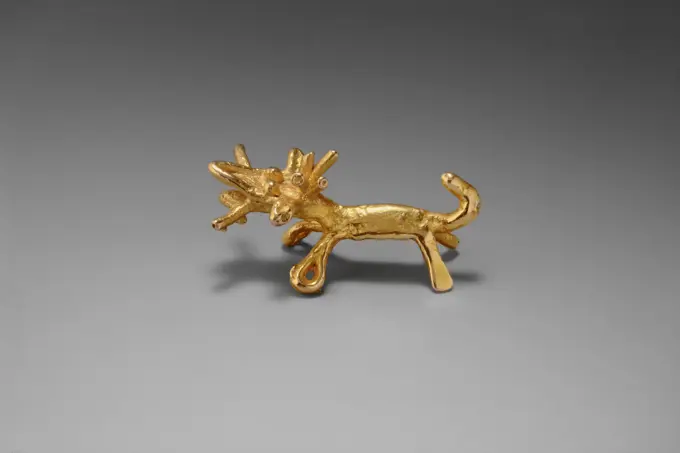
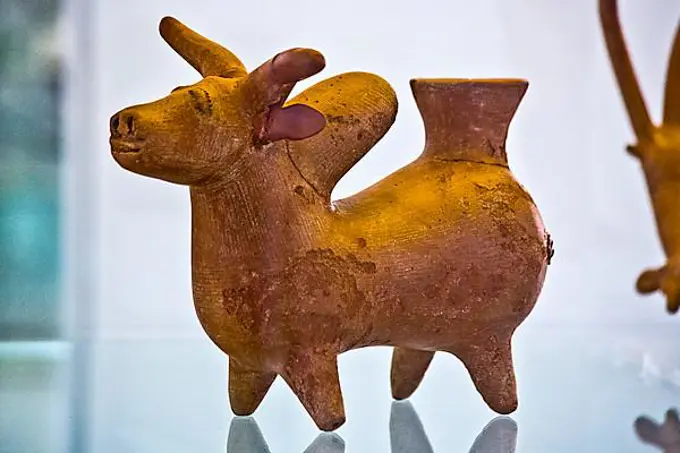
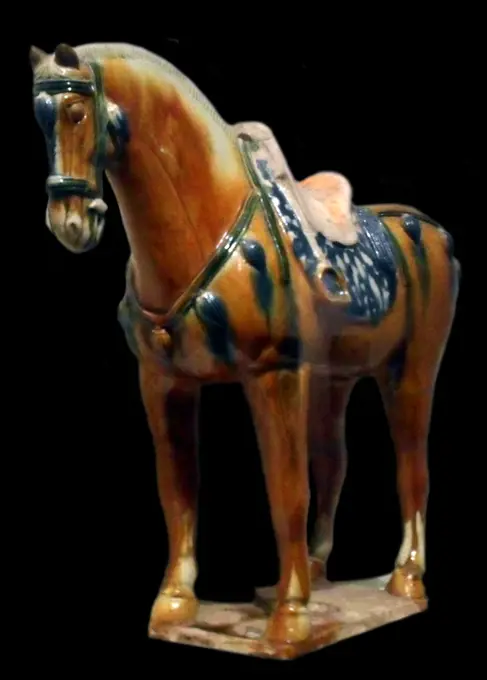
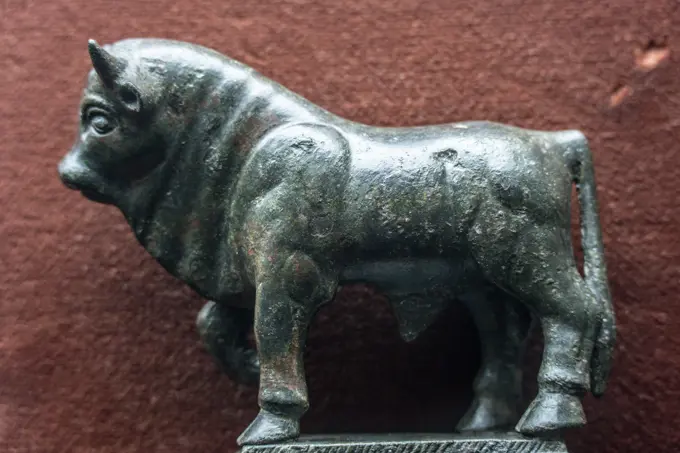
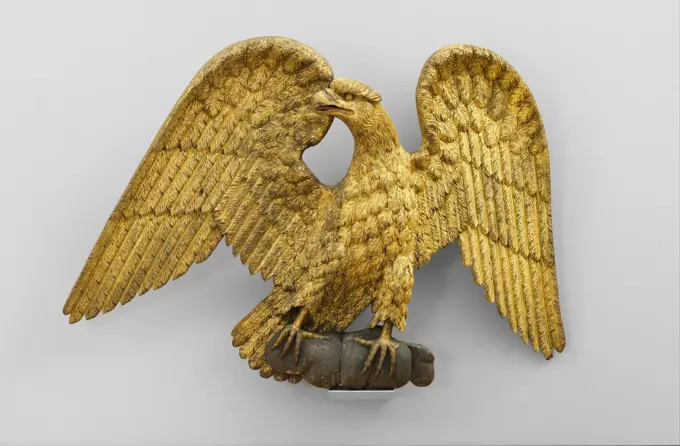
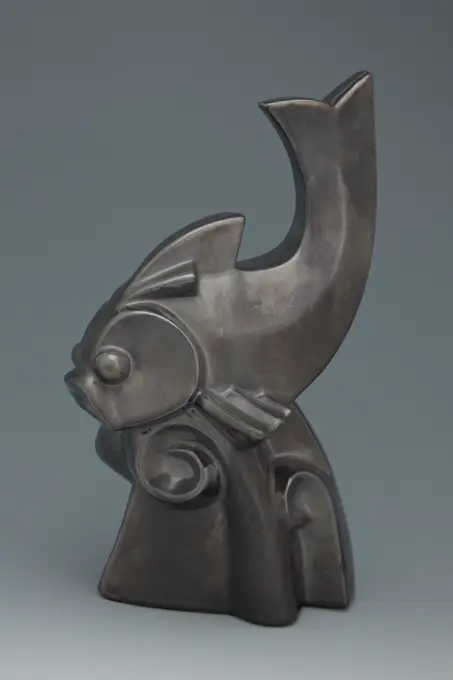
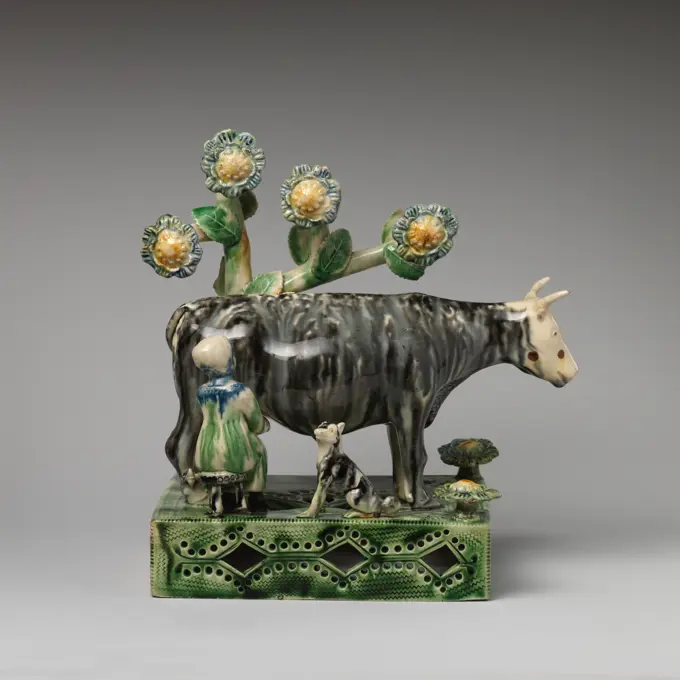
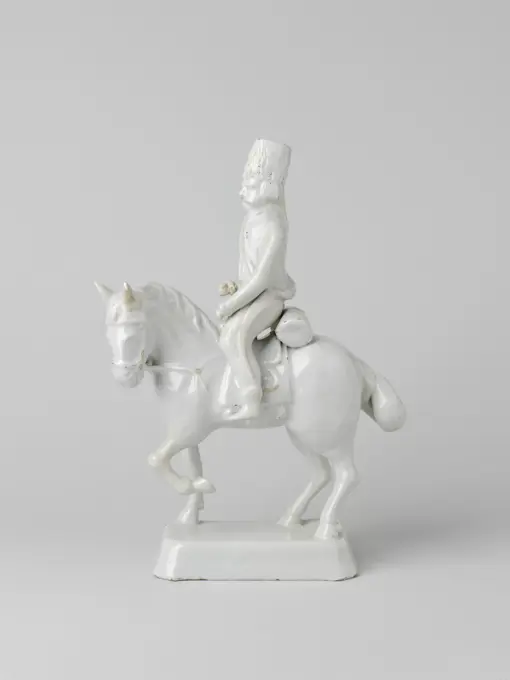
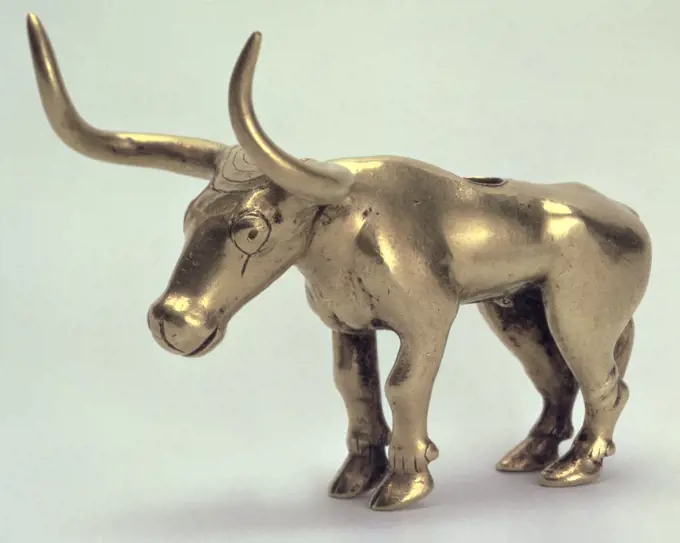
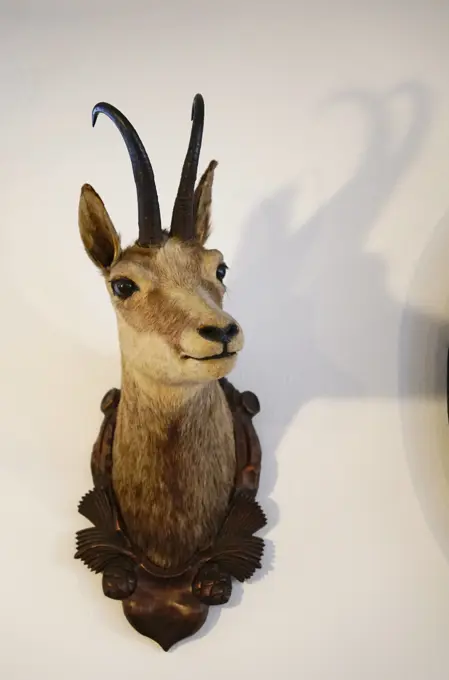
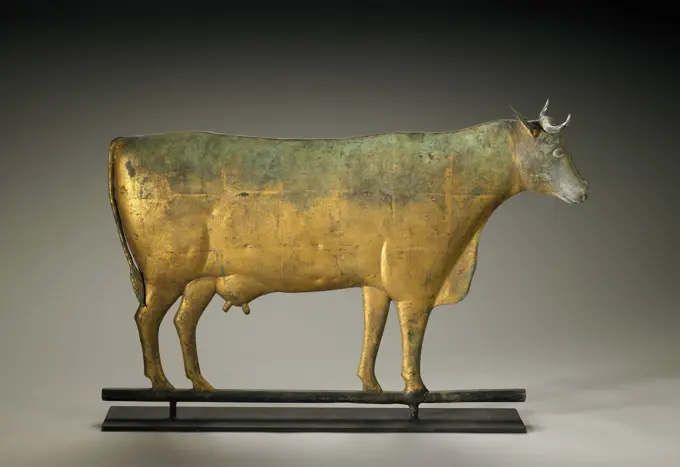
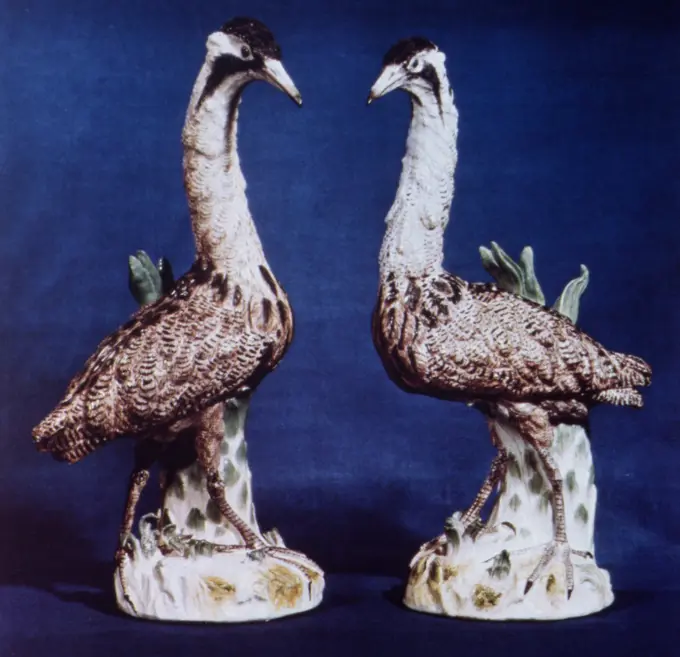
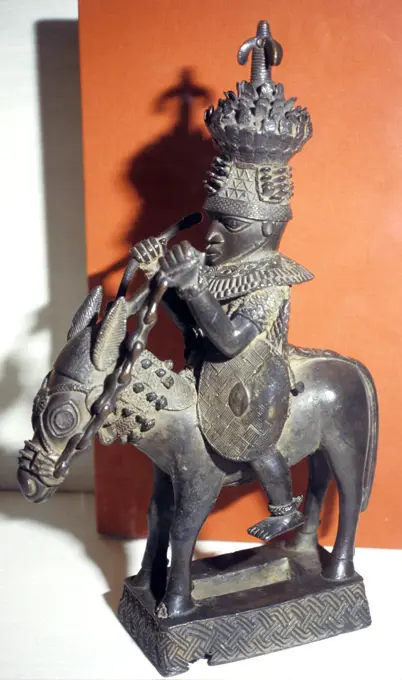
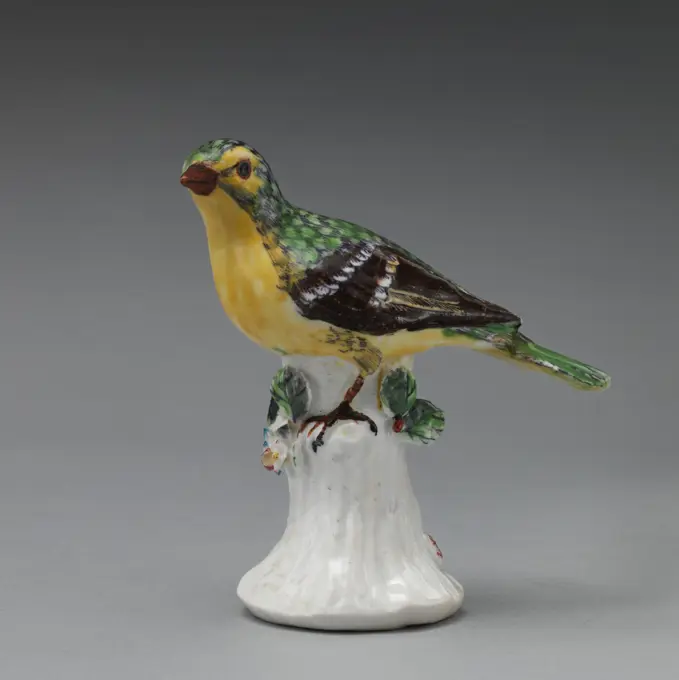
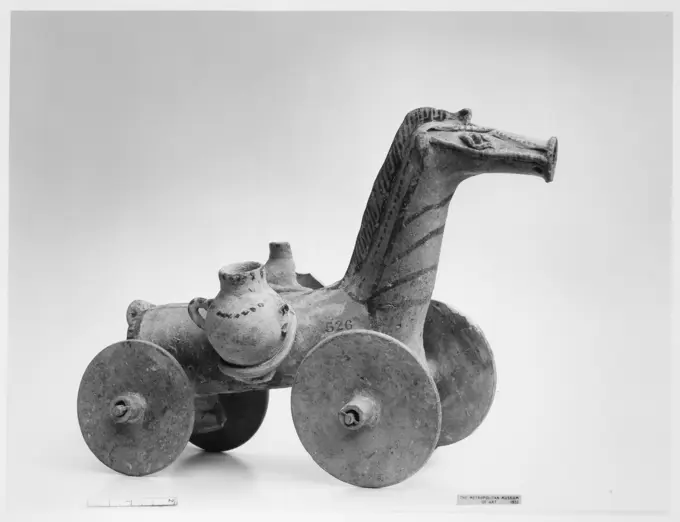
Bird-Shaped Incence Burner 12th-13th century Incense was widely used in the medieval Islamic world. At receptions and special events servants would waft the guests with the aromatic smoke emanating from the openwork of the incense burner and sprinkle them with drops of scented water. This bird-shaped incense burner represents a class of metalwork that would have been sold at market. Birds figure prominently in the decorative repertoire of the Seljuq period, and were probably associated with good fortune.. Bird-Shaped Incence Burner 456304Emblemat w formie figurki stojącego kozła. nieznany warsztat luristański, workshopGold Llama 1400 A.D. Inca Culture. Miniature gold and stone llamas were left as offerings to the mountain deities.Eucharistic Dove ca. 1215-35 French Rich with gilding, its overall surface engraved and enameled in a pattern that suggests layers of feathers, this dove would have hung over an altar as an evocation of the Holy Spirit. A tear-shaped door on its back conceals a small cavity once used to hold the bread of the Eucharist. Though many textual sources mention gold and silver doves, suggesting these materials were part of the standard liturgical furnishings for churches and communities that could afford them, few examples survive. On the other hand, doves of Limoges work fashioned from copper and enameled in brilliant colors exist in large numbers.. Eucharistic Dove 464324a beautyful bronze unicorn figure isolated on gray background 3d illustration of a beautyful bronze unicorn figure isolated on gray background Copyright: xZoonar.com/magannx 11779370BRASERO CONCAVO CON REMATES. Nº INV. 2917.115. (DIAMETRO 20 CM) MUSULMAN. (EXPOSICION :ARTE ISLAMICO ESPAÑOL)(DEPOSITO: MUSEO DE GRANADA ).Whip Handle in the Shape of a Horse ca. 1390-1353 B.C. New Kingdom The horse was a relative latecomer to Egypt. It was introduced in the Second Intermediate period during the Hyksos domination of northern Egypt (ca. 1667-1570 B.C.E.), when new elements of warfare, notably the horse and chariot, were brought from the Near East. During the New Kingdom, this animal became a familiar sight, and there were many depictions of horses in art, particularly during the Amarna period. This small ivory handle of a light whip or fly whisk is carved in the form of a prancing or running horse stained reddish brown with a black mane. The eyes, one of which has fallen out, were inlaid with garnet. The lively carving of this piece, especially the gracefully arched back, typifies the ability of Egyptian artists to evoke the essential qualities of animals. It also exemplifies the fine quality attained in the decorative arts during the reign of Amenhotep III.. Whip Handle in the Shape of a Horse. ca. 1390-1Cockerel weathervane, c. 1820, 16 x 5 1/2 x 17 3/4 in. (40.64 x 13.97 x 45.09 cm), Wood, pigment, glass, United States, 19th centuryGilt terracotta statuette of a goat. Culture: Mycenaean. Dimensions: H. 3 in. (7.6 cm.). Date: 14th century B.C..More naturalistic than most terracotta and bronze animals of this period. The body is molded with considerable observation of nature. Museum: Metropolitan Museum of Art, New York, USA.Empir saucer; Lilpop, Karol Jerzy (Fl. 1820-1833); 1920s (1820-00-00-00-1829-00-00);Recumbent Stag, figurine, Chinese ArtTripode vase. Orders. Han. Par musée musée malée. 35406-9 Bronze, Han dynasty, hetao, rosy Mongolia, ordos, prehistory, prehistoric, tripod vase, animalFigurine of pheasant. unknown, craftsmanSeal 14th century French or Italian There were in the Middle Ages a large variety of seals ranging in importance from the great seal of the king, which might be as large as five inches in diameter, down to the vast numbers of smaller seals which belonged to more ordinary individuals. There were also corporate seals belonging to guilds, cities, cathedrals, monasteries, or universities. The materials from which seals were made vary in relation to the wealth of the owner. Silver and brass were most frequently used, but gold, and, among the less costly materials, lead, stone, and even mood were employed. Seals varied in quality of workmanship from the most elaborate to the rough-cut merchant marks or the simple initials of yeomen. Since almost all legal and business transactions were executed by a seal, it was a closely guarded object. There are records of a kings councilor who lost his silver seal and the chain which attached it to his belt, and a French nobleman whose seal was stolen byLoden dragon from sundial. Loden dragon, part of the iron sundial.Before the Race, John Willis Good, 1845-1879, British, 1875, Bronze, Overall: 12 3/4 x 11 1/4 x 4 1/8 inches (32.4 x 28.6 x 10.5 cm), horse (animal), jockey, sporting artPeacock figurine;  19th century (1800-00-00-1900-00-00);Cheekpiece from a Horse Bit. Iran, Luristan, Luristan bronzes, circa 1000-650 B.C.. Tools and Equipment; horse trappings. BronzeBROCHE CON FORMA DE CARNERO PROCEDENTE DE ESTADOS UNIDOS - 1940 - BISUTERIA - DISEÑO DE EISENBERG. Location: PRIVATE COLLECTION.Mumia barana w kartonażu. unknown, authorHorse second half 18th century Italian, Naples In 1964, Loretta Hines Howard generously presented to the Museum over 140 Neapolitan crèche figures, dating from the second half of the eighteenth century. The varied assortment includes figures from the three traditional scenes of a complete Neapolitan presepio: the Nativity, with angels, shepherds, and sheep; the procession of the three Magi, with their colorful retinue of attendants; and the varied and gay crowd of country and town people thronging the tavern, or inn, of Bethlehem  the diversorium mentioned by St. Luke, where on the Holy Night there was no place for Mary and Joseph. Averaging between twelve and fifteen inches in height, according to the position they were to take in perspective in the stage set, the figures are pliable and can be given poses at will, according to their facial expressions. Their bodies are made of tow and wire, their arms and legs are finely carved of wood, and their heads and shoulders are modeled of tIncense Burner in the Shape of a Rooster. Culture: China. Dimensions: H. 7 5/8 in. (19.4 cm). Date: 18th century.A symbol of diligence and fortune, the rooster is a particularly popular Chinese decorative motif. This incense burner has an ingenious design: the hollow body houses the burning incense and the detachable wings serve as the lid, with several small openings on the wings allowing the fragrant smoke to escape. Museum: Metropolitan Museum of Art, New York, USA.Tiger ". Lacquered and golden wood, embedded eyes. 18th-19th century. Paris, Cernuschi museum. 144391-15 Asian art, art of extreme-oral, Japanese art, lacquer, gilding, 19th 19th 19th 19th 19th 19th 19th century, 18th 18th 18th 18th 18th 18th 18Camelid figurine. Culture: Inca. Dimensions: H. 2 in. (5.1 cm). Date: 1400-1533.This male camelid figurine, potentially representing a llama, has a solid head and a hollow body. While many similar camelid figurines are made of hammered sheet, X-radiography confirms that this figurine was cast by the lost wax method (see image 3) in two distinct casting stages to achieve different metallic effects. The first step was the casting of the llama's head (see image 4), neck, torso (see image 5), and tail (see image 6), as well as its legs, with a silver-copper-gold alloy. As part of this first step, the wax form of the torso was modelled around a ceramic core that now forms a hollow space within the camelid's body (the space is not visible to the viewer as it has been covered over by a silver metal plug at the chest, visible in the X-ray). The second casting step was the creation of the head and upper or rear elements of the body and tail in a more gold-rich silver metal. This second castingCandlestick with figure of a lion, anonymous, c. 1800 - c. 1900 The object provided with four legs consists of a lion sitting on its hind legs that has hit its tail on the handle on which the fat catcher and the candle holder are screwed. It makes the impression of being a fake. Candle pin and fat catcher have been made. West-Europa copper alloy casting The object provided with four legs consists of a lion sitting on its hind legs that has hit its tail on the handle on which the fat catcher and the candle holder are screwed. It makes the impression of being a fake. Candle pin and fat catcher have been made. West-Europa copper alloy castingChess pieces on white background. Chess pieces on whitePendant. Northwestern Iran, circa 1350-800 B.C.. Jewelry and Adornments; pendants. Bronze, castDove, anonymous, c. 1225 - c. 1250 Eucharistic pigeon of gilded copper and email champlevé. Emailled are the wings, the tail and midfield of the square, scale surrounded by walls with eight towers in which the pigeon stands. A heart -shaped lid on the back of the bird. A engraved cross under the bottom of the dish. Limoges copper (metal). gilding Eucharistic pigeon of gilded copper and email champlevé. Emailled are the wings, the tail and midfield of the square, scale surrounded by walls with eight towers in which the pigeon stands. A heart -shaped lid on the back of the bird. A engraved cross under the bottom of the dish. Limoges copper (metal). gildingPole Top with Double Bird-Shaped Bell (one of pair) 599 BCE-400 BCE China. Bronze sculptures of real and imaginary animals are generally known as ìOrdosî after the Ordos Desert in which they were first discovered in the early twentieth century. This northern and northwestern frontier of Chinaówhich also includes the forests and grasslands of present-day Inner Mongolia, Outer Mongolia, southern Siberia, and parts of Central Asiaówas occupied by hunting and herding tribes during the first millennium B.C. The precise ethnic identities of most of these tribes are unknown; ancient Chinese texts refer to many of these tribes by ancient regional names rather than by the names by which the tribes called themselves.The vigorous lifestyle of these nomadic horsemen is reflected in their bronzes, which originally embellished chariots, harness equipment, and personal accessories. Pole caps or finials like this were probably attached to vehicles or canopies. This example contains a pellet inside, inCABALLO RECHONCHO IBERICO EN BRONCE. Location: MUSEO ARQUEOLOGICO NACIONAL-COLECCION. MADRID. SPAIN.Brass and copper design fitting on antique wooden horse, Jodhpur, Rajasthan, India Copyright: xSafatxAli/DinodiaxPhotoxElephant with Howdah, Locked' mechanical bank, c. 1900, Charles F. Olm Sr.; Designer: John Thalheim; Manufacturer: Gurney Refrigerator Co., United States, Fond du Lac, Wisconsin, 7 1/4 x 7 x 2 5/8 in. (18.42 x 17.78 x 6.67 cm), Iron, pigment, 19th-20th centuryStag figure ca. early 1st millennium B.C. Iran. Stag figure 324828Knight-shaped ewerChassis of a table, anonymous, c. 1500 - c. 1600 Framework consisting of three flat -sawn cheeks, which have been placed with a ray and pure an angle of 120 degrees in relation to the middle style. The cheeks bear profiled rules, are s-shaped to the fronts and end in lion claws with volutes. The middle style ends in a dripper. With octagonal table top (BK-NM-12279-2). Tuscan walnut (hardwood) Framework consisting of three flat -sawn cheeks, which have been placed with a ray and pure an angle of 120 degrees in relation to the middle style. The cheeks bear profiled rules, are s-shaped to the fronts and end in lion claws with volutes. The middle style ends in a dripper. With octagonal table top (BK-NM-12279-2). Tuscan walnut (hardwood)Finial in the Form of a Parrot 17th-18th century The strong sculptural traditions of pre-Islamic India continued to some extent during the later period, when figural elements such as this parrot were used as finials and other types of embellishment. The informal choice of subject and the simplicity of style suggest that this piece probably belonged in a provincial, rather than imperial, court setting. Ubiquitous in Indian life and often depicted in Mughal and Deccan paintings, parrots were also known in literature of the Mughal period, such as in the Tutinama (Tales of a Parrot). Listen to experts illuminate this artwork's story Listen Play or pause #6786. Finial in the Form of a Parrot Supported by Bloomberg Philanthropies We're sorry, the transcript for this audio track is not available at this time. We are working to make it available as soon as possible.. Finial in the Form of a Parrot. 17th-18th century. Brass. Attributed to Northern India. MetalLibel. Bronze. Par musée musée malée. Asian antique, Japanese antiquity, metalSpouted vessel in the shape of a zebu ca. 1000 B.C.. Spouted vessel in the shape of a zebu 325364'Stork'. Italy. Florence, Early 17th century. Dimensions: height: 29,0 cm. Museum: State Hermitage, St. Petersburg.Duck. Culture: China. Dimensions: H. (with stand) 7 in. (17.8 cm). Museum: Metropolitan Museum of Art, New York, USA.Wooden Horse Head Close up of a carved wooden horse s head Copyright: xZoonar.com/StephenxFarhallx 9694775statue of arabian horse from metalVessel ca. 1000 B.C. Iran. Vessel 327353CERAMICA DE IBIZA.Bronze box for a Snake relic. Late period 600-100 B.C.Ewer in the Shape of a Dragon, 1400s. Vietnam (Annam), 15th century. Porcelain with underglaze blue; overall: 28.3 x 15 cm (11 1/8 x 5 7/8 in.).Crystal ball 18th-19th century China. Crystal ball. China. 18th-19th century. Rock crystal. Qing dynasty (1644-1911). HardstoneTable clock on the white backgroundCamel saddle, mid 20th century, 33 1/4 × 15 1/2 × 27 3/4 in. (84.46 × 39.37 × 70.49 cm), Wood, leather, metal, animal hide, pigments, cloth, Niger or Mali, 20th centuryTerracotta horse's head 3rd century B.C. Greek, South Italian () Terracotta statue of a horse's head.. Terracotta horse's head. Greek, South Italian (). 3rd century B.C.. Terracotta. Hellenistic. TerracottasBusts ca. 1780 French. Busts 189794 French, Busts, ca. 1780, Gilt bronze, Overall (each): 7  4 1/4 in. (17.8  10.8 cm). The Metropolitan Museum of Art, New York. Gift of J. Pierpont Morgan, 1906 (07.225.510.39a, b)Castle Moritzburg, antlersock and Rothirschgeweih with three rods from the desercase collection (No. 32), wood, carved, ceased and z. T. gold plated to 1725Standing Horse. Iran, no date. Sculpture. BronzeDove from a Funerary Monument. Unknown 350-300 B.C.Flagpole holder. Flag rod holder decorated with eleven arranged flat spirals and a tulip from which a pulled out spiral releases. The holder is bronze. With two arranged rings in which the flagpole can be placed.Zoomorphicfigure. Artist: UnknownRhyton in the shape of an ox made of pottery, Rashi (Gilan), Parthians (300 BC -224 AD), National Museum, Tehran, Tehran, Iran, AsiaKhandoba on a Horse. Culture: India (Maharasthra). Dimensions: (A) H. 14 7/8 in. (37.8 cm); W. 5 3/4 in. (14.6 cm); D. 9 3/4 in. (24.8 cm)(B) H. 8 1/2 in. (21.6 cm); W. 6 in. (15.2 cm); D. 2 7/8 in. (7.3 cm). Date: 18th century. Museum: Metropolitan Museum of Art, New York, USA.Saddled horse 8th century, Tang dynasty (618-907 AD). Ceramic, Terracotta Figure with three-color decorationfrom Henan in ChinaBronzestier Bronzestier Copyright: xZoonar.com/Tolox 22568807Belt Buckle with Animal-Combat Scene 3rd-2nd century B.C. North China. Belt Buckle with Animal-Combat Scene 65286Boofing cup with a ring through the mouth. The molded and topic object consists of four parts: the head, the horns and the ring.Joined Dogs. Mexico, Nayarit, 200 BCE-500 CE. Ceramics. Slip-painted ceramicRitualistic object from Mycenae gravesHorse Armor Probably Made for Count Antonio IV Collalto (1548-1620) ca. 1580-90 and later Italian, probably Brescia The horse armor is covered with etched ornament that includes undulating foliage, mythological creatures, winged putti, and heroes from Biblical and Classical history, such as David and Goliath and Marcus Curtius. The exuberant sketchlike quality of the etching and the preference for overall decoration suggest an origin in Brescia, the second most important armor-producing center in northern Italy after Milan. Brescia was the principal supplier of arms to the Venetian Republic. Like another Italian horse armor in the Metropolitan Museum's collection (acc. no. 21.139.2), this example comes from the armory of the counts Collalto at the castle of San Salvatore, near Treviso. It is one of the few complete horse armors to survive from the late sixteenth century, when heavily armored cavalry played a diminishing role in warfare. It was probably made for Count Antonio IV CollaltGoblet Made 1600 BCE-1050 BCE China. This vessel, with a carefully balanced spout and pointed rim, was probably used to heat and pour wine during ceremonies of ancestor worship. The second character of the inscription, showing four footprints around a square, has been read by scholars as a family name.. Bronze .Figure of an Eagle 1800-1830 American The American bald eagle was adopted by the United States Congress for the national seal in 1782. It soon became the most popular of patriotic decorative motifs. This carved-and-gilded eagle, with its wings proudly spread, is posed on a rocklike base. One of the largest of its type, it may have been the work of a carver of ship figureheads; however, it does not appear to have been used as a ships ornament or placed on the outside of a building, as it shows no signs of weathering.. Figure of an Eagle 10025Fish KNAP (KNAPP), StanisMilkmaid and cow with a dog ca. 1750-60 Style of Whieldon type. Milkmaid and cow with a dog. Style of Whieldon type. British, Staffordshire. ca. 1750-60. Lead-glazed earthenware. Ceramics-PotteryHorse with rider, c. 1700 - c. 1800 Rider of undecorated faience. The horse is on a rectangular pedestal and the rider is loose. De Ruiter wears a Bereb hat and a German uniform from the second half of the 18th century. The horse has lifted its left front leg. The rider includes an identical copy with InvNR. BK-1955-403-A. Delft earthenware. tin glaze. Rider of undecorated faience. The horse is on a rectangular pedestal and the rider is loose. De Ruiter wears a Bereb hat and a German uniform from the second half of the 18th century. The horse has lifted its left front leg. The rider includes an identical copy with InvNR. BK-1955-403-A. Delft earthenware. tin glaze.Bronze horse late 8th century B.C. Greek Statuette of a bronze horse with no base. It is broken at the tail and the eyes are hollow.. Bronze horse. Greek. late 8th century B.C.. Bronze. Geometric. BronzesCrafts of horseCovered Wine Vessel China. Covered Wine Vessel 61203Bird FigureWarrior on Horseback; Willem Danielsz. van Tetrode (Netherlandish, active about 1525 - 1580); Netherlands; 1562 - 1565; Bronze; 39.7 x 45.7 cm (15 5,8 x 18 in.)Figure of a Bull From the Maikop Burial Mound of the Northern Caucasus 3rd mil BC Maikop Gold State Hermitage Museum, St. Petersburg, RussiaGemse Gemse Copyright: xZoonar.com/HGVorndranx 22690920Cow weathervane, c. 1870, Cushing & White, Waltham, Massachusetts, 1867-1872, 18 1/8 x 27 1/4 x 6 9/16 in. (46.04 x 69.22 x 16.67 cm), Copper, zinc, gilt, United States, 19th century, This cow weathervane was made by one of the most prominent American weathervane manufacturers, Cushing & White. The finely muscled, three-dimensional copper body and the delicate features of the zinc head are the result of the finely crafted molds and the hand-hammered technique for which Cushing and White was known. Originally gilded, the sheet copper body has weathered to a warm green patina, leaving only a shadow of the gilding squares."Gold"-Feng Shuei ArticleBittern (one of a pair) ca. 1750 Meissen Manufactory German Porcelain birds have their origins in the princely tradition of maintaining collections of living animals and birds in menageries and aviaries, which were viewed as microcosms of the universe, and emblems of royal power and enlightenment. These collections often included exotic birds such as parrots, admired for their rarity, as well as more familiar native species.In 1731 the Meissen manufactory began a new genre in European porcelain, producing several hundred life-size and near-life-size porcelain birds and animals, many destined for the Japanese Palace of Augustus the Strong, Elector of Saxony (1670-1733). To create them, factory modelers found inspiration in nature, looking both to living and stuffed specimens, as well as zoological illustrations and Asian porcelain precedents. The great Meissen modeler Johann Joachim Kändler is known to have copied from life the birds kept at the royal aviary at Schloss Moritzburg.SurvivAfrica, Nigeria. Figure of a chief. 16th cent. statue.American 20th Century, Rooster Weather Vane, 1935 1942 Rooster Weather VaneFigurine of ram - aquamanile. unknown, craftsmanFlycatcher ca. 1750 Chelsea Porcelain Manufactory. Flycatcher. British, Chelsea. ca. 1750. Soft-paste porcelain. Chelsea Porcelain Manufactory (British, 1744-1784). Ceramics-PorcelainTerracotta wheeled horse 6th century B.C.() Cypriot With characteristic imagination, not to say extraordinary foresight, the Cypriot modeler has equipped a draft horse with wheels. On its back it carries two storage jars. From other Greek examples, scholars have hypothesized that these wheeled horses were toys and that the containers carried water.. Terracotta wheeled horse 240402Heavenly globe with clockwork from the 16th century by Gerhard Emmos Himmelsglobus with clockwork from the 16th century by Gerhard EmmoserSilver rhyton with horseman, Armenia. Armenian Civilization, 5th-4th BC.Upper portion of a lectern first half 18th century Southern German. Upper portion of a lectern. Southern German. first half 18th century. Painted and gilded oak. Woodwork-FurnitureA Fine and Rare Molded and Gilt Copper Weather Vane  19th Century Artist Unknown (American) Copper Helen Hobart, Horse and Rider Weather Vane, 1935 1942 Horse and Rider Weather VaneCockerel figurine, From the first century BC to the third century AD,Catacombs of St. Paul,,Rbat (Mdina), Republic of Malta, Europe.Gilded decoration on a traditional gondola, Venice, ItalyInlay in the form of the Horus falcon. Dimensions: H. 16 cm (6 5/16 in.); W. 1.2 cm (1/2 in.); L. 15.5 cm (6 1/8 in.). Date: 4th century B.C..This inlay represents the falcon god Horus. As a god closely associated with kingship, the Horus hieroglyph appears prominently in the king's titularies, and may also - as it does in Dynasty 30 - appear in the king's particular names. Museum: Metropolitan Museum of Art, New York, USA.Concepts collection - Trojan horsePa. German Eaglet. Dated: c. 1941. Dimensions: overall: 49.6 x 37 cm (19 1/2 x 14 9/16 in.) Original IAD Object: 5 3/8" in diameter; 12" long; 15 3/8" high. Medium: watercolor and graphite on paper. Museum: National Gallery of Art, Washington DC. Author: Hester Duany.Head Of Pharoah  Egyptian Art(- )  Cast -- Falcon, or eagle, possibly from the staff of a German Emperor.Gilt bronze. Probably German or Italian, probably XII-XIII century. The Cloisters Collections. Height 14 5/4 in. including polished wood base. Price $18.00. Packing charge, $1.50. Sent express collect. May 24, 1955. (Photo by The Metropolitan Museum Of Art).Statuettes of golden horses on white wooden backgroundAntoine Louis Barye, English Basset, model nd, cast c 1860 18731 English BassetWooden brown chess piece isolated on white background