Historical Bladed Weapons

An array of ornate historical bladed weapons including swords and daggers from various cultures, highlighting intricate designs and rich materials.
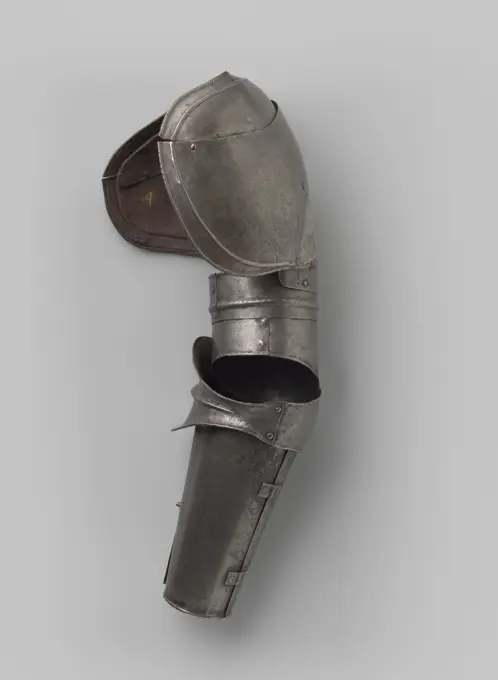
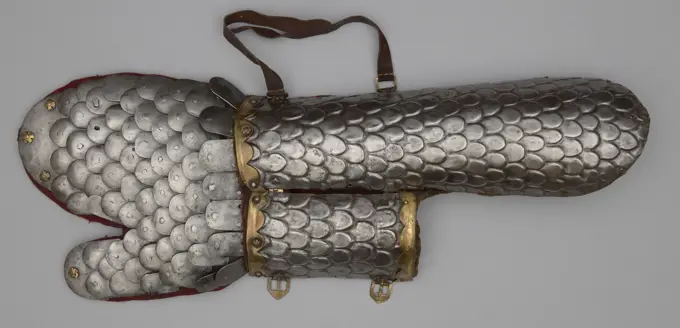
Armstuk, 1499 - 1699  Arm cover, iron, white, consists of a articulated shoulder plate, upper arm pipe, an elbow hood and a forearm pipe. There is an iron buckle on the top of the shoulder plate, underneath a articulated strip. The upright is cabled and runs a roared edge around the shoulder plate with parallel. The elbow hood consists of two parts of which the tilted edges have flared up. The forearm pipe consists of two parts that can be attached to each other with two double buckles, in the lower part a pin. The inside has been painted in black. Europe whole: Iron (metal)
Armstuk, 1499 - 1699 Arm cover, iron, white, consists of a articulated shoulder plate, upper arm pipe, an elbow hood and a forearm pipe. There is an iron buckle on the top of the shoulder plate, underneath a articulated strip. The upright is cabled and runs a roared edge around the shoulder plate with parallel. The elbow hood consists of two parts of which the tilted edges have flared up. The forearm pipe consists of two parts that can be attached to each other with two double buckles, in the lower part a pin. The inside has been painted in black. Europe whole: Iron (metal)
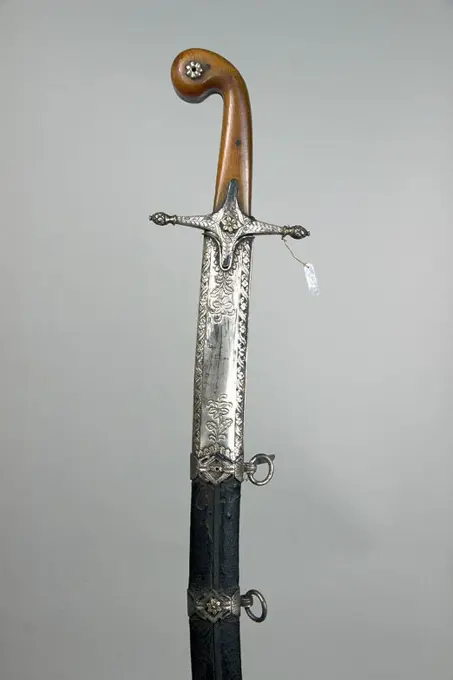
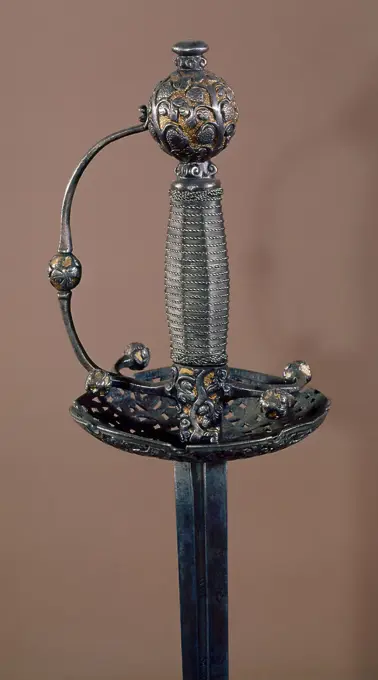
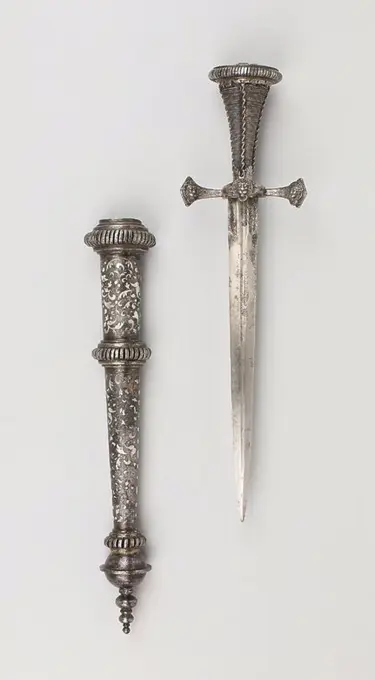
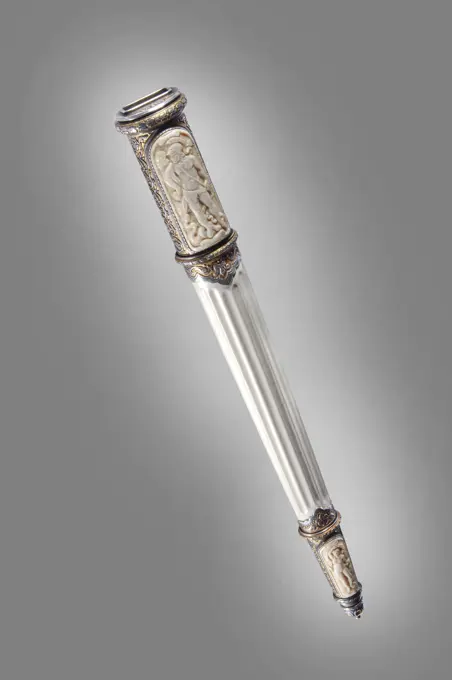
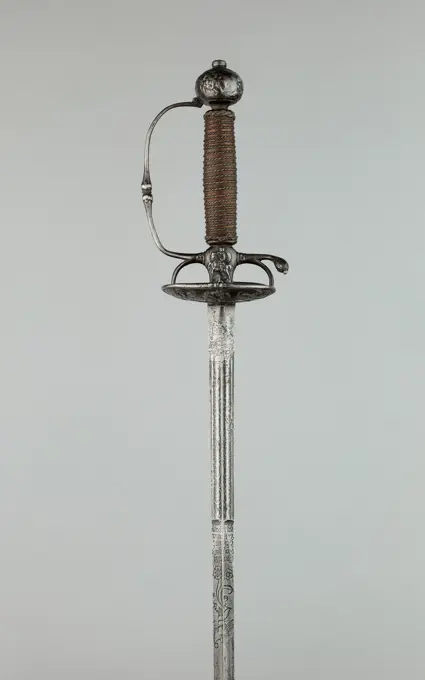
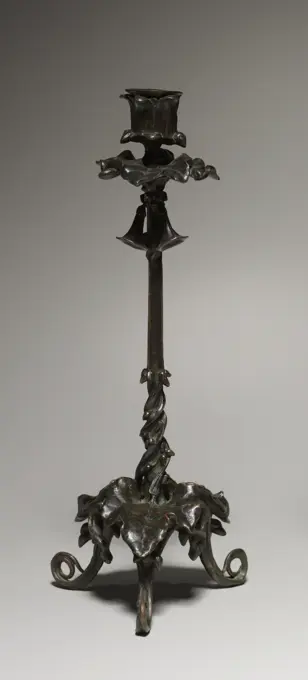
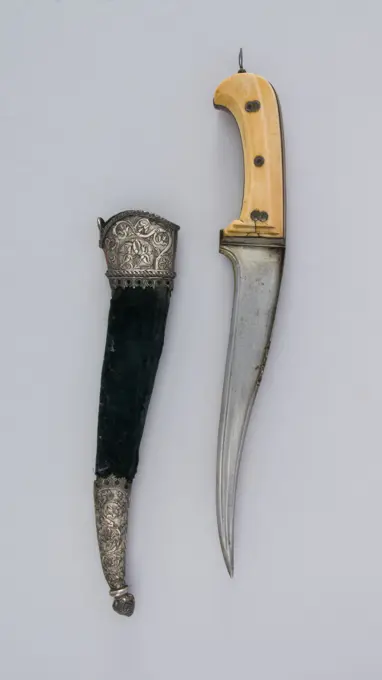
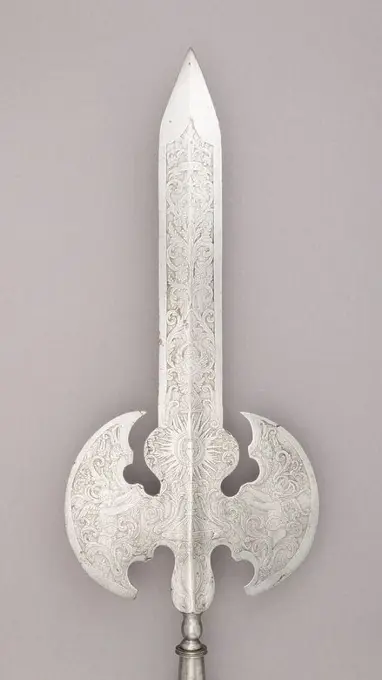
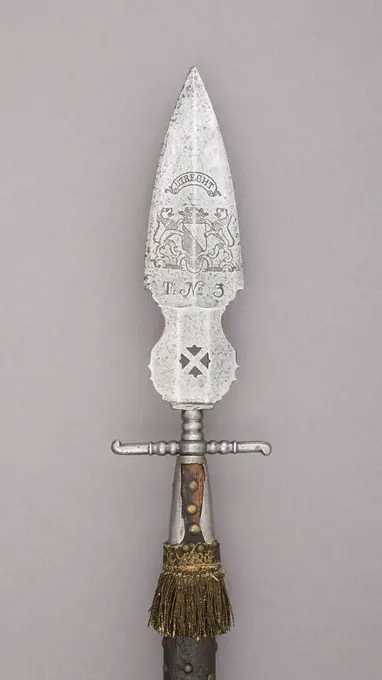
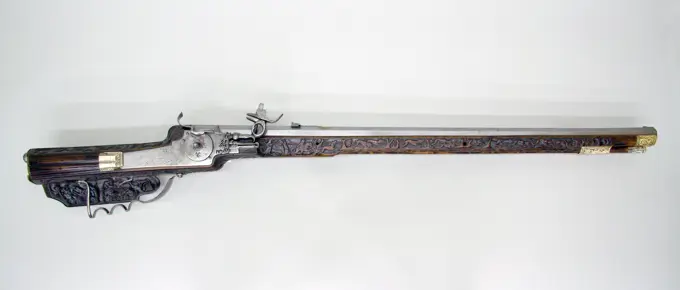
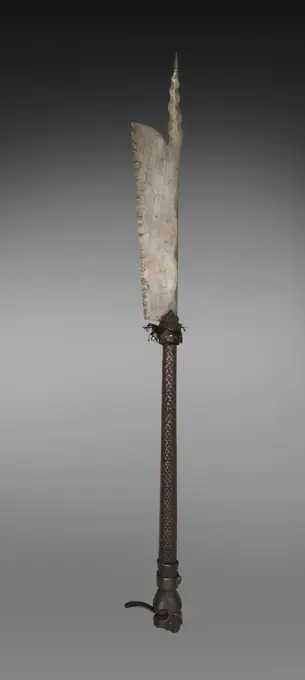
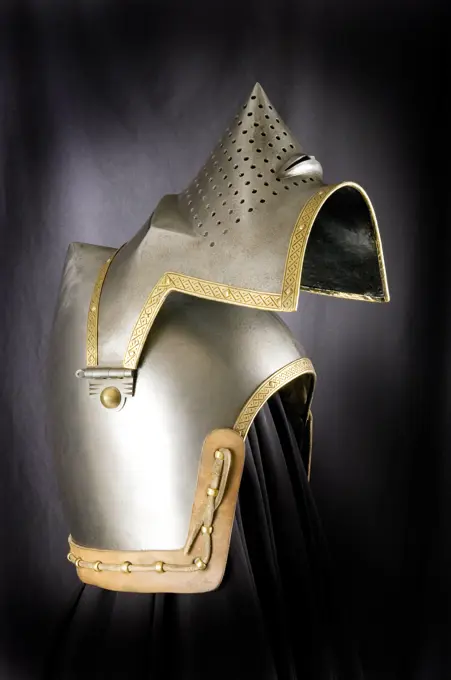
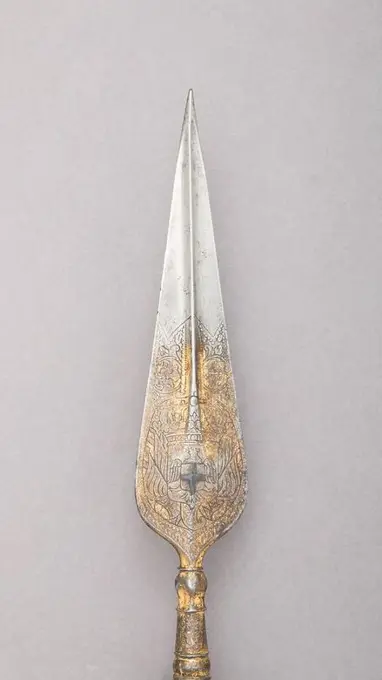
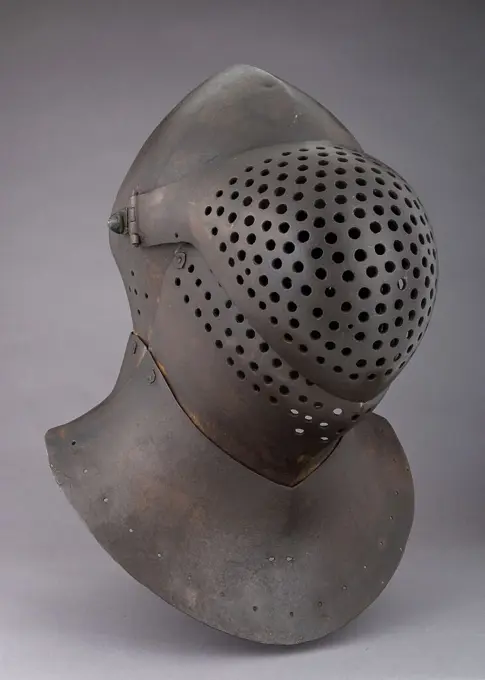
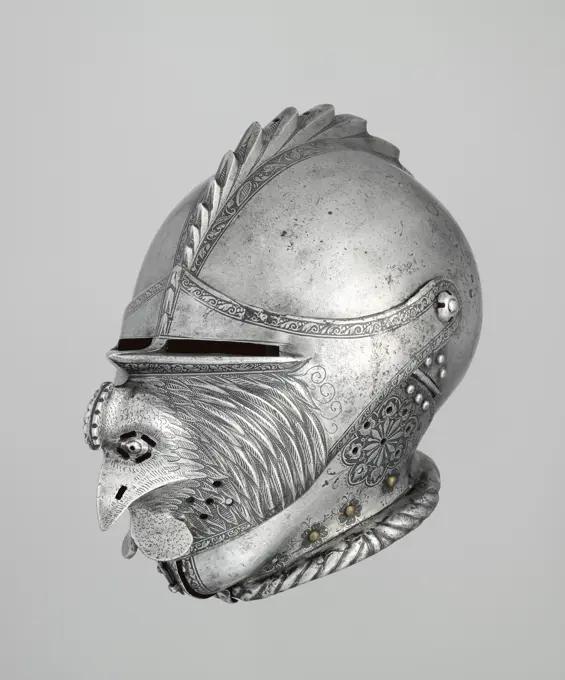
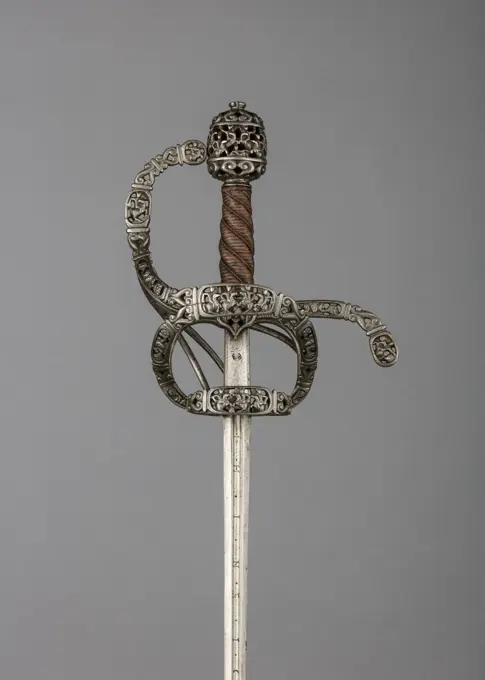
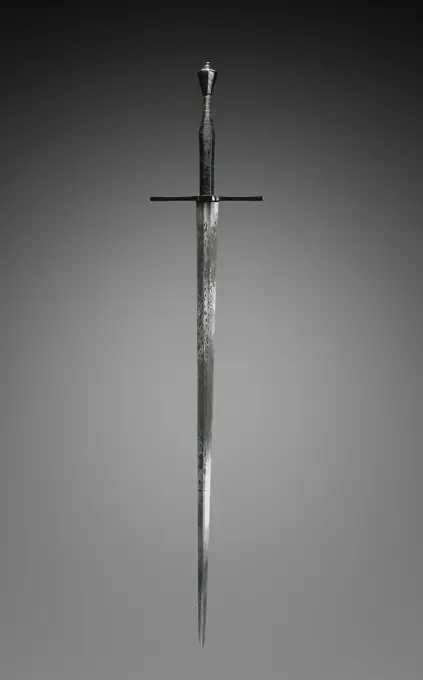
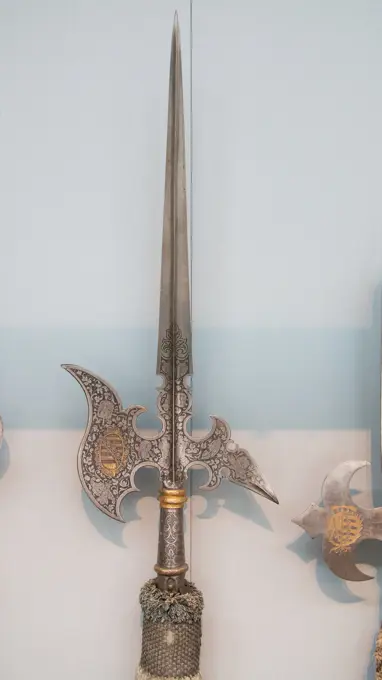
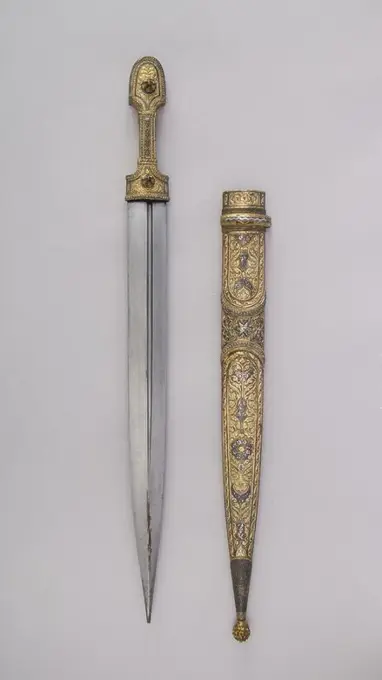
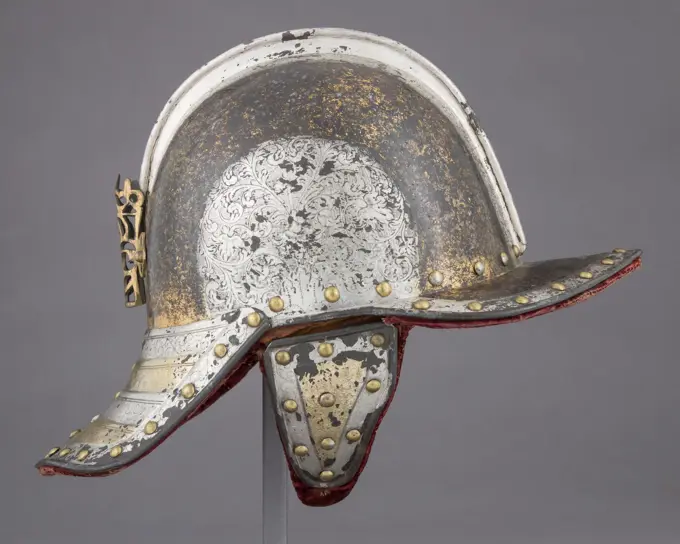
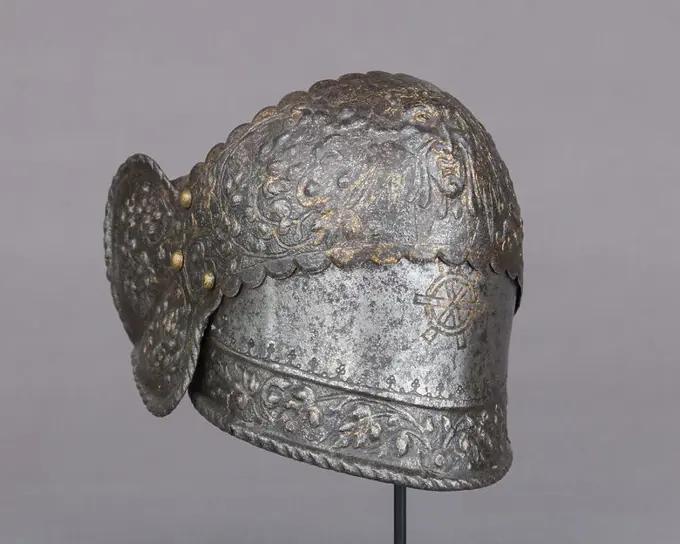
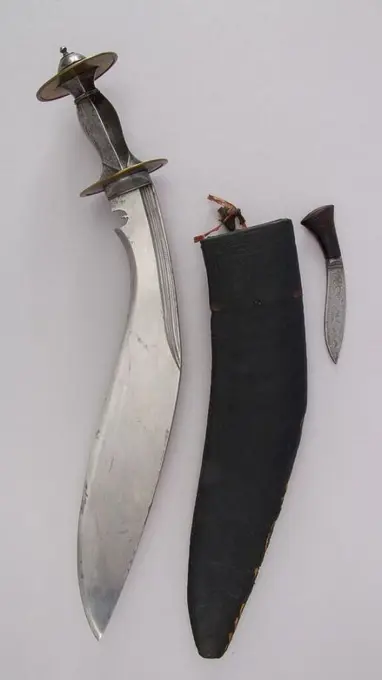
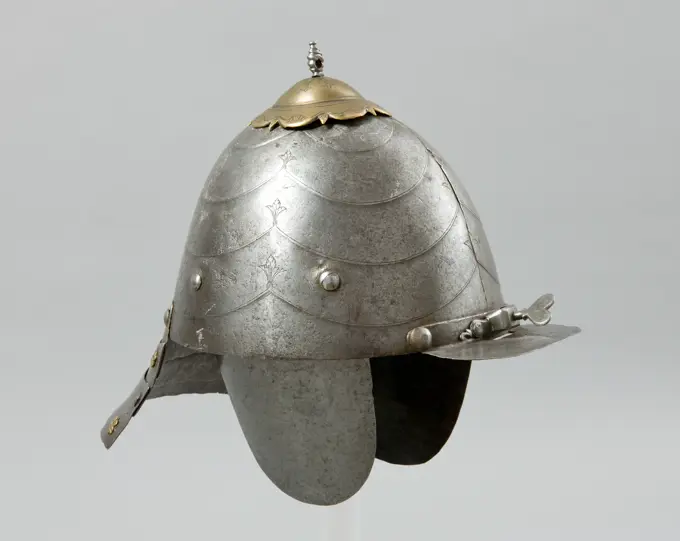
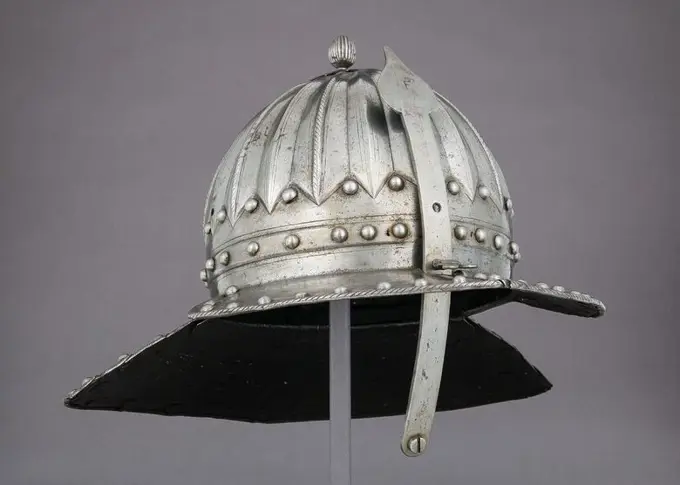
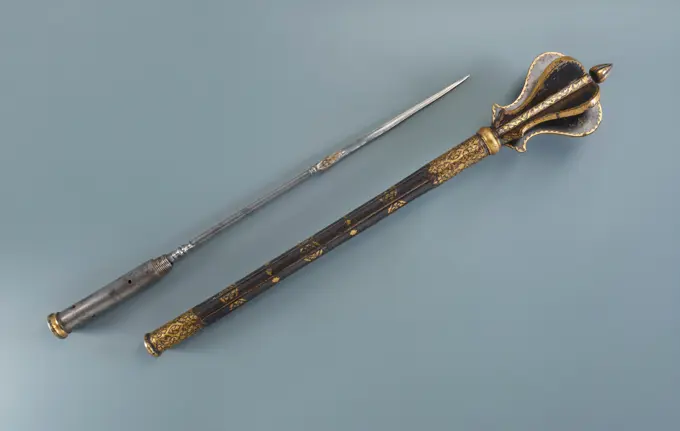
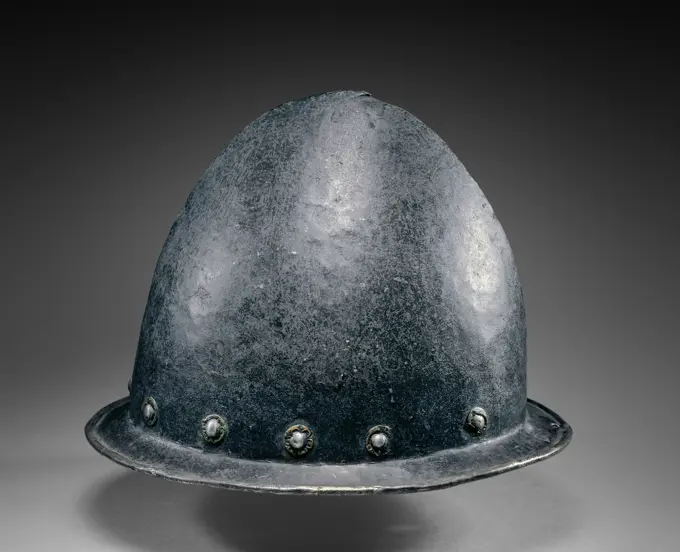
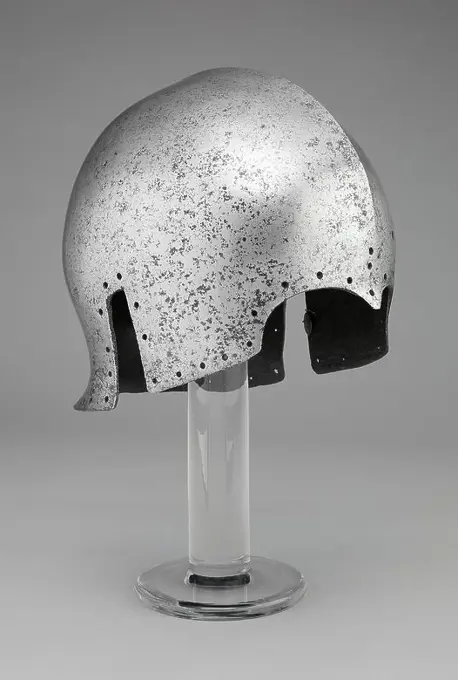
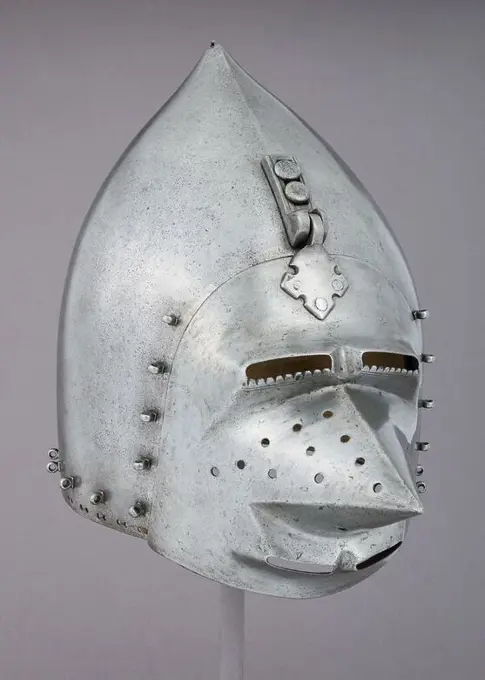
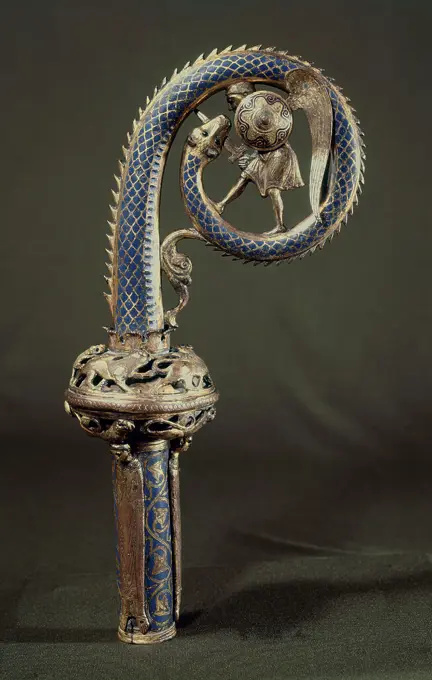
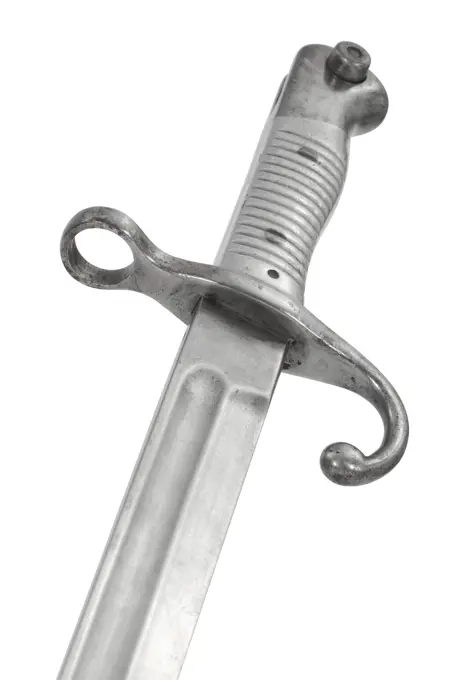
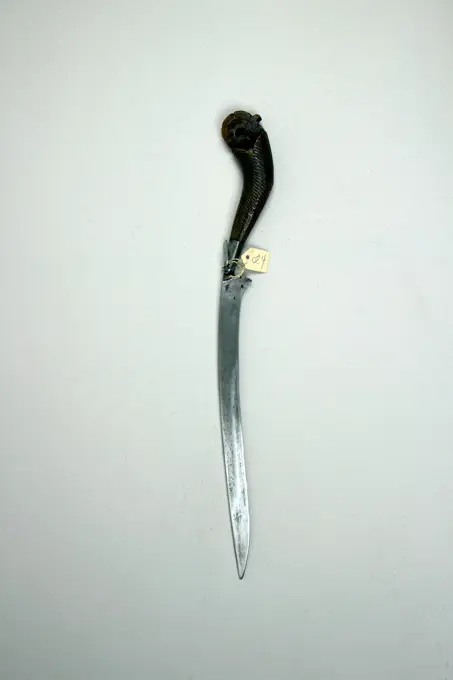
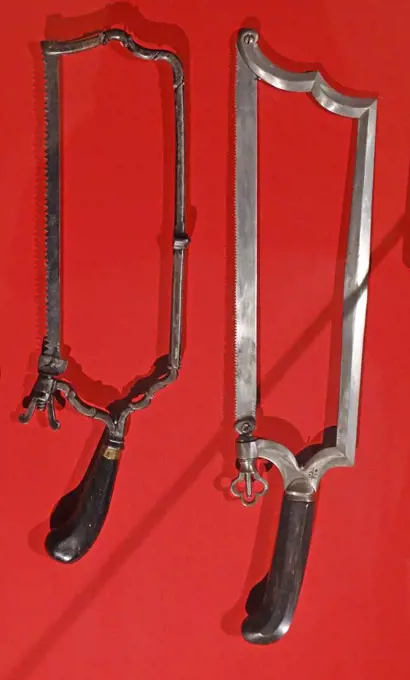
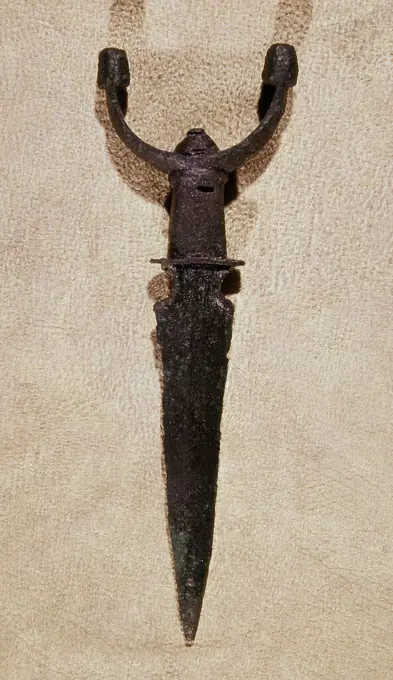
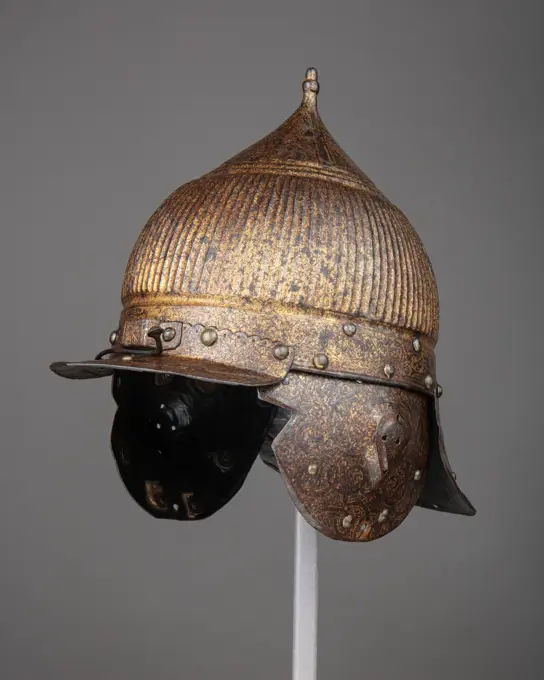
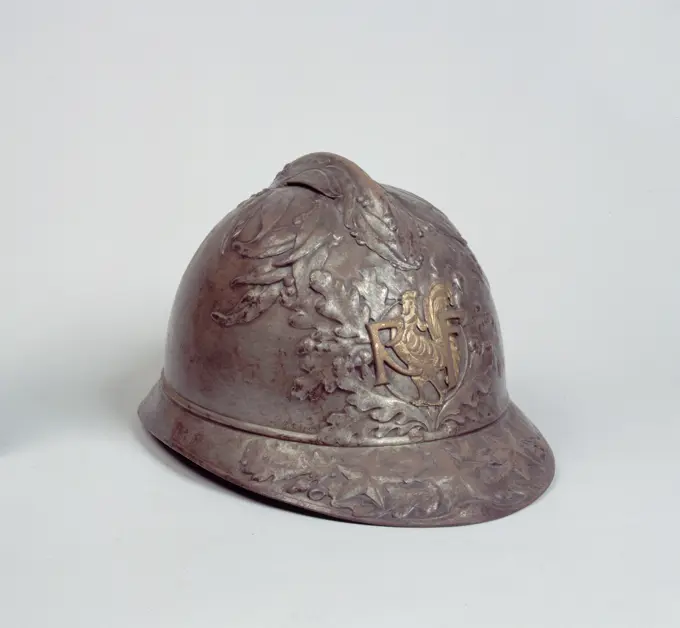
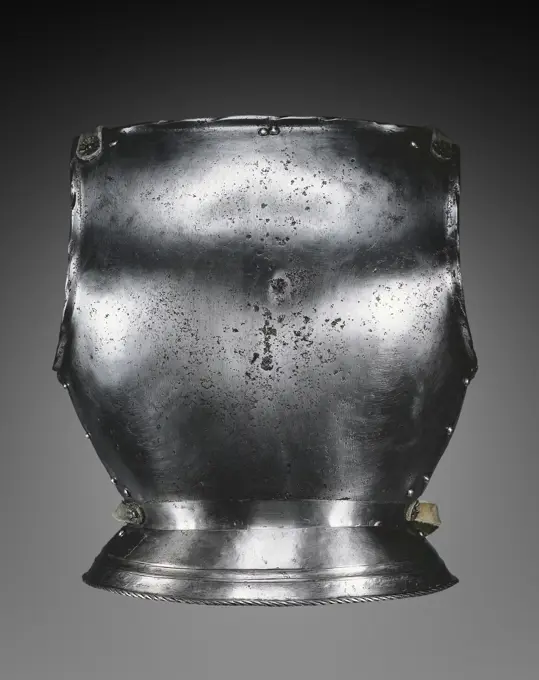
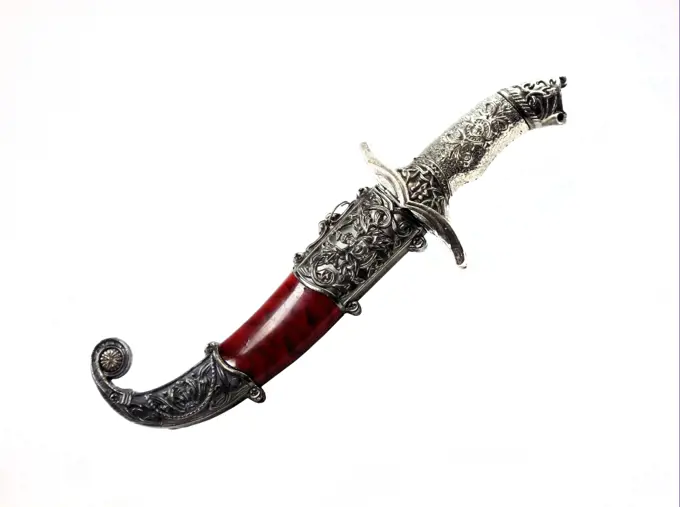
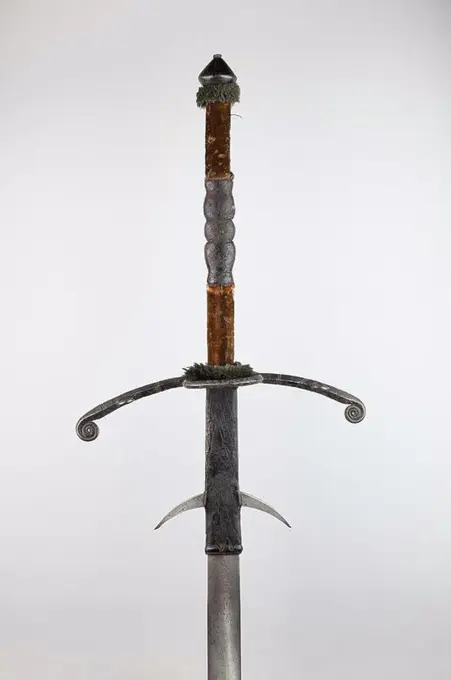
Two-Handed Sword with Scabbard. German, possibly Munich. Date: 1575-1600. Dimensions: Overall L. 169 cm (66 1/2 in.)Blade L. (including ricasso): 121.7 cm (47 7/8 in.). Steel, iron, wood, silk velvet textile, wood fiber, and leather. Origin: Munich. Museum: The Chicago Art Institute, Chicago, USA.Guarded Dagger (Katar). Culture: Indian, Thanjavur. Dimensions: L. 20 1/8 in. (51.1 cm); L. of blade 13 3/4 in. (34.9 cm); W. 3 1/2 in. (8.9 cm); D. 3 1/4 in. (8.3 cm); Wt. 22 oz. (623.7 g). Date: 17th century. Museum: Metropolitan Museum of Art, New York, USA.Sword (Kilij) and Scabbard with Baldric. Culture: Turkish. Dimensions: H. with scabbard 33 3/4 in. (85.7 cm); H. without scabbard 33 1/2 in. (85.1 cm); W. 7 in. (17.8 cm); Wt. 2 lb. 0.4 oz. (918.5 g); Wt. of scabbard 1 lb. 15.5 oz. (893 g). Date: A.H. 1242/ A.D. 1826-27. Museum: Metropolitan Museum of Art, New York, USA.Dagger (Jambiya) with Sheath 18th-19th century Moroccan. Dagger (Jambiya) with Sheath 31751Knife, 1800s. Central Africa, Democratic Republic of the Congo, 19th century. Iron, wood, copper alloy, cloth, and resin; overall: 42.6 cm (16 3/4 in.); blade: 19.8 cm (7 13/16 in.).Smallsword with Portraits of Monarchs from the Bourbon Dynasty. French. Date: 1760-1790. Dimensions: Overall L. 102.2 cm (40 1/4 in.)Blade L. 84.5 cm (33 1/4 in.)Wt. 13 oz. Iron, steel, silver, and wood. Origin: France. Museum: The Chicago Art Institute, Chicago, USA.GUARNICION DE ESPADA S XVII. Location: PRIVATE COLLECTION. MADRID. SPANIEN.Hunting Hangar with Calendar Blade. German, Munich. Date: 1534. Dimensions: L. 45.5 cm (17 7/8 in.) Blade L. 33 cm (13 in.) Wt. 1 lb. 4 oz. Steel with gilding, wood, and brass wire. Origin: Munich. Museum: The Chicago Art Institute, Chicago, USA.Arrowhead (Yanone) 18th century Japanese Although today Japanese warriors are renowned most for their swordsmanship, archery, especially from horseback, has been an essential part of samurai warfare and culture for centuries. Arrows were fitted with heads of varying shape according to their intended use in war, the hunt, or target practice. Arrowheads made for use on the battlefield incorporated different designs intended for specialized purposes such as the piercing of armor or to cause maximum damage to horses and unarmored personnel.Large arrowheads, pierced and elaborately chiseled with landscapes, birds, flowers, dragons, and Buddhist divinities, were created to be admired for the beauty of their metalwork and design rather than for use in archery. Such highly elaborate examples may have been made for presentation or as a votive offerings to a shrine.. Arrowhead (Yanone). Japanese. 18th century. Steel. Archery Equipment-ArrowheadsKarabela sabre with scabbard for the traditional attire Höfelmajer, IgnacyLandsknecht Dagger with Scabbard. German. Date: 1545-1565. Dimensions: L. 32.4 cm (12 3/4 in.)Blade L. 23 cm (9 1/16 in.)Wt. 7 oz.Scabbard L. 30.2 cm (11 7/8 in.)Scabbard Wt. 11 oz. Steel, wood, and iron. Origin: Germany. Museum: The Chicago Art Institute, Chicago, USA.Armstuk, 1499 - 1699  Arm cover, iron, white, consists of a articulated shoulder plate, upper arm pipe, an elbow hood and a forearm pipe. There is an iron buckle on the top of the shoulder plate, underneath a articulated strip. The upright is cabled and runs a roared edge around the shoulder plate with parallel. The elbow hood consists of two parts of which the tilted edges have flared up. The forearm pipe consists of two parts that can be attached to each other with two double buckles, in the lower part a pin. The inside has been painted in black. Europe whole: Iron (metal)Sword (Kris), 1800s. Java. Iron with carved wooden handle; overall: 45.2 cm (17 13/16 in.); blade: 35 cm (13 3/4 in.).Dagger (Jambiya) with Sheath 18th-19th century Moroccan. Dagger (Jambiya) with Sheath 31752Smart dagger Smart dagger of the medieval soldier. It was used for hunting Copyright: xZoonar.com/VALERY-SIBRIKOVx 20007227Guarded Dagger (Katar). Culture: Indian, Thanjavur; blade, European. Dimensions: L. 21 1/4 in. (54 cm); L. of blade 14 in. (35.6 cm); W. 4 in. (10.2 cm); D. 4 3/8 in. (11.1 cm); Wt. 22.2 oz. (629.4 g). Date: 17th century. Museum: Metropolitan Museum of Art, New York, USA.Small Sword with Masks and Figures, c. 1660-80. Hilt: Holland, blade: Germany, Solingen, 17th century. Steel; chiseling; copper wire; overall: 104 cm (40 15/16 in.); blade: 87.2 cm (34 5/16 in.); grip: 12.5 cm (4 15/16 in.); guard: 7.6 cm (3 in.).Pollaxe ca. 1480 probably French. Pollaxe 25079Helmet, Cuirass, and Pair of Arm Defenses 17th-18th century Persian. Helmet, Cuirass, and Pair of Arm Defenses 32118Outer Plate of a Forearm Defense (Vambrace) possibly ca. 1400 Italian This is part of a large find of medieval armor discovered in 1840 in the ruins of the fortress of Chalcis, on the Greek island of Euboea (then a Venetian colony called Negroponte). The fortress had been captured and destroyed by the Turks in 1470. Now divided largely between the Ethnological Museum, Athens, and The Metropolitan Museum of Art, the Chalcis hoard contains many rare and unusual elements of fourteenth- and fifteenth-century armor. Of particular importance are the variety of headpieces and the many fragments of brigandines (armor for the torso constructed of small plates riveted to layers of fabric), some of which retain portions of their original velvet covering. The Chalcis armor provides a unique picture of the armament used in the Aegean, one of the easternmost military outposts of the Venetian empire.. Outer Plate of a Forearm Defense (Vambrace) 664473Dagger (Katar). Culture: Indian, Mughal. Dimensions: L. 13 11/16 in. (34.8 cm); W. 3 1/4 in. (8.3 cm); Wt. 13.2 oz. (374.2 g). Date: 18th-19th century. Museum: Metropolitan Museum of Art, New York, USA.Smallsword Made 1640-1670 Germany. Steel and copper .Candlestick, 1800s. Antoine-Louis Barye (French, 1796-1875). Bronze; overall: 32.6 cm (12 13/16 in.).Dagger (Pesh-kabz) with Sheath 18th-19th century Afghan. Dagger (Pesh-kabz) with Sheath 31695Halberd. Culture: French. Dimensions: L. 8 ft. 6 in. (259 cm); L. of head 28 1/4 in. (71.7 cm); W. 10 1/4 in. (26 cm); Wt. 9 lbs. 6 oz. (4252.4 g). Date: dated 1712. Museum: Metropolitan Museum of Art, New York, USA.Spontoon. Culture: Dutch. Dimensions: L. 92 1/2 in. (235 cm); L. of head 12 1/4 in. (31.1 cm); W. 4 1/8 in. (10.5 cm); Wt. 2 lbs. 13.6 oz. (1292.7 g). Date: dated 1783. Museum: Metropolitan Museum of Art, New York, USA.Wheellock Rifle ca. 1663 Lienhart Has. Wheellock Rifle. German, Gmünd. ca. 1663. Steel, wood (walnut), brass, bone. Gmünd. Firearms-Guns-WheellockPartisan. Culture: British. Dimensions: L. 93 1/4 in. (236.9 cm); L. of head 15 7/8 in. (40.3 cm); W. 5 1/2 in. (14 cm); Wt. 3 lbs. 8 oz. (1587.6 g). Date: ca. 1575. Museum: Metropolitan Museum of Art, New York, USA.Glaive, 1400s. Italy, 15th century. Plain steel blade, carved wooden haft with protruding tongue of steel; overall: 158.2 cm (62 5/16 in.); blade: 14 cm (5 1/2 in.).Left Shoulder and Arm Defense. Armorer: Attributed to Wolfgang Grosschedel (German, Landshut, active ca. 1517-62); Attributed to Franz Grosschedel (German, Landshut, recorded 1555-79). Culture: German, Landshut. Dimensions: L. approx. 28 in. (71.1 cm); W. approx. 10 in. (25.4 cm); Wt. 5 lb. 6 oz. (2438.1 g). Date: ca. 1555-60. Museum: Metropolitan Museum of Art, New York, USA.Guisarme ca. 1490 Italian. Guisarme 26183Rapier Italian ca. 1560 The rapier was the principal civilian sidearm throughout the sixteenth and seventeenth centuries. Designed for cut-and-thrust fencing of progressively complex techniques, the rapier is characterized by a double-edged blade with an acute point and an elaborate guard for the hand. The guards, usually of iron or steel, were subject to a variety of embellishment. They were engraved, chiseled, gilded, damascened, and encrusted in gold and silver in keeping with fashionable styles. Unless otherwise noted, the materials, attributions, and dating given here refer to the hilts. Rapier blades, invariably of steel, bear a variety of makers marks denoting their origin in the two principal centers of blademaking, Toledo in Spain and Solingen in Germany. View more. Rapier. Italian. ca. 1560. Steel, iron, gold. SwordsUnknown photographer, Berlin city palace. Prussian imperial sword (1540/41) from the crown resore (1890): View Prachtschwert in Scheide, today Foundation Prussian Castle and Gardens Berlin-Brandenburg. Photo, 30 x 16.9 cm (including scan edges) unbek. Fotograf : Berliner Stadtschloss. Preußisches Reichsschwert (1540/41) aus dem Krontresor (1890)Iron helmet Iron helmet of the medieval knight. Very heavy headdress Copyright: xZoonar.com/ValeryxxSibrikovx 2466739Close Helmet for the Tourney Made 1550-1570 Landshut. Steel and leather .Two-Hand Sword ca. 1570 Italian, Venice. Two-Hand Sword. Italian, Venice. ca. 1570. Steel, gold, wood. Venice. SwordsCup-Hilted Rapier Made 1640-1660 Italy. Steel and iron .Sword 17th century Indian, South Indian. Sword. Indian, South Indian. 17th century. Iron. SwordsJachtdolk met mannenhoofd..Iron dagger, tapered, clanging with a double blood stuff. The head of the handle has the shape of a beard men's head, with a base as a headgear. The pearl rod is curled down on both sides with a rosette in the middle. The handle of the dagger is decorated with spiral floram motifs.Spontoon. Culture: Italian, Savoy. Dimensions: L. 92 in. (233.7 cm); L. of head 11 in. (28 cm); W. 2 in. (5.1 cm); Wt. 3 lbs. (1360.8 g). Date: 18th century. Museum: Metropolitan Museum of Art, New York, USA.Parrying Dagger 1650 Spain. Steel, iron, and wood .Ancient sabre. A smart variant of the fighting weaponBurgonet Made 1570-1600 Northern Germany. Steel .Knife, Silver, Knife in the form of a Japanese sword; handle with mottled surface, one side decorated with scene of a cat and a peony () with butterfly; other side depicts a hawk and other birds. Flat, curved blade engraved with stylized foliate decoration. Some guilding., ca. 1880, cutlery, Decorative Arts, KnifeVisored Bascinet. Culture: German. Dimensions: H. 17 in. (43.2 cm); W. 13 1/4 in. (33.7 cm); D. 13 7/8 in. (35.2 cm); Wt. 10 lb. 12 oz. (4876 g). Date: ca. 1450. Museum: Metropolitan Museum of Art, New York, USA.Armet with Mask Visor in the Form of a Rooster ca. 1530 German, probably Augsburg This helmet is remarkable for the three-dimensional figure of a rooster's head in the center of the visor, which is an outstanding example of sculpture in steel and is unprecedented even among mask visors.. Armet with Mask Visor in the Form of a Rooster. German, probably Augsburg. ca. 1530. Steel. probably Augsburg. HelmetsDagger (Jambiya) with Sheath 19th century Indian. Dagger (Jambiya) with Sheath 31448Combination Sword and Wheellock Pistol ca. 1575 German, Saxony. Combination Sword and Wheellock Pistol. German, Saxony. ca. 1575. Steel, wood, shark skin. Saxony. Combination WeaponsHalberd ca. 1590-1600 Italian. Halberd 21946Przeszo PrzyszociHunting cordlasIron helmet Iron helmet of the medieval knight. Very heavy headdress. Copyright: xZoonar.com/ValeryxxSibrikovx 2449719Rapier German ca. 1610 The rapier was the principal civilian sidearm throughout the sixteenth and seventeenth centuries. Designed for cut-and-thrust fencing of progressively complex techniques, the rapier is characterized by a double-edged blade with an acute point and an elaborate guard for the hand. The guards, usually of iron or steel, were subject to a variety of embellishment. They were engraved, chiseled, gilded, damascened, and encrusted in gold and silver in keeping with fashionable styles. Unless otherwise noted, the materials, attributions, and dating given here refer to the hilts. Rapier blades, invariably of steel, bear a variety of makers marks denoting their origin in the two principal centers of blademaking, Toledo in Spain and Solingen in Germany. View more. Rapier. German. ca. 1610. Steel, copper wire. SwordsHelmet 19th century Indian. Helmet 32133Sword (Shamshir). Culture: Indian. Dimensions: H. 29 1/8 in. (74 cm); W. 3 7/8 in. (9.8 cm); D. 2 1/4 in. (5.7 cm); Wt. 1 lb. 13 oz. (822.1 g). Date: A.H. 1125/ A.D. 1713. Museum: Metropolitan Museum of Art, New York, USA.Hand-and-a-Half Sword, c. 1550. Germany, mid-16th century. Steel, blued pommel and quillions, leather grip; overall: 123.9 cm (48 3/4 in.); blade: 92.3 cm (36 5/16 in.); quillions: 24.8 cm (9 3/4 in.); grip: 30.5 cm (12 in.).Scandinavian Viking weapons including a spiked axe, hand axe and sword. 10th century ADClose Helmet for the Tourney. Culture: German, Augsburg. Dimensions: H. 11 in. (27.9 cm); W. 8 13/16 in. (22.4 cm); D. 12 in. (30.5 cm); Wt. 8 lb. (3629 g). Date: late 16th century.The tourney was a mock combat fought in an open field between two groups of mounted contestants armed with blunted lances and swords. Armor for the tourny usually was similar to that used in battle, with the addition of specialized reinforcing plates. This helmet retains its original silk-covered padded lining and canvas straps for adjusting the lining to the head. Museum: Metropolitan Museum of Art, New York, USA.Halberd of Christian I (reigned 1586-91) or Christian II of Saxony (reigned 1601-11) ca. 1590-1610 German This staff weapon was carried by the bodyguards of the Prince-Electors of Saxony.. Halberd of Christian I (reigned 1586-91) or Christian II of Saxony (reigned 1601-11). German. ca. 1590-1610. Steel, gold, wood. Shafted WeaponsDagger with Sheath. Culture: Caucasian. Dimensions: L. with sheath 21 in. (53.3 cm); L. without sheath 19 15/16 in. (50.6 cm); L. of blade 15 in. (38.1 cm); W. 1 5/16 in. (3.3 cm); D. 1 1/16 in. (2.7 cm); Wt.13.5 oz. (382.7 g); Wt. of sheath 8.5 oz. (240.9 g). Date: early 19th century. Museum: Metropolitan Museum of Art, New York, USA.Helmet for a Harquebusier ca. 1610-20 Dutch or British, later modified in Japan The rich decoration of this helmet is exceptional, covering it completely with wide bands of chiseled and punched floral designs alternating in silver and gold. Although it was once believed that its neck plate, cheekpieces, plume holder and lining were later restorations, futher study has confirmed that they are genuine and original to the helmet. In its quality and elaborate ornament, this helmet is similar to a Dutch armor in the Tower of London, which was made in 1612 for Henry, Prince of Wales.. Helmet for a Harquebusier 26438Right Poleyn (Knee Defense) from an Armor of Claude Gouffier (1501-1570). Culture: French. Dimensions: H. 5 1/4 in. (13.3 cm); W. 6 in. (15.2 cm). Date: ca. 1555-60.This is the only known fragment from what once must have been a magnificent French parade armor. The knee (or poleyn) consists of a main plate covering the kneecap with a heart-shaped wing on the outer side, with a portion of the lame above and a deep downward-overlapping lame below. This last has a turned and boldly roped lower edge, suggesting that it was the terminal lame of a long articulated tasset that extended from the waist to the knee, a type with which no lower leg defenses were worn. Armor so constructed followed Italian prototypes and was typically worn by the light cavalry. Its embossed and gilt decoration, consisting of dense foliate scrollwork and a grotesque mask with ram's horns (fig. 2) at the front of the main plate, recalls the ornamental motifs and workmanship of the Museum's armor of Henry II of FrancSiege Helmet ca. 1650-1700 French Wearing this extremely thick, heavy helmet could not have been comfortable. The adjustable face defense alone weighs almost four pounds. The shallow dent at the front of the bowl is a proofmark. The form of the bowl is curiously archaic, recalling sallets of the fifteenth century (for example, acc. nos. 04.3.230 and 29.158.3a), whereas the sliding nasal--an Oriental innovation--is reversed, so that the enlarged finial has become the principal face defense (see acc. no. 14.25.601 for a typical sliding nasal). The bowl and face defense are both stamped with the number 21, indicating that the helmet was part of a series.. Siege Helmet. French. ca. 1650-1700. Steel. HelmetsIron helmet Iron helmet of the medieval knight. Very heavy headdress Copyright: xZoonar.com/ValeryxxSibrikovx 2460687Knife (Kukri) with Sheath, Small Knife and Pouch. Culture: Indian or Nepalese, Gurkha. Dimensions: Knife (a); H. with sheath 17 3/8 in. (44.1 cm); H. without sheath 17 3/8 in. (44.1 cm); W. 3 in. (7.6 cm); Wt. 1 lb. 15.1 oz. (881.7 g); sheath (b); Wt. 4.1 oz. (116.2 g); small knife (c); H. 5 3/16 in. (13.2 cm); W. 1 1/4 in. (3.2 cm); Wt. 1.6 oz. (45.4 g). Date: 19th century. Museum: Metropolitan Museum of Art, New York, USA.Scissors, Steel, A pair of steel scissors with a decorative handle. The handle is an intricate design including two lions on hind legs against a shield. Below the shield are the thumb holes to use the scissors., London, England, ca. 1851-75, metalwork, Decorative Arts, ScissorsCrinet Plate Belonging to an Armor for Field and Tournament Made for Duke Nikolaus "The Black" Radziwill (1515-1565), Duke of Nesvizh and Olyka, Prince of the Empire, Grand Chancellor and Marshal of Lithuaniac. Armorer: Kunz Lochner (German, Nuremberg, 1510-1567). Culture: German, Nuremberg. Dimensions: H. 2 3/8 in. (6 cm); W. 10 5/8 in. (27 cm); D. 6 5/16 in. (16 cm); Wt. 8 oz. (236 g). Date: ca. 1555. Museum: Metropolitan Museum of Art, New York, USA.Szyszak husarskiLobster-Tail Burgonet. Culture: possibly British. Dimensions: H. including nasal 11 1/4 in. (28.6 cm); H. excluding nasal 9 1/2 in. (24.1 cm); W. 14 1/2 in. (36.8 cm); D. 15 3/8 in. (39.1 cm); Wt. 3 lb. 2 oz. (1415 g). Date: 17th century. Museum: Metropolitan Museum of Art, New York, USA.Close Helmet for Tournament on Foot Made 1570-1610 Milan. Steel .Buzdygan with a spearKnife with Sheath 19th century Philippine, Moro. Knife with Sheath. Philippine, Moro. 19th century. Steel, wood, copper, silver. Sulu. DaggersPrehistory, France, Bronze Age. Bronze helmet, height cm. 31. From Chalon-sur-Saone.Prehistory, Italy, Bronze Age. Bronze fibulas.Barbute ca. 1470-80 Pietro da Castello Italian Most Italian barbutes have a T-shaped face opening. The rounded eye openings and pointed nasal of this helmet are very unusual. It is stamped with two marks, a castle and the letter P beneath a split cross, identified as the armorer Pietro da Castello (documented in Brescia from 1469 to 1486, died before 1498).. Barbute. Italian, Brescia. ca. 1470-80. Steel. Brescia. HelmetsHalberd-Partisan ca. 1620 possibly Flemish. Halberd-Partisan 26087Cavalry Sword, c. 1700-30. Germany, Saxony, 18th century. Steel (vestiges of blueing and gilding on hilt); wire grip; overall: 105 cm (41 5/16 in.); blade: 105 cm (41 5/16 in.); grip: 14.5 cm (5 11/16 in.); guard: 11 cm (4 5/16 in.).One dagger and two axes isolated on whiteDagger (Katar) with Sheath. Culture: Indian. Dimensions: L. with sheath 11 9/16 in. (29.4 cm); L. without sheath 11 in. (27.9 cm); W. 2 1/4 in. (5.7 cm); Wt. 7.1 oz. (201.3 g); Wt. of sheath 2 oz. (56.7 g). Date: 18th century. Museum: Metropolitan Museum of Art, New York, USA.Basket-Hilted Broadsword Made 1740-1760 Stirling. Steel, iron, copper, textile, and leather . Walter AllanKnife (Piha Kaetta) with Sheath 18th-19th century Sri Lankan. Knife (Piha Kaetta) with Sheath 31552Cabasset, c. 1570. Italy, 16th century. Steel, black paint, brass rosette rivets; overall: 18.4 x 25.7 x 21.6 cm (7 1/4 x 10 1/8 x 8 1/2 in.).Archer's Sallet. Spanish. Date: 1460-1500. Dimensions: H. 21.6 cm (8 1/2 in.). Steel. Origin: Spain. Museum: The Chicago Art Institute, Chicago, USA.Baton. Wood and silver. Detail. Spanish Empire. Viceroyalty of Peru. 17th century. Peru. Museum of the Americas. Madrid, Spain.Bascinet. Culture: German. Dimensions: H. 12 3/4 in. (32.4 cm); W. 9 in. (22.9 cm); D. 14 in. (35.6 cm); Wt. 5 lb. 14 oz. (2665 g). Date: probably 19th century. Museum: Metropolitan Museum of Art, New York, USA.BACULO DE LIMOGES - SIGLO XII. Location: CATEDRAL-INTERIOR. Toledo. SPAIN. SAN MIGUEL.Bayonet to the rifle, isolated on a white background, with clipping path Bayonet model 1891 to the rifle Mauser model 1891 Bayonet produced for the Army, Navy and Police of Argentina in Germany. Bayonets were made the company Weyersberg, Kirschbaum Cie in Solingen. Copyright: xZoonar.com/OleksandrxKostiuchenkox 3882320Knife (Bade-bade) 16th-19th century Sumatran, Acheen. Knife (Bade-bade) 31670medieval metal helmet props warrior head protectionMaximilian Armet German ca. 1525Armour Armour of the medieval knight. Metal protection of the soldier against the weapon of the opponent Copyright: xZoonar.com/ValeryxxSibrikovx 2415908Saws with a bow-frame. For use during amputations amongst other things. From England, 1651-1880.smart dagger smart dagger of the medieval soldier. It was used for hunting Copyright: xZoonar.com/ValeryxxSibrikovx 6664350PUÑAL DE ANTENAS. Location: PRIVATE COLLECTION. SANTIAGO DE COMPOSTELA. A CORUÑA. SPANIEN.Rüstung Armour of the medieval knight. Metal protection of the soldier against the weapon of the opponent Copyright: xZoonar.com/ValeryxxSibrikovx 2494315Burgonet (Zischägge) ca. 1560-70 German Made in Germany at a time of ongoing struggle with, and yet widespread fascination for, the Ottoman Empire, this horsemans helmet is a singularly well-preserved example of a distinctive style of central European armor that was directly inspired by Islamic prototypes. Known as a Zischägge, it is formed and constructed in the Ottoman fashion and as such stands as a splendid counterpart to a fine Turkish-made example in the Metropolitan Museums collection (acc. no. 04.3.456a). Probably intended for export to Hungary, or an adjacent territory similarly in direct contact with the Ottomans, it is sturdily constructed of steel plates that have been skillfully etched and gilded overall with Moresque designs and scrolling foliage.The helmet is remarkable for the quality of the etched ornamentation and the condition of its gilding, which is preserved on all of its elements. It also is one of the few surviving Zischägge that are nearly complete, as it onlGeorges Capon (1890-1980). Headset in rejected and chiseled steel, 1918. Object of art. Museum of Fine Arts of the City of Paris, Petit Palais. 31956-8 Steel, French army, military helmet, chisel, rooster, military equipment, general, art object, first world war, repeller, French republic, acronymBackplate, c.1510-30. Germany, 16th century. Steel with black paint, leather straps; overall: 38 x 35.5 cm (14 15/16 x 14 in.).Traditional Arab dagger isolated on white background.Shaffron 1550-1600 Italy. Chivalryówith its connotation of the knightly idealówas intimately connected with the horse (cheval in French). A knight took care to protect his mount, on which he was dependent for the mobility and speed required in both attack and retreat. In Roman times, some heavy cavalry used armor made of iron or bronze scales to protect their horses. From the twelth century on, knights covered their steeds in bands of iron mail (a network of interlocking rings). By the fifteenth century, full-plate armors were not uncommon. This shaffron, or headpiece, is etched in gilt bands with decoration on a finely dotted ground. Riveted between the eyes is an elongated conical spike, perhaps inspired by the horn of the mythical unicorn. A manifestation of great power and wealth, the shaffron has been valued for centuries as an object of beauty, not just as a tool of warfare and sport.. Steel with gilding .