Historical Bladed Weapons

An array of ornate historical bladed weapons including swords and daggers from various cultures, highlighting intricate designs and rich materials.
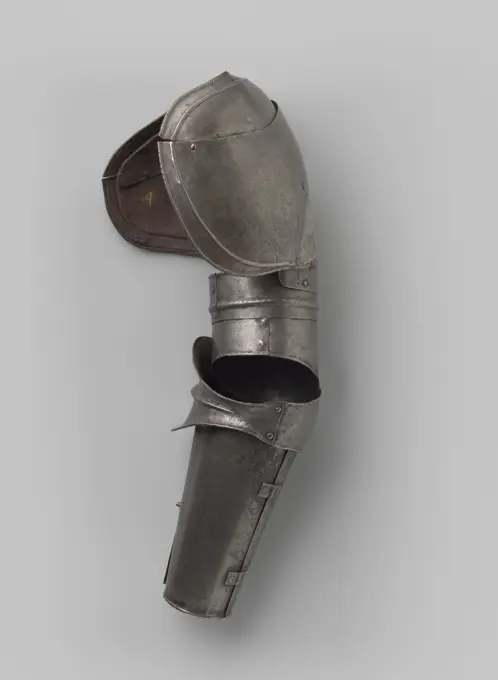
Armstuk, 1499 - 1699  Arm cover, iron, white, consists of a articulated shoulder plate, upper arm pipe, an elbow hood and a forearm pipe. There is an iron buckle on the top of the shoulder plate, underneath a articulated strip. The upright is cabled and runs a roared edge around the shoulder plate with parallel. The elbow hood consists of two parts of which the tilted edges have flared up. The forearm pipe consists of two parts that can be attached to each other with two double buckles, in the lower part a pin. The inside has been painted in black. Europe whole: Iron (metal)
Armstuk, 1499 - 1699 Arm cover, iron, white, consists of a articulated shoulder plate, upper arm pipe, an elbow hood and a forearm pipe. There is an iron buckle on the top of the shoulder plate, underneath a articulated strip. The upright is cabled and runs a roared edge around the shoulder plate with parallel. The elbow hood consists of two parts of which the tilted edges have flared up. The forearm pipe consists of two parts that can be attached to each other with two double buckles, in the lower part a pin. The inside has been painted in black. Europe whole: Iron (metal)
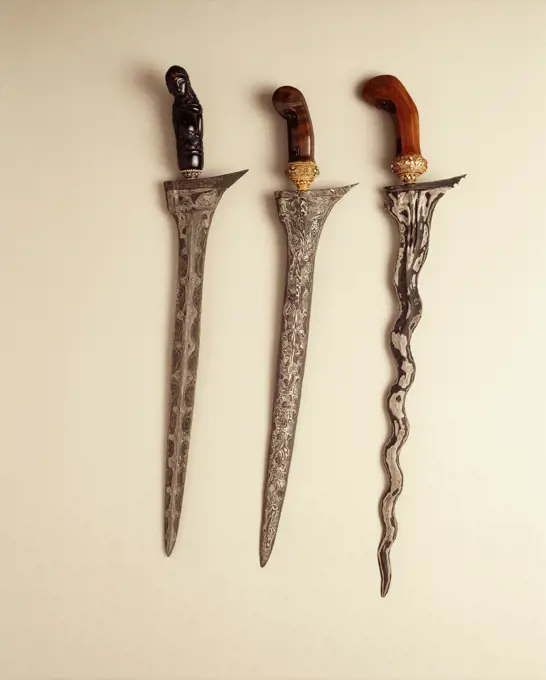
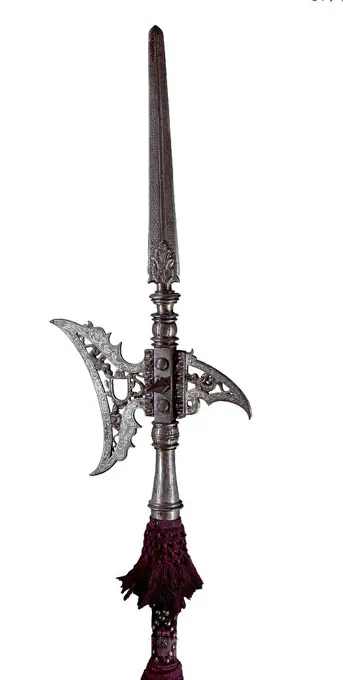
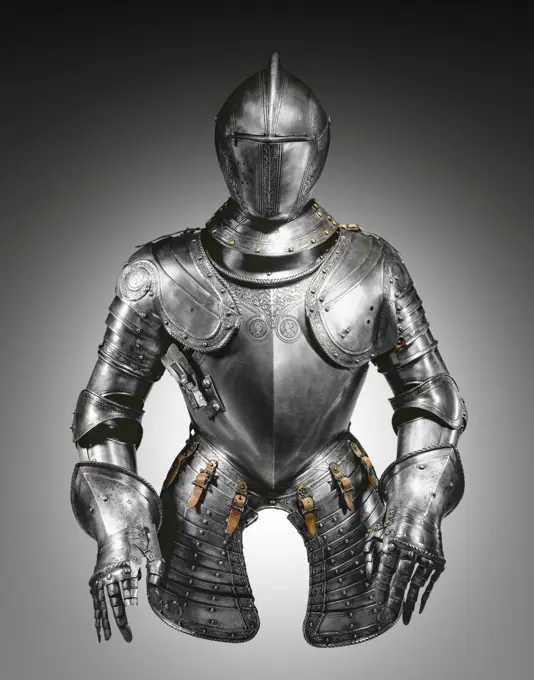
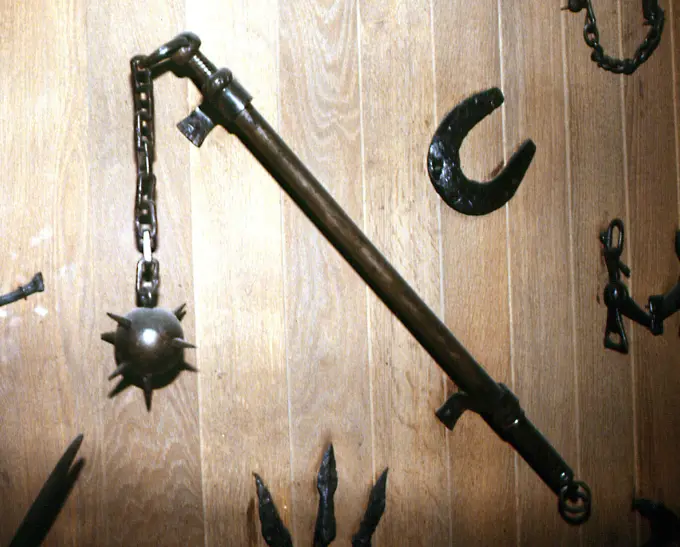
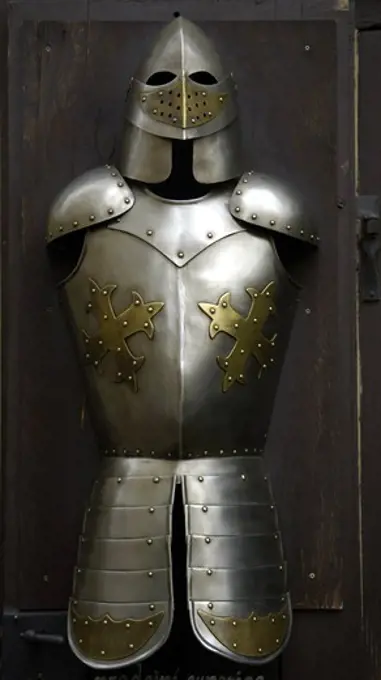
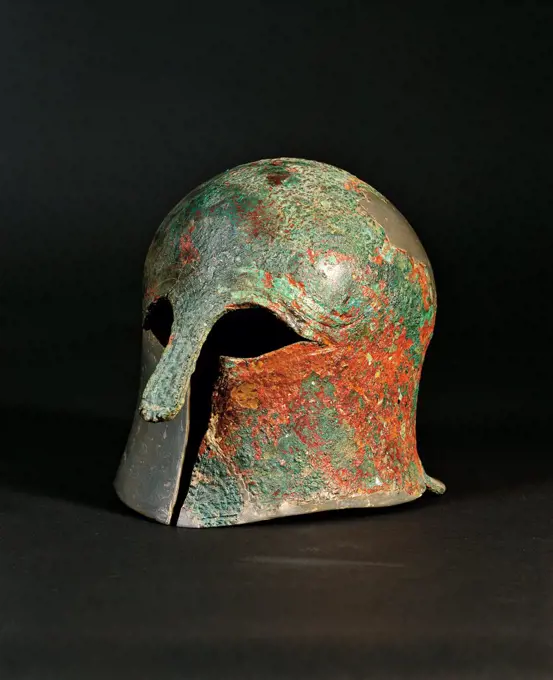
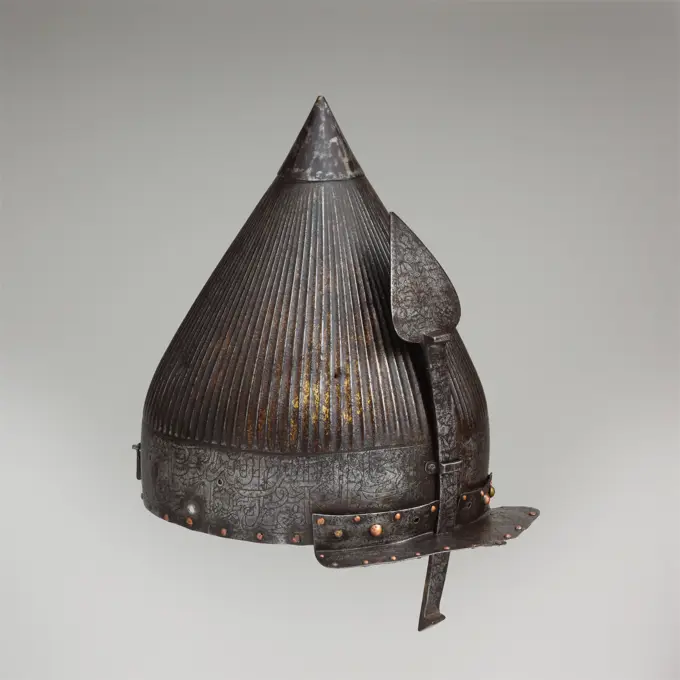
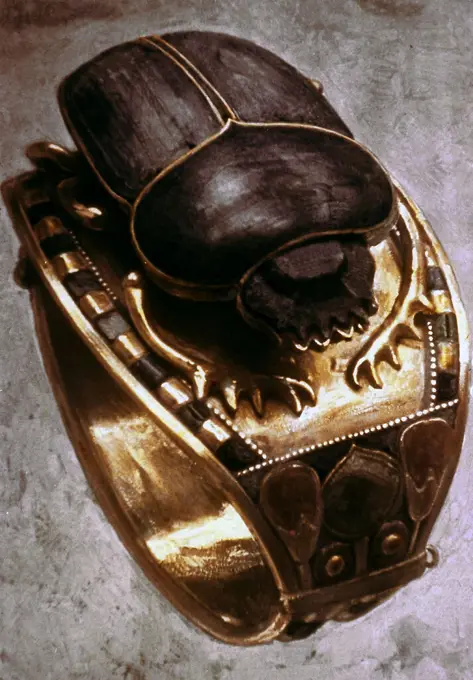
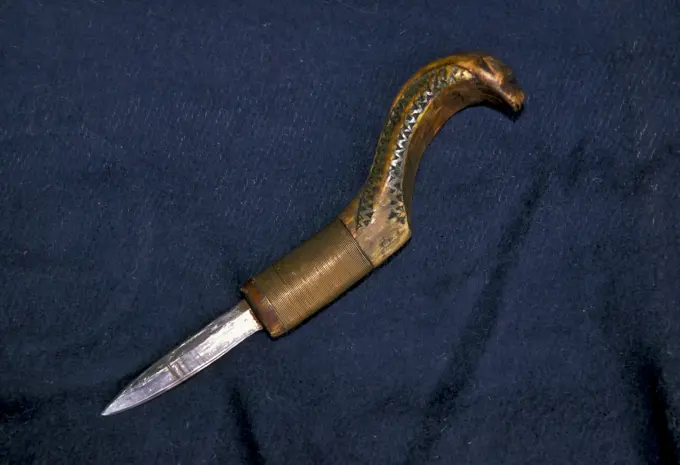
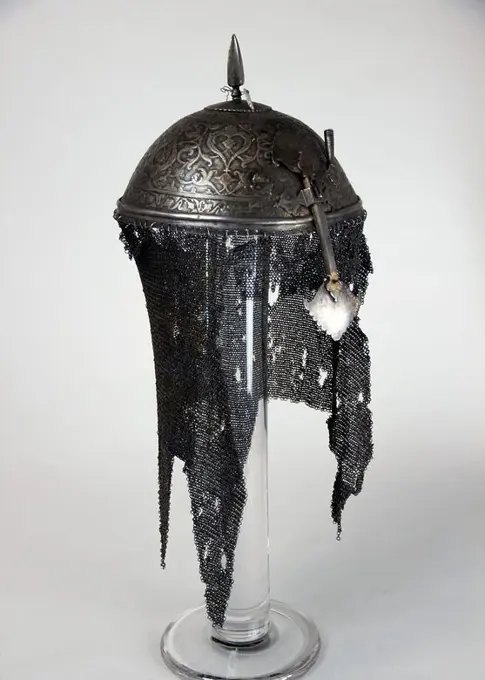
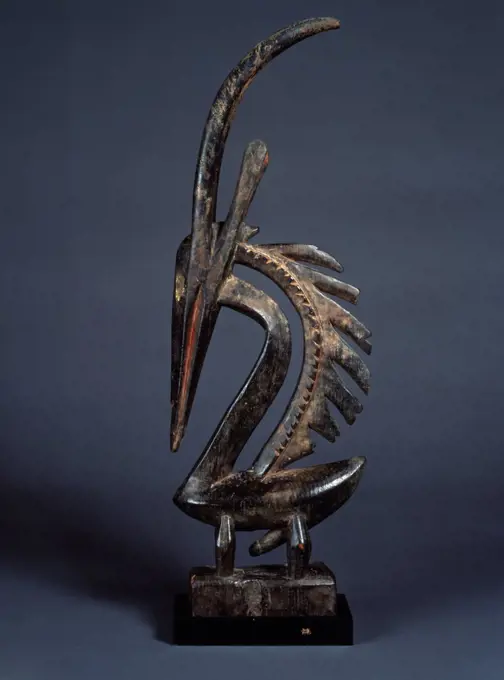
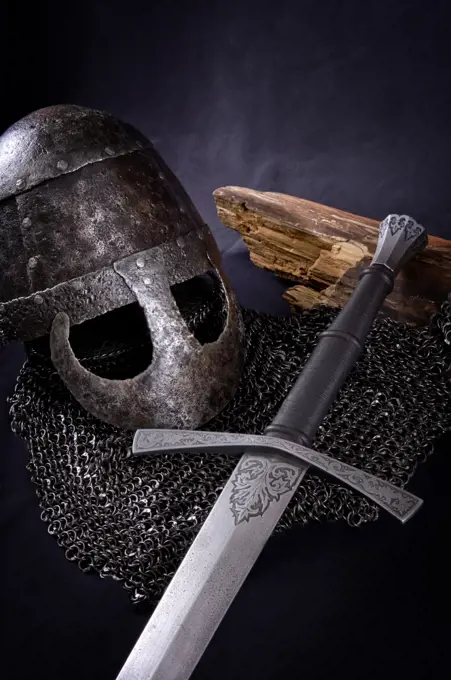
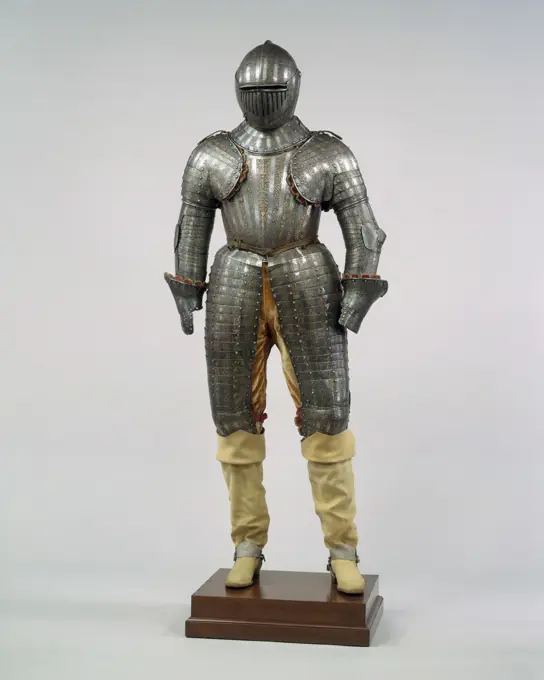
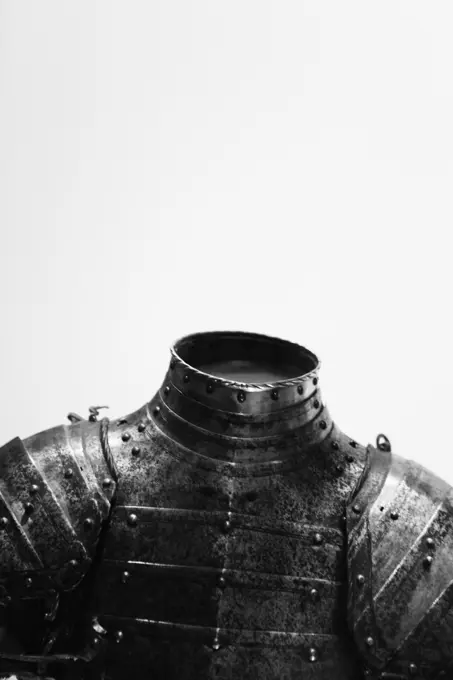
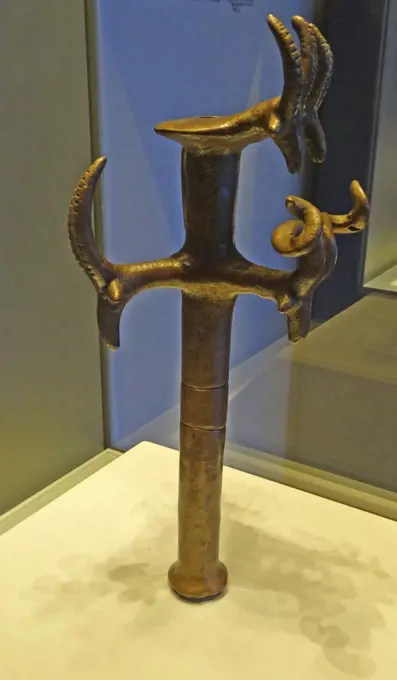
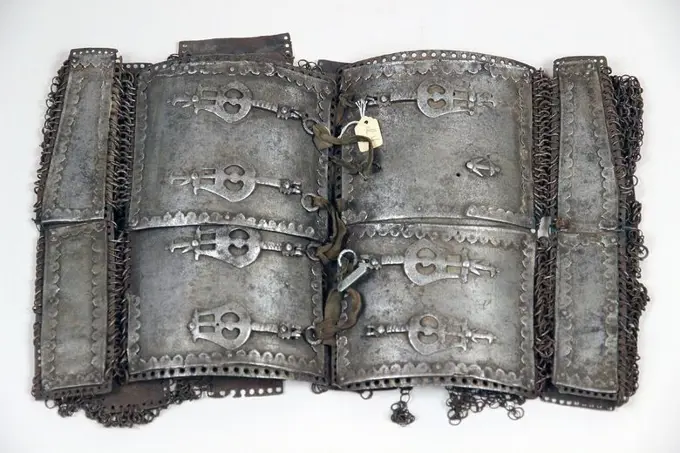
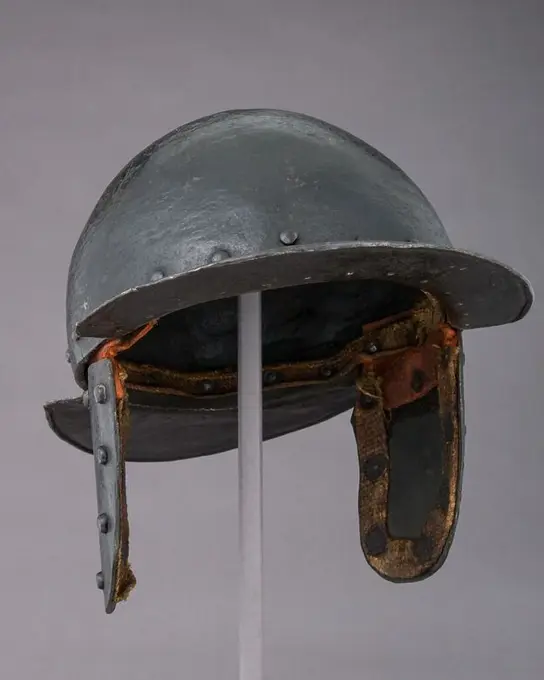
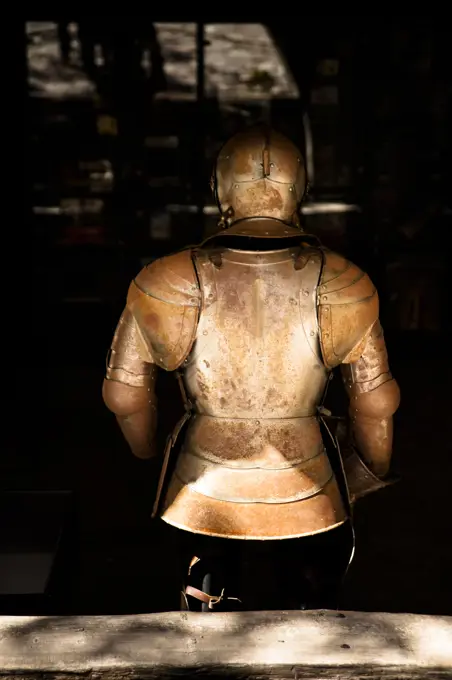
Demi Shaffron Made 1550-1600 Germany. Steel, pewter, and leather .Iron helmet Iron helmet of the medieval knight. Very heavy headdress Copyright: xZoonar.com/ValeryxxSibrikovx 2454233Morions. Type of helmet, 16th century. Armoury. Grandmaster Palace. Valletta. Malta.War Hat 1450-1500 probably Italian Although very few survive today, war hats of this general type were one of the most popular forms of infantry helmets throughout western Europe for much of the fifteenth century.. War Hat. probably Italian. 1450-1500. Steel, copper alloy. HelmetsJavanese Kris. Java, Indonesia.ALABARDA - S XVIII. Location: PALACIO REAL-REAL ARMERIA DE MADRID. MADRID. SPANIEN.Half-Suit of Armor for the Field, c. 1575. North Italy, Brescia (), 16th century. Steel with etched decorative bands and roundels; Decoration was critical to fine armor, and etching was the most commonly used technique. Here, the bands along the borders are etched. On the breastplate, pauldrons (shoulder guards), and tassets (hip and upper leg guards), etched medallions enclose profile busts reminiscent of ancient Roman portraits. The lance rest on the breastplate indicates that this half-suit was once part of a complete field armor for man and horse. The etching technique used for armor was developed in the late 1400s. The metal surface was first coated with an acid-resistant substance, such as wax or varnish. An etching needle was then used to scratch a design into the surface. The exposed areas were then treated with an acid that would "bite" or etch the lines into the metal. When the coating was removed, the etched design was blackened for contrast.Sword (Arivl) South Indian possibly 16th century View more. Sword (Arivl). South Indian. possibly 16th century. Steel. Kerala. SwordsKnife with Sheath. Culture: Indonesian, Sulawesi (possibly the Philippines). Dimensions: L. with sheath 6 1/4 in. (15.9 cm); L. without sheath 5 1/2 in. (14 cm); W. 1 3/4 in. (4.5 cm); Wt. 0.8 oz. (22.7 g); Wt. of sheath 0.5 oz. (14.2 g). Date: 18th-19th century. Museum: Metropolitan Museum of Art, New York, USA.Ball and Chain mace. 14th cent. Chillon Castle, Switzerland. Medieval period.Close-up of an armor suitKris 18th-19th century Philippine, Jolo. Kris. Philippine, Jolo. 18th-19th century. Steel, ivory, horn, silver, cord. Sulu. KrissesArmento. Apulian-Corinthian metal helm (Armento. Elmo apulo-corinzio), 6th Century a.D.Helmet 16th century Turkish The inscription around the rim, a verse from the Koran known as the Victory Sura (48:1-4), includes the phrase: "Verily, we have granted thee a manfiest victory." Verses from this sura were used frequently on Ottoman armor and weapons in the sixteenth century.. Helmet 32046ESCARABAJO EN LAPIZLAZULI Y ORO-TESORO TUTANKAMON. Location: EGYPTIAN MUSEUM. KAIRO. EGYPT.A great bacinet Helmet, the first helmets to be worn with a complete suit of plate armour. Dated 15th CenturyBurgonet. German, Nuremberg. Date: 1550-1570. Dimensions: H. 24.9 cm (9 7/8 in.). Steel. Origin: Nuremberg. Museum: The Chicago Art Institute, Chicago, USA.The Shawnee valued any trade item made from metal such as this steel hole punch awl with decorative wooden handleHead of a Viking warrior. National Historical Museum, Stockholm.Helmet and Cuirass. Culture: Indian. Dimensions: Helmet (a); H. including mail 18 1/2 in. (47 cm); H. including nasal 8 3/4 in. (22.2 cm); H. excluding mail and nasal 5 3/4 in. (14.6 cm); W. 8 in. (20.3 cm); D. 8 1/2 in. (21.6 cm); Wt. 2 lb. 0.8 oz. (929.9 g); cuirass panel (b); H. 10 3/4 in. (27.3 cm); W. 8 1/4 in. (21 cm); D. 1 1/2 in. (3.8 cm); Wt. 1 lb. 9.5 oz. (722.9 g); cuirass panel (c); H. 10 1/4 in. (26 cm); W. 6 1/4 in. (15.9 cm); D. 2 in. (5.1 cm); Wt. 1 lb. 13.3 oz. (547.1 g); cuirass panel (d); H. 11 in. (27.9 cm); W. 8 1/2 in. (21.6 cm); D. 1 1/2 in. (3.8 cm); Wt. 1 lb. 7.7 oz. (671.9 g); cuirass panel (e); H. 10 1/4 in. (26 cm); W. 6 3/4 in. (17.1 cm); D. 1 7/8 in. (4.8 cm); Wt. 1 lb. 1 oz. (481.9 g). Date: 18th-19th century. Museum: Metropolitan Museum of Art, New York, USA.Mauritanian dagger and Tuareg dagger, Corral del Carbón, "al-fundaq al-yadida", 14th century, Granada, Andalusia, Spain.Banbara male antelope headdress, from Chi'wara, Keredougou District, England, London, Christie's Images, Primitive ArtIron helmet of the medieval knight. Very heavy headdressArmor for a Member of the Barberini Family armor, ca. 1623-30; spurs, early 17th century armor, Italian, Milan; spurs, French This armor is a deluxe version of a typical cuirassiers armor, worn by heavy cavalry armed with sword and pistols. Its rich ornament and light weight, however, indicate that it was designed primarily for ceremonial wear and as a symbol of martial status.The punched and chiseled decoration is characteristic of elaborate Milanese armor of the early seventeenth century. The designs include numerous crowned ovals enclosing bees, the badge of the Barberini, one of Romes most powerful families. The Barberini rose to prominence, wealth, and power with the election of Maffeo Barberini as Pope Urban VIII in 1623. Presumably, this armor was made for the ranking secular member of the family, either Carlo (1562-1630) or his son Tadeo (1603-1647). The popes brother, Carlo was general of the papal armies and duke of Monterotondo from 1623 and prince of Palestrina from 1629samurai swordsClose-up of headless body armor.Halberd of Emperor Matthias (reigned 1612-19) dated 1612 German This halberd is signed with the initials BS and HRM, perhaps of the decorators. It was carried by the bodyguards of the Holy Roman Emperor Matthias (reigned 1612-19).. Halberd of Emperor Matthias (reigned 1612-19) 22210Sceptre from the Cave of Treasure, Nahal Mishmar, Judean Desert from over 6,500-5,500 years ago. Made from copper.Hardhats, gloves and goggles on blackCuirass. Culture: Indian. Dimensions: laid flat, H. 11 in. (27.9 cm); W. 36 in. (91.4 cm); Wt. 5 lbs. 5.1 oz. (2412.5 g). Date: 18th century. Museum: Metropolitan Museum of Art, New York, USA.Opium Pipe, 1800s. China, Qing dynasty (1644-1911). Imitation tortoise-shell with gilt silver and silver decoration; overall: 62 cm (24 7/16 in.).Stand for signal rockets, 1935 motif: Stand for signal rockets.mask The photo shows a mask, shield and swords Copyright: xZoonar.com/AlekseyxKorneevx 7882221Viking helmet, ax and chain mail, ScandinaviaWar weapons in Udaipur, Rajasthan, India Copyright: xArunxMishra/DinodiaxPhotoxA medieval knights armor shining in the sunlightA close-up of an ancient carved sword against painted background. A closeup view of the handle and the blade design of a Slavic dagger from 19th century.
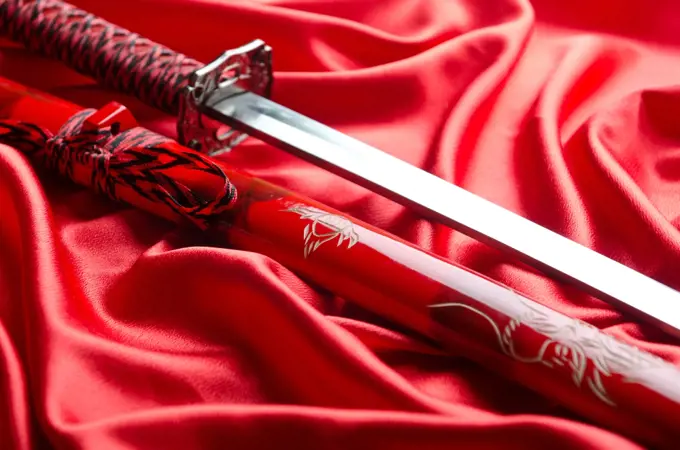
 Three swords with rope bound handle and jeweled baseJapanese sword takana on red satin backgroundSiege Helmet. Culture: French. Dimensions: H. 10 15/16 in. (27.8 cm); W. 10 1/8 in. (25.7 cm); D. 15 1/2 in. (39.4 cm); Wt. 15 lb. 14 oz. (7201 g). Date: 17th-18th century. Museum: Metropolitan Museum of Art, New York, USA.Japanese sword takana on red satin backgroundMUSEO - MANIQUI CON UNIFORME DE ARTILLERIA. Location: ALCAZAR-INTERIOR. SEGOVIA. SPAIN.