Historical Bladed Weapons

A collection of antique weapons including knives and poleaxes, showcasing intricate designs from different cultures and centuries, displayed against neutral backgrounds.

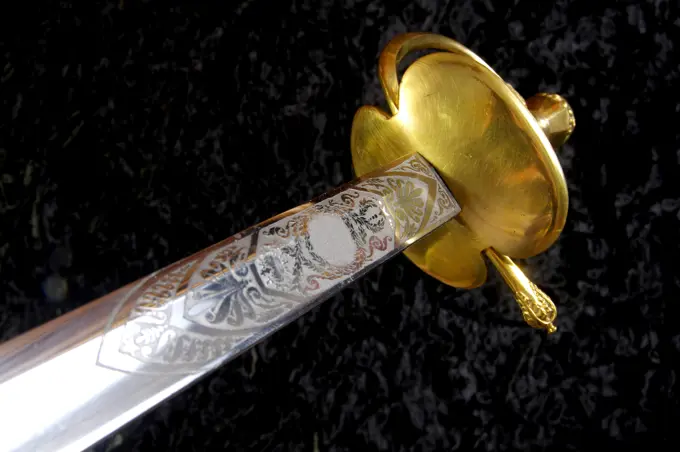
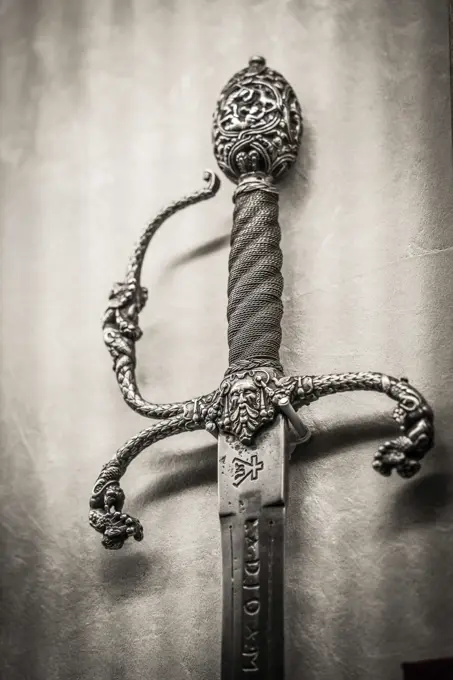
Sword - Type d'arme utilisée par les mousquetaires.
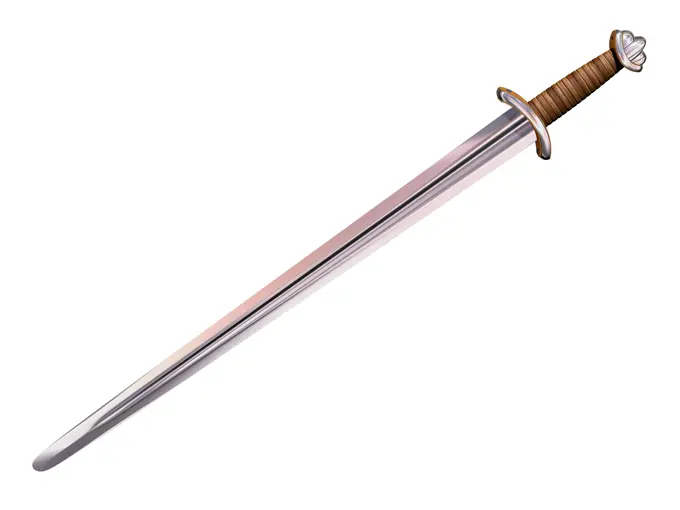
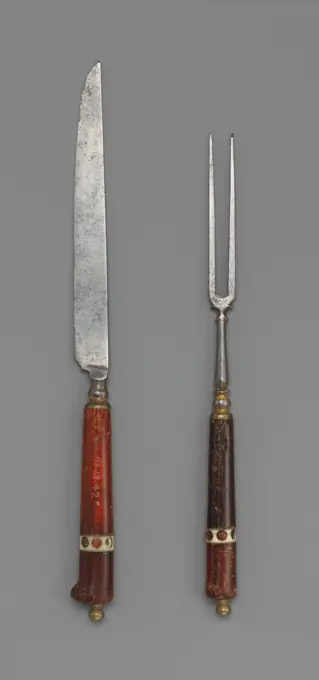
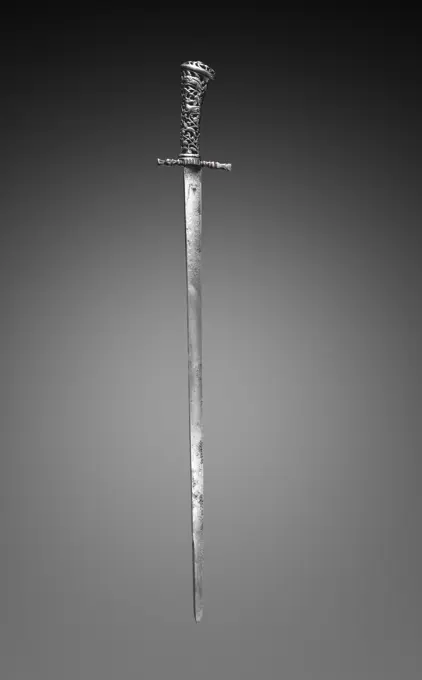
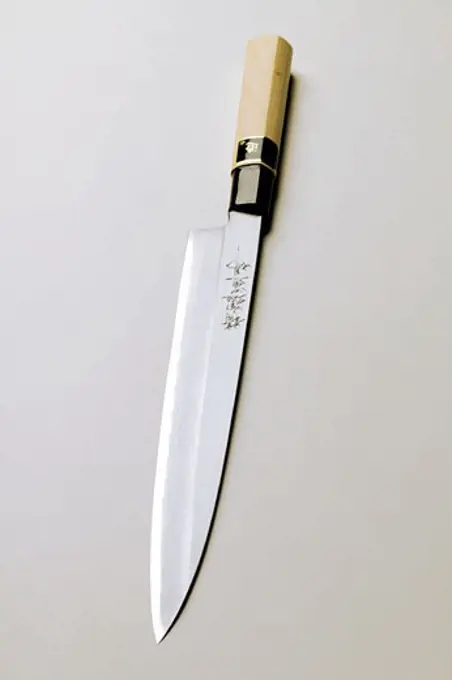
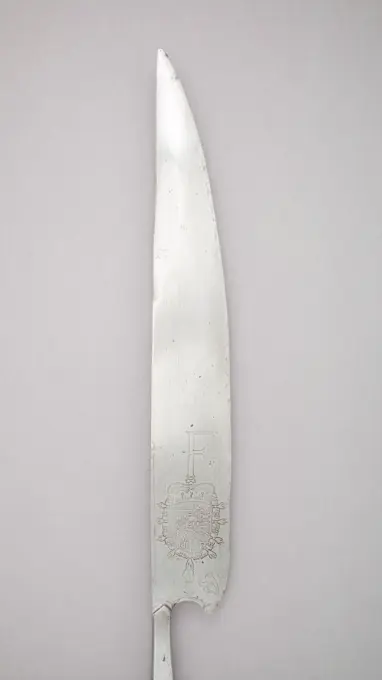
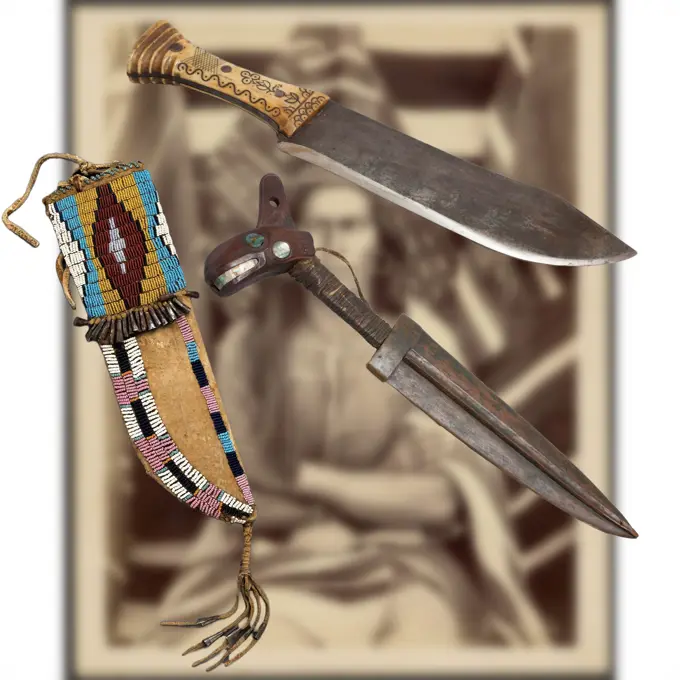
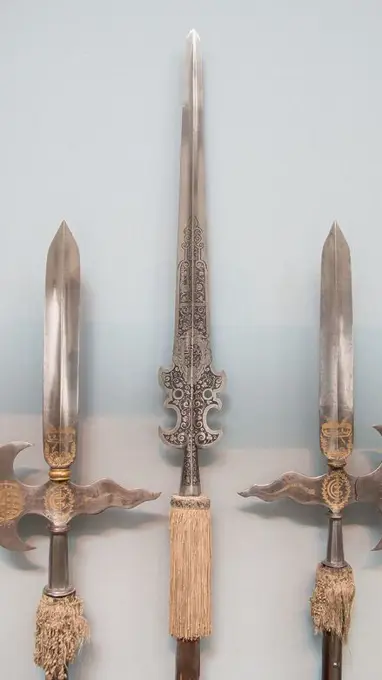
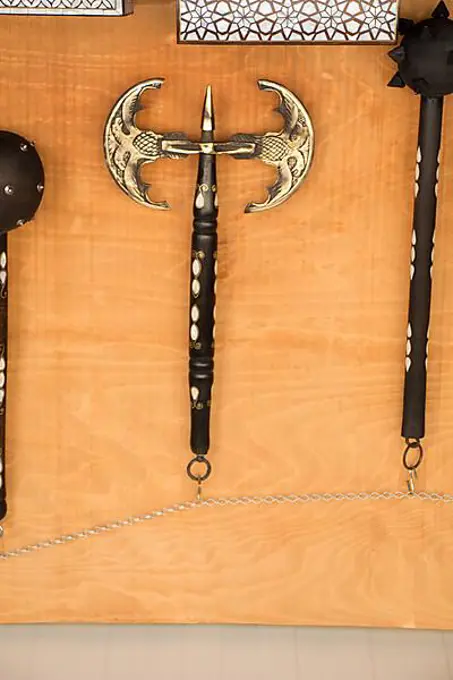
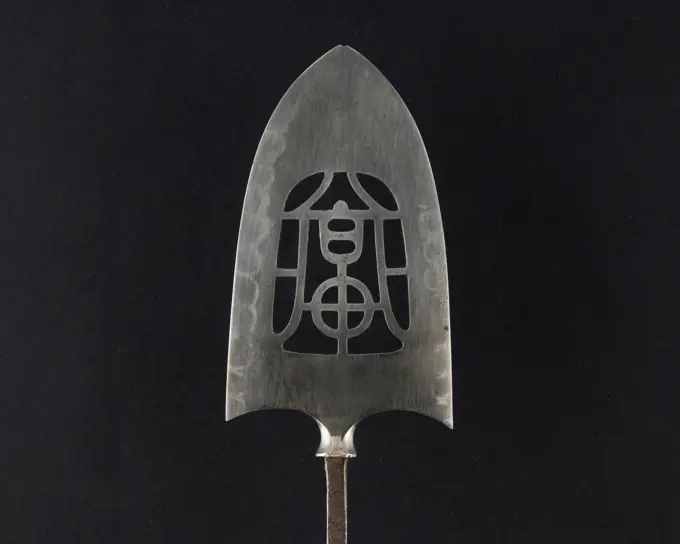
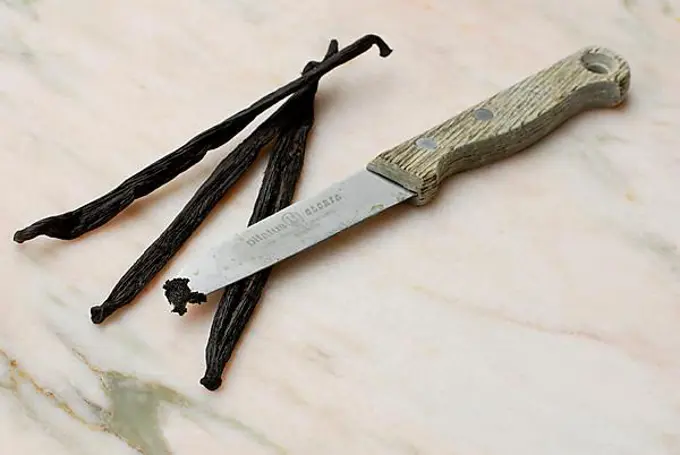
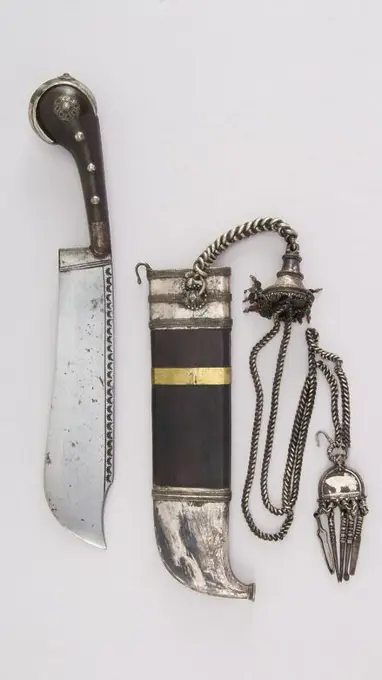
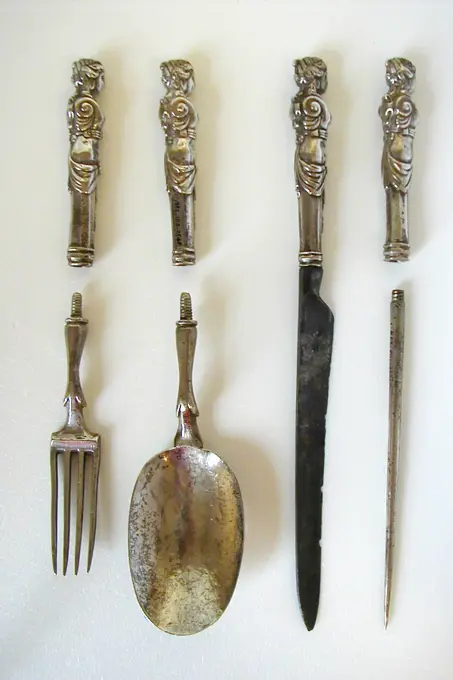
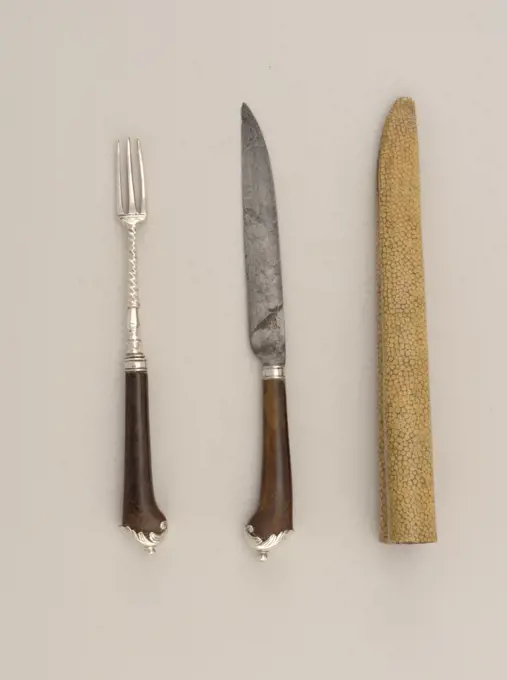
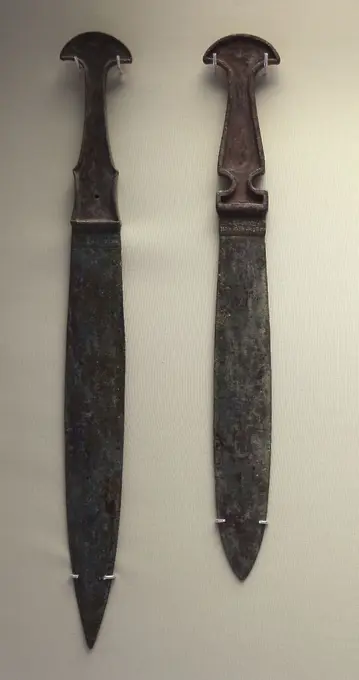
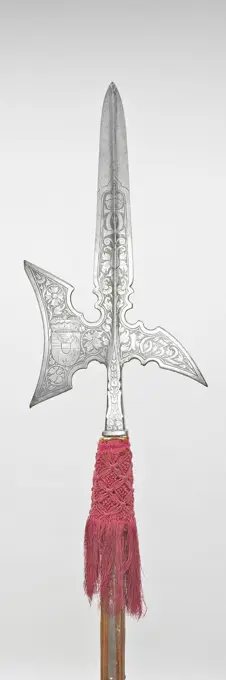
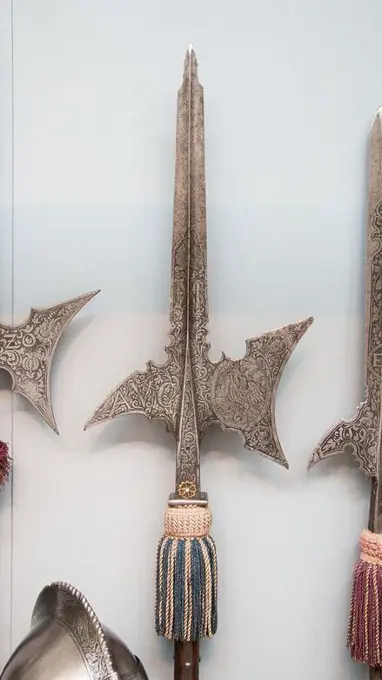
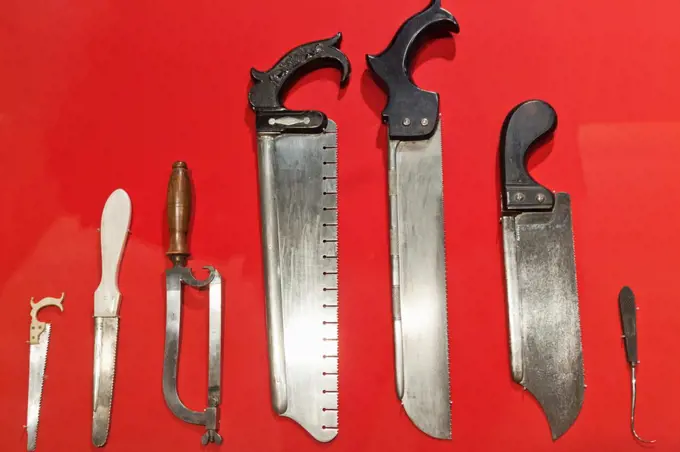
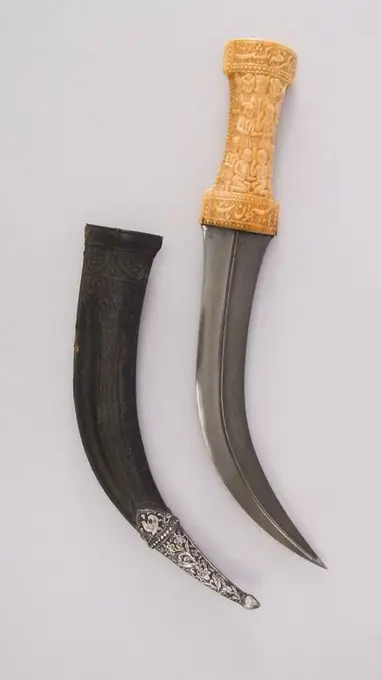
Dagger (Jambiya) with Sheath. Culture: Persian, Qajar. Dimensions: H. with sheath 15 11/16 in. (39.8 cm); H. without sheath 14 3/4 in. (37.5 cm); H. of blade 10 1/4 in. (26 cm); W. 2 3/8 in. (6 cm); Wt. 15.6 oz. (442.3 g); Wt. of sheath 3.5 oz. (99.2 g). Date: 19th century. Museum: Metropolitan Museum of Art, New York, USA.Spanish sword collection detail, sigle XVITable knife 17th century German. Table knife. German. 17th century. Steel, resin () or amber (), brass. Metalwork-SteelAncient sabre Ancient sabre. A smart variant of the fighting weapon Copyright: xZoonar.com/VALERY-SIBRIKOVx 18520291Cast Iron Hitching Post. Dated: c. 1941. Dimensions: overall: 43.8 x 26.5 cm (17 1/4 x 10 7/16 in.). Medium: watercolor, colored pencil, and graphite on paper. Museum: National Gallery of Art, Washington DC. Author: V. L. Vance.Knife, Agate, silver, steel, Sabre-shaped blade with curved upper edge. Plain bolster, silver engraved ferrule with scalloped border. Flaring, faceted agate handle, silver conical mount on top., Netherlands, ca. 1700-20, cutlery, Decorative Arts, KnifeHunting Sword, c. 1760-70. Netherlands, 18th century. Steel; pierced and chiseled cast-iron hilt ; blade engraved; overall: 65 cm (25 9/16 in.); blade: 52.9 cm (20 13/16 in.); quillions: 8.9 cm (3 1/2 in.); grip: 11.6 cm (4 9/16 in.). No gentleman's hunting costume was complete without a hunting sword. These special sidearms, designed primarily as defense against dangerous game in the field, were also used to dispatch game at the end of a chase. It was a point of honor among aristocratic hunters to carve and section the game in the field, a further function for which these swords were well suited. They were often made as a set, or garniture, and included smaller knives, forks, and other implements for carving the carcass.Partisan. Culture: Austrian. Dimensions: L. 84 3/4 in. (215.3 cm); L. of head 11 3/4 in. (29.8 cm); W. 4 5/8 in. (11.7 cm); Wt. 2 lbs. 4.4 oz. (1031.9 g). Date: ca. 1750. Museum: Metropolitan Museum of Art, New York, USA.Asian kitchen knifesmart dagger of the medieval soldier. It was used for huntingGlaive of the Bodyguard of Archduke Ferdinand of Austria, later Emperor Ferdinand II (1578-1637) 1590-1617 Austrian The long, sharply pointed knife-like blade has a convex cutting edge and has a short back edge near the point. The rectangular socket was formerly mounted with two side straps (now cut off). Each side of the blade is etched with a shield bearing the arms of Archduke Ferdinand of Austria (1578-1637), later Holy Roman Emperor Ferdinand II, surrounded by a collar of the Order of the Golden Fleece and surmounted by an archducal bonnet, above which is the monogram F. The back and base of the blade are followed by an etched line, and at the base of the cutting edge is a tiny flower. The shaft is modern.This weapon, called Kuse in German (derived from French couteau, knife), was a traditional arm carried by the bodyguards at the imperial Hapsburg court. The present example bears the monogram of Archduke Ferdinand and his coat of arms as it appeared prior to his coronation as KinNative American culture Art - a collection of KnivesPartisan of Johann Georg I of Saxony (reigned 1611-56). Culture: German. Dimensions: L. 108 11/32 in. (275.2 cm); L. of head (excluding straps) 30 1/2 in. (77.5 cm); W. 4 1/2 in. (11.4 cm); Wt. 6 lb. 5 oz. (2863 g). Date: ca. 1625.This staff weapon was carried by the bodyguards of the Prince-Electors of Saxony. Museum: Metropolitan Museum of Art, New York, USA.War axe and mace on a wooden backgroundSilver figure of a windmill of the book Don QuixoteArrowhead (Yanone) ca. 1615-1868 Japanese Although today Japanese warriors are renowned most for their swordsmanship, archery, especially from horseback, has been an essential part of samurai warfare and culture for centuries. Arrows were fitted with heads of varying shape according to their intended use in war, the hunt, or target practice. Arrowheads made for use on the battlefield incorporated different designs intended for specialized purposes such as the piercing of armor or to cause maximum damage to horses and unarmored personnel.Large arrowheads, pierced and elaborately chiseled with landscapes, birds, flowers, dragons, and Buddhist divinities, were created to be admired for the beauty of their metalwork and design rather than for use in archery. Such highly elaborate examples may have been made for presentation or as a votive offerings to a shrine.. Arrowhead (Yanone). Japanese. ca. 1615-1868. Steel. Archery Equipment-ArrowheadsMilanese rapier sword hilt, 15th century, Álava Armory Museum, Vitoria, Basque Country, SpainAncient Knife with Modern Inscription. Egypt, probably New Kingdom (1569 - 1081 BCE) or later. Arms and Armor; knives. BronzeVanilla beans, vanilla pulp on the tip of a knife (Vanilla planifolia), vanilla sticksClyde L Cheney, Fire Tongs, c 1937 Fire TongsSmart dagger Smart dagger of the medieval soldier. It was used for hunting Copyright: xZoonar.com/VALERY-SIBRIKOVx 20011123Knife (Pichangatti) and Sheath. Culture: Indian, Kodagu (Coorg). Dimensions: H. with sheath 12 5/8 in. (32.1 cm); H. without sheath 11 5/8 in. (29.5 cm); W. 1 7/8 in. (4.8 cm); Wt. 11.8 oz. (334.5 g); Wt. of sheath 10.4 oz. (294.8 g). Date: 18th-19th century. Museum: Metropolitan Museum of Art, New York, USA.Indigenous epigraphic records dating from the late 12th century CE indicate that, in 1153, the Maldives were converted to Islam by a wandering Arab mendicant. Certainly today the islands are one hundred percent Muslim, and eight centuries of tropical monsoon and Islamic iconoclasm have left little trace of the pre-Islamic religion and culture of the islanders.Old hammer, studio shot, France, EuropeCurved Dagger-Blade (ge) 1300 BCE-1000 BCE China. Jade .Spoon (probably Italy); silver; L x W: 12.2 x 4.2 cm (4 13/16 x 1 5/8 in.); The Robert L. Metzenberg Collection, gift of Eleanor L. Metzenberg; 1985-103-254-eCase, shark skin, Small shagreen case without lid for two implements., probably Germany, ca. 1730-40, cutlery, Decorative Arts, CaseSweden, Blekinge, Blekinge, Karlskrona, Karlskrona, external marina (depicted, town).Sweden, Blekinge, Blekinge, Karlskrona, Karlskrona, External War Gogs (depicted, City)Bronze sword from the Babylonian army. c. 1100-900 BC. Luristan, Western Iran. British Museum. London. UK.Halberd for the Bodyguard of Karl Eusebius, Prince of Liechtenstein 1625-1640 Southern Germany. Pole arms (staff weapons) were used not only in warfare and hunting, but also in sporting combat and ceremonies. The term refers to a family of edged weapons attached to wooden staffs. With the exception of the lance, which remained the weapon of the mounted knight, all other staff weapons were wielded by men on foot by 1600. With the development of firearms and their introduction as infantry weapons, pole arms lost their importance on the field, and from the mid-16th century, they were reserved for use in sporting contests and by princely bodyguards for ceremony and parade. The blades lent themselves to embellishmentóengraving, etching, or other forms of decorationóand provided a perfect surface for the coats of arms of noble or princely families. The ceremonial use of staff weapons continues to this day with the Swiss Guards at the Vatican and Britainís Yeomen of the Royal Guard.. Steel, iEtruscan bronze arrows. From Nemi, Latio Region, Italy, 6th Century B.C.Metal on red curtain Metal on red velvet curtain Copyright: xZoonar.com/OxanaxRishnyakx 4433161Military bladed weapons, 13th to 17th centuries. Daggers or misericordes, poniards, hunting knives, rapiers. Dagues ou misericordes, poignards, coutelas de chasse, rapieres. Equipmente militaire No. 12. Chromolithograph by Ferdinand Sere from Charles Louandres Les Arts Somptuaires, The Sumptuary Arts, Hangard-Mauge, Paris, 1858.Africa, Angola, Luanda. Traditional weaponry at Angola's National Museum of Anthropology.Arrowhead (Yanone) 18th century Japanese Although today Japanese warriors are renowned most for their swordsmanship, archery, especially from horseback, has been an essential part of samurai warfare and culture for centuries. Arrows were fitted with heads of varying shape according to their intended use in war, the hunt, or target practice. Arrowheads made for use on the battlefield incorporated different designs intended for specialized purposes such as the piercing of armor or to cause maximum damage to horses and unarmored personnel.Large arrowheads, pierced and elaborately chiseled with landscapes, birds, flowers, dragons, and Buddhist divinities, were created to be admired for the beauty of their metalwork and design rather than for use in archery. Such highly elaborate examples may have been made for presentation or as a votive offerings to a shrine.. Arrowhead (Yanone). Japanese. 18th century. Steel. Archery Equipment-Arrowheadsmedieval weapons. Battle hammer, Axe, Bludgeon, halberdViking Long Sword Illustration of an isolated Viking long sword Copyright: xZoonar.com/PaulxFleetx 3057627Italian stiletto, 17th century, Álava Armory Museum, Vitoria, Basque Country, Spain.Wooden broken oar, on tan concrete, in the sun. Wooden broken oar, on tan concrete, in the sun. Copyright: xZoonar.com/WWW.THELIFTCREATIVESERVICES.COMx 9364466Still Life with Sickle, Wire Brush and Pliers on Wooden Blocktanto dagger ninja weapon japanese warrior assassin vector illustration isolated on white backgroundHalberd of Emperor Matthias (reigned 1612-19). Culture: German. Dimensions: L. 97 in. (246.4 cm); L. of head 25 in. (63.5 cm); W. 12 1/2 in. (31.8 cm). Date: dated 1612.This halberd is signed with the initials BS and HRM, perhaps of the decorators. It was carried by the bodyguards of the Holy Roman Emperor Matthias (reigned 1612-19). Museum: Metropolitan Museum of Art, New York, USA.UK, England, London, Euston, The Wellcome Collection Museum, Display of Vintage Medical Surgeons Saws