Historical Bladed Weapons

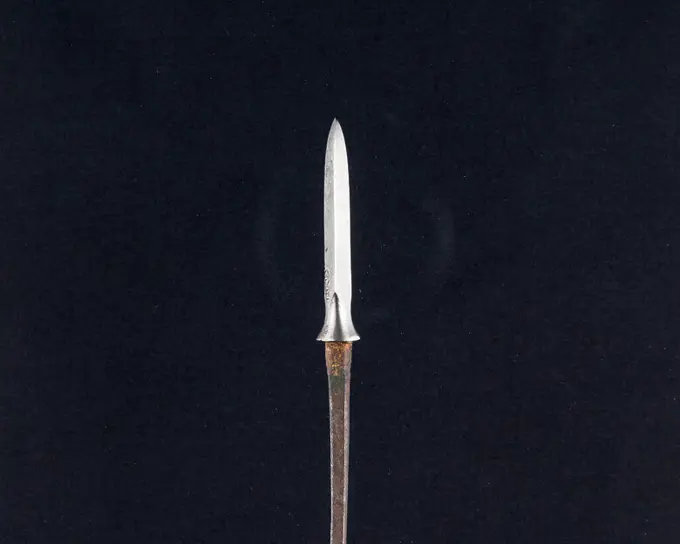
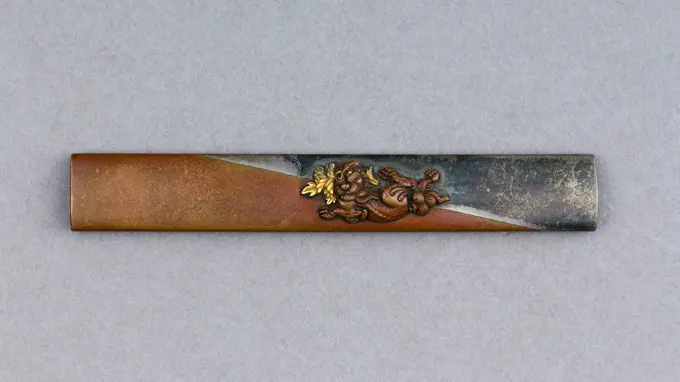
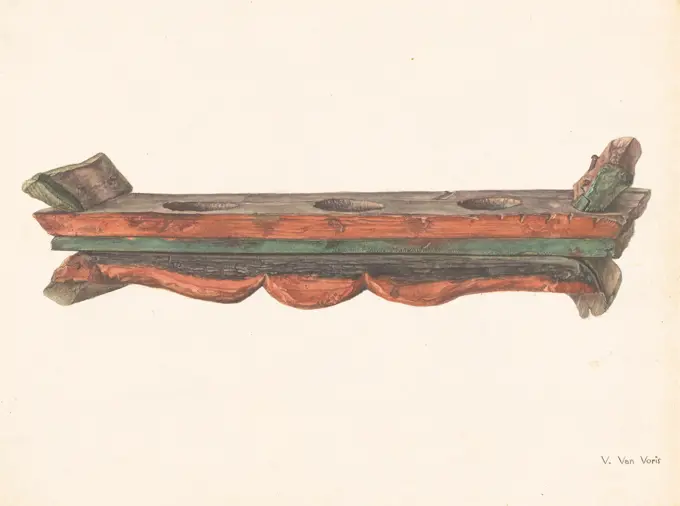
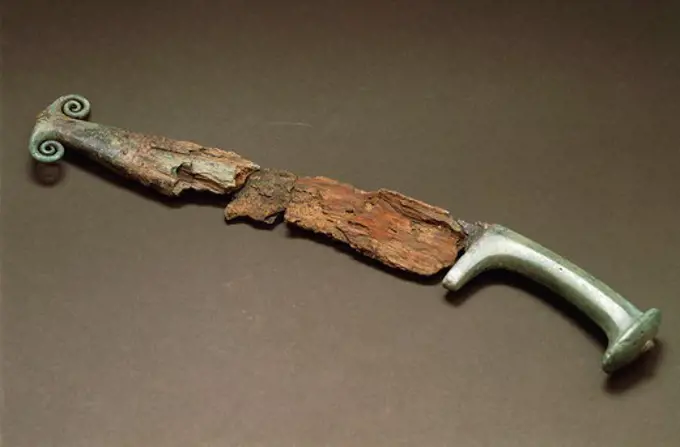
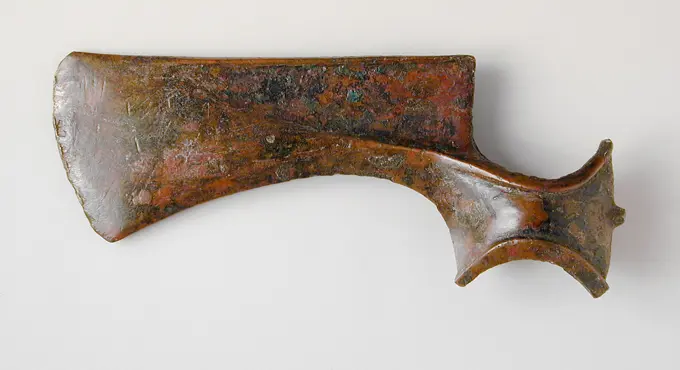
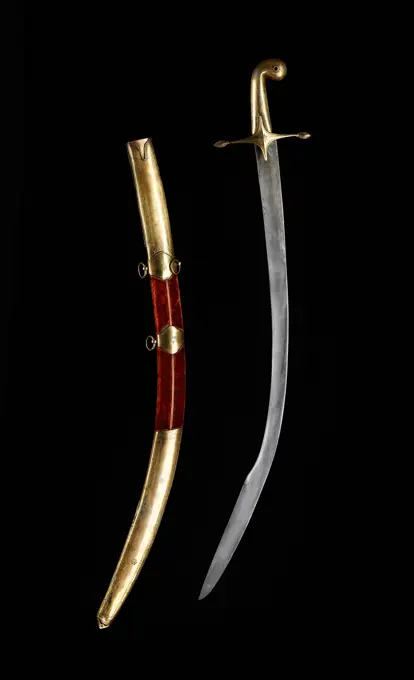
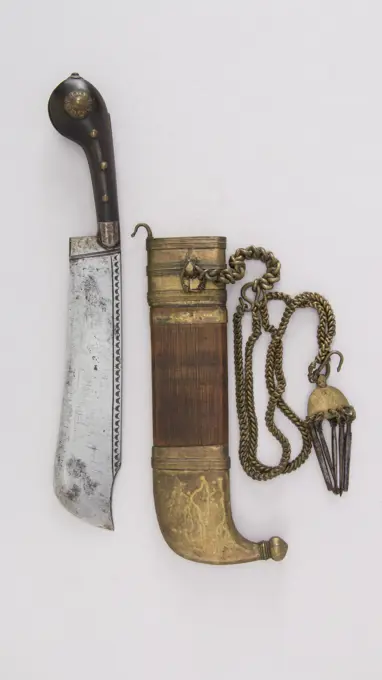
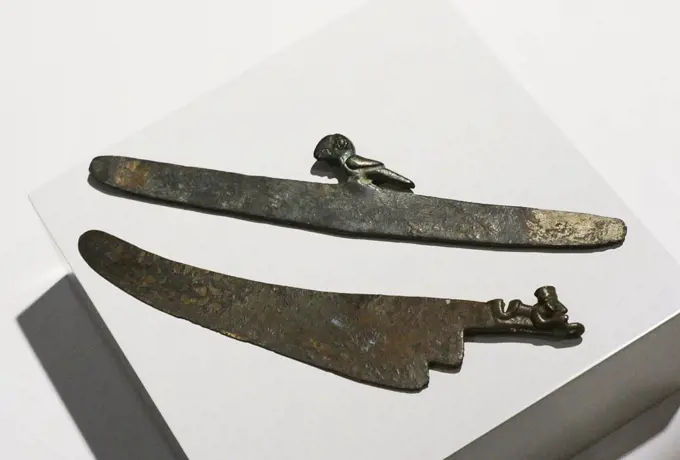
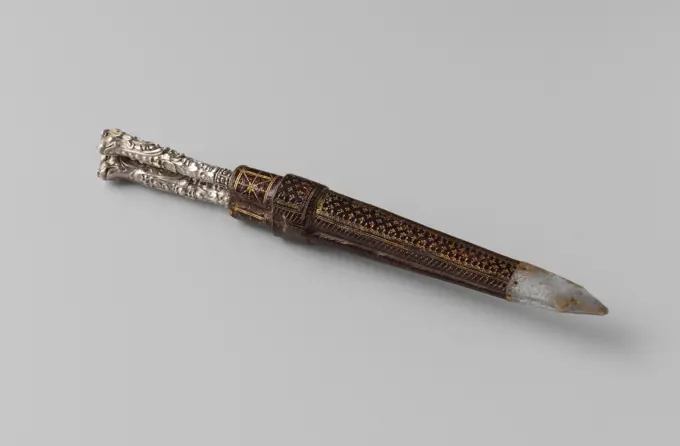
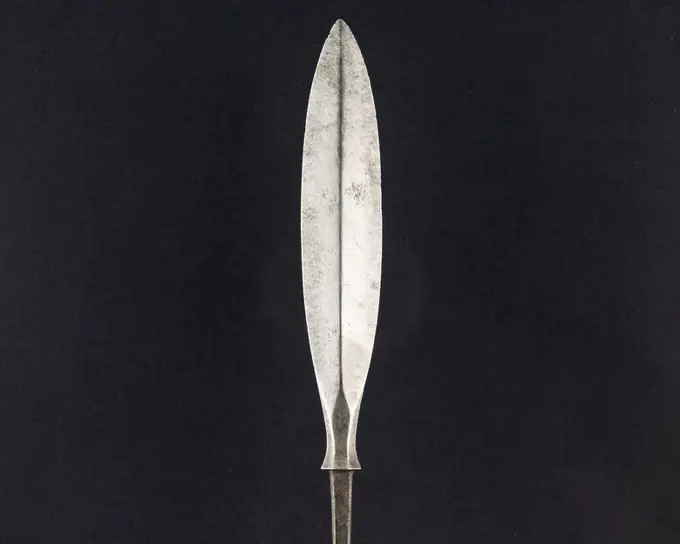
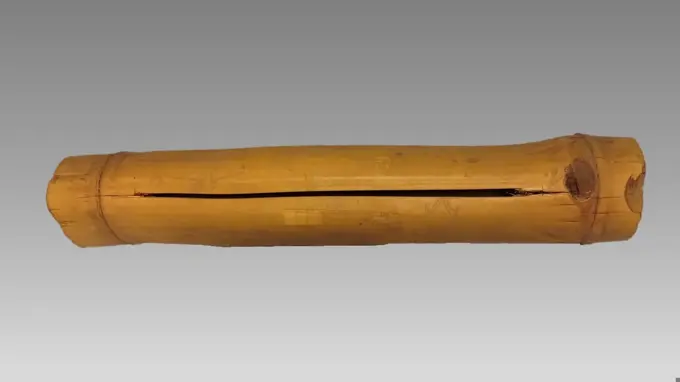
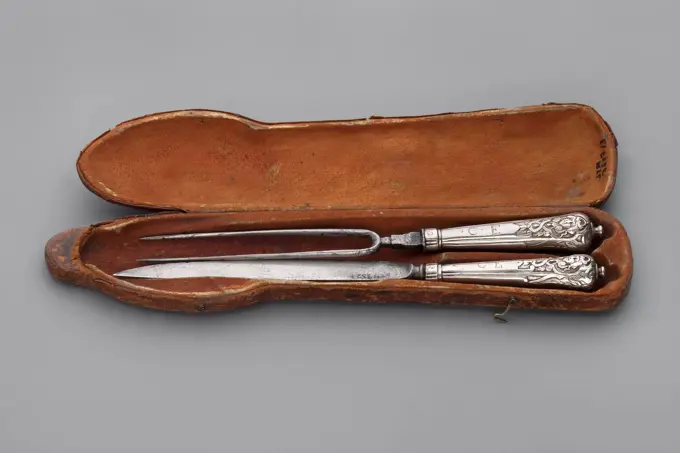
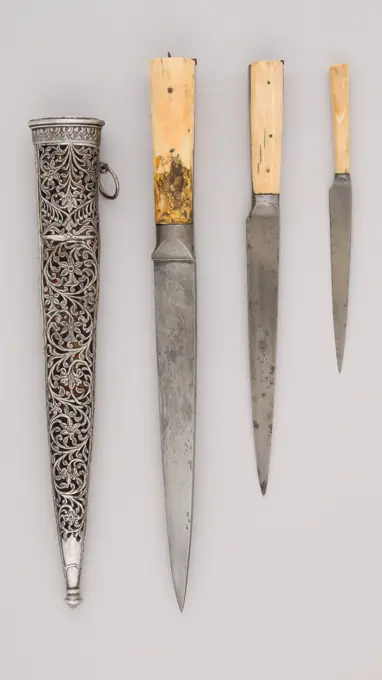
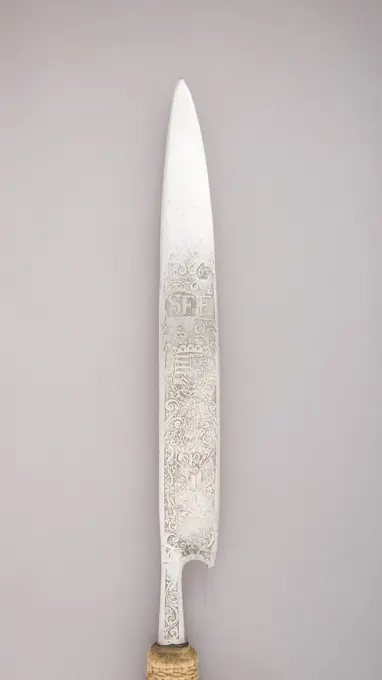
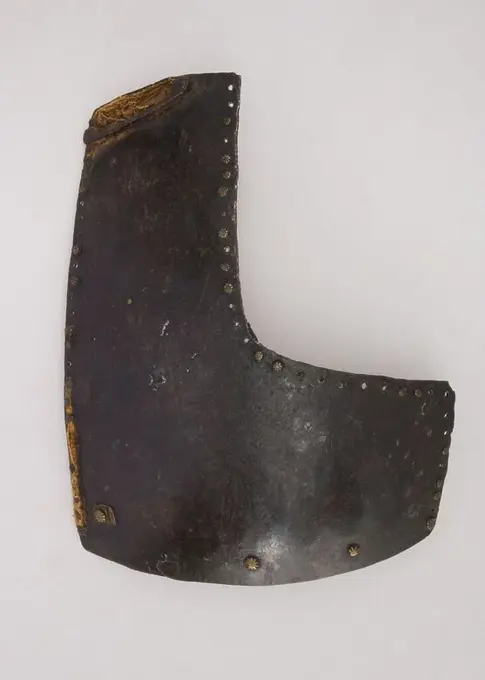
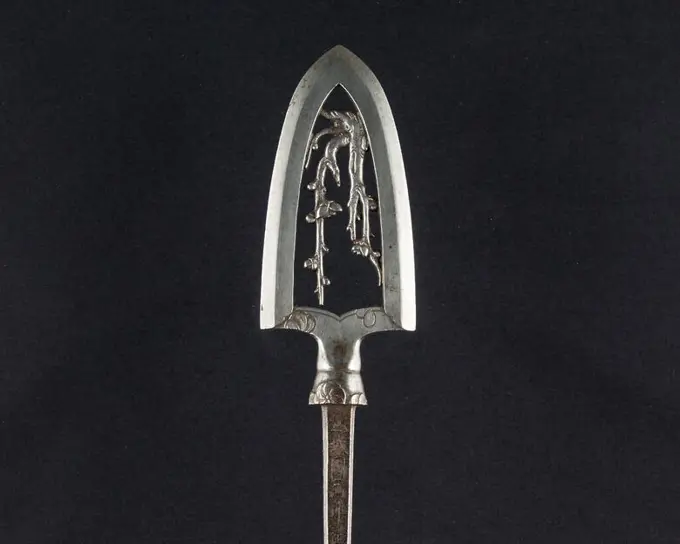
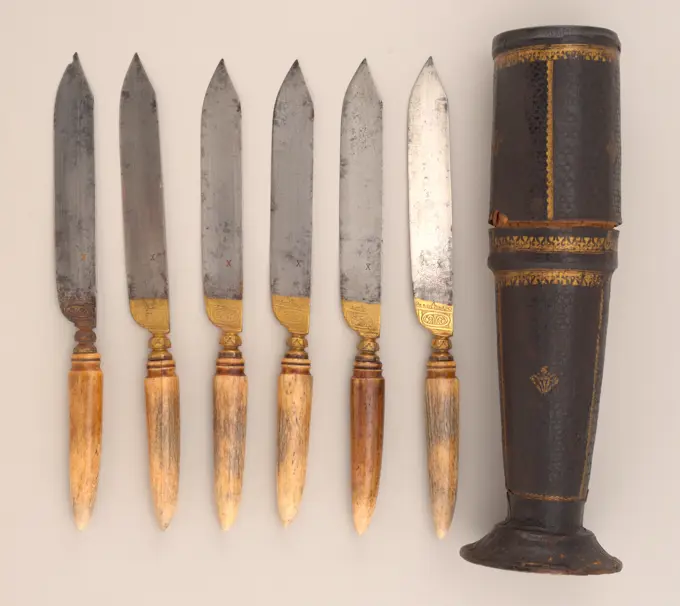
A collection of various historical bladed weapons, including a Javanese spear, British ballock knife, Indian Moplah knife, and unique chisels, showcasing intricate designs and craftsmanship.

Timmermanspasser, anonymous, c. 1590 - c. 1596  Carpenter's passer whose leg hinges in the other leg. The legs are slightly bent close to the hinge.  iron (metal) forging  Nova Zembla. Saving Huys
Timmermanspasser, anonymous, c. 1590 - c. 1596 Carpenter's passer whose leg hinges in the other leg. The legs are slightly bent close to the hinge. iron (metal) forging Nova Zembla. Saving Huys
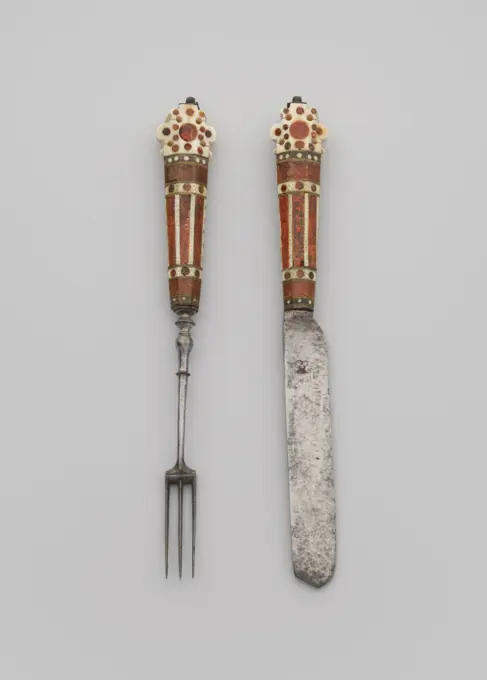
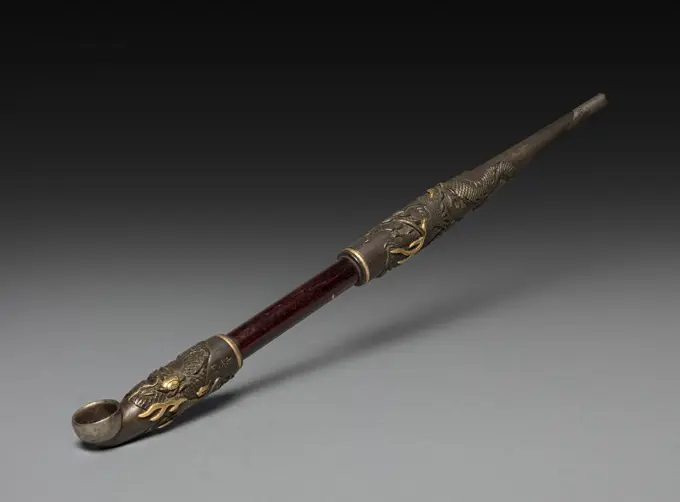
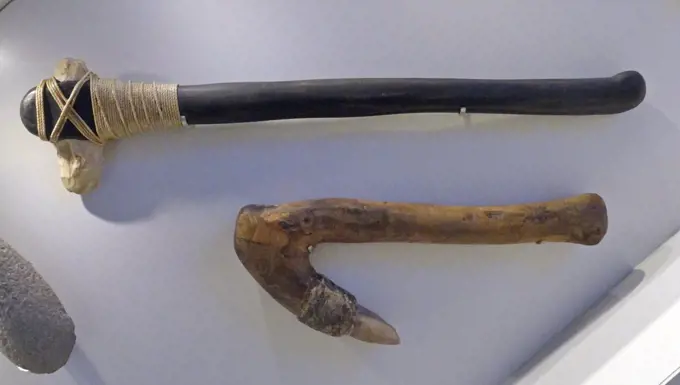
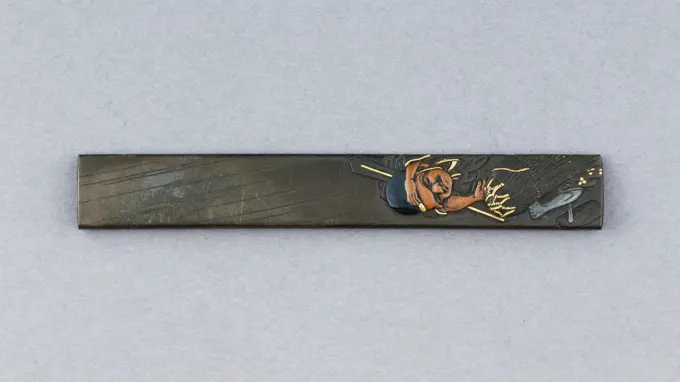
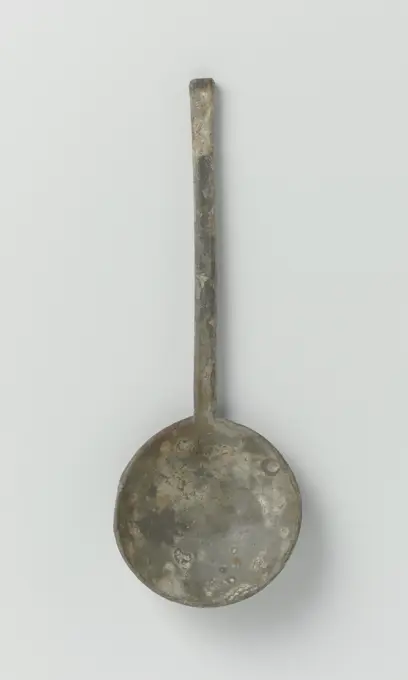
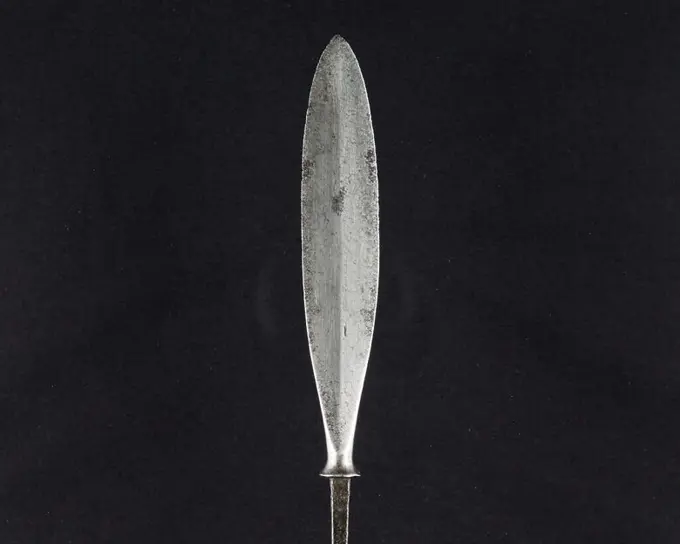
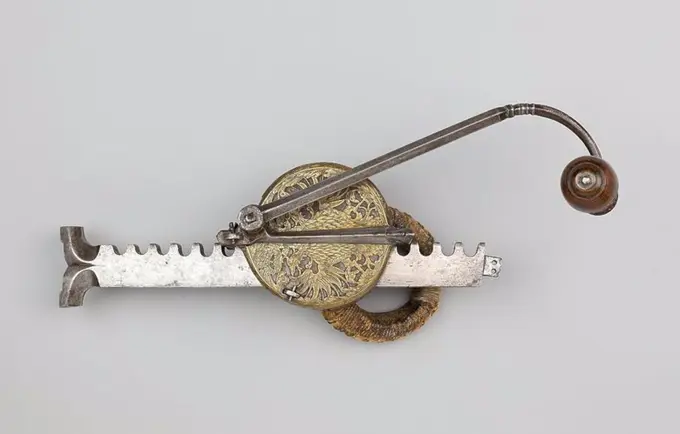
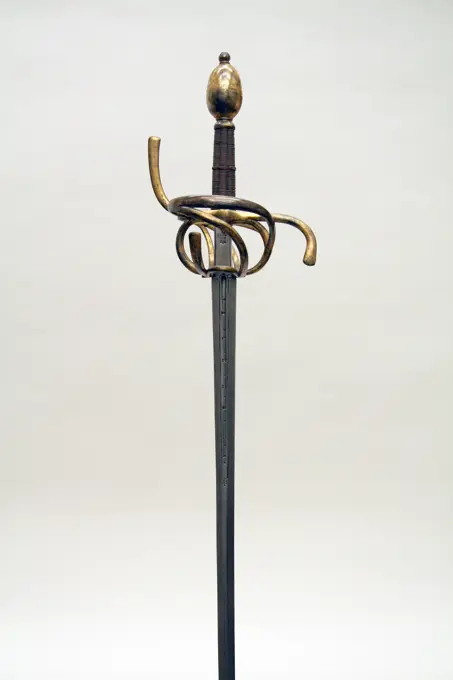
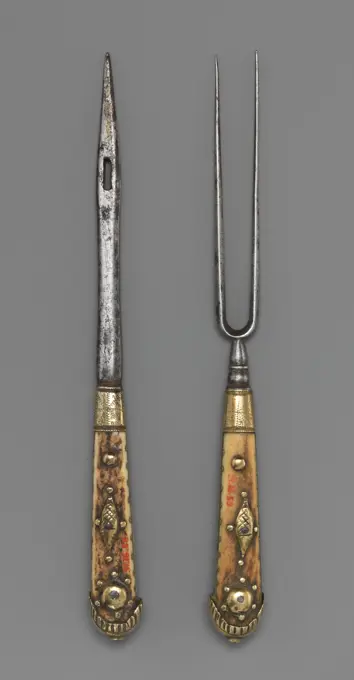
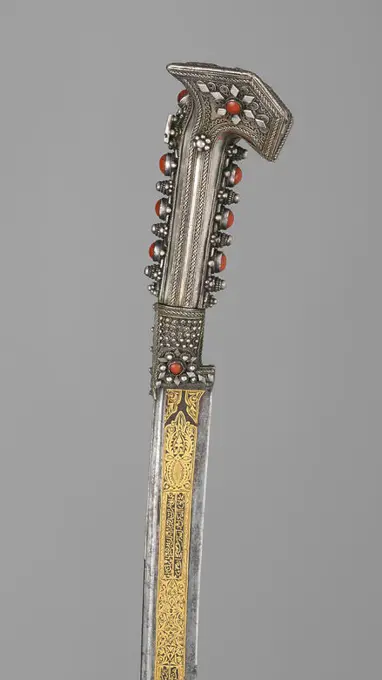
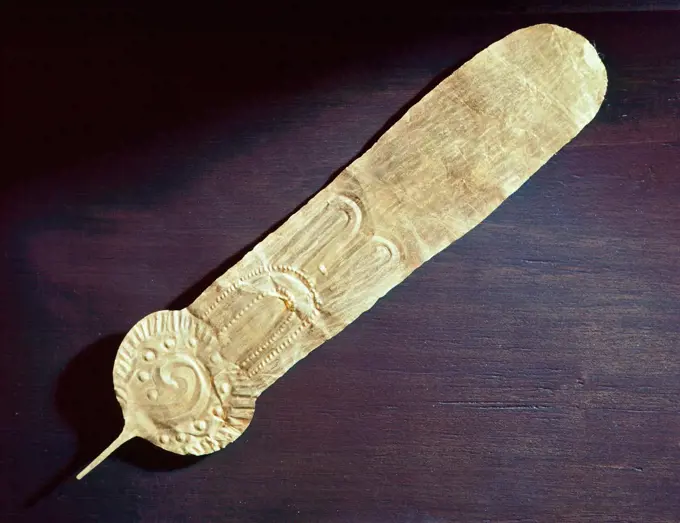
Knife (Germany); steel, ivory; L x W: 19.5 x 2 cm (7 11/16 x 13/16 in.); The Robert L. Metzenberg Collection, gift of Eleanor L. Metzenberg; 1985-103-150Handle and button from one piece of bamboo for a parasol or umbrella; With belt of braided leather, Gustav Schnitzler, c. 1910 - c. 1920 Handle and round button from one piece of bamboo for an umbrella or umbrella. The handle is pierced in the middle; A belt of braided leather has been strung through the hole. Nijmegen whole: bamboo. belt: Leather lacquering / braiding Handle and round button from one piece of bamboo for an umbrella or umbrella. The handle is pierced in the middle; A belt of braided leather has been strung through the hole. Nijmegen whole: bamboo. belt: Leather lacquering / braidingSpindle ca. 1295-1070 B.C. New Kingdom, Ramesside. Spindle. ca. 1295-1070 B.C.. Wood. New Kingdom, Ramesside. From Egypt, Memphite Region, Lisht North, Cemetery, MMA excavations, 1913-14. Dynasty 19-20Spear 18th-19th century Philippine, Jolo. Spear 30639Narrow pewter belt tongue delineated with thin edge shading, fitting belt clothing accessory clothing soil find tin metal, archeologyLarge Cranequin ca. 1575-1650 German, possibly Saxony. Large Cranequin 659408Elements of bronze and iron hooked buckles , China. Chinese Civilisation, Han Dynasty, 3rd century BC-3rd century AD.Hanger (Hunting Sword), late 1600s. Jaspar Bongen the Younger (German, active late 1600s). Steel; gold and silver damascened hilt; overall: 73 cm (28 3/4 in.); blade: 57.7 cm (22 11/16 in.); quillions: 17.5 cm (6 7/8 in.). Damascening, the technique of hammering gold and silver wires into grooves cut to receive them, enlivens this sword's hilt. Further texture was added with wires to improve the user's grip, which allowed him to hunt with more control and accuracy. Hunting was a popular sport among the wealthy and many nobles owned tracts of forest, but peasants were prohibited from hunting on these lands.Knife Handle with the Five Senses, anonymous, c. 1700 It means five female figures placed in a circle. There are four cobblestones on their heads, on which a lion is located. The women propose the five senses: woman who holds some fruits with her right hand; In her left hand a fruit, at her feet there is a monkey (the taste). Woman, who holds a bird on her arm, who picks her finger; At her feet a turtle (the feeling). Woman playing on a lute; At her feet is a deer (the hearing). Woman with a hand mirror; An eagle is on her feet (the face). Woman who wears an incense vessel: she holds a flower in her right hand; A dog jumps up against her (the smell). Netherlands boxwood. steel (alloy). silver (metal) It means five female figures placed in a circle. There are four cobblestones on their heads, on which a lion is located. The women propose the five senses: woman who holds some fruits with her right hand; In her left hand a fruit, at her feet there is a monkey (the taste). Woman, who holdsSword (Pappenheimer Rapier) 1625-1635 Netherlands. Both mounted cavalry and men on foot favored this form of sword during the height of the Thirty Yearsí War (1618ñ48). The large guard fitted with pierced plates protected the userís hand from heavy cuts and thrusts. The weapon is often termed a Pappenheimer rapier after the German Count Gottfried Heinrich zu Pappenheim, an imperial field marshal during the conflict. This is an unusually ornate example, with silver and partially gilt lion heads chiseled onto the steel hilt.. Steel, silver, gilding, wood, and leather .Dagger (Khanjarli) with Sheath 17th century South Indian. Dagger (Khanjarli) with Sheath 31462Crossbow -Fork, Anonymous, 1600 - 1625 A fork with a amber ivory and silver buttons. Foudrale of this fork has disappeared. Königsberg ivory. silver (metal) A fork with a amber ivory and silver buttons. Foudrale of this fork has disappeared. Königsberg ivory. silver (metal)Old-fashioned lockSmallsword ca. 1760 French By the early seventeenth century, the rapier, a long slender thrusting sword, began to dominate as the gentlemans weapon of choice. During the course of the century, however, as civilian fencing techniques became more specialized and refined, the rapier developed into a lighter, trimmed-down weapon known by about 1700 as the smallsword. Smallswords, often richly decorated, remained an integral part of a gentlemans wardrobe until the wearing of swords in civilian settings went out of fashion at the end of the eighteenth century, at which time pistols were replacing swords as arms most frequently used in personal duels. The majority of smallsword hilts are made of silver or steel, but many also employ a wide variety of luxurious materials, such as gold, porcelain, and enamel. At their best, smallswords combine the crafts of swordsmith, cutler, and jeweler to create an elegant weapon that was also a wearable work of art.. Smallsword. French. ca. 1760. Steel, gKris with Sheath 18th-19th century Indonesian. Kris with Sheath 31382Smallsword Hilt and Blade. Culture: hilt, Japanese, possibly Dejima; blade, European. Dimensions: Hilt (a); L. approx. 7 in. (17.8 cm); W. approx. 4 in. (10.2 cm); Wt. 5.3 oz. (150.3 g); blade (b); L. 40 1/8 in. (101.9 cm); Wt. 5.5 oz. (155.9 g). Date: ca. 1730.Sword hilts of European fashion made of shakudo, an alloy of copper and gold patinated to the blue-black color that was used in Japan for small decorative objects such as sword mountings, were probably fabricated for the Dutch East India Company at their trading post on the Japanese island of Deshima. Hilt elements like these were then exported to Holland, where they were fitted with grips and blades. Museum: Metropolitan Museum of Art, New York, USA.Tobacco Pipe, early to mid-1800s. Japan, Edo period (1615-1868). Wood, iron, and silver; overall: 26.6 cm (10 1/2 in.).Shaman's drum hammer. Myklebostad, Nesna k., Nordland. Norway. Historical Museum. Oslo. Norway.Guisarme 16th century Italian. Guisarme 27036Collection of agricultural tools featuring sickles, sickle blades, axes and adzes from Nahal Oren, Gilgal, Sha'ar Hagolan, Munhata and Beisamun. From the Sultanian, Tahunian and Yarmukian cultures over 11,500-8,000 years ago made from flint, limestone, basalt, bitumen, wood and rope.Crooked knife -Dagger with Sheath. Culture: Philippine, Mandaya. Dimensions: L. with sheath 13 9/16 in. (34.4 cm); L. without sheath 12 in. (30.5 cm); W. 2 7/16 in. (6.2 cm); Wt. 4 oz. (113.4 g); Wt. of sheath 2.9 oz. (82.2 g). Date: 19th century. Museum: Metropolitan Museum of Art, New York, USA.ax for cutting isolated on white with clipping pathSpoonDolk in Schede van Tonny van Renterghem, state -owned company of the artillery facilities Hembrug, 1917 - 1918 trench knife Steel stormdolk with wooden handle and copper parts in Leather Schede by Tonny van Renterghem belonging to his personal equipment at the 1st cavalry Regiment Hussars Motorcyclists 1939-1940. Bempende blade with a sharp point. Wooden Onder has horizontal ridges. The leather sheath has an iron point and is also wrapped with iron wire. The various parts of the sheath are attached with copper vowels. Zaandam steel (alloy). copper (metal). wood (plant material). leather forging / rolling  NetherlandsKnife with raises the abundance and steadfastness. On the lifting performances of the abundance and the steadfastness. A running dog on the end. Brands L and covered head. With associated case.Mace Chinese 18th-19th century View more. Mace. Chinese. 18th-19th century. Steel. Shafted WeaponsShovel (part of a set) ca. 1675 British This set of fire tools 68.141.156-.159) was probably made for John Maitland on the occasion of his wedding to the Countess of Dysart. In 1647 Maitland raised an army to rescue Charles I. After the Battle of Worcester, when he was taken prisoner by Commonwealth troops, he was sent to the Tower. After his release (166) he became Prime Minister and Secretary of State. On May 1, 1672, he was created Marquess of March and Duke of Lauderdale, and on June 3 he was installed at Windsor as Knight of the Garter.. Shovel (part of a set). British. ca. 1675. Silver, iron. Metalwork-Silver In CombinationHalberd of the Bodyguard of Sigismund Francis Erzherzog zu Oesterreich (1630-1665) dated 1663 Austrian. Halberd of the Bodyguard of Sigismund Francis Erzherzog zu Oesterreich (1630-1665). Austrian. dated 1663. Steel, wood. Shafted WeaponsOld small axe on reflective backgroundDagger (Katar) with Sheath 18th-19th century South Indian, possibly Deccan Inlaid in gold on one side is the Prayer to 'Alī, particularly favored by Shiite Muslims: "Call upon 'Alī, the manifester of miracles, you shall find him a help to you in adversities. All care and anxiety will clear away through the light of your greatness. O 'Alī, O 'Alī, O 'Alī." On the other side is a short quote from the sūra of Victory (sūrat al-fatḥ, 48:1), "Surely We have granted thee a clear victory.". Dagger (Katar) with Sheath 24300Hunting cordlasBrush, 18th-early 19th century, 9 1/16 x 11/16 in. (23.02 x 1.75 cm), Carved bamboo and animal hair, China, 18th-19th centuryGuqin, late 1700s-early 1800s. China, Qing dynasty (1644-1911). Wood, horn, silk, mother-of-pearl; overall: 4.5 x 18.1 x 123.5 cm (1 3/4 x 7 1/8 x 48 5/8 in.). Endowed with cosmological and metaphysical significance and empowered to communicate the most profound feelings, this zither, beloved of sages and Confucius, is the most prestigious instrument in China. Han dynasty writers state that the qin helped cultivate character, understand morality, supplicate gods and demons, enhance life, and enrich learning. Ming dynasty (1368-1644) literati, who claimed the right to play the qin, suggested playing it in a mountain setting under an old pine tree (symbol of longevity), a garden, or a small pavilion while incense perfumed the air. A quiet moonlit night was considered an appropriate time for performance. An anthropomorphic or zoomorphic name identifies each instrument's part, and cosmology is ever-present. For example, the upper board of wutong wood symbolizes heaven, the bottom board ofDagger, 1900s. New Guinea, Sepik River Region, 20th century. Cassowary bone; overall: 31.2 x 4.8 x 4.9 cm (12 5/16 x 1 7/8 x 1 15/16 in.).Knife, Silver, Knife in the form of a Japanese sword; handle with mottled surface, one side decorated with scene of full moon above two naked men, an octopus attacking one's leg; other side with galloping horse and phoenix in full plumage. Flat, curved blade engraved with stylized foliate decoration., ca. 1880, cutlery, Decorative Arts, KnifeChisel ca. 1550-1295 B.C. New Kingdom. Chisel. ca. 1550-1295 B.C.. Wood, bronze or copper alloy. New Kingdom. From Egypt, Upper Egypt, Thebes, Deir el-Bahri, Temple of Hatshepsut, Foundation Deposit 4 (D), MMA excavations, 1923-24. Dynasty 18Rapier Italian 1580 The rapier was the principal civilian sidearm throughout the sixteenth and seventeenth centuries. Designed for cut-and-thrust fencing of progressively complex techniques, the rapier is characterized by a double-edged blade with an acute point and an elaborate guard for the hand. The guards, usually of iron or steel, were subject to a variety of embellishment. They were engraved, chiseled, gilded, damascened, and encrusted in gold and silver in keeping with fashionable styles. Unless otherwise noted, the materials, attributions, and dating given here refer to the hilts. Rapier blades, invariably of steel, bear a variety of makers marks denoting their origin in the two principal centers of blademaking, Toledo in Spain and Solingen in Germany. View more. Rapier. Italian. 1580. Steel, copper alloy. SwordsHalberd, 1600s. Switzerland, 17th century. Steel; rectangular wood haft with planed corners; overall: 160 cm (63 in.); blade: 19.3 cm (7 5/8 in.). The halberd was a staff weapon favored by European infantries (foot soldiers) of the 1400s and 1500s for its versatility and deadly effect. The word halberd comes from the German words Halm (staff) and Barte (axe). The halberd is, in fact, an axe that served multiple functions: the axe blade was used for hacking, the spike for thrusting, and the beak for piercing plate armor or for pulling a knight from his saddle. The halberd was used by shock troops (those who lead an attack) and by Swiss and German mercenaries. After about 1550, the halberd gradually became less functional. Its large blade provided space for coats of arms and insignia. By the late 1500s, the parade halberd had become a ceremonial weapon for palace guards.Patriottenlint, anonymous, 1775 - 1800 ribbon (material) Ribbon with three so -called French lilies on the left and two gold -colored imitations of tokens on the right. A sitting woman (freedom -timbered) is shown on the 'tokens'. A bow is depicted at the top and a green strip at the bottom. Netherlands silk printingHandle of black -lacked wood painted with a bird and a flower, for an umbrella or umbrella; With a cord, Gustav Schnitzler, c. 1910 - c. 1920 Konisch handle of black -lacked wood for an umbrella or umbrella. The handle is painted with a bird and a flower. The handle is pierced in the middle. A black cord is strung by the plastic hole. Nijmegen whole: Wood (plant material). upholstery hole:. Cord: Silk lacquering / painting Konisch handle of black -lacked wood for an umbrella or umbrella. The handle is painted with a bird and a flower. The handle is pierced in the middle. A black cord is strung by the plastic hole. Nijmegen whole: Wood (plant material). upholstery hole:. Cord: Silk lacquering / paintingIron Age, Spear pointsFlagstack with decoration. Flag rack that is decorated with golden particles of vines and grapes. The stick is painted in blue.Wire brush on whiteCecil Smith, Rawhide Quirt, 1935 1942 Rawhide QuirtRoyal Presentation Sword 18th century Thai This sword was presented was presented to The Metropolitan Museum of Art on June 8, 1967 by Their Majesties, King Bhumibol Adulyadej and Queen Sirikit of Thailand. The intricate goldsmith's work covering the hilt and scabbard date from the eighteenth century. The steel for the blade was smelted from the lateritic iron ores found at Tambon Ban Nam Ṕī, Amphur Trôn, in the province of Uttaraditth. The gift coincided with the exhibition "In the Presence of Kings," which featured treasures given by monarchs as personal gifts.. Royal Presentation Sword 27390Arrowhead (Yanone). Culture: Japanese. Dimensions: L. 6 3/4 in. (17.2 cm); L. of head 1 7/8 in. (4.8 cm); W. 3/8 in. (1 cm); Wt. 0.6 oz. (17 g). Date: 18th century. Museum: Metropolitan Museum of Art, New York, USA.Bronze swords with fenestrated grip Monte Sa Idda -type, by Unknown artist, 9th Century -8th Century b.C.,, Bronze. Italy: Sardegna: Cagliari: Cagliari: National Archaeological Museum. Bronze swords grip fenestrated Monte Sa IddaKnife Handle (Kozuka) ca. 1615-1868 Japanese A kozuka is a handle of a by-knife that is part of a sword mounting. It is kept in a slot on the reverse of a katana scabbard, often with a matching kōgai (hairdressing tool).. Knife Handle (Kozuka) 34582Spoon with round container and a six -sided stem, anonymous, c. 1590 - c. 1596 spoon Spoon with round container and a ratting pie on the bottom. Straight stem from hexagonal cross -section. Equipped with quality brand. Amsterdam tin (metal) casting  Nova Zembla. Saving HuysKnife Handle (Germany); brass; The Robert L. Metzenberg Collection, gift of Eleanor L. Metzenberg; 1985-103-261-bArrowhead (Yanone). Culture: Japanese. Dimensions: L. 12 5/8 in. (32.1 cm); L. of head 4 1/2 in. (11.4 cm); W. 3/4 in. (1.9 cm); Wt. 1.6 oz. (45.4 g). Date: 18th century. Museum: Metropolitan Museum of Art, New York, USA.Cranequin (Winder) for a Crossbow. German, Nuremberg. Date: 1570-1580. Dimensions: L. (open) 61 cm (24 in.). Steel, iron with gilding, wood, and cord. Origin: Nuremberg. Museum: The Chicago Art Institute, Chicago, USA.Rapier ca. 1600-1620 German The rapier was the principal civilian sidearm throughout the sixteenth and seventeenth centuries. Designed for cut-and-thrust fencing of progressively complex techniques, the rapier is characterized by a double-edged blade with an acute point and an elaborate guard for the hand. The guards, usually of iron or steel, were subject to a variety of embellishment. They were engraved, chiseled, gilded, damascened, and encrusted in gold and silver in keeping with fashionable styles. Unless otherwise noted, the materials, attributions, and dating given here refer to the hilts. Rapier blades, invariably of steel, bear a variety of makers marks denoting their origin in the two principal centers of blademaking, Toledo in Spain and Solingen in Germany.. Rapier. German. ca. 1600-1620. Steel, gold, copper. SwordsHinge scissors, scissors with wide oval and open eyes and short blades, scissor cutting tool soil find iron metal, On two sides: figure in the shape of turnip and possibly letter archeology cutKnife Handle (Kozuka) ca. 1615-1868 Japanese A kozuka is a handle of a by-knife that is part of a sword mounting. It is kept in a slot on the reverse of a katana scabbard, often with a matching kōgai (hairdressing tool).. Knife Handle (Kozuka) 34540Vera Van Voris, Chinese Altar Tray, c 1939 Chinese Altar TrayKnife (Netherlands), ca. 1618; silver, steel, gilding; L x W x D: 21.4 x 2.2 x 0.5 cm (8 7/16 x 7/8 x 3/16 in.); Bequest of Richard Cranch Greenleaf in memory of his mother, Adeline Emma Greenleaf; 1962-58-11-bPUÑALES OTOMANOS DEL SIGLO XVII CON EMPUÑADURAS DE CORAL. Location: PALACIO TOPKAPI-MUSEO. ISTANBUL. TURQUIA.Navigation. To determine the ships position and chart its course, the captain had an entire arsenal of instruments at his disposal. Among the items found on Nova Zembla are an astrolabium catholicum (universal astrolabe), a fragment of a copper sounding line, a cross staff, a sextant and a chart compass.Badge  a clasp in memory of the creation of the Supreme National CommitteePrehistory, Italy, Iron Age. Bronze knife, 9th-6th century b.C.Shaft-hole Axehead. Iran, Luristan, circa 2100-1750 B.C.. Arms and Armor; axes. Bronze, castBandelier with powder buddies and bullet bag, anonymous, 1600 - 1650  Bandelier with 12 wooden powder buddies, the so -called twelve apostles and a leather bullet bag. The powder buddies are connected to the bandelier with straps. The lids slide over the straps. A horn for storing the Pankruit is missing. Low Countries leather. wood (plant material) cuttingSaber with vagina and caseUnknown, five tools that belonged to Jean Moulin (attributed title), 1919. Metal, wood. General Leclerc Museum of the Liberation of Paris - Jean Moulin Museum.Knife (Pichangatti) with Sheath 18th-19th century Indian, Kodagu (Coorg). Knife (Pichangatti) with Sheath 31531Tanto, Japan, 19th century, Álava Armory Museum, Vitoria, Basque Country, Spain.Putty knife on whiteHarp, 1900s. Africa, Central Africa, Democratic Republic of Congo, 20th century. Wood, snakeskin, plant fiber, cane, string, and colorant; overall: 63.6 cm (25 1/16 in.).Ceremonial knife decorated with human figure (below). Bronze. Peru.Ceremonial knife decorated with a bird figure (above). Silver. Chimu culture, Late Intermediate period (1100-1400 AD). Peru. Museum of the Americas. Madrid, Spain. Leather case. Leather case with two compartments. Completely decorated with stamped, gold-plated ornaments and fleurs-de-lis.Headband, 21 1/2 x 1 1/2 in. (54.61 x 3.81 cm), Cotton, ChinaBlade with baffles and plate gong with hood and copper ring, knife cutlery soil find iron brass metal blade, handforged archeology underground pit Rotterdam City triangle Groenendaal cutting food preparation kitchen Soil discovery: underground pit Groenendaal (from slurry pit on reed layer) from dirty layer ca 2 m -NAP.Knife Handle (Kozuka). Culture: Japanese. Dimensions: L. 3 13/16 in. (9.7 cm); W. 9/16 in. (1.4 cm); thickness 3/16 in. (0.5 cm); Wt. 1.2 oz. (34 g). Date: ca. 1615-1868. Museum: Metropolitan Museum of Art, New York, USA.Skewer needle 18th century Southern German. Skewer needle. Southern German. 18th century. Steel, buckshorn, brass. Metalwork-SteelSpear Point, Zhou dynasty (1045-256 BC). China, Zhou dynasty (c. 1046-256 BC). Bronze; overall: 3.1 cm (1 1/4 in.).Yatagan with Scabbard. Culture: Anatolian or Balkan. Dimensions: L. 29 1/4 in. (74.3 cm); L. of blade 22 1/8 in. (56.2 cm); Wt. of scabbard 1 lb. 13 oz. (822.1 g). Date: dated A.H. 1238/A.D. 1822.This type of weapon, with a double-curved blade and a bifurcated pommel, is known as a yatagan. It was commonly used in Anatolia and the Balkans during the eighteenth and nineteenth centuries by the sultan's elite corps, or Janissaries, and was carried in the waistband. This piece, with a blade elaborately decorated in gold and corals set into the handle, was probably made for presentation. Museum: Metropolitan Museum of Art, New York, USA.Arrowhead (Yanone). Culture: Japanese. Dimensions: L. 14 in. (35.6 cm); L. of head 4 1/2 in. (11.4 cm); W. 3/4 in. (1.9 cm); Wt. 1.6 oz. (45.4 g). Date: 18th century. Museum: Metropolitan Museum of Art, New York, USA.Kove (slit drum) Melanesian (Banks Islands, Vanuatuan) late 19th centuryKnife and fork in a leather case. Wolhaupter, Johann Georg (fl. 1717-1752), goldsmithKnife Handle (Kozuka). Culture: Japanese. Dimensions: L. 3 13/16 in. (9.7 cm); W. 9/16 in. (1.4 cm); thickness 3/16 in. (0.5 cm); Wt. 1.1 oz. (31.2 g). Date: ca. 1615-1868. Museum: Metropolitan Museum of Art, New York, USA.Bed pan with coat of arms between two lions, anonymous, c. 1600 - c. 1650 The object consists of seven parts: the iron handle with the ring on which the copper container is sounded, the copper hinge, the copper lid, the three cast copper decorative elements on the stem. In the convex lid, the center point of which is visible, decorations are punched, beaten and engraved with the help of stamp shapes, and his holes in the shape of a circle and an eight -pointed star built from half -arched. In the middle a white coat of arms with two lions with a crown above it. In the fields between the semi -circles, punched stars and tissue ovals are included in patterns, which are built from granulated lines. Along the edge on shaded background in capitals the inscription as lewen wyllen we keep our Godt with us we can bother us. The edge of the lid is reinforced with iron wire. Hat Hinge, the parts of which are held together by an iron pin, has a beaten decoration. The three cast decorative elementKnife, fork and scabbard 18th-19th century possibly Italian. Knife, fork and scabbard 187260ESPADA TIZONA DEL CID - SIGLO XI - DETALLE DE LAS INSCRIPCIONES. Location: ALCAZAR / MUSEO DEL EJERCITO-COLECCIÓN. Toledo. SPAIN.Three Knives with Sheath 18th-19th century Indian. Three Knives with Sheath 31432Mezoeza, c. 1400 - c. 1950 The Jewish law in an iron feather, as hung on the doors of the Israelites.  iron (metal) The Jewish law in an iron feather, as hung on the doors of the Israelites.  iron (metal)Knife. Culture: Philippine, Luzon or Visayan Islands. Dimensions: L. 23 1/2 in. (59.7 cm); L. of blade 17 in. (43.2 cm); W. 4 in. (10.2 cm); Wt. 2 lb. 8.4 oz. (1145.3 g). Date: 18th-19th century. Museum: Metropolitan Museum of Art, New York, USA.Staff Weapon dated 1663 Austrian. Staff Weapon. Austrian. dated 1663. Steel, wood, textile (silk). Shafted WeaponsLeft Half of a Breastplate. Culture: Italian. Dimensions: H. 12 3/16 in. (31 cm); W. 9 5/8 in. (24.4 cm); Wt. 2 lbs. 14.8 oz. (1326.8 g). Date: ca. 1400-1450. Museum: Metropolitan Museum of Art, New York, USA.Iron rod beam subject money, Fang ethnic group, northwestern Gabon; XIX W.Hand Cannon. Culture: Japanese. Dimensions: L. 37 in. (94 cm). Gunsmith: Inscribed by Kazuki Nobumichi (Japanese, active late 18th-early 19th century). Date: late 18th-early 19th century.The decoration on the barrel shows carp ascending a waterfall, symbolic of success in life. Museum: Metropolitan Museum of Art, New York, USA.Prestige Axe, Early 20th century, 15 3/8 x 1 1/2 x 8 3/4 in. (39.05 x 3.81 x 22.23 cm), Wood, metal, snake skin, Democratic Republic of Congo, 20th centuryBernard Krieger, Skewers and Holder, c 1938 Skewers and HolderArrowhead (Yanone). Culture: Japanese. Dimensions: L. 10 3/4 in. (27.3 cm); L. of head 4 in. (10.2 cm); W. 1 5/8 in. (4.1 cm); Wt. 3.5 oz. (99.2 g). Date: dated 1645. Museum: Metropolitan Museum of Art, New York, USA.Knife (probably Germany), early 18th century; steel, horn, gilding; L x W: 23.5 x 2.1 cm (9 1/4 x 13/16 in.); The Robert L. Metzenberg Collection, gift of Eleanor L. Metzenberg; 1985-103-283-dGold foil depicting a feather. Artefact from the Treasury of the Tomb 7 in Monte Alban, Mexico. Mixtec Civilization, post-classical period 14th-15th Century.Steel sapper hatchet with a wooden handle in a leather cover Spalinger, R. (open in the 20th century)Knife -