Historical Blades and Accessories

A collection of antique swords, walking sticks, and decorative pins exhibiting intricate designs and craftsmanship from various eras.
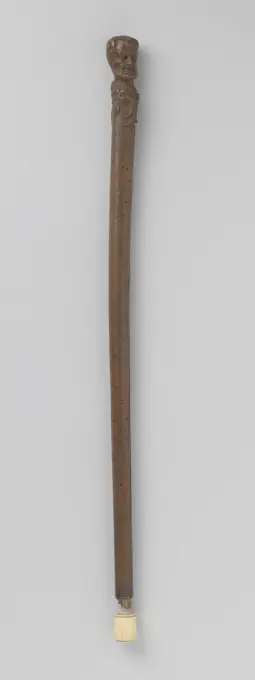
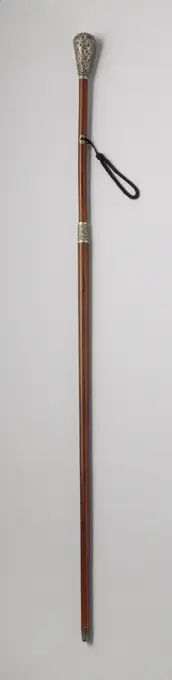
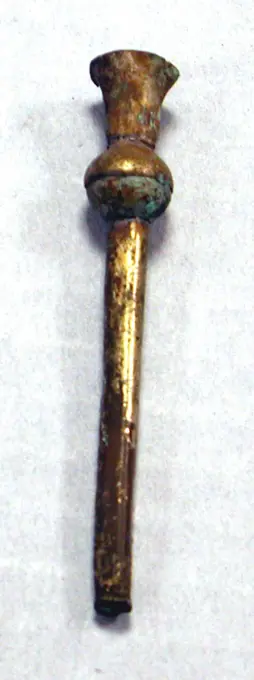
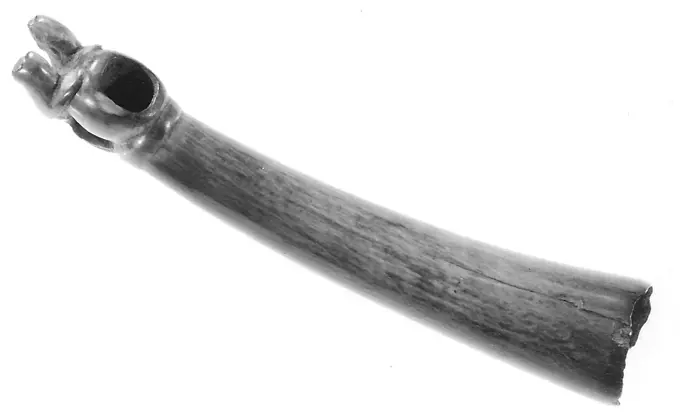
Button belonging to a walking stick, anonymous, c. 1700 - c. 1750 Button belonging to walking stick. Europe ironwood   Friesland Button belonging to walking stick. Europe ironwood   Friesland
Button belonging to a walking stick, anonymous, c. 1700 - c. 1750 Button belonging to walking stick. Europe ironwood Friesland Button belonging to walking stick. Europe ironwood Friesland
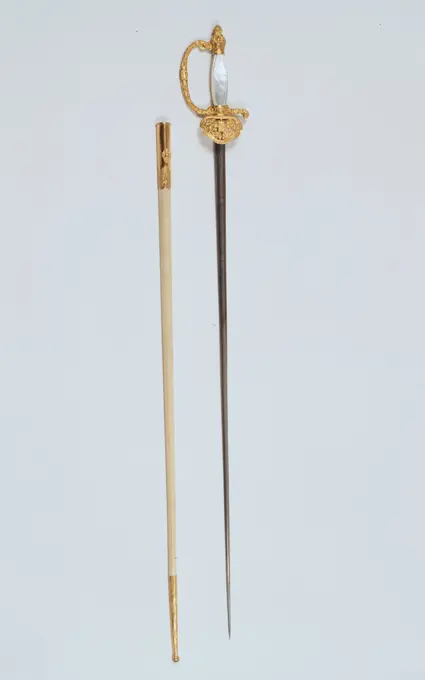
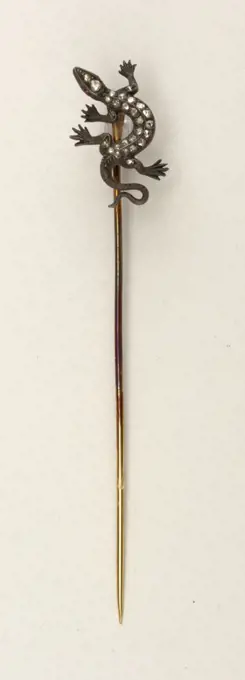
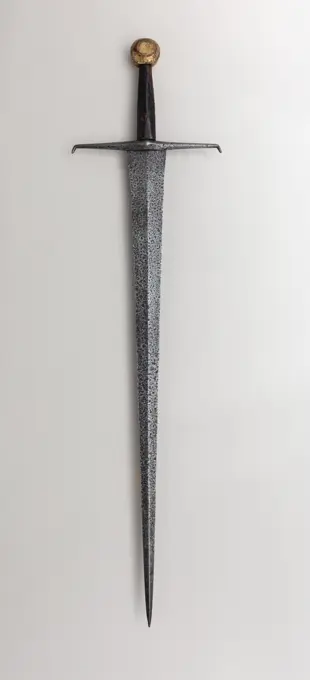
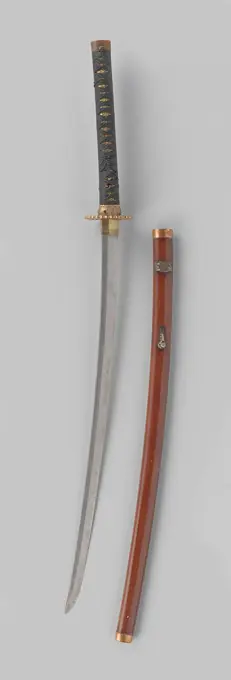
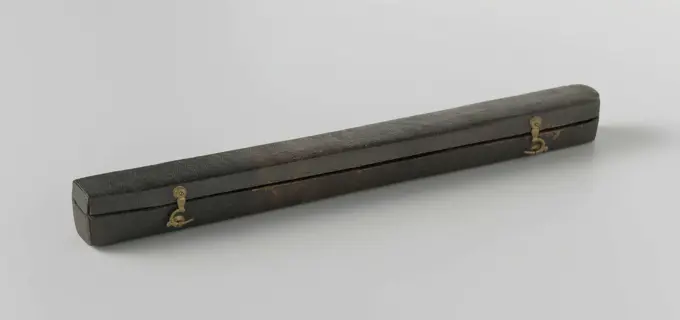
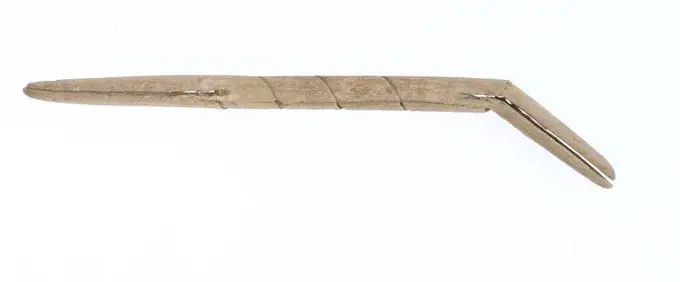
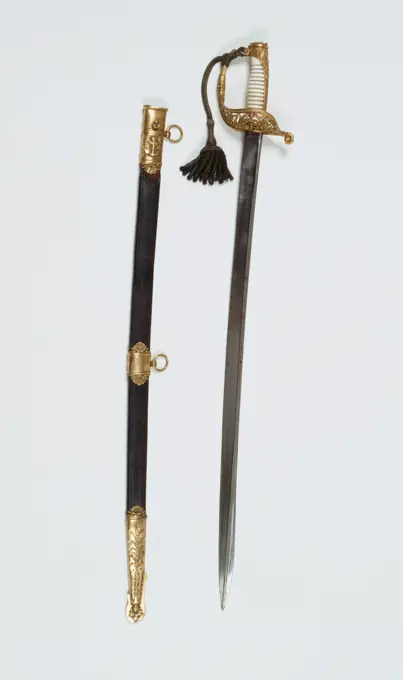
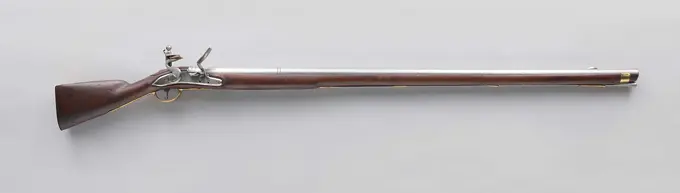
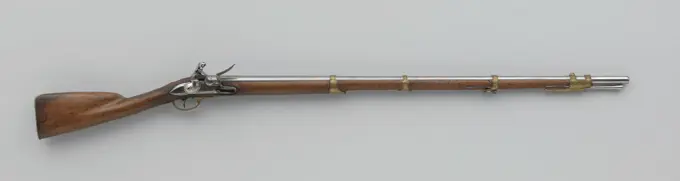
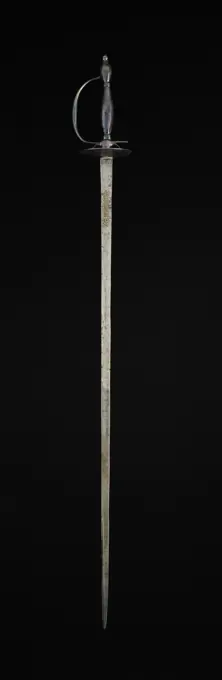
Officiersdegen General Model, 1820-1855, Kingdom of the Netherlands, Anonymous, 1800 - 1855 sword. chest Degen with fire -gilt copper hilt, consisting of a button with acanthus leaves, front bracket the same. Handling with silver wire. Two, not foldable bumps, engraved: H.G. Seelig. Half pare bar with a button with acanthus leaves. Iron with trophies and floral motifs decorated, etched, blauwed and fire -galvanized blade. Between blade and shot plate red cloth fabric. Black leather sheath. Copper fire guld top tire with carrier button. Sheath with red sheet. West-Europa gevest: copper (metal). kling: iron (metal). wool. kist: mahogany (wood). kist: glass forging / cutting / etching / engravingButton belonging to a walking stick, anonymous, c. 1700 - c. 1750 Button belonging to walking stick. Europe ironwood   Friesland Button belonging to walking stick. Europe ironwood   FrieslandDegen in Schede by Minister Jan van den Tempel, Anonymous, 1939 dress sword Degen in Schede belonging to the official costume of Jan van den Tempel worn at the opening of the States General when he was Minister of Social Affairs. Netherlands kling: iron (metal). schede: leather. gevest: gold (metal). greep: mother of pearl etching  NetherlandsPinSteel hook with flattened handle, Imra, c. 1900 - c. 1950 A steel hook with flattened handle. Germany (possibly) whole: Steel (Alloy) A steel hook with flattened handle. Germany (possibly) whole: Steel (Alloy)Przeszo Przysoci unknownDrumsticks, anonymous, c. 1800 - c. 1900 musical instrument. elements (of musical instruments). percussion instrument. beater. drumstick Wooden drum sticks Europe wood (plant material)Yektar late 19th century Indian. Yektar 501811a hundred;  19th century (1800-00-00-1810-00-00);Nail. Nail 244245Small fork with four teeth, broken into two parts, fork cutlery soil find tin metal, parts) Pewter fork in two parts ( and ) Rotterdam tin mark on the stem archeologyPitchDegen with copper bump and silver grip, anonymous sword Degen with copper handlebar and silver grip. The DEG has a copper movable bump plate with inscription 'J.H. Smalle '. Without sheath. Coming from J.H. Smalle, captain mobile militia.  iron (metal). copper (metal). silver (metal)BroadswordScarf pin with salamander, Gold, silver, pastes, Pin with a finial in the shape of a lizard. The lizard is ornamented with colored stones., France, late 19th century, jewelry, Decorative Arts, Stick pin, Stick pinCurrencyBladeFlint hunt rifle, Cornelis Coster, c. 1660 flintlock gun The final plate is engraved with human figures, leaf vines and a signature. The loop is equipped with a gilded, yellow grain. The flask is simply cut with, among other things, a leaf. The iron batter includes four loading stokkers, an ajour processed and engraved screw plate in the form of a heraldic emblem of a shield worn by angels and blazed with a small shield in the middle, and ajour processed chisel work behind the tractor. Utrecht iron (metal). brass (alloy). gilding (material) engraving / gilding / cutting / striking (metalworking)Gothic Sword early 15th century Italian. Gothic Sword. Italian. early 15th century. Steel, bronze, wood, leather, gold. SwordsSabel behorend bij wapenrek van Cornelis Tromp.Sable with wooden sheath in which a small knife is sitting. The handle of Roggevel is wrapped with green silk, pommel from Hoorn, Ferrule (Monting above Tsuba) has a decoration that occurs a lot in North Vietnam and also the wide range of Tsuba is typical of North Vietnam. Tsuba has a chrysanthemum form. Hardened steel blade.Waaierdoos van hout met koperen scharnieren en sluiting.Waongoos consisting of two uneven, hinged halves of wood, covered with black paper and equipped with two copper closures with hook and eye. Lining of red rips silk.Ladle, from a three-piece set, c. 1887, Possibly by Christopher Dresser; Maker: Hukin & Heath, Scottish, 1834-1904, 12 13/16 x 2 3/4 x 2 7/8 in. (32.54 x 6.99 x 7.3 cm), Silverplated metal, gilt, England, 19th centuryPin 15th-16th century Inca. Pin 315260Lange spaak van ijzer met ronde doorsnede eindigend in rechthoekig stuk.Long spoke of iron with round diameter ending in rectangular piece. Beaching at NG-NM-7662-1, one together formed. This spoke was cut down in Hammerfest, because it was meant that it was the course of a fire parent. However, the spoke was found to be solid iron. According to B. Kist, this is a hand spoke.Beulszwaard of the Court of Appeal, The Hague, Anonymous, c. 1500 - c. 1700 executioner's sword Beulszwaard with wooden hilt, sharp cutting part on both sides, at the top button, under hilt protrusions. Coming from the Court of Appeal, The Hague. Low Countries (possibly) Handle: Wood (plant material). Pommel, Pareer rod, Kling: Iron (Metal) forging / striking (metalworking)  The HagueSilver Products Factory K.F. Malcza (Warsaw; Sreber label; 1828-1864), Malcz, Karol (1797-1867); 1887 (1887-00-00-1887-00-00);Miniature poker. Culture: British, London. Dimensions: Length: 3 3/8 in. (8.6 cm). Maker: David Clayton (British, active 1689). Date: ca. 1720-30. Museum: Metropolitan Museum of Art, New York, USA.Ndungu 19th century probably Mayombe peoples In the Democratic Republic of the Congo ndungu is a wide spread term for this long slender drum. The drum is play in two ways: the player straddles the instrument to play the larger head and the narrow in rests in a stand or the drum may be carried over the heads of two bearers while the player stands facing the larger drum head.. Ndungu 502043Weaving tool. Dimensions: l. 15 cm (5 7/8 in). Dynasty: Dynasty 19-20. Date: ca. 1295-1070 B.C.. Museum: Metropolitan Museum of Art, New York, USA.Pin 5th-4th century B.C. Irish. Pin 468281Red Corn Snake 'Striped' on white backgroundBeulszwaard of the Court of Appeal, The Hague, Anonymous, c. 1500 - c. 1700 executioner's sword Beulszwaard with leather hilt, sharp cutting part on both sides, at the top button, under hilt protrusions. Coming from the Court of Appeal, The Hague. Low Countries iron (metal). leather forging / striking (metalworking)  The Hague"Louis XVI" tableware Knife; Designed by Joseph E. Birmingham; Manufactured by Shreve & Co.; USA; silver; cm: L: 15.4 x W: 2Sugar sifter second half 19th century Louis Béguin. Sugar sifter 188056 Maker: Louis Bguin, active 183878, Sugar sifter, second half 19th century, Silver, Length: 8 1/2 in. (21.6 cm). The Metropolitan Museum of Art, New York. Gift of Mrs. Samuel P. Avery, 1897 (97.2.20)Knife with gun -shaped handle, anonymous, c. 1775 - c. 1800 Knife with gun -shaped blade and gun -shaped handle. The knife is not marked. The knife is equal to five knives with the invnrs. BK-NM-11177-237, BK-NM-1177-238, BK-NM-11177-239, BK-NM-11177-240 and BK-NM-11177-241. Netherlands silver (metal) Knife with gun -shaped blade and gun -shaped handle. The knife is not marked. The knife is equal to five knives with the invnrs. BK-NM-11177-237, BK-NM-1177-238, BK-NM-11177-239, BK-NM-11177-240 and BK-NM-11177-241. Netherlands silver (metal)Knife 16th-17th century RG. Knife. possibly Dutch. 16th-17th century. Steel, silver. Metalwork-SilverHammered Silver Miniature Tube 8th-mid-16th century Peru; north coast (). Hammered Silver Miniature Tube. Peru; north coast (). 8th-mid-16th century. Silver (hammered), gilt. Peru. Metal-OrnamentsDegen from Ambassador Allard Merens. Those with gold-pearls hilt, black (and white) sheath of ambassador Allard Merens.English horn, Heckel, c. 1830 English horn (or althobo), marked: Heckel/ Biebrich Biebrich wood (plant material). ivory. copper (metal) English horn (or althobo), marked: Heckel/ Biebrich Biebrich wood (plant material). ivory. copper (metal)Arapaho used peace pipes, also known as calumets, significant for special ceremonial purposes such as medicine and sacred gatherings. (PR)Spear 18th-19th century Malayan. Spear 30647Walking staff with silver button, anonymous, c. 1700 - c. 1800  Walking staff or walking stick made from rotting but to a European model. Silver handle. Indonesia silver (metal). rattanPipette, pipette use glass soil find glass, free blown and formed Pipette in clear colorless glass Bottom with narrow spout to thickened body, slightly rejuvenated, to broken-down archeologySabel Marine Officer M 1843 Met Schede, Julien Coulaux, 1830 - 1832 sabre Marine officers' label with Schede, model 1843, Royal Navy Kingdom of the Netherlands. Sabel with fire gilt bronze hilt, consisting of button, handle hood, front bracket ajour korf with, among other things, anchor, button. To this silver thread Dragon. Inside Korf: H.A. van Karnebeek during his Dutch military operations 1830-1832. Ivory ribbed handle. Iron Kling. On the heel etched: Coulaux a ..... Other side: Klingenthal. Black leather sheath with ornamented band with button, carrying ring, middle tire with carrier and point. Klingenthal (Alsace) kling: iron (metal). gevest: bronze (metal). greep: ivory. schede: leather. silver (metal). silver thread gildingStaff. Dimensions: L. 105 cm (41 5/16 in). Dynasty: Dynasty 18. Date: ca. 1550-1295 B.C.. Museum: Metropolitan Museum of Art, New York, USA.Case for measureCalumet (Peace Pipe) Belonging the Nez Perce Tribe American Indian Horniman Museum, England Chisel on whiteAir pressure rifle, Anonymous, 1825 - 1849  The lock has a bronze coupling part that is cast as one part with the visor; The unprocessed lock plate is made of iron, just like the screw plate and the tractor bracket. The iron run can be screwed off. The iron and completely covered flask covered with black leather forms the air reservoir and can also be screwed off. Netherlands bronze (metal). iron (metal). leather   Netherlandspaste; Malcz, Karol (1797-1867), Silver Products Factory K.F. Malcza (Warsaw; Sreber label; 1828-1864); 1852 (1850-00-00-1855-00-00);Needle. UnknownFive Flintlock Wall Pieces.Flint fortress rifle (Walbuks) with battery lock; Profile tire with room; elongated half oval iron vizier grain; No visor keep; marked on loop; flat lock plate and rooster with beveled sides; bottom lock plate concave; nutshell French flask; brass band to tray; four brass loading stick carriers whose front trumpets; wide round trigger bracket; brass flask; Iron loading stick with thicker front part; Brass counterclock plate accolade shaped. In 1830 in use.Sponton with etched Stadholder Weapon (Willem IV or V), Anonymous, 1747 - 1795  The round shaft is made of oak. The head is made of iron and has an ajour processed base with an andries cross flanked by half moons; The two -edged blade is etched on both sides with a stadholder's weapon of Prince William IV or V on top of a martial trophy with flags, military musical instruments and insertions; De Banderol below has been wearing the motto of the Prinsen of Orange since Willem de Zwijger: Ie Maintiendrai. The shoe is made of iron. Netherlands oak (wood). iron (metal) etchingCosmetic Applicator or Pin. Afghanistan, 3rd century. Jewelry and Adornments; pins. IvoryOfficials to Cavaliery M 1854, C. 1854 - c. 1855 sabre Cavalry label for officers M 1854, model of the General Staff (1 Schedeband with loose ring). On the blade the brand of the Neuhaus company. Germany (possibly) Kling, Schede, Handcap: Iron (Metal). Pump plate, towing plate: Iron (metal). Handle: Sealskin   GermanyLime Dipper or Pin 5th-10th century Tiwanaku. Lime Dipper or Pin 319229PitchFlint rifle with battery lock, Johan George Erel, after 1728 - Before 1798 flintlock gun Flint rifle with battery lock, smooth round loop and a profile band at the tail piece. The loop at the room marked with Keur van Amsterdam and the lock attached with two bolts. On the Slotplaat inscription: J.G. Erttel Amsterdam. Nutenhouten French flask and inlaid silver thread at Slot and on the Kolf. On Kolfhals silver plate with a crown of silver wire above it. Four brass tires around loop and drawer, first with a pellet of visor and tube for the sink below, second with hinged iron eye. Tractor bracket with double lines and leaf motifs. Tegen lock plate roof -shaped with two eyes for lock bolts and one for screw with which tractor is attached. Kolf hood with four screws. Amsterdam iron (metal). wood (plant material). silver (metal). copper (metal)safety pinSword and Scabbard, 1700s. Java, 18th century. Steel and ivory; blade: 83.2 cm (32 3/4 in.); hilt: 13.4 cm (5 1/4 in.); scabbard: 83.8 cm (33 in.).The commanders baton of Michiel de Ruyter, anonymous, in or before 1676  Round stick with a layer of turtle, consisting of one piece with the seam lengthwise. A paint layer is applied to the stick under the turtle, silver or gold. Both above and below the staff is equipped with a gilded copper button, inlaid with turquoisen and diamonds. On the lower button an egg -shaped point, on the top a bearing eye surrounded by diamonds, in turn surrounded by turquoisen, one of which is missing. Naples wood (plant material). copper (metal). turquoise (mineral). diamond (mineral) grinding / forging / gilding / gildingTobacco Pipe, 1800s-early 1900s. Japan, Edo period (1615-1868) to Meiji period (1868-1912). Bamboo and metal; overall: 20.6 cm (8 1/8 in.).Hammered Silver Miniature Scepter 8th-mid-16th century Peru; north coast (). Hammered Silver Miniature Scepter 309158Dessert fork; Würtembergische metallwarefabrik - WMF (Germany; Wytwónia Z Otnarz; 1880-1914); after 1880 (1890-00-00-1914-00-00);Souvenir spoon Germany late 19th centuryOar, 22nd-18th century BCE, 3/4 x 1/4 x 3 1/4 in. (1.9 x 0.6 x 8.3 cm), Wood, Egypt, 22nd-18th century BCEBone ligula (ear pick) 1st-2nd century A.D. Roman Similar objects, sometimes identified as ear picks, are known in metal and glass.. Bone ligula (ear pick). Roman. 1st-2nd century A.D.. BoneKnife, Mother-of-pearl, silver, France, late 19th century, cutlery, Decorative Arts, KnifeGold pin with obsidian finial. Culture: Roman. Dimensions: length 3 5/8in. (9.2 cm)width of head 5/8 in. (1.6 cm). Date: ca. 1st century A.D..Gold pin wth an obsidian finial in the shape of an animal's head. Museum: Metropolitan Museum of Art, New York, USA.Sabel with Schede, Light Cavalerie No. 2, M1813, P.d. Baus, c. 1800 - c. 1850 sabre Sabel der Cavalerie Light Cavalry Model No. 2 with iron hilt and two side brackets. Inscription on one side: P.D. Baus, on the other side: in Gräfrath Bei Solingen. Solingen Kling, hilt, Schede: Iron (Metal). Handle: Wood (plant material). Handle: Leather forging  Netherlandska;  And after. XIXW. (1800-00-00-1850-00-00);War Hammer 15th century Italian Weapons of this type were used in the combat on foot as a display of prowess, or in a judicial combat to terminate some personal quarrel. Such foot combats were fought according to rules. For example, the number of strokes would be arranged, i.e. twelve with the axe, and as many with the sword, and with the dagger. The opponents were well protected with armor, so that even when hammering at each other with these formidable weapons death seldom occurred, and even injuries were rare.. War Hammer. Italian. 15th century. Steel, wood (oak). Shafted WeaponsModel of A Made Mast, Rijkswerf Amsterdam, 1845 demonstration model Round mast with square top, ears and driving scale. The mast itself consists of a square king and four cheeks, which are laid on the king with a switch -winged welding. The ears are connected to the king with dovetail connections and on top with bars. A long driving bed or driving scale is placed between the ears. Amsterdam wood (plant material)Flint hunt rifle, Anonymous, 1680 - 1700 flintlock gun The lock is made of iron. The heavy iron loop has a large caliber; Stamped on top with the Wapen van Utrecht, at the bottom with a crowned heart; The sight grain is made of a loader. The walnut flask is simply cut; The frontade is foreseen vam a hood of cow horn. The iron batter consists of three loading stokkokers, an ajour processed screw plate with a round shield engraved with a weapon with maritime motifs, including a ship's hull, a dolphin, an anchor and a latch, crowned a knight crown and two helmets with cover rugs, with maritime above it Motives and completely at the top of the initials Gs, a partially ajour processed and engraved tractor bracket, and the Kolfplaat; The wooden chest of drawers has a hood of cow horn. Utrecht iron (metal). brass (alloy). walnut (hardwood). horn (animal material). wood (plant material) cutting / engraving  HollandFork, steel, brass, Two long tines, pointing slightly outwards, rounded shoulders, baluster- shaped neck. Tapered cylindrical handle with round top, engraved floral pattern and rozette on the top. (Initial 'A'), Netherlands or Germany, early 18th century, cutlery, Decorative Arts, ForkFish fork;  1888 (1888-00-00-1888-00-00);Spontoon. Culture: American, Wrentham, Massachusetts. Dimensions: L. 75 3/4 in. (192.4 cm); L. of head 16 7/16 in. (41.8 cm); W. 2 7/16 in. (6.2 cm); Wt. 2 lbs. 3.8 oz. (1014.9 g). Date: 1770-90. Museum: Metropolitan Museum of Art, New York, USA.Brush unknownCourt swordHorn mid 19th-late 19th century African. Horn 504720Cornetto.Altzink (also called Cornetto) from Palmhout covered with leather. The instrument has seven feet of the front and one inch hole on the back. Decorated in three places on the top with double heart fighters pressed in the leather.Vu Hu Din Dung late 19th century Vanuatuan Vuhudendung with pointed flange. Musical Bow. The delicate sound of these musical bows is rarely heard today. They are the only pre-European chordophones found in Polynesia and Melanesia. The blunt end of the instruments is held between the lips, and the timbre is determined by shaping the mouth cavity while the strings are rapidly plucked. By this means speech could be imitated, and lovers conversed privately with these instruments in public situations.. Vu Hu Din Dung 501380Bow -Souvenir of Józef Czapski  Pencil L.&C. HardtmuthNeedle with eye and handle, point with wide eye slightly behind, needle soil find wood bone metal handle, needle, Needle with eye and handle point with something behind it wide eye archeology Capelle aan den IJssel House in Capelle castle clothing tailor leathermaker cobbler shoe shop Soil discovery: moat south side house ± 1395 - ± 1500 Capelle aan den IJssel 1964.Strip brass, bent and provided with hook, artifact soil found brass copper metal, cast Strip brass Some curved shape at one end with hook archeology Rotterdam City triangle Pakkenbrug New Haven Soil discovery Nieuwe Haven between the piles of the northern bridgehead of the Pakkenbrug.Lacrosse stick -Dzeklek of the fingernail Jan Stanis Stanis Awski, Jan (1860-1907); End of the 19th century (1890-00-00-1900-00-00);TweezersFibula Fragment. UnknownTwo vanilla beansEllemaat from Bredevoort, Anonymous, 1800  Length of 1 tbsp with handle from Bredevoort. V.z.v. Stamp and label. Bredevoort wood (plant material)   BredevoortFork (Germany); Designed by Joseph Maria Olbrich (Austrian, 1867 - 1908); Manufactured by Christofle (France); metal, silver; L x W x D: 21.8 x 2.5 x 1.8 cm (8 9/16 x 1 x 11/16 in.)Scissors dated 1277 AH/1860-61 CE Although small, the elongated shape gives these scissors an elegant appeal. Almost the entire surface, including the inside of the thin blades is finely decorated in floral patterning, exemplifying the intricate craftsmanship of gold damascene metalworking during the late Ottoman period. The artist left his mark by inscribing his name "Sheref" in a small drop-shaped cartouche, hardly visible to the eye. Among the originalities of this example are the handles rendered as an open-work calligraphy. "Ya Fattāh (Oh [God the Opener!), referring to one of the ninety-nine beautiful names of God (al-Asmā al-Husnā), is written in elegant thuluth mirror script. Another rare feature is a lock on one side, enabling to lock and unlock the blades. Scissors like this one were considered a catchy "must-have" tool by the Ottoman elite. They were used by calligraphers, viziers, treasurers, chief-secretaries, rulers, and others whose profession related to writing at or Schede van Lans van Cornelis Tromp, Anonymous sheath Red sheath of the Naginata type.  copper (metal). brass (alloy). cypress (wood). lacquer (coating)Teaspoon. Joseph Moulton III (United States, 1744-1816). United States, Massachusetts, Newburyport, circa 1775. Furnishings; Serviceware. SilverSpoon 1790-1800 Probably Matthias Lemaire. Spoon 7794Tassel; silk, copper wire, parchment, wooden corePin ca. 1900 European. Pin 104866English Horn in G. Culture: German. Dimensions: L. 74.5 cm (29 5/16 in.). Maker: Carl Theodor Golde (German, Marienburg 1803-1873 Dresden). Date: ca. 1840. Museum: Metropolitan Museum of Art, New York, USA.Pestle or AdzeHandle