Historical Blades and Accessories

A collection of antique swords, walking sticks, and decorative pins exhibiting intricate designs and craftsmanship from various eras.
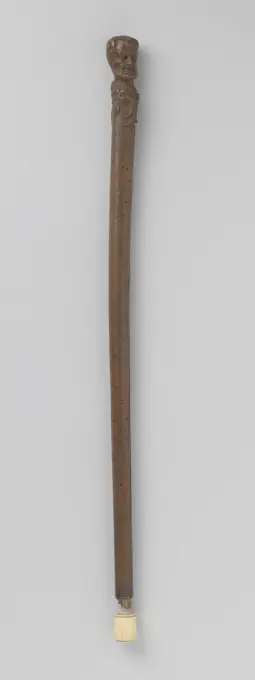
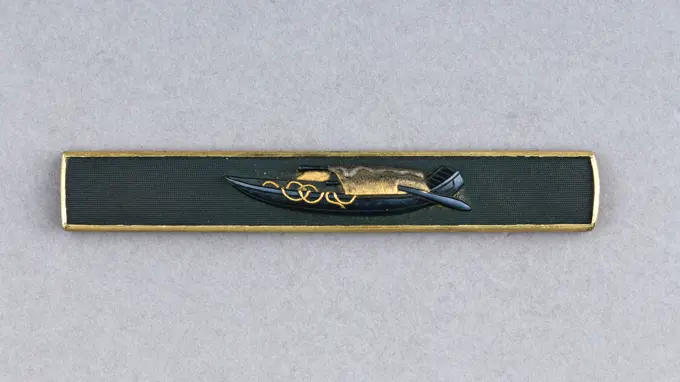
Button belonging to a walking stick, anonymous, c. 1700 - c. 1750 Button belonging to walking stick. Europe ironwood   Friesland Button belonging to walking stick. Europe ironwood   Friesland
Button belonging to a walking stick, anonymous, c. 1700 - c. 1750 Button belonging to walking stick. Europe ironwood Friesland Button belonging to walking stick. Europe ironwood Friesland
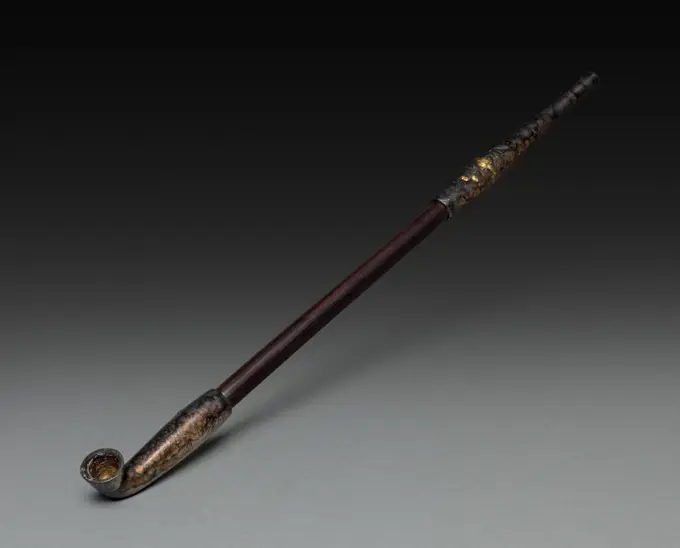
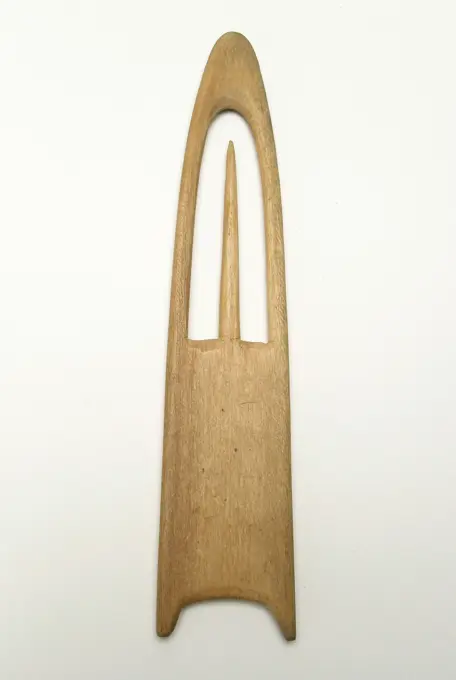
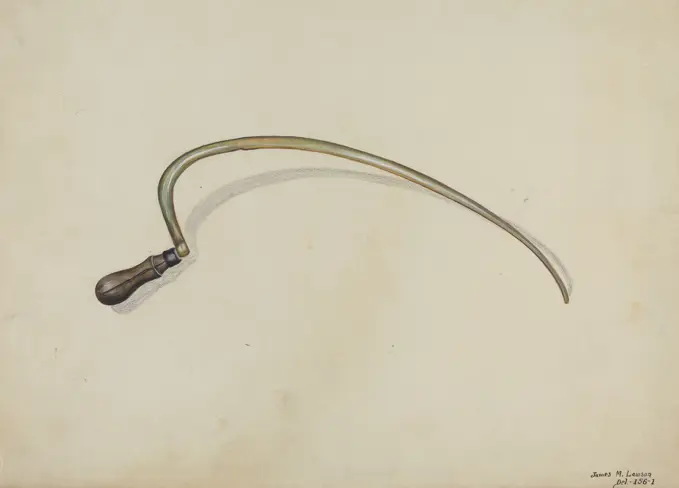
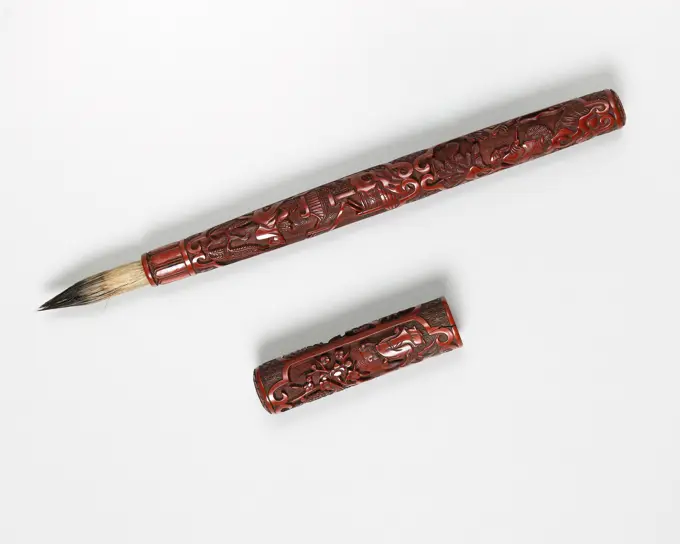
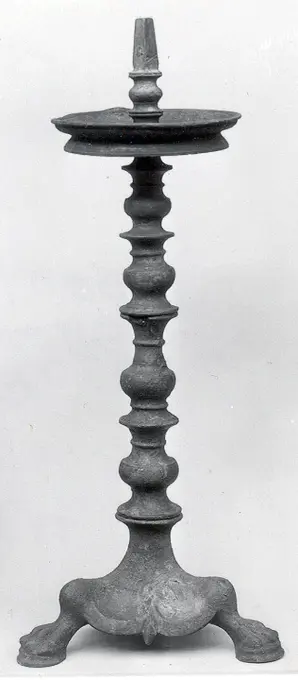
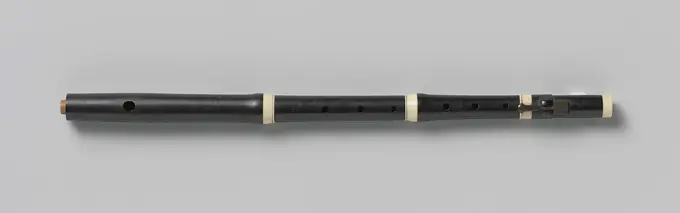
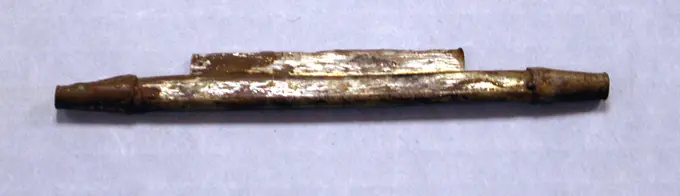
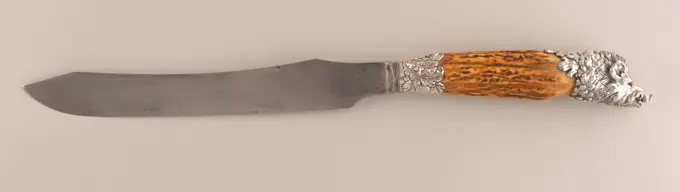
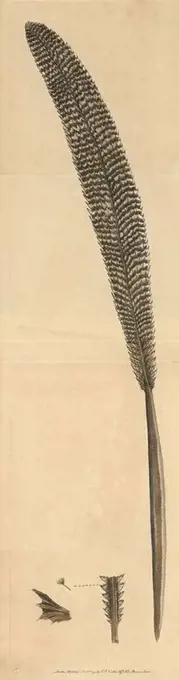
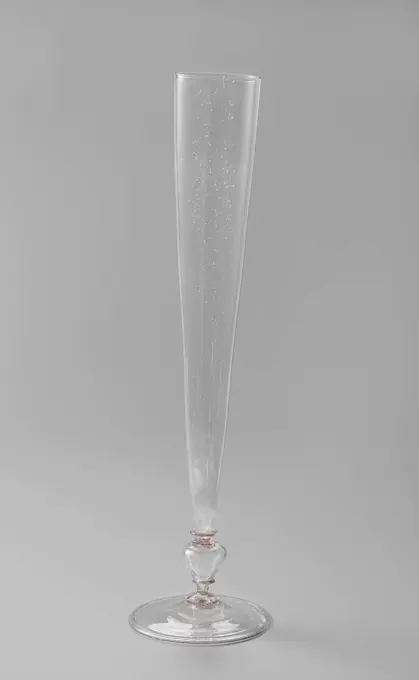
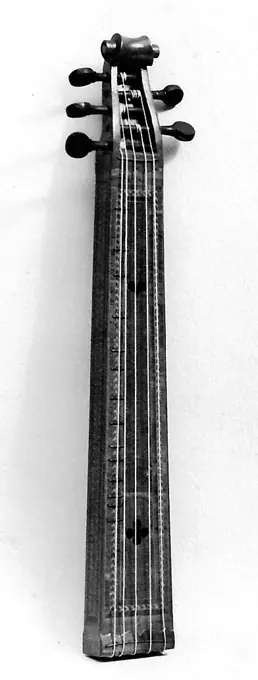
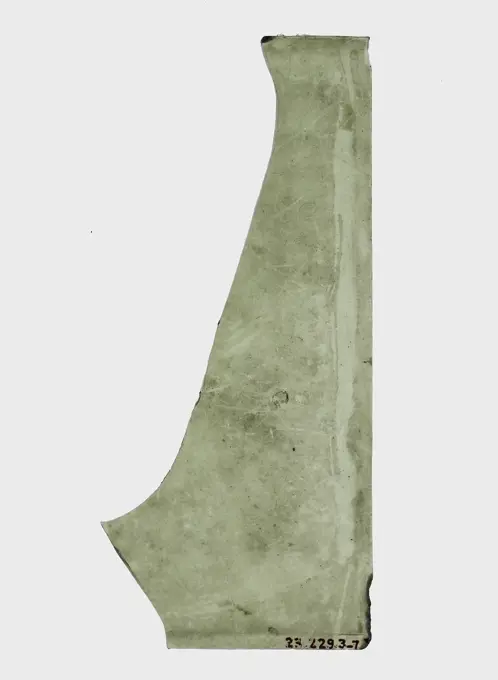
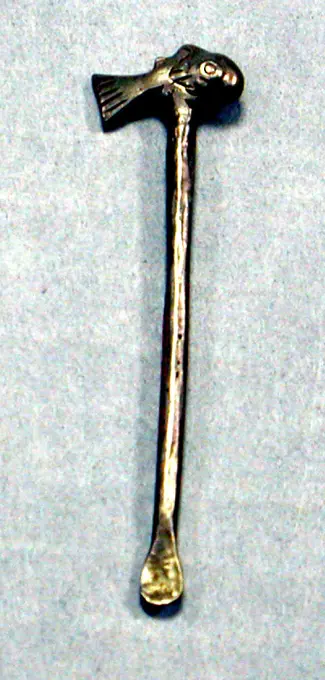
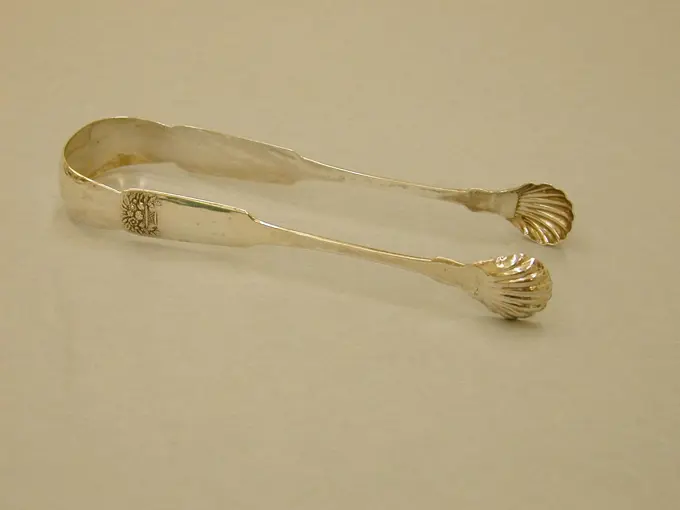
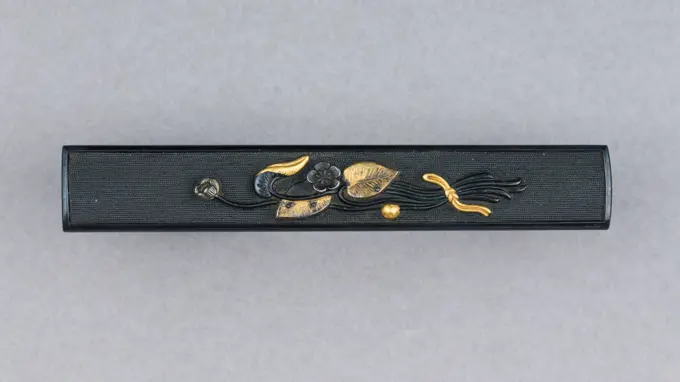
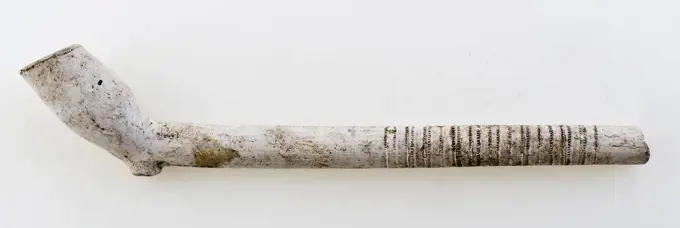
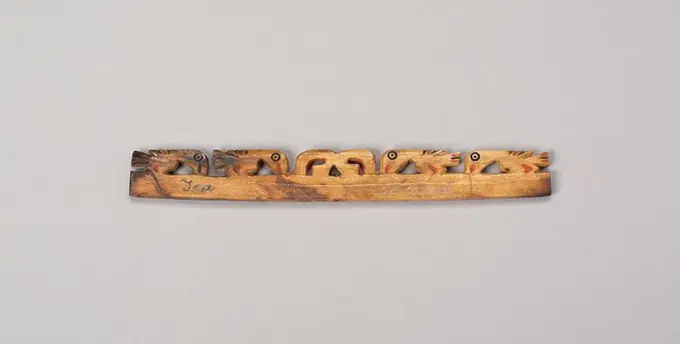
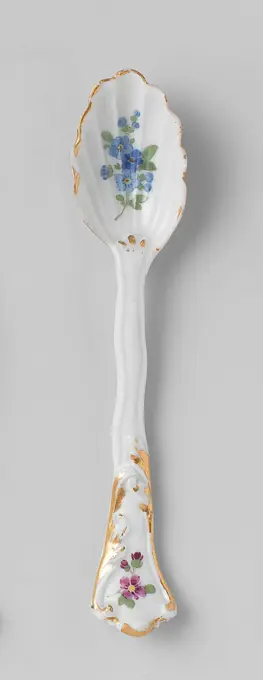
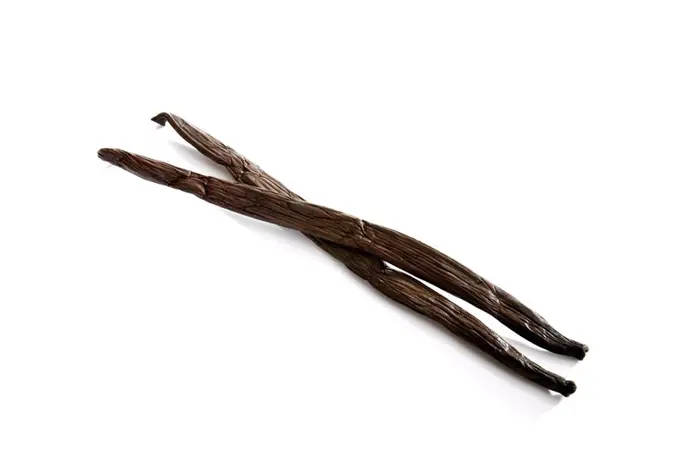
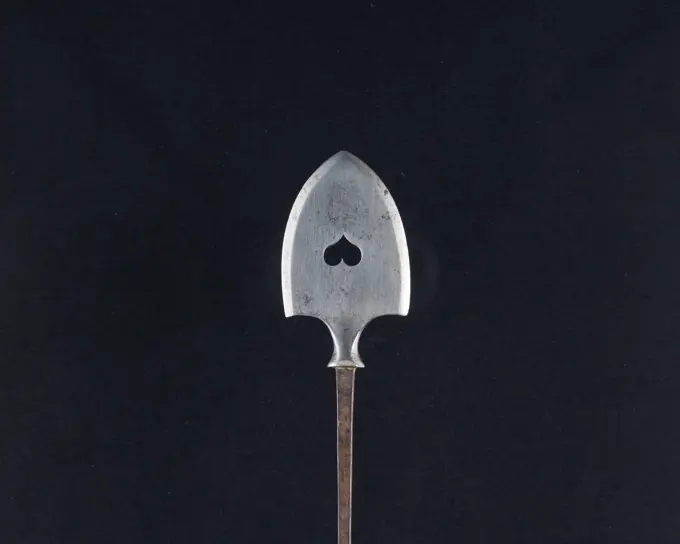
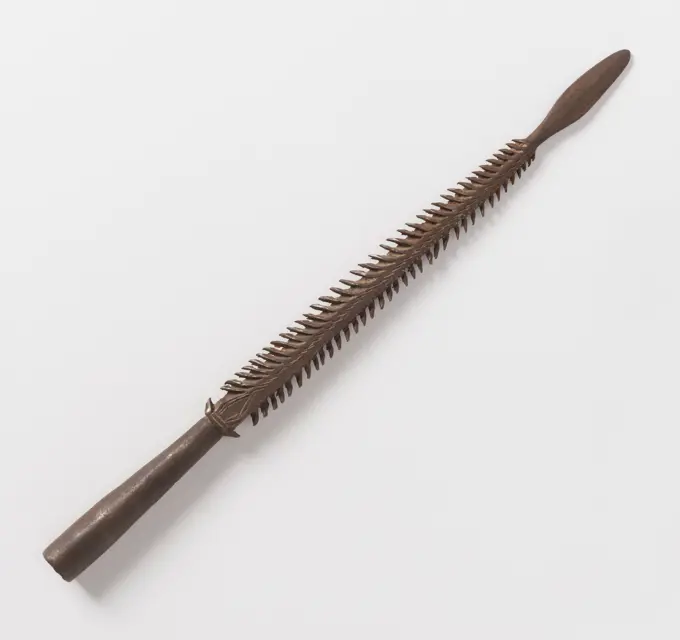
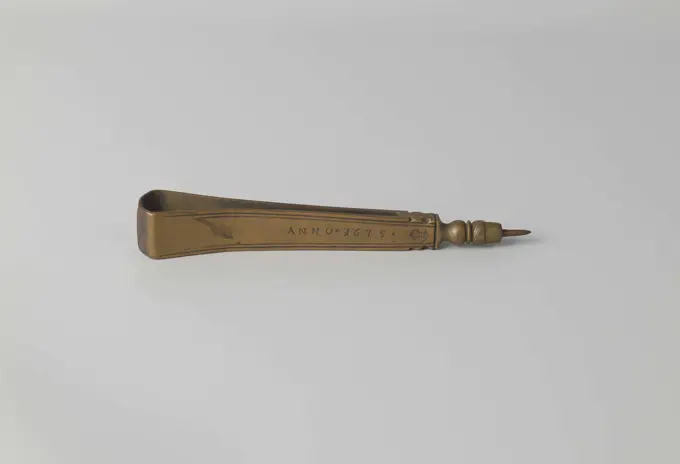
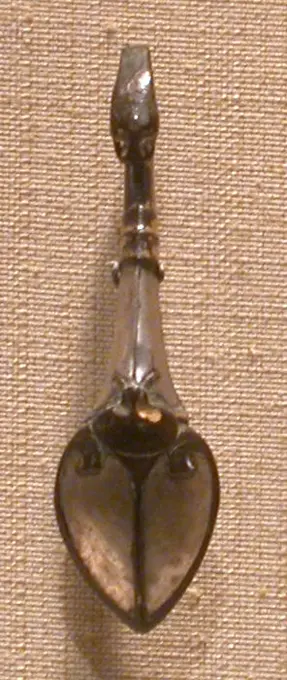
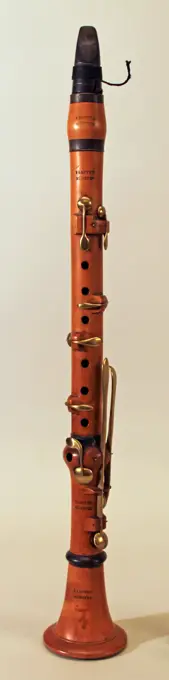
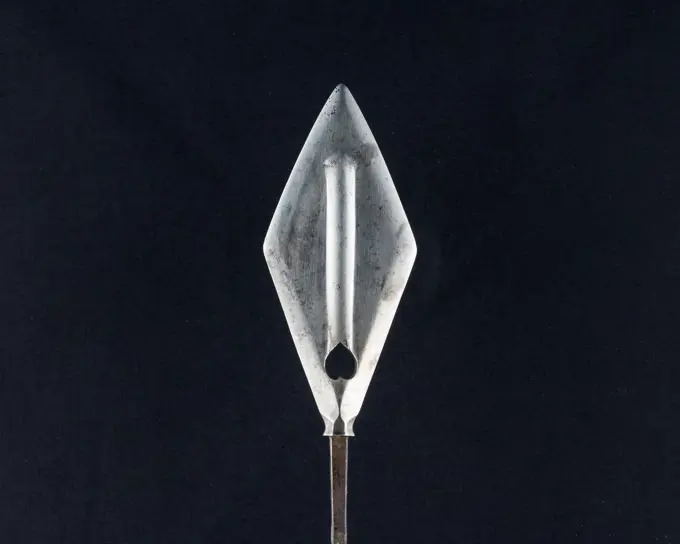
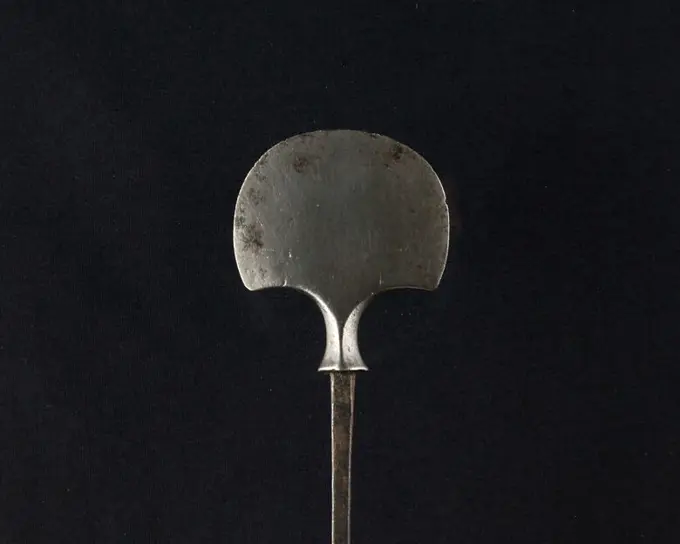
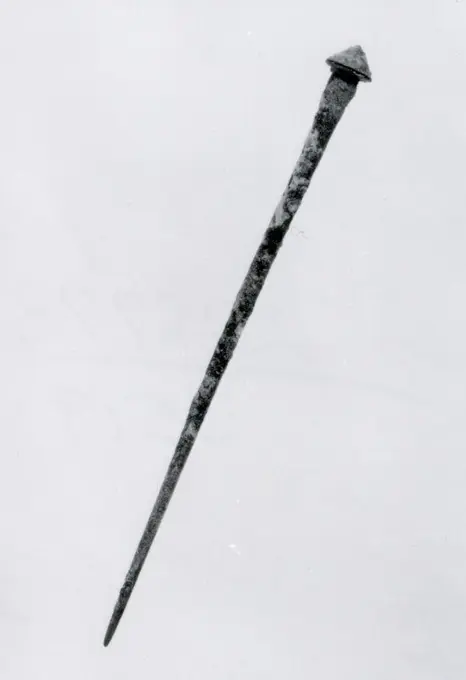
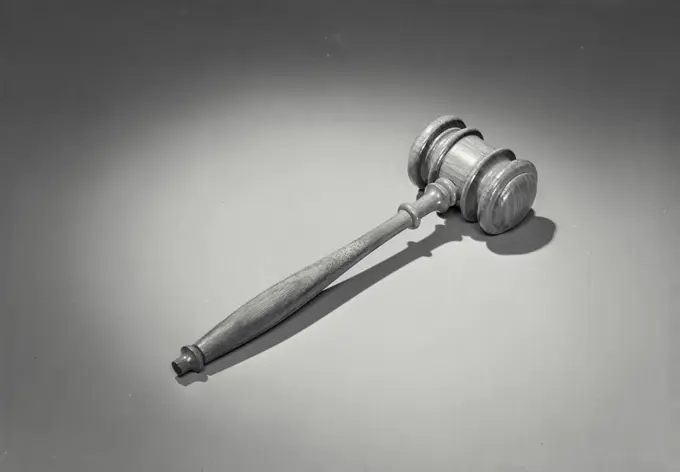
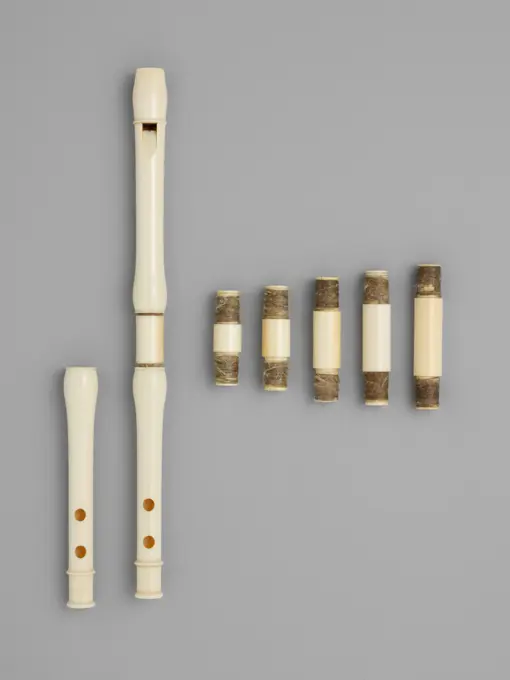
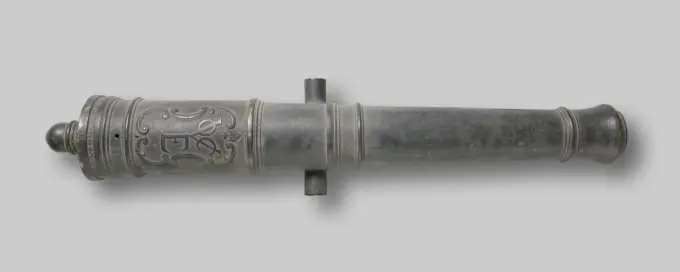
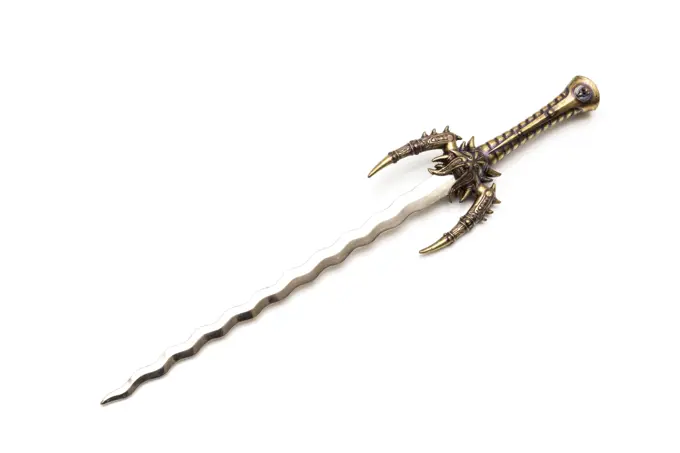
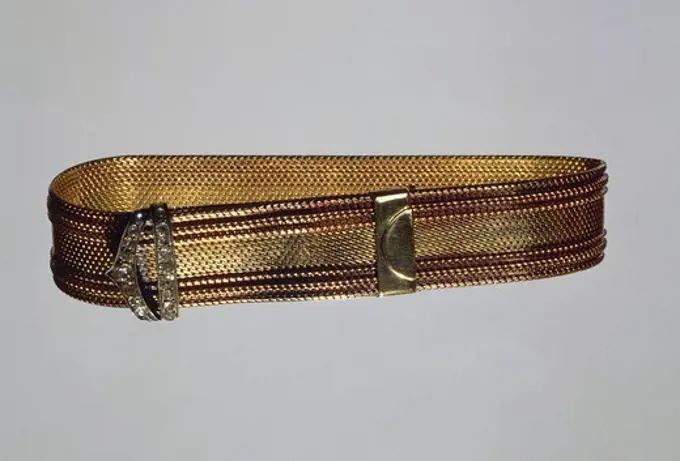
Hellebaard, anonymous, c. 1600 - c. 1699 Halberd Hellebaard. Duut with two round notches at the base. Ax and hook with a dense leaf and partially serrated edge. Smooth shaft. Two feathers (44 cm). At the end of the round stick a smooth point (12 cm) with two ring ornaments. State good. Low Countries Kling, feathers, house, nodus: Iron (metal). Shaft: Wood (Plant Material) forging / polishing / cuttingTobacco Pipe, 1800s-early 1900s. Japan, Edo period (1615-1868) to Meiji period (1868-1912). Wood and silver; overall: 18.8 cm (7 3/8 in.).Netmaking needle -Reed Pipe 19th century Native American (Haida). Reed Pipe 501188James M Lawson, Sickle, c 1936 SicklePaddle Doll ca. 2030-1981 B.C. Middle Kingdom. Paddle Doll. ca. 2030-1981 B.C.. Wood, paint. Middle Kingdom. From Egypt, Upper Egypt, Thebes, Asasif, Tomb MMA 816, MMA excavations, 1929-30. Dynasty 11Brush Handle and Cover, late 15th-early 16th century, 8 7/16 x 5/8 x 5/8 in. (21.4 x 1.6 x 1.6 cm), Carved red lacquer (t'i-hung), China, 15th-16th century, During Ming and Qing, lacquer was used for a variety of scholar's implements including brushes, dusters,ju-i scepters, seal paste boxes, and incense containers. In spite of the small size, this brush handle and cover are decorated with a remarkable number of carved motifs. The handle has three landscape scenes with scholarly figures among winding bridges, fantastic rocks, and terraced buildings. Trees include willow, pine, and banana and the sunken relief ground is of water diaper with star diaper between three reserves. The collar of the handle is carved with a row of lotus petal panels. The cover illustrates two scenes: one of a pagoda in a rocky landscape and the other, a figure standing with a fly whisk under a blossoming prunus outside a building. The ends of the handle and cover are each carved with a chrysanthemum flower. Brvintage soft leather end mallet over white, clipping pathDETALLE DE LA EMPUÑADURA DE LA ESPADA DE FERNANDO III EL SANTO - SIGLO XIII - SE ENCUENTRA EN LA CAPILLA REAL DE LA CATEDRAL DE SEVILLA. Location: CATEDRAL-INTERIOR. Sevilla. Seville. SPANIEN.Vanilla pod Vanilla pod on white background Copyright: xZoonar.com/OlgaxPopovax 2542109Lamp stand ca. 6th-7th century A.D. Sasanian This lamp stand is shaped like a baluster, such as one might find on any modern staircase. It stands on three feet shaped like feline paws. The central shaft is comprised of four flattened spheres alternating with disks. Near the top sits a round tray with a flaring edge. The top of the shaft forms a dull square point. The stand is bronze, and was cast in at least four separate pieces. Originally a bronze oil lamp would have sat on top of the square point, and the tray would have prevented hot oil from dripping on the table or the person using the lamp.This lamp stand was excavated at Qasr-i Abu Nasr near Shiraz, Iran. It was found in a room, which had been burned, filled with clay bullae bearing impressions of seals. The bullae were spread about the room, suggesting that at the time of the fire they were still attached to documents or objects being stored. The lamp stand was probably used to view the seal impressions, which are best discernFitting in candle shape with electricity wire, 1750 Fitting has probably been part of the wall arm. Northern Netherlands (possibly)Netherlands (possibly) copper (metal) Fitting has probably been part of the wall arm. Northern Netherlands (possibly)Netherlands (possibly) copper (metal)Flute.Flute of ebony with ivory and a valve. Signature: Imandt Rotterdam.CDK unknownMaker's Mark indistinct, Caddy Spoon, c. 1815, silver.Rolling pinMiniature Litter Section 11th-late 15th century Chimú or Chancay. Miniature Litter Section 309208Necklace -Carving Knife (USA); Manufactured by Gorham Manufacturing Company (United States); horn, steel, silver; L x W(a): 40.6 x 2.5 cm (16 x 1 in.); Bequest of Julian Clarence Levi; 1972-5-3-aRichard Crossley, Five Teaspoons (altered), 1796/97, silver.Hat pin in the form of anoar.   Maker: George H. Ford Company, American, 1891-1903Knife Handle (Kozuka) Japanese ca. 1615-1868 A kozuka is a handle of a by-knife that is part of a sword mounting. It is kept in a slot on the reverse of a katana scabbard, often with a matching kōgai (hairdressing tool).Silver sea-pen, Pennatula argentea. Illustration signed N (Frederick Nodder).. Handcolored copperplate engraving from George Shaw and Frederick Nodder's "The Naturalist's Miscellany" 1792.. Frederick Polydore Nodder (1751~1801) was a gifted natural history artist and engraver. Nodder honed his draftsmanship working on Captain Cook and Joseph Banks' Florilegium and engraving Sydney Parkinson's sketches of Australian plants. He was made "botanic painter to her majesty" Queen Charlotte in 1785. Nodder also drew the botanical studies in Thomas Martyn's Flora Rustica (1792) and 38 Plates (1799). Most of the 1,064 illustrations of animals, birds, insects, crustaceans, fishes, marine life and microscopic creatures for the Naturalist's Miscellany were drawn, engraved and published by Frederick Nodder's family. Frederick himself drew and engraved many of the copperplates until his death. His wife Elizabeth is credited as publisher on the volumes after 1801. Their son Richard Polydore (1774~182Sugartongs.  Maker: Myer Myers, American, 1723-1795Rod Late Period 664-332 B.C. View more. Rod. 664-332 B.C.. Copper. Late Period. From Egypt, Upper Egypt, Thebes, Asasif, Tomb MMA 812, MMA excavations, 1929-30. Dynasty 27-30Shirt Fragment, 19th century, 31 15/16 x 9 9/16 in. (81.08 x 24.28 cm), Wool, ramie; woven fabric, Taiwan, 19th centuryPincushion of bone. Length 7.5 cm diameter 1 3 cm (12th- 14 th ), Medieval period belonging of the " Burgo de Santiuste Museum" in Alcalá de Henares. (Madrid). SPAIN.EVENTAIL. Broken with ivory, guards carved in relief, floral motif on branches, women and drapery. Ouvraged ivory (18 branches). Paris, Carnavalet museum. Eventail: broken ivory, guards carved in relief; floral motif on branches; Women and drapery Fashion accessory, EventailArrow with composite stone tip ca. 1479-1458 B.C. New Kingdom. Arrow with composite stone tip. ca. 1479-1458 B.C.. Reed, wood, quartz, adhesive. New Kingdom. From Egypt, Upper Egypt, Thebes, Sheikh Abd el-Qurna, Tomb of Senenmut (TT 71), below, deposit of bows and arrows, MMA excavations, 1935-36. Dynasty 18Pin 1893 American. Pin 124497A crowbarModel Adze from a Foundation Deposit. Dimensions: l. 6.5 cm ( 2 9/16 in.). Dynasty: Dynasty 18. Reign: Joint reign of Hatshepsut and Thutmose III. Date: ca. 1479-1458 B.C.. Museum: Metropolitan Museum of Art, New York, USA.clean packing aluminium. net design of packaging made of aluminium. For foodFish net needle ca. 1295-1070 B.C. New Kingdom, Ramesside. Fish net needle. ca. 1295-1070 B.C.. Ivory. New Kingdom, Ramesside. From Egypt, Memphite Region, Lisht North, Cemetery, MMA excavations, 1913-14. Dynasty 19-20Prime of leg with round button and collar profile, anonymous, c. 1800 - c. 1900 A prime of leg with a round button and collar profile. Netherlands bone (material) A prime of leg with a round button and collar profile. Netherlands bone (material)Flute glass.Flute glass on flat foot with beaten edge. The stem made up of a hollow Baluster and a disc. High conical chalice.Model of Diagonal Framing, anonymous, anonymous, c. 1822 instruction model Model that demonstrates the cross connection according to Robert Seppings. It consists of two road beams, between which diagonal braces, supporters and keys are applied. United Kingdom wood (plant material). brass (alloy)   EnglandEpinette des Vosges late 19th century Amant Constant (Amé) Lambert French. Epinette des Vosges 505254Glass Fragment 1775 French. Glass Fragment. French. 1775. Colorless glass. Made in Paris, France. Glass-StainedSilver Lime Spoon with Fish Top 15th-16th century Inca. Silver Lime Spoon with Fish Top 315639Flute.Flute of palm wood with a valve. Signature: Dresden.Grissini - breadsticks isolated on white backgroundCorkscrew isolated on white background Wreath fillet, funerary 4th-3rd century B.C. Etruscan. Wreath fillet, funerary 245980SugarTongs.   Maker: E. Benjamin and Company, American, active 1840-47Knife Handle (Kozuka) 19th century Japanese A kozuka is a handle of a by-knife that is part of a sword mounting. It is kept in a slot on the reverse of a katana scabbard, often with a matching kōgai (hairdressing tool).. Knife Handle (Kozuka) 35048Clay pipe, marked, with decoration bands embossed on handle, clay pipe smoking equipment smoke floor earthenware ceramic pottery, pressed finished baked Clay pipe marked with decoration bands embossed on handle Decoration consists of rings of small teeth arranged with radstempel. Heel mark. heel mark: TR in circle of dots archeology smoking tobaccoBalance-Beam Scale with Cut-Out Birds and Geometric Motifs. Possibly Nazca; South coast, Peru. Date: 500 AD-800 AD. Dimensions: 13.3 x 1.8 cm (5 1/4 x 11/16 in.). Bone with pigment. Origin: Peru. Museum: The Chicago Art Institute, Chicago, USA.Three-Tined Fork, silver, gold, porcelain, enamel, Silver-gilt fork, three-tined flaring at the join. Waisted shoulder, banded ferrule. Tapering porcelain handle, irregular in shape. Multi-colored decoration on white ground. On front a man in costume, standing in front of a tree. On the back a woman in similar position. Blue scalloped pattern with red scrolls on top and end of handle., England, 18th century, cutlery, Decorative Arts, fork, forkLepel, veelkleurig beschilderd met Deutsche Blumen, insekten en vruchten.Spoon from painted porcelain. The oval lobed bin is painted with Deutsche Blumen, insects and fruits. The handle and the end are decorated with a gold-plated Rocaille ornament and relief and decorated with Deutsche Blumen. The spoon belongs to a tableware (BK-17474-1 to BK-17474-253). The spoon has been marked.Soprano 'DUYTSE Schalmey' (Shawm), Richard so, c. 1680 Soprano Duytse Schalmey in two parts with fontanelle, made of boxwood with brass rings. Amsterdam boxwood (hardwood). brass (alloy) Soprano Duytse Schalmey in two parts with fontanelle, made of boxwood with brass rings. Amsterdam boxwood (hardwood). brass (alloy)Tweezers Mounted on a Wood Block ca. 1550-1295 B.C. New Kingdom. Tweezers Mounted on a Wood Block. ca. 1550-1295 B.C.. Wood, bronze or copper alloy. New Kingdom. From Egypt, Upper Egypt, Thebes. Dynasty 18Vanilla beansArrowhead (Yanone) 18th century Japanese Although today Japanese warriors are renowned most for their swordsmanship, archery, especially from horseback, has been an essential part of samurai warfare and culture for centuries. Arrows were fitted with heads of varying shape according to their intended use in war, the hunt, or target practice. Arrowheads made for use on the battlefield incorporated different designs intended for specialized purposes such as the piercing of armor or to cause maximum damage to horses and unarmored personnel.Large arrowheads, pierced and elaborately chiseled with landscapes, birds, flowers, dragons, and Buddhist divinities, were created to be admired for the beauty of their metalwork and design rather than for use in archery. Such highly elaborate examples may have been made for presentation or as a votive offerings to a shrine.. Arrowhead (Yanone). Japanese. 18th century. Steel. Archery Equipment-ArrowheadsLance Point; wrought steelWatch key, Gold, topaz, Gold watch key, ornamented in leaf design; topaz in top., USA, late 19th century, jewelry, Decorative Arts, Watch keyKnife handle (Kozuka) ca. 1615-1868 Japanese A kozuka is a handle of a by-knife that is part of a sword mounting. It is kept in a slot on the reverse of a katana scabbard, often with a matching kōgai (hairdressing tool).. Knife handle (Kozuka) 34544Writing Palette and Brushes of Princess Meketaten ca. 1353-1336 B.C. New Kingdom, Amarna Period. Writing Palette and Brushes of Princess Meketaten 544694ARCO DE TIRO.Knife lift from the wreck of the East Indiesman Hollandia.knife, Handle, Cylindrical: tapering; ID. NG 1979-403H.Silver Atlatl Spear Thrower 12th-15th century Chimú. Silver Atlatl Spear Thrower 315304Tang with the year 1675. The object has been composed of six parts: an iron pin, a copper foot in the shape of a jerk and a baluster, two copper suspension tangarmes, the ends of which are made of iron. Mounted on both sides with a crowned thistle and dated 1675.Silver Salt Spoon. Dated: c. 1936. Dimensions: overall: 35.9 x 25.4 cm (14 1/8 x 10 in.). Medium: watercolor, graphite, and gouache on paper. Museum: National Gallery of Art, Washington DC. Author: John R. Towers.Insulated screwTeaspoon.   Maker: Daniel Noyes Dole, 1775-1841Belt hook 4th-3rd century B.C. China. Belt hook. China. 4th-3rd century B.C.. Bronze inlaid with silver and gold. Eastern Zhou dynasty, Warring States period (475-221 B.C.)-Western Han (206 B.C-A.D. 9) dynasty. MetalworkClarinet in E-flat Franz Lauter German ca. 1840 According to the city archives in Münster, Franz Lauter was a turner born 7 April 1816 in Münster. His parents were the turner Ernst Lauter and Catharine nee Terlinde. Franz Lauter had six siblings of which 4 brothers were also turners.He came from Münster to the US in 1845. He claimed to have won prize medals at the 1844 Berlin Worlds Fair, and at the 1853 New York Crystal Palace Exhibition. (Nancy Groce, Musical Instrument Makers of New York, Pendagron Press 1991, 95. Waterhouse, NLI, 226.)Overall size: 495Bore: c-hole 12.2, f-hole 12.2.Conical part: 90Technical description: Boxwood with horn ferrules and brass keywork. Five pieces: mouthpiece, barrel, upper section and middle section for the fingers of the right hand in one piece, lower section with keys, bell. Ebony mouthpiece not grooved. Bulgy barrel. Speaker liner projects about 4mm into the bore. No key for F4/ C6. Wooden integral thumb rest. Levers for L4, tone-hole and key for wooden souvenir pencil isolated on white backgroundAlto Recorder (Middle Joint), Jan Steenbergen, c. 1700 Middle part altoblock flute, made of maplehout Amsterdam maple (wood) Middle part altoblock flute, made of maplehout Amsterdam maple (wood)Decorative bottle of bubble bath, Christmas presentArrowhead (Yanone) 18th century Japanese Although today Japanese warriors are renowned most for their swordsmanship, archery, especially from horseback, has been an essential part of samurai warfare and culture for centuries. Arrows were fitted with heads of varying shape according to their intended use in war, the hunt, or target practice. Arrowheads made for use on the battlefield incorporated different designs intended for specialized purposes such as the piercing of armor or to cause maximum damage to horses and unarmored personnel.Large arrowheads, pierced and elaborately chiseled with landscapes, birds, flowers, dragons, and Buddhist divinities, were created to be admired for the beauty of their metalwork and design rather than for use in archery. Such highly elaborate examples may have been made for presentation or as a votive offerings to a shrine.. Arrowhead (Yanone). Japanese. 18th century. Steel. Archery Equipment-ArrowheadsArrowhead (Yanone) Japanese 13th-18th century Although today Japanese warriors are renowned most for their swordsmanship, archery, especially from horseback, has been an essential part of samurai warfare and culture for centuries. Arrows were fitted with heads of varying shape according to their intended use in war, the hunt, or target practice. Arrowheads made for use on the battlefield incorporated different designs intended for specialized purposes such as the piercing of armor or to cause maximum damage to horses and unarmored personnel.Large arrowheads, pierced and elaborately chiseled with landscapes, birds, flowers, dragons, and Buddhist divinities, were created to be admired for the beauty of their metalwork and design rather than for use in archery. Such highly elaborate examples may have been made for presentation or as a votive offerings to a shrine. View more. Arrowhead (Yanone). Japanese. 13th-18th century. Steel. Archery Equipment-ArrowheadsPitch Pipe 1854-73 Alexander Liddle English. Pitch Pipe. British. 1854-73. wood, brass. London, England, United Kingdom. Aerophone-Whistle Flute-recorderArrowhead (Yanone). Culture: Japanese. Dimensions: L. 8 1/8 in. (20.6 cm); L. of head 1 7/8 in. (4.8 cm); W. 1 3/4 in. (4.5 cm); Wt. 1.2 oz. (34 g). Date: 18th century. Museum: Metropolitan Museum of Art, New York, USA.Fragmentary Handle. UnknownPin ca. late 3rd-early 2nd millennium B.C. Bactria-Margiana Archaeological Complex. Pin 326670Fragment of glass ear with curled tip, clear glass, vase bottle vessel holder soil find glass, can be hand-blown Glass ear of jug or vase. Clear and colorless glass As question mark formed ear with curled end archeology Valckensteyn Poortugaal Albrandswaard serve serving Soil discovery: castle Valckensteyn in Poortugaal now Albrandswaard 1961-1962.Vintage photograph. Gavel on blank backgroundServing fork ca. 1808 G. Gibbs. Serving fork 204478Galoubet ca. 1770 Attributed to Gilles Lot French The galoubet provided melody and rhythmic accompaniment for dancing. A musician could operate it with one hand and with the other play a drum or tambourin de béarn, a dulcimer with strings that were struck with a beater to create a drone. Alternate tuning joints enabled the galoubet to play in tune with other instruments.. Galoubet. French. ca. 1770. Ivory, leather. Paris, France. AerophoneBlade with engraved snake for a long-sword (koto-katana) and mounting with dragon decoration, 16th century, Unknown Japanese; Artist: Tsuba by Ōmori Terumasa, 1 5/16 × 3/8 × 32 1/2 in. (3.33 × 0.95 × 82.55 cm) (blade (c)), Steel and gold paint; mounting: wood, lacquer, shakudō, shibuichi, gold, ray skin, and silk; tsuba: shakudō, shibuichi, and gold; menuki: silver, Japan, 16th century, Sword manufacturing was introduced to Japan from the Asian mainland. The earliest known types of swords were straight and mostly 23 1/2 to 27 1/2 inches in length. They were made of bronze and used for stabbing as well as striking. Higher-ranking warriors on horseback carried tachi, swords that hung from the belt with the cutting edge facing down. The 1300s saw the development of a new type of sword called uchigatana, which warriors carried in the belt with the cutting edge facing up. Uchigatana were better suited for foot soldiers and became the sword most commonly used by the samurai, the warrior clasAmulet, Djed pillar 664-332 B.C. Late Period. Amulet, Djed pillar 552993Bronze jug handle. Culture: Roman. Dimensions: H. 6 in. (15.3 cm). Date: 1st-2nd century A.D..The handle is decorated with acanthus leaves in low relief. On the lower attachment is a head of Medusa. The eyes of the Medusa are inlaid with silver. Museum: Metropolitan Museum of Art, New York, USA.Bronze cannon, VOC Enkhuizen, E. Borchhard, 1765 cannon Front loader; grape that runs somewhat pointy. Kulas band; Between Zundgat and first break, approval in high-relief Rococo-Cartouche with VOC e weapon within it. The E is placed to the right of the middle. Around Zundgat with rectangle around it engraved. Two tires at the second break and collar. With tapping. Enkhuizen bronze (metal) castingMagic wandyoung rubber tree forest for rubber industry on white backgroundancient sword on a white backgroundwood cutting board isolated on white backgroundArrowhead (Yanone). Culture: Japanese. Dimensions: L. 7 3/4 in. (19.7 cm); L. of head 1 1/8 in. (2.9 cm); W. 3/8 in. (1 cm); Wt. 0.6 oz. (17 g). Date: 18th century. Museum: Metropolitan Museum of Art, New York, USA.Spoon C.K. Professional school in the wooden industrySpoon ca. 3rd-7th century A.D. Sasanian. Spoon 323052African lance weapon iron arrowhead in orange backgroundKnife lift from the wreck of the East Indiesman Hollandia.knife, Handle, Cylindrical: tapering; ID. NG 1979-403H, Ferrules, ID. NG 1980-27H426.Dagger-axe (ge), 1600-1100 BCE, 10 3/4 × 2 11/16 × 3/16 in., 0.4 lb. (27.31 × 6.83 × 0.48 cm, 0.2 kg), Green jade with brown markings and bronze with green crystal inlay, China, 12th-11th century BCEFork (England); Made by William Boswell; agate, steel, silver; (a,b) L: 16.3 x W: 1.5 x D: 1.5 (c) L: 15.8 x W: 1.4 x D: 1.4 (d) L: 15.4 x W: 1.5 x D: 1.5 (e) L: 15 x W: 1.1 x D: 1.1Goldsmith's art, 19th century. Gold garter bracelet with diamonds set buckle, around 1850-1860.Vase. Culture: China. Dimensions: H. 5 3/4 in. (14.6 cm). Date: 19th century. Museum: Metropolitan Museum of Art, New York, USA.Germany, Hamburg, pedestrian pushing pram in blowing snow on KrugkoppelbrueckeDropper from Ship's Medicine Chest, from an Aberdeen Trawler wrecked on Hoy,  early 20th centuryAlabastron (Container for Scented Oil) 200 BCE-1 BCE Greece. Glass, core-formed technique . Ancient Greek