Historical Blades And Knives

An assortment of intricate historical bladed weapons, including daggers and swords, featuring decorative elements and various materials from different centuries.

Yatagan van Schout at Nacht Willem Crul, Anonymous, c. 1500 - 1950 yatagan Yatagan, donated by the Admiralty to the Schout at Nacht Willem Crul according to written announcement. The handle and the slightly bent sheath are covered with thin papal silver, in which richly driven ornament work in Eastern style. Probably Levantine work.  Handle and sheath: Silver Leaf. Kling: Iron (Metal)   Rotterdam
Yatagan van Schout at Nacht Willem Crul, Anonymous, c. 1500 - 1950 yatagan Yatagan, donated by the Admiralty to the Schout at Nacht Willem Crul according to written announcement. The handle and the slightly bent sheath are covered with thin papal silver, in which richly driven ornament work in Eastern style. Probably Levantine work. Handle and sheath: Silver Leaf. Kling: Iron (Metal) Rotterdam
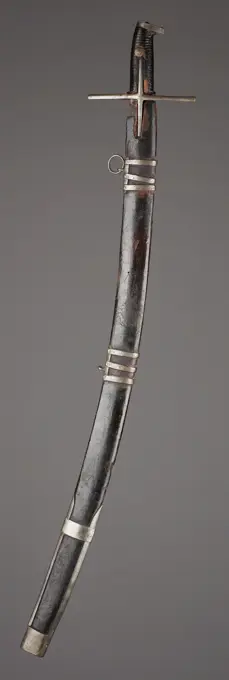
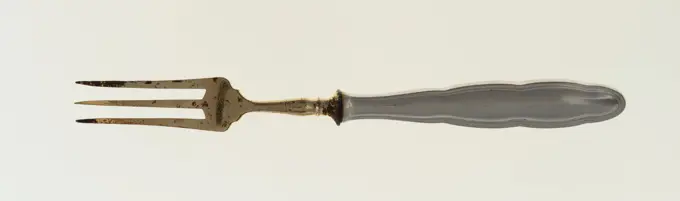
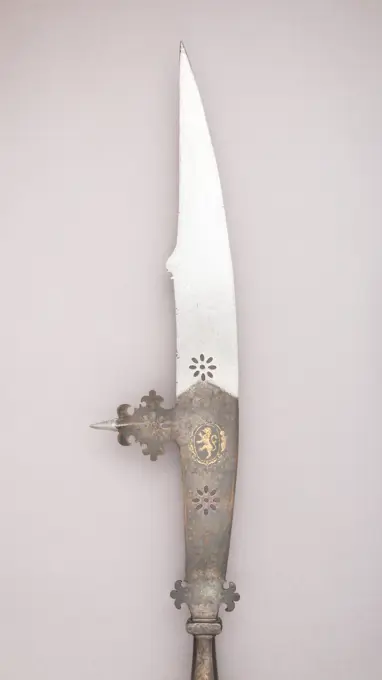
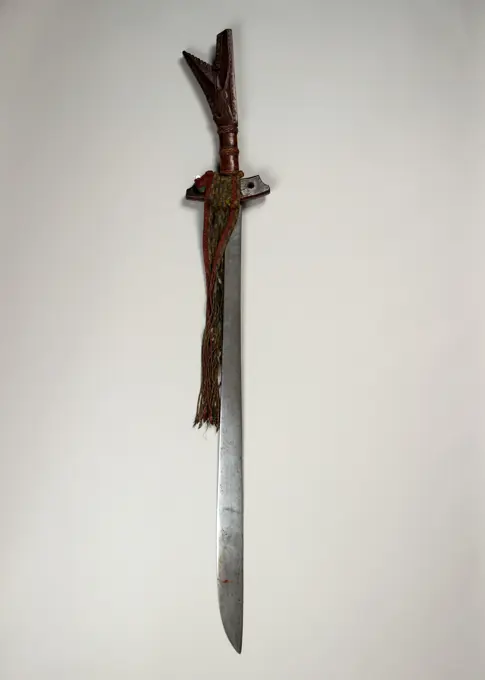
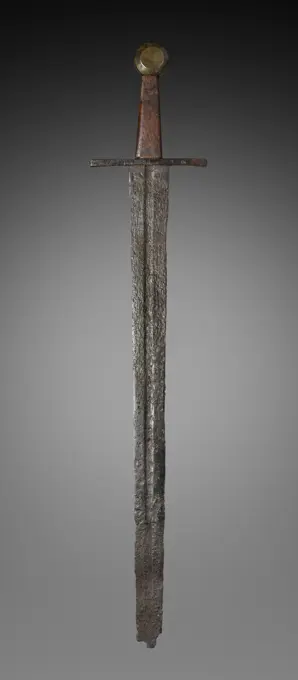
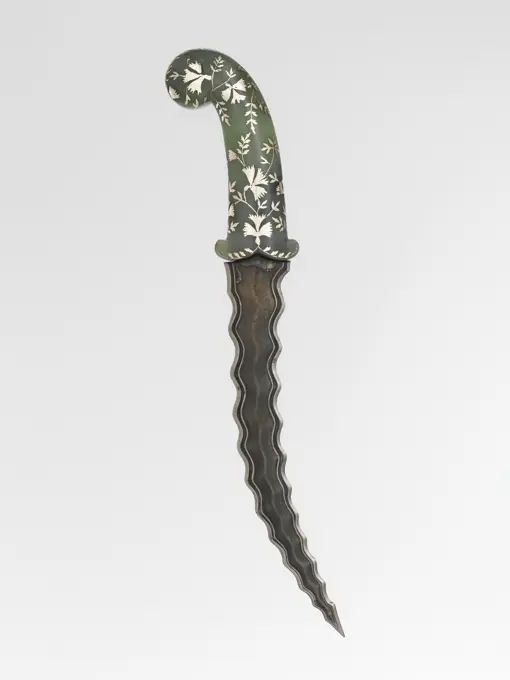
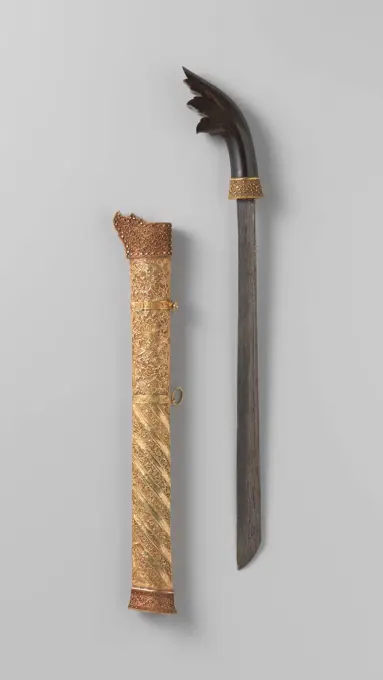
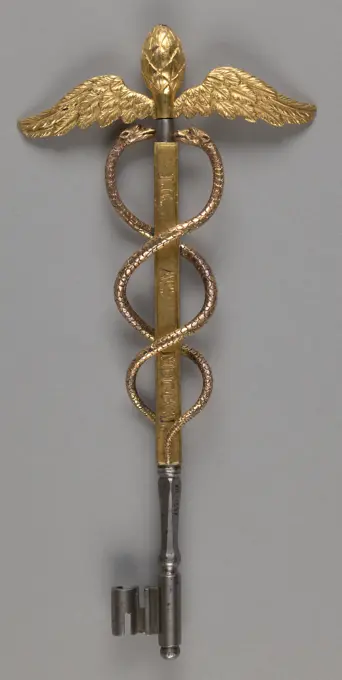
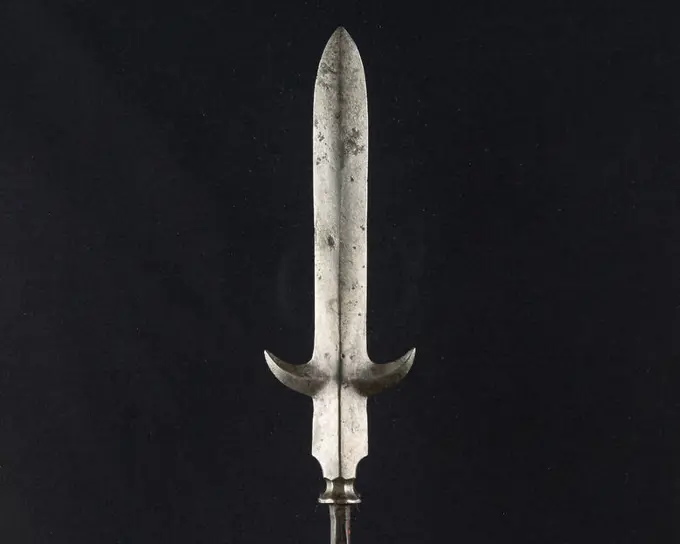
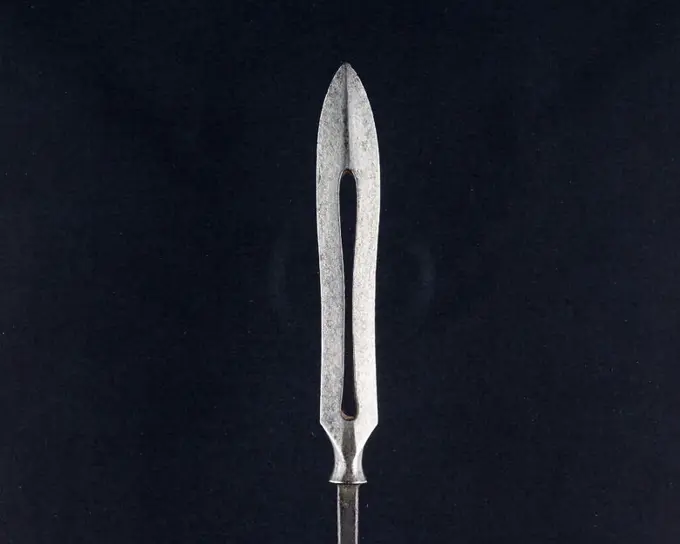
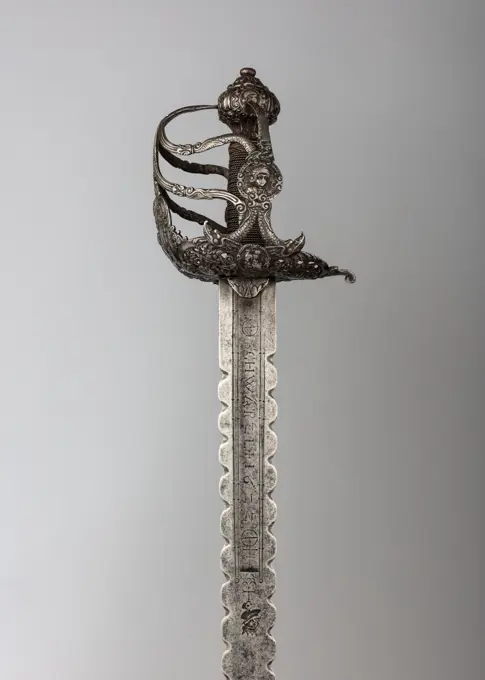
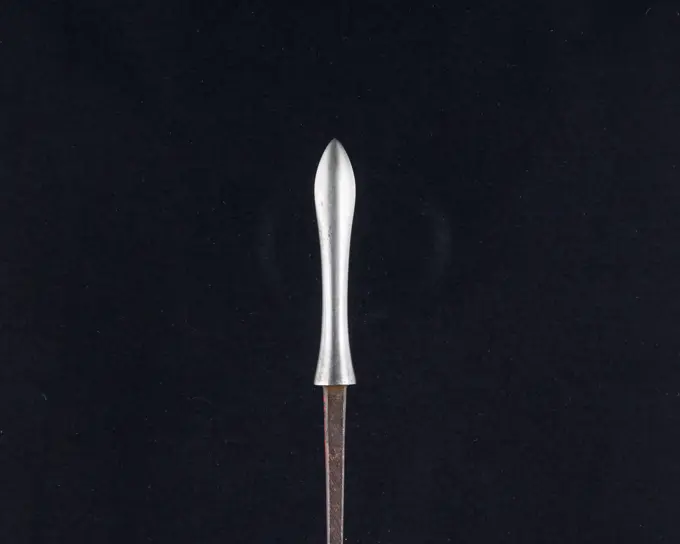
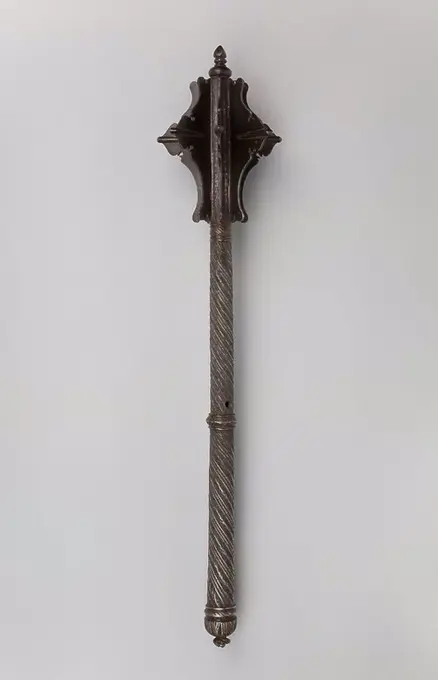
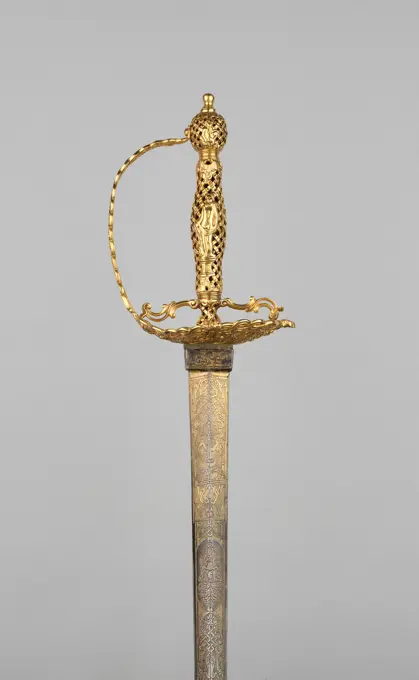
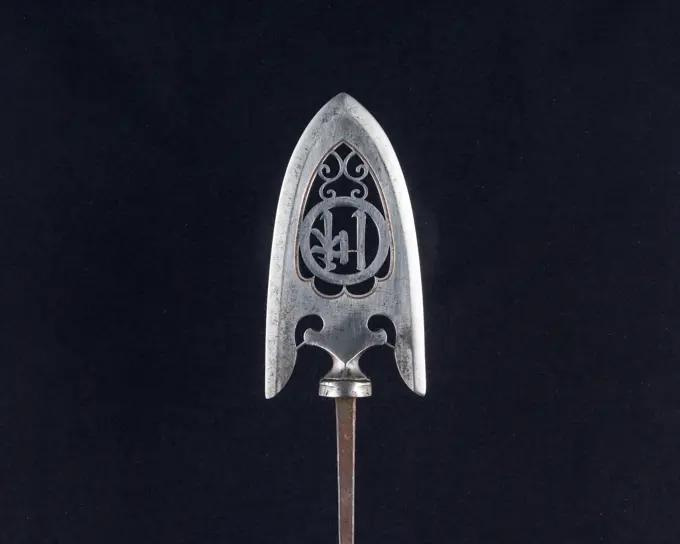
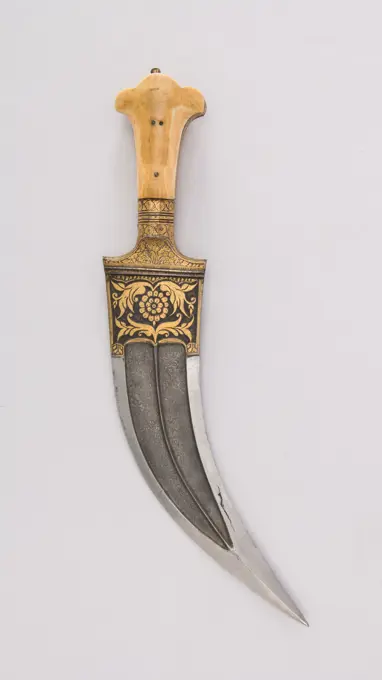
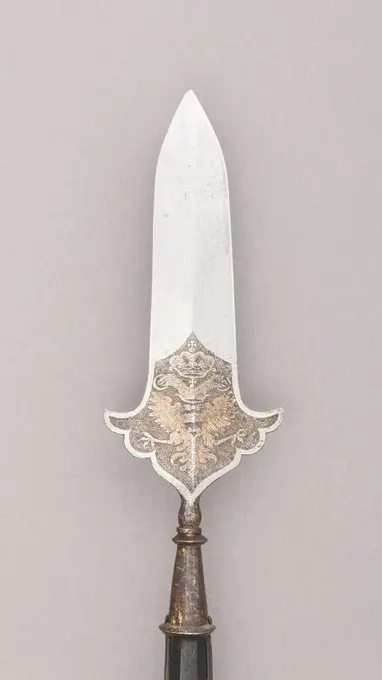
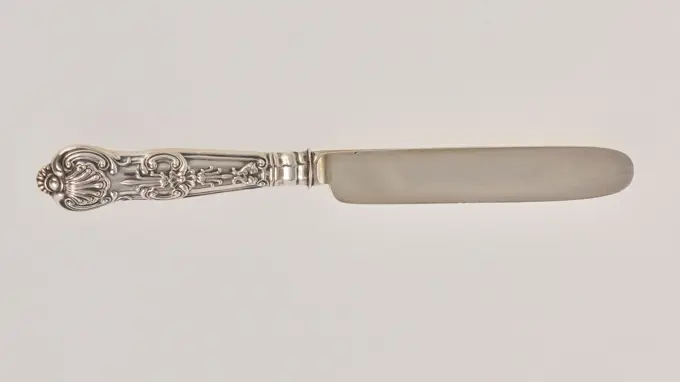
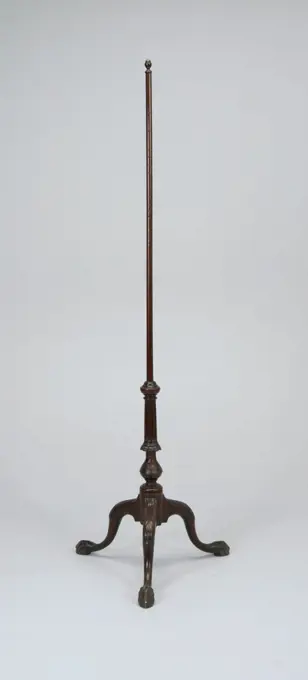
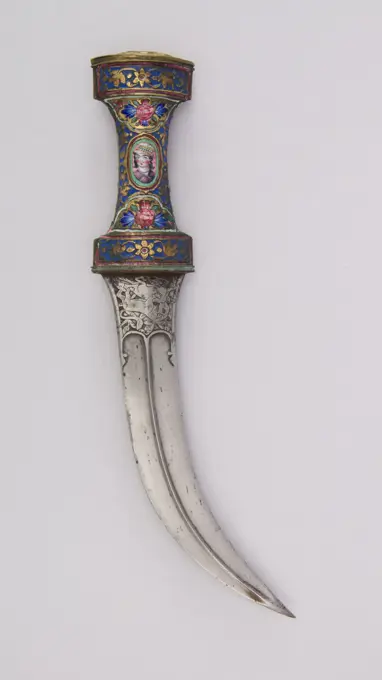
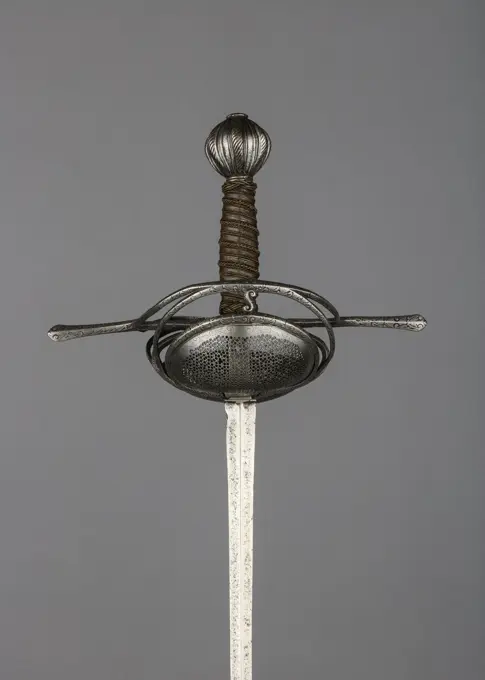
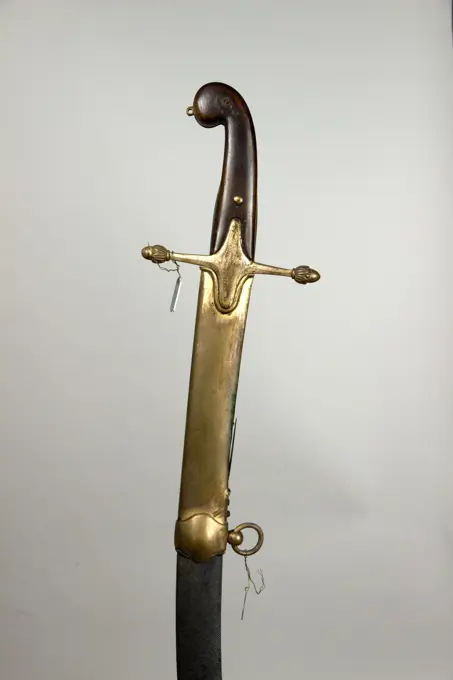
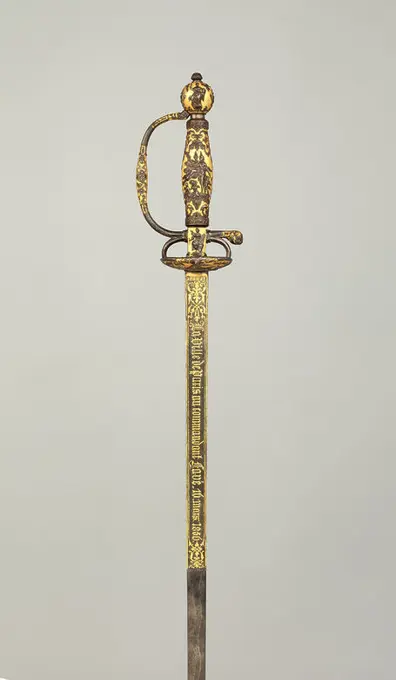
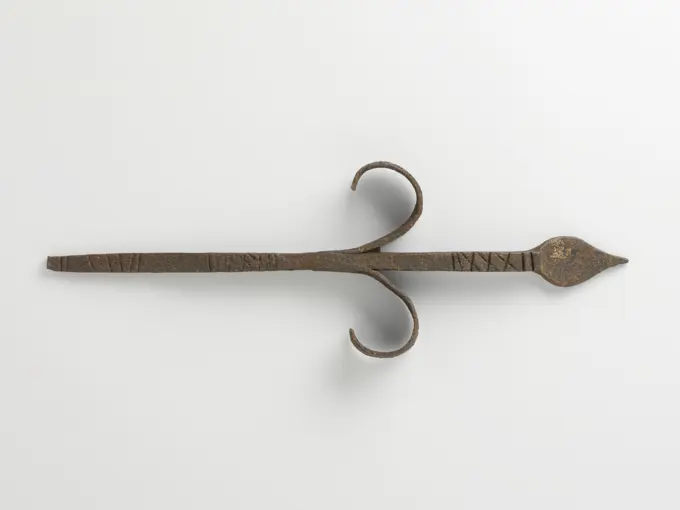
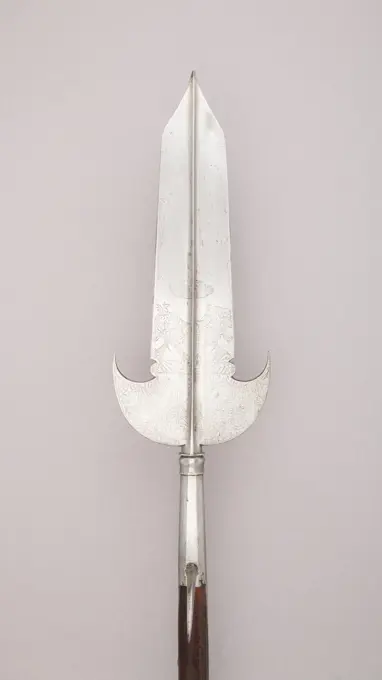
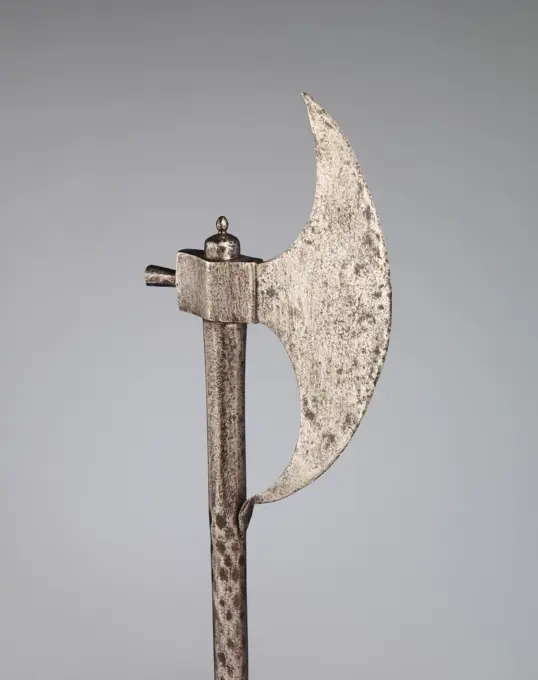
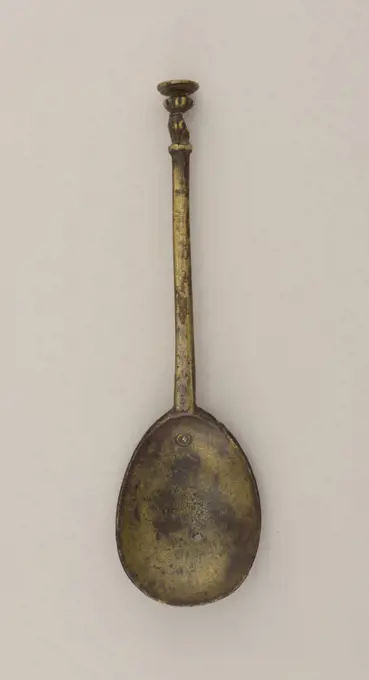
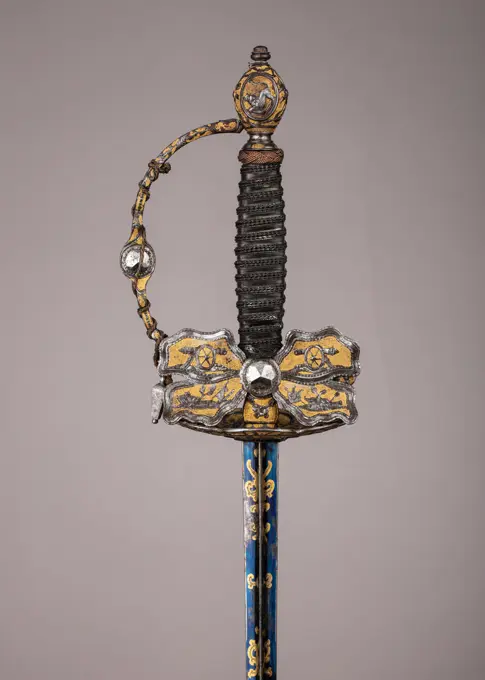
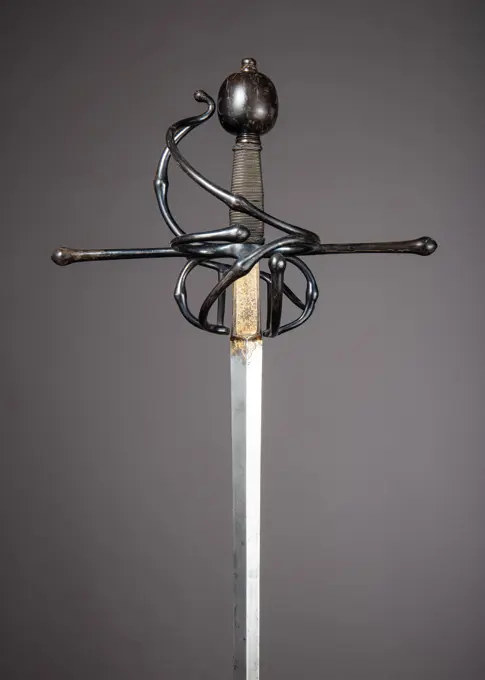
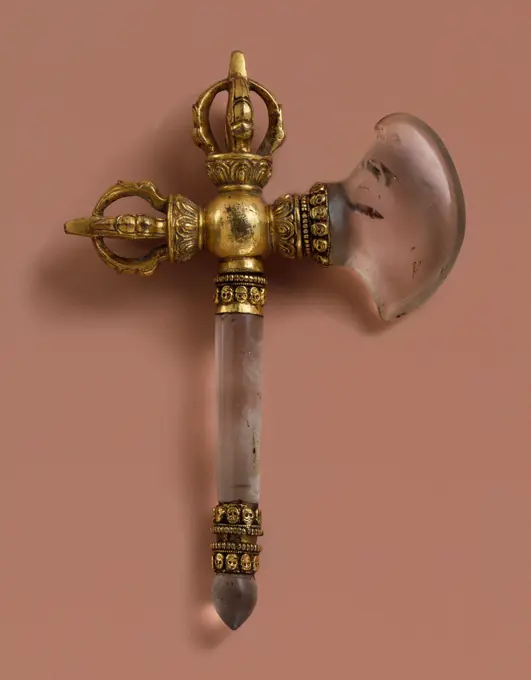
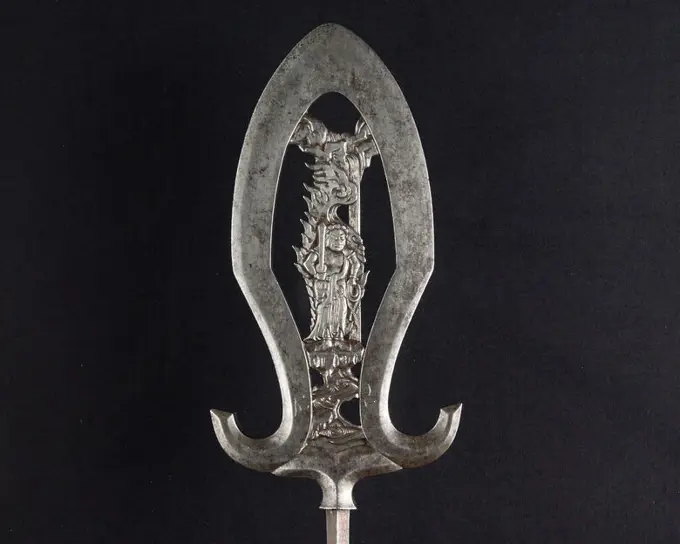
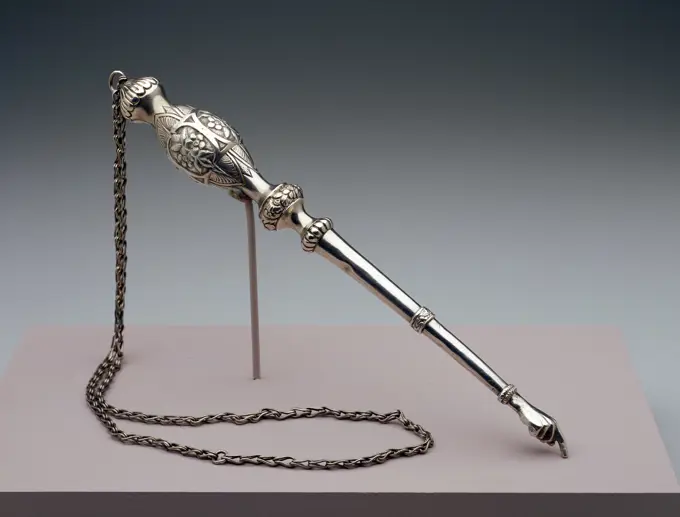
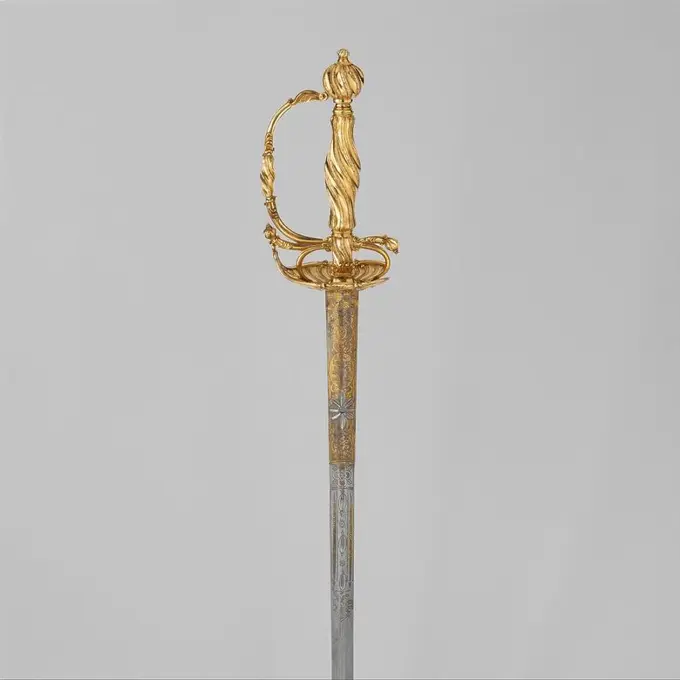
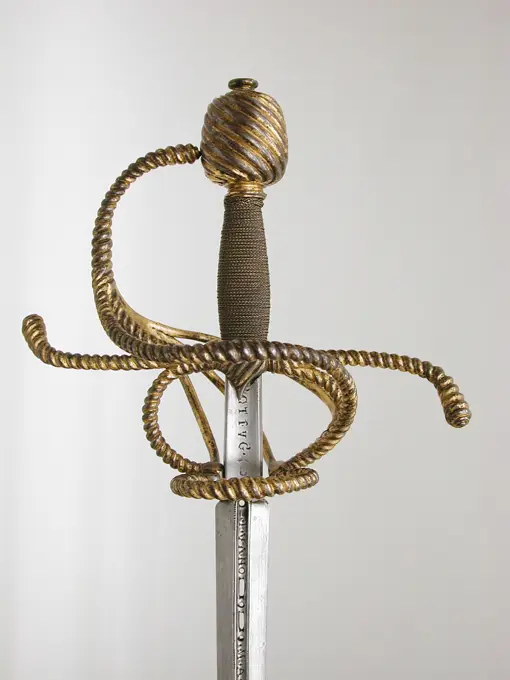
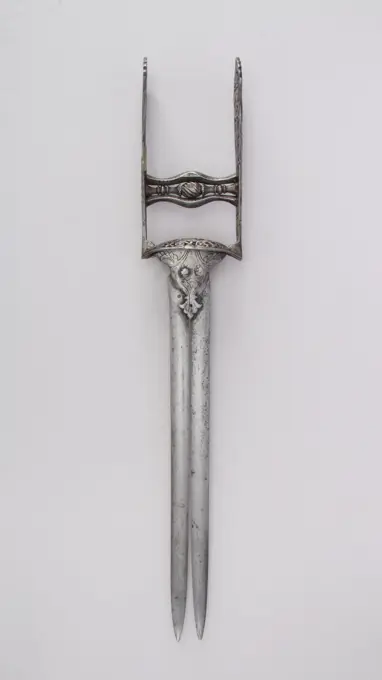
Dagger (Katar) Rapier blades, 16th century; sidebars, grip, 17th century Indian, Thanjavur; blades, European. Dagger (Katar) 31507Smallsword and Scabbard. Cutler: Thomas Prosser (English, 1774-1795). Date: 1775-1795. Dimensions: 101 × 10.2 cm (39 3/4 × 4 in.). Steel, two gold alloys, gilding, brass, parchment, and wood. Origin: England. Museum: The Chicago Art Institute, Chicago, USA.Armour, helmet and sword of Admiral Jacob van Heemskerck, anonymous, 1580 - 1607 sword Sword with iron crab legs, blewy and gilded. With Schede (see NG-KOG-987-2-2).Knife, Agate, silver, steel, Eight-panelled agate haft with scalloped, engraved ferrule below a flaring, square-ended steel blade., London, England, 18th century, cutlery, Decorative Arts, KnifePartisan ca. 1550 Italian. Partisan 25015Yatagan van Schout at Nacht Willem Crul, Anonymous, c. 1500 - 1950 yatagan Yatagan, donated by the Admiralty to the Schout at Nacht Willem Crul according to written announcement. The handle and the slightly bent sheath are covered with thin papal silver, in which richly driven ornament work in Eastern style. Probably Levantine work.  Handle and sheath: Silver Leaf. Kling: Iron (Metal)   RotterdamKnife 18th-19th century Persian. Knife 31483Mace Made 1475-1525 Germany. Steeel, iron, wood, and fish skin .Spear 18th-19th century Madura. Spear. Madura. 18th-19th century. Brass, hair. Madura, Jawa Timur. Shafted WeaponsHungarian Polish saber with vaginaWheellock Spanner with Powder Measure 1600-1700 Europe. Iron .Horseman's Axe Made 1490-1535 Germany. Steel, iron, brass, beechwood .Sword (Shamshir) A.H. 1125/ A.D. 1713 Indian. Sword (Shamshir) 31024Knife (The Netherlands or Flanders); silver, steel; L x W: 18 x 1.7 cm (7 1/16 x 11/16 in.); The Robert L. Metzenberg Collection, gift of Eleanor L. Metzenberg; 1985-103-75Mace. Italian, possiblly Spanish. Date: 1525-1555. Dimensions: L. 57 cm (22 7/16 in.)Wt. 3 lb. 12 oz. Steel, iron, and gilding. Origin: Italy. Museum: The Chicago Art Institute, Chicago, USA.Dessert fork; Würtembergische metallwarefabrik - WMF (Germany; Wytwónia Z Otnarz; 1880-1914); after 1880 (1890-00-00-1914-00-00);Iron Persian crossbow headsTransitional Rapier. Northern European, probably English. Date: 1650-1670. Dimensions: Overall L. 108.5 cm (42 3/4 in.)Blade L. 91.5 cm (36 in.)Wt. 1 lb. 4 oz. Steel, iron, silver, copper, wood. Origin: Europe, northern. Museum: The Chicago Art Institute, Chicago, USA.Fork, from a child's knife and fork set, 1834, Taylor & Perry, Birmingham, England, L.3-3/4 x W.1/2 in., sterling silver, England, 19th centuryKnife, Steel, tortoise-shell, silver, wood, Blade has straight upper edge, tapering towards the point. Drop bolster, handle flaring towards the end, decorated on front and back with tortoise- shell, inlaid with silver decorative pattern: scrolls, scallops, acanthus leaves, a squirrel and a man in costume in one side; a bird and a nude figure on the reverse., France, ca. 1800, cutlery, Decorative Arts, KnifeWar Hammer Made 1490-1540 Germany. Steel and wood .Parrying Dagger. Spanish. Date: 1660-1700. Dimensions: L. 52 cm (20 1/2 in.)Blade L. 41 cm (16 1/8 in.)Wt. 1 lb. 6 oz. Steel and wood. Origin: Spain. Museum: The Chicago Art Institute, Chicago, USA.Fauchard ca. 1550 Italian, Venice. Fauchard 26771Sword Scabbard. Culture: Persian. Dimensions: H. 30 1/8 in. (76.5 cm); W. 2 in. (5.1 cm); Wt. 8.9 oz. (252.3 g). Date: 19th century. Museum: Metropolitan Museum of Art, New York, USA.Sword (Campilan) 18th-19th century Malayan. Sword (Campilan) 31122Sword, c. 1350. Germany (), 14th century. Iron; wood grip and brass pommel replacements; overall: 79.4 cm (31 1/4 in.); blade: 62.9 cm (24 3/4 in.); quillions: 15.3 cm (6 in.); grip: 10.8 cm (4 1/4 in.).Scissors (England); Made by Walter Thornhill & Co; steel; Overall: 38 x 10.2 x 1 cm (14 15/16 x 4 x 3/8 in.)Folding fork, brass, steel, Fork has two long tines, slightly bending outwards. Decorative chiseling at the joint. Flat tapering neck. Pistol-shaped brass handle with scrolled end. Brass scales with dogs, deer, a boar, a fox and a bird. Trees and acanthus scrolls against a matte background. Fork folds partly into the handle., Bohemia/Germany, ca. 1720-50, cutlery, Decorative Arts, Folding forkSaber with Scabbard 16th-19th century Javanese. Saber with Scabbard. Javanese. 16th-19th century. Wood, horn, brass, silver. Jawa. SwordsDagger with Sheath ca. 14th-15th century probably Central or West Asian. Dagger with Sheath. probably Central or West Asian. ca. 14th-15th century. Iron, silver. DaggersFriuli Spear 1470-1490 Italy. Steel and wood (oak) .Pig Trap Charm(Tuntun)Dagger 17th-18th century Indian, Deccan, possibly Hyderabad Daggers with curled pistol-grip” pommels became popular in the court of Mughal emperor Aurangzeb (r. 1658-1707) around 1660 and regularly appeared in the portraits of Mughal and Deccani officials thereafter. The jade grip of this dagger is inlaid with silver foliate motifs set flush with the surface, a technique that recalls contemporary Bidri ware (from Bidar, in the Deccan), cast zinc vessels that are similarly inlaid with silver and gold.. Dagger 31838Chunderik with sheath. Dolk with old single-cutting blade and declining green to black horns, to the hilt at the blade decorated a golden mount with fine wrought work in the form of tendrils. Wooden sheath, fully covered with gold leaf, above and under decorated with wrought work as on the hilt, the rest with driven plant motifs. In two places around the sheath a band with wearing eye and carrying ring.Lucerne Hammer ca. 1520 Swiss. Lucerne Hammer 25918Knife ca. 1743-45 Johann Beckert V German. Knife 231603Parrying Dagger 1625-1660 Italy. Steel, wood, and silver .Guisarme for a Child 17th century Italian. Guisarme for a Child 27037Axe 18th-19th century Persian. Axe. Persian. 18th-19th century. Steel, wood, horn, ivory. Shafted WeaponsRapier Italian ca. 1600 The rapier was the principal civilian sidearm throughout the sixteenth and seventeenth centuries. Designed for cut-and-thrust fencing of progressively complex techniques, the rapier is characterized by a double-edged blade with an acute point and an elaborate guard for the hand. The guards, usually of iron or steel, were subject to a variety of embellishment. They were engraved, chiseled, gilded, damascened, and encrusted in gold and silver in keeping with fashionable styles. Unless otherwise noted, the materials, attributions, and dating given here refer to the hilts. Rapier blades, invariably of steel, bear a variety of makers marks denoting their origin in the two principal centers of blademaking, Toledo in Spain and Solingen in Germany. View more. Rapier. Italian. ca. 1600. Steel, silver wire, iron wire, wood. SwordsArrowhead (Yanone). Culture: Japanese. Dimensions: L. 13 3/8 in. (34 cm); L. of head 4 7/8 in. (12.4 cm); W. 1 in. (2.5 cm); Wt. 1.6 oz. (45.4 g). Date: 18th century. Museum: Metropolitan Museum of Art, New York, USA.Key to the Temple of Sybil in Puławy unknownArrowhead (Yanone). Culture: Japanese. Dimensions: L. 14 1/4 in. (36.2 cm); L. of head 5 1/2 in. (14 cm); W. 1 3/4 in. (4.5 cm); Wt. 2.8 oz. (79.4 g). Date: 18th century. Museum: Metropolitan Museum of Art, New York, USA.Arrowhead (Yanone). Culture: Japanese. Dimensions: L. 9 1/2 in. (24.1 cm); L. of head 4 1/4 in. (10.8 cm); W. 5/8 in. (1.6 cm); Wt. 1.3 oz. (36.9 g). Date: 18th century. Museum: Metropolitan Museum of Art, New York, USA.Cooking stones with flattened handle. A covers of steel with flattened handle. Address: Imra / Schützt.Sceptre of the King Augustus III. Köhler, Johannes, goldsmithKnife (Bade-bade) with Sheath. Culture: Malayan. Dimensions: H. with sheath 10 15/16 in. (27.8 cm); H. without sheath 9 1/16 in. (23 cm); H. of blade 7 in. (17.7 cm); W. 1 3/8 in. (3.5 cm); Wt. 2.4 oz. (68 g); Wt. of sheath 1.3 oz. (36.9 g). Date: 18th-19th century. Museum: Metropolitan Museum of Art, New York, USA.Basket-hilted Sword blade dated 1662 Blade by Johannes Wundes the Younger Germany English hilts of this type, with chiseled ornament featuring portrait medallions, are often referred to as mortuary swords. The term seems to be an invention of nineteenth-century collectors and refers to a supposed likeness between King Charles I (executed in 1649) and the portrait medallions on the hilts.. Basket-hilted Sword. hilt, British; blade, German. blade dated 1662. Steel, wood, silver. SwordsArrowhead (Yanone) 18th century Japanese Although today Japanese warriors are renowned most for their swordsmanship, archery, especially from horseback, has been an essential part of samurai warfare and culture for centuries. Arrows were fitted with heads of varying shape according to their intended use in war, the hunt, or target practice. Arrowheads made for use on the battlefield incorporated different designs intended for specialized purposes such as the piercing of armor or to cause maximum damage to horses and unarmored personnel.Large arrowheads, pierced and elaborately chiseled with landscapes, birds, flowers, dragons, and Buddhist divinities, were created to be admired for the beauty of their metalwork and design rather than for use in archery. Such highly elaborate examples may have been made for presentation or as a votive offerings to a shrine.. Arrowhead (Yanone). Japanese. 18th century. Steel. Archery Equipment-ArrowheadsMace. German. Date: 1545-1555. Dimensions: L. 64.5 cm (25 3/8 in.)Wt. 3 lb. 7 oz. Steel and iron. Origin: Germany. Museum: The Chicago Art Institute, Chicago, USA.Dress Sword Made 1733-1830 Spain. Cast in solid gold, the hilt of this dress sword is a rare survival. More often such extravagant pieces were melted down for the value of the precious material. The goldsmith who made it is unknown, though the heavy florid style and form of the guard suggests a southern European, perhaps Portuguese origin.. Gold-Copper alloy, steel, and gilding .Arrowhead (Yanone) 18th century Japanese Although today Japanese warriors are renowned most for their swordsmanship, archery, especially from horseback, has been an essential part of samurai warfare and culture for centuries. Arrows were fitted with heads of varying shape according to their intended use in war, the hunt, or target practice. Arrowheads made for use on the battlefield incorporated different designs intended for specialized purposes such as the piercing of armor or to cause maximum damage to horses and unarmored personnel.Large arrowheads, pierced and elaborately chiseled with landscapes, birds, flowers, dragons, and Buddhist divinities, were created to be admired for the beauty of their metalwork and design rather than for use in archery. Such highly elaborate examples may have been made for presentation or as a votive offerings to a shrine.. Arrowhead (Yanone). Japanese. 18th century. Steel. Archery Equipment-ArrowheadsDagger (Dah Hmyaung). Culture: Burmese. Dimensions: H. 14 1/2 in. (36.8 cm); W. 2 in. (5.1 cm); Wt. 15.3 oz. (433.7 g). Date: 19th century. Museum: Metropolitan Museum of Art, New York, USA.Dagger (Jambiya) 18th-19th century Indian. Dagger (Jambiya) 31449Partisan. Culture: Austrian. Dimensions: L. 86 1/4 in. (219.1 cm); L. of head 12 1/4 in. (31.1 cm); W. 4 in. (10.2 cm); Wt. 2 lbs. 8.4 oz. (1145.3 g). Date: ca. 1750. Museum: Metropolitan Museum of Art, New York, USA.Dagger 17th-18th century Indian, Mughal. Dagger. Indian, Mughal. 17th-18th century. Steel, jade, ruby, gold. DaggersKnife, from a child's knife and fork set, 1834, Taylor & Perry, Birmingham, England, L.4-1/16 x W.1/2 in., Silver, England, 19th centurySpontoon early 18th century Italian, Savoy. Spontoon 25081Wellner, knife to the initials of Adolf Hitler (attributed title), 1933. Silver metal. General Leclerc Museum of the Liberation of Paris - Jean Moulin Museum.firescreen, wood, A: Mahogany tripod stand with ball and claw feet and carved leaves on knees and lower part of stand; pole is topped with acorn ornament. Brass fittings hold embroidery frame in place., B: Nearly square panel of embroidery showing flowers and ribbons worked in colored silks on dark blue woollen ground., England, ca. 1775, furniture, Decorative Arts, firescreenHunting cordlas with vaginaDagger (Jambiya) 19th century Persian, Qajar. Dagger (Jambiya) 31853Model of a Made Mast, anonymous, c. 1821 demonstration model Round mast with square top, ears, calves, salvation, row and side bowls. The mast foot is quite square and consists of eight parts: the square mast king is, unlike other masts, placed diagonally, so with the corners to the sides of the mast, so that the cheeks are triangular in diameter, their outside. Three cheeks at the back have been added from the Mastgat that run all the way up, while the front three parts stop just above the longitudinal people; From this point the mast consists of eight parts again and becomes square again. The parts are held together with a large number of tubs. Two side bowls strengthen the whole; They also support the longitudinal people together with the ears, which are not attached to the front of the mast with irons and bolts. Two transversals and calves have been laid on the jumping, and a driving bed has been installed between the ears, which has been extended downwards in a row. At the MastgatKnife (possibly Algeria); steel; L x W: 24.4 x 2.1 cm (9 5/8 x 13/16 in.); The Robert L. Metzenberg Collection, gift of Eleanor L. Metzenberg; 1985-103-24Cup-Hilted Rapier possibly Flemish 17th century The rapier was the principal civilian sidearm throughout the sixteenth and seventeenth centuries. Designed for cut-and-thrust fencing of progressively complex techniques, the rapier is characterized by a double-edged blade with an acute point and an elaborate guard for the hand. The guards, usually of iron or steel, were subject to a variety of embellishment. They were engraved, chiseled, gilded, damascened, and encrusted in gold and silver in keeping with fashionable styles. Unless otherwise noted, the materials, attributions, and dating given here refer to the hilts. Rapier blades, invariably of steel, bear a variety of makers marks denoting their origin in the two principal centers of blademaking, Toledo in Spain and Solingen in Germany. View more. Cup-Hilted Rapier. possibly Flemish. 17th century. Steel, brass. SwordsCup-Hilted Rapier Spanish mid-17th century The rapier was the principal civilian sidearm throughout the sixteenth and seventeenth centuries. Designed for cut-and-thrust fencing of progressively complex techniques, the rapier is characterized by a double-edged blade with an acute point and an elaborate guard for the hand. The guards, usually of iron or steel, were subject to a variety of embellishment. They were engraved, chiseled, gilded, damascened, and encrusted in gold and silver in keeping with fashionable styles. Unless otherwise noted, the materials, attributions, and dating given here refer to the hilts. Rapier blades, invariably of steel, bear a variety of makers marks denoting their origin in the two principal centers of blademaking, Toledo in Spain and Solingen in Germany. View more. Cup-Hilted Rapier. Spanish. mid-17th century. Steel, bronze, gold. SwordsSword (Kilij) with Scabbard 19th century Turkish. Sword (Kilij) with Scabbard. Turkish. 19th century. Steel, horn, brass, leather. SwordsParrying Dagger 1660-1700 Spain. Steel .Sword Made 1490-1510 Northern Italy. Steel, iron, gilding, wood, and textile (silk velvet) .Vaginal knowledgeHairpin, 500-450. Greece, first half 5th Century BC. Ivory; overall: 15.9 cm (6 1/4 in.).Dagger (Jambiya). Culture: Indian. Dimensions: H. 12 3/8 in. (31.4 cm); H. of blade 8 1/2 in. (21.6 cm); W. 2 3/8 in. (6 cm); Wt. 11.6 oz. (328.9 g). Date: 18th-19th century. Museum: Metropolitan Museum of Art, New York, USA.Knife with Sheath. Culture: Hilt, Indian, Mughal; blade, Turkish. Dimensions: H. with sheath 14 9/16 in. (37 cm); H. without sheath 13 3/8 in. (34 cm); H. of blade 7 1/2 in. (19.1 cm); W. 2 3/8 in. (6 cm); Wt. 7.3 oz. (207 g); Wt. of sheath 2.4 oz. (68 g). Date: Hilt, 18th century; blade, 19th century. Museum: Metropolitan Museum of Art, New York, USA.Vaginal knowledgeSmallsword Presented by the City of Paris to Commandant Ildefonse Favé (1812-1894). Culture: French. Dimensions: L. 36 in. (91.5 cm); L. of blade 30 1/8 in. (76.6 cm); W. 3 1/4 in. (8.3 cm); Wt. 1 lb. 0.6 oz. (470.6 g). Hilt Maker: Paul Bled (French, Falaise 1807-1881). Manufacturer: Lepage-Moutier (French 1842-1868). Date: dated 1856.This smallsword was presented by the City of Paris to Commandant Ildefonse Favé to commemorate his official announcement to the city of the birth of Napoléon, Prince Imperial (1856-1879), son of Emperor Napoleon III, on March 16, 1856, as indicated by the inscription on its blade. The birth of the Bonaparte heir was celebrated as an event of national importance throughout France. Sometime after the announcement, this sword was commissioned from Lepage-Moutier, a renowned firm of Parisian gunmakers. To create the hilt, Lepage employed Paul Bled (1807-1881), one of the most famous modelers and steel chiselers of the period. Perhaps to evoke the glory of prWall anchor ca. 1740 American More elaborate New York Dutch colonial houses were often faced with brick rather than pine clapboards. Wrought-iron wall anchors, such as this example with a fleur-de-lis design, helped secure the exterior wall to the wood posts and beams within.. Wall anchor. American. ca. 1740. Wrought Iron. Made in Albany County, New York, United StatesSpontoon 18th century Italian, Savoy. Spontoon 25096Partisan ca. 1680 possibly French. Partisan 26757Arrowhead (Yanone). Culture: Japanese. Dimensions: L. 12 1/8 in. (30.8 cm); L. of head 3 1/2 in. (8.9 cm); W. 2 in. (5.1 cm); Wt. 2.4 oz. (68 g). Date: 18th century. Museum: Metropolitan Museum of Art, New York, USA.Knife with Sheath. Culture: Indian, Mughal. Dimensions: H. with sheath 15 9/16 in. (39.5 cm); H. without sheath 13 15/16 in. (35.4 cm); W. 2 in. (5.1 cm); Wt. 8.8 oz. (249.5 g); Wt. of sheath 6.7 oz. (189.9 g). Date: 18th-19th century. Museum: Metropolitan Museum of Art, New York, USA.Eraser And Sheath (USA); Manufactured by Gorham Manufacturing Company (United States); silver, mother-of-pearl, chromed steel (-a)Arrowhead (Yanone). Culture: Japanese. Dimensions: L. 13 1/4 in. (33.7 cm); L. of head 4 1/2 in. (11.4 cm); W. 2 1/2 in. (6.4 cm); Wt. 3.4 oz. (96.4 g). Date: 18th century. Museum: Metropolitan Museum of Art, New York, USA.Fish knife. Koenigliche Porzellanmanufaktur, Meissen (1807/14-1918), manufactureComb and trial-piece made from carved bone and antler. Dated 9th CenturyDagger (Bade-bade) with Sheath. Culture: Sumatran, possibly Acheen. Dimensions: H. with sheath 19 in. (48.3 cm); H. without sheath 16 1/2 in. (41.9 cm); H. of blade 11 in. (27.9 cm); W. 1 7/8 in. (4.8 cm); Wt. 10.9 oz. (309 g); Wt. of sheath 2.1 oz. (59.5 g). Date: 16th-19th century. Museum: Metropolitan Museum of Art, New York, USA.Ax (Berdiche or Balta) ca. 1500 Syrian or Egyptian This ax, with its long, faceted steel shaft and distinctively shaped blade, is typical of those carried by the Mamluks of Egypt and Syria in the late fifteenth to early sixteenth century.. Ax (Berdiche or Balta) 24417Folding spoon, silver, gold, Oval-shaped spoon bowl, rattail at the back of the bowl. Plain flat neck, hinged. Handle flat, flaring towards the angular trifid end, decorated with stylized floral damascening with cupid with bow and arrow. Small silver band with engraved decoration. Bowl folds towards handle., possibly Carlsbad, Germany, ca. 1700, figures, Decorative Arts, Folding spoonParrying Dagger. Spanish. Date: 1690-1710. Dimensions: L. 51 cm (20 1/16 in.) Blade L. 40.7 cm (16 in.) Wt. 1 lb. 6 oz. Steel, wood, and copper wire. Origin: Spain. Museum: The Chicago Art Institute, Chicago, USA.Spoon, Brass, Slightly ovoid bowl surmounted by thin cylindrical shaft with large circular seal top., England, late 17th century, cutlery, Decorative Arts, SpoonSmallsword ca. 1775 French By the early seventeenth century, the rapier, a long slender thrusting sword, began to dominate as the gentlemans weapon of choice. During the course of the century, however, as civilian fencing techniques became more specialized and refined, the rapier developed into a lighter, trimmed-down weapon known by about 1700 as the smallsword. Smallswords, often richly decorated, remained an integral part of a gentlemans wardrobe until the wearing of swords in civilian settings went out of fashion at the end of the eighteenth century, at which time pistols were replacing swords as arms most frequently used in personal duels. The majority of smallsword hilts are made of silver or steel, but many also employ a wide variety of luxurious materials, such as gold, porcelain, and enamel. At their best, smallswords combine the crafts of swordsmith, cutler, and jeweler to create an elegant weapon that was also a wearable work of art.. Smallsword. French. ca. 1775. Steel, gRapier ca. 1575-80 possibly Italian The rapier was the principal civilian sidearm throughout the sixteenth and seventeenth centuries. Designed for cut-and-thrust fencing of progressively complex techniques, the rapier is characterized by a double-edged blade with an acute point and an elaborate guard for the hand. The guards, usually of iron or steel, were subject to a variety of embellishment. They were engraved, chiseled, gilded, damascened, and encrusted in gold and silver in keeping with fashionable styles. Unless otherwise noted, the materials, attributions, and dating given here refer to the hilts. Rapier blades, invariably of steel, bear a variety of makers marks denoting their origin in the two principal centers of blademaking, Toledo in Spain and Solingen in Germany.. Rapier. possibly Italian. ca. 1575-80. Steel, wood, iron. SwordsRicePestleRitual Axe. Eastern Tibet, Kham region, Derge, Eastern Derge or China, 17th century or earlier. Arms and Armor; axes. Gilt copper alloy and rock crystalVaginal knowledgeCeremonial Arrowhead (Yanone). Culture: Japanese. Dimensions: L. 18 5/8 in. (47.3 cm); L. of head 6 3/4 in. (17.1 cm); W. 3 1/2 in. (8.9 cm); Wt. 6.9 oz. (195.6 g). Steel-chiseler: Umetada Yoshinobu (Japanese, Edo period, 17th century). Date: 17th century.Large arrowheads, pierced and elaborately chiseled with landscapes, birds, flowers, dragons, and Buddhist divinities, were created to be admired for the beauty of their metalwork and design rather than for use in archery. The Metropolitan Museum's collection includes a group of more than thirty similarly signed and dated pieces (including acc. nos. 32.75.321, .327, .330, .334, .337, .339-.340, .398-.399, .403, .406, .409) that may have been made for presentation or as a votive offering to a shrine. This arrowhead, depicting the Buddhist deity Fudo Myo-o, is by Umetada Yoshinobu, a member of the Umetada school of swordsmiths, tsuba makers, and iron chiselers. Museum: Metropolitan Museum of Art, New York, USA.Yad (Torah pointer), c. 1870, 12 1/2 x 1 9/16 x 1 9/16 in. (31.75 x 3.97 x 3.97 cm) (without chain), Silver, Austria, 19th centurySmallsword. Culture: German or Dutch. Dimensions: L. 36 3/8 in. (92.5 cm); L. of blade 30 3/4 in. (78.2 cm); W. 3 1/4 in. (8.3 cm); D. 3 7/16 in. (8.7 cm); Wt. 1 lb. 0.4 oz. (464.9 cm). Date: ca. 1750-60.The spirally channeled surfaces and elegant foliate finials on the guards typify the flamboyant Rococo style. The small proportions suggest the sword was made for a young man. Although not hallmarked, this exquisitely detailed gold hilt is probably of either German or Dutch manufacture. Museum: Metropolitan Museum of Art, New York, USA.Whistle Bobo Fing or Samo tribe Burkinabe late 19th century Sub-Saharan whistles, which may produce three or four notes, are used by musical groups and for signaling by hunters. When played in groups, the whistles sound in alternation in the manner of European hand-bell ensembles, with each performer producing a different pitch or pitches. A voice might also supply certain notes. View more. Whistle. Burkinabe. late 19th century. Wood. Dedougou or Tougan region, Burkina Faso (formerly Upper Volta). Aerophone-Whistle Flute-whistleCup-Hilted Rapier Spanish 17th century The rapier was the principal civilian sidearm throughout the sixteenth and seventeenth centuries. Designed for cut-and-thrust fencing of progressively complex techniques, the rapier is characterized by a double-edged blade with an acute point and an elaborate guard for the hand. The guards, usually of iron or steel, were subject to a variety of embellishment. They were engraved, chiseled, gilded, damascened, and encrusted in gold and silver in keeping with fashionable styles. Unless otherwise noted, the materials, attributions, and dating given here refer to the hilts. Rapier blades, invariably of steel, bear a variety of makers marks denoting their origin in the two principal centers of blademaking, Toledo in Spain and Solingen in Germany. View more. Cup-Hilted Rapier. Spanish. 17th century. Steel, copper wire. SwordsRapier and Parrying Dagger ca. 1580 Rapier blade signed by Juan Martinez Spanish The rapier was the principal civilian sidearm throughout the sixteenth and seventeenth centuries. Designed for cut-and-thrust fencing of progressively complex techniques, the rapier is characterized by a double-edged blade with an acute point and an elaborate guard for the hand. The guards, usually of iron or steel, were subject to a variety of embellishment. They were engraved, chiseled, gilded, damascened, and encrusted in gold and silver in keeping with fashionable styles. Unless otherwise noted, the materials, attributions, and dating given here refer to the hilts. Rapier blades, invariably of steel, bear a variety of makers marks denoting their origin in the two principal centers of blademaking, Toledo in Spain and Solingen in Germany.. Rapier and Parrying Dagger. German; rapier blade, Spanish, Toledo. ca. 1580. Steel, gold, copper wire, wood, velvet. Toledo. Swords