Historical Blades And Knives

An assortment of intricate historical bladed weapons, including daggers and swords, featuring decorative elements and various materials from different centuries.

Yatagan van Schout at Nacht Willem Crul, Anonymous, c. 1500 - 1950 yatagan Yatagan, donated by the Admiralty to the Schout at Nacht Willem Crul according to written announcement. The handle and the slightly bent sheath are covered with thin papal silver, in which richly driven ornament work in Eastern style. Probably Levantine work.  Handle and sheath: Silver Leaf. Kling: Iron (Metal)   Rotterdam
Yatagan van Schout at Nacht Willem Crul, Anonymous, c. 1500 - 1950 yatagan Yatagan, donated by the Admiralty to the Schout at Nacht Willem Crul according to written announcement. The handle and the slightly bent sheath are covered with thin papal silver, in which richly driven ornament work in Eastern style. Probably Levantine work. Handle and sheath: Silver Leaf. Kling: Iron (Metal) Rotterdam
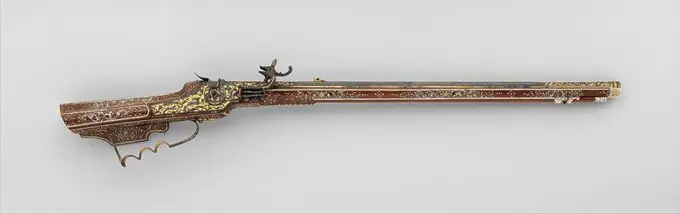
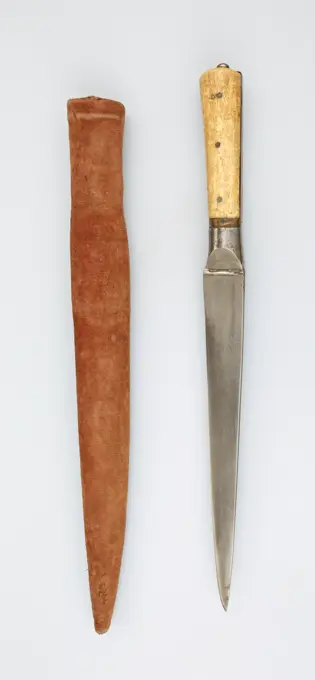
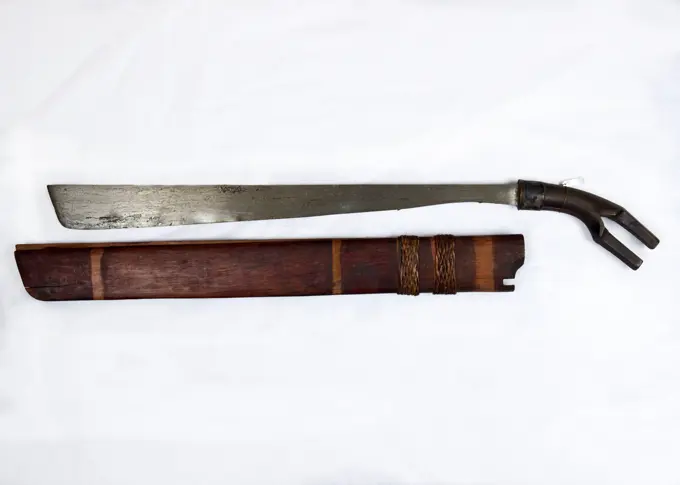
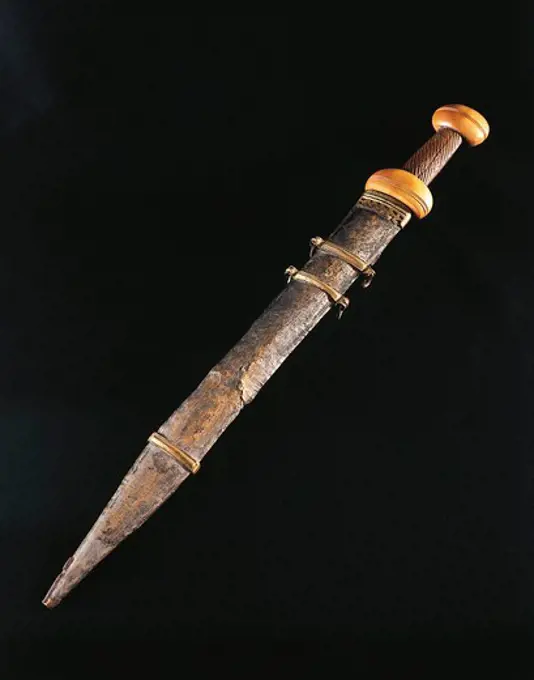
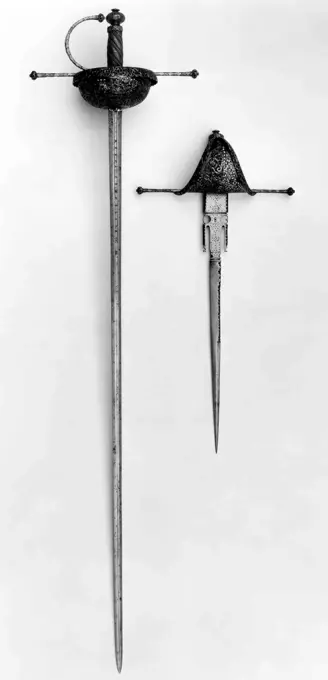
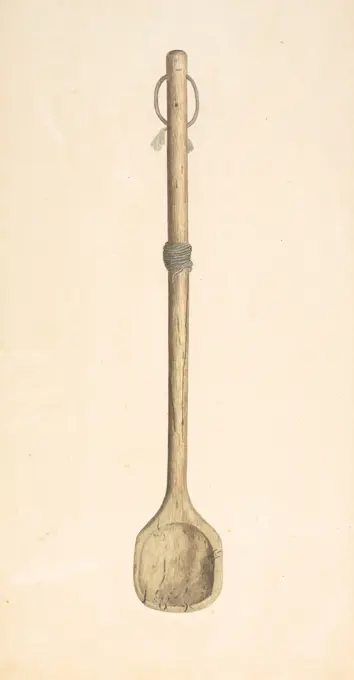
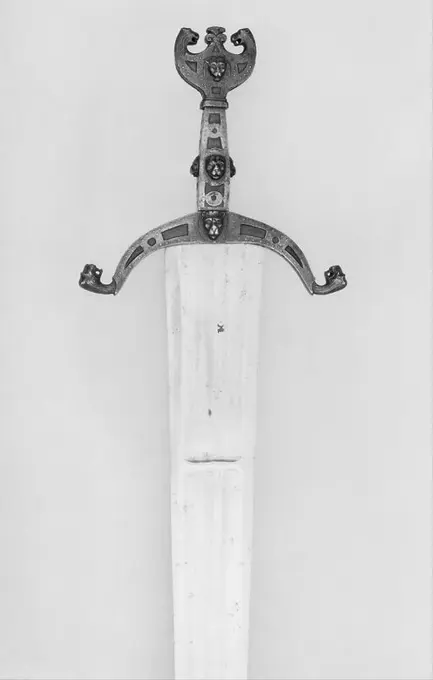
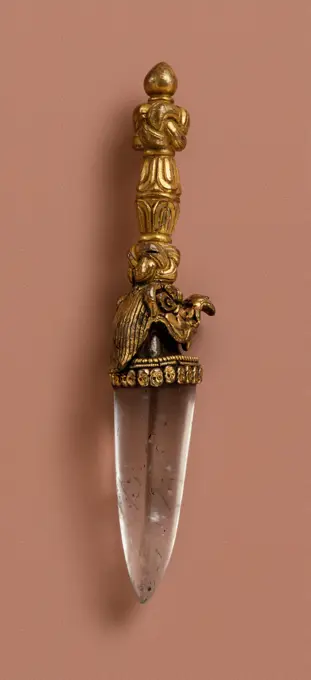
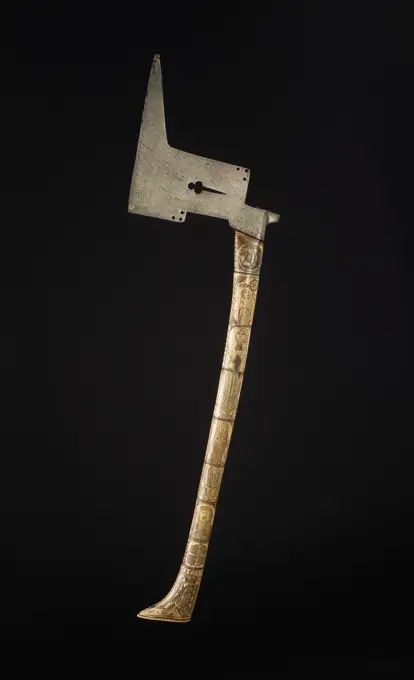
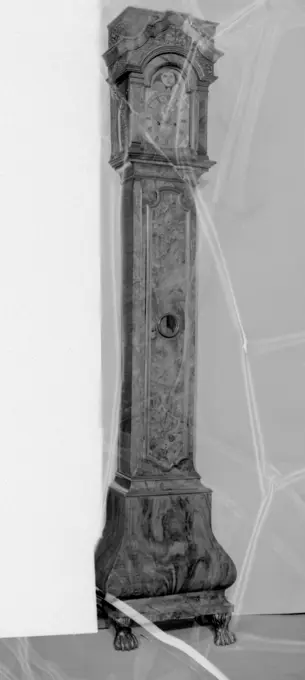
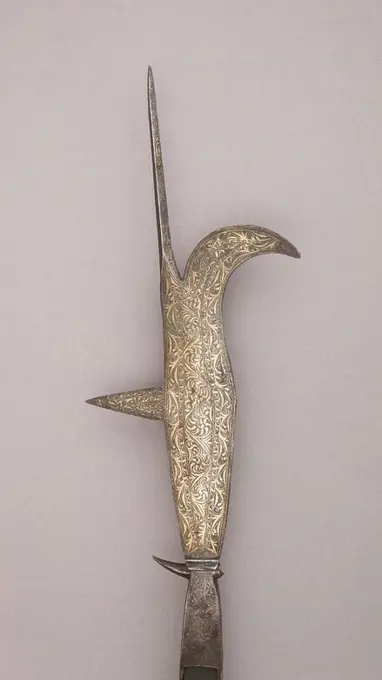
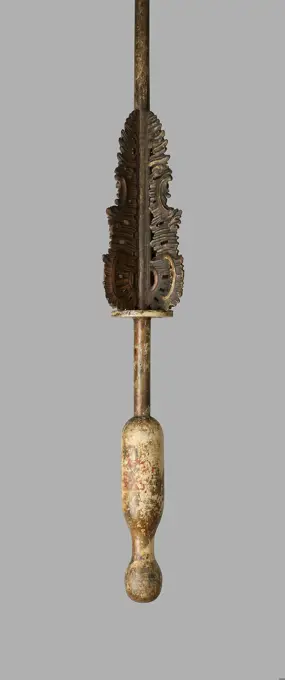
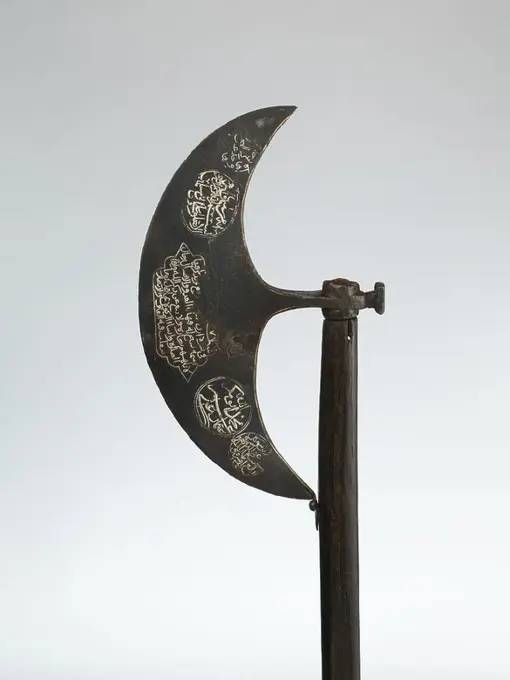
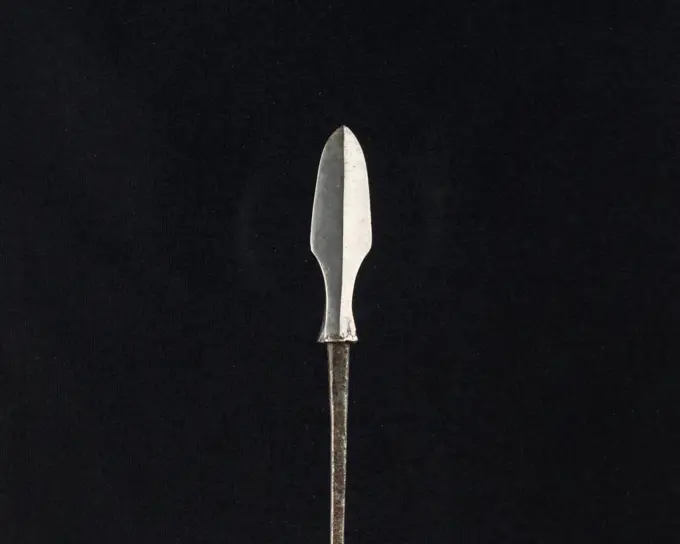
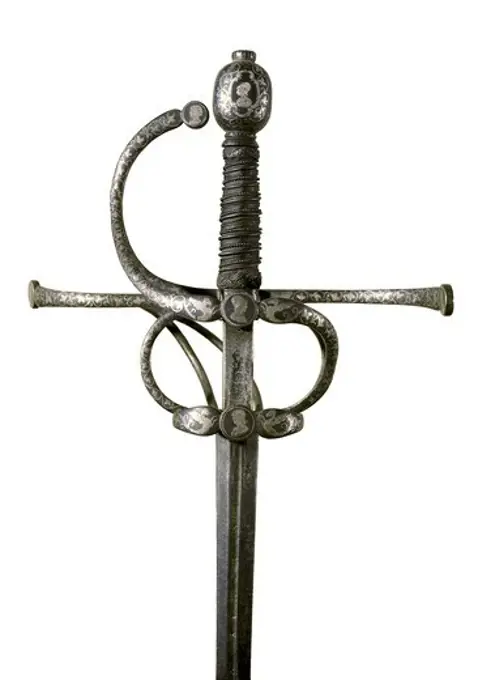
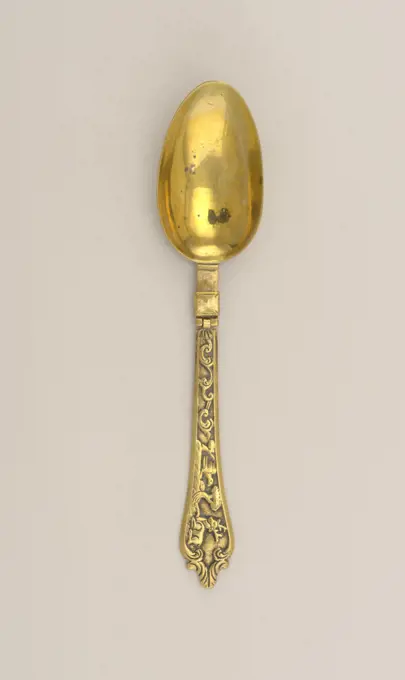
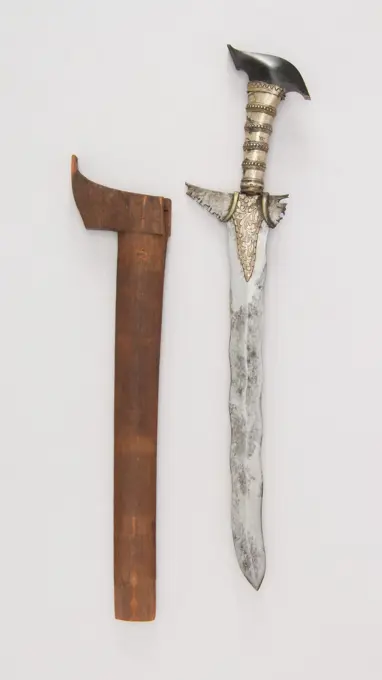
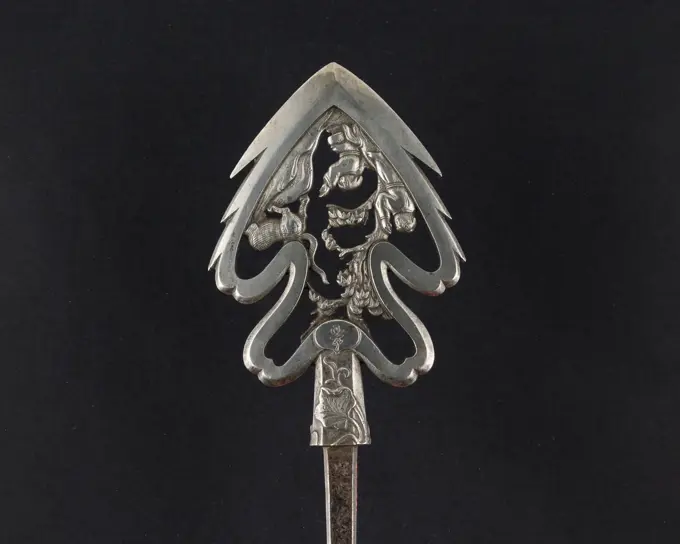
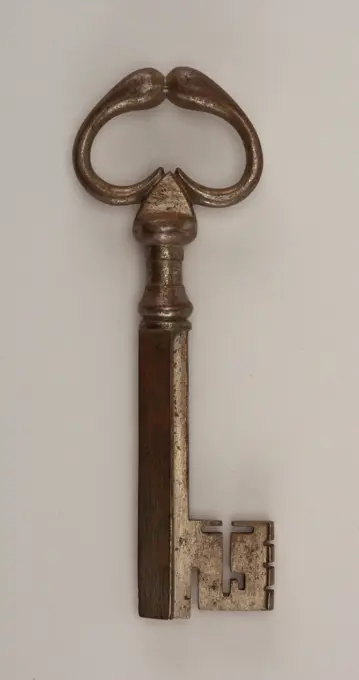
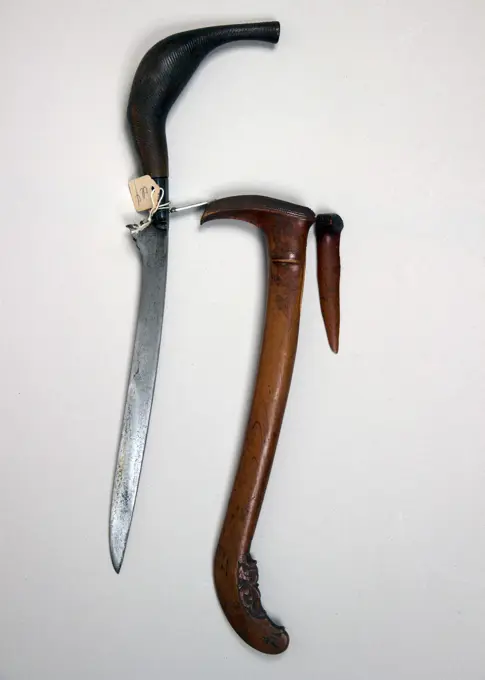
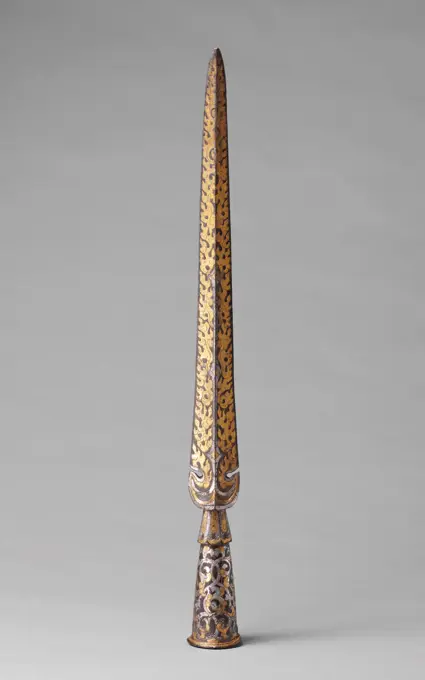
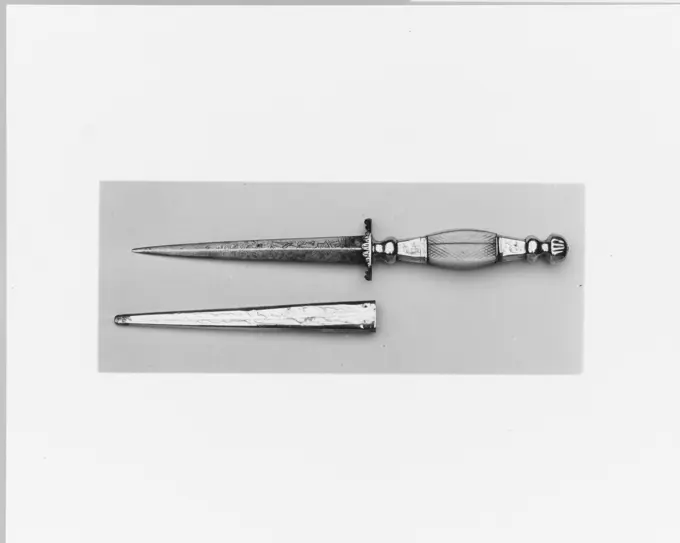
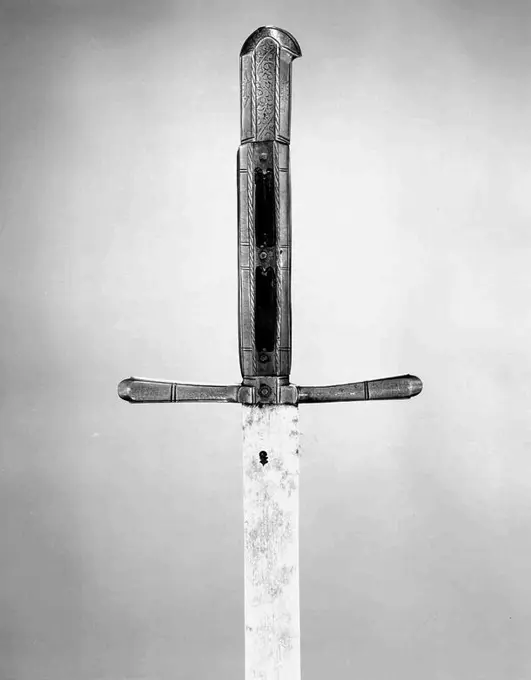
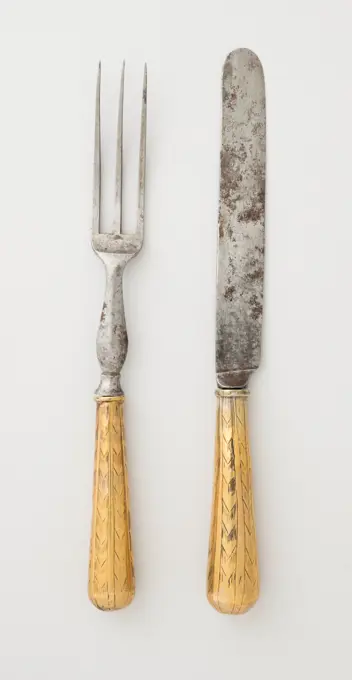
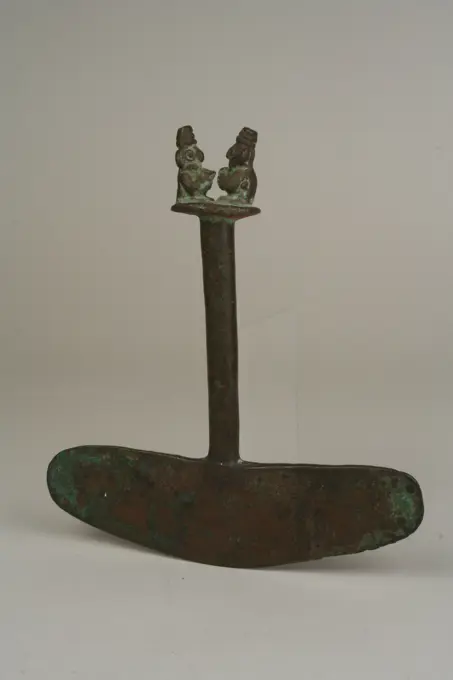
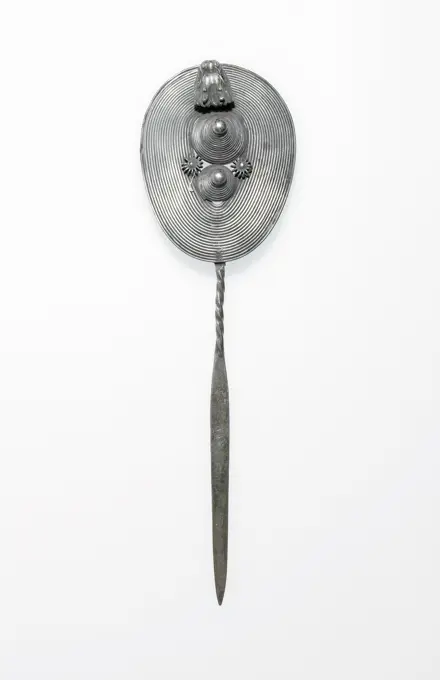
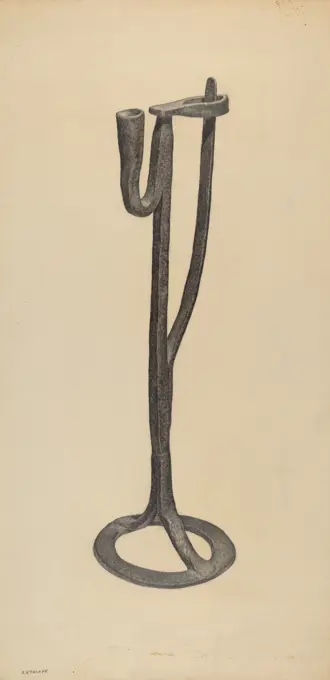
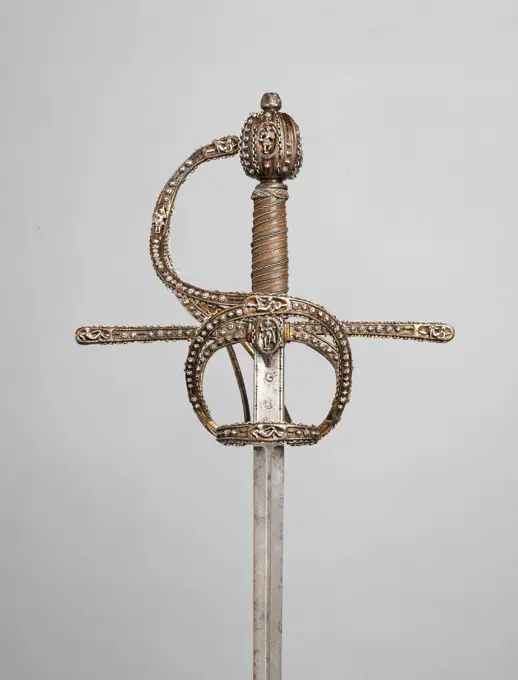
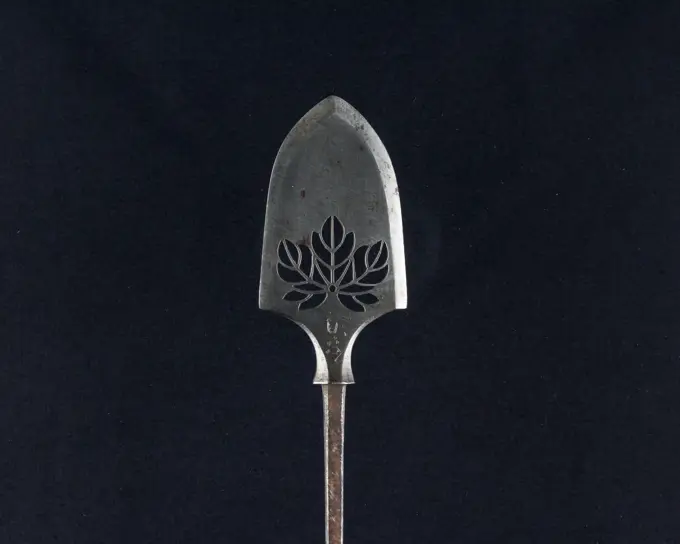
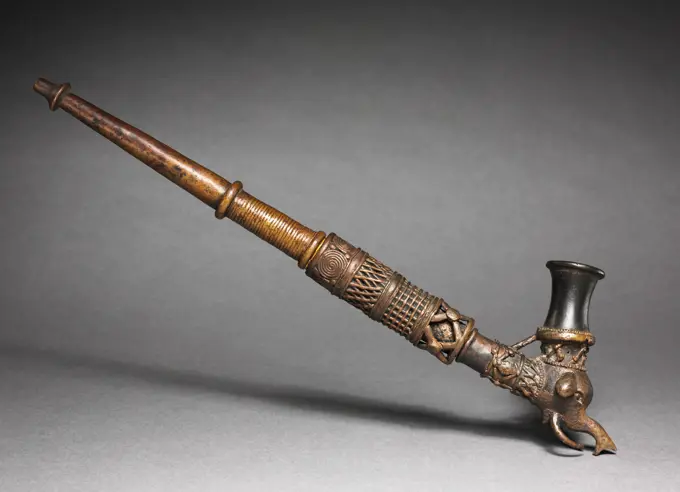
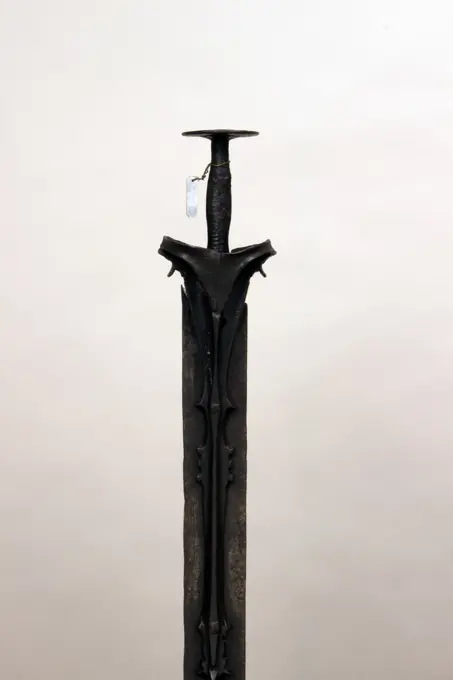
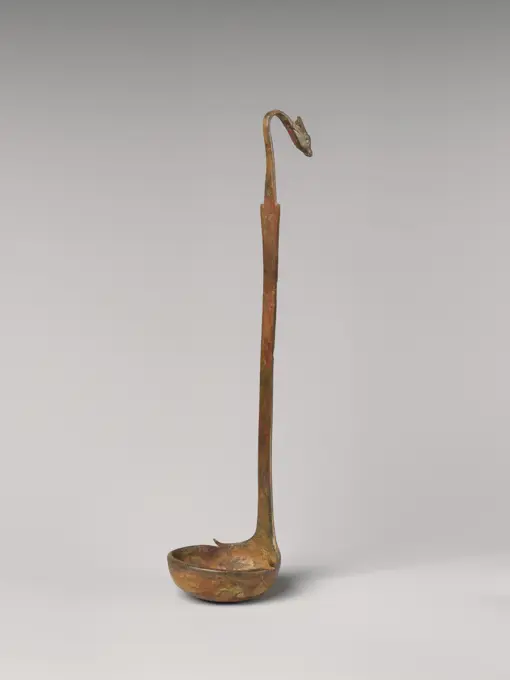
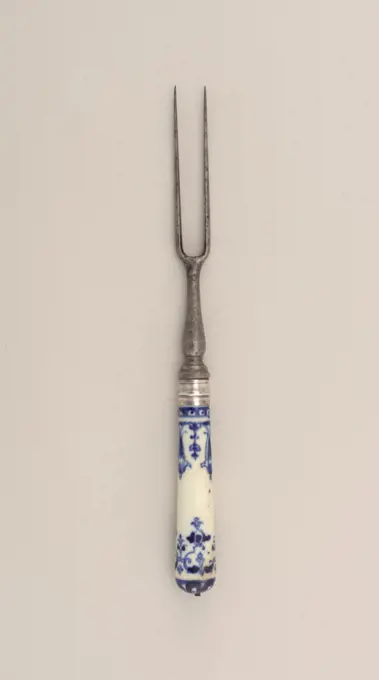
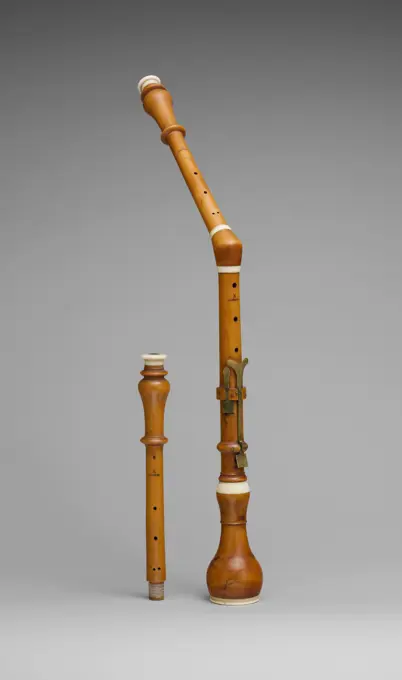
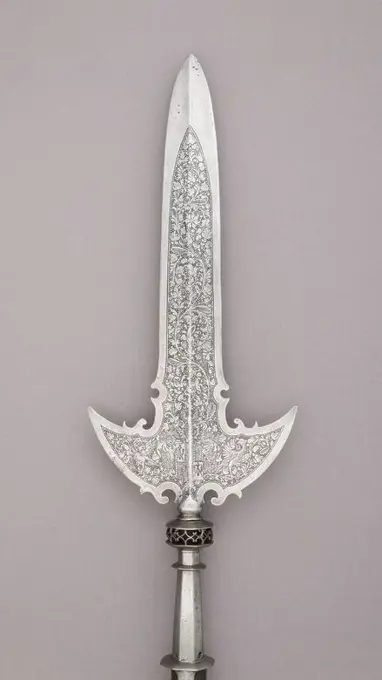
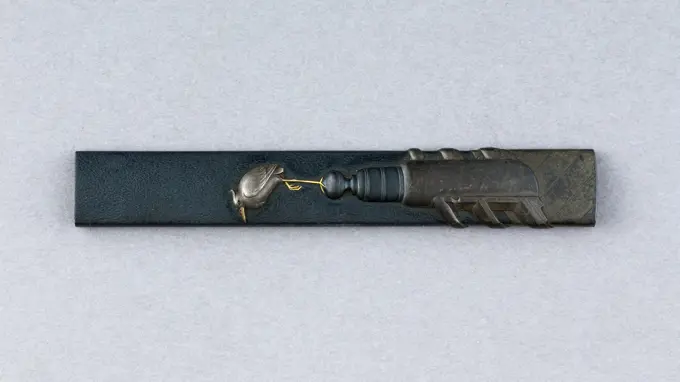
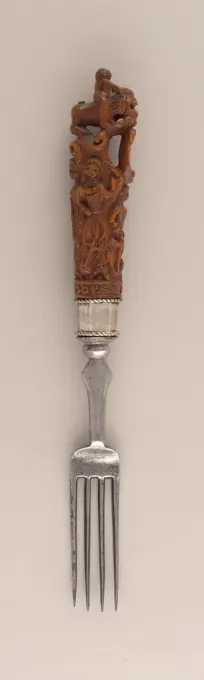
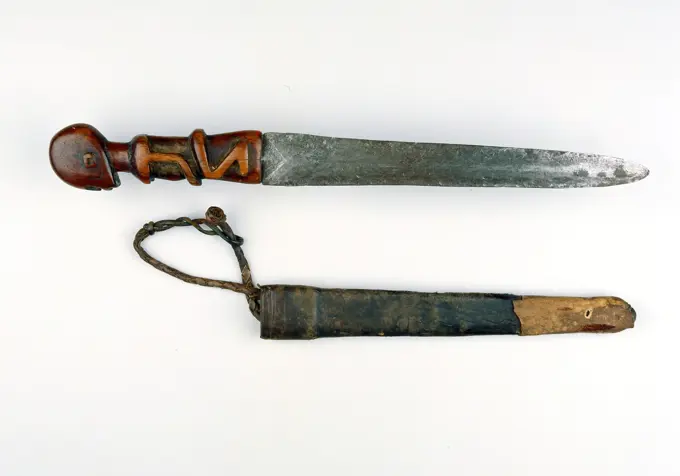
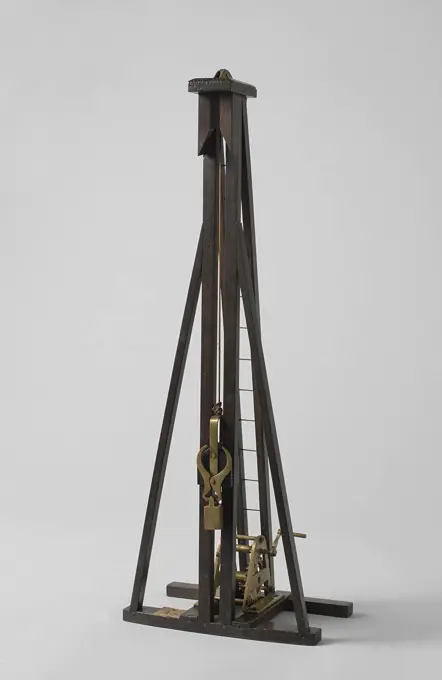
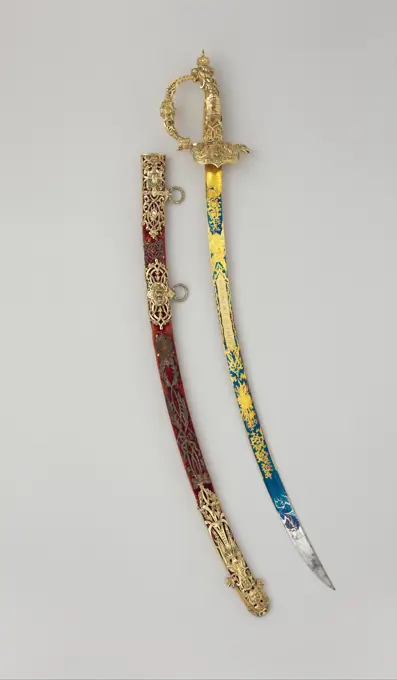
Sword with Scabbard of Faustin I (1782-1867), Emperor of Haiti 1850 Robert Mole British This lavish ceremonial sword was made for Faustin-Élie Soulouque (1782-1867), who ruled Haiti as Emperor Faustin I from 1849 to 1859. It was presented to him by The Grand Masonic Lodge of Haiti in 1850. According to family tradition, Henry Delafield (1792-1875) later received it as a gift from Faustin. Delafield was a prominent businessman who served as Consul for Haiti in New York from 1851 to 1859. The sword remained in the Delafield family until it was bequeathed to the Museum in 2012.. Sword with Scabbard of Faustin I (1782-1867), Emperor of Haiti 35859Table knife 18th century Southern German. Table knife. Southern German. 18th century. Steel, wood, mother-of-pearl, whalebone, metal. Metalwork-SteelWheellock Rifle. Culture: German, Munich and Augsburg. Dimensions: L. 41 7/8 in. (106.4 cm); L. of barrel 30 9/16 in. (77.6 cm); Cal.46 in. (11.7 mm); Wt. 7 lb. 6 oz. (3350 g). Steel-chiseler: Caspar Spät (German, Munich, ca. 1611-1691). Stock maker: Elias Becker (German, Augsburg, recorded 1633-74). Date: ca. 1640-50. Museum: Metropolitan Museum of Art, New York, USA.Small knife with a scabbardSword (Klewang) with Scabbard 18th-19th century Indonesian, Sulawesi. Sword (Klewang) with Scabbard. Indonesian, Sulawesi. 18th-19th century. Wood, rattan, silver. Sulawesi. SwordsCrossbowSword inside bronze, wood and bone sheath, from Pannerden, NetherlandsCup-Hilted Rapier ca. 1650-75 Italian, possibly Naples The rapier was the principal civilian sidearm throughout the sixteenth and seventeenth centuries. Designed for cut-and-thrust fencing of progressively complex techniques, the rapier is characterized by a double-edged blade with an acute point and an elaborate guard for the hand. The guards, usually of iron or steel, were subject to a variety of embellishment. They were engraved, chiseled, gilded, damascened, and encrusted in gold and silver in keeping with fashionable styles. Unless otherwise noted, the materials, attributions, and dating given here refer to the hilts. Rapier blades, invariably of steel, bear a variety of makers marks denoting their origin in the two principal centers of blademaking, Toledo in Spain and Solingen in Germany.. Cup-Hilted Rapier 24820Oboe, Christoph Delusse, c. 1780 - c. 1800 Hobe of Palmhout with nine brass valves. A few valves (with saddles) were most likely set up by Guillaume Triébert. The third and fourth gap are double. Marked on all three parts with: Kroon / C / Delusse / #. The oboe is marked with the number 3 on the upper part. Paris boxwood. brass (alloy). ringen: ivory Hobe of Palmhout with nine brass valves. A few valves (with saddles) were most likely set up by Guillaume Triébert. The third and fourth gap are double. Marked on all three parts with: Kroon / C / Delusse / #. The oboe is marked with the number 3 on the upper part. Paris boxwood. brass (alloy). ringen: ivoryPaul Poffinbarger, Baker's Mixing Spoon, c 1939 Baker's Mixing SpoonCinquedea. Culture: Italian, Emilia. Dimensions: L. 32 13/16 in. (83.4 cm); L. of blade 26 5/16 in. (66.8 cm); W. 8 in. (20.5 cm); Wt. 2 lb. 11 oz. (1219 g). Date: late 15th century. Museum: Metropolitan Museum of Art, New York, USA.Apostle spoon probably 1632 Dutch, Hoorn Apostle spoons are thought to have originated in late-fifteenth century England but also became popular in the Netherlands, where household goods were frequently embellished with biblical imagery reminding the owner of Christian virtues.. Apostle spoon 188131 Dutch, Hoorn, Apostle spoon, probably 1632, Silver, Overall: 7 7/8  2 7/16 in. (20  6.2 cm). The Metropolitan Museum of Art, New York. Gift of Mrs. Samuel P. Avery, 1897 (97.2.96)Ritual Dagger. Eastern Tibet, Kham region, Derge, Eastern Derge or China, 17th century or earlier. Arms and Armor; daggers. Gilt copper alloy and rock crystalCeremonial miner's axe Unknown ManufakturaKnife (Bade-bade) with Sheath. Culture: Sumatran. Dimensions: H. with sheath 10 9/16 in. (26.8 cm); H. without sheath 9 13/16 in. (24.9 cm); W. 1 11/16 in. (4.3 cm); Wt. 3.7 oz. (104.9 g); Wt. of sheath 2.9 oz. (82.2 g). Date: 16th-19th century. Museum: Metropolitan Museum of Art, New York, USA.Longcase clock ca. 1740 Clockmaker: Vincent van Amelonsen. Longcase clock 203894Fauchard. Culture: Italian, decorated in Turkey. Dimensions: L. 93 1/4 in. (236.9 cm); L. of head 24 1/4 in. (61.6 cm); W. 8 5/8 in. (21.9 cm); Wt. 4 lbs. 11.9 oz. (2151.7 g). Date: 16th century. Museum: Metropolitan Museum of Art, New York, USA.Lance for the Carousel (Running at the Ring) Made 1700-1750 Dresden. Iron, wood, and paint .Halberd Made 1600-1625 Western Europe. Steel and wood .Dagger (Katar). Culture: Indian. Dimensions: L. 14 3/8 in. (36.5 cm); L. of blade 8 in. (20.3 cm); W. 3 1/2 in. (8.9 cm); D. 1/2 in. (1.3 cm); Wt. 16.6 oz. (470.6 g). Date: 18th-19th century. Museum: Metropolitan Museum of Art, New York, USA.Dervish Ax. Culture: Turkish. Dimensions: L. 52 in. (132 cm); Wt. 3 lb. 2 oz. (1420 g); axehead: 15 3/8 x 8 3/4 in. (39 x 22.1 cm). Date: dated A.H. 1241/A.D. 1825-26.Large axes with crescent-shaped blades were originally designed for use in battle, but they gradually came to serve as symbols of authority and were carried before a dignitary. They are also associated with religious mystics, Sufis or dervishes, who often exercised considerable political influence, particularly among the Ottoman janissaries (the sultan's elite guard). This late example is decorated in silver with pious Qur'anic inscriptions and verses in Ottoman Turkish by Hatayi, a poet of the Bektashi Order of Dervishes. Museum: Metropolitan Museum of Art, New York, USA.Dagger and Sheath. German. Date: 1550-1575. Dimensions: L. 30.5 cm (12 in.)Blade L. 21 cm (8 1/4 in.)Wt. 7 oz. Scabbard L. 23.5 cm (9 1/4 in.)Scabbard Wt. 9 oz. Steel, silver, and wood. Origin: Germany. Museum: The Chicago Art Institute, Chicago, USA.Pistolholster of black leather, decorated with sliced prainmade and birds as ornament.Black Leather Pistolholster, decorated with sliced prainmade as an ornament. Birds Are Depicted On Either Side.Sword (Yatagan) with Scabbard. Culture: Turkish. Dimensions: L. with scabbard 29 1/2 in. (74.9 cm); L. without scabbard 26 5/8 in. (67.6 cm); W. 2 in. (5.1 cm); Wt. 1 lb. 0.2 oz. (459.3 g); Wt. of scabbard 13.5 oz. (382.7 g). Date: 19th century. Museum: Metropolitan Museum of Art, New York, USA.Arrowhead (Yanone) 18th century Japanese Although today Japanese warriors are renowned most for their swordsmanship, archery, especially from horseback, has been an essential part of samurai warfare and culture for centuries. Arrows were fitted with heads of varying shape according to their intended use in war, the hunt, or target practice. Arrowheads made for use on the battlefield incorporated different designs intended for specialized purposes such as the piercing of armor or to cause maximum damage to horses and unarmored personnel.Large arrowheads, pierced and elaborately chiseled with landscapes, birds, flowers, dragons, and Buddhist divinities, were created to be admired for the beauty of their metalwork and design rather than for use in archery. Such highly elaborate examples may have been made for presentation or as a votive offerings to a shrine.. Arrowhead (Yanone). Japanese. 18th century. Steel. Archery Equipment-ArrowheadsSmart sword Smart sword of the knight of the Middle Ages Copyright: xZoonar.com/ValeryxxSibrikovx 2525405Knife, oak, bog, 18th century, cutlery, Decorative Arts, KnifeArrowhead (Yanone) 18th century Japanese Although today Japanese warriors are renowned most for their swordsmanship, archery, especially from horseback, has been an essential part of samurai warfare and culture for centuries. Arrows were fitted with heads of varying shape according to their intended use in war, the hunt, or target practice. Arrowheads made for use on the battlefield incorporated different designs intended for specialized purposes such as the piercing of armor or to cause maximum damage to horses and unarmored personnel.Large arrowheads, pierced and elaborately chiseled with landscapes, birds, flowers, dragons, and Buddhist divinities, were created to be admired for the beauty of their metalwork and design rather than for use in archery. Such highly elaborate examples may have been made for presentation or as a votive offerings to a shrine.. Arrowhead (Yanone). Japanese. 18th century. Steel. Archery Equipment-ArrowheadsBamboo Container Stopper with SquattingFigureShooter from a wall anchor of a house in Arnhem, Anonymous, c. 1600 - c. 1625 Wrought iron shooter from a wall anchor from a house in Arnhem. unknown iron (metal) Wrought iron shooter from a wall anchor from a house in Arnhem. unknown iron (metal)Tablespoon 19th century German, Nuremberg. Tablespoon. German, Nuremberg. 19th century. Silver. Metalwork-SilverSpanish sword formerly belonging to Tomàs de Ayala (16th c.). SPAIN. CATALONIA. Barcelona. Montjuic Castle Military Museum.Folding spoon, brass, Oval-shaped spoon bowl, plain flat neck has small hinge and sliding band. Flat handle with trifid end, cast and chased with a deer, birds, a fox and a dog, stylized trees and acanthus scrolls against a matte background. Bowl bends forward., Germany, ca. 1700-50, cutlery, Decorative Arts, Folding spoonDoes not SquadMiniature shovel ca. 1720-30 David Clayton British. Miniature shovel. British, London. ca. 1720-30. Silver. Metalwork-Silver-MiniatureArrowhead (Yanone). Culture: Japanese. Dimensions: L. 13 in. (33 cm); L. of head 3 1/4 in. (8.3 cm); W. 2 1/2 in. (6.4 cm); Wt. 2 oz. (56.7 g). Date: 13th-18th century. Museum: Metropolitan Museum of Art, New York, USA.Parasol (or umbrella) With deck of plain, dark blue silk and ditto cover, on light brown wooden stick, driven gilded copper button with landscape with minnekozend pair and three mythological figures, anonymous, c. 1890 - c. 1910 Parasol or umbrella () With a deck of plain, dark blue side, with a driven gilded button and stretched with dark blue side and with a brush and a cover. Thick light brown wooden stick with a Konian handle in which an oval hole, for the brush. On top of the flat and rounded side of the button a minnekozend pair, possibly Jupiter and Callisto. On the circumference, which is vaulted, there are three mythological female figures, one with a large crance or a wreath (), One with a stick or scepter and the third, which is seen on the back, with a bow (). Amsterdam (possibly) dek: silk. hoes: silk. stok: wood (plant material). knop: gilding (material) cutting / gilding Parasol or umbrella () With a deck of plain, dark blue side, with a driven gilded button and stretcheKnife 19th century Southern Italian or Sicilian. Knife. Southern Italian or Sicilian. 19th century. Steel, silver, turquoise or glass. Metalwork-SteelDisc - headed Pin. Iran, Luristan, circa 1000-650 B.C.. Jewelry and Adornments; pins. Bronze, hammeredErnest Busenbark and John H Tercuzzi, Umbrella Stand, c 1940 Umbrella StandSword. European. Date: 1190-1210. Dimensions: Overall L. 105.4 cm (41 1/2 in.) Blade L. 89.2 cm (35 1/8 in.) Width below quillons: 4.5 cm (1 3/4 in.) Wt. 2 lb. 7 oz. Iron. Origin: Europe. Museum: The Chicago Art Institute, Chicago, USA.LeftistKnife, Cast and chased, Knife in the form of a Japanese sword; handle with mottled surface, one side decorated with a floral bouquet and copper accents; other side: the same. Flat, curved blade engraved with stylized foliate decoration., ca. 1880, cutlery, Decorative Arts, KnifeKris with Sheath 18th-19th century Philippine, Maguindanao. Kris with Sheath 27892Arrowhead (Yanone) dated 1645 Japanese Although today Japanese warriors are renowned most for their swordsmanship, archery, especially from horseback, has been an essential part of samurai warfare and culture for centuries. Arrows were fitted with heads of varying shape according to their intended use in war, the hunt, or target practice. Arrowheads made for use on the battlefield incorporated different designs intended for specialized purposes such as the piercing of armor or to cause maximum damage to horses and unarmored personnel.Large arrowheads, pierced and elaborately chiseled with landscapes, birds, flowers, dragons, and Buddhist divinities, were created to be admired for the beauty of their metalwork and design rather than for use in archery. Such highly elaborate examples may have been made for presentation or as a votive offerings to a shrine.. Arrowhead (Yanone). Japanese. dated 1645. Steel. Archery Equipment-ArrowheadsKnife ca. 1300-1350 French or Spanish. Knife 464323 French or Spanish, Knife, ca. 13001350, Steel blade, crystal handle, copper-gilt mountings, Overall: 10 1/4 x 1 3/4 x 1 in. (26 x 4.4 x 2.5 cm). The Metropolitan Museum of Art, New York. Gift of J. Pierpont Morgan, 1917 (17.190.343)Hammered Silver Miniature Scepter 8th-mid-16th century Peru; north coast (). Hammered Silver Miniature Scepter 309160Partisan ca. 1600 Italian. Partisan 26189Key; 1909-2-237Manuel G Runyan, Hinges and Bolt, c 1939 Hinges and BoltHandscreen; embroidered silk leaf, carved wood handle with ivory ornaments, silk tasselKnife (Bade-bade) with Sheath 16th-19th century Sumatran, Acheen. Knife (Bade-bade) with Sheath 31671Goldsmith's art, 20th century. Chatelaine brooch with pendant and watch covering, set with diamonds and sapphires, by Boucheron.Spearhead (Mdung Rtse) 17th-18th century Tibetan The blade is elaborately decorated with a symmetrical pattern of finely incised flames damscened in gold over its entire length, with a stylized representation of the Sword of Wisdom in silver on the central ridge.. Spearhead (Mdung Rtse) 26631Arrowhead (Yanone) 18th century Japanese Although today Japanese warriors are renowned most for their swordsmanship, archery, especially from horseback, has been an essential part of samurai warfare and culture for centuries. Arrows were fitted with heads of varying shape according to their intended use in war, the hunt, or target practice. Arrowheads made for use on the battlefield incorporated different designs intended for specialized purposes such as the piercing of armor or to cause maximum damage to horses and unarmored personnel.Large arrowheads, pierced and elaborately chiseled with landscapes, birds, flowers, dragons, and Buddhist divinities, were created to be admired for the beauty of their metalwork and design rather than for use in archery. Such highly elaborate examples may have been made for presentation or as a votive offerings to a shrine.. Arrowhead (Yanone). Japanese. 18th century. Steel. Archery Equipment-ArrowheadsDagger and Sheath 1770-1800. Dagger and Sheath. 1770-1800. SilverClutha vase, c. 1885, Christopher Dresser; Manufacturer: James Couper and Sons, Scottish, 1834-1904, 20 1/4 x 5 5/8 x 5 5/8 in. (51.44 x 14.29 x 14.29 cm) (at neck), Blown glass, England, 19th century, The first modern industrial designer, Christopher Dresser worked with a number of different British manufacturers of furniture, metalwork, wallpaper, ceramics and glass to create well-designed yet mass produced objects. For the Scottish company James Couper and Sons he designed a line of hand-blown glass produced with industrial techniques. The line was called Clutha, meaning 'cloudy' in Gaelic, by the London retailer Libertys. These deliberately bubbly and streaked glass vases and bottles were produced in a range of tertiary colors suitable to the mid and late nineteenth century British interior: greeny yellow, amber, lilac and turquoise. Metallic streaks were added to the glass to create jewel-like qualities imitative of Roman and Venetian glass.Spoon with the inscription: Vino IVNGVTV Vino Solvvntvr Amici unknownOnderdeel van fagot.Part of bassoon with eight valves and seventeen holes.Kris with Sheath 16th-19th century Javanese. Kris with Sheath 31347Hunting Sword. Culture: Austrian, Hall. Dimensions: L. 49 1/2 in. (125.7 cm); L. of blade 40 in. (101.6 cm); W. of blade 1 7/16 in. (3.6 cm); Wt. 3 ls. 9 oz. (1615.9 g). Sword maker: Attributed to Hans Sumersperger (Austrian, Hall, active 1492-1498). Date: ca. 1500.Designed as a defense against large game, such as bear and boar, swords of this type were also worn as civilian sidearms. This example is related in form and decoration to two hunting swords made for Emperor Maximilian I by Hans Sumersperger and therefore may have been intended for a member of the imperial court. Museum: Metropolitan Museum of Art, New York, USA.Fork (Germany); steel, brass; L x W: 12.2 x 1.8 cm (4 13/16 x 11/16 in.); The Robert L. Metzenberg Collection, gift of Eleanor L. Metzenberg; 1985-103-263-aFork, silver, enamel, stone (), Small fork with two pointed tines. Baluster-shaped neck. Handle has gold enamel ground with floral pattern in red, white and blue. Blue rozette with red facetted stone on the top., Germany, ca. 1680, cutlery, Decorative Arts, ForkCake server 1780-81 William Plummer. Cake server 197713Bronze Tumi with Figures 15th-16th century Inca. Bronze Tumi with Figures 312635Folding spoon first half 18th century Southern German. Folding spoon. Southern German. first half 18th century. Wood. Sculpture-MiniatureFork, ivory, silver, steel, Four tines, slightly curved. Sloping shoulders, baluster-shaped neck. Plain silver ferrule, octagonal in section. Carved ivory handle: a woman in costume wearing a hat (German), holding an instrument (hurdy-gurdy) under one arm, the other arm resting on the back. The head of the woman is moveable., possibly Germany, ca. 1700-1800, cutlery, Decorative Arts, ForkHair Pin, 8 x 2 1/8 x 1 in. (20.32 x 5.4 x 2.54 cm), Silver, Chinaobject on white - tool Axe close upAnonymous, Epingle of tie with a photograph of Victor Hugo after Nadar in a crenellated oval setting (attributed title). oxidized metal. House of Victor Hugo - Hauteville House.Pair of old wooden skis on white backgroundJack Staloff, Candle and Rush Light Holder, c 1938 Candle and Rush Light HolderKey; 1909-2-265Presentation Sword and Scabbard of Brigadier General Daniel Davis (1777-1814) of the New York Militia. Culture: American, New York. Dimensions: L. 37 1/4 in. (94.6 cm). Silversmith: John Targee (American, ca. 1774-1850). Date: ca. 1815-17.Following the War of 1812, the State of New York awarded twelve swords to military officers who commanded troops within its borders. This example was presented posthumously to Brigadier General Daniel Davis (1777-1814) of the New York Militia, who died during an engagement at Fort Erie on September 17, 1814.The sword's design reflects the classical inspiration of the Federal period. The hilt, with its downturned shell, is based on French Empire models. The image of Hercules and the Nemean Lion, emblematic of strength and courage, is probably copied from an English engraving after a Classical gem or cameo. The eagle-headed pommel, on the other hand, is typically American, as is the style of engraving on the scabbard, illustrating the battle. Museum: Fork (Netherlands); steel, enamel; L x W: 16.1 x 1.2 cm (6 5/16 x 1/2 in.); The Robert L. Metzenberg Collection, gift of Eleanor L. Metzenberg; 1985-103-65Musical Instruments at the South Kensington Museum: Violin, given by Queen Elizabeth to Leicester, 1870. A '...boxwood violin, bearing the arms of Queen Elizabeth and the Earl of Leicester engraved in silver on its finger-board...It is described both by Hawkins and Burney...as having belonged to the Duke of Dorset, at the sale of whose furniture it was bought by Mr. Bremner, in the Strand. It is two feet long from the extremity of the tail-pin to the dragon's head, and carved with a woodman cutting at the fallen branches of an oak, and with another man beating down acorns for hogs to eat, beRapier ca. 1600-1610 probably Italian From the early sixteenth century the rapier was the standard side-arm of the Renaissance courtier, its design and decoration complimenting his fashionable dress, its rich embellishment a reflection of his wealth and status. A work of virtuoso design and unique technical complexity, this rapier characterizes the imagination and flair exercised by swordsmiths of the late Renaissance. The application of silver chains, faceted studs imitating precious stones, and classical figures to the gilt-iron hilt is unique among surviving rapiers.. Rapier. probably Italian. ca. 1600-1610. Steel, iron, silver, gold, copper alloy, wood. SwordsTraveling Fork, Silver, brass, Fork has two straight tines, angular shoulders and a baluster-shaped neck. Tapering handle, round in section, with filigree; floral and paisley design around a plain silver shaft. Rosette at the end of handle., Northern Germany or Denmark, mid-late 18th century, cutlery, Decorative Arts, Fork, ForkBoarding Hanger in Scabbard, Manufacture de Klingenthal, 1812 sabre MarineABEL No. 1 in sheath with a carrying strap. Curved blade with wide blood channel, iron hilt with a bowl. Rag and bracket are black. On both sides, an anchor is roughly engraved on the blade. De Schede has a brass bottom tire and upper tire with carrying button for the carrying tape, which is broken. Klingenthal (Alsace) iron (metal). brass (alloy). leather. textile materialsArrowhead (Yanone) 18th century Japanese Although today Japanese warriors are renowned most for their swordsmanship, archery, especially from horseback, has been an essential part of samurai warfare and culture for centuries. Arrows were fitted with heads of varying shape according to their intended use in war, the hunt, or target practice. Arrowheads made for use on the battlefield incorporated different designs intended for specialized purposes such as the piercing of armor or to cause maximum damage to horses and unarmored personnel.Large arrowheads, pierced and elaborately chiseled with landscapes, birds, flowers, dragons, and Buddhist divinities, were created to be admired for the beauty of their metalwork and design rather than for use in archery. Such highly elaborate examples may have been made for presentation or as a votive offerings to a shrine.. Arrowhead (Yanone). Japanese. 18th century. Steel. Archery Equipment-ArrowheadsPipe, 1900s. Equatorial Africa, Cameroon Bagam. Copper alloy; overall: 43.2 cm (17 in.).Primer 18th century Indian, Rajasthan A priming flask is used to hold and pour fine gun powder into the priming pan of a matchlock gun. They are produced from a range of materials, as seen here, including metal, horn, and ivory. Their decoration also varied and often showcased artistic ingenuity. This flask features the head of the makara, a crocodile-like creature of Hindu mythology. The makara design could be a reflection of its use in hunting crocodile, a popular pastime for the royal courts of Rajasthan.. Primer 30471Rapier with Scabbard. Southern European, possibly Spanish. Date: 1620-1650. Dimensions: Overall L. 141 cm (55 1/2 in.). Steel. Origin: Europe, southern. Museum: The Chicago Art Institute, Chicago, USA.Sword (Arivāl) possibly 16th century South Indian. Sword (Arivāl) 31030No maker's mark, Caddy Spoon, 1801, silver.Ladle ca. 2nd century B.C.-3rd century A.D. Parthian. Ladle. Parthian. ca. 2nd century B.C.-3rd century A.D.. Bronze. Parthian. Mesopotamia, NippurFork with Blue Pattern on Porcelain Handle, Saint-Cloud Porcelain Manufactory, French, active by 1693 - 1766, porcelain, vitreous enamel, steel, silver, Two long curved tines, rounded shoulders, baluster-shaped neck. Silver ferrule with horizontal bands. Tapering white porcelain handle with dark- blue floral and scrolled decoration. Button cap missing., France, ca. 1730, cutlery, Decorative Arts, fork, forkancient Asian stringed musical instrument on black background with backlight. national musical instrument of AsiaHunting Trousse (Waidpraxe) with the Coat of Arms and Initials of Christian II, Elector of Saxony. German (Saxony), Dresden; Silversmith: Joachim Puttlost, active 1607-1652. Date: 1604-1614. Dimensions: Cleaver L. 47 cm (18 1/2 in.); Blade L. 32.8 cm (12 7/8 in.); Wt. 2 lb. Steel, iron, silver, gilding, staghorn, wood, and leather. Origin: Germany. Museum: The Chicago Art Institute, Chicago, USA.English Horn before 1807 H. Grenser This boxwood instrument stems from the heyday of theGrenser company, when it maintained a work force of six. The angled version ofthe horn (hence the name cor anglé) is characteristic of German instruments ofthe second half of the eighteenth century. The pitch of the longer uppersection is a = 430 Hz, the shorter about 440 Hz. Listen to experts illuminate this artwork's story Listen Play or pause #9319. English Horn Supported by Bloomberg Philanthropies We're sorry, the transcript for this audio track is not available at this time. We are working to make it available as soon as possible.. English Horn. German. before 1807. Wood, ivory, brass. Dresden, Germany. Aerophone-Reed Vibrated-double reedViolin, anonymous, c. 1800 - c. 1890 Copper violin driven on all sides. Netherlands (possibly) copper (metal) Copper violin driven on all sides. Netherlands (possibly) copper (metal)Percussiepistool.Scottish model of a percussion gun with built-in slot, iron ribbed loop, copper lock plate, wooden flask and white metal kolf hood. The loop is ribbed on the outside and pulled on the inside. The copper lock plate is engraved on both sides with praise, on the left the name of the manufacturer. The flask has a diamond motif of wood and the handle is finely ribbed, the kolf cap on the bottom is made of white metal where a lion's head is made of.Partisan. Culture: Italian. Dimensions: L. 87 in. (221 cm); L. of head 24 3/4 in. (62.9 cm); W. 8 11/16 in. (22.1 cm); Wt. 5 lbs. 11.4 oz. (2591.1 g). Date: ca. 1610. Museum: Metropolitan Museum of Art, New York, USA.Hairpin, 20th century, 7 9/16 x 13/16 in. (19.2 x 2.06 cm), Brass, 20th centuryKnife Handle (Kozuka) ca. 1615-1868 Japanese A kozuka is a handle of a by-knife that is part of a sword mounting. It is kept in a slot on the reverse of a katana scabbard, often with a matching kōgai (hairdressing tool).. Knife Handle (Kozuka) 34585Mirror ca. 1635-1458 B.C. Second Intermediate Period-Early New Kingdom. Mirror 546997Fork (Netherlands); wood, steel; L x W x D: 21.8 x 2.8 x 2.5 cm (8 9/16 x 1 1/8 x 1 in.); The Robert L. Metzenberg Collection, gift of Eleanor L. Metzenberg; 1985-103-52Spoon with a porcelain, multi-colored painted with a Kakiemon decor, Meissener Porzellan Manufaktur, c. 1730 - c. 1735 Spoon of painted porcelain. The spoon is painted with the 'three friends', birds and bound hedges on the outside and with, among other things, Prunus, Bamboo and a bird on the inside. The latter decor is repeated on the back of the end of the stem; On the front a bird and flowers. The spoon is not marked. Float porcelain Spoon of painted porcelain. The spoon is painted with the 'three friends', birds and bound hedges on the outside and with, among other things, Prunus, Bamboo and a bird on the inside. The latter decor is repeated on the back of the end of the stem; On the front a bird and flowers. The spoon is not marked. Float porcelainDagger with Sheath, 19th-20th century, 12 7/8 x 7/8 x 1 3/8 in. (32.7 x 2.22 x 3.49 cm), Wood, metal, leather, Mali, 19th-20th centuryModel or a Pile Driver. Easy heater, almost identical to NG-MC-46. The pile block is caught by scissors and lifted with a winch to the top, where it is released automatically.