Historical Blades and Utensils

Collection of exquisite cutlery and musical instruments, highlighting detailed craftsmanship from various historical periods.

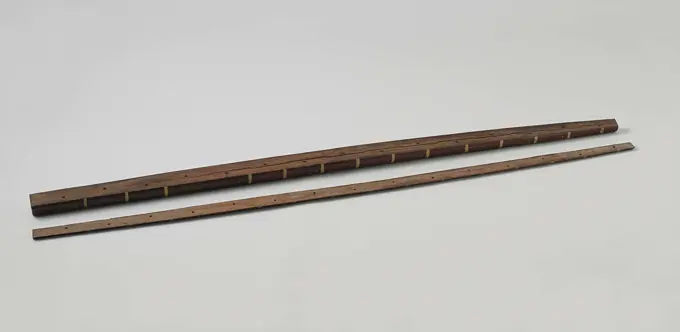
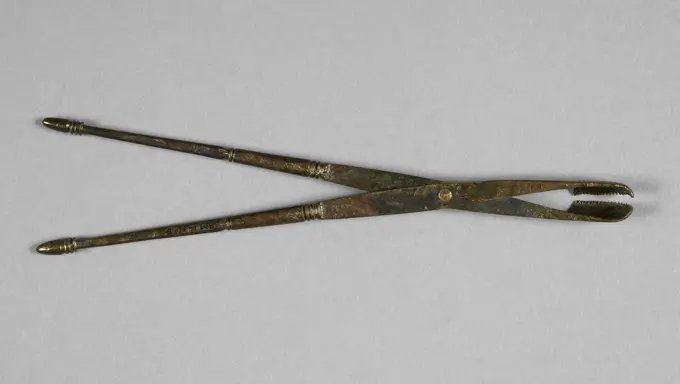
Flat copper needle with elongated oval eye, needle soil finding copper brass metal, cast archeology Rotterdam City Triangle Mariniersweg Kipstraat Hoogstraat sewing textile processing clothing needle and thread soil finding corner Mariniersweg Kipstraat Hoogstraat.
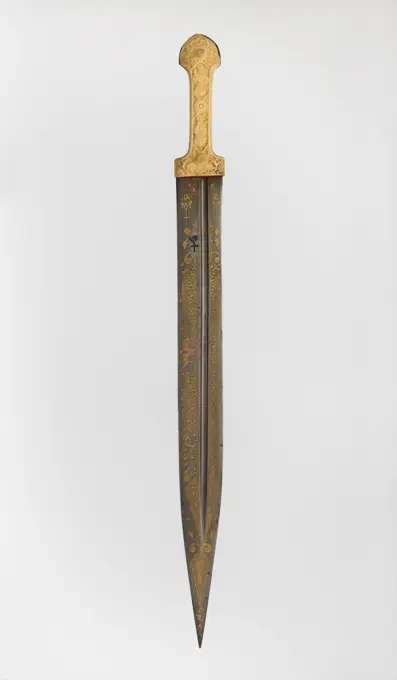
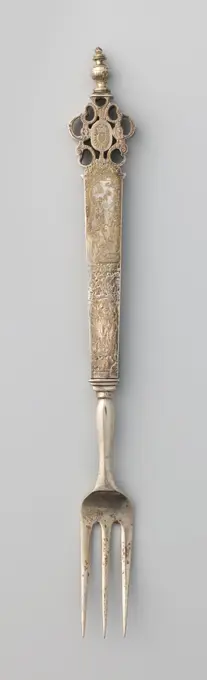
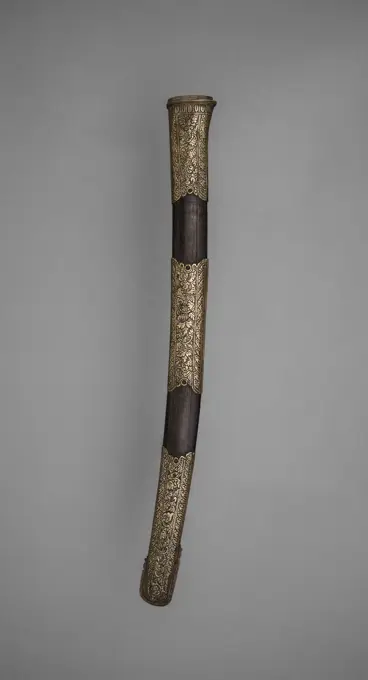
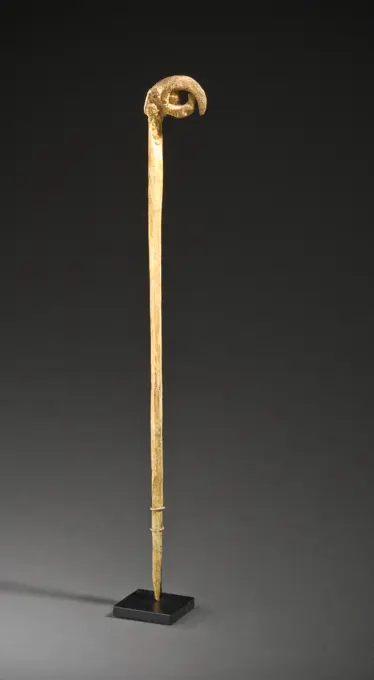
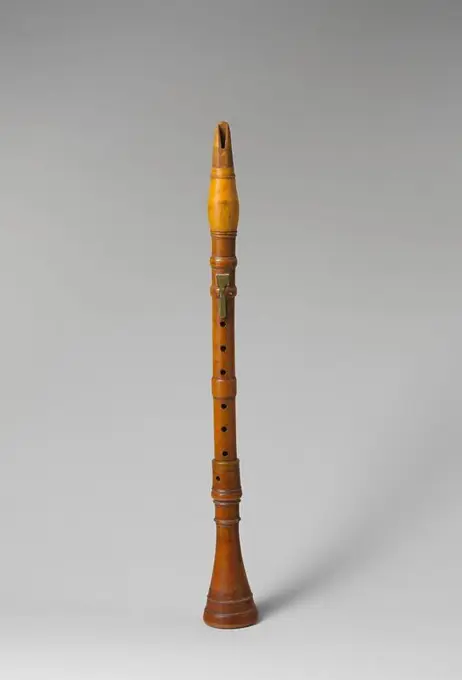
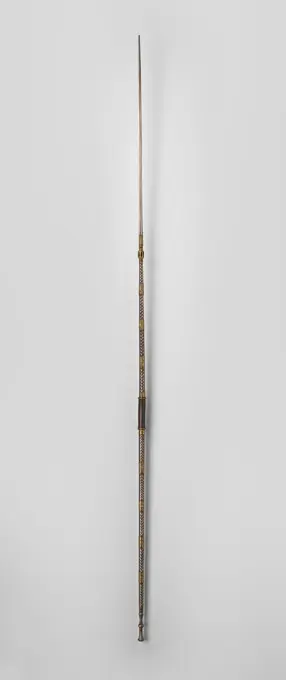
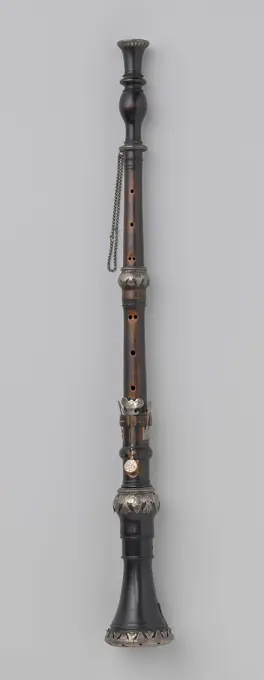
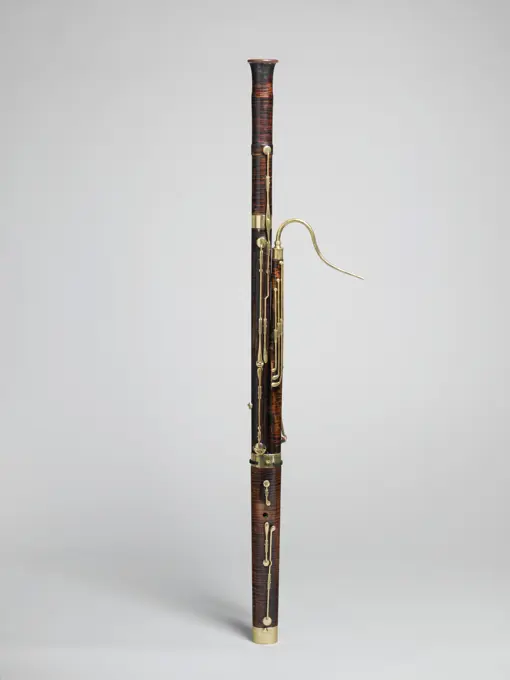
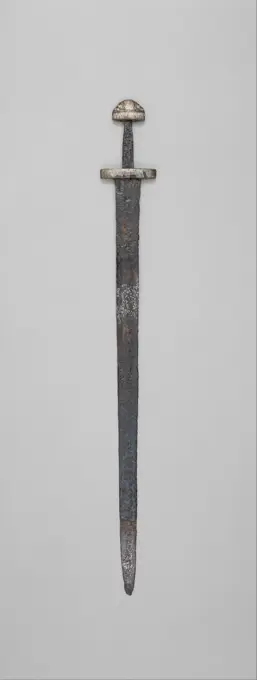
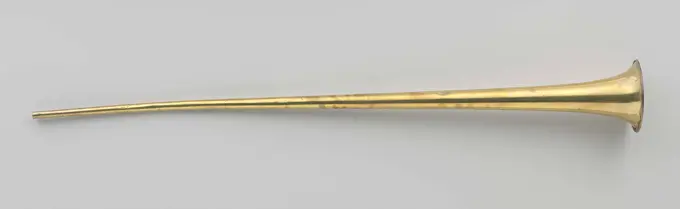
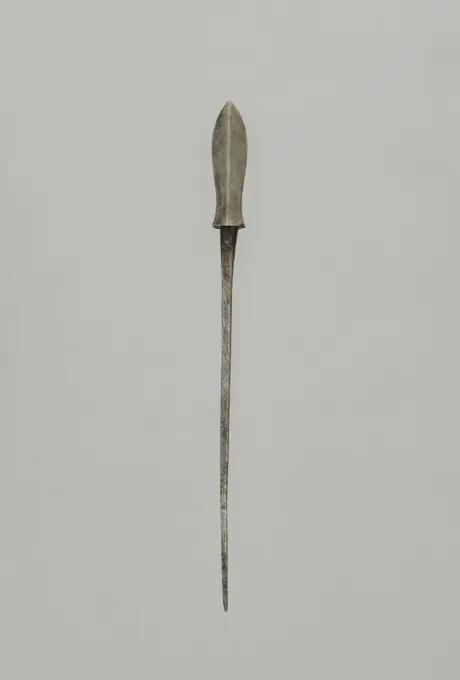
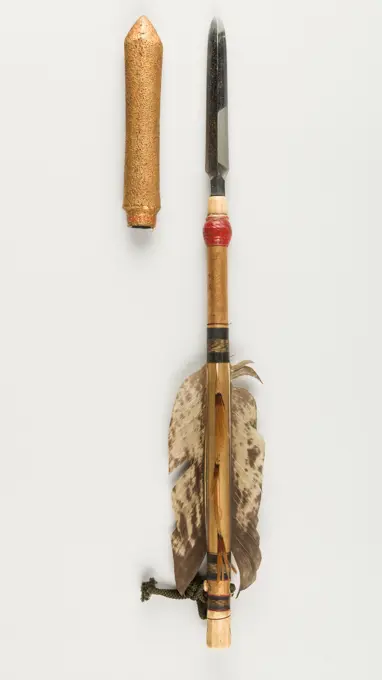
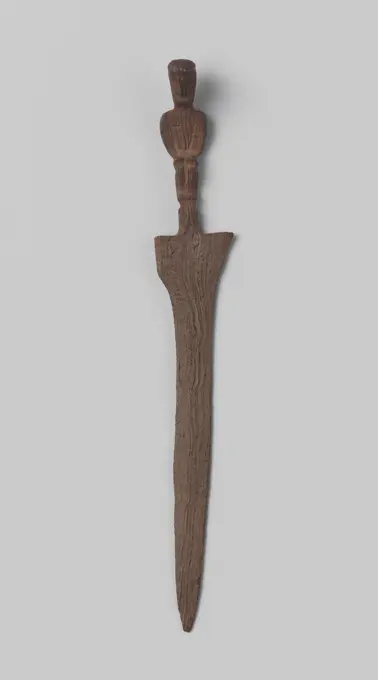
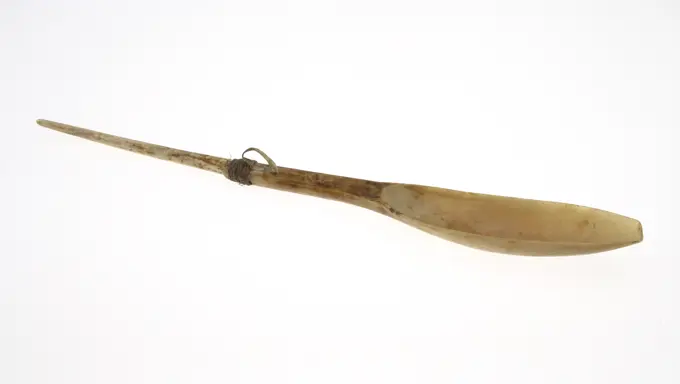
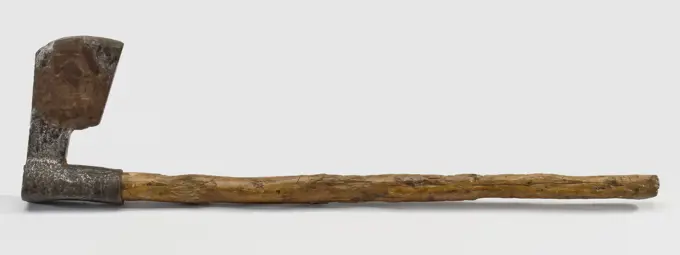
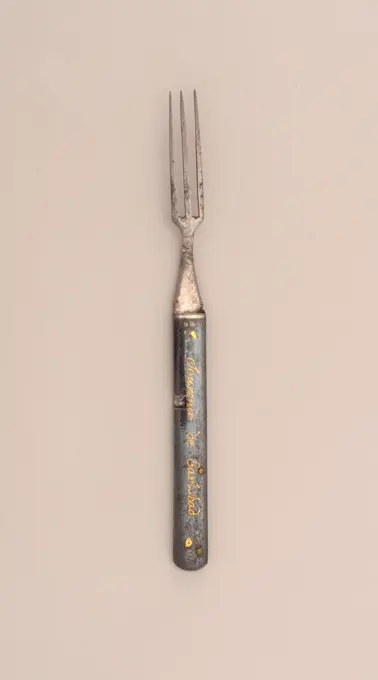
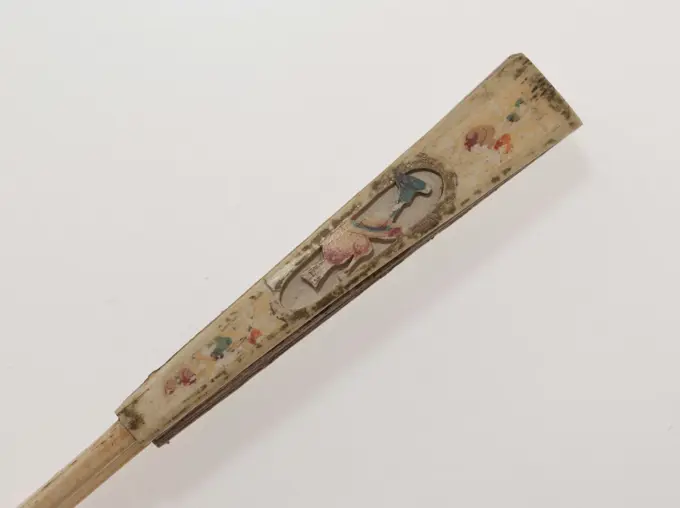
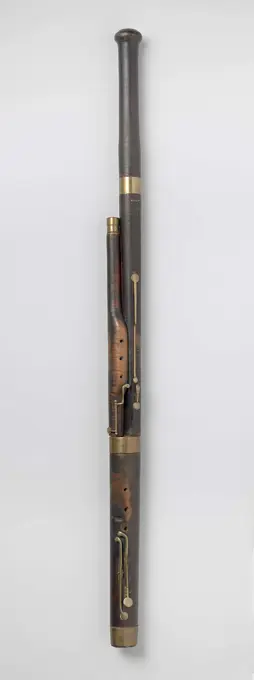
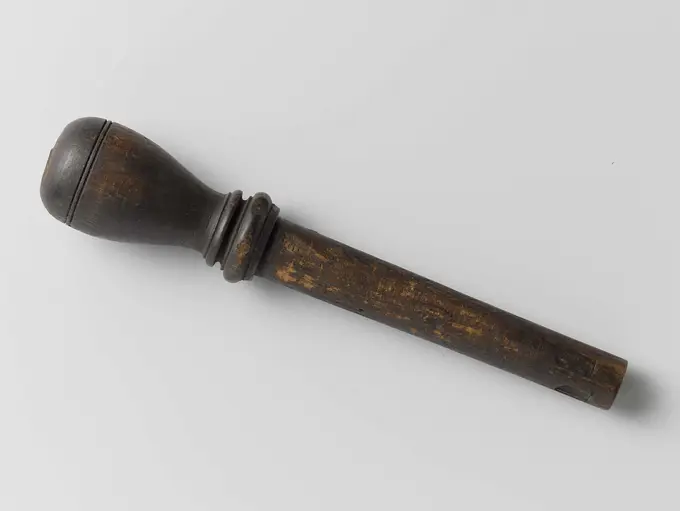
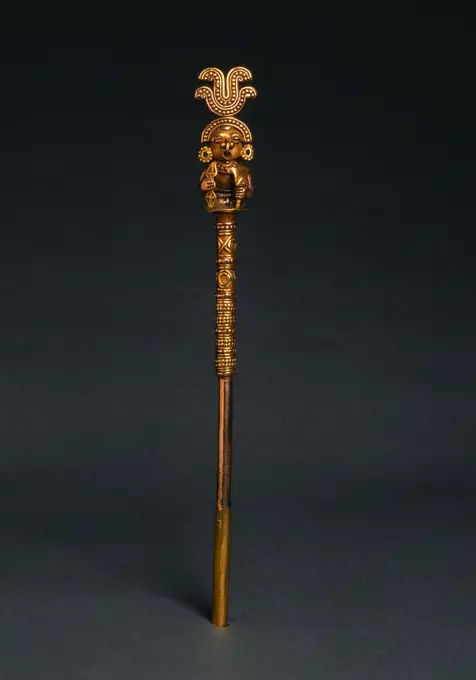
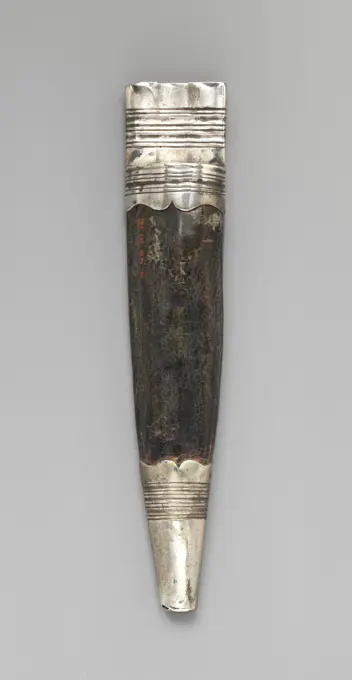
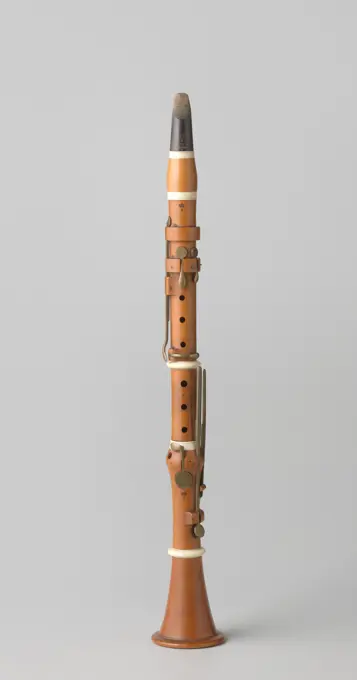
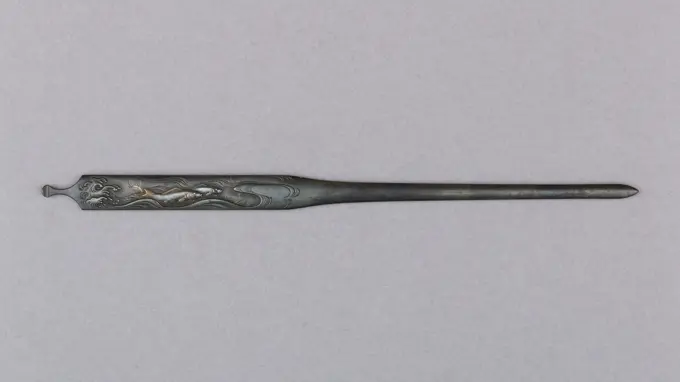
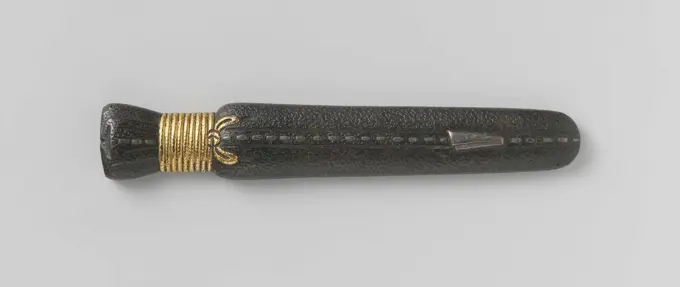
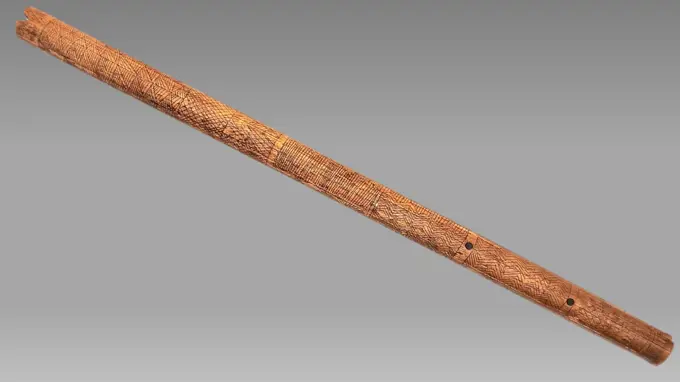
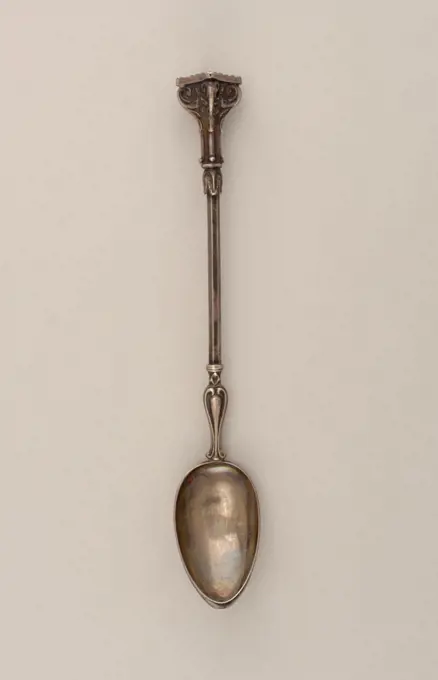
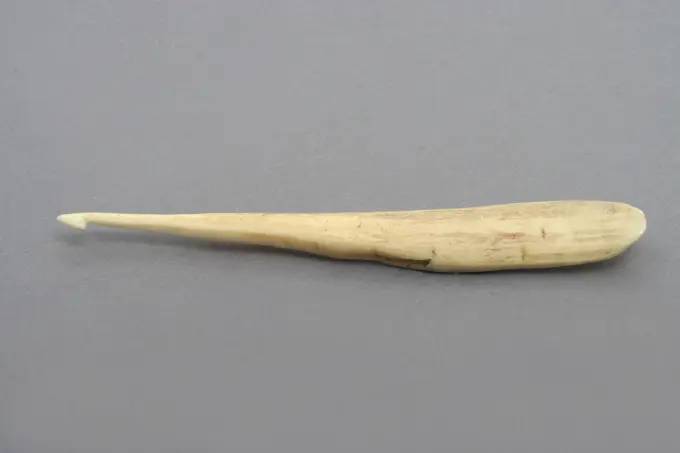
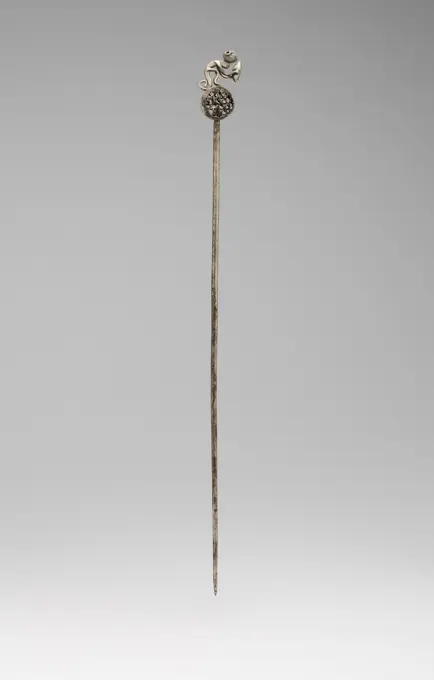
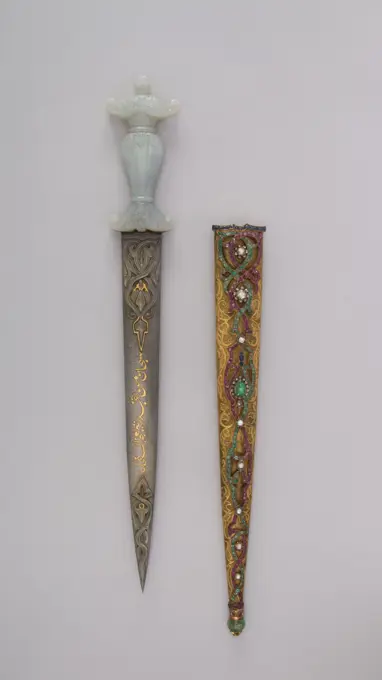
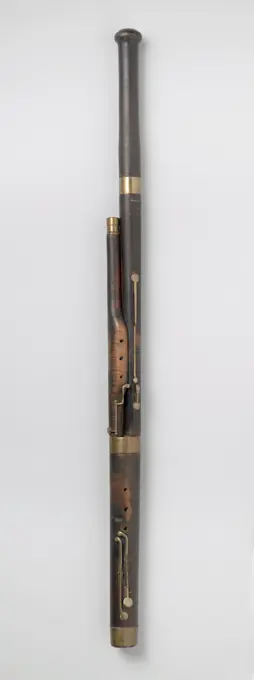
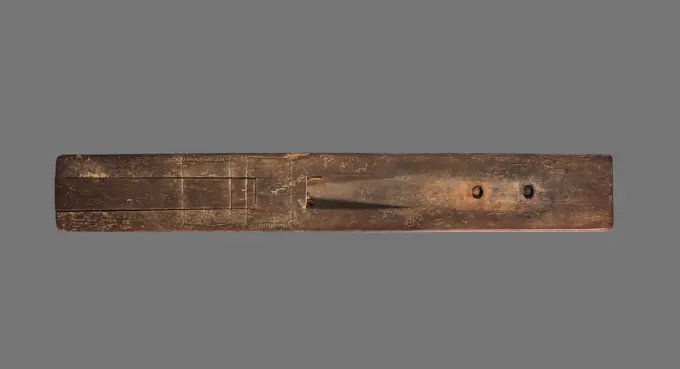
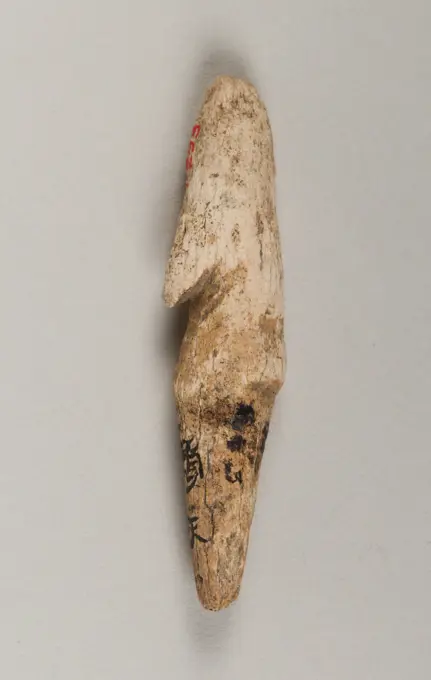
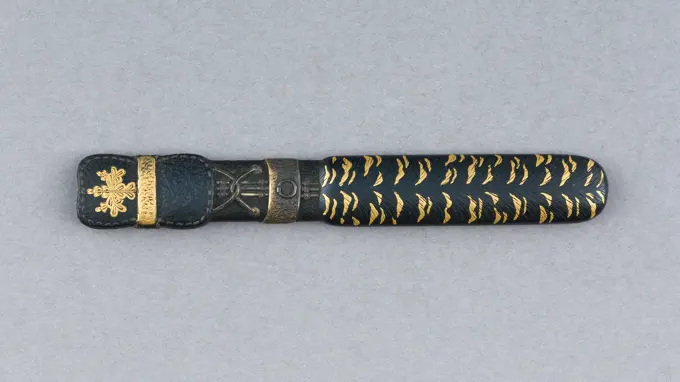
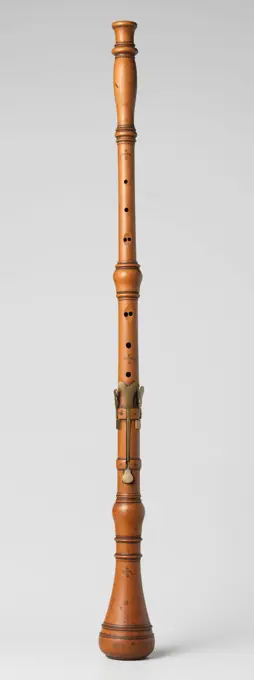
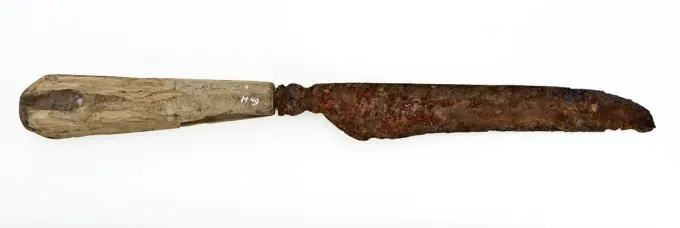
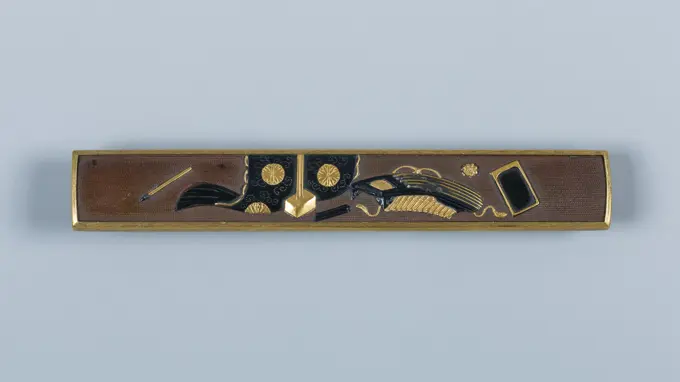
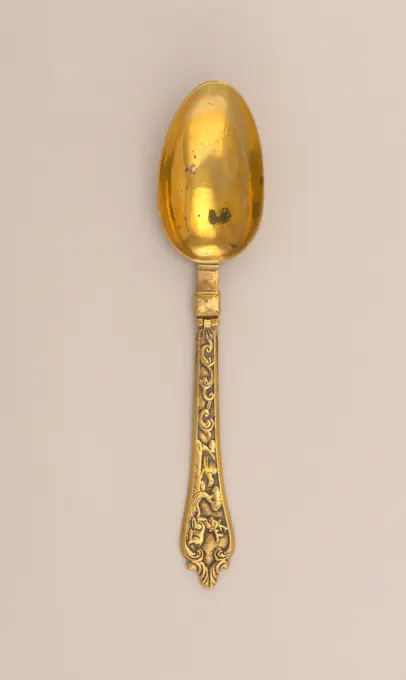
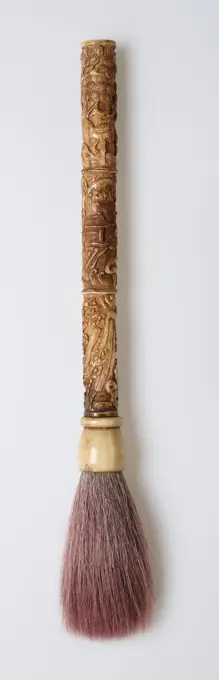
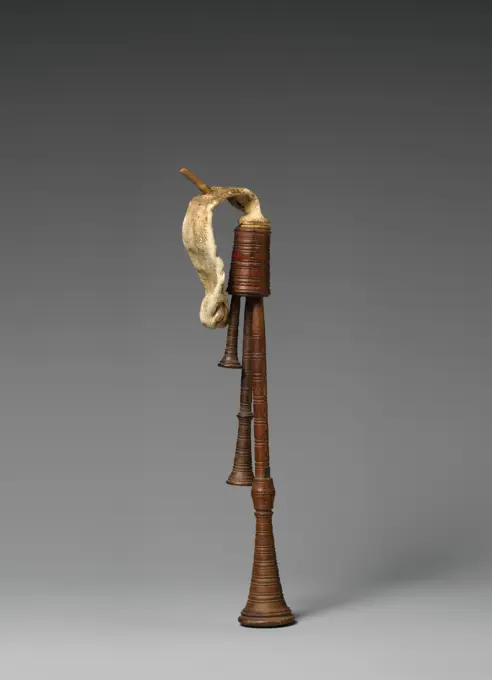
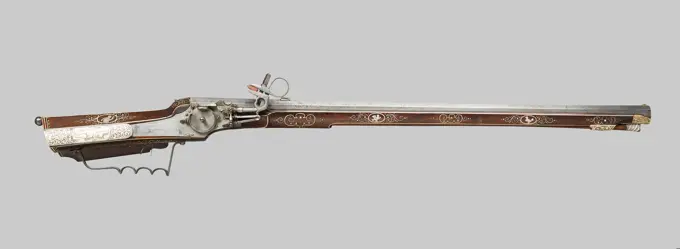
Knife (Piha Kaetta). Culture: Sri Lankan. Dimensions: L. 11 1/4 in. (28.6 cm); W. 1 1/2 in. (3.8 cm); Wt. 4.2 oz. (119.1 g). Date: 18th-19th century. Museum: Metropolitan Museum of Art, New York, USA.Dagger 18th-19th century Circassian. Dagger 31841Fork of silver with fully engraved stem. Top with cut ornament. Completely ends in the form of a vase, Johann Theodor de Bry, 1575 - 1600 Silver fork, a pendant of the NR. 9200. The handle is completely engraved and the top is formed by a cut ornament. The whole ends in the form of a vase. South of the Netherlands silver (metal) Silver fork, a pendant of the NR. 9200. The handle is completely engraved and the top is formed by a cut ornament. The whole ends in the form of a vase. South of the Netherlands silver (metal)Oboe damore, anonymous, c. 1730 Hobo d'Amore van Palmhout with three brass valves with round plates. The third and fourth gap are double. Germany boxwood. kleppen: copper (metal). brass (alloy) Hobo d'Amore van Palmhout with three brass valves with round plates. The third and fourth gap are double. Germany boxwood. kleppen: copper (metal). brass (alloy)Pencil. unknown, authorFlat copper needle with elongated oval eye, needle soil finding copper brass metal, cast archeology Rotterdam City Triangle Mariniersweg Kipstraat Hoogstraat sewing textile processing clothing needle and thread soil finding corner Mariniersweg Kipstraat Hoogstraat.Scabbard, Before 1916. Indonesia, Sulawesi (Celebes). overall: 66.4 cm (26 1/8 in.); blade: 52.1 cm (20 1/2 in.).Clarinet, Johann Andreas Mollenhauer, c. 1840 A clarinet of palmhout. Marked: Mollenhauer Fulda. Fulda ivory. boxwood (hardwood). brass (alloy). silver (metal). A clarinet of palmhout. Marked: Mollenhauer Fulda. Fulda ivory. boxwood (hardwood). brass (alloy). silver (metal).EVENTAIL. "Two Chinese ladies in ancient costumes in Garden". Wallpaper, lacquered bamboo. Paris, Carnavalet museum. Eventail: two Chinese ladies in ancient costumes in Garden Fashion accessory, EventailHalf-Contra Bassoon after 1853 Galander French. Half-Contra Bassoon 502238Lime Spatula. Papua New Guinea, Abelam People, no date. Tools and Equipment; spatulas. Cassowary boneClarinet in D. Culture: German. Dimensions: L. 53.3 x Diam. 3 cm (21 x 1 3/16 in.)Section L. 112 mm (barrel/ mouthpiece); 242 mm (middle section); 179 mm (stock/ bell). Date: 1750-70.The clarinet was invented by J. C. Denner of Nuremberg around the year 1700. The first form of the instrument had two keys, like those found on this clarinet (which are modern replacements). The two-keyed version of the instrument survived until about 1770. Two-keyed clarinets are extraordinarily rare, and this is the only known example in the western hemisphere. The body of this instrument is made of three boxwood sections, the mouthpiece and barrel, an undivided middle section, and the stock and bell. The instrument is unsigned, and the mouthpiece and barrel section are probably from another instrument though of the same period and were probably joined with the other sections at an early date. Museum: Metropolitan Museum of Art, New York, USA.Lance 18th century Indian This finely decorated lance was acquired in 1771 by the English collector Horace Walpole (1717-1797) for display in his armory at Strawberry Hill, one of the earliest and most influential Gothic Revival houses in England.. Lance 24425Oboe.Hobo, probably blackened palm wood with silver fittings, consisting of mouthpiece with pale ornament pearl edge, ring with ditto pearl edge, to which a silver chain, ring decorated with ditto pearl edge and with engraved leaf ornament, which goes through a turned leaf ornament edge, three silver valves with Engraved Louis XV ornament while on the flap cap between engraved palm twigs is indicated mm 1744; Then two corresponding wider rings. Timberwork turned and decorated with rings and ojives.Bassoon 1830-32 Carl August Schaufler German. Bassoon. German. 1830-32. Maple, brass. Stuttgart, Germany. Aerophone-Reed Vibrated-double reedWalking stick of a knots branch, straight model with convex button, anonymous, c. 1795 - c. 1815 Walking stick of a knots branch. Straight, with knots over the full length and one nodest in turning. Netherlands (possibly) whole: Wood (plant material) cutting Walking stick of a knots branch. Straight, with knots over the full length and one nodest in turning. Netherlands (possibly) whole: Wood (plant material) cuttingViking Sword 10th century European, probably Scandinavia The richly decorated hilt and pattern-welded blade indicate that this sword was carried by a warrior of high rank, perhaps a Viking chieftain or a Frankish nobleman. The braided copper wires on the pommel may represent an earlier Scandinavian custom of tying a protective talisman to a sword hilt. The pattern-welded blade was forged of intertwined rods of steel and iron, a technique that produced a tough yet resilient blade with a distinctive swirling pattern on its surface. Such blades were treasured for both their practical and decorative qualities. Listen to experts illuminate this artwork's story Listen Play or pause #4401. Sword Supported by Bloomberg Philanthropies We're sorry, the transcript for this audio track is not available at this time. We are working to make it available as soon as possible.. Viking Sword. European, probably Scandinavia. 10th century. Steel, copper, silver, niello. SwordsModel of a Topgallant Mast.Round Bramsteng made from a piece, with a square heel with lockwood hole, a disk, an octagonal homer and ending in a flagpole.Koperen natuurtrompet.Copper wind instrument consisting of a thin slightly curved tube that ends in a wide chalice with edge. The nozzle is missing.Arrow Point, 1700s. Japan, Edo period (1615-1868). Steel; overall: 14.5 cm (5 11/16 in.); head: 3.8 cm (1 1/2 in.).Javelin (Nageya) with Sheath ca. 1615-1868 Japanese. Javelin (Nageya) with Sheath. Japanese. ca. 1615-1868. Ivory, feather, wood. Shafted WeaponsKris, anonymous, 1300 - 1600 Kris Majapahit, in Pamor technology. Java iron (metal). nickel (metal) Kris Majapahit, in Pamor technology. Java iron (metal). nickel (metal)LimeSpatulaSword Hilt; wood, metalIce strainer -Torah Pointer (Italy); wood, carved and gildedSword Scabbard 19th century Persian. Sword Scabbard 30942Knife Handle (Kozuka) with Blade. Culture: Japanese. Dimensions: L. including blade 8 3/4 in. (22.2 cm); L. excluding blade 3 7/8 in. (9.8 cm); W. 9/16 in. (1.4 cm); thickness 3/16 in. (0.5 cm); Wt. 1.8 oz. (51 g). Date: 19th century. Museum: Metropolitan Museum of Art, New York, USA.16 Spindles , 1000-1400. Wood, pigment, longest spindle: 1/8 × 1/8 × 12 3/16 in. (0.3 × 0.3 × 31 cm).   Arts of the Americas 1000-1400Crossbow Bolt, 1500s-1600s. Germany, 16th-17th century. Wood, leather, steel; average: 37.2 cm (14 5/8 in.).Late medieval side-ax or axle ax with long handle, side ax ax hatchet tool equipment ground find iron metal wood ax head 11.5, steel, forged Carpenter's ax with short stroke top to top facing face archeology Rotterdam City triangle Cool Coolsingel Ground excavation work Coolsingel .Folding Fork (possibly Germany); steel, silver, gold; L: 18.2 cm (7 3/16 in.); The Robert L. Metzenberg Collection, gift of Eleanor L. Metzenberg; 1985-103-240Model of a Made bowsprit. Model of a skipped bow mad. Model of a round bowsprit from four pieces consisting, which are connected inside with liplasses and neuten. The ends are octagonal. The tub tires have been eliminated. Scale 1:12 (Scale by model).Spoon, silver, gilt, Pointer oval bowl, gilded, flaring panelled stem with baluster and scroll terminal and lozenge-shaped crusher., Paris, France, 19th century, cutlery, Decorative Arts, SpoonCrossbow Bolt, 1600s. Germany, 17th century. Wood (flights missing) and steel; overall: 38 cm (14 15/16 in.).EVENTAIL. Paper, colored engraving, painted ivory. Paris, Carnavalet museum. Eventail: Fashion accessory, EventailBassoon.Fagot with ten valves.Nail with round head. Ship part, wooden pin with round button, similar to NM-7722-1. On the nail bank, which was placed on the railing of the ship and was provided with a number of holes, the corvine agents could be inserted; On this it could be running. The korvine agents could also be attached to the servant behind the mast. The centerline of the Korvijnagel was the same as those of the ropes that were attached to it.Fruit Knife (France); Designed by F. Nicoud (French, active 1890); silver, steel, mother-of-pearl, gilding; L x W x D: 20 x 1 x 0.8 cm (7 7/8 x 3/8 x 5/16 in.)Busk. Culture: French. Date: 17th century.The weeping eye reads, "until I see you again." The sun shining on a heart declares, "my love is pure." The vignette of two hearts over a house is inscribed, "love joins them.". Museum: Metropolitan Museum of Art, New York, USA.Lime Dipper, c. 1-800. Colombia, Calima region, Yotoco style, 1st-9th Century. Gold; overall: 25.6 cm (10 1/16 in.).Pin. Culture: Chimú or Inca. Dimensions: Length 10-1/4 in. (26 cm). Date: 14th-15th century. Museum: Metropolitan Museum of Art, New York, USA.Nail with round head, anonymous, c. 1590 - c. 1596  Ship section, wooden pin with round button, similar to NM-7722-1. On the nail bench, which was placed on the railing of the ship and was provided with a number of holes, the Korvinagels could be inserted; On this it could be walked because it could be invested. The Korvinagels could also be attached to the servant behind the mast. The centerline of the Korvinagel was the same as that of the ropes that were attached to it.  wood (plant material). oak (wood)   Nova Zembla. Saving HuysSheath late 18th century possibly German. Sheath. possibly German. late 18th century. Leather, silver. Natural Substances-LeatherworkClarinet.c clarinet of palm wood with seven valves. Marked on the barrel with crowned C. labeled "Geisler" "on the mouthpiece.Brush with Carved Design, 1573-1619. China, Ming dynasty (1368-1644), Wanli mark and reign (1573-1619). Carved bamboo; overall: 24.2 cm (9 1/2 in.); handle: 21 cm (8 1/4 in.); top: 16.8 cm (6 5/8 in.). The inscription on this brush with a bamboo brush cap reads: Made during the Wanli-Era of the Great Ming dynasty.Stingray Tail Whip andBeltHair Dressing Tool (Kogai) 17th century Japanese A kōgai is a hairdressing tool that is part of a sword mounting. The long slender implement is carried in a slot on the obverse of a katana scabbard, often with a matching kozuka (handle of a by-knife) in a slot on the reverse.. Hair Dressing Tool (Kogai) 35063Kozuka in the form of a wrench; Decoration in gold and silver; Signed.EVENTAIL. "La Fontaine de Jouvence" (love and couple near a fountain). Watercolor gouache on applied paper on the background of tulle, ivory frame carved, repercussions and painted, pivot rhinestones. Paris, Carnavalet museum. 100131-6 Fashion accessory, EventailJew's Harp Melanesian (New Ireland, Papua New Guinean) late 19th centuryClarinet.Clarinet of palm wood with two valves.Fish knife. Koenigliche Porzellanmanufaktur, Meissen (1807/14-1918), manufactureSilver thread from the wreck of the East Indies Hollandia, Anonymous, 1700 - in Or Before 1743  Varied parts or fragments, wire; fragm, eroded, circular in section. Netherlands silver (metal)   SecondFan Case with Flowers and Insects on a White Background mid-19th century China Shown here is an embroidered fan casean accessory worn at the waist for holding folding fans when they were not in use. The case with a white ground was originally acquired in Beijing by Louis de Geofroy, French ambassador to China in the 1850s. It features an unusual techniqueraised-work embroidery, which produces a three-dimensional effect (note the insect motifs).. Fan Case with Flowers and Insects on a White Background 73153Glass perfume bottle 2nd-3rd century A.D. Roman Colorless with yellowish tinge.Rim folded out, round, and in, with top pressed down around mouth; tall cylindrical neck, expanding towards base with horizontal tooling around base; rounded shoulder; bell-shaped body with tooled horizontal concavity in upper side; broad, concave bottom.Intact; pinprick and elongated bubbles; slight dulling, some pitting, and most of surfaces covered with iridescent weathering, one thick patch of soil encrustation under rim.. Glass perfume bottle 245261Watch with a Fob Chain with Cachets and a Key, Les Frères Marchinville, c. 1830 - c. 1870 Gold watch on a watch necklace. The dial has been enamel. The cupboard is smooth. The golden necklace consists of four chains with a slider. There are two cachets and a key with a white with red () Agate. ClockMaker: GERYJERWERERS: England (POSSIBLY) Jeweller: Amsterdam gold (metal). agate (chalcedony) Gold watch on a watch necklace. The dial has been enamel. The cupboard is smooth. The golden necklace consists of four chains with a slider. There are two cachets and a key with a white with red () Agate. ClockMaker: GERYJERWERERS: England (POSSIBLY) Jeweller: Amsterdam gold (metal). agate (chalcedony)Khore Melanesian (Pentecost Island or Aurora Island, Vanuatuan) late 19th centuryAndiron with cooking pots and a pair of fire tongs, anonymous, c. 1590 - c. 1596  Fire tongs with twisted spoons and a twisted, hinged end.  iron (metal) forging  Nova Zembla. Saving HuysSpoon, Silver, Pointed oval bowl, with baluster scroll join to the panelled tubular stem issuing four foliate volutes below the lozenge shaped crusher terminal., Paris, France, mid-19th century, cutlery, Decorative Arts, SpoonCrochet hook -Bow. Culture: Austrian. Dimensions: Weight: 58.5 grams. Maker: Attributed to Wenzel Kowansky. Date: ca. 1750. Museum: Metropolitan Museum of Art, New York, USA.Pin 14th-15th century Chimú or Inca. Pin 315609Pochette ca. 1700-1799 French Dancing was an expected aristocratic accomplishment. Instruction was given at home by a visiting dance master, who played a small fiddle to provide music for the lessons. The compact, slender shape of these instruments made them easy to transport and gave them the name pochette, which suggests that they were carried in one's coat pocket. Elaborately decorated pochettes made of precious materials were often seen and collected as art objects in their own right.. Pochette 505410Dagger with Sheath 19th century Turkish This dagger belongs to a large group of flamboyant gem-studded weapons that were probably made in Istanbul in the waning years of the Ottoman Empire. Their traditional shapes and luxurious materials were intended to evoke romantic notions of the exotic orient, Arabian Nights, or perhaps the sultans treasury. As most of these weapons are found today in American and European collections rather than in Turkish museums, they may have been made exclusively for Western tourists.. Dagger with Sheath 712681Oboe, Fortunato Vinieri, 1840 - 1860 Hobo of Palmhout with fourteen silver valves and four ivory rings. Marked on all four parts: Fleur de Lis / Vinatieri / A Torino / sun. Turin Boxwood. valves: Ivory Hobo of Palmhout with fourteen silver valves and four ivory rings. Marked on all four parts: Fleur de Lis / Vinatieri / A Torino / sun. Turin Boxwood. valves: IvorySplit Hair Dressing Tool (Kogai). Culture: Japanese. Dimensions: L. 7 3/4 in. (19.7 cm); W. 1/2 in. (1.3 cm); thickness 1/8 in. (0.3 cm); Wt. 1 oz. (28.3 g); skewer (a); W. 1/4 in. (0.6 cm); Wt. 0.5 oz. (14.2 g); skewer (b); W. 1/4 in. (0.6 cm); Wt. 0.5 oz. (14.2 g). Date: probably 19th century. Museum: Metropolitan Museum of Art, New York, USA.Knife with curved blade and wooden handle with thickened end, knife cutlery soil find iron wood metal, Long backward curved blade with forged profiled handle protector narrowed angel handle tapered bottom thickened In blade stamped mark: spoon Archeology Rotterdam rail tunnel cutting food Soil discovery: rail tunnel Rotterdam.Chopstick and Knife Kit -Souvenir Trade, early 1900s. Japan, Meiji period (1868-1912) to Taishō period (1912-26). Enamel, wood, walrus ivory or bone, metal; overall: 27.8 cm (10 15/16 in.); blade: 15.3 cm (6 in.).Flute, I. Christian c. 1810 Flute with a valve. Marked: I. Christiani. Amsterdam wood (plant material) Flute with a valve. Marked: I. Christiani. Amsterdam wood (plant material)Bassoon, August Friedrich Andreas Knochenhauer, c. 1855 Fagot with ten valves. Base and centerpiece Berlin maple (wood) Fagot with ten valves. Base and centerpiece Berlin maple (wood)Female Figure (akua'ba), late 1800s-early 1900s. Africa, West Africa, Ghana, Fante-style maker. Wood, hair, resin, and bone; overall: 42.9 x 4.6 x 5.1 cm (16 7/8 x 1 13/16 x 2 in.).Russian bassoon, Stengel, c. 1830 Russian bassoon with copper batter and mouthpieces and valves. The cup is lost. Bayreuth wood (plant material). copper (metal) Russian bassoon with copper batter and mouthpieces and valves. The cup is lost. Bayreuth wood (plant material). copper (metal)Scribe's Palette, 1540-1186 BC. Egypt, New Kingdom, Dynasties 18 (1540-1296 BC) - 19 (1295-1186). Wood; overall: 5 x 1 cm (1 15/16 x 3/8 in.).Crossbow Bolt, 1500s-1600s. Germany, 16th-17th century. Wood, leather, steel; average: 37.2 cm (14 5/8 in.).Harpoon head Japan The Jōmon period is the earliest period in Japanese history, lasting from roughly 14,000 to 300 BCE. The Jōmon people were primarily hunter-gatherers, hunting land animals and gathering vegetables and nuts on the land as well as hunting and fishing at sea. Harpoon heads such as this one testify to the importance of seafood in the diets of some Jōmon communities, especially those close to the sea. Fish bones found at Jōmon archaeological sites indicate that the Jōmon hunted fish not only close to the shore but also farther out in the open sea, where larger fish could be caught. There is even evidence that the Jōmon ate pufferfish, a poisonous fish considered a delicacy in modern Japan.. Harpoon head 6227439 keys from the collection of Emmanuel Vita Israël, anonymous Key of which the selection of a human tors and a head consists. Posted on a postament. The beard is formed by two changing inner corners.  bronze (metal) Key of which the selection of a human tors and a head consists. Posted on a postament. The beard is formed by two changing inner corners.  bronze (metal)Franklin C Moyan, Thermometer, c 1936 ThermometerKnife Handle (Kozuka) ca. 1615-1868 Japanese A kozuka is a handle of a by-knife that is part of a sword mounting. It is kept in a slot on the reverse of a katana scabbard, often with a matching kōgai (hairdressing tool).. Knife Handle (Kozuka) 34709Vuursteenjachtgeweer.The slot is easily engraved with praise, a border and a signature. The loop is equipped with a gold-plated, selector sight grain and a signature. The flask has simple carving with acanthus leaves and high-relief. The batter of polished iron consists, among other things, the flexural trigger bracket, an aczo-shaped screw plate, a unprocessed thumb plate with a crowny leaf above and underneath, a flask engraved with the number 6, the point embossed as a leaf , and the wooden loading stick.Model dagger of Ukhhotep ca. 1981-1802 B.C. Middle Kingdom. Model dagger of Ukhhotep. ca. 1981-1802 B.C.. Wood, paint, gold leaf. Middle Kingdom. From Egypt, Middle Egypt, Meir, Tomb of Ukhhotep, Mummy's body, Khashaba excavations, 1910-11. Dynasty 12Fruit fork 18th century French. Fruit fork. French. 18th century. Steel, mother-of-pearl (). Metalwork-SteelFragment of copper batter from the wreck of the East Indians Hollandia, 1700 - in or before 1743 fragment Varied parts or fragments; unidentified and miscellaneous parts or fragments; sheet. Netherlands copper (metal)   SecondTenor Oboe, Robert Wijne, c. 1750 Tenor Hobo in three parts, made of boxwood, with three brass valves. The right -hand lid is possible a replacement. Two voice holes in the cup. The inner diameter is very wide, especially at the top. The third and fourth gap are double. Marked on all parts: crown R: Wyne in a roll eagle with two heads. A star on the back of each part. Nijmegen boxwood (hardwood). brass (alloy) Tenor Hobo in three parts, made of boxwood, with three brass valves. The right -hand lid is possible a replacement. Two voice holes in the cup. The inner diameter is very wide, especially at the top. The third and fourth gap are double. Marked on all parts: crown R: Wyne in a roll eagle with two heads. A star on the back of each part. Nijmegen boxwood (hardwood). brass (alloy)TablespoonKnife with iron blade and hexagonal wooden handle, knife cutlery founding timber iron metal, Old registration number: M49 archeologyKnife Handle (Kozuka) early-mid-17th century Inscribed by Got Kenj Japanese This kozuka features a design of a curtain screen, a writing brush, an ink stone, a water container, and a harp for the Star Festival (Tanabata, July 7).. Knife Handle (Kozuka). Japanese. early-mid-17th century. Copper-gold alloy (shakud), gold. Sword Furniture-KozukaWatch second half 18th century Probably by an imitator of Abraham-Louis Bréguet. Watch. French, Paris. second half 18th century. Bloodstone, gold, enamel. HorologyFolding Spoon (Germany); brass; L x W: 18.7 x 3.9 cm (7 3/8 x 1 9/16 in.); The Robert L. Metzenberg Collection, gift of Eleanor L. Metzenberg; 1985-103-259Wooden Spindle Made 1000-1476 Peru. Wood .Bone ligula (ear pick). Culture: Roman. Dimensions: H.: 4 1/4 in. (10.8 cm). Date: ca. 1st-3rd century A.D..Ear pick with small bowl. Museum: Metropolitan Museum of Art, New York, USA.Knife Handle (Kozuka). Culture: Japanese. Dimensions: L. 3 3/4 in. (9.5 cm); W. 9/16 in. (1.4 cm); thickness 1/4 in. (0.6 cm); Wt. 1.2 oz. (34 g). Date: ca. 1615-1868. Museum: Metropolitan Museum of Art, New York, USA.Calligraphy brush, late 19th century, 13 5/8 × 1 1/4 × 1 1/4 in. (34.61 × 3.18 × 3.18 cm), Ivory or bone, hair, China, 19th century, In Chinese literati culture, the brush, a writing implement, is known as one of the 'four treasures of the study' along with the inkstick, inkstone, and paper. Brush handles are commonly constructed from bamboo, but some brushes have handles of sandalwood, jade, carved bone or ivory, and other precious materials as demonstrated by these examples. During late imperial times, artists catered to the tastes of gentlemen collectors and elaborated brushes with motifs derived from folklore, legends, superstitious beliefs as well as religious subjects from Confucianism, Buddhism, and Daoism.Model of a Windsail, anonymous, c. 1850 - c. 1870 demonstration model Model of a cooling sail. The five hoops are made of wood with rope. The upper part between the first two hoops consists of a four pieces of cloth sewn together in a cross; This is how four openings are created, one for every wind direction. The lower part is a canvas ventilation shaft reinforced with hoops. Scale 1:10 (according to Obreen). Netherlands wood (plant material). brass (alloy). copper (metal). textile materials. ropePliers (common name), -276. Hammered copper alloy. Carnavalet museum, history of Paris.Bagpipe (crèche accessory) second half 18th-mid-19th century Italian The practice of using crèche figures to restage religious events reached the height of its complexity and artistic excellence in eighteenth-century Naples, and the Metropolitan Museum of Arts group of Neapolitan crèche is one of the finest and most complete survivals of the art form. The ensemble consists of characters traditional to eighteenth-century Italian Christmas holiday customs. The Nativity, featuring the holy family, shepherds and their flocks, and a host of angels and cherubs is joined by the procession of the three Magi and colorful peasants, townspeople, and animals. The figures have articulated bodies of tow and wire with polychromed terracotta heads, and are all in partially distressed condition.These vibrant characters are further brought to life by a wide-ranging set of cloth, embroidery, leather, wicker, wax, and silver accessories. Many of these, such as the figures luxurious costumes, baskets of Edmond Lorts, Cane, 1935 1942 CaneWheellock Rifle 1660 Germany. Steel, iron, walnut, horn, and mother-of-pearl .Knife Handle (Kozuka). Culture: Japanese. Dimensions: L. 3 13/16 in. (9.7 cm); W. 9/16 in. (1.4 cm); thickness 1/4 in. (0.6 cm); Wt. 1.1 oz. (31.2 g). Date: ca. 1615-1868. Museum: Metropolitan Museum of Art, New York, USA.Labret in gneiss. Mali, Neolithic. 7 cm.