Historical Blades and Utensils

Collection of exquisite cutlery and musical instruments, highlighting detailed craftsmanship from various historical periods.

Flat copper needle with elongated oval eye, needle soil finding copper brass metal, cast archeology Rotterdam City Triangle Mariniersweg Kipstraat Hoogstraat sewing textile processing clothing needle and thread soil finding corner Mariniersweg Kipstraat Hoogstraat.
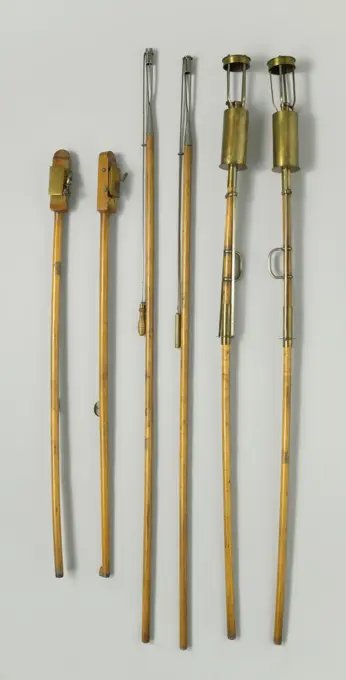
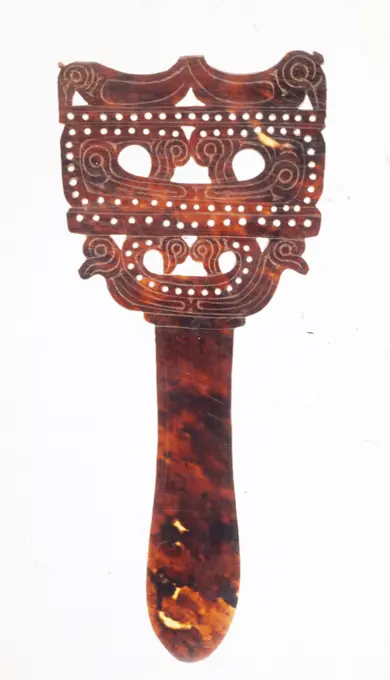
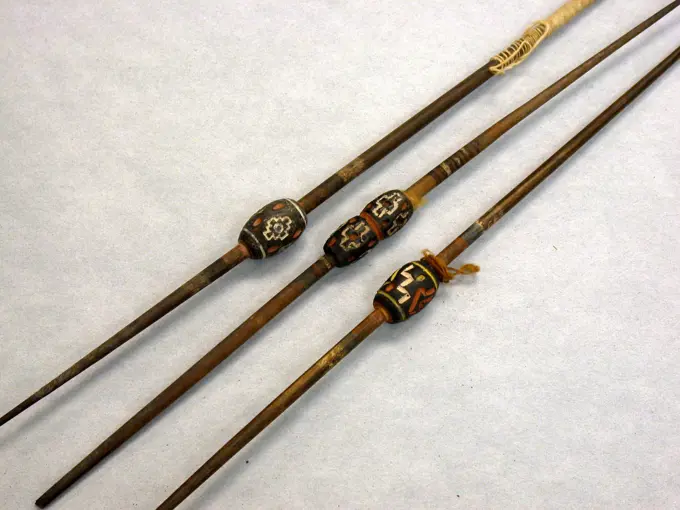
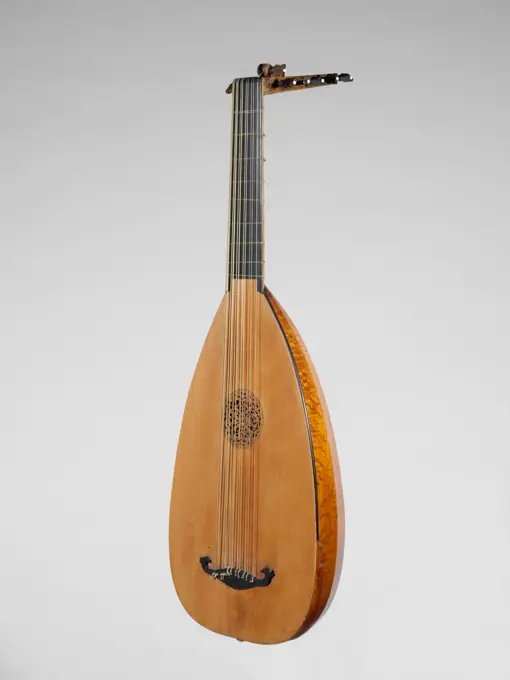
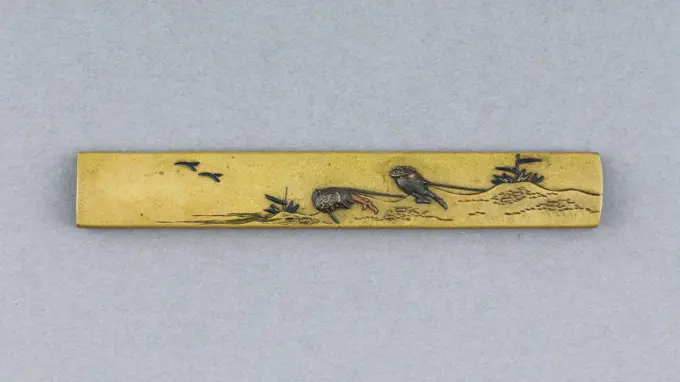
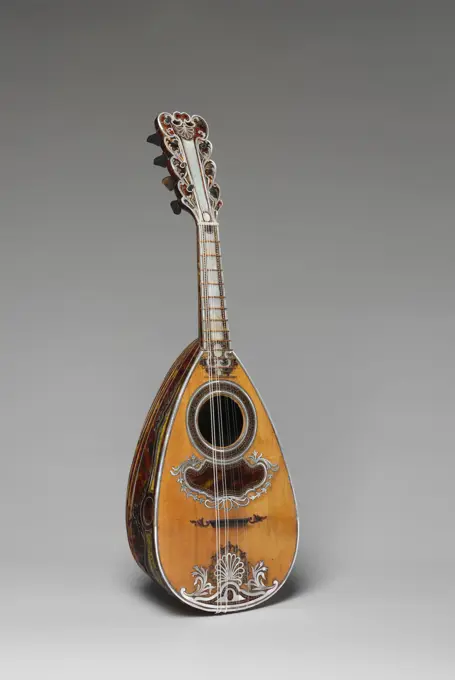
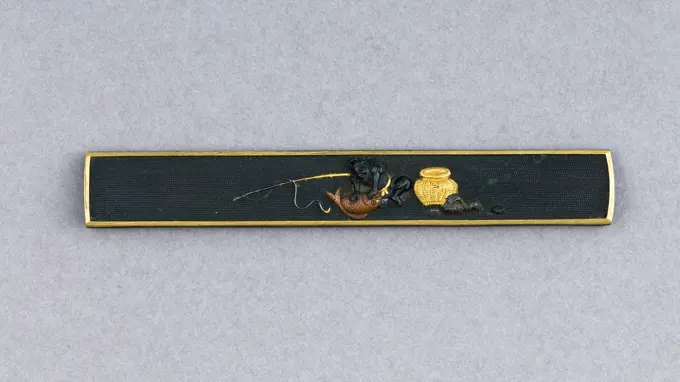
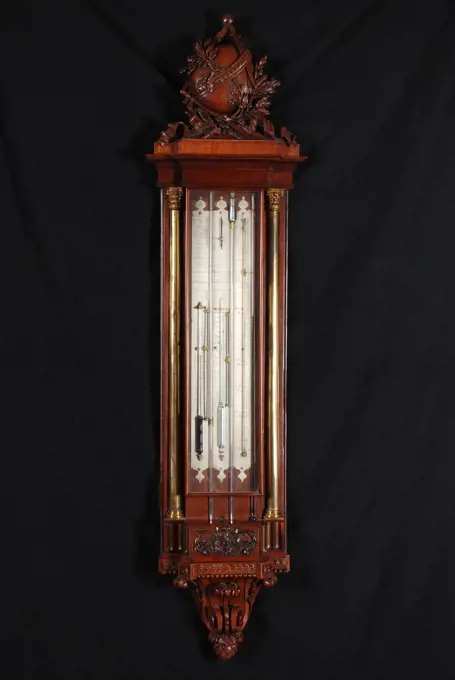
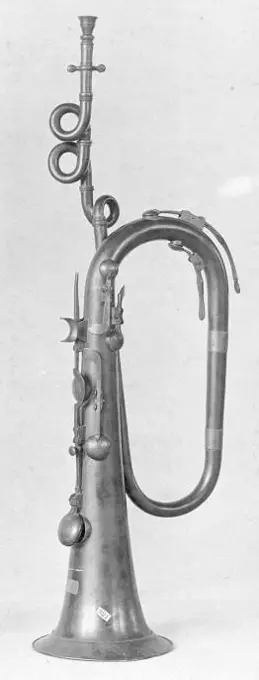
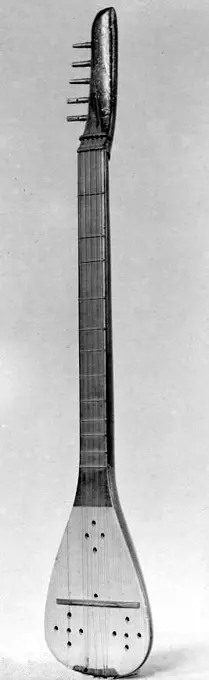
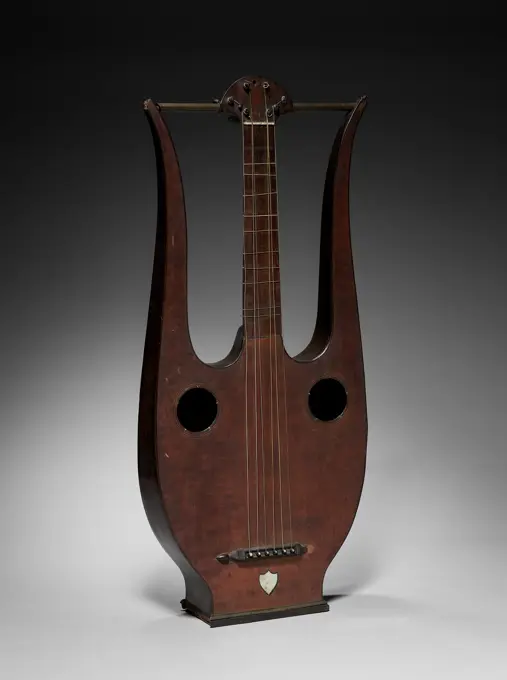
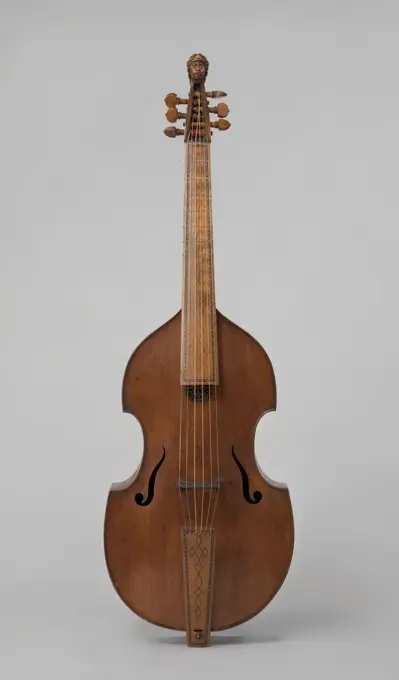
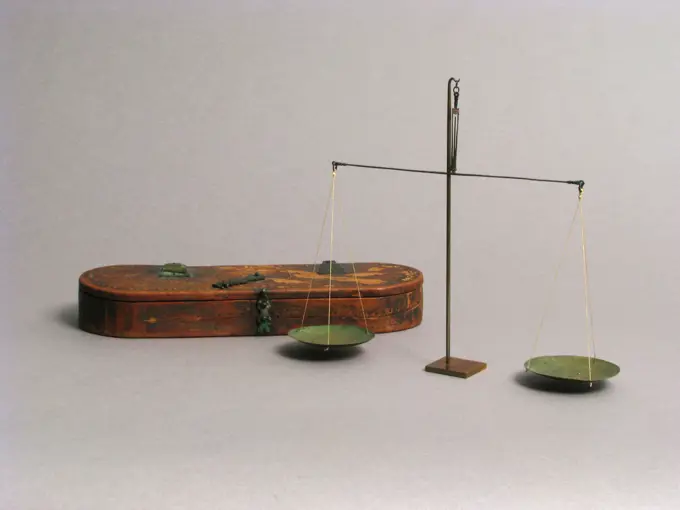
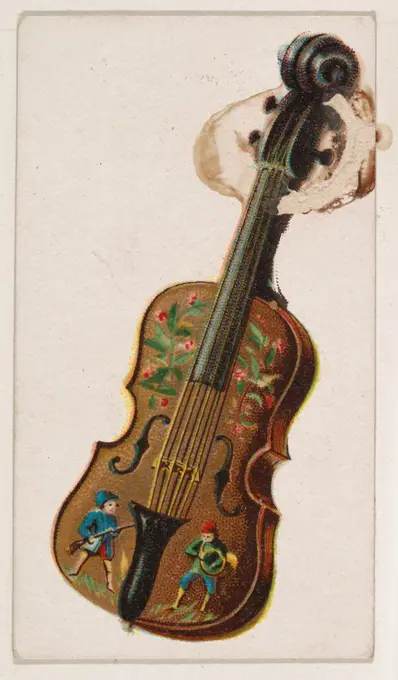
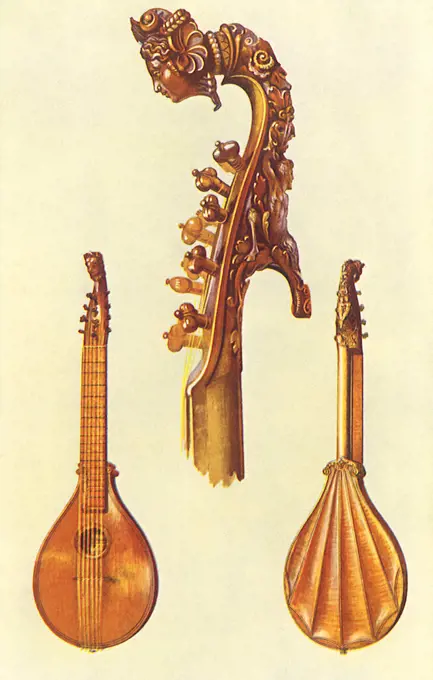
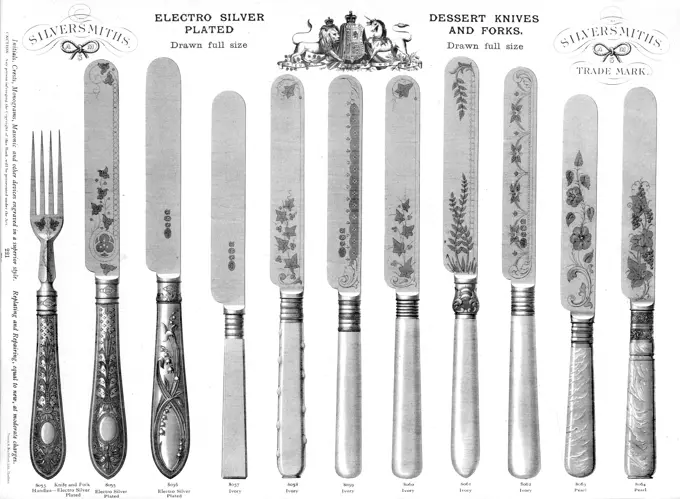
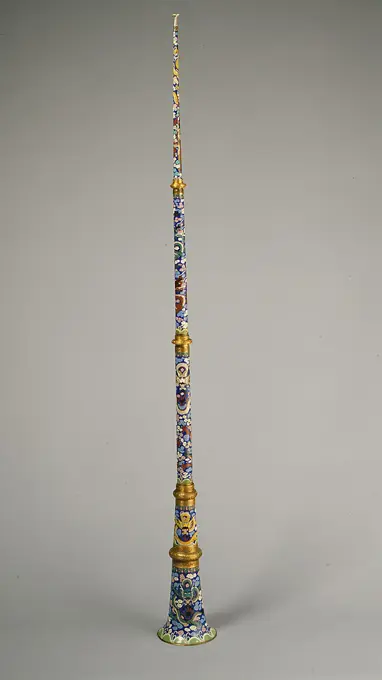
Dung-Chen 1368-1644 Chinese Although Confucianism remained the basis for the structure of government in China, it was Buddhism, introduced in the first century B.C.E., which flourished from the Han to the Tang (206 B.C.E.-C.E. 907). Among the instruments associated with Buddhism was the dung-chen, a long trumpet played for preludes, processions, and morning and evening calls to prayer. It was unusual for musical instruments to be enameled; cloisonné was usually reserved for containers, such as boxes or vases. This Tibetan-style long trumpet was among the many instruments made in China and sent as gifts to impress officials of bordering nations. Gifts of musical instruments and the musicians who played them were common in east Asia. This political custom promoted the dissemination of musical ideas. The dung-chen, like many Asian trumpets, collapses for storage.. Dung-Chen. Chinese. 1368-1644. Brass, copper, cloisonné. Ming Dynasty. China. Aerophone-Lip Vibrated-trumpet / tromboneCittern, anonymous, c. 1775 - c. 1800 Cister pear -shaped and inlaid with mother -of -pearl. Very violated. France wood (plant material). mother of pearl Cister pear -shaped and inlaid with mother -of -pearl. Very violated. France wood (plant material). mother of pearlDaggers worn by Colonel Blood and Parrot at the time of their stealing the Regalia from the Tower of London, 1860. 'The beautiful chased and inlaid weapons, which are in the possession of the Literary Fund Society, were those taken from Blood and Parrot on the occasion of their stealing the regalia. The handles are of a peculiar dark-red wood, and the sheaths of embossed leather. Blood's dagger (the larger one) is engraved with a griffin-like figure, and is dated 1620; Parrot's is engraved plainly on both sides with the fleur-de-lis'. From "Illustrated London News", 1860.Six Night Signals, anonymous, c. 1860 - c. 1865 instrument Three types of night signals, two of each, have been used with the Russian Navy. The first type consists of a wooden stick with a pan for pyrotechnic fire and a fire lock at the end, the tractor of which is on the stick. The second type consists of a stick with a Lonthouder at the end, over which a cylinder can be pushed, who extracts the flame from the eye. The third type is a kind of wick with a Lonthouder at the end, which is compressed by a ring. Russia wood (plant material). brass (alloy). iron (metal)   SiberiaGoldsmith's art, France, 19th century. Precious stones, enamel and gold brooch shaped as a violin.Hoekétagère of red painted oak, pyramid-shaped with eleven cuffs and sides decorated with Louis XIV VOLUTENEN.GanTagère or Red Painted Oak, with eleven edges. The Étagère Increases Pyramidal. The Sides Are Decorated With Louis XIV Volutes, WHICH, AS WELL AS THE FRONT OF THE EDGES, ARE PLATED.Opium Pipe, 1800s. China, Qing dynasty (1644-1911). Horn () with silver decoration; overall: 52.8 cm (20 13/16 in.).. Lorgnet of turtle or celluloid. Long mirrored stem, sliced when laid in a loop cord. Small oval glasses in thin edges.Cloudy Woods, SummerChill. Artist, attributed to: Mi Youren, Chinese, 1074-1151Knife Handle (Kozuka). Culture: Japanese. Dimensions: L. 3 13/16 in. (9.7 cm); W. 9/16 in. (1.4 cm); thickness 1/4 in. (0.6 cm); Wt. 1.2 oz. (34 g). Date: ca. 1615-1868. Museum: Metropolitan Museum of Art, New York, USA.Spatula, 20th century, 1/16 x 7 3/4 x 3 3/8 in. (0.16 x 19.69 x 8.57 cm), Tortoise shell, Papua New Guinea, 20th century, Betel chewing is a common practice throughout India, Indonesia, and Oceania. Frequently called betel nut, a 'chew' actually consists of three components; a paste made from the crushed kernel of an areca palm nut, the fruit or leaf of the betel-pepper plant, and a quantity of powdered lime, obtained from burnt coral or shell. Often this combination takes the form of a small bite-sized package which is placed in the cheek and chewed in a manner similar to chewing tobacco.Spindle 2nd-7th century Nasca. Spindle 315780Mandora 1726 Gregori Ferdinand Wenger The mandora is a type of lute that developed in the eighteenth century in Germany, possibly as a simplified, more accessible version of the very complex lutes of the Baroque era. The body of the mandora is smaller and has fewer courses (usually six or seven); this example features six courses, five of them double and one single course. The body alternates ribs of figured maple and bird's eye maple, producing a very subtle yet elegant effect. Ink letters found on the back of the neck correspond with letters of the lute tablature. The unusual bridge is not original.. Mandora. German. 1726. Maple, spruce, ebony. Augsburg, Germany. Chordophone-Lute-plucked-frettedKnife Handle (Kozuka) ca. 1615-1868 Japanese A kozuka is a handle of a by-knife that is part of a sword mounting. It is kept in a slot on the reverse of a katana scabbard, often with a matching kgai (hairdressing tool).. Knife Handle (Kozuka). Japanese. ca. 1615-1868. Copper alloy (sentoku), copper-gold alloy (shakud), copper. Sword Furniture-KozukaMandolin 1781 Antonius Vinaccia Italian (Naples) This extraordinary Neapolitan mandolin is one of the most decorative examples that exists. The bowlback is formed of twenty-three narrow molded strips of tortoiseshell with ivory spacers. The soundboard is lavishly decorated with inlaid mother-of-pearl and tortoiseshell. The round soundhole is surrounded by a broad band of tortoiseshell and pearl inlay. The fingerboard has thirteen gilt frets and inlaid mother-of-pearl blocks. The peghead is scalloped shaped and covered with tortoiseshell and mother-of-pearl with eight fiddle-style pegs inserted from behind. The mandolin has the stylistic features associated with the Neapolitan school including a slight bend in the soundboard at the bridge and eight strings in four double-courses tuned to the same pitches as a violin: E, A, D, G.. Mandolin. Italian. 1781. Spruce, tortoiseshell, mother-of-pearl, gold alloy, ivory, various other materials. Naples, Italy. Chordophone-Lute-plucked-frettedFanfan et Colas, Engraved and hand-colored paper leaf, turned wood handle, Obverse: hand-colored engraving of a woman with two small boys, one wealthy and one poor, in a garden setting, surrounded by a scrolling framework. Reverse: text from 'Fanfan et Colas, Fable Iere, par Mr. l'Abbé Aubert.', France, ca. 1784, costume & accessories, Handscreen, HandscreenKnife Handle (Kozuka) ca. 1615-1868 Japanese A kozuka is a handle of a by-knife that is part of a sword mounting. It is kept in a slot on the reverse of a katana scabbard, often with a matching kōgai (hairdressing tool).. Knife Handle (Kozuka) 34529Antonio Christoffel Reballio (Milaan circa 1720/25 - Rotterdam 1801), Mahogany barometer, control, hygrometer and thermometer with dishes according to La Court and Fahrenheit, bakbarometer barometer thermometer hygrometer measuring instrument wood mahogany brass paper glass ceramics mercury oil, Bakbarometer. Mahogany wall shelf richly decorated with ornamental carving crowned by globe with compass, measuring instrument (Jacob's staff), flower branch and band and banderole at the bottom. On both sides of the glass door two brass pilasters with capitals Behind the door three brass plates still partially silvered with the weather indications the temperature and the humidity level With each column one on all three plates signature with private label Glass columns filled with mercury oil and probably an alcohol-like product (hygrometer) Behind each displaying part of the columns of white paper for the contrast increase. The marking columns also have tendency marker built into them On scalePiccolo Banjo 1870-80 American. Piccolo Banjo 501218Fragment of a mummy label Roman Period 30 B.C.-A.D. 364 View more. Fragment of a mummy label. 30 B.C.-A.D. 364. Wood, ink. Roman Period. From Egypt, Middle Egypt, Oxyrhynchus (Bahnasa), EEF excavations 1904-05Keyed Bugle in B-flat ca. 1830 Joseph Greenhill British. Keyed Bugle in B-flat 501699Mandolin 18th century Joao Vieira da Silva. Mandolin. Portuguese. 18th century. Maple, tortoiseshell, various materials. Lisbon, Portugal. Chordophone-Lute-pluckedStringed Instrument late 19th century Arabian. Stringed Instrument 500985Two Double Flageolets, a German Flute and two German Flutes Douces. The Flageolet is the last example of the 'flutes Douces' bored with reversed cones. The double flageolets were made by W. Bainbridge in London who specialised in instruments such as these.Lyre Guitar, late 1600s. Italy, late 17th century. overall: 76.9 x 33.4 cm (30 1/4 x 13 1/8 in.).Guitar 19th century Spanish. Guitar 500855libre. Location: -Sin documentar.Viola da Gamba. Culture: British. Dimensions: Height: 45 1/4 in. (115 cm)Width: 14 3/4 in. (37.4 cm). Date: 1640-65.In England after 1600, small bass viols such as these began to displace larger consort instruments. Viols of this size remained dominant until the viola da gamba began to go out of fashion in the late eighteenth century (at which point many small bass viols were converted into cellos). This example is part of a small group that escaped modernization. Remarkably, it retains its original neck, fingerboard, tailpiece, and bridge. Because its label is lost and no comparable seventeenth-century viol has yet come to light, dating this instrument and attributing it to a particular maker or workshop is difficult. The date 1640-65 is based on construction details and decorative style. The viol's top is assembled from five bent staves, instead of a carved single board, and the ornamental carnation inscribed with a hot needle just below the fingerboard imitates embroidery patternsBass viol, Hendrik Jacobs, c. 1680  Amsterdam wood (plant material). maple (wood). silver (metal)  Amsterdam wood (plant material). maple (wood). silver (metal)Wooden Box with Bronze Balance Scale 500-600 Coptic Scales such as these were used throughout the Byzantine world to measure money and other lightweight objects. According to Byzantine law, the suspension cord of the scales was to be held by two fingers of one hand, with the other fingers straight to ensure that no undue pressure was placed on the scales. The wooden storage container protected the delicate balance of the mechanism.. Wooden Box with Bronze Balance Scale. Coptic. 500-600. Wooden box and copper alloy scale. Made in Byzantine Egypt. Woodwork-MiscellanyViolin, from the Novelties series (N228, Type 5) issued by Kinney Bros. 1889 Issued by Kinney Brothers Tobacco Company Trade cards from the "Novelties" series (N228), issued in 1889 to promote Kinney Tobacco Company. There are five types of card within the series. Type 1 cards are round. Type 2 cards are round with colored borders. Type 3 cards are die cut to the shape of a novelty item. Type 4 are also die cut with embossing. Type 5 depict novelties on a rectangular card. Finally, Type 6 are die cut in the shape of an egg.. Violin, from the Novelties series (N228, Type 5) issued by Kinney Bros.. 1889. Commercial color lithograph. Issued by Kinney Brothers Tobacco CompanyItalian Cetera. The CORNO DI BASSETTO  (sometimes called the Bassett  Horn) is virtually an alto  clarinet.       Date: 1897Electro silver plated dessert knives and forks, Plate 221.      Date: circa 1880sThe ends of old books isolated on white backgroundShadow Puppet (Wayang Kulit) of Pohon CurigaRicikan