Historical Blades and Weapons

A selection of historical weapons including daggers, swords, and spears from different cultures and eras, showcasing intricate designs and materials.
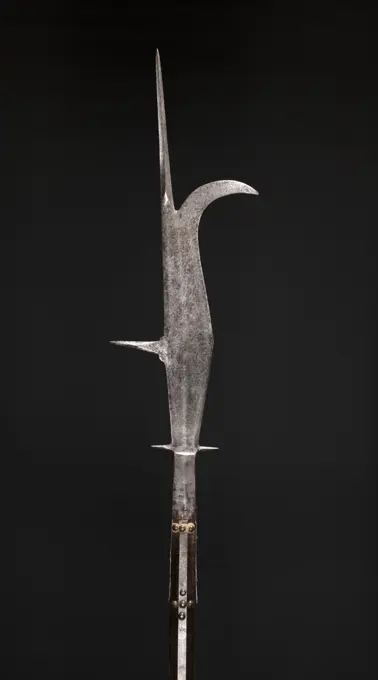
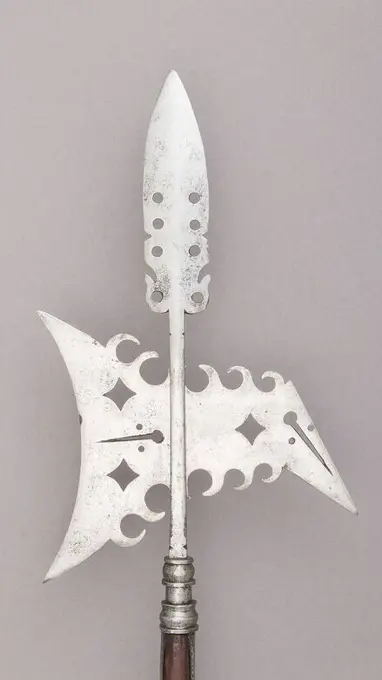
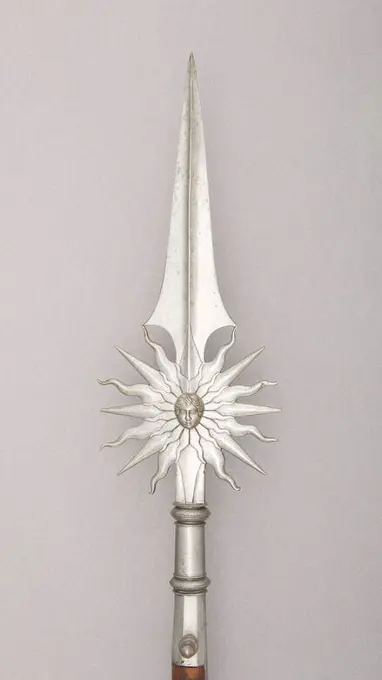
Bill, c. 1480. Italy, 15th century. Steel, wood haft; overall: 184.8 cm (72 3/4 in.); blade: 11.4 cm (4 1/2 in.).
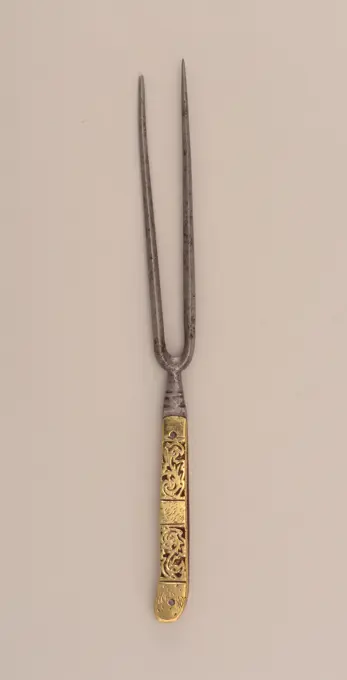
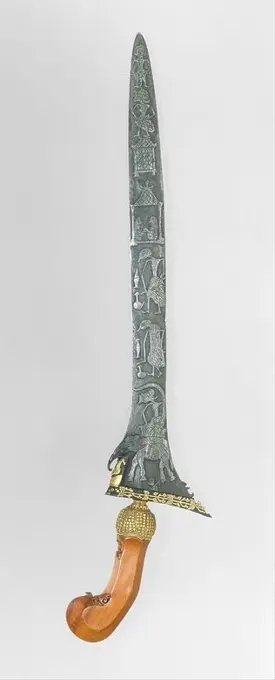
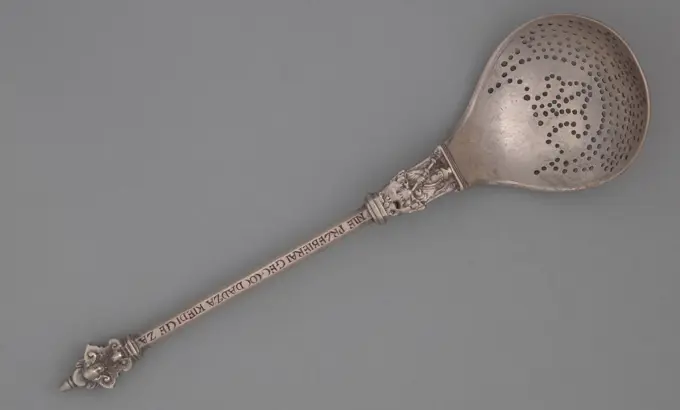
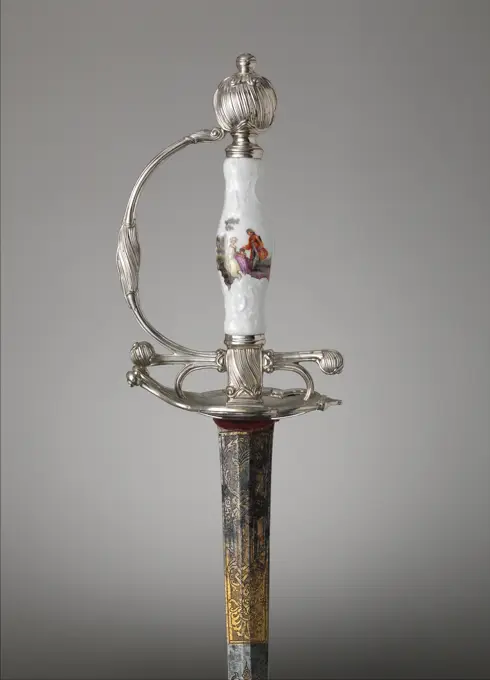
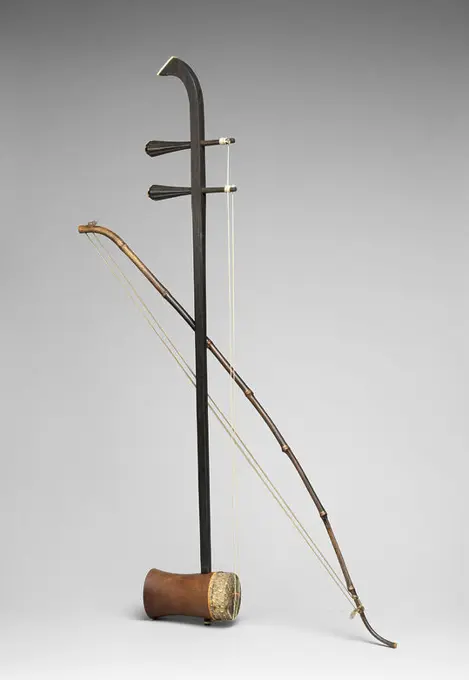
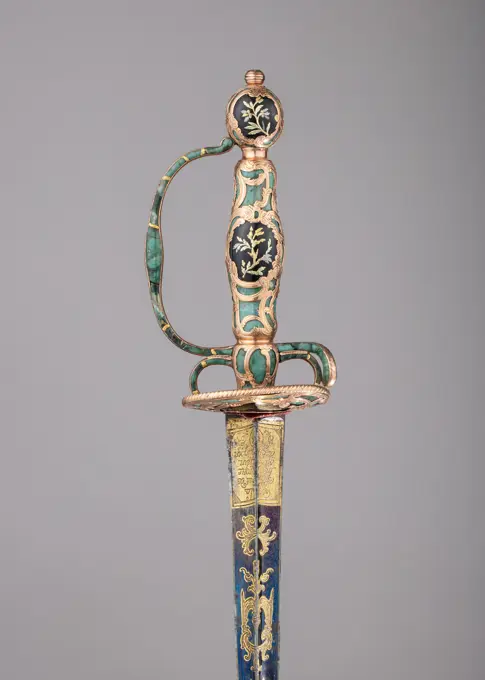
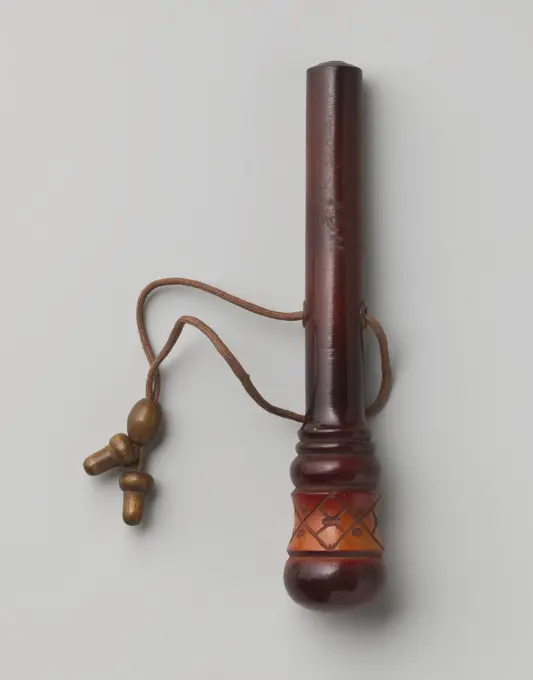
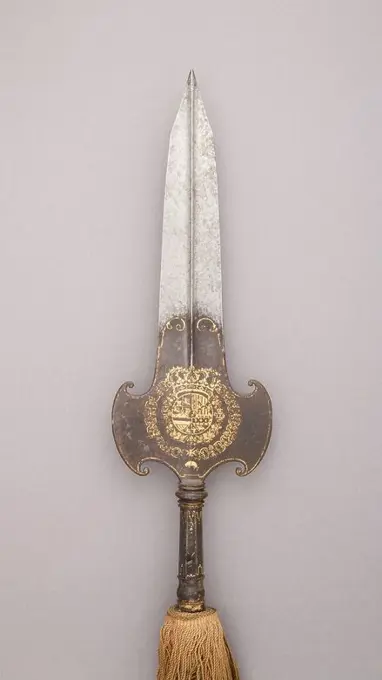
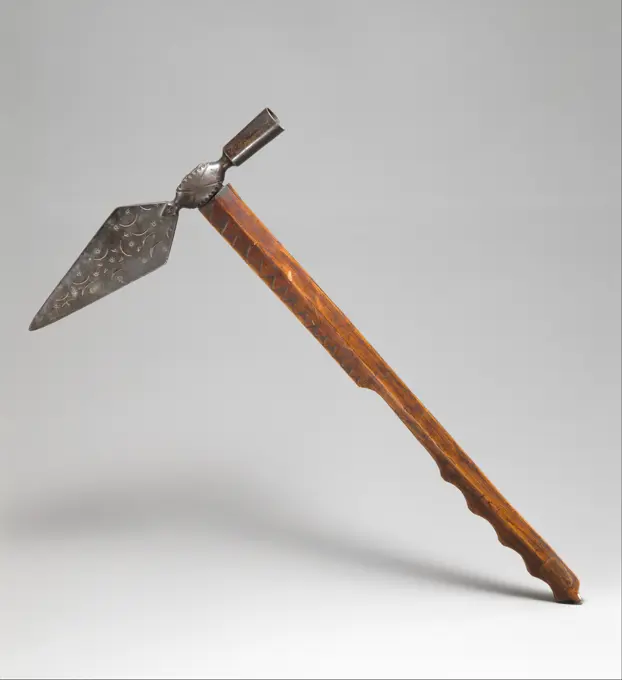
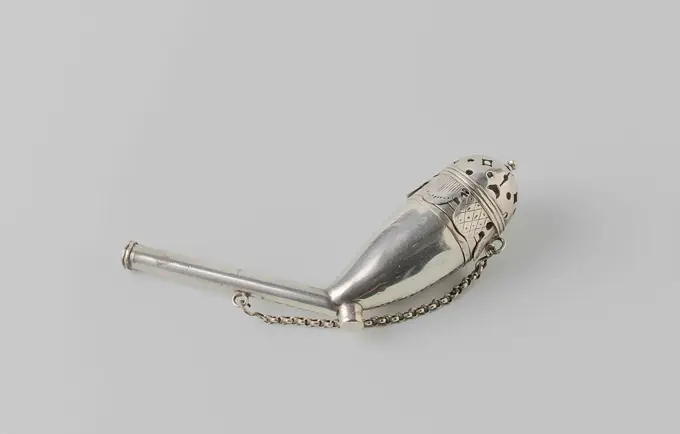
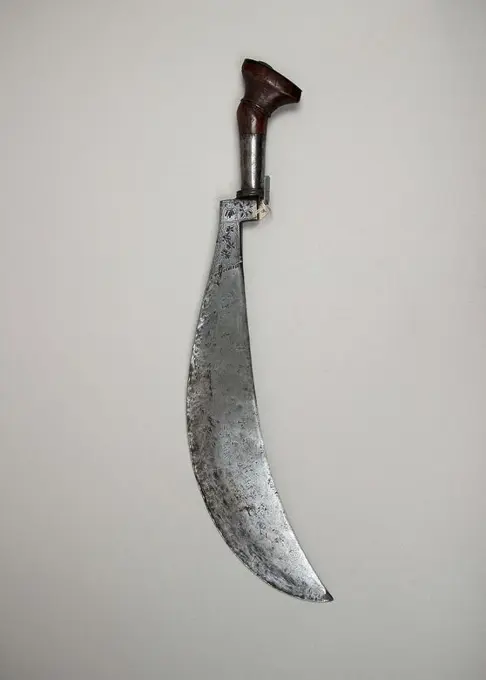
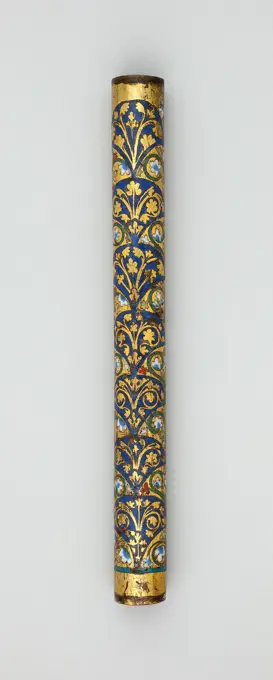
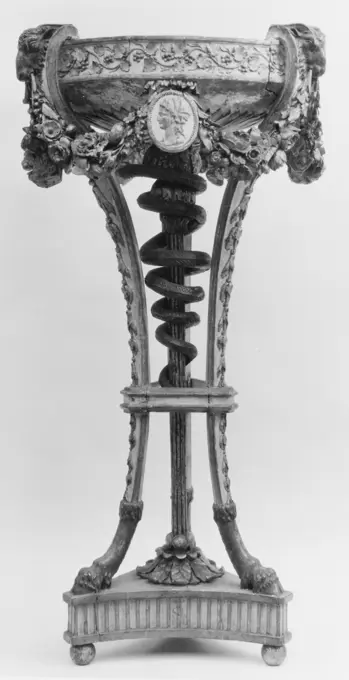
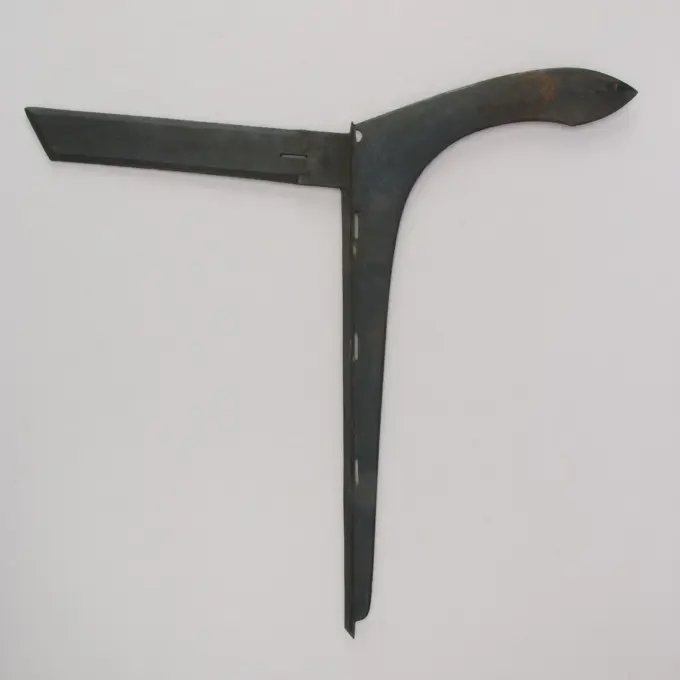
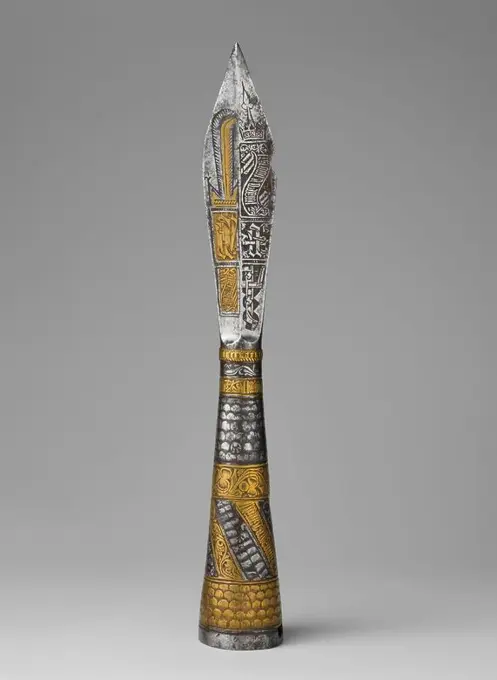
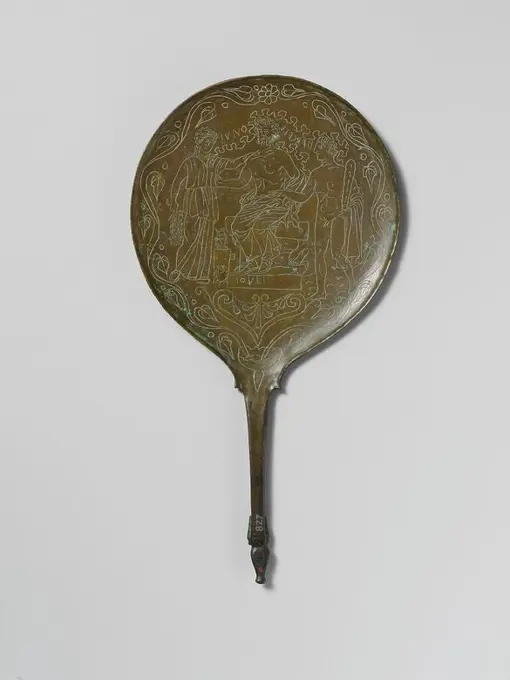
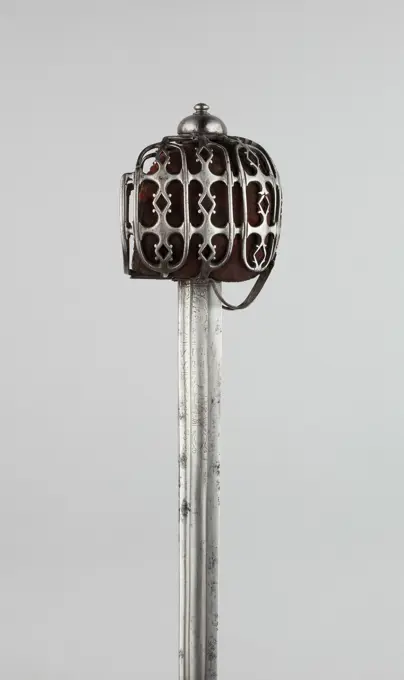
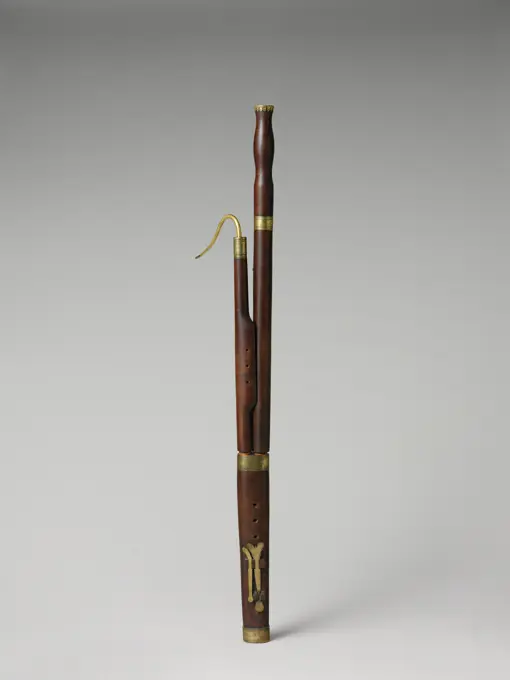
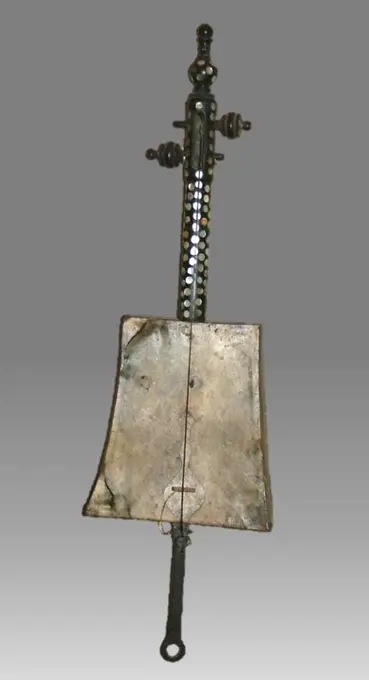
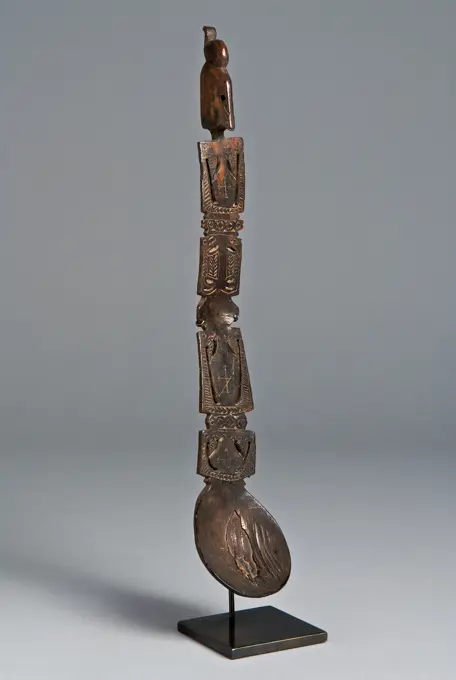
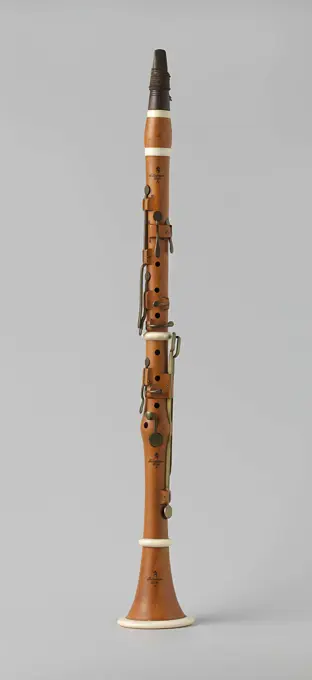
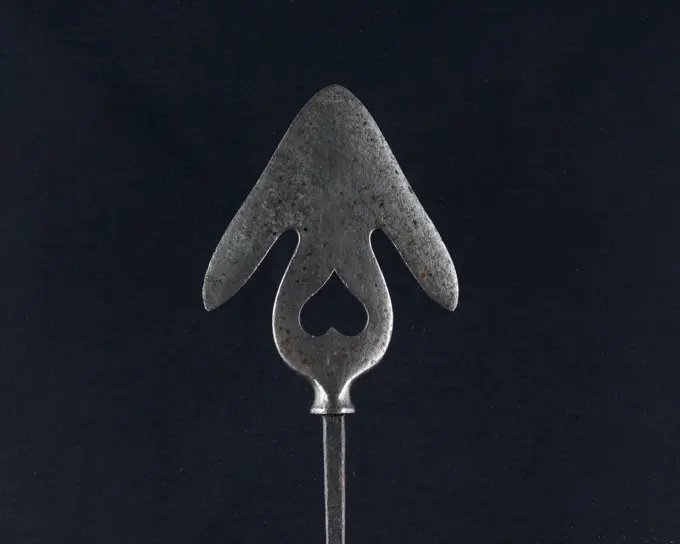
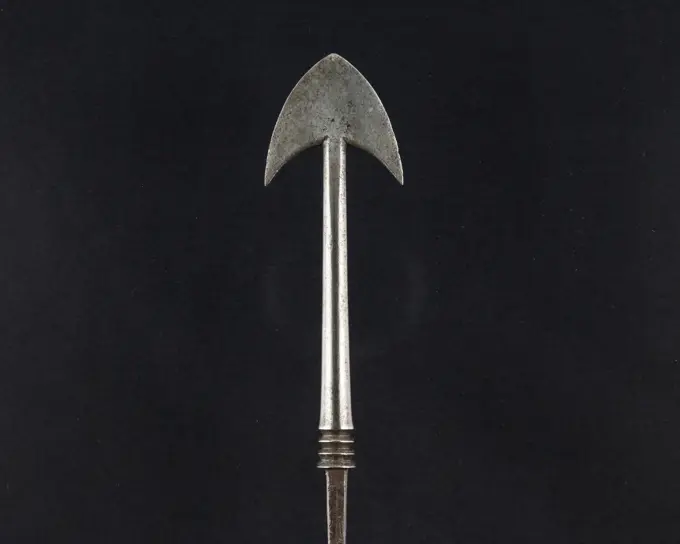
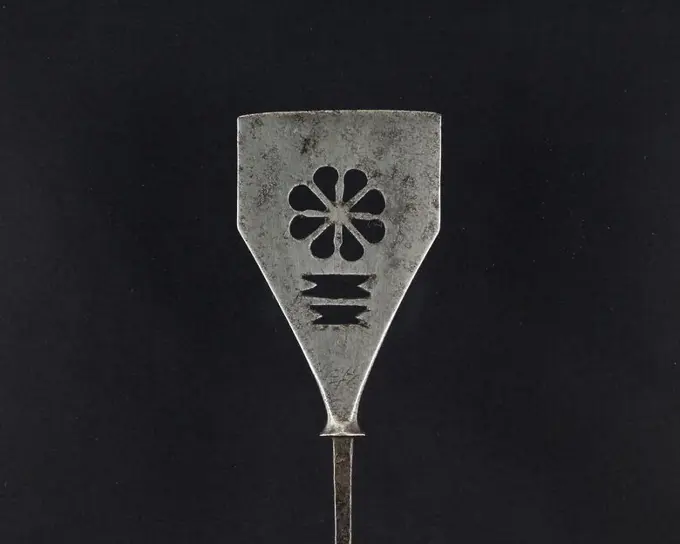
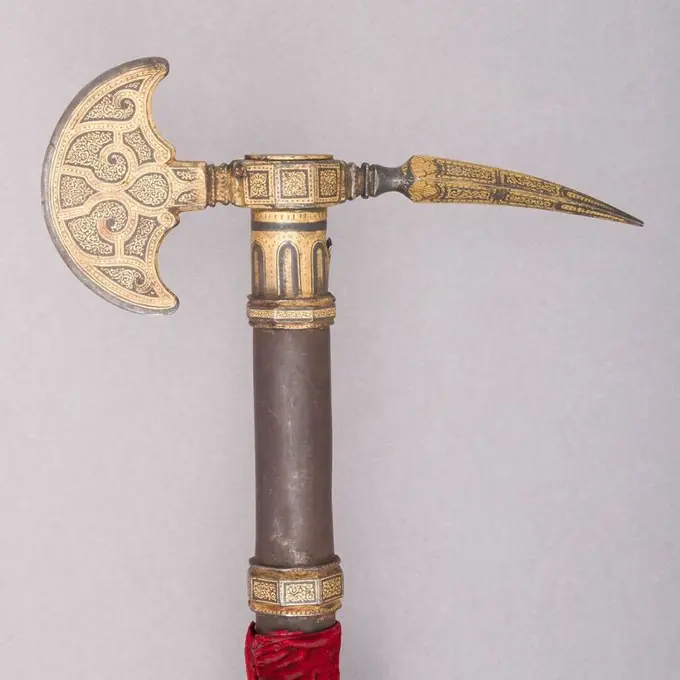
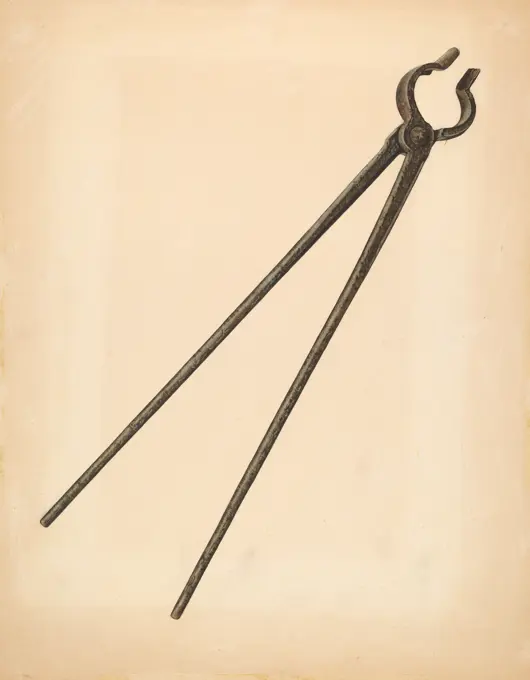
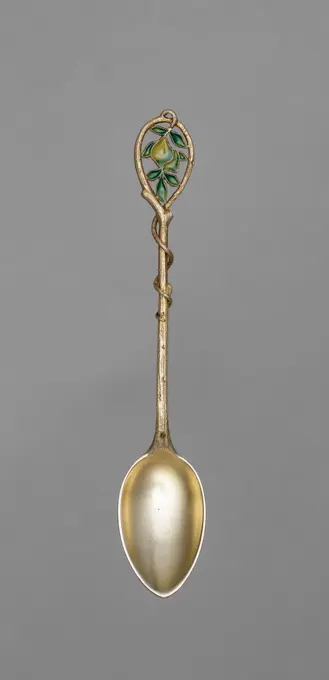
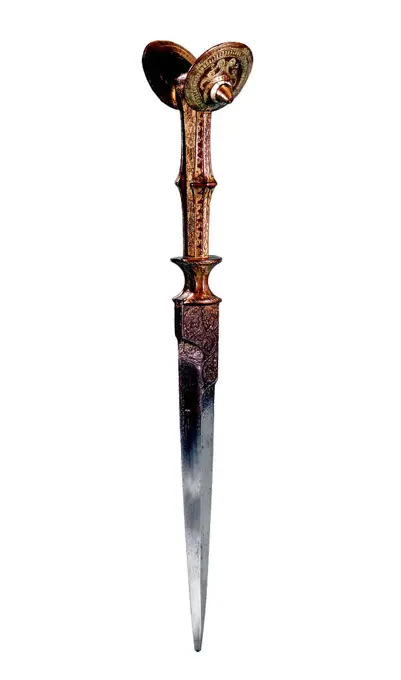
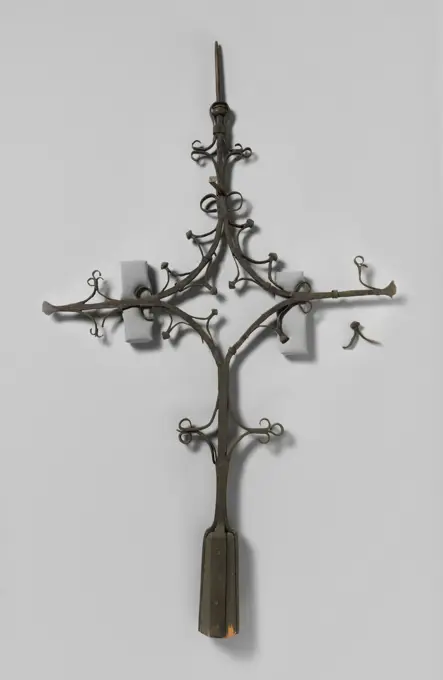
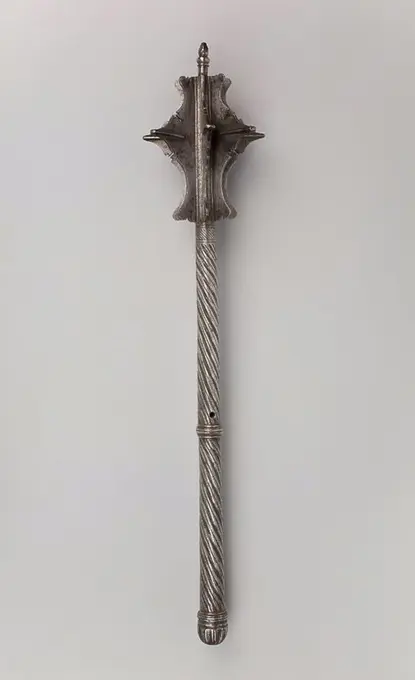
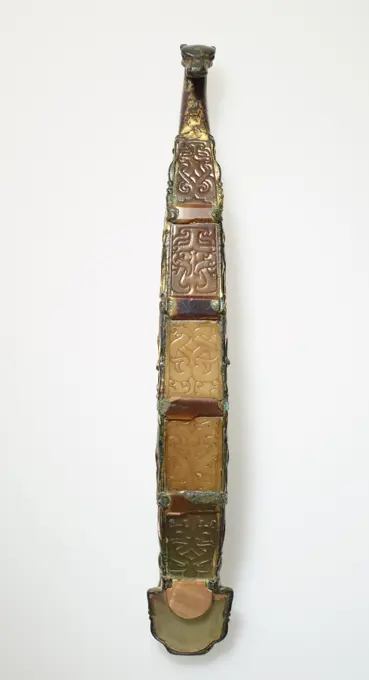
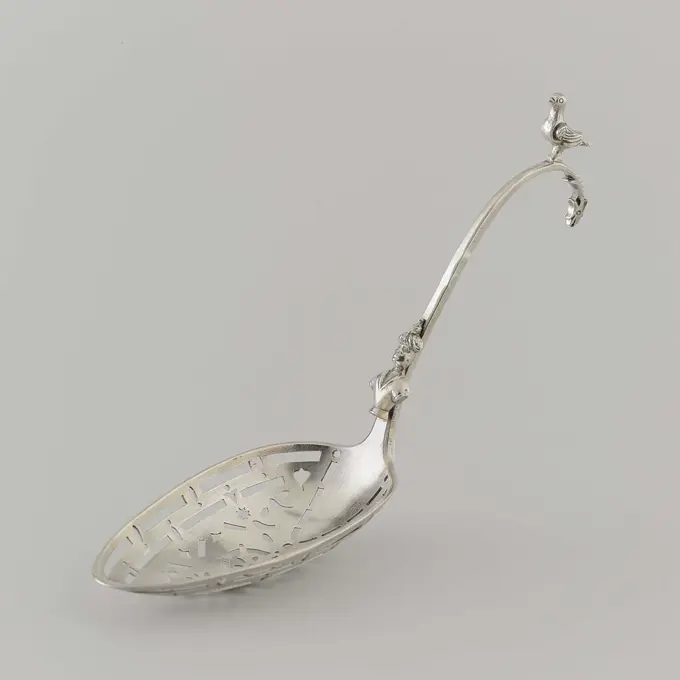
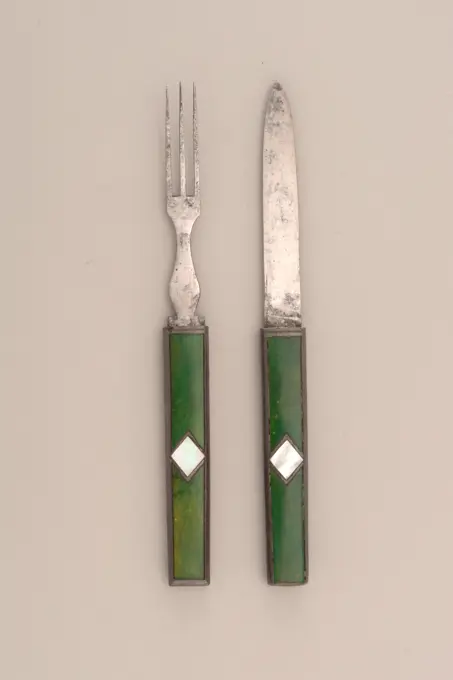
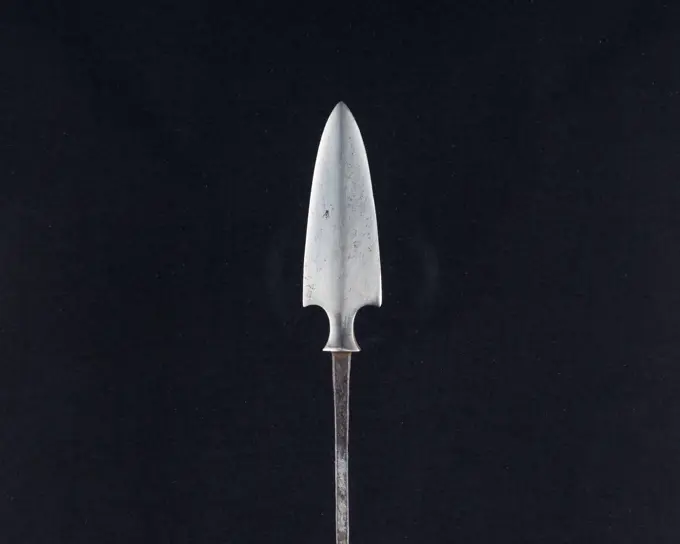
Photo tandard, 1880 - 1900 frame   metalDagger (Katar) 17th century Indian, Thanjavur; blade, European. Dagger (Katar) 31506Knife, ivory, brass, steel, Blade has straight upper edge, lower edge curving upwards to the point. Engraved bolster, ivory handle oval in section, flaring towards the end. Handle inlaid with small brass dots and three horizontal brass bands. Engraved inscription on blade., Sarajewo, Yugoslavia, ca. 1896, cutlery, Decorative Arts, KnifeClacier (Masz'al);  XVII/18th century (1690-00-00-1710-00-00);Cavalry saberFork (Germany); brass, steel; L x W: 21.5 x 2 cm (8 7/16 x 13/16 in.); The Robert L. Metzenberg Collection, gift of Eleanor L. Metzenberg; 1985-103-12Halberd 1650-1750 Germany. Steel, wood (ash), and brass .Axe 18th-19th century Indian, Orissa. Axe. Indian, Orissa. 18th-19th century. Iron, wood. Shafted WeaponsKris with Sheath. Culture: Malaysian. Dimensions: L. with sheath 20 1/8 in. (51.1 cm); L. without sheath 18 13/16 in. (47.8 cm); W. 4 in. (10.2 cm); Wt. 10.8 oz. (306.2 g); Wt. of sheath 6.6 oz. (187.1 g). Date: 18th-19th century. Museum: Metropolitan Museum of Art, New York, USA.Przeszo Przyszoci unknownSouvenir spoon with view of Sans Souci Palace, Potsdam European late 19th centuryArrowhead (Yanone). Culture: Japanese. Dimensions: L. 9 1/2 in. (24.1 cm); L. of head 2 5/8 in. (6.7 cm); W. 1 1/8 in. (2.9 cm); Wt. 1.1 oz. (31.2 g). Date: 18th century. Museum: Metropolitan Museum of Art, New York, USA.EVENTAIL. Lace (point of Flanders and Lille point), openwork ivory. Paris, Carnavalet museum. Eventail: Point de Flanders in Lille point Fashion accessory, EventailHalberd. Culture: American, Walpole, Massachusetts. Dimensions: L. 87 3/8 in. (221.9 cm); L. of head 14 1/2 in. (36.8 cm); W. 8 1/4 in. (21 cm); Wt. 3 lbs. 2.4 oz. (1428.8 g). Date: ca. 1750. Museum: Metropolitan Museum of Art, New York, USA.Smallsword ca. 1750 Jan Nieuwland Dutch By the early seventeenth century, the rapier, a long slender thrusting sword, began to dominate as the gentlemans weapon of choice. During the course of the century, however, as civilian fencing techniques became more specialized and refined, the rapier developed into a lighter, trimmed-down weapon known by about 1700 as the smallsword. Smallswords, often richly decorated, remained an integral part of a gentlemans wardrobe until the wearing of swords in civilian settings went out of fashion at the end of the eighteenth century, at which time pistols were replacing swords as arms most frequently used in personal duels. The majority of smallsword hilts are made of silver or steel, but many also employ a wide variety of luxurious materials, such as gold, porcelain, and enamel. At their best, smallswords combine the crafts of swordsmith, cutler, and jeweler to create an elegant weapon that was also a wearable work of art.. Smallsword 22943Erhu (  ). Culture: Chinese. Dimensions: Height: 29 15/16 in. (76 cm)Depth: 4 5/8 in. (11.8 cm)Diameter (Of belly): 2 7/16 in. (6.2 cm). Date: 19th century.Two-stringed fiddles (huqin) were introduced into China by nomadic Mongols during the Yuan dynasty (1280-1368). (The presence of "hu" in the name of an instrument indicates that it was a foreign import.) Bow hairs passing between the huqin's strings may reflect the Mongol's need to secure the bow to his instrument while on horseback. Huqin are played vertically on the knee, fingered with the left hand and bowed with the right. In earlier times, there existed a greater variety of local fiddles, but today, as with the European family of violins, certain standard sizes prevail.Although this nineteenth-century example has an hourglass-shaped body, the erhu more typically has a round or hexagonal sound box and a snakeskin belly. It is heard in traditional ensembles, modern orchestras, and solo performances. In the opera, it either Dagger (Khanjar) with Sheath Indian, Mughal or Deccan 18th-19th centurySmallsword with Scabbard ca. 1750-60 possibly German By the early seventeenth century, the rapier, a long slender thrusting sword, began to dominate as the gentlemans weapon of choice. During the course of the century, however, as civilian fencing techniques became more specialized and refined, the rapier developed into a lighter, trimmed-down weapon known by about 1700 as the smallsword. Smallswords, often richly decorated, remained an integral part of a gentlemans wardrobe until the wearing of swords in civilian settings went out of fashion at the end of the eighteenth century, at which time pistols were replacing swords as arms most frequently used in personal duels. The majority of smallsword hilts are made of silver or steel, but many also employ a wide variety of luxurious materials, such as gold, porcelain, and enamel. At their best, smallswords combine the crafts of swordsmith, cutler, and jeweler to create an elegant weapon that was also a wearable work of art.. Smallsword wHandle of painted wood with round button, for an umbrella or umbrella, Gustav Schnitzler, c. 1920 Handle and button of painted wood, for a parasol or umbrella. The dark red button is decorated with a yellow band and cross grooves. A brown cord has been strung by the hole drilled in the handle. Nijmegen whole: Wood (plant material). Cord: Rope painting Handle and button of painted wood, for a parasol or umbrella. The dark red button is decorated with a yellow band and cross grooves. A brown cord has been strung by the hole drilled in the handle. Nijmegen whole: Wood (plant material). Cord: Rope painting"Louis XVI" tableware Spoon; Designed by Joseph E. Birmingham; Manufactured by Shreve & Co.; USA; silver; cm: L: 14.7 x W: 3.3Partisan. Culture: Spanish. Dimensions: L. 8 ft. 8 1/4 in. (264.7 cm); L. of head 21 1/4 in. (53.9 cm); W. 6 3/8 in. (16.2 cm); Wt. lbs. oz. (g). Date: ca. 1715. Museum: Metropolitan Museum of Art, New York, USA.Pipe Tomahawk 1840-60 Ojibwa(). Pipe Tomahawk 319114GRAN FAMILIA - SIGLO XX. Author: Julio Gonzalez. Location: EXPOSICION ANTOLOGICA. MADRID. SPAIN.Pipe. Pipe of silver with cap. The cap has been opened. Half of the handle is from ebony (Steel no longer present Zinds 1960).Divination Tapper (IroIfa)Model of an Optical Telegraph for Ships, Engelbert Lucas, 1835 demonstration model Model of an optical telegraph. Schematic model of an optical telegraph, on pedestal. The pole, although rectangular in diameter, proposes a mast and steng to which the moving parts are attached. These consist of two blazing arms under and an oval plate at the top, which can be folded up and down turns around a hinge; All parts are moved with ropes that run down slices in the mast. Netherlands wood (plant material). brass (alloy). ropeHalabardaSacrificial Axe. Culture: Indian, Coorg. Dimensions: H. 21 in. (53.5 cm); W. 5 1/4 in. (13.3 cm); Wt. 2 lb. 7.1 oz. (1108.5 g). Date: 18th-19th century. Museum: Metropolitan Museum of Art, New York, USA.Mirror ca. 1550-1458 B.C. New Kingdom This mirror is decorated with the emblem of the Hathor, goddess of love and beauty. For mirrors of the same type that belonged to royalty, see 26.8.97, and 26.8.98.. Mirror. ca. 1550-1458 B.C.. Copper alloy, wood. New Kingdom. From Egypt, Upper Egypt, Thebes, Asasif, Courtyard CC 41, Pit 3, Burial D 1, Beside or on inner coffin, MMA excavations, 1915-16. Dynasty 18, earlyShaft of a Column 1151-1200 Rhineland. Gilt bronze, champlevÈ enamel .Paper knife 1890 Berquin-Varangoz Workshop. Paper knife. Berquin-Varangoz Workshop. France. 1890. Jade (nephrite). JadeDart Quiver with PoisonDartsStaff, 33 7/16 x 3 x 1 13/16 in. n(84.9 x 7.6 x 4.6 cm), Wood, metal, pigment, Kenya or TanzaniaPair of athéniennes with basins ca. 1774-93 French. Pair of athéniennes with basins 197340Pair of Dagger-Axes (Ge) 4th-3rd century B.C. Chinese This pair of dagger-axes (ge) represent a later developmental stage, in which the three principal elements--yuan, hu, and nui--became longer and more slender in proportion, their edges describing both gentle curves and perfectly straight edges in a balanced juxtaposition. This refinement coincided with the decline of the ge as the foremost of offensive weapons toward the end of the Western Han dynasty. The delicate painted lacquer decoration further emphasizes the ornamental function of these pieces and suggests that they may have been made purely for ceremonial use or specifically as grave goods for the tomb of a high ranking military official.. Pair of Dagger-Axes (Ge) 26616Key; gilded bronze, chhiselled; 1909-27-8Sword with Scabbard. Culture: Korean. Dimensions: L. with scabbard 36 1/2 in. (92.7 cm); L. without scabbard 34 7/8 in. (88.6 cm); L. of blade 27 in. (68.6 cm); W. 4 in. (10.2 cm); Wt. 2 lb. 4.5 oz. (1034.8 g); Wt. of scabbard 1 lb. 14 oz. (850.5 g). Date: 16th-19th century. Museum: Metropolitan Museum of Art, New York, USA.Anna Aloisi, Toasting Fork, c 1936 Toasting ForkObject ID #18803877; Manufactured by Meissen Porcelain Manufactory (Germany); Germany; porcelain, vitreous enamel, steel, silver; L x W: 22.2 x 2.3 cm (8 3/4 x 7/8 in.); The Robert L. Metzenberg Collection, gift of Eleanor L. Metzenberg; 1985-103-189Dagger with Sheath 19th century Bhutanese or Sikkimese. Dagger with Sheath 32746MONTANTE DE SANCHO DAVILA. Location: ALCAZAR / MUSEO DEL EJERCITO-COLECCIÓN. Toledo. SPANIEN.Ceremonial Arrowhead. Culture: Bohemian, probably Prague. Dimensions: L. 12 1/8 in. (30.7 cm); W. 1 3/4 in. (4.4 cm); Wt. 18.2 oz. (517 g). Date: ca. 1437-39.Originally mounted on a wooden shaft, this extremely large arrowhead probably served as a symbol of rank or a baton of command. It is decorated with royal Bohemian monograms and badges in addition to religious invocations in medieval Czech. It bears the monogram AR for Albert, king of Bohemia and Hungary (reigned 1437-39), and also the monogram AE, probably for Albert and Elizabeth, his queen. It is also stamped with the so-called Turkish arsenal mark, indicating that it was captured by Ottoman forces, perhaps in the campaign of 1439 in which Albert was killed, and was subsequently stored in the Turkish arsenal in Constantinople (now Istanbul). Museum: Metropolitan Museum of Art, New York, USA.Lifting Hook 580-640 Coptic. Lifting Hook 474912Fork Handle (Germany); steel, brass; The Robert L. Metzenberg Collection, gift of Eleanor L. Metzenberg; 1985-103-263-bKnife Blade (Germany); brass, steel; L x W: 12.6 x 1.6 cm (4 15/16 x 5/8 in.); The Robert L. Metzenberg Collection, gift of Eleanor L. Metzenberg; 1985-103-261-aBronze mirror. Culture: Praenestine. Dimensions: length 12 3/8 in. (31.4 cm); diameter 6 5/8 in. (16.8 cm). Date: late 4th-early 3rd century B.C..Inscribed, in Latin: Iuno (Juno), Iovei (Jupiter), Hercele (Hercules). Museum: Metropolitan Museum of Art, New York, USA.Basket-Hilted Broadsword with Scabbard (Claymore) Made 1740-1760 Scotland. Steel, iron, silver, and leather .Partisan. Culture: Swiss. Dimensions: L. 94 5/8 in. (240.3 cm); L. of head 19 3/8 in. (49.2 cm); W. 3 3/4 in. (9.5 cm); Wt. 4 lbs. 0.5 oz. (1828.5 g). Date: early 18th century. Museum: Metropolitan Museum of Art, New York, USA.Vaginal knowledgeBassoon ca. 1750 Wolfgang Thomae German The bassoon was the bass member of the double reed consort and an important instrument in Baroque continuo playing, where it often performed fast-moving and complicated bass lines.. Bassoon 503660Curved Dagger (Khanjar) with Ram-Head Pommel 1601-1800 India. Watered steel inlaid with gold and silver in the kuftgari technique .Spoon, Wood, carved, painted, gilded, 19th century, cutlery, Decorative Arts, SpoonBasket-Hilted Broadsword Made 1770-1790 Scotland. Steel .Rabāb Ash-Sha'ir 19th century Syrian Rabāb Ash-Sha'ir ("poet's fiddle") with 1 string, add a 2nd string and it is known as rabāb al-mughannī ("singer's fiddle"). These terms, used in Egypt for this 4-sided bowed lute, have lost their distinction and today the rabāba is the name in use. Most bowed lutes are constructed as spike fiddles with a wood or metal rod that penetrates the frame of the soundbox and terminates in a spike that rests on the ground when the instrument is bowed. Syria.. Rabāb Ash-Sha'ir 503724Rowel Spur 15th century German In the 15th century, rowel spurs with very long necks were of common use in Western Europe. At this period, the elevated war saddles and the very specific riding style, with long stirrup leathers and legs extended forward, had the consequence of taking away the riders feet from the horses flank. Thus, these long necks gave them easier access without having to disturb the riders position. As a knights status was closely related to his horse, spurs became one of the symbols of chivalry, and one of the tokens given to him during his knighting.. Rowel Spur. German. 15th century. Iron alloy, copper alloy. Equestrian Equipment-SpursLinstock 17th century German. Linstock 26184LadleClarinet.And clarinet van palmhout. EMAVED: MULLENDHOUT FASDA.Bliżej Kultury Bobiński, Władysław (1901 1975) Maj.Hat pin of Persian Maskeradekostuum, Anonymous, 1913 Hat pin of gold -colored metal (copper) With open lotus -flower -like ornament on needle with a pointed point. The Hague (possibly) whole: Metal forging / painting  Delft Hat pin of gold -colored metal (copper) With open lotus -flower -like ornament on needle with a pointed point. The Hague (possibly) whole: Metal forging / painting  DelftCandlestick -Partisan. Culture: French. Dimensions: L. 90 1/2 in. (229.8 cm); L. of head 16 3/4 in. (42.5 cm); W. 5 1/8 in. (13 cm); Wt. 3 lbs. 9 oz. (1615.9 g). Date: ca. 1700. Museum: Metropolitan Museum of Art, New York, USA.The ancient weapon - a halberd. It is isolated on a white backgroundCluny Museum, Italian Lamp of the sixteenth century, vintage engraved illustration. Magasin Pittoresque 1873.Arrowhead (Yanone) 18th century Japanese Although today Japanese warriors are renowned most for their swordsmanship, archery, especially from horseback, has been an essential part of samurai warfare and culture for centuries. Arrows were fitted with heads of varying shape according to their intended use in war, the hunt, or target practice. Arrowheads made for use on the battlefield incorporated different designs intended for specialized purposes such as the piercing of armor or to cause maximum damage to horses and unarmored personnel.Large arrowheads, pierced and elaborately chiseled with landscapes, birds, flowers, dragons, and Buddhist divinities, were created to be admired for the beauty of their metalwork and design rather than for use in archery. Such highly elaborate examples may have been made for presentation or as a votive offerings to a shrine.. Arrowhead (Yanone). Japanese. 18th century. Steel. Archery Equipment-ArrowheadsArrowhead (Yanone) 18th century Japanese Although today Japanese warriors are renowned most for their swordsmanship, archery, especially from horseback, has been an essential part of samurai warfare and culture for centuries. Arrows were fitted with heads of varying shape according to their intended use in war, the hunt, or target practice. Arrowheads made for use on the battlefield incorporated different designs intended for specialized purposes such as the piercing of armor or to cause maximum damage to horses and unarmored personnel.Large arrowheads, pierced and elaborately chiseled with landscapes, birds, flowers, dragons, and Buddhist divinities, were created to be admired for the beauty of their metalwork and design rather than for use in archery. Such highly elaborate examples may have been made for presentation or as a votive offerings to a shrine.. Arrowhead (Yanone). Japanese. 18th century. Steel. Archery Equipment-ArrowheadsArrowhead (Yanone). Culture: Japanese. Dimensions: L. 9 1/2 in. (24.1 cm); L. of head 3 1/2 in. (8.9 cm); W. 2 1/4 in. (5.7 cm); Wt. 1.7 oz. (48.2 g). Date: 18th century. Museum: Metropolitan Museum of Art, New York, USA.Rapier. Northern European. Date: 1640-1660. Dimensions: Overall L. 111.8 cm (44 in.). Steel. Origin: Europe, northern. Museum: The Chicago Art Institute, Chicago, USA.Opium pipe. Chinese, made from terracotta, metal and ivory.Staff Weapon. Culture: Italian. Dimensions: L. 70 1/4 in. (178.4 cm); L. of head 32 in. (81.3 cm); W. 7 3/8 in. (18.7 cm); Wt. 2 lbs. 12 oz. (1247.4 g). Date: 16th century. Museum: Metropolitan Museum of Art, New York, USA.Orison Daeda, Blacksmith's Tongs, c 1942 Blacksmith's TongsCzęstochowa. Treasury of the monastery in Jasna Góra - Bulawy and Polish Sabers (Buława Hetman Cossack Hetman Paweł Tetera, Sabel, Buława Wielki Wielki Crown Stanisław Potocki, Szabel, Buław Stanisław Jabłonowski); Trzciński, Stanisław (1867-1939); around 1896 (1890-00-00-1900-00-00);Spoon, c. 1870. Firm of Georg Adam Scheid (Austrian). Silver gilt with plique-a-jour enamel; overall: 2.3 cm (7/8 in.).Abruzzo, L'Aquila, Celano, Museum, Italy, 20th century, photo, photography, EuropeKnife with Jade Handle and Scabbard , c. 1750. East India. Steel and jade, with leather and silver; overall: 43.7 cm (17 3/16 in.).Salt Spoon 1790-1810 Paul Revere Jr. American. Salt Spoon 6963Arrowhead (Yanone). Culture: Japanese. Dimensions: L. 7 in. (17.8 cm); L. of head 2 1/2 in. (6.4 cm); W. 1 1/4 in. (3.2 cm); Wt. 0.7 oz. (19.8 g). Date: 18th century. Museum: Metropolitan Museum of Art, New York, USA.Tulwar sword, 1700s. India, probably Deccan. Iron hilt with gold; steel blade with gold; wood scabbard with velvet and metallic thread; overall: 96.6 cm (38 1/16 in.). This long curved sword and scabbard are of the kind used and worn by Mughal nobility, as seen often in paintings. The openwork hilt is a characteristic of swords from the southern Indian region known as the Deccan. By the end of the 1500s, the Mughals began making regular incursions into the Deccan as they attempted to expand their empire, increasing the exchange of art forms. Repeated four times, twice on one side of the blade and twice on the other in gold inlay, is the same line from the Qur'an 61:13: Help [comes from God, and Victory is imminent.” This is a popular inscription on daggers, banners, and other instruments of war, as it reassures the combatants that God is on their side, and therefore they can in good faith expect a speedy victory if they fight valiantly.Arrowhead (Yanone) dated 1645 Japanese Although today Japanese warriors are renowned most for their swordsmanship, archery, especially from horseback, has been an essential part of samurai warfare and culture for centuries. Arrows were fitted with heads of varying shape according to their intended use in war, the hunt, or target practice. Arrowheads made for use on the battlefield incorporated different designs intended for specialized purposes such as the piercing of armor or to cause maximum damage to horses and unarmored personnel.Large arrowheads, pierced and elaborately chiseled with landscapes, birds, flowers, dragons, and Buddhist divinities, were created to be admired for the beauty of their metalwork and design rather than for use in archery. Such highly elaborate examples may have been made for presentation or as a votive offerings to a shrine.. Arrowhead (Yanone). Japanese. dated 1645. Steel. Archery Equipment-ArrowheadsArrowhead (Yanone). Culture: Japanese. Dimensions: L. 10 7/8 in. (27.7 cm); L. of head 3 in. (7.6 cm); W. 1 1/8 in. (2.9 cm); Wt. 1.4 oz. (39.7 g). Date: 18th century. Museum: Metropolitan Museum of Art, New York, USA.PUÑAL DE OREJAS - SIGLO XV - ESCUELA ITALIANA - METAL DORADO Y MARFIL - 38 cm. Location: MUSEO LAZARO GALDIANO-COLECCION. MADRID. SPANIEN.Arrowhead (Yanone) 18th century Japanese Although today Japanese warriors are renowned most for their swordsmanship, archery, especially from horseback, has been an essential part of samurai warfare and culture for centuries. Arrows were fitted with heads of varying shape according to their intended use in war, the hunt, or target practice. Arrowheads made for use on the battlefield incorporated different designs intended for specialized purposes such as the piercing of armor or to cause maximum damage to horses and unarmored personnel.Large arrowheads, pierced and elaborately chiseled with landscapes, birds, flowers, dragons, and Buddhist divinities, were created to be admired for the beauty of their metalwork and design rather than for use in archery. Such highly elaborate examples may have been made for presentation or as a votive offerings to a shrine.. Arrowhead (Yanone). Japanese. 18th century. Steel. Archery Equipment-ArrowheadsClarinet, anonymous, c. 1830 Mouthpiece, middle part and intermediate piece Europe wood (plant material). copper (metal) Mouthpiece, middle part and intermediate piece Europe wood (plant material). copper (metal)ScissorsSouvenir spoon with view of town (Interlaken) surrounded by mountains European late 19th centuryTorch cross with weather rooster, anonymous, c. 1400 - Before 1950 Tower cross of iron with gold -plated copper wean. unknown iron (metal). copper (metal) gilding Tower cross of iron with gold -plated copper wean. unknown iron (metal). copper (metal) gildingGuisarme ca. 1530 Italian. Guisarme 26773Whistle in the shape of a sea monster. Monster with a large open mouth with teeth, a wavy scaly body and a small tail. The mouth passes into a smooth, a little flared, chalice. The tail is over in a short, tendering, mouthpiece with dent edge.Comble in Spanish. The back is divided into 2 wings of symmetrical butterfly with a decor of fiery and scrolls, a small plant motif connects the 2 wings.Mace. European, possibly German. Date: 1530-1560. Dimensions: L. 61.5 cm (24 1/4 in.)Wt. 2 lb. 12 oz. Steel. Origin: Germany. Museum: The Chicago Art Institute, Chicago, USA.Dagger (Katar) with Two Side Blades (Bichuwa) 16th-17th century Indian. Dagger (Katar) with Two Side Blades (Bichuwa) 31425Belt Hook, 4th-3rd century BCE, 1 5/8 x 8 1/2 x 1 11/16 in. (4.13 x 21.59 x 4.29 cm), Gilt bronze with crystal and glass inlay, China, 4th-3rd century BCE, Richly decorated belt fasteners like this one were stunning additions to the luxurious silk costumes of the Warring States period. This elaborately decorated hook has three crystal bosses set over comma spirals with smaller green glass bosses interspersed between entwined dragons. Large monster masks are at each end of the decorative field, and the long hook issuing from the mouth of one mask ends in a turned-back dragon head. The concave underside is left ungilded and is inlaid with scrollwork in silver wire.Scepter, late 1800s or early 1900s. Ovimbundu people, Angola, Central Africa, Africa, late 19th or early 20th century. Wood, copper alloy, upholstery studs, iron alloy, and cotton; overall: 57.5 x 4.5 x 5.5 cm (22 5/8 x 1 3/4 x 2 3/16 in.).. Driven silver sugar spoon with an openwork container, and a curved handle. On top of the curved steal a pigeon. Brands: On the stem an ax and a crowned o in a shield. Annual letter T (1783). Lead.Ancient sabre Ancient sabre. A smart variant of the fighting weapon Copyright: xZoonar.com/ValeryxxSibrikovx 2424054Etui Fork (probably Germany); ivory, mother-of-pearl, pewter, steel; L x W: 18.4 x 1.7 cm (7 1/4 x 11/16 in.); The Robert L. Metzenberg Collection, gift of Eleanor L. Metzenberg; 1985-103-133-bAesthetic, dried poppy in black and white, cut out in front of a neutral backroundArrowhead (Yanone) 18th century Japanese Although today Japanese warriors are renowned most for their swordsmanship, archery, especially from horseback, has been an essential part of samurai warfare and culture for centuries. Arrows were fitted with heads of varying shape according to their intended use in war, the hunt, or target practice. Arrowheads made for use on the battlefield incorporated different designs intended for specialized purposes such as the piercing of armor or to cause maximum damage to horses and unarmored personnel.Large arrowheads, pierced and elaborately chiseled with landscapes, birds, flowers, dragons, and Buddhist divinities, were created to be admired for the beauty of their metalwork and design rather than for use in archery. Such highly elaborate examples may have been made for presentation or as a votive offerings to a shrine.. Arrowhead (Yanone). Japanese. 18th century. Steel. Archery Equipment-ArrowheadsCranequin with Arms of Elector Augustus I of Saxony, c. 1553-73. Germany, Saxony, 16th century. Steel; etched, chased and gilded; rack: 34.4 cm (13 9/16 in.); crank: 27 cm (10 5/8 in.); gear housing: 14.2 cm (5 9/16 in.). This winder or cranequin was for Prince Elector Augustus I, a member of the ruling elite in the Holy Roman Empire. Augustus, powerful and wealthy, had even the most practical instruments ornately decorated, including this cranequin.Fork, steel, brass, Fork has three long curved tines, rounded shoulder and flat baluster-shapedneck ending in a threaded projection., Germany, ca. 1700-1800, cutlery, Decorative Arts, Fork