Historical Blades

Images of ornate swords and knives from different eras. Features intricate designs, highlighting craftsmanship and historical significance.

Degen with Schede, Anonymous, c. 1800 - c. 1900 sword Degen with iron blade which is blew and gilded with floramotives. The hing consists of a donkey -shaped double bump plate which is decorated with motifs at the front. The parade rod has a decorated button at the end. The handle consists of silver thread that is strung around the grip. West-Europa Kling: Iron (Metal). hilt: copper (metal). Handle: Silver (Metal). Schede: Leather
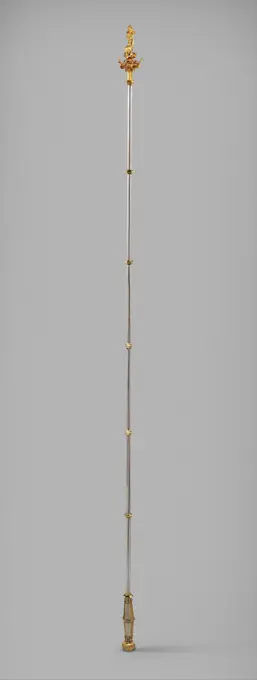
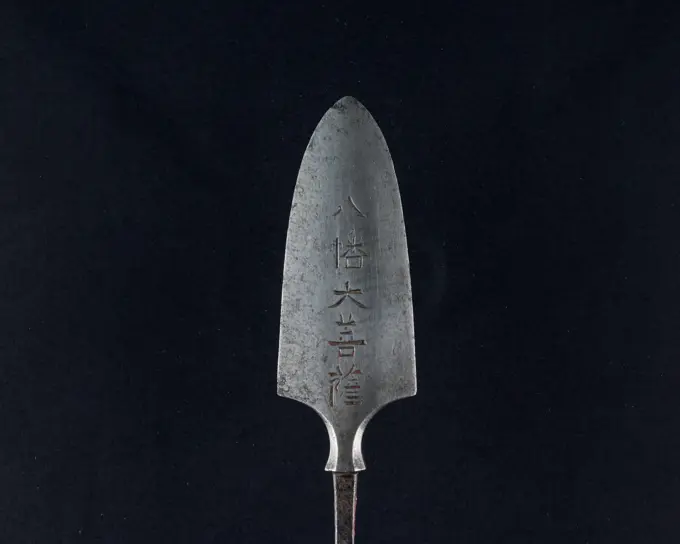
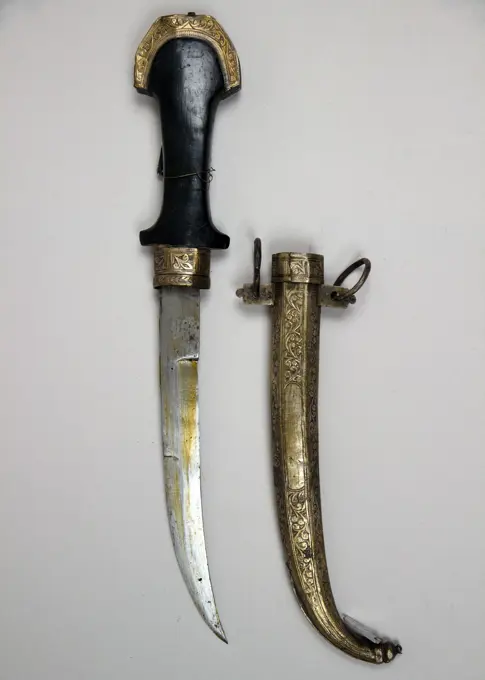
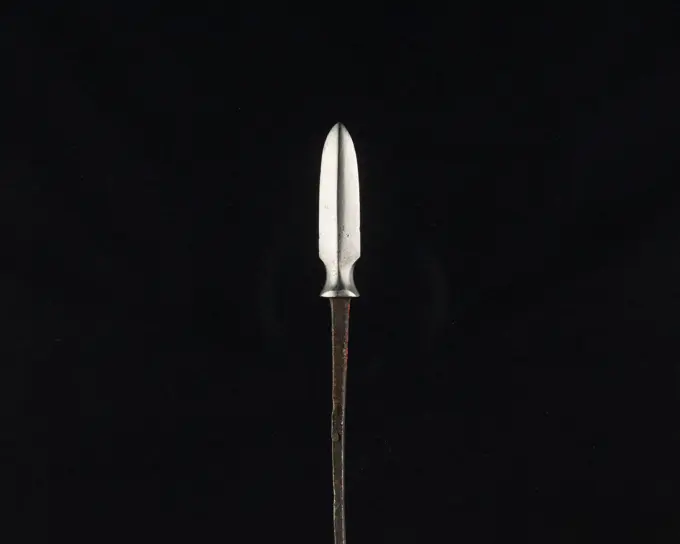
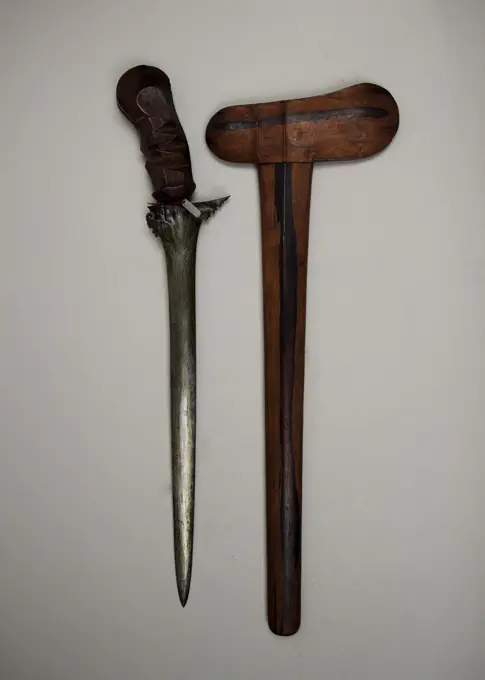
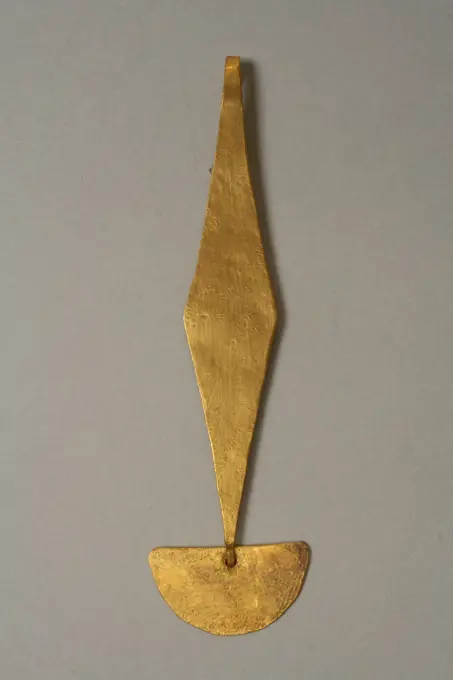
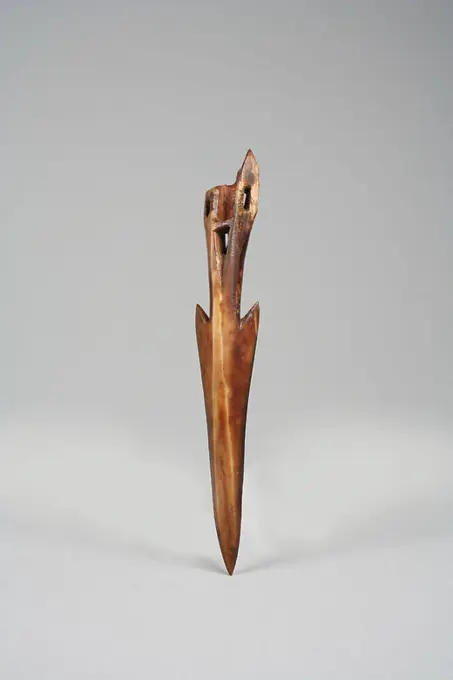
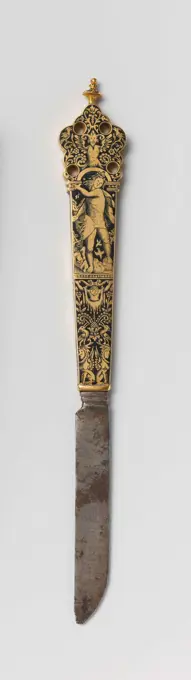
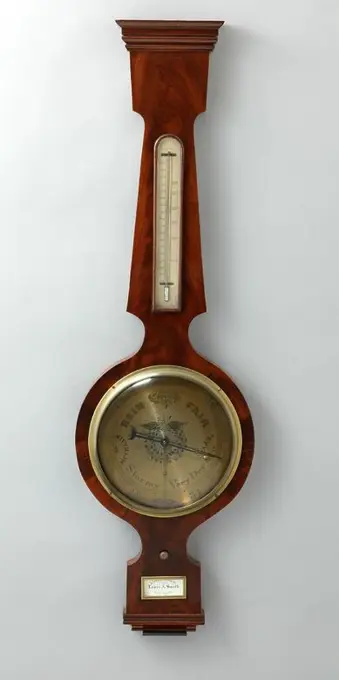
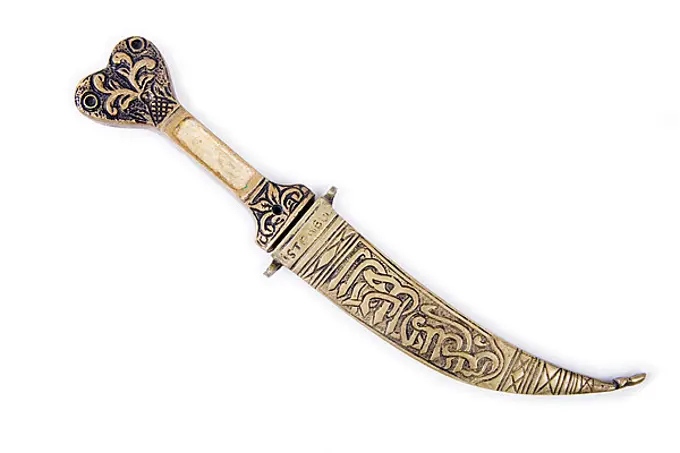
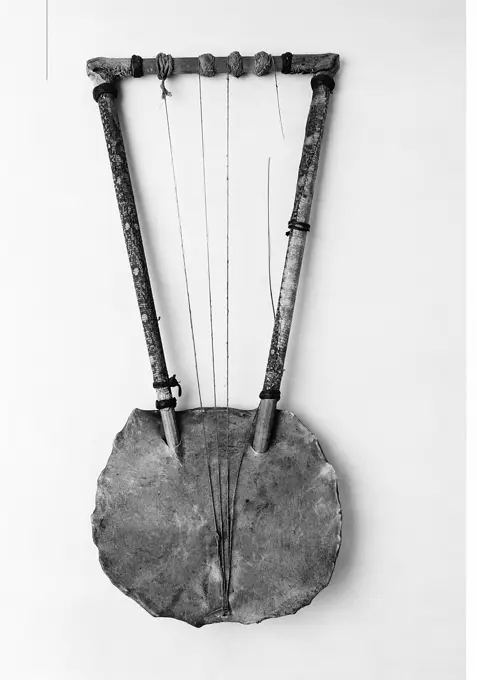
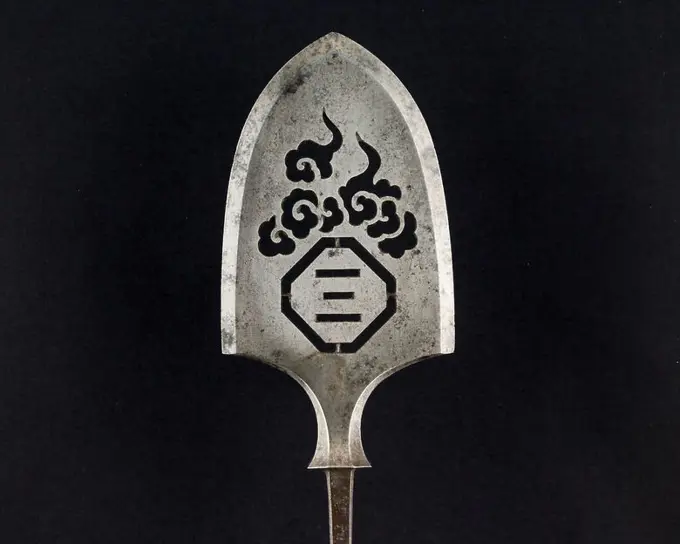
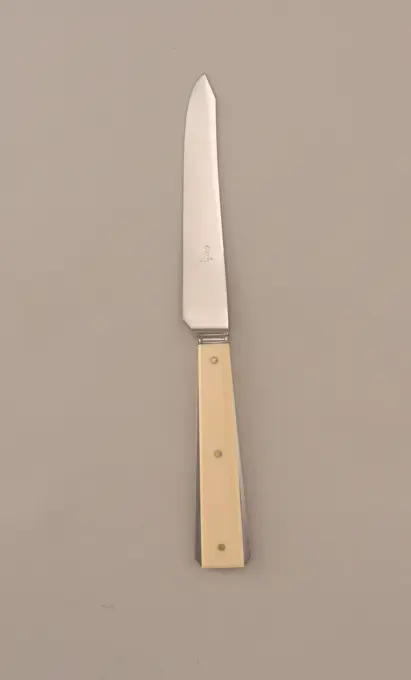
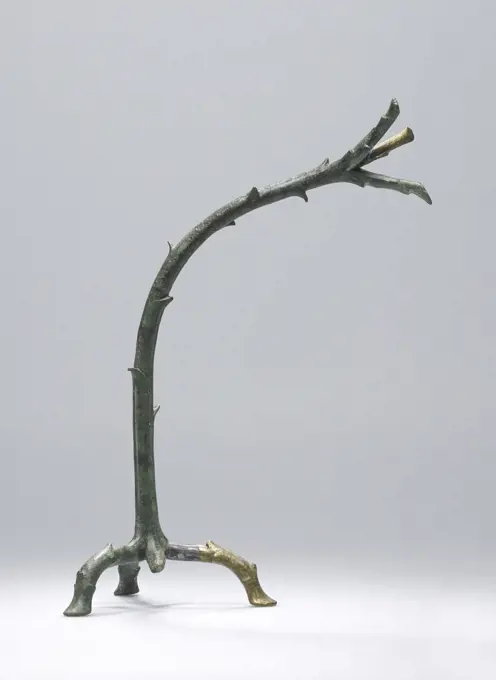
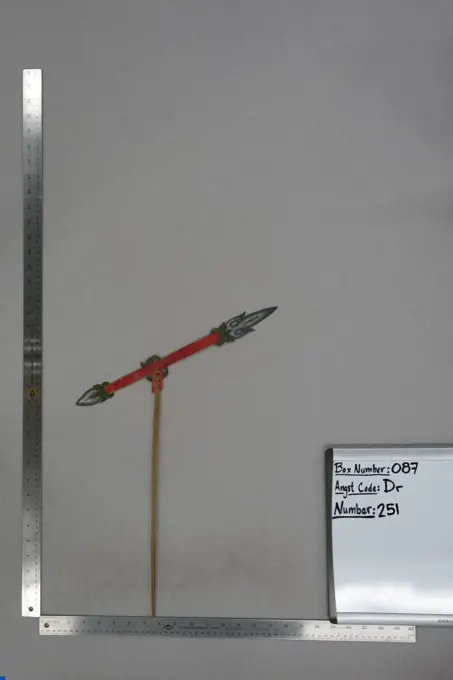
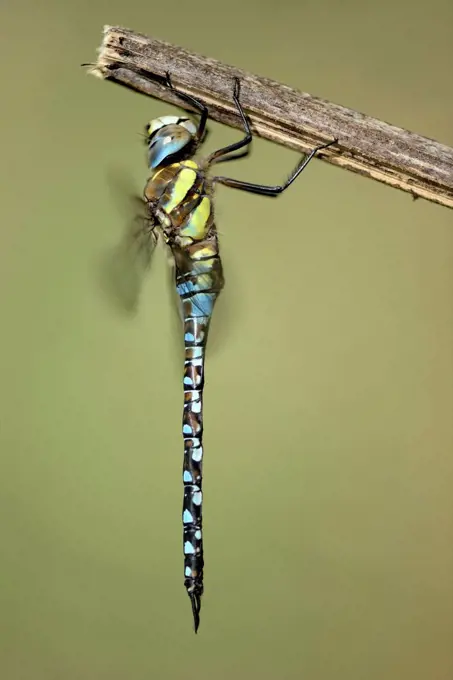
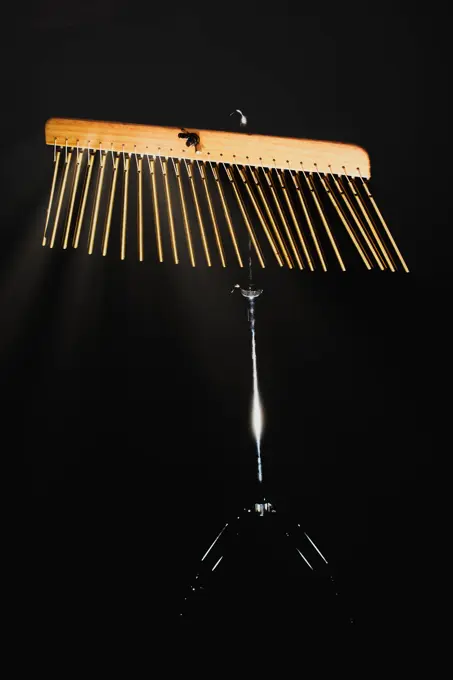
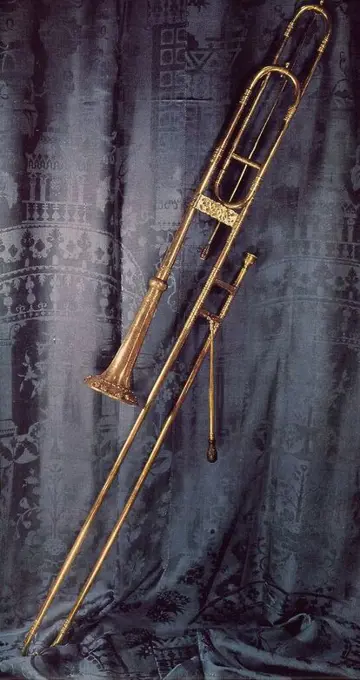
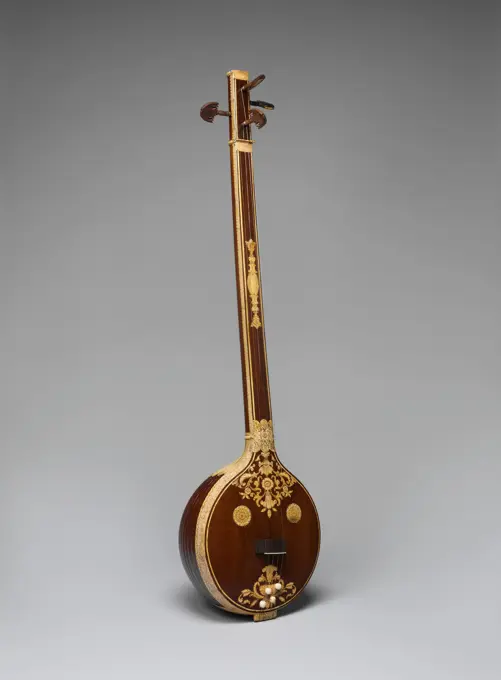
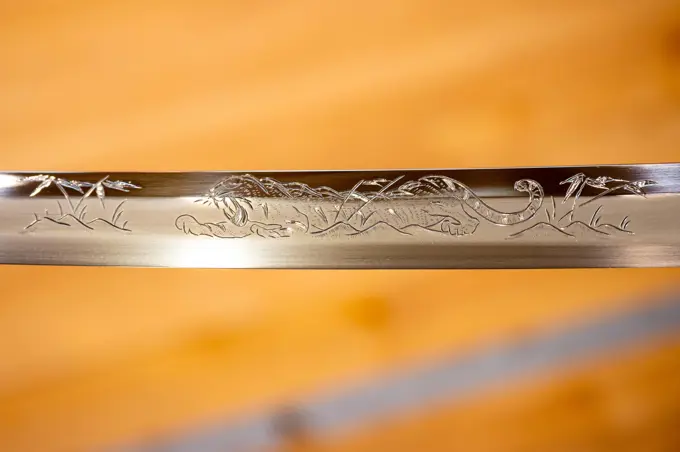
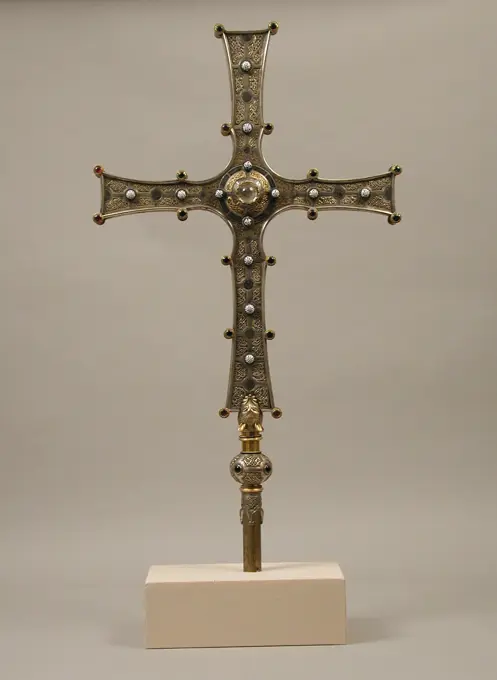
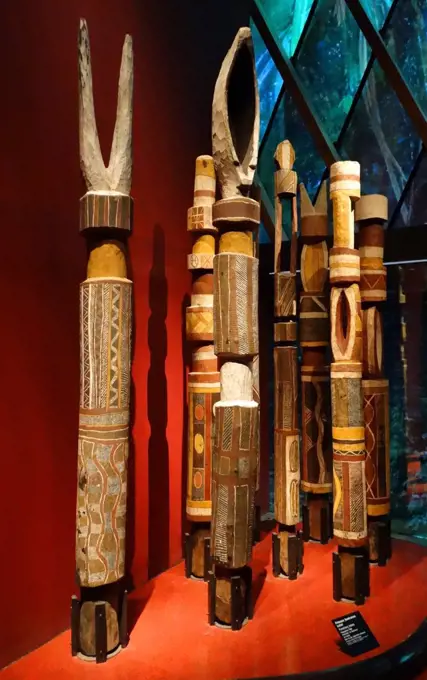
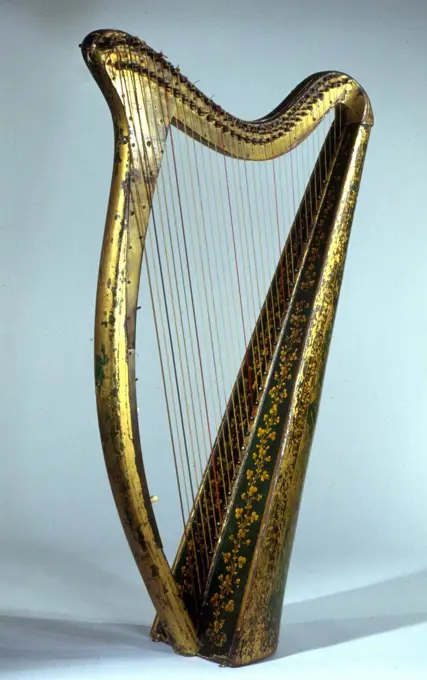
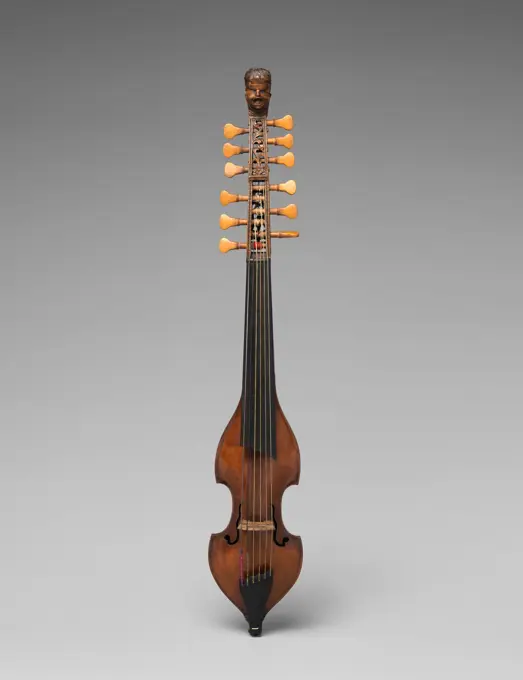
Truncheon with painted green and white spiral, custodian staff staff baton weapon weapon coat of arms identification carrier wood cotton leather, twisted Slim conical pole with rounded top and ellipsoidal rounded handle with pressed hemispherical knob; to handle leather and cotton lace police officer public order riot authority weapon uniform militariaCeremonial Knife, 1700s. China, Qing dynasty (1644-1911). Green jade, partly clarified; overall: 20.6 cm (8 1/8 in.).ContainerCandelabra 14th century Spanish. Candelabra 468012Rapier possibly Spanish ca. 1600 The rapier was the principal civilian sidearm throughout the sixteenth and seventeenth centuries. Designed for cut-and-thrust fencing of progressively complex techniques, the rapier is characterized by a double-edged blade with an acute point and an elaborate guard for the hand. The guards, usually of iron or steel, were subject to a variety of embellishment. They were engraved, chiseled, gilded, damascened, and encrusted in gold and silver in keeping with fashionable styles. Unless otherwise noted, the materials, attributions, and dating given here refer to the hilts. Rapier blades, invariably of steel, bear a variety of makers marks denoting their origin in the two principal centers of blademaking, Toledo in Spain and Solingen in Germany. View more. Rapier. possibly Spanish. ca. 1600. Steel. SwordsUniversity Scepter early 15th century (1419 with alterations after 1478) North German University scepters, generally made in pairs during the Middle Ages, were carried at the head of academic processions and signified the authority of the university faculty. The engraving on the handle states that this scepter was given in penance to the cathedral chapter of Lübeck in 1478. The circumstances are unknown, but it is probable that the heraldic shield with the arms of the bishopric of Lübeck and the figure of Saint John the Baptist, one of the patron saints of the cathedral, were added at this time. It is thought that this scepter was made for the University of Rostock and that its mate, much altered, is now in the St. Annen- Museum in Lübeck.. University Scepter 479580Arrowhead (Yanone) 18th century Japanese Although today Japanese warriors are renowned most for their swordsmanship, archery, especially from horseback, has been an essential part of samurai warfare and culture for centuries. Arrows were fitted with heads of varying shape according to their intended use in war, the hunt, or target practice. Arrowheads made for use on the battlefield incorporated different designs intended for specialized purposes such as the piercing of armor or to cause maximum damage to horses and unarmored personnel.Large arrowheads, pierced and elaborately chiseled with landscapes, birds, flowers, dragons, and Buddhist divinities, were created to be admired for the beauty of their metalwork and design rather than for use in archery. Such highly elaborate examples may have been made for presentation or as a votive offerings to a shrine.. Arrowhead (Yanone). Japanese. 18th century. Steel. Archery Equipment-ArrowheadsDagger (Jambiya) with Sheath 19th century Moroccan. Dagger (Jambiya) with Sheath 31757Ceremonial Axe, 22 3/16 x 31 x 1 1/4 in. (56.36 x 78.74 x 3.18 cm), Stone, wood, rattan, fibers, Papua New GuineaArrowhead (Yanone) 18th century Japanese Although today Japanese warriors are renowned most for their swordsmanship, archery, especially from horseback, has been an essential part of samurai warfare and culture for centuries. Arrows were fitted with heads of varying shape according to their intended use in war, the hunt, or target practice. Arrowheads made for use on the battlefield incorporated different designs intended for specialized purposes such as the piercing of armor or to cause maximum damage to horses and unarmored personnel.Large arrowheads, pierced and elaborately chiseled with landscapes, birds, flowers, dragons, and Buddhist divinities, were created to be admired for the beauty of their metalwork and design rather than for use in archery. Such highly elaborate examples may have been made for presentation or as a votive offerings to a shrine.. Arrowhead (Yanone). Japanese. 18th century. Steel. Archery Equipment-ArrowheadsCrutch Dagger (Zafar Takieh, "Cushion of Victory") with Sheath. Culture: Indian. Dimensions: L. with sheath 24 1/16 in. (61.1 cm); L. without sheath 23 1/16 in. (58.6 cm); W. 6 13/16 in. (17.3 cm); D. 1/2 in. (1.3 cm); Wt. 9.6 oz. (272.2 g); Wt. of sheath 4.3 oz. (121.9 g). Date: 19th century. Museum: Metropolitan Museum of Art, New York, USA.Kris with Sheath 16th-19th century Balinese. Kris with Sheath 31288Revers pin of the Dutch Christian Radio Association (NCRV), NCRV, 1924 - 1994  Metal hexagon with rounded corners. The background is blue and has lines that follow the form of the pin. Central The letters: N / C R / V. A plug is mounted on the downside. The emblem is related to NG-1995-5-1, NG-1995-5-3 and NG-1995-5-6. Netherlands metal   NetherlandsCup-Hilted Rapier hilt, Spanish; blade, German ca. 1650 The rapier was the principal civilian sidearm throughout the sixteenth and seventeenth centuries. Designed for cut-and-thrust fencing of progressively complex techniques, the rapier is characterized by a double-edged blade with an acute point and an elaborate guard for the hand. The guards, usually of iron or steel, were subject to a variety of embellishment. They were engraved, chiseled, gilded, damascened, and encrusted in gold and silver in keeping with fashionable styles. Unless otherwise noted, the materials, attributions, and dating given here refer to the hilts. Rapier blades, invariably of steel, bear a variety of makers marks denoting their origin in the two principal centers of blademaking, Toledo in Spain and Solingen in Germany. View more. Cup-Hilted Rapier. hilt, Spanish; blade, German. ca. 1650. Steel, copper wire. SwordsGuisarme ca. 1540 Italian. Guisarme. Italian. ca. 1540. Steel, wood, gold. Shafted WeaponsManipel of gold brocade with flower pattern, so -called "bizarre" design ,, c. 1706 - c. 1707 Manipel of gold brocade with flower pattern, so -called "bizarre" design. With two golden crosses on both sides. Long gold -colored fringe on both ends. France (possibly) silk Manipel of gold brocade with flower pattern, so -called "bizarre" design. With two golden crosses on both sides. Long gold -colored fringe on both ends. France (possibly) silkOboe, Johann Simon Stengel, c. 1830 Hobo of Palmhout with twelve brass valves, convex plates, four ivory rings, a telescopic mouthpiece and a fingerrest wrecked in an ivory plate. The third gap is double. Marked on the upper and middle part: crown / stem / bairegh / star. The middle part is marked with a star between the fourth and fifth hole. Marked on the cup: Innhaber / Zweyei / Preiss / Medails / star and with crown / stem / bairegh / in / baiern / star. Bayreuth boxwood. brass (alloy). ivory Hobo of Palmhout with twelve brass valves, convex plates, four ivory rings, a telescopic mouthpiece and a fingerrest wrecked in an ivory plate. The third gap is double. Marked on the upper and middle part: crown / stem / bairegh / star. The middle part is marked with a star between the fourth and fifth hole. Marked on the cup: Innhaber / Zweyei / Preiss / Medails / star and with crown / stem / bairegh / in / baiern / star. Bayreuth boxwood. brass (alloy). ivoryFork with a handle (goat);  18th century (1701-00-00-1800-00-00);Medieval chainmail armour and sword, text spaceBadge of the Women's League Congress on June 11, 1916 in Krakow Zając, Franciszek ( 1937)Snuff Bottle (stopper), 1644-1911. China, Qing dynasty (1644-1911). Glass; overall: 6.8 cm (2 11/16 in.).Halberd early 16th century Swedish. Halberd. Swedish. early 16th century. Steel, wood. Shafted WeaponsAncient sabre. A smart variant of the fighting weaponPipe made of fried pipe earth, anonymous, c. 1400 - c. 1950 Pipe made of fried pipe earth, a simple decoration on the stem. A piece of the handle is missing, the head is damaged.  earthenware. pipe clay Pipe made of fried pipe earth, a simple decoration on the stem. A piece of the handle is missing, the head is damaged.  earthenware. pipe clayModel of an Optical Telegraph, anonymous, c. 1798 - c. 1803 demonstration model Model of an optical telegraph on ground board, incomplete. It consists of a studited mast short gallows at the top. Sports were installed between two of the four braces to climb the mast. With hoists by discs in the struts of the gallows, two wooden wings are moved halfway through the mast; Two other signals that are now missing, probably balls, are hoisted up and down with hoists over discs in the gallows. The wings are motivated on a metal ring, which can freely turn around the mast: by means of a rod you can rotate with the ring with wings, so that they will be placed in another communication line. Scale 1:27 (scale on model). Netherlands wood (plant material). brass (alloy). ivory. ropeEar Ornament 9th-15th century Caldas or Sonso. Ear Ornament 312741Gauges for Priming Tubes, anonymous, 1847 mould A flat rectangular piece of iron with seven different cut -outs and two holes to measure different parts of the dumping pipe, and a handle. The cut -outs and holes are numbered 1 to 6. Netherlands (possibly) iron (metal)Engraved Container withStopperHarpoon Head. Culture: Aleutian Islands (). Dimensions: H. 3/4 x W. 3 1/4 in. (1.9 x 8.3 cm). Date: 10th century. Museum: Metropolitan Museum of Art, New York, USA.Mes, behorend bij bruidsbestek.Knife of gold with blade of iron. The stem widens towards the worked end. The handle is equipped with engraved decorations with Niollo. On the side the year 1597 and the letters TMH.Lazio Roma Rome SS. Giovanni e Paolo, Museum2. Hutzel, Max 1960-1990 Medieval: Ceramic fragments, sculptural fragments, fresco fragments, inscribed tomb markers. Houses one of the best collections of Malagan medieval ceramics for casting wall monuments, copies of which are housed in campanile. Specific Location: Museum Antiquities: Ceramic fragments, sculptural fragments, architectural fragments Object Notes: Basilica has separate record and is filed separately. German-born photographer and scholar Max Hutzel (1911-1988) photographed in Italy from the early 1960s until his death. The result of this project, referred to by Hutzel as Foto Arte Minore, is thorough documentation of art historical development in Italy up to the 18th century, including objects of the Etruscans and the Romans, as well as early Medieval, Romanesque, Gothic, Renaissance and Baroque monuments. Images are organized by geographic region in Italy, then by province, city, site complex and monument.Wheel barometer. Culture: American. Dimensions: 42 × 12 1/4 in. (106.7 × 31.1 cm). Maker: Louis A. Smith. Date: ca. 1841-45. Museum: Metropolitan Museum of Art, New York, USA.Turkey dagger, 19. centuryBowl Lyre 19th century probably Ethiopian. Bowl Lyre. probably Ethiopian. 19th century. Tortoiseshell, skin, wood, leather. probably Ethiopia. Chordophone-Lyre-pluckedFork, from a child's knife and fork set, 1833, John Bettridge, British (Birmingham), English, L.3-5/16 x W.5/8 in., sterling silver, England, 19th centuryArrowhead (Yanone). Culture: Japanese. Dimensions: L. 13 7/8 in. (35.3 cm); L. of head 4 1/2 in. (11.4 cm); W. 2 3/8 in. (6 cm); Wt. 3.7 oz. (104.9 g). Date: 18th century. Museum: Metropolitan Museum of Art, New York, USA.Knife (France); Made by Loius Pernet Eloi; Retailed by Maison Pernet; steel, ivory; L x W: 15 x 2 cm (5 7/8 x 13/16 in.)Staff, 11 x 4 3/16 x 1 5/16 in. (27.9 x 10.6 x 3.3 cm), Wood, metal, animal hide, Democratic Republic of the CongoLamp Stand; Roman Empire; 1st century B.C. - 1st century A.D; Bronze; 24 cm (9 7,16 in.)Shadow Puppet (Wayang Kulit) of a Prop (Ricikan), from the set KyaiDrajatAncient street lamp in classic style with decorative elements. Vector hand drawing illustration in black color isolated on white backgroundLute 19th century Native American (Yakutat). Lute. Native American (Yakutat). 19th century. Wood, sinew, polychrome. near Mt. Elias, Alaska, United States. Chordophone-LuteMigrant hawker, Aeshna mixta, close-upOrange Tiger (Tithorea harmonia) butterfly pupa, South AmericaKamanche ca. 1869 Iranian (Persian) Kamanche is a Persian term that was first used in the 10th century to describe an instrument which is sounded with a bow. From there bowed instruments spread to Byzantium and Central Asia and the Far East, and then to Europe. In Egypt it is known as the rabab, a term which is known throughout the Islamic world from north Africa to southeast Asia.Held upright on its spike, it is bowed with the right hand in a palm-up position. This handgrip, used when bowed instruments were introduced to Europe, is a type still in use globally when playing spike fiddles.. Kamanche 500952Ancient sabre Ancient sabre. A smart variant of the fighting weapon Copyright: xZoonar.com/ValeryxxSibrikovx 2423989Bar Glockenspiel Percussion at black background 1104311247Folding knife 1761-62 French, Paris. Folding knife 200463Three Knives with Sheath. Culture: Indian. Dimensions: Knife (a); L. with sheath 15 1/2 in. (39.4 cm); L. without sheath 13 11/16 in. (34.8 cm); W. 1 1/8 in. (2.9 cm); Wt. 5.2 oz. (147.4 g); sheath (b); Wt. 4.6 oz. (130.4 g); medium knife (c); L. 10 5/8 in. (27 cm); W. 7/8 in. (2.2 cm); Wt. 2.8 oz. (79.4); small knife (d); L. 7 5/8 in. (19.4 cm); W. 7/16 in. (1.1 cm); Wt. 1.1 oz. (31.2 g). Date: 18th-19th century. Museum: Metropolitan Museum of Art, New York, USA.Medieval chainmail armour and sword, text spaceTROMBON DE VARAS 1732. Author: Ethe. Location: KUNSTHISTORISCHES MUSEUM / MUSEO DE BELLAS ARTES. WIEN. AUSTRIA.Strainer spoon 19th century possibly French. Strainer spoon 188236Miniature Perfume Bottle 1875-1899 Saint Petersburg. Gold, silver, enamel, diamonds, and rubies . Michael Evlampievich PerchinTanjore Tmbra (male) early 19th century Indian This tmbra is the larger in a set of two and thus called the male. It is richly decorated with ivory inlay on the dark wood body. Its resonator is bowl-shaped and made of wood. This instrument was part of the collection of Y. G. Srimati, an Indian dancer and singer. She danced for Gandiji and Kasturba and sang bhajans (devotional songs) at his prayer meetings in Madras in 1936.. Tanjore Tmbra (male). Indian. early 19th century. jackwood, rosewood, metal, bone. India. Chordophone-Lute-plucked-unfrettedOld corkscrew and bottle of wineSgt. 1st Class Michael Huddleston, 375th Ground Liaison Detachment non-commissioned officer in charge, has a tiger engraved on his sword at Ahns Haidong-gumdo academys exhibition and tournament held at U.S. Army Garrison Humphreys, Republic of Korea, May 14, 2022. The entire sword tells a story; the case made of bamboo represents a bamboo forest symbolic for a tigers home, the handle of the sword represents the tail of the tiger while the blade is representative of the nails and teeth. The sword like the tiger will not become violent unless provoked.Diving lantern, after GW Fuller, historical, digitally improved reproduction from an original around 1860.Oboe (With 17 Keys), Frédérik Triébert, Apollon-Marie-Rose Barret, Triebért Barret (rejected attribution), Triebért Barret (rejected attribution), c. 1860 Hobo van Ebony with seventeen silver valves. Marked on the upper part and on the cup: Brevete / tower / triebert / a paris / beret / a londres. Marked on the middle part: Brevete / tower / Triebert / A Paris. At the back of the cup: F46. Paris ebony (wood). silver (metal) Hobo van Ebony with seventeen silver valves. Marked on the upper part and on the cup: Brevete / tower / triebert / a paris / beret / a londres. Marked on the middle part: Brevete / tower / Triebert / A Paris. At the back of the cup: F46. Paris ebony (wood). silver (metal)Cross of Cong early 20th century (original dated 11th century) Irish. Cross of Cong. Irish. early 20th century (original dated 11th century). Copper, gold, enamel, glass, silver on oak. Reproductions-Metalworkpainted wooden, tribal funerary posts, made by the Tiwi people of Bathurst Island, Australia. Nearly 2,500 Tiwi live in the Bathurst and Melville Islands, which make up the Tiwi Islands. 1950'sAfrican maskPortable Harp 1819 John Egan Irish. Portable Harp. Irish. 1819. Wood, various materials. Dublin, Ireland. Chordophone-Harpsilver trumpet isolated on a white background. Musical instrument silver trumpet old isolated on a white background. Musical instrument lies Copyright: xZoonar.com/RomanxStarchenkox 16313240Viola d'Amore ca. 1700 German The viola d'amore, or viola "of love," is a bowed stringed instrument which gained great popularity in the eighteenth century. Much of its history, including the derivation of its name, is unknown. It has many characteristics of the viol family such as a flat back, ribs that are flush with the top and back, and a rosette in addition to soundholes. Yet, like a violin, it is unfretted and held under the chin while played. Violas d'amore typically have seven playing strings, though instruments with other numbers of strings are not unusual. Perhaps the most distinguishable characteristic of the viola d'amore is the presence of sympathetic strings, which are not played but located behind the bowed strings and vibrate "in sympathy." The sympathetic strings contribute to produce a tone that is clear, and often described as "silvery." The sympathetic strings also contribute to creating a more resonant sound with a longer decay. Sympathetic strings are found on sevHarp-shaped pendant watch